


Several years ago, the authors of this article met during a workshop on the historiography of east European imperial borderlands and, as often happens, the conversation turned to a discussion of our recent archival finds. The first case concerned donations collected in Estliandiia province in 1887 for victims of an earthquake in Semirech′e region.Footnote 1 This charitable effort was not an isolated event, as attested to by the numerous other files about fundraising initiatives in the Baltic provinces on behalf of those living in distant parts of the empire, including aid sent to help victims of a fire in Samara province and those affected by flooding in Irkutsk province.Footnote 2 (Figure 1)
First page of a list of the names of forty-two villagers from Konowere (Konuvere), Vigala parish, in Estliandiia province, who in 1887 collectively donated 10 rubles and 50 kopeks “for the good of those people who fell into great poverty during the earthquake in the town of Verny [Almaty] and its surroundings”: National Archives of Estonia, EAA.29.2.2444.86.

The second and the third cases revealed other examples of intra-imperial ties, this time in the sphere of human–animal relations. In one instance, in 1894, members of the Odessa (Odesa) Society for the Protection of Animals requested the board of their Warsaw counterpart to share samples of protective horn covers for cattle, which prevented animals from being hurt during railway transportation.Footnote 3 Similarly, in 1901, having received an order from the governor of Lifliandiia to stop catching urban dogs with iron lassos and replace them with nets, Riga municipal authorities contacted their colleagues in nearby Revel′ (Tallinn) and St. Petersburg to ask whether they were already using nets to catch dogs, how they did it, and, if possible, to share a sample of the net.Footnote 4 These everyday life stories of charitable donors and animals, buried in seemingly unremarkable archival files of bureaucratic correspondence and accounting records, struck us as illuminating examples of a particular type of spatial history of the Romanov empire that has thus far remained somewhat inconspicuous in the existing scholarship.
Spatial history is an approach that has gained notable traction in the past three decades, also in the context of East European and Eurasian Studies.Footnote 5 In 2007, Nick Baron surveyed a vast body of research on the Romanov empire and Soviet Union which emerged in response to the spatial turn in humanities and divided it into three categories dealing with global, national-territorial, and everyday life spaces.Footnote 6 In subsequent years, the field mapped by Baron was further elaborated in two edited volumes that explicitly presented their contributions as a “new spatial history.”Footnote 7 The stories of contacts between different regions and cities of the empire—Estliandiia and Semirech′e, Odessa and Warsaw, Riga and Revel′—from which we started this article are, however, largely missing from the discussion of the field so far.
We argue that we can conceptualize such cases as examples of entangled histories, which foreground connections within the empire and across imperial regions, which were not necessarily woven through the metropole. In contrast to histories of global interrelations, national-territorial particularities, and spaces of everyday life delineated by Baron, entangled history emphasizes multidirectionality, relationality, and the proliferation of non-state circulations, exchanges, mobilities, and influences.Footnote 8 In this article, we characterize these entangled histories using the metaphor of horizontal threads interlinking the empire’s various regions. The metaphor of threads has been previously used on several occasions by historians of the Romanov empire, possibly inspired by Richard Wortman’s 1989 article that employed the term in a narrower sense and was based on a quotation from a 1913 text by Andrei Elchaninov praising the imaginary “invisible threads” of devotion of the empire’s people to the emperor.Footnote 9 More recently, this metaphor was taken up by Charles Steinwedel, who attributes the phrase “invisible threads” to a 1906 article by Petr Koropachinskii, Ufa Provincial Zemstvo Chairman, which discussed the “creation of shared cultural understandings that would link residents of a great state.”Footnote 10 Unlike historians and their protagonists (Wortman and Elchaninov, Steinwedel and Koropachinskii), we reverse the use of the metaphor to characterize not vertical connections between the emperor and his subjects but horizontal entanglements within the empire. Moreover, in contrast to other spatial metaphors commonly used in imperial studies more broadly—such as that of a wheel-and-spoke or of a web (to be discussed below)—we prefer the notion of horizontal threads as it allows us to bring to light the multidirectional “warp and woof” weaving the fabric of imperial society together, and not only those connections facilitated by a infrastructural central axel (in the case of a wheel) or the agency of a spider pulling on strings from the center (as in a web).Footnote 11
In what follows, we argue that incorporating horizontal entanglements into the toolbox of approaches used to study the empire will not simply add another layer to the larger narrative of imperial history, but can provide us with one way of answering a key question in the historiography posed by Mark von Hagen already in the early 1990s. Von Hagen distinguished between the two prevalent paradigms of writing the empire’s history: that of expansionism and conquest, and that of decline and fall. “What has been missing,” he argued, “is much sense of how the empire worked for as long as it did, how it evolved over time, how it accommodated the very differing communities and territories that it came to command, and how those communities and territories themselves were transformed by their place in the imperial system.”Footnote 12 We argue that, on the one hand, an exploration of intra-imperial networks of communication and cooperation, competition and conflict, can help us understand the neglected nuts and bolts of how the empire functioned. On the other hand, paying attention to both the strengthening and “snapping of the imperial threads” can contribute to explanations of the empire’s longevity, malfunction, and eventual breakup.Footnote 13 For instance, Alexander Motyl has proposed that “a growing harmony of interests between periphery and periphery…supplant[s] the harmony of interests that earlier characterized core and periphery. As the hublike structure changes—and the ‘wheel’ progressively loses its spokes and gains a rim—the empire becomes susceptible to attrition.”Footnote 14 Further empirical studies of horizontal threads can help to substantiate or disprove such statements.
The aim of this article is to provide an overview of the state of the art of Romanov imperial spatial history and outline several arguments for how focusing more on intra-imperial connections might interject new perspectives into studies of the empire’s past. We begin by sketching the prevalent historiographical approaches characterizing the empire as a set of vertical entanglements between the “center” and “peripheries.” Then, we trace the attempts to move beyond this image by writing transnational, transimperial, and global histories of the empire. The next section adds a third spatial framework to the conversation—horizontal entanglements between regions of the empire—and points to some directions for future research, drawing on insights from archival materials we have encountered. Finally, we conclude by reflecting on several challenges and limitations of the approach. We are historians of the long nineteenth century, and our argument is grounded in historiographical insights and empirical cases from our respective regions of specialization—the Baltic and southwestern provinces. Acknowledging that our views are not necessarily representative or applicable to the empire as a whole, we nonetheless hope that they will be generative for those working on other imperial regions and on the eighteenth century as well.
Vertical Entanglements: “Center-Periphery” Histories of Empires
Historians have traditionally conceptualized nineteenth-century empires as “radial power structure(s),” consisting of vertical axes of power, lines of communication flowing outward from the metropolitan “core” to the “peripheries,” and systems of governance designed to “maintain distinction and hierarchy.”Footnote 15 As Karen Barkey argues,
Empires conquered and ruled by maintaining a pattern structurally resembling a hub-and-spoke network pattern, where each spoke was attached to the center but was less directly related to the others. The fact that imperial relations were vertically integrated, and that peripheral entities communicated mainly with the center and with one another only through the center, provided centers with added control over the various peripheral entities.Footnote 16
The same approach has often been applied to the Romanov empire, whose rulers have been characterized as intent on creating a highly centralized state.Footnote 17 Histories of the empire are still commonly framed spatially along binary axes of capital and borderland, or Russian versus non-Russian regions. Metaphorically speaking, much historiography seems to have been guided by the “center-periphery” organization of the empire’s ways of communications, which by the end of the century, according to one contemporary, “were arranged to be convenient only with capital cities and abroad.”Footnote 18
Many intellectuals of the late nineteenth century vigorously contested the empire’s vertical structure.Footnote 19 Likewise, over the past several decades mounting scholarly criticism of this approach has led historians to reflect on the contingency of the seemingly rigid concepts of “center” and “peripheries,” and bring them into the same analytical field to show that they were mutually constitutive.Footnote 20 Moreover, as Leonid Gorizontov argued, the notion of the “center” was also constructed, and the extent and scope of what was defined as part of the “center” could vary considerably.Footnote 21
Despite widespread recognition of the limitations of the binary division of the empire into a “center” and subordinated “peripheries,” relatively few studies (see below) have elaborated this point empirically. As summed up by Catherine Evtuhov, the historiography of “the ‘biggest country’—famously, one-sixth of the world’s surface—has remained largely confined to a flattened, homogenized, centralized perspective.”Footnote 22 The result of this is that “peripheries” have often been studied as sites of interventions from the imperial center. This approach is exemplified by studies of “Russification” policies across the empire, of inhabitants’ vertical threads of loyalty to the emperor, or of resistance to policies imposed by the “center.”Footnote 23 Another shortcoming of analyzing the past in terms of “center” and “peripheries” has been to focus on Russians and Russian experiences as paradigmatic of the whole of the empire, a tradition of scholarship following in the footsteps of the authoritative Course of Russian History by Vasilii Kliuchevskii.Footnote 24 Perhaps, this also explains why historians continue to uncritically name the empire through the prism of ethnicity as the “Russian empire,” rather than employing the neologism of the “Romanov empire” as an analytical category derived from the ruling dynasty to acknowledge the empire’s ethnic heterogeneity, as our colleagues in Habsburg, Ottoman, or Qing studies do.Footnote 25
Since the 1990s, as a result of the “imperial turn” and the flurry of methodological novelties in the field, there has been a concerted effort to challenge some of these assumptions about the workings of the empire and to pay more attention to the experiences of those living outside of the imagined “core.”Footnote 26 Andreas Kappeler’s path-breaking study attempted to rewrite a more inclusive history of the empire that incorporated its ethnically, religiously, and socially diverse inhabitants.Footnote 27 In a similar vein, the journal Ab Imperio has contributed to shaping a body of historiography that sought to chart a “new imperial history” emphasizing the heterogeneity of the “imperial situation.”Footnote 28 Others, building on earlier traditions of local history (kraevedenie) and regional studies (regionovedenie), argued for the importance of looking beyond metropoles to bring “provinces into focus.”Footnote 29 Another endeavor in this direction is the multivolume “New Literary Review” series on the “Borderlands of the Russian Empire,” which presently comprises nine parts.Footnote 30 More recently, a new generation of graduate students has increasingly pursued research on various “peripheries” of the Romanov empire, researched in state and regional archives in countries across the former empire, and placed more emphasis on learning other regional languages besides Russian.Footnote 31 Nevertheless, scholarship still mostly examines the regions as either detached from one another or vis-à-vis an imperial center.
Running parallel to these developments in the historiography of the Romanov empire, however, historians of other empires were actively involved in discussions about the need to complement “center-periphery” approaches to imperial history by bringing “periphery-periphery” connections into the analytical field. Several alternatives for foregrounding horizontal entanglements between imperial regions and colonies were proposed. For the British empire, Tony Ballantyne argued that “the traditional metaphor for conceptualizing the empire, the spoked wheel, is in desperate need of revision,” and instead suggested using webs as an “organising analytical metaphor” to study the circulation of ideas between the local, national, and imperial levels.Footnote 32 Karen Barkey contended that the proliferation of horizontal ties and associations in the Ottoman empire over the long eighteenth century led to the emergence of a “networking society,” meaning that “spokes were joined, just not at the hub, but now also on the rim of the periphery … forging new patterns of social organization, faute de mieux, away from empire and toward the nation-state.”Footnote 33 Within Habsburg studies, Jana Osterkamp used the term “cooperative empire” in her study of communication and collaboration between provincial institutions, which substantially weakened the “old radial and vertical arrangement of power structures between core and province.”Footnote 34 In a broader context, a dynamic body of literature has emerged among scholars of the “connected world(s)” of globalizing anticolonialisms of the twentieth century, which focuses on “south-south” relations to “build an understanding of the world not as arranged according to a ‘core-periphery’ western-centric model, but as following lateral, networked, and ‘periphery-periphery’ lines of connection.”Footnote 35
Historians of the Romanov empire have thus far not been active participants in these wider debates about how to rethink the spatial history of empires horizontally. On the one hand, this oversight is epistemological. Guided by methodological nationalism, historians of the Romanov empire have often favored post-imperial states as “the fundamental unit” of historical investigation, which “obscures the role of exchange relationships” between them.Footnote 36 This has had a strong impact on, and was influenced by, the national historiographies of the states established on the empire’s former territories, which often downplayed or even entirely omitted the imperial context from histories of their nations during the nineteenth century.Footnote 37 In cases where the empire is incorporated into national narratives, it is usually in terms of “center-periphery” relations. For example, Karsten Brüggemann notes how Estonian historiography typically displays a “fixation on the imperial center” and perpetuates a narrative of nationalism as a centrifugal force that shattered the empire from the borderlands inwards.Footnote 38 In Ukrainian historiography, according to Georgiy Kasianov, the nationalized and essentialized history of the 1990s and 2000s consisted “entirely of the nation’s struggle for survival and its contest with internal and external enemies; it is constantly ‘othering’ neighbors to produce a black-and-white high-contrast world.”Footnote 39 These trends in Estonian and Ukrainian national historiography chime with what Ann Laura Stoler and Frederick Cooper noted in a different context, namely how “colonial history has been so nationally bound that it has blinded us to those circuits of knowledge and communication that took other routes than those shaped by the metropole-colony axis alone.”Footnote 40
On the other hand, the well-worn image of the Romanov empire as a set of relations between a “center” and “peripheries” has been influenced by practical and structural factors. The organization of archives around the former vertical administrative power and decision-making structures, tradition of doing fieldwork in just two main sites (archives of St. Petersburg/Moscow and in the collections dealing with one region of the empire), and the nature of scholars’ specializations and language skills (knowledge of Russian and a language[s] relevant for the region of specialization), have all contributed to the perpetuation of the “center-periphery” paradigm.
Extra-Imperial Entanglements: Transnational, Transimperial, and Global Histories of the Empire
In the past decades, three spatial approaches—transnational, transimperial, and global history—expanded the field beyond nationally-bounded ways of writing history by exploring connections across borders. Challenging the idea that states are the exclusive and exhaustive units of analysis, historians foreground circulations, interactions, and transfers.Footnote 41 In the case of the Romanov empire, transnational history approaches have been applied in the context of various national histories of its former territories.Footnote 42 Moreover, a number of scholars have viewed the empire as a whole through a transimperial lens to challenge isolationist tendencies in the writing of its history and embed it instead in a wider system of networks and interconnections.Footnote 43
Several topics have been at the forefront of transnational and transimperial approaches to the Romanov empire. Studies of borderlands and inter-imperial contact zones—for instance, in the Romanov-Ottoman and Romanov-Habsburg border regions, the Baltic Sea, and the Far East—have been generative for thinking about cultural, economic, political, and social networks permeating across state boundaries.Footnote 44 As Andreas Kappeler noted, inquiries into “contacts and interactions between empires” allow scholars to understand better how empires “survived for centuries, how they were organized and structured, and how imperial rule was established and maintained.”Footnote 45 Another research stream deals with voluntary and forced mobility, including labor migration, emigration, and expulsion, deepening our knowledge of social and economic networks that spanned different continents.Footnote 46 Scholars of religion have drawn attention to pilgrimages and entangled cross-border confessional communities.Footnote 47 Others have focused on the circulation of ideas and practices.Footnote 48 Increasingly, historians have started paying greater attention to environmental histories and the mobility of nonhuman animals or plants that were not bound by human borders.Footnote 49
Global history is the most recent newcomer to the historiography of the Romanov empire, and, compared to its nineteenth-century imperial counterparts, the field is far less developed.Footnote 50 Several themes have emerged as particularly fruitful for breaking away from a tendency to cast the Romanov empire as isolationist and exceptional, instead presenting it as part of the globalizing world. Aside from general histories of the empire that embed it in the broader context of nineteenth-century, a growing body of research has examined the influence of the world on the empire through economic migration, transfers of technologies, or connections to global markets.Footnote 51 At the same time, the empire is also conceived not only as a recipient but as an influencer and contributor to the globalizing world, whose subjects actively participated in agriculture, intellectual exchange, international law, missionary work, and trade across the world.Footnote 52 Another strand of research has probed how Romanov subjects maneuvered as inter-imperial “go-betweens” in the service of other empires.Footnote 53 By integrating the Romanov empire into global history, these studies have presented an important counterpoint to the Sonderweg narrative, which stresses the singularity and exceptionality of Russia’s “special path.”Footnote 54
Horizontal Entanglements: Intra-Imperial Connections
We argue that there exists yet another avenue for challenging the “center-periphery” approach besides extra-imperial entanglements, namely by studying interconnections within the empire and between its constituent regions. Catherine Evtuhov already hinted that “a network of ‘invisible threads’ linked the provinces to each other and to the nation as a whole, providing a mechanism for coordinating strategies of management.”Footnote 55 Similarly, Kelly O’Neill deployed the metaphor of “connective tissue that lent the imperial project coherence,” which helps us to see “the empire as a continuous space, though a differentiated one.”Footnote 56 In drawing attention to intra-imperial connections as a fully-fledged area of historical inquiry for the Romanov empire, we highlight several areas of entanglements, which have been preliminarily explored by historians in various case studies, but merit further, consolidated attention.
Currently, intra-imperial entanglements are especially visible in the scholarship on imperial life stories. Biographical and family histories follow “imperial subjects” who lived and worked in different parts of the empire.Footnote 57 Although this is usually a male-dominated story, scholars have also drawn attention to women’s similar experiences.Footnote 58 Within this field, the role of the imperial administrative apparatus in facilitating the mobility of civil servants has garnered notable attention.Footnote 59 Summarizing the results of their comparative project on elites in the Romanov and Habsburg contexts, Tim Buchen and Malte Rolf flagged how the “circulation of officials established closer links between the various provinces.”Footnote 60 Administrators of the empire were often transferred from one region to another and, according to Buchen and Rolf, homogenized the state with the similar policies that these officials applied in different contexts.Footnote 61
The administrative entanglement of the empire, however, did not necessarily require the physical mobility of officials. It was commonplace for provincial bureaucrats to correspond and exchange expertise on matters both peaceful and coercive. For example, on May 2, 1888, the governor of Warsaw sent an inquiry to his counterpart in Kovno (Kaunas) informing him of a newly created commission to improve the material well-being of local policemen without “burdening the state treasury,” and asking about the extent to which the towns “of neighboring provinces” are involved in funding their police.Footnote 62 Two years later, in 1890, the governor of Perm′ province wrote to the governor of Estliandiia asking for donations to be collected to help victims of fires at two factories, which had left 10,000 people without homes or belongings.Footnote 63 Similarly, in 1892, the Minister of Internal Affairs informed the governor of Bessarabia of the “successful results” of an extermination campaign against ground squirrels in Orenburg province and shared a copy of the guidelines for killing the animals used in Orenburg as a model for Kishinev (Chișinău) to emulate.Footnote 64 Even though these inter-provincial communications might have been expected from—and were indeed often facilitated by—the center, sometimes such exchanges could take place in ways not planned in St. Petersburg. This is how, for example, in November 1908, the city governor of Odessa reached out to the governor of Poltava province, asking him to share his experience of shutting down the local Ukrainian cultural association Prosvita, as had already been done in Poltava.Footnote 65 Such stories can open up avenues for further research about the extent to which governors were simply representatives of the “center” and how much agency they had when dealing with local matters.
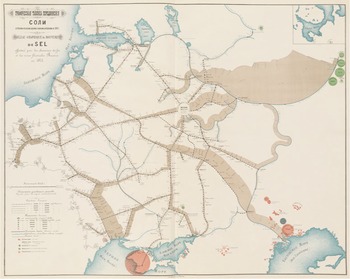
Officials were not the only threads linking the empire, however. Internal migration created connections between different regions, such as in the case of Lutheran Estonian-speaking settlers in Siberia or the Caucasus and Ukrainian-speaking migrants to Kuban′ or the Far East.Footnote 66 Universities promoted the mixing of students from all over the empire in “cauldrons of science and politics,” while prisons and exile did the same for the empire’s prisoners and deportees.Footnote 67 Political activists took lessons and inspiration from one another on how to fight autocracy.Footnote 68 Associations and societies modeled themselves after their peers.Footnote 69 Non-human animals moved between the empire’s hitherto unconnected regions.Footnote 70 Scholars have also shown how members of some ethnic groups, such as Tatars and Armenians, operated dispersed networks of patronage and affinities across the empire.Footnote 71 Finally, economic historians have long argued that commercial connections neither followed the administrative borders of the provinces nor necessarily went through St. Petersburg or Moscow, despite these being the two most important hubs of imperial communications. This story is exhaustively told in the twelve-volume Trade and Industry of European Russia According to the Regions and visualized earlier in the cartographic appendix to Ivan Bliokh’s Influence of Railways on the Economic State of Russia (Figure 2).Footnote 72
Map of the intra-imperial movement of salt along the empire’s rail- and waterways in 1874. Source: Ivan Bliokh, Viianie zheleznykh dorog na ekonomicheskoe sostoianie Rossii. Graficheskie izobrazheniia (St Petersburg, 1877), figure 24. Courtesy of the Cartography Department of Warsaw University Library.

Urban histories offer other promising insights into horizontal entanglements between the empire’s various regions.Footnote 73 Earlier scholarship tended to discuss particular cities, and attempts at writing entangled urban histories were largely limited to stories of interactions (or lack thereof) between different ethnic or religious groups within one place.Footnote 74 A recent volume on interurban exchanges, however, specifically asks how modernization processes were enacted in “multi-directional ways via horizontal connections between administrations, institutions and experts.”Footnote 75 The archives of municipal authorities are replete with stories of horizontal entanglements to further this approach. A survey of just one file of the Kiev (Kyiv) City Council from 1911–12 reveals the expansive spatial horizons of intra-imperial urban entanglements. As expected, the major regional center corresponded with less prominent cities around it: nearby Khar′kov (Kharkiv), Poltava, Mariupol′ (Mariupil′), and another center of the western region, Vil′na (Vilnius).Footnote 76 At the same time, the file’s network of correspondence stretched much farther: authorities in Vologda, Tambov, Arkhangelsk, Tsaritsyn, Kaluga, Tiflis (Tbilisi), Smolensk, and Nakhichevan (Nakhchivan) sent requests to their colleagues in Kiev about matters as diverse as the construction of telegraph and telephone poles (Tiflis), conducting a population census (Smolensk), or employment of chimney sweepers (Kaluga).Footnote 77 Similarly, in 1900, the newspaper of the Odessa City Governorate reported multiple requests arriving to the Odessa City Council from Kiev, Chernigov (Chernihiv), Khar′kov, Poltava, Tiflis, Voronezh, and Ufa municipal authorities about street lightning, market trade, charity, external ladders on multistoried buildings, a municipal bakery, a laundry, and a disinfection chamber.Footnote 78 In addition to contacting each other directly, another way of gathering information was via disseminating a survey, as, for instance, Tambov’s Council did in 1912 about municipal employees’ salaries.Footnote 79 These issues could also be discussed in-person and in a more formal setting during the first conventions on municipal affairs that took place in Odessa (1910), St. Petersburg (1912), and Kiev (1913). As Lev Velikhov remarked about the convention in Odessa, the event was valuable not because of the presentations but precisely as a forum for people with similar interests to share experiences.Footnote 80
Paying attention to intra-imperial connections helps not only to invert assumptions about vertical structures of power based on the “center-periphery” model but also complicates, if not deconstructs or demolishes them. As Ballantyne put it, such emphasis “reinforces the multiple positions that any given colony, city, community or archive might occupy”: subalterns in one situation might appear to be “sub-subaltern centers” or “knots” in different situations.Footnote 81 Thus, contrary to what might be expected, capitals were not always the benchmarks of urban development to be emulated. For instance, the journal Gorodskoe Delo, specializing in urban affairs, often criticized St. Petersburg as one of the worst run cities of the empire and was instead full of praise for municipal developments taking place in Riga and Iur′ev (Tartu).Footnote 82
Intra-imperial entanglements could be not only beneficial but also “harmful” and “dark”: not all connections were equally benevolent for all parties involved.Footnote 83 With the advent of railways, the army could be more easily sent to conquer new territories or suppress uprisings against imperial rule.Footnote 84 Christian missionaries played a key role in colonialism, while the spatial container of the empire facilitated the spread of criminal and human trafficking networks.Footnote 85 Famously, soon after the tariff border between the Kingdom of Poland and the rest of the empire was abolished in 1851 and high import fees on finished products by non-imperial manufacturers were introduced in 1877, Polish cotton mills started pushing Moscow textile producers out of markets in the European and Far Eastern parts of the empire.Footnote 86 Municipalities could share knowledge when it came to urban policies, but viewed one another as competitors in economic matters. Thus, rivalries emerged between Baltic Sea port cities such as Riga, Revel′, Vindava (Ventspils), and Libava (Liepāja), which competed to persuade St. Petersburg to deepen their port or connect them—rather than their neighbors—by railway to the heartlands of the empire.Footnote 87
Moreover, existing entanglements could sometimes be explicitly denied and rejected. Occasionally, conscious decoupling was used as a strategy to resist further integration into the empire and maintain autonomy over certain spheres. For example, when discussing municipal politics, late nineteenth-century Polish newspapers only referred to west European cities as relevant models and downplayed the rest of the empire as a way to deny the Kingdom’s belonging to it.Footnote 88 In another instance, following the 1893 official renaming of Dorpat into Iur′ev, many inhabitants avoided using the new city name as a push-back against the attempt by the imperial authorities to deepen the integration of the Baltic provinces into the empire. In this way, they sought to remain disentangled from a Russian-language “graphosphere” and assert their belonging to a German cultural space.Footnote 89
Taken together, the picture that could emerge from further studies of horizontal entanglements has the potential to significantly supplement the focus on knowledge-transfer by way of career mobility among high-ranking administrative elites. The abovementioned examples reveal how intra-imperial threads were integral to the everyday fabric of the empire. On the one hand, though many of these examples may seem “humdrum,” horizontal threads could have a more direct impact on many inhabitants’ daily lives than grand matters of state or international relations.Footnote 90 On the other hand, in time these seemingly trivial intra-imperial flows and circulations could add up to “a series of increments, each of which prepares the way for the next,” and thus could have contributed to the resilience or attrition of the empire during times of crisis.Footnote 91
Conclusions: Challenges and Prospects
In this article, we have outlined an emerging approach for an entangled spatial history of the Romanov empire, which we suggest conceptualizing as a network of horizontal threads. Alongside center-periphery, transnational, transimperial, and global connections, we argue that intra-imperial entanglements constitute another important dimension of the empire’s past. Historians of other empires have already discussed the need to shift scholarly focus away from a hub-and-spoke model towards a web, “networking society,” or “cooperative empire.” Some empirical studies on the Romanov empire have taken steps in a similar direction, yet this article has consolidated these findings into a bigger picture, demonstrated the potential insights still to be gained on the basis of primary sources, and sought to frame this research direction in a more analytical perspective.
That being said, it is important to stress that the approach that we have delineated has clear challenges and limits. First, shifting the focus to intra-imperial entanglements does not entail shunning the role of the center. An important question to be tackled by historians amidst the recent calls to decolonize and decenter the history of the empire is the extent to which the “center” is needed to understand “peripheries.” There is a strong argument to be made that the histories of “peripheries” cannot be divorced from the “center,” as it risks negating key political, economic, and cultural power dynamics at stake and downplaying the violence often employed for the upkeep of the empire. Our suggestion for the future is to explore ways of combining both vertical and horizontal axes into an integrated frame of analysis.
Second, when speaking about entanglements, historians should be wary of the risk of being left with “the vague feeling that everything is related to everything else.”Footnote 92 The examples we have presented primarily pertain to the empire’s western borderlands, which raises questions about whether all regions of the empire were equally entangled, where connections emerged or failed to take hold, which hierarchies of power were in place, and when these entanglements emerged. Calibrating our gaze to these differences allows us to ask new questions about the workings of imperial life, such as how entanglements worked unevenly across different spheres of activity and in different periods of time, exposing the empire’s successes and failures in building an imperial “imagined community.”Footnote 93
Third, another word of caution concerns how histories of entanglement are ripe for being interpreted through the lens of current politics by multiple parties. Intra-imperial entanglements were heavily utilized by Soviet-era historiography, which saw these interconnections through the ideological lens of the notion of “friendship of the peoples” or in terms of class solidarity between different oppressed peoples of the empire.Footnote 94 Today, we face another danger of the political misuse of entangled histories, this time by proponents of resurrecting the empire seeking to legitimize the historical precedence of their visions. At the same time, in the context of present-day political solidarities among various regions of the former empire, which were strengthened in the wake of Russia’s 2014 annexation of Crimea and full-scale invasion of Ukraine in 2022, we must also be careful to avoid projecting an overly romanticized or teleological view of connections and cooperation onto the past.Footnote 95
Bearing these caveats in mind, focusing on horizontal entanglements can still be generative for opening several future directions in histories of the Romanov empire. The various examples of horizontal threads outlined in this article can help us challenge the image of fragmented heterogeneity with which the history of the empire has long been coded and enable us to see the empire in a fresh light, namely also as a political and spatial container that facilitated the emergence of entanglements between geographically disparate regions and across ethnolinguistic and religious differences, often construed today by historians as separate. Further research is needed to examine whether connections were increasing and whether we can see these connections as a hallmark of modern society.
Another fruitful line of inquiry would be to explore the extent to which the “center” cultivated or, conversely, was apprehensive towards the emergence of “periphery-periphery” connections. For instance, in the Ottoman case Karen Barkey has argued that the “center” was eager to entrench a hub-and-spoke system whereby “strong vertical relations from locality to center developed, but left local groups and communities relatively weak and unconnected … encouraged a diffuse social disorganization and consequently hindered the development of autonomous corporate entities throughout the empire.”Footnote 96 An important question requiring an answer is whether Romanov rulers were equally concerned about the development of horizontal links and considered them perilous, or were more indifferent and less interventionist in preventing them.
Finally, paying concerted attention to intra-imperial entanglements is particularly pertinent today from a practical perspective when the central archives of the empire are inaccessible to many historians taking an ethical stance not to continue to do research in or collaborate with colleagues in Russia while it wages a full-scale war against Ukraine. True, as already noted by Mikhail Dolbilov in 2008, scholars cannot move between the archives of various imperial “peripheries” with the same relative ease as the empire’s bureaucrats.Footnote 97 Linguistic and disciplinary barriers have additionally hindered the development of comparative and boundary-crossing perspectives on the empire’s history. Despite a plethora of annual area studies conferences, there has historically been “little cross fertilization” between regional sub-fields.Footnote 98 Nevertheless, horizontal connections between various imperial “peripheries” could be studied through truly collaborative projects, whose results would not be limited to side-by-side presentations, articles, or book chapters of case studies from different “peripheries,” but would instead link different archives to bridge area studies subfields.Footnote 99 Moreover, the increasing availability of digitized periodical and archival collections in different former territories of the empire offers exciting opportunities for scholars to embark on innovative research projects to recover the empire’s horizontal threads and give them the full attention they deserve.
Catherine Gibson is Associate Professor of East European Studies at the Johan Skytte Institute of Political Studies at the University of Tartu. She is the author of Geographies of Nationhood: Cartography, Science, and Society in the Russian Imperial Baltic (OUP, 2022), as well as articles in Past & Present, Journal of Social History, and Modern European History. She is currently embarking on a new project on intra-imperial charitable solidarities.
Anton Kotenko is a research fellow at the Department of East European History at the Heinrich Heine University Düsseldorf. He is the author of The Promise of Ukraine: A Conceptual History of Nineteenth-Century Nationalism (forthcoming with OUP), and articles in Harvard Ukrainian Studies, Russian Review, and Urban History. He is currently working on the history of zoological gardens in the Romanov empire.


 Open access

