


Iodine is an essential micronutrient for thyroid hormone synthesis. Its deficiency during pregnancy, even when mild to moderate, may lead to unfavourable obstetric outcomes and impaired fetal neurocognitive development( Reference Zimmermann 1 – Reference Taylor, Okosieme and Dayan 3 ).
Recently, insufficient iodine intake during gestation has been reported even in countries adopting prophylactic programmes to promote iodized salt consumption( Reference Gowachirapant, Winichagoon and Wyss 4 – Reference Pearce, Andersson and Zimmermann 6 ). In this context, total-body iodine stores, as reflected by urinary iodine concentrations (UIC), tend to decline gradually from the first to the third trimester of pregnancy, resulting in impaired maternal and fetal thyroid hormone synthesis( Reference Glinoer 7 ). As a result, the latest guidelines from the American Thyroid Association and the Endocrine Society endorse systematic administration of iodine supplements for women who are pregnant or planning pregnancy in most regions, including the USA( Reference Alexander, Pearce and Brent 8 , Reference De Groot, Abalovich and Alexander 9 ). The same conduct is recommended by leading health authorities in Europe and Australia( Reference Lazarus, Brown and Daumerie 10 , 11 ). However, it is unclear whether this policy should be implemented universally.
On the other hand, excessive iodine intake during pregnancy has been related to maternal and fetal thyroid dysfunction( Reference Pearce, Lazarus and Moreno-Reyes 12 , Reference Serrano-Nascimento, Salgueiro and Vitzel 13 ). Iodine supplementation in iodine-sufficient regions may lead to higher maternal and neonatal thyrotropin (TSH) levels in addition to lower maternal free thyroxine (FT4) levels( Reference Rebagliato, Murcia and Espada 14 , Reference Velasco, Carreira and Santiago 15 ). Furthermore, even in areas with mild to moderate iodine deficiency, no interventional study has convincingly shown a benefit with respect to obstetric outcomes when iodine supplementation is given( Reference Taylor, Okosieme and Dayan 3 ).
Lately, adequate iodine status in healthy first-trimester pregnant women living in Rio de Janeiro, a coastal state of Brazil, has been observed( Reference Saraiva, Morais and Corcino 16 ). These results differed from those reported by Ferreira et al. and Mioto et al., who found insufficient UIC in pregnant women from non-coastal areas of the state of São Paulo( Reference Ferreira, Navarro and Magalhães 17 , Reference Mioto, Monteiro and Camargo 18 ). Additionally, no longitudinal studies concerning gestationally related UIC changes and thyroid parameters have been carried out in the country to date.
The aim of the present study was to prospectively evaluate iodine nutritional status and its association with maternal thyroid function from the first to the third trimester in a sample of pregnant women in the state of Rio de Janeiro, Brazil.
Methods
Study design and participants
The present study was a prospective observational study from an ongoing cohort of healthy pregnant women. Participants were consecutively recruited between September 2014 and February 2017 while they were attending a routine antenatal appointment at four different public primary care units in the urban area of the state of Rio de Janeiro. We included 243 women aged 18 to 35 years old in their first trimester of pregnancy. A subgroup of 100 women was tested again in the third trimester, which provided us with additional data concerning iodine status and serum TSH/FT4 from the last trimester of pregnancy. UIC and serum analysis in the third trimester could not be assessed in 143 women since nineteen were referred to other specialists due to abnormal laboratory tests, twelve had miscarriages and one went into very premature labour. Furthermore, twenty-one declined to participate and two were referred to different prenatal units. The remaining women in the group that was not re-evaluated were lost from follow-up.
Patients with known thyroid or any other chronic diseases, multifetal pregnancies and those taking iodine-containing supplements at enrolment were excluded. Thereafter, pregnant women received the usual obstetric follow-up examination, and we did not interfere in the prescribed dietary recommendations, medications or vitamin supplements. The study was approved by the local ethics committee and written informed consent was obtained from each of the participants.
Clinical and laboratory evaluation
After medical history and physical examination, BMI (kg/m2) was calculated as weight (in kilograms) divided by the square of height (in metres). Gestational age was calculated from the first day of the last normal menstrual period, and gestational ages ≤12 and ≥28 weeks comprised the first and third trimesters of pregnancy, respectively.
Blood samples were analysed for the concentrations of TSH, FT4 and antithyroid antibodies (thyroperoxidase antibody (TPOAb) and thyroglobulin antibody (TgAb)) in the first trimester. Serum TSH and FT4 levels were also reassessed in the third trimester.
In both trimesters, pregnant women were asked to collect three casual urine samples on different days and UIC was measured. They were also instructed to bring approximately 30 g of table salt from their homes so that iodine concentration could be determined.
Assays
Serum TSH, FT4, TPOAb and TgAb levels were determined using an electrochemiluminescence immunoassay (Roche Modular Analytics® E170). Levels of various parameters from pregnant women were compared with laboratory reference ranges for healthy adults: (i) TSH, 0·4 to 4·3 mIU/l; (ii) FT4, 0·7 to 1·9 ng/dl; (iii) TPOAb, <34 IU/ml; and (iv) TgAb, <115 IU/ml. Intra- and inter-assay CV were respectively 7·2 and 3·0% for TSH; 2·8 and 2·9% for FT4; 6·3 and 7·0% for TPOAb; and 4·9 and 6·3% for TgAb.
We applied the new criteria proposed by the American Thyroid Association to define subclinical hypothyroidism (SCH) as serum TSH≥3·8 mIU/l accompanied by a normal serum FT4 concentration in both trimesters( Reference Alexander, Pearce and Brent 8 ).
UIC was determined using inductively coupled plasma mass spectrometry (Spectroquant® Iodine Test; Merck KGaA, Germany). The manufacturer’s reference range was 26 to 705 μg/l. Iodine status was classified according to the WHO/UNICEF/International Council for Control of Iodine Deficiency Disorders guidelines: (i) severely insufficient, <50 μg/l; (ii) mild-to-moderate insufficient, 50–149 μg/l; (iii) sufficient, 150–249 μg/l; (iv) more than adequate, 250–499 μg/l; and (v) excessive, ≥500 μg/l( 19 ).
The domestic salt samples were analysed for the iodine content using the titration method, following the procedure of the Adolfo Lutz Institute Analytical Standards( 20 ). The examinations were performed in triplicate by an experienced chemist, and concentrations between 15 and 45 mg/kg were classified as appropriate in accordance with the Brazilian government recommendations( 21 ).
Statistical analysis
Statistical analyses were performed using the statistical software package IBM SPSS Statistics for Windows version 21.0.
The Kolmogorov–Smirnov test showed that no continuous variable had a normal distribution data in the studied population. Categorical variables were described as frequencies and compared between groups using the χ 2 or Fisher’s exact test. Continuous variables were described as mean with standard deviation or median with interquartile range and compared between groups by the Mann–Whitney test.
The Wilcoxon test was employed for inter-trimester comparisons of biochemical parameters in the same participants in the study cohort. Stratified analysis by the presence of iodine insufficiency, iodine excess and positive thyroid antibodies were also performed to test the variations of thyroid hormones between the first and third trimesters.
Multivariate linear regression was applied to detect which variables were independently associated with UIC levels. The variables included in the model assessing all urinary samples included age, iodine concentration in table salt, gestational age, BMI at study entry, TSH and FT4 at the time of urine collection, smoking habits, multiparity (≥3 labours) and positivity for serum thyroid antibodies.
Multivariate linear regression was also applied to detect which variables were independently associated with median UIC levels per woman during pregnancy. Again, the variables included in the model assessing all urinary samples were age, iodine concentration in table salt, BMI at study entry, median TSH and FT4 during pregnancy, smoking habits, multiparity and positivity for serum thyroid antibodies. This analysis using the same model was thereafter reapplied excluding those women who were using levothyroxine or iodine supplements.
Finally, we assessed which confounding variables might be independently related to SCH diagnosis during pregnancy. For this purpose, a binary logistic regression was applied. The included variables in this model were age, BMI, multiparity, smoking habits, iodine supplement use, insufficient iodine content in table salt, and any UIC≥500 µg/l associated with median UIC≥250 µg/l during pregnancy. As a second step, we added positive circulating thyroid antibodies to the model.
Results
A group of 243 women in the first trimester of pregnancy were included in the study. Their mean (sd) age and BMI at enrolment were 26·5 (4·9) years and 25·0 (6·6) kg/m2, respectively. As stated in the ‘Methods’ section, from this initial group, 100 women were re-evaluated in the third trimester, providing us with additional data concerning iodine status and serum TSH/FT4 during this last trimester of pregnancy. Women who completed the study (n 100) did not differ from those who were lost from follow-up regarding mean (sd) UIC (237·5 (105·1) v. 250·3 (106·8) µg/l, respectively; P=0·35) and BMI (25·2 (5·3) v. 25·6 (5·2) kg/m2, respectively; P=0·53). The distribution of multiparous women was also the same among the two groups (P>0·10).
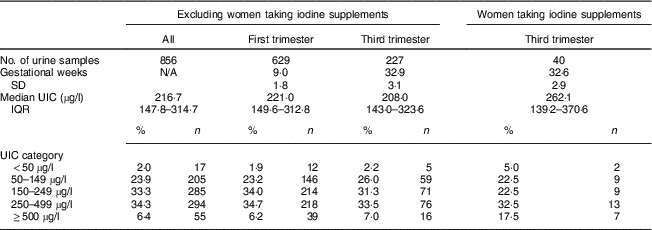
A total of 896 urine samples were analysed from the whole population included in the study. Of these women, fourteen received prescription iodine supplements between the first and the third trimester and were examined separately (Table 1). The results regarding the analysis of the salt samples have been previously reported by our group, and most of the samples contained adequate iodine levels( Reference Saraiva, Morais and Corcino 16 ).
Distribution of urinary iodine concentration (UIC) considering all collected samples and according to trimester-specific time of pregnancy in women from the state of Rio de Janeiro, Brazil, September 2014–February 2017
IQR, interquartile range (25th–75th percentile); N/A, not applicable.
Iodine status and gestational changes of urinary iodine concentration and thyroid function tests
Iodine status from the studied population was determined in 856 urine samples after excluding the group taking iodine supplements. The overall median UIC was 216·7 µg/l, which is considered adequate according to the WHO criteria( 19 ). Insufficient UIC (<150 µg/l) was found in 25·9% of all urine samples, and only 2·0% had severe insufficiency (<50 µg/l). In contrast, UIC above the recommended level (≥250 µg/l) was observed in 40·7% of the samples with 6·4% showing excessive iodine excretion (≥500 µg/l), as shown in Table 1.
Median UIC in the first and third trimesters was 221·0 and 208·0 µg/l, respectively. There were no significant differences in the frequencies of normal or inappropriate UIC between the analysed trimesters (Table 1).
As described, fourteen women were taking multivitamin supplements containing 150 µg of iodine at the third-trimester visit. They provided us with a total of forty urine samples. The median UIC in this group was ≥250 µg/l (262·1 µg/l), as shown in Table 1. Their mean third-trimester UIC, TSH and FT4 levels were not significantly different from those of women who did not use iodine supplements (292·5 v. 245·8 µg/l, P=0·280; 1·76 v. 1·67 mIU/l, P=0·577; and 0·92 v. 0·88 ng/dl, P=0·711, respectively).
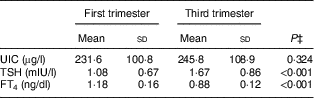
Considering only those women tested in both trimesters, there were no significant differences between their mean (sd) trimester-specific UIC values based on the paired analysis, after excluding patients under iodine supplementation (Table 2).
Comparisons between urinary iodine concentration (UIC; n 86)* and thyroid hormones (n 71)† in the first and third trimesters in women from the state of Rio de Janeiro, Brazil, September 2014–February 2017
TSH, thyrotropin; FT4, free thyroxine.
* After excluding patients under iodine supplementation.
† After excluding patients on levothyroxine use.
‡ Wilcoxon test (paired analysis).
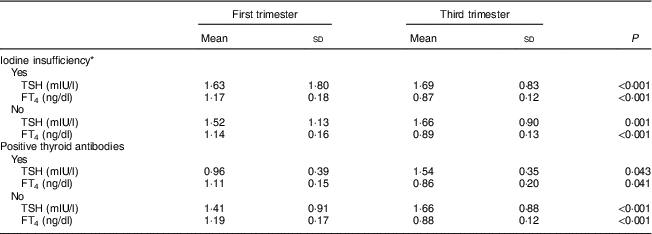
Mean (sd) TSH levels were higher in the third trimester, while FT4 levels decreased significantly, emphasizing that these kinds of analyses were done after excluding also those patients who initiated levothyroxine during the study (Table 2). These variations remained significant regardless the presence of iodine deficiency (at least one urine sample of the first trimester with UIC<150 µg/l) or the presence of positive thyroid antibodies as demonstrated in stratified analysis (Table 3).
Stratified analysis by the presence of iodine insufficiency and positive thyroid antibodies to test the variations of thyroid hormones from the first to the third trimester in women from the state of Rio de Janeiro, Brazil, September 2014–February 2017
TSH, thyrotropin; FT4, free thyroxine.
* Urinary iodine concentration <150 µg/l.
Correlations between urinary iodine concentration, clinical parameters and thyroid function
A negative and independent correlation was found between UIC from all collected samples and women’s age as demonstrated in the multivariate analysis (Table 4). These findings were confirmed by performing analysis of the median UIC of each participant, and even after excluding those who collected urinary samples while using iodine supplements and those who initiated levothyroxine for SCH (Table 5). In contrast, UIC was positively related to multiparity and BMI (Tables 4 and 5). Furthermore, median UIC per pregnant woman tended to be positively correlated with serum TSH after excluding those on levothyroxine or using iodine supplementation (Table 5).
Multiple linear regression with variables independently related to urinary iodine concentration (UIC)*, considering all collected samples (n 896), in women from the state of Rio de Janeiro, Brazil, September 2014–February 2017
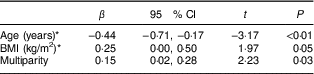
Variables included in the model: age*, gestational week*, serum thyrotropin (mIU/l)* and free thyroxine (ng/dl)* (at the time of UIC collection), iodine concentration in salt (mg/kg)*, first-trimester BMI*, smoking habit, positive serum thyroid antibodies (thyroperoxidase antibody and/or thyroglobulin antibody) and multiparity (≥3 labours).
Only those correlations with P≤0·100 are shown in the table.
* After logarithmic transformation.
Multiple linear regression with variables independently related to median urinary iodine concentration (UIC)* per pregnant woman, considering all women (A) and excluding women taking levothyroxine and/or iodine supplements at the time of urinary sample collection (B), in women from the state of Rio de Janeiro, Brazil, September 2014–February 2017
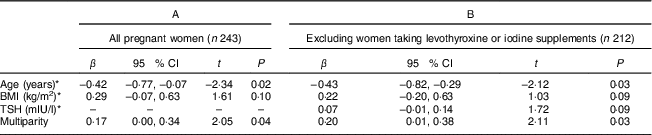
TSH, thyrotropin.
Variables included in the model: age*, mean TSH* during pregnancy, mean free thyroxine (ng/dl)* during pregnancy, iodine concentration in salt (mg/kg)*, first-trimester BMI*, smoking habit, positive serum thyroid antibodies (thyroperoxidase antibody and/or thyroglobulin antibody) and multiparity (≥3 labours).
Only those correlations with P≤0·100 are shown in the table.
* After logarithmic transformation.
Associations between urinary iodine concentration and subclinical hypothyroidism diagnosis during pregnancy
From the 243 pregnant women, twelve received a SCH diagnosis (eleven were diagnosed in the first trimester and one later).
Excessive UIC (≥500 µg/l) in any of the collected samples was associated with SCH diagnosis during pregnancy (as shown in Table 6) and confirmed in multivariate analysis (Table 7). The median UIC in patients with SCH was ≥250 µg/l despite the absence of statistical significance when comparing results with euthyroid pregnant women (Table 6). Age was lower among SCH participants. Furthermore, circulating thyroid antibodies and smoking habits were more frequent in this subgroup (Table 6).
Demographic characteristics and iodine status according to subclinical hypothyroidism (SCH) diagnosis at any time during pregnancy in women from the state of Rio de Janeiro, Brazil, September 2014–February 2017
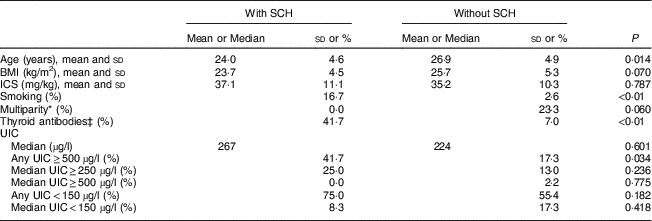
ICS, iodine concentration in salt; UIC, urinary iodine concentration.
SCH defined as thyrotropin≥3·8 mIU/l.
* Three or more labours.
‡ Positive serum thyroperoxidase antibody and/or thyroglobulin antibody.
Multivariate analysis showing independent factors associated with subclinical hypothyroidism (SCH) diagnosis during pregnancy in women from the state of Rio de Janeiro, Brazil, September 2014–February 2017

UIC, urinary iodine concentration.
SCH defined as thyrotropin≥3·8 mIU/l.
* Variables included in the model: age, BMI (kg/m2), multiparity (≥3 labours), smoking, iodine supplement use, insufficient iodine content in table salt, any UIC≥500 µg/l+median UIC≥250 µg/l.
† Adding positive serum thyroid antibodies to the model (thyroperoxidase antibody and/or thyroglobulin antibody).
Evaluating possible independent risk factors associated with SCH during pregnancy, it was detected that those women with median UIC≥250 µg/l during all gestational trimesters combined with at least one sample showing excessive UIC had 6·6 times more chance to have SCH diagnosis. However, thyroid autoimmunity was more prominently associated with this risk when added to the model. Smoking was also an independent factor positively associated with SCH (Table 7).
Discussion
To date, the present study is the first longitudinal one to evaluate iodine nutritional status and its association with thyroid function in pregnant Brazilian women. The main study finding indicated that iodine status remained adequate and stable from the beginning to the end of pregnancy. In addition, we observed an increased risk of SCH among women with excessive UIC.
Since >90% of dietary iodine is excreted in the urine, median UIC has been used as the main method to assess the iodine status of a population( Reference Zimmermann and Andersson 22 ). For pregnant women, values between 150 and 249 µg/l indicate optimal iodine intake according to the WHO criteria( 19 ). In our sample, the overall median UIC was 216·7 µg/l. It varied within the normal range from 221·0 µg/l in the first trimester to 208·0 µg/l in the third trimester, confirming our previous findings that the iodine nutritional status of pregnant women in Rio de Janeiro is classified as adequate( Reference Saraiva, Morais and Corcino 16 ). Nevertheless, several authors have reported a significant drop in UIC with advancing pregnancy( Reference Amouzegar, Khazan and Hedayati 23 – Reference Fuse, Shishiba and Irie 25 ). During the gestational period, increased hormone requirements and iodine losses alter the preconception steady-state. When pregnant women are exposed to insufficient iodine intake, body stores of this nutrient tend to fall gradually over time. In the second half of gestation as the fetal thyroid gland starts to function, part of the available iodine is transferred from maternal circulation to the fetal–placental unit, causing iodine deprivation to worsen in vulnerable individuals( Reference Glinoer 7 ).
In the present study, the small decrease in median UIC observed between the trimesters was not statistically significant. The same pattern was noticed in other iodine-sufficient areas in Japan( Reference Fuse, Ohashi and Yamaguchi 26 ), Mexico( Reference García-Solís, Solís-S and García-Gaytán 27 ), Sri Lanka( Reference Smyth 28 ) and Iran( Reference Rezvanian, Aminorroaya and Majlesi 29 ). This fact probably means that national salt iodization policies have achieved their goals in the studied location. As recently demonstrated, most brands of table salt used by pregnant women contained appropriate levels of iodine( Reference Saraiva, Morais and Corcino 16 ). This is in line with a WHO recommendation that indicates that in regions with effective and sustained salt iodization (>90% of the households consuming iodized salt for at least two years) and optimal iodine nutrition, pregnant and lactating women do not need iodine supplementation( Reference Andersson, De Benoist and Delange 30 ).
In our group of Brazilian women, regardless of insufficient urinary iodine or circulating thyroid antibodies, thyroid hormone levels varied significantly from the first to the third trimester even though they remained within the reference range. We believe that these changes were due to the well-known physiological adaptations of the thyroid gland to the demands of gestation( Reference Glinoer 31 ) as observed in other prospective studies conducted in iodine-sufficient regions( Reference Fuse, Shishiba and Irie 25 , Reference Fister, Gaberscek and Zaletel 32 ).
Our findings differ from those reported by Ferreira et al. and Mioto et al., who detected iodine deficiency in pregnant women from São Paulo( Reference Ferreira, Navarro and Magalhães 17 , Reference Mioto, Monteiro and Camargo 18 ). While the former studied only pregnant women in the first trimester, the latter included women during the three trimesters of gestation. Both studies raised great concerns about the adequacy of the iodine supply of pregnant women in the country, especially considering that their data were collected before the new Brazilian governmental determinations regarding the reduction of iodine concentrations in table salt from 20–60 to 15–45 mg/kg( 21 ). However, the present study and the recent report by Saraiva et al. ( Reference Saraiva, Morais and Corcino 16 ) corroborate that the results obtained in São Paulo should not be extrapolated to the entire population of pregnant women in Brazil, a country with continental proportions and different profiles of iodine consumption, even in a single region. Compared with previous Brazilian studies, ours was the only one designed to evaluate the changes in iodine nutrition during the course of gestation because we measured UIC in the first and third trimesters in the same participant, while all other studies were done in a cross-sectional manner( Reference Saraiva, Morais and Corcino 16 – Reference Mioto, Monteiro and Camargo 18 , Reference Barca, Knobel and Tomimori 33 , Reference Soares, Vanacor and Manica 34 ). In addition, considering the great variability of UIC, we sought to minimize this effect by analysing multiple urine samples from each pregnant woman. Thus, we could also examine the associations between UIC and thyroid function using the median of each woman’s samples, which more accurately reflected their iodine status rather than only a single measurement as used in most studies.
Maternal UIC was above the normal range (≥250 µ/l) in >40% of the analysed samples and excessive (≥500 µ/l) in 6·4% of the samples. Women with median UIC≥250 µg/l and at least one sample showing excessive UIC had a 6·6-fold increased risk of presenting SCH at some point during gestation. These data reinforce that although all efforts must be made to eliminate iodine deficiency and its serious consequences, excessive iodine intake during pregnancy should also be avoided. It is well established that high iodine exposure can cause hyper- or hypothyroidism, especially in those with past or present thyroid abnormalities. This occurs because, in a damaged thyroid gland, the normal down-regulation of iodine transport into the thyroid cells may not occur( Reference Pearce, Lazarus and Moreno-Reyes 12 ). Besides, the ability to fully ‘escape’ from the transient inhibition of thyroid hormone synthesis after a large iodine load, known as the acute Wolff–Chaikoff effect, does not mature until 36 weeks of gestation. In this setting, fetal hypothyroidism may develop even if maternal thyroid function is maintained( Reference Connelly, Boston and Pearce 35 ). A cross-sectional study involving 7190 pregnant women from an iodine-sufficient area in China also found an increased risk of SCH in women with UIC≥250 µg/l( Reference Shi, Han and Li 36 ). Those with UIC≥500 µg/l showed an additional higher risk for isolated hypothyroxinaemia. The occurrence of SCH during gestation contributes to an increased rate of adverse obstetric and birth outcomes, including pregnancy loss, preterm delivery and placental abruption in addition to neurodevelopmental deficits in the offspring( Reference Chan and Boelaert 37 ). Furthermore, there is also evidence that iodine excess can be considered an environmental risk factor for autoimmune thyroid disease( Reference Luo, Kawashima and Ishido 38 ).
Another finding that deserves attention was the median UIC (262·1 µg/l) among women who were using iodine-containing supplements in the third-trimester evaluation; although there was no statistically significant difference between their UIC and those in the rest of the group, their iodine status was classified in a different range and considered more than adequate according to the WHO criteria( 19 ). Excessive UIC was also more frequently observed among these women. For these reasons, we advise that indiscriminate iodine supplementation during pregnancy should be carefully balanced against the risk of iodine excess.
Not only the excessive iodine intake and the presence of circulating thyroid antibodies were associated with SCH, but also smoking habits. This habit seems to induce changes in thyroid function tests. The role of smoking in Hashimoto’s thyroiditis is not as well established as in Graves’ disease( Reference Sawicka-Gutaj, Gutaj and Sowiński 39 ). Although there is evidence that smoking is associated with a lower prevalence of hypothyroidism and circulating thyroid antibodies( Reference Wiersinga 40 ), these findings contrast with another study that reported increased risk of hypothyroidism in smokers with Hashimoto’s thyroiditis( Reference Fukata, Kuma and Sugawara 41 ).
When examining the possible correlations between all collected UIC and clinical parameters, we found that older women tended to have lower levels of urinary iodine similar to Saraiva et al.( Reference Saraiva, Morais and Corcino 16 ). Age appears to influence iodine status in non-pregnant adults, but studies in adult populations are divergent( Reference Als, Keller and Minder 42 – Reference Haddow, McClain and Palomaki 45 ). Several authors also reported a decrease in UIC with advancing age( Reference Als, Keller and Minder 42 – Reference Tang, Wang and Pan 44 ). The reasons for this are unknown but may be related to dietary variations, physiological requirements and age-related changes in glomerular filtration rate. These possible causal factors should be further investigated specifically in pregnant women. Regarding parity and BMI, the opposite was observed. As previously shown by us, women with more children and women with greater BMI had higher levels of UIC( Reference Saraiva, Morais and Corcino 16 ). In a recent study conducted by De Zoysa et al., parity and initial BMI were also significantly correlated with the third-trimester UIC( Reference De Zoysa, Hettiarachchi and Liyanage 46 ). However, while UIC and BMI correlated positively, UIC and parity correlated negatively.
One limitation of our study was the non-inclusion of patients aged >35 years. As this cohort is being followed for the evaluation of maternal and fetal outcomes, advanced age could act as a confounding factor. Median UIC might have been lower if older women were included. In addition, we recruited only healthy pregnant women assisted by the public health system and there may be differences in education levels, social class and nutritional status compared with the general population of the state.
Conclusions
Pregnant women in the studied geographical location had adequate UIC during the first and third trimesters and were considered to have appropriate iodine nutrition. The variations in TSH and FT4 levels could not be attributed to insufficient iodine supply or circulating thyroid antibodies. Excessive UIC and smoking were associated with an increased risk for SCH development. Therefore, generalized iodine supplementation in Brazil should not be implemented because of the risks associated with excessive iodine exposure.
Acknowledgements
Acknowledgements: The authors would like to thank the Brazilian Ministry of Health, the National Research Council (CNPq) and the Thyroid Department of the Brazilian Society of Endocrinology and Metabolism (SBEM), which encouraged this work. They are also grateful to Mischelle P Santos and the Institute of Nutrition of the State University of Rio de Janeiro for the analysis performed. Financial support: The study was financially supported by Fundação Carlos Chagas Filho de Amparo à Pesquisa do Estado do Rio de Janeiro (FAPERJ) (grant number E-26/202.143/2015). FAPERJ had no role in the design, analysis or writing of this article. Conflict of interest: None. Authorship: C.M.C., M.V., P.F.S.T., T.M.B.L.B., D.A.S., N.A.O.S.M. and A.S. designed the study and formulated the research questions; C.M.C., T.M.B.L.B., D.A.S., N.A.M., A.S. and L.N.G. conducted the study; P.F.S.T. and C.M.C. analysed the data. The manuscript was written by C.M.C. and reviewed by M.V. and P.F.S.T. All authors read and approved the final version. Ethics of human subject participation: This study was conducted according to the guidelines laid down in the Declaration of Helsinki and all procedures involving human subjects were approved by the local ethics committee (CAAE: 22546213.0.0000.5275). Written informed consent was obtained from all participants.



