


Micronutrient deficiencies – ‘hidden hunger’ – represent a significant public health problem in many developing countries( 1 ). Morocco is undergoing a nutritional transition in which we see deficiencies coexisting with obesity-related diseases in the same household( Reference Maire, Lioret and Gartner 2 – Reference López, Anzid and Cherkaoui 5 ).
A period of undoubted nutritional interest( Reference Serra-Majem, García-Closas and Ribas 6 , Reference Delisle, Chandra-Mouli and de Benoist 7 ), adolescence is one of the most active growth periods, during which the requirements for vitamins, minerals and trace elements increase substantially( Reference Rees 8 ). Over 20 % of total growth in stature and up to 50 % of adult bone mass are acquired during adolescence( Reference Garn and Wagner 9 ), with a corresponding 50 % increase in Ca requirements. The growing red cell mass (Hb), muscle development (myoglobin) and menstrual blood loss induce an increase in Fe demands of up to 15 %( 10 ).
However, growth and maturation in adolescence may be adversely affected by factors such as inadequate nutrient intakes, infections and chronic diseases. The increasingly early age of onset of chronic conditions such as obesity and type 2 diabetes points to the importance of surveillance and healthy lifestyle education for children and teenagers( Reference Rome, Vazquez and Blazer 11 ). Appropriate nutrition is thus crucial for adolescents, not only to meet their increased growth requirements but also to prevent chronic diseases in adulthood. Unfortunately, very little information exists on vitamin and mineral intakes in adolescents or their nutritional status( Reference Schneider 12 ), particularly in developing countries( Reference Monge-Rojas 13 ). Better knowledge of dietary intakes in adolescents would help health professionals provide optimal advice to individuals and also serve as a basis for the development of health promotion strategies( Reference Garipagaoglu, Oner and Vatansever 14 ).
The present study set out to assess the mean usual daily intakes of micronutrients in high-school pupils aged 15–19 years living in the Ouarzazate municipality in southern Morocco, with the aim of defining the proportion of pupils particularly at risk of nutrient inadequacy for a selected range of micronutrients and assessing the contribution of food groups to four micronutrients (thiamin, folate, Ca and Na).
Experimental methods
Participants and data collection
A dietary study was conducted between November 2007 and January 2008 in a self-selected sample of 327 secondary-school pupils aged 15–20 years. Pupils were recruited from the five public high schools in Ouarzazate, a semi-urban region situated on the southern slopes of the High Atlas with little industrial development but an important tourism sector. The target population consisted of the 4605 pupils enrolled in high schools in Ouarzazate in the 2007–2008 school year. Our aim was to recruit about 20 % of the target population and recruiting stopped when this number was attained. A total of 921 pupils gave their consent to participate in the research, but for the present analyses only those who completed the three 24 h food logs were included. The 327 pupils in the final study sample represent 7·1 % of the target population.
After training, the pupils recorded all foods and quantities consumed, as well as details of ingredients and cooking methods (e.g. boiled, grilled, fried), in a food consumption logbook over three non-consecutive days (Tuesday, Friday and Sunday). Common household measures (e.g. cup, coffee glass, tea glass, water glass, teaspoon, tablespoon) recorded by the pupils were transformed into quantitative units by weighing using precision electronic scales. Composite dishes were reconstituted in the test kitchen and weighed before and after cooking according to the recipes recorded by the pupils.
Measures of nutrient inadequacy
Nutrient intakes were estimated from the analysis of the 327 food logbooks (×3 d = 981 d) using the DIAL program, version 1·0( 15 ). This software is based on several food composition tables, including Spanish tables( Reference Cervera 16 , Reference Ortega, López-Sobaler and Requejo 17 ) and those of the US Department of Agriculture( 18 ). The food composition table was extended to include typical Moroccan foods and dishes (seasonings and condiments, tagines, couscous, harira, msemmen, etc.)( Reference El Moumni, Maimouni and Dufourny 19 ) with the help of the FAO composition table for use in Africa( Reference Wu Leung 20 ).
The different food composition tables used took fortified foods into account. If a respondent mentioned a fortified food (by brand name), we checked the chemical composition and its concordance with the DIAL program. If necessary, the chemical composition was modified. However, respondents rarely mentioned whether a food was fortified or brand names. The DIAL program assumes an iodine content of 44 μg in 100 g of salt. The program also allows the creation of new foods, for example ‘iodised salt’ with a content of about 30 mg/kg, as mentioned on the labels of salt packages sold in local shops. Taking into account the greater bioavailability of synthetic folic acid, the DIAL program calculates folate intake as μg DFE (dietary folate equivalents; [food folate + (1·7 × synthetic folic acid content)]).
To remove the effects of day-to-day variation, which was minimal, the measurement error model developed by the Department of Epidemiology of the German Institute of Human Nutrition Potsdam-Rehbrücke (DIfE version 1·0)( 21 ) was applied to the usual intake. A total of thirty-four pupils were excluded from the analyses: fifteen were over 19 years of age and nineteen (eight boys and eleven girls) were identified as under-reporters according to the method described by Goldberg and Black( Reference Black 22 ), having a ratio of energy intake to BMR less than or equal to 0·87, leaving 293 participants (175 girls and 118 boys aged 15–19 years) for analysis.
Micronutrient intakes were compared with the recommendations of the Food and Nutrition Board, Institute of Medicine( 23 – 28 ). We opted to use the Institute of Medicine Dietary Reference Intakes since they are in general more comprehensive than the FAO/WHO Dietary Reference Intakes, which do not provide the Estimated Average Requirement (EAR) values we required for our analyses. The EAR represents the median daily nutrient intake level estimated to meet the requirements of half the healthy individuals in a particular life-stage and gender group( 23 ). The requirement is the amount of nutrient necessary to satisfy the functional needs of the body, ensure nutrient stores and prevent disease in the long term.
To determine the prevalence of inadequate intake, we elected to use the EAR cut-point method recommended and described in detail by the Institute of Medicine( 29 ), validated by De Lauzon et al.( Reference De Lauzon, Volatier and Martin 30 ) and recently applied in France by Touvier et al. ( Reference Touvier, Lioret and Vanrullen 31 ), as this is the method commonly used in North America, France and French-speaking countries and the one with which we are most familiar.
For some nutrients, there was insufficient scientific evidence to establish an EAR, so an Adequate Intake (AI) level was set instead. The AI is defined as ‘the recommended average daily intake value based on observed or experimentally determined approximations or estimates of nutrient intake by a group (or groups) of healthy people that are assumed to be adequate – used when an RDA cannot be determined’( 28 ). As a recommended intake for individuals, the AI is expected to meet or exceed the amount needed to maintain a defined nutritional state or criterion of adequacy in almost all members of an apparently healthy population( 32 ). For Fe, we used the probability approach recommended by the Institute of Medicine( 26 ), since the presence of menstruating women skews the requirement distribution curve and renders the EAR cut-point method inappropriate.
For vitamin A, vitamin K, thiamin, riboflavin, niacin, pyridoxine, folate, vitamin B12, ascorbic acid, iodine, Ca, Mg and P, the prevalence of inadequacy was estimated by the percentage of individuals with median intakes below the EAR. For pantothenic acid, biotin, Na and K, we calculated the percentage of individuals with median intakes below the AI and for Fe the percentage with inadequate intakes using the probability approach.
Individuals ‘particularly at risk’ of nutrient inadequacy were defined as those for whom the 95 % confidence interval of the prevalence of inadequacy lay above 50 % and included a value greater than or equal to 70 %( Reference Touvier, Lioret and Vanrullen 31 ).
Statistical analysis
All statistical analyses were performed using the statistical software package SPSS version 10·0·5. Descriptive statistical analysis techniques were used to test distributions of means. The non-parametric Mann–Whitney U test was used to compare medians between groups. The level of significance applied to statistical tests was <0·05. Percentage contribution of twelve food groups to the intake of certain micronutrients was calculated for the total study sample and separately for boys and girls. Differences between sexes were tested with the Pearson χ 2 test.
Results
All results reported below exclude the nineteen under-reporters. There were no statistically significant differences in the findings before and after exclusion of the under-reporters.
Usual daily intakes of vitamins and minerals
There were significant sex-related differences in the median usual intakes of certain vitamins and minerals (Table 1). Absolute intakes (unadjusted for energy intake) of water-soluble vitamins in boys were consistently higher than in girls, with the exception of the vitamins riboflavin and biotin (identical in both sexes) and ascorbic acid (higher intake in girls). For fat-soluble vitamins, the absolute intake of vitamin K was higher in boys than in girls, whereas the opposite was observed for vitamin A. Absolute intakes of minerals were also systematically higher in boys than in girls, except for iodine (identical) and Ca (higher in boys but not statistically significant). Total energy intake was statistically significantly higher in boys than in girls (8·96 (sd 1·64) MJ/d v. 8·14 (sd 1·83) MJ/d, P < 0·001).
Mean and median usual daily intakes of vitamins and minerals by sex in Moroccan pupils aged 15–19 years, November 2007–January 2008
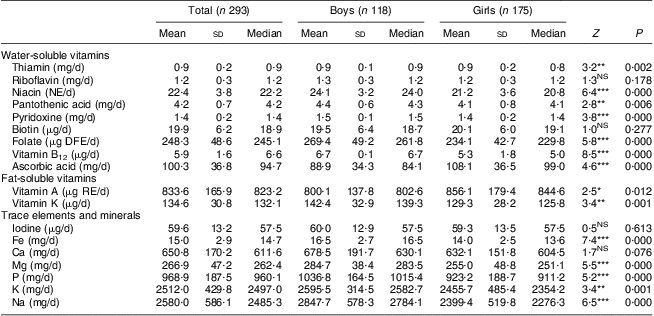
Z, value of the Mann–Whitney U test; P, P value for Mann–Whitney U test; NE, niacin equivalents; DFE, dietary folate equivalents; RE, retinol equivalents.
*P < 0·05, **P < 0·01, ***P < 0·001.
When nutrient densities – nutrient intakes adjusted for total energy intake – were considered, the results were quite different (Table 2). Nutrient densities of water-soluble vitamins were higher in girls than in boys, except for thiamin, riboflavin and niacin (identical in both sexes) and folate and vitamin B12 (higher intake in boys). The most marked difference was seen for ascorbic acid: girls had a mean density of 13·6 μg/MJ compared with 10·0 μg/MJ for boys. For fat-soluble vitamins, the nutrient densities of vitamins A and K were higher in girls than in boys, in particular vitamin A, with a mean density of 108·0 μg RE (retinol equivalents)/MJ in girls and 91·3 μg RE/MJ in boys. The nutrient densities of iodine, Ca and K were higher in girls than in boys, those of P and Na were identical and those of Fe and Mg were higher in boys.
Daily mean nutrient density for vitamins and minerals by sex in Moroccan pupils aged 15–19 years, November 2007–January 2008
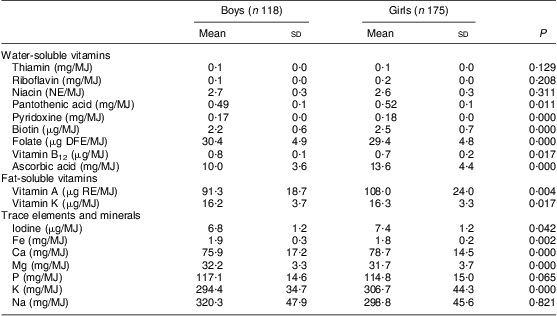
P, P value for Mann–Whitney U test (P > 0·05 indicates that Mann–Whitney U test is not significant); NE, niacin equivalents; DFE, dietary folate equivalents; RE, retinol equivalents.
Prevalence of inadequate nutrient intakes
Table 3 shows the prevalence of inadequate nutrient intakes for the total sample and by sex. Overall, the adolescents were identified as being at risk of inadequacy for folate, pantothenic acid, biotin, iodine, Ca and K. Boys were also particularly at risk of inadequacy for thiamin (66·9 %) and girls had a very high risk of inadequacy for folate (93·1 %). The prevalence of inadequacy for other nutrients was low (5–45 % for riboflavin, Fe, Mg and P) to negligible (≤1 % for niacin, pyridoxine, ascorbic acid, vitamins B12, A and K).
Prevalence of inadequate intakes by nutrient and sex in Moroccan pupils aged 15–19 years, November 2007–January 2008
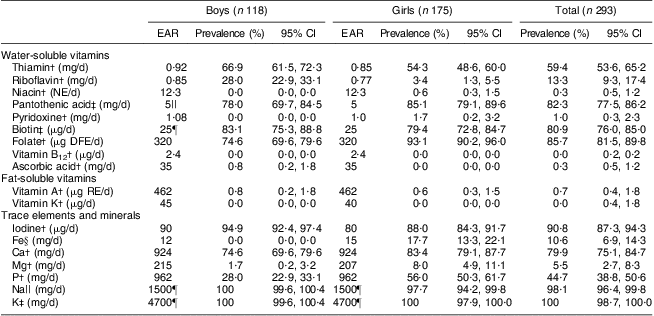
EAR, Estimated Average Requirement; NE, niacin equivalents; DFE, dietary folate equivalents; RE, retinol equivalents; AI, Adequate Intake.
†Proportion of individuals with intake below the EAR.
‡Proportion of individuals with intake below the AI.
§Prevalence of inadequate intake by the probability approach.
||Proportion of individuals with intake above the AI.
¶AI.
For the total sample, the median usual intakes of Ca were below adequate levels. Similarly, the median usual intakes for K were below the AI level of 4700 mg/d. On the other hand, Na intakes were well above the AI of 1500 mg/d.
Contribution of twelve food groups to mean micronutrient intakes
The contribution of twelve food groups to mean micronutrient intakes (thiamin, folate, Ca and Na) is shown in Table 4. We did not look at intakes of K, pantothenic acid or biotin in this analysis since they were not generated by the DIAL program. Cereals and cereal products represented the principal source of thiamin, contributing about 38 % of daily intake, followed by the vegetable/legume group and fruit which contributed about 23 % and 15 %, respectively. Vegetables and legumes constituted, together with cereal products, the main sources of folate, contributing respectively 32 % and 31 %, with fruit contributing 19 %. On the other hand, the contribution of spices, milk products and eggs to daily folate intake was negligible, about 4 to 6 %. Milk products (36 %) represented the principal source of Ca followed by cereal products (23 %). The contribution of other food groups to Ca intake was considerably lower, from 0·6 to 9·9 %. The main sources of Na were cereal products and spices. Milk products also made a small contribution to Na intake, of about 5 to 6 %. The Na contribution of other food groups was negligible, ranging from 0·1 to 5·6 %.
Percentage contribution of food groups to micronutrient intakes (thiamin, folate, calcium and sodium) by sex in Moroccan pupils aged 15–19 years, November 2007–January 2008
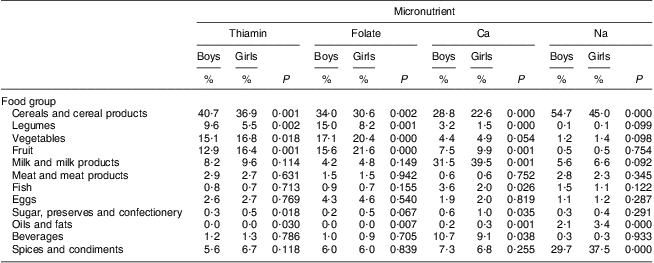
P, P value for Pearson's χ 2 test.
The differences between boys and girls in the contribution of the food groups to micronutrient intakes are also seen in Table 4. The percentage contribution of cereals and cereal products was consistently higher in boys for all four micronutrients. For thiamin and folate, legumes were a more important source in boys than in girls, for whom fruit and vegetables were more important. In girls, milk products, fruit, sugar/confectionery and oils were more important sources of Ca intake than in boys, in whom legumes, fish and beverages made a higher contribution to total Ca intake than in girls. As for Na, spices and condiments made a greater contribution in girls than in boys.
Discussion
The present study has enabled us to identify several areas for concern and provides a basis for further, larger studies of dietary behaviour in Moroccan teenagers. We found significant differences between boys and girls in the median usual intakes and nutrient densities of certain vitamins and minerals. The adolescents were identified as being particularly at risk of inadequate intake of folate, pantothenic acid, biotin, iodine, Ca and K. Boys had an additional risk of inadequate thiamin intake. Excessive Na intake was observed in both sexes.
Since our study excluded adolescents not attending school, our sample is not representative of the total adolescent population in the region or elsewhere in Morocco. However, there are no available data that allow us to determine just how representative our sample is and in what way, if any, it differs from the total adolescent population. Compared with other urbanised parts of Morocco, the adolescents of the Ouarzazate area are less influenced by Western practices, rarely eat fast food and have less pocket money for purchasing food outside the home.
The 327 adolescents in the final study sample represent 7·1 % of the target population, but 35·5 % of the adolescents actually volunteering to participate. Participation was purely voluntary, and no means of persuasion, coercion or reward were used. Given the logistic difficulties and the nature of the research, we feel that this response rate is satisfactory.
We chose to use the prospective 3 d food consumption logbook, a compromise between the week-long record and single day recall, with estimation of quantities using common household measures( 33 , Reference Aranceta, Serra-Majem and Perez-Rodrigo 34 ) rather than weighing, since this method provides acceptably accurate qualitative and quantitative data while avoiding the risks of recall error( Reference Cano, Barnoud and Schneider 35 ) and loss of motivation, and seems to offer the best results in a young population( Reference Black, Prentice and Goldberg 36 ). It should be noted that the results have not been validated by objective biological measures such as blood or urine tests.
Our study used the DIAL program to estimate nutrient intakes. This software has amalgamated several food composition tables, including Spanish tables( Reference Cervera 16 , Reference Ortega, López-Sobaler and Requejo 17 ) and those of the US Department of Agriculture( 18 ). Although this database has been adapted for Moroccan foods( Reference El Moumni, Maimouni and Dufourny 19 ), there may be some inaccuracies due to a lack of current nutritional information for certain foods, in particular those most typical of the country( Reference Collier, Lemaire and Essatara 37 ). However, regional variations in nutrient content are diminishing as the food products from different parts of the world are becoming more widely available. There is nevertheless an urgent need for further research on dietary practices in the Moroccan population, to enable the updating of Moroccan food composition databases.
In Morocco, there are few published studies of the prevalence of inadequate nutrient intakes( Reference Belgnaoui and Belahsen 38 ), particularly in adolescents, nor do any national dietary recommendations exist for this age group. For this reason, we have relied on the recommendations published by the US Institute of Medicine.
Boys had higher absolute intakes than girls for most vitamins and minerals, except for riboflavin, biotin and iodine (which were identical) and ascorbic acid and vitamin A (which were higher in girls). In terms of nutrient densities, girls had better-quality diets than boys, with values higher than or equal to those of boys except for folate, vitamin B12, Fe and Mg. These results are consistent with the findings of studies in non-Moroccan populations( Reference Lambert, Agostoni and Elmadfa 39 – Reference Aounallah-Skhiri, Traissac and El Ati 43 ).
Although comparisons are limited due to differences in methodology and the variables studied, it is interesting here to consider the results of a 2005 study of adolescents in Tunisia, a North African country with certain similarities to Morocco( Reference Aounallah-Skhiri, Traissac and El Ati 43 ). Although not exactly identical, the same type of North African Mediterranean diet, distinguished from the West Mediterranean diet by its higher consumption of cereals and little meat or dairy foods, is followed in Tunisia and Morocco( Reference Noah and Truswell 44 , Reference Grigg 45 ). Traditionally wheat-consuming countries, Morocco has a more diversified cereal mix than Tunisia, with relatively high levels of barley and some maize( Reference Delisle 46 ).
Using a semi-quantitative frequency questionnaire (SFFQ), the Tunisian study found energy intake levels that were relatively high, especially for girls, unlike our own findings. However, there is some evidence that the SFFQ overestimates average absolute nutrient intakes( Reference Andersen, Lande and Arsky 47 ). On the basis of nutrient densities, boys had lower values for ascorbic acid than girls, as in our sample, but only the nutrient density for Ca was higher in boys. The authors conclude that modernisation, urbanisation and regional development have led to dietary changes with both positive and negative effects: a more varied, adequate diet on the one hand, but excess intakes of energy and fat on the other. The nutrition transition in adolescents is certainly a subject that demands more attention in Morocco, since this age group is perhaps the most exposed and vulnerable to the influences of globalisation.
The differences in micronutrient intake between girls and boys may be explained in part by sex-specific quantitative and qualitative differences in the usual diets. Other analyses of our data have shown that boys consumed higher quantities of energy, protein and carbohydrate than girls, but no differences were observed for lipids and cholesterol( Reference López, Anzid and Cherkaoui 5 ). The boys in our sample ate larger portions than girls, except for foods containing ascorbic acid and vitamin A (boys ate smaller portions or less varied foods) and iodine-rich foods (equal portions).
The risk of inadequate folate intake might be explained by infrequent or limited consumption of foods naturally rich in folate, of either plant origin (lentils, dried beans) or animal origin (offal). Similar findings have been reported in the Canadian Community Health Survey( 32 ), in which it was recommended that girls aged 14–18 years be monitored for folate in particular, since about 9 % of this group did not satisfy their needs for this nutrient. Folate intake may be improved by adding folate to flour and pasta. Since 2001, flour in Morocco has been fortified with folate and a project to fortify flour with Fe, folate, thiamin, riboflavin and niacin and vegetable oil with vitamins A and D was launched in 2005( 48 ). Flour was chosen as the vehicle since it is widely consumed in the Moroccan population( Reference Delisle 46 ).
Cereals and legumes are an important source of thiamin. In our sample, the contribution of cereals (40·7 %) and legumes (9·6 %) to thiamin intake in boys was higher than in girls (36·9 % and 5·5 %, respectively) and boys ate larger quantities of these foods than girls. Boys had a higher absolute intake of thiamin but there were no differences between boys and girls in thiamin nutrient density. However, the risk of inadequate thiamin intake was seen only in boys. Since it is unlikely that thiamin intake has been underestimated in boys alone, which might be the case if other sources of thiamin not taken into account were available to boys but not to girls, our findings suggest that boys need to eat more thiamin-rich foods to meet their higher requirements.
Inadequacies of two other B-group vitamins, pantothenic acid and biotin, were observed in both sexes. The sources of pantothenic acid (vitamin B5) are abundant and include animal tissues, wholegrain cereals and legumes. Biotin (vitamin B8) is found in liver, yeast, eggs and cereals. In other words, there is some overlap with sources of folate and thiamin, which were also lacking in our participants’ diets. Given the ubiquitous nature of pantothenic acid, clinical deficiencies – manifest by headache, fatigue, insomnia, intestinal disturbances, and numbness and tingling of the hands and feet – are exceptionally rare. Questioning for symptoms of nutritional deficiencies and clinical or biological examination were beyond the scope of the present study. Ideally, future nutrition research should also investigate the physiological and clinical aspects of dietary inadequacy.
The median usual intake of Ca was below the adequate level, indicating a fairly high risk of inadequate intake that deserves attention. This finding can be explained by dietary habits that favour the national beverage (mint tea) over milk-based drinks. Nevertheless, dairy products such as whey and yoghurt are part of the traditional Moroccan diet and need to be promoted.
The infrequent consumption of fish and intra-group variability in the geographical area of the study( Reference Anzid, Elhamdani and Baali 49 ) can explain the high risk of inadequate iodine intake. Concerning the validity of our figures, it should be noted that, given the wide variation of the iodine content of food with geographic location according to the iodine content of environmental media( Reference Koutras, Matovinovic and Vought 50 ), the average iodine content of foods used in the DIAL program cannot be used universally for estimating iodine intake. Iodine deficiency is an important cause of preventable cognitive impairment in children. The WHO Global Database on Iodine Deficiency, 2006 update( 51 ), reports a total goitre prevalence of 46·9 % in children aged 6–13 years (n 32) for the Ouarzazate Province, the region of our study.
A question on iodised salt use was included in a nutritional questionnaire, as part of a Moroccan child and maternal health project( Reference Bensaid, El Akkaoui and El Ghordaf 52 ). It was found that only four-fifths of urban households used iodised salt in food preparation. To compound the problem, the salt industry in Morocco is poorly organised, most producers are too poor to support the cost of iodising their salt, and the salt iodisation programme has never been effectively promoted to consumers( Reference Aguenaou 53 ). There is thus a need to encourage better compliance on the part of industrial players. Other potential food vehicles for iodine fortification might also be considered.
Na and K balance is important for maintaining normal blood pressure. K is found in a wide variety of unprocessed foods, fruit and vegetables in particular, and is often lacking in diets low in fruit and vegetables( 54 ). This appears to be the case for the adolescent population studied here. Recent WHO guidelines recommend an increase in K intake in children and adolescents to control the risk of hypertension( 54 ). There is a potential risk of underestimating K intake in the present study. The DIAL program did not allow us to determine the contribution of food groups to K intake.
In our sample, over 60 % of adolescents had intakes above the tolerable upper level for Na whereas K intake was below the AI. This imbalance has been observed in teenagers (13 years and older) in Portugal( Reference Tânia 55 ), which has a high prevalence of adolescent hypertension (22 %)( Reference Ramos and Barros 56 ). However, the inability to account precisely for added salt and the fact that much salt is discarded with cooking water in many highly spiced Moroccan dishes, incurring a risk of overestimating actual consumption, should be taken into consideration.
The low risk of Fe inadequacy we observed should not be cause for complacency, since Fe deficiency is an important problem in the Moroccan population( 57 , Reference El Hioui, Ahami and Aboussaleh 58 ). The WHO Global Database on Anaemia, 2008 update( 59 ), reports a total anaemia prevalence of 32·6 % in a national sample of non-pregnant women aged 15–49 years (n 1784). Among the major causes of anaemia are dietary Fe deficiency and deficiencies of other key micronutrients including folate, vitamin B12 and vitamin A. Total Fe intake was high and total Fe adequacy was 100 % in boys and 82·3 % in girls. However, we must consider that the reference used for the probability approach or EAR (based on the diet of the US population) assumes a high bioavailability of 18 %, which may be above that found in Morocco. Ideally, the Fe status of adolescents should be assessed and monitored by appropriate biological indicators such as Hb( 60 ).
The different food groups contributed unequally to the intakes of the four micronutrients studied. Despite an overall downward trend in consumption, cereal products continue to occupy an important place in the Moroccan diet( 61 ) and made the highest contribution to the intakes of all micronutrients except Ca. Cereal products are used in the preparation of many dishes and form the basis of daily meals consumed by households, particularly in rural areas( Reference Delisle 46 ). As expected, milk and milk products were the highest contributors to Ca intake in our sample (36·2 %).
Our survey revealed that the micronutrient contribution from spices ranged from 5·7 to 6·5 % for folate, thiamin and Ca, but 33·0 % for Na. In our study area, the typical spices of the highly spiced Moroccan cuisine (cumin, black pepper, ginger, garlic, sweet pepper, cinnamon, saffron and pepper) are widely consumed( Reference Anzid, Elhamdani and Baali 49 ). Most herbs and spices contain the B-complex vitamins and minerals like Fe and Ca in appreciable concentrations( Reference Özcan and Akbulut 62 , Reference Pradeep, Geervani and Eggum 63 ). However the quantities eaten are too small to make a significant contribution to intake.
Certain dietary practices are known to be seasonal. This is certainly the case for fresh fruits and vegetables, which are eaten less often in winter, when starchy foods are eaten more frequently. As our study took place in winter, seasonal factors may partly explain the differences observed between intakes and dietary recommendations.
Conclusion
We feel that interventions are necessary to address the risk of folate, thiamin, pantothenic acid, biotin, iodine, Ca and K deficiency and of excess Na intake in this adolescent population. Such actions should include health education activities aimed at young people to encourage healthy eating; the promotion of the traditional Moroccan diet rich in cereals, legumes and dairy products; the fortification of foods with folate and iodine; and more extensive research on the dietary practices and nutritional status of the Moroccan population. We recommend the creation of a national body to address nutritional issues and the urgent updating of Moroccan food composition tables. Given the lack of previous Moroccan studies of adolescents, it is difficult to determine whether or not the observed inadequacies are a recent phenomenon related to the transition to a more Westernised diet. Clinical and biological assessment of the nutritional status of adolescents focusing on the micronutrients of concern would seem advisable.
Acknowledgements
Sources of funding: This study benefited from financial assistance from the Semlalia Science Faculty of Cadi Ayyad University, Marrakech and the project ‘Transición Alimentaria en las Poblaciones y su Impacto en la Biología y la Salud’ funded by the Spanish Agency for International Development Cooperation (AECID; ref. A/016317/08). The funders had no role in the design, analysis or writing of this article. The authors alone are responsible for the content and writing of the paper. Conflicts of interest: The authors report no conflicts of interest. Ethics: The study was conducted in accordance with ethical standards. Authors’ contributions: K.A., P.M.L. and M.C. designed the study. K.A. carried out the data collection, analysis and interpretation, and drafted the manuscript. S.L.-D., P.M.L., P.V., A.B. and M.C. contributed to the data interpretation and critical revision of the manuscript. S.L.-D. gave advice on and supervised the English version of the manuscript. Acknowledgements: The authors are grateful to M. Rguibi and L. Lafay for their advice and suggestions. They thank the Regional Academy of Education and Training Souss-Massa-Draa and provincial delegation Ouarzazate, participating high-school pupils, their families and teachers, and administrative staff of the five high schools.



