





Introduction
Cotton is the leading cash crop in Texas. Since 1965, Texas has led the United States in both planted acreage and upland cotton production (USDA ERS 2026). Within Texas, the Texas High Plains (THP) contributes 61% of planted acres and 49% of the total production (USDA-NASS 2023). Despite most cotton production occurring in the THP, the region’s semiarid climate poses unique challenges to cotton productivity. Cotton requires 700 to 1,300 mm of water to fulfill its water needs, depending on climate and the length of its growing period (Hussain et al. Reference Hussain, Ahmad, Wajid, Khaliq, Hussain, Mubeen, Farid, Imran, Hammad, Awais and Hasanuzzaman2020). Meanwhile, the THP receives annual precipitation of 350 to 550 mm, which is insufficient to meet the cotton crop water requirement. As a result, farmers in the THP rely heavily on supplemental irrigation from the Ogallala Aquifer, one of the largest freshwater aquifers in the world. However, groundwater extraction for irrigation in the THP region creates a significant gap between withdrawal and recharge (Butler et al. Reference Butler, Stotler, Whittemore and Reboulet2013; Scanlon et al. Reference Scanlon, Faunt, Longuevergne, Reedy, Alley, McGuire and McMahon2012) of the Ogallala Aquifer. The depth of water is a crucial factor influencing the price of irrigated cropland (Torell et al. Reference Torell, Libbin and Miller1990) in the THP region, while the decrease in saturated thickness significantly affects pumping rates (Hendricks and Peterson Reference Hendricks and Peterson2012). Declines in the water table have prompted a transition from irrigated to dryland farming because the saturated thickness of the aquifer is not enough to sustain pumping in certain regions (Terrell et al. Reference Terrell, Johnson and Segarra2002). This depletion emphasizes the critical need for effective irrigation water management techniques, such as deficit irrigation, to optimize crop yields and water use efficiency (Maupin et al. Reference Maupin, Kenny, Hutson, Lovelace, Barber and Linsey2014).
Deficit irrigation is one of the efficient water-conservation techniques, an irrigation management strategy that applies less water than the crop requires to increase water use efficiency (Azad and Ancev Reference Azad and Ancev2016; Capra et al. Reference Capra, Consoli, Scicolone, Alonso and Iglesias2008). Cotton exhibits moderate drought tolerance; however, a significant reduction in water availability can lead to decreased yields due to reduced boll retention and growth (Chai et al. Reference Chai, Gan, Zhao, Xu, Waskom, Niu and Siddique2016; Grimes and Yamada Reference Grimes and Yamada1982). Therefore, balancing water conservation with maintaining crop yields is an essential necessity in deficit irrigation practices. In addition to its effect on cotton productivity, deficit irrigation or dryland cropping systems pose significant challenges for weed management, particularly regarding herbicide efficacy and weed growth and development.
Despite the shift toward integrated weed management strategies to reduce reliance on herbicides and the development of herbicide-resistant weed species, herbicides remain the primary tool for weed control. The ease of herbicide application and cost-effectiveness make them essential for maintaining high yields in competitive cropping systems (Green Reference Green2014). However, the efficacy of herbicides, especially soil-applied preemergence herbicides, is highly dependent on soil moisture content, which is influenced by both irrigation scheduling and rainfall (Johnson and Zimmer Reference Johnson and Zimmer2022; Walker Reference Walker1971). Optimal soil moisture content is required to facilitate the movement of herbicides into the weed seed germination zone and ensure effective weed control (Bell et al. Reference Bell, Norsworthy, Scott and Popp2015). Most soil-applied herbicides require 12 to 25 mm of precipitation or irrigation within 5 to 7 d of application for their activation (Smith et al. Reference Smith, Ferrell, Webster, Fernandez, Dittmar, Munoz and MacDonald2016). Reduced irrigation or dryland systems may reduce herbicide performance by limiting soil moisture, thereby increasing herbicide adsorption to soil particles (Adamson et al. Reference Adamson, Sbatella, Kniss and Dayan2024; Miller and Norsworthy Reference Miller and Norsworthy2018). Furthermore, prolonged exposure of herbicides on dry soil increases the risk of photodegradation of the active ingredients (Katagi Reference Katagi2004), which can further reduce the efficacy of the soil-applied herbicides. Reduced irrigation or drought conditions also affect hydrolytic degradation by slowing both hydrolysis (Chow et al. Reference Chow, Curchod, Davies, Veludo, Oltramare, Dalvie, Stamm, Röösli and Fuhrimann2023) and microbial degradation (Flint and Witt Reference Flint and Witt1997; Stickler et al. Reference Stickler, Knake and Hinesly1969), which could contribute to carryover effects and potential damage to succeeding crops. Therefore, optimum soil moisture is crucially necessary for the performance and dissipation of soil-applied herbicides. Also, foliar-applied herbicides, such as glyphosate, are affected by soil moisture levels (Elmore Reference Elmore1982). Water stress in weeds can alter herbicide absorption, translocation, and metabolism, thereby reducing the effectiveness of postemergence herbicides and contributing to greater crop-weed competition (Mendes et al. Reference Mendes, Mielke, D’Antonino, Alberto da Silva, Mndes and Alberto da Silva2022; Waldecker and Wyse Reference Waldecker and Wyse1983). Therefore, knowledge of the effects of deficit irrigation on weed control and herbicide performance is necessary to optimize herbicide applications and achieve profitable cotton production in the future.
Although several research studies have investigated the effects of water stress and deficit irrigation on cotton yields, less attention has been given to the influence of limited irrigation on herbicide effectiveness. Lower irrigation levels could negatively affect herbicide efficacy, making it difficult to assess how variations in water management can affect weed control outcomes. Considering the essential role of herbicides in modern cotton cultivation, especially in controlling noxious weeds such as Palmer amaranth, it is essential to understand the interactions between water availability, herbicide efficacy, and weed competition in cotton production systems in the THP. Therefore, this study was initiated to 1) evaluate the effect of different irrigation rates on herbicide efficacy and cotton productivity and 2) assess the effectiveness of various herbicide combinations in controlling Palmer amaranth and other weed species under limited water conditions.
Materials and Methods
Study Site
A 2-yr field experiment was conducted during the growing seasons of 2023 and 2024 at the Quaker Research Farm, Texas Tech University, in Lubbock, Texas (33.6014°N, 101.908°W, 992 m asl). The study site is located in a semiarid zone with an average annual precipitation of 350 to 550 mm and an average annual evapotranspiration of 1,500 to 1,750 mm (Singh et al. Reference Singh, Singh, Parkash, Ritchie, Wallace and Deb2022). The average annual maximum and minimum temperatures are 23.3 C and 7.8 C, respectively. The experimental site soil is Amarillo sandy clay loam (fine-loamy, mixed, superactive, thermic Aridic Paleustoll), pH 7.9, and with 0.6% organic matter content at a depth of 0 to 10 cm (Bajwa et al. Reference Bajwa, Saini, Singh, Makkar, Trostle and Singh2025).
Land Preparation and Planting
A tractor-mounted disk plow was used to prepare the seedbeds. Cotton cultivar DP2020B3XF was planted on June 7, 2023, and May 14, 2024, using a four-row planter with 100-cm spacing between the rows to achieve a target density of 98,800 plants ha−1. The field was irrigated using a subsurface irrigation system with drip tapes installed at a depth of 30 cm and spaced 100 cm apart. The field was divided into four irrigation zones, each measuring 55 m long and 8 m wide. Twelve plots, 6 m long and 4 m wide, were established within each irrigation zone. The field was fertigated with pre-plant fertilizer URAN 32 (N-P-K 32-0-0; Nutrient Ag Solution, Loveland, CO) at 80 kg N ha−1, according to soil test recommendations. Also in 2024, the trial was conducted in a different field within the Quaker Research Farm to avoid increasing the weed seedbank in the same field.
Experimental Design and Treatments
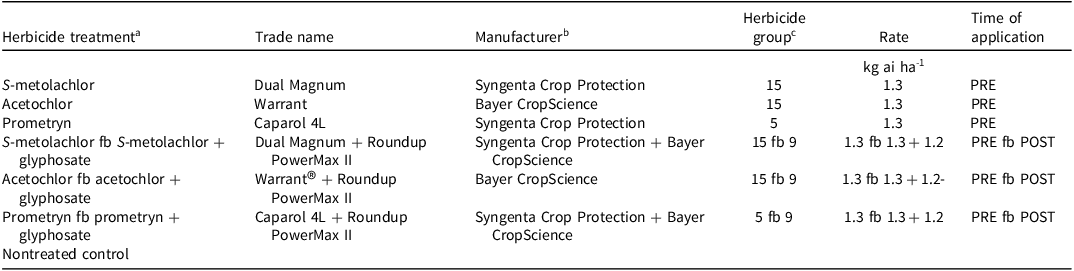
The irrigation treatments and herbicide combinations were randomized and replicated three times in a split-plot design. Two irrigation treatments, I1: 100% crop evapotranspiration (ETc) replacement and I2: 50% ETc replacement, were in the main plot, and herbicide treatments were in subplots (Table 1). Irrigation stress was maintained from the day of planting in both years. The irrigation application was determined based on the ETc requirement, calculated as a product of reference evapotranspiration (ETo) and stage-specific crop coefficients (Kc) (Allen et al. Reference Allen, Pereira, Raes and Smith1998). The ETo was calculated from the weather data using the Penman-Monteith method (Zotarelli et al. Reference Zotarelli, Dukes, Romero, Migliaccio and Morgan2010). A weather station (Davis Instruments 6152, Wireless Vantage Pro2; Davis Instruments Corporation, Hayward, CA) was installed near the experimental site to record weather data. The equilibrium constant (Kc) values used for cotton were as follows: Kc seeding = 0.40 (7 d after planting [DAP]), Kc first square = 0.45 (8 to 45 DAP); Kc first bloom = 0.80 (46 to 65 DAP); Kc maximum bloom = 1.08 (66 to 86 DAP); Kc first open = 1.23 (87 to 110 DAP); Kc 25% open =1.25 (111 to 125 DAP); Kc 50% open = 1.05 (126 to 133 DAP); Kc 95% open = 0.60 (134 to 151 DAP); and Kc picking = 0.10 (152 to 162 DAP) (Ko et al. Reference Ko, Piccinni, Marek and Howell2009). The difference between ETc and precipitation was used to compute the irrigation water requirement. The field was irrigated once a week to replenish the ETc from the last week. Each zone had a water meter installed to record the amount of water applied. The I1 irrigation treatment received 487 mm of supplemental irrigation in 2023 and 521 mm in 2024, while the I2 treatment received 166 mm in 2023 and 264 mm in 2024.
Herbicide treatments in cotton in growing seasons of 2023 and 2024 at Lubbock, TX a .

a Abbreviations: fb, followed by; POST, postemergence; PRE, preemergence; WSSA, Weed Science Society of America.
b Manufacturer locations: Bayer CropScience, St. Louis, MO; Syngenta Crop Protection, Greensboro, NC.
c Herbicides are assigned group numbers by the Weed Science society of America.
Herbicides were sprayed using a CO2-pressurized backpack sprayer with four nozzles (XR8002-VS; TeeJet Technologies, Glendale Heights, IL) on 46-cm spacing, delivering 140 L ha−1 at 207 kPa. In both years, preemergence herbicides were applied 1 d after planting, followed by (fb) postemergence herbicides on July 13 (35 DAP) in 2023 and June 15 (30 DAP) in 2024.
Data Collection
Palmer amaranth and total weed density were recorded at 6 and 9 wk after planting (WAP) by counting the number of weeds in a 0.25-m2 quadrat randomly placed in three different spots within each plot. The height of Palmer amaranth in the same quadrat was also measured. The total weed biomass and Palmer amaranth biomass were obtained by cutting the aboveground weed biomass from the same quadrats at 6 and 9 WAP, drying the samples in an oven at 70 C for 48 h, and weighing.
The height of the cotton plants was measured on five plants per plot at 30 and 55 DAP, and at harvest. For plant biomass at harvest, cotton plants 1 m long were harvested, oven-dried at 70 C for 48 h, and weighed on a calibrated scale. Harvest timing was determined by visible physiological maturity and roughly 75% boll opening across the plot (Gwathmey et al. Reference Gwathmey, Jackson, Cothren, Lege, Logan, Roberts, Supak, Supak and Snipes2001). The harvested cotton was ginned to determine lint yield. It should be noted that yield measurements were taken from a small sample of plants per plot, which may limit precision and the extrapolation of results to the entire plot.
Statistical Analysis
The field experiment data were analyzed using an ANOVA split-plot design in R software (v. 3.5.2), with the Agricolae package (v. 1.2-8). Irrigation and herbicide treatments, and a combination of irrigation and herbicide treatments, were treated as fixed effects. Replications, a combination of replications with irrigation and a combination of replications with herbicide treatments, were treated as random effects. Data for 2023 and 2024 were analyzed separately because the two years differed in environmental conditions and management factors. Treatment means were compared using the LSD test with a significance level of 5%. SigmaPlot software (v. 14; Systat Software, San Jose, CA) was used to create the figures.
Results and Discussions
Irrigation and Weather Conditions
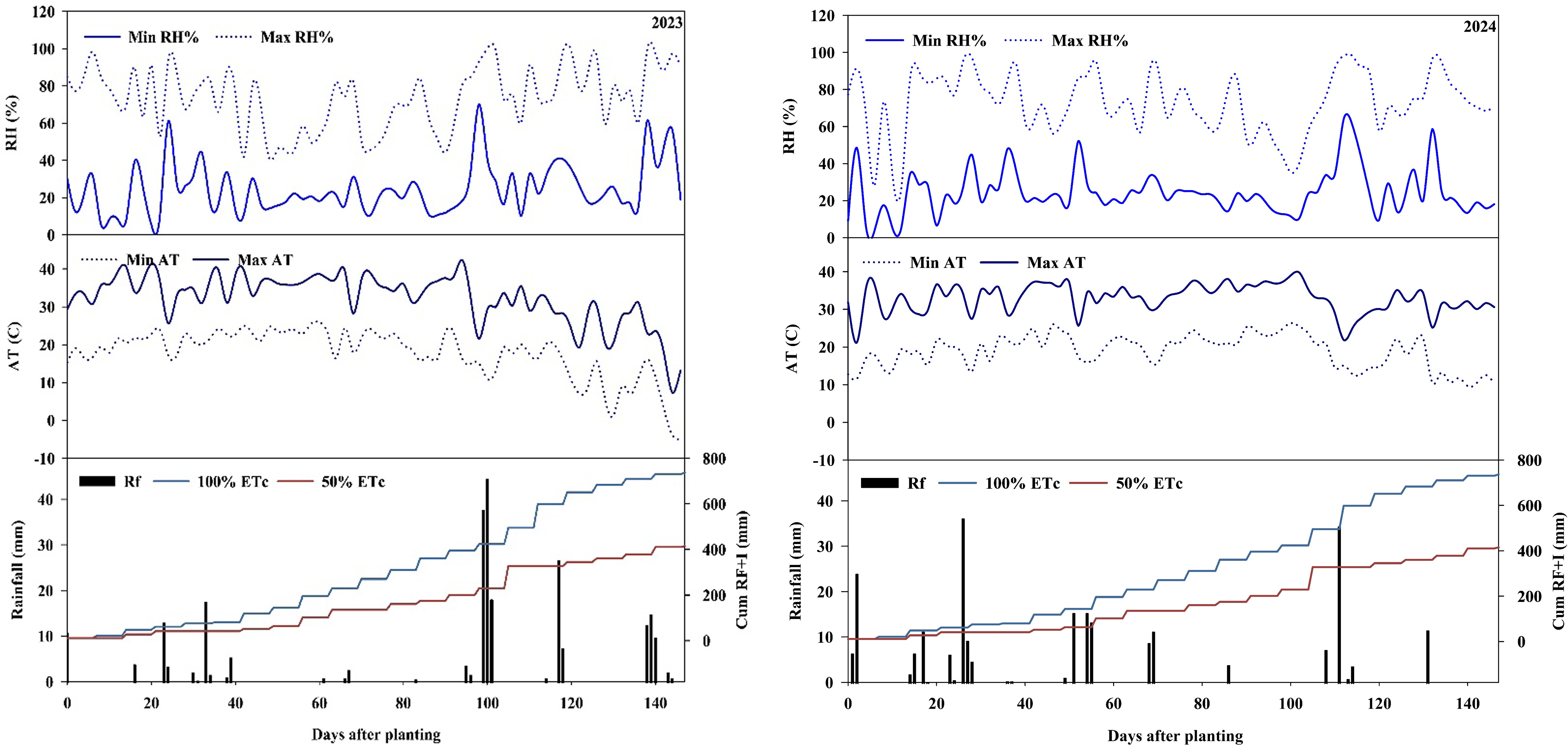
The average maximum and minimum temperatures were 32.3 C and 17.5 C in 2023, and 32.9 C and 18.9 C in 2024, respectively (Figure 1). The daily average relative humidity in 2023 and 2024 was 47.7% and 46.5%, respectively. The daily average solar radiation recorded was 21.1 and 22.4 MJ m−2 in 2023 and 2024, respectively. The total rainfall during the growing season was 249 mm in 2023 and 238 mm in 2024.
Daily maximum (Max) and minimum (Min) relative humidity (RH%), daily maximum and minimum air temperature (AT), rainfall (RF), and cumulative rainfall plus irrigation (Cum RF + I) during the 2023 and 2024 growing seasons at Lubbock, TX.

Total Weed Density and Biomass Production
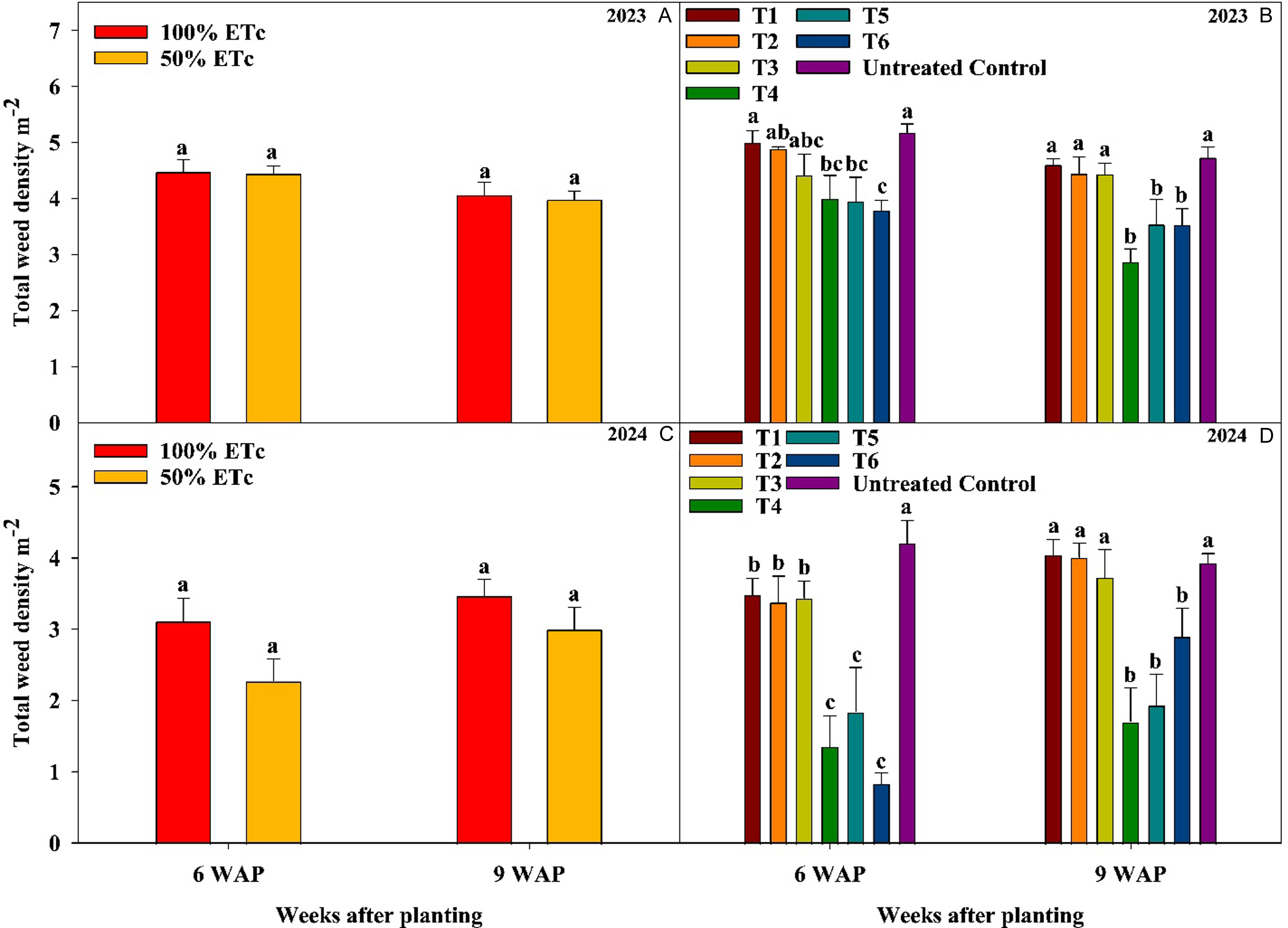
In both years, total weed density was unaffected by irrigation levels (Figure 2, A and C). However, herbicide treatments significantly affected weed density (Figure 2, B and D). The interaction between irrigation levels and herbicide treatments was nonsignificant for total weed density due to rain amounts of 10.9 mm in 2023 and 29.6 mm in 2024, which occurred within 24 to 48 h of herbicide application. The rainfall provided optimal moisture conditions for the activation of all the preemergence herbicides.
Effect of irrigation levels (A and C) and herbicide treatments (B and D) on total weed density at 6 and 9 wk after planting (WAP) in cotton during 2023 and 2024 at Lubbock, TX. The standard bars represent ± standard errors; Different letters indicate significant differences among treatments at P ≤ 0.05 (LSD test). T1: S-metolachlor, T2: Acetochlor, T3: Prometryn, T4: S-metolachlor applied preemergence (PRE) followed by glyphosate + S-metolachlor applied postemergence (POST), T5: acetochlor applied PRE followed by glyphosate + acetochlor applied POST, T6: prometryn applied PRE followed by glyphosate + prometryn applied POST.

In 2023, at 6 WAP, treatments prometryn, acetochlor, or S-metolachlor PRE fb glyphosate + prometryn, acetochlor, or S-metolachlor POST provided significantly better weed control than a preemergence application of S-metolachlor and the untreated control (Figure 2B). In 2024, all the herbicide treatments provided significant reductions in weed density compared with that of the untreated control at 6 WAP (Figure 2D). However, acetochlor, prometryn, or S-metolachlor applied preemergence fb glyphosate + acetochlor, prometryn, or S-metolachlor applied postemergence resulted in significantly lower weed density than the prometryn, S-metolachlor, and acetochlor preemergence treatments and the untreated control. Similar results were observed at 9 WAP in both 2023 and 2024; all the preemergence fb glyphosate + residual postemergence herbicide treatments resulted in significant reductions in weed numbers compared with that of untreated control and sole preemergence herbicide treatments (Figures 2, B and D).
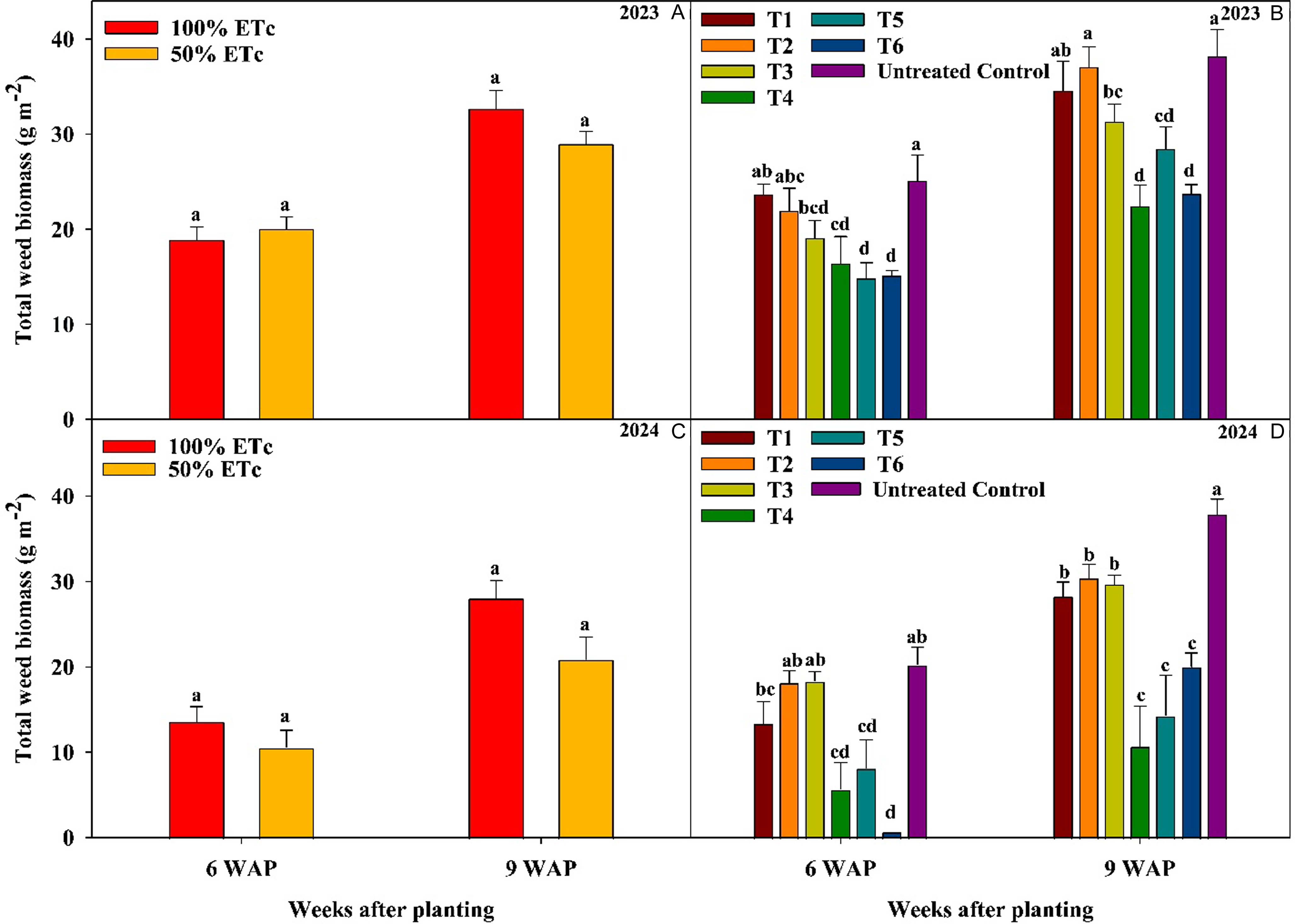
In terms of weed biomass production, irrigation levels had no significant effect in either year (Figure 3, A and C). Plots irrigated at I1 and I2 produced 880 g m−2 and 564 g m−2 in 2023 and 1,140 g m−2 and 872 g m−2 in 2024, respectively; however, the differences were not significant. This lack of significance may be partially explained by the high Palmer amaranth population at the site, which is well documented to have drought tolerance (Matzrafi et al. Reference Matzrafi, Osipitan, Ohadi and Mesgaran2021), allowing it to maintain growth even under reduced soil moisture. Additionally, both irrigation treatments received sufficient in-season rainfall events, likely minimizing soil moisture differences between I1 and I2 and reducing the ability to detect treatment effects. However, contrary results were observed by Abdulkareem et al. (Reference Abdulkareem, Mokhtassi-Bidgoli, Ayyari, Keshtkar and Eyni-Nargeseh2024), lowering the irrigation volume resulted in a 2.3-fold decrease in weed biomass production under field conditions. El-Metwally et al. (Reference El-Metwally, Abido, Saadoon and Gad2020) also reported a 25.7% reduction in total weed biomass production at 40% ETc compared with 100% ETc in peanuts under field conditions.
Effect of irrigation levels (A and C) and herbicide treatments (B and D) on total weed biomass at 6 and 9 wk after planting (WAP) cotton during 2023 and 2024 at Lubbock, TX. The standard bars represent ± standard errors; Different letters indicate significant differences among treatments at P ≤ 0.05 (LSD test). T1: S-metolachlor, T2: acetochlor, T3: prometryn, T4: S-metolachlor applied preemergence (PRE) followed by glyphosate + S-metolachlor applied postemergence (POST), T5: acetochlor applied PRE followed by glyphosate + acetochlor applied POST, T6: prometryn applied PRE followed by glyphosate + prometryn applied POST.

All herbicide treatments reduced total weed biomass compared with weed biomass in the untreated control (Figure 3, B and D). In 2023, weed biomass at 6 WAP exhibited results similar to those for total weed density. The plots treated with acetochlor, prometryn, or S-metolachlor preemergence, and with glyphosate + acetochlor, prometryn, or S-metolachlor postemergence, demonstrated reductions of 41%, 40%, and 34% in weed biomass production compared with the untreated control (Figure 3B). Additionally, a preemergence treatment of prometryn resulted in a 24% reduction in weed biomass compared with the untreated control. In 2024, again, acetochlor, prometryn, or S-metolachlor applied preemergence, fb glyphosate + acetochlor, prometryn, or S-metolachlor applied postemergence, resulted in a reduction in weed biomass compared to S-metolachlor or prometryn applied preemergence and the untreated control (Figure 3D).
However, in both 2023 and 2024, weed biomass increased between 6 and 9 WAP due to a new flush of weeds. The increase in weed biomass was due to a rise of 4.2 C in average air temperature (Travlos et al. Reference Travlos, Gazoulis, Kanatas, Tsekoura, Zannopoulos and Papastylianou2020) and several rain events (Kathiresan and Gualbert Reference Kathiresan and Gualbert2016) totaling 20 mm in 2023 and 44 mm in 2024 between 6 and 9 WAP. However, acetochlor, prometryn, or S-metolachlor applied preemergence fb glyphosate + acetochlor, prometryn, or S-metolachlor applied postemergence provided effective weed control. In 2023, at 9 WAP, the S-metolachlor, prometryn, or acetochlor preemergence applications fb postemergence applications of glyphosate + S-metolachlor, prometryn, or acetochlor resulted in 42%, 38%, and 26% lower weed biomass, respectively, compared with the untreated control (Figure 3B). Similar reductions in total weed biomass were observed in 2024 (Figure 3D). The acetochlor, prometryn, or S-metolachlor preemergence fb glyphosate + acetochlor, prometryn, or S-metolachlor postemergence treatments consistently led to less weed biomass production than the untreated control. Glyphosate is a slow-acting, nonselective contact herbicide that effectively controls established weeds up to 10 to 15 cm tall (Armstrong and Lancaster Reference Armstrong and Lancaster2011; Soltani et al. Reference Soltani, Nurse and Sikkema2016). Therefore, the postemergence application of a tank mix of glyphosate with residual herbicides controlled established weeds and restricted the flush of new weeds. According to Price et al. (Reference Price, Koger, Wilcut, Miller and Van Santen2008), combining glyphosate with a residual herbicide improved weed control by 53 percentage points compared with glyphosate alone applied postemergence to cotton. Koger et al. (Reference Koger, Price, Faircloth, Wilcut and Nichols2007) also reported a 70% to 80% reduction in weed biomass with a mixture of glyphosate and residual herbicide compared to the sole application of glyphosate to cotton.
Palmer Amaranth Height
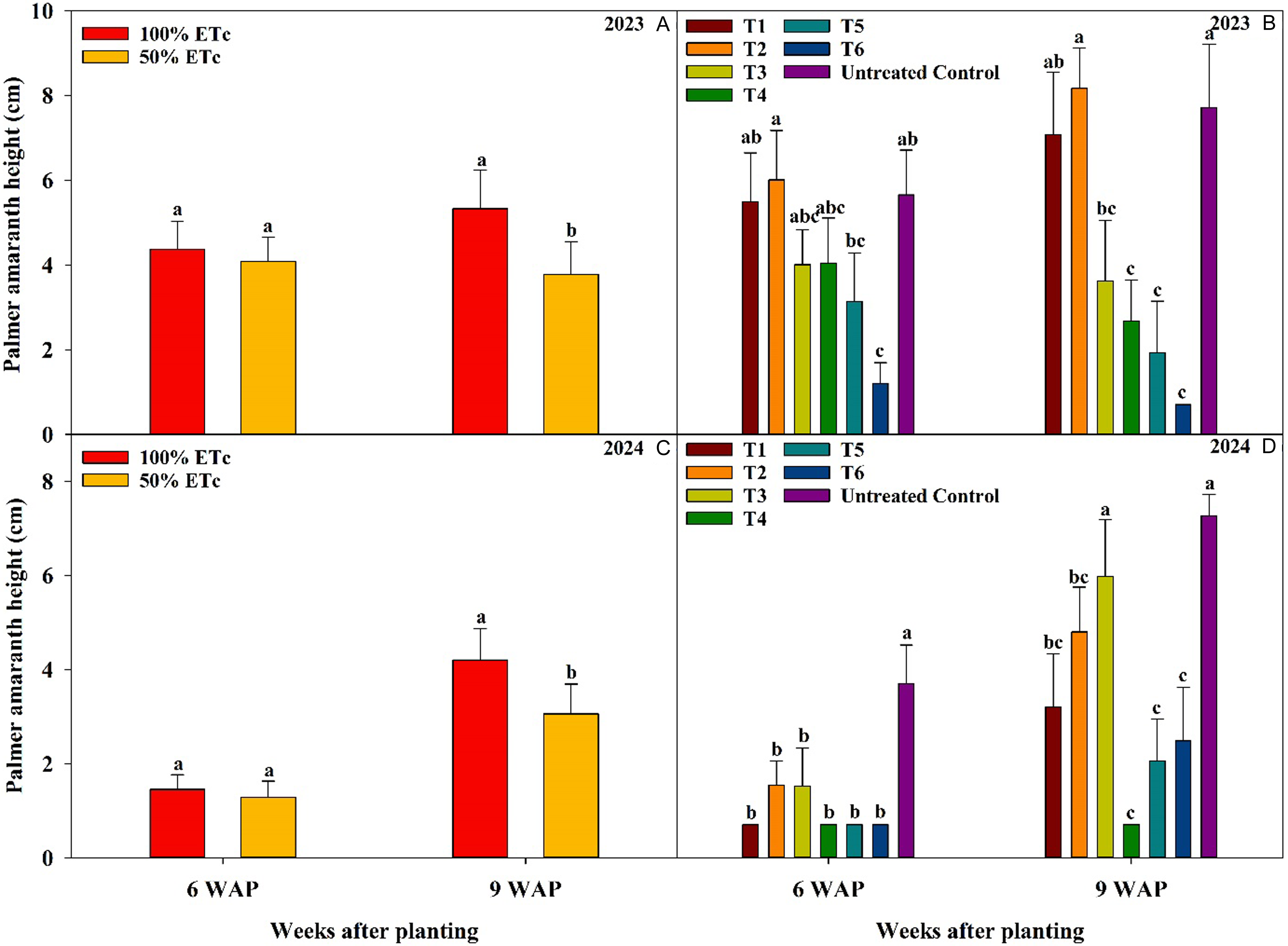
Palmer amaranth height was significantly affected by both irrigation levels and herbicide treatments (Figure 4). Specifically, at 9 WAP, the I2 irrigation level resulted in a 30% and 27% reduction in Palmer amaranth height compared with plots irrigated at I1 in 2023 and 2024, respectively (Figure 4, A and C). Water stress can limit photosynthetic activity and plant growth (Aranjuelo et al. Reference Aranjuelo, Molero, Erice, Avice and Nogues2011). Similarly, Chahal et al. (Reference Chahal, Irmak, Jugulam and Jhala2018) reported a 50% reduction in Palmer amaranth height at 50% field capacity compared to 100% field capacity in greenhouse conditions.
Effect of irrigation levels (A and C) and herbicide treatments (B and D) on Palmer amaranth height at 6 and 9 wk after planting (WAP) in cotton during 2023 and 2024 at Lubbock, TX. The standard bars represent ± standard errors. Different letters indicate significant differences among treatments at P ≤ 0.05 (LSD test). T1: S-metolachlor, T2: acetochlor, T3: prometryn, T4: S-metolachlor applied preemergence (PRE) followed by glyphosate + S-metolachlor applied postemergence (POST), T5: acetochlor applied PRE followed by glyphosate + acetochlor applied POST, T6: prometryn applied PRE followed by glyphosate + prometryn applied POST.

Among the herbicide treatments, in 2023 at 6 WAP, prometryn applied preemergence fb glyphosate + prometryn applied postemergence resulted in significantly lower Palmer amaranth height than the untreated control. In contrast, in 2024, all the herbicide treatments resulted in significantly lower Palmer amaranth plant height than the untreated control (Figure 4, B and D). More pronounced results in 2024 than 2023 can be linked to the trial being conducted in a different field to avoid increasing the seedbank, which may have altered initial weed pressure and seedbank composition. At 9 WAP, the prometryn, S-metolachlor, or acetochlor preemergence applications fb glyphosate + prometryn, S-metolachlor, or acetochlor postemergence treatments provided significant reductions in Palmer amaranth height in both 2023 and 2024 compared with the untreated control.
Palmer Amaranth Density and Biomass Production
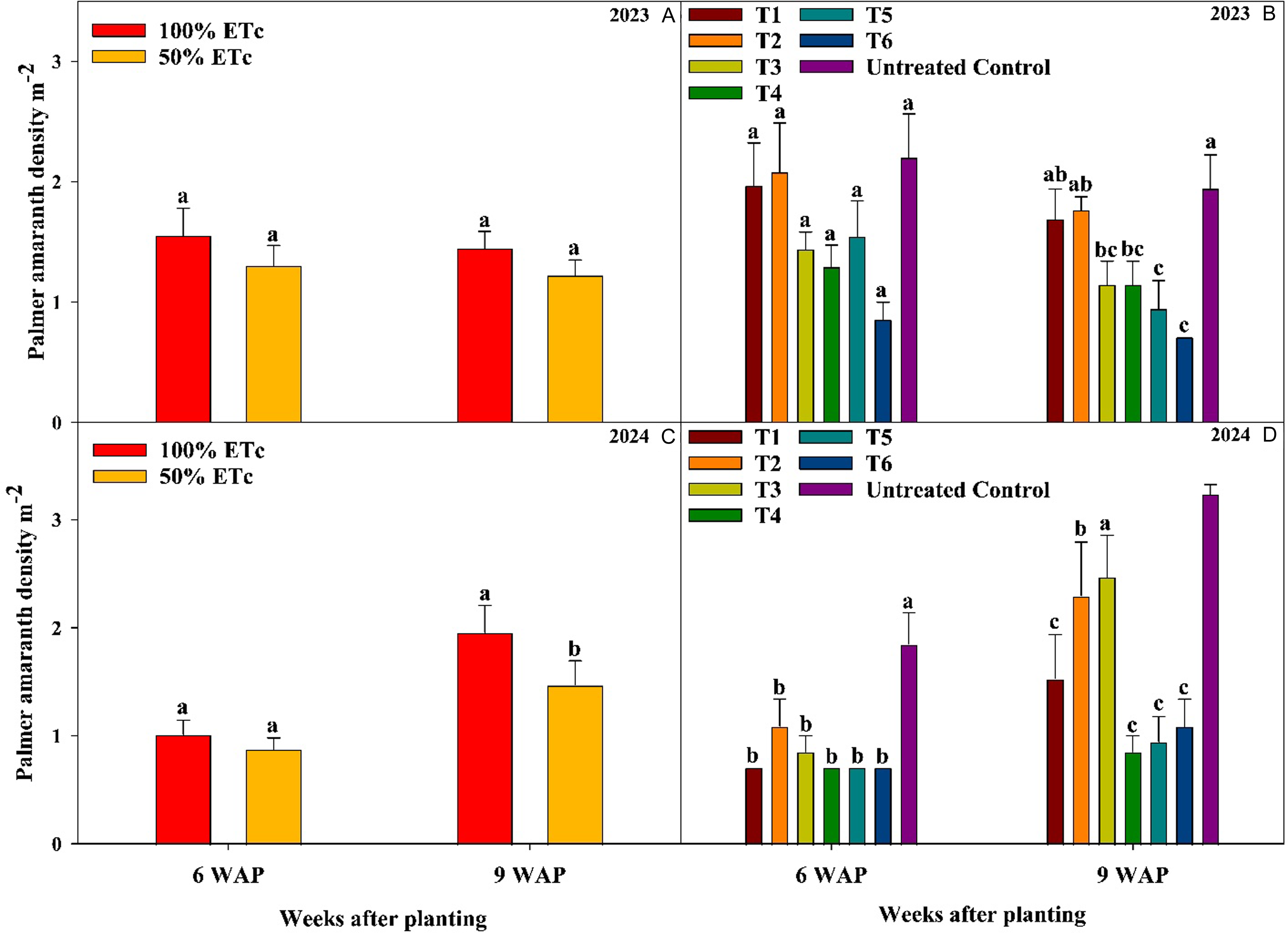
Irrigation levels resulted in comparable Palmer amaranth density in 2023; however, reducing the irrigation level from I1 to I2 in 2024 resulted in a 25% decrease in Palmer amaranth density at 9 WAP (Figure 5, A and C). In 2024, I1 plots received a total of 104 mm of rain plus supplemental irrigation between 6 WAP and 9 WAP, whereas plots under I2 received 48 mm in the same period. This difference in moisture reduced Palmer amaranth germination in I2 plots compared to I1 plots, resulting in a difference in Palmer amaranth density between the irrigation levels (Han et al. Reference Han, Li, Wang and Shi2022).
Effect of irrigation levels (A and C) and herbicide treatments (B and D) on Palmer amaranth density at 6 and 9 wk after planting (WAP) cotton during 2023 and 2024 at Lubbock, TX. The standard bars represent ± standard errors. Different letters indicate significant differences among treatments at P ≤ 0.05 (LSD test). T1: S-metolachlor, T2: acetochlor, T3: prometryn, T4: S-metolachlor applied preemergence (PRE) followed by glyphosate + S-metolachlor applied postemergence (POST), T5: acetochlor applied PRE followed by glyphosate + acetochlor applied POST, T6: prometryn applied PRE followed by glyphosate + prometryn applied POST.

In 2023, herbicide treatments had no effect on Palmer amaranth density compared with the untreated control until 6 WAP (Figure 5B). However, by 9 WAP, prometryn, acetochlor, or S-metolachlor applied preemergence fb glyphosate + prometryn, acetochlor, or S-metolachlor applied postemergence reduced Palmer amaranth density by 63%, 52%, and 41%, respectively, compared with the untreated control. During the 2024 growing season, all herbicide treatments resulted in lower Palmer amaranth density than the untreated control (Figure 5D). By 9 WAP, similar to 2023, the S-metolachlor, acetochlor, or prometryn preemergence fb glyphosate + S-metolachlor, acetochlor, or prometryn postemergence treatments resulted in 74%, 70%, and 66% lower Palmer amaranth density, respectively, compared with the untreated control. More significant results at 9 WAP in both 2023 and 2024 can be attributed to the effective control of a new flush of weeds by the sequential application of residual herbicides in a tank mix with glyphosate as postemergence. With lower weed densities of up to 6 WAP, glyphosate effectively controlled the existing 10- to 15-cm-tall Palmer amaranth (Kouame et al. Reference Kouame, Butts, Norsworthy, Davis and Piveta2024; Norsworthy et al. Reference Norsworthy, Ward, Shaw, Llewellyn, Nichols, Webster, Bradley, Frisvold, Powles and Burgos2012), while the sequential application of residual herbicides reduced the emergence of new Palmer amaranth plants (Chahal et al. Reference Chahal, Aulakh, Jugulam, Jhala, Price, Kelton, Sarunaite, Herbicides and Biology2015). Similarly, Price et al. (Reference Price, Koger, Wilcut, Miller and Van Santen2008) reported effective Palmer amaranth control in cotton production with a postemergence application of glyphosate in a tank mix with soil residual herbicide compared to glyphosate applied alone. Also, Travlos et al. (Reference Travlos, Gazoulis, Kanatas, Tsekoura, Zannopoulos and Papastylianou2020) observed 96% control of Palmer amaranth with a postemergence application of glyphosate tank mixed with S-metolachlor in cotton production. Similarly, Scott et al. (Reference Scott, Askew, Bennett and Wilcut2001) and Dotray et al. (Reference Dotray, Keeling, Henniger and Abernathy1996) reported effective control of Palmer amaranth with tank mixing a residual herbicide in postemergence combinations.
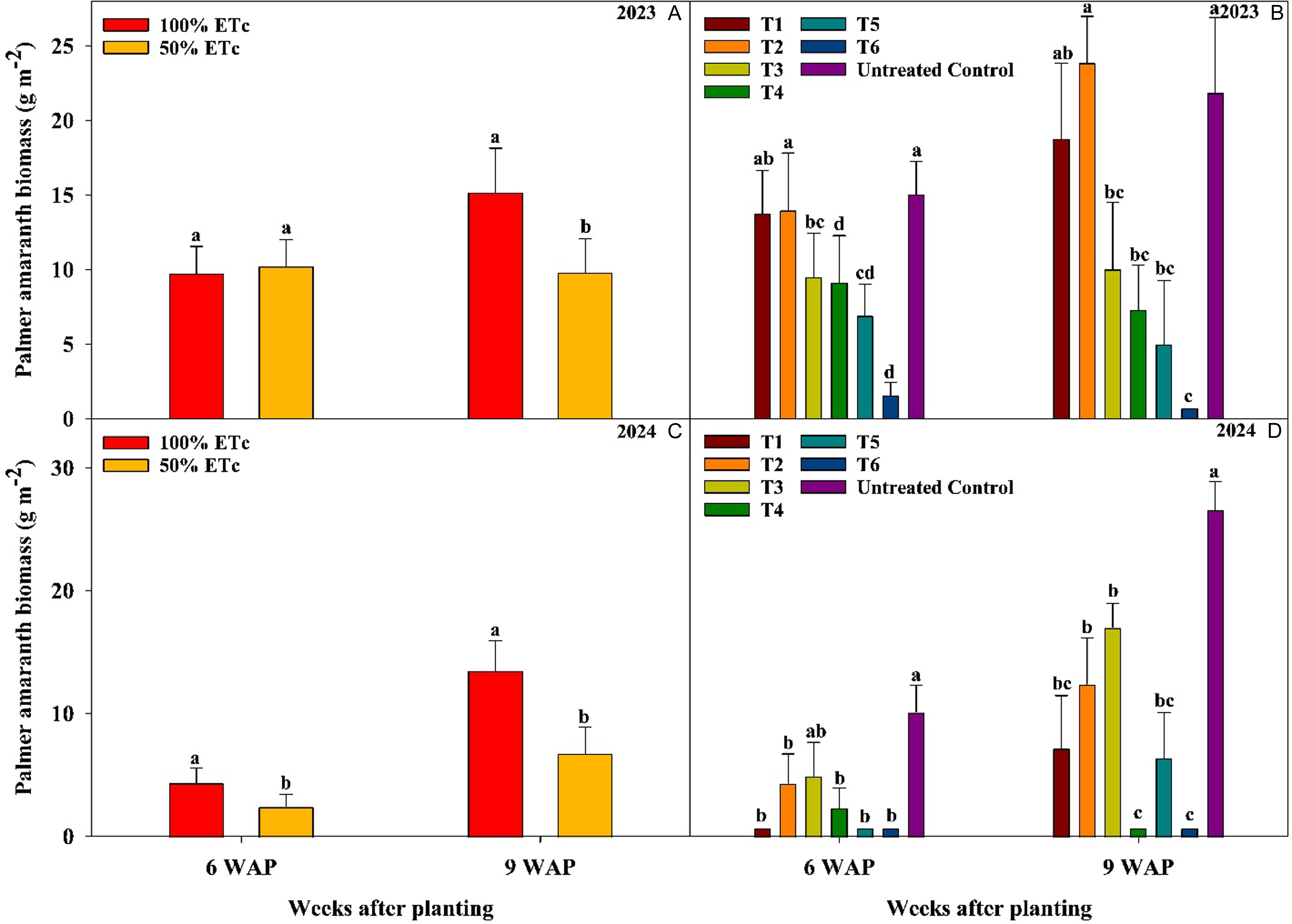
Palmer amaranth biomass was affected by irrigation levels (Figure 6). Reducing irrigation from I1 to I2 reduced Palmer amaranth biomass by 35% and 50% at 9 WAP in 2023 and 2024, respectively (Figure 6, A and 6). Due to reduced CO2 intake and photosynthetic activity, less biomass was accumulated under water stress conditions (Osakabe et al. Reference Osakabe, Osakabe, Shinozaki and Tran2014). Similarly, Chahal et al. (Reference Chahal, Irmak, Jugulam and Jhala2018) reported a 40% reduction in Palmer amaranth biomass accumulation with 50% field capacity compared to 100% field capacity.
Effect of irrigation levels (A and C) and herbicide treatments (B and D) on Palmer amaranth biomass at 6 and 9 wk after planting (WAP) cotton during 2023 and 2024 at Lubbock, TX. The standard bars represent ± standard errors. Different letters indicate significant differences among treatments at P ≤ 0.05 (LSD test). T1: S-metolachlor, T2: acetochlor, T3: prometryn, T4: S-metolachlor applied preemergence (PRE) followed by glyphosate + S-metolachlor applied postemergence (POST), T5: acetochlor applied PRE followed by glyphosate + acetochlor applied POST, T6: prometryn applied PRE followed by glyphosate + prometryn applied POST.

In 2023, at 6 WAP, S-metolachlor, prometryn, or acetochlor applied preemergence fb glyphosate + S-metolachlor, prometryn, or acetochlor applied postemergence, and prometryn applied preemergence resulted in lower Palmer amaranth biomass compared with biomass in the untreated control, but this reduction was not statistically significant (Figure 6B). In contrast, in 2024, most herbicide treatments resulted in a significant reduction in Palmer biomass production compared with the untreated control (Figure 6D). As observed at 6 WAP, S-metolachlor, prometryn, or acetochlor applied preemergence fb glyphosate + S-metolachlor, prometryn, or acetochlor applied postemergence, and prometryn applied preemergence resulted in lower weed biomass than the untreated control at 9 WAP in 2023 (Figure 6B). However, in 2024, all the herbicide treatments resulted in lower Palmer amaranth biomass production than the untreated control (Figure 6D). Similarly, Hay et al. (Reference Hay, Shoup and Peterson2019) reported a 66 % increase in Palmer amaranth control with preemergence fb postemergence herbicide combination than preemergence application in soybean. Aulakh et al. (Reference Aulakh, Price, Enloe, van Santen, Wehtje and Patterson2012) found similar results, with a 24% increase in Palmer amaranth control with a preemergence + postemergence herbicide treatment compared to a preemergence herbicide alone.
Cotton Height and Yield
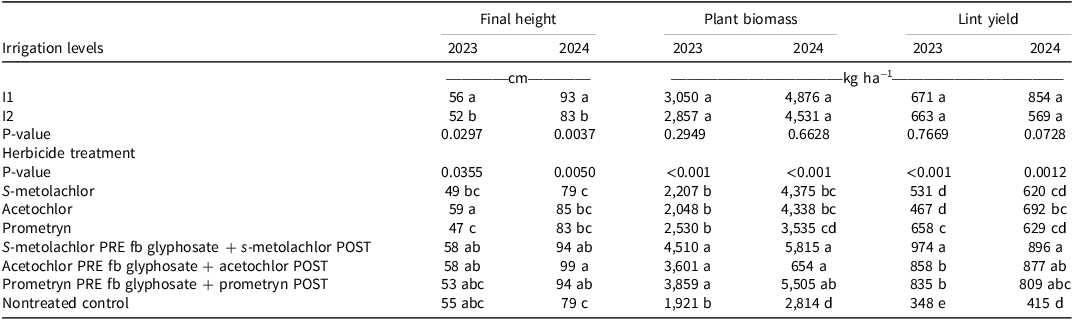
In both 2023 and 2024, cotton plant height was reduced in I2 irrigation plots at harvest compared with plant height in I1 plots (Table 2). Deficit irrigation-induced water stress results in physiological responses in plants, which change growth patterns and resource use (Jiao et al. Reference Jiao, Ding, Du, Kang, Tong, Gao and Shao2024). Water stress results in earlier transitions from vegetative growth to the reproductive stage and the allocation of resources to reproductive organs (Chai et al. Reference Chai, Gan, Zhao, Xu, Waskom, Niu and Siddique2016; Du et al. Reference Du, Kang, Zhang and Li2008). This early switch restricted vertical growth and resulted in shorter plant height. In previous studies, Liu et al. (Reference Liu, Gao, Sun, Wu, Jha, Zhang and Gong2017) also reported lower cotton plant height under deficit irrigation than under full irrigation. However, the reduction in plant height did not affect total plant biomass or lint yield in either year (Table 2). The lack of effect of irrigation level on lint yield can be attributed to the heavy rains that totaled 106 mm in 2023 and 79 mm in 2024 during the boll-setting stage, resulting in similar lint yields across irrigation treatments. Similarly, Fazel et al. (Reference Fazel, Moghbel, Aguilar, Koudahe and Ansari2022) and Liu et al. (Reference Liu, Gao, Sun, Wu, Jha, Zhang and Gong2017) observed comparable biomass and lint yield from cotton under deficit irrigation compared to fully irrigated cotton.
Effect of irrigation levels and herbicide treatments on cotton height, plant biomass, and lint yield at harvest during 2023 and 2024a,b.

a Abbreviations: fb, followed by; I1, irrigation level 1 (100% crop evapotranspiration [ETc] replacement); I2, irrigation level 2 (50% ETc replacement); NS, nonsignificant; POST, postemergence; PRE, preemergence.
b Mean values followed by different lowercase letters in each column indicate a significant difference in treatments (P ≤ 0.05, LSD test).
In 2023, S-metolachlor, prometryn, or acetochlor applied preemergence fb glyphosate + S-metolachlor, prometryn, or acetochlor applied postemergence produced 81%, 67%, and 61% greater plant biomass than the untreated control (Table 2). Similarly, in 2024, all herbicide treatments, except for prometryn applied preemergence, produced higher plant biomass than the untreated control. The acetochlor, S-metolachlor, or prometryn preemergence fb glyphosate + acetochlor, S-metolachlor, or prometryn postemergence treatments produced 80%, 70%, and 65% higher biomass, respectively, than the untreated control. The greater biomass produced in the herbicide-treated plots compared with untreated control plots can be attributed to effective weed control in the treated plots. Similar results were observed for lint yield among herbicide treatments (Table 2). In 2023, S-metolachlor, prometryn, or acetochlor applied preemergence fb glyphosate + S-metolachlor, prometryn, or acetochlor applied postemergence resulted in higher lint yield than that of the untreated control. The S-metolachlor preemergence fb glyphosate + S-metolachlor postemergence treatment yielded 94% more lint than the untreated control. Similar results were observed in 2024: S-metolachlor or acetochlor applied preemergence fb glyphosate + S-metolachlor or acetochlor applied postemergence yielded higher lint yield than the untreated control. In previous studies, Askew (Reference Askew and Wilcut2002) and Buchanan and Burns (Reference Buchanan and Burns1970) also highlighted the importance of applying residual herbicides for effective weed management because cotton is highly susceptible to early season weed interference. Also, Cahoon et al. (Reference Cahoon, York, Jordan, Seagroves, Everman and Jennings2015) reported a 30% to 40% increase in cotton lint yield with preemergence + postemergence herbicide combinations compared to glyphosate alone applied postemergence. Similarly, Clewis et al. (Reference Clewis, Miller, Koger, Baughman, Price, Porterfield and Wilcut2008) reported that glyphosate + S-metolachlor applied postemergence produced 22% greater lint than S-metolachlor applied preemergence.
In conclusion, this study demonstrates that deficit irrigation is an effective water conservation strategy that preserves cotton yield and herbicide efficacy. While irrigation levels did not significantly affect total weed density or biomass, reduced irrigation (I2) limited Palmer amaranth growth, particularly in 2024, due to water stress and efficient herbicide application of preemergence herbicides, followed by postemergence plus residual herbicide treatments, consistently improved weed control, enhanced cotton growth, and yield. Although deficit irrigation reduced cotton height in both years, timely rainfall during the boll-setting stage helped maintain yields across different irrigation treatments. These results highlight that combining strategic irrigation practices with herbicide treatments enhances weed suppression and supports cotton production in water-scarce environments.
Practical implications
Implementing deficit irrigation strategies and effective herbicide management practices in semiarid regions facing water scarcity challenges can help optimize water use efficiency, mitigate weed competition, and maintain cotton yield under limited water resources. Adopting integrated weed management and incorporating residual herbicides into weed management practices can help effectively control herbicide-resistant weed species such as Palmer amaranth, while minimizing the risk of weed resistance. Furthermore, identifying herbicide combinations with superior efficacy in weed control and crop yield enhancement provides valuable insights for optimizing weed management practices and maximizing cotton production in transgenic herbicide-tolerant cotton systems.
Acknowledgments
We thank the Department of Plant and Soil Science at Texas Tech University for its support. We also thank Lelton Howell, his farm crew, and graduate student Arjun Kafle for their help in this study.
Funding
This research received no specific grant from any funding agency, commercial or not-for-profit sectors.
Competing Interests
The authors declare they have no competing interests.

 Open access

