





Introduction
Family violence is a broad term that includes child abuse, exposure to interparental violence, and neglect (Warren et al., Reference Warren, Blundell, Chung and Waters2024). Globally, one in six people has been exposed to childhood family violence (Whitten et al., Reference Whitten, Tzoumakis, Green and Dean2024). Exposure to family violence has been found to be associated with negative developmental outcomes (Felitti et al., Reference Felitti, Anda, Nordenberg, Williamson, Spitz, Edwards, Koss and Marks2019; Fowler & Chanmugam, Reference Fowler and Chanmugam2007; Lee et al., Reference Lee, Mirhashem, Bernard and Dozier2023; Shonkoff et al., Reference Shonkoff, Garner, Siegel, Dobbins, Earls, McGuinn, Pascoe, Wood, High, Donoghue, Fussell, Gleason, Jaudes, Jones, Rubin, Schulte, Macias, Bridgemohan, Fussell and Wegner2012; Sturge-Apple et al., Reference Sturge-Apple, Davies, Winter, Cummings and Schermerhorn2008). A particularly important outcome for mental health are posttraumatic stress (PTS) symptoms (Artz et al., Reference Artz, Jackson, Rossiter, Nijdam-Jones, Géczy and Porteous2014). Continuous exposure to family violence even predicted longitudinal increases in children’s PTS (Galano et al., Reference Galano, Grogan-Kaylor, Clark, Stein and Graham-Bermann2021). Child abuse and interparental violence are forms of family violence that often occur together (Hamby & Grych, Reference Hamby and Grych2013). In a Dutch study, professionals reported that in 48% of children who were exposed to child abuse, different forms of domestic violence, including interparental violence, cooccurred (Alink et al., Reference Alink, Prevoo, van Berkel, Linting, Klein Velderman and Pannebakker2018). Referral to child protection services (CPS) is aimed to stop this violence and support family members in their recovery from its cumulative impact (Felitti et al., Reference Felitti, Anda, Nordenberg, Williamson, Spitz, Edwards, Koss and Marks2019; Finkelhor et al., Reference Finkelhor, Ormrod and Turner2007; Guedes et al., Reference Guedes, Bott, Garcia-Moreno and Colombini2016). In 55% of children exposed to interparental violence and referred to CPS, PTS symptoms were low and stable over a period of one and a half years and 9% of children recovered from PTS symptoms (Meijer et al., Reference Meijer, Finkenauer, Tierolf, Lünnemann and Steketee2019). Finding out how children recover after referral to CPS and which factors play a role in their recovery, might hold clues for preventive interventions. Emotional Security Theory (EST; Davies & Cummings, Reference Davies and Cummings1998) may provide a useful framework for understanding how psychosocial problems in children may be linked to the dynamics of destructive family conflict and violence. The current study aimed to test to what extent emotional security may particularly explain recovery in children’s PTS, as child protection support may lead to reduction of violence between parents as well as child abuse, and parents’ own stress and PTS may ameliorate as well.
Emotional security theory
EST describes how children adapt to signals that the integrity of the family system may come to an end, thereby restoring a sense of safety and security. One adaptation is behavioral avoidance of conflict or attempts to resolve such conflicts and their aftermath (DeBoard-Lucas & Grych, Reference DeBoard-Lucas and Grych2011; Koss et al., Reference Koss, George, Bergman, Cummings, Davies and Cicchetti2011), and another is to cognitively alter internal representations of the relationships within the family (Fosco et al., Reference Fosco, Deboard and Grych2007). If prolonged, these adaptations may lead to maladaptive functioning in other contexts than the family (Davies & Martin, Reference Davies and Martin2013). According to EST, various characteristics of the conflict, including duration and severity of the conflict, as well as poor resolution, make it difficult for children to regain homeostasis after being witness to it. In EST, parental functioning in the aftermath of conflict may also affect their children, both directly as a stressor or indirectly as another indication of the tenuous state of the family system. EST was originally developed to understand children’s responses in the context of interparental violence. However, child abuse could elicit similar psychological responses as interparental violence because it also signifies broader family dysfunction (Herrenkohl et al., Reference Herrenkohl, Sousa, Tajima, Herrenkohl and Moylan2008; Montgomery et al., Reference Montgomery, Just-Østergaard and Jervelund2019). To understand the links between dynamics in family violence and recovery, we therefore start with examining the role of parent functioning, emotional security, and frequency and intensity of the violence in the association between family violence and children’s PTS. In this study, mediation pathways will be tested between changes in family violence and children’s PTS through children’s emotional security, parental stress, and parent PTS in a Dutch sample of families who were referred to CPS.
Family violence and children’s PTS
According to EST, frequency and intensity of family violence itself are indirectly related to child outcomes (Cummings & Miller-Graff, Reference Cummings and Miller-Graff2015). Studies on this topic found mixed results. Although higher frequency of exposure to family violence was positively associated with behavioral maladjustment (Graham-Bermann et al., Reference Graham-Bermann, Gruber, Howell and Girz2009) and PTS symptoms (Mcdonald et al., Reference Mcdonald, Shin, Corona, Maternick, Graham-Bermann, Ascione and Williams2016), severity and frequency of the violence alone predicted only to a limited degree children’s adjustment and functioning after family violence (Graham-Bermann et al., Reference Graham-Bermann, Gruber, Howell and Girz2009; Manning et al., Reference Manning, Davies and Cicchetti2014). In a longitudinal study, changes in the severity of family violence did not predict a decrease or increase in externalizing and prosocial behavior (Manning et al., Reference Manning, Davies and Cicchetti2014). In a study of Lünnemann et al., (Reference Lünnemann, Luijk, Van der Horst, Jongerling and Steketee2022), PTS symptoms decreased in families where family violence decreased. However, in families where the violence had stopped, children still experienced the same level of PTS symptoms as in families where the violence persisted. One explanation for these mixed results is that most of these studies on family violence focus on one type of family violence and therefore miss the possible impact of changes in other forms of family violence. Also, some studies included only a single informant and did not compare multiple informants (Graham-Bermann et al., Reference Graham-Bermann, Gruber, Howell and Girz2009; Manning et al., Reference Manning, Davies and Cicchetti2014; Mcdonald et al., Reference Mcdonald, Shin, Corona, Maternick, Graham-Bermann, Ascione and Williams2016). Others combined parent and child-report by using the score of the family member that reported the highest number of incidents (Lünnemann et al., Reference Lünnemann, Luijk, Van der Horst, Jongerling and Steketee2022), even though parent-and child-report on family violence are modestly associated and therefore contain partly unique information (Compier-de Block et al., Reference Compier-de Block, Alink, Linting, van den Berg, Elzinga, Voorthuis, Tollenaar and Bakermans-Kranenburg2017). Another explanation could be that studies analyzed differences between persons (interindividual) or families (interfamilial) and not intraindividual or intrafamilial changes. Studying intrafamilial changes is important because it accounts for the stability of a construct that can differ between families (Berry & Willoughby, Reference Berry and Willoughby2017). For example, an increase in family violence in a family that showed low, stable levels of family violence might have a different effect on child PTS than an equal increase in family violence in a family that showed high, fluctuating levels of family violence. When searching for associations between constructs, it is thus important to separate interfamilial differences from intrafamilial changes and assess if intrafamilial changes in one construct relate to intrafamilial changes in another construct. In our study, we will therefore employ a novel technique (random intercept cross-lagged panel modeling) that enables us to examine intrafamilial processes while accounting for interfamilial differences.
Family violence, parental stress, and children’s PTS
According to EST, violence-induced changes in parents’ functioning can directly and indirectly affect children’s emotional security and emotional and behavioral problems (Davies & Martin, Reference Davies and Martin2013). Levendosky and Graham-Bermann (Reference Levendosky and Graham-Bermann2000) argued that the effect of violence on parenting may be mediated by parents’ PTS. Parents’ PTS symptoms were associated with increased levels of parenting stress (Christie et al., Reference Christie, Hamilton-Giachritsis, Alves-Costa, Tomlinson and Halligan2019), and, in turn, higher levels of parenting stress were associated with higher levels of children’s PTS symptoms (Crusto et al., Reference Crusto, Whitson, Walling, Feinn, Friedman, Reynolds, Amer and Kaufman2010; Telman et al., Reference Telman, Overbeek, de Schipper, Lamers-Winkelman, Finkenauer and Schuengel2016) and worse mental health in children (Roberts et al., Reference Roberts, Campbell, Ferguson and Crusto2013). Also, maternal mental health significantly predicted children’s resilience after family violence (Fogarty et al., Reference Fogarty, Wood, Giallo, Kaufman and Hansen2019). Parents who were exposed to family violence were less satisfied with their parenting and reported a higher incidence of child PTS (Banyard et al., Reference Banyard, Williams and maltreatment2003). We therefore hypothesize that parents’ PTS and parenting stress are mediators that help to explain how family violence relates to changes in child PTS symptoms.
Family violence, emotional security, and children’s PTS
Cross-sectionally, emotional security was found to account for the association between marital aggression and children’s PTS symptoms (El-Sheikh et al., Reference El-Sheikh, Cummings, Kouros, Elmore-Staton and Buckhalt2008). Emotional security was also found to longitudinally explain the link between interparental discord and children’s internalizing and externalizing problems (Cummings et al., Reference Cummings, Schermerhorn, Davies, Goeke-Morey and Cummings2006). However, both studies regarded the general population, while processes in families receiving support due to family violence may be not only quantitatively, but also qualitatively different. Furthermore, neither study included child abuse. Additionally, previous studies only tested whether EST could serve as an explanatory mechanism for psychological problems but did not test whether EST could also explain recovery after decreases in family violence. Thus, the role of emotional security remains unclear with respect to recovery of PTS that may or may not occur as family violence, including child abuse, subsides.
Present study
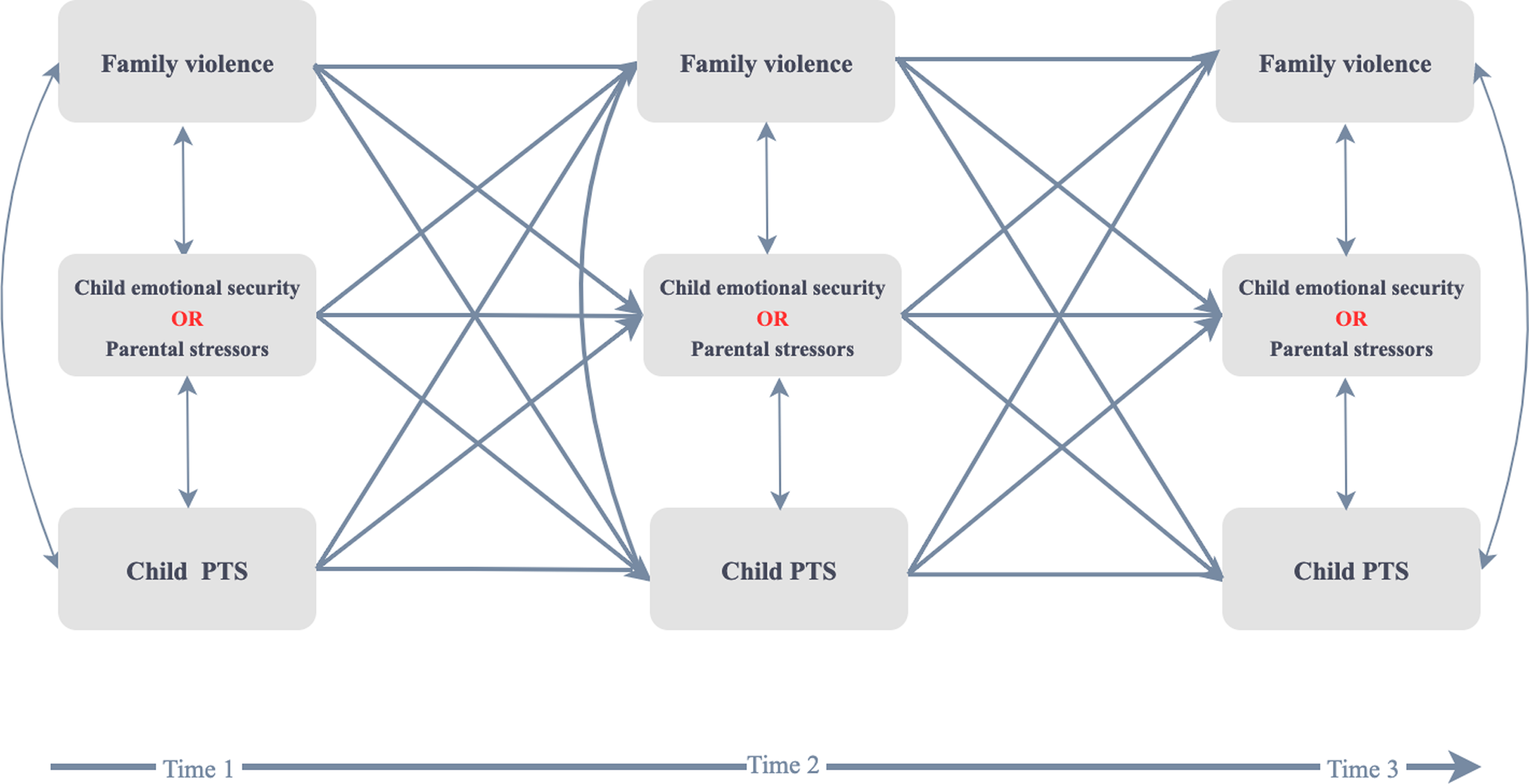
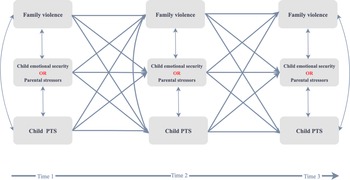
The aim of our study was to better understand how children recover after family violence. First, the association between changes in family violence and children’s PTS was tested in a Dutch sample of families who were referred to CPS. Then we tested the mediation pathways between changes in family violence and children’s PTS through children’s emotional security, parental stress, and parents’ PTS. We first hypothesized that intrafamilial decreases of family violence predicted decreases in children’s PTS symptoms and that this decrease in PTS symptoms in turn predicted decreases in family violence. Furthermore, we hypothesized that intrafamilial decreases in parental stress, parent PTS, and emotional insecurity were preceded by decreases in family violence and predicted decreases in children’s PTS. These hypothesized pathways are presented in Figure 1. We employed a multi-informant approach and conducted separate analyses for parent and child-report to identify potential differences in perspective. We used the Random Intercept-Cross Lagged Panel Model to test our hypotheses (RI-CLPM; Hamaker et al., Reference Hamaker, Kuiper and Grasman2015), which is an extension to the classical cross-lagged panel model (CLPM).
Hypothesized intrafamilial pathways between family violence, emotional security, parental stressors (parental stress and parents’ PTS), and child PTS.
Methods
Design
The sample used in this study is part of a cohort study of the Verwey Jonker Institute (Lünnemann et al., Reference Lünnemann, Horst, Prinzie, Luijk and Steketee2019). All children lived in families who were referred to CPS because of signals of interparental violence and/or child abuse and neglect. CPS assesses and intervenes in situations of family violence. If situations are complex and severe, they can refer to the Child Protection Board for further investigation into the child’s well-being and safety. While the original sample included families with children in the age of 3 to 18 years, this study only considered the data of children in the age of 8–18 years, because this age-group provided self-report in addition to parent-report, offering multiple perspectives on family functioning. Family members completed questionnaires at three different time points. The first was shortly after referral to a national service tasked with child protection in case of family violence and child abuse, the second was one year later, and the third was one and a half years after the first measurement.
The study hypotheses were registered on Open Science Framework on June 2, 2022 [https://osf.io/t23us]. After preregistration, we amended the proposed autoregressive latent trajectory using the structural residuals model (ALT-SR), which combines LGCM and CLPM, with the RI-CLPM, because the ALT-SR model is not identified for data with three waves (Mund & Nestler, Reference Mund and Nestler2019). Full information about the amendments relative to the preregistration is in the Supplementary Material.
Participants
For the total sample, 1,998 families met inclusion criteria and were approached. 1,046 families participated, resulting in an inclusion rate of 52%. Families gave varying reasons for declining their participation. Many were simply not interested, others were too busy or regarded the involvement of CPS as a closed matter and some families were preoccupied with other problems in their lives. Of the included families, the data of children between 8 and 18 were included in the present study.
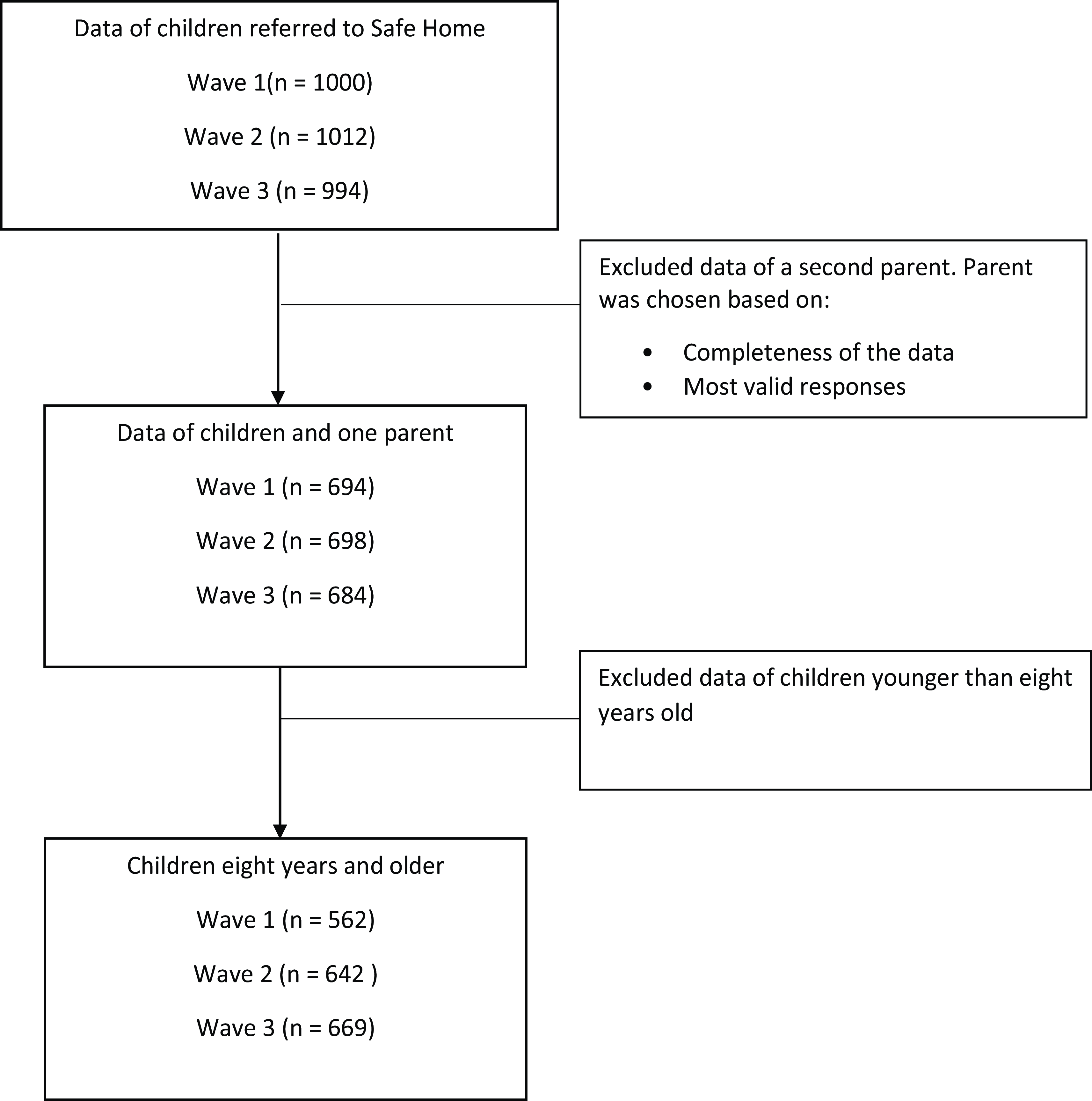
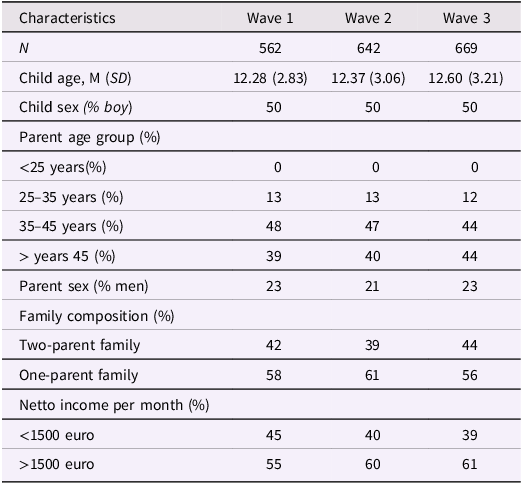
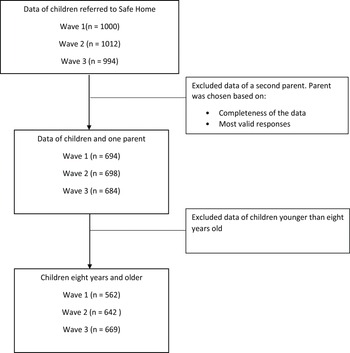
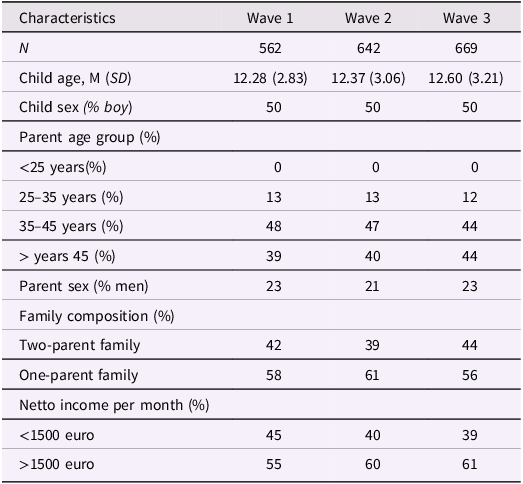
The first wave included 562 children and one of their parents. For the second and third wave, these numbers increased respectively to 642 and 669 because some children reached the age of eight on those waves and therefore their data could be included. Children were included from the time they met the age criterion. This was done to maximize the sample size. Parent data also were included from the time the child was eight years or older. In case of available data from two parents, the parent with the lowest number of missing items was selected. If both parents had an equal number of missing data, the data from the parent with clinical levels on the TSI validity scales was excluded. If parents had equal scores on the validity scales, one parent was selected at random. The flowchart is presented in Figure 2. Descriptive statistics for sociodemographic characteristics at each wave are shown in Table 1.
Flowchart cohort study.
Sociodemographic characteristics
Procedure
Before data collection started, the ethical review committee of the Faculty of Behavioural and Movement Sciences of the Vrije Universiteit Amsterdam granted approval (protocol number: VCWE-2016-217R1). After participants received written information about the study, the organization for child protection informed them about the study. After consent by phone, a child protection worker made an appointment for the first assessment and provided the contact information of the participants to the Verwey-Jonker Institute. The researchers obtained written informed consent at the first visit before family members completed the questionnaires. During home visits and in presence of a trained research assistant, one or two caregivers completed the questionnaires about one or two of their children. Administration of the questionnaires to the children was done by a research assistant when the caregiver was not present or the research assistant made sure the caregiver was not able to see the answers of the child. Caregivers were paid 20 euro and children 10 euro compensation per assessment.
Measurements
Family violence from the parent’s perspective
To investigate family violence from the parent perspective, we respectively used the Revised Conflict Tactics Scale 2 (CTS2; Straus et al., Reference Straus, Hamby, Boney-McCoy and Sugarman1996) and the Conflict Tactics Scale Parent–Child (CTSPC; Straus et al., Reference Straus, Hamby, Finkelhor, Moore and Runyan1998). CTS2 is a 39-item questionnaire for parents assessing the nature and frequency of tactics used by partners in an intimate relationship. It consists of four scales: psychological aggression (Cronbach’s alpha for wave 1, 2 and 3 ranged between 81–.89), physical assault (α = .88–.95), sexual coercion (α = .72–.87), and injury (α = .80–.95). The CTSPC is a questionnaire for parents measuring parent–child conflict management strategies (Straus et al., Reference Straus, Hamby, Finkelhor, Moore and Runyan1998). We used the five items measuring psychological aggression (α = .76–.79) and thirteen items measuring physical assault (α = 58–.70) because these two scales of the CTSPC represent child abuse and are similar to the scales in the child version of the CTSPC. The association between an observational test for parent–child interactions and the CTSPC supports the convergent validity (Cotter et al., Reference Cotter, Proctor and Brestan-Knight2018). The Dutch version of both questionnaires has an eight-point scale ranging from one (never happened) to eight (happened more than 20 times). According to the scoring manual and comparable to other studies using the CTS2 and CTSPC (Lünnemann et al., Reference Lünnemann, Luijk, Van der Horst, Jongerling and Steketee2022; Tierolf et al., Reference Tierolf, Geurts and Steketee2021) we converted the values on the eight–point scale into seven different scores (0, 1, 2, 4, 8, 25) that represent the number of year incidents. The scores were converted to 0 (“never happened past year”), 1 (“once in the past year”), 2 (“twice in the past year”), 4 (“three to five times in the past year”), 8 (“six to ten times in the past year”), 15 (“eleven to twenty times in the past year”) and 25 (“more than twenty times in the past year”). Afterwards we combined scores on both measures by taking the sum of the number of year incidents.
Family violence from the child’s perspective
The CTSPC measures parent–child conflict management strategies and tactics between parents (Straus et al., Reference Straus, Hamby, Finkelhor, Moore and Runyan1998). Four items measure psychological aggression (α = .79–.82) and thirteen items measure physical assault (α = .78–.87) from parent to child. Six items measure psychological aggression (α = .83–.88) and nine items measuring physical aggression (α = .69–.92) between parents. The scores were converted to year incidence scores in the same manner as the CTSPC for parents.
Children’s PTS symptoms
The Trauma Symptom Checklist for Children (TSCC; Briere, Reference Briere1996) is a questionnaire to assess self-reported PTS symptoms (8–18 years). It consists of 54 items and eight scales: two validity scales (underresponse, hyperresponse) and six clinical scales (anxiety, depression, post-traumatic stress, dissociation, anger, and sexual concerns). We used the 10-item PTS scale (α = .85–.88). In a study that compared the TSCC with the Trauma Symptom Checklist for Young Children (TSCYC; Lanktree et al., Reference Lanktree, Gilbert, Briere, Taylor, Chen, Maida and Saltzman2008), the TSCC showed moderate convergent and discriminant validity.
Parental stress
The Nijmegen Parental Stress Index—short version (NOSI-K; Brock et al., Reference de Brock, Vermulst, Gerris and Abidin1992) measures the level of parental stress. The NOSI-K is a 25-item Dutch version of the Parental Stress Index (Abidin et al., Reference Abidin, Flens and Austin2006). Items are rated on a 6-point scale, ranging from 0 (“totally disagree”) to 5 (“totally agree”). A total parenting stress score is obtained by summing the ratings across items, with high scores reflecting high levels of parenting stress. Concurrent, discriminant, and criterion validity are moderate (Brock et al., Reference de Brock, Vermulst, Gerris and Abidin1992). Cronbach’s alpha was between .96–.97 in the present study sample.
Parents’ PTS symptoms
The Trauma Symptom Inventory (TSI; Briere, Reference Briere1995) was used to measure the trauma symptoms of the parents. This questionnaire consists of 100 items measuring PTS and other psychological sequelae of traumatic events. Respondents are asked to rate how often each symptom has happened to them in the past six months, on a 4-point frequency scale ranging from 0 (“never”) to 3 (“often”). The mean score of the T-scores on the different scales was used. Cronbach’s alpha ranged between .62 and 93. The TSI includes three validity (Atypical Responses, Response Level, and Inconsistent Responses) scales to identify responses that would invalidate the test results. The TSI has been found to be a reliable instrument to assess PTS and other psychological sequelae of traumatic events (Briere, Reference Briere1995).
Children’s emotional security
The Security in the Interparental Subsystem (SIS; Davies et al., Reference Davies, Forman, Rasi and Stevens2002) is a questionnaire for children with 43 4-point scale items. The SIS asks children about their reactions to conflict between parents. Higher scores represent higher levels of feelings of emotional insecurity. It contains three scales and seven subscales: emotional reactivity, behavioral dysregulation, regulation of exposure to affect, involvement, internal representation, destructive family representation, and conflict spillover representation. We used the total scale, that is, the sum score of all items. Validity, internal consistency, and test–retest reliability were sufficient (Davies et al., Reference Davies, Forman, Rasi and Stevens2002). In this study sample Cronbach’s alpha was between .91 and .92.
Statistical analysis
IBM SPSS Statistics (Version 27) was used for descriptive analyses and detection of data entry errors. To reduce the impact of outliers, winsorization was applied for parent and child-reported family violence (Tabachnick et al., Reference Tabachnick, Fidell and Ullman2013). Outlying values above two standard deviations from the mean were set to the next highest value for parent-reported family violence (29 cases for time 1, 26 cases time 2, 29 cases time 3), based on the distribution and number of outliers. For child-reported family violence, the number of outliers was smaller, and therefore only outlying values above three standard deviations from the mean were set to the next highest value (6 cases for time 1, 4 cases for time 2, 6 cases for time 3). Data were also transformed by taking the square root to reduce the variance differences across variables, which might lead to estimation difficulties in the RI-CLPM.
We used repeated measures ANOVA to explore changes over time for family violence, child PTS, parental stress, parent PTS, and emotional security. Multiple imputation was used to account for missing data. SPSS mixed model procedure with effect coding was used to generate pooled statistics across the five imputed datasets (van Ginkel & Kroonenberg, Reference van Ginkel and Kroonenberg2014). To test if change over time reflects a reliable change, the reliable change index (RCI) was also calculated for these variables (Jacobson & Truax, Reference Jacobson and Truax1991).
We used RI-CLPM within a structural equation modeling framework to test bidirectional intrafamilial associations across time. The RI-CLPM is, in contrast to the CLPM, able to control for the time-invariant stability of variables (called random intercept in the RI-CLPM). Thus, the RI-CLPM makes it possible to understand how within families change in one variable over time predicts change in another variable over time, accounting for their previous state, and also controlling for interfamilial differences. Analyses were performed with R in Rstudio, software version 2022.12.0.353, using the Lavaan package (Rosseel, Reference Rosseel2012). We performed the RI-CLPM for all four hypotheses and separately for family violence child-report and parent-report, resulting in eight different models. For hypotheses two to four, the model was extended from a bivariate model to a trivariate model, and therefore also random intercepts were estimated for parental stress, parent PTS, and emotional security. In each model, random intercepts for family violence and child PTS were estimated to capture the interfamilial differences, the trait-like part. Further, autoregressive and cross-lagged paths were estimated for the different variables controlling for the influence of the random intercept of each variable, to solely capture intrafamilial changes, the state-like part of the model. Control variables were included in the model as time invariant covariates (children’s sex) and time-varying covariates (children’s age in years, family composition categorized as one-or two-parent family, and income categorized as low or middle to high income). Family composition and income are dynamic risk and resilience factors for family violence (Steketee et al., Reference Steketee, Tierolf, Lünnemann and Lünnemann2021) and may also affect the level of parental stress and alternative pathways towards recovery (e.g., through access to psychotherapy). We used full information maximum likelihood estimation to account for the missing data across different time points. To evaluate goodness of fit of each model, the following model fit indices were used: Root Mean Square Error of Approximation of 0.08 or smaller, Comparative Fit Index of .90 or larger and Tucker–Lewis Index of .90 or larger (McDonald & Ho, Reference McDonald and Ho2002) indicates adequate to good fit. To test whether the RI-CLPM fitted the data significantly better than the CLPM, we used the Chi-square difference test. After the best fitting model was determined, we used a z-test to examine significance of the specific autoregressive and cross-lagged paths. A significance level of 0.05 was used as a threshold for statistical significance. Because each mediating path addressed a distinct research question and was tested only once, multiple testing was not accounted for. Separate models for understanding children’s and parents’ perspectives on violence were deemed feasible because of their modest association. Sensitivity analyses were performed because multiple children within the same family participated and therefore data is dependent.
Results
Background analyses
Little’s MCAR test indicated that cases were not missing completely at random (χ2(2029) = 2,552.66, p < .001). However, even if data are not missing at random, the use of FIML is preferable over other strategies to deal with missing data (van Ginkel et al., Reference van Ginkel, Linting, Rippe and van der Voort2020). Chi-square tests showed that family composition and income were related to the pattern of missing data. The number of missing values was higher for single-parent families and families with a low income. The variables that were statistically associated with missingness were included as covariates in the main analyses.
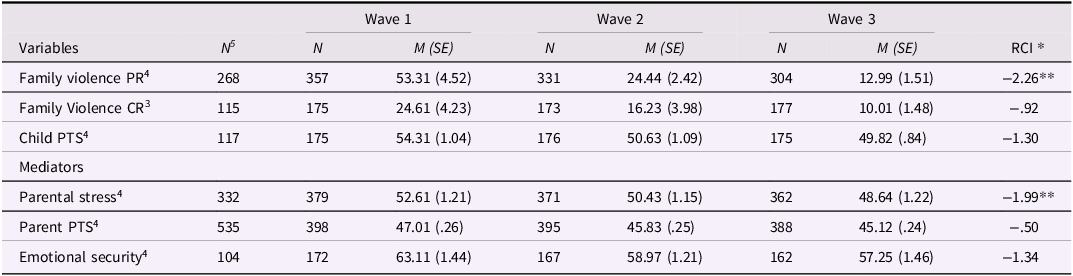
Pearson correlation coefficients (r) for family violence parent-report, family violence child-report, child outcomes, and parental stressors are included in Supplementary Table 1. Family violence by parent report at the first and third wave were significantly associated with family violence by child-report at the first and third wave, but not found at the second wave. Overall, variables with the same informant were more strongly associated than variables with different informants. In Table 2 the pooled results of the repeated measures ANOVA can be found for families who reported on all three measurement points. Repeated measures ANOVA with multiple imputation revealed that across all three waves family violence by parent-report (F2,298.32 = 57.45, p < .001), family violence by child-report (F2,11.20 = 6.99, p = .011), child outcomes (Child PTS: F2,8.78 = 10.27, p = .005; Emotional security: F2,8.12 = 5.31, p = .034) and parental stressors (Parental stress: F2,34.40 = 10.71, p < .001; Parent PTS: F2,132.12 = 60.51, p < .001) on average decreased over time. The results of the RCI showed that parents, in contrast to children, reported a reliable decrease of family violence from wave 1 to wave 3. Parents also reported a reliable decrease in parental stress. No reliable change was found for child and parent PTS, and emotional security. At the first measurement point, 15% of parents reported PTS symptoms in the clinical range, compared to 6 and 3% at the second and third measurement point. Because we used a subscale of the TSCC for child PTS, it is not possible to calculate the proportion of children who have PTS scores below clinical cutoff.
Results repeated measures ANOVA
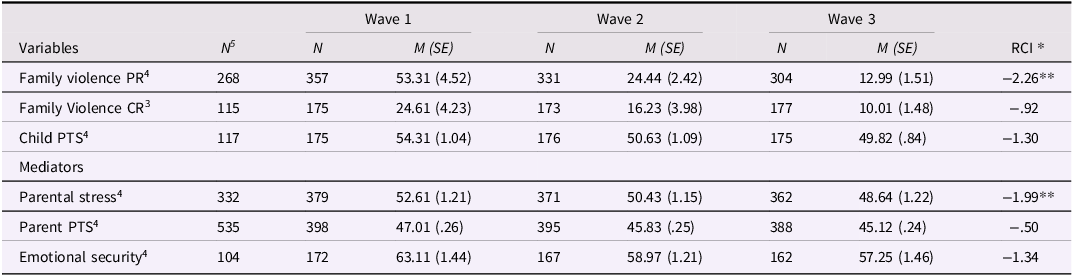
Note. PR = parent-report; CR = child-report. Pooled mean (M) and standard errors (SE). Significant (p < .05) decrease from 1wave 1 to 2, 2 wave 2 to 3, 3 wave 1 to 3, 4 on all intervals. 5 = number of participants who completed measurements at all time points. * = RCI calculated for wave 1 to wave 3. ** = significant reliable change (p < .05).
Main analyses
The Chi-square differences test showed that for all models, except the bivariate model with parent-reported family violence and child PTS, the RI-CLPM fitted the data significantly better than the CLPM. This means that separating intra- and interindividual differences resulted in a better fit of the model. The model fit indices, the results of the Chi-square difference test, and the figures of the CLPM and RI-CLPM can be found respectively in Supplementary Table 2 and 3 and Supplementary Figures 1–24. For all models, at the interfamilial level, the correlations between the random intercepts showed no significant associations between the different variables. Therefore, we only discuss the intrafamilial associations in the following section.
Intrafamilial associations between family violence and child PTS
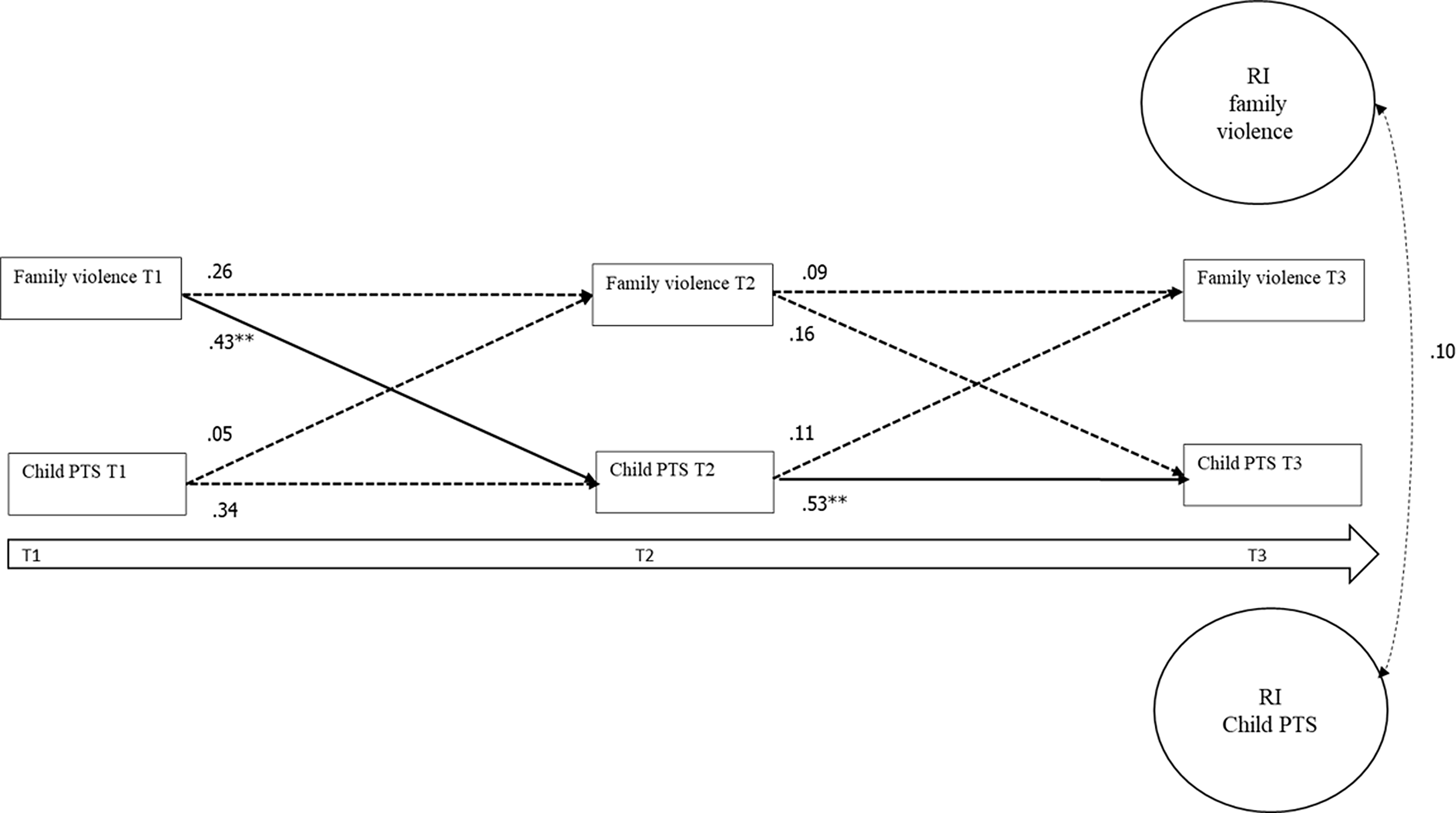
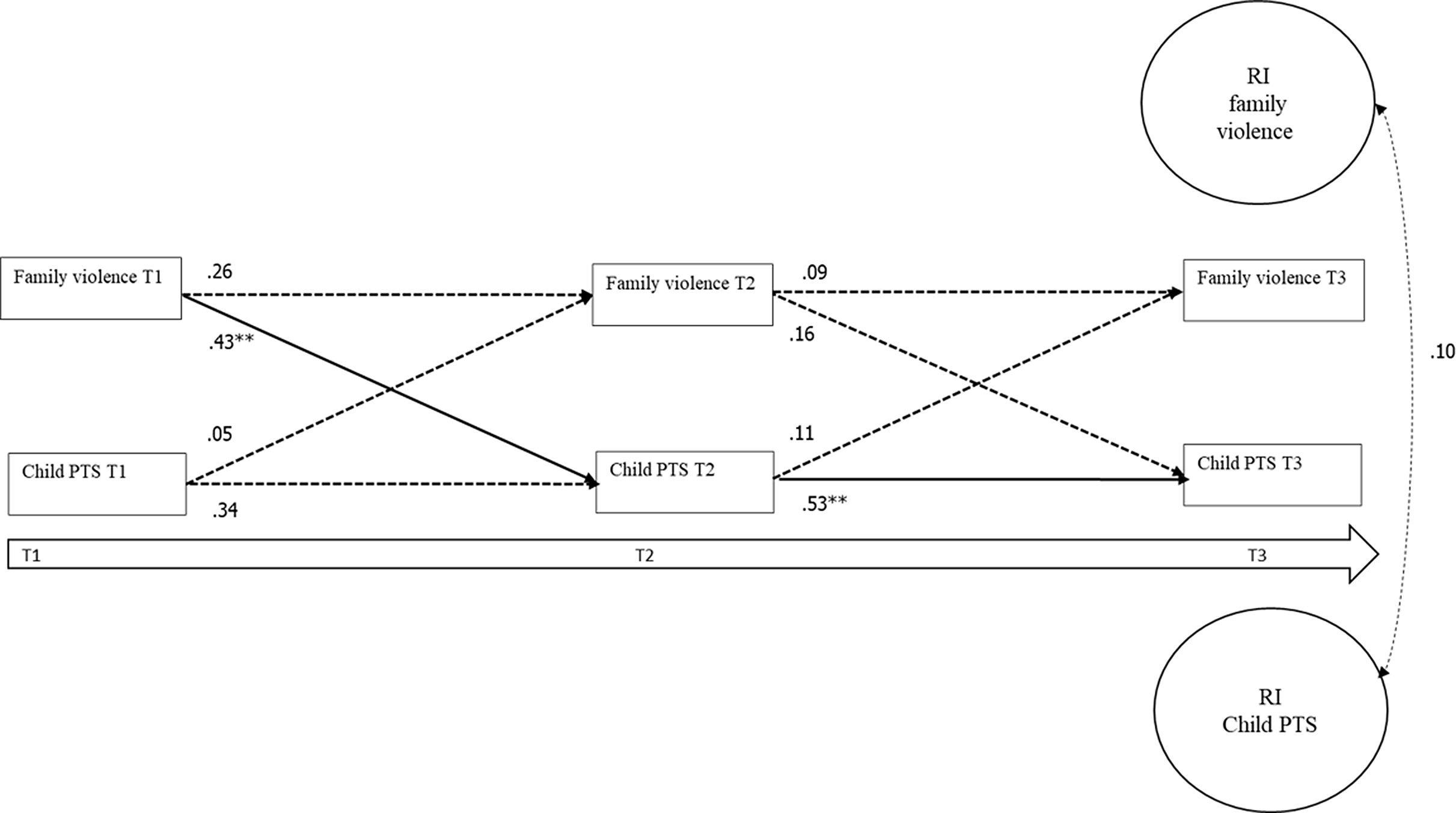
For child-reported family violence and child PTS (see Figure 3), the RI-CLPM showed that the cross-lagged path from family violence wave 1 to child PTS wave 2 [beta = .43, SE = .34, p = .001] was significant and demonstrated a large effect, indicating that intrafamilial decreases in reported family violence at wave 1 positively predicted intrafamilial decreases in child PTS on the next occasion. Statistically significant as well was the autoregressive path from child PTS wave 2 to wave 3 [beta = 0.53, SE = .19, p = .009], meaning that child PTS at wave 2 predicted child PTS on the following timepoint. After adding covariates to the model, the path from family violence wave 1 to family violence wave 2 also became significant [beta = .28, SE = .10, p = .040]. The RI-CLPM for parent-reported family violence and child PTS (see Supplementary Figure 5), indicated that none of the cross-lagged paths was statistically significant. This means there were no intrafamilial associations between parent-reported family violence and child PTS. The stability paths for child PTS, from wave 1 to wave 2 [wave 1 to 2: beta = 0.53, SE = .24, p = 0.032] and wave 2 to wave 3 were significant [wave 2 to wave 3: beta = 0.63, SE = .19, p = .001]. For parent-reported family violence, there were no changes in significance of the paths after controlling for covariates.
Bidirectional intrafamilial associations between child-reported family violence and child PTS across one and half year after referral to child protection service.
Note. CFI = 1.00; TLI = 1.00; RMSEA = .00. Dotted lines represent non-significant effects.*p < .05, **p < .01, ***p < .001.
The role of parental stress in the intrafamilial associations between family violence and child PTS
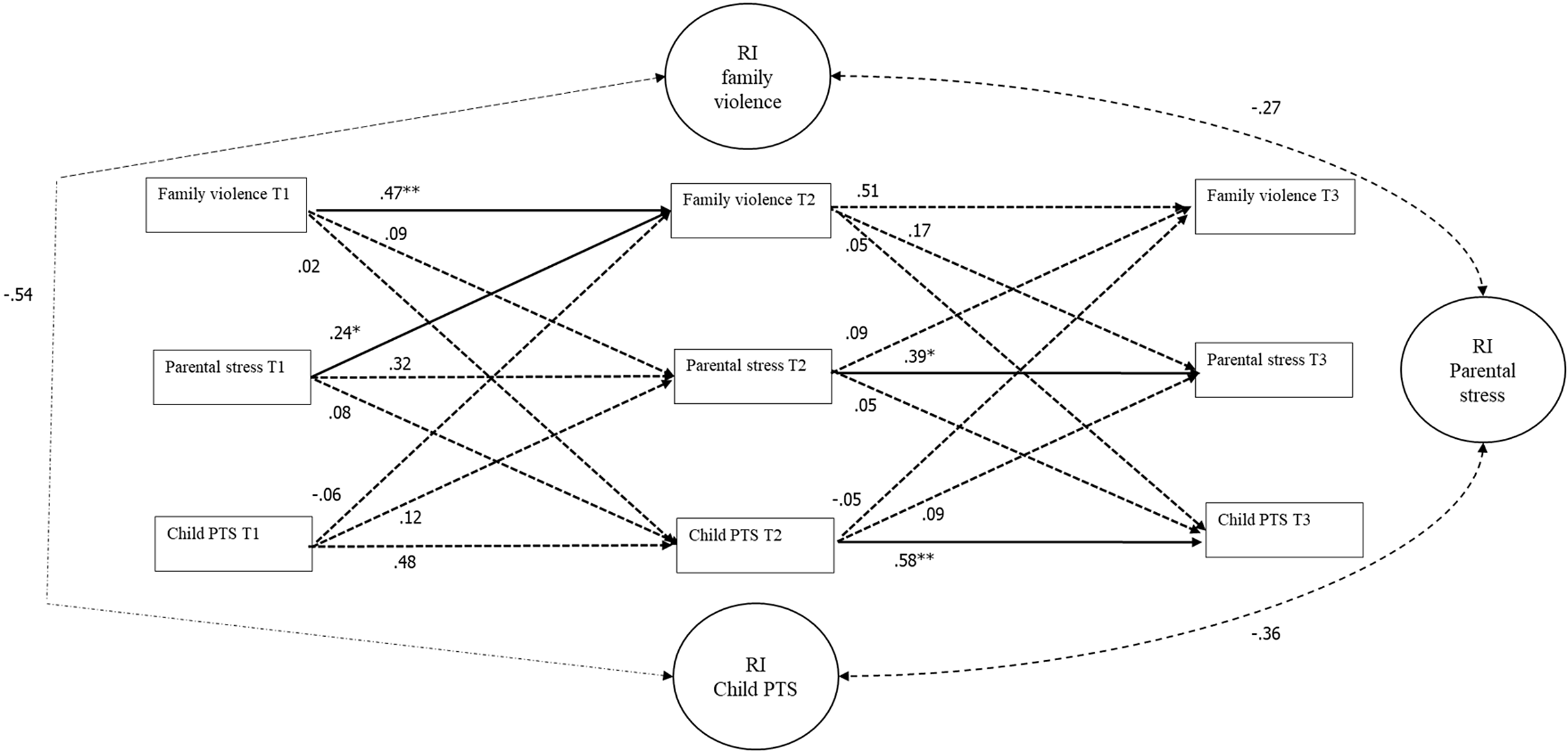
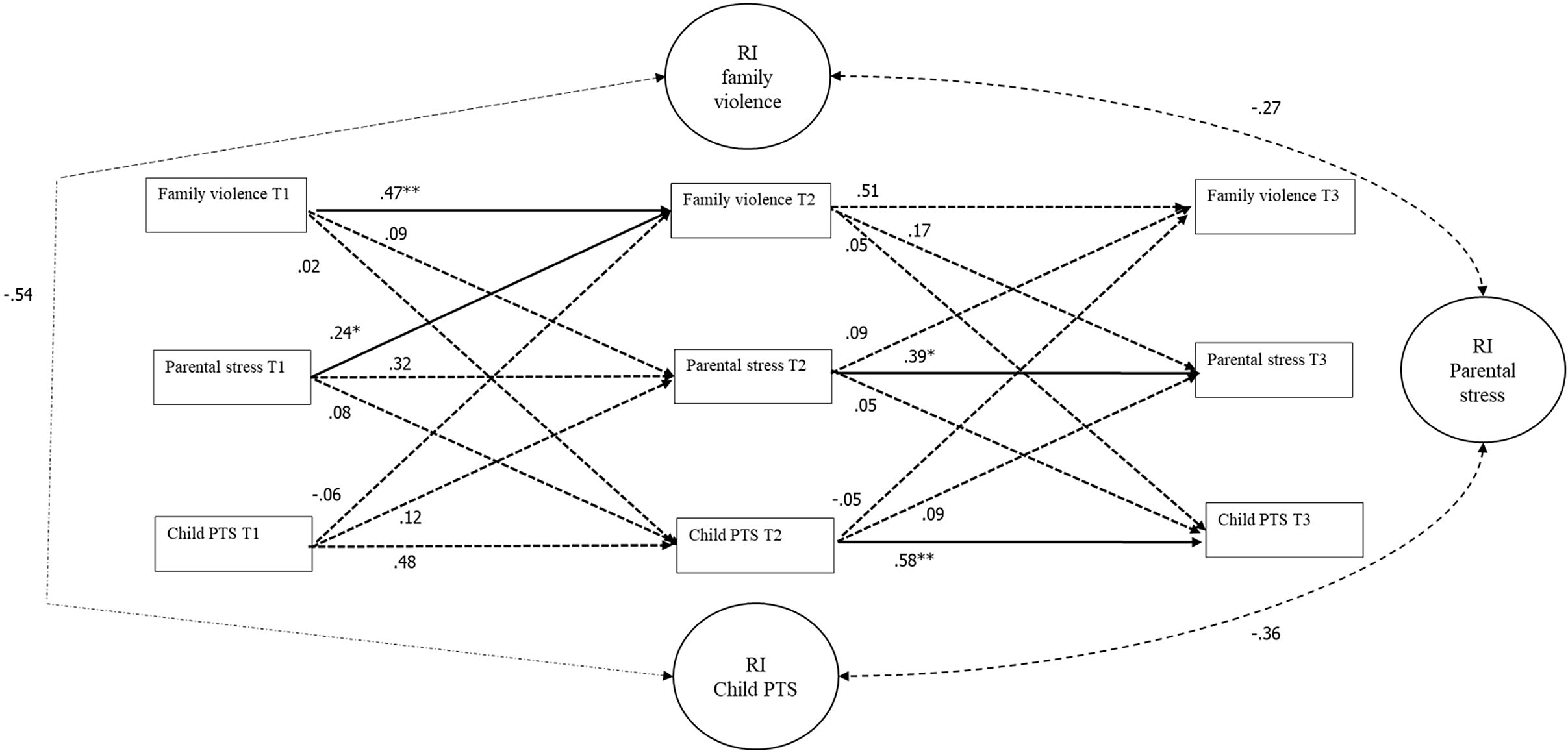
To test whether the effect of family violence on child PTS was mediated by parental stress, we ran trivariate RI-CLPMs. Whether parents or children reported on family violence, the trivariate RI-CLPM models did not show any statistically significant cross-lagged paths from family violence to parental stress nor from parental stress to child PTS. This indicates that family violence did not predict parental stress, and in turn parental stress did not predict child PTS. Like the bivariate model for child-reported family violence, the trivariate model showed associations between family violence and child PTS. The cross-lagged path from child-reported family violence wave 1 to child PTS wave 2 was statistically significant [beta = .44, SE = .47, p = .001]. The autoregressive paths for parental stress wave 2 to wave 3 [beta = 0.38, SE = .17, p = .018] and child PTS wave 2 to wave 3 [beta = .49, SE = .20, p = .018] were also statistically significant. The RI-CLPM is presented in Supplementary Figure 8. After adding covariates, the path from family violence wave 1 to wave 2 also became significant [beta = 0.28, SE = .10, p = .040]. The RI-CLPM of parent-reported family violence (see Figure 4) showed no significant cross-lagged paths from family violence to parental stress or from parental stress to family violence. The RI-CLPM did reveal a statistically significant cross-lagged path from parental stress wave 1 to family violence wave 2 [beta = .24, SE = .27, p = .046], meaning decreases in parental stress predicted decreases in family violence. The autoregressive paths for parent-reported family violence [wave 1 to wave 2: beta = .47, SE = .11, p = .003], parental stress [wave 2 to 3: beta = 39, SE = .17, p = .017], and child PTS [wave 2 to 3: beta = .58, SE = .19, p = .005] were also statistically significant. Adding covariates resulted in an extra statistical autoregressive path for child PTS from wave 1 to wave 2 [beta = .56, SE = .24, p = .027]. In sum, the effect of family violence on child PTS was not mediated by parental stress but changes in child-reported family violence predicted changes in child PTS and decreases in parental stress predicted decreases in parent-reported family violence.
Bidirectional intrafamilial associations between parent-reported family violence, parental stress and child PTS across one and half year after referral to child protection service. Note. CFI = 1.00; TLI = .98; RMSEA = .03. Dotted lines represent non-significant effects. *p < .05, **p < .01, ***p < .001.
The role of parents’ PTS in the intrafamilial associations between family violence and child PTS
To test whether the effect of family violence on child PTS was mediated by parent PTS, we ran trivariate RI-CLPMs. In this model, no cross-lagged paths including parent PTS were found, whether children or parents reported on family violence. Decreases in child-reported family violence predicted decreases in child PTS symptoms at wave 2 [beta = .46, SE = .44, p < 0.001]. Autoregressive paths for parent PTS from wave 1 to wave 2 [beta = 0.53, SE = .14, p < .001] and wave 2 to wave 3 [beta = 0.64, SE = .12, p < .001] were statistically significant. For child PTS the path from wave 2 to wave 3 was significant [beta = 0.51, SE = .20, p = .013]. The RI-CLPM is presented in Supplementary Figure 14. The RI-CLPM including covariates also showed a significant path from family violence path 1 to path 2 [beta = 0.28, SE = .11, p = 0.046]. For the model with parent-reported family violence, all autoregressive paths were statistically significant [family violence wave 1 to 2: beta = .62, SE = 19, p = .012; wave 2 to 3: beta = .68, SE = .22, p = .007; parent PTS wave 1 to 2: beta = .47, SE = .18, p = .008; wave 2 to 3: beta = .61, SE = .11, p < .001]; child PTS wave 1 to 2: beta = .50, SE = .23, p = .036; wave 2 to 3: beta = .58, SE = .19, p = .004]. The RI-CLPM for parent-reported family violence is presented in Supplementary Figure 17. Statistical significance of paths did not change after controlling for covariates. In sum, the effect of family violence on child PTS was not mediated by parent PTS. Child-reported family violence predicted changes in child PTS.
The role of emotional security in intrafamilial associations between family violence and child PTS
We ran trivariate RI-CLPMs to test whether the effect of family violence on child PTS was mediated by emotional security. For neither parent-or child-reported family violence, statistically significant cross-lagged paths were found from family violence to emotional security and from emotional security to child PTS. The RI-CLPM, including the child-reported family violence (see Supplementary Figure 20) showed a statistically significant cross-lagged path from child-reported family violence wave 1 to child PTS wave 2 [beta = .32, SE = .48, p = .014]. The autoregressive path from emotional security wave 2 to wave 3 [beta = 0.44, SE = .18, p = .020] was statistically significant. After adding covariates, the path from family violence wave 1 to wave 2 also became statistically significant [beta = 30, SE = .10, p = .028]. The RI-CLPM for parent-reported family violence (see Supplementary Figure 23) showed that the autoregressive path from child PTS wave 2 to 3 was statistically significant [beta = .60, SE = .19, p = .004]. Adding covariates did not change the statistical significance of the paths. To summarize, the effect of family violence on child PTS was not mediated by emotional security. Decreases in child-reported family violence predicted decreases in child PTS.
Sensitivity analyses
Sensitivity analyses were performed to test the robustness of our results. Sensitivity analysis with only one child per family was performed and showed similar results in the sign and significance of the cross-lagged path from child-reported family violence to child PTS in all the RI-CLPMs. The cross-lagged path from parental stress to parent-reported family violence was no longer statistically significant (changed from .046 to .207) when only one child per family was included.
Discussion
On average, families improved on all outcome variables after contact with the CPS, and this improvement mostly took place in the first year after referral. For child-reported family violence but not parent-reported violence, intrafamilial decreases in family violence after referral to CPS predicted decreases in children’s PTS symptoms one year later, but children’s PTS symptoms did not predict changes in family violence. Contrary to our hypotheses, decreases in family violence did not predict decreases in parental stress and parent PTS, and these parental stressors did not explain decreases in children’s PTS. However, for the model that included family violence from the parents’ perspective, decreases in parenting stress after referral to CPS predicted decreases in family violence one year later. Finally, changes in family violence did not predict changes in feelings of emotional security, and emotional security did not predict children’s PTS symptoms. Therefore, we can conclude that decreases in child-reported family violence predict decreases in child PTS, but parenting stress, parent PTS, and emotional security do not explain recovery in child PTS symptoms after reduction of family violence.
In line with a previous longitudinal study (Galano et al., Reference Galano, Grogan-Kaylor, Clark, Stein and Graham-Bermann2021), our results underscore the risks of exposure to family violence. The lagged association between family violence and child PTS was statistically significant and demonstrated a strong effect, suggesting an important effect for clinical practice. For children to recover from family violence, it is important that they perceive a reduction in the level of family violence. A possible explanation why decreases in parent-reported violence did not predict decreases in child PTS is that child-reported violence regards violence witnessed by children, whereas parent-reported violences includes also violence that children may not be always witness of. In contrast to previous, cross-sectional studies (Crusto et al., Reference Crusto, Whitson, Walling, Feinn, Friedman, Reynolds, Amer and Kaufman2010; El-Sheikh et al., Reference El-Sheikh, Cummings, Kouros, Elmore-Staton and Buckhalt2008; Telman et al., Reference Telman, Overbeek, de Schipper, Lamers-Winkelman, Finkenauer and Schuengel2016), parental stressors and emotional security did not explain longitudinal associations between family violence and children’s PTS symptoms. Because the current study design and analysis plan reduced confounding of causal interpretations of correlational effects, these findings may be taken to reconsider the role of parental stressors and emotional security in recovery from family violence. Further consideration of previous studies showed differences in informant, outcome measures, and definition of family violence. Most previous studies solely included interparental violence, while our study used a broader definition of family violence that also includes child abuse. Also, most studies used parents as an informant for children’s PTS symptoms or included general functioning instead of PTS symptoms. For example, in contrast to the longitudinal study of Renner and Boel-Studt (Reference Renner and Boel-Studt2013), who found parental stress mediated the relationship between psychological violence and child functioning, we used a broader definition of family violence and included PTS symptoms as an outcome measure instead of general child functioning.
Surprisingly, we found that after referral to CPS decreases in parenting stress predict decreases in family violence one year later as reported from the parents’ perspective. This shows that it is important to follow up on the role of parenting stress as a modifiable factor that might be used to accelerate recovery in family safety and child functioning. A recent study also demonstrated that parents who were exposed to family violence not only felt more parental stress than parents without family violence, but also were at greater risk to abuse their child (Temple et al., Reference Temple, Baumler and Wood2024). Furthermore, while emotional security and parental stressors might explain how family violence leads to child PTS (Cummings et al., Reference Cummings, Schermerhorn, Davies, Goeke-Morey and Cummings2006; El-Sheikh et al., Reference El-Sheikh, Cummings, Kouros, Elmore-Staton and Buckhalt2008), recovery may take place through other mechanisms. Another interesting finding was that less improvement was seen in the second time interval, perhaps due to this interval being a half year shorter than the first. Another possible explanation could be that CPS initially helps to establish more safety and decreases the level of stress in the family, but in the long term it is difficult to continue this progress.
Limitations
First, associations were stronger for variables with the same source than for variables with different sources, meaning that the perspectives of parents and children should be considered separately. For example, the associations between family violence and child PTS were stronger for child-reported family violence than for parent-reported family violence. A recent systematic review (Meinck et al., Reference Meinck, Neelakantan, Steele, Jochim, Davies, Boyes and Barlow2023) of child-reported violence concluded that psychometric properties of the CTS-PC were adequate. Although our total number of included families is relatively large considering the clinical group, a second limitation was the large number of missing values for the child-reported variables. An explanation for the missing values could be that especially children with severe child PTS symptoms may avoid thinking about their traumatic experiences and therefore also avoid participation in the measurements of this study that has a focus on trauma and violence (Danese, Reference Danese2020). Despite the confidentiality of their responses in this study, children could also be hesitant to report incidents of family violence. Children may be concerned about the consequences of mandated reporting. As there was evidence suggesting that missing data were associated with income and family composition, these variables were included as covariates, reducing the likelihood that selective missingness affected the results. A third limitation is that the time intervals were unequal. The first interval was one year and the second a half year, and therefore we could expect less change from the second to the third wave. It could also be that CPS intervened immediately after report, resulting in more change in the first interval. Another limitation is that we included multiple children from the same family and data of children within the same family could be dependent. However, sensitivity analysis with one child per family showed substantively similar results. Another limitation was that the alpha was set at .05, while a more conservative alpha could have decreased the risk of type 1 errors. Furthermore, we had a narrow definition of recovery. It could be that, although children reported a decrease in child PTS, they still experienced other mental health problems. A last limitation is that we did not have specific information about treatment during the period after referral to CPS. Obviously, treatment for parents, children, or the family during this period may have had an effect on parent and child functioning. Previous research with the same sample revealed that 79% of families received help. For children, this percentage was 56% and these children showed a greater decline in PTS symptoms than children who did not receive help (Steketee et al., Reference Steketee, Tierolf, Lünnemann and Lünnemann2021).
Implications and recommendations for future research
Besides offering trauma treatment, as this is the first choice of treatment for children with PTS symptoms (AACAP, 2010; NICE, 2018), our study suggests that reducing family violence may be important in itself for recovery. Although our study did not provide evidence that parental stressors and emotional security are modifiable factors that might be used to accelerate recovery, parental stress was linked with family violence and therefore interventions focusing on lowering parental stress could help families to establish family safety. To further understand how children recover after family violence, other contextual factors, like parent–child relationship (Unhjem et al., Reference Unhjem, Mcwey, Ledermann and Farley2023), and neurobiological systems (Cross et al., Reference Cross, Fani, Powers and Bradley2017) may be considered. Furthermore, intervention studies can also help to better understand the mechanisms in recovery, by comparing intervention components that are focused on different factors, like parental stress, trauma treatment, and safety in the family. In subsequent studies it is important to monitor children over a longer period with fixed time intervals to see if PTS symptoms further diminish and feelings of emotional security restore. To better understand the cumulative impact of interparental violence and child abuse, future research should consider comparing analyses on family violence with separate analyses of interparental violence and child abuse.
Conclusion
This study showed that changes in child-reported family violence were predictive of recovery in children. In contrast to our hypotheses, parental stress, parent PTS, and emotional security did not play a role in the intrafamilial associations between family violence and child PTS. However, parental stress was related to family violence, as decreases in parental stress predicted decreases in parent-reported family violence. Our results emphasize that for children to recover from PTS it is important to improve family safety. Attention to parental stress can help families to restore family safety. To stimulate recovery after family violence and prevent the development of mental problems in adulthood (Scott et al., Reference Scott, Malacova, Mathews, Haslam, Pacella, Higgins, Meinck, Dunne, Finkelhor, Erskine, Lawrence and Thomas2023), more in-depth research of family processes is needed.
Supplementary material
The supplementary material for this article can be found at https://doi.org/10.1017/S0954579425100722.
Data availability statement
Because of privacy regulation and data protection, the participant-level dataset is not accessible.
Acknowledgements
We gratefully acknowledge the contribution of the participating families, researchers, and funding institutions.
Funding statement
This study used data collected by the Verwey Jonker Institute. Data collection was made possible with the financial support from the Dutch ministry, Dutch municipalities and Augeo Foundation.
Competing interests
The authors declare none.
Pre-registration statement
The study hypotheses and analysis plan were preregistered on Open Science Framework on June 2, 2022 [https://osf.io/t23us]. Amendments to the preregistration can be found in the Supplementary Materials.


 Open access

