


Nutrition problems of Africa
Adequate nutrition has been recognised as an essential catalyst for economic and human development as well as for achieving the sustainable development goals(1). Yet, malnutrition continues to be a global problem, particularly in Africa. Despite the rich biodiversity of the African continent and the tremendous progress in food production and development programmes, Africa is still struggling to improve food insecurity, hunger and disease, but is experiencing a rapid increase in overnutrition linked to the development of non-communicable diseases (NCD). Sub-Saharan Africa has been described as ‘home to some of the most nutritionally insecure people in the world’(Reference Fanzo2).
The world is experiencing the double burden of malnutrition, defined as the coexistence of undernutrition (wasting, stunting and micronutrient deficiencies) along with overweight and obesity and diet-related NCD within individuals, households and population throughout life(3). These have been attributed to the nutrition, epidemiological and demographic transitions(3). Reports show that while the global prevalence of stunting decreased between the year 2000 and 2015, the absolute number of children who are stunted in Africa are increasing(1, 4); from 50·4 million in 2000 to 59 million in 2016(5). In many African countries, the report shows that wasting rates are ≥5 %; with seventeen countries having acceptable levels (5 %), twenty-five high levels (>30 %) or very high (>40 %) stunting rate. Overweight is also on the rise, increasing by more than 50 % between 2000 and 2015(4) contrary to the global target of ‘no increase in childhood overweight’ of the sustainable development goals(5). Obesity among women is 23·8 %; ranging from 5·7 % in Ethiopia to 50·5 % in Swaziland, while over twelve countries in Africa have prevalence rates of over 30 %(4).
Micronutrient deficiencies (hidden hunger) are also major public health challenges in Africa. It has been shown that micronutrient deficiencies affect about 1·6 billion people and cause economic losses estimated at 2–5 % of gross domestic product in low- and middle-income countries (LMIC)(6), particularly among pregnant and lactating women, young children and adolescent females(Reference McLean, Ogswell and Egli7–Reference Thurnham9). Micronutrients of public health importance include vitamin A, iron, iodine, zinc(Reference Harika, Faber and Samuel10) and folate. They are necessary for growth and development of the child, for mother and child survival, cognitive development and learning potential of the child, preventing blindness and improving immunity(Reference Bleichrodt and Stanbury11–Reference Rice, West, Black, Ezzati, Rodgers and Murray15). Anaemia in women of reproductive age ranged from 22 to 23·4 % in Ethiopia and Rwanda to >60 % in Burkina Faso (72·5 %), Gambia (67·9 %), Guinea (64·9 %), Togo (64·1 %), Cote d'Ivoire (67·6 %) and Senegal (61·5 %). Furthermore, in eight countries, anaemia was shown to be 50–59 %(4). For non-pregnant and non-lactating women, 39·8 % are anaemic(4). Harika et al.(Reference Harika, Faber and Samuel10) showed that anaemia was higher (23–53 %) than vitamin A deficiency (14–46 %) in all countries except South Africa, while zinc deficiency (>30 %) was higher in Ethiopia, Nigeria and South Africa.
There are also emerging NCD. Major NCD include CVD, diabetes, hypertension, chronic respiratory diseases, mental health and cancers(3, Reference Greenberg, Deckelbaum, Eggersdorfer, Kraemer and Cordaro16), while the main diet-related ones are diabetes and CVD(Reference Greenberg, Deckelbaum, Eggersdorfer, Kraemer and Cordaro16). NCD were once regarded as diseases of the affluent but are now found in LMIC(Reference Popkin17, Reference Thakur18). It has been shown that in sub-Saharan Africa between 1990 and 2010, hypertension increased by 60 %, dietary risk factor by 45 %, high plasma glucose by nearly 30 %, while BMI has tripled(Reference Thakur18). Death projections as a result of NCD in high-, middle- and low-income countries have been estimated to exceed the mortality attributed to the combined effect of HIV, tuberculosis, malaria and maternal–child undernutrition by 2030(Reference Rice, West, Black, Ezzati, Rodgers and Murray15, Reference Thakur18). NCD impact devastates social and economic burden. Estimates by the World Economic Forum(19) revealed that the cost of NCD over a 15-year period in LMIC will reach US$14 T of which diabetes and heart diseases will take about US$8 T. The major risk factors for NCD are overweight/obesity, hyperglycaemia, elevated blood lipids and hypertension, all of which can be attributed to the nutrition transition(Reference Popkin17) (shift to a western-type diet, which are high in saturated fat, sugar, salt and refined foods as well as low in fibre) taking place in LMIC. Other factors include smoking, alcohol consumption and reduced physical activity.
Causes of malnutrition
The causes of malnutrition are multi-factorial and multi-dimensional; hence nutritional problems cannot be solved by any one sector. The UNICEF conceptual framework gives a detailed account of the various causes of malnutrition, ranging from immediate causes (inadequate food intake and disease) to underlying causes (food insecurity, inadequate care and basic health services) and basic causes (socio-economic factors, cultural practices, education, governance and others). Their solution requires multidisciplinary and multi-sectoral approaches. These approaches have become the main themes of all the development programmes and agenda in recent times. It is important to note that none of these programmes can be implemented efficiently and successfully without adequate food composition data (FCD) of the foods consumed.
Global and regional goals and targets
Several development programmes and agenda have been put in place at the global, regional and national levels. Apart from global commitments made at the International Conference on Nutrition (ICN) 1 in 1992, the World Food Summit in 1996, the Millennium Development Goals in 2000, International Conference on Nutrition 2 and its Framework of Action in 2014(20), the Sustainable Development Goals(5), the Scaling-Up Nutrition (SUN)(21) Movement 2016–2020 and the United Decade of Action on Nutrition 2016–2025(22), Africa has made several efforts to solve the nutritional challenges in the continent. These include the African Regional Nutrition Strategy (2015–2025)(23), the African Union Malabo Declaration (2014)(24) and the African Union Agenda 2063(25). Although these programmes have in some cases yielded positive results in some countries, malnutrition remains a public health problem in Africa. The question is why? What are we doing wrong? What can we do differently?
Food composition data: a neglected issue
Many reasons can be given for the slow progress in achieving most of these development goals and targets. Buba(Reference Babu26) summarised some of the likely reasons such as failure to invest enough money, lack of leadership or poor governance, poor programme implementation, inadequate research and human resources. In the African Regional Nutrition Strategy(23) document, inadequate capacity (nutritionists and dietitians) was recognised as a major challenge in addressing the problems of diet-related NCD and undernutrition. In addition, the ‘piece meal approach’ of development partners which favour rapid success leads to a narrow focus on limited number of micronutrients. While all these are correct, the 2017 Global Nutrition Report(1) has recognised that data gaps have hindered accountability and progress. One of the data gaps identified is the lack of knowledge of what people are eating (and their contents), which makes it difficult to design effective intervention to improve diets and malnutrition. The Malabo Montpellier Panel report(27) stated clearly that ‘African government lack the necessary data to combat malnutrition, few collect data required to inform decisions makers about what people eat, and there is no functioning global dietary database’. In another recent review on global dietary surveillance, Micha et al.(Reference Micha, Coates and Leclercq28) confirmed and identified the non-availability or inadequacy of country-specific food composition tables (FCT)/food composition database (FCDB) as one of the major data gaps and challenges for the limited availability of global dietary data which are necessary for a wide variety of purposes, including to ‘model, design and implement specific dietary policies to reduce disease and disparities in different nations’.
Food composition data: definition, types, generation and organisation
FCD are quantitative values of the nutrients (micro and macro) and non-nutrient components found in foods of plant and animal origin. As regards the non-nutrients, it may not be necessary to include all but biologically active components that have been found to interact with food in one way or the other to affect health should be considered, such as phytate. FCD are systematically compiled in printed forms as FCT or as computerised/electronic FCDB, although the latter are replacing the former due to their flexibility, more robust way of documentation, comprehensiveness, accessibility and processing. In FCT/FCDB, different types of data are compiled(Reference Greenfield and Southgate29) namely: (i) original analytical data, which may be published and/or unpublished values of foods; (ii) imputed data, derived from analytical values obtained for a similar food; (iii) calculated values which are obtained from recipes or mixed dishes; (iv) borrowed data from more comprehensive FCT/FCDB; and (v) presumed values, which according to regulations are presumed to be at a certain level or zero. All these data types vary in their quality; with original analytical results generated for food composition purposes in one's own country being the best, while estimated data from other countries without documentation are considered the lowest in quality. This is because the composition of food is influenced by natural (soil types, climate, season, biodiversity, husbandry, physiological state and maturity) and artificial (data analysis and expression) factors, therefore national high-quality data are essential(Reference Greenfield and Southgate29, Reference Pennington30).
Food composition programmes can be operated at various levels: international, regional and national levels(Reference Greenfield and Southgate29). The International Network of Food Data Systems (INFOODS) coordinates food composition activities at the international level. INFOODS was established in 1984 as the global network to stimulate and coordinate efforts to improve the quality and availability of FCD. This international network is headed by an international coordinator. INFOODS has eighteen regional data centres, each headed by a regional coordinator. The African Network of Food Data Systems (AFROFOODS) is one of such datacentres, established in 1994; its aim is to coordinate at the regional level the activities of INFOODS. The following are the objectives of AFROFOODS(31) as a regional data centre: (1)Establish, maintain and develop regional FCDB network and regional steering committee; (2) Work with countries in the region to improve the quality and availability of FCD in their countries; (3) Organise training on food composition to improve the national capacities of the different countries; (4) Assist countries raise their profile on food composition and biodiversity so that government will support and fund these activities as part of their regular programme activity; (5) Carry out advocacy and workshops on the importance of food composition in ensuring food and nutrition security, preventing NCD and promoting well-being; (6) Participate, support and network with local, and international organisations, agencies and non-governmental organisations who have projects and programmes that would improve food and nutrition security and promote health; (7) Write funding proposals and submit them together with national INFOODS focal points to donor agencies; (8) Present report of regional data centres in national, regional and international conferences and propose food composition sessions to conference organisers.
AFROFOODS is made up of four sub-regional data centres, namely, West Africa Food Data Centre (WAFOODS), North Africa Food Data Centre (NAFOODS), East Central and South African Food Data Centre (ECSAFOODS) and Central African Food Data Centre (CAFOODS). The regional data centres coordinate the food composition activities of countries within their sub-region. Countries in the sub-regions are as follows: (i) CAFOODS: Angola, Burundi, Cameroon, Central African Republic, Chad, Congo Brazzaville, Democratic Republic of Congo, Gabon, Mozambique, Rwanda, Seychelles. (ii) ECSAFOODS: Botswana, Djibouti, Eritrea, Ethiopia, Kenya, Lesotho, Madagascar, Malawi, Mauritius, Namibia, Somalia, South Africa, Sudan, Swaziland, Tanzania, Uganda, Zambia, Zimbabwe. (iii) NAFOODS: Algeria, Libya, Mauritania, Morocco, Tunisia. (iv) WAFOODS: Benin, Burkina Faso, Gambia, Ghana, Côte d'Ivoire, Liberia, Mali, Niger, Nigeria, Senegal, Sierra Leone, Togo.
Depending on the country, food composition activities are carried out by any of the following organisations or through a steering committee made up of key government departments and ministries (agriculture, education and health), universities and research institutions, professional associations/societies (Nutrition Society, Dietitian Association, Food Science Association, and other related organisations), food industries and producer boards and sometimes including the ministry of budget and planning. Countries are responsible for choosing their own coordinators.
Based on the structure described earlier, FCT/FCDB can be developed at the international, regional and national levels. The earliest known global/international FCDB developed and published by FAO was: Food Composition Table for International Use (1949)(32). More recently several global databases have been developed and they include: (i) FAO/INFOODS/IZiNCG global FCDB for phytate, version 1·0 (PhyFoodComp1·0), 2018; (ii) FAO/INFOODS global database for pulses on DM basis, version 1·0 (PulsesDM1·0), 2017; (iii) FAO/INFOODS global FCDB for pulses, version 1·0 (uPulses1·0), 2017; (iv) FAO/INFOODS global FCDB for fish and shellfish, version 1·0 (uFiSh1·0), 2016; (v) FAO/INFOODS/TGI global supplement database, version 1, 2015; (vi) FAO/INFOODS FCDB for biodiversity, version 4·0 (BioFoodComp4·0), 2017; (vii) FAO/INFOODS analytical FCDB, version 2·0 (AnFooD2·0), 2017. All these can be obtained from the FAO/INFOODS FCDB website(33) free of charge.
Regional FCT/FCDB also exist; however, the history of regional FCT/FCDB varies from one region to the other. Some earlier national FCT are those published by Atwater and Woods(Reference Atwater and Woods34) in 1896 in the USA and The Composition of Foods by McCance and Widdowson(Reference McCance and Widdowson35) in the UK in 1940. Most of the INFOODS regional data centres especially in developed countries have well-developed and sophisticated FCDB; a typical example is the European Network of Food Data Systems which has now transformed to the European Food Information Resources (EuroFIR). In Africa, the earliest known regional FCT were Tables of Representative Values of Foods Commonly Used in Tropical Countries by Platt(Reference Platt36) in 1962 and Food Composition Table for Use in Africa in 1968 by FAO(37). A regional Food Composition Table Commonly Eaten in East Africa was published in 1988(Reference West, Pepping and Temalilwa38). No regional table or database has been developed for Africa since then; however, there exist sub-regional FCT for West Africa.
The first edition Composition of Selected Foods from West Africa(Reference Stadlmayr, Charrondiere and Andy39) was published in 2010 by FAO in collaboration with the West African Health Organization based on the recommendations by the Economic Community of West African States Nutrition Forum and other high level meetings. It was superseded by the West African Food Composition Table(Reference Stadlmayr, Charrondiere and Enujiugha40) published in 2012 by FAO, using international standards. This edition contains 472 foods and twenty-eight components; obtained from compositional data from nine countries (Benin, Burkina Faso, Gambia, Ghana, Mali, Niger, Nigeria and Senegal). It is important to note that the second edition of the West African Food Composition Table is currently being updated and will be released early in 2019 with about 900 foods and recipes. The update is led by FAO with collaboration with food composition experts from Benin, Burkina Faso, Cameroon, Ghana, Mali, Nigeria and South Africa. The update is part of the International Dietary Data Expansion project coordinated by Tuffs University with a grant from the Bill and Melinda Gates Foundation. The advantage of this sub-regional database is that it serves as the major database for countries in the sub-region and other African countries that do not have their country-specific FCT/FCDB.
At the country/national level, FCT/FCDB are supposed to be developed according to their specific needs and peculiarities. Unfortunately, many countries in Africa do not have FCT or where they exist, they are outdated and/or not according to international standards.
Uses and users of food composition data
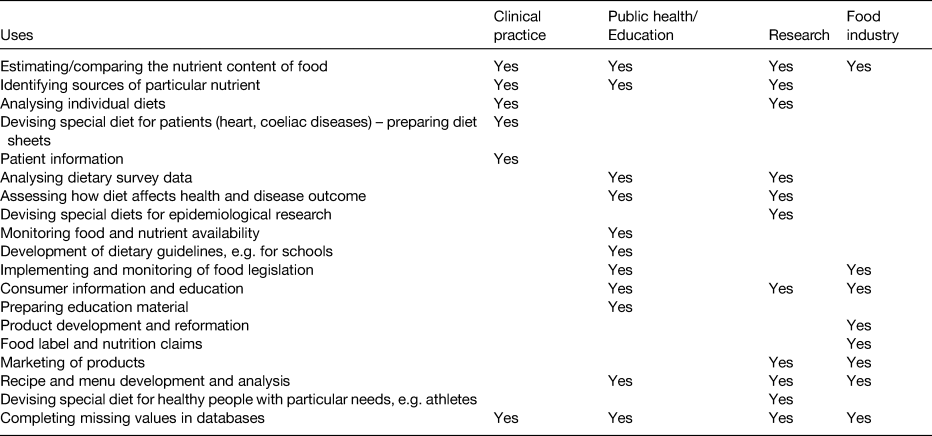
The importance of FCD has been recognised as far back as the 1940s by McCance and Widdowson(Reference McCance and Widdowson35) who stated that ‘a knowledge of the chemical composition of food is the first essential in dietary treatment of disease or in any quantitative study of human nutrition’. This statement remains true. The uses of FCD have evolved since then and are now being used in a way not envisaged in the past(Reference Burlingame41, Reference Finglas, Berry and Astley42). Apart from being very essential for nutrition and dietetics practice, they are used directly or indirectly by non-nutrition and dietetics professionals ranging from ‘consumers to manufacturers, from researchers to policy makers, from economists to agriculture professionals, and from patients to clinicians’(Reference Finglas, Berry and Astley42). The need for FCD varies depending on practice for nutrition and dietetics professional(Reference Pennington30). The different uses of FCD are summarised in Table 1(Reference Williamson43).
Different uses of food composition data by area of work(Reference Williamson43)
Importance of food composition data to nutrition and dietetics practice
One of the immediate causes of malnutrition is inadequate food/nutrient intake and so the health status and risk of many diseases are closely linked to what people eat. To combat malnutrition, the production and consumption of nutritious and safe food must be promoted. One aspect of food quality is its nutritional composition; therefore, any programme aimed at ensuring the provision of nutritious food for the population must consider the composition of the food. Nutritionists and dietitians are professionals who apply the science of food and nutrition to promote health, prevent and treat disease to optimise the health of individuals, groups, communities and populations(44). They are trained to also develop adequate capacity at the global, national and local level for the translation of developmental targets and guidelines into action plans and impact(44). Professional nutritionists and dietitians can function in different settings (hospitals, communities, institutions, industries, government ministries, non-governmental organisation and in private practice). They can function as: (i) Clinical dietitians and nutritionists: Here they provide medical nutrition therapy in hospitals, clinics, care facilities and institutions. They counsel patients on how to improve their health through adequate nutrition. In some cases, they offer customised services based on the special needs of patients of those with special disease conditions such as diabetes, renal, heart, kidney diseases and others. (ii) Community dietitians and nutritionists: These are concerned with public health nutrition. They are involved in policy and programme development and implemention; and counsel members of the public on issues based on food, health and nutrition. They can be found in public health clinics, government establishments, non-profit organisation, international agencies and private practice. (iii) Management dietitians and nutritionists: These work in food service organisations, such as cafeterias, hospitals, prisons, educational institutions and other care facilities. Professional in these areas plan, purchase and manage the service of meals in these institutions.
One of the competences or the minimum requirements to enter the profession at the point of qualification is the ability to integrate the knowledge of food and food systems, human nutrition and dietetics in the provision of the services mentioned earlier and this requires the appropriate use of FCD when considering care plans(44). To perform these functions effectively and deliver appropriate nutritional advice, nutrition and dietetics professionals need knowledge and access to good quality FCT/FCDB.
Reliability of food consumption table/food composition database
It has been established that the practice of nutrition and dietetics requires reliable FCT/FCDB. The Merriam–Webster(45) dictionary defines reliability as the extent to which an experiment, test or measuring procedure yields the same results on repeated trials. In the case of FCD, reliability may simply mean accurate, dependable or good quality data. This is because the food system is very dynamic and so FCD may change from time to time as a result of more sensitive analytical equipment and procedures, discovery of new components that affect health, effect of climate and dynamic food supply. The quality of FCD is determined by a lot of factors, namely, how well the foods in the FCT/FCDB have been described, component identification and the appropriateness of the analytical procedures, and the representativeness of the sample (sampling), including sample handling. It is necessary also that the FCT/FCDB be as comprehensive as possible in terms of food as well as components of public health importance. According to Charrondiere et al.(Reference Charrondiere, Stadlmayr and Wijesinha-Bettoni46) three pillars are needed to ensure that high-quality FCD are generated, compiled, disseminated and used. They are: (i) international standards, guidelines and tools on the generation and compilation of FCD must be developed and used; (ii) national and/or regional food composition programmes must exist, which are updated regularly, and (iii) professionals must be trained in all aspects related to food composition.
In order to address the first pillar, the INFOODS has developed series of guidelines and tools to ensure that good quality FCT/FCDB are established. Some of these standards and guidelines are: (i) Identification of food components for INFOODS data interchange(Reference Klensin, Feskanich and Lin47); (ii) FAO/INFOODS guidelines for checking FCD prior to the publication of a user table/database, version 1·0(48); (iii) FAO/INFOODS guidelines for food matching 2012, version 1·2(49); (iv) FAO/INFOODS guidelines for converting units, denominators and expressions, version 1·0(50).
A FCDB management system has also been developed, namely: FAO/INFOODS compilation tool, version 1·2·1 and user guideline(51). It is a simple FCDB management system in MS Excel format that allows countries to store, document and manage FCD electronically in accordance with FAO/INFOODS standards. The compiler has 151 components with their INFOODS tagname, three recipe calculation systems and a set of nutrient retention factors. It is the first FCDB developed for global use. Other FCDB management systems were developed by the EuroFIR which are ‘FoodCASE(Reference Presser, Weber and Norrie52): Food Composition, Consumption and Total Diet Studies data and Management’ designed to enable compilers create, complete and manage FCD and FoodExplorer(53) tool (a user-friendly web interface that houses the database of thirty countries with a harmonised food description and standardised value documentation).
The need for regional and country-specific FCT/FCDB cannot be overemphasised. Country-specific (national) FCT/FCDB are very useful because the composition of foods can vary from one geographical location to the other(Reference Greenfield and Southgate29, Reference Pennington30); besides countries have different food habits in terms of the type of food they eat, the way they are processed, prepared, preserved and stored them(Reference Wolmarans and Danster54). All these have profound influence on their nutrient composition of foods. Apart from their existence, they need to be regularly updated as to reflect some of the changes occurring as a result of the advances in the science of nutrition and in the food system. As already mentioned, the 2012 West African Food Composition Table is already being updated. A few country-specific FCT have recently been updated, namely the Nigeria Food Composition Database(55) and the Kenyan Food Composition Table(56), while a few are in the process of updating.
Another aspect of high-quality FCT/FCDB as stated previously is that professionals must be trained in all aspects related to food composition. Food composition programme is complicated and involves data generation, compilation, dissemination and use by professionals; all of which require adequate knowledge. It has been observed that in all these activities, there is inadequate knowledge among generators, compilers and users. The use of inadequate analytical procedures, data calculations and estimation; wrong definitions and expression of units and denominators have been identified in some publications bringing about the dissemination of wrong information(Reference Stadlmayr, Charrondiere and Eisenwagen57). Poor quality data have grave consequences. According to Charrondiere(Reference Charrondiere58), inadequate FCD and their use may (then) lead to erroneous research results, wrong policy decisions (particularly in nutrition, agriculture and health), misleading food labels, false health claims and inadequate food choices.
Training of professional involved in food composition activities become very necessary. FAO/INFOODS has played a leading role in this aspect of capacity building. AFROFOODS members have been involved in several food compositions training courses in order to build capacity. Schonfeldt and Hall(Reference Schonfeldt and Hall59) summarised the trainings that took place from 1997 to 2010. More recently, AFROFOODS FAO/INFOODS have carried out numerous training workshops on food composition in Accra, Ghana in 2014; in Arusha, Tanzania in 2015, in Marrakech, Morocco in 2016 and recently in Ethiopia in 2018. In February 2018, the Global Challenge Research Fund/Quadram Institute organised a training workshop in Pretoria for African food composition compilers and researchers. FAO has also published a number of resources for training on food composition, such as the FAO/INFOODS Food Composition Study Guide (available in English, French and Spanish) or the FAO/INFOODS e-Learning Course on Food Composition Data published in English in 2013 and in French in 2018, they all can be accessed on the FAO website(60), free-of-charge. Notably, the e-learning course on food composition was designed for use by university students, but also very useful for professionals. It is an interactive, learner-centred course organised into fourteen lessons, for a total of about 10 h of self-paced learning. The e-learning course offers a wealth of examples, exercises and case studies based on best practices. Efforts are almost being concluded to incorporate the e-learning course into programmes in nutrition, food science, agriculture, public health and other nutrition-related disciplines, especially for the West African sub-region.
Constraint to the use of food consumption table/food composition database by nutrition and dietetic professionals
FCD/FCDB are fundamental tools for nutrition and dietetics practice; therefore, it is important that nutritionists and dietitians have good knowledge of the generation and use of FCD, be abreast of technological advancements in food database systems as well as be in a position to advocate for what is needed for effective dietetic practice(Reference Pennington30). Inappropriate use of the FCD also has its own consequences. It could lead to wrong estimates of nutrient intakes, over- or underestimation of nutrient in a particular food, errors in comparing data between countries and in analysing trends and the inability to associate food intakes to disease conditions and in developing quantitative dietary guidelines(Reference Leclercq, Valsta and Turrini61). With the status of FCT/FCDB in Africa(Reference Bruyn, Ferguson and Allman-Farinelli62), it is obvious that nutritionists and dietitians will be faced with some major challenges. Some of these challenges are now described.
Availability/accessibility of reliable food consumption table/food composition database
Not many African countries have reliable FCT/FCDB; <50 % have FCT/FCDB, of which the majority are outdated. Most are in print form and so have very limited circulation or out of print. The limited availability of reliable FCT/FCDB in Africa has also been attributed to challenges with all aspects of FCD: generation, compilation and use as well as lack of human and material resources. Most countries lack the technical capacity to embark on this activity. Even where the technical experts are available, food composition activities are not adequately recognised and funded. Reliable FCD depend on standardised analytical methods and procedures. Currently only very few countries in Africa have standard analytical laboratories and facilities. It has also been observed that even where some analytical equipment exists, technical staff to install, operate and maintain them are lacking. All these are hindrances to FCD generation. FCT/FCDB are obtained from published data. It has been observed that the quality of some published FCT/FCDB cannot be relied upon due to poor documentation: including poor food description, lack of units, wrong sum of proximate, inability to identify whether values were expressed on dry or fresh weight basis, imprecise description of analytical procedures and implausible values(Reference Bruyn, Ferguson and Allman-Farinelli62). These challenges call for adequate training of all concerned with FCD generation, compilation and use. Professionals such as nutritionists and dietitians should be adequately trained in all aspects of FCD so that they will be able to identify some of these problems so as to guard and control them.
Poor coverage of foods and components
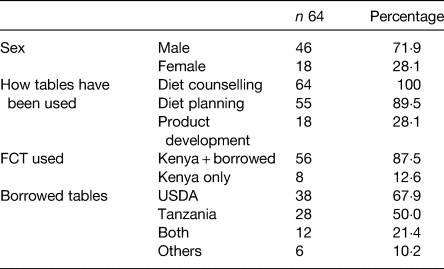
Apart from the reliability of any FCT/FCDB, it needs to be as comprehensive as possible. It is true that most FCT/FCDB can never be complete(Reference Pennington30). A good quality database should cover traditional foods, cooked/mixed dishes and recipes, manufactured and new foods, bio-fortified foods as well as components such as dietary fibre, cholesterol, amino acids, fatty acids, vitamins, minerals, bioactive substances, and contaminants, e.g. aflatoxin content of foods. All these components have been found to impact significantly (positively or negatively) on the health of population groups. The absence of these has made professionals borrow data from other databases(Reference Bruyn, Ferguson and Allman-Farinelli62). Table 2 shows the FCT used by nutritionists in Kenya(Reference Chege and Ndungu63). This was before the recent update of the Kenyan FCT. It revealed the limited use of FCT and the fact that they were mainly used for diet counselling and planning. The implication of this is the underutilisation of FCT/FCDB by nutritionists. It could also indicate the fact that these professionals are not actively engaged in other fields requiring the use of FCT/FCDB. This limited participation of nutrition professional in other intervention areas may also explain why nutrition problems persist in Africa.
Usage of food composition tables (FCT) by nutritionist in Kenya(Reference Chege and Ndungu63)
There are many problems with the use of borrowed data. One major reason is the unreliability of the data borrowed due to several factors that cause variability in the nutrient content of foods, such as soil, planting conditions, climate, level of technology, e.g. food fortification, to mention a few. A study comparing the mineral content of Iranian foods with United States Department of Agriculture FCDB, which is the commonly used table in Iran, showed large differences in the calcium content followed by iron, phosphorus and zinc(Reference Ghaemmaghamia, Mahdavib and Nikniaz64). The authors therefore advised that caution should be exercised when using data from other countries particularly in the case of evaluating nutrient adequacy and in designing nutrition policy. It is possible that some of the food and nutrition decisions taken in the past were not actually based on sound evidences.
The role of AFROFOODS and other stakeholders in solving these problems
FAO/INFOODS and AFROFOODS over the years have recognised the need to strengthen capacity for the development and regular update of country-specific as well as regional FCT/FCDB. They have also recognised the need to strengthen the capacity of sub-regional laboratories in Africa in order to conduct good quality food analyses that will meet international standards. They recognise the training needs for food composition generators, compilers and users. These have informed most of the activities of AFROFOODS FAO/INFOODS in the continent. Recently, the Quadram Institute Bioscience has also assisted AFROFOODS in capacity building, development of website to increase visibility and enhance networking and developing a Road Map for future activities. For AFROFOODS to perform these functions effectively, there is a need for adequate funding and support by all relevant stakeholders; however, this has not yet materialised. The reasons were articulated as far back as 2015 in AFROFOODS’ ARUSHA DECLARATION(65). It was noted that: (i) Many programmes and policies exist in Africa aiming to improve nutrition and health without knowing or paying attention to the true nutrient contents of the foods consumed in Africa; (ii) The nutritional contributions of local foods are undervalued and underused in Africa; (iii) Food composition has never been prioritised in Africa's struggle to solve her food and nutrition problems; (iv) Food composition activities have always been underfunded, if at all, and overshadowed by other intervention programmes.
In line with the theme of the eighth African Nutrition Conference (ANEC VIII): ‘Multi-stakeholder nutrition action in Africa: Translating evidence into policies and programmes for action’ held 1-5 October 2018 in Addis Ababa, Ethiopia, there is need for funding bodies (e.g. NEPAD, AfDB, REC, SUN, REACH, FANUS, ANS, Line Ministries and other UN organisations) to collaborate with AFROFOODS in the efforts to improve nutrition, health and economic development in a sustainable way. Food composition goes beyond the macro- and micro-nutrient content of foods. It also deals with the form in which nutrients are available in foods as well as non-nutrient components, all of which affect their biological activity and bioavailability in the body; thus providing the needed evidence for nutrition and dietetics practice that will facilitate a sustainable food-based approach to address all three forms of malnutrition in Africa. Without reliable FCT/FCDB, it will be impossible to carry out quantitative and evidence-based interventions, such as food consumption/dietary studies; nutrient profiling; food-based dietary guidelines, effectively use the OPTIFOOD linear modelling for designing nutrient-dense and optimal diets, dietary counselling, consumer education and promote nutritious foods among others; all of these can contribute to the prevention and treating diseases and promoting health of the population.
Conclusion
Combating malnutrition in all its form has emerged as one of the greatest challenge of the century. This is as a result of its devastating consequences on human capital and economic development, particularly in LMIC. Although some substantial progress has been made in the past two decades, a lot more still needs to be done in order to achieve the numerous global and regional goals and targets aimed at reducing malnutrition and improving health. Various successful interventions have been put in place but one area that has not received enough attention is the aspect of adequate data generation for making informed decision. FCT/FCDB are fundamental for most nutrition-sensitive and specific interventions for solving the nutritional problems of the continent. AFROFOODS, therefore, recommends that FCT/FCDB generation, compilation, dissemination and use be given due priority and be included and budgeted for in country and regional development and investment plans. AFROFOODS calls on governments to incorporate food composition into curricula for higher education of nutrition and dietetics professional as well as those studying health and agriculture.
Acknowledgements
AFROFOODS acknowledges and appreciates the support of FAO/INFOODS in all its activities in the region, Quadram Institute/EuroFIR for technical assistance, the Board of Trustees of the African Nutrition Society and the Local Organizing Committee for ANEC VIII in Addis Ababa, Ethiopia for providing AFROFOODS the platform for this presentation.
Financial Support
None.
Conflict of Interest
None.
Authorship
The authors included have contributed in one way or the other to the content of the manuscript and are partners or collaborator of the AFROFOODS network.



