



Dietary intake during the first 2 years of life is important not only because of the concerning rates of inadequate intake of some nutrients at this age( Reference Soh, Ferguson and McKenzie 1 ), but also because eating patterns developed as early as 9 months of age can continue throughout childhood( Reference Lioret, McNaughton and Spence 2 ) and diet in infancy and toddlerhood may be associated with health indicators such as blood pressure several years later( Reference Brazionis, Golley and Mittinty 3 ). The measurement of dietary intake is, however, uniquely challenging in toddlers because of their high plate waste, the multiple carers often involved in their care (e.g. while in day care)( Reference Emmett 4 ) and their rapidly changing dietary patterns as they are introduced to an increasing range of family foods. It is also important, particularly in a research setting, to minimise participant burden for busy families to maximise response rate and adherence.
FFQ assess usual dietary intake, have low respondent burden and are relatively inexpensive, but must be validated before use( Reference Gibson 5 ). Six multi-nutrient FFQ have been validated in toddlers( Reference Parrish, Marshall and Krebs 6 – Reference D’Ambrosio, Tiessen and Simpson 11 ), but only three of these studies determined validity for toddlers separately from older children( Reference Marriott, Inskip and Borland 7 , Reference Andersen, Lande and Trygg 9 , Reference Andersen, Lande and Arsky 10 ). The inclusion of older children may improve the apparent validity of an FFQ because an older child is more likely to be eating a meal similar to that of his/her family, including the person answering the FFQ( Reference Livingstone, Robson and Wallace 12 , Reference Huybrechts, De Bacquer and Cox 13 ). Moreover, just one study( Reference Andersen, Lande and Trygg 9 ) had the recommended sample size of 100–200 participants( Reference Cade, Thompson and Burley 14 ) and that study did not test the reproducibility of the FFQ.
The Prevention of Overweight in Infancy Study (POI.nz)( Reference Taylor, Heath and Galland 15 ) is a randomised controlled trial in 800 families in Dunedin, New Zealand. An FFQ suitable for use with toddlers aged 12–24 months, with acceptable validity and reproducibility, was required for the POI.nz study so that nutrient intakes could be ranked while minimising respondent and researcher burden. No such FFQ was available.
The aim of the Eating Assessment in Toddlers (EAT) Study was, therefore, to determine the relative validity and reproducibility of a modified FFQ for ranking the nutrient intakes of toddlers aged 12–24 months.
Methods
Study design
Participants attended two appointments four weeks apart. At the first, the FFQ, anthropometric measurements and sociodemographic questionnaire were completed. A five-day weighed diet record was completed over the following four weeks. The FFQ was then repeated at a second appointment, allowing both validity and reproducibility to be assessed. The nutrients of interest were energy, protein, total fat, carbohydrate, fibre, Ca, Fe, Zn, vitamin B12 and vitamin C.
Participants
A convenience sample of 160 participants (primary caregiver–child pairs) was recruited from Dunedin, Mid Canterbury and Wellington (New Zealand) from September 2011 to April 2012. Primary caregivers were eligible if they were responsible for the care of a child 12–24 months of age, born at ≥36 weeks’ gestation, with no diagnosed illness known to affect growth or food consumption. The Human Ethics Committee of the University of Otago, Dunedin, New Zealand, granted ethical approval for the study and written informed consent was obtained from all primary caregivers.
FFQ
The FFQ was a modified version of the Southampton Women’s Survey questionnaire designed to assess nutrient intake and dietary patterns in 12-month-old infants( Reference Marriott, Inskip and Borland 7 ). The food list was reconstructed to include foods consumed by at least 10 % of New Zealand toddlers( Reference Szymlek-Gay, Ferguson and Heath 16 ). Products that were new to the market since the earlier study were identified in supermarket tours and added if they made a contribution to shelf space (indicating sales volume) similar to (or greater than) that of foods already on our list (11 % of final food list). The FFQ has been validated for determining dietary patterns in New Zealand toddlers( Reference Mills, Skidmore and Watson 17 ).
Three novel components were added to the questionnaire: (i) cross-check questions for vegetable and fruit intake; (ii) use of child’s palm volume to measure serving size; and (iii) collection of information on the amount offered as well as eaten. Cross-check questions asked for the overall frequency of vegetable (or fruit) consumption so that the frequency of consumption for each individual item within the vegetable (or fruit) section could be weighted to meet the overall frequency (‘FV-adjustment’)( Reference Calvert, Cade and Barrett 18 ). All portion estimates were modified from the household portion sizes (e.g. tablespoons) and food models used in the original FFQ: natural portion sizes (e.g. a banana) were used where possible and for the 58 % of questions where natural portion sizes were not appropriate, parents were asked to describe portion size in terms of the child’s palm volume (e.g. ‘number of palms’ of rice eaten; see ‘Anthropometry’ below). The modified questionnaire took into account ‘plate waste’ by asking for portion sizes of both the amount offered and the amount eaten.
The final FFQ was designed to be interviewer-administered and to rank toddlers 12–24 months of age by nutrient intake over the past four weeks. Ten frequency-response options were available, ranging from ‘not offered this month’ to an open-ended question for multiple times per day. The FFQ comprised ninety-five questions under eleven headings: (i) baby/toddler food; (ii) bread and crackers; (iii) breakfast cereals; (iv) rice and pasta; (v) meat, chicken, fish, eggs and beans; (vi) vegetables; (vii) fruit; (viii) dairy and dairy products; (ix) cakes, biscuits and snacks; (x) drinks; and (xi) other foods and drinks. Nutrient intakes were calculated using FOODfiles 2010( 19 ), except for toddler and baby foods (for which manufacturer and food label information was used). Where multiple foods were collapsed into one question, the foods were weighted using age-appropriate frequency and portion size consumption data( Reference Szymlek-Gay, Ferguson and Heath 16 ).
Weighed diet record
Five non-consecutive days of weighed diet records were collected over four weeks. The first day of recording was the day immediately following the participant’s first appointment. The remaining four days were allocated so that in most cases a single day was collected each week, each participant collected at least one weekend day and all days of the week (including weekend days) were collected with approximately equal frequency across the total sample. Participants were given detailed verbal and written instructions at the first appointment and then contacted during the collection period so that they could ask further questions. Nutrient intake was analysed with the Kai-culator nutritional software package version 0·74 (Department of Human Nutrition, University of Otago, New Zealand) using the nutrient database FOODfiles 2010( 19 ), except for toddler and baby foods (for which manufacturer and food label information, or data from an earlier database (FOODfiles 2006)( 20 ), were used).
Anthropometry
Toddler length and weight were measured following standard protocols( Reference de Onis, Onyango and Van den Broeck 21 ). Length was measured using a Rollameter (Harlow Healthcare Rollameter 100, UK) to the nearest 0·1 cm (with duplicate measures within 0·7 cm). Weight was measured using digital scales (Seca Alpha model 770; Seca, Hamburg, Germany) to the nearest 0·1 kg (with duplicate measures within 0·1 kg).
Palm volume was calculated as: palm thickness×length×width. Palm thickness was measured using an anthropometer (model 01291; Lafayette Instrument Company, Lafayette, IN, USA) to the nearest 0·1 cm (with duplicate measures within 0·1 cm). The child’s palm was scanned using a portable scanner (Canoscan LiDE 110; Cannon USA Inc., Lake Success, NY, USA) to determine length and width. The computer program ImageJ (Free Software Foundation, Boston, MA, USA) was used to measure palm length (the distance from the middle of the wrist crease to the middle of the base of the third digit) and palm width (the maximum width across the metacarpal–phalangeal joints II and V).
For all anthropometric measures, where duplicate measurements did not meet the specified criteria, a third measurement was made and the average of the two closest values (or median where the three values were equidistant) was used.
Sociodemographic characteristics
The NZDep2006 Index of Deprivation was calculated for all participants based on their home address (the NZDep2006 gives the least deprived 10 % of New Zealand addresses a value of 1, the 10 % most deprived a value of 10)( Reference Salmond, Crampton and Atkinson 22 ). Parents also completed a questionnaire on their child’s age, sex, ethnicity and number of siblings.
Statistical analysis
All statistical analyses were undertaken using Stata/IC statistical software version 12·0 (2012). A P value <0·05 was considered to indicate statistical significance.
The relative validity of the FFQ for assessing energy and nutrient intakes was calculated by randomly choosing the first or second FFQ for each participant and comparing this with his/her diet record data. The Shapiro–Wilks test and visual checks of histograms were used to determine the normality of the distributions for energy and the nutrients. Because the majority of the distributions were not normal, geometric means (and 95 % confidence intervals) were calculated for each nutrient for the FFQ and diet record. These means were compared using a paired t test. Spearman’s rank correlation coefficients were calculated comparing the FFQ and diet record data for each nutrient. Correlations of 0·30–0·49 were considered ‘acceptable’ and 0·50–0·70 ‘good’( Reference Willett 23 ). The percentage of participants correctly classified and grossly misclassified into quartiles was calculated( Reference Gibson 5 , Reference Willett 23 ). Correct classification was defined as the FFQ categorising the diet into the same quartile as the diet record. Gross misclassification was defined as the FFQ categorising the diet into the highest quartile when the diet record categorised it into the lowest, or vice versa. Bland–Altman analyses( Reference Bland and Altman 24 ) were used to assess the agreement between the two methods at the individual level.
The reproducibility of the FFQ was assessed by comparing the first and second administrations of the FFQ. Means were compared for each nutrient using a paired t test and intra-class correlation coefficients were calculated to assess associations( Reference Gibson 5 , Reference Willett 23 ).
A second, identical, relative validity and reproducibility analysis was carried out using the vegetable and fruit cross-check questions to generate FV-adjusted data. A weighting factor was calculated (for the fruit and vegetable sections separately), as the total frequency with which the food group was eaten per day divided by the sum of all the individual frequencies in that section. Each individual item in the section was then adjusted by multiplying its individual frequency by the weighting factor.
De-attenuated validity correlation coefficients were also calculated. The FV-adjusted correlations were adjusted for the within-person variation occurring within the five days of diet records and within the two FFQ administrations( Reference Willett 23 ).
Results
One hundred and sixty parent–child pairs were recruited, of whom 152 completed both FFQ and the diet record, with one additional participant completing just the first FFQ and the diet record. This resulted in 153 participants (96 %) being included in the validity analysis and 152 (95 %) in the reproducibility analysis. The participants who withdrew from the study (n 7) appeared to be more likely to have a female child, be of ‘NZ European or other’ ethnicity, have only one child and live in an area of low deprivation (NZDep2006 deciles 1–3), although this was not statistically tested because of the small number of participants who withdrew. The 153 children (51·3 % male) who had a completed FFQ and diet record had an average age of 16·8 months, weight of 11·0 kg and length of 81·5 cm. The majority of the participants were New Zealand European (90 %) and had only one child (56 %). Only 11 % of participants were from the three most deprived deciles of the NZDep2006 Index of Deprivation (compared with the expected 30 %).
Relative validity
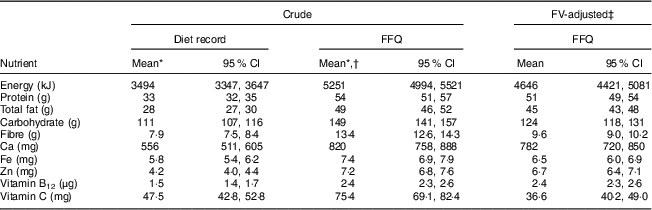
The crude FFQ data gave significantly higher estimates of energy and nutrient intakes than the diet record for all nutrients (P<0·05; Table 1). Similar results were obtained after FV-adjustment with the exception of vitamin C, which was not significantly different from the diet record (FV-adjusted P=0·096), although all FV-adjusted values (except vitamin B12) were lower and therefore closer to the diet record mean.
Average daily intake of selected nutrients from the diet record and FFQ among toddlers aged 12–24 months (n 153), Dunedin, New Zealand, 2011–2012
* Geometric mean.
† One FFQ was randomly selected for each participant for the validity analysis.
‡ ‘FV-adjusted’ is the crude data adjusted by the cross-check questions used in the fruit and vegetable sections of the FFQ.
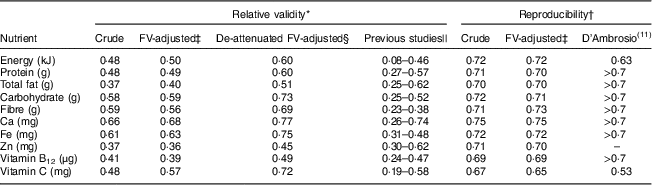
The average crude correlation between the FFQ and diet record was 0·50 (‘good’), with a range from 0·37 (‘acceptable’) for Zn and total fat to 0·66 (‘good’) for Ca (Table 2). The correlations generally increased, albeit by a small amount, after FV-adjustment. The mean FV-adjusted correlation was 0·52 (‘good’; ranged from 0·36 for Zn (‘acceptable’) to 0·68 for Ca (‘good’)). The correlations increased further after de-attenuation, to a mean of 0·62 (‘good’; ranged from 0·45 for Zn (‘acceptable’) to 0·77 for Ca (>‘good’)).
Correlations between the FFQ and diet record, and between the two FFQ, among toddlers aged 12–24 months (n 152), Dunedin, New Zealand, 2011–2012
* Spearman’s correlation coefficients comparing the FFQ and diet record to assess validity.
† Intra-class correlation coefficients comparing the two administrations of the FFQ to assess reproducibility.
‡ ‘FV-adjusted’ is the crude data adjusted by the cross-check questions used in the fruit and vegetable sections of the FFQ.
§ ‘De-attenuated FV-adjusted’ is the FV-adjusted correlations adjusted for the within-person variation occurring between the five days of diet record and two administrations of the FFQ for each participant.
|| The range of correlations from six multi-nutrient FFQ validation studies in toddlers 12–24 months old( Reference Parrish, Marshall and Krebs 6 – Reference D’Ambrosio, Tiessen and Simpson 11 ). Three studies reported Spearman’s correlations( Reference Marriott, Inskip and Borland 7 , Reference Andersen, Lande and Trygg 9 , Reference Andersen, Lande and Arsky 10 ), two studies reported Pearson correlations( Reference Parrish, Marshall and Krebs 6 , Reference D’Ambrosio, Tiessen and Simpson 11 ) and one study reported energy-adjusted Pearson correlations( Reference Blum, Wei and Rockett 8 ).
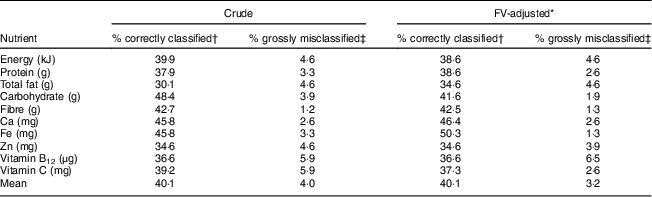
The percentage correctly classified into quartiles by the FFQ and diet record ranged from 30·1 % (total fat) to 48·4 % (carbohydrate) for crude data (mean 40·1 %; Table 3). FV-adjustment did not improve classification (ranged from 34·6 % for total fat to 50·3 % for Fe; mean 40·1 %). The average percentage gross misclassification was similar for both crude data and FV-adjusted data, with energy and all nutrients less than 7 %. Mean gross misclassification with FV-adjustment was 3·2 % compared with 4·0 % for the crude data.
Cross-classification by quartiles of nutrient intakes based on the FFQ and diet record among toddlers aged 12–24 months (n 153), Dunedin, New Zealand, 2011–2012
* ‘FV-adjusted’ is the crude data adjusted by the cross-check questions used in the fruit and vegetable sections of the FFQ.
† % correctly classified=percentage of children with a diet classified by the FFQ into the same quartile as the diet record. If the two methods were completely unrelated, 25 % correct classification would be expected by chance.
‡ % grossly misclassified=percentage of children with diets classified by the FFQ into the highest quartile when the diet record classified them into the lowest quartile, and vice versa. If the two methods were completely unrelated, 12·5 % gross misclassification would be expected.
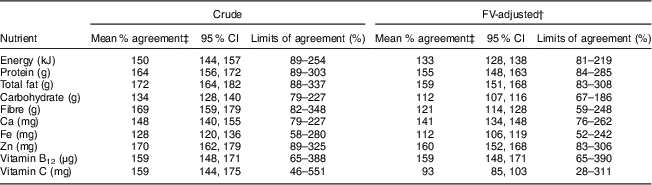
Crude mean percentage agreements between the FFQ and diet record were all greater than 100 % (ranged from 128 % for Fe to 172 % for total fat), showing the FFQ overestimated mean energy and nutrient intakes compared with the diet record (Table 4). Energy and all other nutrients, except vitamin C, were also overestimated by the FV-adjusted FFQ data (ranged from 112 % for carbohydrate and Fe to 160 % for Zn) compared with the diet record. FV-adjusted vitamin C intake showed good agreement between the FFQ and diet record, as indicated by the mean percentage agreement (FV-adjusted: 93 % (95 % CI 85, 103 %)). The limits of agreement were wide for energy and nutrients, whether or not they were FV-adjusted.
Bland-Altman statistics comparing nutrient intakes from the FFQ and diet recordFootnote * among toddlers aged 12–24 months (n 152), Dunedin, New Zealand, 2011–2012
* Data from the diet record and FFQ were natural log-transformed, calculations performed, then answers back-transformed and multiplied by 100 %.
† ‘FV-adjusted’ was adjusted by the cross-check questions used in the fruit and vegetable sections of the FFQ.
‡ Mean % agreement=FFQ/diet record (%); 95 % CI=95 % CI of the mean % agreement.
Reproducibility
There were no significant differences in mean energy or nutrient intakes between the first and second administration of the FFQ, except for FV-adjusted vitamin C intake (mean difference=4·8 mg; P=0·02; data not shown). The percentage difference between the first and second FFQ ranged from 0 % (Zn) to 9·4 % (vitamin C) for crude intakes and from 0 % (fibre and Zn) to 10·5 % (vitamin C) for FV-adjusted intakes.
Table 2 reports the intra-class correlation coefficients used to assess reproducibility between the first and second FFQ. The intra-class correlation coefficients had the same mean (0·71) and range (0·65–0·75) for crude and FV-adjusted data.
Discussion
The EAT FFQ was designed to rank the nutrient intakes of New Zealand toddlers aged 12–24 months. The FFQ showed acceptable to good validity, with even better reproducibility. However, as is typical of the FFQ method, it overestimated energy and nutrient intakes compared with the diet record and gave wide limits of agreement. It is therefore not an accurate measure of absolute intakes or appropriate for estimating the intake of individuals.
Correlations between the FFQ and diet record were higher for energy, carbohydrate, fibre and Fe than previously reported, and all other correlations lay within the range that has been previously reported in validation studies of FFQ used in toddlers( Reference Parrish, Marshall and Krebs 6 – Reference D’Ambrosio, Tiessen and Simpson 11 ). The correlations improved after adjustment for total vegetable and fruit intake (‘FV-adjusted’ values). When the correlations were de-attenuated the correlations increased further, with all nutrient correlations, except those for total fat and Zn, higher than previously reported and correlations for carbohydrate, Ca, Fe and vitamin C exceeding 0·7 (i.e. above the range considered to reflect ‘good’ agreement).
The cross-classification results were similar to( Reference Andersen, Lande and Arsky 10 ), or better than( Reference Andersen, Lande and Trygg 9 ), those for the two other studies that have reported cross-classification. We found low rates of gross misclassification (all less than 7 %). These results, along with those from the correlation analysis, suggest that our questionnaire is a useful tool for identifying children with extremes of dietary intake and is an appropriate method for ranking toddlers according to energy and nutrient intakes.
FFQ commonly overestimate intake, with all six previous validation studies with toddlers reporting overestimation of all( Reference Parrish, Marshall and Krebs 6 , Reference Marriott, Inskip and Borland 7 , Reference Andersen, Lande and Arsky 10 ) or the majority( Reference Blum, Wei and Rockett 8 , Reference Andersen, Lande and Trygg 9 , Reference D’Ambrosio, Tiessen and Simpson 11 ) of nutrients assessed. It has been suggested that portion size estimation is a significant contributor to the overestimation of intakes( Reference Parrish, Marshall and Krebs 6 , Reference Andersen, Lande and Arsky 10 , Reference D’Ambrosio, Tiessen and Simpson 11 , Reference Fumagalli, Pontes and Sartorelli 25 – Reference Huybrechts, De Bacquer and Matthys 27 ). Certainly, toddlers eat small portions and tend to leave food uneaten. The present study took two unique approaches to address these issues. First, information was collected on the amount offered and then, separately, on the amount eaten to encourage parents to differentiate between the two. Second, the FFQ asked participants to describe most portion sizes in units of ‘palm volume’. A child’s palm is small and therefore possibly closer in size to the portions of food eaten than other measurements commonly used, such as cups. It is also present at all feeding occasions, in close proximity to the food being eaten. However, the FFQ still overestimated absolute energy and nutrient intakes by a significant amount, except for FV-adjusted vitamin C.
The reproducibility of the FFQ was consistently high with FV-adjusted intra-class correlation coefficients ranging from 0·65 to 0·75. In comparison, a review article of FFQ in all age groups found reproducibility correlations were usually between 0·5 and 0·7 for most nutrients( Reference Cade, Burley and Warm 28 ).
A challenge facing all FFQ validation studies is recruiting participants who are representative of the population in whom the FFQ will be used. Our study used a convenience sample of participants and it is likely that they were more motivated than the general public. There was some ethnic diversity in our study, however not at levels representative of the New Zealand population, and the study also over-represented participants from the lower and middle deciles of deprivation. Further investigation would be required if the FFQ was to be used in minority populations such as communities with high deprivation or those containing a high proportion of Māori or Pacific people. Another limitation was our exclusion of nutrient intake from breast milk. This was because the weighed diet record was not able to provide data on breast milk consumption, so could not be used to validate intake. Researchers would therefore need to use a validated method for estimating breast milk consumption alongside the FFQ if it was used in populations of breast-fed toddlers. Finally, the FFQ was administered to the primary caregiver only, even though toddlers in New Zealand often attend early childhood education centres for at least part of the day. However, parents were asked to report on foods eaten when the toddler was cared for by others when they knew what the child had eaten (for instance, when they had prepared food for toddlers to take with them) and to report the proportion of the child’s food intake that they were able to describe, and we provided an additional diet record for other carers to use when the child was away from his∕her primary caregiver.
A strength of the present study was its design, which allowed both validity and reproducibility to be assessed in parallel. This is important given that high validity does not necessarily result in good reproducibility. Another study strength was the large sample size (153 in the validity analysis). Validation studies should have a sample size between 100 and 200( Reference Cade, Thompson and Burley 14 ), yet only two previous multi-nutrient FFQ validation studies that involved toddlers had at least 100 participants( Reference Blum, Wei and Rockett 8 , Reference Andersen, Lande and Trygg 9 ). Also, three of the earlier studies used 24 h recalls as the reference method( Reference Parrish, Marshall and Krebs 6 , Reference Blum, Wei and Rockett 8 , Reference D’Ambrosio, Tiessen and Simpson 11 ). Our study was able to collect five weighed diet record days. The weighed diet record is the preferred method because it is not affected by the same errors, in particular memory lapses and portion size estimation, as the FFQ( Reference Gibson 5 ). Finally, we used cross-check questions for fruit and vegetable intakes and these improved the performance of the FFQ. The fruit and vegetable food groups have been shown to be particularly vulnerable to over-reporting in previous studies of FFQ( Reference Calvert, Cade and Barrett 18 ).
The EAT validation study scored 5·0 out of 7·0 (classified as ‘good’) using an unmodified version of the European Micronutrient Recommendations Aligned (EURRECA) Network of Excellence scoring system for assessing the quality of dietary intake validation studies( Reference Serra-Majem, Frost Andersen and Henríque-Sánchez 29 ). The two missing points were for considering seasonality in the study design (this is not relevant for this FFQ, which is designed to assess the past four weeks of dietary intake because intake can change so quickly in this age group) and supplement use (which is minimal in toddlers; only 3 % of the participants used supplements on a diet record day). Our study, therefore, met all relevant criteria for the EURRECA Network of Excellence scoring system.
Conclusion
The EAT FFQ has good relative validity when compared with a five-day weighed diet record and has high reproducibility when measured over one month. It is suitable for assessing absolute intake of FV-adjusted vitamin C, although not other nutrients. This is consistent with most other FFQ, which characteristically overestimate intake and do not perform well at the individual level( Reference Gibson 5 ). The questionnaire is able to rank the diets of New Zealand toddlers and identify toddlers at extremes of the nutrient intake distribution, making it a useful tool for investigating toddlers’ nutrient intakes in studies that require a method of dietary assessment with low respondent burden.
Acknowledgements
Financial support: E.O.W. and V.C.M. were in receipt of University of Otago Master’s Scholarships at the time the data were collected. E.O.W. prepared the first draft of this paper while in receipt of a University of Otago Postgraduate Publishing Bursary. The funders had no role in the design, analysis or writing of this article. Conflict of interest: None. Authorship: A.-L.M.H. and R.W.T. designed the modified FFQ; A.-L.M.H., P.M.L.S. and R.W.T. designed the research; E.O.W. and V.C.M. conducted the research; E.O.W., V.C.M. and A.C.B. entered data; E.O.W. analysed data; E.O.W. wrote first draft of the manuscript; all authors had input into subsequent drafts; A.-L.M.H., P.M.L.S, and R.W.T. have primary responsibility for final content; all authors read and approved the final manuscript. Ethics of human subject participation: The Human Ethics Committee of the University of Otago, Dunedin, New Zealand, granted ethical approval for the study and written informed consent was obtained from all primary caregivers.



