


Introduction
This article explores how emotions can affect policies of hostage rescue and recovery. It argues that emotions are a central part of a process tying together pre-hostage-taking group relations, strategic goal formation, and decisions about hostage recovery tactics.
Figure 1 provides a diagram to serve as a roadmap for the analysis below. Starting on the left, imagine two groups (X and Y) with distinct identities. As a scope condition for this article, imagine these hypothetical groups have been in conflict for a long time with stable underlying power and cultural relationships. Members of group Y take members of group X hostage. Based on a combination of the hostage taking event and the nature of the previous long-standing relationship between the groups, members of X become imbued with specific emotions. These emotions, in turn, shape an ordering of X’s hostage policy goals (top right) and the ways those goals are pursued (bottom right).
The upper right section of Figure 1 represents the main focus of the article. Any hostage rescue/recovery strategy must consider the relative weights of at least three major goals:
– maximising chance of recovering/rescuing the hostages
– punishment of the kidnappers
– avoidance collateral damage, killing of bystanders
Diagram of the argument.

There is no obvious ordering or weighting of these goals. These goals have intrinsic trade-offs. This article will show how an understanding of emotion can help explain why one of these goals comes to dominate another, why one goal fades in importance. While rational choice explanations can be bent to address this phenomenon, this article will show how an emotion-centred approach can provide a more convincing explanation of both the ordering of goals and the policies that follow.
The article will argue that a specific combination of two emotions – anger and contempt – will drive the elevation of the punishment goal above that of maximising chances of hostage recovery and also greatly diminish any value of collateral damage avoidance. In the terms of Figure 1:
– If imbued with intense anger towards Y, X will elevate the value of punishment
– If imbued with contempt for Y, X will reduce its desire to avoid collateral damage.
– If X is imbued with both intense anger against and contempt for Y, there will be both heightened desire for punishment and disregard for collateral damage.
– In all of the three of the just-mentioned situations, the relative value of hostage recovery will decline.
Clearly, the dramatic and painful nature of kidnapping and hostage-taking generates a number of emotions. There will be fear for the lives of hostages. There could be guilt over the failure to prevent the hostage-taking. Within any population, there will be a distribution of different perceptions and emotions. In some cases, however, specific emotions will become a dominant force for policy choices. In a number of those cases, the power of anger and contempt is both evident and overwhelming.
The next four sections proceed to define and discuss methods, emotions, and hostage policy in theoretical and general terms. The sixth section provides flesh to these issues with a short case study of hostage-taking at Attica Prison in 1971. The Attica case provides a clear example of anger and contempt at work.
The final sections directly apply the framework to Israel’s post–October 7 hostage policy towards Gaza. I will argue that an emotion-based approach addresses many of the puzzles presented by the case. I will come back to the following puzzles in the closing pages. 1) After negotiating the release of 105 hostages in November 2023, why were there no successful negotiations for release of more hostages until mid-January 2025? After all, the ceasefire/hostage deal of January 2025 had essentially been on the table for at least eight months. During this period, dozens of Israeli hostages were dying.Footnote 1 2) Relatedly, after the first phase of the ceasefire/hostage negotiation of January 2025, which led to the release of thirty-three hostages, why did the Israeli government reject proceeding to a second stage (promising the return of more hostages), choosing instead to implement a blockade of humanitarian supplies and mobilise for a total assault on the enclave? 3) How can we explain the Israeli general population’s acceptance of civilian collateral damage amidst world condemnation? 4) What explains the Israeli insistence for achieving ‘total victory’ in Gaza, defined as the complete eradication of Hamas? As cautioned by US military advisors, the complete eradication of Hamas was always unlikely. Yet, Netanyahu’s rhetoric of for ‘total victory’ retained support even when the negative consequences for hostage recovery were understood.
Methods and case selection
The subject of emotion is complicated and defies simple definition.Footnote 2 The following section defines emotions in comparison to a straightforward model of rational decision-making. This device is aimed at those international security scholars coming particularly from a Realist background who may be accustomed to approaching questions from a rationalist bent. While other security scholars have followed Jervis in pursuing the effects of misperception and a related set of psychological mechanisms, the literature integrating international security and discrete emotions (such as anger, fear, etc.)Footnote 3 is far sparser.Footnote 4 Comparing a rational cycle with an emotion-centred cycle is an attempt to focus the discussion and help identify points of disagreement among members of a diverse security studies audience. This juxtaposition will also facilitate a discussion of alternative explanations in section IX.
This article’s conceptual framework for analysing discrete emotions – with the specification of A, B, and C effects – is an abbreviated form gleaned from several works of Petersen.Footnote 5 In its most extensive application, Western Intervention in the Balkans: The Strategic Use of Emotion in Conflict (2011),Footnote 6 the framework was employed to examine the role of anger, contempt, fear, and hatred in contentious and violent cases across the Western Balkans. The framework is most explicitly addressed as a chapter in A Handbook of Anger: Constituent and Concomitant Biological, Psychological, and Social Processes.Footnote 7
Among the larger set of discrete emotions, the article concentrates on anger and contempt for several reasons. First, it is difficult to imagine victims of hostage-taking not feeling anger. Second, as outlined below, anger’s effects – desire for punishment, downgrading of risks – make for clear observable predictions for shaping hostage strategies. Third, contempt brings in identity issues that are common in international hostage events. Fourth, anger and contempt in combination may provide synergies that create an even more emotionally charged situation than in cases when the emotions exist separately.Footnote 8
For case selection, the article follows common practices for theory building projects. The Attica case was chosen as a type of plausibility probe.Footnote 9 The case presents high values for both elements on the left side of Figure 1. In terms of ‘the existing relationship between X and Y’, it would be difficult to find cases in which two sides stood in such stark contrast. An entirely white set of guards controlled every daily movement of a majority Black and Hispanic prisoner population. One side with total power over the other. One side imprisoned as criminals, the other side representing law and order. Prior to the takeover, guard–inmate relations were already poor. In terms of ‘members of Y take members of X hostage’, the actual takeover of the prison involved initial brutality against the guards, including one murder. Attica, and perhaps most prisons, also serve as ‘laboratories’. Without free movement and even controlled visitors, the prison is an isolated, confined, and sealed off society of its own. In this controlled environment, many possibly confounding variables are not present. Given these starting conditions, we should expect to clearly see the influence of anger and contempt. As with any plausibility probe, if we do not see these predicted effects, the original theory, or at least some of its expectations, should be modified or discarded.
This article was written in two stages. In the first round, which culminated in a meeting of the hostage politics study group in Berlin, the draft article only contained the Attica Prison case. The group’s reaction to the draft indicated that the project passed the plausibility probe. The next step would be to move from the Attica Prison ‘laboratory’ test to a real-world case, one especially of interest to political science and international relations scholars.
In the group discussion, the Gaza case was a consensus choice to include moving forward.Footnote 10 The choice was hardly surprising as Gaza is often referred to in popular discourse as the ‘world’s largest open air prison’. Indeed, others have made the Attica/Gaza comparison. For example, responding to comments by columnist Bret Stephens, David Zirin wrote the following in The Nation:
Gaza is an open-air prison, even if Stephens in all his arrogance casually calls that description ‘a lie.’ For years, according to the United Nations, children have died in Gaza at an alarming rate from hunger, disease, and Israeli attacks. Now this open-air prison is facing what another prison, Attica, faced in 1971. The prisoners of Attica fought back against savagely inhumane conditions… They also took hostages – and then were slaughtered for their efforts. Gaza is Attica if Attica had been populated by 2.3 million people, half of whom are children.Footnote 11
Beyond popular perception, the two cases bear strong common characteristics, some of which are detailed in the case study below. The list of commonalities includes structural variables: extreme power differential, small size of the territory (by world political unit standards, Gaza is miniscule), completely controlled borders of the unit. The beginning actions of the event included surprise and brutality in each event. The negotiating processes themselves bore similarities: in both cases, negotiations went several identifiable rounds; in both cases, a radical group led the negotiations on the hostage-takers’ side (the Black Panthers in Attica, Hamas in Gaza); in both cases, the negotiators on the state side involved higher level actors with agendas beyond the hostage event itself (Governor Rockefeller in the Attica case, Netanyahu in the Gaza case). Given the desire to move on from Attica to a case with international relations implications, a fundamental question arose: what case would be better to examine than Gaza?
Finally, both Attica and Gaza might be considered ‘outlier cases’ with outcomes and values far from the mean. As with ‘laboratory’ type cases, outlier cases are useful for theory building. Following Lieberman, an in-depth case study of an outlier case may be able to identify previously unobserved variables and causal mechanisms as well as being useful for identifying the boundaries of the theory.Footnote 12 Given this conventional wisdom, choosing Attica and Gaza were normal choices, especially for pursuing under-studied mechanisms related to emotion.
Emotions in comparison with rationality
Emotions can be discussed with comparison to a simple model of rational choice.Footnote 13 Figure 2 below illustrates a rational action model. Starting on the right side of Figure 2, individuals are seen as holding a short list of stable and ordered preferences or desires. Given these preferences, individuals then collect information about how best to attain their goals. They form beliefs about the most effective means and strategies to gain what they want. An action then results as a combination of desires and beliefs.
Action cycle with no reference to emotion.
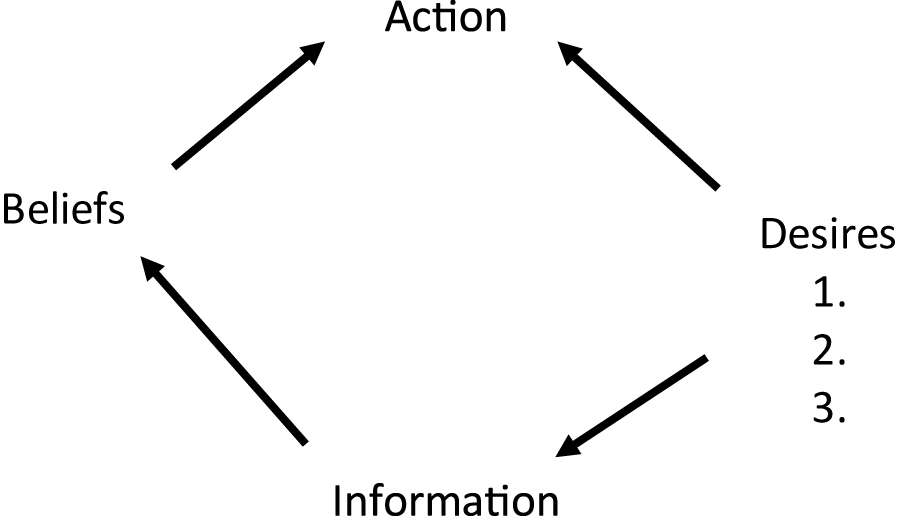
Figure 3 incorporates Figure 2 but in this cycle, belief also leads to emotion (purple arrow). Following Ortony et al.: ‘Our claims about the structure of individual emotions are always along the lines that if an individual conceptualizes a situation in a certain kind of way, then the potential for a particular type of emotion exists.’Footnote 14 For the purposes here, the situation is hostage-taking by members of an opposing group; the relevant conceptualisations are about ‘they taking us’ hostage. In academic terms, these beliefs are cognitive antecedents for emotions.
Action cycle illustrating three effects of emotion.

If there are clear and powerful cognitive antecedents, a discrete emotion (anger, fear) will follow. As shown in Figure 3, discrete emotions have identifiable and predictable effects on the three links in a decision cycle (green lines) leading to an action. These effects are labelled as A, B, and C effects. First, and most fundamentally, emotions are mechanisms that heighten the saliency of a particular concern (A effect). This effect is closely related to emotion theorists’ idea of action tendency.Footnote 15 The emotion acts as a ‘switch’ among a set of basic desires.Footnote 16 Individuals may value safety, money, vengeance, and other goals, but emotion compels the individual to act on one of these desires above all others. Once in place, emotions can produce a feedback effect on information collection (B effect). Emotions lead to seeking of emotion-congruent information.Footnote 17 For example, if an individual is afraid, he or she will privilege information about danger. Third, emotions can directly influence belief formation (C effect).Footnote 18 Emotions can be seen as ‘internal evidence’ and beliefs will be changed to conform to this evidence.Footnote 19 Even with accurate and undistorted information, emotion can affect belief formation. The same individual with the same information may develop one belief under the sway of one emotion and a different belief under the influence of a different emotion.
This framework can also be used to identify and specify the components of discrete emotions. This article will consider four emotions most clearly relevant to hostage-taking: anger, fear, contempt, and guilt. We can identify the beliefs/cognitions that trigger each of these emotions and furthermore specify their A, B, and C effects.
Anger forms from the belief that an individual or group has committed an offensive action against one’s self or group. Anger will be most likely to form and intensify when the cognitive antecedents about actors and the nature of the situation are very clear. Anger is most intense if there is no ambiguity about the identity or purpose of the perpetratorFootnote 20 and when there is an identified agent who can be punished or prosecuted. Furthermore, ‘sense of control’ is important. Anger is most likely to arise, and become more intense, when the individual has a sense of control and an ability to retaliate.Footnote 21
Anger’s A effects heighten desire for punishment and vengeance against a specific actor. Under the influence of anger, individuals become ‘intuitive prosecutors’ specifying perpetrators and seeking vengeance.Footnote 22 Anger’s B effects distort information in predictable ways.Footnote 23 The angry person lowers the threshold for attributing harmful intent; the angry individual blames humans, not the situation.Footnote 24 Anger tends to produce stereotyping.Footnote 25 Anger’s C effects shape the way individuals form beliefs. Under the influence of anger, individuals lower risk estimates and are more willing to engage in risky behaviour.Footnote 26 Anger provides a sense of higher control of one’s environment. In sum, anger heightens desire for punishment against a specific actor, creates a downgrading of risk, and increases prejudice and blame, as well as selective memory. As noted by Carly Wayne, ‘for angry individuals support for retaliation may be motivated for offensive aims, punishing the perpetrator simply because they deserve it’.Footnote 27
Fear forms from beliefs about danger. Under fear, individuals value self-preservation above all else. As discussed below, the action tendency of fear (A effect) will differ according to the situation but is always oriented towards blunting the primary threat. As with all emotions, fear will lead individuals to process information and form beliefs to confirm the cognitive-appraisal aspects of the emotion. Accordingly, under fear they will privilege information about danger (B effect).Footnote 28 Spectacular violent events can cause individuals to see subsequent actions through a framework of fear.Footnote 29 The C effects of fear can be illustrated in a comparison with those of anger.Footnote 30 While both anger and fear affect beliefs about risk, they do so in opposite directions. Individuals under the sway of fear become more risk-averse; those under the influence of anger become more risk-acceptant. As Halperin sums up, ‘fear usually is associated with avoidance tendencies as well as with motivations to avoid taking risks and to create a safer environment… Importantly, that means that people who are dominated by fear are not directly motivated to hurt anyone.’Footnote 31
Anger and fear stem from beliefs about an opponent’s actions. The emotion of contempt forms from beliefs about an opponent’s essential nature. The emotion of contempt results from cognition that a group or object is inherently inferior or defective. It is the ‘rejection of, or an attitude of indifference toward, something or someone esteemed to be of low value’.Footnote 32 In more blunt terms, ‘The basic notion of contempt is: “I’m better than you and you are lesser than me.”’Footnote 33 The A effect of contempt is avoidance, to ignore the group in question. The B and C effects are the well-documented phenomena connected to racism and prejudice. Attention funnelling prevents the consideration of any positive actions or value of the stigmatised group; the fundamental attribution error is prominent.
Some emotions form from beliefs about oneself. If an individual perceives that they have committed a blameworthy action, they may feel guilt. As emotion theorist Nico Frijda described, guilt comes from ‘knowing you cannot claim to be what you would like to be’.Footnote 34 Guilt can create a psychic pain that propels an action tendency to atone for one’s bad action. Under the burden of guilt, individuals may obsess about what they did and how they could have acted differently.
To come back to the comparison with rational choice that began this section, it should be clearly stated that emotions do not inherently involve irrationality. Indeed, in many situations, the A, B, and C effects described above are helping the individual create priorities, select the most relevant information, and motivate decision-making in a way to help meet an existing problem or threat. As William Riker has pointed out, rational individuals may operate according to several different sorts of strategies (‘sincere’, ‘avoid the worst’, ‘average value’, ‘sophisticated’).Footnote 35 Emotions can affect which strategy becomes operative. For example, it is likely that emotions such as fear can influence a switch in method of belief formation, perhaps to an ‘avoid the worst’ strategy.
On the other hand, there are obvious points of contention. Above all, the emotions approach does not assume a stable preference ordering. Emotions can heighten and shape the relative weight of desires and even create obsessions (A effects). Obviously, emotions can produce irrationality. They often make individuals bias their information collection and heighten their prejudices (B effects). Emotions can set off clearly irrational mechanisms like wishful thinking (C effect). They can drive individuals to downplay risks to the point of self-destruction.
For many scholars, the question is whether the inclusion of emotions, and their complications, are worth the decline in parsimony. For scholars employing rational choice, the most common attack against including emotions is their ‘squishiness’, that they can be flexibly applied in an undisciplined fashion. Given the advancing knowledge on discrete emotions, this criticism is losing its validity. We can recognise when an emotion is present and, crucially, when it is not present by assessing the presence or absence of all three of the effects just discussed. If anger is present, we should see its effects on preferences, information, and belief formation (in a controlled laboratory, we could also see specific facial expressions and physiological responses). If fear is a driving force, we should see a different set of effects on all three links in the chain. The rational choice approach to decision-making using ‘as-if’ assumptions and retroactively constructing preference orderings is no less ‘squishy’.
In section IX, we will come back to the questions listed at the end of the Introduction. The sections will juxtapose the rational choice approach and the emotional counterpart. The reader can assess their relative value in explanation.
How emotions affect hostage policy goals
The discussion above provides several insights on how we should expect emotions to shape hostage policy. Anger forms from the belief that an individual or group has committed an offensive action against one’s self or group. In our abstract example, members of group Y have committed a grave and offensive action. Hostage-taking, or kidnapping in common parlance, not only invokes moral outrage, but is a violation of international law as well. In turn, anger heightens a desire for punishment. Members of X are undoubtedly going to feel anger against Y in the wake of hostage-taking.
Anger not only directs the central goal of hostage policy towards punishment, but once in place the emotion will sustain beliefs about the efficacy of that strategy (C effect). Anger provides its holder with a sense of control (the opposite of the emotion of fear). With a hostage policy oriented towards military action rather than negotiation, anger will work to diminish clear-headed assessments of the risks to hostages of that policy (C effect). Moreover, anger will prevent the collection and serious evaluation of information suggesting that the punishment strategy is not working. Instead of engaging in debate, those opposing the punishment strategy will likely be called terrorist sympathisers or, at a minimum, naïve.
The main effect of contempt is also clear. The emotion of contempt results from cognition that a group or object is inherently inferior or defective. Correspondingly, the human value of the opponent’s group is low. Under the emotion of contempt, individuals in Group X are largely incapable of empathy for anyone in Group Y. They will engage in stereotyping, unable to distinguish the general population of the group from the actual hostage-takers. Only information demonstrating the culpability of the entire opposing group will find currency. Accordingly, collateral damage becomes a minor concern, if not a desired outcome. With a high level of contempt, the goal of avoiding collateral damage may essentially fall out of the preference set altogether. The members of the opposing group, all of them, deserve what is coming to them.
The effects of anger can interact with those of the emotion of contempt. Anger increases the stereotyping underlying contempt. Crimes by the contemptible inferior group may heighten the belief that a grave wrong has been committed, in turn intensifying anger and the drive for punishment. In sum, this combination will drive punishment above hostage rescue and make collateral damage a minor concern.
The emotions of fear and guilt make very different predictions. As outlined above, fear heightens a drive for self-preservation or, in the case of hostage-taking, a drive for the preservation of the hostages’ lives. Indeed, this fear is the central tool of kidnappers. They count on fear to coerce targets to pay ransoms while avoiding going to the authorities. In terms of the present framework, fear should elevate the goal of maximisation of recovery chances above that of punishment.
The emotion of guilt may also be present in hostage-taking.Footnote 36 In the framework here, some members of X will come to believe that their lack of vigilance makes them responsible for their fellow X members’ captivity and danger. Guilt will drive them to atone for this sin. The best way to atone is to bring back the victims safely. In short, if guilt is a dominant driving emotion, we should see the weight of the goal of hostage recovery surpass that of punishment. We should also see X members engage in blaming themselves, at least in part, for allowing the hostage-taking.
In hostage taking events, as well as other violent events, individuals will likely experience some degree of both fear and anger. But as recent research suggests, one of these emotions will usually be felt with more intensity than the other and will subsequently become the main force in perceptions and actions.Footnote 37
The first link in the chain: Existing group relations
The literature on kidnapping and hostage-taking does not sufficiently address the role of existing identities among perpetrator and victim groups. No one denies that hostage-taking is an inherently emotional phenomenon, but the emotional nature of hostage-taking is even more pronounced when occurring as part of group-based conflict. In such circumstances, individuals will likely frame the event as ‘they have taken us’ hostage. In this situation, long-term perceptions of ‘they’ – the opposing group’s power, essence, and motivation – will affect the intensity of the emotions capable of shaping policy and strategic responses.Footnote 38
Here, we take into account two characteristics of group relations most relevant to the emotions of anger and contempt. First, consider power differentials. When the power balance is overwhelming in favour of group X (the victim group in our hypothetical situation), anger will likely be far more intense than if the power balance between X and Y is equal. As a general point, when the usually powerless take the powerful hostage, the action is a crime against not only laws but also the natural order. Hostage-taking provides a measure of power to the powerless who do not deserve it.
More specifically to anger, as mentioned above, a belief in the ability to retaliate helps initiate and intensify the emotion. In an observation going back to Aristotle, one only gets angry when revenge is possible.Footnote 39 Obviously, the powerful will believe that revenge is possible against the weak. If the groups are equal in power, the costs and possibilities of revenge are higher, and the level of anger correspondingly lower. Furthermore, if X and Y are equal in power, X will be more likely to fear Y. Fear, in turn, is more likely to drive negotiation or appeasement more than punishment.
The second key relationship concerns cultural status and the emotion of contempt. In some cases, Group X might see Group Y as inherently inferior and defective. This variable has its main effect on the goal of collateral damage avoidance. As the very value of Y’s lives are lower, the value of their injury and death in X’s strategic calculations will be lower. Given contempt’s accompanying mechanisms of stereotyping and attribution error, members of X will not differentiate between perpetrators and bystanders – given their low character, all Ys are likely complicit.
Two more sub-hypotheses can be connected to the presence of contempt.
– X’s punishment of Y will more likely involve aspects of humiliation. If Y is less human, there is less need to be humane.
– More speculatively, in justifying its severe punishment of Y, X will provide descriptions (usually false) of Y’s depraved actions. Other members of X, under the confirmation biases produced by the emotions, will accept these stories.
The expectation from the analysis here predicts that when a large power differential and cultural contempt combine, the conditions form a ‘perfect storm’ leading to high deaths all around. When the powerless and the contemptible take hostages, we will likely see more death of hostages, kidnappers, and bystanders.
Perhaps no real-world situation captures this ‘perfect storm’ more than when prisoners take their guards captive.
An illustration of a ‘perfect storm’: Attica Prison, September 1971
As mentioned in Section II, the Attica case was selected as a plausibility probe of a ‘perfect storm’. Given its apparent high values on the identity and attack factors on the left side of Figure 1, we should expect to see the remaining links in the chain unfold to see the emotions of anger and contempt shape hostage strategy goals and actions.
On 9 September 1971, inmates at Attica Prison in upstate New York rioted and took forty-two guards and staff hostage.Footnote 40 During the takeover, several guards were beaten with shovel handles, bats, and pipes; some were made to run a gauntlet of abuse.Footnote 41 One guard would later die of wounds suffered in the takeover.Footnote 42
On the identity side, Attica was a site of toxic relations between inmates and guards. The purpose of a maximum-security prison is to render a ‘defective’ group (felons) powerless (as prisoners). The prisoners certainly saw themselves as the object of contempt. In June, months before the riot, a manifesto of a group of inmates opened by stating: ‘We the inmates of Attica Prison have come to recognise that because of our posture a prisoners and branded characters as alleged criminals, the administration and prison employees no longer consider or respect us as human beings but rather as domesticated animals selected to do their bidding and slave labor and furnished as a personal whipping dog for their sadistic psychopathic hate.’Footnote 43 Similar ideas could be found on the prison staff side. After the riot was put down, the Attica Prison doctor, Dr Williams, dismissed critics of the state’s forceful retaking of the prison and the high death toll. Dr Williams stated, ‘These convicts aren’t appreciative of anything. They’re rapists, murderers. They’re animals. And you want me to be sympathetic: I think they got what they deserved.’Footnote 44
The seizure of a major section of this maximum-security prison was a complete surprise. That the powerless had suddenly taken the powerful hostage created predictable anger in the powerful. Confined to their cells for fourteen to sixteen hours each day, the inmates had certainly had little power. Now, the prisoners, led by Black Panthers and Muslims, could dictate the pace of negotiations.Footnote 45 As Thompson writes of Prison Superintendent Vincent Mancusi: ‘Here he was, fifty-seven years old with a college degree from the State University of New Paltz and a high position within the state bureaucracy, and he had to go hat in hand to a bunch of thugs to ask them what in the hell they wanted. Although he thought this was outrageous, it was unavoidable.’Footnote 46
During the negotiations, emotions clearly affected the thinking of security personnel. In the words of state trooper F. D. Smith: ‘an attitude of disgust was apparent among troopers and guards on Sunday, the 12th… A number of our people were heard to be wishing for “something to happen even if it’s the wrong thing.”’Footnote 47
As state officials planned the operation to retake the prison, journalist Tom Wicker, who as a member of the Observers Committee had met with both prisoners and prison officials constantly over the negotiating period, ‘simply took it for granted that no one wanted “the irrationality of bloodshed and death”’.Footnote 48 In his book, A Time to Die: The Attica Prison Revolt, Wicker summarised his lack of insight during the event. Describing himself in the third person, Wicker wrote: ‘He had not yet seen…that the novel process in which they were involved could scarcely be rational at all, either on the part of the state or on the part of the inmates – rational, that is, in the sense that each side could pursue its interests coldly, rather than yielding to passions, prejudices, fear, and hatred.’Footnote 49
Clearly, state officials quickly came to accept that hostages were going to die with a forceful retaking of the prison. General O’Hara later stated of the planning meetings: ‘It was the general consensus of opinion by all the official present that…if the prison was retaken by force the hostages would be killed.’Footnote 50 Indeed, the details of the plan guaranteed that hostages would likely not be spared. First, the assault would be led by New York State police (NYSP) rather than the National Guard; the latter were trained for civilian disturbances and had a well-formed plan in place, while the former had no formal training. While the prisoners had no firearms, the NYSP and guards would use shotguns with a wide blast range, revolvers, and rifles often loaded with unjacketed bullets.Footnote 51 None of the weapons were registered before the assault, so there could be no accountability in their use.
At the beginning of the assault, a helicopter dropped immobilising tear gas into the prison yard. Although there was a momentary possibility of taking back the yard with little bloodshed, troopers opened fire into an emerging chaos. Even after the troopers gained command of the catwalks, the assault ferociously continued. Hostage Michael Smith later testified, ‘it was just like they indiscriminately shot everyone. And it seemed like we fell like dominos… I have four entry wounds, and they’re in a vertical order, and they start just below my navel. So whoever shot me was an excellent marksman; it was intentional because the pattern was in a vertical and not horizontal. And the bullets exploded on impact and, uh, damaged a lot of stuff inside.’Footnote 52 As Thompson summarises: ‘Strollo and Smith’s fellow troopers, the correction officers, and the other members of law enforcement were just getting started. After clearing the catwalks so there was not a single man standing on any of them, the NYSP launched its ground assault. It was instantly clear to everyone huddled there that the troopers and COs were no longer merely trying to regain control of the facility. That was already done. They now seemed determined to make Attica prisoners pay a high price for their rebellion.’Footnote 53
The final numbers told a story. Of the thirty-eight hostages who remained in the yard at the time of the assault, nine were killed, with another severely wounded and later dying – all from bullets fired from security personnel. Twenty-nine inmates were shot fatally.Footnote 54 Both the hostage and prisoner deaths often resulted from buckshot scatter and the use of unjacketed bullets. At least eighty-three other inmates were treated for gunshot wounds.Footnote 55
Following the sub-hypotheses related to contempt, state security personnel produced false stories of inmate depravity, often taking a sexual turn. The prison public relations director immediately claimed that all nine of the dead hostages were killed by prisoners. The Deputy Commissioner, Walter Dunbar, claimed that one of the prisoners ‘took a knife and grabbed young officer Smith and castrated him…and took this man’s organs and stuck them in his mouth in clear view of us all…we saw it. We saw it.’Footnote 56
After retaking the prison, in a clear act of humiliation, inmates were forced to run naked through a gauntlet while being hit with batons. Many inmates were made to crawl on the ground with their hands behind their heads.Footnote 57
In retrospect, many of the major actors in this drama did not anticipate the outcome. The inmates believed their holding of hostages would deter the ordering of a full-on armed attack. As reported by observer Wicker, inmate leader Champen held: ‘We felt that their lives meant something to the administration… How can you come in and kill the man you sat down with last week and drank a beer or bowled with?’Footnote 58 In a poll of inmates recorded in the official state report, 46.8 per cent of responding inmates did not expect that the state forces would use guns.Footnote 59 On the other side, at his vice-presidential hearing in 1974, Governor Rockefeller lamented the use of lethal force and believed an immediate retaking of the prison might have avoided the use of deadly weapons. In the end, no one’s beliefs or desires for restraint played out.
In this extreme case of powerlessness and prejudice, anger and contempt, state actors downgraded hostage rescue, upgraded punishment, and were indifferent, at best, to killing prisoners who were more bystander than perpetrator.
The Gaza Strip after 7 October 2023
As argued at the end of Section II above, the leap from Attica to Gaza is not a long one, with the two cases sharing key similarities. There is perhaps no place on earth with a power/wealth gap as wide as the one that separates Gazans from Israelis. Although usually treated as an interstate conflict, in terms of international law, Gaza is under Israeli occupation. Gaza’s 2.3 million residents are crammed into 140 square miles, making it one of the most densely populated areas in the world. In 2018, over half of Gaza’s population lived under the poverty line; the employment rate was also over 50 per cent.Footnote 60 Israel’s border fence around Gaza resembled not just a prison, but a highly fortified prison with multiple fences, underground concrete barriers, no-go zones, observation towers, various sensors, and remotely operated weapons. See Figure 4 for an illustration.
Israel’s border fence with Gaza.

While Israel had restricted movement from Gaza earlier, the real prison-like conditions began after a sequence of events taking place from 2005 to 2007. Israel disbanded its settlements in Gaza in 2005: Hamas won legislative elections in 2006; Hamas then consolidated control after a deadly contest with Fatah. One of the world’s leading experts on Arab life in Israel, Ian Lustick, summarised Gaza’s post-2007 situation as a prison with Hamas acting as a prisoner organisation similar to the ones found in the Israeli prisons at Megiddo, Ashkelon, and Beit She’an:
Gaza became a resource-starved and overpopulated open-air prison, forced to rely on Israel for food, water, electricity, trade, mail delivery, access to fishing, medical care, or contact with the outside world. From then on, Israel has effectively treated Hamas as the prisoner organization responsible for preventing the inmates – none of whom have been placed on trial, and all of whom have life sentences – from harming Israel or Israelis.Footnote 61
When Gaza became a source of trouble, Israel made repeated armed forays into the territory. In the summer of 2014, after Hamas kidnapped and killed three Israelis, Israel launched a seven-week war, killing 2,100 Palestinians (with sixty-seven Israeli soldiers dead). In the spring of 2018, Israeli troops fired on Palestinian protestors at the border fence, an incident leading to more violence and 170 Palestinian dead. In the spring of 2021, during Ramadan, Palestinian protests over Israeli policy at the Al-Aqsa led to a conflict of Hamas rockets versus Israeli air strikes, resulting in 260 Palestinian and thirteen Israeli dead. In this wider temporal frame, Lustick describes the October 7 events: ‘Hamas and the Islamic Jihad did not start a war; they launched a prison revolt.’Footnote 62
As in the Attica case, we can use reference to Figure 1 to guide the analysis. Start with the issue of the longer-term relationship between the two relevant sides. By most measures, Israelis have contempt for Palestinians in general.Footnote 63 A 2022 Amnesty International report entitled ‘Israel’s Apartheid against Palestinians: A Cruel System of Domination and a Crime against Humanity’ documents how ‘Israeli authorities treat Palestinians as an inferior racial group who are defined by their non-Jewish, Arab status’.Footnote 64
Scholarly surveys have documented the persistence of stereotypes and their inculcation in youth long before the present conflict. A 2014 survey found ‘Overall, increases in negative stereotypes about ethnic out-groups by both Israeli Jews and Palestinians gives credence to the development of delegitimizing beliefs, or the process of attributing extremely negative characteristics to out-groups with the purpose of denying their humanity’.Footnote 65 In a 2000 Israeli public opinion poll, over 30 per cent of respondents admitted to seeing Arabs as unintelligent, dishonest, and violent.Footnote 66
Other commentators have discussed Israel’s high contempt for Gazans specifically. Danish professor Somdeep Sen published a 2021 article in Foreign Policy titled, ‘Why Israel Hates Gaza’, with the subtitle ‘Israel’s Leaders Have Always Shown Contempt for Palestinians in the Gaza Strip because Their Past – and Ongoing Presence – Pose a Direct Challenge to Israel’s Founding Myth’. Sen summarises: ‘The Enclave frequently finds itself outside the scope of normal conversation in Israel–Palestine. It is instead viewed as an exceptionally contemptible place that deserves exceptionally repressive measures.’Footnote 67
Recall that the action tendency of contempt is to separate from the inferior group, to try to ignore them if possible. As Israeli writer Peretz Kidron described Israeli attitudes towards Palestinians in an interview published in 2007, ‘The main motive is that we don’t want to see them, don’t want to hear them. We just want to pretend they’re not there.’Footnote 68 This view seems to have been the core of elected Prime Minister Netanyahu’s policy over the past two decades. If it is impossible to completely ignore a contemptible other, as in the occupied West Bank, the action tendency of contempt is to cement the group’s subordinate status. As an Israeli reservist in the West Bank summarised in 2007: ‘We are occupying their land – and I hate to say it – we are their masters… We tell them when to go to sleep, we tell them when to get up. We tell them whether they can go through the checkpoint and what they can carry with them.’Footnote 69
Following Figure 1, the nature of the hostage-taking event is the second starting point element. The Hamas-led attacks on Israelis on October 7 were brutal and barbaric. By the numbers:
According to Israeli sources, more than 1,200 persons were killed directly by members of the various Palestinian armed groups and others and by rockets and mortars launched from the Gaza Strip. Of these, at least 809 were civilians, including at least 280 women, 68 were foreign nationals and 314 were Israeli military personnel. Among those killed were 40 children (including at least 23 boys and 15 girls confirmed by the Commission) and 25 persons aged 80 and over. In addition, 14,970 people were injured and transferred to hospitals for treatment. At least 252 people were abducted to Gaza as hostages, including 90 women, 36 children, older people and members of Israeli Security Forces.Footnote 70
Then there are descriptions. The first sentence of the first page of the American Jewish Committee’s web page on the Israel/Hamas war reads: ‘On 7 October 2023, Hamas terrorists waged the deadliest attack on Jews since the Holocaust – slaughtering babies, committing sexual violence, burning whole families alive, and taking 240 civilians hostage.’Footnote 71
Moving to the centre box of Figure 1, did the existing group relations and hostage-taking serve to imbue policymakers and population with contempt and anger? Section IV specified the conditions most likely to set off and heighten the intensity of anger and contempt. For both Attica and Gaza, the power differentials were enormous and need little comment. In terms of views of group defectiveness, in Attica, the inmates were convicted criminals, a problematic and ‘defective’ group naturally worthy of a level of contempt. After the hostage-taking in Attica, references to the prisoners as animals were common. After the 7 October 2023 Hamas-led attacks, many prominent Israelis likewise compared Gazan Palestinians to animals. Defence Minister Gallant stated, ‘We are fighting human animals, and we must act accordingly’, while Prime Minister Netanyahu responded by declaring, ‘I don’t call them animals because that would be insulting to animals’.Footnote 72 An Israeli rap song declared ‘There is no forgiveness for swarms of rats…they will die in their rat holes’.Footnote 73 Deputy Knesset speaker Nissim Vaturi went further, specifically stating on television that the entire Gaza population was guilty: ‘There are no uninvolved people…we must go in there and kill, kill, kill.’Footnote 74 A religious affairs correspondent for the Israeli Hayom newspaper wrote, after seeing pictures of Gazans on a beach, ‘These people deserve death, a hard death, and agonising death, and instead we see them enjoying on the beach and having fun. We should have seen a lot more revenge there. A lot more rivers of Gazans’ blood.’Footnote 75
Previous rounds of violence between Israel and Hamas laid a foundation for the eruption of anger. For Israelis, a weak and seemingly powerless group had visited outrageous violence upon them. There would be intense anger now interacting with the existing emotion of contempt. The question would become how these emotions could affect Israeli goals, and how, in turn, the course of Israeli policy might unfold.
A summary of hostage rescue, punishment, and collateral damage
This section moves the analysis from the left and centre boxes of Figure 1 to the boxes on the right. The ultimate outcome of interest is found in the bottom right – hostage policy. To preview the outcome, policy actions always pursued punishment over maximisation of hostage recovery. Policy also showed little concern with avoidance of collateral damage.
While the outcome in policy terms is clear, the causes of that outcome are naturally harder to discern. While this article explores the role of emotions in generating the outcomes, other explanations focusing on rational decision-making offer alternatives. After completing this short overview of course of hostage policy during the Gaza war, Section IX employs reference to Figure 2 and Figure 3 to compare the emotions-based explanation to alternatives based on straightforward rationality.
After the Hamas-led invasion of 7 October 2023, Israel conducted war in Gaza. While hostage rescue/return was only one part of that war, it was a significant one. The war went on for two years before an accord was reached, time long enough to discern the essence of a hostage recovery policy and summarise its results.
In this case, Israel had two main methods for hostage recovery. One means was military rescue. The results of military rescue were miniscule. Israeli armed forces rescued eight hostages. Moreover, Israeli armed forces shot and killed three escaped hostages from close range on 15 December 2023, shooting the hostages while they waved white flags and shouted in Hebrew. Furthermore, the few rescue operations that brought back hostages did not go smoothly. In its most successful operation, the IDF rescued four hostages in June 2024 (one Israeli commando dead) while killing at least 100 Palestinians by the Israeli count, or as many as 274 by the Palestinian count – many of them children.Footnote 76
The second method has been negotiated release and prisoner swap. As might be expected given general data on hostage recovery, negotiations have been a far more effective method for hostage return than military rescue. To consider one example, in their study of hostage-taking, Danielle Gilbert and Lauren Prather found that between 2001 and 2015, US Special Forces attempted to rescue thirty-three Americans held hostage abroad. Only four were successfully recovered, while five were killed during the rescue missions.Footnote 77 In fact, two rounds of negotiations led to the release of significant numbers of hostages. In November 2023, the month following the attack, Israel and Hamas negotiated a prisoner exchange in which 105 living hostages were released (eighty-one Israelis, twenty-three Thai nationals, and one Filipino).Footnote 78 A second prisoner exchange occurred in January 2025 and resulted in the release of thirty-three hostages. This second negotiated release was the first stage of a proposed three stage plan. The second phase of the plan called for release of the remaining living hostages in return for the release of Palestinian prisoners and the end of the war. In a third phase, Gaza would begin reconstruction after total Israeli withdrawal. The successful negotiated implementation of the first phase is generally attributed to the intervention of President Trump.Footnote 79 Without Trump’s pressure, the second set of negotiations may never have come to fruition. Political scientist Boaz Atzili summarises: ‘The Biden administration tried but failed to press Israel into signing the ceasefire. The Trump administration, on the other hand, applied much heavier pressure and public threats, which resulted in Benjamin Netanyahu, Israel’s Prime minister, signing the deal.’Footnote 80
The first phase of the plan did not lead to the second. Israel restarted their military operations, introduced a blockade of humanitarian aid into Gaza, and mobilised for a massive assault on the territory. The operational orders for the offensive (‘Gideon’s Chariots’) placed ‘securing the release of the hostages’ last among six goals, the first being defeating Hamas.Footnote 81 In May 2025, Prime Minister Netanyahu stated that rescuing hostages was a ‘very important goal’ but ‘the supreme goal is to achieve victory over our enemies’.Footnote 82
During the long period between negotiated releases, the Israeli military acknowledged that its operations likely led to the death of hostages in at least two instances. On 15 September 2024, the IDF stated there was a ‘high probability’ that three recently found hostages had been killed by an Israeli airstrike. Around the same time, the IDF stated Hamas killed six hostages as Israeli soldiers operated nearby. As one news analysis summarised in the wake of the event, ‘The recovery of the hostages’ bodies put into stark relief the competing priorities of Israel’s leaders: those intent on dismantling Hamas through the pursuit and killing of its fighters and officials, and those who want to reach a truce that would bring home the dozens of captives still believed to be alive in the enclave’.Footnote 83 A later 8 March 2025 report would put the number of hostages dying in captivity at forty-one.Footnote 84 The blockades and planned offensives of spring of 2025 again put hostage lives at risk. IDF Chief Eyal Zamir bluntly warned on TV news that the offensive risked losing the hostages altogether.Footnote 85
The most relevant point for the current analysis is that there were no negotiated releases of hostages between November 2023 and January 2025. Significantly, the ceasefire/hostage deal of January 2025 had essentially been on the table for at least eight months. During that time, the prospect of negotiated hostage release was insufficient to move a second ceasefire/hostage deal bargain to completion, even while hostages were dying in the meantime. Furthermore, outside pressure was critical in finally bringing to fruition one stage of the January plan.
It is also not clear whether the full range of negotiated solutions had been explored in this period. For instance, in 1982 Israel negotiated a peace agreement with the Palestinian Liberation Organization (PLO), allowing it to move its headquarters from Beirut to Tunisia. Whether an analogous deal – with Hamas leaders guaranteed safe passage out of Gaza in return for the release of hostages – was ever seriously contemplated was unclear. Of course, such a deal would abandon the goal of punishment.
What has been most consistent in Israeli policy is punishment of Hamas. The Israeli government continued to bomb Gaza despite the fact that Hamas leadership and ranks had been decimated to a point that Hamas cannot pose any imaginable threat to Israel. By August 2024, Israeli officials claimed to have killed 80 per cent of Hamas senior leaders.Footnote 86 Hamas leader Yahya Sinwar was killed on 16 October. As reported in the Wall Street Journal on 13 January 2025, ‘Before the war, Israel believed that Hamas had up to 30,000 fighters arranged into 24 battalions in a structure that loosely resembled a state military. The Israeli military now says it has destroyed that organized structure and has killed about 17,000 fighters, and detained thousands of others.’Footnote 87
Israel continued to bomb targets in Gaza despite Israel eliminating other regional threats and changing the balance of power in the region, effectively becoming a regional hegemon. As long-time Middle East diplomats Aaron David Miller and Steven Simon have summarised:
Israel’s response to the Hamas terror attacks on 7 October 2023, has fundamentally altered the Middle East balance of power in a way not seen since the 1967 Arab–Israeli war. It is time to acknowledge that Israel now looks like the region’s hegemon. Enabled by the United States, its Arab treaty partners and key Persian Gulf states, the Israelis have broken the Hamas–Hezbollah ring of opposition and revealed the vulnerability and weakness of their patron in Tehran while also degrading Iran’s air defenses and missile production. Israel has expanded its occupation of Syrian territory, taken control of areas of Lebanon just north of its border and undertaken aggressive tactics in the West Bank not seen since the second intifada, which ended 20 years ago.Footnote 88
Israel continued to bomb and punish and seek ‘total victory’ even when it is clear that only a complete ethnic cleansing of Gaza can bring about the complete elimination of Hamas. Indeed, in early 2025 both Israeli and Arab sources admitted that Hamas still controlled swaths of territory in Gaza and has recruited a significant number of new fighters.Footnote 89 As Amir Avivi, a former Israeli brigadier general, observed, ‘We are in a situation where the pace at which Hamas is rebuilding itself is higher than the pace that the IDF is eradicating them.’Footnote 90
Israel continued its punishment of Hamas and Gaza despite the world’s outcry over the astounding figures of collateral damage. As of 7 January 2025, the Palestinian Health Ministry figures of dead, reached mainly through a count of corpses, stood at 45,885 with a further 109,196 having been injured.Footnote 91 A Lancet study believed this count was significantly low and estimated 64,260 ‘traumatic injury deaths’ in Gaza between 7 October 2023 and 30 June 2024.Footnote 92 In detailed findings on deaths released on 9 November 2024, the UN Human Rights Office (OHCHR) ‘found close to 70 per cent to be children and women, indicating a systematic violation of the fundamental principles of international humanitarian law’.Footnote 93 The report found that 44 per cent were children and 26 per cent women, with 80 per cent dying in residential buildings.Footnote 94
Although not all of these deaths are related to hostage policy, the Israeli use of 2,000 lb. bombs and indiscriminate fire does not suggest concern for either bystanders or hostages. As reported by the Times of Israel and other sources, the IDF significantly expanded the level of acceptable civilian casualties in the wake of October 7.Footnote 95 As the subtitle of the Times of Israel report declared, ‘Officers could endanger up to 20 civilians to kill a low-level fighter in immediate aftermath of Hamas attack, report says, and often hit targets selected partly using AI tools’.
Israel’s policy of punishment over hostage recovery continued even into the summer of 2025. As Daniel Byman summarises:
Although their fate preoccupies many Israelis, this concern did not restrain Israel’s military operations. Israel consistently prioritized killing Hamas leaders and fighters, such as trying to collapse tunnels, even if this endangered the hostages. Its recent push deeper into Gaza City was only the latest indication that risk to hostages was not a constraint.Footnote 96
Israel’s punishment policies increasingly drew international condemnation. Israel’s blockade of humanitarian aid into the enclave was widely condemned as a violation of international law. The organisation Physicians for Human Rights Israel criticised Israeli destruction of Gaza’s health care system as ‘cumulative, calculated, and reinforced in the face of repeated international warnings’.Footnote 97 In the summer of 2025, the International Association of Genocide Scholars declared that Israel was committing genocide in Gaza.Footnote 98 US public opinion followed international moves. Public opinion polls showed that 41 per cent of Americans believed that Israeli actions in Gaza were ‘genocide’ (22 per cent) or ‘akin to genocide’ (19 per cent). Only 22 per cent believed that Israeli actions were justified by self-defence.Footnote 99 Meanwhile, major states around the world were officially recognising a Palestinian state as a means of protesting Israeli actions.

In October 2025, a US-brokered agreement called for the release of all hostages, the release of Palestinian prisoners in Israel, a pull-back of Israeli troops, and eased entry for humanitarian aid. The accord explicitly prohibited expulsion of the Palestinian population. Hamas remained as the most powerful political group in Gaza.
Like many others, long-time diplomat Aaron David Miller attributed the deal to pressure from President Trump. Miller concluded, ‘But the main driver in this affair was Mr. Trump’s pressure on Mr. Netanyahu. It was evident that Mr. Netanyahu would rather not have done this deal. In an unusual display of U.S. presidential pressure on an Israeli leader, Mr. Trump forced him.’Footnote 100 With no more hostages, the issue of hostage recovery came to an end, if not those of punishment and the continuing effects of collateral damage.
To conclude this section, we can come back to Figure 1 and examine the relationship between the ordering of goals (the upper right box) and the implementation of policy (the bottom right). For policymakers, the ordering of goals and the implementation of policy were in sync. For example, the operational orders for the Gideon’s Chariot offensive placed priority of attacking Hamas above hostage recovery. Policy followed.
The relationship between goal ordering and policy is not so straightforward when considering public opinion. Public opinion both aligned and misaligned with that of policymakers. Certainly, on the value of avoiding collateral damage, policymaker and public opinion were aligned. For both, there is a universal and consistent lack of concern for the suffering of the Palestinian population. From October 2023 to March 2024, the Israeli Democracy Institute found that over 80 per cent of respondents believed that concern for Palestinian civilian suffering should play no role or a small role in Israeli policy.Footnote 101 In a poll taken in July 2025, the Israeli Voice Index produced the following result for Israeli Jews and Israeli Arabs:
To what extent are you personally troubled or not troubled by the reports of famine and suffering among the Palestinian population in Gaza?
On the value of punishment versus maximisation of hostage recovery, public opinion increasingly misaligned with that of policymakers. The Israel Democracy Institute asked the question: ‘Recently, it has been argued there is a contradiction between Israel’s two war goals – toppling Hamas and bringing the hostages home. In your opinion, which should be Israel’s main goal today?’ In January 2024, Israeli Jews were roughly evenly split on the question (42 per cent saying toppling Hamas versus 47 per cent bringing home hostages). As the war proceeded, opinion shifted towards favouring hostage recovery, reaching a 59:32 ratio in September 2024. By the summer of 2025, with the decimation of Hamas and the obvious lack of a continued Hamas threat, opinion overwhelmingly shifted to support hostage recovery over continued war.
The public opinion reordering of the punishment and hostage recovery goals did not matter for policy implementation. Consider the flow of events. The discovery of six dead hostages in late summer of 2024 set off protests calling for the government to accept a ceasefire agreement and bring back hostages. Although Israel’s major trade union supported the demonstrations and called for a general strike, the protests soon dissipated. Finance Minister Bezalel Smotrich even mocked the protests, saying that instead of striking, Israelis went to work ‘in droves’.Footnote 102 As calls for hostage release continued, Prime Minister Netanyahu declared that no deal could be made without Israel maintaining its control of the Philadelphi Corridor on the Egyptian border, even though his own security chiefs argued that hostage return should be a higher priority.Footnote 103 The most common tactic of the Netanyahu/Ben-Gvir/Smotrich axis was to claim that protestors were ‘echoing Hamas propaganda’.Footnote 104 President Biden was asked if Netanyahu was doing enough to secure an agreement, and bluntly answered ‘No’. It simply did not matter. In the end, Trump’s team negotiated the hostage return.Footnote 105
Other poll results complicate any straightforward interpretation of public opinion, anger, and desire for punishment. With the clear end of a threat to the Israeli homeland from Hamas, the focus of several polls returned to the broader Palestinian question. In a July 2025 Peace Index poll, 74 per cent supported voluntary emigration of Gazans and a majority of Israeli Jews endorsed ‘forced evacuation’.Footnote 106 Penn State Professor Tamir Sorek found in a May 2025 study that 82 per cent of Israeli Jews would support the expulsion of Palestinians from Gaza.Footnote 107
These numbers bring up the question of ‘who’ is to be punished in the Gaza war. Who was the perceived perpetrator in the Gaza war and hostage-taking? If Hamas is no longer a threat, does the animus and desire for punishment fall to the Palestinian people? The poll numbers clearly indicated a lack of concern for the suffering of the Palestinians in Gaza, but there is still the question of anger and desire for retribution against the people perceived as generating Hamas.
Three stories about how these results came to be
How can we explain these results? Based on the comparison of rational choice versus emotion-based approaches above, we can tell three different stories about the approach to hostage recovery in the Gaza conflict.
Story 1: Rational choice, no reference to emotion
Israeli Prime Minister Netanyahu and his supporters claim that only punishment can force Hamas to return the remaining hostages. They would likely claim that Israel’s policies are not shaped by anger and a drive for revenge, or by contempt of Palestinians, but only by knowledge of the nature of Israel’s enemies. Thus, punishment is not a goal above the return of the hostages, only a means to bring hostages back.
We can follow Figure 2 to examine the logic of this rational choice argument. On the second link in Figure 2, Israelis would gather an optimal amount of unbiased information. They would not exclude information about the capabilities of Hamas, the effect of warfighting and punishment on hostage survival, the level of civilian collateral damage, or international political costs of policy. We would expect to see the full range of possible negotiation strategies considered.
Proceeding to the third link, belief formation, Israelis should be seen forming unbiased beliefs about the best means to accomplish the ordered goals. The rational choice story would argue that Israelis believed with good reason that negotiations could only be successfully conducted if Hamas and its supporters were being severely punished. Punishment had to be continued despite the additional risks to hostages.
The rational choice approach might also argue that Israel maintained a preference to avoid mass casualties and did all it could to avoid them. The argument would state that the levels of collateral damage and the deaths of thousands of women and children were unavoidable due to Hamas’s tactics and strategies. If the avoidance of mass collateral damage remained as a goal, the rational choice approach would argue that Israelis sought information on mass casualties and acted accordingly to help prevent them.
Story 2: Adding in the role of emotions
An alternative explanation gives a large role to the emotions of anger and contempt. Given the heinous killing and kidnapping by members of a weaker and contemptible opposing group, this story expects to see intense emotions and their related emotional mechanisms come into play.
In following Figure 3, we should observe anger driving a desire for punishment (an A effect). With contempt combining with anger, we should see little concern for collateral damage, if not a desire for higher collateral damage. Correspondingly, we should discern acceptance, even if not publicly stated, of lower chances of hostage rescue.
In terms of B effects on information collection, we should expect a tendency to collect and trust information about the crimes and defective nature of Palestinians, with an emphasis on sexual crimes and other signs of moral deficiency. We would expect that the Israeli leadership and population ignore or dismiss information about collateral damage. Furthermore, we should expect a failure to see consideration of strategies that do not sufficiently pursue punishment. For instance, we should see rejection or no consideration at all of the PLO Beirut strategy mentioned just above.
On the third link (C effects), we would expect formation of beliefs, even if not justified by available information, vindicating violence and punishment strategies over negotiations. More specifically, as anger shapes beliefs about risks, we should see Israelis ignore or downplay the threat to hostages by the use of indiscriminate weapons. They would fail to accurately assess a higher chance of hostage rescue by negotiation rather than by continued warfighting and punishment. They would retain a belief in the efficacy of military rescue. Israelis would ignore or fail to believe information about high levels of collateral damage. They would believe that charges of war crimes are the result of antisemitism or Hamas sympathetic propaganda.
An emotion-based approach would also consider that a different set of emotions than anger/contempt may have led to the observed outcomes. As mentioned above, hostage-taking events might be expected to generate fear and guilt.
Answering puzzles: Rational choice versus emotion-based explanations
Space does not permit a detailed juxtaposition of the rational choice versus emotion-based stories on every point. Given this article’s focus is on the potential impact of emotions on hostage politics, however, it is fair to point out the ability of the emotion-based story in explaining certain puzzles.
At the end of the introductory section of this article, several puzzles were enumerated. The first two addressed the question of the lack of negotiations on hostage return even though negotiation is established as a far more effective means of return than military rescue. Despite negotiated recovery of hostages early in the war, there were no new bargained hostage returns from November 2023 until mid-January 2025. After a first round of negotiations in early 2025 returned another set of hostages, Israeli policymakers broke off the process. In effect, de facto Israeli policy was punishment over maximisation of hostage recovery.
The emotion-based effects listed just above provide reasons why punishment remained the top goal. Anger and its desire for vengeance heighten punishment and a desire for vengeance. Anger affects information collection and full consideration of strategies. Anger shapes beliefs about risk and provides over-confidence in the effectiveness of punishment strategies.
Beyond the two puzzles about negotiation, a third puzzle is the Israeli general population’s acceptance of civilian collateral damage amidst subsequent world indignation and condemnation. Echoing several other commentators, Mairav Zonszein wrote in October 2024:
There is almost no outrage over the indiscriminate destruction of Gaza and the killing of over 40,000 people, many of them civilians, over the past year. Few are protesting Israel’s excessive use of force. It simply does not register even if Israelis are in existential crisis, Palestinians are in a battle for their very existence. Israeli disregard for Palestinian suffering, whether conscious or not, has been one of the most palpable and disturbing features of life in Israel since October 7. Of course, it existed well before then, but it is all the more stark and consequential now.Footnote 108
As in many cases, the suffering of a contemptible people does not register. This is especially so when contempt is combined with anger. In this case, even the costs of being accused of genocide at the International Criminal Court does not seem to register. Coming back to the effects of emotion on information processing, there is a deafness to hearing about collateral damage of any kind. Anger and contempt prevent empathy and sustain negative beliefs about the justice of punishment polices.
A fourth puzzle involves the Israeli insistence for achieving ‘total victory’ in Gaza, defined as the complete eradication of Hamas. As cautioned by US military advisors, the complete eradication of Hamas was always unlikely. As mentioned above, the war reached a point at which Hamas recruits may be surpassing those killed.Footnote 109 Yet, Netanyahu’s rhetoric of ‘total victory’ retained strong support even when the negative consequences for hostage recovery were understood.Footnote 110 The emotion of anger increases cognitions of control and impairs realistic assessments of risks and costs (B effects). Emotions drive individuals to stick to emotion-congruent beliefs.
In addition to addressing puzzles, an emotion-centred approach yields other important insights. Actors often cite emotions as justification for policies. Violence, and its excessive use, is often justified by reference to fear. Fear is a more justifiable reason for violence than anger and a thirst for vengeance. Israelis have cited both fear and guilt as underlying emotions driving their behaviour. However, neither of these emotions would predict the observed pathway. Both fear (for hostages’ lives) and guilt would strongly predict that the goal of maximisation of hostage recovery be placed above punishment.Footnote 111
Emotions also help explain strategic choices of Hamas, as well as their failure. Clearly, the Hamas strategy rested on the belief that taking hostages would be an effective bargaining chip. Given that Israel traded over 1,000 Palestinian prisoners for one Israeli hostage, Gilad Shalit, in an earlier Gaza case of kidnapping, this assumption seemed logical (see Samuels and Ackert, this volume). This time around, however, Israel rained brutal violence upon Gaza for most of two years and passed up possible negotiated solutions from December 2023 to mid-January 2025 and after the January ceasefire as well. Israel continued bombing even while putting hostages at risk. To an extent, the war proceeded as if there were no hostages at all.
Hamas leader Yahya Sinwar, who knew Israelis intimately from two decades in captivity, no doubt expected a brutal Israeli response from the October 7 attack. But if he believed that holding hostages might lead to periodic ceasefires and negotiations, he was clearly mistaken.Footnote 112 The emotion-based answer is that even he did not anticipate Israel’s anger-based need for vengeance and how that emotional need would override calls for serious bargaining.
Recall that the inmate leaders in the Attica case also overestimated the deterrent value of holding hostages. In both cases, the hostage takers imparted a hostage-centred rationality to their opponents. In both cases, that view of a ‘rational’ opponent did not prevail.
The emotion-centred approach does not possess a clear explanation for other issues. As discussed above, the Israeli government dismissed protests calling for the ceasefires and hostage release. Despite increasing numbers of Israelis passionately calling for the return of hostages through negotiation, the ease with which the Netanyahu regime could quell the protests over hostages presents a puzzle. It raises another question: when do policymakers respond to changes in goal ordering (and possibly changes in intensity of specific emotions) in public opinion? This question leads into story 3 and the power and influence of policymakers.
Story 3: Netanyahu’s rational choices and the Israeli population’s emotional acquiescence
A third and commonly told story is that Israeli hostage policy has been driven by Netanyahu’s need to maintain his ruling coalition. As is well known, Netanyahu has worked to keep far-right politicians Ben-Gvir and Smotrich on board to maintain his rule. He gave them key positions in his cabinet – Ben-Gvir as National Security Minister and Smotrich as Finance Minister. In blocking ceasefire/hostage return deals, Ben-Gvir boasts, ‘Today, we have power in the government, and I’m not ashamed to say that we’re using this power to prevent a reckless deal and to stop negotiations altogether’.Footnote 113 In deference to these far-right leaders’ power and leverage, Netanyahu maintains calls for ‘total victory’ and continually came up with reasons to avoid negotiations and continue brutal and violent policies in Gaza. In reference to one perceived negotiation-stopping ploy, opposition leader Yair Lapid declared of Netanyahu, ‘He doesn’t care about the Philadelphi axis, only about the Ben-Gvir–Smotrich axis’.Footnote 114
However, the Netanyahu political story does not exclude emotions. Noted by both friends and foes as a consummate politician, Netanyahu knows the buttons to push not only to demobilise domestic opposition but also in Washington, giving a speech before the US Congress that received over fifty standing ovations. Most relevant here, Netanyahu appears to know how to strategically maintain anger and employ contempt to sustain punishment policies, push negotiations down the road, and shove aside any criticism of collateral damage and international pressure. Also, as argued in the emotions-based explanation just above, Netanyahu’s tactics and strategies may not have succeeded without the available emotion resources provided by the general population. The emotions of anger and contempt have often provided ready tools for political entrepreneurs from Milosevic to Trump.
One more story
Story 3 brings in politics – the specific politics of Netanyahu’s political survival. There is another political story, one much broader, that would connect rational leadership politics and the population’s emotions. This story starts with the Israeli leadership goals of creating a greater Israel through the annexation of the West Bank and the ethnic cleansing of the Gaza Strip. On these lines, the October 7 attacks allowed Israel to pursue these goals by means of total destruction of Gaza, making the territory uninhabitable and forcing anyone seeking a tolerable life to leave.
Indeed, Trump’s first Gaza ‘plan’ (February 2025), calling for the remake of Gaza into a ‘Riviera of the Middle East’, legitimated calls for population relocation. The Israel government engaged in talks with Libya, South Sudan, and Syria about relocation possibilities.Footnote 115 Mentioned above, polling indicated substantial levels of support within the Israeli Jewish population for relocation.
Israel’s relocation goals are commonly assumed. International organisations condemn Israel for genocide and ethnic cleansing. An International Crisis Group report states, ‘Indeed, it is not uncommon to hear senior European officials privately express their belief that the aim of the Israeli campaign is to rid Gaza of Palestinians’.Footnote 116
Correspondingly, the analysis of Omar Bartov, a leading scholar on genocide and ethnic cleansing, makes the following observation.
By the time I travelled to Israel, I had become convinced that at least since the attack by the IDF on Rafah on 6 May 2024, it was no longer possible to deny that Israel was engaged in systematic war crimes, crimes against humanity and genocidal actions. It was not just that this attack against the last concentration of Gazans – most of them displaced already several times by the IDF, which now once again pushed them to a so-called safe zone – demonstrated a total disregard of any humanitarian standards. It also clearly indicated that the ultimate goal of this entire undertaking from the very beginning had been to make the entire Gaza Strip uninhabitable, and to debilitate its population to such a degree that it would either die out or seek all possible options to flee the territory. In other words, the rhetoric spouted by Israeli leaders since 7 October was now being translated into reality – namely, as the 1948 UN Genocide Convention puts it, that Israel was acting ‘with intent to destroy, in whole or in part’, the Palestinian population in Gaza, ‘as such, by killing, causing serious harm, or inflicting conditions of life meant to bring about the group’s destruction’.
A year after Bartov’s writing, Finance Minister Smotrich said that Gaza would be ‘totally destroyed’ in six months’ time, with Gaza’s Palestinians ‘despairing, understanding that there is no hope and nothing to look for in Gaza, and will be looking for relocation to begin a new life in other places’.Footnote 117 No doubt included because of fears of ethnic cleansing becoming a reality, the October agreement forbade the expulsion of Palestinians from Gaza.
This ruthless policy can be seen as essentially one of rational choice. Covering the cycle seen in Figure 2, there is an overriding and consistent goal of creating a greater Israel, information that suggests that the current time is ripe for pursuing that goal, and beliefs that the policy is attainable. Still, this story begs for an explanation regarding the existence and power of the goal of Palestinian expulsion. Here, again, the explanation would seem to need to bring in emotion, especially one highlighting the power of contempt.
Moving forward
This article consciously examined examples of extreme power and status differentials, including cases with intense emotions and cases with violent outcomes. The Attica case served as a plausibility probe in a form of a ‘most likely case’. After assessing the case’s conformity to the links and roles of emotion outlined in Figure 1, the choice was to move onto another case, both comparable in general features but of great interest to security scholars. Gaza provided such a case.
In general, the Gaza case largely followed expectations. This article has found similarities among the contours of its two cases. It found similar triggers for anger and contempt, a priority for punishment, and an acceptance of violence in hostage rescue. The comparison also generated interesting insights; for instance, in both cases, hostage-takers overestimated the deterrence value of their hostages
The more complicated Gaza case did identify challenges when thinking about moving forward. While the predicted policy outcomes obtained in Gaza, the causal nature of emotion was less clear. Specifically, the case study suggests that further modelling might need to better specify the target of anger (is it only the organisation who took the hostages or the hostage-takers’ general population?). Also, we need to better understand when and how policymakers might dismiss widely felt emotions in the general population.
A next logical step would involve studying cases with different starting values on the bottom left of Figure 1, cases with equal power and status relations. For these cases, hostage-taking would be expected to set off a different set of emotions or perhaps simply less intense emotions. The predictions for hostage policy goals would also differ. We should be more likely to see strategies of acquiescence to hostage-takers’ demands, or at least more straightforward negotiation than in the cases here.
On the other hand, we might find small or no differences. We might find that reactions and emotions to kidnapping are hardwired into human nature and not subject to power and status differences. Alternatively, if we look at a large number of cases, we might find no patterns at all, the outcomes depending on historical idiosyncrasies or the personalities involved. There is certainly an opportunity to generate emotion-centred theories with testable and falsifiable predictions and highly policy-relevant findings.
Roger Petersen holds BA, MA, and PhD degrees from the University of Chicago. He has taught at MIT since 2001 and is the Arthur and Ruth Sloan Professor of Political Science Emeritus. Petersen focuses on within-state conflict and violence. He has written four books: Resistance and Rebellion: Lessons from Eastern Europe (Cambridge University Press, 2001), Understanding Ethnic Violence: Fear, Hatred, Resentment in Twentieth Century Eastern Europe (Cambridge University Press, 2002), Western Intervention in the Balkans: The Strategic Use of Emotion in Conflict (Cambridge University Press, 2011), and Death, Domination, and State-Building: The US in Iraq and the Future of American Military Intervention (Oxford University Press, 2024). He has taught classes on military intervention, civil war, civil–military relations, and emotions in politics, as well as classes focusing on regional conflicts in the Balkans and the Middle East.
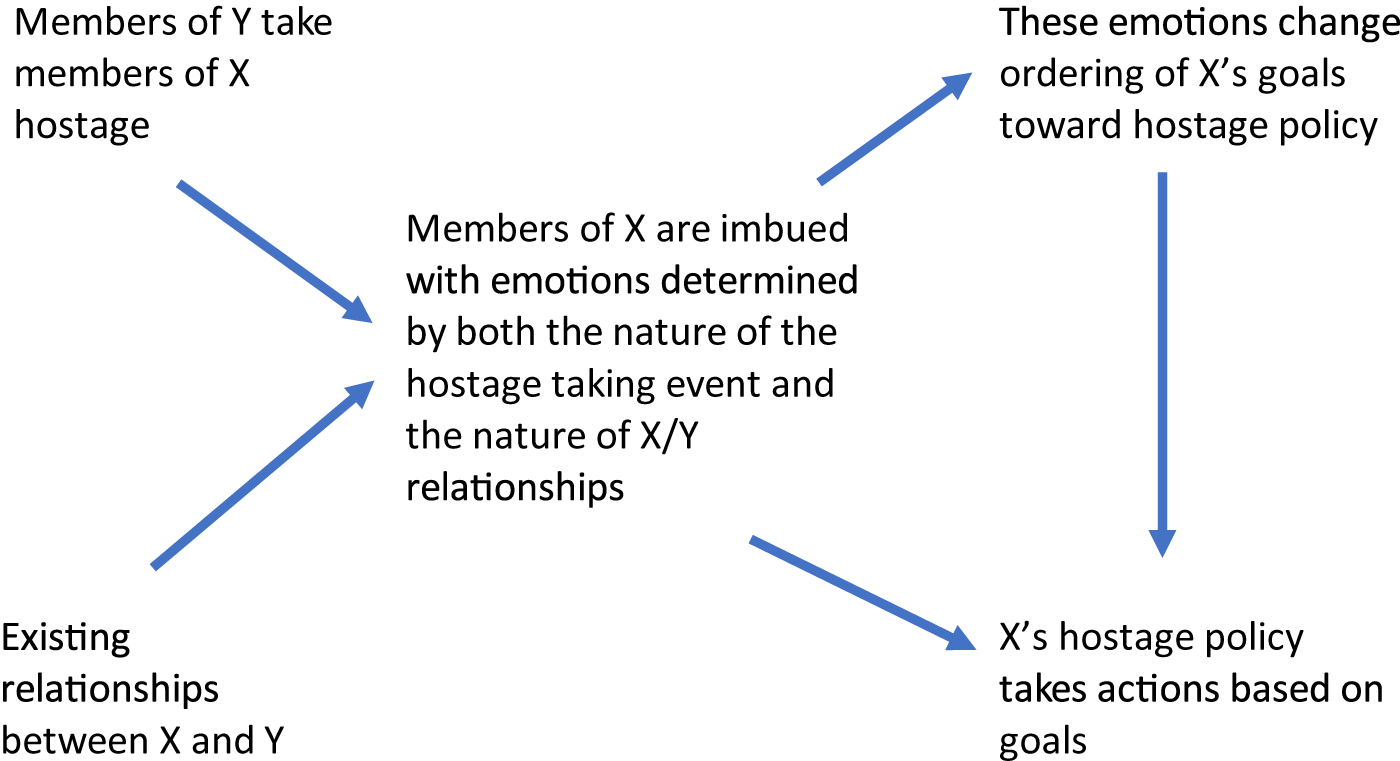
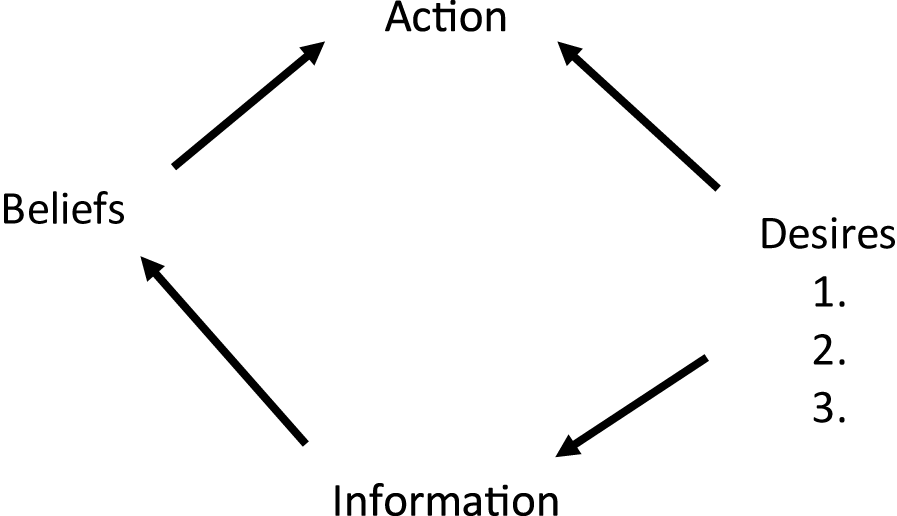
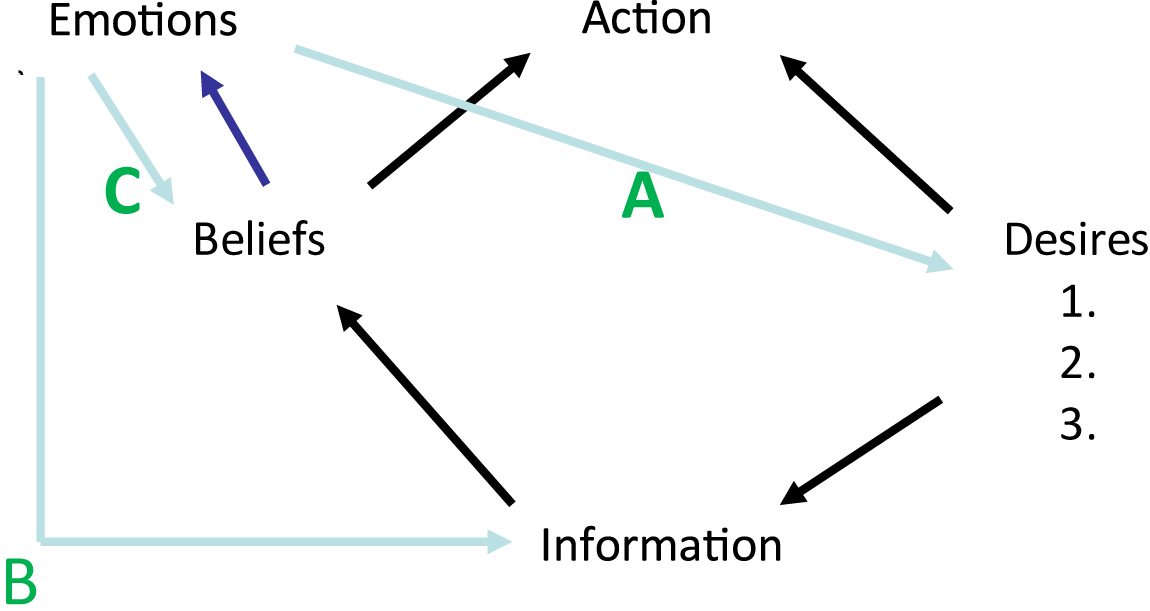


 Open access

