





Introduction
Environmental challenges such as climate change, biodiversity loss, and pollution are among the most pressing global issues, particularly in rapidly urbanising regions. These crises underscore the urgent need to foster environmental literacy (EL) through education, equipping adolescents with the knowledge, attitudes, and behaviours necessary for sustainable living. Adolescents play a pivotal role in shaping the future of sustainable practices; however, their ability to translate environmental awareness into pro-environmental behaviours remains a significant challenge, especially in urban areas of developing countries like Ethiopia (Maurer et al., Reference Maurer, Koulouris and Bogner2020). EL encompasses not only knowledge about environmental issues but also attitudes (e.g., biocentric vs. anthropocentric) and behaviours that can drive meaningful environmental change across communities (Gifford & Nilsson, Reference Gifford and Nilsson2014). In urban contexts, where environmental pressures are most acute, fostering responsible decision-making and promoting pro-environmental actions among youth is crucial.
In Ethiopia, environmental education (EE) was integrated into formal curricula following the 1994 Education and Training Policy. However, the practical outcomes of EL programmes remain limited. Educational strategies often emphasise rote learning and exam preparation, which undermines the potential for students to engage meaningfully with local environmental challenges. Further constraints include insufficient teacher training, a lack of context-specific content, and inadequate resources (Reinders, Reference Reinders2016). Urban centres like Addis Ababa, Ethiopia’s capital, are increasingly grappling with complex environmental issues, such as waste management, deforestation, and water scarcity, that require targeted educational interventions to engage youth in pro-environmental behaviours. Rapid urbanisation intensifies these challenges, placing enormous pressure on the city’s ecosystems and natural resources (Dejenie & Kakiso, Reference Dejenie and Kakiso2023).
While Ethiopia presents a unique set of challenges, it is important to place these issues within the broader context of EL scholarship. In the Global South, EE often faces systemic barriers such as rigid curricula and limited resources, which hinder the development of both environmental knowledge and action among youth. Scholars have called for more transformative approaches to EE – ones that move beyond content-heavy curricula and foster critical, participatory engagement with real-world environmental issues (UNESCO, 2014). In many urban contexts, including those in the Global South, youth may demonstrate awareness of environmental issues but fail to adopt corresponding sustainable behaviours (Nulambeh & Dickson Thomas, Reference Nulambeh and Dickson Thomas2025). This knowledge-action gap is a critical issue that warrants deeper investigation, especially in rapidly urbanising regions like Addis Ababa.
To strengthen the theoretical grounding of this study, we draw on foundational frameworks in EL and critical pedagogy. Critical pedagogy, as articulated by Paulo Freire (Reference Freire1996), challenges traditional education models by emphasising the empowerment of learners to critically engage with and transform their environments. Freire’s emphasis on dialogue, reflection, and action aligns with the goal of fostering an active, participatory form of EE that empowers students to take meaningful action. Roth’s (Reference Roth and Heffernan2014) perspective on experiential learning extends this by arguing that students should actively engage with environmental issues in their communities, promoting the translation of knowledge into behaviour.
In addition, David Orr’s (Reference Orr1992) work on ecological literacy emphasises the interconnectedness of ecological systems and the need for education to cultivate sustainable practices. Orr argues that EE should not only impart knowledge but also encourage students to think critically about their relationship with the natural world and how their actions can contribute to sustainability. These ideas are central to the current study, which aims to explore how EE in Addis Ababa can shape adolescent environmental behaviours.
Moreover, socio-ecological models (Stokols, Reference Stokols and Friedman1996) and value-belief-norm theory (Stern, Reference Stern2000) provide valuable frameworks for understanding how demographic and cultural factors influence environmental behaviours. Socio-ecological models emphasise the multiple levels of influence on behaviour, from individual attitudes to societal norms. In urban contexts, these models are particularly useful for examining how local socio-cultural factors such as family education, community values, and exposure to environmental issues, shape adolescents’ environmental attitudes and actions. The value-belief-norm theory further posits that individuals’ environmental behaviours are influenced by their personal values, beliefs about environmental issues, and perceived norms around pro-environmental behaviour. These theories offer critical insights into how cultural and socio-demographic factors in Ethiopia may influence adolescent engagement with environmental issues.
While the importance of EE in Ethiopia has been acknowledged (Eshetu, Reference Eshetu2022), existing research reveals significant gaps in addressing socio-cultural and socio-economic factors that influence adolescent behaviour. Current educational strategies often focus on theoretical knowledge and exam preparation, neglecting practical engagement with local environmental challenges. This limitation reflects broader trends across the Global South, where EE frequently fails to connect theory with local environmental and sustainability issues (Getachew et al., Reference Getachew, Meles and Gemeda2021). Furthermore, socio-demographic factors, such as parental education, household income, and community engagement, play a substantial role in shaping adolescents’ environmental attitudes and behaviours. However, these factors remain underexplored in Ethiopian research, highlighting the need for context-specific educational strategies that take into account the unique socio-cultural and economic landscape.
This research aims to fill these gaps by investigating how EE influences adolescent behaviour in Addis Ababa and exploring its broader implications for EE in the developing world. Specifically, the study examines the relationship between EE, socio-demographic factors, and pro-environmental behaviours in urban adolescents. It focuses on the three core components of EL, knowledge, attitudes, and behaviours, with a particular emphasis on how socio-cultural factors and educational strategies shape these dimensions of EL.
The study is grounded in behaviour change theories such as the Theory of Planned Behavior (Ajzen, Reference Ajzen1991) and the Environmental Behavior Model (Steg & Vlek, Reference Steg and Vlek2009), which provide insights into how internal (e.g., knowledge, attitudes) and external (e.g., societal norms, educational practices) factors influence adolescent pro-environmental behaviours. These frameworks are instrumental in understanding how adolescents in Addis Ababa may be influenced by their education and socio-cultural context to translate environmental knowledge into action.
By linking EL to global sustainability goals, this study also emphasises the need for context-specific educational approaches in developing countries. Despite the critical role of education in promoting sustainable practices, many EE programmes continue to fail to foster meaningful behavioural change, particularly in urban settings where environmental challenges are most acute (Stevenson et al., Reference Stevenson, Brody, Dillon and Wals2013). This research aims to contribute to ongoing debates about how EE can be reformed to better align youth attitudes with actionable environmental practices. Studies in other urban areas of the Global South, including African cities, show that while young people may be aware of global environmental issues, this knowledge often does not translate into pro-environmental actions (Nulambeh et al., Reference Nulambeh and Dickson Thomas2025). In urban Ethiopia, this gap is exacerbated by educational strategies that prioritise theoretical content and exam preparation over fostering critical thinking or addressing local environmental challenges (Eshetu, Reference Eshetu2022; Getachew et al., Reference Getachew, Meles and Gemeda2021). Additionally, socio-demographic factors such as parental education and household income play a significant role in shaping adolescents’ environmental attitudes and behaviours, further underscoring the need for more inclusive, context-specific educational strategies.
This research aims to offer actionable insights for policy and curriculum development in Ethiopia and beyond. The findings are expected to highlight how education systems can be restructured to foster adolescent pro-environmental behaviours through experiential, community-based learning approaches that better address the sustainability challenges facing urban adolescents in developing countries. By contributing to platforms such as the Australian Journal of Environmental Education (AJEE), this study will support broader pedagogical dialogues on ecological literacy, offering regionally grounded evidence that can inform educational reform and sustainability practices across diverse contexts.
Methodology
Study area
The study was conducted in Addis Ababa, the capital city of Ethiopia, situated at 2,355 metres above sea level (9°1′ N, 38°44′ E). As a rapidly urbanising metropolis, Addis Ababa grapples with severe environmental challenges such as solid waste mismanagement, air and water pollution, deforestation and overcrowding. These issues offer a unique and urgent context for exploring the EL of adolescents growing up in such urban settings.
Study design
A cross-sectional survey design was employed to assess EL among high school students. This approach was selected for its ability to capture a snapshot of students’ knowledge, attitudes, and behaviours at a single point in time. Cross-sectional studies are particularly effective in providing a broad overview of how specific variables, such as EL, are distributed across a population (Creswell, Reference Creswell2014). This design allowed for the analysis of correlations between EL components (knowledge, attitudes, and behaviours) and socio-demographic variables across a diverse urban sample, facilitating an understanding of how these factors are related in the context of urban Ethiopian adolescents (Fraenkel et al., Reference Fraenkel, Wallen and Hyun2019). Additionally, the cross-sectional design provides an efficient means of identifying patterns and trends within a specific population, which is crucial for informing policy and educational interventions aimed at improving EL in urban areas.
A structured, self-administered questionnaire was developed based on validated tools from previous EL research. The instrument underwent a pilot test involving a small cohort of students to ensure clarity, reliability, and cultural relevance. Revisions were made based on participant feedback. The final version of the questionnaire comprised five main sections: Environmental awareness, Environmental attitudes, Pro-environmental behaviours, Socio-Demographic data, and Teaching strategies and classroom practices.
Sampling techniques
Target population and sampling frame
The study targeted adolescents enrolled in government secondary schools within Addis Ababa. Students in the final years of secondary education were selected, as they are more likely to have been exposed to EE through Ethiopia’s national curriculum. A stratified random sampling method was employed to ensure balanced representation across Addis Ababa’s sub-cities. Schools were first grouped by geographic zones, and then randomly selected from each stratum to capture socio-economic and institutional diversity. Within each selected school, students were randomly sampled from eligible grade levels to minimise selection bias and enhance generalisability.
Sample size determination
The sample size was calculated using Cochran’s formula for estimating a representative sample from large populations. The sample size for the student survey was determined using Cochran’s formula for large populations:
 $$n={Z^{2}\cdot P\cdot (1-P) \over d^{2}}$$
Where,
-
Z = Z-score corresponding to the desired confidence level (e.g., 1.96 for 95% confidence)
-
P = estimated proportion of the population (if unknown, often use 0.5 to maximise sample size)
-
d = margin of error (the desired level of precision)
This calculation yielded a minimum required sample size of 384 students. To accommodate potential non-responses, 420 questionnaires were distributed, of which 403 were completed and included in the analysis. Data were collected through on-site visits to selected schools, with trained data collectors administering and supervising the survey process. This helped ensure comprehension of items and minimised missing responses.
Instruments and measures
Environmental awareness
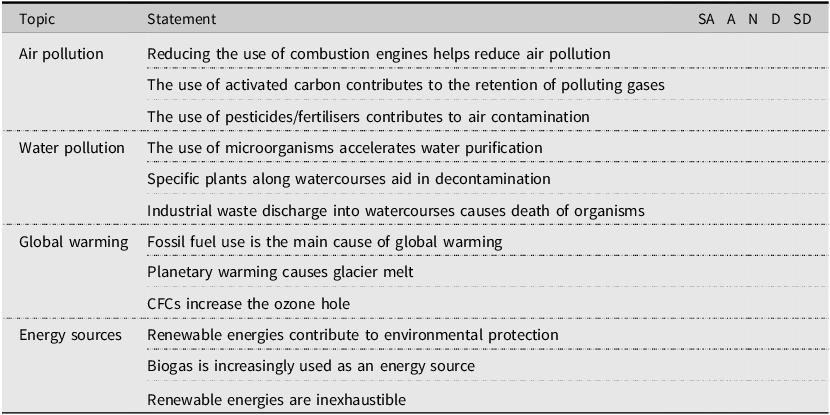
This section assessed student understanding of core environmental topics such as air pollution, water pollution, global warming, and renewable energy. The data were collected using 12 questions with 5-point Likert-scale items (Strongly Disagree to Strongly Agree) addressing air pollution, water pollution, climate change, and renewable energy. Items were adapted from validated instruments used in previous EL studies, including Tabaru Örnek & Yel (Reference Tabaru Örnek and Yel2025) and reviewed for local applicability by subject matter experts. A pilot test involving 30 students from a non-sampled school was conducted to assess clarity, cultural relevance, and item functionality. Feedback from the pilot informed revisions to improve item phrasing and contextual fit. The specific items used to assess environmental awareness are presented in Appendix 1.
Descriptive statistics of knowledge of students on major environmental issues

* Likert scale: 1 = strongly disagree, 2 = disagree, 3 = neutral, 4 = agree and 5 = strongly agree.
Environmental attitudes
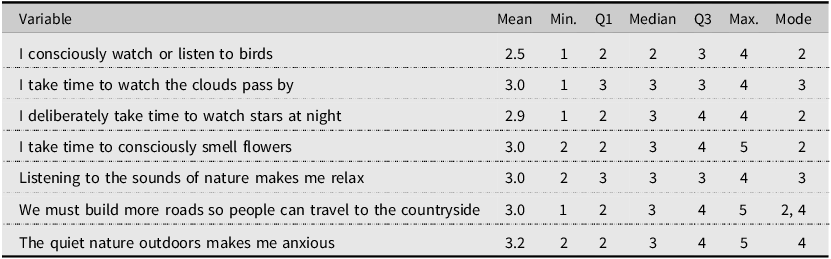
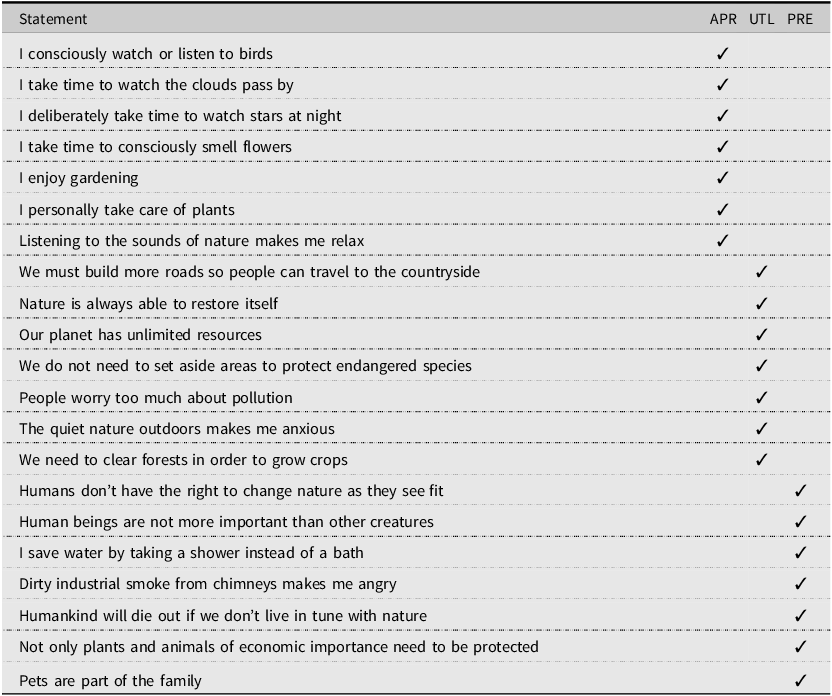
Attitudes were categorised under three domains: Appreciation (APR), Utilisation (UTL), and Preservation (PRE). Statements were rated using the same 5-point Likert scale and designed to reflect ethical, cognitive, and affective dimensions of environmental consciousness. Appreciation (APR) reflects the emotional and aesthetic values of nature, highlighting personal connection and admiration; Utilisation (UTL) represents anthropocentric, resource-oriented views that emphasise nature’s utility for human benefit; while Preservation (PRE) embodies biocentric, conservation-focused perspectives that prioritise the protection of natural ecosystems. Data collection was done using 20 items reflecting biocentric (preservation), anthropocentric (utilisation), and environmental awareness and perception worldviews (Appendix 2). The instrument’s internal consistency was assessed using Cronbach’s alpha, yielding values of α = 0.81 for the attitude subscale, indicating strong reliability (Nunnally & Bernstein, Reference Nunnally and Bernstein1994).
Students’ level of environmental awareness and perception to environment

Pro-environmental behaviours
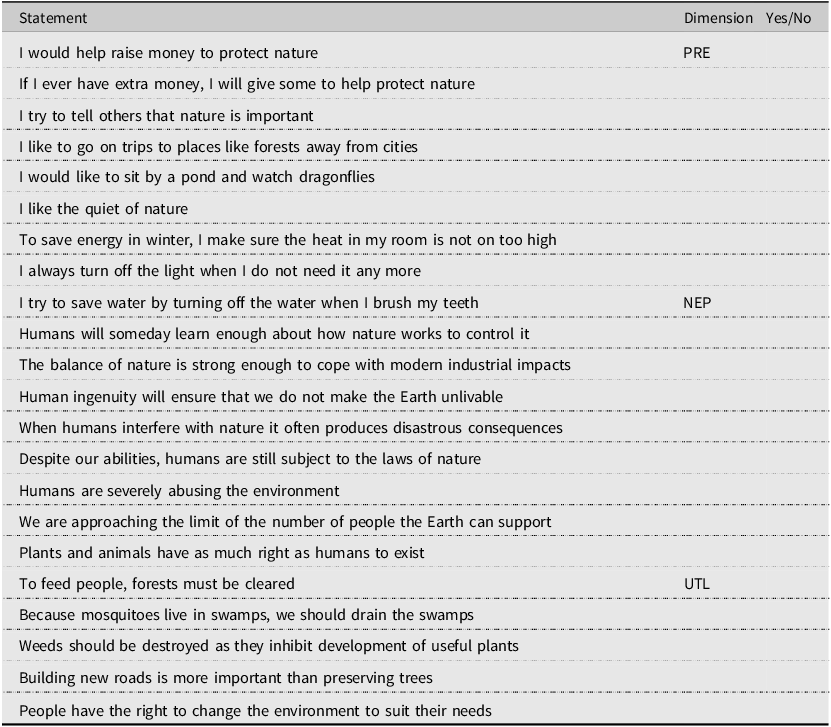
Behavioural questions assessed routine ecological actions and intentions (e.g., energy saving, advocacy, waste management) and were grouped into PRE, NEP (New Ecological Paradigm), and UTL constructs. Responses were recorded on a Yes/No scale to reflect actual behaviour engagements of the adolescents. This binary format was selected to enhance interpretability and reduce ambiguity in self-reported actions, which are typically discrete and action-based (Krosnick & Presser, Reference Krosnick, Presser, Wright and Marsden2010). The use of mixed response formats, Likert scales for attitudes and awareness, and Yes/No for behaviours, was intentional and grounded in best practices for construct validity in EL research. Cronbach’s alpha for the behaviour subscale was α = 0.74, confirming acceptable reliability. Items used to evaluate self-reported pro-environmental behaviours and beliefs are included in Appendix 3.
Preservation/ biocentric view of secondary school students on Likert scale

Data analysis
Data were cleaned and analysed using Stata. Likert-scale responses, though ordinal, were treated as interval-level data to compute descriptive statistics like means and standard deviations, a common practice in educational and social science research. This approach assumes equal intervals for easier comparison across items. To address distribution skew, medians and modes were also reviewed. Descriptive statistics (means, SDs, frequencies) were used to summarise major domains. Inferential analyses included: Pearson correlation to assess relationships among knowledge, attitude and behaviour; one-way ANOVA to compare EL components across socio-demographic groups; and Factor Analysis (EFA) with Principal Component Analysis to identify latent attitudinal dimensions such as biocentric versus anthropocentric views.
Result and discussion
Relevance and students’ perception towards basic environmental issues
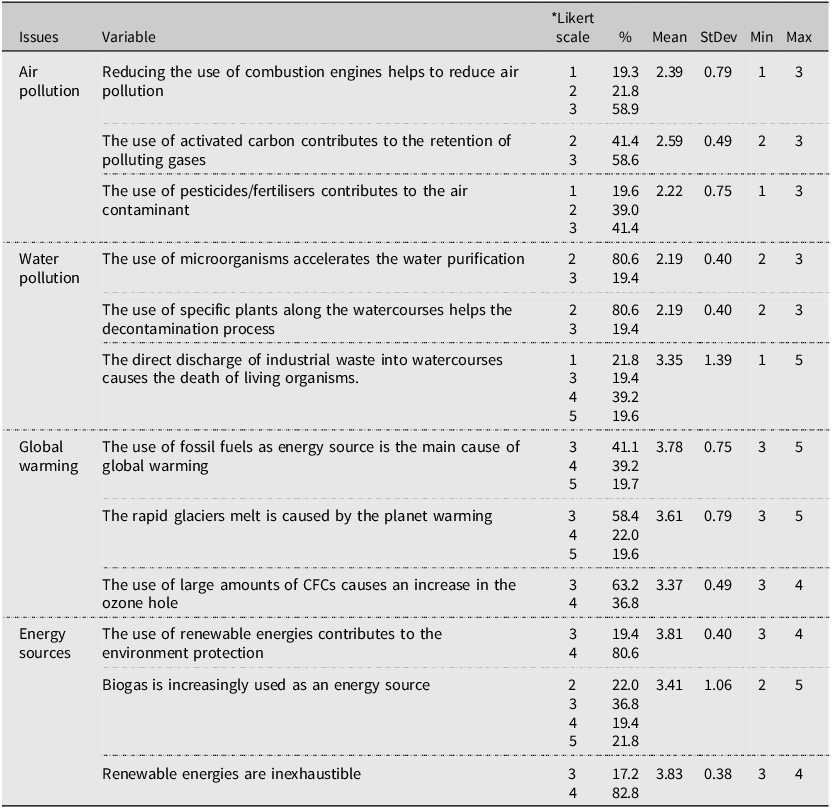
This section explores students’ understanding of air pollution, water pollution, global warming and energy sources. Likert-scale responses reveal variable awareness and highlight curricular gaps (Table 1).
Students showed limited awareness of air pollution mitigation. The low mean score for reducing combustion engine use (M = 2.39, SD = 0.79) and moderate knowledge of activated carbon’s pollutant-absorbing role (M = 2.59, SD = 0.49) suggest weak understanding. Awareness of pollutants from fertilisers and pesticides was also low (M = 2.22, SD = 0.75). These results echo the concerns that EE remains theoretical and lacks urban contextualisation (Gebre & Alemu, Reference Gebre and Alemu2022). Understanding of biological water purification was also limited. Students scored low on using microorganisms (M = 2.19, SD = 0.40) and plants for treatment (M = 2.19, SD = 0.40). In contrast, awareness of industrial waste impacts was higher (M = 3.35, SD = 1.39), possibly due to its visibility. Similar findings reported by other researchers.
In the domain of global warming, students showed better knowledge. High scores were recorded for fossil fuel use as a cause (M = 3.78, SD = 0.75) and glacier melting (M = 3.61, SD = 0.79), which is comparable to reports (Teksoz et al., Reference Teksoz, Sahin and Tekkaya2010). However, understanding of local climate effects, such as urban heat or rainfall shifts, was limited. Gebeyehu et al. (Reference Gebeyehu, Dalelo, Eshetu, Belachew, Wodaj, Abate and Hagos2024) stress the need to contextualise climate issues to students lived experiences for more effective learning. Renewable energy was the best-understood topic. Students recognised environmental benefits (M = 3.81, SD = 0.40), biogas advantages (M = 3.41, SD = 1.06) and the renewables’ inexhaustibility (M = 3.83, SD = 0.38). These findings are in line with Chawla et al. (Reference Chawla, Keena and Pevec2018) which reported that youth respond positively to action-oriented topics like clean energy.
Generally, students showed better awareness of global issues (e.g., fossil fuels, renewables) than of local solutions (e.g., biopurification). This suggests a need for more hands-on, locally relevant EE. Incorporating systems thinking and community-based projects can foster deeper engagement (Arjen & Reid, Reference Arjen and Reid2019: Monroe et al., Reference Monroe, Plate, Oxarart, Bowers and Chaves2019). This aligns with recent contributions to the AJEE, which emphasise the importance of agentive, student-led approaches and experiential learning strategies that connect climate education to students lived realities and foster deeper engagement with sustainability challenges (Cervantes, Reference Cervantes2024).
Students’ attitude and belief towards the environment
Environmental awareness and perception
This section evaluates students’ understanding of key environmental issues including air and water pollution, global warming and energy sources based on their Likert-scale responses. Results show respondents’ varied awareness (Table 2). For air pollution, students showed limited knowledge about agricultural sources (mean = 2.22), though they recognised activated carbon’s role (mean = 2.59). Water pollution responses revealed a gap in knowledge of biological treatment (mean = 2.19), while awareness of industrial waste impacts was higher (mean = 3.35), indicating familiarity with visible problems similar to other finding (Tabaru Örnek & Yel Reference Tabaru Örnek and Yel2025).
Students showed stronger awareness of global warming, especially its link to fossil fuels (mean = 3.78) and glacier melt (mean = 3.61), mirroring findings from that global narratives often dominate (Teksoz et al., Reference Teksoz, Sahin and Tekkaya2010). However, local climate impacts like urban heat are less understood, reinforcing the need for contextualised curricula. Regarding energy sources, students demonstrated solid understanding of renewable energy benefits (mean = 3.81), including biogas and inexhaustibility, which may be associated with inclusion of the topic in various subjects at different grade levels. This is supported by a report that emphasises environmental awareness fostering environmental responsibility (Stern, Reference Stern2000).
Despite positive attitudes, knowledge gaps persist, particularly in local, actionable solutions, which is consistent with findings which stated awareness doesn’t always lead to action (Chawla & Cushing, Reference Chawla and Cushing2007). Addressing this requires experiential, place-based learning and systems-thinking approaches (Monroe et al., Reference Monroe, Plate, Oxarart, Bowers and Chaves2019). Incorporating community-based activities and linking global issues to local realities can bridge the knowledge-practice gap.
Preservation belief (biocentric views) of students
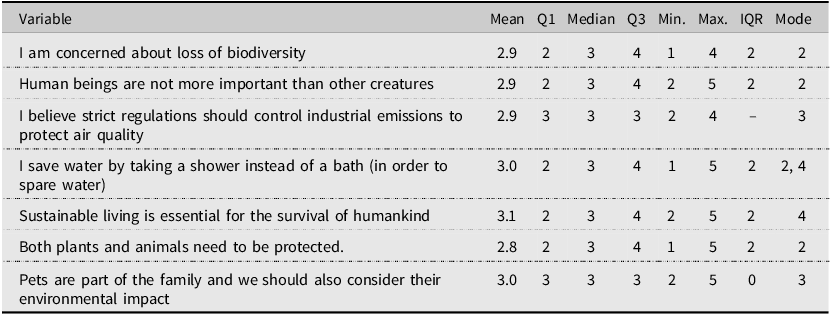
This section examines adolescents’ biocentric views using Likert-scale responses that reflect environmental concern, including biodiversity, sustainable living, industrial regulation and water conservation (Table 3). Overall, the findings show moderate agreement with preservationist views, suggesting a general awareness of environmental issues.
The mean scores range from 2.8 to 3.1, indicating students moderately agree with statements promoting environmental responsibility. For instance, students express concern about biodiversity loss (mean = 2.9) and believe humans are not more important than other species (mean = 2.9). There is also moderate support for strict industrial emission controls (mean = 2.9) and sustainable living as essential for humanity’s survival (mean = 3.1), with the highest mode value (4) reinforcing this view. Water conservation behaviours, such as showering instead of bathing, also receive moderate support (mean = 3.0), though the presence of dual mode values (2, 4) indicates varied personal practices.
The interquartile range (IQR), mostly 2, reflects some variation in responses, while the alignment of medians and modes suggests central tendencies towards moderate agreement. Statements regarding plant and animal protection (mean = 2.8) and considering pets’ environmental impact (mean = 3.0) further demonstrate students’ biocentric orientation. Similarly, research found that societal shifts toward sustainability are often mirrored in youth attitudes (Gifford & Nilsson, Reference Gifford and Nilsson2014). However, the discrepancy between stated beliefs and behaviour, especially in water-saving practices highlights a gap between belief and action because environmental concern does not always translate into action (Russell & Knoeri, Reference Russell and Knoeri2020).
Addressing this requires education that not only builds awareness but also promotes actionable strategies for sustainability. In sum, students display generally positive attitudes toward nature, though greater emphasis on behaviour change through curriculum and pedagogy could foster deeper, action-oriented environmental commitment.
Anthropocentric views of the students
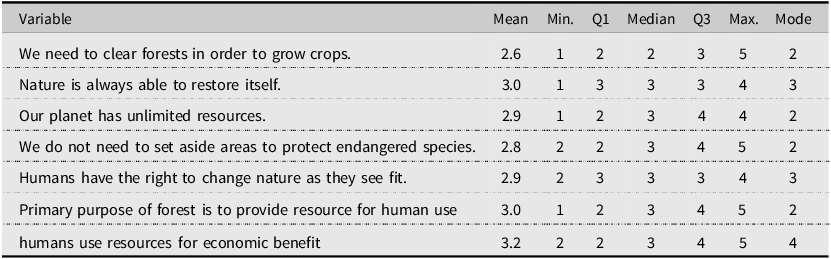
Table 4 presents students’ responses to statements reflecting utilitarian or anthropocentric views toward the environment. The mean scores range from 2.6 to 3.2, indicating moderate agreement with anthropocentric perspectives. Students showed relatively low support for clearing forests for agriculture (mean = 2.6, median = 3) and the belief that protecting endangered species is unnecessary (mean = 2.8, median = 3). These results suggest a degree of ecological concern among respondents, especially regarding biodiversity conservation.
Students’ responses to statements reflecting a utilitarian perspective toward environmental issues

However, moderate agreement was recorded for several anthropocentric statements, including the idea that nature is self-restorative (mean = 3.0), the belief in unlimited planetary resources (mean = 2.9) and the view that humans have the right to change nature as they see fit (mean = 2.9). These beliefs may reflect common misconceptions that downplay the limits of ecological systems or overestimate nature’s regenerative capacity.
More notably, students expressed stronger agreement with statements emphasising the economic utility of natural resources. The belief that the primary purpose of forests is to serve human needs (mean = 3.0) and that humans use nature for economic benefit (mean = 3.2) received the highest levels of agreement. This suggests a utilitarian orientation shaped by developmental and livelihood considerations, which is consistent with patterns observed in low- and middle-income contexts where economic needs often take precedence (Gifford & Nilsson, Reference Gifford and Nilsson2014).
The interquartile range (mostly IQR = 2) across variables indicates moderate diversity in opinion, revealing a nuanced perspective among students. While some recognise the need for conservation, others prioritise economic gain. This duality points to a need for EE programmes that challenge anthropocentric assumptions and promote sustainability values. Addressing underlying socio-economic factors and fostering critical ecological literacy can help shift student attitudes toward more ecocentric thinking (Frantz & Mayer, Reference Frantz and Mayer2014).
Pro-environmental behaviours: PRE, NEP and UTL
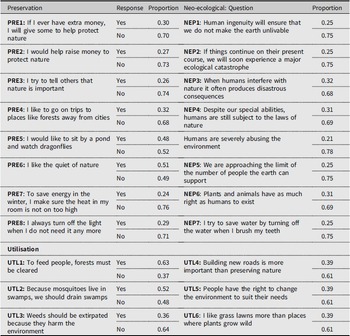
Table 5 presents students’ responses across three domains of environmental attitudes: Preservation (PRE), Neo-Ecological Paradigm (NEP) and Utilisation (UTL), reflecting varied levels of pro-environmental engagement.
Students’ responses and proportions on environmental attitudes across preservation, appreciation and utilisation categories

Preservation (PRE)
Students showed limited willingness to financially support environmental protection: only 30% would donate money and 27% would raise funds. This aligns with findings by Vicente-Molina et al. (Reference Vicente-Molina, Fernández-Sáinz and Izagirre-Olaizola2013), who reported that financial and institutional commitment to environmental causes is generally low among youth, particularly in low-income settings where personal economic security is prioritised. Only 26% of students reported advocating for environmental values, indicating a gap in environmental communication and civic engagement. This contrasts with research by Lee (Reference Lee2008), who found that students with higher Environmental awareness were more likely to engage in advocacy and outreach. The results suggest that knowledge alone may be insufficient without motivation and experiential learning opportunities.
However, a relatively larger proportion, 51%, enjoyed the quietness of natural environments and 48% expressed interest in wildlife. These affective responses mirror the findings of Guazzini et al. (Reference Guazzini, Valdrighi, Fiorenza and Duradoni2025), who argued that emotional affinity with nature is a significant predictor of ecological behaviour. Energy-related behaviours were less common: only 29% turned off lights when not needed and 24% adjusted heating. These findings support the widely recognised value-action gap, where environmental awareness does not necessarily translate into sustainable behaviour (Russell & Knoeri, Reference Russell and Knoeri2020).
Neo-Ecological Paradigm (NEP)
Students’ agreement with NEP items was moderate. While only 25% believed technology could avert ecological degradation, a similar number acknowledged the likelihood of environmental catastrophe. These ambivalent perceptions echo findings that often reveal cognitive dissonance between optimism in human ingenuity and awareness of ecological limits (Otto & Pensini, Reference Otto and Pensini2020). Around 32% recognised that human activities frequently disrupt ecosystems, while 31% believed humans are subject to nature’s laws. However, only 25% practiced daily conservation habits like turning off the tap while brushing – highlighting a disconnect between ecological worldviews and habitual behaviour.
Utilisation (UTL)
A significant portion of students (63%) expressed utilitarian views, believing forests should be cleared to feed people, prioritising human needs over environmental preservation. This perspective underscores the need for EE to emphasise ecosystems’ intrinsic value and the long-term impacts of degradation. Similarly, 52% supported draining swamps and 39% preferred grass lawns over wild places, reflecting land use preferences shaped by cultural norms and aesthetics. Educational initiatives promoting native plants and habitat preservation could encourage more ecologically sound attitudes.
Additionally, 39% of students believed humans have the right to alter the environment for their needs, indicating a dominionistic attitude rooted in traditional narratives. Integrating discussions on sustainability, stewardship and ecological citizenship into curricula could help shift these views toward modern environmental ethics, which advocate balance and responsibility. Together, these findings highlight the importance of reorienting education to challenge utilitarian and dominionistic mindsets, fostering a deeper understanding of nature’s value and the necessity of sustainable practices.
Factor analysis of pro-environmental attitude and behaviour (PEB)
Preservation behaviour/biocentric view
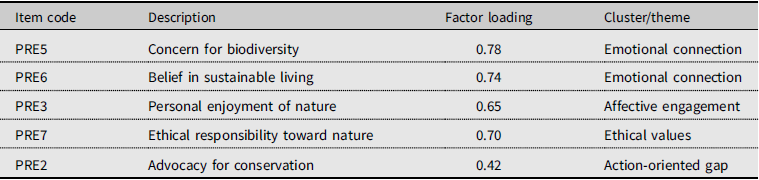
Table 6 presenting factor loadings and thematic clusters of biocentric attitudes.
Preservation behaviour / biocentric view (Factor loadings)

Table 6 demonstrates that students exhibit a strong emotional and ethical connection to nature, with items such as PRE5 (concern for biodiversity) and PRE6 (belief in sustainable living) loading highly under the “Emotional connection” cluster. This indicates that affective engagement plays a central role in shaping biocentric attitudes. Recent studies confirm that contact with nature enhances emotional regulation and connectedness, particularly among urban youth, who often face limited access to green spaces (Mygind et al., Reference Mygind, Kjeldsted, Hartmeyer, Mygind, Bølling and Bentsen2019). Similarly, Edwards et al. (Reference Edwards, Larson and Clayton2024) highlight that educators are increasingly integrating strategies to address eco-anxiety and foster emotional bonds with nature, recognising that emotional attachment is a precursor to environmental stewardship.
However, the table also reveals a gap between emotional attachment and active advocacy, as seen in PRE2 (advocacy for conservation), which shows a lower loading. This reflects the well-documented value–action gap, where individuals express strong concern for nature but fail to translate these values into concrete behaviours (Kesenheimer & Greitemeyer, Reference Kesenheimer and Greitemeyer2021). Within the Value‑Belief‑Norm (VBN) framework, (Bamberg & Möser, Reference Bamberg and Möser2007) demonstrate that risk perception and moral emotions such as anger or guilt are critical mediators that help transform values into action. Without these cognitive and normative reinforcements, emotional concern remains insufficient. Without these cognitive and normative reinforcements, emotional concern remains insufficient.
The expanded interpretation of Table 6 suggests that bridging this gap requires educational interventions that integrate both affective and cognitive dimensions. Programmes that combine experiential learning in nature with advocacy training, critical literacy, and opportunities for civic engagement can help students move from emotional attachment to tangible environmental action. This dual approach ensures that emotional concern is reinforced by knowledge, efficacy, and social norms, thereby fostering sustainable behaviour.
Utilisation/anthropocentric view
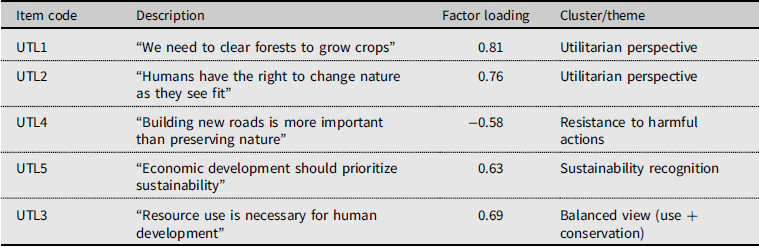
Table 7 substitutes the biplot, summarising factor loadings that illustrate students’ anthropocentric attitudes and their ambivalence toward resource use.
Utilisation / anthropocentric view (Factor loadings)

Table 7 shows that items UTL1 and UTL2 load strongly under the “Utilitarian perspective,” reflecting a human-centred view of nature as a resource for economic development. This perspective aligns with broader cultural narratives that prioritise human needs and economic growth, often at the expense of ecological integrity. Recent reviews argue that anthropocentrism remains a key driver of the environmental crisis, but nuanced forms of anthropocentrism – where human benefit is acknowledged alongside ecological limits – can coexist with sustainability goals (Droz, Reference Droz2022).
At the same time, negative loadings such as UTL4 (“Building new roads is more important than preserving nature”) highlight resistance to harmful actions, suggesting that students are not uniformly utilitarian but instead recognise the importance of conservation. This ambivalence reflects a growing awareness of ecological limits and the consequences of unchecked development. Otto and Pensini, (Reference Otto and Pensini2017, Reference Otto and Pensini2023) found that young people’s awareness of the Sustainable Development Goals (SDGs) shapes attitudes that balance economic development with ecological preservation, indicating that sustainability discourses are influencing student perspectives.
The expanded interpretation of Table 7 illustrates the duality in students’ views: while immediate economic needs drive anthropocentric attitudes, there is also recognition of long-term sustainability. This tension mirrors global debates about reconciling development with ecological preservation. Educational curricula that integrate ecological economics, systems thinking, and sustainability literacy can help students critically evaluate trade-offs and adopt more balanced perspectives. By fostering an understanding of interdependence between human and ecological systems, education can shift anthropocentric views toward more sustainable orientations.
Neo-ecological paradigm (NEP)
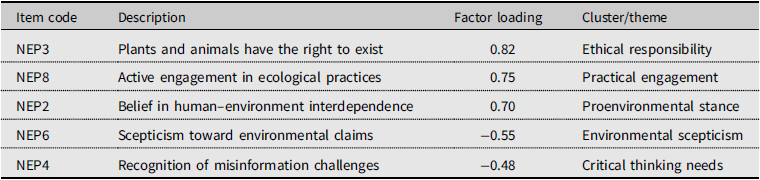
Table 8 replaces the biplot, presenting factor loadings that capture the multidimensional nature of students’ pro-environmental beliefs, scepticism, and ethical responsibility.
Neo-ecological paradigm (NEP) (Factor loadings)

Table 8 shows that NEP3 (“Plants and animals have the right to exist”) and NEP8 (active ecological engagement) load highly, emphasising ethical responsibility and practical action. These findings confirm that moral responsibility and direct engagement remain strong predictors of sustainability behaviours (). Students who endorse ethical statements are more likely to participate in ecological practices, reinforcing the role of values in shaping long-term behaviour.
Conversely, negative loadings for NEP6 (scepticism toward environmental claims) and NEP4 (recognition of misinformation challenges) highlight the persistent influence of misinformation. Recent analyses show that climate misinformation in media and online platforms continues to fuel scepticism and disengagement, undermining trust in science and weakening motivation to act (Lamb et al., Reference Lamb, Mattioli, Levi, Roberts, Capstick, Creutzig, Minx, Müller-Hansen, Culhane and Steinberger2020). This suggests that even when students hold strong ethical commitments, exposure to conflicting or misleading information can erode confidence and reduce action.
The expanded interpretation of Table 8 underscores the multidimensional nature of environmental attitudes: ethical responsibility, practical engagement, interdependence, and scepticism coexist within the same population. Addressing this complexity requires educational interventions that combine ethical responsibility with critical thinking skills. By equipping students to identify misinformation, evaluate evidence, and engage in practical ecological activities, schools can help them move toward evidence-based, sustainable action.
Comparative synthesis
Taken together, Tables 5–7 provide a comprehensive view of students’ environmental attitudes. The biocentric perspective emphasises emotional connection and ethical responsibility but reveals a value–action gap. The anthropocentric perspective highlights utilitarian views tempered by recognition of sustainability, reflecting ambivalence between economic needs and ecological limits. The Neo-Ecological Paradigm integrates ethical responsibility, practical engagement, and scepticism, underscoring the multidimensional nature of EL.
Recent studies (Droz, Reference Droz2022; Kesenheimer & Greitemeyer, Reference Kesenheimer and Greitemeyer2021; Mygind et al., Reference Mygind, Kjeldsted, Hartmeyer, Mygind, Bølling and Bentsen2019) confirm that emotional connection, anthropocentric ambivalence, and multidimensional NEP attitudes are central to understanding pro-environmental behaviour. Addressing these dimensions simultaneously, through experiential learning, systems thinking, and misinformation resilience, can help bridge the gap between values and actions in rapidly urbanising contexts such as Addis Ababa. This synthesis highlights the importance of designing educational strategies that integrate emotional, cognitive, and ethical dimensions to foster sustainable behaviour among youth.
Conclusion and recommendations
Conclusion
This study makes a unique contribution to EL research by focusing on the urban African context, specifically adolescents in Addis Ababa, Ethiopia. The findings reveal that while students demonstrate moderate awareness of global environmental issues such as climate change and renewable energy, their understanding of local ecological solutions remains limited. Attitudinal orientations show positive biocentric values, yet a persistent value–action gap exists, with environmental concern not consistently translating into sustainable practices. These results highlight the critical need to bridge the disconnect between knowledge, attitudes, and behaviours through context-specific educational strategies.
By situating adolescent EL within Ethiopia’s rapidly urbanising landscape, the study underscores the importance of integrating experiential, community-based, and participatory approaches into curricula. Such approaches can foster deeper engagement with local environmental challenges, strengthen the translation of awareness into action, and cultivate a generation of environmentally responsible citizens prepared to address sustainability issues in developing urban contexts.
Recommendations
To strengthen EL among adolescents in Addis Ababa, educational strategies must move beyond rote learning and exam-driven content toward experiential, hands-on approaches that connect global issues to local realities. Teacher training should be enhanced to equip educators with the skills to foster critical thinking, systems thinking, and problem-solving, while schools should actively engage communities in collaborative projects that address pressing urban challenges such as waste management and water conservation. Policymakers are encouraged to integrate EL as a core component of national education strategies, ensuring adequate resources and alignment with sustainability goals. Importantly, interventions should explicitly target the persistent value–action gap by encouraging practical behaviours such as energy conservation, waste reduction, and advocacy, alongside knowledge acquisition. Together, these measures can empower adolescents to translate awareness into action and become active agents of sustainability in their communities.
Acknowledgement
The authors gratefully acknowledge the Research and Community Engagement Vice President Office of Kotebe University of Education for covering the direct costs of data collectors. We extend our sincere appreciation to the teachers and school principals who coordinated the data collection process voluntarily, without payment. We are also deeply thankful to the research participants who generously devoted their time to provide genuine and valuable information that made this study possible.
Ethical statement
This study was conducted in accordance with Ethiopian National Research Ethics Review Guideline Fifth edition. All participants were informed about the purpose of the research and gave their voluntary consent prior to participation. Anonymity and confidentiality were ensured, and no personal or sensitive data are published.
Financial support
This research received no specific grant from any funding agency in the public, commercial, or not-for-profit sectors.
Appendices
Questionnaire items assessing students’ environmental knowledge across key issues

SA = Strongly Agree; A = Agree; N = Neutral; D = Disagree; SD = Strongly Disagree.
Items measuring students’ environmental attitudes: appreciation, utilisation, and preservation dimensions

APR = Appreciation; UTL = Utilisation; PRE = Preservation.
Self-reported pro-environmental behaviours and attitudes based on preservation, utilisation, and neo-ecological paradigm constructs

PRE = Preservation; NEP = Neo-Ecological Paradigm; UTL = Utilisation.
Author Biographies
Adnan Sirage Ali is an Environmental Science and Public Health specialist with over 15 years of academic, research, and consultancy experience across Ethiopia and East Africa. He serves as Special Assistant to the Vice President for Research and Community Engagement at Kotebe University of Education. His expertise includes climate resilience, climate change-health nexus, WASH, advanced quantitative data analysis, public health, nature-based wastewater treatment, and evidence-informed policymaking. He has coordinated multi-country projects, published extensively in peer-reviewed journals, and contributed to institutional capacity building. He is an active member of international professional associations and committed to advancing sustainable development and global collaboration.
Yitayal Addis Alemayehu is an Assistant Professor of Environmental Science at Kotebe University of Education, Addis Ababa, Ethiopia. His research interests include climate governance, environmental policy, waste management, circular economy, sustainability transitions, environmental education, and natural resource management. His work focuses on the intersection of environmental sustainability, governance systems, and socio-political dimensions of climate and development challenges.
Getachew Dagnew Gebreeyessus is an Assistant Professor of Environmental Engineering at Addis Ababa University, Ethiopia. His research interests include water management, waste-to-energy technologies, biogas production, circular bioeconomy, sustainability transitions, and environmental pollution control. His work focuses on the intersection of environmental engineering, ecological sustainability, and innovative approaches to waste valorization and renewable energy solutions.

 Open access

