


University students are believed to be likely to gain 6·8 kg (15 pounds) in their freshmen year (the ‘Freshmen 15’). In reality, the freshmen weight gain has been reported to vary from 1·1(Reference Megel, Wade and Hawkins1) to 2·5 kg(Reference Racette, Deusinger, Strube, Highstein and Deusinger2), with a a great proportion of the weight gain occurring over the first semester (1·4–1·9 kg)(Reference Hajhosseini, Holmes, Mohamadi, Goudarzi, McProud and Hollenbeck3, Reference Levitsky, Halbmaier and Mrdjenovic4), whilst no sex differences in the changes in body weight have been reported(Reference Racette, Deusinger, Strube, Highstein and Deusinger2, Reference Levitsky, Halbmaier and Mrdjenovic4–Reference Hoffman, Policastro, Quick and Lee7). The evaluation of body composition performed in some of these studies, using either bioelectrical impedance analysis(Reference Hajhosseini, Holmes, Mohamadi, Goudarzi, McProud and Hollenbeck3, Reference Hoffman, Policastro, Quick and Lee7) or dual-energy X-ray absorptiometry(Reference Morrow, Heesch, Dinger, Hull, Kneehans and Fields8), also revealed an increase in percentage body fat (%BF), with one study reporting an increase in central adiposity over the freshmen year(Reference Morrow, Heesch, Dinger, Hull, Kneehans and Fields8).
Levitsky et al. (Reference Levitsky, Halbmaier and Mrdjenovic4 ) found that weight gain was mostly associated with the consumption of high-fat foods (12 %), the number of evening snacks (12 %), and by eating at all-you-can-eat facilities for breakfast (10 %) and lunch (10 %). There is also evidence of a high prevalence of physical inactivity among university students(Reference Douglas, Collins, Warren, Kann, Gold, Clayton, Ross and Kolbe9–Reference Wallace, Buckworth, Kirby and Sherman13), but more relevant to the present study is the decrease in total physical activity(Reference Butler, Black, Blue and Gretebeck14) and aerobic exercise during the first two years of university(Reference Racette, Deusinger, Strube, Highstein and Deusinger2). In fact, previous results support that individuals who display higher fat mass and lower physical activity level at the onset of the freshmen year, also gain more body weight during their first year(Reference Morrow, Heesch, Dinger, Hull, Kneehans and Fields8). However, to our knowledge no study has used direct measures of physical activity in order to determine the impact of the latter on the changes of adiposity that occur during the freshmen year.
Based on available literature and using precise assessments of adiposity and physical activity, we tested three hypotheses. We hypothesized that: (1) higher pre-university body weight and adiposity (dual-energy X-ray absorptiometry) would be associated with greater gains in body weight and adiposity over the freshmen year; and (2) that higher pre-university physical activity energy expenditure (accelerometry) and cardiorespiratory fitness (VO2max) would be associated with lesser changes in adiposity over the freshmen year. We also hypothesized that changes in adiposity would be independent of sex. Finally, we explored possible predictors of changes in adiposity such as socio-demographic variables and eating behaviour (Three-Factor Eating Questionnaire).
Methods
Participants
Thirty-three freshmen students were recruited from the University of Ottawa through advertisements (i.e. posters and mail) and from a stand set up at the University Center to inform students about the study. Four freshmen dropped out due to time constraints. Twenty-nine freshmen (sixteen females and thirteen males) thus completed the study. Their characteristics are presented in Table 1. The freshmen were predominantly Caucasians (n 27), with two students classified as other ethnicity. Twelve were in the Faculty of Arts, ten in Social Sciences and seven in Health Sciences. Participants were included if they were 18 years or older, attending their first year at university, currently living in residence, previously lived at home, body weight did not vary more than 2 kg in the last 6 months, apparently healthy, non-smokers, not taking medications that could impact on energy intake and expenditure, did not diet during the previous 6 months, and were not pregnant or intending to become pregnant in the next 7 months. Those taking oral contraception were allowed to participate in the study on condition that they had been doing so for more than 6 months. We selected a sample of weight-stable participants to reduce the probability of observing changes in weight and adiposity that would have been due to factors other than the first-time exposure to the university environment. Ethical approval was granted by the University of Ottawa Research Ethics Committee and all participants gave their written consent.
(Mean values and standard deviations)

WC, waist circumference; %BF, percentage body fat.
*P < 0·05, **P < 0·01.
Design and procedure
Participants were recruited on the university campus over a 2-week period in late August/early September 2006. At that time, participants met the researchers for one screening session on campus. Thereafter, participants visited the laboratory on three separate occasions, in the second and third week of September and the first 2 weeks of December 2006, and the last week of March and first week of April 2007. All three periods of testing lasted 2 weeks. Measurements were taken as early as possible in September and close to the Christmas break and the end of the second semester without overlapping with end-of-term examination periods. During the September session, participants filled out the Three-Factor Eating Questionnaire, and their weight and height, waist circumference (WC) and body composition were measured. A peak oxygen uptake (VO2peak) test was also performed. The two subsequent testing sessions (December and April) included measures of body weight, WC and body composition. At the end of each of the three testing periods participants were instructed to complete a 7 d food diary and asked to concurrently wear an accelerometer for 7 d. The same researcher performed the measurements at each of the three time-points.
Anthropometric measures
Body weight and height (BWB-800AS digital scale and HR-100 height rod; Tanita Corporation of America Inc.) were measured 2 h after a light meal while subjects wore a hospital gown. A conventional measuring tape abiding to Canadian Society for Exercise Physiology standards was used to measure WC. An average of two WC measurements was taken. Body composition was measured using dual-energy X-ray absorptiometry (Lunar Prodigy, GE Medical System). CV and correlation coefficient for %BF measured in twelve subjects tested in our laboratory were 1·8 % and r 0·99, respectively.
Peak oxygen uptake measurement
Participants were asked not to eat or have coffee for 2 h before the test, and not to consume alcoholic beverages or exercise for the 6 h before. A high ramped protocol with a consistent and continuous increase in speed and grade was used to measure VO2max. The initial speed was 2·6 km/h at 5 % gradient (3·3 metabolic equivalents). Speed and gradient progressively increased every 30, 40 or 60 s to reach a maximum of 9·6 km/h at 22 % gradient (19·2 metabolic equivalents) by the twenty-fifth stage (15 min). At least two of the following criteria were used to determine whether VO2max was reached: (1) no further increase in oxygen uptake or an increase ≤ 150 ml/min with an increase in workload; (2) RQ≧1·1; and (3) a heart rate equal to or greater than the predicted maximum heart rate (220 – age). Some subjects did not achieve a plateau of O2 consumption. For this reason, VO2peak will be used henceforth. Analysers were calibrated before every test to further ensure the reliability of the measurement. This measurement was conducted during the September session only.
Energy intake
Average daily energy intake was measured using a 7 d food diary. Participants recorded all dietary intake including beverages and the respective quantity consumed. A guide sheet on portions for different foods and a sample diary for a day were attached with the food diary for guidance. Nutritional data were analysed using the computer program Food Processor SQL, V 9.6.2 (ESHS Research, Salem, OR, USA).
Accelerometry
Activity-related energy expenditure was examined using accelerometry (Actical-Mini Mitter Co. Inc., Bend, OR, USA). Participants wore the accelerometers upon waking up and took it off just before going to bed for a 7 d period. Such duration was chosen as it is estimated to result in 90 % reliability for the measurement of physical activity in both males and females(Reference Matthews, Ainsworth, Thompson and Bassett15). The accelerometer was worn at lower back level since this was evaluated as the best predictor of energy expenditure (r 0·92–0·97), compared to lower leg/foot, upper leg, head and trunk, lower arm/hand, and upper arm(Reference Brouten, Sauren, Verduin and Janssen16).
Socio-demographic questionnaire
A socio-demographic questionnaire was used to collect information pertaining to the participants' place of residence prior to attending university residence (urban, rural or other), the type of residence they lived in (apartment style, shared room, etc.), the number of televisions available, their Faculty (Arts, Social Sciences or Health Sciences), as well as their income and their parents' income, and whether they subscribed to a university meal plan to eat at the cafeteria or not.
Eating behaviour
The Three-Factor Eating Questionnaire by Stunkard, Messick(Reference Stunkard and Messick17) was used to measure dietary restraint, disinhibition and hunger. This fifty-four-item questionnaire included thirty-six true/false questions and eighteen Likert-scale type questions. The validity of this questionnaire has been supported for both adolescents and adults(Reference Simmons, Smith and Hill18, Reference Westenhoefer, Stunkard and Pudel19). The Three-Factor Eating Questionnaire was administered during the first session to obtain baseline scores.
Data analysis
All statistical analyses were performed using the Statistical Product and Service Solution software, version 11.5 (SPSS Inc., Chicago, IL, USA). For anthropometric measures as well as for activity-related energy expenditure and energy intake, the effect of time and time by sex interaction were examined using a 3 (time: September, December and March) × 2 (sex: female and male) repeated measures ANOVA. Participants were included in these analyses if they completed all three measurements. Pearson correlations were performed between baseline variables and changes in anthropometric variables from September to December and then again for September to the end of March. To identify the best predictors of change, stepwise regression analyses included significant correlates of changes in dependent variables. Effects were considered significant at P < 0·05 and data are presented as means and standard deviations.
Results
Thirty of the thirty-three freshmen recruited in September returned in December and twenty-nine in March. The descriptive statistics of subjects who completed the study are presented in Table 1. A significant sex by time interaction was observed for all anthropometric measures (Table 1). Over the first semester a significant increase in body weight (1·4 kg, P = 0·05), WC (2·9 cm, P < 0·01), %BF (1·9 %, P < 0·01) and fat mass (1·8 kg, P < 0·01) was noted for men but not for women. Similarly, at the end of the academic year significant increases were observed for body weight (1·9 kg, P < 0·05), BMI (0·6 kg/m2, P < 0·05), WC (2·7 cm, P < 0·05), %BF (3·1 %, P < 0·01) and fat mass (2·6 kg, P < 0·01) in men.
No significant effect of time for daily energy expenditure, daily energy intake, macronutrient consumption and alcohol were observed for both males and females (P>0·05; Table 2). A significant sex by time interaction was identified only for the percentage of energy from protein consumed by the females during the first semester (1·7 %, P < 0·05).
(Mean values and standard deviations)

* P < 0·05.
Associations between changes in body weight, WC, %BF and baseline measures were examined with correlation analyses. All subjects were pooled because of the small sample size. These results are presented in Table 3. During the first semester, changes in body weight and WC were associated with both baseline alcohol intake (r 0·48, P = 0·01; r 0·51, P < 0·01, respectively) and baseline VO2peak (r 0·36, P = 0·05; r 0·39, P = 0·03, respectively) (Table 3). Changes in WC were negatively correlated with baseline %BF (r − 0·38, P = 0·04). A positive association was also noted between changes in %BF and baseline alcohol intake (r 0·63, P < 0·01). Over the course of the academic year, the changes in body weight were significantly negatively correlated with baseline %BF (r − 0·53, P < 0·01). In addition, baseline alcohol intake also remained positively correlated to the changes in WC (r 0·45, P = 0·02) and %BF (r 0·58, P < 0·01). Changes in %BF were also positively correlated with baseline VO2peak (r 0·48, P < 0·01) and negatively correlated with baseline %BF (r − 0·41, P = 0·03). Dietary restraint showed a negative correlation with the change in WC and %BF over the first semester (r − 0·46, P = 0·01; r − 0·42, P = 0·02; r − 0·44, P = 0·02, respectively), as well as for the change in %BF over the full academic year (r − 0·43, P = 0·02). Among our cohort, none of variables identified from the socio-demographic questionnaire were found to correlate with changes in body weight, WC and body fat.
Correlation of absolute changes in body weight, BMI, waist circumference (WC) and percentage body fat (%BF) with baseline measures (P values)

TFEQ, Three-Factor Eating Questionnaire; VO2peak, peak oxygen uptake.
*P < 0·05, **P < 0·01.
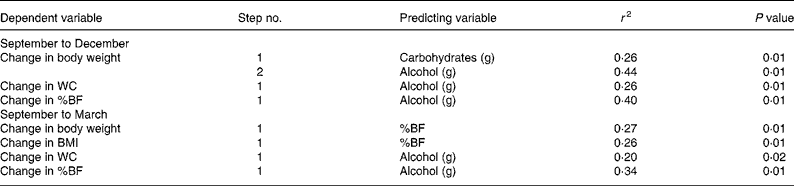
To explore the best predictors of changes in adiposity, stepwise regression analyses were performed. Results presented in Table 4 show that, during the first semester, 44 % of the variance in body weight changes was explained by baseline carbohydrate and alcohol intake (P < 0·01). Baseline alcohol intake alone also explained 26 % (P = 0·01) and 40 % (P < 0·01) of changes in WC and %BF, respectively. Over the full academic year, 27 % of the variance in body weight changes was explained by baseline %BF (P = 0·01). Alcohol alone explained 20 % of the change in WC (P = 0·02). Baseline alcohol consumption explained 34 % of the change in %BF (P < 0·01).
Stepwise regression analysis examining predictors of changes in body weight, BMI, waist circumference (WC) and percentage body fat (%BF) among freshmen (n 29)
Discussion
Similar to results from previous studies, we show a significant increase in body weight and adiposity over the freshmen year, most of which occurs during the first semester. Contrary to the three leading hypotheses of this paper, we also show (1) that higher pre-university adiposity levels were associated with lesser changes in adiposity; (2) that higher pre-university physical fitness levels (VO2peak) were associated with greater changes in adiposity; and that (3) men gained body weight and adiposity whereas women did not during the freshmen year. Similar to findings from other studies, pre-university alcohol intake was a consistent predictor of changes in adiposity over the freshmen year.
One of the interesting observations of the present study is that displaying lower adiposity and higher physical activity before the onset of the freshmen year may not necessarily be protective against increases in body weight and fat over the academic year. This contrasts with Morrow et al. (Reference Morrow, Heesch, Dinger, Hull, Kneehans and Fields8) who concluded that although normal-weight freshmen had gained body weight, those weighing more, having greater fat mass and being less active at baseline, gained more body weight during their first year. In the present study, freshmen with less %BF experienced greater increases in body weight, BMI, WC and %BF than freshmen with more %BF at the start of university. Baseline %BF explained 27 and 26 % of the change in body weight and BMI, respectively. If we assume that students who started university with higher levels of body fat were likely to consume more high-fat foods and to be more sedentary prior to university(Reference French, Harnack and Jeffery20), it could be speculated that the transition to an environment that promotes the consumption of energy-dense foods(Reference Levitsky, Halbmaier and Mrdjenovic4, Reference Hovell, Mewborn, Randle and Fowler-Johnson21) and low levels of physical activity(Reference Douglas, Collins, Warren, Kann, Gold, Clayton, Ross and Kolbe9, 22–Reference Lowry, Galuska, Fulton, Wechsler, Kann and Collins24) would have had less impact on energy balance and ultimately on energy stores. Additional support for this argument comes from the observation that freshmen in the present study with higher baseline VO2peak also tended be the ones in whom the greater changes in adiposity were noted. Hence, the resulting effect on energy balance would be expected to be greater for those freshmen who were more active before university (although this was not measured in the present study), and became relatively more sedentary as a result of the exposure to the university environment. The present findings should nonetheless be weighed against study design limitations, such as sample size and the variability of methods such as accelerometry and energy intake.
The present results show that men experienced more significant changes for all anthropometric measures than did women. It has been reported that students who are aware of the ‘Freshmen 15’ are concerned about gaining body weight, a concern more often expressed by female freshmen(Reference Graham and Jones6). Women in the present study may thus have modified their physical activity and dietary practices throughout the year as a preventative measure against body weight gain. The observation that dietary restraint was negatively related to changes in body weight and composition in the present study and that women displayed higher dietary restraint scores than male subjects may also explain differences in body weight and adiposity over the academic year. It has been previously demonstrated that restrained eaters typically consume less energy than their less restrained counterparts(Reference Klesges, Isbell and Klesges25, Reference Mulvihill, Davies and Rogers26). In support of this, the present results also showed that freshmen with higher initial restraint (including both females and males) consumed significantly fewer kJ of energy and less alcohol per day at baseline. Considering the possible involvement of dietary restraint in mediating sex-related difference in freshmen weight gain, future studies should consider assessing this variable at all time-points.
To date only one study on the ‘Freshmen 15’ examined changes in WC, reporting an increase from 69·4 to 70·3 cm over a 7-month period(Reference Morrow, Heesch, Dinger, Hull, Kneehans and Fields8). The increase in WC in the present study was more pronounced, with males showing a significant increase of 2·9 cm during the first semester and a total of 2·7 cm during the first year. Despite the fact that WC for both the females and males was below the National Institute of Health cut-off points of 88 and 102 cm, respectively(27), a linear relationship between WC and all-cause mortality was recently observed for males(Reference Simpson, MacInnis, Peeters, Hopper, Giles and English28). In fact, the analysis of studies of abdominal obesity and cardiovascular outcomes revealed that a 1 cm increase in WC was associated with a 2 % increased risk for CVD(Reference de Koning, Merchant, Pogue and Anand29). Whether or not this increase does indeed represent cause for concern is beyond the scope of the present study.
As reported by the American College Health Association, 84·4 % of university students consume alcohol(22). Alcohol was positively correlated with all changes in anthropometric markers observed in this cohort. The consumption of alcohol seems to increase energy intake and promote little or no compensation for its energetic content, while inhibiting the oxidation of other substrates, particularly fat(Reference Murgatroyd, Van De Ven, Goldberg and Prentice30). Further, it would also seem that alcohol favours the storage of fat in the abdominal region(Reference Suter and Tremblay31). Using 3 d diet records among 135 freshmen, Horwath(Reference Horwath32) reported that male freshmen obtained 3·7 % of their daily energy from alcohol while this was 2·6 % for their female counterparts. With the use of 7 d dietary records we found an equal percentage of energy obtained from alcohol for the males (3·7 %) and less for the females (1·5 %). Results from the present study reinforce the notion that the intake of alcohol may be an important contributor to increased energy intake and energy storage among freshmen students.
Conclusion
Previous observations, as well as results from the present study, show that freshmen body weight gain is less than the alleged 6·8 kg (15 pounds). Furthermore, the present study highlights the possibility that displaying lower adiposity and higher physical fitness at the onset of the university year may not be protective of increases in total and central adiposity over the course of the freshmen year. Further research involving both lean and overweight freshmen, as well as physically fit and unfit freshmen, will however be needed to confirm the findings of the present study.
Acknowledgements
É. D. is a recipient of a CIHR/Merck-Frosst New Investigator Award, a Canadian Foundation for Innovation New Opportunities Award and an Early Research Award (Ontario). G. M., K. D. and É. D. have no conflicts of interest. G. M. and É. D. were involved in the conception of the study. G. M. and K. D. conducted the experiment. G. M. and É. D. analysed and interpreted the data. G. M. wrote the paper. É. D. and K. D. revised the manuscript.



