

1 INTRODUCTION
Several studies have examined the importance of gender discrimination in credit marketsFootnote 1. Relying on data for the second half of the 20th century, most of these studies do not find strong evidence to support the existence of gender discrimination. In particular, they show that gender does not influence the probability of approval of loan applications and interest rates in developed and developing economies, once relevant market factors and individual borrower characteristics are taken into accountFootnote 2.
The fact that there was no discrimination in the 20th century, however, does not imply that there was no discrimination in early credit markets. Prejudice against women was probably stronger in the past, and, considering that early credit markets were largely informal and relied on personal linkages, prejudice may have had a large impact on credit allocation (Burnette Reference Burnette2008, p. 283). If prejudice against women influenced the perception of risk, then relative to men, women may have faced a higher probability of loan denial, or — if their loans were approved — women may have been charged higher interest rates and granted smaller loans, relative to their collateral.
Few studies have focused on the role of women in early credit marketsFootnote 3. Some studies notice that women had an active participation in credit markets. Shepard (Reference Shepard2000), for example, mentions that women participated in credit markets (and in other economic activities) in England in the 16th and 17th centuries (Shepard Reference Shepard2000, pp. 166-167). Other studies show that female lenders were important sources of credit in Michigan in the 19th century and Paris in the 18th and 19th centuriesFootnote 4. The fact that women participated in the early credit markets as lenders and borrowers, however, does not necessarily imply that there was no gender discrimination. In fact, Pressnall (Reference Pressnall1956) argues that during the Industrial Revolution, the «very personal nature of private banking» may have resulted in discrimination against women (Pressnall Reference Pressnall1956, p. 296). Burnette (Reference Burnette2008), however, argues that gender discrimination in the Industrial Revolution operated through the family, not through the credit market. In spite of these studies, our knowledge of the role of women in credit markets and, especially, gender discrimination is still very limited.
This article explores the role of women in the credit market and the possible existence of gender discrimination in a small Latin American economy in the 19th century. In particular, the article looks at the Peruvian case during the guano era. By relying on a large sample of notarised loans between 1860 and 1875, the article provides some explanations for the differences in participation in the credit market between women and men, and for the differences in interest rates and loan sizes.
Women participated in the Peruvian credit market during the guano era. Considering a sample of >1,500 loans by private lenders for 1860-1875, women lenders made around one-fourth of the total number of loans in the provinces of Lima and Callao, and women borrowers received around one-third of the total number of loans. Although women played an important role in credit markets, the access of women to credit was much lower than that of men. In addition, female borrowers did not face the same loan conditions as men. Women paid an average interest rate of 16.5 per cent per year, whereas men paid an average annual interest rate of 14.9 per cent. In addition, women received loans in smaller amounts than men. Loan sizes to women averaged 2,436 soles, whereas loan sizes to men were on average 3,926 soles.
Why did women have less access to credit than men? Why did women pay higher interest rates and receive smaller loans than men? Is there evidence of gender discrimination?
From an economic point of view, there is gender discrimination in credit markets when differences in access to credit and loan conditions between women and men are based on prejudiceFootnote 5. Not all differences in access to credit and loan conditions between women and men, then, are caused by gender discrimination: there might be differences in relevant borrowers’ individual characteristics between both genders. For instance, if women have weaker property rights over their assets, are less able to manage their finances and have less valuable collateral, lenders will probably not be willing to grant many loans to women, and many of the approved loans will be relatively small and at high interest ratesFootnote 6. There will be discrimination if lenders have a prejudice about the ability to women to repay their loans, and if they allocate loans influenced by such prejudice.
The article shows that differences in the participation in the credit market may be explained by differences in proprietorship and access to business opportunities, not necessarily by prejudice. In addition, much of the difference in interest rates was a result of differences in loan sizes. Women were charged higher interest rates than men to a large extent because the former received smaller loans than the latter and because there were probably fixed costs involved in granting a loan; not because of gender discrimination. Therefore, in spite of the prejudice against women, the evidence suggests that women and men were on the same credit rationing curveFootnote 7.
The article constitutes an important contribution to the literature on financial history for three main reasons. First, there are only a few studies on the impact of gender on early credit markets, especially for Latin AmericaFootnote 8. Second, the article focuses on the guano era, an important period for Latin American historiography: the guano era was one of the fastest and most sustained periods of economic growth in Latin America. The literature has paid much attention to a variety of aspects of this period, but these do not include the role of women and the existence of gender discriminationFootnote 9. Third, the article relies on notarial records. Notarial records have proved to be extremely useful for studying early credit markets in other countriesFootnote 10. However, although notarial records are available for 19th-century Peru, credit markets during the guano boom and certainly the role of women and property rights have not received much attention from the literature.
Importantly, our results are relevant for understanding credit markets and gender discrimination in a period of abundance of financial funds, such as the guano eraFootnote 11. Several studies conclude that in the presence of competition discrimination plays a minor roleFootnote 12. The abundance of financial funds may have increased competition, which may then have reduced the importance of gender discriminationFootnote 13.
The structure of the article is as follows. Section 1 analyses the role of women in the Peruvian economy in the 19th century. Section 2 discusses the differences in formal property rights between men and women. Section 3 describes some key facts about the Peruvian credit market in the 1860s and 1870s. Sections 4 analyses whether gender discrimination influenced the differences in the participation of women in the credit market and the differences in loan sizes between women and men. Section 5 determines whether gender discrimination led to differences in interest rates. Section 6 concludes the article. In addition, Appendix A.1 describes the sample of loans and the variables included in the econometric models.
2 WOMEN IN THE PERUVIAN ECONOMY
In 19th-century Peru, there was a widely held conception that women did not have the same role in the economy as men. In fact, several did not consider women as having the same needs or goals as men. For instance, it was a general belief that the main goal in life for women should be to get married. As Oliart (Reference Oliart1995) indicates, the task of finding a husband appears as the central objective in the life of every woman in several 19th-century writings and paintingsFootnote 14. If a woman could not find a husband, she had one option left: she could become a beata (a lay religious woman). Getting married or, alternatively, becoming a beata were the two valid options according to 19th-century tradition and a woman with goals different from getting married or becoming a beata was usually strongly criticised.
The view that the main role of women was to be a good wife and mother may have been dominant. By 1847 the legislator Juan Celestino Cavero argued that the goal of female education was the formation of «tender mothers, faithful and resigned wives, docile and respectful daughters», because receiving the first inspirations of virtue from early life, it was convenient to educate «daughters in advance so that with the endearing love flame they print the stamp of virtues on the foreheads of their children» (Salinas Reference Salinas2011, p. 82). Religious and moral formation, then, constituted important elements of the education of girls from early life in order to contribute to their roles as mothers and wives. Similarly, according to the reputed Francisco García-Calderón (Reference García-Calderón1879), the «nature» of women did not make them a good fit for the same positions as men (García-Calderón Reference García-Calderón1879, vol. II, pp. 1395-1396).
In spite of this prejudice against women, on average, women had a similar level of access to men to basic education. Schooling was always available to girls as well as boysFootnote 15. Moreover, according to the Census of 1876, literacy levels in the province of Lima were very similar for men and women. Around 5 per cent of men and 8 per cent of women did not know how to read, 50 per cent of men and 46 per cent of women did not know how to write, and 45 per cent of men and 46 per cent of women did know how to read and write.
However, there were differences in the type of education and in access to higher education. As Zegarra (Reference Zegarra1998) indicates, before 1845 the subjects taken by girls prepared them, first, to find a husband and, second, for household activities. By 1834, there were nine private schools for girls, among them San Lázaro, de Ejercicios de Santa Rosa, del Espíritu Santo are few. The latter school was oriented to high-class girls, where they learned French, history, mythology, drawing, singing and dancing. During the guano boom the number of schools for girls increased. However, the range of subjects taught was practically the same. The Reglamento General de Instrucción of 1850 established the teaching of art, labours, languages and household activities for girls. In particular, the subjects for girls should be the following: drawing, music, sewing, unravelling, embroidery, weaving and other manual labours according to their gender, rules of urbanity, moral and domestic economics, Spanish grammar, arithmetic, French, English, descriptive geography, a brief notion of general history, rules of private hygiene and religion. Sciences were reserved for boys. Education prepared girls «for the household, not for the world of knowledge nor to learn a skill» (Zegarra Reference Zegarra1998, p. 533).
The access of women to higher formal education increased over time. However, in the late 19th century there were still large differences between men and women. Secondary education was primarily for men, whereas tertiary education was practically inaccessible for women. Women were accepted in universities only in 1908, although some women conducted studies independently (Villanueva Reference Villanueva2010, p. 14).
In these circumstances, it is not surprising that women had a limited role in the economy. Married women were usually dedicated to household activities. Single women stayed at their parents’ house or in the house of a relative. Widows stayed at home, usually living off the pension of their deceased husbands or from the rent of a house or a hacienda. Commercial directories show that women did not participate directly in the economy as professionals, merchants or artisans in Lima. Fuentes (Reference Fuentes1860), for example, indicated that among science and liberal arts professionals, women played a minor role. There were no female lawyers, doctors or musicians. Neither did women work as merchants, there being no female presence in the main merchant houses. Most artisans were also men. The participation of women in the labour market was mostly limited to a few services, in particular, midwifery, laundry, sewing and cookingFootnote 16. By 1876 the participation of women in the economy had not changed muchFootnote 17.
The fact that most women did not engage in commercial or productive activities outside their homes is also confirmed by our data of notarised contracts. A large number of contracts include information on the occupations of borrowers. Women were mostly featured as wives, widows or single, and in some cases as proprietors. For example, in 1860 there were twenty-four contracts with women as debtors. None of those contracts included a description of the occupation of the women. In contrast, men were typically described as merchants, agriculturists and proprietors. Other male borrowers were lawyers, doctors and state employees.
In summary, in 19th-century Peruvian society there was a clear prejudice against women. This prejudice may have had a direct impact on credit markets. If lenders prejudged women as less able to manage their finances, women would have been considered riskier borrowers than men; lenders would have then denied women access to credit, charged them higher interest rates or granted them smaller loans relative to their collateral. In addition, human capital may also have influenced the risk of default. Although there were no differences in the access of women and men to basic education, access to higher education was clearly a different case. If those differences in access to higher formal education influenced the ability to manage finances, then lenders may have rationally considered women, on average, less able to manage their finances and thus riskier borrowers than men.
Of course, prejudice and human capital may not have been the only factors that influenced lenders’ perception of the risk of default. There might have been, for example, differences in property rights between women and men that could have influenced access to credit. If women had weaker property rights than men, they would have been riskier borrowers than men. Before analysing the possible impact of prejudice and differences in human capital on the allocation of credit, we will examine the financial legislation and, especially, the differences in property rights between women and men.
3 LEGISLATION AND PROPERTY RIGHTS
In the 1860s and 1870s mortgages were regulated by the civil code of 1851. According to this civil code, mortgage loans could be secured with real estate and other types of properties. The legislation was not especially restrictive. Individuals and companies could use a wide variety of properties to secure a loan. They could use real estate, merchandise, financial contracts and even their own salaries to secure loans.
The legislation was also not restrictive regarding the requirements to be a lender or borrower. Almost anyone could grant a mortgage loan or receive a loan as long as he or she was old enough and met some minimum requirements. Men and women, whether single or married, could lend and receive funds secured with a wide variety of properties.
The fact that almost any man or woman could engage in mortgage operations does not imply that men and women had exactly the same property rights. Some restrictions applied to the property rights of women that probably had an important effect on their participation in credit markets. In general, the civil legislation code established that men and women had the same rights and obligations. However, there were some exceptions, especially for married womenFootnote 18.
According to the civil code, the age of majority was 21Footnote 19. At this age, individuals could inherit and manage property and their incomes and marry without parental consent. Women, like men, had the right to own properties. Single women, married women and widows could own houses, haciendas and other assets. This situation is confirmed by our sample.
According to the civil legislation, men and non-married women had similar rights over their properties and incomes. Like men, single women could sign contracts, sell properties and mortgage their estates. As indicated by García-Calderón (Reference García-Calderón1879), non-married women were practically equal to men under the lawFootnote 20. In fact, between 1860 and 1875, a large number of single women and widows borrowed money secured by their estates without the authorisation of any other person. In total, around 20 per cent of contracts in our sample corresponded to non-married women who borrowed money without the authorisation of any other person.
By contrast, married women did not have the same rights as men. According to the civil code, married women were dependent on their husbands. Marriage actually changed the situation of women. Married women did not lose their civil rights but these rights were seriously affected: in particular, married women could not exercise their rights without the approval of their husbands. For example, a married woman could not sell, mortgage or purchase estates without the intervention and approval of her husband.
In every marriage there were three types of properties: (a) properties that specifically belonged to the husband, (b) properties that belonged to the wife and (c) collective or common property, which belonged to both husband and wifeFootnote 21. The individual property of the husband included what he obtained before marriage and any inheritances or donations acquired after marriage. The individual property of the wife consisted of the dowry, arras (the wedding gifts of the husband to the wife), paraphernalia (clothing, jewellery and household goods) and any inheritances or donations acquired after marriage. The common property of the couples consisted of any product (such as rent and interests) from the individual properties and the assets purchased from ordinary income from work or industry during the marriage.
The husband was the administrator of the three types of property, even of the wife's property, with the exception of the paraphernalia, which was managed by womenFootnote 22. Wives could mortgage their individual properties, but only with the authorisation of their husbands.
The fact that married women obtained loans with the authorisation of their husbands, however, may not necessarily have increased the risk for lending money to married women. It is true that married women did not have the same property rights as men. However, since husbands had to grant their authorisation for a loan, a loan to a married woman may have been perceived as a loan to her husband. Loans to married women may not necessarily have constituted highly risky loans.
The evidence shows, then, that loans to women were not associated with weaker property rights than loans to men, as unmarried women had the same property rights as men. In addition, loans to married women were the same as loans to their husbands. Property rights did not lead to differences in the risk of default between women and men.
4 THE CREDIT MARKET OF LIMA
Recent research shows that Peruvian credit markets experienced stagnation before the guano eraFootnote 23. Peru faced political instability and economic stagnation in the 1830s and early 1840s. Total exports, for example, remained below six million soles in 1821-1847Footnote 24. As a result, the supply of credit from private lenders was relatively stagnant and interest rates were high. Loans notarised by José de Selaya, for example, only increased from 19,000 soles per year in 1835-1840 to 22,000 soles per year in 1841-1845, whereas loans notarised by Ignacio and José Ayllón declined from 46,000 soles per year in 1835-1840 to 22,000 soles per year in 1841-1845. Average annual interest rates in 1835-1845 were high by international standards.
During the guano era the economic situation changed. From the late 1840s, however, Peru became a politically more stable country and its export sector experienced important growth. Exports, for example, grew from 4.8 million soles in 1845 to 35 million in 1860. Exports then declined to 19 million soles in 1875, but levels were still much higher than in the 1850s. The level of credit then expanded and interest rates declinedFootnote 25. Loans notarised by José de Selaya, for example, increased from <20,000 soles in 1845 to >220,000 soles in 1855 and 455,000 soles in 1865, whereas loans notarised by Felipe Orellana increased from <4,000 soles in 1845 to almost 100,000 soles in 1855 and 245,000 soles in 1865. In the late 1860s and early 1870s, mortgage credit continued increasing. Total mortgage credit secured by real estate in Lima, for example, increased by around 250 per cent between 1865 and 1873. Meanwhile, the average annual interest rate declined from >20 per cent in 1835-1845 to <14.6 per cent in 1855 and 12.4 per cent in 1865.
Credit markets in the 1860s and early 1870s mobilised many more resources than in the 1830s and 1840s. The market was apparently very competitive. In 1863, for example, our records include 74 private lenders for 97 loans; the largest lender accounted for only 7 per cent of total credit.
Mortgage credit markets, however, were still informal and largely local. Most lenders were individuals and sometimes companies; but not banks. The first commercial bank was created in 1862 and the first mortgage bank was chartered in 1866; even after the creation of banks, however, private lenders accounted for an important portion of the market. On the other hand, most lenders from Lima lent to borrowers from Lima. Interregional credit transactions hardly occurred between private lenders.
Loans by private lenders were secured by a wide variety of assets. Practically all loans indicated that the borrower would secure the loan with all present and future assets. In addition, most loans included a special mortgage, a more precise specification of the asset, which would guarantee the payment of the loan. These special mortgages consisted of real-estate properties, leasing contracts, capital goods, merchandise and even the borrower's salary. Other loans did not specify a special mortgage. These loans, also called general mortgages, may have been so ambiguous that they did not represent a binding obligation.
Most private lenders’ loans were secured by urban real estate. In 1860-1875 around 59 per cent of all loans by private lenders were secured by urban estates, and only 8 per cent were secured by rural estates. In addition, 11 per cent of loans were secured by leasing contracts, capital goods and merchandise in urban and rural areas. Interestingly, 6 per cent of loans in 1860-1875 were secured by the debtors’ wages. An important number of loans by private lenders (accounting for 12 per cent of the total number of loans) constituted general mortgages, that is, were only secured by all present and future goods of the debtors.
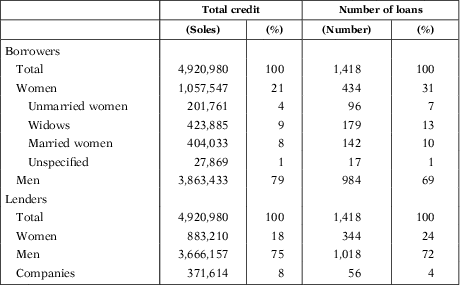
Much of the literature on 19th-century Peruvian credit markets has mentioned the role of men, especially merchantsFootnote 26. The role of women, however, remains unexplored. Did women participate in this booming credit market? The evidence suggests that they did. Widows, single women and wives participated in the credit markets both as lenders and as borrowers (Table 1). In the sample, female lenders accounted for 34 per cent of the total number of loans and 18 per cent of the total volume of credit; whereas female borrowers accounted for 31 per cent of the total number of loans and 21 per cent of the total volume of credit. Therefore, women participated in the credit market, but their participation was much lower than that of men.
PARTICIPATION OF MEN AND WOMEN BORROWERS IN THE CREDIT MARKET

Note: The table only includes loans to individuals living in Lima and Callao.
Sources: Appendix A.
In addition, women did not necessarily face the same loan conditions as men. The evidence, for example, indicates that women did not borrow the same amounts as men. The average loan size was 2,436 soles for female borrowers and 3,926 soles for male borrowers (Table 2). Therefore, men received not only a larger number of loans but also much larger loans. In addition, there were important differences in interest rates. On average the annual interest rates in 1860-1875 were 16.5 per cent for women and 14.9 per cent for men.
SIZE, INTEREST RATES AND MATURITY OF LOANS BY GENDER

Note: The table only includes loans to individuals living in Lima and Callao.
Sources: Appendix A.
Why did women have a lower participation in the credit market? Why did women receive smaller loans and pay higher interest rates than men? Did gender discrimination influence the allocation of credit? The following two sections will be devoted to answering these questions.
5 ACCESS TO CREDIT, LOAN SIZES AND THE DISTRIBUTION OF COLLATERAL
This section discusses whether the differences in the participation in the credit market and in loan sizes between women and men resulted from gender discrimination or whether other relevant factors probably explained these differences. If women faced discrimination as a group, the probability that their loan applications were rejected would have been greater and the size of their loans smaller with respect to men, controlling for relevant individual characteristics.
Let us first address the question of whether women were discriminated against at the moment of application. Indeed, the legislation allowed husbands to restrict the participation of their wives in the credit market. If husbands had a prejudice against the participation of their wives in the credit market as lenders or borrowers, they could simply not authorise them to do so. Prejudice could have had an effect on the participation of women in the credit market. However, gender discrimination would have operated through the family, not through the marketFootnote 27.
Furthermore, information on wealth and occupations suggests that the lower participation of female borrowers in the credit market was partly explained by the differences in collateral between women and men: women had lower proprietorship rates and a lower participation in the economyFootnote 28.
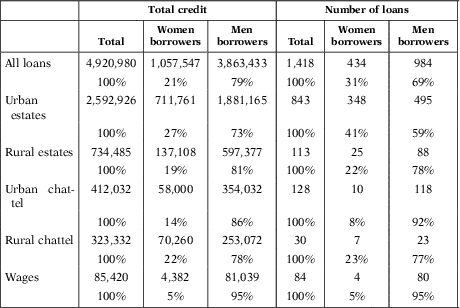
Among loans secured by urban estates, for example, female borrowers accounted for 41 per cent of the total number of loans and 27 per cent of the total value of credit; whereas among loans secured by rural estates, female borrowers accounted for 22 per cent of the number of loans and 19 per cent of the value of credit (Table 3). The fact that the participation of women in mortgage loans was lower than that of men may be explained by the fact that women had a smaller participation in the distribution of collateral. We do not have information on the distribution of wealth in Lima in the 1860s and 1870s. However, information for 1839 shows that women owned fewer haciendas than men. In particular, out of 166 haciendas in the valleys of Lima, seventy-three were owned by men, fifty-four by women and thirty by companiesFootnote 29.
PARTICIPATION OF WOMEN BORROWERS IN THE CREDIT MARKET, BY TYPE OF LOAN (SOLES)
Note: The table only includes loans to individuals living in Lima and Callao.
Sources: Appendix A.
Among urban chattel mortgages, female borrowers accounted for only 8 per cent of the number of loans and 14 per cent of the value of credit. These loans were normally used by merchants and pulperos to fund their commercial operations. Most merchants and pulperos were men: in 1876 there were 2,919 merchants and pulperos, of which only seventy-one were women. Among rural chattel mortgages, female borrowers accounted for 23 per cent of the number of loans and 22 per cent of the value of credit. These differences are consistent with the structure of the population. In 1876, there were 4,501 agriculturists and rancheros in Lima, of which 3,579 were men and 922 women: only 20 per cent of agriculturists and rancheros were women.
Among loans secured by wages, women had a very small participation: female borrowers accounted for only 5 per cent of the number and value of such loans. These loans were secured by the wages of military personnel or state employees. Military personnel and state employees, however, were predominantly men: in 1876 there were 3,813 military personnel, all of them men; and 1,272 state employees, of which only sixty-five were women. It is difficult, then, to argue that loans secured by wages were discriminatory against women.
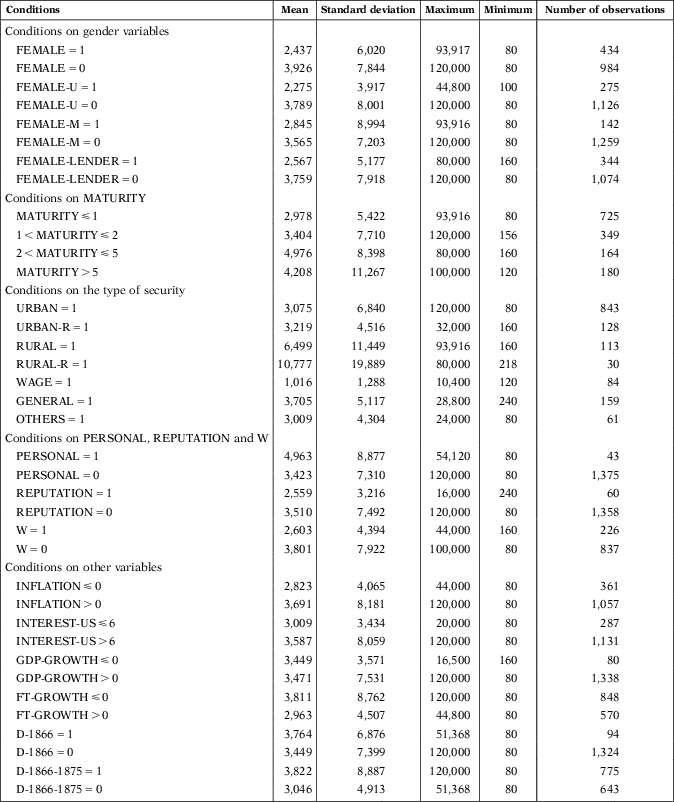
On the other hand, differences in loan sizes may also be largely explained by the distribution of wealth and collateral. If women had less valuable collateral than men and collateral influenced the size of loans, it would not be surprising that women received smaller loans than men. But were women less rich than men? We do not have information on the value of collateral, so we cannot prove with certainty that female borrowers in the sample were less rich than men. However, the hypothesis that women were less rich than men is supported by the fact that female lenders made smaller loans than male lenders. On average, female lenders made loans for 2,567 soles, whereas male lenders made loans for 3,759 soles (Table 4). This result suggests that female lenders had less money to lend than their male counterparts. Since women had limited options in the economy, they probably did not have the same capacity to accumulate wealthFootnote 30.
STATISTICS FOR SIZE
Therefore, it seems that women had a lower participation than men in the total number of borrowers to a large extent because fewer women owned properties and because women had a limited participation in the economy. In addition, it seems that women received smaller loans because they were less rich than men.
Nevertheless, the fact that women had a lower access to credit and received smaller loans than men may be explained not only by differences in access to proprietorship or in the value of collateral. Other factors, including prejudice against women, may have influenced the participation of women and loan sizes. Since we do not have information on the value of collateral, however, our analysis in this section does not allow us to test whether other factors (including prejudice against women) influenced the participation of women in credit markets and loan sizes. Fortunately, we do have data for interest rates. The evidence for interest rates will allow us to test whether women were perceived as riskier borrowers than men and, in particular, whether gender discrimination played a role in the determination of interest rates.
6 WHY DID WOMEN PAY HIGHER INTEREST RATES THAN MEN?
One possible explanation for the differences in interest rates is that women were perceived as riskier borrowers than menFootnote 31. If the property rights of women were weak, the ability of women to manage their finances was limited, and there was prejudice against women, lenders may have considered women to be riskier borrowers than men.
Property rights are crucial for evaluating the risk of default of a loan. Lending money to a person who has no clear property rights involves a higher risk than lending money to a person with clear property rights. In 19th-century Peru, however, property rights did not lead to differences in risk between men and women. Non-married men (including widowers) and non-married women (including widows) had the same property rights over their mortgaged properties. In addition, married women were dependent on their husbands’ approval for mortgaging their properties. A loan to a married woman was probably considered similar to a loan to her husband, but secured by her properties; so loans to married women may have not suffered from a poor definition of property rights.
Limited access of women to education may have led lenders to perceive women as less able to manage their finances than menFootnote 32. As explained in Section 1, basic education was similar for men and women: both genders had similar literacy rates. The main difference in human capital between women and men referred to the type of education and access to secondary and, especially, tertiary education. If these differences influenced the risk of default, then one must expect women to be charged higher interest rates.
Alternatively, prejudice against women may have influenced the lenders’ perception of the ability of women to repay their loans. Some might argue that prejudice against women was probably higher in the past; and considering that early credit markets were largely informal and relied on personal linkages, prejudice may have had a large impact on credit allocation (Burnette Reference Burnette2008, p. 283). However, considering that there were a large number of lenders in the market of Lima in the 1860s and 1870s, prejudice may not have affected interest rates. After all, as several studies indicate, discrimination is less likely in very competitive markets (see e.g. Becker Reference Becker1957; Cavaluzzo et al. Reference Cavaluzzo, Cavaluzzo and Wolken2002; Levine et al. Reference Levine, Levkov and Rubinstein2008).
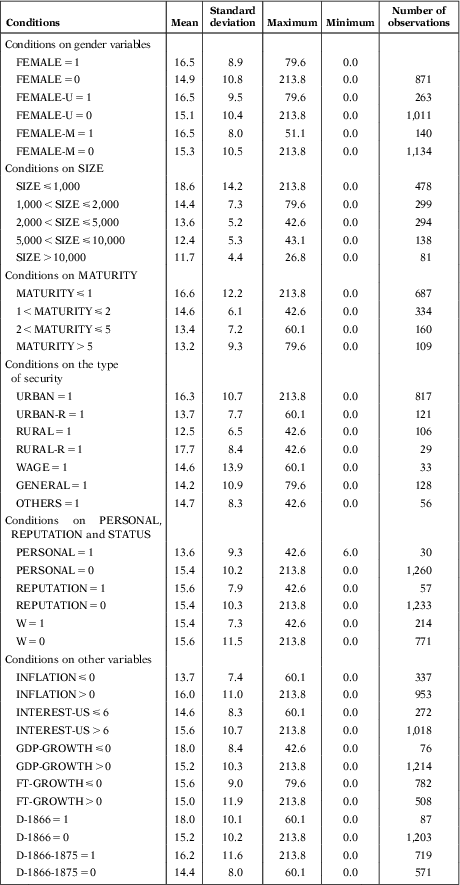
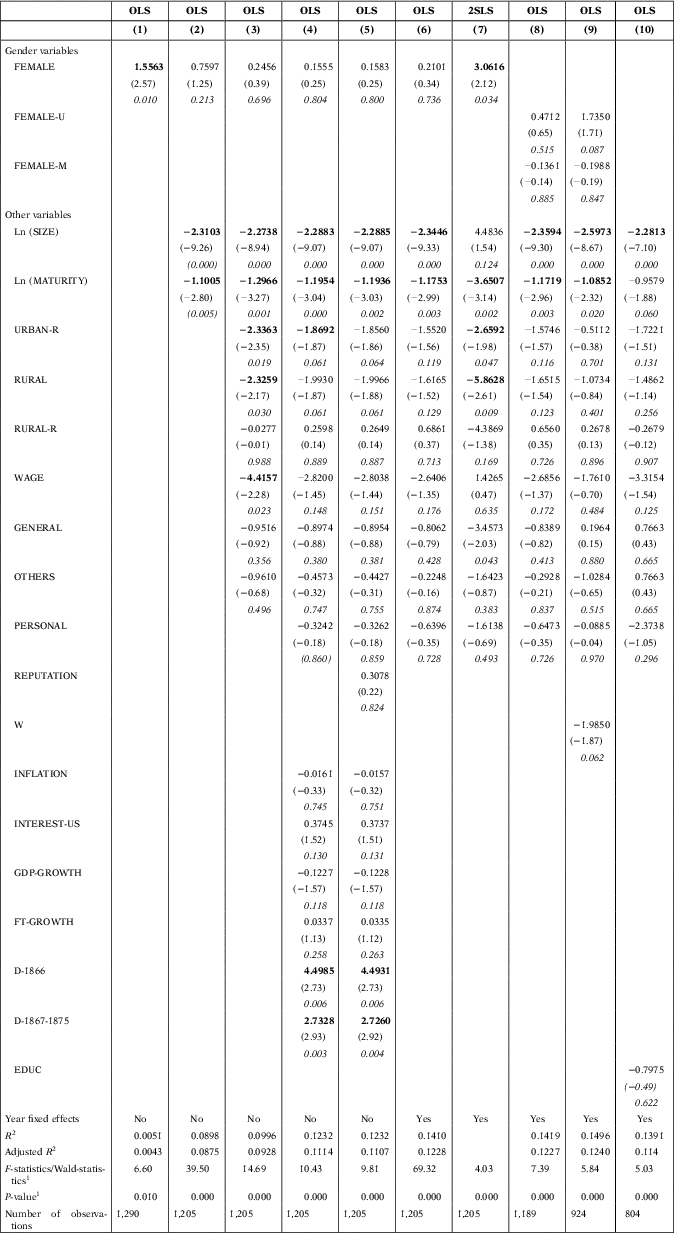
A multivariate analysis may allow us to determine the factors that influenced interest rates. Appendix A describes the data set and the variables included in the regressions. Table 5 reports some statistics for INTEREST and Table 6 reports the OLS results for INTEREST as dependent variable. Column 1 reports estimates from a regression that only includes the variable FEMALE as an explanatory variable. As expected, the coefficient of FEMALE is positive and highly significant. On average, according to this estimate, women paid 1.556 percentage points more than men. The R 2 coefficient, however, indicates that the variable FEMALE only explains 0.5 per cent of the variance of the dependent variable.
STATISTICS FOR INTEREST
DEPENDENT VARIABLE: INTEREST
Notes: The table reports estimates for INTEREST as dependent variable. T-statistics are in parenthesis, P-values are in italics. Bold coefficients indicate that they are significant at a 5% level. Column 10 only includes loans to men. The Hausman statistics for model 7 is 11.94 and the P-value is 0.9587.
1The table reports F-statistics for OLS estimations and Wald tests for the 2SLS estimation. The P-value corresponds to the F-test or Wald test.
Since column 1 does not control for other relevant characteristics, the result for FEMALE cannot be interpreted as evidence that women were riskier borrowers than men. In fact, the coefficient of FEMALE may be biased owing to the fact that women received smaller loans than men and that, in the presence of fixed costs, small loans may have been more costly to provide than large loans. Women may, then, have been charged higher interest rates not because they were necessarily riskier, but simply because they were provided with smaller loans. In fact, interest rates were higher for smaller loans (Table 5). Thus, if women were perceived as riskier borrowers than men, the evidence must show that, controlling for the size of loans, interest rates charged to women were higher than those charged to menFootnote 33.
Column 2 adds SIZE and MATURITY to the model. The variables SIZE and MATURITY are in natural logs. The effect of both variables is negative and statistically significant. In addition, the inclusion of SIZE and MATURITY increases the explanatory power of the model. The R 2 coefficient in column 2 is 0.089; so the variables SIZE and MATURITY explain around 8 per cent of the variance of the dependent variable. Importantly, the results indicate that when including these control variables, the effect of the variable FEMALE declines: the coefficient of this variable in column 2 is 0.7597, a much smaller value than in column 1, and is not significant at a 5 per cent level.
Therefore, the fact that women paid higher interest rates than men does not necessarily imply that women were considered riskier borrowers than men. Since women received much smaller loans than men and smaller loans are associated with a higher unit cost for granting a loan, it is not surprising that women were charged higher interest rates. Controlling for the type of mortgaged property, economic conditions and year fixed effects, the coefficient of FEMALE declines and remains as non-significant at a 5 per cent level (columns 3-6).
The coefficient of FEMALE may capture the effect of relevant omitted variables that are correlated with gender, such as differences in education between women and men and prejudice against women. Therefore, the results in columns 2-6 suggest that, taken together, the differences in education between women and men and the prejudice against women do not seem to explain the differences in interest rates.
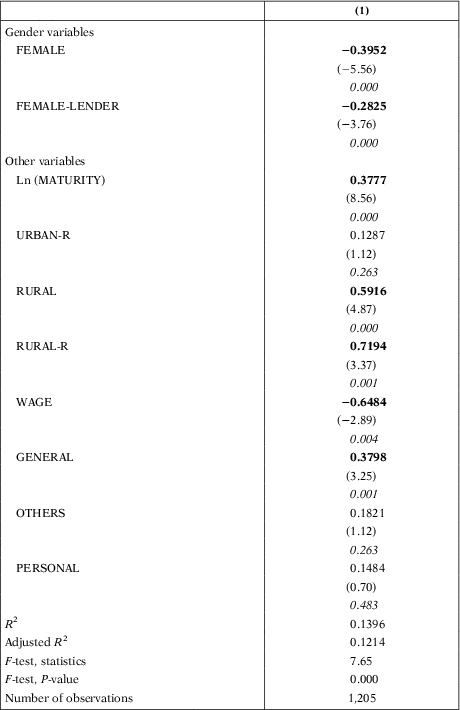
One potential problem with the OLS estimations in models 2-6 is that SIZE may be endogenous to INTEREST. In this case, the OLS estimates would be inconsistent. I then estimate the model in two stages, using FEMALE-LENDER as an instrument for SIZE. The first-stage results are reported in Table 7. Since FEMALE-LENDER has a significant effect on SIZE, and it is not endogenous to INTEREST, then the variable FEMALE-LENDER is a valid instrument for SIZE. Column 7 in Table 6 reports the 2SLS estimates. The coefficients of FEMALE and SIZE are different from column 6. In particular, the coefficient of FEMALE in model 7 is much greater than in model 6. However, the Hausman statistic is 11.94 and the P-value is 0.9587. At a 5 per cent level, I cannot reject the null hypothesis that OLS estimates in model 6 are consistent. Therefore, it seems that using SIZE as an explanatory variable does not generate an endogeneity problem. In addition, since OLS estimates are also efficient, our analysis must be based on OLS estimates, not on 2SLS estimates.
DEPENDENT VARIABLE: LN (SIZE)
Notes: The table reports OLS estimates for ln(SIZE) as dependent variable. T-statistics are in the first parenthesis, P-values are in italics. Bold coefficients indicate that they are significant at a 5% level. Year fixed effects are included.
Loans included in the sample: FEMALE-M, FEMALE-S, FEMALE-W, MALE-S, MALE-W.
The civil status of female borrowers may have mattered for the perception of risk; so not controlling for civil status may yield biased coefficients. It is possible that non-married women were perceived as high risk borrowers. Since married women had to be authorised by their husbands to receive a loan, it is likely that married women obtained loans to invest in their husbands’ occupations or businesses. In this case, a loan to a married woman was perhaps considered a loan to her husband and may then have been a loan with an associated low risk if the husband was educated and able to manage his finances properly. In contrast, loans to non-married women (including widows) were loans that they would use for their specific needs and that they would manage without male supervision. If women, probably not as educated as men, did not know how to manage their finances well, loans to women, in particular to non-married women, may have been riskier than loans to men.
Some might, however, tell a different story. In particular, it might be argued that loans to married women were riskier than loans to non-married women if such married women borrowers had husbands who were not able to accumulate capital. After all, a man who relied on his wife and, in particular, on his wife's assets to secure a loan, may not have accumulated wealth during his life to secure the loan. The fact that a married woman requested a loan may have been considered by lenders as a sign that her husband was not able to accumulate wealth, probably because of some inability to conduct businessesFootnote 34.
To differentiate between non-married and married women, the model in column 8 includes the variables FEMALE-U and FEMALE-M. The coefficient of the variable FEMALE-U measures the difference in interest rates between non-married women (including widows) and men, whereas the coefficient of FEMALE-M measures the difference in interest rates between married women and men. The results indicate that the coefficient of FEMALE-U is positive and the coefficient of FEMALE-M is negative. If significant, these coefficients would be consistent with the hypothesis that unmarried women were perceived riskier than men owing to their lack of human capital and/or prejudice against them. However, both coefficients are not significant at a 5 per cent level. At a 5 per cent level, then, one cannot reject the hypothesis that women were charged the same interest rates as men, controlling for other factors. As indicated in column 9, controlling for the variable W does not change the main resultsFootnote 35.
Some might find it surprising that gender did not influence interest rates, considering that women had lower human capital than men. If education influenced the ability of individuals to manage their finances, some might have expected interest rates to be influenced by gender. The results, however, may not be surprising if one considers that at the basic level there were no differences in education between women and men (literacy rates were the same for men and women) and that higher education did not seem to have an impact on risk of default. Column 10, for example, reports the results for a regression for male borrowers only. This model includes the variable EDUC, a dummy variable that adopts a value of 1 if the borrower was a lawyer or a medical doctor. The results indicate that this variable did not have a significant impact on INTEREST. Having access to tertiary education does not seem to have had an impact on the risk of defaultFootnote 36.
Considering the fact that differences in education between women and men did not seem to have impacted interest rates, and the OLS coefficients of FEMALE in columns 2-6 and 8-10 are not significant, it seems that the evidence does not support the hypothesis that there was gender discrimination in credit markets during the guano era. Women may have experienced negative prejudice in several areas of Peruvian society but this prejudice does not seem to have played a key role in the determination of interest ratesFootnote 37.
7 CONCLUSIONS
It is clear that women experienced much prejudice in the 19th century. During the guano era, women were considered as having different goals in life as men and did not have the same access to higher education. Not surprisingly, women did not conduct the same jobs and businesses as men.
Prejudice against women could have affected the allocation of credit. If women were perceived as riskier borrowers than men, lenders would have been willing to grant only a few loans to women, would have granted women small loans relative to their collateral and would have charged them high interest rates.
The evidence indicates that women participated as borrowers and lenders in Peru during the guano era. However, there were important differences in access to credit and loan conditions between women and men. Among borrowers, women accounted for 31 per cent of the number of loans. In addition, loans to women were 38 per cent smaller than loans to men, and interest rates paid by women were 1.4 percentage points higher than those paid by men.
The evidence suggests that the differences in access to credit and loan conditions were partly explained by the distribution of wealth and collateral, and by the differences in the participation in the economy between women and men. Fewer women received loans probably owing to the fact that fewer women were estate owners and fewer women conducted business operations. In addition, women received smaller loans probably because their collateral had lower value.
The evidence for interest rates suggests that women were not riskier borrowers than men. There were important differences in interest rates between women and men but these differences resulted largely from differences in loan sizes. If women received small loans simply because they had low-value collateral, then in the presence of fixed costs for granting loans, it is not surprising that women were charged higher interest rates than men.
APPENDIX A
A.1 Data Appendix
Notarial records constitute a rich source of information on mortgage credit markets in 19th-century Peru. The importance of notarial records for the study of mortgage credit market in Peru lies in the fact that the civil code of 1851 dictated that mortgages could only be constituted by registration with a notary (by escritura pública), indicating the main obligation and the goods that secured the loanFootnote 38. Nowadays, notarial archives are kept in the National Archives of Peru (Archivo General del Perú).
Other types of loans were also granted in this period. Banks of issue and discount, for example, granted commercial loans. However, information on non-mortgage loans is highly limited. Our data set only refers to mortgage credit, where the security could be an estate, a leasing contract, merchandise, a salary or «all present and future goods», also known as general mortgages.
This article relies on a sample of 1,646 new mortgage loans. I constructed this sample from notarial records, all of them taken from the National Archives of Peru. I selected the three notaries from the city of Lima with the longest series of notarial registration books (called protocolos) for 1860-1875: José de Selaya (1860-1875), Felipe Orellana (1860-1875) and Francisco Palacios (1862-1875). From the three notaries, I collected all contracts under the title of obligaciones, mutuos or hipotecas from January to May. From these contracts, I selected new mortgage loans granted by private lenders to borrowers living in the provinces of Lima and CallaoFootnote 39. I also restricted the sample to loans to individuals, excluding those to companiesFootnote 40.
The notaries of José de Selaya, Francisco Orellana and Francisco Palacios account for an important portion of the population of notarial contracts in the city of Lima. According to our calculations, for example, in the entire year of 1868, all notaries from Lima registered 247 loans by private lenders; the notaries of Selaya, Orellana and Palacios accounted for 57 per cent of the population. Similarly, for 1875, all notaries from Lima registered 505 loans by private lenders, and the three notaries accounted for 65 per cent of the population.
The contracts include information on the names of the lenders and debtors and the amount of the loan. In addition, most loans include the maturity of the loan, the interest rate and a description of the mortgaged property. Some contracts also include the actual date of payment.
A.2 Multivariate Analysis. Data and Variables
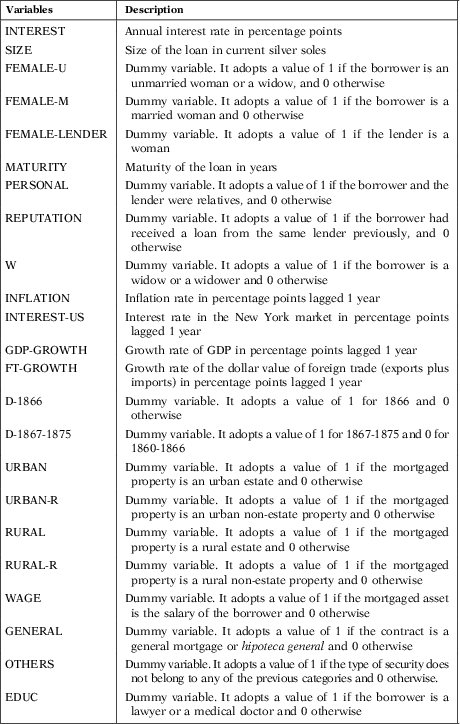
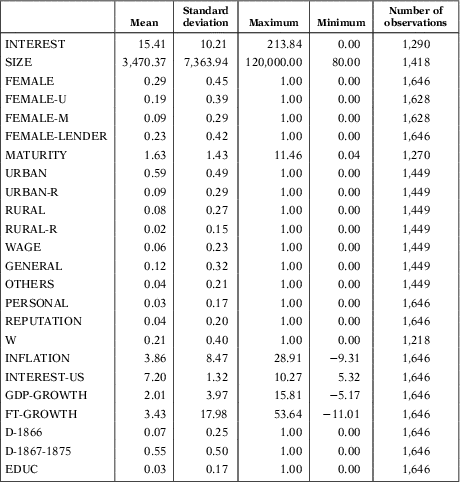
I employ a standard econometric methodology to test whether gender influenced interest ratesFootnote 41. Table A1 lists the variables included in the econometric models, and Table A2 reports a summary of statistics of the variables. The variable INTEREST measures the annual interest rate in percentage points.
LIST OF VARIABLES
DESCRIPTIVE STATISTICS
The variables that may capture the effect of gender for borrowers are FEMALE, FEMALE-U and FEMALE-M. The variable SIZE measures the size of the loan in silver solesFootnote 42. MATURITY allows us to control for the maturity of the loan. The variables URBAN, URBAN-R, RURAL, RURAL-R, WAGE, GENERAL, OTHERS allow us to control for the type of mortgaged property. The variable PERSONAL measures whether the borrower and the lender were relatives, and the variable REPUTATION measures whether the borrower had borrowed from the same lender previously. Lenders probably charged less to their relatives; in addition, lenders probably considered individuals they had granted loans to previously to be less risky. On the other hand, the variable W may allow us to control for age and wealthFootnote 43. It is possible that widows and widowers were older and richer than married people. If older and richer individuals were less risky, W may have had a negative effect on interest ratesFootnote 44.
On the other hand, INFLATION and INTEREST-US may have had a negative effect on the supply curve of credit. Meanwhile, the effect of GDP-GROWTH and FT-GROWTH on interest rates is ambiguous: the growth of domestic production and foreign trade may have had a positive impact on the supply of funds and the demand for creditFootnote 45. The dummy variable D-1866 may capture the effect of the war against Spain in 1866 and may thus have had a positive effect on the risk of default. The dummy variable D-1867-1875 may capture the effect of the creation of mortgage banks. It is possible that as mortgage banks were created from the end of 1866 private lenders ended up with riskier borrowers.