

INTRODUCTION
Along with the workers’ struggle, the rabassaire conflict stands out as the main factor in social mobilization in Catalonia’s modern history before the outbreak of the Spanish Civil War. While the principal focus of the workers’ struggle was in the industrial cities, the rabassaire mobilization focused on areas that specialized in viticulture thanks to the rabassa morta contract. Under this contract, a landowner leased land to a rabassaire, or tenant, who would plant and cultivate the plot at his own cost, and pay a portion of the crop as rent, over a certain period of time related to the life of the planted vines. As we will argue, at the beginning the main cause of the rabassaire conflict lay precisely in the uncertainty of the contract’s duration, since agricultural practices could extend the life of the vines indefinitely.
There is a substantial volume of literature on the rabassaire conflict, but it was Emili Giralt who first approached the subject globally from an academic point of view.Footnote 1 His work summed up the different stages of the conflict and analysed the characteristics and evolution of the rabassa morta contract. Following in Giralt’s footsteps, Albert Balcells examined agrarian conflict in Catalonia, especially in the 1930s,Footnote 2 and other scholars have since begun to fill in gaps regarding conflicts over land, forms of protest, and the organizations that shaped this social and political movement.Footnote 3 One way or another, they have centred their analysis on the rabassaire struggle and studied various aspects of the conflict. However, they have focused more on the features (arising fundamentally from the rabassa morta contract) that set it apart from the other social movements that developed in Europe from the mid-eighteenth century. In order to see the movement in its historical context, we propose a new approach to the rabassaire struggle, identifying it as a social movement according to the terms defined by Charles Tilly – that is, as a distinctive way of pursuing public politics emerging in Western Europe and North America during the late eighteenth century.Footnote 4
According to Tilly, social movements emerged out of the synthesis of three elements: campaign, social movement repertoire, and participants’ public displays of WUNC (worthiness, unity, numbers, and commitment). He refers to a campaign as “a sustained, organized public effort making collective claims on target authorities”, although the claims may target not only government officials, but also “owners of property, religious functionaries and others whose actions (or failures to act) significantly affect the welfare of many people”. The social movement repertoire is the employment of different forms of political action, such as the “creation of special-purpose associations and coalitions, public meetings, solemn processions, vigils, rallies, demonstrations, petition drives, statements to and in public media, and pamphleteering”. Finally, in these acts the participants make public representations of the cause’s worthiness (through, for example, the participation of mothers and children), unity (marching in ranks), numbers (signatures on petitions), and commitment (resistance to repression).Footnote 5
Thus, we intend to show how the rabassaire struggle was built up through an ongoing public campaign and made full use of elements of the social movement repertoire and displays of WUNC. To this end, in this article we will first outline the origins of the conflict, which are to be found in the nature of the rabassa morta contract and in the early expansion of winegrowing in Catalonia. We will then analyse the rabassaire movement over the long term, following a broad chronological order divided into three main stages: the first stage, from the beginning of the conflict in the eighteenth century until the consolidation of the liberal revolution in Spain, during which lawsuits and petitions abounded (addressed in the third section); a second stage, from the mid-nineteenth century to the late nineteenth-century crisis, in which the rabassaire struggle built up gradually as a social and political movement (in the fourth section); and the final stage, covering the early twentieth century until the outbreak of the Spanish Civil War and during which the rabassaire movement interacted with political parties and electoral contests and reached its climax (in the fifth section). We will end with some brief conclusions that underline the main continuities of the rabassaire struggle and its principal features as a distinctive form of the contentious politics that Tilly had called a social movement.
THE ORIGINS OF THE CONFLICT: THE EXPANSION OF WINEGROWING IN CATALONIA AND THE RABASSA MORTA CONTRACT
During the eighteenth and nineteenth centuries, the main line of modernization in Catalan agriculture consisted of specialization in the cultivation of vines. In a Mediterranean setting where, due to low humidity, it was not possible to incorporate the crop rotations that were transforming agriculture in Atlantic Europe, the cultivation of vines allowed for substantial increases in land productivity compared with traditionally predominant cereal crops. The viticultural orientation of a large sector of the territory made it possible to break through the Malthusian ceilings that traditional agriculture imposed on population growth. Viticultural specialization has thus been described as a Boserupian reaction to the growing tension between increasing population and the availability of land resources.Footnote 6
Along with the winegrowing specialization, Catalonia’s economy underwent a substantial transformation. The export of viticultural products (firstly, spirits to Northern Europe, then, since the early nineteenth century, wine to the Americas) linked the Catalan economy to the more dynamic Atlantic regions and allowed it to sustain a powerful industrial sector that needed to import most of its inputs.Footnote 7 The industrialization process thus contributed to strengthening the winegrowing specialization in some Catalan regions until the end of the nineteenth century. As we will see, the emergence of social movements linked to the consequences of this industrialization process would have a strong influence on the rabassaire movement itself. Today we know that this process of winegrowing specialization started in the second half of the seventeenth century in Catalonia’s coastal regions around the ports exporting wines and spirits. By the early eighteenth century, a significant percentage of the land had been given over to viticulture (Figure 1). From then until the end of the nineteenth century, this specialization spread inland, almost establishing itself as a monoculture in some pre-littoral regions, where it even reached wastelands and forests (Figure 2). The planting and cultivation of vines was carried out mainly under the rabassa morta contract,Footnote 8 as can be seen by comparing Figure 3, which shows the areas where this contract was predominant, with Figures 1 and 2.
Viticultural specialization in Catalonia, c.1730 (% of cultivated land devoted to vineyards). Based on Valls-Junyent, La dinàmica del canvi agrari, annex 1.1.

Viticultural specialization in Catalonia, c.1860 (% of cultivated land devoted to vineyards). Based on Valls-Junyent, La dinàmica del canvi agrari, annexes 1.2. and 1.3.
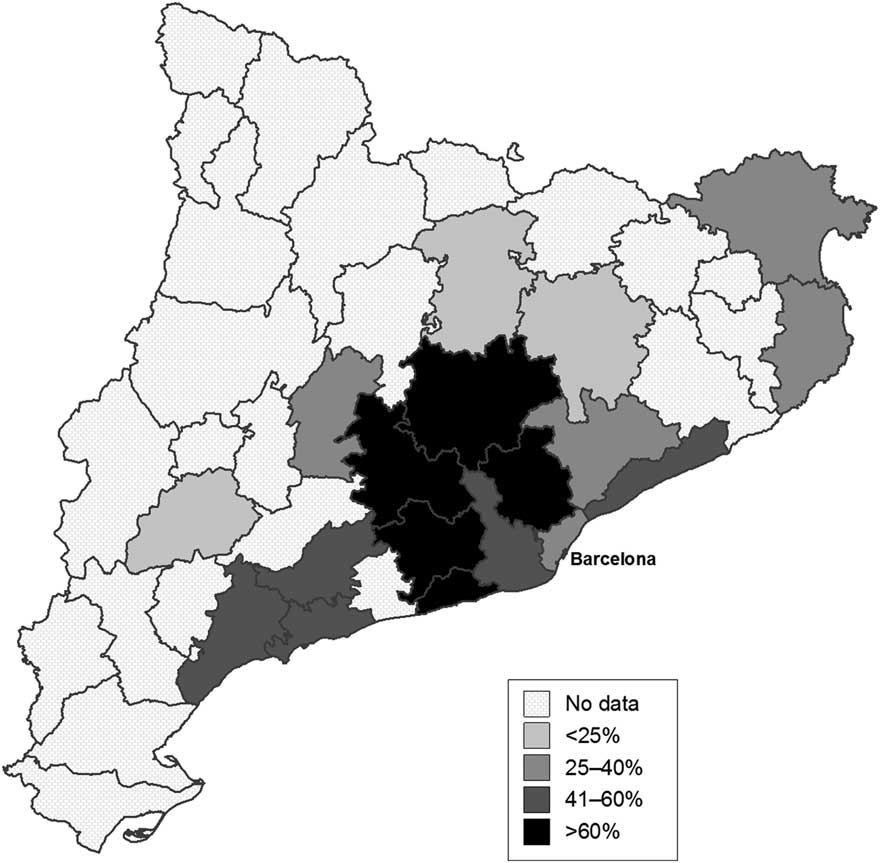
Winegrowing regions with predominance of the rabassa morta contract. Based on the references cited in the text, adjusted to the map elaborated by August Matons in Les zones pròpies de la vinya segons A. Matons, in Nicolau Rubió i Tudurí and August Matons, El pla de distribució en zones del territori català: Regional Planning (Barcelona, 1932), p. 9.
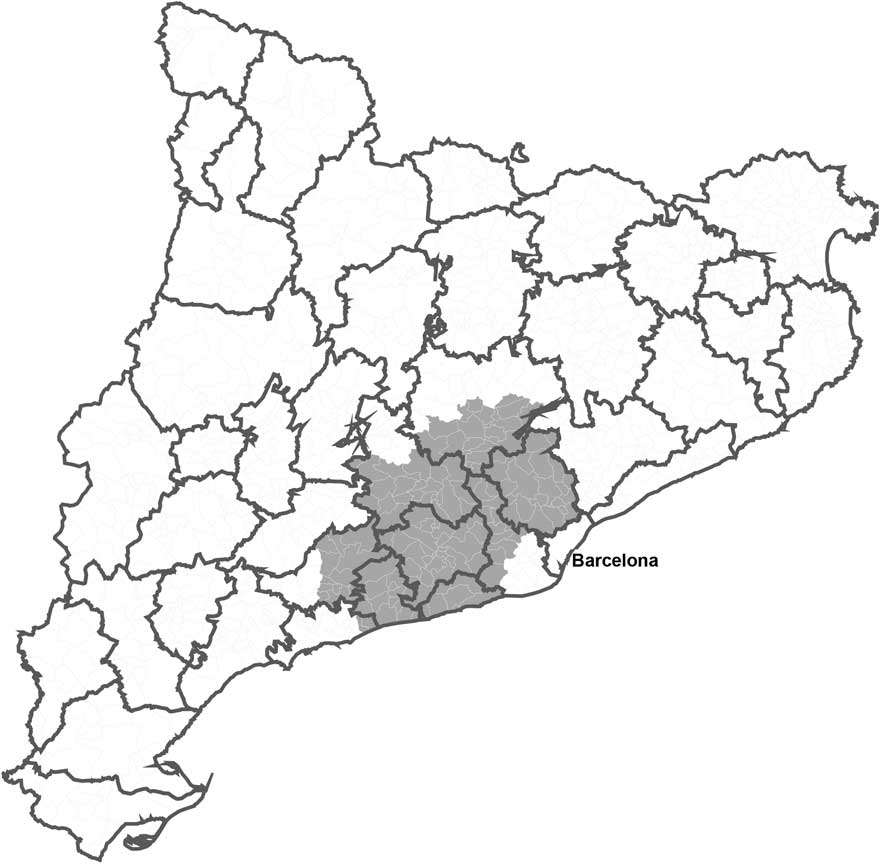
Rabassaires from Santa Margarida i els Monjos (Penedès) in the Antifascist Demonstration in Barcelona, 29 April 1934 Private Archive of Jordi Romeu. Used by permission.
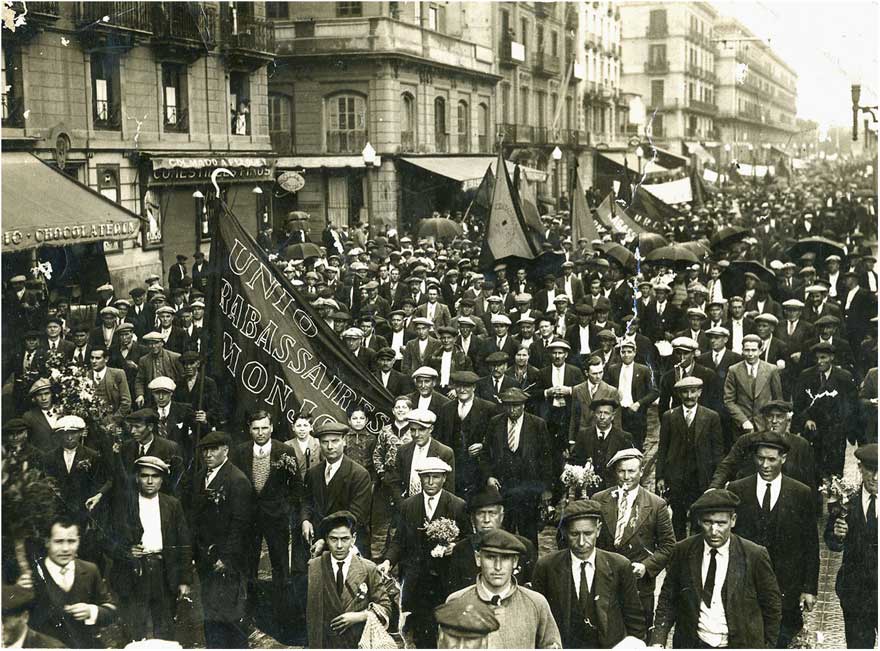
Rabassaire demonstration in front of the Catalan parliament in support of the Law of Cultivation Contracts, 12 June 1934 Merletti Collection, Institut d’Estudis Fotogràfics de Catalunya. Used by permission

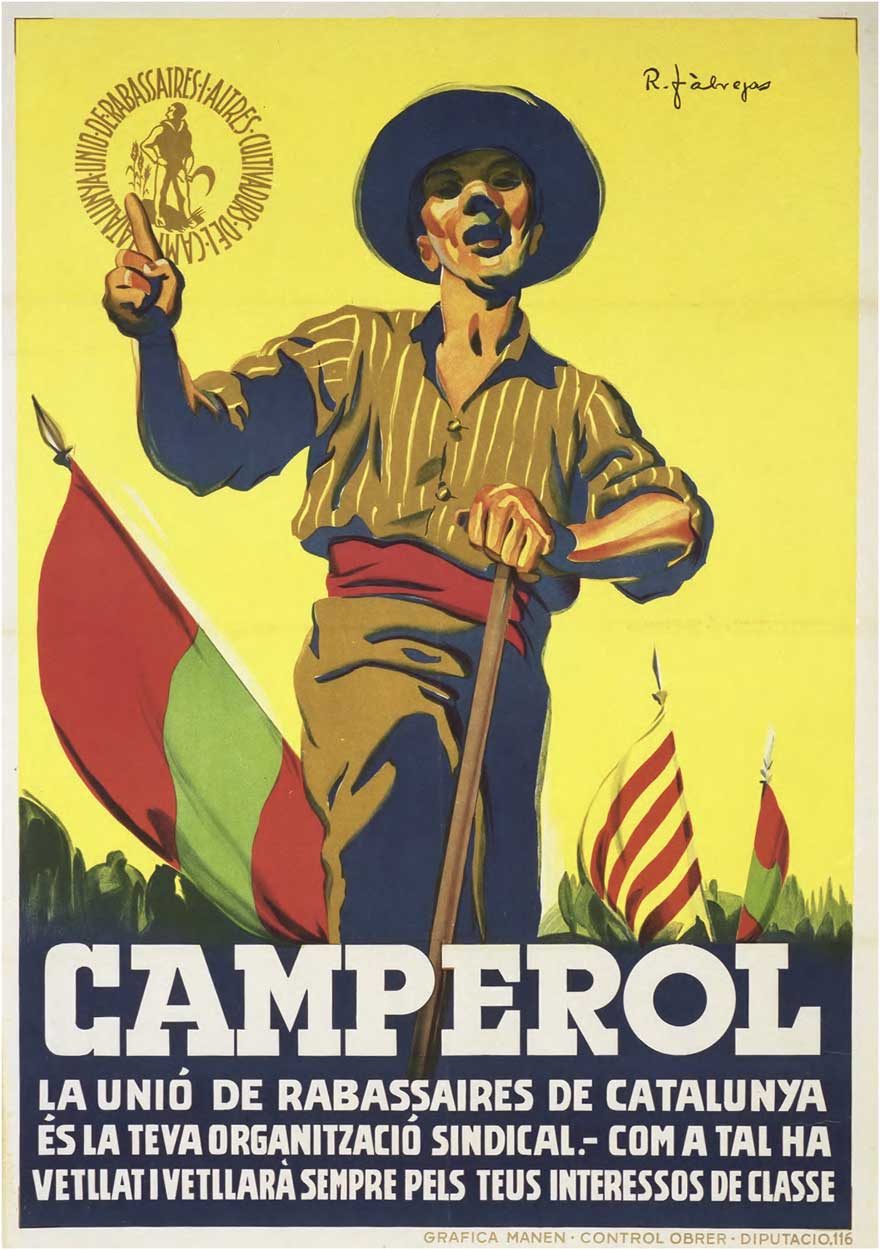
Poster for the Union of Rabassaires designed by Ricard Fàbregas during the Spanish Civil War (1936-1939). It reads: “Peasants. The Union of Rabassaires of Catalonia is your trade union organization. It has always defended your class interests and will continue to do so” Collection of Posters of the Spanish Civil War, Universitat de València. Biblioteca Històrica. Every effort has been made to accurately determine the rights holders of this image.
The rabassaires were mainly peasants who possessed little or no land. They rented small plots of marginal land which would otherwise have remained unused and, at their own expense, planted and cultivated vines, hardy plants that were well adapted to the poor Mediterranean soils. The incentive to do so was, firstly, the need to find additional sources of income, as many of the rabassaires were unable to produce sufficient for the economic reproduction of their family holdings and, secondly, the opportunity to attain the status of an independent peasant farmer by combining several leases. The long-term contract of rabassa morta, which allowed tenants to pass the rights to use the land to their heirs, enabled them to avoid proletarianization.
It is not our aim here to discuss the legal nature of the contract,Footnote 9 its origins, or its relation to other contractual formulas.Footnote 10 However, to analyse the characteristics of the rabassaire struggle, we should underline what is perhaps the contract’s most striking feature: a duration that was indefinite, in the literal sense of the word. The use of this term may be misleading. In this context it does not mean “perpetual”, but “not defined”; that is to say the contract’s duration was not precise. The clause “as long as the planted vines last on the piece of (leased) land” led to the confusion that we mention, especially when agricultural practices introduced by growers tended to prolong the life of the vines (about fifty years on average) to the point that they might last, effectively, forever.
We single out this clause to define the nature of this type of contract because the origins of the conflict stem from the contract’s duration. From the strictly legal principles defended individually in court, the struggle of the rabassaires became a political issue fuelled by their growing awareness of the need to organize in order to strengthen their right over the vineyards they worked, possession of which they considered they were entitled by the rabassa morta contract.
the first steps of collective action: lawsuits and petitions
Indeed, the first collective actions of the rabassaires occurred in the late eighteenth century, when a number of landowners went to court in an attempt to recover the land. They held that the contract could be considered to have been terminated, since the vines planted on the leased land had disappeared. In fact, the vineyard that subsisted on that land was not the original one but the result of agricultural practices in which the vines that were dying were replaced with neighbouring branches that survived, thereby increasing the vineyard’s productivity. The courts handed down rulings that established the duration of the contracts at fifty years, which was considered more or less the duration of the life of the plant. These rulings thus modified one of the contract’s main features, the uncertainty over its duration, and created a case law that radically transformed the nature of the rabassa morta contract.
Some scholars suggest that the judicialization of this problem was a result, to a large extent, of the loss of legislative powers by Catalonia after the War of the Spanish Succession (1701–1714), when Philip V of Spain banned all the main traditional Catalan institutions and rights, brought the administration of Catalonia under Spain’s absolute monarchy, and established it as a province. This loss had curtailed the evolution of Catalonia’s own civil law, which remained fossilized in the state it had been prior to the abolition of Catalan institutions.Footnote 11 This is not a minor issue, since we encounter it repeatedly during the long process by which the rabassaire struggle became a political movement.
But why did the landowners try to recover the land leased through the rabassa morta contract by claiming its termination? One might think that they sought to assume ownership of a vineyard that was – thanks to the practices mentioned above to prolong the life of the vines – in full production, in order to continue exploiting it directly themselves. In fact, it seems that this was not the purpose of the lawsuits brought before various courts in the final decades of the eighteenth century. On the contrary, the aim of the instigators seems to have been to regain possession of the land in order to lease it out again to the rabassaires under much more onerous contractual conditions.
Based on studies of the chronology of rabassa morta contracts, we know that the contract was not widespread until the second third of the eighteenth century. In its early stages, the portion of the crop that the rabassaire had to pay was quite moderate: between a sixth and a fifth of the harvest.Footnote 12 There were several reasons for this, of which we will highlight two. The first was the low demographic density of the territories where the winegrowing specialization process took place. The populations of many municipalities were still recovering from the ravages of the plague in the fourteenth and fifteenth centuries. Villages where the population was concentrated were an exception in a country where the typical form of rural settlement was the isolated masia, or farmhouse, which at the end of the Middle Ages had often managed to gain control of much of its surrounding territory by incorporating abandoned land after depopulation. Some studies show that, in the early eighteenth century, each of these farmhouses had on average about one hundred hectares of land, covered predominantly by forests and wasteland. It was mainly on these lands that the winegrowing expansion took place under rabassa morta contracts. The owners of the masies initially asked little of the rabassaires, who had to undertake the Herculean effort of planting vineyards on these marginal lands.Footnote 13 The second reason was that these early rabassaires were, in many cases, the younger sons of the farmhouse owners and were paid their inheritance in the form of the rabassa morta contracts on a part of the farmland and also with a small plot of land to build their own house, since the bulk of the patrimony would be inherited by the eldest son. Direct kinship between the landowner and the rabassaire was supposed to mitigate the harshness with which the contract was drafted.Footnote 14
The situation changed radically as the eighteenth century advanced. The increasing pressure on land resulting from expanding population dynamics (largely fuelled by the winegrowing expansion itself) resulted in the granting of rabassa morta contracts under more exacting conditions for the rabassaires. The rabassaires were no longer relatives of the landowners (in the best-case scenario, they were grandchildren, great-grandchildren, or nephews of the first grantors) but rather people coming from elsewhere attracted by the dynamic progress of the vineyards. Contracts delivering a sixth and a fifth of the harvest became increasingly rare, while it was more common to deliver a quarter of the grapes or even a third.Footnote 15 Then, the grantors started to reconsider the duration of the rabassa morta contracts, in order to recover the land transferred on terms that involved payment of a sixth of the harvest forty, fifty, or sixty years earlier in order to lease it again for a quarter or a third of the crop. Consequently, in the late eighteenth century the growing population pressure increased tensions between rabassaires and landowners.
The succession of lawsuits in the courts and systematic rulings that established a contract duration of fifty years led the rabassaires to take collective action for the first time, in the form of two petitions submitted by several municipalities, the first in 1793 and the next in 1806.Footnote 16 These were addressed to the king of Spain and voiced complaints about the dispossession of numerous rabassaires through eviction lawsuits brought by wealthy farmers. The historical significance of these petitions is twofold: on the one hand, they represent the starting point of the rabassaires’ collective action, which, in its first phase, had much in common with other modern social movements, such as Chartism in its fight for political reform in Great Britain; on the other, the municipalities involved were located in the same area that many years later, in the 1920s and 1930s, would become the epicentre of the rabassaire struggle (see the maps in the Appendix), thus confirming the longevity of this social movement.
The crisis of the ancien régime in the following years interrupted the rabassaire struggle. The first four decades of the nineteenth century were a period marked by political instability as a result of two wars (from 1808 to 1814 against the French occupation, and the first Carlist war from 1833 to 1840) and various popular uprisings (in 1822–1823 and in 1827). Spain’s feudal regime finally collapsed and in the new atmosphere of liberal reform the first steps were taken toward achieving a better definition of land property rights. The conflict between the rabassaires and grantors of land was not at the foreground at the time, in part because of the catastrophic state of the country’s food supplies during the Napoleonic occupation and also because the two sides were united in their struggle to demolish the last vestiges of the structures of the dying feudal system.
We noted that the owners of isolated masies were the largest grantors of land under the rabassa morta contract. In turn, these farmhouses were subject to the manor and were required to make various payments to feudal lords, the most significant among these payments being the tithe. The tactical alliance between the farmhouse owners and the rabassaires sought to put an end to the feudal payment, so that the portion of the crop that once went to the old feudal lords could thereafter be shared solely by the rabassaire and the grantor of the lease in the proportion established in the contract. This kind of collective resistance was not uncommon elsewhere, as demonstrated by Charles Tilly’s accounts of Great Britain in the early nineteenth century.Footnote 17
The tithe, which had been the core component of manorial income, was finally abolished in 1837. But feudal revenues had in fact been falling since the years of the Napoleonic occupation, when a subversive movement among the peasants after the first abolitionist decrees made it very difficult for the feudal lords to continue extracting their dues. The refusal to pay the tithe, often encouraged by the wealthier farmers (owners of large tracts of land leased to others through rabassa morta contracts) threw manorial income into an irreversible crisis. As a result, the 1837 decree was no more than the ratification of a fait accompli.Footnote 18
In this situation, the rabassaires were able to increase their share of the harvest and, therefore, better overcome the commercial difficulties caused by the profound restructuring of the export trade in wines and spirits after the Napoleonic occupation.Footnote 19 At the same time, the collapse of the old manorial system and the new liberal reform raised their hopes of access to land ownership. In March 1823, during the Liberal Triennium, a law was passed granting the right to redeem emphyteutic leases (ancien régime real estate contracts with conditions similar to the rabassa morta contract) that raised the rabassaires’ expectations of becoming full owners of the land they cultivated; however, within only a few months the restoration of absolutism had overturned this law.Footnote 20 In short, the tactical alliance between rabassaires and grantors broke down when they started to see how the rights of access to land would be defined under the new civil code that the liberals were seeking to introduce.
from the traditional forms of peasant protest to the politicization of the conflict
The drafting of the 1851 Civil Code reopened the debate on the duration of the contract, since the ninth rule of article 1,563 indicated that rabassa morta contracts should have a duration of sixty years. Rabassaires and landowners responded to the new legislative proposal: the former defined themselves as emphyteutic tenants and defended the perpetual duration of the rabassa morta contract in a petition (“Exposición de varios enfiteutas de la provincia de Barcelona”) signed by thousands of rabassaires on 24 December 1851;Footnote 21 the latter, grouping together in the Institut Agrícola Català de Sant Isidre (IACSI), founded in 1851, sought to limit the duration of the contract to fifty years.
At the same time, wine prices rose significantly in the 1850s as a result of the onset of the Oidium tuckeri plague in French vineyards and the resulting decline in wine production. The favourable state of wine prices encouraged landowners to expand the area of land devoted to growing grapes and also to try to limit the duration of the rabassa morta contracts, in order to recover the land and reassign the plots under new agreements that would be more favourable to their interests. Thus, in the mid-nineteenth century, some Catalan viticultural areas experienced new expansion amid growing tensions between landowners and tenants that would trigger the presentation of further petitions by the rabassaires, who continued to defend the emphyteutic nature of the contract.Footnote 22
After the Spanish Revolution of 1868 and the deposing of Queen Isabella II, the debate over the rabassa morta contract came onto the Spanish political agenda when the Catalan politician Francesc Pi i Margall incorporated the rabassaires’ claims in the programme of the Federal Democratic Republican Party (Partit Republicà Democràtic Federal). In 1873, Pi i Margall was elected president of the First Spanish Republic and passed a law declaring redeemable all emphyteutic payments affecting real estate, including those related to the rabassa morta contract. The IACSI, the landowners’ association, immediately lodged an appeal and the law was repealed in early 1874 following the coup d’état that put an end to the Republic. Though the law did not last long, its approval had alarmed landowners, who, for the first time, saw the property rights they had consolidated thanks to the liberal revolution coming under threat. The landowners reinforced their organizational efforts with the creation of new associations, such as the Centre Agrícola del Penedès and the reorganization of the IACSI delegations in order to “spread the association like a mesh throughout the four Catalan provinces”.Footnote 23 Also, from a legal standpoint, they gave more attention to the rabassa morta contract itself, distinguishing it from emphyteutic leases and arguing for the right to evict the rabassaire, as in an ordinary lease.Footnote 24
At the same time, the landowners began to specify the duration of the rabassa morta contracts on new concessions. In the region of Penedès, for example, the contracts established in terms of the life of the vines virtually disappeared from the 1860s onwards, being replaced by contracts of fixed duration, mostly around fifty years.Footnote 25 The strategy of the landowners was complemented by other measures: the new contracts avoided explicit reference to the rabassa morta and were defined as a simple sharecropping contract or a portion-of-the-crops lease in order to avoid any similarity to emphyteutic contracts and to facilitate the eviction process, should the owner so wish. Secondly, they began to introduce new clauses in the contracts which stated that “the purchaser renounces all laws that grant or may grant to rabassaires the right to redeem [...] the payments affecting the lands that they work under the rabassa morta contract”.Footnote 26 Finally, contracts signed before a notary tended to be replaced by private contracts which had no legal recognition. In this respect, the following comments of a landowner reflect the misgivings aroused by the rabassa morta contract among landowners in the late 1870s: “I wanted the purchaser to receive [the land] with other covenants, fewer in number and clearer, removing mention of the rabassa morta and replacing it by a certain number of years in the contract”.Footnote 27
At that time, with the phylloxera plague ravaging vineyards in France, rising wine prices in Catalonia momentarily eased tensions between landowners and rabassaires. But a few years later, in the late 1880s, two events contributed to exacerbating the conflict. The first was the approval of the 1889 Civil Code, whose article 1,656 fixed the duration of the rabassa morta contract at fifty years and allowed the rabassaire to be evicted upon the expiry of the period. The second was the invasion of the phylloxera plague (detected in Catalonia for the first time in 1879) and the death of the vines, which resulted in increased evictions of rabassaires.
Facing the crisis caused by the phylloxera plague, the rabassaires responded by making use of traditional forms of peasant protest and, at the same time, developed a new repertoire of collective action, with new forms of organization through societies and political parties. Thus, in the last two decades of the nineteenth century the rabassaire struggle brought together what Charles Tilly defined as reactive and proactive actions.Footnote 28 On the one hand, confronted with deteriorating living conditions, the rabassaires resorted to everyday forms of peasant resistance, such as poaching or stealing firewood, with the aim of ensuring basic resources for the subsistence of the household and which James Scott, observing the farmers’ boycott of the mechanization of rice cultivation in Malaysia in the 1970s, defined as “weapons of the weak”.Footnote 29 Other traditional practices of protest were burning forests and haystacks or making nocturnal attacks on vineyards replanted with American rootstock.Footnote 30 These were usually individual acts supported by a large part of the rabassaire community, as a “silent protest”,Footnote 31 and were targeted at owners who had initiated eviction proceedings against their tenants or who had imposed new contracts with more onerous conditions.
On other occasions, these actions were also aimed at rabassaires who had broken the conventions of community solidarity by protecting landowners’ properties as security guards or by accepting new contracts against the advice of the rabassaire societies, or by working as labourers on farms on which these societies had declared a strike. In these traditional forms of peasant protest, women played an important part in coercing the families of tenants who worked as security guards for the landowners, intimidating rabassaires who acted as strike-breakers, requiring the village grocery stores not to sell food to these families, or even leading demonstrations. We know of these disputes within the rabassaire community because they might be brought to trial by one of the parties involved. On one occasion, several women quarrelled after poking fun with a squirrel skin (strike-breakers are called squirrels (esquirols) in Catalan).Footnote 32 It should be borne in mind that women could possess the rights to use the vineyards. They might inherit them either through their dowry or as the firstborn daughters of a family without any sons. Equally, widows could also be in charge of the family holding. Women also played a fundamental role in the family economy, not only by taking care of the orchard, the barnyard, and domestic tasks, but also by taking part in winegrowing, especially in pruning and in harvesting, and they also replaced men when necessary. Therefore, women participated in the decision-making of the rabassaire community and took a very active part in the traditional forms of protest.
At the same time, as we have already noted, there were other much more organized forms of proactive peasant protest, such as attempts to control the labour market and calling a strike in the vineyards of landowners who declined to negotiate with their tenants. From the 1870s, while traditional forms of protest continued, the rabassaire struggle began to become politicized; local peasant unions were created and there were attempts to bring them together to create the first federations (some of them specifically for rabassaires). The first two attempts, the Agricultural Workers Union (Unió de Treballadors del Camp, 1872-1874), which was affiliated to the International Workingmen’s Association, and the Viticultural Rabassaires’ League of Catalonia (Lliga de Viticultors Rabassaires, 1882–1883), were short-lived, due to severe political repression; but later, in a more permissive political context, their legacy lived on in the form of new rabassaire organizations that emerged in the same geographical areas (see Appendix).
Gradually, the rabassaire struggle adopted a more structured repertoire of forms of action: peasant unions, rallies, demonstrations, and so on. The adoption of these forms coincided with the process of transformation witnessed in other social movements elsewhere from the late nineteenth century onwards. One of these was the suffragist movement in the United Kingdom. Like the rabassaires, the suffragettes had started to organize a long time before, but it was not until the end of the nineteenth century that the National Union of Women’s Suffrage Societies (1897) was created. It would later lead to the formation of the Women’s Social and Political Union (WSPU, 1903). In their struggle, they used similar forms of action (rallies, public meetings, demonstrations), and they used specific elements to create a solid identity: in 1909 WSPU suffragettes would adopt the colours violet, white, and green, just as, later on, the rabassaires would create their red and green flag.Footnote 33
The establishment of universal male suffrage in Spain in 1890 marks the beginning of a new stage in the process of politicization of the rabassaire conflict. From that year, the federal republican party sought to promote social mobilization in the rabassaire areas, especially in the Alt Penedès, where during the early years of the decade it organized political committees in many municipalities.Footnote 34 In the local elections of March 1893, the rabassaire organizations actively supported the federal republicans’ campaign. Rallies were organized in all the winegrowing municipalities, and the mobilization contributed to the victory of federal republicans in most municipalities in the district. Also in 1893, the Federation of Agricultural Workers of the Spanish Region (Federació de Treballadors Agrícoles de la Regió Espanyola) was created; thousands of peasants joined. In its first congress, which took place near the epicentre of the rabassaire struggle, the new body approved the federation of all peasant societies, and it agreed “to take the most active part in all political and economic struggles”.Footnote 35
The mobilization of the rabassaires declined from 1894 due, firstly, to political repression. Following anarchist attacks in Barcelona, the Spanish government suspended political rights from 9 November 1893 to 31 December 1894, and the landowners called on the police and army to intervene against the peasant movement. Secondly, after the phylloxera plague, the position of the rabassaires was much weaker, because the death of the vines meant the termination of the traditional rabassa morta contracts. They lacked the capital and expertise needed to replant with phylloxera-resistant American vines. What is more, carrying out the replanting themselves was a risky move for the rabassaires to take because the American vines had a much shorter lifetime (about twenty-five years) and, thus, their tenancy might have to be renegotiated; the rabassaires could now be more easily evicted in the event of disagreement with the landowner. Moreover, landowners promoted cross-class associations in order to break up the peasant unions and rabassaire associations.Footnote 36
In this context, the internal solidarity of the rabassaire community finally cracked. Those who continued working in the vineyards were forced to accept new contracts without the protection that had characterized the rabassa morta contract, while others chose to abandon the vineyards and migrate to Barcelona or other nearby industrial cities. However, as we will see, the rabassaire struggle revived in the early twentieth century, and it did so essentially in the same regions where it had emerged in the eighteenth. Those regions became the main focus of agrarian social conflict in Catalonia.
unionism and politics: the culmination of the rabassaire movement
The rabassaire struggle, which by the late nineteenth century already had all the elements that define a social movement, reached its peak in the early twentieth century. Certainly, their demands changed over time, focusing initially on the reduction in the level of rent they had to pay to the landowner and then on gaining redemption rights and access to full land ownership.Footnote 37 But from the early twentieth century onwards they were intent on bringing their claims before the authorities, starting with the request for the establishment of mixed juries of rabassaires and landowners (1908), in imitation of those existing in industry, and continuing until the approval of the Cultivation Contracts Act (Llei de Contractes de Conreu) in 1934 by the Catalan government. During this period, the rabassaire struggle made use of a wide range of forms of engagement from the social movement repertoire, the most important being political action: that is, the fight for legislation to change the social relations resulting from their situation as tenants.
This was a particularly critical period for all the winegrowers. Following on from the phylloxera crisis, they now faced a structural crisis of wine overproduction, with a fall in wine prices that could not be compensated by a reduction in production costs. The overproduction was a consequence of the international market integration and the development of new wine-producing regions during the phylloxera crisis in Europe, using much more productive American vines. The large-scale mobilization of winegrowers in the early twentieth century, which resulted in the creation of specialized viticultural associations such as the Unió de Vinyaters de Catalunya (1911), following the example of the Confédération Générale des Vignerons in the Midi of France, and their protest campaigns calling for state intervention in wine markets, was a response to falling incomes across the whole sector.Footnote 38
This French confederation had been created in 1907, after a succession of crises of poor wine sales in a region that was highly specialized in winegrowing. This economic pressure led to an intense mobilization among winegrowers, with the creation of large associations, the resignation of many town councils, mass demonstrations involving thousands of winegrowers, and even street violence with casualties.Footnote 39 The protest became a cross-class movement defending state intervention in response to the fall in wine prices and the prohibition of “artificial wines”. These adulterations in the process of winemaking, which involved using alcohol, water, and other products and which spread during the shortages of genuine wines during the phylloxera plague, were difficult to stop afterwards because of their unbeatable low production costs.
As we said, this social movement among the Midi winegrowers was imitated in Catalonia, where wine prices experienced a similar fate. However, the outcomes of the collective action in the two regions were quite different; one of the main reasons was the existence in the latter of the rabassaire movement.Footnote 40 The continuity of the rabassaire struggle since the eighteenth century reinforced their identity and solidarity, and allowed them to act cohesively and independently against a general background of falling profitability in viticulture. Therefore, in Catalonia the winegrowers’ protest, a cross-class movement likely to dilute class differences within the sector, could not weaken the rabassaire movement even if the critical situation throughout the wine sector caused economic conditions among the rabassaires to deteriorate.
The rabassaires were not a homogeneous social group either. But many of them had seen their economic and social situation grow worse, both relatively and effectively, in the early twentieth century. First, the fall in wine prices affected their main source of revenue. Also, new vines demanded more work and, therefore, increased production costs: all this at a time when urban wages and the overall standard of living were both increasing. The rabassaires’ situation had also deteriorated as a result of the new cultivation contracts, which left them in a much more vulnerable position relative to the landowners in the event of disagreements or if they had to go to court.
It was this impoverished peasant middle class that would eventually lead the rabassaire struggle after World War I. A study of the Rabassaires’ Federation (Federació de Rabassers de Catalunya) founded in 1907 shows the evolution in leadership: after 1918 it was the small peasants with little or no property who took the reins.Footnote 41 The rabassaire societies closest to anarchism became part of the National Federation of Agricultural Workers (Federació Nacional d’Obrers Agricultors), formed in 1913 and integrated into the anarchist union Confederació Nacional del Treball (CNT) in 1919, and the Federation of Societies of Agricultural Workers of the Penedès Region (Federació Comarcal de Societats Obreres Agrícoles de l’Alt i Baix Penedès, 1919) also mainly comprised small peasants.
In the early years of the twentieth century, while the more moderate sectors of the rabassaire movement gave their support to reformist deputies such as Josep Zulueta or Laureà Miró, the more extremist sectors were linked to the Republican Radical Party (Partit Republicà Radical), under the leadership of Jaume Ferrer Cabra. In the early 1920s the two tendencies converged, thanks largely to the influence of two lawyers and deputies, Francesc Layret and Lluís Companys, who were members of the Catalan Republican Party (Partit Republicà Català) and defended workers and rabassaires. After the murder of Layret by gunmen hired by employers in 1920, Companys stood in his place at the following parliamentary elections for the district of Sabadell, where the rabassaires had a strong presence. Companys was elected and charged with creating a united organization to defend the interests of the rabassaires. Two years later the Union of Rabassaires (Unió de Rabassaires i altres cultivadors del camp de Catalunya) was founded. Companys was then the most prominent professional political organizer of the rabassaire movement, which, as happened in other social movements, depended heavily on “political entrepreneurs” for its effectiveness.Footnote 42
The Union of Rabassaires was the most important of the organizations formed during the long struggle. It was the largest and longest lasting of them all, even though Spain became a dictatorship immediately after its foundation and democracy would not return until 1931. In addition to formulating a programme of political action, which it publicized through its house newspaper (La Terra), this organization succeeded in attracting a large part of the peasantry and included most Catalan peasant societies in the 1930s. But the leadership of the Union of Rabassaires drew on the previous experience of other organizations such as the Rabassaires’ Federation (Federació de Rabassers, 1904), the Rabassaires’ Federation of Catalonia (Federació de Rabassers de Catalunya, 1907), and also the Federation of Societies of Agricultural Workers of the Penedès Region. The geography of the rabassaire organizations offered in the appendix is highly illustrative of this continuity.
Although the Union of Rabassaires designed the political strategy of the movement, the local societies enjoyed great autonomy. These local societies, which were the basis of the Union’s success, synthesized two streams that had been developing in Catalonia in the early twentieth century: cooperativism and revolutionary syndicalism. The scholar Jordi Pomés has pointed out this link by showing the radicalization process undergone by the rabassaire movement from 1917 to 1922 and its approach to anarcho-syndicalism, which fell under the umbrella of the CNT in Catalonia.Footnote 43 These local societies ultimately took their place at the very heart of local life in viticultural municipalities, operating as unions in the defence of rabassaires’ interests against the landowners, but also providing some cooperative services (especially in the purchase of fertilizers and other agricultural inputs), mutual aid, and, at the same time, organizing political and leisure activities.
The combination of these activities facilitated the cohesion of the rabassaires as a social group and allowed them to develop successful campaigns of agitation and protest. Having a place to meet and socialize greatly aided in the transmission of ideas and the development of the movement’s repertoire of actions. The authorities and influential landowners were fully aware of this fact, and that is why they often banned dances or forced the closure of cooperatives.Footnote 44 The creation of this associative network furthered the development of a broad campaign of rallies both before and after the creation of the Union of Rabassaires (1922).
As Charles Tilly pointed out, democratization promotes the formation and development of social movements thanks to the empowerment of citizens through contested elections combined with the protection of civil liberties such as the right of association and assembly.Footnote 45 The Union of Rabassaires saw major expansion after the proclamation of the Second Spanish Republic (14 April 1931), which inaugurated a period of democratization that favoured the growth of trade unions and political organizations. Most of the local rabassaire organizations to join the Union of Rabassaires were created between November 1931 and February 1932, during the petitioning campaign to change the cultivation contracts and reduce the rents required from rabassaires. By April 1932, the Union of Rabassaires already had over 20,000 members in 173 local societies, and a year later this number had risen to 224, while in the 1920s it had never surpassed 5,000 members and fifty local societies.Footnote 46 It had become, by far, the agricultural association with the largest membership in Catalonia.
This network helped initiate a new campaign of rallies and two major petitioning campaigns for the revision of the cultivation contracts. These campaigns, which took place between November 1931 and April 1932, and between May and September 1934, were accompanied by an unusual level of unrest, because the judges tended to rule in favour of the landowners in court, and the rabassaires were dissatisfied and would refuse to pay the rent. Even if these collective actions were not uncommon in other working-class protests,Footnote 47 in these petitioning campaigns the Union of Rabassaires demonstrated a level of mobilization and coordination that is possible only in well-organized social movements.Footnote 48 It brought a huge number of cases to court (about 30,000 in the first campaign, and even more in the second).Footnote 49
In this third stage of the struggle, the rabassaires continued to apply the same forms of individual and collective protest as in the late nineteenth century. Sabotage and attacks on both goods and people and the boycotting of landowners and ostracism of strike-breakers resumed in the period 1919 to 1920. Rabassaire agitation in the early 1930s also had the features of a traditional social protest: the strike called in July 1932 in the Penedès region, in which sheaves of cereals were burnt, led to detentions and police charges;Footnote 50 the violent boycott of the market in Vilafranca del Penedès happened at the same time, and another was waged against some stores in Sant Sadurní d’Anoia in November 1933;Footnote 51 and the assembly of more than a hundred rabassaires in July 1934 on the property of one of the wealthiest landowners in Catalonia resulted in scenes of mass confrontation with the army.Footnote 52 All of these actions required a degree of collective solidarity among the rabassaires and recalled the events of the late nineteenth century during the phylloxera crisis.
However, the fundamental element of the rabassaire struggle during the first third of the twentieth century was political action, which placed the need for legislation to change social relations at the centre of their campaigns. This was why they strengthened their historical ties with leftist republican parties, and, after the proclamation of the Second Republic in 1931, the links between the rabassaire social movement and the political arena intensified. Shortly after the proclamation, the Catalan republican party Esquerra Republicana de Catalunya (ERC) was founded with the support of the main leaders of the Union of Rabassaires. Partly thanks to the rabassaires’ contribution, ERC became the leading party in Catalonia, and, when in government, it proposed legislation in the Catalan parliament regarding the cultivation contracts to defend the interests of the rabassaires.
At the local level, some rabassaire societies also joined ERC – as did their individual members on a mass scale. Despite this, however, the Union of Rabassaires decided to remain an organization without specific political affiliations, and grew apart from ERC, especially from 1933 onwards. From that year, the Union’s central committee began to incorporate members of other political parties, such as the socialist Unió Socialista de Catalunya and the communist Bloc Obrer i Camperol, and it also proposed candidates for the political coalition led by ERC in the parliamentary elections of 1933. In 1934 the rabassaires actively participated in the local elections, either through ERC or through the Union of Rabassaires itself.Footnote 53 At the end of the process, disenchanted by the delay in achieving the desired agrarian reform, they radicalized and the Union of Rabassaires started to operate as a sort of agrarian political party, with a strategy of its own and independent of any other representative parties. In 1936, the Union of Rabassaires joined the Catalan Popular Front (Front d’Esquerres de Catalunya), as if it were simply another political party, and this situation lasted until the end of the Spanish Civil War.Footnote 54
CONCLUSION
The rabassaire movement disappeared during the Franco regime. There were two main reasons for its demise: first, the political repression and rigid social control imposed by the dictatorship which prevented the reconstruction of the rabassaire local societies; and second, the decline in winegrowing in Catalonia and, after 1950, the gradual fall in the numbers of workers employed in agriculture. By the end of the 1960s, the social movement of agricultural workers in Catalonia, represented by the Union of Farmers (Unió de Pagesos), would come into being without any connection to the rabassaire movement.
Thus the main social and political movement of rural Catalonia in the modern era disappeared. In this article, we have highlighted its elements of continuity in the long run and how, in its evolution and general features, it can be placed alongside other contemporary social movements in the terms defined by Charles Tilly. The rabassaire movement had its origins in the last third of the eighteenth century, precisely in the period when Tilly put the birth of social movements in Western Europe and North America. From its beginnings, it made a series of collective demands that clashed with the interests of other agents and it made a continued effort to transfer those demands to the authorities through campaigns and public actions (gatherings, rallies, demonstrations, public statements, propaganda), through the creation of associations to achieve its objectives, and through a repertoire of activities that displayed worthiness, unity, numbers, and commitment (WUNC). In this regard, their collective endeavour has much in common with those adopted by other social movements throughout modern history; their public petitions recall the British Chartist movement, while their demonstrations in the 1930s, with flags and banners being waved in the streets of Barcelona, resemble those of suffragettes in several other countries, to give but two examples.
Naturally, throughout its historical evolution the activities and strategies of the rabassaire movement were adapted to the changing social and political context of their struggle. Like other social movements, the rabassaires enjoyed greater success in periods of democracy, with the creation of organizations with large memberships, extensive campaigns of agitation and protest, and effective participation in the political arena, in which they forged tactical alliances and even opted for the direct electoral participation of their associations. In other periods, however, when the movement suffered under repression from the authorities, the repertoire of activity was different: strikes, boycotts, violent confrontations with landowners and the police, anonymous attacks, and other everyday forms of peasant resistance, in addition to filing lawsuits in court.
However, despite the movement’s long career, the contents of the rabassaires’ demands, the geography of the conflict, and the roles of its leading figures all emphasize its fundamental continuity. This continuity reinforced the identity and cohesion of the rabassaires as a social group, and strengthened the social movement even at times of profound change in the political environment or in periods of high social and political repression. Ultimately, it would take a civil war and then a long dictatorship, together with the gradual diminution of the area under vine in Catalonia, to certify its death.
APPENDIX. The geography of rabassaire associations and peasant organizations with the participation of rabassaires
Legend: UTC: Unió de Treballadors del Camp (Agricultural Workers Union); LVR: Lliga de Viticultors Rabassaires (Viticultural Rabassaires’ League of Catalonia); FTARE: Federació de Treballadors Agrícoles de la Regió Espanyola (Federation of Agricultural Workers of the Spanish Region); FR: Federació de Rabassers (Rabassaires’ Federation); FNOA: Federació Nacional d’Obrers Agricultors (National Federation of Agricultural Workers); UdR: Unió de Rabassaires i altres cultivadors del camp de Catalunya (Union of Rabassaires).
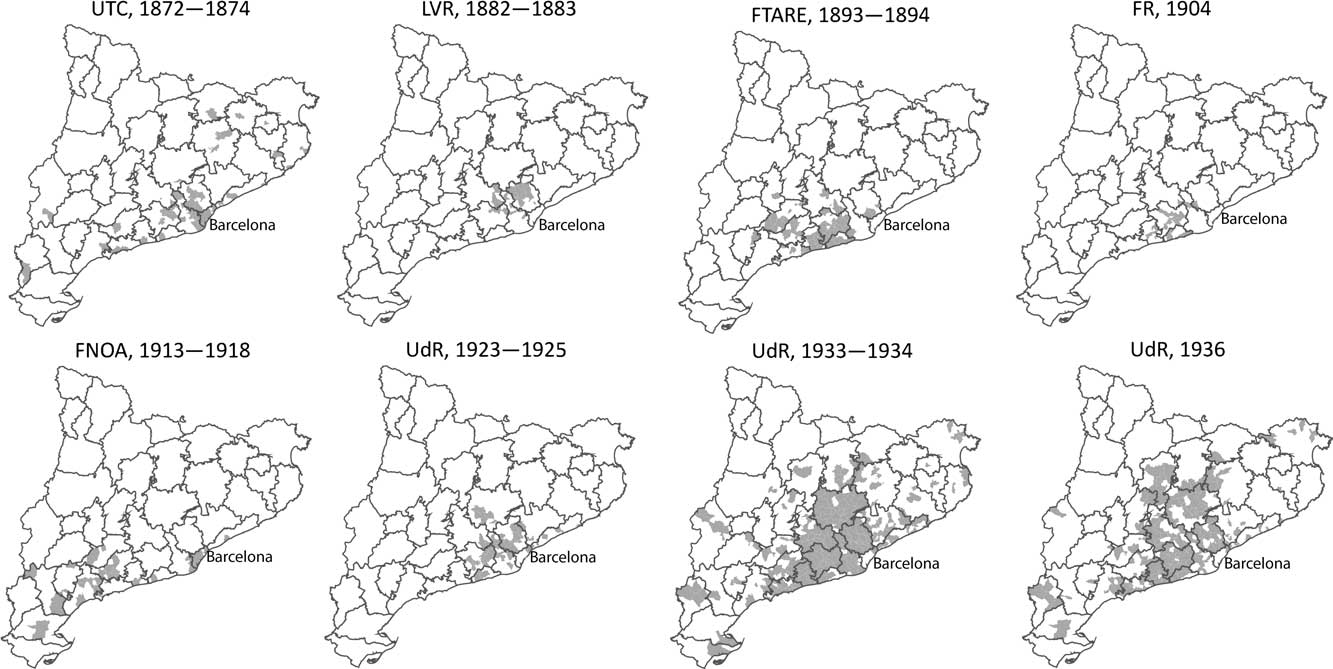
Pomés, La Unió de Rabassaires, pp. 277-278, 540-546; Puig, Què és la Unió de Rabassaires, pp. 81-85; La Publicidad, 15 August 1904; La Rambla, 30 April 1934; La Terra, 1 June 1936 and 1 July 1936.



