1. Introduction
The history of plastics began in the year 1907 with the invention of Bakelite, the first synthetic plastic, a product that would potentially impact on our lifestyles (Williams and Rangel-Buitrago, Reference Williams and Rangel-Buitrago2022). Since then, the industrial production of plastic has increased, as demonstrated by the production of 368 million tonnes per year globally, reached by 2019 (Bergmann et al., Reference Bergmann, Collard, Fabres, Gabrielsen, Provencher, Rochman, van Sebille and Tekman2022). It is predicted that by the year 2050, plastic production has the potential to reach 26,000 million metric tonnes (Zhu et al., Reference Zhu, Rochman, Hardesty and Wilcox2023). Characterised by its light weight, durability and malleability among other traits, plastics are useful products for the packaging industry, in shopping, clothing materials, in medicine, and artworks among other uses (Zhang et al., Reference Zhang, Duan, Bokka, He and Ni2022; Zhang et al., Reference Zhang, Yu and Cheng2022).
Although plastics have played useful roles in society, their entry into the environment has been a source of concern since the early 1970s (Napper and Thompson, Reference Napper and Thompson2020; Diggle and Walker, Reference Diggle and Walker2022). Plastic waste has been an ongoing environmental issue as detailed by Asamoah et al. (Reference Asamoah, Adom, Kquofi and Nyadu-Addo2022) and Diggle and Walker (Reference Diggle and Walker2022). Annually, up to 23 million metric tonnes of plastic waste from land-based sources enter the aquatic environment. The 2050 plastic production has the potential to generate 13,000 million metric tonnes of waste (Zhu et al., Reference Zhu, Rochman, Hardesty and Wilcox2023).
Plastics enter the environment through indiscriminate disposal of plastics, inadequate waste management infrastructure and lack of adequate environmental policies (Napper and Thompson, Reference Napper and Thompson2020; Diggle and Walker, Reference Diggle and Walker2022). Land-based sources of plastic pollution account for over 80% of plastics in the aquatic environment (Kosior and Crescenzi, Reference Kosior and Crescenzi2020; Ritchie, Reference Ritchie2021). In the aquatic environment, plastics pollution is caused by many factors including ghost fishing, aquaculture practices, indiscriminate plastic waste disposal and population growth (Napper and Thompson, Reference Napper and Thompson2020; Skirtun et al., Reference Skirtun, Sandra, Strietman, van den Burg, De Raedemaecker and Devriese2022).
The negative impact of plastic pollution on the environment is well documented (Napper and Thompson, Reference Napper and Thompson2020; Bergmann et al., Reference Bergmann, Collard, Fabres, Gabrielsen, Provencher, Rochman, van Sebille and Tekman2022). Plastics have been reported to transport pathogens and invasive species in the aquatic environment (García-Gómez et al., Reference García-Gómez, Garrigós and Garrigós2021; Asamoah et al., Reference Asamoah, Adom, Kquofi and Nyadu-Addo2022; Veerasingam et al., Reference Veerasingam, Anbumani, Bagaev and Vethamony2022). Studies show that plastics affect biota, with short to long-term consequences, including internal injury, blockage of digestive tract, starvation and mortality (Bergmann et al., Reference Bergmann, Collard, Fabres, Gabrielsen, Provencher, Rochman, van Sebille and Tekman2022; Skirtun et al., Reference Skirtun, Sandra, Strietman, van den Burg, De Raedemaecker and Devriese2022).
Chemical additives commonly associated with plastics, including plasticisers, colouring agents, thermal and light stabilisers, have been detected in living organisms, even in remote regions like the Arctic (Napper and Thompson, Reference Napper and Thompson2020; Bergmann et al., Reference Bergmann, Collard, Fabres, Gabrielsen, Provencher, Rochman, van Sebille and Tekman2022). Plastics can absorb chemicals such as polycyclic aromatic hydrocarbon, from the aquatic environment, in addition, additives commonly associated with plastic production, including endocrine disruptors like UV stabilisers, also have the potential to leach out, with consequences for living organisms, including biomagnification in the food chain (La Daana et al., Reference La Daana, Asmath and Gobin2022; Skirtun et al., Reference Skirtun, Sandra, Strietman, van den Burg, De Raedemaecker and Devriese2022). The chemical impact however is an area of research that is at its infancy (Napper and Thompson, Reference Napper and Thompson2020; Bergmann et al., Reference Bergmann, Collard, Fabres, Gabrielsen, Provencher, Rochman, van Sebille and Tekman2022). The read-across hazards of the chemical additives suggest a potential to leach out of the plastics with negative consequences to the living organisms in the environment and human beings (Napper and Thompson, Reference Napper and Thompson2020; Bergmann et al., Reference Bergmann, Collard, Fabres, Gabrielsen, Provencher, Rochman, van Sebille and Tekman2022; Skirtun et al., Reference Skirtun, Sandra, Strietman, van den Burg, De Raedemaecker and Devriese2022). However, research of chemical additives on the impact on living organisms is limited and at best fragmented (Bergmann et al., Reference Bergmann, Collard, Fabres, Gabrielsen, Provencher, Rochman, van Sebille and Tekman2022; Skirtun et al., Reference Skirtun, Sandra, Strietman, van den Burg, De Raedemaecker and Devriese2022).
To address plastic pollution, governmental policies, international projects, advocacy and recycling have been suggested and implemented, with varying degrees of impact (Bergmann et al., Reference Bergmann, Collard, Fabres, Gabrielsen, Provencher, Rochman, van Sebille and Tekman2022; Skirtun et al., Reference Skirtun, Sandra, Strietman, van den Burg, De Raedemaecker and Devriese2022). Environmental education and advocacy through social engagement have been suggested as methods to mitigate the impact of plastic pollution (Ladaana et al., 2022; Skirtun et al., Reference Skirtun, Sandra, Strietman, van den Burg, De Raedemaecker and Devriese2022). One such method is upcycling of discarded plastics in artwork installations, to engage with and educate the public (Asamoah et al., Reference Asamoah, Adom, Kquofi and Nyadu-Addo2022). Asamoah et al.’s study revealed participants recognised plastic impacts on their environment because of its wide use across sectors in Ghana (Asamoah et al., Reference Asamoah, Adom, Kquofi and Nyadu-Addo2022). The study reported 4,000 plastic bottles from cosmetic and beverage packaging were gathered at a local open waste site. In addition, 2000 empty water sachets, common in Ghana, were gathered there (Asamoah et al., Reference Asamoah, Adom, Kquofi and Nyadu-Addo2022). Once this waste was cleaned, the plastics were cut into multiple dimensions, ready for the artwork project. Participants found the artworks from plastic waste educational, requested more of such community events and was a creative avenue to reuse plastic waste, reducing the environmental impact (Asamoah et al., Reference Asamoah, Adom, Kquofi and Nyadu-Addo2022).
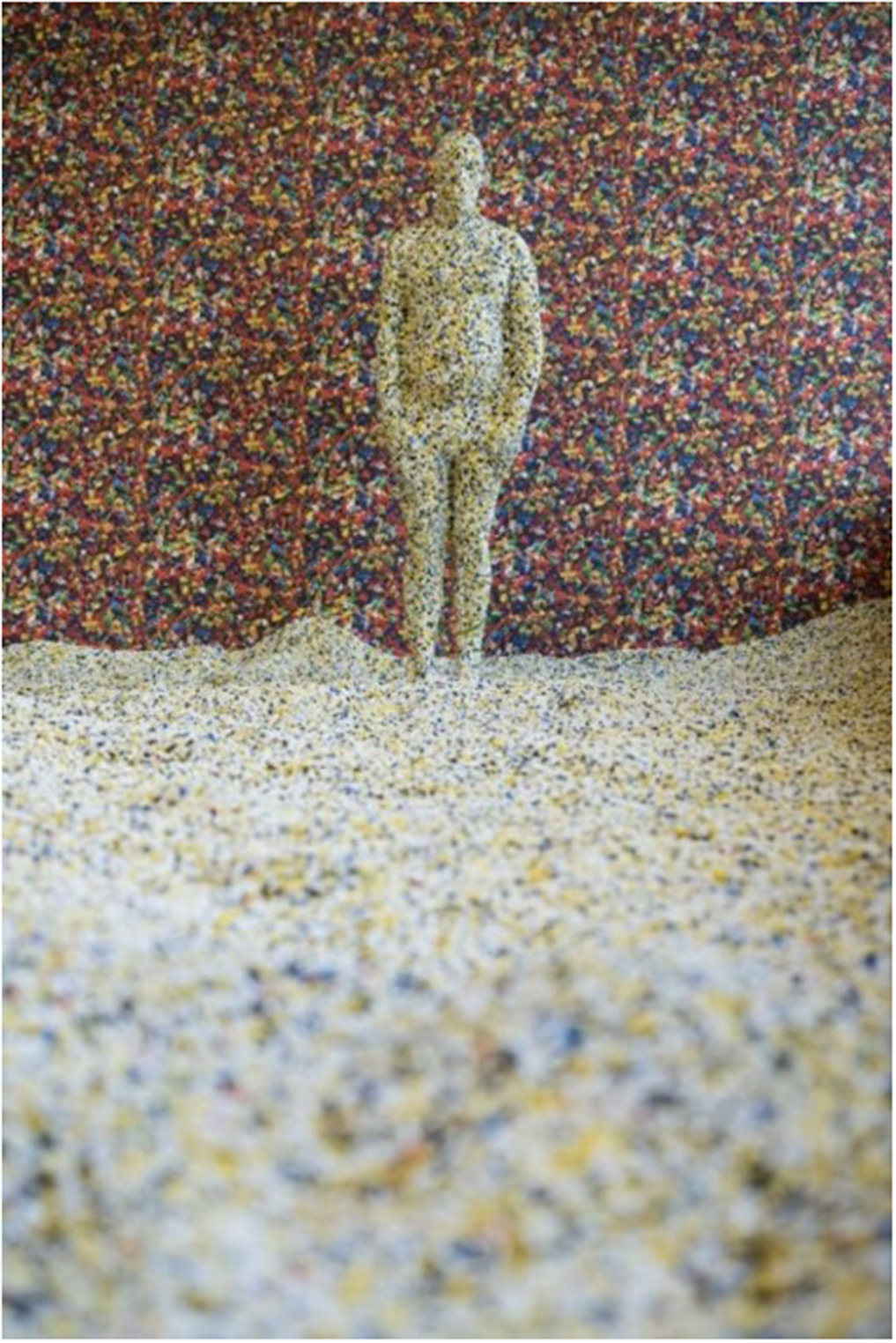
The art installation “Regulated Exhibition - The Plastic Human”, held at BACKLIT gallery (Figure 1) brought the artworld and environmental advocacy together, to inspire discussions on the narrative of plastic pollution. The exhibition was a collaboration between BACKLIT gallery, the Environment Agency (EA) and artist Joshua Sofaer.
Figure 1.
Plastic human in the gallery.
Regulated Exhibition Art Collaboration
Regulated Industry Officers play a critical frontline role in preventing waste plastic entering the environment by inspecting and auditing permitted sites. They work closely with businesses helping them comply with environmental regulations, at times enforcing the law, investigating environmental offences and illegal waste sites and ensuring operators improve performance.
Engaging communities and raising awareness about how the EA protects the environment can be challenging. Traditional ways of engaging including leafleting, signposting to websites, tweets and campaigns including articles in journals or magazines often have limited success. Although some messaging could be targeted to a specific group or location it is difficult to assess whether the messages have been acted upon. Engagement felt one-directional, flat, passive and crucially had no legacy.
The collaboration with BACKLIT and Joshua Sofaer provided a fresh perspective on how we could engage in an innovative way, not possible without their expertise. The collaboration enabled the public to see the human side of the Agency, gain an insight into the regulatory process and the impact of plastic on the environment. The “Plastic Human” was a culmination of the project and represented the amount of plastic thrown away annually in the UK and highlighted further work we could do as individuals or communities to eliminate, reduce or reuse plastics in a more sustainable manner. The plastic human effectively prompted discussions by allowing members of the public, to explore ideas and thoughts in an open and non-judgemental way.
“Regulated Exhibition” saw BACKLIT gallery transformed into a “factory” where members of the public were asked to drop off plastics into the Depot. The waste plastic was sorted by Science Communicators into different waste types. Throughout the exhibition, the EA regulated the factory making the process of regulation visible to the public. Various events were held throughout the 3-month exhibition, culminating in the manufacturing of the plastic human from waste plastics.
Discussion
This article details the outcome of the plastic art exhibition and its impact on creating awareness on plastic pollution, to test the hypothesis:
Upcycling of plastics for artwork exhibitions can positively impact the public on environmental education of plastic pollution.
Ideas generation and focused discussion established that art could be a perfect vehicle to proactively engage with local communities. The project attempted to address previous issues experienced with community engagement.
To bring the project to life in a 3D environment the whole gallery was turned into a factory that the audience could explore and interact with. The exhibition was free, open to all and was accessible to a diverse range of people across the city. The exhibition received ~2000 visitors.
The exhibition was interactive and enabled the audience to feedback on their experiences and become fully involved in the activities in the factory.
One of our aims was to make regulation more transparent, ensuring visibility of the EA’s work to protect the environment. This was achieved through performative regulation where post-it notes were placed on the exhibition walls showing the conversation between the regulator and the regulated; in this case BACKLIT gallery. Performative regulation provided a glimpse into the unseen world of regulation for the audience (Figures 2 and 3).
Figure 2.
Performative regulation.
Figure 3.
Performative regulation.
The film “A day in the life of a Regulated Industry Officer” created by Joshua Sofaer, was shown during the exhibition (Figure 4). Joshua spent the day filming an EA officer, capturing the officer’s working day and their passion for wildlife and the environment through their voluntary work with local environment groups. Visitors reported this “provided an unique perspective to environmental regulation by highlighting its intricacies through the officer’s interests”.
Figure 4.
Visitors watching: A day in the life of a Regulated Industry Officer.
Previous engagements felt one-dimensional and passive, so Joshua provided opportunities for the audience to engage with the messaging through their senses:
Sound and smell
An EA officer narrated a story written by Joshua, which was played throughout the exhibition. It revolved around their loss of smell and how this impacted their job and homelife. The exhibition took place during the pandemic when one of the symptoms of COVID was the loss of smell, which many visitors had direct experience of. Conversely the story emphasised the impact foul odours can have on communities and that these odours can be generated from plastic recycling. This generated discussion around controls in environmental permits designed to mitigate against this impact especially at waste sites and people centred actions when disposing of their plastic wastes, such as cleaning it.
Touch
Visitors to the gallery weighed themselves on scales to determine their worth as a commodity of plastic. This generated questions about plastics’ commercial use and their global transportation. It was noted that some plastics are a more valuable resource than others which affects where it would eventually end up; some unfortunately ending up in the oceans.
Chipped waste plastic was spread on the floor, fascinating many children who interacted with it as if it was brightly coloured sand. Plastics deposited into the factory by the public were sorted by type. Visitors were provided with information sheets to help with identification and several conversations revealed limited knowledge of symbols associated with plastic. Participants were surprised at the limited number that could be recycled.
See
Plastic was in every space in the factory, demonstrating its ubiquity in our world. Brightly coloured plastic pellets covered the floor and wall coverings. It was interesting to see how the school children interacted with it, almost as a benign play object. This highlighted the many positive uses for plastics and how we often undermine its potential to pollute and damage the environment if not managed properly.
To overcome previous shortcomings in engaging local communities, we actively sought opportunities to collaborate with community groups near BACKLIT gallery. We utilised the EA’s Environmental Leave Days to conduct litter picks with STOPTRA, a local outreach group, as well as local councillors and Police Community Support Officers (Figure 5). Spending time with the local community allowed rich conversations about what our regulatory job entails and best practice for recycling household waste. Meeting communities in person allowed instant responses to questions, developing rapport. Although the exhibition ended in 2021, EA officers still participate in local community litter picks, building trust with the community by highlighting our commitment. Thus, contrastingly to one-dimensional campaigns, creative engagement ensured the community gained a sound understanding of plastic pollution.
Figure 5.
Litter collected.
Regulatory officers developed lesson plans for local primary schools, educating them on environmental issues associated with plastic. These took place in the exhibition space and included interactive and arts-based elements, filmed by BBC News (Figure 6). Combining these elements allowed the session to be memorable for the students. To enhance their understanding, the EA’s STEM ambassadors re-visited the school a year later. This session highlighted how plastic items could be re-used to create artwork and had activities based on EA’s regulatory work. Session feedback evidenced the student’s improved knowledge of plastic pollution. Conducting face-to-face sessions allowed for instant feedback tailored to the audience, cementing awareness of what the EA does. Previous communications reached a limited demographic whereas this arts-based collaboration’s media coverage included the local BBC radio and news. Articles were published in local publications such as Leftlion, and BACKLIT’s online media publications interacted with 712,000 members of the public, extending the reach beyond what the EA had previously achieved. The publications included striking images of the exhibition’s artwork, catching the audience’s attention, encouraging them to read the article. The artwork in the publications contrasted with previous engagement campaigns. Many visitors were unaware of the EA, reflecting how this creative engagement method connected with different demographics, compared to previous campaigns. Using a variety of media outlets overcame previous hurdles enabling the EA to diversify the demographic it interacted with.
Figure 6.
Interview with BBC.
An unexpected positive outcome is the collaboration’s legacy. We supported BACKLIT in establishing Art NEST, a local eco-group connecting arts venues in Nottingham. Art NEST’s current focus is sharing and re-using resources. We supported BACKLIT with their carbon audits and advised on the importance of behavioural change in becoming a more sustainable organisation. This legacy enabled messages catalysed during the exhibition to develop and connected the EA to other local businesses. Such connections led the EA to attend a local Green Festival which 10,000 members of the community attended. Establishing links with local arts-based community groups has provided endless benefits by creating opportunities for engagement.
The legacy includes establishing a home for the “Plastic Human”. This finale captured the community’s attention while being live streamed on BACKLIT’s Instagram (Figure 7). The sculpture connected visitors to the amount of plastic they throw away as the weight of the person sculpted was 98.66 kg; the amount of plastic thrown away per person annually in the UK (Law et al., Reference Law, Starr, Siegler, Jambeck, Mallos and Leonard2020). To ensure the sculpture continues to have an impact it has been permanently installed at Nottingham Trent University (Figure 8). The colourful sculpture stands in stark contrast against the backdrop of the University buildings, capturing the attention of passers-by and encouraging them to read the plaque and find out about the Agency and the collaborative project. Utilising arts as a mechanism for communication increased the volume of interactions and the number of the local community we educated on environmental issues.
Figure 7.
Plastic human at BACKLIT gallery.
Figure 8.
Legacy – Plastic human at Nottingham Trent University.
Conclusion
The “Plastic Human” gave an insight into the burden of plastic pollution in our environment today. The physical impact of plastic pollution is demonstrated in living organisms including human beings. It can be argued that the willingness and drive to address the incidence of plastic pollution causes a philosophical and or ethical burden on humans. The measurement of this impact, although qualitative, has the potential to impact on our daily lives.
There is an uncertainty over the impact of additives, some of which include bisphenol A and brominated flame retardants that are both endocrine disruptors (Da Costa et al., Reference Da Costa, Avellan, Mouneyrac, Duarte and Rocha-Santos2023), in plastics and the upcycling of such plastics in artworks. However, artwork exhibitions using plastics have been an important avenue for environmental education, engagement with the public and advocacy on plastic pollution. This is made evident by plastic artwork exhibits organised in Ghana and London, among others (Asamoah et al., Reference Asamoah, Adom, Kquofi and Nyadu-Addo2022; Kadhim and Al Mamouri, Reference Kadhim and Al Mamouri2022).
Overall, there are multiple reasons as to why the collaborative arts-based project effectively educated the community on plastic pollution and the EA’s work. Centrally, the heart of the project provided a platform for establishing related forms of engagement, such as the litter picks. Without the creative centrepiece, other elements would not have performed at the high level they did. Other core elements that stand out are the multiple channels for community engagement, interactive forms of communication and the impactful legacy. One high-school student reported that the interactive and creative presentation of this environmental issue “made me think about what do with our plastic waste so I got involved with a school eco-club and organised Scout community litter picks”. This reflects how the creative partnership was key to the exhibition’s success.
Firstly, the multiple channels of engagement educated larger sectors of the community than achieved with past communication methods. Utilising different channels allowed the audience to gain immediate feedback on the EA’s work. This is highlighted in feedback from those that visited the gallery. Secondly, arts also allowed the messages to be impactful making the topic relatable and easy to understand. This contrasts ways in which environmental issues are shared across the media, often including methods that make the issues appear too big for an individual to act upon. The exhibition encompassed multiple sensory features and interactive elements, deepening the interaction and increasing their understanding of changes they could implement themselves to reduce the impact of plastic. This is a significant achievement as is why the EA started engagement work, even before this project collaboration.
The third element core to the success is the exhibition’s legacy. This is divided into the Eco Arts group and the “Plastic Human”. Both are fundamental to the success as they continually act as a vehicle to communicate and engage with.
We will continue to be creative in our methods of community engagement regarding environmental issues as the impact is outstanding. We have shared the success of this project nationally and were a runner-up to the national “One Team” EA award where the EA’s Chair and Chief Executive live streamed to the whole Agency an overview of the project successes. We are currently in conversation with BACKLIT about another project where we will continue to improve on the learning this project provided.




 Open access


Impact statement
The project enabled us to tap into the creative sector’s unique way of approaching engagement work with local communities. It provided a different perspective on how we could communicate complex environmental messages in a more accessible manner to our local communities. This was achieved through the power of partnership working which created a unique vehicle in which to share those messages. Key elements of this partnership that allowed it to be successful include; immersive and interactive activities enabling visitors to participate directly with the art installations and offering visitors the opportunity to experience the installation through multiple senses including; sight, sound, touch and smell. Presenting the messages in a variety of ways allowed all visitors to connect to the issue. Understanding the framework of this project’s success will enable other areas within the Environment Agency to replicate this method when wanting to communicate complex messages to their local communities. Therefore, this framework becomes invaluable as it highlights the importance of not relying on standard methods of communication which could exclude certain members of the community but to incorporate more innovative ways of connecting.
1. Introduction
The history of plastics began in the year 1907 with the invention of Bakelite, the first synthetic plastic, a product that would potentially impact on our lifestyles (Williams and Rangel-Buitrago, Reference Williams and Rangel-Buitrago2022). Since then, the industrial production of plastic has increased, as demonstrated by the production of 368 million tonnes per year globally, reached by 2019 (Bergmann et al., Reference Bergmann, Collard, Fabres, Gabrielsen, Provencher, Rochman, van Sebille and Tekman2022). It is predicted that by the year 2050, plastic production has the potential to reach 26,000 million metric tonnes (Zhu et al., Reference Zhu, Rochman, Hardesty and Wilcox2023). Characterised by its light weight, durability and malleability among other traits, plastics are useful products for the packaging industry, in shopping, clothing materials, in medicine, and artworks among other uses (Zhang et al., Reference Zhang, Duan, Bokka, He and Ni2022; Zhang et al., Reference Zhang, Yu and Cheng2022).
Although plastics have played useful roles in society, their entry into the environment has been a source of concern since the early 1970s (Napper and Thompson, Reference Napper and Thompson2020; Diggle and Walker, Reference Diggle and Walker2022). Plastic waste has been an ongoing environmental issue as detailed by Asamoah et al. (Reference Asamoah, Adom, Kquofi and Nyadu-Addo2022) and Diggle and Walker (Reference Diggle and Walker2022). Annually, up to 23 million metric tonnes of plastic waste from land-based sources enter the aquatic environment. The 2050 plastic production has the potential to generate 13,000 million metric tonnes of waste (Zhu et al., Reference Zhu, Rochman, Hardesty and Wilcox2023).
Plastics enter the environment through indiscriminate disposal of plastics, inadequate waste management infrastructure and lack of adequate environmental policies (Napper and Thompson, Reference Napper and Thompson2020; Diggle and Walker, Reference Diggle and Walker2022). Land-based sources of plastic pollution account for over 80% of plastics in the aquatic environment (Kosior and Crescenzi, Reference Kosior and Crescenzi2020; Ritchie, Reference Ritchie2021). In the aquatic environment, plastics pollution is caused by many factors including ghost fishing, aquaculture practices, indiscriminate plastic waste disposal and population growth (Napper and Thompson, Reference Napper and Thompson2020; Skirtun et al., Reference Skirtun, Sandra, Strietman, van den Burg, De Raedemaecker and Devriese2022).
The negative impact of plastic pollution on the environment is well documented (Napper and Thompson, Reference Napper and Thompson2020; Bergmann et al., Reference Bergmann, Collard, Fabres, Gabrielsen, Provencher, Rochman, van Sebille and Tekman2022). Plastics have been reported to transport pathogens and invasive species in the aquatic environment (García-Gómez et al., Reference García-Gómez, Garrigós and Garrigós2021; Asamoah et al., Reference Asamoah, Adom, Kquofi and Nyadu-Addo2022; Veerasingam et al., Reference Veerasingam, Anbumani, Bagaev and Vethamony2022). Studies show that plastics affect biota, with short to long-term consequences, including internal injury, blockage of digestive tract, starvation and mortality (Bergmann et al., Reference Bergmann, Collard, Fabres, Gabrielsen, Provencher, Rochman, van Sebille and Tekman2022; Skirtun et al., Reference Skirtun, Sandra, Strietman, van den Burg, De Raedemaecker and Devriese2022).
Chemical additives commonly associated with plastics, including plasticisers, colouring agents, thermal and light stabilisers, have been detected in living organisms, even in remote regions like the Arctic (Napper and Thompson, Reference Napper and Thompson2020; Bergmann et al., Reference Bergmann, Collard, Fabres, Gabrielsen, Provencher, Rochman, van Sebille and Tekman2022). Plastics can absorb chemicals such as polycyclic aromatic hydrocarbon, from the aquatic environment, in addition, additives commonly associated with plastic production, including endocrine disruptors like UV stabilisers, also have the potential to leach out, with consequences for living organisms, including biomagnification in the food chain (La Daana et al., Reference La Daana, Asmath and Gobin2022; Skirtun et al., Reference Skirtun, Sandra, Strietman, van den Burg, De Raedemaecker and Devriese2022). The chemical impact however is an area of research that is at its infancy (Napper and Thompson, Reference Napper and Thompson2020; Bergmann et al., Reference Bergmann, Collard, Fabres, Gabrielsen, Provencher, Rochman, van Sebille and Tekman2022). The read-across hazards of the chemical additives suggest a potential to leach out of the plastics with negative consequences to the living organisms in the environment and human beings (Napper and Thompson, Reference Napper and Thompson2020; Bergmann et al., Reference Bergmann, Collard, Fabres, Gabrielsen, Provencher, Rochman, van Sebille and Tekman2022; Skirtun et al., Reference Skirtun, Sandra, Strietman, van den Burg, De Raedemaecker and Devriese2022). However, research of chemical additives on the impact on living organisms is limited and at best fragmented (Bergmann et al., Reference Bergmann, Collard, Fabres, Gabrielsen, Provencher, Rochman, van Sebille and Tekman2022; Skirtun et al., Reference Skirtun, Sandra, Strietman, van den Burg, De Raedemaecker and Devriese2022).
To address plastic pollution, governmental policies, international projects, advocacy and recycling have been suggested and implemented, with varying degrees of impact (Bergmann et al., Reference Bergmann, Collard, Fabres, Gabrielsen, Provencher, Rochman, van Sebille and Tekman2022; Skirtun et al., Reference Skirtun, Sandra, Strietman, van den Burg, De Raedemaecker and Devriese2022). Environmental education and advocacy through social engagement have been suggested as methods to mitigate the impact of plastic pollution (Ladaana et al., 2022; Skirtun et al., Reference Skirtun, Sandra, Strietman, van den Burg, De Raedemaecker and Devriese2022). One such method is upcycling of discarded plastics in artwork installations, to engage with and educate the public (Asamoah et al., Reference Asamoah, Adom, Kquofi and Nyadu-Addo2022). Asamoah et al.’s study revealed participants recognised plastic impacts on their environment because of its wide use across sectors in Ghana (Asamoah et al., Reference Asamoah, Adom, Kquofi and Nyadu-Addo2022). The study reported 4,000 plastic bottles from cosmetic and beverage packaging were gathered at a local open waste site. In addition, 2000 empty water sachets, common in Ghana, were gathered there (Asamoah et al., Reference Asamoah, Adom, Kquofi and Nyadu-Addo2022). Once this waste was cleaned, the plastics were cut into multiple dimensions, ready for the artwork project. Participants found the artworks from plastic waste educational, requested more of such community events and was a creative avenue to reuse plastic waste, reducing the environmental impact (Asamoah et al., Reference Asamoah, Adom, Kquofi and Nyadu-Addo2022).
The art installation “Regulated Exhibition - The Plastic Human”, held at BACKLIT gallery (Figure 1) brought the artworld and environmental advocacy together, to inspire discussions on the narrative of plastic pollution. The exhibition was a collaboration between BACKLIT gallery, the Environment Agency (EA) and artist Joshua Sofaer.
Plastic human in the gallery.
Regulated Exhibition Art Collaboration
Regulated Industry Officers play a critical frontline role in preventing waste plastic entering the environment by inspecting and auditing permitted sites. They work closely with businesses helping them comply with environmental regulations, at times enforcing the law, investigating environmental offences and illegal waste sites and ensuring operators improve performance.
Engaging communities and raising awareness about how the EA protects the environment can be challenging. Traditional ways of engaging including leafleting, signposting to websites, tweets and campaigns including articles in journals or magazines often have limited success. Although some messaging could be targeted to a specific group or location it is difficult to assess whether the messages have been acted upon. Engagement felt one-directional, flat, passive and crucially had no legacy.
The collaboration with BACKLIT and Joshua Sofaer provided a fresh perspective on how we could engage in an innovative way, not possible without their expertise. The collaboration enabled the public to see the human side of the Agency, gain an insight into the regulatory process and the impact of plastic on the environment. The “Plastic Human” was a culmination of the project and represented the amount of plastic thrown away annually in the UK and highlighted further work we could do as individuals or communities to eliminate, reduce or reuse plastics in a more sustainable manner. The plastic human effectively prompted discussions by allowing members of the public, to explore ideas and thoughts in an open and non-judgemental way.
“Regulated Exhibition” saw BACKLIT gallery transformed into a “factory” where members of the public were asked to drop off plastics into the Depot. The waste plastic was sorted by Science Communicators into different waste types. Throughout the exhibition, the EA regulated the factory making the process of regulation visible to the public. Various events were held throughout the 3-month exhibition, culminating in the manufacturing of the plastic human from waste plastics.
Discussion
This article details the outcome of the plastic art exhibition and its impact on creating awareness on plastic pollution, to test the hypothesis:
Upcycling of plastics for artwork exhibitions can positively impact the public on environmental education of plastic pollution.
Ideas generation and focused discussion established that art could be a perfect vehicle to proactively engage with local communities. The project attempted to address previous issues experienced with community engagement.
To bring the project to life in a 3D environment the whole gallery was turned into a factory that the audience could explore and interact with. The exhibition was free, open to all and was accessible to a diverse range of people across the city. The exhibition received ~2000 visitors.
The exhibition was interactive and enabled the audience to feedback on their experiences and become fully involved in the activities in the factory.
One of our aims was to make regulation more transparent, ensuring visibility of the EA’s work to protect the environment. This was achieved through performative regulation where post-it notes were placed on the exhibition walls showing the conversation between the regulator and the regulated; in this case BACKLIT gallery. Performative regulation provided a glimpse into the unseen world of regulation for the audience (Figures 2 and 3).
Performative regulation.
Performative regulation.
The film “A day in the life of a Regulated Industry Officer” created by Joshua Sofaer, was shown during the exhibition (Figure 4). Joshua spent the day filming an EA officer, capturing the officer’s working day and their passion for wildlife and the environment through their voluntary work with local environment groups. Visitors reported this “provided an unique perspective to environmental regulation by highlighting its intricacies through the officer’s interests”.
Visitors watching: A day in the life of a Regulated Industry Officer.
Previous engagements felt one-dimensional and passive, so Joshua provided opportunities for the audience to engage with the messaging through their senses:
Sound and smell
An EA officer narrated a story written by Joshua, which was played throughout the exhibition. It revolved around their loss of smell and how this impacted their job and homelife. The exhibition took place during the pandemic when one of the symptoms of COVID was the loss of smell, which many visitors had direct experience of. Conversely the story emphasised the impact foul odours can have on communities and that these odours can be generated from plastic recycling. This generated discussion around controls in environmental permits designed to mitigate against this impact especially at waste sites and people centred actions when disposing of their plastic wastes, such as cleaning it.
Touch
Visitors to the gallery weighed themselves on scales to determine their worth as a commodity of plastic. This generated questions about plastics’ commercial use and their global transportation. It was noted that some plastics are a more valuable resource than others which affects where it would eventually end up; some unfortunately ending up in the oceans.
Chipped waste plastic was spread on the floor, fascinating many children who interacted with it as if it was brightly coloured sand. Plastics deposited into the factory by the public were sorted by type. Visitors were provided with information sheets to help with identification and several conversations revealed limited knowledge of symbols associated with plastic. Participants were surprised at the limited number that could be recycled.
See
Plastic was in every space in the factory, demonstrating its ubiquity in our world. Brightly coloured plastic pellets covered the floor and wall coverings. It was interesting to see how the school children interacted with it, almost as a benign play object. This highlighted the many positive uses for plastics and how we often undermine its potential to pollute and damage the environment if not managed properly.
To overcome previous shortcomings in engaging local communities, we actively sought opportunities to collaborate with community groups near BACKLIT gallery. We utilised the EA’s Environmental Leave Days to conduct litter picks with STOPTRA, a local outreach group, as well as local councillors and Police Community Support Officers (Figure 5). Spending time with the local community allowed rich conversations about what our regulatory job entails and best practice for recycling household waste. Meeting communities in person allowed instant responses to questions, developing rapport. Although the exhibition ended in 2021, EA officers still participate in local community litter picks, building trust with the community by highlighting our commitment. Thus, contrastingly to one-dimensional campaigns, creative engagement ensured the community gained a sound understanding of plastic pollution.
Litter collected.
Regulatory officers developed lesson plans for local primary schools, educating them on environmental issues associated with plastic. These took place in the exhibition space and included interactive and arts-based elements, filmed by BBC News (Figure 6). Combining these elements allowed the session to be memorable for the students. To enhance their understanding, the EA’s STEM ambassadors re-visited the school a year later. This session highlighted how plastic items could be re-used to create artwork and had activities based on EA’s regulatory work. Session feedback evidenced the student’s improved knowledge of plastic pollution. Conducting face-to-face sessions allowed for instant feedback tailored to the audience, cementing awareness of what the EA does. Previous communications reached a limited demographic whereas this arts-based collaboration’s media coverage included the local BBC radio and news. Articles were published in local publications such as Leftlion, and BACKLIT’s online media publications interacted with 712,000 members of the public, extending the reach beyond what the EA had previously achieved. The publications included striking images of the exhibition’s artwork, catching the audience’s attention, encouraging them to read the article. The artwork in the publications contrasted with previous engagement campaigns. Many visitors were unaware of the EA, reflecting how this creative engagement method connected with different demographics, compared to previous campaigns. Using a variety of media outlets overcame previous hurdles enabling the EA to diversify the demographic it interacted with.
Interview with BBC.
An unexpected positive outcome is the collaboration’s legacy. We supported BACKLIT in establishing Art NEST, a local eco-group connecting arts venues in Nottingham. Art NEST’s current focus is sharing and re-using resources. We supported BACKLIT with their carbon audits and advised on the importance of behavioural change in becoming a more sustainable organisation. This legacy enabled messages catalysed during the exhibition to develop and connected the EA to other local businesses. Such connections led the EA to attend a local Green Festival which 10,000 members of the community attended. Establishing links with local arts-based community groups has provided endless benefits by creating opportunities for engagement.
The legacy includes establishing a home for the “Plastic Human”. This finale captured the community’s attention while being live streamed on BACKLIT’s Instagram (Figure 7). The sculpture connected visitors to the amount of plastic they throw away as the weight of the person sculpted was 98.66 kg; the amount of plastic thrown away per person annually in the UK (Law et al., Reference Law, Starr, Siegler, Jambeck, Mallos and Leonard2020). To ensure the sculpture continues to have an impact it has been permanently installed at Nottingham Trent University (Figure 8). The colourful sculpture stands in stark contrast against the backdrop of the University buildings, capturing the attention of passers-by and encouraging them to read the plaque and find out about the Agency and the collaborative project. Utilising arts as a mechanism for communication increased the volume of interactions and the number of the local community we educated on environmental issues.
Plastic human at BACKLIT gallery.
Legacy – Plastic human at Nottingham Trent University.
Challenges
Although the project has many successes, it has not been without its challenges. The biggest being the pandemic. This postponed and rescheduled elements of the exhibition which ultimately went ahead in October 2021, when some restrictions were still in place. Consequently, there was no opening launch or closing celebration and visitor numbers were restricted. We also had to accept that some people would feel uncomfortable going into spaces with other people. Providing assurance to visitors that covid measures were in place was important but social media provided a further avenue for visitors to virtually experience the exhibition.
Time was another challenge. The project started in 2018 so it was always going to be difficult to keep people motivated and moving forward, especially through the pandemic. However, having a clear purpose and determination to engage with our communities helped to keep us going.
Conclusion
The “Plastic Human” gave an insight into the burden of plastic pollution in our environment today. The physical impact of plastic pollution is demonstrated in living organisms including human beings. It can be argued that the willingness and drive to address the incidence of plastic pollution causes a philosophical and or ethical burden on humans. The measurement of this impact, although qualitative, has the potential to impact on our daily lives.
There is an uncertainty over the impact of additives, some of which include bisphenol A and brominated flame retardants that are both endocrine disruptors (Da Costa et al., Reference Da Costa, Avellan, Mouneyrac, Duarte and Rocha-Santos2023), in plastics and the upcycling of such plastics in artworks. However, artwork exhibitions using plastics have been an important avenue for environmental education, engagement with the public and advocacy on plastic pollution. This is made evident by plastic artwork exhibits organised in Ghana and London, among others (Asamoah et al., Reference Asamoah, Adom, Kquofi and Nyadu-Addo2022; Kadhim and Al Mamouri, Reference Kadhim and Al Mamouri2022).
Overall, there are multiple reasons as to why the collaborative arts-based project effectively educated the community on plastic pollution and the EA’s work. Centrally, the heart of the project provided a platform for establishing related forms of engagement, such as the litter picks. Without the creative centrepiece, other elements would not have performed at the high level they did. Other core elements that stand out are the multiple channels for community engagement, interactive forms of communication and the impactful legacy. One high-school student reported that the interactive and creative presentation of this environmental issue “made me think about what do with our plastic waste so I got involved with a school eco-club and organised Scout community litter picks”. This reflects how the creative partnership was key to the exhibition’s success.
Firstly, the multiple channels of engagement educated larger sectors of the community than achieved with past communication methods. Utilising different channels allowed the audience to gain immediate feedback on the EA’s work. This is highlighted in feedback from those that visited the gallery. Secondly, arts also allowed the messages to be impactful making the topic relatable and easy to understand. This contrasts ways in which environmental issues are shared across the media, often including methods that make the issues appear too big for an individual to act upon. The exhibition encompassed multiple sensory features and interactive elements, deepening the interaction and increasing their understanding of changes they could implement themselves to reduce the impact of plastic. This is a significant achievement as is why the EA started engagement work, even before this project collaboration.
The third element core to the success is the exhibition’s legacy. This is divided into the Eco Arts group and the “Plastic Human”. Both are fundamental to the success as they continually act as a vehicle to communicate and engage with.
We will continue to be creative in our methods of community engagement regarding environmental issues as the impact is outstanding. We have shared the success of this project nationally and were a runner-up to the national “One Team” EA award where the EA’s Chair and Chief Executive live streamed to the whole Agency an overview of the project successes. We are currently in conversation with BACKLIT about another project where we will continue to improve on the learning this project provided.
Open peer review
To view the open peer review materials for this article, please visit http://doi.org/10.1017/plc.2024.7.
Data availability statement
Data is not available to the public.
Acknowledgements
Thank you to BACKLIT gallery and Joshua Sofear for their enthusiasm and creative knowledge throughout and beyond the collaborative arts-based project.
Author contribution
H.P., K.R. and V.P. are colleagues at the Environment Agency. It is a national organisation and all three authors have links through their time spent working in Regulated Industry, albeit in different areas of the country. They are proud to share this case study that explains the positive impact of artistic parentships when engaging with local communities. They hope that other departments within the Environment Agency and wider public sector organisations use the learning demonstrated in this study.
Financial support
Arts Council National Lottery Project Grant ACPG-00413720. Sustainable Innovation Fund, Environment Agency.
Competing interest
The authors declare none.