




1. Introduction
In classroom settings, learners acquire essential knowledge, including new vocabulary, grammar, and sentence structure, and develop practical skills for their effective application outside the classroom. Real-world learning enables them to explore, discuss, and construct meaning in contexts relevant to their experiences, offering rich resources for enhanced learning opportunities (Hwang, Van Giap & Chin, Reference Hwang, Van Giap and Chin2024). To bridge the gap between classroom learning and real-world application, mobile technologies significantly enhance language learning, especially when applied beyond conventional classroom environments. Mobile-assisted language learning (MALL) leverages the flexibility and accessibility of mobile devices to facilitate learning anytime and anywhere, offering a dynamic supplement to traditional teaching methods (Elaish et al., Reference Elaish, Shuib, Hwang, Ghani, Yadegaridehkordi and Zainuddin2023; Kessler, Reference Kessler2023; Kukulska-Hulme, Reference Kukulska-Hulme, McCallum and Tafazoli2025). Furthermore, technology facilitates learners in creating and sharing their own content with peers, fostering inspiration, reflection, and continuous improvements (Zhang & Zou, Reference Zhang and Zou2022). With the integration of cutting-edge technologies (e.g. artificial intelligence [AI], virtual reality [VR], and augmented reality [AR]), MALL platforms, enhanced by automatic speech recognition, text-to-speech synthesis, machine translation, intelligent tutoring systems, etc., are transforming language education (Mingyan, Noordin & Razali, Reference Mingyan, Noordin and Razali2025; Zhang & Zhang, Reference Zhang and Zhang2025). These platforms foster interactive and socially rich language learning environments (Shadiev, Liu & Cheng, Reference Shadiev, Liu and Cheng2023a; Shadiev, Wang, Liu & Yang, Reference Shadiev, Wang, Liu and Yang2023b), offer personalized learning pathways (Mingyan et al., Reference Mingyan, Noordin and Razali2025), deliver targeted and timely automated feedback (Zou, Guan, Shao & Chen, Reference Zou, Guan, Shao and Chen2023), support process-oriented learning analytics and monitoring (Zhou, Hashim & Sulaiman, Reference Zhou, Hashim and Sulaiman2025), enable adaptive and individualized instruction (Zhang & Zhang, Reference Zhang and Zhang2025), facilitate real-time conversational practice (Zhou et al., Reference Zhou, Hashim and Sulaiman2025), and promote sustained learner engagement through gamified and context-aware experiences (Zhang & Zhang, Reference Zhang and Zhang2025). Given these advantages, MALL has garnered significant interest among scholars (Elaish et al., Reference Elaish, Shuib, Hwang, Ghani, Yadegaridehkordi and Zainuddin2023; Gumbheer, Khedo & Bungaleea, Reference Gumbheer, Khedo and Bungaleea2022; Kukulska-Hulme, Reference Kukulska-Hulme, McCallum and Tafazoli2025; Šramová, Reference Šramová2024).
In the context of learning outside the classroom, environments may be familiar or unfamiliar to learners (Shadiev, Hwang, Huang & Liu, Reference Shadiev, Hwang, Huang and Liu2018; Shadiev et al., Reference Shadiev, Wang, Liu and Yang2023b). Scholars suggest that familiarity with learning environments is beneficial for learning (Nazemi & Rezvani, Reference Nazemi and Rezvani2019; Othman & Vanathas, Reference Othman and Vanathas2005) because familiarity facilitates cognitive processes, including information processing and cognitive load management (Shadiev, Liu & Hwang, Reference Shadiev, Liu and Hwang2020a). For example, when learners enter a familiar learning environment, they do not need to familiarize themselves with the resources in their surroundings. This familiarity allows them to conserve cognitive effort that would otherwise be spent on processing new information about their context.
To the best of our knowledge, previous related studies have primarily concentrated on in-class learning environments (Davoudi & Ramezani, Reference Davoudi and Ramezani2014; Nazemi & Rezvani, Reference Nazemi and Rezvani2019; Othman & Vanathas, Reference Othman and Vanathas2005; Phung, Reference Phung2017; Qiu & Lo, Reference Qiu and Lo2017; Salimi & Fatollahnejad, Reference Salimi and Fatollahnejad2012), with limited exploration into the effects of familiarity with surrounding contexts outside of the classroom on language learning. Recognizing this gap, our study aims to extend the research boundaries by investigating whether the familiarity of the learning environment influences student performance in out-of-class settings. Specifically, we explore whether students perform better on writing tasks and tests in environments familiar to them compared to when they are in unfamiliar surroundings. This inquiry is rooted in the theoretical understanding that the context of learning can significantly impact the learning process itself, a concept underexplored in existing MALL literature.
2. Literature review
A growing body of research highlights the importance of context in shaping language learning experiences. In particular, the familiarity of learning environments has been linked to learners’ ability to process information effectively, engage emotionally, and apply linguistic knowledge in meaningful ways. This section reviews the theoretical and empirical foundations of familiarity in language learning, with particular attention to cultural schema theory, its implications for language acquisition, and its integration with MALL.
2.1. The cultural schema theory
The cultural schema theory provides a foundational framework for understanding how familiarity enhances the learning process. It posits that knowledge derived from our environment is organized into cultural schemata in the brain, which in turn foster familiarity with these environments and facilitate language learning (An, Reference An2013; Nishida, Reference Nishida1999). Background knowledge, a core component of understanding language, is brought by learners to their tasks, shaping their expectations and learning process (Nazemi & Rezvani, Reference Nazemi and Rezvani2019; Salimi & Fatollahnejad, Reference Salimi and Fatollahnejad2012). As Davoudi and Ramezani (Reference Davoudi and Ramezani2014) suggest, schema allows learners to connect new information to existing knowledge, aiding in the comprehension of new material since meaning is derived from this connection rather than from the information itself (Sheridan, Tanaka & Hogg, Reference Sheridan, Tanaka and Hogg2019). Language skills therefore depend on the interplay between linguistic knowledge and world knowledge (Othman & Vanathas, Reference Othman and Vanathas2005). When producing language, background knowledge facilitates this process by activating relevant schemata, making language production more efficient as contextual cues have been previously stored in the brain (An, Reference An2013; Nazemi & Rezvani, Reference Nazemi and Rezvani2019). Schema activation involves stimuli prompting learners to retrieve the appropriate schema from memory; for example, hearing about a bus might trigger a “trip from campus to downtown” schema.
In this study, we define a familiar environment as one that students previously visited and of which they possess background knowledge (Shadiev et al., 2023). This includes awareness of available learning resources, such as people, objects, situations, or scenarios, and their locations. Such environments not only serve as a source of inspiration (Piccardi et al., Reference Piccardi, Iaria, Bianchini, Zompanti and Guariglia2011) but also minimize cognitive load by eliminating the need to familiarize oneself with new surroundings or locate learning resources (Shadiev et al., Reference Shadiev, Liu and Hwang2020a). Familiar environments also allow learners to anticipate future events based on past experiences, directing their attention to more critical learning tasks (Turniansky & Tuval, Reference Turniansky, Tuval, Barak and Gidron2016). In these settings, learners are more engaged, able to connect daily experiences with their learning, thus making the learning process more meaningful (Hwang, Chen, Shadiev, Huang & Chen, Reference Hwang, Chen, Shadiev, Huang and Chen2014).
2.2. Familiarity and language learning
Language learning studies have examined the impact of familiarity on writing (Salimi & Fatollahnejad, Reference Salimi and Fatollahnejad2012), reading (Davoudi & Ramezani, Reference Davoudi and Ramezani2014; Sheridan et al., Reference Sheridan, Tanaka and Hogg2019), listening (Gilakjani & Ahmadi, Reference Gilakjani and Ahmadi2011; Othman & Vanathas, Reference Othman and Vanathas2005), speaking (Nazemi & Rezvani, Reference Nazemi and Rezvani2019; Qiu & Lo, Reference Qiu and Lo2017), and vocabulary retention (Sheridan et al., Reference Sheridan, Tanaka and Hogg2019).
For example, Salimi and Fatollahnejad (Reference Salimi and Fatollahnejad2012) explored the effect of topic familiarity on EFL writing performance by dividing participants into two groups: one writing about familiar topics and the other unfamiliar ones. Those writing on familiar topics demonstrated better fluency and accuracy compared to their counterparts. Similarly, Davoudi and Ramezani (Reference Davoudi and Ramezani2014) investigated how content familiarity influenced reading comprehension among EFL learners. They found that learners with prior knowledge of the reading material demonstrated greater comprehension than those without such knowledge.
In another study, Othman and Vanathas (Reference Othman and Vanathas2005) examined how topic familiarity affects listening comprehension. Participants were provided with background information during the lessons to familiarize them with the topics before testing. The results showed that those with familiar topics performed better in listening comprehension, largely because they could more easily identify key facts and navigate new vocabulary.
Nazemi and Rezvani (Reference Nazemi and Rezvani2019) further examined the effect of content familiarity on the oral performance of EFL learners. Their findings indicated that learners were more expressive, used a wider range of vocabulary, and elaborated more effectively when discussing familiar topics. When discussing unfamiliar topics, learners tended to self-correct more frequently, indicating that familiarity plays a crucial role in enhancing both fluency and confidence in oral performance.
Studies also indicated that familiarity with content can affect learners’ affective characteristics, such as interest and emotional engagement in learning tasks. Qiu and Lo (Reference Qiu and Lo2017) reported that learners were more emotionally engaged and had a more positive response to familiar topics. Similarly, Phung (Reference Phung2017) noted that topic familiarity not only increased emotional engagement but also influenced learners’ perceptions, making familiar topics seem simpler and more preferable.
The aforementioned studies suggest that familiarity significantly enhances performance in various language tasks. For instance, familiarity with topics improves writing fluency and accuracy, reading comprehension, and listening skills. Learners tend to be more expressive and engaged when discussing familiar content, which increases both their interest and emotional involvement in learning tasks. These findings emphasize the value of incorporating familiar content into language learning materials to boost performance and foster greater learner engagement. Building on this, the present study aims to explore the effects of (un)familiar environments on MALL outcomes and learner perceptions.
2.3. MALL
Integrating context, situation, and cognition is essential for effective and meaningful knowledge acquisition in language learning (Hwang et al., Reference Hwang, Van Giap and Chin2024; Liu, Hwang & Su, Reference Liu, Hwang and Su2024). Engaging students in authentic, real-world contexts enables them to apply knowledge in ways that mirror actual language use, thereby enhancing the relevance of the learning process. Herrington and Herrington (Reference Herrington, Herrington, Herrington and Herrington2006) highlight the advantages of such environments, noting that activities grounded in real-world relevance foster reflection, critical thinking, and authentic assessment. These characteristics encourage learners to engage more deeply with the material, resulting in a richer and more meaningful learning experience.
Mobile learning technology has been instrumental in bridging language learning with real-world applications (Kessler, Reference Kessler2023). Key characteristics of mobile learning include permanency (continuous recording and storage of learning processes and content), accessibility (anywhere access to learning content), immediacy (instant information availability), interactivity (interaction with experts, teachers, or peers), and the integration of instructional activities into daily life (Šramová, Reference Šramová2024). These characteristics make MALL an effective tool for bridging formal education with real-world language use (Elaish et al., Reference Elaish, Shuib, Hwang, Ghani, Yadegaridehkordi and Zainuddin2023; Gumbheer et al., Reference Gumbheer, Khedo and Bungaleea2022; Kukulska-Hulme, Reference Kukulska-Hulme, McCallum and Tafazoli2025; Shadiev et al., Reference Shadiev, Liu and Hwang2020a; Shadiev & Yang, Reference Shadiev and Yang2020b; Zhang & Zou, Reference Zhang and Zou2022).
Casebourne (Reference Casebourne2024) mentioned the concept of seamless learning, which underscores the integration of learning experiences across various contexts through MALL. This approach allows learners to acquire knowledge in the classroom and apply it in real-world settings outside the classroom using mobile devices. Such real-world contexts not only provide rich resources for learning and practice but also enable learners to explore, discuss, and construct knowledge meaningfully, especially in solving real-world problems (Elaish et al., Reference Elaish, Shuib, Hwang, Ghani, Yadegaridehkordi and Zainuddin2023; Hwang et al., Reference Hwang, Van Giap and Chin2024).
2.4 Integration of writing skills with MALL in familiar environments
Integrating writing skills with MALL in familiar environments offers a promising approach to language education. While traditional methods often prioritize receptive skills over writing, a balanced approach is crucial for comprehensive language acquisition. Within classroom settings, learners develop essential linguistic foundations, which they subsequently apply in real-world contexts outside the classroom (Elaish et al., Reference Elaish, Shuib, Hwang, Ghani, Yadegaridehkordi and Zainuddin2023; Kessler, Reference Kessler2023). Familiar settings enhance this process by providing relevant resources and fostering deeper engagement (Shadiev et al., Reference Shadiev, Liu and Hwang2020a).
MALL has transformed language learning by providing flexibility and autonomy through mobile devices (Gumbheer et al., Reference Gumbheer, Khedo and Bungaleea2022). Learners can access materials anytime, anywhere, and engage with interactive content, fostering collaboration and continuous learning (Kukulska-Hulme, Reference Kukulska-Hulme, McCallum and Tafazoli2025). Familiarity with learning environments is increasingly recognized for its cognitive benefits, streamlining information processing and enhancing efficiency (Davoudi & Ramezani, Reference Davoudi and Ramezani2014). In familiar settings, learners can focus more on substantive learning tasks, optimizing their language acquisition experience (Salimi & Fatollahnejad, Reference Salimi and Fatollahnejad2012).
3. Research motivation and research questions
Our review of studies on familiarity and language learning reveals a predominant focus on classroom settings (Davoudi & Ramezani, Reference Davoudi and Ramezani2014; Nazemi & Rezvani, Reference Nazemi and Rezvani2019; Othman & Vanathas, Reference Othman and Vanathas2005; Phung, Reference Phung2017; Qiu & Lo, Reference Qiu and Lo2017; Salimi & Fatollahnejad, Reference Salimi and Fatollahnejad2012), with limited studies focusing on learning in environments outside of the classroom. This gap is significant as classroom and outside-of-the-classroom learning contexts vary greatly in terms of learning process complexity and the associated cognitive load.
While numerous studies have focused on classroom learning, there is a notable gap in research regarding the influence of familiarity with real-world learning environments on learning outcomes. While there is substantial literature on the effects of being familiar with the topic or content of learning materials (Davoudi & Ramezani, Reference Davoudi and Ramezani2014; Nazemi & Rezvani, Reference Nazemi and Rezvani2019; Othman & Vanathas, Reference Othman and Vanathas2005; Phung, Reference Phung2017; Qiu & Lo, Reference Qiu and Lo2017; Salimi & Fatollahnejad, Reference Salimi and Fatollahnejad2012), the role of familiarity with the actual learning environments and the utilization of rich, diverse learning resources therein has been largely overlooked. Moreover, not many MALL studies have investigated how familiarity with the learning environment affects learning outcomes.
This study sought to address these gaps and was guided by the following three research questions: (1) How does the post-test EFL writing proficiency differ between the experimental group, which participated in MALL in familiar environments, and the control group, which learned in unfamiliar environments? (2) Do students in the experimental group, who learn in familiar environments, perform better on writing tasks than those in the control group, who learn in unfamiliar settings? (3) How do students in the experimental and control groups perceive their MALL experience in familiar and unfamiliar environments, respectively?
4. Method
This study utilized an explanatory sequential mixed-methods design, which involves collecting both quantitative and qualitative data to provide a comprehensive understanding of the research problem (Creswell, Reference Creswell2012). Initially, quantitative data are gathered to establish a general overview, followed by qualitative analysis to further explain the initial findings.
Ethical considerations were meticulously observed, adhering to the institutional ethical guidelines, and ensuring no potential conflicts of interest. We also secured written informed consent from all student participants before the study.
4.1. Participants
We recruited 50 undergraduate students from a public university in Eastern China through advertisements posted in university WeChat groups. The students represented a mix of academic levels. To minimize dropout rates, participants were offered an incentive of RMB200 (approximately USD30). The research team, from the education science department, selected participants from within their department to maintain control over the experimental settings. The group comprised 48 female students and two male students, aged between 19 and 24 years (M = 21.78, SD = 1.22). All participants had over 10 years of experience in learning EFL, and most possessed at least an intermediate level of EFL proficiency, a prerequisite for admission to national universities in China.
4.2. Research procedure
The research procedure is illustrated in Figure 1. It began with the students taking a pre-test in EFL to determine their initial language proficiency. After the pre-test, students were assigned to two groups using a two-stage random sampling technique, involving both primary and secondary sampling procedures (Fraenkel, Wallen & Hyun, Reference Fraenkel, Wallen and Hyun2014). In the primary stage, 30 students were randomly assigned to the two groups. In the secondary stage, the remaining students were randomly allocated based on their pre-test scores in such a way that both the experimental and control groups had comparable levels of EFL proficiency. For example, if one group had more students with high pre-test scores, students with lower scores were added to that group to maintain balance. Each group comprised 25 students after the sampling. This strategic division process ensured that differences in proficiency levels would not affect the study’s outcomes, allowing the focus to remain solely on the experimental intervention. This approach aimed to create equivalence between groups before the intervention. A preliminary comparison of EFL writing proficiency between the groups indicated no significant difference (p > 0.05), confirming the effectiveness of the grouping strategy.
Research procedure used in the study.

First, all students engaged in classroom-based EFL learning. After that, an orientation session was conducted by the instructor and researchers to prepare students for learning in either familiar or unfamiliar environments. This session, conducted in the classroom, lasted for two hours. The first hour was dedicated to explaining assigned learning tasks, demonstrating how to use the mobile learning system, and providing an overview of familiar and unfamiliar learning environments. The second hour allowed students hands-on experience with the mobile learning system to describe objects, people, situations, and scenarios. The orientation session had the same duration for both groups.
Subsequently, all students undertook written tasks outside of the classroom. These tasks required skills such as producing comprehensive and high-quality content, logically organizing ideas, showcasing creativity, and employing correct and varied grammar and vocabulary. These competencies were essential for task completion and served as a measure of the students’ performance in written tasks. Both groups of learners were made aware of these criteria beforehand, and they received feedback based on these criteria after completing the tasks.
The experimental group was assigned to complete their tasks in familiar environments, while the control group worked in unfamiliar settings. In our study, a “familiar environment” was conceptualized as a location previously visited by students and about which they possessed extensive background knowledge. This included an awareness of available learning resources such as people, objects, situations, or scenarios, as well as their specific locations. For example, an old university cafeteria, a place well known to most students, could serve as a familiar environment to complete their task on healthy lifestyle. Here, students are acquainted with regular customers who adhere to healthy diets, the menu options conducive to maintaining a healthy lifestyle, and optimal seating arrangements for factors like Wi-Fi connectivity or noise levels. Furthermore, students may feel more at ease and confident in their observations and descriptions there due to their existing knowledge and experiences. They may also feel comfortable approaching staff or fellow students to ask questions or engage in conversations about healthy eating habits. In this context, repeated visits to the same location continue to reinforce students’ familiarity with the environment and its associated resources over time. Additionally, students may have a better understanding of the layout and routine activities within the cafeteria, allowing them to anticipate and capture relevant details more easily.
In contrast, an “unfamiliar environment” is characterized as a place that students have not visited before and about which they have no prior knowledge, including the learning resources it offers. An example would be a newly opened cafeteria, where students may encounter challenges in navigating the space and interacting with unfamiliar individuals. They may feel less confident in approaching staff or other customers for information, which could impact the depth and accuracy of their observations. Additionally, unfamiliar surroundings may require students to invest more cognitive effort in understanding the environment and its nuances, potentially leading to a more limited focus on observing and describing healthy lifestyle habits. It is important to note that unfamiliarity, in our context, refers to a location that is unfamiliar to students at the time of the experiment, regardless of whether they have experienced similar types of locations (e.g. another cafeteria or restaurant) in the past. This distinction ensures that unfamiliarity is operationalized as the absence of specific knowledge about the chosen environment and the available resources there, rather than the type of location per se. For this reason, students were provided with key guidelines for learning in unfamiliar environments, and they included maintaining curiosity, staying observant, and not hesitating to ask questions. Even though the environment is unfamiliar, students were asked to stay positive and make the most of their time by actively seeking out relevant resources such as objects, people, situations, and scenarios that can aid in completing learning tasks effectively.
Each student in both groups had five days to complete an individual task, totaling approximately five weeks for all tasks. After completing the tasks, students took a post-test in EFL to assess their EFL writing proficiency. Additionally, student interviews were conducted to gain further insights. The entire study spanned six weeks.
4.3. Learning activity
The learning activity included both theoretical instruction and practical application. The same instructor taught an EFL course to students in both groups for an equal duration. The course focused on enabling students to communicate effectively on everyday life topics. In the classroom, students learned new vocabulary, grammar, and sentence structures related to five key topics: Doing Housework, Bodybuilding, Asking Directions, Eating Out, and In the Library. Alongside this, they were provided with learning content aligned with these topics to enhance their writing practice.
Outside the classroom, students applied their language skills in authentic contexts by completing five writing tasks aligned with topics from the EFL textbook (e.g. a “Transportation” task corresponding to the “Asking Directions” unit). These tasks required students to actively engage with their surroundings by taking detailed photographs and producing descriptive accounts. No specific word limit was imposed on the writing tasks.
Task 1: Environmental Issues. In this task, students were tasked with identifying and documenting environmental problems at their chosen learning sites, such as pollution or contamination. They were required to take detailed photographs illustrating these issues and provide an in-depth description of each. Additionally, they analyzed the impact of these environmental issues on the local community and proposed potential solutions.
Task 2: Healthy Lifestyle. This task involved students observing and describing the habits and routines of local people in maintaining a healthy lifestyle. They captured images of people, objects, and activities that exemplify a healthy lifestyle at their learning sites. Students were encouraged to detail the types of exercises or sports observed and the dietary habits associated with these activities as well as their benefits, the characteristics of individuals who participate in these activities, and any notable or unique aspects.
Task 3: Transportation. Students focused on a specific aspect of public transportation for this task and described a means of public transport, such as a bus route from their campus to another location. This involved taking photographs of relevant transportation features like bus stops, schedules, and the buses themselves, and explaining practical aspects like how to use these transportation services effectively.
Task 4: Dining Experiences. In this task, students evaluated the dining options available at their learning sites. They described the environment, analyzed the menu, and made recommendations on the best meals available. Acting as food critics, they provided reviews and suggestions for improvements to restaurant owners.
Task 5: Iconic Places. Students explored and documented notable locations at their learning sites, such as a park or a landmark. They took photographs of these iconic places and articulated why these sites were special, including any relevant stories or historical significance associated with them.
Emphasizing student-centred learning, these tasks were designed to be personalized, student-directed, and reflective of the students’ interests and cultural backgrounds. Students had the autonomy to choose learning sites that were interesting, relevant, and meaningful to them, without any influence from the instructor. To further this aim, students in the experimental group were specifically asked to select sites familiar to them, while students in the control group were guided to choose sites that were unfamiliar. This distinction was made to rigorously examine the impact of familiar versus unfamiliar environments on learning outcomes. To gauge the level of familiarity, students rated their knowledge of each site on a 10-point scale, with the experimental group choosing sites they rated between 8 and 10, and the control group selecting sites they rated as 0.
While the researchers placed confidence in the students’ self-assessment of their familiarity with the learning sites, we implemented the following measures to ensure the integrity of these assessments. First, students were provided with clear participation incentives that were unrelated to the choice of site, aiming to minimize the influence of external motivations. They were also explicitly requested to prioritize honesty over convenience in their site selection, with reassurances that their participation and the sincerity of their responses would not affect their academic standing. These steps were intended to reduce any potential bias in their selections due to convenience or personal errands. Furthermore, we carefully explained to the students that the success of the research depended on the authenticity of their experiences in the chosen sites, whether familiar or unfamiliar. By emphasizing the value of their genuine contributions to the research, we aimed to align their motivations with the study’s goals, thereby encouraging choices that reflected true familiarity or unfamiliarity rather than external factors.
4.4. Mobile learning system
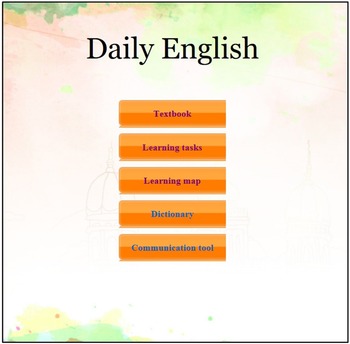
A specialized mobile learning system is shown in Figure 2. It was developed and implemented on tablet PCs. This multifunctional platform was equipped with several key features to facilitate various aspects of the learning process:
• Digital textbook. This function provided access to the learning materials covered both in the classroom and in external settings, ensuring continuity in the learning experience.
• Learning tasks. This section included a detailed overview of topics, writing tasks, and instructions, guiding students through each step of their learning activities.
• Learning map. A unique feature that allowed students to pinpoint and share the locations of their chosen learning sites on a map. Here, they could also upload the content they created and engage in discussions through comments.
• Online dictionary. To aid in the understanding and translation of unfamiliar vocabulary, this tool was an essential resource for students navigating new linguistic challenges.
• Communication tool. Designed to promote interaction among students, this tool facilitated the exchange of ideas, feedback, and peer support.
Interface of the mobile learning system for learning in MALL environments.

Together, these functions established a comprehensive and interactive learning environment designed to support and enhance students’ learning experiences.
4.5. Data collection and analysis
Data were collected from multiple sources: pre- and post-tests to address the first research question, evaluations of students’ written task outputs to answer the second, and participant interviews to explore the third.
4.5.1. Tests
To evaluate students’ initial EFL writing proficiency levels, a pre-test was administered, followed by a post-test to gauge their EFL writing proficiency post-activity. The content for these tests was closely aligned with the learning material covered in the study. The test items were derived from the College English Test, a widely recognized national standardized English language test in China. Before finalizing the test items, an initial draft underwent a thorough review by three academic experts – one from the English department and two from the educational technology department. This review ensured that both the pedagogical approach and the test content were properly aligned, and that the items validly and appropriately measured the target skill. Additionally, this instrument was successfully piloted in our previous related study on MALL (Shadiev, Yang, Reynolds & Hwang, Reference Shadiev, Yang, Reynolds and Hwang2022), further affirming its reliability and validity in similar settings.
Both the pre- and post-tests comprised five types of questions: English–Chinese and Chinese–English phrase translation, Chinese–English and English–Chinese sentence translation, and essay writing, encompassing a total of 18 items. The maximum total score for all test items was 100. Specifically, Items 1 to 5 were worth 5 points each, Items 6 to 10 were worth 5 points each, Items 11 and 12 were worth 25 points each, Items 13 to 17 were worth 25 points total, and Item 18 was worth 40 points. These items, along with examples, are detailed in Appendix I (see supplementary material). Designed to be comparable in difficulty and structure, the items varied in content between the two tests to ensure a comprehensive assessment.
4.5.2. Tasks
The student-created content for the MALL writing tasks was evaluated according to several criteria: amount of writing, content quality, organization, creativity, grammar, and vocabulary (see Appendix II in the supplementary material). A rubric developed by Wu, Petit and Chen (Reference Wu, Petit and Chen2015) was employed. The same experts, one from the English department and two from the educational technology department, who had reviewed the test items also examined the rubric to ensure its pedagogical alignment and suitability for measuring MALL task writing performance. The rubric had previously been tested and refined in our earlier MALL study (Shadiev et al., Reference Shadiev, Yang, Reynolds and Hwang2022), further supporting its reliability and appropriateness for use in similar contexts.
Internal consistency of the evaluations was examined using the coefficient alpha method (Creswell, Reference Creswell2012). Results exceeded the recommended threshold of 0.70, indicating strong internal consistency.
The content of the tests and tasks was independently scored by three experienced researchers using a 5-point scale. Discrepancies were resolved through discussion, after which interrater reliability was calculated. The final scores demonstrated high reliability, with Cohen’s kappa values exceeding 0.90, confirming the robustness of the assessment method (Creswell, Reference Creswell2012).
4.5.3. Interviews
Ten students from both the experimental and control groups were randomly chosen for interviews to aid in achieving data saturation (Guest et al., Reference Guest, Bunce and Johnson2006). These interviews aimed to delve into the students’ learning experiences in familiar or unfamiliar environments using mobile technology and to supplement the quantitative findings on MALL task writing performance and EFL writing proficiency differences between the two groups. While the comparison of learning outcomes provided objective evidence of the impact of environmental familiarity on learning, the interview data offered subjective perspectives, potentially revealing the underlying factors contributing to any observed differences in learning outcomes.
The interview protocol is presented in Appendix III (see supplementary material). The interview format comprised one-on-one, semi-structured sessions, each lasting approximately 20 minutes. Students were queried about their experiences using the learning system in familiar or unfamiliar environments. For data analysis, an open-coding approach was adopted (Creswell, Reference Creswell2012) with three independent raters who coded the content separately. Any discrepancies in their analyses were resolved through discussion, leading to a comprehensive and balanced interpretation of the data. The reliability of this analysis was confirmed by Cohen’s kappa, with results exceeding 0.90, indicating a high level of interrater reliability and underscoring the robustness of the qualitative data analysis (Creswell, Reference Creswell2012).
5. Results
5.1. EFL writing proficiency
Analysis of covariance (ANCOVA) was used to test the difference between two groups on post-test EFL writing proficiency levels where pre-test scores served as a covariate. According to Creswell (Reference Creswell2012), ANCOVA is generally used for comparing one or more independent variables. All assumptions of ANCOVA were tested and justified prior to the actual analysis. Results of the ANCOVA are reported in Table 1. A significant difference was observed between the control (M = 74.72, SD = 8.05) and experimental (M = 78.71, SD = 6.22) groups, F(1, 47) = 4.802, p < 0.05. Partial eta squared value (η2) was 0.093. The results show that the experimental group outperformed the control group on the post-test. This finding suggests that familiar environments were beneficial for EFL learning, as indicated by higher post-test EFL writing proficiency levels.
ANCOVA results for the post-test comparison

5.2. MALL task writing performance
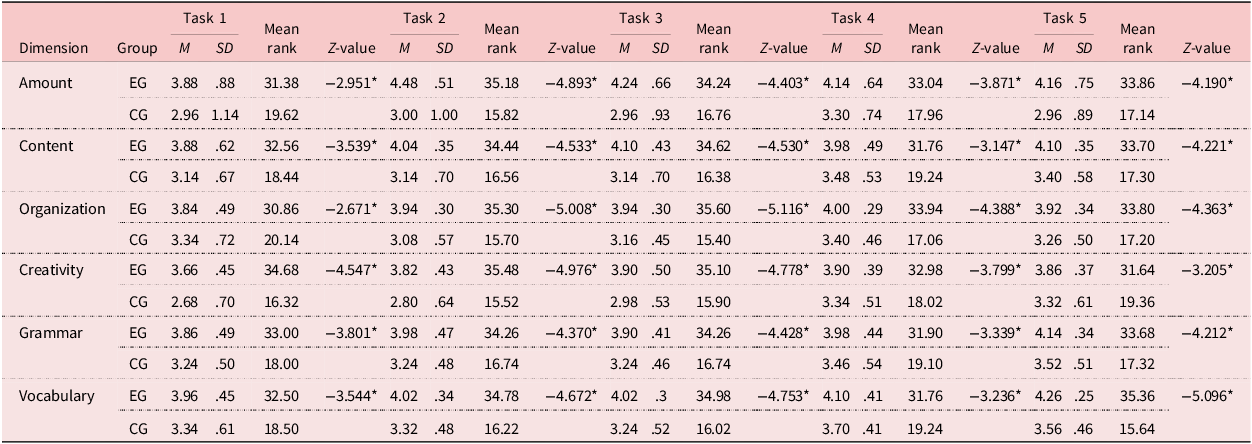
The Mann–Whitney U test was employed to assess the differences in MALL task writing performance between two groups. This non-parametric test is suitable for comparing two independent groups when the data are ordinal. Before conducting the analysis, the assumptions of the test were thoroughly evaluated and confirmed to ensure the validity of the results. The results are reported in Table 2. The difference between the two groups on all five tasks was significant, p < 0.05. That is, the experimental students outperformed their counterparts on the MALL tasks with respect to amount, content, organization, creativity, grammar, and vocabulary. This finding suggests that familiar environments were beneficial for EFL learning, especially for better writing performance on the MALL tasks.
ANCOVA results for the tasks comparison

Note. EG = experimental group; CG = control group.
*p < .005.
5.3. Interview with the students
The results of interview data analysis are presented in Appendix IV (see supplementary material). Three main categories were identified: (1) Emotional engagement is the student’s involvement in and enthusiasm for learning. When a student was emotionally engaged, they wanted to participate in the learning activity and enjoyed that participation more. The category of emotional engagement included such codes as interest, enjoyment, and relaxation. For example, students were interested in learning, they enjoyed their learning process, and felt relaxed during the learning process. (2) Cognitive engagement is the extent to which a student is willing and able to take on the learning task at hand. It included the amount of effort a student was willing to invest in working on the learning task. The cognitive engagement category included confidence, engagement, perceived content quality, and amount of created content. For example, students were confident in their ability to learn, and they created a lot of content. (3) Learning environment refers to the diverse physical locations, contexts, and cultures in which students learned. The category included resources, time, opportunity, and MALL. For example, there were a lot of resources for learning available in the learning site, and a student spent a little time to complete the task.
Interview findings revealed that most participants in the experimental group expressed positive opinions, whereas those in the control group generally reported negative ones. For example, the experimental students pointed out that they enjoyed practicing their skills in familiar environments (Code 1b). The experimental students usually felt more relaxed (Code 1c) and confident (Code 2a) during tasks because they were familiar with learning sites. The environment was familiar, and the students could find a lot of resources (Code 3a) to use for completing the tasks. Therefore, there were a lot of learning resources (Code 3a) available in familiar environments, and students knew where they were located. Thus, the experimental group tended to write more (Code 2d) and their content was better (Code 2c) during the tasks compared to the control group.
By contrast, students in the control group reported that the unfamiliar environment left them uncertain about the available resources (Code 3a) and required them to spend considerable time identifying them (Code 3b). So there was little to describe in the unfamiliar environment, and students had to explore the environment to get acquainted with available resources. Such circumstances brought frustration (Code 1b) to control students, and so they mentioned that, because of this, they were usually disengaged (Code 2b) from their learning tasks. For the same reason, control student perceptions of their learning experiences in unfamiliar contexts were not high. Therefore, compared with the control group, the experimental group had more available resources (Code 3a), opportunity to practice the language (Code 3c), and so their learning outcomes were significantly better.
Most students in the two groups had a positive perception of mobile technology (Code 3d), noting it was easy to use, useful, and flexible. The technology’s features allowed students to create multimedia content, access an online dictionary and map, and share their work with ease. Moreover, it supported seamless peer communication, thereby enhancing their collaborative learning experience.
6. Discussion
In response to the research questions, our findings indicate that students learning in familiar environments demonstrated significantly higher EFL writing proficiency on the post-test and performed better on writing tasks than those in unfamiliar environments. The effect size values for EFL writing proficiency exceeded 0.1, which falls within the range regarded as very large, suggesting that familiarity with the environment accounts for a substantial proportion of the variance in post-test scores. In addition, students in familiar environments reported more positive perceptions of their MALL experience compared to their peers in unfamiliar environments.
This study’s findings, corroborated by interview results, demonstrate that students in the experimental group, learning in familiar environments, experienced significant benefits in MALL. These students reported greater enjoyment and confidence, which was attributed to the familiarity of the learning sites and the abundance of accessible learning resources. This familiarity led to more prolific and higher quality task outputs compared to the control group. In contrast, control group students, working in unfamiliar environments, faced difficulties in locating resources, leading to frustration and disengagement from learning tasks. Consequently, their perceptions of the MALL experience were less favorable, and their learning outcomes were not as positive as those of the experimental group.
Our findings regarding the impact of familiar environments on learning outcomes are consistent with the principles of cultural schema theory (An, Reference An2013; Nishida, Reference Nishida1999). According to the theory, knowledge of available resources, such as people, objects, situations, and scenarios, is stored in our brains as background knowledge, enabling us to become familiar with our surrounding contexts. This background knowledge plays a pivotal role in how we process and comprehend language (Nazemi & Rezvani, Reference Nazemi and Rezvani2019; Salimi & Fatollahnejad, Reference Salimi and Fatollahnejad2012; Sheridan et al., Reference Sheridan, Tanaka and Hogg2019). Upon entering familiar environments, our ability to interpret new information, understand its meaning, and produce language is enhanced (Davoudi & Ramezani, Reference Davoudi and Ramezani2014; Othman & Vanathas, Reference Othman and Vanathas2005; Piccardi et al., 2011).
Prior research in language learning has also accumulated empirical evidence supporting the impact of task familiarity on EFL skills (Davoudi & Ramezani, Reference Davoudi and Ramezani2014; Gilakjani & Ahmadi, Reference Gilakjani and Ahmadi2011; Nazemi & Rezvani, Reference Nazemi and Rezvani2019; Othman & Vanathas, Reference Othman and Vanathas2005; Qiu & Lo, Reference Qiu and Lo2017; Salimi & Fatollahnejad, Reference Salimi and Fatollahnejad2012; Sheridan et al., Reference Sheridan, Tanaka and Hogg2019). Studies also have highlighted the positive effects of familiarity on emotional engagement (Phung, Reference Phung2017; Qiu & Lo, Reference Qiu and Lo2017). Our findings align with these prior observations, further confirming that familiarity significantly benefits both the cognitive aspects of language learning and emotional engagement.
However, the effects of language learners’ familiarity with real-world learning environments and the available resources for language learning in these environments on learning outcomes have not received significant attention. For instance, most studies have been conducted in classroom settings, with a focus primarily on familiarity with the topic (Othman & Vanathas, Reference Othman and Vanathas2005; Phung, Reference Phung2017; Salimi & Fatollahnejad, Reference Salimi and Fatollahnejad2012) or content (Davoudi & Ramezani, Reference Davoudi and Ramezani2014; Nazemi & Rezvani, Reference Nazemi and Rezvani2019; Qiu & Lo, Reference Qiu and Lo2017) of learning materials, and learning tasks in these studies were mostly instructor-oriented.
Scholars have highlighted the differences between classroom and real-world learning environments, noting that classroom learning can often be abstract and disconnected from real-life scenarios, making it difficult for learners to apply newly acquired knowledge in real-life contexts. Therefore, Herrington and Herrington (Reference Herrington, Herrington, Herrington and Herrington2006) argued that meaningful and relevant learning should integrate both context and content. Scholars have concluded that engaging students in classroom learning and language practice through the creation of artifacts grounded in their life experiences fosters meaningful seamless learning, highlighting the value of linking classroom instruction with everyday life to deepen knowledge comprehension. Moreover, learning outside the classroom provides access to rich, authentic resources that further support this process. For instance, daily encounters or scenarios can be leveraged for language learning (Gumbheer et al., Reference Gumbheer, Khedo and Bungaleea2022; Kukulska-Hulme, Reference Kukulska-Hulme, McCallum and Tafazoli2025). Evidence indicates that familiar contexts positively impact language learning performance on MALL tasks (Shadiev et al., Reference Shadiev, Yang, Reynolds and Hwang2022; Shadiev et al., Reference Shadiev, Wang, Liu and Yang2023b). Thus, it is anticipated that the experimental group, learning in familiar environments, would outperform the control group on tasks.
Another significant distinction between classroom learning and learning in authentic contexts outside of school is the complexity of the learning process in real-world settings, which imposes a greater learning burden on students (Gumbheer et al., Reference Gumbheer, Khedo and Bungaleea2022). Specifically, students learning in real-world environments must simultaneously navigate available resources, assimilate learning content from textbooks, and follow instructor guidance (Gumbheer et al., Reference Gumbheer, Khedo and Bungaleea2022). Additionally, they face the challenges of time constraints, extensive learning material, and limited prior learning experience. With much of the existing research concentrated on classroom-based learning, the impact of familiarity with real-world learning environments on learning outcomes remains underexplored. In contrast to previous studies, our focus extends to learning in authentic contexts outside the classroom, taking into account student familiarity with these environments. Thus, our study contributes new insights into how familiarity with authentic learning contexts outside the classroom influences student learning outcomes.
Regarding the mobile learning system, students from both the control and experimental groups found it to be user-friendly and beneficial for their learning. During interviews, many students across both groups mentioned that the system facilitated learning anytime and anywhere. They commended the system and its functionalities, highlighting how it provided access to learning materials, instructions, and tasks. Additionally, it supported the creation of multimedia learning content, such as taking pictures of people and objects for description. The online dictionary was particularly valued for its utility in looking up challenging words, and for spell-checking purposes. The learning map was praised for helping students locate content created by peers, enabling them to review and comment on it. Understanding the context of where the content was created was deemed essential for comprehension. Reviewing peer-created content was also seen as beneficial for gaining inspiration, reflecting, and improving their own work, as it allowed students to learn from others and identify areas for improvement in their writing. Lastly, the communication tool was noted for facilitating interaction among students, with some requesting assistance and others providing it.
7. Conclusion
Our study aimed to bridge the research gap on the impact of familiarity with MALL environments on EFL writing performance and proficiency. The contributions of our research are multifaceted. First, by designing and implementing learning activities in both familiar and unfamiliar settings, we facilitated a comparative analysis of student learning outcomes. This methodology yields vital empirical evidence on how familiarity with the learning environment influences the effectiveness of MALL. The study extends the existing literature on MALL by exploring the less-examined dimension of environmental familiarity and its role in language learning, offering a fresh perspective on how learning environments impact learner experience and performance. Second, our study offers insights into students’ experiences with mobile technology for learning across different environments, an area that has received limited attention in prior research. We contribute to the theoretical framework of MALL by linking the affordances of mobile technology to cultural schema theory, which posits that familiarity enhances language learning by helping learners activate relevant background knowledge stored in their cultural schemata (An, Reference An2013; Nishida, Reference Nishida1999). This connection between prior knowledge and new learning tasks allows learners to engage more efficiently with language learning, particularly when placed in familiar environments where they can easily access contextual cues and resources. The insights gained from our research offer valuable directions for educators and researchers in the design of future MALL writing activities, especially those conducted in real-world settings. Thus, our work makes a significant contribution to the fields of educational technology and language learning.
In terms of theoretical implications, we propose that MALL activities conducted in familiar environments align with the cultural schema theory by enabling learners to retrieve pre-existing schemata, thereby facilitating language learning. Familiar environments allow learners to connect new information to their prior experiences, enhancing comprehension and language production (Davoudi & Ramezani, Reference Davoudi and Ramezani2014; Nazemi & Rezvani, Reference Nazemi and Rezvani2019). This theoretical insight provides a basis for future research exploring how environmental factors interact with mobile learning tools to enhance language acquisition. By emphasizing the interplay between technology, environment, and learner experience, our study advances the theoretical discourse in MALL.
Based on our findings, we have formulated several recommendations for educators and researchers. First, we suggest designing EFL learning activities that extend across both classroom settings and real-world environments, thereby fostering a balanced integration of meaningful language input and output. For activities outside the classroom, we recommend that EFL teachers encourage students to engage in familiar settings. In these environments, students’ pre-existing knowledge of available learning resources and their locations allows them to focus more on the learning tasks rather than on adapting to new surroundings. Such familiarity can lead to a more efficient use of time, enabling students to produce higher quality written work in greater quantity, while feeling more relaxed and confident.
Additionally, we observe that students tend to have a more favorable perception of their MALL experience in familiar environments. For learning activities in unfamiliar locations, strategies that allow students to become acquainted with these new contexts beforehand, such as online research about the area, could be beneficial.
Furthermore, we advocate for the adoption of mobile learning systems similar to the one used in our study, which provides multiple user-friendly functions conducive to language learning in real-world contexts. This system not only facilitates access to learning materials and instructions but also supports the creation and sharing of multimedia learning content. Its features foster peer interaction, reflection, and ongoing improvement, and ensure seamless communication with instructors and peers in learning settings.
8. Limitations and future research directions
This study faced limitations, including a small sample size and the short duration of the learning activities, which may impact the robustness and depth of our findings. The generalizability of our results is constrained by the specific context and participant group, reducing their applicability to wider populations. We acknowledge these limitations and plan to address them in our future research to provide more comprehensive insights.
In future research, we also aim to devise and test strategies that help learners adapt to unfamiliar learning environments, assessing their impact on language learning effectiveness in both familiar and unfamiliar contexts. Additionally, we plan to ensure equal exposure to both types of settings for all participants. This approach not only addresses ethical considerations but also helps determine whether the observed differences are attributable to environmental factors rather than individual personality traits. In future research, we also plan to systematically examine the relative impact of environmental familiarity and resource accessibility on learning outcomes by designing studies that isolate these factors and assess their individual as well as combined effects on student satisfaction and enjoyment. Furthermore, we will employ more advanced functions to enhance our mobile system, such as AI (e.g. generative AI), which can guide students in generating inspirational ideas, create individualized learning content, continuously monitor their performance, and provide instant corrective feedback.
Supplementary material
To view supplementary material for this article, please visit https://doi.org/10.1017/S0958344025100402
Data availability statement
Data available on request from the corresponding author.
Authorship contribution statement
Rustam Shadiev: Conceptualization, Formal analysis, Funding acquisition, Investigation, Methodology, Resources, Supervision, Validation, Writing – review & editing; Taoying Liu: Conceptualization, Formal analysis, Investigation, Methodology, Writing – original draft preparation; Barry Lee Reynolds: Methodology, Writing – review & editing; Wu-Yuin Hwang: Conceptualization, Formal analysis, Methodology, Supervision, Validation, Writing – review & editing.
Funding disclosure statement
This research was supported by the Fundamental Research Funds for the Central Universities of the People’s Republic of China.
Competing interests statement
The authors declare no competing interests.
Ethical statement
This study was conducted in accordance with ethical research standards and approved by the institutional review board. Participation was entirely voluntary and informed consent was obtained from all participants. Their identities were kept anonymous and confidential throughout data collection and analysis.
GenAI use disclosure statement
The authors used ChatGPT, a generative AI language model developed by OpenAI, to assist in improving the clarity, grammar, and overall readability of the manuscript. All content generated or revised with ChatGPT was carefully reviewed, verified, and edited by the authors to ensure accuracy, originality, and alignment with the intended meaning of the study.
About the authors
Rustam Shadiev is a professor at the College of Education, Zhejiang University, China. His research interests include advanced learning technologies and their applications to support language learning and cross-cultural education.
Taoying Liu is a teacher of informatics at Jiangning Middle School of Jiangning District in Nanjing, China. Her research interests focus on technology-assisted language learning.
Barry Lee Reynolds is an associate professor of English language education in the Faculty of Education at the University of Macau, China. His research focuses on second language vocabulary acquisition, educational technology, informal language learning, and teacher education.
Wu-Yuin Hwang is a distinguished professor at the Graduate Institute of Network Learning Technology, National Central University, Taiwan, and dean of the College of Science and Engineering, National Dong Hwa University, Taiwan. His research interests include smart computer-assisted language learning, intelligent human–computer interaction, and knowledge construction supported by artificial intelligence.




 Open access

