


Physical exercise is recommended for the treatment of mild-to-moderate depression, both as monotherapy and as an adjunct to conventional treatment.Reference Garber, Blissmer, Deschenes, Franklin, Lamonte and Lee1–Reference Krogh, Nordentoft, Sterne and Lawlor4 Currently, there is a strong focus in the literature on the role of cardiorespiratory fitness (CRF) in exercise treatment studies of depression.Reference Stubbs, Rosenbaum, Vancampfort, Ward and Schuch5, Reference Schuch, Vancampfort, Sui, Rosenbaum, Firth and Richards6 It is well established that physical exercise levels, especially vigorous intensity activities, influence CRF.Reference Garber, Blissmer, Deschenes, Franklin, Lamonte and Lee1, Reference Lee, Artero, Sui and Blair7 A recent systematic review of three prospective cohort studies (n = 1 142 699) concluded that lower CRF increases the risk of subsequent depression among non-depressed people at baseline.Reference Schuch, Vancampfort, Sui, Rosenbaum, Firth and Richards6 It has also been shown that individuals who maintain their CRF across the lifespan have a reduced risk of a depressive episode.Reference Dishman, Sui, Church, Hand, Trivedi and Blair8 These findings suggest CRF (or the maximal oxygen uptake, V̇O2max, the best index of CRF) is inversely associated with risk for depression. Papasavvas et al Reference Papasavvas, Bonow, Alhashemi and Micklewright9 suggest that an inverse association between V̇O2max and depression severity at follow-up after controlling for potential moderators would imply the presence of endogenous processes between V̇O2max and treatment response in depression. At present, CRF or V̇O2max is not routinely considered when determining treatment approaches for depression, as the role of CRF or V̇O2max in relation to depression risk and recovery is still not fully understood. However, to optimise treatment efficacy, it is important to identify predictors of treatment response. The present study investigated if an increase in CRF (expressed as V̇O2max) leads to a reduction in depression severity or predicts a better treatment response after 12 weeks of physical exercise treatment.
Method
Data is derived from a single-blind, parallel randomised control trial, Regassa, comparing the effectiveness of physical exercise, internet-based cognitive–behavioural therapy and treatment as usual for mild-to-moderate depression. Primary findings of Regassa are available elsewhere.Reference Hallgren, Helgadottir, Herring, Zeebari, Lindefors and Kaldo10, Reference Hallgren, Kraepelien, Ojehagen, Lindefors, Zeebari and Kaldo11 Primary care patients from six county councils in Sweden (Stockholm, Skåne, Västra Götaland, Kronoberg, Blekinge and Västmanland) aged ≥18 years and scoring >9 on the Patient Health Questionnaire (PHQ-9)Reference Kroenke, Spitzer and Williams12 were included. Recruitment began in February 2011 and the last participants ended their treatment in March 2013. Those presenting with severe somatic disorders, primary drug or alcohol use disorder and psychiatric disorders requiring specialist treatment were excluded. Following an initial consultation with their primary healthcare provider, suitable patients were referred to a research nurse who administered the baseline questionnaires and confirmed eligibility by conducting a thorough patient interview that included a psychiatric diagnostic assessment using standardised tools (described below). Before the study began, the research nurses were trained by a psychiatrist to interview patients and administer the questionnaires in a consistent manner. After obtaining informed consent, patients (n = 945) were randomised to one of the three treatment conditions by an independent clinical research organisation; the Karolinska Trial Alliance, where individual patients were treated as the ‘unit’ of randomisation. The blocks were unknown to the researchers, and a computer generated the group allocation. This procedure ensured that researchers responsible for the baseline and post-treatment assessments were masked to the patient's group allocation. The present study includes participants from the physical exercise arm (n = 316) using a prospective design. Given the availability of V̇O2max information at baseline and follow-up, the analytical sample of this study consisted of 110 participants. The ethical review board at the Karolinska Institutet, Sweden, approved the study (Dnr 2010/1779-31/4) and the trial is registered with the German Clinical Trial Register (DRKS study ID: DRKS00008745). The study was carried out in accordance with the latest version of the Declaration of Helsinki.
Physical exercise
Participants in the physical exercise arm were randomised to one of three supervised exercise conditions: (a) light exercise consisting of yoga-based stretching and balance exercise classes; (b) moderate exercise consisting of intermediate level group aerobics classes, and (c) vigorous exercise that included more strenuous aerobic exercises/bodyweight strength training classes. To ensure the intensity levels differed between the recommended classes, members of the research team designed classes of differing intensity that were tested using indirect calorimetry and pulse watches in a laboratory setting. They then attended different classes at the gym using pulse watches and compared the results with the laboratory classes. The results were used to select classes of differing intensities to recommend to the participants (as described above). Additionally, measurements of heart rate from the sessions were then compared with various classes at the gym, also to identify classes of similar intensity. Participants were asked to join supervised pre-existing group classes (corresponding to their assigned intensity level) lasting 55 min, three times per week for 12 weeks. A free 12-week membership card was provided to all participants. Phone calls and text messages were sent if participants did not attend the pre-arranged weekly meetings with their assigned trainer. On average participants of the present study attended about 14.43 sessions. The frequency of training and drop-out rate between the intensity groups did not differ. Previous findings from the Regassa study found no large differences between intensity types in reducing depression following 12 weeks of intervention.Reference Garber, Blissmer, Deschenes, Franklin, Lamonte and Lee1Reference Cooney3
CRF
CRF was assessed as V̇O2max (L/min) and predicted from the Åstrand–Rhyming submaximal cycle ergometry test,Reference Garber, Blissmer, Deschenes, Franklin, Lamonte and Lee1Reference Krogh, Nordentoft, Sterne and Lawlor4, Reference Garber, Blissmer, Deschenes, Franklin, Lamonte and Lee1Reference Stubbs, Rosenbaum, Vancampfort, Ward and Schuch5 which is validatedReference Garber, Blissmer, Deschenes, Franklin, Lamonte and Lee1Reference Schuch, Vancampfort, Sui, Rosenbaum, Firth and Richards6, Reference Garber, Blissmer, Deschenes, Franklin, Lamonte and Lee1Reference Lee, Artero, Sui and Blair7 and relies on the assumption of a linear relationship between heart rate and V̇O2 in higher pulse intervals. The Åstrand–Rhyming test consisted of a 6 min exercise bout on a mechanically breaked cycle ergometer (Monark 828E, Monark Exercise, Vansbro, Sweden). The participant cycled at a pedalling frequency of 50 rpm and rate of work was set to elicit a heart rate between 120 and 150 beats per minute. Prior to testing, participants were asked to refrain from caffeine, nicotine, alcohol, heavy meals and intense exercise for a specified period of time. Heart rate during exercise was measured using telemetry (Polar Electro Oy, Tempere, Finland). V̇O2max (L/min) values were adjusted for age according to the Åstrand testing protocol.Reference Garber, Blissmer, Deschenes, Franklin, Lamonte and Lee1Reference Krogh, Nordentoft, Sterne and Lawlor4 All participants from the different exercise arms were invited to undertake the aerobic fitness test. A total of 181 participants at baseline (125 at follow-up) provided valid V̇O2max test results. Of these, V̇O2max (L/min) information at baseline and follow-up was available for 112 individuals. There are numerous reasons (for example the patient had influenza, feeling dizzy, tiredness or fatigue) why valid V̇O2max (L/min) test results could not be determined for many participants. Two participants using beta-blockers were excluded from the analysis (the study flow chart can be found in supplementary Fig. 1 available at https://doi.org/10.1192/bjo.2018.45). Work rate distribution before and after treatment at high- and low-intensity level was between 50 to 150 Watts.
Depression assessment
Depression at baseline (before randomisation) and after 12 weeks of physical exercise was measured by the Montgomery–Åsberg Depression Rating Scale (MADRS – Clinician Rated), which is sensitive to change over time.18 The total MADRS score ranges from 0 to 60 and higher scores indicate more severe depression. In order to assess the treatment's effects in terms of clinically significant changes in depression severity, a binary outcome variable was also analysed, in addition to the continuous score. This binary variable was categorised as a 50% or greater reduction in MADRS scores at follow-up compared with baseline (treatment responders) versus lower or no reduction (treatment non-responders).
Covariates
Covariates used in this study are primarily self-reported and include: age, gender, body mass index (BMI), education, ethnicity, antidepressants (binary: yes or no) and tobacco use at baseline, and habitual physical activity levels. Tobacco use (i.e. cigarettes and snus) at baseline was assessed from the question ‘Do you smoke or use snus on a daily basis?'; a binary variable was created where participants were categorised as current daily users of tobacco if they answered ‘Yes’ to the question. Those who answered ‘No’ were categorised as non-current users. Details for the measurement of self-reported habitual physical activity at baseline is presented elsewhere.Reference Garber, Blissmer, Deschenes, Franklin, Lamonte and Lee1Reference Papasavvas, Bonow, Alhashemi and Micklewright9 Briefly, habitual physical activity was calculated by taking the average of self-reported physical activity in winter and summer, including the estimated frequency and intensity of physical activity.
Statistical analysis
Characteristics and outcomes of the participants across physical exercise groups were tested using the chi-square test for categorical variables and analysis of variance for the continuous data. Mean values are reported with standard deviations, if asymmetric then median with interquartile range are reported. We employed linear regression analysis, pooling all three exercise arms, to observe the effect of intensities of exercise on the V̇O2max at follow-up in the crude and adjusted models. Models were adjusted for baseline V̇O2max, age, BMI and baseline depression severity. The association between post-treatment V̇O2max and post-treatment depression severity were tested using linear regression models. The association was initially adjusted for pre-treatment V̇O2max and pre-treatment MADRS score. The final model was further adjusted for exercise intensities, age and BMI. Analyses were repeated using the binary ‘treatment responder’ variable in logistic regression models. All tests performed were two tailed. Statistical significance was set at alpha P < 0.05. Multicollinearity was assessed by the VIF (variance inflation factor), all values were less than ten. Of the analytical sample 4.5% of data for post-treatment MADRS were missing thus the main analysis was limited to 105 participants. Statistical analysis was carried out in SPSS version 23.
Results
A total of 316 individuals participated in the study, of which 206 were excluded because of missing V̇O2max data. Of the remaining 110 participants, 33 were in the vigorous exercise group, 38 were in the moderate group and 39 were in the light exercise group (Supplementary Fig. 1).
Table 1 shows the characteristics of the study participants stratified by physical exercise group. Mean age (P = 0.045) and BMI (P = 0.06) was lower in the light exercise group compared with other exercise intensities. There was no statistical difference in gender, ethnicity, education, baseline antidepressant use, tobacco use or baseline self-reported physical activity.
Characteristics and outcome of the participants divided by physical exercise group
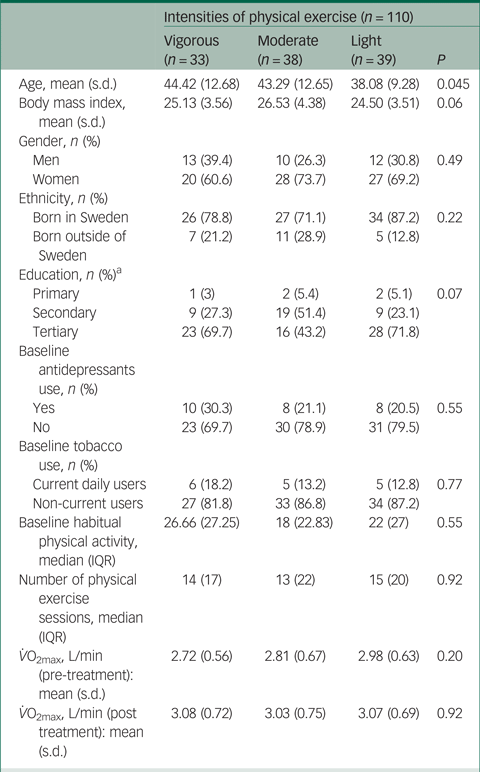
IQR, interquartile range.
a. For the moderative intensity group n = 37 because of missing data for education.
Baseline depression severity did not differ between exercise groups and after 3 months of the intervention. Following the intervention, the mean depression scores were reduced for all three exercise groups in this sample. Moreover, an increased mean V̇O2max was observed at follow-up for all three exercise groups. Pointwise changes in mean V̇O2max were higher for the vigorous intensity group, followed by the moderate and light intensity group. However, no significant differences in mean V̇O2max at baseline or follow-up were seen between the physical exercise arms. In the linear regression analysis, when adjusted for baseline V̇O2max, the vigorous exercise group was found to be significantly associated with higher V̇O2max (L/min) at follow-up compared with the light exercise group (results not shown). This association remained intact after adjusting for age, BMI and baseline depression severity. Exploratory analysis found that baselineV̇O2max did not predict depression at baseline or follow-up.
Table 2 shows the association between post-treatment V̇O2max and post-treatment depression severity after 12 weeks of exercise (all exercise groups together). In the crude analysis, post-treatment V̇O2max was not associated with depression. A negative association between post-treatment V̇O2max and post-treatment depression severity (Model 1, B = −3.52, 95% CI −6.08 to −0.96) was observed after adjusting for pre-treatment V̇O2max values. Adjusting for exercise intensities, age and BMI made the association stronger (Model 2, B = −3.89, 95% CI −6.53 to −1.26).
Linear regression models of the association between post-treatment V̇O2max (L/min) and post-treatment depression severity

MADRS, Montgomery–Åsberg Depression Rating Scale.
a. Model 1 adjusted for pre-treatment V̇O2max and pre-treatment MADRS score; model 2 adjusted for model 1 + exercise intensities, age and body mass index.
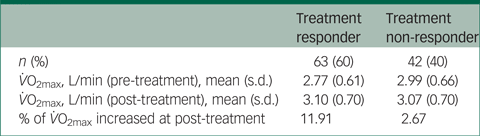
Logistic regression analyses exploring the proportion of treatment responders (at least 50% reduction in depression score) given the increase in post-treatment V̇O2max yielded results comparable with those obtained with linear regression models (Table 3). An increased odds of treatment response were seen among individuals with higher post-treatment V̇O2max score (Model 1, odds ratio (OR) = 3.73, 95% CI 1.22–11.43; Model 2, OR = 4.53, 95% CI 1.35–15.17). Analyses also found that higher pre-treatment V̇O2max was significantly associated with higher depression severity (Table 2) and low treatment response at follow-up (Table 3). Exploration of data reveal that treatment responders had lower V̇O2max (mean 2.77, s.d. = 0.61) at baseline and had an 11.91% increase in V̇O2max (mean 3.10, s.d. = 0.70) at follow-up whereas treatment non-responders had only a 2.67% increase in V̇O2max at follow-up (Table 4).
The association between post-treatment V̇O2max (L/min) and treatment response to depression

MADRS, Montgomery–Åsberg Depression Rating Scale.
a. Model 1 adjusted for pre-treatment V̇O2max and pre-treatment MADRS score; Model 2 adjusted for model 1 + exercise intensities, age and body mass index.
Number of treatment responders and non-responders and their corresponding V̇O2max (L/min) profile at baseline and follow-up (n = 105)
Non-participation in the fitness test at baseline and follow-up did not differ proportionally between men and women, the intensity groups or in their depression severity both at baseline and follow-up. However, those who did not participate in the fitness test at baseline were more likely to be non-participants in the MADRS assessment at follow-up.
Discussion
Main findings and comparison with findings from other studies
The current study demonstrates that, regardless of exercise intensity and frequency, a post-exercise increase in V̇O2max is an independent predictor of lower depression severity at follow-up. That is, a post-treatment increase in V̇O2max was significantly associated with reductions in depression severity after adjustment for relevant covariates. Moreover, increased V̇O2max was found to be associated with higher odds of treatment response at follow-up. Also, participants with higher baseline V̇O2max had a smaller increase in V̇O2max, and were less likely to have responded to treatment (50% score reduction).
The seminal work of Martinsen et al Reference Martinsen, Medhus and Sandvik20 demonstrated that exercise training resulted in lower depression, and increased oxygen uptake compared with a control condition. Consistent with this, our study showed that 12 weeks of exercise was associated with reduced depression severity, which was independently related to increased physical fitness. Previous studies have primarily focused on assessing the effect of exercise among people with depressionReference Stubbs, Rosenbaum, Vancampfort, Ward and Schuch5, Reference Kerling, von Bohlen, Kück, Tegtbur, Grams and Haufe21 rather than if changes in fitness per se predict depression recovery. A recent single-blind randomised controlled trial (n = 57 patients aged 18–55 years) with major depressive disorder found that V̇O2max significantly increased in the add-on aerobic exercise group at follow-up whereas no change was seen in the control group.Reference Schuch, Vasconcelos-Moreno, Borowsky and Fleck2Reference Schuch, Vasconcelos-Moreno, Borowsky and Fleck2 However, in this study V̇O2max was not found to be a significant predictor of treatment response. Similarly, Kerling et al.Reference Kerling, von Bohlen, Kück, Tegtbur, Grams and Haufe21 reported that maximum oxygen consumption did not differ significantly between exercise (includes patients with depression) and control (includes healthy participants) groups, although exercise (within-group) resulted in significant improvements in V̇O2max. However, these results may be the result of low statistical power. In contrast, a recent meta-analysis of 16 studies (n = 4039) found an inverse correlation between depression severity and V̇O2max, suggested that improving V̇O2max could improve depression outcomes.Reference Papasavvas, Bonow, Alhashemi and Micklewright9 In line with this, the present study showed that improvements in V̇O2max predicted better treatment response to physical exercise in depression. To our knowledge this is the first study to report such associations. The observed associations in the current study suggest the presence of biological pathways between V̇O2max and depression severity. An experimental study has shown that erythropoietin elevatesV̇O2max in mice when injected artificially;Reference Schuch, Vasconcelos-Moreno, Borowsky and Fleck2Reference Cooney3 studies in humans have shown the same response.Reference Schuch, Vasconcelos-Moreno, Borowsky and Fleck2Reference Krogh, Nordentoft, Sterne and Lawlor4, Reference Schuch, Vasconcelos-Moreno, Borowsky and Fleck2Reference Stubbs, Rosenbaum, Vancampfort, Ward and Schuch5 Previous studies indicate improvements in cognitive abilities in individuals with depression following erythropoietin administration.Reference Schuch, Vasconcelos-Moreno, Borowsky and Fleck2Reference Schuch, Vancampfort, Sui, Rosenbaum, Firth and Richards6 These studies indicate a direct effect from increased V̇O2max (even when increased artificially), rather than an effect from the physical activity.
In addition, psychological factors might also explain the observed association but it is less likely that psychological factors alone could have played a major role in the present study as we used submaximal exercise tests, which are less demanding. Another possible contributor to the relationship between lower depression symptom severity and higher CRF or V̇O2max could be that individuals whose depression severity are reduced experience less fatigue during stress testing than before because the somatic symptoms often associated with depression, such as muscle soreness, weakness and low back pain have been reduced/are less prevalent.Reference Papasavvas, Bonow, Alhashemi and Micklewright9
There is currently no consensus as to which intensity, duration and frequency of exercise are optimal for treating individuals who are depressed.Reference Schuch, Vasconcelos-Moreno, Borowsky and Fleck2Reference Lee, Artero, Sui and Blair7 However, a recent meta-analysis provides indications of favourable antidepressants treatment effects from moderate and vigorous intensities.Reference Schuch, Vasconcelos-Moreno, Borowsky and Fleck2Reference Dishman, Sui, Church, Hand, Trivedi and Blair8 Given the stronger effect of vigorous exercise on V̇O2 levels, it may be reasonable to recommend higher intensity exercise to those with depression. However, the advantages of vigorous exercise should be balanced with the higher physical and mental demands and higher risk for injuries and drop-out /non-adherence,Reference Schuch, Vasconcelos-Moreno, Borowsky and Fleck2Reference Papasavvas, Bonow, Alhashemi and Micklewright9 especially if the exercises are not supervised by trained healthcare professionals. In contrast, some reviews recommended moderate aerobic exercise, three to four times per week for at least 10–16 weeks.Reference Rethorst, Wipfli and Landers30 The present study adjusted for exercise intensity to control for the treatment bias. Given the small number of participants in each exercise arm, it was impractical to present findings stratified by exercise group. Therefore, no recommendation regarding the optimal choice of exercise intensity could be derived from these findings.
Implications
Given the link between V̇O2max, depression, and cardiovascular disease (CVD);Reference Schuch, Vancampfort, Sui, Rosenbaum, Firth and Richards6, Reference Correll, Solmi, Veronese, Bortolato, Rosson and Santonastaso31, Reference Naci and Ioannidis32 it is likely that prevention of depression and CVDs among people at risk of these diseases could be accelerated by improving V̇O2max. In clinical populations, special attention should be given to individuals with comorbid depression and CVD, which is a relatively common phenomenon.Reference Correll, Solmi, Veronese, Bortolato, Rosson and Santonastaso31 Further, any use of physical exercise on prescription should arguably take into account the ability of the prescribed activity regimen to improve V̇O2max. The participants included in the present study had similar fitness levels (average V̇O2max at baseline approximately 2.84 L/min) as found in a study of the general population.Reference Cooney3Reference Cooney3 It is possible that the treatment potential is larger in less fit individuals and that a ceiling effect is present. However, since the average fitness level in our study was close to the lowest optimal fitness levels, any increase in fitness may have important effects on CVD risk reduction.
Strengths and limitations
Strengths of the present study include the relatively large sample size, clinician-rated depression and investigation of relevant covariates that could affect the observed association. In addition, our design provided good internal validity. Limitations include limited test–retest reliability for V̇O2max in the general population; the error could be as high as 7%,Reference Cooney3Reference Stubbs, Rosenbaum, Vancampfort, Ward and Schuch5 thus, these findings require further replication with larger sample sizes. Additionally, familiarisation with the test was not possible in this study. Our study sample did not include patients with severe depression, therefore, caution should be taken generalising our findings to the entire population with depression, or to the general public. However, as most individuals with mild-to-moderate depression do not seek healthcare, and given the high prevalence of this disease, there is substantial treatment potential from increased exercise and/or aerobic capacity. Additionally, higher drop-out rates among the non-participants of the fitness test could have introduced selection bias in the study and underestimated the observed association. Despite the fact this is the largest study to date, more research in a larger sample is needed to confirm or refute the current findings.
In conclusion, our findings suggest that improvement in V̇O2max is an important and independent predictor of treatment response in adults with mild-to-moderate depression. This finding indicates the presence of potential biological pathways that warrant further exploration.
Funding
The Regassa study was funded by the Vårdal Foundation, six county councils (Stockholm, Västra Götaland, Skåne, Blekinge, Kronoberg and Västmanland). O.E. was funded by ICA Sverige. The funders were not involved at any stage in the design, data collection, data analysis, interpretation of the results or decision to publish the present work.
Acknowledgement
We gratefully acknowledge the advice provided to the statistical analysis by Zangin Zeebari, PhD.
Supplementary material
Supplementary material is available online at https://doi.org/10.1192/bjo.2018.45.


 Open access


eLetters
No eLetters have been published for this article.