



Most research across disciplines, including psychology, nutrition and public health, has focused on the pathology of eating, such as eating disorders and obesity. For example, the database ISI Web of Science yields more than 18 000 entries for the topic ‘eating disorder’ but less than 500 entries for the topic ‘normal eating’. While studying pathological eating behaviour is without doubt an important endeavour, this is by definition focusing mainly on the health-related aspects and consequences of eating behaviours. However, to get more insight on how to prevent people from starting to exhibit dysfunctional eatingFootnote behaviours, a broader understanding of the aspects and functions of non-pathological or ‘normal’ eating behaviour might be important. Specifically, understanding why we eat what we eat is crucial, as eating motives have also been found to be related to healthy eating behaviour( Reference Eertmans, Victoir and Vansant 1 – Reference Sun 6 ).
There is a large variety of different determinants and motives for why people eat what they eat, such as good taste, weight control or health reasons( Reference Ogden, Oikonomou and Alemany 7 – Reference Bucher and Keller 9 ). The first systematic attempt to assess the different motives for why people eat what they eat was in a scale developed by Steptoe et al. (the Food Choice Questionnaire (FCQ)( Reference Steptoe, Pollard and Wardle 8 ); see also Konttinen et al.( Reference Konttinen, Sarlio-Lähteenkorva and Silventoinen 10 )). However, given that important motives such as social or physiological motives were not included in the FCQ, The Eating Motivation Survey (TEMS)( Reference Renner, Sproesser and Strohbach 11 ) was developed, including a more extensive set of motives and a multifaceted procedure. Specifically, 331 reasons for why people eat what they eat were compiled from existing research and from interviews with nutritionists and expert discussions in Germany. Following approaches used in personality psychology( Reference Cattell 12 , Reference Eysenck and SBG 13 ) (see John and Srivastava( Reference John and Srivastava 14 ) for an overview), which use factor-analytical approaches to reduce large sets of personality descriptions to form a general taxonomy of personality traits based on a small number of ‘basic’ personality traits (i.e. the ‘Big Five’( Reference Allport and Odbert 15 – Reference Eysenck 18 )), this large set of reasons for eating was reduced in factor analyses to fifteen ‘basic’ eating motives. These fifteen motives comprise eating particular foods and eating in general because of a good taste, habit, hunger, health concerns, convenience, pleasure, traditions, natural concerns, sociability, price considerations, the visual appeal of foods, weight control concerns, to regulate negative affect, and because of social norms and social image concerns (see Table 2 below for a fuller description of the motives).
The fifteen basic motives of TEMS have been consistently found across different groups within Germany. Specifically, Renner et al.( Reference Renner, Sproesser and Strohbach 11 ) showed that the factor structure of TEMS was generally invariant for women as compared with men, younger as compared with older people, and normal- as compared with overweight people. Hence, this speaks in favour of fifteen basic eating motives that are present to a greater or lesser degree across different groups. However, this does not mean that groups do not differ in the mean level of motives. In fact, large differences between groups occurred in the mean importance of motives. For instance, women had higher mean values than men on ten out of the fifteen motive scales. Yet, a comparable factor structure is a prerequisite for drawing comparisons of mean levels between groups( Reference Milfont and Fischer 19 ).
Finding consistency of TEMS structure across groups does not, however, address whether these motives also apply in different contexts. For instance, countries differ remarkably in their eating environments( Reference Rozin, Kabnick and Pete 20 ) and in the way their populations think about food( Reference Rozin, Fischler and Imada 21 ). For instance, research has documented marked country differences not only in what people eat( 22 ) but also in food portion sizes( Reference Rozin, Kabnick and Pete 20 ), variety preference( Reference Rozin, Remick and Fischler 23 ), food–health associations( Reference Rozin, Fischler and Imada 21 ), and the importance of organic or convenience products( Reference Pérez-Cueto, Verbeke and de Barcellos 24 ). These clear differences in eating environments between countries raise the question of whether there are also differences in the consistency of eating motives across countries; that is, whether the same factor structure can be applied in different countries. There is already some evidence on the consistency of selected eating motives of TEMS in two other countries. First, the Health motive was recently reliably assessed in a Chinese sample( Reference Siegrist, Shi and Giusto 25 ). Second, Pechey et al.( Reference Pechey, Monsivais and Ng 26 ) assessed the eating motives Liking, Habit, Need and Hunger, Health, Convenience, Pleasure, Price and Weight Control in a UK sample. However, until now, there has not been a systematic investigation of the replicability of the fifteen basic motives of TEMS across countries differing greatly in eating environments. Such an investigation might help to explain why certain countries differ in concern about diet, eating behaviour and diet-related diseases, and thus facilitate the generation of interventions to promote health.
The present study
The present study investigated whether the fifteen basic motives of TEMS can consistently be found across different countries and eating environments. Moreover, measurement invariance of TEMS was tested to determine whether mean comparisons across countries are valid. Criteria for the selection of countries for the study were diversity in terms of eating environment, cuisine and geography( Reference Norenzayan and Heine 27 ).
These criteria led to the selection of the USA as an example for a Western, industrialized country. The US-American eating environment has been found to be characterized by an emphasis on quantity rather than quality, and a high preference for variety and for comforts instead of joys( Reference Rozin, Remick and Fischler 23 ). Also, US-Americans associated food most with health and least with pleasure as compared with Europeans and the Japanese( Reference Rozin, Fischler and Imada 21 ).
As a second country, India was selected as an example for an Eastern, developing country, with the second highest population in the world, from the world’s most populous continent. The Indian eating environment is characterized by a high percentage of vegetarians( Reference Nagla 28 – Reference Ruby, Heine and Kamble 30 ). Moreover, the concepts of purity and pollution are intimately connected to food and eating, and the Indian eating environment is marked largely by norms regarding social order and hierarchy( Reference Nagla 28 ).
Lastly, Germany was also included in the current study to directly compare findings from the USA and India with the country in which the fifteen basic motives were initially derived.
The comparability of the fifteen-factor structure of TEMS within the three countries was tested in confirmatory factor analyses.
Methods
Procedure and sample
Data were collected as part of an online survey study investigating psychological factors underlying eating behaviour( Reference Arbit, Ruby and Sproesser 31 , Reference Sproesser, Klusmann and Ruby 32 ). Convenience samples were recruited in all three countries. Specifically, in India and the USA, participants were recruited via Amazon’s Mechanical Turk, a marketplace for online tasks( Reference Buhrmester, Kwang and Gosling 33 ). Subscribers of Amazon’s Mechanical Turk can earn some money by undertaking small online tasks. For the present study, they were invited to fill in the online survey and received $US 2 for completing the questionnaire. As Amazon’s Mechanical Turk did not provide a marketplace for Germans when the study was conducted, German participants were invited to the study through an email sent to several mailing lists; for example, of students and former study participants interested in further participation. In Germany, participants were free to forward the link to their acquaintances to recruit additional participants. As incentive for German participants, ten vouchers for Amazon, worth 10 € each, were awarded by lottery.
In total, 887 participants took part in an online survey (Germany: n 357; India: n 326; USA: n 204; Unipark survey software, Globalpark AG, Hürth, Germany). Out of these, 138 participants (16 %) filled out less than 75 % of the survey, or failed two or more attention checks (see ‘Measures’ section below). These participants were excluded from analysis. Sample characteristics of the remaining 749 participants are displayed in Table 1. Women were over-represented in the German sample. As expected, BMI was highest in the US sample. Noticeably, the Indian sample had a higher average BMI than the Indian population (20–21 kg/m2, depending on the social group( 34 )) and rated their socio-economic status slightly higher than middle in their country. As 27·5 % of Indians fall below the poverty line( 35 ), wealthy people are almost certainly over-represented in the Indian sample.
Sociodemographic characteristics of the study sample and differences between countries
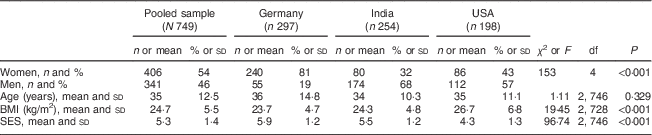
SES, socio-economic status.
SES was measured with a question adapted from the Cantril ladder( Reference Cantril 36 ) where people are asked to rate where they stand in the society in their country from 1 (people with least money, education, and worst jobs) to 9 (people with most money, education, and best jobs).
Comparing the study sample with the dropout sample showed no significant differences in terms of gender (54 v. 58 % female, χ 2(2)=1·82, P=0·402). However, the study sample was slightly older (35 v. 32 years, F(1, 863)=4·35, P=0·037), had a higher BMI (25 v. 23 kg/m2, F(1, 827)=4·33, P=0·038) and lower socio-economic status (5·3 v. 5·9, F(1, 861)=17·00, P<0·001) than the dropout sample.
Ethics, consent and permissions
The ethics board of the University of Konstanz approved the study protocol. The procedures were performed in compliance with relevant laws and institutional guidelines. We followed the German Psychological Society’s (Deutsche Gesellschaft für Psychologie) guidelines for conducting psychological studies (see http://www.dgps.de/index.php?id=96422; paragraph C.III). These are similar to those of the American Psychological Association. The study conforms to the Declaration of Helsinki. All participants consented to participate in the study by starting the online survey after being fully informed about the study.
Measures
Demographics
Participants were asked about their gender, age, height, weight and socio-economic status. To assess socio-economic status, a question was adapted from the Cantril ladder( Reference Cantril 36 ) where people are asked to rate where they stand in the society in their country from 1 (people with least money, education, and worst jobs) to 9 (people with most money, education, and best jobs).
Eating motives
German participants completed the German version of the brief TEMS( Reference Renner, Sproesser and Strohbach 11 ), and Indian and US-American participants completed the English version. After in-depth discussion with American-English native speakers about adequate translations of German items, wording of two English items of the original TEMS was changed slightly: (i) the original TEMS item ‘because it is the most convenient’ was changed to ‘because it is convenient’ (German: ‘weil es wenig Aufwand bedeutet’); and (ii) similarly, the item ‘because it is organic’ was changed to ‘because it stems from organic farming’ (German: ‘weil es aus biologischer Landwirtschaft stammt’). Moreover, the original TEMS item ‘because it is natural (e.g. not genetically modified)’ was split into the two items ‘because it is natural’ and ‘because it is not genetically modified’ because country differences in attitudes to genetic engineering have been found to be greater than country differences in attitudes to natural( Reference Rozin, Fischler and Shields-Argelès 37 ). The forty-six items were preceded by the item stem ‘I eat what I eat…’ and answers were given on a 7-point rating scale from 1 ‘never’ to 7 ‘always’.
Attention checks
To guarantee adequate data quality, three attention checks were included in the questionnaire (‘I regularly eat rocks’, ‘I enjoy eating plastic’ and ‘I think that the Earth is a cube’). Participants who agreed with two or more of these questions were excluded from analyses.
As data were collected as part of larger study investigating psychological factors underlying eating behaviour, participants were also asked about their eating habits( 38 , Reference Sproesser, Schupp and Renner 39 ) and eating concerns( Reference Rozin, Fischler and Imada 21 , Reference Rozin, Bauer and Catanese 40 ), the meaning of food and eating for them( Reference Arbit, Ruby and Rozin 41 ), concerns about global problems(Reference Arbit, Ruby and Sproesser31, Reference Schultz 42 ), concerns about meat eating (MB Ruby, P Rozin, N Arbit et al., unpublished results), as well as filled out the Positive Eating scale( Reference Sproesser, Klusmann and Ruby 32 ). These data are reported elsewhere(Reference Arbit, Ruby and Sproesser31, Reference Sproesser, Klusmann and Ruby 32 ).
Analytical procedure
Statistical analyses were conducted using the statistical software package IBM SPSS Statistics and added module AMOS (versions 22 and 24 for Windows). Missing data in TEMS were imputed using the Expectation Maximization algorithm in IBM SPSS Statistics( Reference Gold and Bentler 43 ). Missing values were below 5 % for all imputed variables. Item distributions were inspected for multivariate normality. Skewness and excess of all items were below the thresholds of 2 and 7, respectively, as suggested by Curran et al.( Reference Curran, West and Finch 44 ). Since items did not correlate above 0·85, no marked collinearity restrictions existed.
To investigate consistency of eating motives across countries, confirmatory factor analyses using maximum likelihood solutions were conducted. The item with the highest factor loading was fixed to 1·0 for each factor, respectively. Model fit was assessed by the comparative fit index (CFI), the standardized root-mean-squared residual (SRMR) and the root-mean-square error of approximation (RMSEA), as recommend by Kline( Reference Kline 45 ). CFI constitutes an incremental fit index which measures the proportionate improvement in fit by comparing the target model with a null model in which all observed variables are uncorrelated( Reference Hu and Bentler 46 ). In contrast, RMSEA and SRMR are absolute fit indices, comparing the target model with a saturated model that exactly reproduces the sample covariance matrix( Reference Hu and Bentler 46 ). A reasonable fit is indicated by a CFI≥0·90, an SRMR≤0·10 and an RMSEA≤0·08( Reference Kline 45 ) (note that Hu and Bentler( Reference Hu and Bentler 46 ) suggest a CFI≥0·95, an SRMR≤0·08 and an RMSEA≤0·06 for a good fit). Because the χ 2 statistic is sample-size dependent, the χ 2/df ratio was additionally calculated, with χ 2 not larger than 2–5 times the df indicating a good fit( Reference Bollen and Long 47 ).
To test measurement invariance of TEMS across countries, multi-group confirmatory factor analyses were conducted. Three models were estimated in a stepwise approach( Reference Milfont and Fischer 19 , Reference Steenkamp and Baumgartner 48 ). First, the configural invariance model imposed an identical simple structure model on the data, assuming the same pattern of zero and non-zero loadings across all countries. Second, the metric invariance model constrained all factor loadings to be equal across countries. Third, the scalar invariance model constrained all factor loadings and item intercepts to be equal across countries. According to Chen( Reference Chen 49 ), metric invariance is indicated if ΔCFI between the configural and metric invariance model is <0·010, ΔRMSEA is <0·015 and ΔSRMR is <0·030. Moreover, scalar invariance is indicated if ΔCFI between the metric and scalar invariance model is <0·010, ΔRMSEA is <0·015 and ΔSRMR is <0·010.
Results
Consistency of eating motives across countries
Means, sd, standardized factor loadings and corrected item–scale correlations of the forty-six items for the full sample and for the three countries are displayed in Table 2. Model fit for the full sample and for the three countries with fifteen correlated factors is displayed in Table 3. Motive correlations for the full sample and internal consistencies for the full sample and for the three countries are listed in Table 4. Motive correlations for the three countries are displayed in the online supplementary material, Tables S1–S3.
Means, standard deviations, standardized factor loadings (a) and corrected item–scale correlations (r i(t–i)) for TEMS items in confirmatory factor analysis
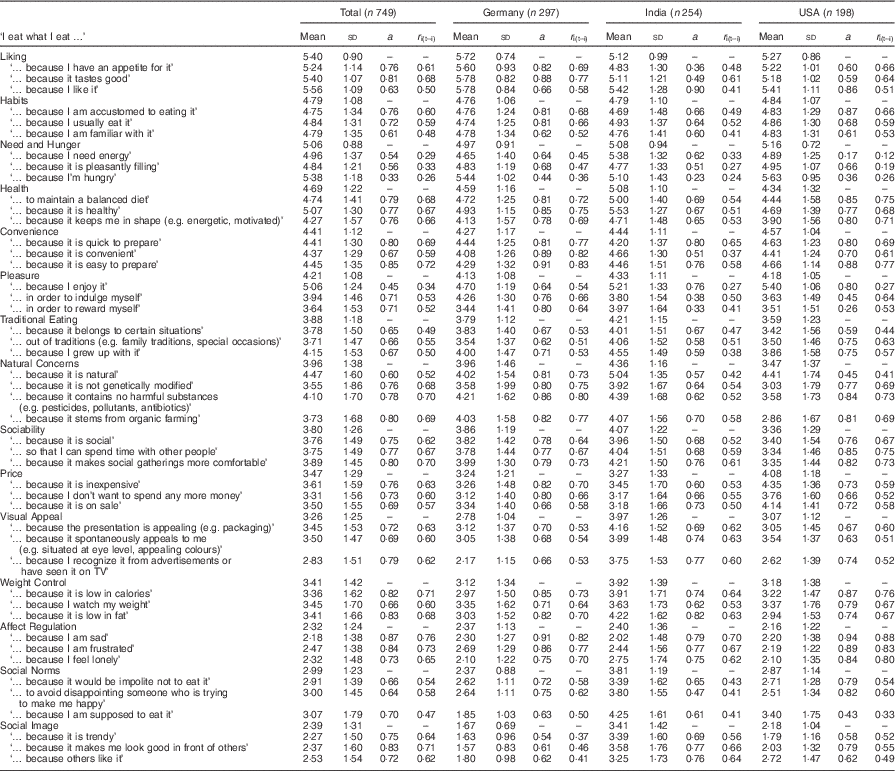
TEMS, The Eating Motivation Survey; TV, television.
Confirmatory factor analyses of TEMS items: goodness-of-fit indices for models for the full sample and for the three countries
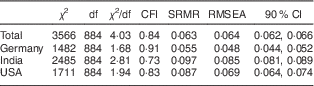
TEMS, The Eating Motivation Survey; CFI, comparative fit index; SRMR, standardized root-mean-squared residual; RMSEA, root-mean-square error of approximation.
All χ 2 are significant at P<0·001.
Pearson correlations between TEMS motives for the full sample and internal consistencies (Cronbach’s α) for the full sample and for the three countries
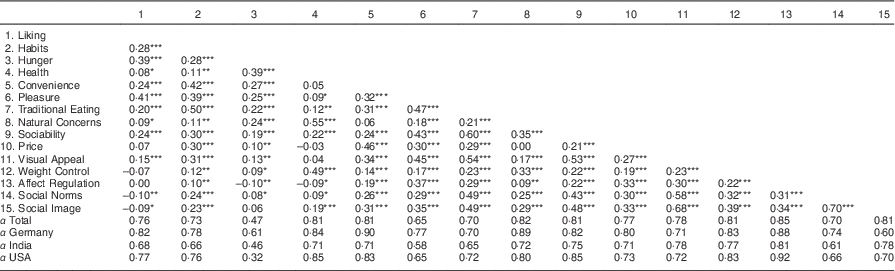
TEMS, The Eating Motivation Survey.
*P<0·05; **P<0·01; ***P<0·001.
All factor loadings within the three countries and the total sample were statistically significant, indicating convergent validity (P<0·001; see Table 2). Only three out of 184 items loadings were below the recommended level of 0·30( Reference Kline 45 ): ‘because I need energy’ and ‘in order to reward myself’ in the US sample; ‘because I’m hungry’ in the Indian sample. Motive correlations within the total sample ranged from −0·10 (Hunger and Affect Regulation) to 0·70 (Social Image and Social Norms), indicating sufficient discriminant validity (cf. Table 4).
For the total sample, thirteen out of the fifteen factors showed good internal consistencies with values higher than 0·70 (Germany, n 13; India n 9; USA, n 12; see Table 4). The lowest internal consistencies occurred for the scale Need and Hunger, with especially low corrected item–scale correlations in the Indian and US samples (Table 2). Moreover, the scale Pleasure had a low internal consistency, especially in the Indian sample, driven mainly by a low corrected item–scale correlation of the item ‘because I enjoy it’.
As Table 3 shows, model fit within the three countries and for the total sample varied from moderate to good. The χ 2 statistics were significant (P<0·001), indicating no exact fit of the model, which is to be expected considering the large sample sizes( Reference Kline 45 ). Despite the complexity of the model with fifteen factors and forty-six items, the χ 2/df ratio indicated a good approximate model fit in all samples, as values were below χ 2/df=5( Reference Bollen and Long 47 ). Also, the SRMR and RMSEA indicated a reasonable approximate model fit. Only in the Indian sample was the RMSEA slightly above the recommended 0·08( Reference Kline 45 ). The CFI was below the recommended threshold of 0·90 in all but the German sample( Reference Kline 45 ). These differences in model fit as a function of the fit index can be explained by the kind of fit index. Specifically, the acceptable values of SRMR and RMSEA indicate a satisfactory fit in comparison to the best possible model, whereas the low CFI indicates suboptimal improvement compared with the worst model. Additionally, Heene et al.( Reference Heene, Hilbert and Draxler 50 ) indicated that the CFI needs to be interpreted with caution when sample sizes are below n 500.
Measurement invariance of TEMS across countries
Table 5 shows that the configural invariance model fitted the data well, which indicates that the same factor structure is valid across countries. Specifically, χ 2/df, SRMR and RMSEA indicated a reasonable model fit. Only the CFI was below the recommended threshold of 0·90, which was to be expected regarding results from one-group confirmatory factor analyses (Table 3). Comparing the configural and metric invariance model showed that the decrease in model fit was well within Chen’s( Reference Heene, Hilbert and Draxler 50 ) recommendations, indicating metric invariance (ΔCFI=0·009; ΔRMSEA=0·001; ΔSRMR=0·001). Hence, motive factors had the same meaning across countries( Reference van de Schoot, Lugtig and Hox 51 ). Moreover, comparing the metric and scalar invariance model showed that the increases in RMSEA (ΔRMSEA=0·008) and SRMR (ΔSRMR=0·007) were also well within Chen’s( Reference Chen 49 ) recommendations, indicating scalar invariance. However, the decrease of the CFI was above the recommended level (ΔCFI=0·092).
Confirmatory factor analyses of TEMS items: results from measurement invariance analysis

TEMS, The Eating Motivation Survey; CFI, comparative fit index; SRMR, standardized root-mean-squared residual; RMSEA, root-mean-square error of approximation.
All χ 2 are significant at P<0·001.
To determine the sources of this CFI decrease, separate models were estimated for each of the fifteen motive factors in a first step, as suggested by Cheung and Rensvold( Reference Cheung and Rensvold 52 ). In each model, the intercepts of items within one factor were constrained to be equal across countries, whereas the remaining item intercepts were not. For each of these fifteen models, the decrease in the CFI in comparison to the metric invariance model was calculated, with a ΔCFI≥0·010 indicating that item intercepts within this factor might be non-invariant. In a second step, items of all factors indicating non-invariant items were examined( Reference Cheung and Rensvold 52 ). Specifically, for each of these items separate models were estimated in which that item’s intercept was constrained to be equal across countries, whereas the other intercepts were not. As for factors, the CFI of each of these constrained models was compared with the CFI of the metric invariance model, with ΔCFI≥0·010 indicating scalar non-invariance of this item.
Results showed that in eleven out of fifteen motive factors ΔCFI was smaller than 0·010. Only in four out of the fifteen motive factors was ΔCFI greater than or equal to 0·010, namely in the factors Social Image (ΔCFI=0·017), Social Norms (ΔCFI=0·024), Visual Appeal (ΔCFI=0·010) and Natural Concerns (ΔCFI=0·010). An exploration of the thirteen items associated with these factors revealed that only three item intercepts were non-invariant: the intercepts of the items ‘because it makes me look good in front of others’ (ΔCFI=0·012; intercept for Germany=1·57, intercept for India=3·58, intercept for USA=2·03) and ‘because it is trendy’ (ΔCFI=0·011; intercept for Germany=1·63, intercept for India=3·39, intercept for USA=1·79) of the factor Social Image, as well as the intercept of the item ‘because I am supposed to eat it’ (ΔCFI=0·021; intercept for Germany=1·85, intercept for India=4·25, intercept for USA=3·40) of the factor Social Norms. Hence, the levels of the items were equal across countries for the factors Liking, Habits, Need and Hunger, Health, Convenience, Pleasure, Traditional Eating, Natural Concerns, Sociability, Price, Visual Appeal, Weight Control and Affect Regulation (scalar invariance). This implies that scores of these thirteen latent motive factors can be compared across countries. Moreover, as two out of three items of the motive factor Social Norms also showed scalar invariance, its latent means can also be compared across countries( Reference van de Schoot, Lugtig and Hox 51 ). Only cross-country comparison on the motive factor Social Image should be treated with caution as two out of three items showed scalar non-invariance, meaning that samples from the three countries differ in their tendency to give higher or lower responses on the two items.
Discussion
The present study investigated whether the fifteen basic eating motives found to underlie eating behaviour in German samples also underlie eating behaviour in the USA and India. More precisely, it tested whether the fifteen-factor structure of TEMS is generalizable to people from the USA and India. Moreover, measurement invariance of TEMS across the three countries was investigated. Despite the complexity of the fifteen-factor model, the model fit indices χ 2/df, SRMR and RMSEA indicated a reasonable model fit with values below 5, 0·10 and 0·08, respectively. Only the CFI was below the recommended threshold of 0·90. In total, 181 out of 184 item loadings were above the recommended threshold of 0·30. Furthermore, the results indicated that the factorial structure of TEMS is invariant across countries with respect to factor configuration and factor loadings. Also, forty-three out of forty-six items had invariant intercepts across countries. Hence, eating motives were remarkably consistent in structure across countries despite marked differences in eating environments. Moreover, investigation of measurement invariance showed that latent means of fourteen out of fifteen motive factors can be compared across countries in future studies with representative samples. This is a first step towards determining consistency of the fifteen basic eating motives of TEMS across American, European and Asian countries.
In line with indications from previous research( Reference Siegrist, Shi and Giusto 25 , Reference Pechey, Monsivais and Ng 26 ), the eating motives Liking, Habits, Health, Convenience, Price and Weight Control appeared as consistent motives across countries. Moreover, the motives Traditional Eating, Natural Concern, Sociability, Visual Appeal, Affect Regulation, Social Norms and Social Image were found to be consistent across countries.
The cross-cultural validity of these eating motives is also in line with results regarding similar questionnaires. Specifically, the motives included in the FCQ (Health, Mood, Convenience, Sensory appeal, Natural content, Price, Weight control, Familiarity, Ethical concern)( Reference Steptoe, Pollard and Wardle 8 ) have been found to be invariant across European samples and a South-East Asian sample( Reference Januszewska, Pieniak and Verbeke 53 , Reference Pieniak, Verbeke and Vanhonacker 54 ). In a similar vein, the Food-Related Lifestyles instrument, which includes similar constructs as TEMS (e.g. health concerns, price and convenience orientation)( Reference Brunsø and Grunert 55 ), has been found to be invariant across European samples( Reference Scholderer, Grunert and Brunsø 56 ). Also a long tradition of research on the Dutch Eating Behavior Questionnaire( Reference van Strien, Frijters and Bergers 57 ) showed that its factors (emotional, restrained and external eating) are valid across a large range of European and Asian samples( Reference Wu, Cai and Luo 58 – Reference Dakanalis, Zanetti and Clerici 60 ).
It is, however, important to note that the scale Need and Hunger did not appear as a reliable scale in all countries. Similarly, reliability of the motive scale Need and Hunger has been low in previous work( Reference Renner, Sproesser and Strohbach 11 ). Despite its low reliability, though, it was one of the most important eating motives (see Table 2). This speaks in favour of taking hunger simply as hunger, as Jackson et al.( Reference Jackson, Cooper and Mintz 61 ) put it, and thus as a unique, mono-faceted motive that is better captured with one item than with classical psychometric scales. Moreover, slight country differences were observed for the scale Pleasure. Specifically, loadings and item–scale correlations were higher in the German sample than in the other samples. Examining the correlations between the three items showed that in the German sample, all item correlations were acceptable. However, whereas correlations between the items ‘in order to reward myself’ and ‘in order to indulge myself’ were also acceptable in the US and Indian sample, the item ‘because I enjoy it’ correlated only weakly with the other two items both in the US and Indian sample. This might hint to a different meaning of the English item ‘because I enjoy it’ compared with the German item (‘um es mir gut gehen zu lassen’), indicating an item bias( Reference van de Vijver 62 ). Specifically, the English wording might tap more into the liking of food than into eating because of positive emotions. Hence, it is recommended that future research tests English wordings whose meaning is more similar to eating because of positive emotions.
We found that the factor configuration, factor loadings, and forty-three out of forty-six item intercepts were comparable across countries, which implies that latent means of fourteen out of fifteen motive factors can be compared across countries in future studies with representative samples( Reference van de Schoot, Lugtig and Hox 51 ). Intercepts of the items ‘because it makes me look good in front of others’ (factor Social Image), ‘because it is trendy’ (factor Social Image) and ‘because I am supposed to eat it’ (factor Social Norms) were not comparable. This means that sample-specific response biases exist that are caused by other influences than variations in the underlying factor( Reference Scholderer, Grunert and Brunsø 56 ). In other words, samples from the three countries differ in their tendency to give higher or lower responses on these items( Reference van de Schoot, Lugtig and Hox 51 ). This does not prevent comparison of latent means across countries for the factor Social Norms because two of its items had invariant intercepts and loadings( Reference van de Schoot, Lugtig and Hox 51 ). However, for the factor Social Image the raw data would need to be corrected for the bias before comparing the means across countries( Reference Scholderer, Grunert and Brunsø 56 ).
Concerning interrelationships between motives, we replicated earlier findings( Reference Steptoe, Pollard and Wardle 8 , Reference Renner, Sproesser and Strohbach 11 , Reference Jackson, Cooper and Mintz 61 ). Specifically, in our multi-country sample, high correlations were observed between the motives Sociability, Social Norms, Social Image, Visual Appeal, Traditional Eating and Habits. This close network of sociocultural and biological motives stood against health concerns, which only showed high correlations with Natural Content and Weight Control (see also Keller and van der Horst( Reference Keller and van der Horst 63 )). Hence, health campaigns that only target health concerns regarding eating might have difficulties in attaining sustainable eating behaviour changes in the different countries if they do not also address these sociocultural and biological motives( Reference Renner, Sproesser and Strohbach 11 ).
Limitations
There are some limitations to the present study. First of all, the fact that Indian participants filled in the English version of TEMS might have resulted in some noise in the data due to imperfect understanding of questions. Although we included attention (and understanding) checks in the questionnaire, imperfect understanding of some wording might explain why correlations in the Indian sample tended to be lowest. Second, our samples were not representative, oversampling, for example, wealthy Indians with English skills and access to the Internet. The lack of representativeness in terms of gender and BMI is unlikely to have affected the results, as the factor structure of TEMS has been shown to be invariant across gender and BMI( Reference Renner, Sproesser and Strohbach 11 ). Moreover, whereas comparing mean eating motives between countries would have been biased by systematic sample differences, the performed within-country correlations are not biased by such differences( Reference Heine 64 ). Still, future research is needed to address these limitations, translating TEMS into more languages and using representative samples.
Conclusion and future research
The present study is a first step towards a systematic investigation of the consistency of the fifteen basic eating motives across different eating environments. With regard to the consistency across three diverse samples of Germans, Indians and US-Americans, we can conclude that the conceptual organization of reasons why people eat is highly comparable between these groups. With this in mind, we can generalize the description of what drives normal eating behaviour in these countries and target ways to promote normal and healthy eating behaviour in order to help prevent diet-related diseases. Specifically, the multifaceted nature of normal eating behaviour implies that eating behaviour should not be reduced to single eating motives, such as health or weight control concerns, which are often targeted in public health campaigns. In light of the multifunctionality of normal eating behaviour, interventions that target single motives might not only be less effective but might even contribute to ‘conflicted’ eating behaviour. For instance, interventions targeting weight control may conflict with the motive for pleasure and eating enjoyment( Reference Stroebe, Mensink and Aarts 65 ), which might in turn pave the way to disordered eating. Future studies need to continue this line of research in other eating environments and include questions about eating motives that might not be included in TEMS yet because of uncommonness in Western countries to fully determine the basic motives for human eating behaviour.
Acknowledgements
Acknowledgements: The authors would like to thank Fee Benz and Juliane Müller for their support. Financial support: This research was supported by a fund from the Zukunftskolleg of the University of Konstanz within the second funding period of the Excellence Initiative of the German Federal Governments. The funding source had no role in the design/conduct of the study, collection/analysis/interpretation of the data or preparation/review/approval of the manuscript. Conflict of interest: None. Authorship: All authors contributed to the development of the study concept. G.S. and M.B.R. collected the data. G.S. conducted data analyses and B.R. contributed significantly to the interpretation of data. G.S. prepared the first manuscript draft and all other authors provided critical revisions. All authors approved the final version of the manuscript for submission and agreed to be accountable for all aspects of the work. Ethics of human subject participation: This study was conducted according to the guidelines laid down in the Declaration of Helsinki and all procedures involving human subjects/patients were approved by the ethics committee of the University of Konstanz. All participants consented to participate in this study by starting the online survey after being fully informed about the study.
Supplementary material
To view supplementary material for this article, please visit https://doi.org/10.1017/S1368980017002798



