





LEARNING OBJECTIVES
After reading this article you will be able to:
• understand the importance of apps and written tools to empower patients with epilepsy and intellectual disability and their families
• understand the role of community intellectual disability services in supporting individualised risk assessment
• understand the importance of sudden unexpected death in epilepsy (SUDEP) risk reduction on the epilepsy care pathway.
Professionals working with people with intellectual disabilities will frequently be supporting individuals who have epilepsy. Epilepsy is highly prevalent in this population, frequently severe and refractory to treatment and often has started in early life (Watkins Reference Watkins, Linehan and Brandt2022).
Although psychiatric services may focus on comorbidities such as mental illness, challenging behaviour and autism they will also need competencies in epilepsy and an understanding of their potential role on the epilepsy care pathway. The key role of psychiatric services and epilepsy treatment has been well covered in a report by the Royal College of Psychiatrists (2017) and it is beyond the scope of this article to address epilepsy treatment and the broader configuration of training and service delivery. Here, we focus on elements of the pathway from a psychiatric viewpoint and how technology, where it exists, may support this role. In addition, we will address the importance of psychological assessment, empowerment, understanding mental capacity, working in care environments and supporting families, including those bereaved by epilepsy.
We will not address the very rapidly developing advances in the technology of genetic testing, electroencephalography and neuroimaging.
Growing technological changes
The use of technology is advancing rapidly in medical practice. A large European survey of clinicians explored the use of smart phone apps and devices with patients with multiple sclerosis, depression or epilepsy (Andrews Reference Andrews, Craven and Lang2021). Many of those surveyed used apps in clinical practice and 78% said their patients used apps or wearable devices. These had various purposes, such as activity and mood monitoring, and some were condition-specific, such as epilepsy seizure detection. It is clear that technology is embedded in patient's lives and clinical care. In this article we will explore how technologies can enhance the epilepsy care pathway.
The epilepsy care pathway
The importance of care pathways in addressing variation in care delivery is recognised by the College (Royal College of Psychiatrists Reference Patterson2014). Epilepsy pathways provide a relatively simplified outline of care provision, starting with seizure diagnosis and classification, and moving onto information and support, management and structured review.
For the purposes of this article, we will discuss the role of the pathway for people with intellectual disabilities, focusing on the following areas: (a) diagnosis and classification, (b) information and support, including empowerment and risk assessment, (c) psychological support and (d) bereavement support for families. Readers should note that intellectual disability is also known as learning disability in UK health services.
Pathway stage: diagnosis and classification
The diagnosis of epilepsy is fraught with challenge, and misdiagnosis rates vary greatly (Oto Reference Newman, Ashby and McLean2017). Diagnosis is arguably more complex in individuals with intellectual disabilities, some of whom have difficulty describing symptoms and participating in investigations, especially when there is a potential behavioural manifestation of epilepsy. In this context it is likely that many professionals working with someone with an intellectual disability will not consider themselves a part of the diagnostic pathway. However, services can support the diagnostic process or may be directly involved, for example with individuals who have a diagnosis of non-epileptic attack disorder. Diagnosis should be made through referral to a service skilled in the process. Epilepsy diagnosis an active process requiring the provision of accurate information on the suspected seizure type. A description of the potential seizure event is central to diagnosis, and this is likely to be helped by advances in the use of smartphone video technology.
Smartphone video analysis by experts has been shown to have high diagnostic value. A US study (Tatum Reference Tatum, Hirsch and Gelfand2020) in which 530 smartphone videos of 44 patients were reviewed by expert physicians showed that expert examination of a smartphone video was highly accurate in predicting a diagnosis of epileptic seizures confirmed by electroencephalogram (EEG) monitoring. The odds of receiving a correct diagnosis were 5.45 times greater using smartphone video alongside patient history and physical examination results than using history and physical examination alone.
Zuberi and colleagues (Reference Zuberi2021) have developed a platform called vCreate Neuro for the use of video in the diagnosis of childhood epilepsy. This collaborative cloud-based project, now running in over 200 units around the world, allows specialised paediatric neurology review of smartphone video uploaded by parents or carers.
Pathway stage: information and support
NICE guidance in the UK recommends a broad spectrum of information and support to be provided to people with epilepsy (NICE 2022). Table 1 describes the range of information needs. Broadly speaking, psychiatric services are likely to be involved, often through the wider multidisciplinary team (MDT), in supporting the communication of this information and in the assessment of risk.
Selected support needs related to domains of care for individuals with intellectual disabilities

Capacity and best interests
Many decisions in epilepsy have the potential to affect risk, yet may be considered also to have an impact on and restrict the individual. Under UK legislation, individuals have the right to be involved in decision-making about their care and treatment and if they have mental capacity for this involvement. It is in the area of capacity assessment that psychiatric services are often needed, owing to their knowledge of capacity assessment and the best interests process, areas covered by the Mental Capacity Act 2005 (Box 1). The range of decisions in epilepsy management is broad. Treatment decisions, new medication, medication withdrawal, epilepsy surgery – all involve an assessment of capacity and best interests decision-making for those without capacity for the specific decision. Measures to reduce risk may be seen as restrictions on an individual's life, especially monitoring for seizures. Box 2 describes key issues for epilepsy services in the assessment of mental capacity. The aim should be to enable risk reduction and, if capacity is impaired, to do this in the best interests of the individual.
The key principles of mental capacity assessment
• The person must be assumed to have capacity unless it is established that they do not
• All step should be taken to help the person make the decision
• The person is entitled to make an unwise decision
• Action and decisions must be in the person's best interests
• The action or decision must be the least restrictive option
Assessment of mental capacity
Capacity assessment
Assessment should be guided by the six principles of Mental Capacity Act 2005 (see Box 1). It should be done:
-
○ in the best setting for the person
-
○ at the best time of day, when individual is most alert
-
○ when the individual is known to be most receptive of communication
Enabling communication and understanding
• Find out the best way to communicate with the person and any specific needs, e.g. hearing problems, a particular best person to be with them, use of easy-read material, extra time, several visits if assessment is not urgent
• Understand how the person communicates if non-verbal, e.g. can they use any communication aid, squeeze a hand, eye blink/point?
• Involve a speech and language therapist to assess communication and offer adaptation and advice
• Use the person's communication passport if they have one
Individual assessment of the least restrictive option
Start with the least restrictive option, only increasing this as necessary
Consider the Deprivation of Liberty Safeguards (DoLS) if the person lacks capacity to consent to any restrictions
Organisation of a best interests meeting
• Determine the key players to be involved in a multidisciplinary team approach
• The person most appropriate to make the decision is the decision maker
• Involve family members
• For more complex decisions, determine whether an independent mental capacity assessor (IMCA) or independent mental health advocate (IMHA) is needed
Communication and intellectual disability services
A fundamental aim is to establish a strong relationship between the individual and their intellectual disability nurse. The foundation of this should be trust, respect and empowerment of the patient. This focus will then need to extended into their immediate support network of family and paid carers (Box 3).
Case vignette: empowerment through education
Empowering the patient, family members and paid carers in epilepsy and its management is a crucial competency of community nursing, as the following vignette shows.
Billy was transitioning into adulthood. His mother was so scared of his seizures that initial discussion showed a high level of anxiety relating to seizure severity, fear of changes in medication and associated restrictions on Billy's independence, such as reducing the times he could leave the house. However, after a few years of close support and education she has become a very confident carer, evidenced by a reduction in the number of times she calls out ambulances and the stopping of a rescue medication. This has led to greater community experiences and independence for Billy.
To reach these aims, assessment of the person's capacity is needed to determine the most effective way of involving them in their own care (Box 2). When a person is deemed to have capacity to make informed decisions about their care this can raise specific challenges for health professionals in relation to decisions regarding risk. It requires the nurse to allow the patient to take risks even if the professional feels uncomfortable about it. For example, an individual might refuse a listening device for nocturnal seizure or use a bedroom next to the stairs despite a history of falls on stairs and associated seizure-related injuries. All such decisions should have at their core the fact that the nurse and wider team will have provided accessible information to support the individual's decision-making and understanding of risk.
When capacity is lacking for a specific decision relating to risk, the best interests approach should be used. It should include discussion with the wider MDT with as many key players as possible, most importantly engaging the family in the decision-making process. A key clinical skill is objective observation of outcomes in circumstances where capacity is lacking, particularly if the individual is not able to express themselves and clinicians are reliant on non-verbal behaviours. It requires full consideration of how the individual presents, behaviours that may be communicating something and consideration of any differential diagnosis issues.
All individuals are different but there are key themes to consider in gathering information about the individual and communicating it with them. Box 4 highlights the information domains that need to be considered to ensure empowerment and understanding of risk.
Information domains
• Accessible information: information should be provided in a way the patient can understand, e.g. in ‘easy read’ format
• Epilepsy care plans: these must be reviewed regularly and circulated to those directly involved (the general practitioner, day services, college, transport, respite care, etc.)
• Use of regular risk assessment tools including checklists such as SUDEP and Seizure Safety Checklist
• Person-centred interaction: home visits/assessments etc. should be arranged at a best time for the individual, with the person they choose supporting them
• Reasonable adjustments: should be used as required to get the most effective outcome
• Speech and language therapists (SLTs): consider involving an SLT to enable more effective communication with the person
Supporting a life with epilepsy
Epilepsy is frequently lifelong in people with intellectual disabilities, thus long-term support for the individual and their family or carers is needed. We will in other sections discuss how this support is delivered in relation to risk and psychological problems. Although many issues intertwine here, we discuss in this section how lifelong support in the management of epilepsy can be considered and in particular how technology can help.
Annual review is important, as is an epilepsy care plan. This review should discuss issues we have already mentioned, focusing on treatment, information and risk. The pathway to deliver this review is not always clear, and disparity and inequality in access to neurological services are common in adult care. Key elements of the support are this review and access to support between reviews.
Technological approaches to review and management
Patterson (Reference Patterson2020) describes how seizure-related questions were developed for a smartphone app to be used to inform epilepsy diagnosis and management in settings with limited epilepsy services. In this small study, trainee doctors and non-physician health workers used the app to evaluate 23 individuals presenting with suspected epilepsy, and the individual summaries were subsequently compared with face-to-face evaluation by a neurologist. The data showed high accuracy for diagnosis of epileptic events (96%) and treatment recommendation (90%), suggesting potential benefit in poorly resourced settings. The same author reviewed the use of telemedicine in resource-poor settings (Patterson Reference Page2019), where he discusses a pilot telemedicine project in Nepal involving this smartphone app. The app was used by trained villagers, who then linked to specialist services in the capital city. The author showed that this approach led to reduction in the epilepsy treatment gap.
Outside of resource-poor countries smartphone apps have also been explored to support self-management in epilepsy. Escoffery and colleagues (Reference Dawkins and Ali2018) reviewed apps available in autumn 2017 from the Apple app Store. They identified 20 apps meeting their criteria. Common areas covered included treatment, seizure tracking, response to seizures and safety. The authors concluded that apps needed to cover broader domains, including behaviour change.
Alzamanan and colleagues (Reference Alzamanan, Lim and Ismail2021) performed a systematic review of self-management apps. A total of 22 epilepsy and seizure-monitoring apps were found. The most common areas covered were seizure tracking and seizure response. Other areas included treatment management and medication adherence.
The EpSMon app
Innovation to deliver and communicate risk of sudden unexpected death in epilepsy (SUDEP) in a person-centred and holistic way led to the development of a standardised checklist within a digital app called EpSMon (sudep.org/epilepsy-self-monitor). This digital version of the SUDEP and Seizure Safety Checklist (see below) has been recognised as an exemplar of good practice tools to support communication, including in national surveillance reports into epilepsy deaths where management of risk of SUDEP and other fatality risks across care settings was poor (LeDeR Team 2019).
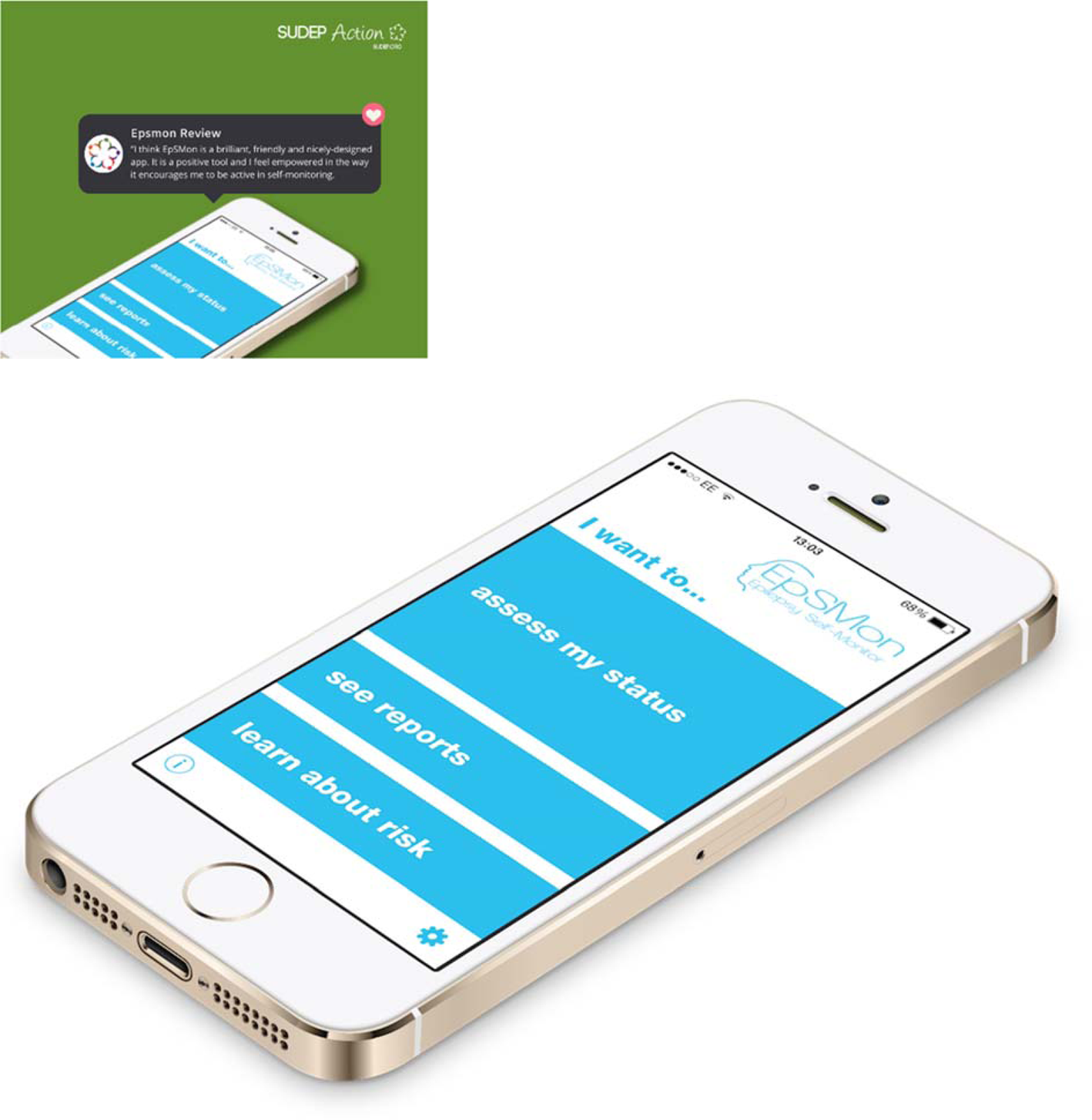
EpSMon currently has around 4500 registered users (Newman Reference Hanna and Ashby2020). The app (Fig. 1) encourages self-monitoring of seizure risk over time, helping individuals to identify when to seek medical help, and the personalised information they record on the app is a support tool in conversations with professionals involved in decision-making and delivery of their care. Newman and colleagues found that 99.8% of EpSMon users found they had risks present; 21% of users had had no clinical support for their epilepsy in the previous 12 months and more risks than those who were receiving regular support. Of those receiving regular support, 30% had seen an epilepsy specialist and 56% had seen a general practitioner in the previous 12 months (Newman Reference Hanna and Ashby2020).
The EpSMon app. © SUDEP Action.
Supporting risk management
We have already described how smartphone apps, in particular EpSMon, can manage risk through patient and carer empowerment. In this section we will discuss how individualised patient safety can be supported through the use of annual risk assessment checklists and seizure detection devices.
An annual risk assessment individualised to the person with intellectual disability is fundamental. Psychiatric services will be essential in delivering this risk assessment, especially community intellectual disability services.
Role of community services
To address an individual's risk, the community intellectual disability nurse completes an epilepsy profile, which includes a full risk assessment. Service providers/organisations complete their own risk assessments.
The risk assessment provides a structured template which is then tailored to each patient using a person-centred approach. As well as providing a thorough risk assessment it can also be useful in planning, i.e. anticipating the person's needs in the future, such as planned accommodation moves, transitions, education and employment. It will also highlight areas that require more in-depth assessment: seizure-related injuries, falls and fractures and adherence to anti-epileptic medication. It also requires consideration of benefit versus risk in care planning. The wider MDT, social worker, allied health professionals and others may then be included in seizure management plans.
There is the added dilemma in seizure risk management that families and carers may see risk differently from health professionals. Their own anxieties can add heightened stress in managing risk. It requires a degree of transparency when addressing risk and an awareness of not overly restricting individuals in order to keep them safe. Parents especially may feel this fear.
The risk assessment should cover all the identified risk factors; these include but are not confined to: medication, bathing (the risk of drowning and scalding), sleeping, especially nocturnal seizures, SUDEP risk and women's reproductive health. In more recent years community intellectual disability nurses have placed more focus on bathing and SUDEP risk with reference to nocturnal seizures and other tonic–clonic seizure activity and, in women, the risk to the unborn child from valproic acid and the impact of the menopause.
Bone health is another area that is addressed in the assessment, with particular reference to enzyme-inducing anti-epileptic drugs. The incidence of fractures in seizure-related incidents is recorded and the need for prescription of vitamin D and calcium and investigation for osteoporosis is considered. Where applicable, the nurse recommends the prescription of these to the general practitioner in a covering letter with the individual's epilepsy profile attached.
Individualised risk assessment using a structured assessment enables shared decision-making between the individual, their families and carers and the MDT as appropriate. This encourages adherence to the seizure management recommendations in more able patients through informed consent.
Obviously, supporting adults and families in community settings adds another dimension to the complexity of risk assessment. Often when exploring areas of risk, challenges arise, for example bathing risks, bathing unattended, difficulties with bathroom layout and access to showers. Referrals to occupational therapy can be beneficial in achieving better outcomes and safer seizure management. It can be difficult for nurses to discuss risks in depth with families and it requires a sensitive, non-judgemental approach to prevent increased anxiety about seizure management. Often, there is ‘the opening of a can of worms’, where things have just muddled along until formal assessment determines the need for new approaches and ways of working to be accepted and guidelines followed.
Technology
Technology and risk-structured tools can help provide evidence of risk. The development of the SUDEP and Seizure Safety Checklist has offered a structured support to annual review of risk (Shankar Reference Rugg-Gunn2020), empowering patients through assessing and identifying risk and prompting the need for treatment change. Created by SUDEP Action and Cornwall Partnership NHS Foundation Trust and used by over 1300 health professionals in the UK, this free tool has been integrated with patient record systems and is accessed by over 70% of primary care professionals in England (SUDEP Action, personal communication with authors). It is also available in Australia. Shankar and colleagues (Reference Shankar, Henley and Boland2018) conducted a study to see whether the introduction of the checklist in epilepsy clinics led to individual risk reduction. The checklist was administered at baseline and 12 month follow-up to newly diagnosed, referral and routine follow-up patients attending a specialised epilepsy neurology clinic (n = 139) and a clinic specialising in epilepsy and intellectual disability (n = 129). The standardised checklist led to shared discussions about risk management and fatality risks such as SUDEP, and there was an overall reduction in modifiable risks. The greatest impact was in people whose risk was high at baseline.
The checklist has been used to support a national study of risks in people with intellectual disability which found that 25% of participants at risk with epilepsy did not have an epilepsy care plan (Sun Reference Simblett, Biondi and Bruno2022).
SUDEP risk and night-time monitoring
SUDEP is a relatively common and devastating outcome of, in the main, uncontrolled epilepsy. SUDEP affects approximately 1 in 1000 people with epilepsy each year, but in severe uncontrolled epilepsy, which is particularly common in people with intellectual disability, the risk can be 1 in 300 patient years or worse (Whitney Reference Whitney and Donner2019).
As a key high risk for SUDEP is tonic–clonic seizures, especially nocturnal tonic–clonic seizures, an assessment of the need to detect/monitor for night-time seizures is crucial (Box 5). For psychiatric services assessment may be needed for both out-patients and in-patients, where such services exist.
Night-time risk prevention
• Each individual needs a personalised night-time risk assessment
• When SUDEP risk is identified mitigation strategies must be communicated to the person, family and carers
• Improved treatment through medication changes or other measures might be needed
• The presence of nocturnal tonic–clonic seizures should be investigated and appropriate support given if they are identified
• Patients and carers will need advice on identification of risks, issues of mental capacity, etc.
• Individuals should be assessed for the use of detection through devices, though there is no perfect technological solution available and ongoing support by specialist epilepsy services is needed
Detection of seizures as they occur involves detailed history-taking and a matching of the detection method to the seizure type. In general, if there is a history of nocturnal generalised seizures then detection may reduce SUDEP risk by enabling direct intervention when a seizure is in progress. Techniques used include listening devices, bed-based motion sensors and regular direct observation via video monitors.
The detection of seizures at night is an area of intense technological and research innovation (Page Reference Oto2019; Rugg-Gunn Reference Rugg-Gunn2020). Wearable devices have been designed covering a range of potential seizure indicators: breathing, movement, skin conduction, cardiac and muscle activity and EEG. The majority are worn on the wrist or upper arm. The challenge has been accuracy and acceptability. In a qualitative assessment of wearable devices to monitor seizure activity. Simblett and colleagues (2020) reported that individuals were widely accepting although they were influenced by issues such as bulky wires. Concerned were raised about perceived accuracy and visibility if they had to wear them in public.
A recent clinical practice guideline developed by the International League Against Epilepsy and the International Federation of Clinical Neurophysiology (Beniczky Reference Sun, Perera and Henley2021) recommends the use of wearable devices for detection of tonic–clonic seizures, but not other seizure types, such as tonic, absence, atonic, myoclonic, if support is available to provide immediate care.
Pathway stage: psychological support
Mental illness is common and treatable in people with epilepsy and has been shown to have a profound impact on quality of life. Guidelines exist supporting management, although guidance for people with intellectual disabilities and epilepsy is less common and based on less high-quality research. Psychological support is crucial for all people with epilepsy and it should be available from first diagnosis. In addition, the nature of sudden and early death, often associated with SUDEP, provides a strong case that this support should extend to those bereaved from an epilepsy-related death: this is addressed in the next section.
Psychiatric services for people with intellectual disabilities are experienced in diagnosis and treatment in this population, but the presence of epilepsy provides additional challenges. Table 2 shows some key areas of support needed and specific competencies for psychiatric services. Particular challenges exist in the interpretation of side-effects and the interpretation of the impact of epilepsy on behaviour. Technological advances already discussed, such as the use of smartphone video, can be particularly helpful in diagnosis.
Psychological support on the epilepsy care pathway

Pathway stage: bereavement support
The impact of an epilepsy death on family and carers is often traumatic, transformative and life-long (Kennelly Reference Escoffery, McGee and Bidwell2002; Donner Reference Cowdry and Stirling2016).
A large proportion of epilepsy deaths are unexpected and many are in the young. Awareness of SUDEP and other significant risks is fundamental to enablement through life and to living well with grief. This is clear from an independent review into the death of Clive Treacy in an assessment and treatment unit in England in 2017 (Box 6).
Case study: Clive Treacy
Clive Treacy, a man with epilepsy and intellectual disability, died suddenly in care aged 47. His sister, who had acted as his family advocate during his life (without knowledge of his high risk of SUDEP), campaigned for an independent report into his death. The report, published 4 years after his death, found multiple, system-wide failures across health and social care provision during his life and in the aftermath of his death. Guidelines were not used and his high risk of SUDEP was not understood by or communicated between the services involved in his care. One of the recommendations was that standardised tools such as the SUDEP and Seizure Safety Checklist should be used to communicate risk across services and that national systems consider how to improve investigation and reporting of epilepsy-related deaths (Dawkins Reference Kennelly and Riesel2021).
A survey of families in the UK during the COVID-19 pandemic found that 86% of those suddenly bereaved by epilepsy felt their mental health had been negatively affected by the pandemic and the government's lockdown response, with 60% experiencing increased isolation and 51% experiencing distressing flashbacks (Hanna Reference Donner, Waddell and Osland2020).
As a response to rising epilepsy-related deaths in the UK (Wojewodka Reference Wojewodka, Gulliford and Ashworth2021) and wide-ranging systemic problems relating to the investigation of such deaths and the support given to bereaved families, a good practice model for supporting bereaved individuals has been developed. This is led by families and clinicians through the support provided by the charirity SUDEP Action.
Early intervention can reduce morbidity in the bereaved following any sudden unexpected death (Yates et al, Reference Yates, Ellison and McGuiness1990). SUDEP Action has developed a care pathway over 25 years to support person-centred normalisation and self-validation. The centrality of the bereaved person is recognised at every stage of the pathway, which uses a triage service to enable each person to access relevant support as this changes over time (Cowdry Reference Beniczky, Wiebe and Jeppesen2020). Bereaved families who are signposted early to SUDEP Action are offered specialist support with a range of practical options as part of a support and counselling service. Vulnerable people seeking information or answers to questions have a SUDEP Action support or case worker, who helps to enable them during highly complex investigations after a sudden death and as and when needed. In one year, 70 people were helped so that a death could be properly investigated and reported in a timely way. People seeking greater understanding and awareness of SUDEP are offered appropriate opportunities within a structured support service co-designed by families and health professionals that recognises and responds to needs, including safeguarding. People wishing to share their knowledge and lived experiences for research can register with the Epilepsy Deaths Register (www.epilepsydeathsregister.org). This international research register, currently with over 900 families bereaved by epilepsy, is a valuable repository of information relating to events leading up to a death and events in the aftermath. Anecdotal evidence from families suggests the process of feedback on the nature and experiences of the loss of a loved one can be cathartic.
Conclusion – the future psychiatrist?
Our article has shown the importance of the psychiatrist on the care pathway of people with intellectual disability and epilepsy (Box 7). The integration of technology will be an increasing element of this function. It is likely that this technology will improve, especially in the areas of patient empowerment, specialist clinical support, risk assessment and seizure detection. The future psychiatrist will need to add another competency to their portfolio, that of a thorough understanding of technological options and how they can support their use in this complex patient population.
Learning points
Learning point 1
• Psychiatric services can aid the diagnostic pathway through supporting the recording of video of the event, and providing this for expert review
Learning point 2
• The person has the right to be involved in making decisions about their own risk and care if they have mental capacity
Learning point 3
• Smartphone apps have a role in enabling empowerment of individuals with epilepsy
• Smartphone apps can support clinical decision-making where access to services is poor
• Recommend the EpSMon app to patients and carers
Learning point 4
• Reduction of seizure-related mortality is a responsibility of all clinicians
• Clinical services should consider use of structured epilepsy risk assessment tools such as the SUDEP and Seizure Safety Checklist
Author contributions
M.K., J.H. and G.G. all contributed to the planning, drafting and review of the paper.
Funding
This research received no specific grant from any funding agency, commercial or not-for-profit sectors.
Declaration of interest
M.K. is a trustee of SUDEP Action. J.H. is co-founder and chief executive officer of SUDEP Action. J.H. co-designed the SUDEP and Seizure Safety Checklist and receives no financial gain from its use.
MCQs
Select the single best option for each question stem
1 Which of the following is not a component of capacity assessment?
a presumption of capacity
b supporting the person to make a decision
c the person's right to make unwise decisions
d professionals’ personal preference
e the requirement for the least restrictive intervention.
2 The SUDEP and Seizure Safety Checklist does not:
a prompt treatment change
b empower patient choice
c identify areas of risk
d promote diagnostic accuracy
e support improved risk assessment.
3 The greatest indicator of SUDEP risk is:
a gender
b level of intellectual disability
c absence of epilepsy
d medication change
e nocturnal generalised tonic–clonic seizures.
4 It is recommended that devices should be used to identify which type of nocturnal seizure?
a absence
b tonic
c tonic–clonic
d myoclonic jerk
e atonic
5 The essential components of an epilepsy risk assessment do not include which of the following?
a seizure type
b psychiatric medication review
c use of bath or shower
d capacity assessment
e personal views of the patient.
MCQ answers
1 d 2 d 3 e 4 c 5 b


 Open access


eLetters
No eLetters have been published for this article.