

1. Introduction
In developing countries, agricultural fires are used to eliminate residues from crop harvesting and land cover change (Cassou, Reference Cassou2018; Michetti and Pinar, Reference Michetti and Pinar2019; Oliveira et al., Reference Oliveira, Soares-Filho, Oliveira, Van der Hoff, Carvalho-Ribeiro, Oliveira, Scheepers, Vargas and Rajão2021). However, they release pollutants and greenhouse gases (GHGs), and may spread uncontrollably into forests, causing ecological damage comparable to that of deforestation (Barlow et al., Reference Barlow, Lennox, Ferreira, Berenguer, Lees, Nally, Thomson, Ferraz, de, Louzada, Oliveira and Parry2016; Lu et al., Reference Lu, Liu, Zhang and Okuda2020; Matricardi et al., Reference Matricardi, Skole, Costa, Pedlowski, Samek and Miguel2020; Oliveira et al., Reference Oliveira, Soares-Filho, Oliveira, Van der Hoff, Carvalho-Ribeiro, Oliveira, Scheepers, Vargas and Rajão2021; Qin et al., Reference Qin, Xiao, Wigneron, Ciais, Brandt, Fan, Sitch and Moore2021).
To mitigate these adverse impacts, agricultural fires are regulated mostly through command-and-control (CAC). In Brazil, fire use permits are issued, and the size and timing of burnings are constrained (Brasil, 1998a; MT, 2005; AC, 2013). An unlicensed private party found to have caused a fire may be fined, embargoed and, in the case of forest fires, prosecuted (Brasil, 1998b, 2012). CAC is also dominant in Asia. Indonesia’s ‘war on haze’ prohibited agricultural expansion on peatland and banned burnings, revoking offenders’ operational licences (Edwards and Heiduk, Reference Edwards and Heiduk2015; Carmenta et al., Reference Carmenta, Zabala, Daeli and Phelps2017).
CAC is increasingly supplemented by market-based policy. Alternatives to fire – including no-till cultivation, which recycles harvest residues as organic fertilizers, and conversion of harvest residues to energy – have been subsidized (Tallis et al., Reference Tallis, Polasky, Shyamsundar, Springer, Ahuja, Cummins, Datta, Dixon, Gerard, Ginn, Gupta, Jadhav, Jat, Keil, Krishnapriya, Ladha, Nandrajog, Paul, Lopez Ridaura, Ritter, Singh Sidhu, Skiba and Somanathan2017; Bhuvaneshwari et al., Reference Bhuvaneshwari, Hettiarachchi and Meegoda2019). Whereas an Indonesian forest-based company effectively paid smallholders not to burn (Watts et al., Reference Watts, Tacconi, Hapsari, Irawan, Sloan and Widiastomo2019), in China, the subsidization and demonstration of a crop residue recycling technology was more effective than banning burning (Hou et al., Reference Hou, Chen, Kuhn and Huang2019).
Importantly, the costs of fire-free land preparation techniques are geographically specific. In our study region, the Brazilian Amazon, the prices of mineral fertilizers, agrochemicals and tractors, as well as their minimal quantities required to replace fires, vary across municipalities. These prices capture accessibility to markets where inputs and equipment are sold. The required quantities of inputs and tractor-hours vary with the quality of land. For instance, more fertile, less degraded soils need less fertilizer, thereby reducing the cost of replacing burningsFootnote 1 (Li et al., Reference Li, Messina, Peter and Snapp2017; Morello et al., Reference Morello, Piketty, Gardner, Parry, Barlow, Ferreira and Tancredi2018; Aryal et al., Reference Aryal, Maharjan and Erenstein2019) (see online appendix, Section A).
Heterogeneous substitution costs are one of the reasons why we address the question of whether CAC is less efficient than market incentives – the latter being supposedly more flexible in accommodating such heterogeneity (Baumol and Oates, Reference Baumol and Oates1988; Perman et al., Reference Perman, Ma, McGilvray and Common2003). Other reasons include asymmetric information and practical implementation issues. Indeed, adverse selection may arise because only farmers observe the cost of adopting fire-free technologies. Thus, low-cost farmers could self-report as high-cost, receiving a larger-than-needed subsidy. Moral hazard is also possible because only the farmer knows if a land hectare was burned intentionally or not. As a result, farmers may overstate accidental burnings, inflating the subsidy received for each hectare supposedly removed from burning. The unsanctioned violation of fire legislation continues to be reported by researchers (Theesfeld and Jelinek, Reference Theesfeld and Jelinek2017; Carmenta et al., Reference Carmenta, Coudel and Steward2019; Hou et al., Reference Hou, Chen, Kuhn and Huang2019).
Three practical challenges commonly hinder the effectiveness of market-based policies in developing countries. First, land tenure ambiguity prevents landholders from being held accountable, limiting the ability of incentive providers to enforce compliance (Börner et al., Reference Börner, Wunder, Wertz-Kanounnikoff, Tito, Pereira and Nascimento2010; Wunder, 2017; Araújo et al., Reference Araújo, Combes and Féres2019).Footnote 2 Second, farmers may use subsidies to finance deforestation and burning of land parcels not enrolled in the incentive scheme (Börner et al., Reference Börner, Baylis, Corbera, Ezzine-de-blas, Honey-Rosés, Persson and Wunder2017). Finally, non-additionality occurs when the targeted environmental impact would have happened even without incentives, resulting in wasted subsidies (Pagiola et al., Reference Pagiola, Platais and Sossai2019).
But CAC also has limitations, with imperfect enforcement being a major one (Ovaere et al., Reference Ovaere, Proost and Rousseau2013; Blackman et al., Reference Blackman, Li and Liu2018; Luengo et al., Reference Luengo, Caffera and Chávez2020). Politically influential groups may contest legislation and successfully evade sanctions for illegal burning, a problem particularly evident in Latin America (Edwards and Heiduk, Reference Edwards and Heiduk2015; Tacconi, Reference Tacconi2016; Purnomo et al., Reference Purnomo, Shantiko, Sitorus, Gunawan, Achdiawan, Kartodihardjo and Dewayani2017; Eufemia et al., Reference Eufemia, Dias Turetta, Bonatti, Da Ponte and Sieber2022). A specific form of imperfect enforcement that has been little explored in economic studies of environmental policy is the judicial review of sanctions. More specifically, the possibility that sanctions imposed by the executive power are reconsidered after an appeal to the judicial power. In fact, many studies implicitly assume that the institutional structure of developed countries prevails, in which executive and judicial powers are more likely to be aligned in punishing environmental offenses (Tzoumis and Shibilski, Reference Tzoumis and Shibilski2019). By contrast, evidence from developing countries, particularly in Latin America, suggests that delay, diminishment and cancelation of environmental sanctions by the judiciary is more frequent due to the strong influence of local coalitions, frequent conflicts of executive and judiciary authorities and the limited human and financial resources available to courts (Horan and Meinhold, Reference Horan and Meinhold2012; Sousa, Reference Sousa2016; Ungar, Reference Ungar2017; Pailler, Reference Pailler2018; Tatariyanto, Reference Tatariyanto2018; Milmanda and Garay, Reference Milmanda and Garay2020).
The mere possibility of judicial intervention creates an adverse incentive, potentially increasing non-compliance with environmental law. In this case, environmental policy implementation is a game played not only by the policymaker and the farmer, but also by the judicial power. How this additional layer of interactions changes the relative efficiency of CAC and market-based instruments remains unknown, given that if non-compliance, from one side, leads to an excessive level of damage, it also, from another side, generates fine revenue and saves on abatement costs. This paper fills the gap regarding the impact of imperfect sanctioning on efficiency by modelling CAC in the absence and presence of judicial intervention, considering scenarios where intervention may or may not depend on the severity of non-compliance.
Fire policy modelling has so far overlooked the market and government failures discussed in the previous paragraphs. Addressing these gaps is another important contribution of this paper, which also responds to the call of Alpízar and Montero (Reference Alpízar and Montero2011) for new inputs to inform the design of policies seeking to reduce GHG emissions and related environmental damages from land usage in Latin America. For this, we derive optimal designs of CAC and market-based voluntary contracts, drawing on principal-agent models from the agri-environmental schemes literature (Ozanne and White, Reference Ozanne and White2007; White and Hanley, Reference White and Hanley2016; Gómez-Limón et al., Reference Gómez-Limón, Gutiérrez-Martín and Villanueva2019). We incorporate government failures through a novel model of sanctioning-imperfect CAC, which is flexible enough to allow for a probability of judicial intervention that may, or may not, depend on the agent’s degree of non-compliance. These theoretical developments provide the foundation for simulating the relative efficiency of the policies using municipal-level data from the Brazilian Amazon.
The optimal policy designs, when combined with Brazilian Amazon data in the simulations, reveal that most Amazonian municipalities are ineligible for voluntary contracts due to ambiguous tenure, indirect deforestation risk and non-additionality. In the eligible municipalities, contracts, despite the little loss of efficiency imposed by information asymmetry, were still less efficient than perfectly sanctioned CAC. This lower efficiency was mainly due to the excessive fiscal cost of the subsidy premium needed to incentivize low-cost agents to abate more, the co-funding of abatement through distortionary taxation and the minimization of these two costs by requiring lower abatement levels and consequently augmenting the damage affecting society.
These drawbacks were further exacerbated when competing with imperfectly sanctioned CAC, making contracts even less efficient by comparison. This exacerbation arose from the greater ability of CAC to leverage the opportunities for cost minimization and fine revenue generation created by sanctioning imperfection, such as shifting more abatement effort to low-cost agents, and requiring greater abatement by exploiting a sanction probability that increased more than proportionally with the degree of non-compliance.
The next section describes our models, and Section 3 describes our simulations. Section 4 presents the results, including the main economic characteristics of the policies and their relative performance, which are discussed in Section 5. Detailed derivations of the optimal policies are provided in the online appendix.
2. Models
2.1. General assumptions
The agent is a farmer choosing the extent of land to be burned in preparation for agriculture, denoted as  ${f_d}.$ Since negative externalities from burning do not affect the agent, abatement brings no benefit, only cost. We define abatement as the substitution of fire-based land preparation with fire-free practices such as mechanization (i.e., tractor-aided tillage). Abatement cost is assumed as fixed, in marginal terms, and dichotomously heterogeneous, equalling $\underline{\beta}$ or ${\beta}$, for, respectively, the low and high-cost agents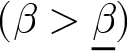 $(\beta \gt \underline{\beta})$. These agent types occur with frequencies $v$ and $1 - v$, respectively, where $0 \lt v \lt \,1$ and we hereafter underscore low-cost agent type variables. The total abatement cost is, accordingly, either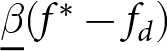 $\underline\beta(f^\ast-f_d)$ or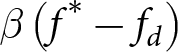 $\beta \left( {{f^*} - {f_d}} \right)$, where $f^\ast$ is the unregulated privately optimal level, which is bounded above at the total hectares available for land preparation ( f* < ∞). Land use change is abstracted from the model (see Section A in the online appendix).
Fire may escape from the intended area, spreading uncontrollably across space. We thus distinguish between the intended burned area, fd, and accidentally burned area, fa, with the latter following, for simplicity, a uniform distribution in the  $\left[ {0;E} \right]$ interval. For each agent, the total burned area is calculated as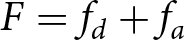 $F = {f_d} + {f_a}$, and the probability with which it exceeds a threshold is $1 - \,\left( {{F_0} - {f_d}} \right)/E$. In addition, marginal social damage caused by externalities is assumed to be a linear function of $F$, with intercept ${s_0}$ and slope ${s_1}$. With these assumptions, the expected total social damage is quadratic, and its formula is provided in the online appendix, Section B.1.1.
The regulator, or ‘principal’, is an environmental agency choosing the policy to induce the socially optimal level of intended burned area. Besides the externality, it faces two additional market failures. First, it does not observe agent type, being exposed to adverse selection in which the low-cost agent untruthfully claims to be high-cost in order to save money by abating less. Second, the principal does not observe the intended burned area ( $\underline {{f_d}} \,$ or ${f_d}$) directly, only the total burned area ( $\underline F$ and $F$). It is thus vulnerable to moral hazard in the form of unsanctioned non-compliance, with the agent overstating accidental burnings and understating the intended burned area.
How adverse selection is addressed depends on the specific policy, and is therefore postponed to the next subsection. Moral hazard is, however, addressed in a general way: if 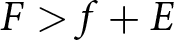 $F \gt f + E$, where $f$ is the burned area target imposed on the agent, then non-compliance is assumed and the agent sanctioned. Otherwise, compliance is assumed. Therefore, since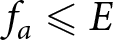 ${f_a} \leqslant E$, the principal only sanctions when non-compliance is doubtless. The degree of non-compliance, i.e., the intended burned area exceeding the target, is denoted as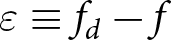 $\varepsilon \equiv {f_d} - f$. We therefore supress ${f_d}$, and write $f + \varepsilon $ instead. The probability of sanction is thus:
 \begin{equation*}P\left( {F \gt f + E} \right) = P\left( {f + \varepsilon + {f_a} \gt f + E} \right) = \varepsilon /E,\,\end{equation*}
consistent with the uniform probability distribution function.
To tackle fire externalities and information asymmetries, two policy options are (mandatory) CAC and voluntary subsidy contracts. The CAC option is modelled under three different institutional settings: (i) perfect enforcement without judicial intervention, (ii) imperfect enforcement with exogenous intervention and (iii) imperfect enforcement with endogenous intervention. Each case has its own version of the principal’s problem, and all four policy possibilities are presented in the following subsections.
2.2. Market-based policy
The market-based policy is a voluntary contract offered by the principal that pays agents to abate by switching from  ${f^*}$ to either $\underline{f}$ or $f$, depending on the agent type. When offering it, the principal must incentivize the truthful revelation of marginal abatement cost (Laffont and Martimort, Reference Laffont and Martimort2002, proposition 7.2), thereby avoiding adverse selection. This is achieved by offering two contracts that differ in payments and targets across agent types. Compliance with the abatement goal, an action observed only by the agent, must also be incentivized, similarly to Ozanne and White (Reference Ozanne and White2007, sections 4 and 5), thus avoiding moral hazard. This goal is achieved by differentiating payments for compliance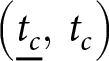 $\textstyle\left(\underline{t_c},\,t_c\right)$ and non-compliance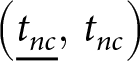 $\left( {\underline {{t_{nc}}} ,\,{t_{nc}}} \right)$, and by selecting one of these based on the ex-post total burned area at the farm level, $F$. Low- and high-cost contracts are thus triplets corresponding to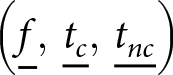 $\left({\underline{f},\,\underline {{t_c}} ,\,\underline {{t_{nc}}} } \right)$ and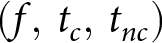 $\left( {f,\,{t_c},\,{t_{nc}}} \right)$, respectively, and must meet multiple incentive compatibility constraints. These comprise: (i) prevention of adverse selection by inducing each agent type to take the contract designed for them (A and A below), (ii) prevention of moral hazard by inducing a zero degree of non-compliance level, i.e., both $\underline\varepsilon=0\;$ or $\varepsilon = 0$, for the relevant agent type (B and B) and (iii) ruling out mixed adverse-selection and moral hazard (C and C), where the ‘wrong’ contract is signed and then violated (the non-compliance levels are denoted as $\underline{\varepsilon}'$ and $\varepsilon '$). Due to the voluntary nature of contracts, their uptake must also be ensured by participation constraints (D and D). The principal's optimal contracts problem is
 \begin{align}
&\max \Bigl\{ \underline{f}, f, \underline{t_c}, t_c, \underline{t_{nc}}, t_{nc} \Bigr\} \, \left\{ v \Bigl[ W(\underline{f}) + \underline{t_c} + \underline{\beta}\,(f^* - \underline{f}) - (1+\lambda)\,\underline{t_c} \Bigr]\right.\nonumber\\
&\qquad\left.+ (1-v)\Bigl[ W(f) + {t_c} + \beta\,(f^* - f) - (1+\lambda)\,{t_c} \Bigr] \right\}, \quad \text{s.t.} \nonumber\\
&\qquad[\underline{A}] \, \underline{t_c} - \underline{\beta}\,(f^* - \underline{f}) \geq {t_c} - \underline{\beta}\,(f^* - f) \nonumber\\
&\qquad[A] \, {t_c} - \beta\,(f^* - f) \geq \underline{t_c} - \beta\,(f^* - \underline{f}) \nonumber\\
&\qquad[\underline{B}] \, \underline{t_c} - \underline{\beta}\,(f^* - \underline{f}) \geq (1 - \tfrac{\underline{\varepsilon}}{E})\cdot \underline{t_c} + \tfrac{\underline{\varepsilon}}{E} \cdot \underline{t_{nc}} - \underline{\beta}\,(f^* - \underline{f} - \underline{\varepsilon}) \nonumber\\
&\qquad[B] \, {t_c} - \beta\,(f^* - f) \gt (1 - \tfrac{\varepsilon}{E})\cdot {t_c} + \tfrac{\varepsilon}{E} \cdot {t_{nc}} - \beta\,(f^* - f - \varepsilon)\nonumber\\
&\qquad[\underline{C}] \, \underline{t_c} - \underline{\beta}\,(f^* - \underline{f}) \geq (1 - \tfrac{\underline{\varepsilon}'}{E})\cdot t_c + \tfrac{\underline{\varepsilon}'}{E} \cdot t_{nc} - \underline{\beta}\,(f^* - f - \underline{\varepsilon}') \nonumber\\
&\qquad[C] \, t_c - \beta\,(f^* - f) \gt (1 - \tfrac{{\varepsilon}'}{E})\cdot \underline{t_c} + \tfrac{{\varepsilon}'}{E} \cdot \underline{t_{nc}} - \beta\,(f^* -\underline{f} - \varepsilon') \nonumber\\
&\qquad[\underline{D}] \, \underline{t_c} - \underline{\beta}\,(f^* - \underline{f}) \geq 0 \nonumber\\
&\qquad[D] \, t_c - \beta\,(f^* - f) \geq 0
\end{align}
\begin{align}
&\max \Bigl\{ \underline{f}, f, \underline{t_c}, t_c, \underline{t_{nc}}, t_{nc} \Bigr\} \, \left\{ v \Bigl[ W(\underline{f}) + \underline{t_c} + \underline{\beta}\,(f^* - \underline{f}) - (1+\lambda)\,\underline{t_c} \Bigr]\right.\nonumber\\
&\qquad\left.+ (1-v)\Bigl[ W(f) + {t_c} + \beta\,(f^* - f) - (1+\lambda)\,{t_c} \Bigr] \right\}, \quad \text{s.t.} \nonumber\\
&\qquad[\underline{A}] \, \underline{t_c} - \underline{\beta}\,(f^* - \underline{f}) \geq {t_c} - \underline{\beta}\,(f^* - f) \nonumber\\
&\qquad[A] \, {t_c} - \beta\,(f^* - f) \geq \underline{t_c} - \beta\,(f^* - \underline{f}) \nonumber\\
&\qquad[\underline{B}] \, \underline{t_c} - \underline{\beta}\,(f^* - \underline{f}) \geq (1 - \tfrac{\underline{\varepsilon}}{E})\cdot \underline{t_c} + \tfrac{\underline{\varepsilon}}{E} \cdot \underline{t_{nc}} - \underline{\beta}\,(f^* - \underline{f} - \underline{\varepsilon}) \nonumber\\
&\qquad[B] \, {t_c} - \beta\,(f^* - f) \gt (1 - \tfrac{\varepsilon}{E})\cdot {t_c} + \tfrac{\varepsilon}{E} \cdot {t_{nc}} - \beta\,(f^* - f - \varepsilon)\nonumber\\
&\qquad[\underline{C}] \, \underline{t_c} - \underline{\beta}\,(f^* - \underline{f}) \geq (1 - \tfrac{\underline{\varepsilon}'}{E})\cdot t_c + \tfrac{\underline{\varepsilon}'}{E} \cdot t_{nc} - \underline{\beta}\,(f^* - f - \underline{\varepsilon}') \nonumber\\
&\qquad[C] \, t_c - \beta\,(f^* - f) \gt (1 - \tfrac{{\varepsilon}'}{E})\cdot \underline{t_c} + \tfrac{{\varepsilon}'}{E} \cdot \underline{t_{nc}} - \beta\,(f^* -\underline{f} - \varepsilon') \nonumber\\
&\qquad[\underline{D}] \, \underline{t_c} - \underline{\beta}\,(f^* - \underline{f}) \geq 0 \nonumber\\
&\qquad[D] \, t_c - \beta\,(f^* - f) \geq 0
\end{align} For conciseness, four additional constraints, which prevent a level of non-compliance that is always detected, are omitted here (‘explicit non-compliance’,  $\varepsilon \gt E$), but were accounted for in the solution (see online appendix, Section B).
The solution was based on the approach of Morello (Reference Morello2023), as detailed in Section B of the online appendix, and yields formulas for payments 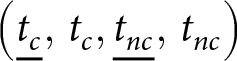 $\left( {\underline {{t_c}} ,\,{t_c},\underline {{t_{nc}}} ,\,{t_{nc}}} \right)$ and for targets ( $\underline f$ and $f$). The approach starts with the widely adopted assumption that the principal leaves the high-cost agent indifferent between opting in and out, and the low-cost agent indifferent between complying with the correct or incorrect contract (Laffont, Reference Laffont1995; Moxey et al., Reference Moxey, White and Ozanne1999; White and Hanley, Reference White and Hanley2016). These assumptions solve the adverse selection problem, and the moral-hazard problem is then solved by finding the non-compliance payment that meets all remaining (non-binding) constraints. For this, we isolate the payment wedges in the constraints, i.e.,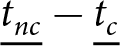 $\underline {{t_{nc}}} - \underline {{t_c}} $ and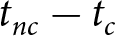 ${t_{nc}} - {t_c}$, eliminate redundant constraints and take the maximum lower bound.
2.3. CAC policy: perfect case
We model CAC in a manner standard in the literature (Baumol and Oates, Reference Baumol and Oates1988, chap.13; Melkonyan and Taylor, Reference Melkonyan and Taylor2013; Ovaere et al., Reference Ovaere, Proost and Rousseau2013; Börner et al., Reference Börner, Marinho and Wunder2015). The policy consists of setting a single intended burned area target for the two agent types, monitoring agents’ total burned area,  $F$, and sanctioning detected non-compliance with a fine of amount $g$. Pooling agent types in a single target, i.e., adverse selection, is unavoidable under CAC since, as agents are not paid, there is no payment premium, and the principal lacks an instrument to incentivize type revelation. In contrast, moral hazard is avoidable by using fines as the instrument. Thus, the principal's CAC problem is
 \begin{equation}\begin{gathered}
Max\left\{ {\underline f, \,f,\,g} \right\}\left\{ {v\left[ {W\left( f \right) + \underline{\beta } \left( {{f^*} - f} \right)} \right] + \,\left( {1 - v} \right)\left[ {W\left( f \right) + \,\beta \left( {{f^*} - f} \right)} \right]} \right\},{\text{s}}{\text{.}}\,{\text{t}}{\text{.}} \hfill\\
\underline{\beta} \left( {{f^*} - f} \right)\, \leqslant \,\,\varepsilon /E \cdot g\, + \,\underline{\beta} \left( {{f^*} - f\, - \,\underline{\varepsilon}}\right) \hfill \\
\beta \left( {{f^*} - f} \right)\, \leqslant \,\varepsilon /E \cdot {g} \, + \,\beta \left( {{f^*} - f - \varepsilon } \right) \hfill \\
\underline{\beta} \left( {{f^*} - f} \right)\, \leqslant \,g \hfill \\
\beta \left( {{f^*} - f} \right)\, \leqslant \,{g} \,\hfill \\
\end{gathered} \end{equation}
\begin{equation}\begin{gathered}
Max\left\{ {\underline f, \,f,\,g} \right\}\left\{ {v\left[ {W\left( f \right) + \underline{\beta } \left( {{f^*} - f} \right)} \right] + \,\left( {1 - v} \right)\left[ {W\left( f \right) + \,\beta \left( {{f^*} - f} \right)} \right]} \right\},{\text{s}}{\text{.}}\,{\text{t}}{\text{.}} \hfill\\
\underline{\beta} \left( {{f^*} - f} \right)\, \leqslant \,\,\varepsilon /E \cdot g\, + \,\underline{\beta} \left( {{f^*} - f\, - \,\underline{\varepsilon}}\right) \hfill \\
\beta \left( {{f^*} - f} \right)\, \leqslant \,\varepsilon /E \cdot {g} \, + \,\beta \left( {{f^*} - f - \varepsilon } \right) \hfill \\
\underline{\beta} \left( {{f^*} - f} \right)\, \leqslant \,g \hfill \\
\beta \left( {{f^*} - f} \right)\, \leqslant \,{g} \,\hfill \\
\end{gathered} \end{equation}The first two constraints prevent non-compliance whose detection is likely but uncertain, and the last two prevent a level whose detection is certain (‘explicit non-compliance’). The solution procedure is detailed in the online appendix, Section C, and is similar, mutatis mutandis, to that employed for contracts.
2.4. CAC policy: exogenous and endogenous sanctioning imperfections
Motivated by evidence that offenders in the Brazilian Amazon often avoid paying fire and fire-related fines by appealing to the judicial power (Sousa, Reference Sousa2016; Pailler, Reference Pailler2018; Watts et al., Reference Watts, Tacconi, Hapsari, Irawan, Sloan and Widiastomo2019), we thus consider a broader institutional setting. In this setting, the judicial power may intervene, upon the agent’s appeal, in the sanctioning process by starting a lengthy judgement that may end with prescription or cancellation of the fine.Footnote 3 Although fines can, in principle, be upheld and paid, we treat this possibility as negligible and exclude it from the model, reflecting its low empirical frequency.Footnote 4
The principal can only partially offset the probability of such intervention by raising the fine’s value, thereby raising the expected penalty. However, this adjustment is constrained because the fine is now assumed to be bounded above by law.Footnote 5 For conciseness, we mention only the differences from perfect CAC. With judicial intervention denoted by the event  $x = 0$, and non-intervention or fine payment by $x = 1$, sanction likelihood then equals $P\left( {x = 1} \right) \cdot \varepsilon /E$. Since $x$ is exogenous to both the principal and the agents, being imposed by the judicial power, we refer to this case as exogenous sanctioning imperfection.
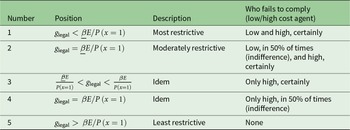
We derive the solution for the optimal CAC scheme in Section E of the online appendix, considering that the legal fine bound may take five possible positions relative to the minimum compliance-inducing fines for the two agent types, given by 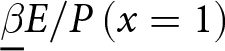 $\underline{\beta} E/P\left({x = 1} \right)$ and $\beta E/P\left( {x = 1} \right)$ (Table 1; see also online appendix, Section E). However, the level of violation is determinate (certain) only in two of these positions, which are the scenarios we examine. They are referred to as ‘Scenario 1’, in which both agent-types fail to comply, and ‘Scenario 3’, in which only the high-cost fails (Table 1). Consistently, the principal is assumed to account for non-compliance when optimally choosing the intended burned area target.
Five possibilities for the legal upper bound on the fine level ( ${g_{{\text{legal}}}}$)
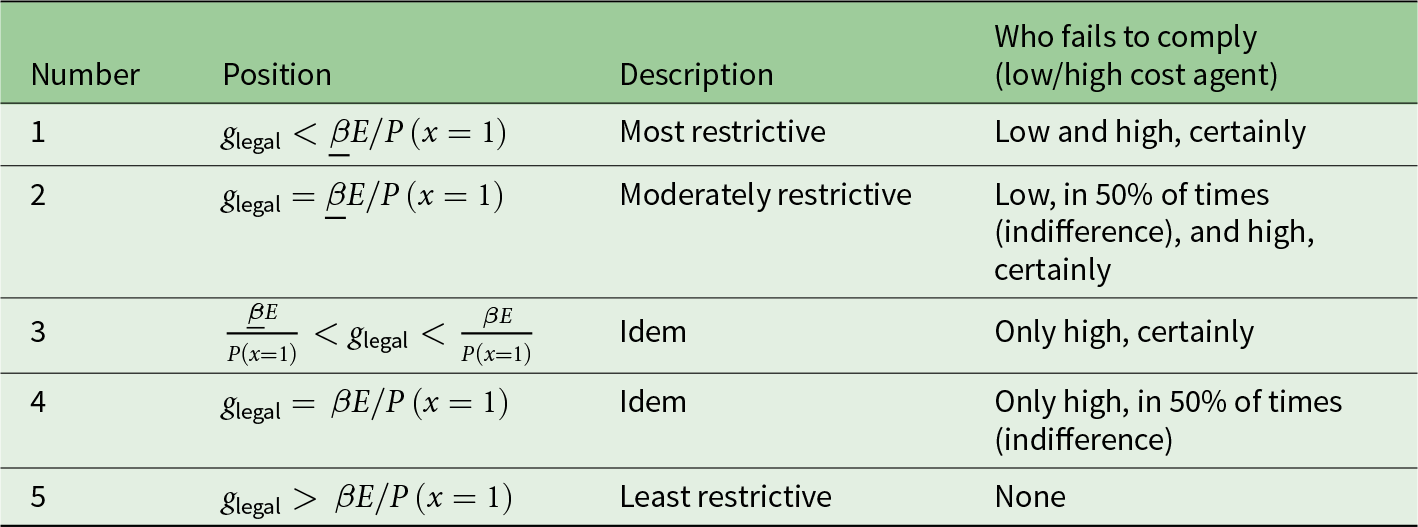
Table 1 Long description
The table has five columns: Number, Position, Description, Who fails to comply (low/high cost agent). Row 1: Number 1, Position g legal less than beta E divided by P left parenthesis x equals 1 right parenthesis, Description Most restrictive, Who fails to comply Low and high, certainly. Row 2: Number 2, Position g legal equals beta E divided by P left parenthesis x equals 1 right parenthesis, Description Moderately restrictive, Who fails to comply Low, in 50 percent of times (indifference) and high, certainly. Row 3: Number 3, Position beta E divided by P left parenthesis x equals 1 right parenthesis less than g legal less than beta E divided by P left parenthesis x equals 1 right parenthesis, Description Idem, Who fails to comply Only high, certainly. Row 4: Number 4, Position g legal equals beta E divided by P left parenthesis x equals 1 right parenthesis, Description Idem, Who fails to comply Only high, in 50 percent of times (indifference). Row 5: Number 5, Position g legal greater than beta E divided by P left parenthesis x equals 1 right parenthesis, Description Least restrictive, Who fails to comply None.
Note: Details are found in the online appendix, Section E.
The main characteristic of exogenously imperfect CAC is its incapacity to induce compliance from both agent types because, for at least one type, the minimum fine levels required exceeds the legal upper bound.
We now turn to the case where judicial intervention is endogenous, occurring with probability  $z\left( \varepsilon \right)$. This function increases linearly with non-compliance according to the following functional form: $z\left( \varepsilon \right) = \varepsilon /\left( {\eta E} \right),\,\eta \geqslant 1$. The underlying idea is that the judicial power has an implicit tolerance threshold for violations, expressed as a multiple of the maximum size of an accidental burning, i.e., as $\eta E$.Footnote 6 The ratio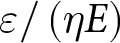 $\varepsilon /\left( {\eta E} \right)$ measures the saliency of a violation from the judicial power’s perspective: the more salient the violation, the less likely the agent's appeal for intervention is to be accepted.
As shown in Section E.7 of the online appendix, the two main consequences of the intervention likelihood function are as follows. First, regardless of parameter values, non-compliance is optimal because it can only be discouraged by an infinite – thus legally impossible – fine. The principal is thus powerless to induce compliance. Second, it is not necessarily optimal for the principal to compensate for this lack of power by imposing the maximum legally permitted fine, because the principal faces a trade-off between minimizing abatement cost and minimizing damage. The solution for the optimal CAC terms, which we discuss in Section E.7 of the online appendix, is purely numerical due to the absence of an analytical, closed-form alternative.
We clarify that we consider endogenously imperfect CAC because it highlights, more clearly than exogenously imperfect CAC, the difference between sanctioning imperfection and the commonly studied monitoring imperfection, as detailed in Section E.6 of the online appendix. In fact, the general mathematical structure of exogenously sanctioning-imperfect CAC, which we study in this paper, is equivalent to that of monitoring-imperfect CAC, the standard case in the literature. However, this equivalence does not hold when the intervention probability is endogenous, as shown in Section E.6 of the online appendix. The mathematical difference with imperfect monitoring arises because the agent incorporates the influence they have on the likelihood of judicial intervention into their decision-making.
We finish with an important clarification. Algebraic formulas from optimization show that imperfectly sanctioned CAC fails to induce compliance from at least one agent type. However, this does not imply that efficiency is lower under imperfection. This conclusion can only be established numerically, since an algebraic, and thus general, comparison is impossible. In the exogenous imperfect case, both the value of the target and the formula for calculating it depend on parameters, whereas in the endogenous case, there is no closed-form solution.
2.5. Welfare surplus differential between contracts and perfect CAC
Using schematic notation, the welfare surplus differential between contracts and CAC, which is based on the principal's objective function and denoted as  $W{S_{con.}} - W{S_{CAC}}$, is:
 \begin{align*}W{S_{con.}} - W{S_{CAC}} & = Wel{f_{con.}} - Fis.cos{t_{con.}}\\
& \quad - Abat.cos{t_{con.}} - \left[ {Wel{f_{CAC}} - Abat.cos{t_{CAC}}} \right]\to W{S_{con.}} - W{S_{CAC}}\\
& \quad = \Delta Welf - Fis.cos{t_{con.}} - \Delta Abat.cost\end{align*}
\begin{align*}W{S_{con.}} - W{S_{CAC}} & = Wel{f_{con.}} - Fis.cos{t_{con.}}\\
& \quad - Abat.cos{t_{con.}} - \left[ {Wel{f_{CAC}} - Abat.cos{t_{CAC}}} \right]\to W{S_{con.}} - W{S_{CAC}}\\
& \quad = \Delta Welf - Fis.cos{t_{con.}} - \Delta Abat.cost\end{align*}where 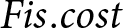 $Fis.cost$ and $Abat.cost$ stand for fiscal and abatement costs, respectively. Section D of the online appendix shows that CAC induces lower damage, and therefore higher welfare, but at the expense of a larger abatement cost, so that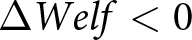 $\Delta Welf \lt 0$ and $\Delta Abat.cos \lt 0$. Hence, the most efficient instrument depends on the relative magnitude of $\left| {\Delta Welf} \right| + Fis.cost$ versus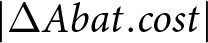 $\left| {\Delta Abat.cost} \right|$. In other words, if CAC's additional welfare, combined with the fiscal cost it avoids, is larger than its surplus abatement cost, then CAC is more efficient. This is clearly an empirical question. Another empirical question is whether the response to this first question is different under sanctioning imperfection. We address both questions through numerical simulation in Section 4.
2.6. Monitoring: clarifications
The policies designed here rely exclusively on satellite monitoring. Ground surveillance is also used in developing countries (Theesfeld and Jelinek, Reference Theesfeld and Jelinek2017; Al-Bukhari et al., Reference Al-Bukhari, Hallett and Brewer2018; IBAMA, 2023), but satellites offer several advantages. Their cost is comparatively low (Al-Bukhari et al., Reference Al-Bukhari, Hallett and Brewer2018), they are increasingly used for regulation in Latin America, particularly for fire regulation (Theesfeld and Jelinek, Reference Theesfeld and Jelinek2017; Ungar, Reference Ungar2017; Hou et al., Reference Hou, Chen, Kuhn and Huang2019; Berenter et al., Reference Berenter, Morrison and Mueller2021), and their temporal and spatial resolutions continue to improve (Li et al., Reference Li, Messina, Peter and Snapp2017). Consistently, in the policy models we develop, total burned area is always observed. The fixed cost of the satellite monitoring system is ignored, as in practice the system serves multiple policy and research purposes.
3. Numerical simulation
This simulation assessed the contract's efficiency relative to CAC using municipal-level data regarding (i) eligibility for contract offering, (ii) marginal abatement cost, (iii) intentionally burned area without policy  $\left( {{f^*}} \right)$ and maximum accidentally burned area $\left( E \right)$ and (iv) social-damage function parameters. Each Amazonian municipality was assumed to implement its own fire policy independently. Four parameters were varied across municipalities: (i) the ratio of high and low marginal cost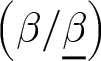 $\left( {\beta /\underline{\beta}} \right)$, (ii) the ratio of unregulated intentionally burned area and maximum accidentally burned area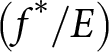 $\left( {{f^*}/E} \right)$, (iii) the slope of the marginal damage function $\left( {{s_0}} \right)$ and (iv) the associated intercept $\left( {{s_1}} \right)$. The remaining parameters were fixed (marginal cost of public funds, $\lambda $, and the share of low-cost agents, $v$).
$v$).
3.1. Non-eligible municipalities
We avoid non-additionality and indirect deforestation by defining contract-eligible municipalities as those with (i) above-median number of agricultural fire detections outside recent deforestation polygons and (ii) zero fire detections inside recent deforestation polygons. These two fire counts were based on deforestation polygons (INPE, 2021a), land use classification (MapBiomas, 2021) and fire detections from 2017 to 2019 (INPE, 2021b). For each year, polygons for the current and the two previous years were considered, since slashed vegetation is not necessarily burned in the same year. Of the 772 Legal Amazon municipalities, 510 did not meet the two criteria. Moreover, tenure was deemed as ambiguous (i.e., less than 75% of municipal farmland managed by titled owners) in 13 municipalities (Araújo et al., Reference Araújo, Combes and Féres2019; IBGE, 2017). As a result, 179 municipalities were deemed eligible for contracts (online appendix, Section F).
3.2. Marginal abatement cost (  $\underline{\beta}$ and
${\beta}$)
$\underline{\beta}$ and
${\beta}$)


We developed a marginal abatement cost proxy based on a principal component index of the shares of adoption of inputs that can be used as substitutes for intended burnings aimed at preparing land for agriculture (namely tractors, pesticides and chemical fertilizersFootnote 7). This was derived from data at the scale of farm size classes, obtained from the most recent Brazilian Agricultural Census (IBGE, 2017), yielding a proxy that varied at the sub-municipal level. Farm size is a conceptually consistent source of variation, being correlated with the propensity to adopt new technology, and thus with marginal adoption cost (Ajewole, Reference Ajewole2010; Soler et al., Reference Soler, Verburg and Alves2014; Brown et al., Reference Brown, Fergunson and Viju-Miljsevic2020). We defined low and high marginal cost as the third and first quartiles of the adoption index (Section F of the online appendix details index computation).
3.3. Intentionally burned area without policy (f*) and maximum accidentally burned area (
${E}$)

Satellite-detected total burned area, as retrieved from MapBiomas (2021) from 2017 to 2020, was used to estimate  ${f^*}$ and $E$ for each municipality. The areas burned either in forested or agricultural land were first summed, then divided by the number of farms in the municipality (IBGE, 2017).Footnote 8 We assumed that burned area was intentional (corresponding to ${f^*}$) if occurring in agricultural land, and accidental (corresponding to $E$), if occurring in forested landFootnote 9 (Acevedo-Cabra et al., Reference Acevedo-Cabra, Wiersma, Ankerst and Knoke2014; Cano-Crespo et al., Reference Cano-Crespo, Oliveira, Boit, Cardoso and Thonicke2015; Cammelli et al., Reference Cammelli, Garrett, Barlow and Parry2020). Within each municipality, $E$ was normalized to one, with ${f^*}$ measured as the ${f^*}/E$ ratio.Footnote 10
3.4. Social damage function parameters (
${s}_{0}$ and
${s}_{1}$)


We calibrated the damage function parameters using Brazilian Amazon data. Calibration of the slope of the marginal damage curve  $\left( {{s_1}} \right)$ was based on the economic principle that where societal assets are more valuable, the governmental principal (whose responsibility is protecting assets) is less willing to tolerate fire-induced asset damage, leading to policy designs that are more stringent where assets are more valuable. Consequently, ${s_1}$ was assumed to be directly proportional to asset value. We collected data on the value of assets frequently damaged by fires in the study region: electricity transmission lines (a representative public asset) and perennial crops (a representative private asset) (França et al., Reference França, Oliveira, Paiva, Peres, Silva and Oliveira2014; Cammelli et al., Reference Cammelli, Coudel and de Freitas Navegantes Alves2019; Carmenta et al., Reference Carmenta, Cammelli, Dressler, Verbicaro and Zaehringer2021; Costa et al., Reference Costa, Vale, Lima and Brasil2022). Calibration of the marginal damage curve’s intercept, ${s_0}$, was designed to guarantee internal consistency of the analysis, ensuring minimal policy effectiveness for the levels of ${s_1}$ extracted from data. More precisely, under abundant information (first-best case), ${s_0}$ ensured that CAC and contracts required a non-null abatement from the low-cost agent (see online appendix, Section F.4).
3.5. Further non-geographical parameters (
${v},{\lambda }$ and
${\eta}$)


The proportion of low-cost agents, v, was assumed to be 50%, consistent with the median separating low- and high-cost marginal costs (see Section 3.1). The marginal cost of public funds,  $\lambda $ (i.e., the distortion generated by taxation), was assumed to be 20%, as in Gómez-Limón et al. (Reference Gómez-Limón, Gutiérrez-Martín and Villanueva2019). The endogenous probability of judicial intervention ( $\eta $) was set to 2. Finally, since contract and CAC designs are Kuhn-Tucker optimization problems in the $\left[ {0,\,{f^*}} \right]$ opportunity set, whenever the internal optimal targets ( $f$ and $\underline f$) violated this interval, the adequate bound (upper/lower) was imposed (see Simon and Blume, Reference Simon and Blume1994, chaps. 18 and 19).
4. Results
The goal of this section is to compare CAC and contracts by examining the seven policy scenarios and the non-intervention scenario. The policy scenarios comprise the two policies, two information states (symmetric and asymmetric) and three institutional states (perfect or free of judicial intervention on sanctioning, exogenously imperfect and endogenously imperfect with judicial intervention as a function of non-compliance degree). Section 4.1 examines the algebraic formulas of targets and payments as a means to explain how policies incentivize socially optimal action or fail to do so. Section 4.2 compares numerical simulation results for contracts and CAC at each of the three institutional states. To better clarify what is driving the superiority of one of the policies, we break down welfare into its basic components. The breakdown tables contain all possible scenarios inside a subsample of municipalities. As a result, CAC is presented in three distinct institutional states, even though we stress, the prevailing state is not chosen by the regulator, but imposed by the judicial power. Comparisons across institutional states, and also across information states, are not meaningful, being thus omitted.
4.1. General results
4.1.1. Contracts
Under the low-cost contract (denoted by underscoring of terms), the solution is defined by the set of algebraic expressions determining (i) intended burned-area targets ( $f$ and $\underline f$), (ii) compliance payments ( ${t_c}$ and $\underline {{t_c}} $) and (iii) non-compliance payments ( ${t_{nc}}$ and $\underline {{t_{nc}}} $).
Abatement cost is strictly reimbursed in the high-cost contract: 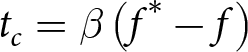 ${t_c} = \beta \left( {{f^*} - f} \right)$. In the low-cost contract, a subsidy premium is paid, on top of the abatement cost, to incentivize the low-cost agent to state its true cost: $\underline {{t_c}} = \underline{\beta } \left( {{f^*} - \underline{f} } \right) + \Delta \beta \left( {{f^*} - f} \right),\,{\text{with}}\,\Delta \beta \, = \,\beta - \underline{\beta}$.
Optimal targets were defined asFootnote 11:
 \begin{align}\underline {{f^{SB}}} =& \left[ {\left( {1 + \lambda } \right)\underline{\beta} - {s_0}} \right]/{s_1} - E/2\, = \,\underline {{f^{FB}}}\nonumber\\
{f^{SB}} & = \left[ {v/\left( {1 - v} \right)\lambda \Delta \beta \, + \,\left( {1 + \,\lambda } \right)\beta \, - \,{s_0}} \right]/{s_1} - E/2\,\nonumber\\
& = \,\left[ {v/\left( {1 - v} \right)\lambda \Delta \beta } \right]/{s_1} + {f^{SB}} \gt {f^{FB}}\, \gt \,\underline {{f^{SB}}}, \end{align}
\begin{align}\underline {{f^{SB}}} =& \left[ {\left( {1 + \lambda } \right)\underline{\beta} - {s_0}} \right]/{s_1} - E/2\, = \,\underline {{f^{FB}}}\nonumber\\
{f^{SB}} & = \left[ {v/\left( {1 - v} \right)\lambda \Delta \beta \, + \,\left( {1 + \,\lambda } \right)\beta \, - \,{s_0}} \right]/{s_1} - E/2\,\nonumber\\
& = \,\left[ {v/\left( {1 - v} \right)\lambda \Delta \beta } \right]/{s_1} + {f^{SB}} \gt {f^{FB}}\, \gt \,\underline {{f^{SB}}}, \end{align}where superscripts  $FB$ and $SB$ indicate the first-best and second-best asymmetric information cases.
Thus, the target was directly proportional to tax-distortion  $\left( \lambda \right)$ in both contracts. As is commonly observed in adverse selection problems (Laffont and Martimort, Reference Laffont and Martimort2002, proposition 2.1), under the high-cost contract, the target was distorted upwards (and abatement downwards), compared with the symmetric information benchmark. The insightful principle of requiring a larger intentional abatement where accidental fires are greater is implicit in the targets being inversely proportional to the mean accidentally burned area $\left( {E/2} \right)$.
The differences between the compliance and non-compliance payments offered by a given contract (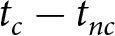 ${t_c} - {t_{nc}}$; henceforth referred to as the ‘wedge’) that met the moral-hazard avoidance constraints were defined as:
• Low-cost contract
∘ If
$f^* - f \gt \text{E:}\, \underline{t_c} - \underline{t_{nc}} \;\geqslant\; \max \left\{ \underline{\beta}\,(f^* - \underline{f}) + \Delta\beta\,(f^* - f),\; \beta E \right\}$,∘ Otherwise:
$\underline {{t_c}} - \underline {{t_{nc}}} \geqslant \beta E.$
• High-cost contract
∘ If
${f^*} - f \gt E:{t_c} - {t_{nc}}\geq\beta\left( {{f^*} - f} \right),$∘ Otherwise:
$t_c-t_{nc}\geqslant\beta E$.

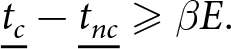


The first notable feature is that wedges are positive. Consequently, some risk is transferred to the agent as a means to counter-incentivize non-compliance, since payment variance is directly proportional to the wedge (see online appendix, Section C.8). Secondly, denoting the extent of non-compliance by  $\varepsilon $, the expression $\beta E = \beta \varepsilon /\left( {\varepsilon /E} \right)$, which is recurrent in the wedges, is the benefit-cost ratio of non-compliance. The numerator is the abatement cost economy yielded by a degree of non-compliance equal to $\varepsilon $, and the denominator contains the increase, due to non-compliance, in the probability of being ‘punished’ with a non-compliance payment. Thus, the wedge (i.e., the risk transferred to the agent) should be at least equal, and always directly proportional, to the abatement economy gained for each extra percentage point of punishment likelihood faced. This leads to an important implication. Given that ${t_c}$ is fixed, as the wedge widens ${t_{nc}}$ tends to 0. As a result, for compliance to be induced, agents may have to be threatened with the risk of having none of the abatement cost reimbursed (see online appendix, Section B.2.5.3).
4.1.2. Command-and-control (CAC)
The second-best CAC target formed the midpoint of the first-best, type-specific, targets (see online appendix, Section C.7), resulting in distorted abatement allocation through reduced abatement for the low-cost agent and increased abatement for the high-cost agent. This inefficiency may nevertheless be counterbalanced by CAC, which induces a larger total abatement than contracts, as revealed by the decomposition of the welfare difference between CAC and contracts (see online appendix, Section D).
One important principle intrinsic to the optimal CAC design solution stems from the incentive compatibility constraints, which are similar to the contracts’ case. For the high-cost agent type case (being analogous to the low-cost type), the inequality  $g\ge\beta\varepsilon/(\varepsilon/E)$demonstrates that the minimum fine incentivizing compliance is directly proportional to non-compliance's gain $\left( {\beta \varepsilon } \right)$, the money saved from not meeting the target by ε hectares, and inversely proportional to the probability of detection $\left( {\varepsilon /E} \right)$. This quotient is the benefit/cost ratio of non-compliance. This principle remains true under exogenously imperfect CAC, since $g \geqslant \beta \varepsilon /\left[ {P\left( {x = 1} \right)\left( {\varepsilon /E} \right)} \right]$. However, it does not apply to endogenously imperfect CAC because the optimal non-compliance is such that a finite fine cannot induce compliance (see online appendix, Section E).
4.2. Numerical simulations
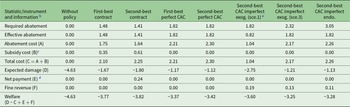
The most efficient policy varied between each municipality and with the institutional state (Figure 1). Two main patterns emerge from this variability. First, the perfect CAC outperformed contracts in most of the municipalities eligible for implementation of the latter instrument. Second, this prominence did not merely remain true, but was in fact magnified, under sanctioning imperfection. We now clarify the reasons for these two patterns, starting with perfect CAC’s domination. The reason is explained by the welfare differential decomposition (Section 2.5). Specifically, under CAC, abatement was set at a higher level, at which additional damage reduction, compared to contracts, more than outweighed additional abatement cost (Table 2). This effect was reinforced by the avoidance of subsidy expenditures and the distortionary cost of funding these expenditures. Now turning to the apparently unexpected improved performance of CAC under imperfection, we start with the exogenous case where both agents certainly failed to comply (Scenario 1). In this case, the reason for CAC superiority was the ability to generate fine revenue (see online appendix, Table A2). But the CAC advantage was also due to smaller effective abatement and the consequent smaller total cost, that is, the opposite of the reason why perfect CAC outperformed contracts (Table 2 and Table A3 in the online appendix).
Classification of municipalities by the best available intervention under each institutional state and eligibility of contracts. Exogenously imperfect CAC in Scenarios 1 and 3 are indicated as ‘Exo., S1’ and ‘Exo., S3’, respectively, and endogenously imperfect as ‘Endog’.
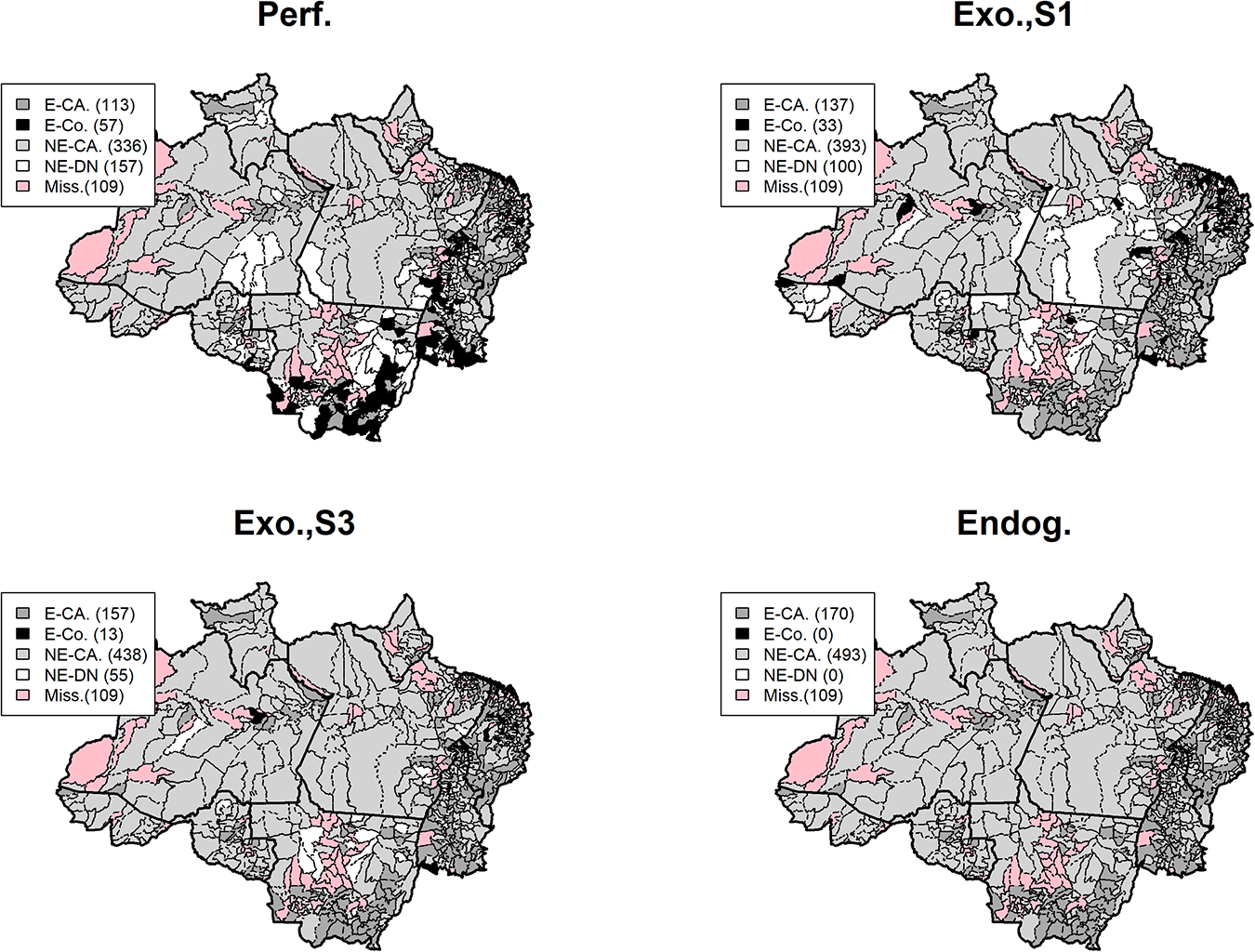
Figure 1 Long description
The image contains four thematic maps of Brazil, each illustrating municipal classifications by intervention type under different scenarios. The maps are oriented with north at the top. A) The map labeled 'Perfect' shows municipalities categorized as E-CA (113), E-Co (57), NE-CA (336), NE-DN (157) and Miss. (109). E-CA areas are widely distributed, while NE-CA is concentrated in central regions. B) The map labeled 'Exogenous Scenario 1' displays E-CA (137), E-Co (33), NE-CA (393), NE-DN (100) and Miss. (109). NE-CA areas are more prevalent, especially in central and northern regions. C) The map labeled 'Exogenous Scenario 3' shows E-CA (157), E-Co (13), NE-CA (438), NE-DN (55) and Miss. (109). NE-CA dominates, with E-CA scattered throughout. D) The map labeled 'Endogenous' indicates E-CA (170), E-Co (0), NE-CA (493), NE-DN (0) and Miss. (109). NE-CA is the most extensive, covering most areas, with no E-Co or NE-DN regions. Each map uses different shades to represent categories, with E-CA in dark gray, E-Co in black, NE-CA in light gray, NE-DN in medium gray and Miss. in pink. The distribution of categories varies across maps, reflecting different intervention scenarios. Key changes include an increase in NE-CA from 336 to 493 and a drop to zero for E-Co and NE-DN in the Endogenous scenario.
Policy comparison, eligible sample, representative municipalitya
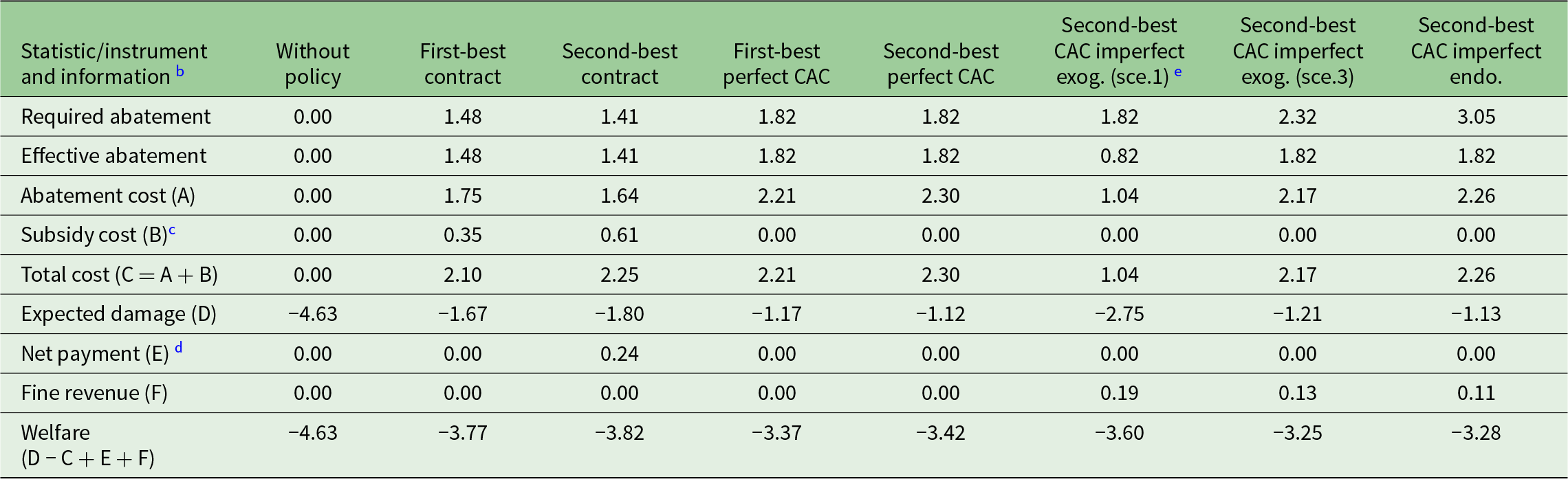
Table 2 Long description
The table has nine columns: Statistic/instrument and information, Without policy, First-best contract, Second-best contract, First-best perfect CAC, Second-best perfect CAC, Second-best CAC imperfect exog. (sce.1), Second-best CAC imperfect exog. (sce.3), Second-best CAC imperfect endo. Row 1: Required abatement; 0.00; 1.48; 1.41; 1.82; 1.82; 1.82; 2.32; 3.05. Row 2: Effective abatement; 0.00; 1.48; 1.41; 1.82; 1.82; 0.82; 1.82; 1.82. Row 3: Abatement cost left parenthesis A right parenthesis; 0.00; 1.75; 1.64; 2.21; 2.30; 1.04; 2.17; 2.26. Row 4: Subsidy cost left parenthesis B right parenthesis; 0.00; 0.35; 0.61; 0.00; 0.00; 0.00; 0.00; 0.00. Row 5: Total cost left parenthesis C equals A plus B right parenthesis; 0.00; 2.10; 2.25; 2.21; 2.30; 1.04; 2.17; 2.26. Row 6: Expected damage left parenthesis D right parenthesis; -4.63; -1.67; -1.80; -1.17; -1.12; -2.75; -1.21; -1.13. Row 7: Net payment left parenthesis E right parenthesis; 0.00; 0.00; 0.24; 0.00; 0.00; 0.00; 0.00; 0.00. Row 8: Fine revenue left parenthesis F right parenthesis; 0.00; 0.00; 0.00; 0.00; 0.00; 0.19; 0.13; 0.11. Row 9: Welfare left parenthesis D minus C plus E plus F right parenthesis; -4.63; -3.77; -3.82; -3.37; -3.42; -3.60; -3.25; -3.28.
a The representative municipality was, within the subsample, at the minimal Euclidean distance from the average welfare gain yielded by all policies, i.e., with  ${y_{i,j}}$ denoting the welfare gain at the i-th municipality, brought by the j-th policy, and ${j^*}$ denoting the representative municipality; then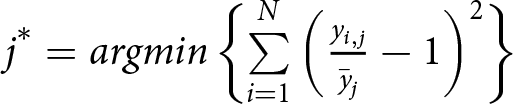 ${j^*} = argmin\left\{ {\mathop \sum \limits_{i = 1}^N {{\left( {\frac{{{y_{i,j}}}}{{{{\bar y}_j}}} - 1} \right)}^2}} \right\}$. Welfare gain was calculated as the difference from the baseline case without policy (thus yielding a positive welfare metric).
b All numbers are averages across the two agent types (e.g., the measure for average abatement was calculated as  $(v \cdot $low-cost agent abatement +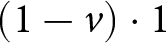 $(1 - v) \cdot 1$high-cost agent abatement), and similarly for the remaining measures).
c Subsidy cost does not overlap with abatement cost but instead captures the net payment (premium) to the low-cost agent, augmented by the fiscal distortion and the distortion that falls on abatement cost.
d Net payment, the premium paid to the low-cost agent to avoid adverse selection, generates utility and thus welfare in the second-best contract case.
e A 10% probability of fine being non-cancelled was assumed.
Similarly, with only the high-cost agent not complying (Scenario 3), CAC superiority was due to the mitigation of adverse selection yielded by the different attitudes toward compliance. A compliance-inducing fine below the legal limit applied only to the low-cost agent, thus incidentally separating types, which was impossible in the perfect CAC case. The regulator could thus practice the economic principle of requiring greater effort from the agent, exerting effort at a lower cost – indeed, as shown in Table 2 and Table A3 in the online appendix, the same abatement was induced, compared with perfect CAC, but for a lower abatement cost.
Endogenously imperfect CAC also performed strongly (Figure 1), although the underlying drivers differed from perfect and exogenously imperfect CAC. Specifically, the non-linear probability of being fined meant that the penalization likelihood increased rapidly with the size of the fault. Furthermore, it diminished the attractive size of faults, opening space for the regulator to be more demanding towards agents as in the perfect CAC case, requiring the greatest abatement effort among policy instruments (36% or 67% larger than perfect and second-best CAC, respectively, at the representative municipality, depending on the sample; see Table 2 and Tables A2 and A3 in the online appendix. The resultant fine revenue promoted welfare above that of contracts and perfect CAC.
To finish, the geographical distribution of the best policies is worth mentioning. In particular, under perfect CAC, contracts were optimal in the south (Mato Grosso state) and southeast (Tocantins and Maranhão states). Under exogenous imperfection, the distribution shifted towards the central Amazon, with contracts proving best in the states of Pará and Amazonas. In the endogenous case, contracts performed poorly in all regions.
5. Conclusion
The analysis led to optimal fire regulation principles useful for developing countries in general and to policy lessons for the Amazon. Starting with the former, voluntary abatements must be directly proportional to the average size of accidental fires. They must be incentivized with a subsidy that is both larger in the case of compliance and proportional to the benefit-cost of non-compliance. They must also be procured only when additional, where deforestation would not be encouraged as a side-effect and tenure is unambiguous. Moreover, we demonstrated that, generally, abatement and damage are smaller under CAC, whereas abatement cost is larger.
Now turning to the specific policy implications, even being 98% as efficient as with symmetric information, contracts proved less efficient than CAC in the majority of Amazonian municipalities. This was due to three comparative disadvantages. First, using government funds, collected with distortionary taxation, to incentivize the low-cost agent to make the larger effort.Footnote 12 Second, co-funding abatement also from tax revenue – whereas, under CAC, the agent was the sole funder. Third, minimizing these two fiscal costs by choosing an optimal abatement target that was smaller, and thus led to a larger damage.
Importantly, these disadvantages did not diminish with contracts competing against imperfect CAC, but were, instead, magnified. The reasons were (i) CAC not merely avoiding distortionary fiscal expenditures but generating non-distortionary fine revenue, (ii) benefiting from the lower abatement cost due to unavoidable non-compliance and (iii) differentiating, incidentally, and thus without any cost, low- and high-cost agents when compliance-inducing fines were above the legal limit only for the high-cost agent. Therefore, despite judicial intervention being a potential source of efficiency loss, our numerical results show that such a loss may be reverted into a gain when intervention is anticipated by the regulator while optimizing CAC. By doing that, the regulator opened new pathways towards cost minimization and fine revenue generation, which were inaccessible to the competing instrument (contracts).
Now, considering the different modalities of judicial intervention, they did not lead to substantially different CAC performance. To understand why, one must consider two distinctions between exogenous and endogenous imperfection. On the one hand, endogeneity decreases efficiency because the agent has more control over the probability of paying a fine (s/he controls both the probability of detection and of judicial intervention). On the other hand, endogeneity increases efficiency because the probability of judicial intervention is a negative function of the size of the violation, which incentivizes smaller non-compliance. The second force turned out to be stronger as revealed by the results, which was due to its non-linear nature.
In synthesis, we produced two novel results. First, we saw that the cost of incentives provided by market-based instruments, in the particular form of voluntary contracts, may be large enough to overturn their superiority, so commonly claimed in previous economic studies, over direct regulation. Second, that sanctioning imperfection and the non-compliance opportunities it enables do not necessarily diminish the efficiency of CAC relative to market-based instruments. These results should be seen mainly as a call for more empirically based, context-specific studies on the relative efficiency of CAC and market-based instruments, as a means for generating new knowledge in the field of environmental policy economics.
Sanctioning imperfection is not a substitute, but a complement to other forms of enforcement imperfection already explored in the literature. For instance, Ovaere et al. (Reference Ovaere, Proost and Rousseau2013) demonstrated, at a high-generality level, the inevitability of a substantial welfare loss from the reduction of monitoring frequency and fine level by lobbyists interested strictly in the externality-generating activity's profit. The authors’ results complement our results for the case where both agent types failed to comply with exogenously imperfect CAC. If, beyond lobbying, firms, irrespectively of the abatement cost faced, are also able, due to exogenous factors, to hire lawyers ensuring a substantial rate of success in appeals to the judicial power, the welfare loss from lobby would be magnified.
Another connection with our findings, this time referring to the relative efficiency of contracts and CAC, is encountered in Börner et al. (Reference Börner, Marinho and Wunder2015). The authors show that farmers’ income was larger under a market-based deforestation policy, but the subsidy was costly enough to make contracts less efficient than CAC. This last policy was more cost-effective, as measured by the ratio of deforestation abatement to expenditure in enforcement and subsidies, after discounting fine revenue (Börner et al., Reference Börner, Marinho and Wunder2015, fig. 4).
Finally, two theoretical points are worth making. A reason why CAC, at odds with this paper's results, is inefficient in previous studies (e.g., Baumol and Oates, Reference Baumol and Oates1988, chap.11; Perman et al., Reference Perman, Ma, McGilvray and Common2003, box 7.10), is that it was not designed to maximize welfare as done here. Additionally, the absence of fiscal cost behind CAC’s efficiency reflected property rights, i.e., the mandatory duty of farmers to comply with the constraint. Ultimately, the modelling approach developed here is flexible enough to be applied to other developing countries with significant agricultural fire usage, provided that farmland fires are predominantly anthropogenic and adverse selection and moral hazard are relevant.
Supplementary material
The supplementary material for this article can be found at https://doi.org/10.1017/S1355770X25100363.
Competing interests
The authors declare none.








 Open access

