





Introduction
Avian haemosporidians (Haemoproteus, Leucocytozoon and Plasmodium) are intracellular protozoan parasites that infect birds worldwide (Atkinson and Van Riper, Reference Atkinson and Van Riper1991; Valkiūnas, Reference Valkiūnas2004; LaPointe et al., Reference LaPointe, Atkinson and Samuel2012; Clark et al., Reference Clark, Clegg and Lima2014). These parasites can impact the avian host's body condition (Dawson and Bortolotti, Reference Dawson and Bortolotti2000; Garvin et al., Reference Garvin, Szell and Moore2006), survival (Marzal et al., Reference Marzal, Bensch, Reviriego, Balbontin and De Lope2008; Martínez-De La Puente et al., Reference Martínez-De La Puente, Merino, Tomás, Moreno, Morales, Lobato, García-Fraile and Belda2010; Van Oers et al., Reference Van Oers, Richardson, Sæther and Komdeur2010; Lachish et al., Reference Lachish, Knowles, Alves, Wood and Sheldon2011), reproduction (Asghar et al., Reference Asghar, Hasselquist and Bensch2011; Podmokła et al., Reference Podmokła, Dubiec, Drobniak, Arct, Gustafsson and Cichoń2014) and migration (Møller et al., Reference Møller, de Lope and Saino2004; Hegemann et al., Reference Hegemann, Alcalde Abril, Muheim, Sjöberg, Alerstam, Nilsson and Hasselquist2018). However, it is estimated that the vast majority of avian haemosporidian diversity remains undescribed, especially for understudied geographic regions (Marroquin-Flores et al., Reference Marroquin-Flores, Williamson, Chavez, Bauernfeind, Baumann, Gadek, Johnson, McCullough, Witt and Barrow2017). Descriptions of these currently unknown haemosporidian communities are vital to understanding coevolutionary dynamics, biogeography and ecological niches of these abundant and highly influential parasites (Marroquin-Flores et al., Reference Marroquin-Flores, Williamson, Chavez, Bauernfeind, Baumann, Gadek, Johnson, McCullough, Witt and Barrow2017).
Various abiotic factors influence avian haemosporidian parasite prevalence, including elevation (Illera et al., Reference Illera, López, García-Padilla and Moreno2017; Williamson et al., Reference Williamson, Wolf, Barrow, Baumann, Galen, Schmitt, Schmitt, Winter and Witt2019; Gupta et al., Reference Gupta, Vishnudas, Robin and Dharmarajan2020; Pellegrino et al., Reference Pellegrino, Ilahiane, Boano, Cucco, Pavia, Prestridge and Voelker2021; Lau et al., Reference Lau, Class Freeman, Pulgarín-R, Cadena, Ricklefs and Freeman2022), temperature (Pérez-Rodríguez et al., Reference Pérez-Rodríguez, Fernández-González, De La Hera and Pérez-Tris2013; Ciota et al., Reference Ciota, Matacchiero, Kilpatrick and Kramer2014; Harvey and Voelker, Reference Harvey and Voelker2017; Ishtiaq, Reference Ishtiaq2021), season (Cornelius et al., Reference Cornelius, Zylberberg, Breuner, Gleiss and Hahn2014; Ham-Dueñas et al., Reference Ham-Dueñas, Chapa-Vargas, Stracey and Huber-Sannwald2017; Garcia-Longoria et al., Reference Garcia-Longoria, Marzal, De Lope and Garamszegi2019), latitude (Clark et al., Reference Clark, Drovetski and Voelker2020) and water availability (Wood et al., Reference Wood, Cosgrove, Wilkin, Knowles, Day and Sheldon2007; Krama et al., Reference Krama, Krams, Cīrule, Moore, Rantala and Krams2015; Sehgal, Reference Sehgal2015; Harvey and Voelker, Reference Harvey and Voelker2017). Climate change is predicted to influence both avian and invertebrate hosts (Brooks and Hoberg, Reference Brooks and Hoberg2007) by altering precipitation and temperature trends at global, regional and local scales (Archer and Predick, Reference Archer and Predick2008; Diffenbaugh et al., Reference Diffenbaugh, Giorgi and Pal2008; Diffenbaugh and Giorgi, Reference Diffenbaugh and Giorgi2012). Investigations of host–parasite dynamics, especially in understudied regions, provide necessary information to determine host relationships and host-switching potential of parasite lineages, which are critical for development of effective wildlife management plans (Marroquin-Flores et al., Reference Marroquin-Flores, Williamson, Chavez, Bauernfeind, Baumann, Gadek, Johnson, McCullough, Witt and Barrow2017).
One such understudied region that is projected to experience rapid and extreme changes in climate is west Texas, where the Davis Mountains sky islands are located (Diffenbaugh and Giorgi, Reference Diffenbaugh and Giorgi2012). The Davis Mountains are isolated from other mountains by the Chihuahuan desert and rise to ~2500 m in elevation. These sky-island mountains experience a cool-temperate climate subject to summer monsoons, with cooler temperatures and increased precipitation at higher elevations (Keeling, Reference Keeling2017). Sky islands tend to have greater species richness due to their isolation from similar terrains (Warshall, Reference Warshall, DeBano, Folliott, Ortega-Rubio, Gottfried, Hamre and Edminster1995). For example, community level surveys of breeding birds in the sky islands of New Mexico, a region similar in climate to the Davis Mountains, have found a large number of novel haemosporidian lineages compared to other surveys within the United States (Marroquin-Flores et al., Reference Marroquin-Flores, Williamson, Chavez, Bauernfeind, Baumann, Gadek, Johnson, McCullough, Witt and Barrow2017; Williamson et al., Reference Williamson, Wolf, Barrow, Baumann, Galen, Schmitt, Schmitt, Winter and Witt2019; Barrow et al., Reference Barrow, Bauernfeind, Cruz, Williamson, Wiley, Ford, Baumann, Brady, Chavez, Gadek, Galen, Johnson, Mapel, Marroquin-Flores, Martinez, McCullough, McLaughlin and Witt2021). The Davis Mountains are also a temperate breeding ground for migrating birds travelling along the western edge of the Central Flyway of North America.
Migration can result in an increased infection risk because migrants pass through diverse habitats with differing parasites and parasite communities (Teitelbaum et al., Reference Teitelbaum, Huang, Hall and Altizer2018; Poulin and de Angeli Dutra, Reference Poulin and de Angeli Dutra2021). Migrants are an essential part of parasite dispersal by facilitating the transport of parasites from one geographic region to another (Bauer and Hoye, Reference Bauer and Hoye2014; Poulin and de Angeli Dutra, Reference Poulin and de Angeli Dutra2021; de Angeli Dutra et al., Reference de Angeli Dutra, Fecchio, Braga and Poulin2021a, Reference de Angeli Dutra, Filion, Fecchio, Braga and Poulin2021b). Thus, host–parasite dynamics can differ between migrant and resident species within a single geographic region. While some studies of host–parasite relationships have found migrants to have greater parasite prevalence and richness as compared to sedentary residents species (Jenkins et al., Reference Jenkins, Thomas, Hellgren and Owens2012; Oakgrove et al., Reference Oakgrove, Harrigan, Loiseau, Guers, Seppi and Sehgal2014; Walther et al., Reference Walther, Carlson, Cornel, Morris and Sehgal2016; Poulin and de Angeli Dutra, Reference Poulin and de Angeli Dutra2021; de Angeli Dutra et al., Reference de Angeli Dutra, Fecchio, Braga and Poulin2021a, Reference de Angeli Dutra, Filion, Fecchio, Braga and Poulin2021b), others have found either no difference (Astudillo et al., Reference Astudillo, Hernández, Kistler, Boone, Lipp, Shrestha and Yabsley2013; Ricklefs et al., Reference Ricklefs, Medeiros, Ellis, Svensson-Coelho, Blake, Loiselle, Soares, Fecchio, Outlaw, Marra, Latta, Valkiūnas, Hellgren and Bensch2017) or higher prevalence in sedentary birds (Pellegrino et al., Reference Pellegrino, Ilahiane, Boano, Cucco, Pavia, Prestridge and Voelker2021). However, residents have stronger associations with their haemosporidian parasites than their migrant counterparts (Jenkins et al., Reference Jenkins, Thomas, Hellgren and Owens2012), resulting in higher associations of specialists (i.e. restricted to a single host species, or a small number of closely related host species) in residents than migrants (Hellgren et al., Reference Hellgren, Waldenström, Peréz-Tris, Szöll, Si, Hasselquist, Krizanauskiene, Ottosson and Bensch2007). Understanding the current distribution of parasite species across host taxa (i.e. ‘host breadth’), may give an indication of future host breadth and geographic range with projected climate change (Colwell et al., Reference Colwell, Brehm, Cardelus, Gilman and Longino2008; Chen et al., Reference Chen, Hill, Ohlemuller, Roy and Thomas2011).
In this study we investigated the prevalence of haemosporidian infections in birds sampled within the Davis Mountains (Fig. 1). By restricting our sampling to the breeding season (May–August) we were able to assess infections in resident species and migratory species (i.e. only present in the Davis Mountains during breeding). We reported novel lineages in this understudied region and compared infection prevalence between migrant and resident species. We also compared our results to other haemosporidian community surveys on both sky islands and non-sky islands from the region. We hypothesized that we would detect (1) Haemoproteus as the most abundant genus due to its high global prevalence (Hellgren et al., Reference Hellgren, Waldenström, Peréz-Tris, Szöll, Si, Hasselquist, Krizanauskiene, Ottosson and Bensch2007; Clark et al., Reference Clark, Clegg and Lima2014); (2) higher parasite prevalence in migratory species; (3) similar prevalence rates and lineages to those detected in the sky islands of New Mexico; (4) a higher proportion of specialist lineages than generalist lineages in residents due to potential geographic isolation in the region; (5) a high number of novel lineages due to limited sampling in the region; and (6) a higher proportion of novel lineages in resident species than migrant species.
Map of sampling sites on the Davis Mountains Preserve in west Texas in 2019 and 2021.

Materials and methods
Study site and field sampling
The Davis Mountains Preserve is 13,292 ha of protected land owned by The Nature Conservancy (TNC) in Jeff Davis County, Texas, USA (Fig. 1). We captured birds using mist nets during the breeding season (May–August) in 2019 (n = 121) and 2021 (n = 144) within an elevation band of (1746–2195 m) across 5 sites within the preserve. Sampling on the Davis Mountains Preserve occurred at 5 sampling locations, 48 Tank (1852 m elevation), Bunkhouse (1875 m), Creek (1769 m), Mesquite Madness (1746 m) and Pine Peak Pond (2195 m). The longest distance between sites was between Pine Peak Pond and the Creek which spanned 4.64 km. The shortest distance between sites was 0.61 km between the Creek and Mesquite Madness sampling sites. However, most of the samples were collected at 48 Tank and Pine Peak Pond, which were separated by 3.27 km. All sample collection sites were pinion–juniper woodland. Birds were categorized as residents (present year-round), or as migrants (present only during the breeding season). Migrant birds sampled are known to winter in Mexico, Central America, South American and the Caribbean.
Blood samples were collected in non-heparinized capillary tubes and immediately transferred into 1.5 mL Eppendorf tubes containing Queen's lysis buffer (Seutin et al., Reference Seutin, White and Boag1991), stored at room temperature, and transported to Texas A&M University for analysis.
Genetic analysis on cytochrome-b
DNA was obtained following extraction using a E.N.Z.A. Tissue DNA Kit [Omega Bio-Tek, Norcross, Georgia, USA], following the manufacturer's protocol. Polymerase chain reaction (PCR) was used to amplify a 479 base pair portion of the haemosporidian mitochondrial cytochrome-b (cytb) gene using 3 primers, for each DNA sample. Each PCR used the same forward primer UNIVF and one of 3 reverse primers: UNIVR1, UNIVR2 and UNIVR3 (Drovetski et al., Reference Drovetski, Aghayan, Mata, Lopes, Mode, Harvey and Voelker2014). Each PCR used a positive and negative control. If a sample was negative in the initial specific primer-pair screening, it was screened a second time to confirm that result. The PCR protocol was the same for UNIVR1 and UNIVR2. Initial denaturation was for 2 min at 94°C, followed by 41 cycles of denaturation at 94°C for 30 s, annealing at 49 for 30 s, and extension at 72°C for 35 s. The PCR cycle ended with a final extension at 72°C for 5 min. UNIVR3 followed the same PCR protocol as UNIVR1 and UNIVR2 except for an annealing temperature of 49.5°C for 30 s.
PCR reactions were visualized by running 3 μL of the final PCR product on a 1% agarose gel, and positive amplifications were sequenced. These samples were purified using ExoSAP-IT [Thermo Fisher Scientific, Waltham, MA], following the manufacturer's protocol. Sanger sequencing was performed by Psomagen, USA [Rockville, MD]. Multiple infections were phased using DnasP v6 (Rozas et al., Reference Rozas, Ferrer-Mata, Sánchez-DelBarrio, Guirao-Rico, Librado, Ramos-Onsins and Sánchez-Gracia2017) in order to reconstruct single infection haplotypes. These reconstructions were hereafter treated as individual infections. Parasite sequences were identified to genus using the National Library of Medicine Nucleotide BLAST tool (https://blast.ncbi.nlm.nih.gov/Blast.cgi) and to the most similar lineages using the MalAvi BLAST tool (http://130.235.244.92/Malavi/). Sequences with 100% MalAvi BLAST match were labelled as that lineage. We characterized lineages differing by 1 or more base pairs from published sequences as novel (Outlaw and Ricklefs, Reference Outlaw and Ricklefs2014).
We followed a standard suite of phylogenetic methods as outlined in Keith et al. (Reference Keith, Pistone, Campbell and Voelker2022). Appropriate model selection for this dataset was performed using jModeltest 2.1.10 using BIC. Bayesian phylogenetic analyses were performed using the CIPRES Science Gateway (Miller et al., Reference Miller, Pfeiffer and Schwartz2010) using Mr.Bayes 3.2.6 (Ronquist et al., Reference Ronquist, Teslenko, Van Der Mark, Ayres, Darling, Höhna, Larget, Liu, Suchard and Huelsenbeck2012). Bayesian analysis consisted of 2 simultaneous runs for 10 million generations with 8 heated chains and sampling occurred every 1000 generations with a 25% burn-in. Convergence for each independent run was assessed using Tracer v1.7.2. Then a 50% majority rule consensus tree was constructed in FigTree v 1.4.4.
Prevalence analysis
All statistical analyses were performed in R (R Core Team, 2020). We conducted a Fisher's exact test to investigate whether the prevalence of novel lineages differed between resident and migratory bird hosts. A Fisher's exact test was used to investigate the associations between age, sex, elevation, and foraging height of avian hosts, and haemosporidian infection prevalence. A Fisher's exact test was also used to determine whether migratory status of avian host was associated with host breadth of parasites.
Foraging height of each bird species was categorized as ground or non-ground (Billerman et al., Reference Billerman, Keeney, Rodewald and Schulenberg2022). Host breadth was determined for all previously described parasite lineages using the MalAvi database. Specialized parasites were determined to be those that primarily parasitize a single host species but could be detected in a single or few individuals in other host species (Drovetski et al., Reference Drovetski, Aghayan, Mata, Lopes, Mode, Harvey and Voelker2014). Region and host taxa of previously described lineages were compared to host taxa of the detected lineages in this study. Additionally, we compared lineages of our study to lineages detected in 5 studies across Texas, New Mexico and central Mexico (Ham-Dueñas et al., Reference Ham-Dueñas, Chapa-Vargas, Stracey and Huber-Sannwald2017; Marroquin-Flores et al., Reference Marroquin-Flores, Williamson, Chavez, Bauernfeind, Baumann, Gadek, Johnson, McCullough, Witt and Barrow2017; Barrow et al., Reference Barrow, Bauernfeind, Cruz, Williamson, Wiley, Ford, Baumann, Brady, Chavez, Gadek, Galen, Johnson, Mapel, Marroquin-Flores, Martinez, McCullough, McLaughlin and Witt2021; DeBrock et al., Reference DeBrock, Cohen, Balasubramanian, Marra and Hamer2021; Keith et al., Reference Keith, Pistone, Campbell and Voelker2022), whose lineages are available on the Malavi database.
Results
Overall prevalence
We sampled 265 individuals from 39 species and 19 families during the breeding season. Individuals of resident species comprised 47.2% (n = 125) of our dataset, and migratory individuals made up 52.8% (n = 140) of our dataset (Table 1). Overall, 108 birds (40.8%) tested positive for haemosporidian infection. Of these positive infections, Haemoproteus was found in 96 individuals (88.9%) (Table 2), 19 of which were co-infected by multiple Haemoproteus lineages. Plasmodium was detected in 18 birds (16.7%), 6 of which were co-infected with Haemoproteus. Lastly, 2 individuals (2%) were found to be co-infected with Leucocytozoon and Haemoproteus. Of the 2 main sampling locations in the Davis Mountains Preserve, 48 Tank (n = 80; 1852 m elevation) and Pine Peak Pond (n = 171; 2195 m elevation), had an overall infection prevalence of 47.5 and 37.4%, respectively (Table 2). The main genus at both sampling sites was Haemoproteus with a detection rate of 89.5 and 89% respectively (Table 2). A series of Fisher's exact tests determined that elevation had no effect on infection prevalence (P = 0.38), and age (P = 0.03) but not sex (P = 0.40) was associated with infection status. Foraging height did not influence overall haemosporidian infection rate (P = 0.8).
Prevalence and detection rates of haemosporidian genera based on migratory status

Detection rate of positive infection includes co-infections with different genera.
Prevalence and detection rates of haemosporidian genera from sampling sites in the Davis Mountains Preserve

Detection rate of positive infection includes co-infections with different genera.
A total of 45% (n = 63) of migratory species and 36% (n = 45) of residents were positive for haemosporidian infection. However, a Fisher's exact test indicated that migratory status did not affect the likelihood of haemosporidian infection (P = 0.17). Haemoproteus made up 94% (n = 59) and 82% (n = 37) of migrant and resident infections, respectively. Plasmodium infections were higher in residents (24%, n = 11) compared to migrants (11%, n = 7) (Table 1). Migrants were found to be infected with more generalist lineages (n = 15) than residents (n = 10), while similar numbers of specialist lineages were detected in migrants (n = 5) and residents (n = 4). A Fisher's exact test found that there was no association between host breadth and migratory status (P = 0.2).
Lineage analysis
Of the 71 lineages recovered, 32 were previously described (100% BLAST matches in MalAvi) and 39 were novel lineages (differed by at least 1 base pair). The most common Haemoproteus lineage and the most common lineage overall was PHEMEL02, representing 19% of Haemoproteus infections and 16% of all infections. The most common Plasmodium lineage was SETCOR03 representing 42.1% of Plasmodium infections and 5.4% of all infections. Of the previously described lineages, 20 were found in migrants and 16 were found in resident species. Within migrants, 16 of the previously described lineages were Haemoproteus, 1 was Leucocytozoon, and 3 were Plasmodium. One lineage detected in a migrant species, MYMAC02, had previously only been detected in South America (Brazil). Another lineage detected in a resident species, EULNIG01 had previously only been detected in Papua New Guinea. Within resident species, 10 of the previously described lineages were Haemoproteus and 6 were Plasmodium (Table 2).
Lineages were considered novel if there was a difference of at least 1 base pair or a similarity of less than or equal to 99% with lineages in the MalAvi database (Outlaw and Ricklefs, Reference Outlaw and Ricklefs2014). Based on this definition, we detected 39 novel lineages, of which 35 lineages (89.7%) were Haemoproteus, 3 (7.7%) were Plasmodium and 1 (2.6%) was Leucocytozoon (Tables 3 and 4). All novel lineages were only found in 1 species except for PIRLUD16 which was detected in a western tanager and a hepatic tanager; PIRFLA18 which was detected in 1 western tanager and 1 hepatic tanager and PIRFLA20 which was detected in a western tanager, hepatic tanager and willow flycatcher. Of the novel lineages detected, 26 were found in migrant and 13 were found in resident species (Table 4). Within migrant novel lineages, 23 were Haemoproteus, 1 was Leucocytozoon, and 2 were Plasmodium. Within resident novel lineages, 12 were Haemoproteus, and 1 was Plasmodium. Although a higher number of novel lineages were found in migrant species, a Fisher's exact test indicates that migration status did not influence the presence of novel lineages (P = 0.1). Sequences have been deposited on GenBank under accession numbers OR760306 - OR760450.
Number of lineages recovered by host migratory status (# of previously known lineages/# of novel lineages)

Total account for potentially the same lineage being found in both migrant and resident individuals.
Haemosporidian lineages recovered, relative to avian host, migratory status and sampling location; multiple individuals of the same host species are indicated in parentheses after host name

In column two, lineages without parentheses are 100% matches to lineages in the Malavi database (determined via MalAvi blast), and lineages in parentheses reflect closest lineage via MalAvi blast. For the latter lineages, we indicate the per cent match and base pair (BP) differences and provide a novel lineage designation per MalAvi protocols. Migratory status denotes whether a species if present year-round (resident) or is only present during the breeding season (migrant). Elevation refers to the elevation of our sampling locations, L signifies low elevation which we consider to be ~1700 m, M signifies medium elevation which we consider ~1800 m and H denotes high elevations ~2000 m. For both our low and medium elevations, 2 sites were pooled into the low elevation (1746 and 1769 m) and medium elevation (1852 and 1875 m). Although we have designated an elevation gradient of low, medium, and high is it important to note that the elevation gradient is of ~400 m.
Many of the novel lineages detected in this study are not highly distinct from the next closest lineage available on the MalAvi database. There were 15 novel lineages that differed from Malavi's closest match by 1 base pair, 8 novel lineages that differed by 2 to 5 base pairs, and 9 novel lineages that differed by 6 or more base pairs (Supplemental Fig. 1).
Regarding host breadth, we recovered 8 specialist lineages (8 Haemoproteus) and 21 generalist lineages (13 Haemoproteus, 1 Leucocytozoon and 7 Plasmodium) (Supplemental Table 1), according to the threshold established by Drovetski et al. (Reference Drovetski, Aghayan, Mata, Lopes, Mode, Harvey and Voelker2014).
Discussion
Avian haemosporidian infection prevalence can be influenced by climatic variables, life history and migratory status. Our aim was to elucidate haemosporidian communities in the Davis Mountains by sampling breeding birds in this understudied region. We hypothesized that Haemoproteus would have higher prevalence than other genera, migrants would display higher infection rates than residents, prevalence and number of lineages would be similar to New Mexico sky islands, and that novel lineages would be observed more frequently in resident species. Our findings demonstrate a host association with lineage prevalence and may explain parasite prevalence on sky islands in the American southwest.
Overall detection and comparison to other nearby regions
Our overall haemosporidian detection rate was 40.8%, consistent with the breeding birds on sky islands in New Mexico (36.6–36.1%) (Marroquin-Flores et al., Reference Marroquin-Flores, Williamson, Chavez, Bauernfeind, Baumann, Gadek, Johnson, McCullough, Witt and Barrow2017; Barrow et al., Reference Barrow, Bauernfeind, Cruz, Williamson, Wiley, Ford, Baumann, Brady, Chavez, Gadek, Galen, Johnson, Mapel, Marroquin-Flores, Martinez, McCullough, McLaughlin and Witt2021). Our detection rate was slightly higher than south Texas (25.69%) (Keith et al., Reference Keith, Pistone, Campbell and Voelker2022) and central Mexico (22%) (Ham-Dueñas et al., Reference Ham-Dueñas, Chapa-Vargas, Stracey and Huber-Sannwald2017) but lower than the Texas Gulf coast (48.4%) (DeBrock et al., Reference DeBrock, Cohen, Balasubramanian, Marra and Hamer2021); however, the latter study sampled individuals at a stopover site for migrating Nearctic-Neotropical birds, which may explain the higher prevalence (Newton, Reference Newton2007).
We hypothesized that Haemoproteus would be the most abundant genus followed by Leucocytozoon and then Plasmodium, similar to the abundance prevalence on the sky islands of New Mexico (Marroquin-Flores et al., Reference Marroquin-Flores, Williamson, Chavez, Bauernfeind, Baumann, Gadek, Johnson, McCullough, Witt and Barrow2017; Barrow et al., Reference Barrow, Bauernfeind, Cruz, Williamson, Wiley, Ford, Baumann, Brady, Chavez, Gadek, Galen, Johnson, Mapel, Marroquin-Flores, Martinez, McCullough, McLaughlin and Witt2021). While we did find that Haemoproteus was the most abundant genus (88.9%), our study differed by finding Plasmodium (16.7%) to be more abundant than Leucocytozoon (1.9%). Our finding that Haemoproteus was most prevalent is not surprising because Haemoproteus is globally the most prevalent haemosporidian genera, and generally most prevalent at higher elevations and in arid environments (Clark et al., Reference Clark, Clegg and Lima2014; Gupta et al., Reference Gupta, Vishnudas, Ramakrishnan, Robin and Dharmarajan2019; Keith et al., Reference Keith, Pistone, Campbell and Voelker2022). It is possible that we found a greater abundance of Plasmodium than Leucocytozoon due to the elevation at which we conducted our sampling. Multiple studies have observed Leucocytozoon to be more prevalent at higher elevations and Plasmodium more prevalent at lower elevations (Van Rooyen et al., Reference Van Rooyen, Lalubin, Glaizot and Christe2013; Illera et al., Reference Illera, López, García-Padilla and Moreno2017; Fecchio et al., Reference Fecchio, Clark, Bell, Skeen, Lutz, De La Torre, Vaughan, Tkach, Schunck, Ferreira, Braga, Lugarini, Wamiti, Dispoto, Galen, Kirchgatter, Sagario, Cueto, González-Acuña, Inumaru, Sato, Schumm, Quillfeldt, Pellegrino, Dharmarajan, Gupta, Robin, Ciloglu, Yildirim, Huang, Chapa-Vargas, Álvarez-Mendizábal, Santiago-Alarcon, Drovetski, Hellgren, Voelker, Ricklefs, Hackett, Collins, Weckstein, Wells and Kamath2021). Our study sampled birds within an elevational band of ~1700–2200 m, which was lower than that of Barrow et al. (Reference Barrow, Bauernfeind, Cruz, Williamson, Wiley, Ford, Baumann, Brady, Chavez, Gadek, Galen, Johnson, Mapel, Marroquin-Flores, Martinez, McCullough, McLaughlin and Witt2021) and Marroquin-Flores et al. (Reference Marroquin-Flores, Williamson, Chavez, Bauernfeind, Baumann, Gadek, Johnson, McCullough, Witt and Barrow2017), who conducted their New Mexico sky island sampling between elevations of 2100–2500 m.
Prevalence by elevation, age, sex, foraging height and migration status
We found that haemosporidian prevalence was not influenced by elevation, consistent with the findings of González et al. (Reference González, Matta, Ellis, Miller, Ricklefs and Gutiérrez2014), which found no significant correlation between prevalence and elevation. This is likely due to the small elevational differences between our 2 best-sampled sites (Table 2). Studies that have found a correlation between prevalence and elevation typically have sampled across elevational gradients ranging from approximately 300–1300 m (Illera et al., Reference Illera, López, García-Padilla and Moreno2017; Williamson et al., Reference Williamson, Wolf, Barrow, Baumann, Galen, Schmitt, Schmitt, Winter and Witt2019; Gupta et al., Reference Gupta, Vishnudas, Robin and Dharmarajan2020; Pellegrino et al., Reference Pellegrino, Ilahiane, Boano, Cucco, Pavia, Prestridge and Voelker2021; Lau et al., Reference Lau, Class Freeman, Pulgarín-R, Cadena, Ricklefs and Freeman2022).
We found higher haemosporidian prevalence in adult than hatch-year birds, adding to the body of literature that has found a positive association between age and haemosporidian prevalence in birds. This association with age has been observed in 22 avian species sampled in the Missouri Ozarks (Ellis et al., Reference Ellis, Kunkel and Ricklefs2014), White-banded Tanagers in Brazil (Fecchio et al., Reference Fecchio, Lima, Silveira, Ribas, Caparroz and Marini2015), and Blue Tits in Sweden (Podmokła et al., Reference Podmokła, Dubiec, Drobniak, Arct, Gustafsson and Cichoń2014) and the United Kingdom (Wood et al., Reference Wood, Cosgrove, Wilkin, Knowles, Day and Sheldon2007). However, Asghar et al. (Reference Asghar, Hasselquist and Bensch2011) and Matthews et al. (Reference Matthews, Ellis, Hanson, Roberts, Ricklefs and Collins2016) found no significant effect of age on infection in Great Reed Warblers in Sweden or 25 species sampled in Tenessee, respectively. Furthermore, Bosholn et al. (Reference Bosholn, Anciães, Gil, Weckstein, Dispoto and Fecchio2020) and Van Oers et al. (Reference Van Oers, Richardson, Sæther and Komdeur2010) found that hatch-year individuals had higher haemosporidian prevalence in Blue-crowned Manakins in Brazil and Seychelles Warblers on the Cousin Island in the Seychelles. Our observed higher rate of parasite prevalence in older individuals may reflect downregulation of the immune response during reproduction (Deviche et al., Reference Deviche, Greiner and Manteca2001; Deviche and Parris, Reference Deviche and Parris2006), increased exposure of adults to vectors (e.g. from nesting activities or increased foraging during reproduction) (Zuk and McKean, Reference Zuk and McKean1996; McCurdy et al., Reference McCurdy, Shutler, Mullie and Forbes1998), or a higher mortality rate for infected juveniles (e.g. Van Oers et al., Reference Van Oers, Richardson, Sæther and Komdeur2010) which results in a smaller proportion of infected juveniles. The fact that we did detect infected hatch-year individuals in this study suggests local transmission of Plasmodium and Haemoproteus in the Davis Mountains.
The abundance of Haemoproteus in the Davis Mountains suggests that Haemoproteus vectors may be more successful in this environment, possibly because their developmental requirements of freshwater are less rigid than vectors of Plasmodium and Leukocytozoon (mosquitos and Simulium black flies, respectively), which require standing or flowing water for development (Adler, Reference Adler and Marquardt2005; Eldridge, Reference Eldridge and Marquardt2005). However, due to the monsoon rains that occur during the breeding season, water availability is an unlikely limiting factor for dipteran vector development. We are unaware of studies that would confirm high abundance of Haemoproteus dipteran vectors in this region during summer months.
In this study, both male and female birds were equally likely to be infected by haemosporidians. Some previous studies have found sex differences in parasite infection (Zuk and McKean, Reference Zuk and McKean1996), with prevalence and density generally higher in males (Wood et al., Reference Wood, Cosgrove, Wilkin, Knowles, Day and Sheldon2007; Van Oers et al., Reference Van Oers, Richardson, Sæther and Komdeur2010; Cornelius et al., Reference Cornelius, Zylberberg, Breuner, Gleiss and Hahn2014), but occasionally higher in females (Asghar et al., Reference Asghar, Hasselquist and Bensch2011). However, similar to our results, many other studies have found no sex differences in infection rates (McCurdy et al., Reference McCurdy, Shutler, Mullie and Forbes1998; Ricklefs et al., Reference Ricklefs, Swanson, Fallon, Martínez-Abraín, Scheuerlein, Gray and Latta2005; Fecchio et al., Reference Fecchio, Lima, Silveira, Ribas, Caparroz and Marini2015; Matthews et al., Reference Matthews, Ellis, Hanson, Roberts, Ricklefs and Collins2016; Bosholn et al., Reference Bosholn, Anciães, Gil, Weckstein, Dispoto and Fecchio2020). For example, in a community survey of 25 species in Tennessee and 42 species in Missouri, infection status did not vary with sex (Ricklefs et al., Reference Ricklefs, Swanson, Fallon, Martínez-Abraín, Scheuerlein, Gray and Latta2005; Matthews et al., Reference Matthews, Ellis, Hanson, Roberts, Ricklefs and Collins2016). In our study, several species were monomorphic in plumage and were not included in the sex analysis. Thus, our limited sample size may have decreased our power to detect sex differences. However, given the large number of studies that similarly report a lack of sex differences in infection, it is probable that sex differences are species and/or region specific depending on species life history and risk factors.
Our data indicate that foraging behaviour did not influence haemosporidian infection for our study in the Davis Mountains. These results contrast with the findings of Gupta et al. (Reference Gupta, Vishnudas, Robin and Dharmarajan2020) that found higher Plasmodium prevalence in species foraging at the ground level compared to the canopy level on the Western Ghats Sky Islands. Similarly, our findings contrast with those of DeBrock et al. (Reference DeBrock, Cohen, Balasubramanian, Marra and Hamer2021) that found ground and understory foragers were more likely than canopy foragers to be infected with Plasmodium, while canopy foragers were more likely to be infected with Haemoproteus at a migratory stopover sight on the Texas Gulf coast. Finally, Astudillo et al. (Reference Astudillo, Hernández, Kistler, Boone, Lipp, Shrestha and Yabsley2013) found birds foraging in the low-middle strata were more likely to be infected by Haemoproteus in Georgia. We suspect that our observed lack of association between haemosporidian lineage and foraging height was because most positive infections in our study were Haemoproteus, perhaps due to environmental/insect vector constraints on other parasite lineages.
Finally, we found parasite prevalence to be independent of migratory status. Previous work has found a higher parasite prevalence in migratory than resident birds in South America (Anjos et al., Reference Anjos, Chagas, Fecchio, Schunck, Costa-Nascimento, Monteiro, Mathias, Bell, Guimarães, Comiche, Valkiūnas and Kirchgatter2021; de Angeli Dutra et al., Reference de Angeli Dutra, Fecchio, Braga and Poulin2021a, Reference de Angeli Dutra, Filion, Fecchio, Braga and Poulin2021b) due to their increased exposure to vectors and parasites (Waldenstrom et al., Reference Waldenstrom, Bensch, Kiboi, Hasselquist and Ottosson2002; Jenkins et al., Reference Jenkins, Thomas, Hellgren and Owens2012). However, our results and those of other studies conducted within the United States and northern South America suggest that this is not always the case (Astudillo et al., Reference Astudillo, Hernández, Kistler, Boone, Lipp, Shrestha and Yabsley2013; Matthews et al., Reference Matthews, Ellis, Hanson, Roberts, Ricklefs and Collins2016; Ricklefs et al., Reference Ricklefs, Medeiros, Ellis, Svensson-Coelho, Blake, Loiselle, Soares, Fecchio, Outlaw, Marra, Latta, Valkiūnas, Hellgren and Bensch2017). Some studies have found prevalence to actually be higher in resident than migratory birds (Pellegrino et al., Reference Pellegrino, Ilahiane, Boano, Cucco, Pavia, Prestridge and Voelker2021; Keith et al., Reference Keith, Pistone, Campbell and Voelker2022). Thus, migratory status appears to have conflicting relationships with prevalence, and our results appear to reflect similar transmission rates between migrants and residents coexisting in the Davis Mountains.
Lineage comparisons
We found support for our hypothesis that parasite lineages in the Davis Mountains would be similar to those detected on the sky islands of New Mexico. Of the previously described lineages that we detected, 71.8% (n = 23) were also detected in New Mexico according to the Malavi database. Lineage comparisons determined that the Davis Mountains shared more lineages with the New Mexico sky islands than with south Texas (18.7%), the Texas Gulf coast (21.9%) or central Mexico (0%) (Ham-Dueñas et al., Reference Ham-Dueñas, Chapa-Vargas, Stracey and Huber-Sannwald2017; DeBrock et al., Reference DeBrock, Cohen, Balasubramanian, Marra and Hamer2021; Keith et al., Reference Keith, Pistone, Campbell and Voelker2022). This is likely due to the similarity in host communities and regional environmental variables between the Davis Mountains and New Mexico sky islands (Fecchio et al., Reference Fecchio, Bell, Pinheiro, Cueto, Gorosito, Lutz, Gaiotti, Paiva, França, Toledo-Lima, Tolentino, Pinho, Tkach, Fontana, Grande, Santillán, Caparroz, Roos, Bessa, Nogueira, Moura, Nolasco, Comiche, Kirchgatter, Guimarães, Dispoto, Marini, Weckstein, Batalha-Filho and Collins2019). Most of the shared lineages between the Davis Mountains and south Texas (CHOGRA01, ICTLEU01, LAIRI01, PIRLUD02, SEIAUR01 and ZEMAC17) and the Texas Gulf coast (PACPEC02, PHEMEL02, PIRLUD02, SEIAUR01, SETCOR03, VIGIL07, VIOLI03), were found in multiple host species. We likely did not find shared lineages between the Davis Mountains and central Mexico because in central Mexico only Black-throated Sparrows were sampled, a species that was not sampled in our study.
Regarding host breadth and haemosporidian genus, our results support those of Fallon et al. (Reference Fallon, Bermingham and Ricklefs2005) that found a higher proportion of specialist lineages in Haemoproteus than Plasmodium, and the findings of Ellis et al. (Reference Ellis, Huang, Westerdahl, Jönsson, Hasselquist, Neto, Nilsson, Nilsson, Hegemann, Hellgren and Bensch2020) that found Plasmodium lineages to be mostly host generalists. Although we hypothesized that we would find more specialist than generalist lineages in resident species due to the geographic isolation of the Davis Mountains, we detected more generalist lineages in residents and found no association between host breadth and migratory status. We observed similar numbers of specialized lineages in migrants (n = 5 lineages) as residents (n = 4 lineages). These results contrast with those of Jenkins et al. (Reference Jenkins, Thomas, Hellgren and Owens2012) that found residents to harbour more specialized parasites than migrants. However, we did find that some parasites have specific associations with their avian hosts in this region, occurring only on certain species. It is likely that host phylogeny plays a more significant role in parasite prevalence than migratory status (Ricklefs and Fallon, Reference Ricklefs and Fallon2002; Ricklefs et al., Reference Ricklefs, Fallon and Bermingham2004; Medeiros et al., Reference Medeiros, Hamer and Ricklefs2013; Scordato and Kardish, Reference Scordato and Kardish2014; Ellis et al., Reference Ellis, Collins, Medeiros, Sari, Coffey, Dickerson, Lugarini, Stratford, Henry, Merrill, Matthews, Hanson, Roberts, Joyce, Kunkel and Ricklefs2015; Clark et al., Reference Clark, Clegg, Sam, Goulding, Koane and Wells2017; Clark and Clegg, Reference Clark and Clegg2017; Pulgarín-R et al., Reference Pulgarín-R, Gómez, Robinson, Ricklefs and Cadena2018; Ellis et al., Reference Ellis, Huang, Westerdahl, Jönsson, Hasselquist, Neto, Nilsson, Nilsson, Hegemann, Hellgren and Bensch2020).
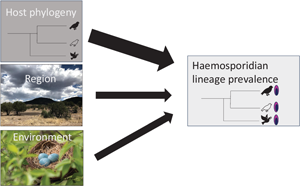
We also found that 55% (n = 39) of our detected lineages were previously unreported, consistent with the results of Barrow et al. (Reference Barrow, Bauernfeind, Cruz, Williamson, Wiley, Ford, Baumann, Brady, Chavez, Gadek, Galen, Johnson, Mapel, Marroquin-Flores, Martinez, McCullough, McLaughlin and Witt2021) and Marroquin-Flores et al. (Reference Marroquin-Flores, Williamson, Chavez, Bauernfeind, Baumann, Gadek, Johnson, McCullough, Witt and Barrow2017), which found high percentages of novel lineages (56 and 63% respectively) on New Mexico sky islands. Surveys in the sky islands of New Mexico and the Davis Mountains appear to detect a larger percentage of novel lineages than those in south Texas (43%; (Keith et al., Reference Keith, Pistone, Campbell and Voelker2022), the Texas Gulf coast (26%; (DeBrock et al., Reference DeBrock, Cohen, Balasubramanian, Marra and Hamer2021) and central Mexico (25%; (Ham-Dueñas et al., Reference Ham-Dueñas, Chapa-Vargas, Stracey and Huber-Sannwald2017). We hypothesized that more novel lineages would be found in resident than migratory species. Although we did detect a trend toward more novel lineages in migratory species (n = 26) than residents (n = 13), this did not reach statistical significance. It is probable that the sky islands in the American southwest have high numbers of novel lineages due to limited sampling in these regions. Our study supports this interpretation as most of the novel lineages we found lacked significant diversification compared to previously described lineages. Ultimately, avian host phylogeny appears to have a greater influence on parasite prevalence and detection of novel lineages than migratory status of birds or geographic barriers in the American southwest (Williamson et al., Reference Williamson, Wolf, Barrow, Baumann, Galen, Schmitt, Schmitt, Winter and Witt2019).
In conclusion, we found that age but not sex, elevation, or foraging height influenced parasite prevalence in the Davis Mountains, with adult birds more likely to be infected with haemosporidians than hatch-year birds. Similar to other studies on sky islands, we found Haemoproteus to be the most abundant haemosporidian genus. We also found a large number of novel lineages in the region, many of them in migrant species. Surprisingly, we did not find a significant difference in parasite prevalence between residents and migrants. It is likely that avian host composition drives the prevalence of specific lineages detected, followed by geographic and environmental ranges. Overall, this study highlights the importance of host–parasite relationships on haemosporidian parasite distribution, and the importance of regional studies contributing to the knowledge of haemosporidian distribution patterns and their effects on avian hosts. Future studies should investigate the influence of regional differences on host–parasite relationships.
Supplementary material
The supplementary material for this article can be found at https://doi.org/10.1017/S0031182023001087.
Data availability statement
All data that supports the findings of this study are available within the article and its supplementary materials.
Acknowledgements
We thank Rebekah Mullen, Stephen Berry, Keagan Hathorn and Victoria Martinez for their field assistance. We acknowledge the Davis Mountains Preserve, owned by The Nature Conservancy for access for field research. We also thank Dr Sarah Hamer and Dr Tom Lacher for providing comments on this manuscript. This is publication number 1683 of the Biodiversity Research and Teaching Collections at Texas A&M University.
Author's contributions
V. M., J. K. G., G. V. designed the study. V. M. conducted the bulk of data collection with assistance from K. D. K. V. M. and K. D. K. performed laboratory analysis. V. M. performed statistical analysis. V. M., K. D. K., J. K. G. and G. V. wrote the manuscript.
Financial support
Financial support for this research was provided by the Applied Biodiversity Science Program at Texas A&M University, the Texas Ornithological Society, Texas A&M Triads for Transformation, and the Schubot Center for Avian Health at Texas A&M University.
Competing interest
None.
Ethical standards
All samples were collected under Texas A&M University Animal Care and Use Committee (IACUC 2018-0034 and IACUC 2021-0042) and appropriate federal and state scientific collection permits (Texas Parks and Wildlife Department Number SPR-0317-079 and US Fish and Wildlife Permit Number MB66499C-0).


 Open access

