





Introduction
Mental health disorders are highly prevalent worldwide, affecting a substantial proportion of the global population. Approximately 4.4% of the world’s population suffers from depression (300 million people, World Health Organization [WHO], 2017), 4% of the global population experiences anxiety disorders other than posttraumatic stress disorder (PTSD; Institute for Health Metrics and Evaluation [IHME], 2019), and 3.9% of the general population live with PTSD (WHO, 2024). In a large-scale survey conducted across 17 countries, Nock et al. (Reference Nock, Borges, Bromet, Alonso, Angermeyer, Beautrais, Bruffaerts, Chiu, de Girolamo, Gluzman, de Graaf, Gureje, Haro, Huang, Karam, Kessler, Lepine, Levinson, Medina-Mora and Williams2008) found that 9.2% reported lifetime suicidal ideation.
Given the widespread impact of mental health conditions, identifying factors that promote psychological well-being and reduce risk is essential. Positive childhood experiences (PCEs) have increasingly been recognized as such promotive factors, associated with better mental health outcome across diverse populations. A growing body of research suggests that individuals reporting higher levels of PCEs are less likely to experience depression or poor mental health in adulthood (Cárdenas et al., Reference Cárdenas, Kujawa and Humphreys2022; Bhargav & Swords, Reference Bhargav and Swords2024). While evidence for these associations continues to accumulate, debate remains regarding the strength and consistency of the relationships, as well as the contextual variables that may moderate it. Therefore, it is important not only to quantify the true magnitude of the associations between PCEs and adult mental health symptoms, but also to identify potential moderating factors that may help explain variability in previous findings.
Conceptualization of PCEs
Positive childhood experiences (PCEs), also referred to in the literature as counter-ACEs, advantageous or benevolent childhood experiences, have drawn increased attention in the past few years. PCEs represent positive early experiences occurring from birth through age 18 and encompass growing up with at least one dependable caregiver, forming close friendships, receiving care from supportive teachers or other non-parental adults, and maintaining a consistent home routine (Narayan et al., Reference Narayan, Rivera, Bernstein, Harris and Lieberman2018; Novilla et al., Reference Novilla, Broadbent, Leavitt and Crandall2022). These experiences are thought to foster secure attachment and enhance emotional resilience, thereby providing a solid foundation for healthy child development and contributing to improved health across the lifespan.
Conceptualization of ACEs
Adverse childhood experiences (ACEs) are primarily family-focused adversities occurring before age 18, encompassing both abuse and household dysfunction (Felitti et al., Reference Felitti, Anda, Nordenberg, Williamson, Spitz, Edwards and Marks1998). The core ACEs construct comprises eight categories: emotional abuse, physical abuse, sexual abuse, exposure to intimate partner violence, parental separation/divorce, household substance use, household mental illness, and incarceration of a household member (the “core-8”). In addition, the present framework includes broader contextual adversities such as poverty, community violence, and hospitalization of a close friend.
PCEs and mental health symptoms
Theoretical perspectives underpinning PCEs and adult mental health symptoms
Resilience framework, as articulated by Masten and Cicchetti (Reference Masten, Cicchetti and Cicchetti2016), offers a robust theoretical framework for this study. Rooted in Bronfenbrenner’s ecological systems theory (Bronfenbrenner, Reference Bronfenbrenner1977), this perspective posits that various systems, including individual, family, neighborhood, and school environments interact to influence developmental trajectories. Moreover, resilience is viewed as a dynamic and context-dependent process that evolves within both individuals and these interconnected systems. One model within resilience framework, known as the compensatory and protective models of resilience, suggests that positive factors exert a direct and independent influence on outcomes. These compensatory factors counterbalance the impact of risk factors, producing an opposite effect on the outcome (Zimmerman, Reference Zimmerman2013). In this framework, PCEs may be conceptualized as compensatory or promotive assets that support mental health, even in the presence of ACEs.
Moreover, drawing on developmental psychopathology perspective, early social interactions, combined with a positive self-concept, lays the foundation for establishing healthy relationships in the future (Cicchetti & Toth, Reference Cicchetti and Toth2009; Masten, Reference Masten2006). Children with high PCEs are more likely to form supportive, secure relationships as they transition into adulthood. Stress buffering model posits that supportive relationships can shield individuals from the adverse psychological and physiological effects (Cohen, Reference Cohen2004; Thoits, Reference Thoits2011). Thus, children with higher PCEs are more likely to experience fewer mental health symptoms in adulthood.
Empirical associations between PCEs and adult mental health symptoms
Recent research also indicates that PCEs can significantly enhance mental health outcomes in adulthood, even in the presence of ACEs. Rodriguez et al. (Reference Rodriguez, McDonald and Brown2021) found that individuals who experienced a higher number of PCEs alongside adversities reported lower levels of anxiety and depression, indicating greater psychological resilience and improved mental health functioning. Doom et al. (Reference Doom, Seok, Narayan and Fox2021) emphasizes the clinical relevance of assessing PCEs, suggesting that PCEs may serve as promotive factors that support mental health even in the context of early ACEs. Furthermore, Crandall et al. (Reference Crandall, Magnusson, Barlow, Randall, Policky and Hanson2023) highlighted the role of positive adult experiences as potential turning points that can lead to improved mental health outcomes for individuals with a history of childhood adversity.
An increasing body of research has examined the associations between PCEs and adult mental health symptoms. Overall, this body of research aligns with existing theories, indicating consistent negative associations between PCEs and adult mental health symptoms (Crandall et al., Reference Crandall, Miller, Cheung, Novilla, Glade, Novilla, Magnusson, Leavitt, Barnes and Hanson2019; Doom et al., Reference Doom, Seok, Narayan and Fox2021; Fabio et al., Reference Fabio, Centorrino, Caprì, Mento and Picciotto2025). However, substantial variability remains in the reported strength of this association across studies. For example, some studies have reported relatively strong correlations (with correlations < −.450, e.g., Xu et al., Reference Xu, Zhang, Ding, Zheng, Lee, Yang, Mo, Lee and Wong2022; Zhang et al., Reference Zhang, Wang, Pei, Zhang, He, Wang, Gao and Hou2021), whereas other studies reported relatively weak correlations (with correlations from −.050 to −.380; e.g., Karatzias et al., Reference Karatzias, Shevlin, Fyvie, Grandison, Garozi, Latham, Sinclair, Ho, McAnee, Ford and Hyland2020, Miller et al., Reference Miller, Cheung, Novilla and Crandall2020). Such discrepancies may reflect differences in sample characteristics (e.g., current age, sex) and variations in the conceptualization and measurement of PCEs. These methodological and contextual factors may help explain the inconsistent strength of the associations observed in the literature.
To date, one systematic review (Han et al., Reference Han, Dieujuste, Doom and Narayan2023) and one scoping review (Maharani et al., Reference Maharani, Suparno, Sakti and Kaloeti2024) haven been carried out focusing on the relations between PCEs and adult mental health symptoms. However, despite a growing body of research, the precise strength and consistency of the associations between PCEs and adult mental health symptoms remain unclear. Understanding these associations is crucial for developing effective interventions to promote PCEs. Thus, a meta-analytic approach is warranted to accurately estimate the true associations and identify potential moderating variables that may produce heterogeneity in the findings.
Impact of potential moderators
ACEs may moderate the associations between PCEs and adult mental health symptoms. According to Stress Sensitization Theory (Hammen, Reference Hammen2015), exposure to high levels of early adversity can result in ACEs lasting neurobiological and psychological vulnerabilities that may diminish or even override the promotive effects of PCEs. From this perspective, one would expect the mental health benefits of PCEs to weaken as ACEs exposure increases. However, other research suggests that PCEs help build foundational assets, such as self-worth, emotional regulation, and supportive relationships, that may continue to promote resilience even in the context of adversity. For instance, Crandall et al. (Reference Crandall, Miller, Cheung, Novilla, Glade, Novilla, Magnusson, Leavitt, Barnes and Hanson2019) found that components of positive childhood experiences, including interpersonal connectedness, were associated with lower depressive symptoms regardless of trauma exposure level, highlighting their promotive value. Taken together, these contrasting perspectives underscore the importance of examining whether ACEs moderate the associations between PCEs and adult mental health symptoms, which is one of the aims of the present study.
Current age at the time of mental health assessment may also moderate the associations between PCEs and adult mental health outcomes. Life course perspective emphasizes that developmental trajectories and mental health outcomes are shaped by both the timing and accumulation of experiences across the lifespan (Shanahan, Reference Shanahan2000). During early adulthood, individuals transition into independence, form relationships, and solidify their identity. The positive effects of PCEs may be particularly strong during this period because the emotional and relational skills developed through PCEs can help navigate these transitions. However, as individuals progress into middle and late adulthood, the influence of early experiences may diminish due to the accumulation of later life stressors (e.g., caregiving responsibilities, chronic health conditions) or shifting psychological priorities. Thus, the associations between PCEs and adult mental health symptoms may differ depending on an individual’s current age.
Considering the sample characteristics, sex might be a potential moderator. On the one hand, according to Gender Socialization Theory (Carter, Reference Carter2014) and Social Role Theory (Eagly & Wood, Reference Eagly and Wood2012), boys and girls are socialized into different roles, expectations, and coping strategies from an early age. These differences shape how they experience and respond to promotive factors such as PCEs. For instance, girls are often encouraged to value emotional expressiveness and interpersonal relationships, whereas boys are more likely to be socialized toward independence and achievement. As a result, relational PCEs (e.g., feeling cared for by a teacher or having a close friend) may be more salient and emotionally beneficial for girls, while structural supports (e.g., school engagement or a predictable home routine) may play a greater role in fostering resilience among boys. These differing developmental pathways and relational schemas suggest that the effects of PCEs on adult mental health symptoms may vary by sex, supporting the hypothesis that sex serves as a moderator in the associations between PCEs and adult mental health symptoms. On the other hand, research evidence has shown conflicted findings. For example, Sege et al. (Reference Sege, Swedo, Burstein, Aslam, Jones, Bethell and Niolon2024) found that a higher percentage of adult women (13.2%) than men (11.2%) reported having a low PCEs score (0–2 PCEs) when recalling their childhoods. However, Adem & Arzu (Reference Adem and Arzu2023) found that PCEs scores significantly differed by sex, with females reporting higher scores than males. Thus, the associations between PCEs and adult mental health symptoms may differ across sex. Therefore, through a meta-analysis, this study further examines how sex affects the links between PCEs and adult mental health symptoms.
The measurement tools used to assess PCEs may moderate the strength of the associations between PCEs and adult mental health symptoms. While there are various instruments for measuring PCEs, the most used is the Benevolent Childhood Experiences (BCEs) Scale (Narayan et al., Reference Narayan, Rivera, Bernstein, Harris and Lieberman2018). This self-report instrument assesses internal perceived safety (e.g. ‘Did you have beliefs that gave you comfort’), external perceived safety (e.g. ‘Did you have at least one caregiver with whom you felt safe’), security and support (e.g. ‘Was there an adult who could provide you with support or advice?’) and positive and predictable qualities of life (e.g. ‘Did you have a predictable home routine, like regular meals and a regular bedtime’). Responses were binary-scored (Yes = 1, No = 0). Scores on the BCEs scale have shown high test–retest reliability (r = .80, p < .01), good validity in predicting subsequent mental health problems, and good applicability across cultural contexts (Narayan et al., Reference Narayan, Rivera, Bernstein, Harris and Lieberman2018). There are also other measures, including the 10-item Protective and Compensatory Experiences Scale (PACEs; Morris et al., Reference Morris, Hays-Grudo, Treat, Williamson, Huffer, Robyler and Staton2015), and Bethell et al. (Reference Bethell, Jones, Gombojav, Linkenbach and Sege2019) 7-item PCEs measure. These instruments differ in conceptual focus, item content, and cultural adaptation, which may influence how strongly they capture promotive factors relevant to adult mental health. For example, some measures emphasize internal beliefs and perceived emotional safety, focusing on the subjective experience of feeling emotionally secure and supported during childhood (Narayan et al., Reference Narayan, Rivera, Bernstein, Harris and Lieberman2018), In contrast, other tools such as Bethell et al. (Reference Bethell, Jones, Gombojav, Linkenbach and Sege2019) 7-item PCEs measure and the PACEs Scale (Morris et al., Reference Morris, Hays-Grudo, Treat, Williamson, Huffer, Robyler and Staton2015) focus more on observable presence of supportive systems and structured environments. These differences may affect the sensitivity and specificity of the measures in detecting associations with depression, anxiety, PTSD, or overall adult mental health symptoms. Therefore, it is reasonable to expect that PCEs measures may moderate the observed associations between PCEs and adult mental health symptoms.
The current study
The primary objective of this meta-analysis was to synthesize empirical studies focusing on the associations between PCEs and overall adult mental health symptoms, as well as three specific issues: depression, anxiety, and PTSD. Additionally, moderator analyses were performed to address inconsistencies in the existing literature by identifying factors such as ACEs, current age, sex, and PCEs measures that may strengthen or weaken the overall correlation and the associations between PCEs and overall adult mental health symptoms, depression, anxiety, and PTSD.
Method
Search strategy and screening of studies
The primary studies related to the relations between PCEs and adult mental health symptoms from inception to August 6, 2025 were first systematically searched in four electronic databases: EBSCO, Web of Science, PubMed, ProQuest Dissertations & Thesis Global. The following search terms were included in the literature search: (“positive childhood experience*” OR “PCE” OR “benevolent childhood experience*” OR “counter-ACEs” OR “advantageous childhood experience*” OR “protective and compensatory experience*”) AND (“mental*” OR “psychological*” OR “depress*” OR “anxiety” OR “posttrauma*” OR “psychopathology” OR “PTSD” OR “suicid*” OR “suicide attempt*” OR “suicidal thought*” OR “suicidal ideat*” OR “suicidal behavio*”). The PRISMA guidelines were followed when conducting the meta-analysis (Page et al., Reference Page, McKenzie, Bossuyt, Boutron, Hoffmann, Mulrow and Moher2021). This project protocol was preregistered in the International Prospective Register of Systematic Reviews (PROSPERO, CRD42025634776).
Eligibility criteria
Studies were included if they met the following inclusion criteria: (a) written in English, (b) participants aged over 18 at the start of mental health symptom assessment, (c) included positive childhood experiences as an independent variable, (d) included mental health indicators (i.e., depression, anxiety) as a dependent variable, and (e) reported either a correlation coefficient r or an unadjusted odds/prevalence ratio value that could be converted into an r value.
Studies were excluded if: (a) the data were derived from qualitative studies, case reports, opinion papers, interventions, or experimental studies; (b) the independent variable was not positive childhood experiences; (c) the outcome was not adult mental health symptoms; or (d) sufficient data to calculate an effect size were not provided in the full text and could not be obtained by contacting the authors.
Study selection
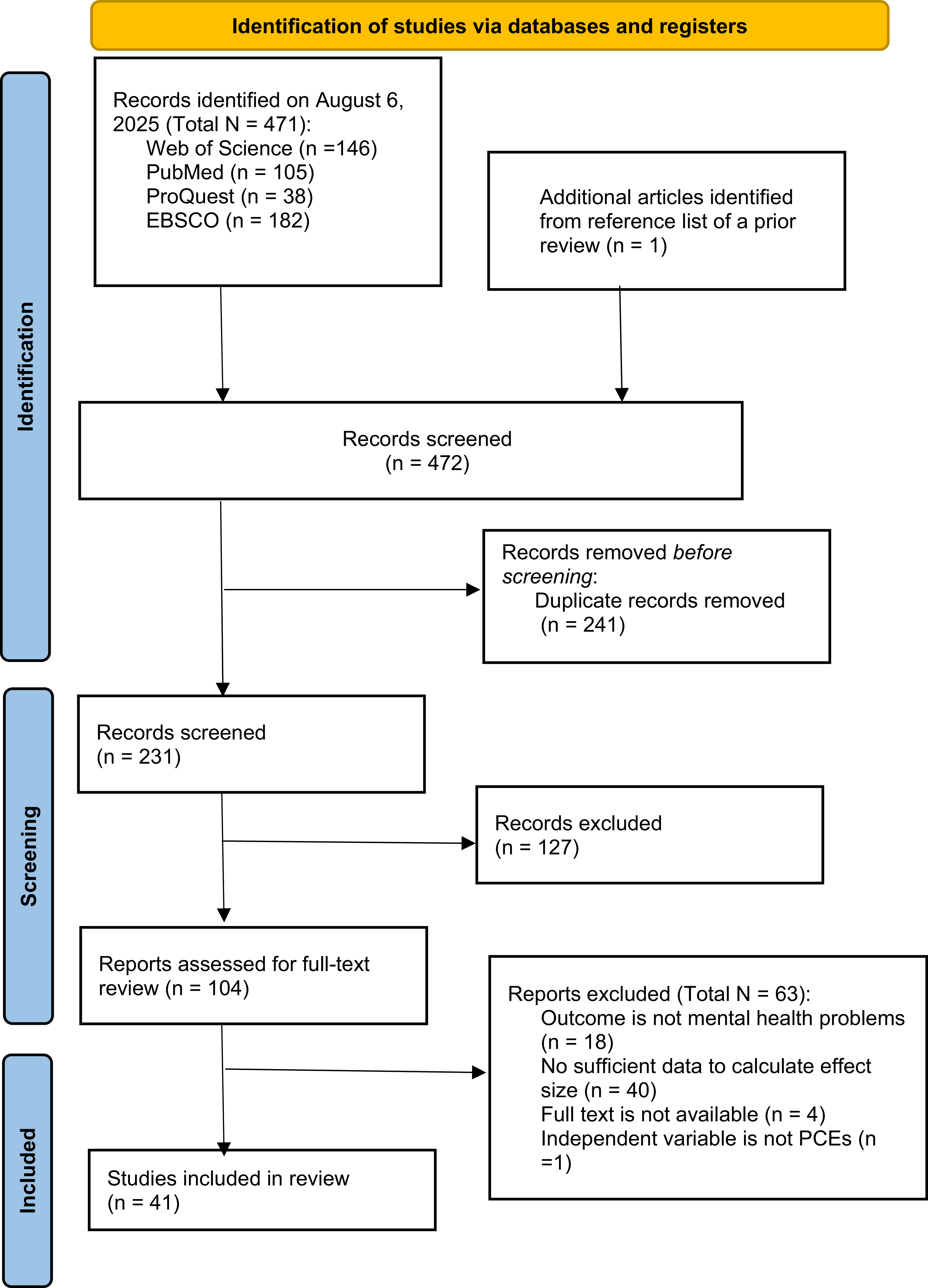
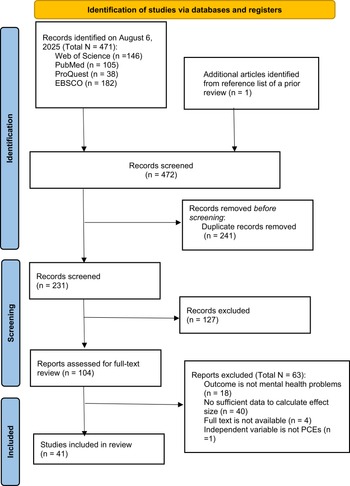
Initially, a total of 471 articles were identified through database searches. All the records were exported to Endnote 21 software, for literature selection. The initial phase involved evaluating titles and abstracts to determine their relevance. Subsequently, full-text articles meeting the inclusion criteria underwent thorough screening. The PRISMA chart shows in figure 1. Following the full-text review, 41 articles were selected for the meta-analysis.
PRISMA flow diagram of study selection.
Data extraction and coding
Drawing on previous meta-analyses (Lee et al., Reference Lee, Choo, Zhang, Cheung, Zhang and Ang2025; Zhang et al., Reference Zhang and Chen2023; Zhang et al., Reference Zhang, Li, Zhang, Ai and Jia2024), data from each selected study were systematically extracted and documented using an excel coding sheet. The form encompassed the following sections: study characteristics (i.e., authors, year of publication, country, study sample), ACEs measures, ACEs values, standardized ACEs, study design, PCEs measures, and mental health symptoms. As a measure of effect size, correlation coefficients were coded. Specifically, when a study reported an overall mental health outcome, that value was used. If only separate mental health symptoms were reported without an overall score, their average was calculated. For studies reporting PCEs or adult mental health outcomes across different developmental stages (e.g., early childhood, middle childhood, adolescence), the mean value across stages was used. If a mental health construct was assessed using multiple subscales, the average of the subscale scores was calculated. For studies reporting unadjusted odds ratios, effect sizes were converted to Pearson’s r using the transformation formula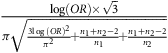 ${{\log (OR) \times \sqrt 3 } \over {\pi \sqrt {{{3\log {{(OR)}^2}} \over {{\pi ^2}}} + {{{n_1} + {n_2} - 2} \over {{n_1}}} + {{{n_1} + {n_2} - 2} \over {{n_2}}}} }}$
(Hedges et al., Reference Hedges, Higgins, Borenstein and Rothstein2021), where n1 and n2 are the unweighted sample sizes of the two comparison groups. For studies reporting a prevalence ratio (PR), PR was converted to an odds ratio using OR=
${{\log (OR) \times \sqrt 3 } \over {\pi \sqrt {{{3\log {{(OR)}^2}} \over {{\pi ^2}}} + {{{n_1} + {n_2} - 2} \over {{n_1}}} + {{{n_1} + {n_2} - 2} \over {{n_2}}}} }}$
(Hedges et al., Reference Hedges, Higgins, Borenstein and Rothstein2021), where n1 and n2 are the unweighted sample sizes of the two comparison groups. For studies reporting a prevalence ratio (PR), PR was converted to an odds ratio using OR= $\;{{{\rm{PR}}(1 - {p_0})} \over {1 - {p_0}{\rm{PR}}}}$
(Zhang & Yu, Reference Zhang and Yu1998), where p
0 is the outcome prevalence in the reference group, and then applied the OR to r transformation above. For articles lacking sufficient data to compute effect sizes, the corresponding authors were emailed to request unreported information (e.g., unadjusted odds ratios, ACEs means).
$\;{{{\rm{PR}}(1 - {p_0})} \over {1 - {p_0}{\rm{PR}}}}$
(Zhang & Yu, Reference Zhang and Yu1998), where p
0 is the outcome prevalence in the reference group, and then applied the OR to r transformation above. For articles lacking sufficient data to compute effect sizes, the corresponding authors were emailed to request unreported information (e.g., unadjusted odds ratios, ACEs means).
While various instruments were used to measure PCEs across studies in this review, the most common was the Benevolent Childhood Experiences (BCEs) Scale developed by Narayan et al. (Reference Narayan, Rivera, Bernstein, Harris and Lieberman2018) (n = 30). Adapted versions of the BCEs Scale were also employed, including a Chinese adaptation (Geng, Li, et al., Reference Geng, Li, Yang, Zou, Tu and Wang2021; n = 2) and a Turkish adaptation (Gunay-Oge et al., Reference Gunay-Oge, Pehlivan and İŞIKLI2020a; n = 1). Additionally, several studies used custom measures (n = 8), such as a resilience questionnaire (Rains & McClinn, Reference Rains and McClinn2013), the 10-item Protective and Compensatory Experiences Scale (PACEs; Morris et al., Reference Morris, Hays-Grudo, Treat, Williamson, Huffer, Robyler and Staton2015), three PCE-7 measures from Bethell et al. (Reference Bethell, Jones, Gombojav, Linkenbach and Sege2019), a combined item set (Novilla et al., Reference Novilla, Broadbent, Leavitt and Crandall2022) consisting of all BCEs and three items from PCE-7 (Bethell et al., Reference Bethell, Jones, Gombojav, Linkenbach and Sege2019), Childhood Caregiving Environment Scale (CCES) (Abbott & Slack, Reference Abbott and Slack2021), and a self-developed instrument (Wang, Reference Wang2023). These instruments differ in conceptual focus, item content, and cultural adaptation, which may influence how strongly they capture promotive factors relevant to adult mental health. For example, some measures emphasize internal beliefs and perceived emotional safety, focusing on the subjective experience of feeling emotionally secure and supported during childhood (Narayan et al., Reference Narayan, Rivera, Bernstein, Harris and Lieberman2018), In contrast, other tools such as Bethell et al. (Reference Bethell, Jones, Gombojav, Linkenbach and Sege2019) 7-item PCE measure and the PACEs Scale (Morris et al., Reference Morris, Hays-Grudo, Treat, Williamson, Huffer, Robyler and Staton2015) focus more on observable presence of supportive systems and structured environments.
The included studies employed a wide range of instruments to assess ACEs. The most frequently used measure was the 10-item CDC-Kaiser ACE questionnaire (CDC-10; Felitti et al., Reference Felitti, Anda, Nordenberg, Williamson, Spitz, Edwards and Marks1998; n = 16), followed by modified versions such as 11-item ACE module from the Centers for Disease Control and Prevention’s Behavioral Risk Factor Surveillance System Survey (CDC-11; Centers for Disease Control & Prevention, 2016; n = 7), 8-item ACE scale based on CDC-10 and CDC guidelines (CDC-8; Centers for Disease Control and Prevention, 2017; Felitti et al., Reference Felitti, Anda, Nordenberg, Williamson, Spitz, Edwards and Marks1998; n = 3), adapted 12-item ACE questionnaire (Felitti et al., Reference Felitti, Anda, Nordenberg, Williamson, Spitz, Edwards and Marks1998; Finkelhor, Reference Finkelhor2020; n = 1), and expanded 15-item ACE questionnaire (Cronholm et al., Reference Cronholm, Forke, Wade, Bair-Merritt, Davis, Harkins-Schwarz, Pachter and Fein2015; Felitti et al., Reference Felitti, Anda, Nordenberg, Williamson, Spitz, Edwards and Marks1998; n = 1). Other measures included the Childhood Trauma Questionnaire (CTQ; Bernstein et al., Reference Bernstein, Stein, Newcomb, Walker, Pogge, Ahluvalia, Stokes, Handelsman, Medrano, Desmond and Zule2003; n = 2), the short-form CTQ-25 (Thombs et al., Reference Thombs, Lewis, Bernstein, Medrano and Hatch2007; n = 2), and the Conflict Tactics Scale–Parent Child (CTS-PC; Straus et al., Reference Straus, Hamby, Finkelhor, Moore and Runyan1998; n = 1). Additionally, one study used an 8-item ACE measure adapted from the Flourishing Families Project (FFP-8; Crandall et al., Reference Crandall, Broadbent, Stanfill, Magnusson, Novilla, Hanson and Barnes2020; n = 1), and another employed a custom ACE scale developed by Schmidt et al. (Reference Schmidt, Narayan, Atzl, Rivera and Lieberman2019) (n = 1). Regarding content coverage, CDC-8, CDC-10, and CDC-11 measure the eight core ACE domains. Some instruments (e.g., adapted 12-item ACE questionnaire, expanded 15-item ACE questionnaire, FFP-8) expand beyond the core domains to include adversities such as poverty, community violence, or hospitalization of a close friend, while still remaining primarily family-focused and covering at least six of the eight core domains. In contrast, CTQ and CTS-PC focus exclusively on maltreatment (abuse and neglect), assessing severity or frequency rather than cumulative exposure.
The heterogeneity of ACEs measures in scale type, item content, and scoring range poses a challenge for synthesizing effects across studies. To address this issue, a standardized ACEs score was coded for each study. Min–max normalization was applied to rescale ACEs scores to a 0–1 range using the formula X’= ${{x - \min \left( x \right)} \over {\max \left( x \right) - \min \left( x \right)}}$
. This approach ensured comparability across different ACEs measures by adjusting for variations in scoring range and scale format.
${{x - \min \left( x \right)} \over {\max \left( x \right) - \min \left( x \right)}}$
. This approach ensured comparability across different ACEs measures by adjusting for variations in scoring range and scale format.
The coding was conducted independently by two coders, yielding excellent inter-rater reliability (kappa = 1.00 for abstracts and .97 for full texts; Landis & Koch, Reference Landis and Koch1977). Discrepancies were resolved through discussion until consensus was reached.
Methodological quality assessment
The JBI critical appraisal checklist was used to assess the methodological quality of cross-sectional studies (Moola et al., Reference Moola, Munn, Tufanaru, Aromataris, Sears and Sfetcu2020), which evaluates eight criteria, including clearly defined inclusion criteria, detailed description of subjects and setting, valid and reliable measurement of exposures and outcomes, identification and control of confounding factors, and appropriate statistical analysis. Each item was rated as “Yes,” “No,” “Unclear,” or “Not applicable.”
For longitudinal studies, NIH Quality Assessment Tool for Observational Cohort Studies (NIH, 2014) was used, which includes 14 criteria such as clarity of the research question, appropriate timing of exposure and outcome measurement, reliability of measures, follow-up adequacy, and control for confounding variables. Each criterion was scored as 1 (“Yes”) or 0 (“No,” “Not reported,” or “Not applicable”). For both tools, a quality score was calculated as the percentage of “Yes” responses out of applicable items, with scores ≥ 70% considered high quality. This ensured that each study was assessed using standards appropriate to its design.
Statistical analyses
Effect sizes were evaluated following Funder & Ozer (Reference Funder and Ozer2019)’s guideline, with an effect-size r of .10 as a small effect, an effect-size r of .20 indicates a medium effect, an effect-size r of .30 indicates a large effect, and an effect-size r = .40 or greater as a very large effect size. All analyses were conducted using the Comprehensive Meta-Analysis software 3.0 (Borenstein et al., 2022). Only the effects related to three mental health issues, depression, anxiety, and PTSD, were included in the meta-analysis due to the limited number of reported effect sizes in other areas.
A random-effects model was employed to analyze the data, acknowledging the variability in true effect sizes across studies, rather than assuming a single common effect size. The homogeneity test for PCEs and overall adult mental health symptoms indicated significant heterogeneity (Q = 955.246, p < .001; I2 = 95.813), necessitating the use of a random-effects model to compute the pooled correlation coefficient. Subgroup analysis was used to determine whether PCEs measures is a moderator. Meta-regressions were used to determine whether ACEs score, current age, and sex (percentage of females) were significant moderators.
Even after standardization, substantive differences remained across ACEs instruments in terms of item coverage and construct focus. Thus, when conducting meta-regression analysis of ACEs, to ensure construct comparability, studies using family-focused ACEs instruments (CDC-8/10/11, adapted 12-item ACE, expanded 15-item ACE, FFP-8) were included and studies using CTQ, CTQ-25, and CTS-PC were excluded because these measures assess maltreatment severity/frequency but omit household-dysfunction domains CDC-type instruments (binary yes/no count of ACEs domains, e.g., CDC-8, CDC-10, CDC-11) and related adaptations (e.g., adapted 12-item ACE, expanded 15-item ACE, FFP-8) yield a binary category count (each domain coded 0/1 and summed). By contrast, CTQ and CTS-PC use Likert/frequency severity scales, producing continuous subscale scores. Mixing binary counts with severity/frequency scores would conflate metrics and bias the moderator; therefore, studies using CTQ/CTS-PC were excluded ifrom the meta-regression.
Funnel plots and egger’s regression tests were used to assess the possibility that publication bias influenced our results.
Results
Study characteristics
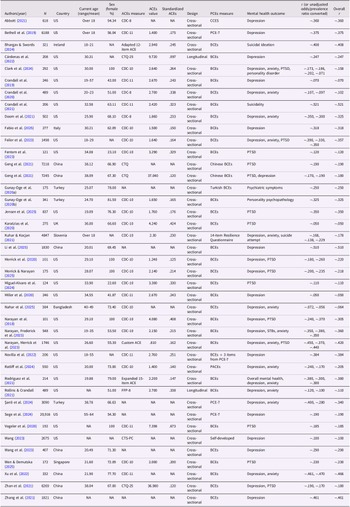
Table 1 presents the characteristics of the 41 studies included in the analysis. Sample sizes varied from 101 to 20,916 participants, totaling 74,492 across all studies. The studies were from 2018 to 2025. Conducted in nine countries, the majority were based in the United States (n = 25). The adult mental health symptoms examined included depression (30 studies), anxiety (13 studies), PTSD (15 studies), suicidal ideation/attempt (4 studies), personality disorders (2 studies), and psychiatric symptoms (1 study). Overall, the source studies incorporated into this analysis demonstrated an adequate level of quality. Details of the quality score are provided in Appendix A (Table 1 and Table 2).
Characteristics of studies included in the meta-analytic review
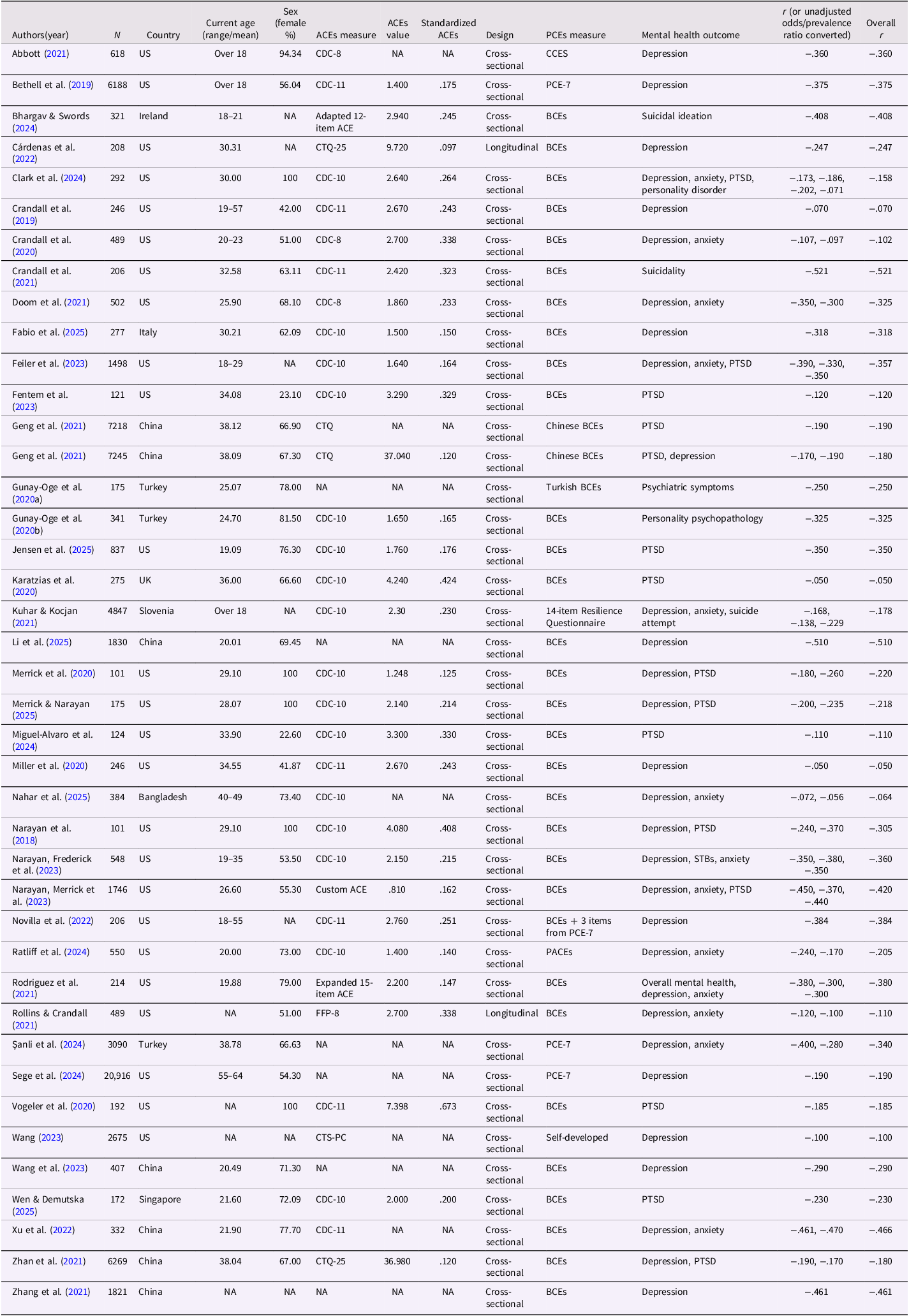
Note. Sex = percentage of female participants; N = number of participants; CCES = Childhood Caregiving Environment Scale (Abbott & Slack, Reference Abbott and Slack2021); PCE-7 = 7-item Positive Childhood Experiences Scale (Bethell et al., Reference Bethell, Jones, Gombojav, Linkenbach and Sege2019); BCEs = Benevolent Childhood Experiences Scale (Narayan et al., Reference Narayan, Rivera, Bernstein, Harris and Lieberman2018); CTQ-SF/CTQ-25 = Childhood Trauma Questionnaire–Short Form (Thombs et al., Reference Thombs, Lewis, Bernstein, Medrano and Hatch2007); CDC-10 = Adverse Childhood Experiences Questionnaire (Felitti et al., Reference Felitti, Anda, Nordenberg, Williamson, Spitz, Edwards and Marks1998); CDC-11 = 11-item ACE scale from the Behavioral Risk Factor Surveillance System Survey (Centers for Disease Control and Prevention, 2016); CDC-8 = 8-item ACE scale based on Felitti et al. (Reference Felitti, Anda, Nordenberg, Williamson, Spitz, Edwards and Marks1998) and CDC guidelines (Centers for Disease Control and Prevention, 2017); Adapted 12-item ACE = 12-item ACE scale adapted from Felitti et al. (Reference Felitti, Anda, Nordenberg, Williamson, Spitz, Edwards and Marks1998) and Finkelhor (Reference Finkelhor2020); Expanded 15-item ACE = 15-item ACE scale based on Cronholm et al. (Reference Cronholm, Forke, Wade, Bair-Merritt, Davis, Harkins-Schwarz, Pachter and Fein2015) and Felitti et al. (Reference Felitti, Anda, Nordenberg, Williamson, Spitz, Edwards and Marks1998); CTQ = Childhood Trauma Questionnaire (Bernstein et al., Reference Bernstein, Stein, Newcomb, Walker, Pogge, Ahluvalia, Stokes, Handelsman, Medrano, Desmond and Zule2003); Custom ACE = 5-item maltreatment index validated with CTQ, including threat and deprivation indicators (Schmidt et al., Reference Schmidt, Narayan, Atzl, Rivera and Lieberman2019); PACEs = Protective and Compensatory Experiences Scale (Morris et al., Reference Morris, Hays-Grudo, Treat, Williamson, Huffer, Robyler and Staton2015); Resilience Questionnaire = 14-item Resilience Questionnaire (Rains & McClinn, Reference Rains and McClinn2013); FFP-8 = ACEs measure from the Flourishing Families Project (Crandall et al., Reference Crandall, Broadbent, Stanfill, Magnusson, Novilla, Hanson and Barnes2020); CTS-PC = Parent–Child Conflict Tactics Scale (Straus et al., Reference Straus, Hamby, Finkelhor, Moore and Runyan1998).
Outcomes of the meta-analyses on the links between PCEs and adult mental health symptoms

Effects of PCEs on mental health symptoms
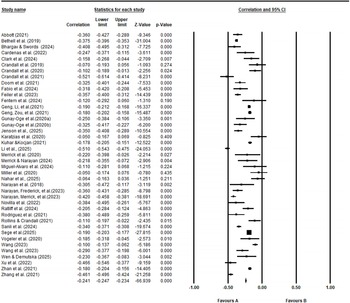
PCEs showed a negative association with overall adult mental health symptoms (r = −.268, p < .001; 95% CI [−.305, −.231]; k = 41, see Table 2). Significant negative correlations were also found between PCEs and individual adult mental health conditions: depression (r = −.273, p < .001; 95% CI [−.319, −.227]; k = 30), PTSD (r = −.243, p < .001; 95% CI [−.299, −.184]; k = 15), anxiety (r = −.246, p < .001; 95% CI [−.309, −.181]; k = 13).
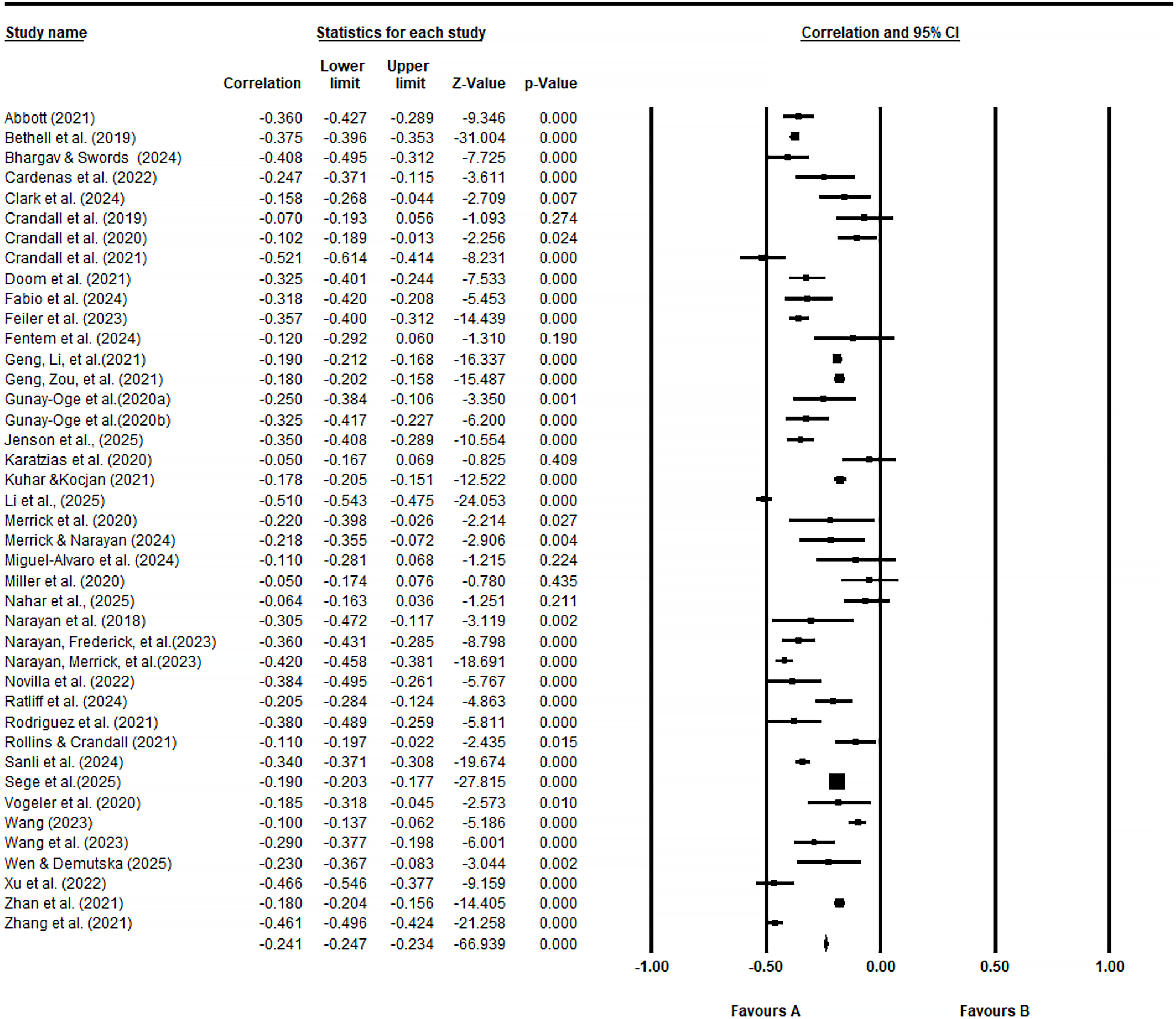
Figure 2 presents a forest plot illustrating this association, detailing effect sizes and 95% confidence intervals for each included study. Additional forest plots depicting the impact of PCEs on specific adult mental health outcomes, namely depression, PTSD, and anxiety, are provided in Appendix A (Figure 1 to Figure 3).
Forest plot of the associations between PCEs and overall adult mental health symptoms.
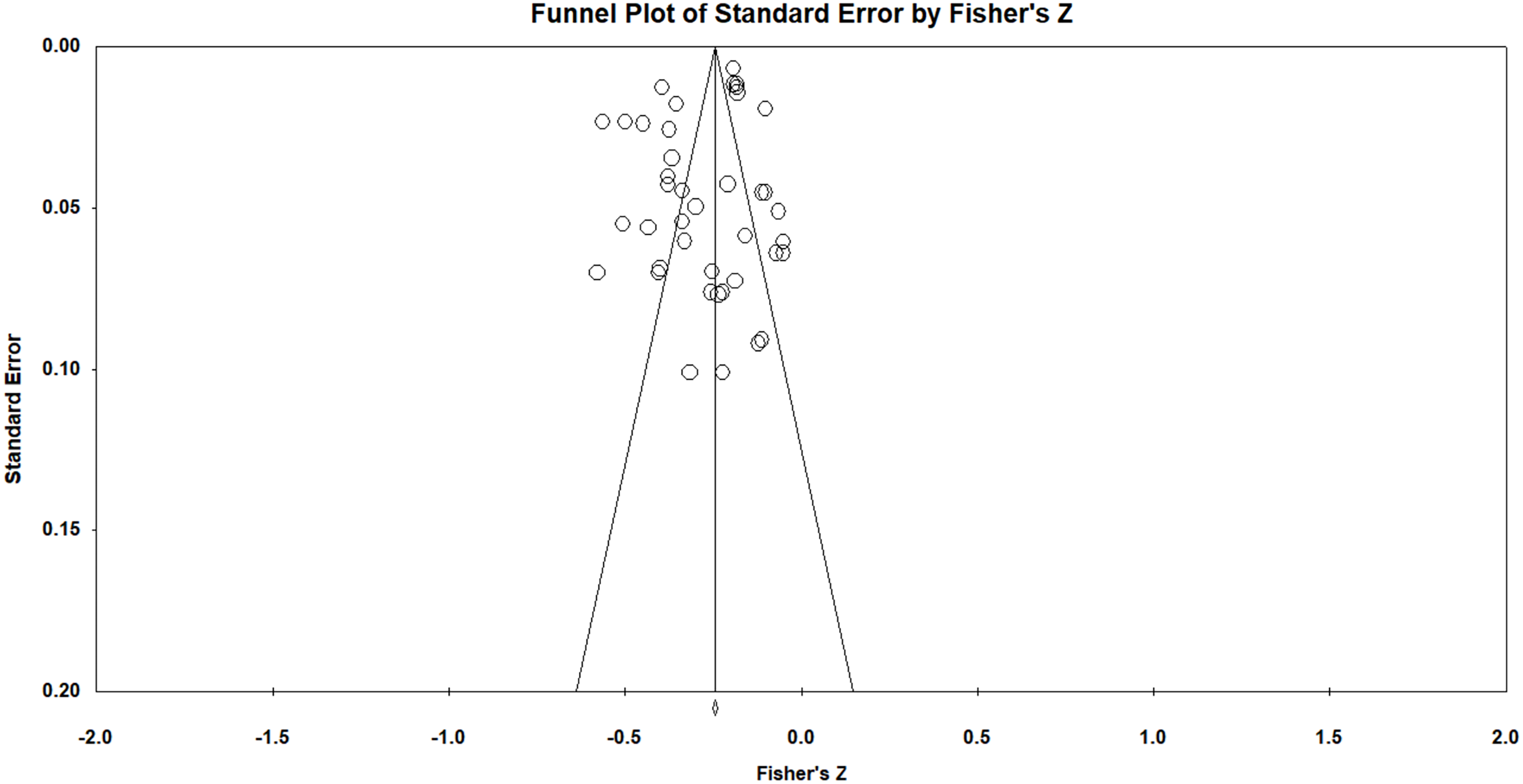
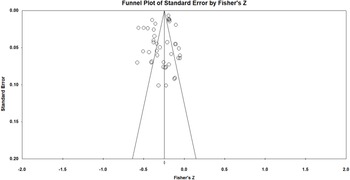
Funnel plot of analysis examining the associations between PCEs and overall adult mental health symptoms.
Moderation effects
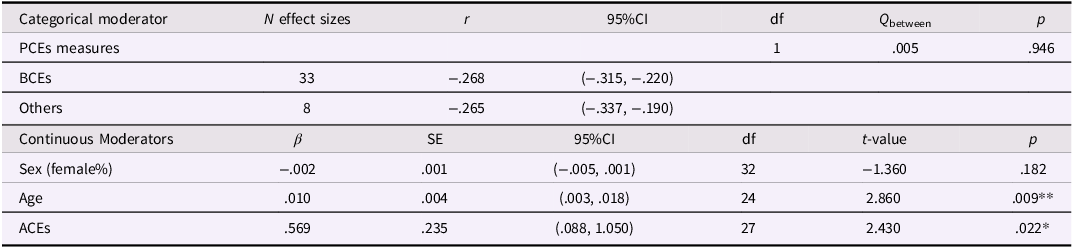
For the association between PCEs and overall adult mental health symptoms, meta-regression results found a significant difference across current age (β = .010, p = .009, df = 24, see Table 3) and ACEs (β = .569, p = .022, df = 27). In contrast, no significant moderating effect was found for sex (female%; β = −.002, p = .182, df = 32) or for PCEs measures (p > .05).
Categorical and continuous moderator analysis of the associations between PCEs and overall adult mental health symptoms
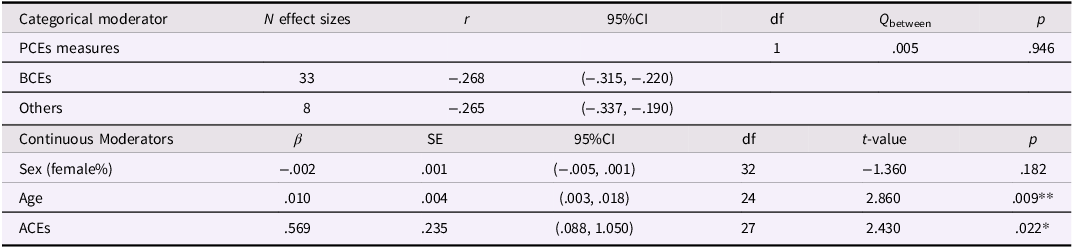
Note. ** p < .01, * p < .05.
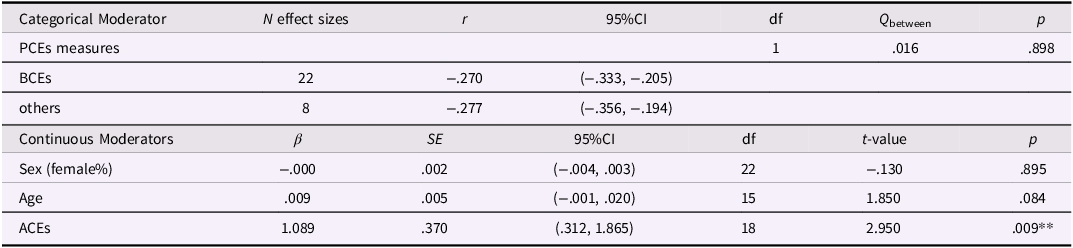
When the outcome was restricted to depression, only ACEs was a significant moderator (β = 1.089, p = .009, df = 18; see Table 4). Current age (p > .05), sex (female%; p > .05), and PCEs measures (p > .05) were not statistically significant moderators.
Categorical and continuous moderator analysis of the association between PCEs and depression
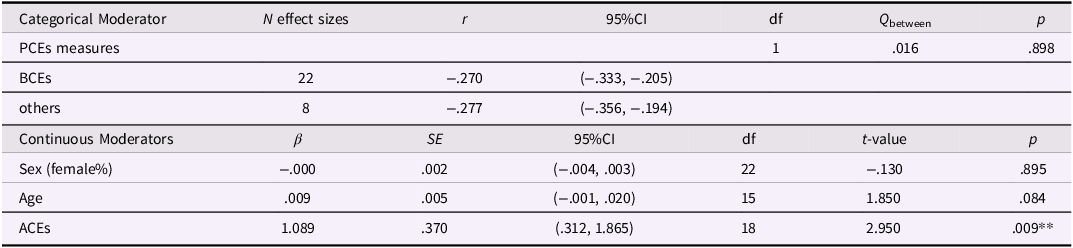
Note. ** p < .01.
When the outcome was restricted to PTSD, both current age (β = .012, p = .009, df = 11; see Table 5) and ACEs (β = .874, p = .026, df = 9) were significant moderators. In contrast, sex (female%; β = −.000, p = .754, df = 12) was not a significant moderator.
Continuous moderator analysis of the association between PCEs and PTSD

Note. ** p < .01, * p < .05.
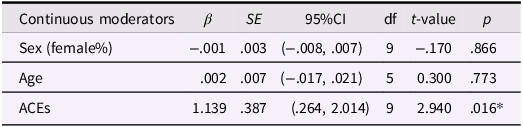
When the outcome was restricted to anxiety, only ACEs was a significant moderator (β = 1.139, p = .016, df = 9, see Table 6). Neither current age (p > .05) nor sex (female%; p > .05) was a significant moderator.
Continuous moderator analysis of the association between PCEs and anxiety
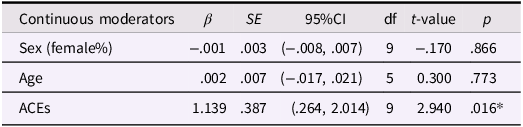
Note. * p < .05.
Publication bias
Funnel plots showed that study effects were generally distributed symmetrically around the pooled estimates for all four outcomes (overall mental health, depression, PTSD, and anxiety; see Figure 3 and Appendix A, Figures 4–6). Egger’s tests provided no evidence of publication bias (overall: t = 1.452, p = .154; depression: t = 0.500, p = .627; PTSD: t = 0.838, p = .417; anxiety: t = 0.500, p = .627), suggesting that the findings are unlikely to be substantially influenced by reporting bias.
Discussion
Associations between PCEs and mental health symptoms
PCEs demonstrated medium-to-large negative associations with overall adult mental health symptoms and depression, and medium negative associations with anxiety and PTSD. These findings align with resilience theory (Masten & Cicchetti, Reference Masten, Cicchetti and Cicchetti2016), and developmental psychopathology perspective (Cicchetti & Toth, Reference Cicchetti and Toth2009), both of which emphasize that positive early environments play a critical role in shaping long-term psychological functioning.
Explaining heterogeneity with moderators
The present findings indicate that ACEs significantly moderate the associations between PCEs and adult mental health outcomes, including overall symptoms, depression, PTSD, and anxiety. Notably, this moderating effect was especially pronounced for depression and anxiety, indicating that higher exposure to ACEs weakened the association between PCEs and the promotive effects against these outcomes to a greater extent than was the case with other mental health issues. These results suggest that while PCEs serve to promote positive mental health outcomes overall, their beneficial effects may be attenuated in individuals with higher ACEs exposure. One way to interpret the stronger moderating effect of ACEs on the PCEs–depression and PCEs–anxiety associations is through the diathesis–stress framework (Belsky & Pluess, Reference Belsky and Pluess2009). The model proposes that individuals exposed to early adversity develop heightened sensitivity to environmental contexts. High exposure to ACEs may amplify vulnerability to negative outcomes, while simultaneously limiting the extent to which later positive resources, such as PCEs, can exert their promotive influence. The strong moderating effect of ACEs on the promotive effects of PCEs for depression and anxiety is also consistent with stress-sensitization theory, which posits that repeated exposure to early adversity recalibrates biological stress systems and heightens reactivity to later stressors (Hammen, Reference Hammen2015). This heightened reactivity undermines the capacity of subsequent promotive factors, such as PCEs, to exert promotive effects. Because anxiety is closely tied to hyperarousal and heightened threat detection, it is especially susceptible to the cumulative neurobiological and psychological burdens of adversity (Kenwood et al., Reference Kenwood, Kalin and Barbas2022). Depression is strongly linked to stress dysregulation and blunted reward sensitivity, which heighten vulnerability to the long-term effects of adversity (Ruge et al., Reference Ruge, Ehlers, Kastrinogiannis, Klingelhöfer-Jens, Koppold, Abend and Lonsdorf2024). Taken together, these frameworks suggest that although PCEs generally promote resilience, their promotive influence is attenuated among individuals with higher ACEs exposure, particularly in domains most dependent on stress- and affect-regulation processes.
The impact of PCEs on overall adult mental health symptoms and PTSD appears to slightly diminish slightly with increasing age at the time of assessment. Their promotive benefits are most pronounced in early adulthood and gradually weaken as individuals grow older. Although the magnitude of this effect is modest, it may still carry practical significance. One possible explanation is that the influence of early life experiences may be moderated by subsequent life events and environmental factors, aligning with the cumulative risk and resilience model and the life course perspective (Shanahan, Reference Shanahan2000). According to the cumulative risk and resilience model, the impact of early positive experiences can be weakened by the accumulation of risk factors encountered later in life (Evans et al., Reference Evans, Li and Whipple2013). For example, chronic stressors such as economic hardship, adverse relationships, or major life transitions can overshadow the benefits of PCEs. The life course perspective also emphasizes that developmental trajectories are shaped by an interplay of historical, cultural, and personal factors (Shanahan, Reference Shanahan2000). As individuals age, their mental health symptoms are influenced by dynamic and cumulative interactions. Life events such as career challenges, parenthood, or health declines in later years can introduce stressors that diminish the relative influence of PCEs on adult mental health symptoms. On the other hand, early life experiences shape the stress-regulation system, such as the hypothalamic-pituitary-adrenal axis (Juruena, Reference Juruena2014). Over time, the brain’s adaptability (neuroplasticity) allows it to adjust to new experiences (Kays et al., Reference Kays, Hurley and Taber2012), which can reduce the long-term impact of childhood experiences. Thus, it is possible that adults facing significant stress or trauma may experience weaker benefits from earlier positive experiences.
However, sex did not moderate the associations between PCEs and adult mental health symptoms. One possible explanation is developmental: as individuals age, sex differences in emotional development and coping strategies tend to diminish (Hyde, Reference Hyde2014), such that PCEs may confer comparable benefits across sexes in adulthood. Another possible explanation is measurement-related. Most primary studies assess PCEs with composite scores that combine relational items (e.g., feeling cared for by a teacher) and structural items (e.g., a predictable home routine). Because boys and girls may benefit from different domains, aggregating them into a single index may obscure sex-specific effect (Narayan et al., Reference Narayan, Rivera, Bernstein, Harris and Lieberman2018; Putnick & Bornstein, Reference Putnick and Bornstein2016). Future research that reports sex-stratified analyses and distinguishes relational from structural PCEs dimensions may uncover more nuanced sex patterns.
PCEs measures did not significantly moderate the associations between PCEs and adult mental health symptoms. One possible explanation is that despite differences in format and item content, many PCEs instruments share core conceptual domains such as emotional safety, supportive relationships, and environmental stability, which may lead them to capture similar promotive constructs across populations (Bethell et al., Reference Bethell, Jones, Gombojav, Linkenbach and Sege2019; Morris et al., Reference Morris, Hays-Grudo, Treat, Williamson, Huffer, Robyler and Staton2015; Narayan et al., Reference Narayan, Rivera, Bernstein, Harris and Lieberman2018). Thus, any measurement-related variation may not be large enough to produce significant differences in observed associations. Another explanation is that the small number of studies using alternative or custom measures (referred to as “others” PCEs measures) limited the statistical power to detect moderation effects. With only a few studies representing these “others” measures, the meta-analysis may not have been adequately powered to capture nuanced differences in effect sizes across instruments.
Strength, limitation, and future directions
First, by employing a meta-analytic approach, the study provides precise and reliable estimates of the overall effect sizes for these associations, addressing inconsistencies found in prior empirical research. Second, the findings confirm the negative associations between PCEs and adult mental health symptoms, detailing how PCEs relate to various conditions, including depression, anxiety, and PTSD. Finally, the moderator analyses in this review offer a detailed understanding of the key variables that either strengthen or weaken these associations. These insights are particularly valuable for clinical practice, guiding the development of tailored and effective interventions.
Beyond the strengths, several limitations of this study exist. First, the strict inclusion criteria of this study resulted in a limited number of studies (n = 41) being included. This small sample size reduces the statistical power and generalizability of the meta-regression findings, so the results should be interpreted with caution. Second, the moderation effect of ACEs should be interpreted with caution. Although analyses were restricted to primarily family-focused ACEs instruments, these measures still varied in length and item content. ACEs values were standardized to enable comparability, but the meaning of ‘high’ versus ‘low’ ACEs exposure may not be entirely equivalent across instruments. Third, two studies used longitudinal cohorts (including one that assessed PCEs during adolescence and tracked participants into adulthood), but the majority assessed PCEs retrospectively in adulthood, raising concerns about recall bias (Hardt & Rutter, Reference Hardt and Rutter2004; Reuben et al., Reference Reuben, Moffitt, Caspi, Belsky, Harrington, Schroeder, Hogan, Ramrakha, Poulton and Danese2016) and mood-congruent memory (Faul & LaBar, Reference Faul and LaBar2023). Hardt and Rutter (Reference Hardt and Rutter2004) noted that individuals with good adult functioning often forget early parental negativity, suggesting that retrospective reports may underestimate true associations through random forgetting and overestimate them if current mental health colors recollections. Future research should prioritize prospective assessment of PCEs in childhood and incorporate multi-informant or administrative data sources to validate retrospective reports and mitigate recall bias. Beyond improving measurement, longitudinal studies are also needed to investigate mechanisms such as attachment and emotion regulation, thereby clarifying the pathways through which PCEs confer resilience and promote long-term mental health. Fourth, this meta-analysis focused on only searchable literature published in English. Future studies can include research published in non-English language, which may potentially expand the selection of studies from diverse cultures. Fifth, most of the included studies did not report PCEs at different stages of childhood (e.g., early childhood, middle childhood, adolescence). When more empirical studies become available on the association between PCEs at various stages of childhood and adult mental health symptoms, conducting another meta-analysis would be highly valuable. Sixth, the studies examined only four moderators. Future research, including primary studies and meta-analyses, is encouraged to uncover additional moderators and mediators, enhancing our understanding of the mechanisms through which PCEs influence adult mental health and informing effective prevention and intervention strategies.
Implication for research
This meta-analysis addresses a key gap by demonstrating robust and consistent negative associations between PCEs and diverse adult mental health symptoms. Importantly, it underscores the need to examine moderating factors such as ACEs, current age, sex, and measurement tools to clarify variability in effects across populations. The findings point in particular to the role of ACEs in shaping the influence of PCEs on overall adult mental health outcomes. The finding that current age at the time of mental health assessment moderated the associations between PCEs and overall adult mental health symptoms and PTSD highlights the dynamic nature of resilience: while early positive experiences provide an important foundation, individuals can continue to cultivate psychological resources throughout life (Luthar & Cicchetti, Reference Luthar and Cicchetti2000). By establishing these patterns, the present study advances the empirical foundation for future hypothesis-driven research on the mechanisms, including potential mediators, and moderators of associations between PCEs and adult mental health symptoms.
Implications for policy and practice
The findings underscore the critical importance of incorporating PCEs into prevention and intervention frameworks aimed at promoting adult mental health. That is, they highlight the value of strength-based approaches that cultivate emotional safety, supportive relationships, and predictable environments during childhood (Crandall et al., Reference Crandall, Miller, Cheung, Novilla, Glade, Novilla, Magnusson, Leavitt, Barnes and Hanson2019; Narayan et al., Reference Narayan, Rivera, Bernstein, Harris and Lieberman2018). Several national and international efforts provide promising examples of integrating PCE-informed strategies into policy and practice. For instance, the U.S. Centers for Disease Control and Prevention’s Essentials for Childhood initiative (CDC, 2024), Australia’s Communities for Children (Australian Government Department of Social Services, 2022), and China’s Healthy China 2030 policy (Ning et al., Reference Ning, Pei, Huang, Li and Shao2024) have all integrated PCE-informed strategies into national frameworks to support child and family well-being. Similarly, school-based and early education programs have advanced PCEs by fostering nurturing relationships and stable routines. South Korea’s Wee Project (Cho & Park, Reference Cho and Park2015) strengthens student–teacher connections through counseling services that promote trust, emotional regulation, and social competence, whereas the U.S. Head Start Program (U.S. Department of Health and Human Services, 2024) supports teacher–student and parent–child relationships through home visits, parenting resources, and family involvement in learning, and also enhances peer relationships through structured classroom activities and community linkages. Consistent with these examples, a global meta-analysis of 424 studies across 53 countries (Cipriano et al., Reference Cipriano, Strambler, Naples, Ha, Kirk, Wood, Sehgal, Zieher, Eveleigh, McCarthy, Funaro, Ponnock, Chow and Durlak2023) found that universal school-based social and emotional learning (SEL) interventions (e.g., Second Step, Promoting Alternative Thinking Strategies [PATHS]) for students in kindergarten through 12th grade significantly improved school climate, enhanced students’ SEL skills, beliefs, and relationships, and reduced students’ emotional distress. These findings further affirm the value of interventions that intentionally promote PCEs across diverse settings.
Taken together, this evidence highlights the central role of strong and nurturing relationships in supporting lifelong mental health. Upstream prevention and intervention efforts should leverage children’s social networks, including parents, teachers, non-parental adults, neighbors, and peers, as these relationships are central to PCEs and provide the foundation for other promotive experiences and long-term resilience (Bethell et al., Reference Bethell, Jones, Gombojav, Linkenbach and Sege2019; Morris et al., Reference Morris, Hays-Grudo, Treat, Williamson, Huffer, Robyler and Staton2015). In addition, incorporating PCEs screening tools such as the BCEs Scale (Narayan et al., Reference Narayan, Rivera, Bernstein, Harris and Lieberman2018) into clinical, school, and community settings can help practitioners identify existing strengths and design tailored interventions that both mitigate risk and build resilience across the lifespan.
The moderation findings highlight two key implications for policy and practice. First, while PCEs are broadly associated with improved adult mental health, their promotive effects appear to be attenuated in the context of high ACEs exposure, particularly for overall adult mental health symptoms, depression, PTSD, and anxiety. At the policy level, this underscores the importance of integrated mental health prevention frameworks that not only foster positive experiences for all children but also address the complex needs of individuals who have experienced ACEs, ensuring they can fully benefit from such experiences within developmental and psychotherapeutic frameworks (Lian et al., Reference Lian, Kiely, Callaghan and Anstey2024). Such approaches allow practitioners to routinely assess both risk and promotive factors, tailor interventions, and ensure that youth with ACEs histories receive targeted support. These strategies emphasize reducing harm while simultaneously enhancing promotive experiences to optimize lifelong mental health. Second, because PCEs’ benefits for adult mental health are strongest earlier in adulthood and diminish with age, policies and interventions should prioritize early supports that help young people translate PCEs into enduring coping and relational skills. At the same time, early experiences alone may not suffice in later life. Programs that foster new positive experiences across adulthood, including workplace wellness initiatives (Kelly & Snow, Reference Kelly, Snow, Burke and Richardsen2019), digital platforms that enhance social connection (Li & Zhou, Reference Li and Zhou2021), and health literacy interventions (Li et al., Reference Li, Wang and Zhou2024), can strengthen resilience and psychological well-being. Developmentally responsive services are therefore essential, adapting to shifting needs across life stages as the impact of early experiences changes over time.
Conclusion
In summary, this pre-registered review provides the first quantitative assessment of the impact of PCEs on adult mental health symptoms while examining potential moderators. Across 41 studies, PCEs showed medium-to-large negative associations with overall adult mental health symptoms and depression, and medium negative associations with PTSD and anxiety. Integrated prevention frameworks that combine ACEs prevention with PCEs promotion during childhood can promote mental health across the lifespan by addressing both risk and promotive pathways, with tailored support at each developmental stage essential to maximizing their effectiveness. Continued research is needed to strengthen and expand this emerging field.
Supplementary material
The supplementary material for this article can be found at https://doi.org/10.1017/S0954579425100734.
Data availability statement
The data that support the findings of this meta-analysis are available from the original studies included in the analysis. Details on data access are publicly available from the original publishers.
Funding statement
This study received no funding support.
Competing interests
The author has no conflict of interest.
Pre-registration statement
The study was pre-registered in the International Prospective Register of Systematic Reviews (PROSPERO; CRD42025634776).




 Open access

