


Introduction
The elderly population is becoming an increasingly interesting consumer group from a marketing perspective. The proportion of elderly aged 65 years and older in the population is expected to rise to 20 % for the USA( 1 ) and to 29 % for Europe( Reference Commission 2 ) in the next 40 years. In addition, elderly consumers are getting wealthier( Reference Karani and Fraccastoro 3 ). Therefore, marketers are starting to focus their efforts on the unique needs of the elderly, in particular in the tourism domain( Reference Mathur, Sherman and Schiffman 4 , Reference Purinton-Johnson, Zhu and Mondal 5 ). For many other domains, including the food domain, the elderly market is still under development( Reference Moschis 6 , Reference Arboleya, González and Salazar 7 ).
The food market holds great potential for targeting the elderly population. The nutritional needs of elderly change with advancing age, as do their preferences regarding how to meet these needs. Specifically, appetite declines with age whereas the recommended daily intake of many nutrients increases( Reference World Health 8 ). This paradox can result in nutritional deficiencies, which decrease the quality of life of elderly( Reference Brownie 9 ) and increase healthcare costs( Reference Marinangeli and Jones 10 ). Moreover, elderly show an interest in healthy eating( Reference Roininen, Lähteenmäki and Tuorila 11 ) and are willing to spend money on products that meet their needs( Reference Leek, Szmigin and Carrigan 12 , Reference Yoon, Cole, Haugtvedt, Herr and Kardes 13 ). Marketing efforts that focus on the nutritional needs of elderly may thus be beneficial for both public health and the food industry.
However, from a marketing perspective, meeting these needs is challenging. First, elderly who face a reduced appetite will probably not be able to meet their nutritional needs through an increased quantity of consumption. A more promising approach may therefore be the commercialisation of nutrient-enriched food( Reference Dunne and Dahl 14 ), which is a type of functional food( Reference Crowe and Francis 15 ) that is relatively nutrient-dense given its volume. Commercialising these foods may pose a second challenge. Functional foods that are specifically aimed at elderly consumers may not be readily accepted by all subgroups of the elderly population, due to age-related stigmatisation( Reference Tepper 16 , Reference Faranda and Schmidt 17 ). In contrast, when functional foods are advertised as healthy alternatives to conventional products, elderly are overall willing to try them( Reference Poulsen 18 – Reference Vassallo, Saba and Arvola 20 ). The general concept of functional food may thus appeal to elderly. Nonetheless, specific functional food products may not, which is a third challenge to meeting the nutritional needs of the elderly. Although the elderly population can be classified using an age bracket (defined here as age 55 years and older), it is strongly heterogeneous in its composition( Reference Moschis 6 ). During the decade from age 50 to 60 years, consumers go through many life changes and therefore become less alike( Reference Moschis 21 ). Consequently, elderly may have similar nutritional needs (i.e. nutrient requirements), but their food-related wants (i.e. product preferences) tend to differ strongly.
Heterogeneous populations like the elderly call for a strategic marketing approach based on segmentation, targeting and positioning. Segmentation entails the identification of smaller, more homogeneous subgroups (segments) within a broader, more heterogeneous population( Reference Wedel and Kamakura 22 ). Once identified, segments can be evaluated on their potential for a specific company, and one or more segments can be selected for targeting. For these target segments, differentiated marketing programmes can be developed based on product design and positioning. Many researchers have recognised the heterogeneity among elderly and have proposed ways to segment this population( Reference Mathur, Sherman and Schiffman 4 , Reference Faranda and Schmidt 17 , Reference Moschis 21 ). Nonetheless, segmentation within the elderly food market has received surprisingly little attention, especially when compared with the travel market. To our knowledge, only two published articles have focused on segmenting elderly consumers in the food market( Reference Morgan 23 , Reference Ahmad 24 ) and none has focused on the functional food market.
A successful approach will promote the commercialisation of functional foods for the elderly. However, successful segmentation is not simply a matter of freely exploring consumer differences, because segments are not groups of consumers that occur naturally in the market( Reference Wedel and Kamakura 22 ). Instead, segments are groups created by marketers to help them develop market strategies and meaningful groups result only from a strong theoretical basis. Therefore, one of the most critical steps in market segmentation is the selection of one or multiple variables (bases) that will be used to group consumers into segments( Reference Wedel and Kamakura 22 ). Although, statistically, segments can be found even when a logical basis for clusters is not apparent( Reference Hair, Black, Babin, Hair, Black, Babin and Anderson 25 ), an inappropriate choice of base variables may result in segments that are hard to identify or do not provide informative input for marketing efforts. In contrast, a (combination of) well-selected base(s) may provide marketers with more valid segments that differ from each other in a meaningful way. Therefore, the aim of the present paper is to review a range of potential segmentation bases, and critically evaluate their appropriateness in the context of functional foods aimed at the elderly.
Segmentation bases
Food choice depends on various interrelated higher-level and lower-level determinants, and each of these sources of variability might potentially serve as a segmentation base( Reference Moschis 21 , Reference Haley 26 ). To provide some structure in discussing these various bases, we organise them into three hierarchical levels that (amongst others) are regularly used in consumer research: the person, domain and product level( Reference Van Raaij and Verhallen 27 – Reference Ansari, Essegaier and Kohli 29 ). Bases on the person level (also called ‘general level’) exist on an abstract, high level and consist of global consumer differences such as demographics (for example, marital status) and general psychographics (for example, personality). Bases on the domain or (in this case) food level exist on a medial level and consist of food-specific consumer differences, such as general beliefs and motives regarding food. Bases on the product level exist on a concrete, low level and are represented by product-specific consumer differences, such as the benefits and attributes sought by consumers as well as their product purchase behaviour.
We evaluate and compare a range of these higher- and lower-level segmentation bases, to determine the extent to which they can provide useful information for marketing efforts within the elderly functional food market. Based on an extensive survey of the literature and discussion among the authors, we narrow our review to: four person-related bases (cognitive age, life course, time perspective and demographics), two food-related bases (general food beliefs and food choice motives) and two product-related bases (product attributes and benefits sought, and past purchase) (see Fig. 1). These segmentation bases are frequently discussed in either literature on the elderly population, food choice or both, and have all been studied in the context of consumer behaviour.
Theoretical organisation of the selected eight potential segmentation bases.
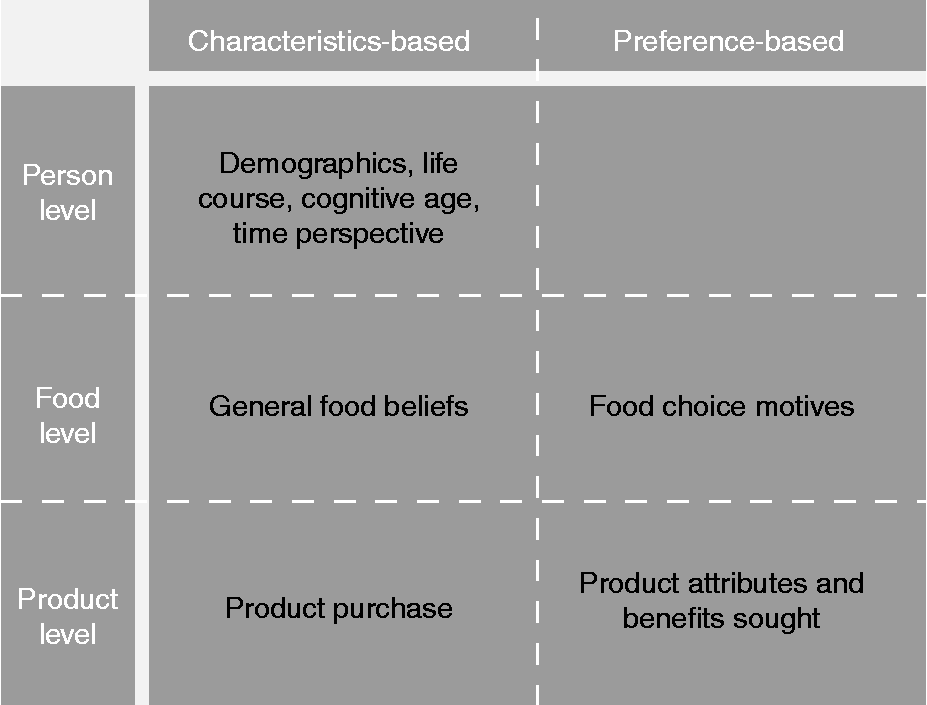
Among these eight bases on three levels, one can distinguish between two main sets of segmentation approaches: characteristics-based v. preference/needs/benefit-based segmentation (from now on referred to as ‘preference-based’). Characteristics-based segmentation mainly organises consumers into groups with similar personal characteristics and provides input for segment communication and targeting. In contrast, preference-based segmentation organises consumers into groups with similar needs and wants and provides input for product development and strategy( Reference Greengrove 30 – Reference Finley, Rogers and Napier 32 ). In markets like the functional food market, both product development and communication for (re)positioning of existing products are useful; thus, either of the two main segmentation approaches may be suitable for segmenting elderly in the functional food market. We will use this theoretical organisation as a starting point for evaluating the eight selected segmentation bases on a set of evaluation criteria.
Evaluation criteria
The marketing literature has put forward six criteria for the evaluation of market segmentation approaches: identifiability, substantiality, accessibility, stability, responsiveness and actionability( Reference Wedel and Kamakura 22 , Reference Dibb 33 , Reference Kotler 34 ). These criteria are operationalised as follows:
-
1 Identifiability: segments can be distinguished from each other on the basis of information that is obtained objectively and easily (for example, a validated and short scale).
-
2 Substantiality: segments are large enough to be targeted profitably in terms of invested time, effort and cost as well as resulting sales.
-
3 Accessibility: targeted segments can be reached with marketing efforts through multimedia or in store in a way that is not too costly. Media profiles (based on demographics) provide information on how marketers can access segments.
-
4 Stability: segments are stable for at least the time that marketing efforts take place in terms of size, behaviour or consumer membership.
-
5 Responsiveness: consumers within segments respond similarly to marketing efforts targeted at them and uniquely different from consumers in other segments.
-
6 Actionability: segments are meaningful in that they provide instructions for the development of marketing efforts within the scope of a company's capabilities.
The relative importance of these six criteria depends, to some degree, on the marketing objectives of the segmentation. As mentioned before, product development and communication are important tools to increase the appeal of functional foods. Given that their success depends largely on the actionability of a segmentation base, we split the criteria of actionability into actionable for design and actionable for communication. This leaves us with seven evaluation criteria. Ideally, a segmentation base is strong regarding all criteria. However, most bases face some weaknesses as well as strengths( Reference Wedel and Kamakura 22 , Reference Steenkamp and Ter Hofstede 35 ), and it may be most useful to segment consumer populations on a combination of variables that complement each other( Reference Wedel and Kamakura 22 ). We will evaluate the strengths and weaknesses of the individual eight bases first (summarised in Table 1) and elaborate on complementary combinations of variables in the Discussion section.
Strengths and weaknesses of potential segmentation bases by evaluation criteria
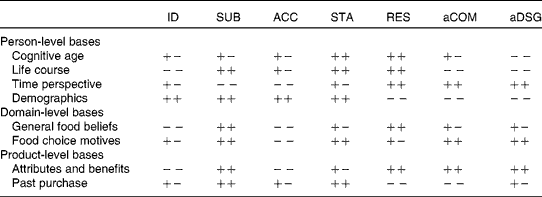
ID, identifiability; SUB, substantiality; ACC, accessibility; STA, stability; RES, responsiveness; aCOM, actionability for communication; aDSG, actionability for design.
Person-level bases
Person-level segmentation bases are high-level bases that indicate, for example, how people perceive their future (for example, ‘full of opportunities’) and themselves (for example, ‘younger than my chronological age’), but also their place in society (for example, ‘unemployed’ or ‘married’). Researchers who advocate the use of person-level bases for market segmenting generally argue that these provide a broad perspective on consumer behaviour and that segments are generalisable to various domains( Reference Moschis 21 , Reference Sudbury and Simcock 36 ). Others argue that these segments may be too broad and therefore not able to explain and predict specific behaviour( Reference Ahmad 24 , Reference Van Raaij and Verhallen 27 ). We will evaluate four person-level bases: cognitive age, life course, time perspective and demographics.
Cognitive age
In the past, age was frequently used as a segmentation base( Reference Lumbers, Raats, Shepherd and Raats 37 , Reference Bone 38 ). However, since the 1990 s, marketers have started to acknowledge that people do not ‘act their age’ and that people within the same age group are rather dissimilar( Reference Moschis 6 ). Chronological age is an empty variable, in the sense that it does not cause behaviour( Reference Settersten and Mayer 39 ), but merely gives a suggestion of one's degree of ageing. Age, in turn, is not perfectly in line with ageing( Reference Sudbury and Simcock 36 ). Ageing occurs at different rates in different people and elderly often feel much younger than their chronological age( Reference Mathur and Moschis 40 ). As a result, chronological age has made way for cognitive age; the age one feels like, looks like, acts like and the age one's interests fit in( Reference Bone 38 , Reference Barak and Schiffman 41 ).
Cognitive age results from biological, psychological and social ageing, which affect how people perceive themselves( Reference Mathur and Moschis 40 ). After retirement, for example, people may start feeling old because they want to maintain consistency between their behaviour and their identity( Reference Mathur and Moschis 40 ). Nonetheless, the majority of elderly do not feel old( Reference Barak and Rahtz 42 ), which may be partly explained by the perceived undesirability of old age that exists in many societies( Reference Tepper 16 , Reference Barak and Rahtz 42 ). Also, the turning point from feeling young to feeling old may require the experience of a catalytic event, rather than ageing in general( Reference Van Auken and Barry 43 ), and the timing of this event probably differs considerably among individuals because people respond differently to life events( Reference Brownie 9 , Reference Mathur and Moschis 40 , Reference Delaney and McCarthy 44 ). However, as long as one lives in a stable environment, cognitive age may remain constant or change slowly( Reference Mathur and Moschis 40 ). In line with this, the test–retest reliability of the cognitive age scale is strong; 0·88( Reference Bone 38 , Reference Barak and Schiffman 41 ).
Cognitive age mediates the effect of various demographics on behaviour( Reference Mathur and Moschis 40 ) and it may therefore provide a rich perspective of consumers, resulting in uniquely responsive segments. Cognitively old elderly, for example, are more price sensitive than cognitively young elderly( Reference Barak and Gould 45 ). Given the overall higher prices of functional food( 46 ), cognitively old elderly may thus be less interested in purchasing these types of food than cognitively young elderly. However, to our knowledge, there is no literature available on the relationship between cognitive age and (functional) food choice.
Cognitive age is a better predictor of behaviour than chronological age( Reference Van Auken and Barry 43 ). Nevertheless, as a person-level variable, cognitive age is limited in predicting food choice. In addition, segments based on cognitive age are not as easily identified as segments based on chronological age. Whereas chronological age can be determined objectively and directly, using a single question, cognitive age is inferred from responses on a multi-item questionnaire, albeit a small and reliable one (split-half reliability: 0·85)( Reference Barak and Schiffman 41 ). Moreover, there is no consensus on how to categorise subjects into cognitive age groups. One could, for example, use a cut-off score to categorise people into cognitively young v. old, or one could distinguish between people who feel younger or older than their actual age. Although this lack of consensus reduces identifiability of segments based on cognitive age, it does provide marketers with some influence on the composition and substantiality of segments; there is no fixed number of segments (in contrast with, for example, sex).
Irrespective of the operationalisation of its groups, cognitive age provides limited instructions for marketing efforts. Questions may be raised such as: do elderly who feel like 60 want different functional foods from those who feel like 90? Actionability for product design is thus limited and, therefore, researchers usually recommend combining cognitive age with other variables( Reference Sudbury and Simcock 36 , Reference Van Auken and Barry 43 ). Segments do provide some instructions for communication efforts and are moderately actionable for communication. For example, research on age-related stigmatisation has shown that cognitively old elderly accept age-targeted products and services such as senior discounts, whilst cognitively young elderly do not( Reference Tepper 16 , Reference Moschis and Mathur 47 ). Furthermore, media profiles based on chronological age may provide some information on how marketers can access segments based on cognitive age, since they are correlated (r>0·50)( Reference Mathur and Moschis 40 , Reference Barak and Rahtz 42 ). Media profiles based on other demographics may not be applicable because they are only weakly related to cognitive age( Reference Mathur and Moschis 40 , Reference Van Auken and Barry 43 ).
Life course
Whereas cognitive age perspectives assume that life events affect one's self-perception, life course perspectives argue that elderly who experienced similar life events will have similar needs, wants and/or behaviours( Reference Moschis 6 , Reference Moschis 21 ). Life events like retirement, remarriage, becoming a grandparent, relocation, health problems and widowhood( Reference Sobal and Bisogni 48 ) have all been studied in the context of food consumption, but their effects tend to vary from one person and situation to another( Reference Delaney and McCarthy 44 , Reference Mathur, Moschis and Lee 49 ). Retirement, for example, may provide people with more time to prepare and enjoy meals, but may also increase the tendency to snack out of boredom or inactivity( Reference Delaney and McCarthy 44 ). This variability can be explained by the idea that life events have various direct and indirect effects( Reference Mathur, Moschis and Lee 49 ) that interact with each other in a dynamic way( Reference Delaney and McCarthy 44 ).
Because life events cannot be viewed in isolation( Reference Mathur, Moschis and Lee 49 ), most researchers use combinations of life events. One example is the gerontographic life-stage model, which is specifically aimed at segmenting the elderly population. The model proposes four substantial segments: healthy indulgers (13 %), healthy hermits (38 %), ailing outgoers (34 %) and frail recluses (15 %)( Reference Moschis 21 ), which consist of elderly who are at different but not necessarily sequential stages in their lives( Reference Lumbers, Raats, Shepherd and Raats 37 ). In part because segments are based on a wide collection of measures, the life-stage model predicts behaviour better than chronological age, cognitive age( Reference Moschis 21 , Reference Moschis, Curasi and Bellenger 50 ) or demographics( Reference Moschis, Curasi and Bellenger 51 ) alone and segments are differentially responsive. Ailing outgoers, for example, are interested in learning new things, whilst frail recluses want to feel secure( Reference Moschis, Curasi and Bellenger 50 ). However, the extent to which different marketing strategies appeal to the segments varies across products( Reference Moschis 21 ) and segments are, therefore, limited in actionability regarding both product design and communication. In addition, it has been suggested that only two segments are viable for the food market: healthy indulgers and ailing outgoers( Reference Moschis, Lee and Mathur 52 ).
In contrast, stability of segments based on life course perspectives is probably good, because life events are closely linked with demographics (for example, retirement with income and occupation), which are generally stable. In line with this, the gerontographic life stages are relatively stable, with segments varying in size by no more than 2 % across studies( Reference Moschis 21 ). Moreover, some of the demographic information inherent in life events can be linked to media profiles (for example, socio-economic status), which provides marketers with information on the accessibility of segments. Although single life events may be easily identifiable using objective and direct demographic questions, questionnaires that assess a collection of life events can become quite lengthy. In addition, there is considerable variance among studies in the choice of life events, and concrete information on the variables used to measure the gerontographic life stages is lacking( Reference Weijters and Geuens 53 ), because the model is proprietary( Reference Faranda and Schmidt 17 ).
Time perspective
Socio-emotional selectivity theory is another approach that looks at the effect of life events on behaviour( Reference Cate and John 54 ). Rather than focusing on self-perception (like cognitive age) or adaptation (life course perspectives), it assumes that differences in behaviour are based on differences in time perspective( Reference Carstensen, Fung and Charles 55 ). The theory classifies time perspective into limited time and open-ended time, which can be measured using a reliable, ten-item questionnaire (internal consistency: 0·92)( Reference Lang and Carstensen 56 ). People who perceive time as limited (regularly found in ill or old people) have a tendency to pursue short-term, emotional and present-oriented goals whereas people who perceive time as open-ended (more often found in young people) have a tendency to pursue more long-term, rational and future-oriented goals( Reference Carstensen, Fung and Charles 55 , Reference Ares, Giménez and Gámbaro 57 ).
On a consumer level, hedonic products (for example, tasty food) are most appealing when time is limited, whereas utilitarian products (for example, healthy food) are most appealing when time is open-ended( Reference Wei, Donthu and Bernhardt 58 ). Functional foods usually provide benefits in the long run and may therefore, on the one hand, appeal most to consumers with an open-ended time perspective. On the other hand, the convenience or ‘quick fix’ aspect of functional foods( Reference Cornish 59 ) may appeal to those who perceive time as limited. In line with the latter, elderly living in nursing homes (i.e. who probably perceive time as limited) are more interested in functional foods than those still living independently( Reference Van Der Zanden, Van Kleef and De Wijk 60 ). However, to our knowledge, no published studies have looked at the effect of time perspective on functional food acceptance.
Although time perspective is correlated with age, such that older adults more often perceive time as limited, it is not bound to age( Reference Carstensen, Fung and Charles 55 , Reference Wei, Donthu and Bernhardt 58 ). In fact, larger differences in time perspective exist among elderly than among young adults( Reference Fung, Lai and Ng 61 ) and the correlation between age and time perspective is not always significant within the elderly population( Reference Bal, Jansen and Van Der Velde 62 , Reference Fredrickson and Carstensen 63 ). In fact, time perspective can even be changed temporarily using time constraints or statements( Reference Wei, Donthu and Bernhardt 58 , Reference Kim, Goldstein and Hasher 64 ). Segments based on time perspective are therefore more or less stable depending on the context of food choice. In line with this, test–retest reliability of the future time perspective scale is moderate (0·50 to 0·72)( Reference Zacher and De Lange 65 ). In addition, as elderly more often perceive time as limited, a segment of elderly who perceive time as open-ended may not be substantial enough to be profitable. In addition, time perspective is not strongly related to demographics other than chronological age( Reference Cate and John 54 ), and this association is weak within the elderly population( Reference Bal, Jansen and Van Der Velde 62 , Reference Fredrickson and Carstensen 63 ). As a result, information on accessibility of segments based on time perspective will be limited.
Time perspective is, however, strongly related to one's motivations and goals( Reference Carstensen, Fung and Charles 55 ) and may therefore provide responsive segments. Emotionally appealing advertisements are, for example, more attractive to consumers who perceive time as limited than to consumers who perceive time as open-ended( Reference Williams and Drolet 66 ). In addition, time perspective is inferred from responses on a validated, multi-item questionnaire and is therefore moderately easy identifiable. Moreover, segments based on time perspective are actionable for both communication and design, because they provide information about the products and messages that are appealing to consumers (for example, hedonic v. utilitarian). A recent conceptualisation of time perspective may provide even more actionability. Cate & John( Reference Cate and John 54 ) found that time perspective could best be operationalised as two independent dimensions: perceived limitations and opportunities. In this conceptualisation, a person who sees time as limited does not necessarily see time as less full of opportunity and may be interested in, for example, products that promote health and are convenient to use at the same time.
Demographics
In contrast with time perspective, demographics are widely used as segmentation bases. They provide segments that are considerably stable (for example, sex), substantial (for example, education), easily identified using objective measures (for example, age)( Reference Van Raaij and Verhallen 27 ) and intuitively easy to understand( Reference Honkanen, Olsen and Myrland 67 ). In addition, demographics are often readily available( Reference Wedel and Kamakura 22 ) and have been used as a basis for media profiles that provide marketers with information on the accessibility of consumers.
Functional food acceptance has been related to various demographics, such as sex, education, income and age( Reference Childs and Poryzees 68 , Reference Verbeke 69 ). Specifically, women and older adults are overall found to be more accepting of functional foods than men and younger adults( Reference Poulsen 18 , Reference Bogue and Ryan 70 ), and consumers with lower education have more concerns about functional foods than those with higher education( Reference Niva and Mäkelä 71 ), which may also be explained by their lower income. These findings suggest that highly educated, wealthy, elderly women may be most interested in functional foods.
Nevertheless, differences in demographics generally do not account for much variation in actual food choice( Reference Rozin, Shepherd and Raats 72 , Reference Locher, Ritchie and Roth 73 ). For example, the core foods eaten by elderly vary little with income( Reference Fanelli and Stevenhagen 74 , Reference Briley 75 ) and the perceived health benefits of functional foods outweigh the effects of age and sex on functional food acceptance( Reference Verbeke 69 ). Furthermore, segments based on demographics are limited in actionability regarding both product design and communication( Reference Steenkamp and Ter Hofstede 35 ) as they provide little instructions for marketing efforts. For example, how can marketers position functional food in a segment of well-educated, elderly women? In addition, segments are probably not uniquely responsive to marketing efforts because consumers within these segments are often considerably heterogeneous( Reference Haley 26 ). Indeed, relationships found between demographics and food choice differ between functional foods( Reference Ares and Gámbaro 76 ), across countries( Reference Payette and Shatenstein 77 ), over time( Reference Verbeke 78 ) and across studies in general.
Summary
Person-level segmentation bases are generally stable, responsive and substantial. They are, however, limited in their actionability because they are not strongly related to actual food choice. Therefore, these bases provide limited instructions for marketing efforts in the functional food market. Furthermore, demographics and single life events are unique in the sense that they are measured directly with objective, one-item measures (for example, birth date, sex). All other segmentation bases that we discuss are inferred from multi-item questionnaires.
Food-level bases
Food-level segmentation bases are medial-level bases that indicate, for example, how people think about food and food contexts (for example, ‘processed food is unhealthy’), but also how they trade off various reasons for choosing food (for example, health v. sensory appeal). Researchers who advocate the use of domain-level bases for market segmentation generally argue that these bases are neither too general (like person-level bases), nor too specific (like product-level bases)( Reference Van Raaij and Verhallen 27 , Reference Geeroms, Verbeke and Kenhove 79 ). The same argument may also underline why domain-level bases are of limited use; for some purposes they are neither specific nor general enough. We will evaluate two food-level bases: general food beliefs and food choice motives.
General food beliefs
The experiences with food that consumers have over their lifetime affect their personal beliefs about food, such as what types of food they should or should not eat, the role of food in their lives and how they categorise or evaluate food products( Reference Rozin, Shepherd and Raats 72 , Reference Locher, Ritchie and Roth 73 , Reference Herne 80 , Reference Sobal, Bisogni, Devine, Shepherd and Raats 81 ). These beliefs are general, in that they are not about specific food products (for example, oranges) but about broader food categories (for example, fruit) or about food in general (for example, the effects of food on health). General food beliefs differ strongly among consumers and, as a consequence, the same type of food (for example, functional food) may be perceived as healthy and convenient by some, but as unhealthy and quick-fix solutions by others( Reference Sobal, Bisogni, Devine, Shepherd and Raats 81 ).
Elderly tend to believe that their diet is already healthy( Reference De Almeida, Graça and Afonso 82 , Reference Kremer, Hulst and Boesveldt 83 ) and that improving their diet is too late( Reference Delaney and McCarthy 44 , Reference Herne 80 ). Single beliefs are probably not actionable, however, because they do not directly translate into specific behaviours. For example, consumers may overall be sceptical about functional foods, but nevertheless consume specific functional foods that meet their needs or wants( Reference Van Der Zanden, Van Kleef and De Wijk 60 ). A combination of multiple beliefs thus provides a broader perspective of consumer thought processes and food choice. In one of the few segmentation studies of the elderly food market, Morgan( Reference Morgan 23 ) segmented elderly using a questionnaire with food-related statements (for example, ‘eating at restaurants is too expensive’) and found three responsive segments: nutrition concerned, fast and healthy, and traditional couponers. Segments like these are actionable for both product design and communication, because they provide concrete information about the thought processes of consumers. For nutrition-concerned elderly, for example, marketers can emphasise the health aspects of foods and for fast and healthy elderly the convenience aspects.
One well-known questionnaire based on food beliefs is the Food-Related Lifestyle Instrument. It measures sixty-nine food beliefs from the process of food shopping to food consumption and links them to five food lifestyle elements( Reference Grunert, Brunsø and Bisp 84 ). However, most researchers construct their own questionnaire, with beliefs that are of central interest for specific research questions. Similar to measuring life events, there is no consensus on which food beliefs should be measured. Nonetheless, the choice of beliefs is a critical step( Reference Hair, Black, Babin, Hair, Black, Babin and Anderson 25 ) that strongly affects actionability. A segmentation based on beliefs about food in general will provide less information on how a functional food should be designed (actionability for design) but more information on how to approach consumers (actionability for communication) than a segmentation based on beliefs about the more specific category of functional foods.
Substantiality of segments is probably not a problem when using food beliefs, because marketers are not bound to a specific number or type of segments and can thus combine segments that are too small. Furthermore, general food beliefs are based on a lifetime of experiences and can remain consistent over long periods of time( Reference Edstrom and Devine 85 ). In contrast, the more specific beliefs about functional foods may not yet be strongly established in consumers' minds. In earlier studies on functional foods, beliefs used to fluctuate between as well as within experiments( Reference Urala and Lähteenmäki 86 , Reference Landström, Hursti and Magnusson 87 ) and although functional foods are more common nowadays, consumers are still ambivalent about them( Reference Van Der Zanden, Van Kleef and De Wijk 60 , Reference Coleman, Miah and Morris 88 ). Segments based on food beliefs may thus be more or less stable depending on the beliefs that are measured. The availability of media profiles and, therefore, accessibility of the segments also depends on the choice of beliefs.
Food choice motives
Whereas food beliefs consist of what consumers think is true, food choice motives consist of what consumers think is important and which factors they consider in making food choices.
The widely used Food Choice Questionnaire( Reference Steptoe, Pollard and Wardle 89 ) assesses the importance of each of nine food choice motives: health, mood, convenience, sensory appeal, natural content, price, weight control, familiarity and ethical concern (internal consistency of the scales>0·72). A later adjustment of this scale divides the ethical motive into three motives: religion, political value and ecological welfare( Reference Lindeman and Väänänen 90 ). Segments based on food choice motives are actionable for both product design and communication, because the motives can be directly translated into product characteristics and messages( Reference Kornelis, Van Herpen and Van Der Lans 91 ). Segments that are motivated by weight control, for example, may be interested in protein-enriched products that ‘increase feelings of satiety’ whereas segments that are motivated by natural content may prefer products that ‘contain natural sources of protein’.
Usually consumers hold multiple motives( Reference Kornelis, Van Herpen and Van Der Lans 91 ) that may be more or less important depending on the context of food choice( Reference Onwezen, Reinders and Van Der Lans 92 ). When hospitalised, for example, people often temporarily care less about the sensory appeal of food and focus more on their health( Reference Herne 80 ). In the case of conflicting motives, a trade off takes place, wherein one can, for example, focus on a single motive (for example, always choose the healthiest option). Alternatively, one can routinise ways to trade off motives for recurring situations (for example, only choose tasty foods during the weekend)( Reference Sobal, Bisogni, Devine, Shepherd and Raats 81 ). In addition, consumers may choose to interpret food choice motives in such a way that they are consistent with their behaviour. When consuming ice cream, for example, consumers may operationalise their health motives in terms of promoting wellbeing (i.e. enjoyment) even though the product may not benefit their physical health( Reference Chrysochou, Askegaard and Grunert 93 , Reference Van Dam and Van Trijp 94 ). Furthermore, what consumers think is important does not always align with what they actually do( Reference Urala 95 ). Food choice motives are thus probably not strongly predictive of actual food choice.
Trade-off tendencies of food choice motives are relatively stable within situations( Reference Sobal, Bisogni, Devine, Shepherd and Raats 81 ) and, usually, food choice questionnaires measure the importance of food choice motives in the context of ‘a typical day’. Food choice motives will, therefore, probably result in stable segments. In line with this, test–retest reliability of the motives ranges between 0·71 and 0·83( Reference Steptoe, Pollard and Wardle 89 ). In addition, trade-off tendencies may result in uniquely responsive segments. Although most consumers want products that satisfy as many motives as possible( Reference Haley 26 ), consumers do differ in the relative importance of these motives( Reference Onwezen, Reinders and Van Der Lans 92 ). Among elderly, Locher et al. ( Reference Locher, Ritchie and Roth 73 ) found a general interest in the motives convenience, sensory appeal and price, but considerable heterogeneity regarding the motives health, natural content, familiarity and weight control( Reference Locher, Ritchie and Roth 73 , Reference De Almeida, Graça and Afonso 82 ).
Consumers who are motivated by health are not necessarily willing to try functional foods. These foods are expected to taste badly and perceived to be unnatural, unfamiliar and expensive( Reference Poulsen 18 , Reference Ares, Giménez and Gámbaro 57 , Reference Verbeke 78 , Reference Landström, Hursti and Magnusson 87 ), thus the importance of sensory appeal, natural content, familiarity and price also play a role. In addition, consumers' reasons behind food choice vary across different types of functional food( Reference Ares and Gámbaro 76 , Reference Aschemann-Witzel, Maroscheck and Hamm 96 ). As a result, segments based on food choice motives have been found to differ in acceptance of some but not all functional foods( Reference Ares and Gámbaro 76 ). This variability limits the responsiveness of segments based on food choice motives.
Furthermore, food choice motives are inferred from responses on the Food Choice Questionnaire, rather than measured directly. The questionnaire is lengthy with its thirty-six items; thus segments based on food choice motives are moderately identifiable. However, there is no consensus regarding the number and type of segments that may be derived from the Food Choice Questionnaire, which increases the influence that marketers have on the substantiality of segments. Segments that are too large may be broken down and segments that are too small may be combined with other segments. Nonetheless, segment substantiality is probably not a problem because segments based on food choice motives are often substantial enough ( ≥ 21 %)( Reference Honkanen, Olsen and Myrland 67 , Reference Ares and Gámbaro 76 ). In contrast, segments may not be linked to media profiles, because not all food choice motives are reliably related to specific demographics. The price motive, for example, has been related to age in some studies( Reference Honkanen, Olsen and Myrland 67 , Reference Pohjanheimo and Sandell 97 ) but not in others( Reference Steptoe, Pollard and Wardle 89 ).
Summary
Food-level segmentation bases are generally responsive and actionable because they are closely related to actual food choice. They are moderately identifiable (because they are inferred from multi-item questionnaires) and provide little information on accessibility (because they are not related to demographics). In addition, their ability to predict acceptance of specific functional foods is limited because they operate on a general food level. For example, consumers who appreciate functional foods in general may not be interested in specific functional food formats.
Product-level bases
Product-level segmentation bases are low-level bases that indicate, for example, what kind of benefits people seek in their food consumption (for example, ‘comfort’) and what kind of product attributes they prefer (for example, ‘crispy texture’), but also what products consumers actually purchase. Researchers who advocate the use of product-level bases for market segmentation argue that these are strongly predictive of actual food choice( Reference Ahmad 24 , Reference Huffman, Ratneshwar, Mik, Ratneshwar, Mick and Huffman 98 ). Others argue that segments based on product-level bases may be too specific and therefore not generalisable to other products( Reference Van Raaij and Verhallen 27 , Reference Sudbury and Simcock 36 ). We will evaluate two product-level bases: product attributes and benefits sought, and past purchase.
Product attributes and benefits sought
Food choice motives (for example, ‘health’) are fulfilled by product benefits (for example, ‘control of blood pressure’) which arise from product attributes (for example, ‘added omega-3 fatty acids’)( Reference Van Raaij and Verhallen 27 , Reference Surai and Sparks 99 ). These three concepts are often used interchangeably( Reference Onwezen, Reinders and Van Der Lans 92 , Reference Olsen, Prebensen and Larsen 100 ) because they are closely related to each other. However, food choice motives reflect more general consumer tendencies, whereas the attributes and benefits that consumer seek probably differ across foods. Therefore, we evaluate product attributes and benefits together as product-level segmentation bases.
According to Haley( Reference Haley 26 ), the fact that consumers seek different benefits is the main reason why market segments exist. In various marketing domains, elderly consumers have been segmented on the product attributes and benefits they seek( Reference Horneman, Carter and Wei 101 , Reference Shoemaker 102 ) and this has also been done for the general consumer population in the functional food market( Reference Herath, Cranfield and Henson 103 , Reference Hailu, Boecker and Henson 104 ). Examples of resulting segments are: ‘receptive to functional foods’ (47 %) and ‘receptive to general foods for wellbeing’ (53 %)( Reference Herath, Cranfield and Henson 103 ), or ‘pill lovers’ (23 %), ‘yoghurt lovers’ (16 %) and ‘pill loathers’ (16 %)( Reference Hailu, Boecker and Henson 104 ). Moreover, one of the few researchers who discussed the segmentation of elderly consumers in the food market recommended using benefit segmentation( Reference Ahmad 24 ). Nonetheless, this recommendation was not evaluated in practice.
The three attributes of functional food that are most frequently discussed in the literature are: functional ingredients (for example, Ca), health claims (for example, ‘increases bone mineral density’) and the carrier product in which functional ingredients are placed (for example, orange juice). These attributes each affect functional food acceptance individually( Reference Van Kleef, Van Trijp and Luning 105 ). In addition, ingredients and carriers interact with each other( Reference Siegrist, Stampfli and Kastenholz 19 , Reference Krutulyte, Grunert and Scholderer 106 ) and, as a result, some carrier–ingredient combinations are more appealing to consumers than others( Reference Poulsen 18 , Reference Landström, Hursti and Magnusson 87 ). Functional food acceptance is also affected by the way in which health claims are presented. For example, elderly prefer health claims that focus on disease prevention (for example, ‘reduces risk of cancer’) over health claims that focus on health promotion (for example, ‘increases energy level’)( Reference Bogue and Ryan 70 ). However, carrier type is found to affect acceptance most strongly( Reference Siegrist, Stampfli and Kastenholz 19 , Reference Ares and Gámbaro 76 , Reference Krutulyte, Grunert and Scholderer 106 ).
Besides food-specific attributes (for example, functional ingredients), functional foods may differ on a range of general product attributes, such as product price, package, brand and additional ingredients( Reference Sparke and Menrad 107 – Reference Ares, Besio and Giménez 109 ). These attributes also contribute to the benefits that a product provides. Although individual benefits are appealing to many segments, it is the total configuration of benefits sought that differ between segments( Reference Haley 26 , Reference Onwezen, Reinders and Van Der Lans 92 ) and result in unique responsiveness. Overall, elderly prefer healthy carriers to unhealthy ones, but considerable differences exist in their specific preferences. For example, elderly are found to overall like protein-enriched bread and dislike protein-enriched candy, but differ in their acceptance of protein-enriched meat, microwave meals and canned soup( Reference Van Der Zanden, Van Kleef and De Wijk 60 ).
Segments based on product attributes and benefits sought are actionable because they can be directly translated into marketing efforts( Reference Ahmad 24 , Reference Haley 26 ) (for example, by highlighting certain benefits) as well as product design (for example, by using certain carrier–ingredient combinations). In contrast, identifiability of these segments is limited. Researchers generally advise against directly measuring attributes and benefits sought( Reference Van Kleef, Van Trijp and Luning 105 ) because consumers often do not exactly know why they do or do not want to purchase certain products( Reference Ulwick 110 , Reference Riquelme 111 ). Instead, researchers usually let participants evaluate product formats, from which the attributes and benefits sought are later derived using a statistical method (for example, conjoint analysis).
Generally, segments based on attributes and benefits sought are substantial enough ( ≥ 16 %)( Reference Hailu, Boecker and Henson 104 , Reference Chung, Hong and Kim 112 , Reference Hsu and Lee 113 ) but moderately stable. Sought attributes and benefits are linked to the food choice motives that are most important at the moment of food choice. These motives, in turn, can vary across situations( Reference Onwezen, Reinders and Van Der Lans 92 ) and over time( Reference Calantone and Sawyer 114 ). However, when attributes and benefits sought are measured for a specific context, segments may be stable. In line with this, test–retest reliabilities of attributes and benefits sought have been found to vary strongly, from the weak 0·20 to the strong 0·93( Reference Calantone and Sawyer 114 , Reference Bottomley and Doyle 115 ). In addition, products and attributes sought cannot always be directly related to specific demographics( Reference Hailu, Boecker and Henson 104 ) and may, therefore, provide little information on the accessibility of segments.
Past purchase
Aside from which attributes and benefits consumers seek, it can be useful to look at what products consumers actually purchase. Research suggests that past behaviour is strongly predictive of future behaviour( Reference Ouellette and Wood 116 ) and when behaviour is frequently performed, it may turn into a stable habit( Reference Conner, Armitage, Shepherd and Raats 117 ). This applies to food choice as well( Reference Gillespie and Johnson-Askew 118 , Reference Peters 119 ). Past purchase may be especially predictive of future purchase in elderly because they live relatively stable lives( Reference Amireault, Godin and Vohl 120 ) and may thus have well-established patterns of consumption. Indeed, even olfactory losses in the elderly are not strongly related to changes in food choice( Reference Koster 121 , Reference Kremer, Bult and Mojet 122 ). Segments based on product purchase are thus probably stable.
Nonetheless, the relationship between past and future behaviour is not especially meaningful( Reference Ouellette and Wood 116 ). Past behaviour and future behaviour are merely correlated with each other because they are based on the same underlying beliefs and motivations( Reference Ajzen and Berkowitz 123 ). Behaviour itself does not provide much information on why consumers do or do not purchase certain products and actionability for communication is thus limited. How can one, for example, promote functional food purchase among consumers who do not yet purchase functional food? In contrast, actionability for design may be moderate. For example, consumers who already purchase certain types of functional food may be interested in similar types of functional food and consumers may also be approached with functional alternatives of the conventional foods that they purchase.
Information on past behaviour may, however, only be useful in a market that is relatively static and the functional food market, in contrast, is one driven by innovation( Reference Bäckström, Pirttilä-Backman and Tuorila 124 ). Product formats or marketing efforts from the past may therefore be a weak starting point in the commercialisation of functional foods. Furthermore, few segmentation studies use purchase behaviour in isolation, because it tends to result in limited, substantial and heterogeneous segments (for example, buyers and non-buyers of a product) that are probably not uniquely responsive to marketing efforts. Therefore, behaviour is sometimes measured in combination with other variables, such as purchase frequency( Reference Barrena 125 ) or motivations( Reference Sparke and Menrad 107 ) to establish more diverse segments. Yet more often, past behaviour is used to describe segments rather than as a basis for market segmentation( Reference Shoemaker 102 , Reference Littrell, Paige and Song 126 ).
Segments can be identified using a self-report measure of past purchase, but self-report measures often provide unreliable results( Reference Macdiarmid and Blundell 127 ). In addition, consumers may be unaware of functional food purchases because consumers are often unsure whether or not products are ‘functional’( Reference Van Der Zanden, Van Kleef and De Wijk 60 , Reference Landström, Hursti and Magnusson 87 ). A better source of information is the customer card because it objectively records what customers purchase( Reference Ziliani and Bellini 128 ). Moreover, it records purchases across various occasions (for example, week and weekend days), which provides a better indication of behavioural tendencies than a single purchase( Reference Fishbein and Ajzen 129 ). Furthermore, customer cards are usually linked with customer profiles that contain various demographics as well as store patronage information on which media profiles have been based. This information can thus be used to determine the accessibility of segments. However, irrespective of the measure used, past purchase can only be measured when the product of interest is already for sale in stores. This variable may thus be of limited use for newly developed functional foods.
Summary
Product-level segmentation bases are unique in the sense that they are able to predict acceptance of specific functional food formats, to some extent. Similar to food-level segmentation bases, segments of product-level bases are relatively strong regarding stability, substantiality and actionability for design. In contrast, segments are not always responsive and actionable for communication. Whereas segments based on product attributes and benefits sought are both actionable and responsive, this is not the case for past purchase. In addition, although past purchase may be the strongest predictor of functional food purchase among the segmentation bases in the present paper, it can exclusively be used for products that are already in stores.
Discussion
Segmentation of elderly consumers has become increasingly interesting from a marketing perspective( Reference Purinton-Johnson, Zhu and Mondal 5 ). Segmentation of elderly in the functional food market has received limited attention, however, which is surprising given its potential for both the marketing industry and health community( Reference Yoon, Cole, Haugtvedt, Herr and Kardes 13 , Reference Poulsen 18 ). Successful market segmentation calls for a strong theoretical basis and the present review aimed to provide some insight into segmentation bases for elderly in the functional food market. One approach to segmenting elderly consumers is to use characteristics-based segmentation bases that focus on describing consumers (for example, demographics). Another approach would be to use preference-based segmentation bases (for example, food choice motives), which focus on gaining insight into the wants and needs of consumers. In this paper, we argued that elderly have specific food-related needs and wants, and this might justify preference-based segmentation approaches in the functional food market.
The present review evaluated a range of potential segmentation bases on their appropriateness in the context of functional foods for the elderly consumer population. Using seven evaluation criteria based on the marketing literature( Reference Wedel and Kamakura 22 , Reference Dibb 33 , Reference Kotler 34 ), we found that all segmentation bases had strengths as well as weaknesses (see Table 1). It may thus not be appropriate to use a single segmentation base to segment the elderly consumer population in the functional food market. Although from a descriptive point of view one might combine all segmentation bases and look for useful information within this bulk of data, from an ‘understanding’ and marketing point of view it may be most useful to use few bases that complement each other in terms of their strengths( Reference Wedel and Kamakura 22 ) and provide meaningful segments.
Given that the functional food market calls for segmentation bases that are meaningful in terms of both product design and communication, elderly consumers in this market may best be segmented using a preference-based variable from the food or product level that is predictive of behaviour (for example, attributes and benefits sought), combined with one or more characteristics-based person-level variables that describe consumer characteristics (for example, demographics). In the end, the effectiveness of (combinations of) segmentation bases remains an empirical matter. We hope that the present review stimulates further empirical research that substantiates the ideas presented in this paper.
Guidelines and conclusion
This paper underlines that there is no single correct way of segmenting elderly consumers in the functional food market. In fact, this is the case for most consumer groups and markets. Nevertheless, a segmentation base will provide the most meaningful segments when it is matched to the marketing objectives of a study. In terms of marketing methods, studies aimed at product development will benefit most from segmentation bases on a concrete, product level, that are strongly related to product acceptance and purchase. In contrast, studies aimed at product positioning and communication call for segmentation bases that provide a broader, more general picture on how to approach consumers. These bases can be found on the more abstract person level. In addition, several practical considerations can guide the selection of segmentation bases. For example, studies that specifically aim to target all consumers in a population may want to use a segmentation base that results in a few, substantial segments (for example, domain- and product-level bases). In contrast, studies that aim to provide international segments or segments that need to be reproducible after a period of time may want to use a segmentation base that provides relatively stable segments across cultures or time, respectively (for example, person-level bases).
Limitations and future research
The number of bases that can be used to segment consumer populations is virtually limitless( Reference Haley 26 ). The present paper reviewed a selection of eight segmentation bases that are frequently used in either studies on elderly consumers or food choice. However, various other segmentation bases may be useful in segmenting the elderly population within the functional food market and may be an interesting target for future research. In addition, segmentation of the elderly market is relatively understudied in the marketing literature. Therefore, there is little empirical research on diversity in elderly food choices to build on, for now. Similarly, the amount of literature on functional foods was limited and did not include all segmentation bases that were evaluated in the present review. Much of the reasoning in this paper thus remains at a conceptual level. Future empirical research on market segmentation of the elderly consumer population and functional food acceptance will enable these fields to develop and move beyond the conceptual level put forward in this paper.
Acknowledgements
The present review received no specific grant from any funding agency in the public, commercial or not-for-profit sectors. L. D. T. v. d. Z. is supported by the ‘IPOP Customized Nutrition’ programme financed by Wageningen University and Research Centre (Wageningen UR), the Dutch Ministry of Economic Affairs, Agriculture and Innovation and the Wageningen School of Social Sciences (WASS) graduate school.
L. D. T. v. d. Z. drafted the manuscript. All authors contributed to and approved the final version of the manuscript.
The authors declare that there are no conflicts of interest.



