


Status of micronutrient deficiency
Malnutrition is a complex and dynamic phenomenon with expressions including hunger and stunting, micronutrient deficiencies and overweight and obesity. All these three forms of malnutrition continue to be a problem in the world and sub-Saharan Africa (SSA) in particular. Children are among the most affected population with about 155 million or 23 % stunted; 52 million or 8 % wasted; and 41 million, or 6 % overweight(1). Among these statistics, a glance at SSA reveals that in the area of children under-five, 59 million and 14 million are stunted and wasted, respectively. Within the same group, 10 million are overweight. About 40 % of adult women are overweight and 16 % are considered obese. Of women of reproductive age, about 38 % are anaemic due to iron deficiencies. The implication these figures present goes to show that SSA is punching below its weight in producing a healthy and well-nourished population(2).
Micronutrient deficiencies impact over 2 billion men, women and children(3). Pregnant women and children are at greatest risk of developing micronutrient deficiency, which affects key developmental outcomes including dying during childbirth, poor physical and mental development in children, increased risk of dying from common childhood illnesses such as diarrhoea, mental retardation, blindness and general losses in productivity. The most common deficiencies exist for vitamin A, iron, iodine and zinc; however, it is also common for coexistence of multiple micronutrient deficiency to occur.
Micronutrient deficiencies occur when there is (1) low intake of foods rich in vitamins and minerals; these foods include fruit, vegetables, legumes, animal source foods; (2) poor dietary diversity; (3) impaired absorption or utilisation of vitamins and minerals in foods partly due to infections, worm infestation, diarrhoea and other diseases and (4) higher physiological requirements in pregnancy and childhood development, which often increases demand for specific vitamins and minerals. The low intake is usually the result of several factors such as high cost of food, limited production, low dietary diversity, post-harvest losses, food safety concerns, abundance of cheaper high energy and low nutrient processed products, limited nutrition knowledge, quest for convenience, generally low micronutrient content of most stable crops and the decline of key micronutrients due to poor storage conditions(Reference Omari, Quorantsen and Omari4).
Overview and role of biofortification in nutrition
Biofortification is a technique developed, through extensive research, with the aim to mitigate the problem of low micronutrient content of staple crops. It is the process of increasing the density of vitamins and minerals in a crop through either conventional plant breeding, improved agronomic practices or genetic modification(Reference Bouis, Hotz and McClafferty5, Reference Zhang, Zhao and Gao6). Conventional crop breeding techniques are used to identify varieties with particularly high concentration of desired nutrients; two parents with desirable traits such as virus resistance, drought tolerance or high yield from the target growing region to develop biofortified child varieties that have high levels of micronutrients (e.g. vitamin A, iron or zinc), in addition to other traits desired by farmers and consumers. Agronomic biofortification entails application of minerals such as zinc or iron as foliar or soil applications, drawing on plant management, soil factors and plant characteristics to get enhanced content of key micronutrients into the edible portion of the plant. Genetic modification is the process of inserting the specific genes responsible for a desired micronutrient from one variety into the DNA of another variety lacking any of the desired micronutrient(7). Although biofortified crops can be produced through genetic modification no such products have been released yet in Africa. Currently, all the available biofortified crops have been produced through conventional crop breeding and improved agronomic practices(8). There appears to be some degree of aversion to genetically modified organisms on the African continent, fuelled by the anti-genetically modified organisms lobby mainly from the developed world. It is therefore critical for African researchers to assess the potential harmful effects of genetically modified organisms and ensure increased knowledge and understanding of the technology to enable informed decision-making.
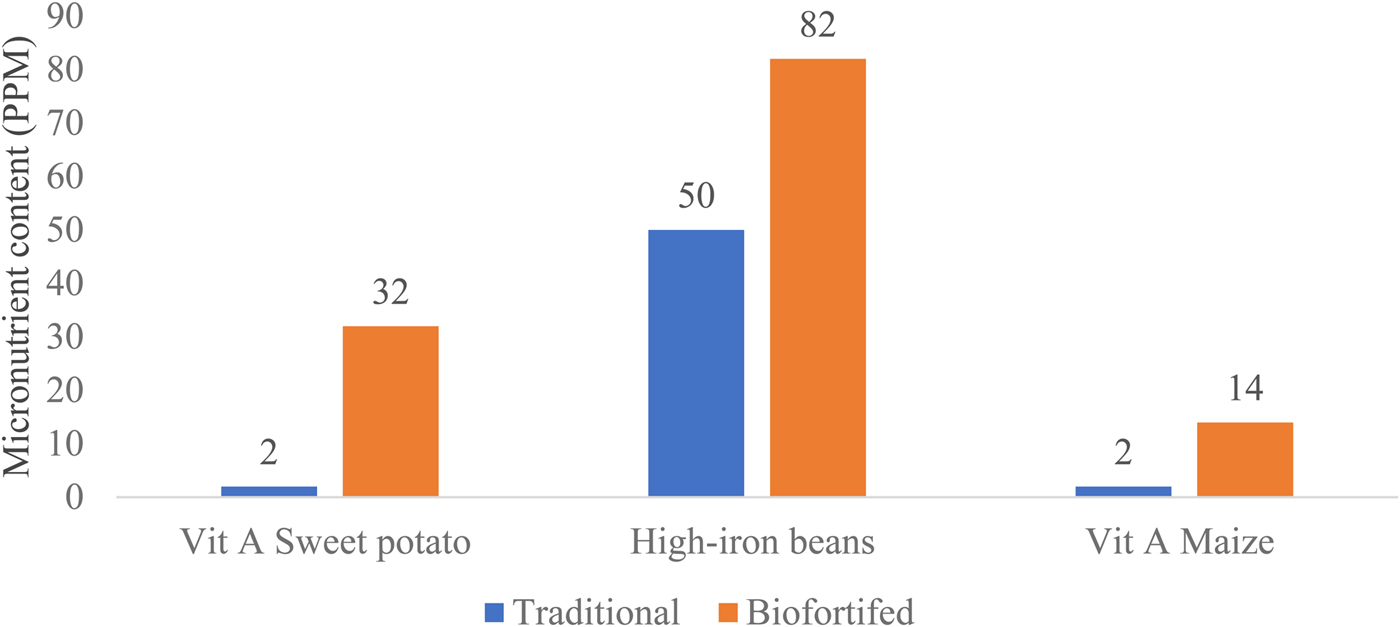
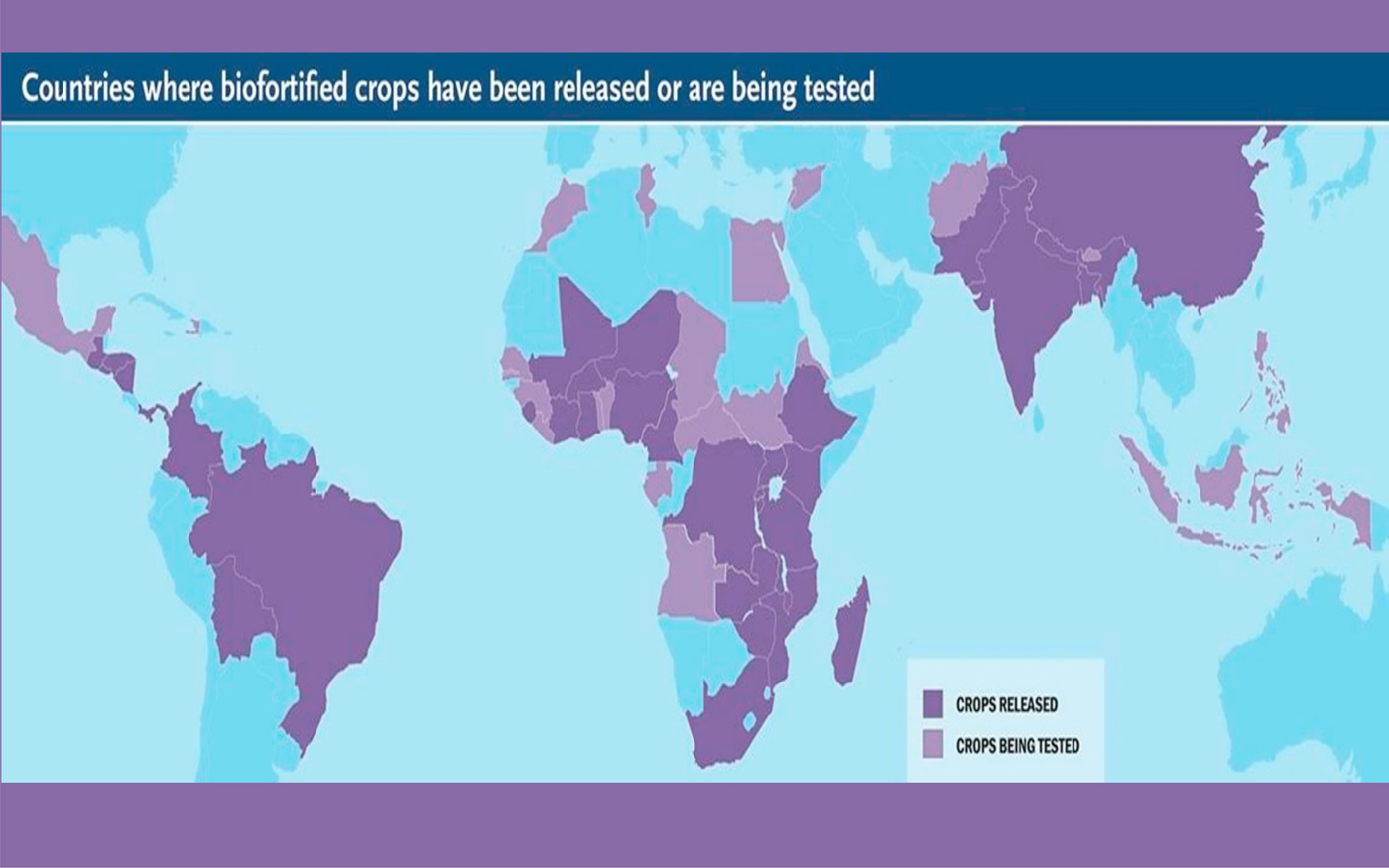
Major biofortified crops in Africa are orange-fleshed sweet potato (OFSP), which provides up to 100 % of daily vitamin A requirements, pro-vitamin A maize providing up to 25 % of daily vitamin A requirements, high-iron and zinc beans with up to 50 % of daily iron requirements, yellow cassava providing up to 40 % of daily vitamin A requirements and iron pearl millet giving up to 80 % of daily iron requirements(8). Biofortified crops have been found to contain more micronutrients than traditional crops as shown in Fig. 1 and the crops are now available in more than thirty countries across the world as presented in Fig. 2 and Table 1(8, Reference Bouis and Saltzman9).
(Colour online) Micronutrient content of biofortified and non-biofortified crops.
(Colour online) Distribution of biofortified crops.

Evidence of impact of biofortification on nutritional status
Randomised controlled efficacy trials are used to demonstrate the impact of biofortified crops on micronutrient status and functional indicators of micronutrient status (i.e. visual adaptation to darkness for vitamin A crops, physical activity and cognition tests for iron crops, etc.). Highlights of findings are discussed in this section, and further details are summarised in De Moura et al.(Reference De Moura, Palmer and Finkelstein10).
In Rwanda, iron-depleted university women showed a significant increase in Hb and total body iron after consuming biofortified beans for four and half months(Reference Haas, Luna and Lung'aho11). In rural Maharashtra, India, twice daily consumption of biofortified pearl millet flat bread for 4 months significantly increased serum ferritin and total body iron of secondary school adolescent boys and girls. The students who were iron deficient at baseline were significantly (64 %) more likely to resolve their deficiency by 6 months(Reference Finkelstein, Mehta and Udipi12). Other efficacy studies demonstrated that increasing provitamin A intake through consuming vitamin A-biofortified crops results in increased circulating β-carotene, and has a moderate effect on vitamin A status, as measured by serum retinol. Consumption of OFSP can result in a significant increase in vitamin A body stores across age groups(Reference Haskell, Jamil and Hassan13–Reference van Jaarsveld, Faber and Tanumihardjo15). Introduction of OFSP in rural Uganda resulted in increased vitamin A intake among children and women, and improved vitamin A status among children. Women who got more vitamin A from OFSP also had a lower likelihood of having marginal vitamin A deficiency(Reference Hotz, Loechl and de Brauw16).
Biofortified provitamin A maize is an efficacious source of vitamin A when consumed as a staple crop. An efficacy study conducted in Zambia with 5–7-year-old children showed that, after 3 months of consumption, the total body stores of vitamin A in the children who were in the orange maize group increased significantly compared with those in the control group(Reference Gannon, Kaliwile and Arscott17). Consumption of orange maize has been demonstrated to improve total body vitamin A stores as effectively as supplementation(Reference Gannon, Kaliwile and Arscott17), and significantly improve visual function in marginally vitamin A-deficient children(Reference Palmer, Healy and Barffour18). Some positive reports also came from Malawi with provitamin A as a potential of landrace maize varieties grown in different geographical locations(Reference Hwang, Ndolo and Katundu19). Zinc studies have demonstrated that zinc in biofortified wheat is bioavailable(Reference Rosado, Hambidge and Miller20).
Advantages of biofortification
Biofortification has two key comparative advantages: it has long-term cost-effectiveness and has the ability to reach underserved, rural populations. Typically, an upfront investment in plant breeding yields micronutrient-rich biofortified planting material for farmers to grow at virtually zero marginal cost. Once developed, nutritionally improved crops can be evaluated and adapted to new environments and geographies, multiplying the benefits of the initial investment. Once the micronutrient trait has been mainstreamed into the core breeding objectives of national and international crop development programmes, recurrent expenditures by agriculture research institutes for monitoring and maintenance are minimal(Reference Bouis, Hotz and McClafferty5).
Biofortified crops are also a feasible means of reaching rural populations who may have limited access to diverse diets or other micronutrient interventions. Target micronutrient levels for biofortified crops are set to meet the specific dietary needs of women and children, based on the existing consumption patterns. Biofortification gives a solution in the hands of farmers, combining the micronutrient trait with other agronomic and consumption traits that farmers prefer. After fulfilling the household's food needs, surplus biofortified crops make their way into rural and urban retail outlets(Reference Bouis and Saltzman9).
Projects developing and scaling up biofortified crops in Africa
The development of biofortified crops started with the vision of ‘enhancing the micronutrient content of staple foods and deploying the enhanced crops on a large scale to millions of poor households around the world to improve nutritional outcomes’. This led the International Food Policy Research Institute to initiate the Biofortification Challenge Program, which later became HarvestPlus in 2003. Through several partnerships, biofortified crops have been developed, disseminated and promoted through programmes and projects such as HarvestPlus, Sweet potato Action for Security and Health in Africa; SASHA I and II (2010–2019), Reaching Agents of Change (RAC; 2011–2014) and Building Nutritious Food Baskets (BNFB; 2015–2018).
These efforts have led to the integration of biofortified crops in African diets. For example, the International Potato Centre and partners have scaled OFSP to 4·7 million households in SSA in the past 5 years. In Rwanda from 2016 to 2017, 210 000 beneficiaries were reached with OFSP vines as well as agronomic and nutrition trainings. The Urwibutso enterprises, for instance, sold processed OFSP products worth US$200 000 and bought OFSP from four hundred households. In Kenya in 2017, OFSP puree processor Organi bought sweet potato from four hundred farmers and then processed it into puree for Tuskys supermarket at a cost of US$36 624 to make bread. Tuskys supermarket then made OFSP-based bread worth US$136 400(Reference Sindi21).
Because most of the key organisations implementing biofortification projects often work together in consortia the tendency of efforts duplication has been substantially reduced. New projects mostly build on the successes of previous projects as in the case of the RAC project and the BNFB project, which is the focus of the following sections.
The BNFB project, which commenced on 1 November 2015 and ended on 30 October 2018 tested a model to scale up biofortified crops for improved micronutrient status initially in Nigeria and Tanzania(22). The 3-year project built on the achievements, successes and scaling up approaches of the RAC project and broadened its focus from OFSP, promoted under the RAC, to a multi-crop or ‘food basket’ approach consisting of biofortified high iron beans, and pro-vitamin A (orange) maize, cassava and sweet potato. The goal of the BNFB project was to reduce hidden hunger by catalysing sustainable investment for the utilisation of biofortified crops at scale(22). The BNFB initiative was implemented through a consortium of partners namely, the International Potato Center with expertise in OFSP; International Center for Tropical Agriculture with expertise in high iron beans; International Maize and Wheat Improvement Center with expertise in vitamin A (orange) maize; International Institute of Tropical Agriculture with expertise in vitamin A (yellow) cassava and vitamin A (orange) maize; HarvestPlus as the global leader in biofortification with experience in scaling up at the country level; and Forum for Agricultural Research in Africa which was responsible for policy engagement and advocacy at sub-regional and regional levels(22). These partners worked with the governments of Tanzania and Nigeria, and a range of other national and regional partners and programmes to create synergy with complementary ongoing projects and initiatives in order to add value and fill critical gaps.
The role of regional advocacy in promoting biofortification under the BNFB project
The Forum for Agricultural Research in Africa coordinated regional policy engagement and advocacy efforts under the BNFB project. Most of the advocacy activities were based on the advocacy strategy that was developed with insights from the report of the situation analysis of regional policies, legislations, investments and advocacy efforts on food-based approaches to combating micronutrient deficiency in SSA(23, 24). The BNFB built on the lessons on regional advocacy learnt from the implementation of the RAC project, whose aim was to advocate for the inclusion of OFSP into regional policies and programmes as well as increase investment into OFSP production and utilisation in order to address vitamin A deficiency.
Effective and impactful advocacy requires adequate time and resources however considering the short duration of the BNFB project it became necessary to enlist advocacy champions to assist. The champions were selected on the basis of their commitment and ability of influence policies in the agriculture, nutrition and health sectors. They were drawn from the African Union Commission (AUC), New Partnership for African Development (NEPAD), FAO, African Nutrition Society, Academia, with some being independent nutrition consultants. In total, eighteen advocacy champions comprising eleven females and seven males were engaged during the project implementation period. The champions performed various roles including review and validation of the situation analysis report and the advocacy strategy. The advocacy work undertaken by champions was supported by high quality advocacy materials that included banners, flyers, pamphlets and PowerPoint presentations on biofortification produced by the BNFB advocacy and communication teams.
To facilitate communication among the Regional Advocacy Coordinator, the champions and BNFB project team, a WhatsApp group was created, which served as the medium for sharing advocacy opportunities, relevant publications as well as any information that was relevant to the biofortification agenda. Most importantly, the champions either represented BNFB project or joined the advocacy coordinator at key events to advocate for increased investment and policy change in support of biofortification. Advocacy messages were usually delivered through presentations, panel discussions and exhibitions of various advocacy materials that were developed under the project. Table 2 shows some advocacy events that regional advocacy coordinator and the champions participated in during the project period where they made presentations, organised panel and open discussions and showcased various advocacy materials to influence food and nutrition policies and create demand for biofortified crops.
Continental and global events where biofortification advocacy was conducted

To ensure mutual understanding of each other's roles and responsibilities, terms of reference were developed and discussed with the champions(22). The champions were also empowered by (1) giving them orientation on the BNFB project; (2) involving them in the validation of the situation analysis report and advocacy strategy; (3) organising an advocacy capacity enhancement workshop for them; (4) giving them advocacy materials including power point presentations for use in advocacy and (5) supporting them with funds and other resources to conduct advocacy activities. As a means of sustaining advocacy and mainstreaming youth into the process, nine youths comprising five women and four men who are active in the biofortified crop value chains were also engaged as champions. They were also sensitised to understand the competences and rudiments of effective advocacy at the grassroots, national and continental levels.
Challenges associated with regional advocacy activities
There was the general public perception that all biofortified crops are genetically modified crops and this affected the acceptability of the crops since most people are still averse to genetically modified technology. It is however worthy of note that currently in Africa, all the crops that have been developed and released by HarvestPlus, International Potato Center and other partners including those under the BNFB project were not produced through genetic modification. Other challenges include the inability of consumers to differentiate between some biofortified crops and traditional crops e.g. beans and maize, since they look similar; concerns about loss of nutrients during post-harvest handling; lack of global standards and regulations on biofortification, lack of testing facilities for micronutrient content in crops and processed products, and short shelf-life of OFSP in particular.
Major achievements of advocacy efforts
In spite of the challenges enumerated above, some achievements have been realised. By August 2018, participation of regional advocacy coordinator and the advocacy champions in key events and in the review of key documents has facilitated the inclusion of biofortification in strategies and programmes such as: (1) The African Union Business Plan to guide the implementation of the Comprehensive Africa Agriculture Development Programme-Malabo Declaration (2017–2021)(26); (2) The 2nd African Union Specialized Technical Committee Meeting Agenda and Report(27); (3) African Development Bank Multisector Nutrition Action Plan (2017–2021); (4) Resolution of the Pan African Parliament-NEPAD High level event on nutrition and food systems; (5) NEPAD Flagship Programmes for Nutrition and Food Security; (6) Declaration on Food Safety and Healthy Diets for All, which is based on the Workshop on Food Safety and Healthy Diets organised by The Pontifical Academy of Sciences and the Global Alliance for Improved Nutrition; (7) The West and Central African Council for Agricultural Research and Development Nutrition Strategy for implementation in Promoting West Africa Trade Integration; (8) The Southern African Development Community Food and Nutrition Strategy (2015–2025).
Some investment opportunities have also been created through the Technology for African Agricultural Transformation programme in which the African Development Bank, World Bank, Alliance for a Green Revolution in Africa, Bill and Melinda Gates Foundation, and the Rockefeller Foundation intend to mobilise US$1 billion to help scale up technologies across Africa with a focus on nine commodities(28). Two of these commodities are vitamin A OFSP and high iron beans. The International Potato Center and partners are scaling up OFSP in Nigeria, Ghana, Uganda, Kenya, Burkina Faso, Cameroun, Tanzania, Rwanda, DR Congo, Malawi, Madagascar and Mozambique. The International Center for Tropical Agriculture and partners are scaling up high iron beans in Tanzania, Kenya, Rwanda, Uganda, DRC, Malawi, Burundi and Zimbabwe. The Forum for Agricultural Research in Africa is building capacities of national research institutes and other national actors to be able to take up these technologies. Furthermore, in the AUC 2018 Call for research proposals, one of the research themes focused on the development of biofortified crops(29). In response to the Call, some BNFB partners supported national researchers to submit proposals on biofortification.
In addition to these, Africa has good supportive policies and strategies, which when adequately implemented can help address micronutrient deficiency and malnutrition as a whole. These policies and strategies include Africa Regional Nutrition Strategy, Pan African Nutrition Initiative, Framework for African Food Security, Africa Ten Year Strategy for Vitamin and Mineral Deficiencies, Regional Economic Communities Nutrition Strategies–Southern African Development Community, East African Communities, Economic Community of west African States, West African Health Organisation and NEPAD Food and Nutrition Security strategy, which is under review to include a stronger food systems approach and align with sustainable development goals, Second International Conference on Nutrition and Agenda 2063(23).
Lessons learnt during implementation of regional advocacy
One of the deliverables for regional advocacy and policy engagement under the BNFB project was to influence regional and sub-regional organisations to mainstream biofortification in policies, strategies and programmes. In order to integrate biofortification in regional policies, strategies and programmes, it was important to identify champions from key and strategic regional organisations such as AUC, NEPAD, African Nutrition Society and sub-regional Economic Communities such as the Southern African Development Community. They provided information on potential opportunities for influencing policies at the regional levels. As a result, advantage was taken of most of the high level events to advocate for increased investments and policy change to support the production and utilisation of biofortified crops. Other champions were enlisted from the FAO of the UN, the academia and independent nutrition consultants. The champions are well-experienced in continental and high level nutrition advocacy and have good insights into events that provide advocacy opportunities, which they readily shared with the BNFB advocacy team.
Furthermore, it was realised that doing regional advocacy without the actual products to show as evidence was difficult considering the fact that the BNFB project was being implemented in only two countries, Nigeria and Tanzania. To address this challenge, a common advocacy message was developed that highlighted the role of biofortification in contributing to the prevention of the micronutrient problems as well as evidence of impact on nutrition outcome. The message also showed countries in Africa and the world where biofortified crops had been released or were being tested prior to release as evidence of the availability of biofortified crops worldwide.
The BNFB project initially did not allocate budget to support champions’ activities leading to inadequate participation in advocacy activities. This was corrected in the second year of project implementation by allocating a budget to support the champions to efficiently conduct advocacy. For example, in year 3 of the project, one champion from NEPAD was supported to organise a high level advocacy event with Pan African Parliament Committee on Agriculture in Egypt; four champions were supported to organise a symposium at the ANEC conference in Addis Ababa and one champion and five youths (PhD students) were supported to participate and mount exhibitions at the WACCI conference in Accra. The objective was to introduce the students to biofortification and to whip up encourage their interest in the application of the technology in their breeding and nutrition research. The lesson here is that champions need to be allocated a budget to support their advocacy work.
The situation analysis study that was conducted highlighted the existence of some intervention initiatives as well as key advocacy opportunities that could be leveraged. These initiatives included supplementation, food fortification and dietary diversification, which are all interventions aimed at addressing micronutrient deficiency. To engender adoption of biofortification, it was important to align biofortification with relevant initiatives as well as ongoing opportunities for advocacy. For example, the BNFB advocacy team adopted and promoted the holistic approach to combating micronutrient deficiency. The holistic approach emphasises the combined implementation of all the approaches as much as possible to ensure maximum impact. These approaches are: dietary diversification; food fortification; supplementation and biofortification(Reference McClafferty and Islam30–Reference Gibson, Bailey and Gibbs33). These interventions will even be more effective when combined with (a) public health interventions such as treating underlying health conditions e.g. deworming, malarial treatments, diarrhoea prevention; (b) implementation of supportive policies, standards, legislations, investment plans and (c) ensuring adequate post-harvest, food safety and quality management.
Future research
A great deal of research has been conducted and more is being performed in the development of biofortified crops. This notwithstanding, future research should address issues such as the challenges in the promotion and utilisation of biofortified crops. The following recommendations are proposed for future research: (1) Devising means for reducing loss of nutrients during post-harvest handling and storage; (2) Developing OFSP with an extended shelf-life; (3) Developing a variety of nutritious food products from biofortified crops; (4) Assessment of consumption patterns and nutritional outcomes of biofortified crops among previous biofortification project beneficiaries; (5) Developing biofortified crops with high content of multiple micronutrients; (6) Adopting an integrated food safety and nutrition approach in the production and promotion of biofortified crops. For example, high vitamin A maize should also be free from aflatoxins as aflatoxins have been found to reduce bioavailability of vitamin A, iron and zinc in animal studies(Reference Kalorey, Daginawala and Ganorkar34–Reference Reddy, Rao and Reddy37); (7) Developing indicators to monitor impact on micronutrient deficiencies, given the multiple on-going micronutrient interventions (e.g. supplementation, fortification, dietary diversification).
Conclusion
Biofortification has potential to address micronutrient deficiency and several projects have been initiated for the development, dissemination and promotion of biofortified crops. Although some evidence exists to show the efficacy of biofortified crops in improving micronutrient status there is the need to generate more evidence particularly to support advocacy efforts in Africa. This is important because of the role high-level advocacy has played in facilitating the inclusion of biofortification in key African continental policies, strategies and programmes as well as creating investment opportunities.
No single intervention will alleviate micronutrient deficiencies, and biofortification complements existing interventions, such as supplementation and industrial food fortification. However, based on presentations at the ANEC 8 on topics such as ‘Maximizing benefits and minimizing adverse effects of micronutrient interventions’ and ‘Anaemia in African children: efficacy and risks of iron supplementation’(38), it is clear that food-based approaches including biofortification are worth promoting as the most sustainable approaches to addressing micronutrient deficiency. Thus, biofortified crops must be included in dietary diversification campaigns as they are part of the collection of available diversified diets. Furthermore, nutrition is a multisectoral issue hence advocacy efforts must target all the relevant sectors including policy, research, private sector and civil society organisations. It is critical to partner with the existing similar initiatives and to form strategic partnerships with relevant organisations such as Global Alliance for Improved Nutrition, Micronutrient Initiative, FAO, AUC and NEPAD to maximise impacts.
Key lessons learnt from regional advocacy are (1) in order to integrate biofortification in regional policies, strategies and programmes, it is important to identify champions from key and strategic regional organisations as they provide information on potential opportunities for influencing policies, (2) having a common advocacy message helps to highlight the role of biofortification in contributing to the prevention of the micronutrient problems as well as evidence of impact on nutrition outcome, (3) champions need to be allocated a budget to support their advocacy work and (4) to engender adoption of biofortification, it is important to align bio-fortification with relevant initiatives as well as ongoing opportunities for advocacy.
Acknowledgements
We are indebted to all the BNFB regional advocacy champions for their immense contribution to the implementation of the BNFB project: Kefilwe Moalosi, Isatou Jallow, Mawuli Sablah, Mariam Akiror, Matilda Steiner-Aseidu, Nelson Ojijo, Gloria Essielfie, Boitshepo Doreen Giyose, Rosana Agble, Mohamed Ag Bendech, Yemi Akinbamijo, Dia Sanou and Margaret Akinyi Wagah. We are also grateful to the BNFB team at the International Potato Centre including Hilda Munyua, Joyce Maru, Olapeju Phorbee and Godfrey Mulongo.
Financial Support
International Potato Center as part of the Building Nutritious Food Baskets Project (Grant ID: OPP1137764).
Conflict of Interest
None.
Authorship
All authors had joint responsibility for all aspects of preparation of this paper.



