


According to the 2012 National Nutritional Survey, Australian adults are opting for diets low in fruits and vegetables, and consuming energy-dense foods high in fat, salt and sugar(1). Long-term consumption of energy-dense foods is a major contributor to a range of chronic diseases including obesity(Reference Pongutta, Chongwatpol and Tantayapirak2–Reference Flaherty, McCarthy and Collins5). The Australia’s Health 2018 report identified a range of diseases resulting from overweight and obesity, examples include various cancers, cardiovascular conditions, chronic kidney disease, diabetes, dementia, gallbladder disease, osteoarthritis and asthma(6). It is estimated that 64 % of Australian adults are currently either overweight or obese, and it is predicted that by 2025, 34 % of Australian adults will be obese(1, Reference Coopers7). Optimal nutrition and regular exercise are known preventive measures against obesity(Reference Barbosa, Vasconcelos and Correia8). Improving an individual’s knowledge of healthy eating has been a central component in many interventions aiming to improve an individual’s nutritional intake(Reference Barbosa, Vasconcelos and Correia8–Reference Sobal, Bisogni and Jastran17).
While there are many closely related and intertwined factors which contribute to the aetiology and maintenance of obesity, associations have been identified of improved nutritional knowledge with increased fruit and vegetable intake and lower intake of energy-dense foods(Reference Barbosa, Vasconcelos and Correia8, Reference Paquette18–Reference Dunn, Mohr and Wilson20). Nutrition knowledge has been identified as influencing not only food choice and consumption, but also how individuals perceive and define healthy eating(Reference Pandit-Agrawal, Khadilkar and Chiplonkar3, Reference Paquette18, Reference Hammer, Vallianatos and Nykiforuk19). Various studies conducted during the late 1980s and 1990s explored definitions of healthy eating(Reference Povey, Conner and Sparks21–Reference Landry, Lemieux and Lapointe25). Most recently, a Canadian qualitative study explored perceptions and definitions of healthy eating and eating pleasure(Reference Landry, Lemieux and Lapointe25). Responses from twelve focus groups suggested that healthy eating was described in accordance with characteristics related to the nutritional quality of food(Reference Landry, Lemieux and Lapointe25), thus further supporting previous definitions from studies that categorised healthy eating by factors that were perceived to be important, for example ‘freshness’, ‘natural’, ‘fruits and vegetables’(Reference Povey, Conner and Sparks21–Reference Margetts, Martinez and Saba24, Reference Lake, Hyland and Rugg-Gunn26). Furthermore, many reasons may influence an individual’s perception of what factors are important when defining a healthy food choice, including current popular diet trends, health promotion campaigns, social media, family, friends, advice from health professionals and general nutrition knowledge(Reference Mela10, Reference Bisogni, Connors and Devine13, Reference Sobal, Bisogni and Jastran17).
Of these factors, nutritional knowledge is especially important, and can be classified in accordance with the ability to recall and state nutritional facts (declarative knowledge) and the ability to apply these facts into everyday life (procedural knowledge)(Reference Worsley27). Therefore, healthy eating is influenced by an individual’s ability to not only understand what a healthy food choice is, but also his/her ability to apply that understanding practically through daily food choices. To address the current obesity problem, an understanding of how individuals define and translate healthy eating (declarative and procedural knowledge) in everyday life is needed. Through this understanding, there is an opportunity to direct and influence future dietetic communication of healthy eating to adults. The present study aimed to explore how healthy food choices are translated into everyday life by exploring definitions of healthy food choices, perceptions of own food choice, and healthy food choice drivers (facilitators) and barriers.
Method
Design
An exploratory qualitative study design was utilised to investigate definitions of healthy eating, and how healthy food choices are translated into everyday life by adults, using convenience sampling. Convenience sampling was used to collect data from the recruitment of willing participants who were geographically accessible to the researcher, and catered for practical constraints, including researcher availability(Reference Etikan, Musa and Alkassim28). This method allowed for the collection of data without requiring formal access to specific population lists and relevant contact details(Reference Etikan, Musa and Alkassim28). Additionally, considering that the aims of the study are exploratory by nature, the collection of data from a wide range of individuals was pursued, in order to broadly provide insight into food choices made by individuals. A qualitative design was chosen to gain an understanding into how an individual gives meaning to the notion of a healthy food by exploring own perception of healthy food choices as well as perceived barriers and drivers (facilitators)(Reference Bisogni, Jastran and Seligson29, Reference Ritchie, Lewis and Nicholls30). The COREQ checklist was utilised to ensure transparency when reporting the study methods (see online supplementary material, Supplemental Table S1)(Reference Tong, Sainsbury and Craig31).
Participants
The study took place in the Australian Capital Territory, Australia. Adults were recruited from health-care centres, on Facebook and via community health based-newsletters. Individuals were eligible to participate if they met the following criteria: (i) aged 25–65 years; and (ii) could speak and understand English.
Procedure
A semi-structured interview guide was developed based on a review of relevant literature. Questions from previous interview and focus group studies which investigated food choice and healthy eating were reviewed and influenced the development of a provisional question guide. Adaptions were made to the question guide after a soft pilot of the questions to fellow postgraduate research students (see online supplementary material, Supplemental Table S2). Interviews were conducted between October 2015 and March 2016, either face-to-face or via telephone with the researcher. Telephone interviews were also included to cater for participants who were willing to participate, however, could not meet face to face with the researcher due to factors including work and family time commitments. Individuals expressed their interest to participate by contacting the researcher via email. They were then directly contacted by the researcher and asked to complete a brief questionnaire to determine eligibility for participation and gather basic demographic data. Demographic data collected included participant gender (male, female, other), age, country of birth, self-reported height (in metres), self-reported weight (in kilograms) and highest level of education attained. An appointment was made to schedule either an individual face-to-face or telephone interview. Both signed and verbal consent was required before an interview commenced. The researcher (R.M.), who has qualifications in nutrition and dietetics and previous experience in conducting individual semi-structured interviews and focus groups, conducted all face-to-face and telephone interviews.
A total of nine open-ended questions were asked to allow participants to discuss their thoughts on healthy food choices, for example ‘Can you share your thoughts on what you describe a healthy food choice to be?’ Cues and probing questions were also used to clarify information and gain additional data, where the researcher felt appropriate. Hand-written notes were made during and at the end of each interview to record the researcher’s thoughts and ideas, as proposed by Fook and Gardner(Reference Fook and Gardner32). Each telephone interview was audio-recorded using the app TapeACall (TelTech Systems, Inc.) and a Zoom H1 Audio Recorder was used during face-to-face interviews.
Data analysis
Data were collected and analysed concurrently. Thematic analysis was used to identify major themes relating to the translation of healthy food choices. The analysis followed the guidelines developed by Braun and Clarke(Reference Braun and Clarke33). An essentialist paradigm was adopted as the principal interest of the research was to report interpretations, perceptions and meanings from the reality of the participant(Reference Braun and Clarke33, Reference Clarke and Braun34). An essentialist paradigm acknowledges the importance of how individuals differ in the way reality is conceptualised and understood, finding meaning in the way individuals describe and perceive phenomena(Reference Braun and Clarke33, Reference Clarke and Braun34). Thematic analysis as a qualitative method is used for identifying, analysing and reporting patterns within the data(Reference Braun and Clarke33). This qualitative approach was chosen to allow for the collection of insightful data through the exploration of perceptions and thoughts of participants(Reference Braun and Clarke33, Reference Harris, Gleason and Sheean35).
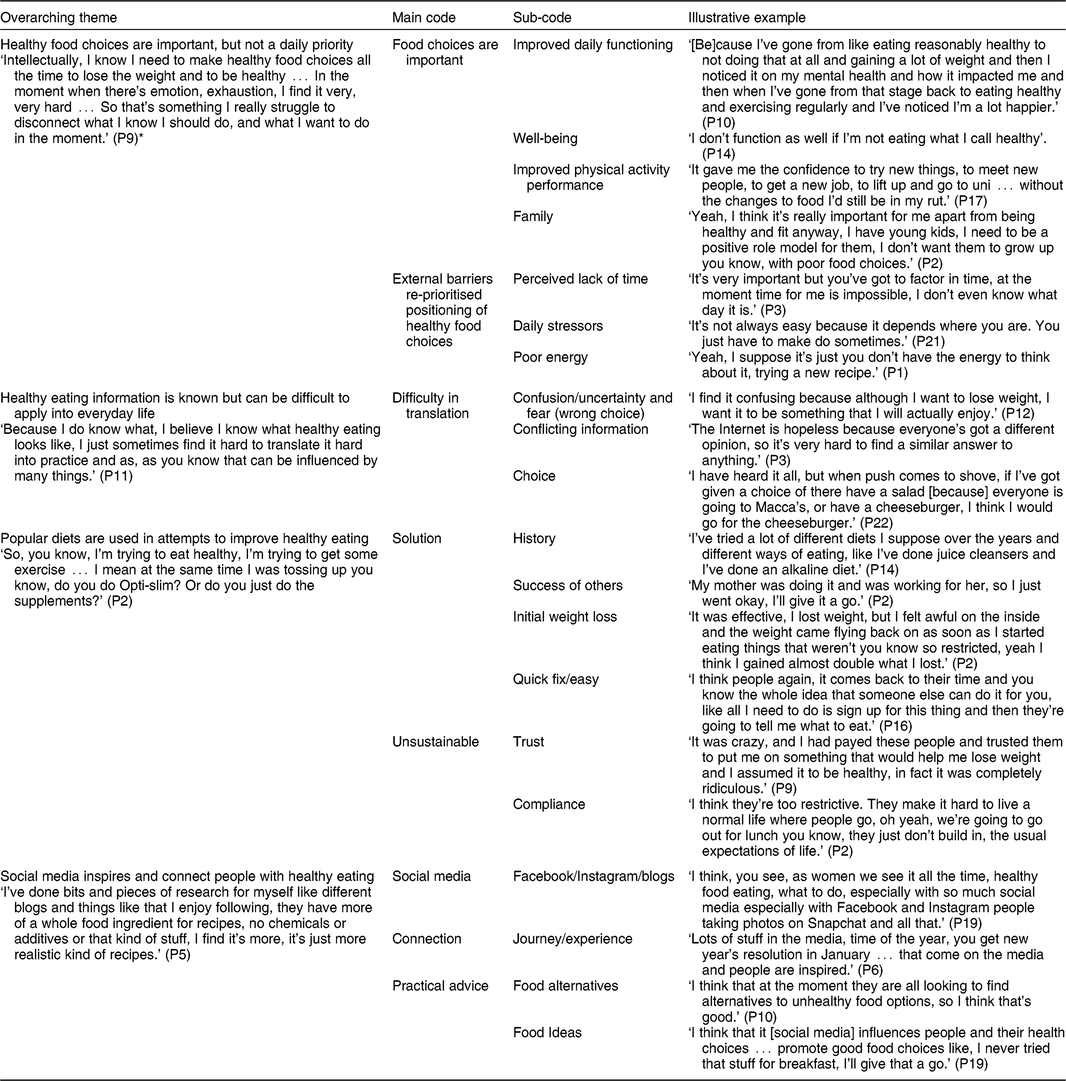
The process of analysis began with data familiarisation, whereby the primary researcher listened and re-listened to audio recordings of each interview. Each interview was then transcribed verbatim, read and re-read to ensure word-for-word transcription. Each transcript was given full and equal attention, enabling the generation of initial codes with aid from the qualitative data analysis software NVivo version 10. Initial codes were developed inductively by the researcher (R.M.) and continuously refined while analysing each transcript. Repetitive codes were clustered into one main code and all codes were analysed and broadly placed into subsequent themes. Each theme was then reviewed and refined, ensuring each theme contained a coherent pattern, supported by coded data. Themes were then defined and described with consideration to the research question, the degree of overlap and relationships with other themes (see Table 1). To ensure integrity and consistency of themes, researchers (J.K., R.B. and A.S.) were randomly assigned to a transcript and were all given a common transcript. Researchers read, re-read and reviewed codes and themes. All researchers met face-to-face to discuss each other’s interpretations of codes and themes. At the conclusion of the meeting there was common agreement on emerging codes and themes. In the current study, it was believed that the point of saturation occurred by the twenty-third interview, as no new emerging themes were present and ideas became repetitive.
Theme generation from semi-structured interviews conducted with adults aged 25–60 years from Canberra, Australia, October 2015–March 2016
* P# refer to study participants.
Results
Semi-structured interviews provided insight into the barriers and facilitators influencing the translation of healthy food choices among this population. The major themes that arose consistently from the data were: (i) healthy food choices are important, but not a daily priority; (ii) healthy eating information is known but can be difficult to apply into everyday life; (iii) popular diets are used in attempts to improve healthy eating; and (iv) social media inspires and connects people with healthy eating. Representative examples of quotes are shown in Table 1.
A total of twenty-three participants aged 25–60 years were interviewed (see Table 2 for demographic characteristics). The mean age of participants was 38 years and the mean BMI was 29·1 kg/m2. All male participants (n 4) were within the healthy weight range compared with 58 % of female participants, with 26 % being overweight and 16 % being obese, in accordance with the WHO criteria(Reference De Onis and Habicht36). Data showed most participants were well educated with either a postgraduate or bachelor’s degree (30 and 39 %, respectively).
General characteristics of the study participants: adults aged 25–60 years from Canberra, Australia, October 2015–March 2016
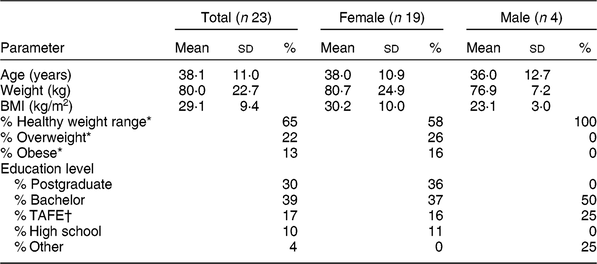
* Healthy weight range, BMI = 18·5–24·9 kg/m2; overweight, BMI = 25·0–29·9 kg/m2; obese, BMI ≥ 30·0 kg/m2.
† Australian Technical and Further Education (TAFE).
Participants were not only able to describe their perceptions of what constitutes a healthy food choice, but also acknowledge the importance of healthy food consumption. Healthy food choices were described differently among participants (see Table 3). The types of words and terminology participants used to describe healthy eating included: identifying specific foods (e.g. fruits and vegetables), the presence of macro- and micronutrients (e.g. protein, carbohydrates, fat, vitamins and minerals), the state and preparation of the food (e.g. natural, unprocessed and homemade), the occurrence of consumption (e.g. balance and variety) and perceived value of food (e.g. good and bad).
Example descriptions associated with healthy eating from semi-structured interviews conducted with adults aged 25–60 years from Canberra, Australia, October 2015–March 2016
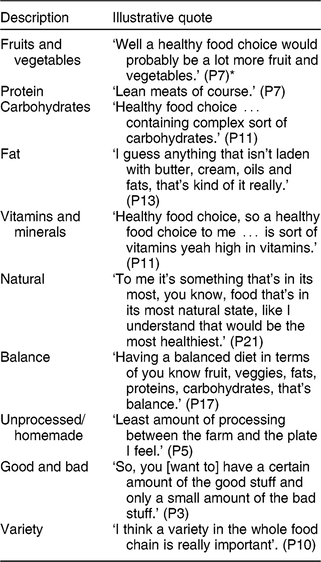
* P# refer to study participants.
Theme 1: Healthy food choices are important, but not a daily priority
While definitions of a healthy food choice varied between participants, a common acknowledgement was the importance of a healthy food choice. Reasons as to why healthy food choices were described as important were linked to improved functioning in daily activities, well-being, improved physical activity performance and family relationships, as illustrated respectively by the following quotes:
‘Yeah so it’s really just changed my approach to life and making sure that I’m really focused on eating healthy because that’s my building block for everything that I’m doing.’ (P17)
‘I do make the effort to make those healthy food choices more regularly. I, mean I have to say it does make me feel a lot better.’ (P21)
‘Yes, so I think that depending on what you eat depends on how you feel, I feel like a lot of the good food you eat you get good energy from, for example, run longer and like last longer, depends on what you eat basically and how hard you can go.’ (P10)
‘It just keeps you accountable [because] you know that someone knows and you’re feeding someone else, it’s not just you that you’re choosing to give that food to, if that makes sense?’ (P8)
Interestingly, while participants commonly agreed that healthy food choices were an integral component of health and well-being, it was not always a daily priority:
‘It’s important, obviously not as important as it should be.’ (P1)
Importance of healthy food choices seemed to be assessed and re-prioritised daily:
‘It’s important, but not, not day to day like does that make sense? Oh, I guess at the moment, not so important … Depends on the day, depends on the moment … The food choices I choose and the food choices I choose at the moment are crap. They’re not healthy.’ (P2)
It appeared various factors influenced the positioning of the priority of healthy eating. A perceived lack of time due to work and family commitments saw the emergence of prior eating habits:
‘So, I suppose I just, you know, when you go to full time work and you have kids, you just revert to the same things.’ (P1)
Daily stressors and declining energy towards the end of the day were described to lower both expectations and the priority of healthy eating:
‘I just didn’t cope with the pressure and the stress of it and because I am an emotional eater particularly at work, I did not cope with the stress. So, of an afternoon I’d wander around sculling diet soft drinks and going to the candy machine and just getting my hands on whatever, I could to really act as a distraction.’ (P21)
Overall, healthy food choices appeared to be regarded as a luxury, second to obligatory daily activities described by participants as ‘life’:
‘It’s probably really important but the reality is that, in the moment, it doesn’t feel important … I really feel like our lives are so busy that nutrition has to be, it’s a priority that you have to choose, it’s something that’s not easy to choose.’ (P3)
Participants mainly described the feeling of not having the ‘luxury’ of time to make healthy food choices due to work and family commitments.
Theme 2: Healthy eating information is known but can be difficult to apply into everyday life
While most participants could describe aspects of healthy eating, translating and applying this knowledge into everyday life was perceived as challenging:
‘So, I would say that I am well across all the theory, so for me I know what a healthy portion looks like, I know what a healthy meal involves, but it doesn’t you know, necessarily translate into my food choices … I don’t know, [because] I feel I do know all the theory, I could pass the theory exam on nutrition, so it’s something else, for me it’s not knowing, for a lot of people I know it is, they have no idea what might be low GI [glycaemic index], they don’t even know what GI means, for me I do have all that knowledge you know, I’m just not putting into practice.’ (P1)
It was expressed that most participants had a knowledge of healthy food choices; however, they were not always chosen:
‘When I’m explaining all this, these are theoretically, I’m not saying I eat all of these, not all the time.’ (P22)
Confusion, along with uncertainly and fear about choosing the ‘wrong’ foods, were described as debilitating due to perceived consequences:
‘There’s so much different information out there … you’re almost paralysed by those choices because you’re afraid of choosing the wrong one and if you make a good one and it’s all good, you’re happy but if you make a bad one…’ (P2)
Mixed information from family, friends and the media also contributed to the aura of confusion, leading to self-doubt when making a food decision:
‘A lot of people will say you know, low fat is a really good way to go, other people will say actually the research is showing that low fat isn’t that great for you because they add extra sugar, and then sugar is bad for you and as you can tell, clearly I’m still not getting on top of my weight, so I’m very confused.’ (P3)
Theme 3: Popular diets are used in attempts to improve healthy eating
It appeared participants were currently, or previously, involved with different popular diets:
‘I’ve done the Atkin’s diet before, so anything that wasn’t a carb was good pretty much, I did 5:2 intermittent fasting until about a month ago.’ (P12)
Popular diets were perceived to be the solution for improving healthy food choices, assisting with ‘getting back on track’ with healthy eating:
‘I’ve been on the Atkins diet, I’ve been on Weight Watchers, I’ve been on Easy Slim, everything and everything that has come out over the years I have tried … I mean, when I was younger, I went to Jenny Craig.’ (P23)
Common diets described by participants included Weight Watchers, Jenny Craig, I Quit Sugar, Easy Slim, Atkins, local 12-week challenges and protein shake supplementation programmes:
‘[Laugh] Which diet have I not done? If you could give me a pill to lose weight you know within a month give it to me now.’ (P22)
A complicated relationship between participants and popular diets emerged. Paradoxically, on one hand, participants continuously tried different diets; however, on the other, acknowledged their lack of scientific rigour and failure to deliver on weight loss promises:
‘I’ll be honest, I recently brought another lot of supplements off the Internet, which logically I know there is no evidence that what they say is in it, is even in it, let alone that it will actually do what it says it would do … I’ve done the Atkins shakes, I’ve done the iso-whey powders, I have done what was it, Tony Ferguson shakes, god who knows?’ (P2)
Interestingly, despite acknowledging previously unsuccessful diet outcomes, this was continuously outweighed by personal testimonials or referrals:
‘Someone lost this much weight on that so I’ll, I’ll do that to see if that’s works for me [because] I’m that person, and it turns out to all be a sales pitch, but the problem is there’s so much of that in your face.’ (P9)
As participants moved from one diet to the next, they described confounding healthy eating messages and principles that they were exposed to. However, overall, the inability to maintain compliance with popular diets over time was commonly described as the factor limiting success:
‘I came across this diet, that diet, this food, that food plan, you know the paleo food, the clean eating, this eating, so I’ve you know, I’ve gone through all of that and I’ve printed all of that off and I’ve tried it, here and there you know, three or four days, I usually last about a week and it’s too difficult.’ (P22)
Theme 4: Social media inspires and connects people with healthy eating
Facebook and Instagram were commonly referred to as a source of healthy eating information. Participants described using these means to receive engaging and up-to-date information through posts:
‘I just follow a lot of fitness people on Instagram and they post meals that they’ve been eating, and I look them up. I think just, eating healthy, healthy lifestyle is big at the moment. I feel that everyone is posting, everyone is coming up with something new that’s healthy or an alternative for a bad food, and I feel like that’s becoming a trend, whatever I can see on Facebook or Instagram we look into it.’ (P10)
Interestingly, while the main social media platforms were identified as Facebook and Instagram, some participants referred to blogs as an emerging platform for accessible advice and information on healthy eating:
‘Probably more and more information has become more accessible so blogs and podcasts and that. I guess potentially maybe looking at more of those natural, gut health blogs.’ (P18)
It appears through the variety of different blogs available that niche information can be found that aligns with the interests of the participant. For example, blogs were described to be inspirational and motivating by connecting participants to other individuals’ personal journeys and experiences:
‘I guess, honestly blog reading it’s amazing, you can see other people’s journey. That may not work for you, but you may think a different way, it certainly made me think a different way.’ (P17)
Discussion
The present study confirmed that definitions of health eating given by study participants are comparable to prior research(Reference Povey, Conner and Sparks21, Reference Keane and Willetts23, Reference Lake, Hyland and Rugg-Gunn26, Reference Paquette37, Reference Buckton, Lean and Combet38). Interviews with twenty-three participants provided insight into what influences the translation of healthy eating information in daily life; and highlighted a potential new direction for the future development and improvement of healthy eating communication.
Despite the 20-year gap between prior research and the present study, healthy eating continues to be described in multiple ways(Reference Landry, Lemieux and Lapointe25, Reference Lake, Hyland and Rugg-Gunn26, Reference Paquette37, Reference Buckton, Lean and Combet38). Healthy eating has been defined through foods which are perceived as being of benefit (e.g. fruits and vegetables)(Reference Povey, Conner and Sparks21, Reference Margetts, Martinez and Saba24, Reference Lake, Hyland and Rugg-Gunn26); through the perceived state and quality of a food (e.g. fresh, natural, unprocessed, homemade)(Reference Margetts, Martinez and Saba24, Reference Lake, Hyland and Rugg-Gunn26); through the concept of moderation (e.g. balanced)(Reference Margetts, Martinez and Saba24); and through macronutrient and micronutrient consumption (e.g. fat, carbohydrate, protein, vitamins and minerals)(Reference Margetts, Martinez and Saba24). These factors were all evident in the current study, indicating that the findings are consistent with past research exploring definitions of healthy eating in the adult population.
Findings from the present study indicated that participants held a broad understanding of healthy eating, as most definitions were generally in line with nutrition recommendations from the Australian Dietary Guidelines(39). This was similar to a previous study investigating the relationship between definitions of healthy eating and measured food intake(Reference Lake, Hyland and Rugg-Gunn26). Results from a study based in the UK suggested participants had a broad understanding of healthy eating, generally in line with national nutritional guidelines in the UK(Reference Lake, Hyland and Rugg-Gunn26). This declaration of knowledge may suggest that decades of healthy eating campaigns are being heard and associated with what constitutes a healthy food choice(Reference Lake, Hyland and Rugg-Gunn26). Additionally, a large proportion of participants in the present study (69 %) reported to have obtained a tertiary qualification. This high proportion is similar to statistics from the 2016 Commonwealth Electoral Divisions which reported that 37·1 % of individuals aged 15 years and over living in the Australian Capital Territory have obtained a tertiary qualification(40). Within the literature, it has been shown that nutrition knowledge and overall diet quality increase with level of formal education(Reference Hendrie, Coveney and Cox41, Reference Backholer, Spencer and Gearon42). Considering the level of education reported by participants in the present study, this may have resulted in an overestimation of participant understanding of a healthy food choice in line with the Australian Dietary Guidelines. Despite this however, while participants had a broad understanding of healthy eating and could acknowledge the importance of healthy eating, participants reported difficulty in translating knowledge into daily practice(Reference Pandit-Agrawal, Khadilkar and Chiplonkar3).
How individuals apply nutrition knowledge into daily practice has been a recurring challenge identified within the literature(Reference Pandit-Agrawal, Khadilkar and Chiplonkar3, Reference Ares, Aschemann-Witzel and Vidal4, Reference Boles, Adams and Gredler43–Reference Raine45). A study conducted by Boles et al. evaluated a sugary drink mass media campaign in Portland, Ontario, in Canada(Reference Boles, Adams and Gredler43). The study reported the mass media campaign was positively associated with knowledge about excessive sugar consumption, however no change in dietary behaviour was observed(Reference Boles, Adams and Gredler43). This may shed light on the discrepancy between knowledge of the consequences of sugary drink consumption (declarative) and the application of knowledge by choosing different drinks with less sugar content (procedural)(Reference Boles, Adams and Gredler43, Reference Davison, Smith and Frankel46). It is therefore argued that knowing about healthy eating does not always result in the translation (consumption) of healthy food choices(Reference Lake, Hyland and Rugg-Gunn26, Reference Boles, Adams and Gredler43, Reference Davison, Smith and Frankel46), thus suggesting that future healthy eating education could benefit from disseminating procedural focused knowledge, to help address the described difficulty, in addition to targeting other determinants of food choice (e.g. perceived barriers and motivations to make healthy food choices)(Reference Lake, Hyland and Rugg-Gunn26, Reference Bisogni, Jastran and Seligson29, Reference Boles, Adams and Gredler43, Reference Davison, Smith and Frankel46).
Traditionally, popular diets are seen to influence food choice through limiting variety of food choice(Reference Khawandanah and Tewfik47), manipulating macronutrient ratios(Reference Khawandanah and Tewfik47–Reference Dansinger, Gleason and Griffith49) and liquidising foods(Reference Khawandanah and Tewfik47). Defining popular diets remains ambiguous, as a handful of popular diets have been supported by scientific evidence, while others may not(Reference Khawandanah and Tewfik47, Reference Gardner, Kim and Bersamin48, Reference Tsai and Wadden50). However, while popular diets can be defined in a variety of ways, they are most commonly described as any diet which promises rapid weight loss(Reference Khawandanah and Tewfik47–Reference Dansinger, Gleason and Griffith49). A systematic review of several commercial and self-help weight-loss programmes was conducted to investigate the efficacy of weight-loss programmes in the USA(Reference Tsai and Wadden50). With the exception of Weight Watchers, the review reported diminished dietary adherence and weight regain after 1- and 2-year follow-ups(Reference Tsai and Wadden50). This finding was also supported by another randomised control trial comparing four diets (Atkins, Ornish, Weight Watchers and Zone Diet)(Reference Dansinger, Gleason and Griffith49). Interestingly, while these findings support the notion that there are limited weight-loss benefits when following popular diets, individuals are still opting to participate, as highlighted by results from the present study. Therefore, despite the saturation of different diets available, there is still limited knowledge on how popular diets influence and impact long-term adult food choices(Reference Khawandanah and Tewfik47, Reference Johnston, Kanters and Bandayrel51, Reference Gudzune, Doshi and Mehta52).
Interestingly, despite acknowledging a lack of scientific rigour and sustainability of popular diets, participants in the present study reported persevering and continuing to try different diets. Persevering through different popular diets despite limited weight-loss benefits may be influenced by the ease and promise of a ‘quick fix’ that individuals are offered through marketing(Reference Malik and Hu53, Reference Alhassan, Kim and Bersamin54). The lack of sustainability of popular diets due to their restrictive nature has been discussed within the literature, highlighting regain of weight lost within the first 12 months(Reference Malik and Hu53, Reference Alhassan, Kim and Bersamin54). As suggested by Malik et al., low popular diet adherence is likely due to the difficulty experienced by individuals following specific guidelines(Reference Malik and Hu53). A study investigating self-set dieting rules stated that only 27·6 % of participants (n 132) reported following the same dieting rules at follow-up two months later. This suggests that there is low adherence to dieting rules set by the individual(Reference Knäuper, Cheema and Rabiau55). The promise of quick weight loss from celebrity endorsements has also been argued to influence an individual’s participation in popular diets(Reference Rousseau56). In addition, programmes are typically promoted through ‘success stories’ rather than scientific data(Reference Rousseau56). However, clever marketing and celebrity endorsements often encourage individuals to try and follow popular diets that are often not compatible with the practicalities of everyday life (e.g. food intake restrictions during working hours, long food and meal preparation time, specific eating times during the week and unaccounted-for social events)(Reference Rousseau56, Reference Williams and Williams57).
It is proposed that individuals turn to popular diets for procedural information about healthy food choices. When commencing a new diet programme, individuals are provided with a detailed set of guidelines that clearly specify how to eat healthily and the steps required to achieve this (e.g. weekly meal plans and shopping lists). By providing meal plans and shopping lists, nutrition information is already translated into daily tasks (procedural knowledge), allowing the individual to simply follow the instructions. It could be argued that the success of the popular diet industry is in part due to the identification of this discrepancy between an individual’s knowledge of healthy eating and the application of knowledge into daily life.
While findings from the present study highlight that participants use social media, particularly Facebook and Instagram, to gain up-to-date healthy eating information, it was also suggested by some participants that healthy eating blogs were accessed. Blogs have transformed from their origins of being used for personal online diaries, narrating an individual’s life journey, to presenting current news and acting as a platform for disseminating educational materials(Reference Garden58). Currently, with information accessible continuously through social media, blogs are gaining popularity as a source of nutrition and health information(Reference Dumas, Lemieux and Lapointe59). Nutrition and health-related blogs are not always written by dietetic professionals(Reference Garden58). Rather, nutrition and health blogs may be written by the general population, celebrity personalities and companies who are describing their personal health, nutrition experiences and achievements(Reference Garden58).
There is a growing body of research investigating the influence and nature of nutrition-related blogs(Reference Dumas, Lemieux and Lapointe59–Reference Bissonnette-Maheux, Dumas and Provencher62). One study investigated the potential use of healthy eating blogs by participants who were categorised as having suboptimal dietary habits(Reference Bissonnette-Maheux, Dumas and Provencher62). Participants were interviewed and questioned initially about their Internet and blog use, and were invited to participate in a follow-up focus group to discuss their perceptions of consulting healthy eating blogs to improve dietary habits(Reference Bissonnette-Maheux, Dumas and Provencher62). Interestingly, participants highlighted the usefulness of blogs in receiving recipe ideas and tips to help improve diet quality(Reference Bissonnette-Maheux, Dumas and Provencher62). Most recently, a study investigated the use of social media from the perspective of dietetic practice to investigate whether dietitians could help individuals make informed decisions about their diet to improve health(Reference Dumas, Lapointe and Desroches60). That study highlighted the use of social media in dietetic practice already, with discussion forums being the most frequently used platform, followed by blogs and then Facebook(Reference Dumas, Lapointe and Desroches60). This supports the growing interest in blogs within dietetic practice to improve the translation of nutrition knowledge(Reference Dumas, Lapointe and Desroches60). However, while research is still in its infancy, there are recommendations for future research to investigate how dietitians can utilise blogs to promote healthy eating(Reference Dumas, Lemieux and Lapointe59–Reference Bissonnette-Maheux, Dumas and Provencher62).
Considering the growing popularity of blogs, there is an opportunity to take advantage of what seems to be an attractive method of accessing healthy eating information(Reference Dumas, Lemieux and Lapointe59). It is proposed that successful healthy eating blogs have formulated a method to engage their followers by providing relevant and valued nutrition information; they inspire their followers by translating healthy eating information and connect with their followers by posting frequently. Further investigation is warranted to assess if reading healthy eating blogs contributes to healthier food choices and to identify how future dietitians can better integrate evidenced-based healthy eating information into engaging blog posts. This could potentially strengthen the bridge between individuals seeking healthy eating information and dietitians.
The present study highlighted several key issues. Individuals have a broad understanding on what is a healthy food choice in line with the Australian Dietary Guidelines; healthy food choices are not always a daily priority; there are challenges with applying nutrition knowledge into everyday life; and blogs are being used to access nutrition information. The use of a reflexive diary by the main researcher during the collection and analysis of the interviews and team discussion during each stage of the study process enhanced the rigour and trustworthiness of findings(Reference Graneheim and Lundman63, Reference Morrow64). A limitation of the study was the use of convenience sampling, as participant narratives are not necessarily representative of the wider community(Reference Ritchie, Lewis and Nicholls30, Reference Graneheim and Lundman63, Reference Marshall65). Verification of results by a larger and more diverse sample size is needed(Reference Ritchie, Lewis and Nicholls30, Reference Graneheim and Lundman63, Reference Marshall65). Data collected during the brief screening questionnaire were based on self-reported measures and may have resulted in an underestimation or overestimation of participant BMI. Additionally, the interpretation of findings must take into consideration that the quality of participants’ dietary intake was not evaluated.
It is recommended that future research continues to investigate the potential platform of blogs as an avenue to communicate healthy eating knowledge in a procedural manner. While there needs to be a larger collective knowledge on healthy eating blogs, this could potentially provide an opportunity for dietitians to communicate future healthy eating messages more effectively and to a larger population.
Conclusion
The present study suggested that even when individuals have a broad understanding of what constitutes a healthy food choice, there are challenges when translating this knowledge into everyday practice. Although other forms of social media were highlighted as an avenue for healthy eating information (Facebook and Instagram), healthy eating blogs could soon become a preferred source of information. Future research should consider exploring the use of healthy eating blogs and whether these blogs can be used as a tool by dietitians to communicate procedural healthy eating information more effectively in the future.
Supplementary material
To view supplementary material for this article, please visit https://doi.org/10.1017/S1368980019001046
Acknowledgements
Financial support: This research received no specific grant from any funding agency in the public, commercial or not-for-profit sectors. Conflict of interest: No conflict of interest to disclose. Authorship: R.M contributed to the study design, data collection, data analysis and wrote the manuscript. J.K., R.B., A.S. and K.M. provided research supervision, refined the study design, assisted in the interpretation and validation of data, and writing of the manuscript. Ethics of human subject participation: This study was conducted according to the guidelines laid down in the Declaration of Helsinki and all procedures involving human subjects were approved by the University of Canberra Human Ethics Committee (HREC 16–192). Written and verbal informed consent was obtained from all subjects and verbal consent was witnessed and formally recorded.



