



Childhood and adolescence are critical periods for the development of healthy or unhealthy dietary patterns which usually track into adulthood( Reference Craigie, Lake and Kelly 1 ). The traditional Mediterranean diet is characterized by increased consumption of fruits, vegetables, cereals, legumes, nuts and olive oil( Reference Serra-Majem, Ribas and Ngo 2 ). Numerous studies have shown that this type of diet has advantageous effects against cardiovascular, metabolic and mental diseases( Reference Martinez-Gonzalez and Bes-Rastrollo 3 , Reference Psaltopoulou, Sergentanis and Panagiotakos 4 ). On the other hand, poor dietary habits may predispose to the development of type 2 diabetes, CVD, obesity and decreased immunity, even in schoolchildren( Reference Schroder 5 ). A fast food is defined as ‘[an] easily prepared processed food served in snack bars and restaurants as a quick meal or to be taken away’; snacks and canned foods may also categorized as fast foods. Fast foods are often served in large portions and contain high levels of energy, fat, salt and sugar, along with low levels of fibre and micronutrients( Reference Feeley, Pettifor and Norris 6 ). Poti et al. speculated that among US schoolchildren fast-food consumers had higher intakes of sugar-sweetened beverages and fried potatoes and lower intakes of vegetables, fruits and low-fat mixed dishes than non-consumers( Reference Poti, Duffey and Popkin 7 ). It is considered that frequent (more than twice weekly) fast-food consumption is strongly associated with adverse health outcomes (e.g. type 2 diabetes, obesity, dyslipidaemia)( Reference Pereira, Kartashov and Ebbeling 8 , Reference Marlatt, Farbakhsh and Dengel 9 ). A review study concluded that high consumption of fast foods was associated with increased risk of development of CVD and metabolic syndrome( Reference Bahadoran, Mirmiran and Azizi 10 ). Also, fast-food consumption has been connected to elevated intakes of unhealthy fats, sugar and salt, which contribute to high energy densities and glycaemic loads, and exposes children to unnecessarily large portion sizes( Reference Rosenheck 11 ). Moreover, recent reports from fifth grade students suggested that increased fast-food consumption may correlate with lower levels of academic achievement( Reference Purtell and Gershoff 12 ). Previous studies focusing on the association between obesity status and fast-food intake in children and adolescents reported inconsistent results( Reference Poti, Duffey and Popkin 7 , Reference Braithwaite, Stewart and Hancox 13 – Reference Zhao, Wang and Xue 15 ). The association of sedentary lifestyle (e.g. screen time, sleeping hours)( Reference Hare-Bruun, Nielsen and Kristensen 16 – Reference Weiss, Xu and Storfer-Isser 23 ), physical activity (PA)( Reference Iaccarino Idelson, Scalfi and Valerio 24 – Reference Berkey, Rockett and Field 27 ) and physical fitness (PF)( Reference Thivel, Aucouturier and Isacco 28 ) with fast-food consumption has been investigated among schoolchildren; however, most studies have explored the association of each factor separately and in specific age groups.
To the best of our knowledge, the relationship between fast-food consumption and the lifestyle profile in Greek school-age children and adolescents is missing. Thus, we aimed to add to the literature by the examining the frequency of fast-food consumption outside the home and the association between fast-food consumption and several lifestyle characteristics using data from a large, population-representative study in Greek schoolchildren aged 8–17 years. We hypothesized that frequent fast-food consumption outside the home would be significantly associated with an unhealthy lifestyle profile as assessed through dietary habits, PA, sedentary activities and PF.
Methods
Participants
Population-based, representative data were derived from a nationwide school-based health survey (EYZHN programme) in Greece, under the auspices of the Ministry of Education. Specifically, anthropometric, nutrition, PA, sedentary habits and PF data along with information on age and gender were collected from March 2015 to May 2015. In total, 232 401 (51 % boys and 49 % girls) children and adolescents aged 8–17 years from elementary (ages 8 to 12 years) and middle (ages 13 to 17 years) public and private schools agreed to participate in the study (participation rate was almost 40 % of the total population). Parents were informed in writing about the purposes of this school health survey.
Assessment of demographic and anthropometric measurements
Demographic information of students (e.g. school, class, gender and date of birth) was obtained from each school’s principal. Children’s height, weight and waist circumference were measured in the morning, using a standardized procedure. BMI status (normal weight, overweight, obese) was classified using the International Obesity Task Force’s age- and gender-specific BMI cut-off criteria( Reference Cole, Bellizzi and Flegal 29 ). For the purposes of the present study, we have compared normal-weight with overweight (including obese) participants. The ratio of waist circumference (in centimetres) to height (in centimetres) was calculated and central obesity was defined when this ratio was ≥0·5( Reference Browning, Hsieh and Ashwell 30 ). Physical Education (PE) professionals performed all anthropometric measurements. As the measurements were included in an obligatory school curriculum, verbal informed consent by the students was considered sufficient.
Assessment of physical fitness levels
The Euro-fit PF test battery was used to evaluate children’s PF levels( 31 ). The battery consists of five tests: (i) a multistage 20 m shuttle run test, to estimate aerobic performance; (ii) a maximum 10×5 m shuttle run test, to evaluate speed and agility; (iii) sit-ups performed over 30s, to measure the endurance of the abdominal and hip-flexor muscles; (iv) a standing long jump, to evaluate lower-body explosive power; and (v) a sit-and-reach test, to measure flexibility. All five fitness tests were administered during the PE class by PE professionals, who were instructed through a detailed manual of operations and followed a standardized procedure of measurements to minimize the inter-rater variability among schools.
Assessment of dietary habits
Participating children’s dietary, PA and sedentary habits were recorded via the use of an electronic questionnaire that was completed at school with the assistance of their class and/or Information Technology teachers. Students’ dietary habits were assessed using the KIDMED (Mediterranean Diet Quality Index for children and adolescents)( Reference Serra-Majem, Ribas and Ngo 2 ). This index contains sixteen yes or no questions, including dietary habits that are in accordance with the principles of the Mediterranean diet pattern and the general dietary guidelines for youth, and habits that undermine them. Questions denoting a negative connotation with respect to a high-quality diet are assigned a value of −1, while those with a positive aspect are assigned a value of +1. Thus, the total KIDMED score ranges from 0 to 12 and is classified into three levels: ≥8, suggesting an optimal adherence to the Mediterranean diet (sufficient dietary habits); 4–7, suggesting an average adherence to the Mediterranean diet and an improvement needed to adjust dietary intake to guidelines (relatively sufficient dietary habits); and ≤3, suggesting a low adherence to the Mediterranean diet and generally a low diet quality (insufficient dietary habits).
The main outcome measure was children’s fast-food intake. To measure children’s fast-food intake, we asked the question, ‘Do you go >1 time/week to a fast-food restaurant (e.g. hamburger, pizza, etc.)?’ Responses to this question were ‘no’ or ‘yes’. The frequencies ‘≤1 time/week’ and ‘>1 time/week’ were incorporated for analysis as a previous study suggested that the health risks connected to fast foods come about in those with frequent consumption (more than once weekly)( Reference Pereira, Kartashov and Ebbeling 8 ).
Assessment of self-reported physical activity and sedentary time
Patterns of PA were also self-reported. The questionnaire applied has been previously validated( Reference Grigorakis, Georgoulis and Psarra 32 ) and included simple, closed-type questions regarding children’s frequency, time and intensity of participation in: (i) school-related PA (including activity during PE classes); (ii) organized sports activities; and (iii) PA during leisure time. The frequency of all reported activities was multiplied by the minutes of moderate-to-vigorous PA and then divided by 7 to obtain the mean daily time children engaged in moderate-to-vigorous PA. Children who participated in moderate-to-vigorous PA for at least for 60 min/d were considered as meeting the recommendations for PA.
Daily time spent in sedentary activities (e.g. television viewing, use of Internet for non-study reasons, playing on computer or/and games console) was also calculated for each student (via multiplying the weekly frequency of participation with the duration per bout of participation in sedentary activities, and then dividing by 7). Using the threshold of 2 h/d as per current guidelines( Reference Colley, Wong and Garriguet 33 ), students were classified as sedentary if they exceeded the recommended daily time spent in sedentary activities (>2 h/d); otherwise, as not sedentary (≤2 h/d).
Moreover, sleep time was assessed through self-reported recordings. Based on the Consensus Statement of the American Academy of Sleep Medicine, we classified as meeting the recommendations of sufficient sleep those children (aged 6–12 years) who were sleeping at least 9 h/d and those adolescents (aged 13–17 years) who were sleeping at least 8 h/d. Children and adolescents who were sleeping less than the recommended hours were classified as having insufficient sleep( Reference Paruthi, Brooks and D’Ambrosio 34 ).
Ethical approval
Ethical approval for the health survey was granted by the Ethical Review Board of the Ministry of Education and the Ethical Review Committee of Harokopio University.
Data analysis
Descriptive statistics are expressed as mean and sd, or as frequency and percentage. The χ 2 test was applied to evaluate associations between categorical variables and Student’s t test to evaluate differences in mean values of normally distributed variables. To assess the potential effect of several dietary habits on ‘≤1 time/week v. ‘>1 time/week’ fast-food consumption, binary logistic regression analysis was implemented and OR with corresponding 95 % CI were calculated, adjusted for confounders. Furthermore, aiming to assess the potential effect of several demographic and lifestyle factors on the frequency of fast-food consumption, hierarchical binary logistic regression analysis was implemented and OR with corresponding 95 % CI were calculated to obtain adjusted associations of covariates while controlling for confounding. The Hosmer and Lemeshow goodness-of-fit test was calculated to evaluate the model’s goodness-of-fit and residual analysis was implicated using dβ, leverage and Cook’s distance D statistics to identify outliers and influential observations. Finally, discriminant analysis was used to explore the strength of each component in relation to the outcome. All statistical analyses were performed using the statistical software package IBM SPSS Statistics version 23.0 for Windows. Statistical significance level from two-sided hypotheses was set at P<0·05.
Results
Data were analysed only for those children who filled out their questionnaire (i.e. 177 091 children). Basic descriptive statistics of the total sample and by gender of participants in the school-based health survey (EYZHN programme) are presented in Table 1. A greater proportion of boys than girls reported that they consume fast foods >1 time/week (23·3 v. 15·7 %, P<0·001). Significant differences between boys and girls were found in anthropometric variables (e.g. BMI, waist circumference), dietary habits (e.g. KIDMED index), PA, screen time and PF measurements (all P<0·001). Among girls aged 8–12 years, 13·6 % consumed fast foods >1 time/week, while the corresponding proportion in adolescents aged 13–17 years was 22·1 % (P<0·001). Among boys, 20·5 and 31·3 % of children and adolescents, respectively, reported that they consume fast foods >1 time/week (P<0·001).
Baseline characteristics of participants: Greek children and adolescents aged 8–17 years from a school-based health survey (EYZHN programme), 2015
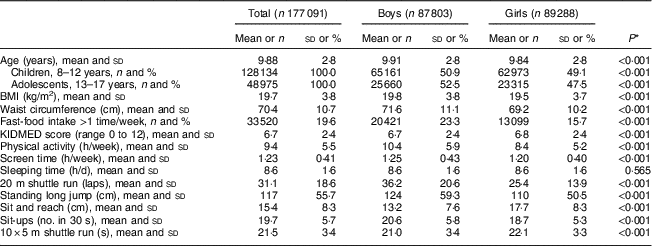
KIDMED, Mediterranean Diet Quality Index for children and adolescents.
*P values for differences between boys and girls.
Table 2 provides a description of the study participants according to fast-food consumption of ≤1 time/week and >1 time/week. Participants from both genders and age ranges classified as frequent consumers of fast foods reported poorer dietary habits, increased screen time, sleeping less and having lower PF and PA levels in comparison to infrequent consumers from the same gender and age range (all P<0·05).
Anthropometric and behavioural characteristics, according to weekly fast-food consumption and gender, of Greek children and adolescents aged 8–17 years from a school-based health survey (EYZHN programme), 2015

KIDMED, Mediterranean Diet Quality Index for children and adolescents; WHtR, waist-to-height ratio.
*Mean values were significant different between occasional (≤1 time/week) and frequent (>1 time/week) consumers of fast foods of the same gender: P<0·01.
In unadjusted multivariate binary logistic regression, skipping breakfast, consuming sweets and candy several times every day, eating pasta or rice almost every day and consuming nuts regularly increased the odds of being a frequent fast-food consumer in both genders, while eating a second fruit every day, eating pulses more than once weekly, using olive oil at home and eating two yoghurts and/or cheese (40 g) daily were associated with lower odds of being a frequent fast-food consumer (Table 3, model 1). After adjusting for several covariates (e.g. age, BMI, waist circumference, sleeping hours and PA levels), the food habits previously reported remained significantly associated with frequent consumption of fast foods in both genders (Table 3, model 2). Adjustment for screen time did not change the results (Table 3, model 3).
Results from logistic regression models evaluating the association of dietary habits with fast-food consumption (≤1 time/week v. >1 time/week) among Greek children and adolescents aged 8–17 years from a school-based health survey (EYZHN programme), 2015
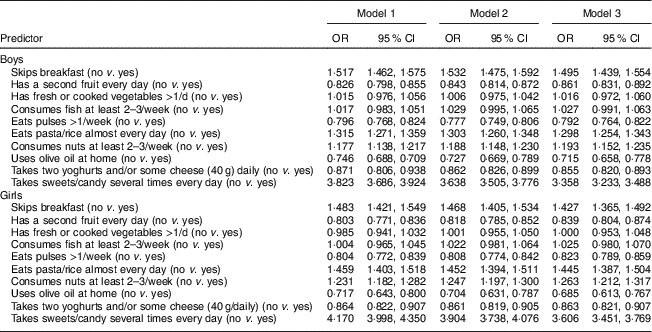
Model 1: unadjusted. Model 2: adjusted for age, BMI, waist circumference, sleeping hours and physical activity levels. Model 3: model 2 plus screen time.
Taking into account that frequent fast-food consumers have a worse lifestyle profile compared with infrequent consumers, stepwise logistic regression analyses (four models) in both genders were applied to investigate the possible associations of several related factors with fast-food consumption (≤1 time/week v. >1 time/week). The initial analysis revealed that increase in age (per 1 year) increased the odds of being a frequent fast-food consumer by almost 10 % in both genders, while being overweight/obese or centrally obese did not correlate with frequency of fast-food consumption (Table 4, model 1). When the KIDMED index, sleeping status and PA levels were added in the analysis (Table 4, model 2), results related to the effect of age and obesity status did not change, while insufficient dietary habits, insufficient (<8–9 h/d) sleeping status and inadequate (moderate-to-vigorous PA<60 min/d) PA levels burdened children’s odds of being frequent fast-food consumers. After additional adjustment for screen time (model 3), the results revealed an unfavourable influence of increased sedentary activities on frequency of fast-food consumption. Ultimately, when PF measurements were included in the analysis (model 4), the influence of previous factors did not change significantly. In the whole population, insufficient dietary habits, insufficient (<8–9 h/d) sleeping, inadequate PA levels and increased screen time increased the odds of being a frequent fast-food consumer by 77 % (95 % CI 0·218, 0·234), 30 % (95 % CI 1·270, 1·338), 94 % (95 % CI 1·887, 1·995) and 32 % (95 % CI 1·287, 1·357), respectively, after adjusting for several covariates. In addition, better results in PF measurements were related to lower probabilities of being a frequent fast-food consumer, in both genders. OR of all PF indicators (except for sit and reach in boys) were small (ranged from 0·982 to 0·999) but statistically significant (all P<0·01). For example, an improvement of 10 s in the 10×5 m shuttle run corresponded to a 15 % decrease in the odds of being a frequent fast-food consumer.
Results from logistic regression models evaluating the association of anthropometric and behavioural characteristics with fast-food consumption (≤1 time/week v. >1 time/week) among Greek children and adolescents aged 8–17 years from a school-based health survey (EYZHN programme), 2015
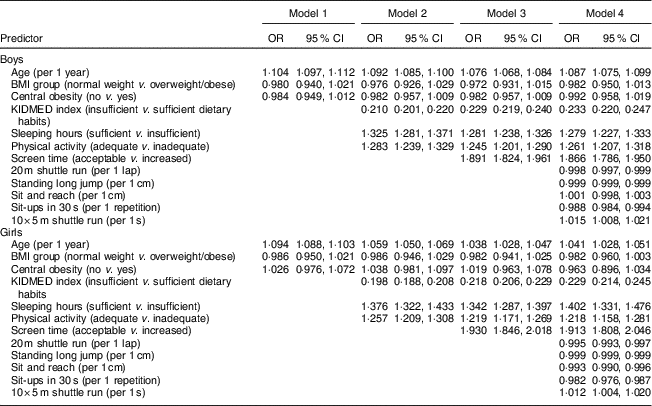
KIDMED, Mediterranean Diet Quality Index for children and adolescents.
Model 1: adjusted for age, BMI group and central obesity. Model 2: model 1 plus KIDMED index, sleeping hours and physical activity levels. Model 3: model 2 plus screen time. Model 4: model 3 plus physical fitness measurements.
Discriminant analysis by gender was applied to assess whether the predictors could better distinguish those with infrequent from those who had frequent consumption of fast foods. Standardized function coefficients suggested that dietary habits (0·85), screen time (0·34) and PA (0·29) contributed more to distinguishing those who consume fast foods frequently from those with infrequent consumption, in both genders. The classification results showed that the model correctly predicts 77 % of frequent fast-food consumers and 69 % of infrequent ones.
Discussion
To the best of our knowledge, the current study is the first to report anthropometric, PF and lifestyle correlates of fast-food consumption in a Greek population-representative cohort. We used data from 177 091 schoolchildren (aged 8–17 years) to obtain current, reliable, standardized and comparable findings. The main findings of our study are: (i) almost 20 % of schoolchildren consumed fast foods more than once weekly; (ii) participants from both genders who were frequent consumers of fast foods presented a worse lifestyle profile; and (iii) frequent fast-food consumption was strongly associated with poor dietary habits, in both genders.
Almost 20 % of the surveyed population consumed fast foods more than once weekly. These findings are in accordance with a study from Adams et al. in 2015, who found that 21 % of UK children (1·5 to 18 years old) consume take-away meals once per week or more( Reference Adams, Goffe and Brown 35 ); and Cutumisu et al. in 2017, who reported that 22 % of secondary Canadian students consume junk foods more than twice weekly( Reference Cutumisu, Traoré and Paquette 36 ). Similarly, a review study that included data from seventeen countries concluded that 23 % of children and 39 % of adolescents reported frequent fast-food consumption( Reference Braithwaite, Stewart and Hancox 13 ). Among our Greek population, more boys compared with girls (23·3 v. 15·7 %, P<0·001) and more adolescents compared with children (26·9 v. 17·1 %, P<0·001) reported frequent consumption of fast foods. A review of almost 273 000 participants highlighted a significant increased prevalence of frequent consumption in adolescents as compared with children (39 v. 23 %, P<0·001)( Reference Braithwaite, Stewart and Hancox 13 ). Regarding gender differences, our results (OR=1·59; 95 % CI 1·53, 1·65) are in agreement with those from Canadian adolescents that reported higher odds of frequent consumption associated with being a male (OR=1·56; 95 % CI 1·39, 1·74)( Reference Cutumisu, Traoré and Paquette 36 ). These findings can potentially be attributed to the fact that adolescents (especially males) in Greece have more autonomy and opportunities to consume fast foods than children. Also, adolescents are more likely to be under peer influence than children( Reference Salvy, Haye and Bowker 37 ).
Although obesity in Greek youth is of great concern, fast-food consumption did not seem to be a significant contributor of total or central obesity in our study. A review study of 6- to 7-year-old children from thirty-two countries revealed that those who consumed fast foods frequently and very frequently had higher BMI by 0·15 and 0·28 kg/m2 (P<0·001), respectively, than infrequent consumers( Reference Braithwaite, Stewart and Hancox 13 ). Moreover, the same review in 13- to 14-year-old adolescents revealed that those who frequently and very frequently consumed fast foods had BMI that was lower by 0·14 and 0·22 kg/m2 (P<0·001), respectively, than infrequent consumers, with the exception of males from low-income countries( Reference Braithwaite, Stewart and Hancox 13 ). Our data are not comparable with the studies mentioned above as we have included children aged 8–12 years and adolescents aged 13–17 years. In accordance with our results, studies in students aged 5–11 years from New Zealand, 7–16 years from China and 2–18 years from the USA found that fast-food consumption was not associated with obesity( Reference Poti, Duffey and Popkin 7 , Reference Duncan, Schofield and Duncan 14 , Reference Zhao, Wang and Xue 15 ). Among several potential explanations for the conflicting results on the association between fast-food consumption and obesity may include that most studies examined only the frequency and not the quantity of fast foods or the total dietary intake and habits.
Our results suggest that dietary habits, screen time, PA levels, sleeping time and PF are significantly associated with fast-food consumption. Specifically, participants (aged 8–17 years) who were classified as frequent fast-food consumers had 80 % decreased odds of having sufficient dietary habits. Moreover, in the same population, unhealthy dietary habits such as skipping breakfast and taking sweets frequently increased the odds of being a frequent fast-food consumer. A review study in 7199 children aged 9–11 years from twelve countries has shown that unhealthy dietary patterns, including fast foods, ice cream, fried foods, potato chips, cakes, etc., are strongly related to each other( Reference Mikkilä, Vepsäläinen and Saloheimo 38 ). In line with our findings, a study among 4466 US children suggested that fast-food consumers presented higher intakes of sugar-sweetened beverages and fried potatoes and lower intakes of vegetables, fruits and low-fat mixed dishes (OR=1·51; 95 % CI 1·24, 1·85) than non-consumers( Reference Poti, Duffey and Popkin 7 ). Furthermore, another review concluded that fast-food consumption is a major risk factor for poorer diet quality and fat intake( Reference Bahadoran, Mirmiran and Azizi 10 ). Surprisingly, our results revealed that pasta or rice consumption and regularly consuming nuts augmented the probabilities of frequent fast-food consumption. A study in Spanish children reported that boys preferred to consume fast foods and pasta or rice more frequently( Reference Latorre Román, Mora López and García Pinillos 39 ). In addition, a study among 6212 US schoolchildren (4–19 years) concluded that those who ate fast foods, compared with non-consumers, tended to consume more carbohydrates, total fat and sugar-sweetened beverages and less fruits, vegetables, fibre and milk( Reference Bowman, Gortmaker and Ebbeling 40 ). We hypothesized that the progressive increase in unhealthy dietary habits in Greece potentially leads to consumption of meals that are easier to prepare (e.g. pasta, rice). On the other hand, healthy dietary habits such as eating a second fruit every day, eating pulses more than once weekly, using olive oil at home and taking two yoghurts and/or some cheese (40 g) daily were associated with lower odds of being a frequent fast-food consumer. Our findings agree with reports that frequency of fast-food intake is associated with the dietary intake profile( Reference Poti, Duffey and Popkin 7 , Reference Paeratakul, Ferdinand and Champagne 41 , Reference Sebastian, Wilkinson Enns and Goldman 42 ).
Participants of the current study with increased screen time (>2 h/d) had higher odds of being frequent fast-food consumers by almost 90 %, in both genders. A study among Danish children and adolescents revealed that increased television viewing was related to unhealthy food preferences and food habits( Reference Hare-Bruun, Nielsen and Kristensen 16 ). Similarly, increased time of television viewing (>2 h/d) in Canadian children was positively associated with frequency of consumption of fast foods, independently of several covariates( Reference Borghese, Tremblay and Leduc 17 ). Also, study in about 11 000 US children and adolescents proposed that each one hour increase in total screen time significantly increased intakes of low nutritional quality foods (i.e. fast foods, sugar-sweetened beverages, sweets, etc.)( Reference Falbe, Willett and Rosner 18 ). Children who experienced increased television viewing and food advertising were more prone to unhealthy food requests( Reference Pettigrew, Jongenelis and Miller 19 ).
Our findings suggest that insufficient sleep duration (<8–9 h/d) is associated with a higher probability (OR=1·28–1·40, P<0·001) of being a frequent fast-food consumer, in both genders. In a cross-sectional study of 65 212 Korean students, the authors concluded that fast-food consumption was negatively associated with sleep satisfaction( Reference Hong and Peltzer 20 ). Data from the National Longitudinal Study of Adolescent Health (n 13 284) revealed that short sleep duration (<7 h/night) was associated with increased odds of fast-food consumption (OR=1·40, P<0·001)( Reference Kruger, Reither and Peppard 21 ). Also, our results are in line with those of previous studies reporting that insufficient sleep among school students is likely to increase unhealthy eating behaviours( Reference Ferranti, Marventano and Castellano 22 , Reference Weiss, Xu and Storfer-Isser 23 ).
In our study, a sufficient PA level was inversely related to the odds of frequent fast-food consumption, even after adjustment for several covariates. This is in agreement with previous findings, where it has been proposed that healthy dietary patterns among children and adolescents were favourably related to PA, in both genders( Reference Falbe, Willett and Rosner 18 , Reference Iaccarino Idelson, Scalfi and Valerio 24 , Reference de Moraes, Adami and Falcao 25 ). Moreover, physically active girls reported healthier dietary habits( Reference Boone-Heinonen, Gordon-Larsen and Adair 26 , Reference Berkey, Rockett and Field 27 ). Although the OR of PF variables to predict fast-food consumers were small (ranging from 0·982 to 0·999, all P<0·01), the current findings proposed a trend that as performance in PF indicators improved, the odds of frequent fast-food consumption decreased. These results are in line with those of a study among French students which proposed a positive relationship between PF and eating habits( Reference Thivel, Aucouturier and Isacco 28 ). Also, studies among adults have shown that participants with higher PF levels were more likely to adhere to dietary recommendations than their less-fit peers( Reference Brodney, Mcpherson and Carpenter 43 , Reference Haraldsdóttir and Andersen 44 ). Further research is needed to confirm this relationship. Regular PA and enhanced PF constitute a healthy lifestyle and potentially these children were more likely to avoid unhealthy dietary habits (e.g. fast foods).
Strengths and limitations
The present study was performed in both children and adolescents and investigated several covariates. In Greece, secondary and primary education is required and, consequently, we had the opportunity to study a very large part of the population aged 8–17 years. The methodology used allows the direct comparison of our results with those from other similarly large and representative studies.
Limitations include methodological issues and the fact that prospective confounding factors, such as socio-economic status and availability of fast-food restaurants, which are likely connected to fast-food consumption, have not been evaluated. In addition, the study is cross-sectional so causality cannot be assigned. Fast-food consumption was defined as visiting a restaurant; fast-food intakes from other sources such as takeaway/fast foods consumed at home, fast foods cooked at home and sit-down/full-service restaurants were not considered. The children’s weight status was measured using BMI age- and gender-specific cut-off points. Moreover, the records of PA, dietary habits, sleeping time and sedentary time were self-reported, therefore subject to desirable reporting bias. Nevertheless, participants’ responses were anonymous; as a result, they had no reason to misreport. Finally, because of the large sample size, statistical significance can easily be achieved.
Conclusions
The current study found that a significant proportion of Greek schoolchildren are frequent fast-food consumers. Fast-food consumption is strongly correlated with unhealthy dietary habits, such as skipping breakfast and consuming sweets regularly, and with a worse lifestyle profile in general. Urgent actions are required to help children adopt healthier dietary habits.
Acknowledgements
Financial support: This study was supported by the Hellenic Ministry of Education and Religious Affairs, Secretariat General of Sports, OPAP S.A., Nestlé Hellas S.A. and the Department of Nutrition and Dietetics Graduate Program, Harokopio University of Athens. The funding agencies had no role in the design, analysis or writing of this article. Conflict of interest: The authors declared no conflict of interest. Authorship: All authors contributed equally to the study design and analysis. K.D.T. wrote the paper. D.B.P. and L.S.S. drafted the initial form of the manuscript. All authors commented on the manuscript draft. Ethics of human subject participation: This study was conducted according to the guidelines laid down in the Declaration of Helsinki and all procedures involving human subjects were approved by the Ethical Review Board of the Ministry of Education and the Ethical Review Committee of Harokopio University. Parents were informed in writing about the purposes of the school health survey. As the measurements were included in an obligatory school curriculum, verbal informed consent by the students was considered sufficient.



