




Introduction
After the founding of the People’s Republic of China (PRC) in 1949, the country embarked on a massive project of economic recovery and state-building that placed unprecedented demands on local governance. Existing scholarship on early PRC rural governance has primarily focused on the deepening penetration of state power, extensively analysing grassroots institution-building, mass mobilisation, and agrarian reform.Footnote 1 Scholars have also illuminated the environmental costs of this transformation: Judith Shapiro traced how ‘dogmatic uniformity’ and political repression suppressed local knowledge and fuelled ecological destruction,Footnote 2 while Stevan Harrell analysed the structural tension between the party-state’s drive for productivity and the resilience of local social-ecological systems,Footnote 3 and Micah Muscolino and Qiliang He examined how state-directed projects reshaped landscapes and shifted their burdens onto rural communities.Footnote 4 Yet how these dynamics played out at the ground level remains incompletely understood. This article addresses this gap through a close archival study of the coercive promotion of improved cotton varieties in southern Shandong in the early 1950s, illuminating the structural incompatibility between agronomic standardisation and local conditions.
The narrative of high-yield cotton dissemination in modern China also warrants re-examination through this ecological lens. Historians have well documented the Republican-era introduction of American upland varieties (e.g., Trice, Acala, Deltapine) and their socioeconomic impacts.Footnote 5 In the early PRC, however, the party-state’s mobilisational capacity gave agronomic standardisation programmes an unprecedented coercive force that left little room for local accommodation. While Sven Beckert and Sigrid Schmalzer offer vital macro-global and socio-cultural perspectives, Beckert’s triumphalist focus on skyrocketing production neglects the turbulent, non-linear reality at the grassroots.Footnote 6 Driven by what James C. Scott conceptualised as a high-modernist obsession with purity and homogeneity, PRC authorities sought to render complex local agrarian ecologies ‘legible’ and manageable through strict standardisation, engendering profound rural tensions.Footnote 7
Within this context, the 1952 dissemination of improved Stoneville (Sizi mian 斯字棉) cotton in Cangshan County(苍山, present-day Lanling County兰陵), Shandong Province, illustrates the workings of the PRC bureaucracy at the grassroots. During a seed improvement campaign, Cangshan authorities resorted to coercion, compelling farmers to uproot local mixed and degraded cotton varieties to preserve genetic purity. Although this ‘Cotton Uprooting Incident’ appears modest in scale – involving the clearance of merely 470 mu (approximately 78 acres) – its historical significance lies in the severe political backlash it provoked. It exposed structural fault lines in early state-building, demonstrating how a localised agrarian dispute could rapidly escalate, triggering direct intervention and profound anxiety from the party’s higher echelons.
Crucially, Cangshan was among the typical cases (dianxing) that contributed to the launch of the nationwide ‘New Three-Anti Campaign’ in 1953, targeting bureaucratism (guanliao zhuyi), commandism (mingling zhuyi), and violations of law and discipline (weifa luanji). Although overshadowed by other mass movements in existing scholarship, this campaign is far from historically marginal, serving as a crucial bridge between the routine administrative supervision of the early 1950s and the ad hoc, mass-mobilisation governance that culminated in the Great Leap Forward. Several scholars have outlined the campaign’s macro-political trajectory,Footnote 8 while the few micro-historical analyses of its typical cases have heavily favoured urban-centric scandals, such as the ‘Huang Yifeng Incident’, which exposed bureaucratic arrogance and the suppression of mass criticism.Footnote 9 This article, by contrast, offers a complementary rural counterpart to these urban-centred accounts, examining the Cangshan incident to illuminate the catastrophic consequences of grassroots ‘commandism’ in agricultural planning.
To reconstruct these complexities, this article draws extensively on unpublished materials from the Shandong Provincial and Linyi Municipal Archives, moving beyond the account published in Renmin ribao (People’s Daily) in February 1953, which served primarily as a cautionary exemplar for a national audience rather than a full record of events. By reading these archival sources against the public proclamations, this article traces interactions across various rungs of the PRC hierarchy – from the Central Committee of the Chinese Communist Party (CCP) in Beijing, down through the East China Bureau of the CCP Central Committee (hereafter the East China Bureau), the Shandong Sub-bureau of the CCP Central Committee (the Shandong Sub-bureau), the CCP Linyi Prefectural Committee (the Linyi Prefectural Committee),Footnote 10 and the CCP Cangshan County Committee (the Cangshan County Committee).
The cotton improvement programme and the high-modernist obsession with genetic purity
As an industrial raw material, cotton held strategic importance in the rebuilding of China’s national economy. After the founding of the PRC, the central government consistently attached great importance to the management of cotton production, which also witnessed a notable increase. In 1950, national output of ginned cotton rose by 58.9% compared with 1949, exceeding the average annual output between 1933 and 1937 by 11%, and reaching 83.7% of the highest prewar output.Footnote 11 Yet even with this rapid recovery of cotton production, demand still outstripped supply. In June 1951, the Government Administration Council of the Central People’s Government (政务院) stated in its directive on cotton purchasing that, ‘although cotton production has increased and the harvest is abundant, it is still insufficient to meet the full needs of our textile mills’. Combined with farmers’ reluctance to sell, some mills even had to suspend operations due to raw material shortages.Footnote 12 On the one hand, national industrialisation required large supplies of raw cotton; on the other hand, popular demand for daily-use cotton products also increased steadily.Footnote 13 In short, further raising cotton output to secure the supply of raw cotton was not merely an agricultural goal; it was an imperative to fuelling national economic recovery and state-building.
Among the various measures adopted to increase cotton yields, the promotion of improved seed varieties was particularly crucial and received special attention from the authorities. From August 8 to 17, 1950, the Ministry of Agriculture convened a National Cotton Production Conference to resolve such issues as the purchase of improved cotton, cotton-to-grain price ratios, seed selection campaigns, cotton production surveys, and the dissemination of improved seed varieties. At the meeting, a preliminary plan was formulated to increase cotton production from 1951 to 1953, which also included a three-year programme for the widespread adoption of improved seed varieties.Footnote 14 The Ministry of Agriculture instructed provincial and regional authorities to ‘formulate specific plans and detailed implementation methods, complete the necessary preparations, and issue them as soon as possible. By September, leaders (at the grassroots level) should treat this as one of their major tasks and launch an organised and leadership-driven mass campaign’.Footnote 15
However, given the varying conditions across different regions, the ministry’s original goal of achieving universal adoption of improved cotton varieties within three years proved overly ambitious. At the end of December 1950, the Ministry of Agriculture issued two new directives: the timeframe for achieving universal adoption of improved cotton varieties was extended from three to five years, and two principles were laid down – ‘different requirements for different regions’ and ‘simultaneous dissemination and improvement’.Footnote 16 The extension of the timeframe suggests that the Ministry of Agriculture needed more time to iron out specific details in the scientific formulation of production plans, while the two new principles reflected the central authorities’ awareness of regional diversity in policymaking. Of course, the adjustments and new requirements were also likely the outcome of interaction between the ministry in Beijing and the local authorities.
Yet, this central call for cautious, region-specific implementation was thoroughly undermined by middle-level bureaucracy in Shandong. As one of North China’s chief cotton-producing provinces, Shandong possessed a deeply entrenched, yet ecologically diverse, cotton economy. Efforts to introduce improved American varieties to Shandong were not without precedent; during the Republican era, agricultural institutions had already begun experimenting with varieties like Trice and Deltapine. However, those pre-1949 efforts relied primarily on market incentives, demonstration and persuasion, as well as voluntary peasant adoption. In stark contrast, the post-1949 party-state fundamentally altered the dynamics of agricultural technology dissemination in the province. Armed with unprecedented mobilisational capacity, provincial authorities sought to compress this decades-long process of ecological adaptation into a rigid administrative mandate, shifting from market-driven persuasion to state-mandated coercion.Footnote 17
In fact, even prior to the National Cotton Production Conference, Shandong Province had already set an ambitious goal of disseminating improved cotton seed within three years as one of its production targets. On April 19, 1950, the Provincial Department of Agriculture and Forestry noted in its cotton production directive that ‘specialized institutions shall be established, seed management districts expanded, only improved seeds shall be planted, with improved conditions for seed storage, so as to meet the requirement of phasing out inferior varieties within three years’. In the same year, the department’s ‘Preliminary Plan for the Propagation and Dissemination of Improved Cotton Varieties’ decreed that ‘by 1952, the province must complete the task of replacing all varieties with improved seed’, specifying the acreage to be devoted to improved varieties between 1950 and 1952.Footnote 18 By 1951, however, the department realised that the original plan could not be fulfilled, and thus stipulated that the plan would only commence from that year, which happened to coincide with the Ministry of Agriculture’s original three-year plan.Footnote 19 Shandong’s seed programme thus exposes the characteristic pathologies of centrally planned agricultural administration: to satisfy targets imposed from above, provincial authorities mechanically cascaded quotas down the hierarchy, reducing diverse local conditions to figures on a planning document.
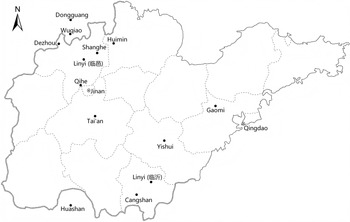
The improved varieties promoted in Shandong included Stoneville No. 4, Stoneville 2B, and Stoneville 5A.Footnote 20 Stoneville 5A and Stoneville 2B were original varieties introduced from the United States by the Ministry of Agriculture, with two million pounds allocated to Shandong. Stoneville No. 4 was purchased in 1949 from cotton farmers in Wuqiao (吴桥), Shandong, and Gaotang (高唐), Hebei; the consignment totalled 2.4 million jin (1 jin=500g).Footnote 21 According to the requirements of the 1950 National Cotton Production Conference, Shandong was to prioritise Stoneville No. 4 and Stoneville 2B in varietal selection, while the dissemination of Stoneville 5A was to be put on hold, pending the harvest of experimental plots in 1950.Footnote 22 Subsequently, based on observations gleaned from seed management districts in Wuqiao and Linyi (临邑), the provincial department judged that Stoneville No. 4 generally exhibited degeneration stemming from hybridisation, with uneven growth and small bolls, and was markedly inferior in both yield and quality compared with the other two varieties. Moreover, the Stoneville No. 4 seed already circulating in the province was impure. The Shandong Department of Agriculture and Forestry therefore tentatively decided to promote Stoneville 2B and Stoneville 5A more vigorously.Footnote 23 At the same time, however, the department emphasised that until the most suitable varieties could be determined, all three should still be promoted in different regions of the province (Figure 1): Stoneville 2B in Huimin (惠民) and other areas, Stoneville 5A in Linyi and other areas, while Dezhou (德州) prefecture would temporarily continue with Stoneville No. 4 in 1951.Footnote 24
Administrative map of Shandong Province, 1952.
Source: Adapted from C. Chen and H. Chen, eds., 中华人民共和国行政区划沿革地图集 (Atlas of the Evolution of Administrative Divisions of the PRC) (Beijing: Zhongguo ditu chubanshe, 2003), p. 92.
Note: In late 1952, Wuqiao (October) and Dongguang (November) counties were reassigned to Hebei, and Huashan County (November) to Jiangsu.

Figure 1. Long description
The map displays the administrative divisions of Shandong Province in 1952. It highlights key cities such as Jinan, Qingdao, Tai’an, Linyi, and Yishui. The map also indicates the reassignment of Wuqiao and Dongguang counties to Hebei, and Huashan County to Jiangsu in late 1952. Various cities and towns are marked with black dots, and the map includes a compass rose pointing north.
In 1950, the Shandong Department of Agriculture and Forestry allocated varying quantities of improved cotton seed to major cotton-producing counties and districts within the province. Eight seed management districts were established in key cotton-growing areas such as Wuqiao, Linyi (临邑), and Huimin, where acreage devoted to improved seed reached nearly 240,000 mu (1 mu=a sixth of an acre) that year. Five seed propagation farms were set up in various locations, including Wuqiao and Qidong (齐东), along with five cotton ginning mills in Lianzhen (Dongguang County 东光), Gaomi (高密), and elsewhere. By the winter of 1950, the department had purchased a total of over 7.64 million jin of improved seed. In the spring of 1951, the department distributed these seeds to 58 counties across the prefectures of Dezhou, Tai’an (泰安), and others, which then sowed them on nearly 1.3 million mu of farmland, and purchased more than 24.9 million jin(斤) of improved seed from cotton farmers that winter. By the spring of 1952, improved cotton varieties were grown in 102 counties across 11 prefectures, with a total acreage of over 4.43 million mu. The department estimated that by the first half of 1952, improved varieties already accounted for over 54 per cent of the province’s total cotton acreage, and by 1953, the replacement of inferior varieties with improved ones would be more or less complete throughout all of Shandong’s main cotton-producing areas.Footnote 25
From a quantitative perspective, Shandong achieved considerable results. Yet the rapid pace of expansion also led to certain problems. As the Department of Agriculture and Forestry itself acknowledged, the large-scale propagation and dissemination of the past two years had been accompanied by insufficient attention to cultivation, seed selection, and seed storage, leading to a gradual decline in seed quality. To address these issues, the department introduced remedial measures such as reducing the acreage of seed management districts, encouraging widespread farmer participation in seed selection, and strengthening technical guidance.
Crucially, in the process of disseminating improved cotton varieties, the preservation of genetic purity was given particularly prominent emphasis. The state viewed the traditional agrarian landscape – characterised by mixed cropping and diverse local varieties – as messy and disorganised. As early as April 1950, the East China Military and Administrative Committee stated categorically that ‘experiments have shown that mixed planting of cotton significantly impedes cotton growth, and does not yield any economic benefit whatsoever’, and therefore required all levels of cotton farms to ‘strictly remove all inferior plants during the growing phase’.Footnote 26 Accordingly, in September 1950, the Shandong Provincial People’s Government issued relevant regulations for maintaining the purity of improved cotton seed, requiring that all seed within seed management districts be uniformly distributed by provincial cotton improvement institutions: ‘Cotton farmers are forbidden from interplanting or replanting with miscellaneous cotton varieties, so as to avoid hybridisation and degeneration’.Footnote 27 The Ministry of Agriculture also stressed this point. Its 1952 Guidelines for Technical Guidance in Cotton Production specified: ‘The same field must be replanted with the same cotton variety; the mixing of varieties in the same field must be absolutely avoided, as must the practice of replanting with beans or sorghum following the death of individual cotton plants’.Footnote 28
In their fixation on and indeed obsession with seed purity, the department’s 1950 county-level production plans for cotton improvement even went so far as to stipulate ‘In reconciling with the interests of the masses, one must avoid excessive concessions to the interests of individual farmers that could undermine the preservation of purity and compromise the overall plan’. In May, in response to a report from the Huashan (华山) Cotton Improvement District Office, the Cotton Improvement Division of the department laid out three work requirements for seed management districts: ‘no mixed planting’, ‘no underplanting’, and ‘acceptance of technical guidance’. In July, in a letter to local authorities in Huashan, the department further emphasised that farmers who resisted the removal of miscellaneous cotton varieties should be subject to criticism and re-education. This clearly suggests that the department stood firm in the face of opposition from cotton farmers, imposing stringent requirements for the removal of miscellaneous and presumably inferior cotton varieties across the eight seed management districts.Footnote 29
In fact, mixed planting among cotton farmers during cultivation was virtually unavoidable – it was a traditional practice, rooted in the collective wisdom of many generations and aimed at mitigating the risks of crop failure. Whether or not farmers articulated this practice in explicit terms, its rationality was self-evident to those whose subsistence depended on it: maintaining a diversity of varieties across the same field provided a buffer against the failure of any single crop, ensuring that a poor harvest of one variety might be offset by the relative resilience of another. As a result, the removal of miscellaneous cotton varieties constituted a crucial step in the purity-preservation process. In 1950, the Shandong Department of Agriculture and Forestry carried out seedling and field inspections through seed management teams and various work teams recruited from the masses. Statistics indicated that 16,551 mu of miscellaneous cotton varieties were grown across 240 villages in six counties, of which 318 mu were uprooted, concentrated primarily in the Qidong and Wuqiao seed management districts. The department reported that it was generally successful in maintaining genetic purity in the seed management districts following the removal of mixed cotton.Footnote 30 These requirements and measures adopted by the Shandong Department of Agriculture and Forestry created the very conditions which precipitated the outbreak of the Cangshan ‘Cotton Uprooting Incident’ in 1952.
Following the dissemination of improved seed, some regions with suitable natural conditions did indeed enjoy bumper harvests. Farmers reported that the new varieties ‘produced more bolls, yielded more cotton, had thicker lint, higher lint percentage, longer fibers, and fetched better prices’, thereby generating considerable profits. In Longwangli village, Dongguang, farmers nicknamed the No. 5A cotton variety tie bazi (‘iron handle’), referring to its minimal shedding of loose strands and high boll count. In Shanghe County, Lu Yonglan (卢永兰) of Lumiao township (卢庙乡) exclaimed upon receiving the No. 5A cotton seed, ‘If it weren’t for the Communist Party, how could we ever get such good seed?’ In the Huashan cotton district, farmers voluntarily committed to preserving genetic purity by sending cotton harvested from improved seed to designated cotton ginning mills to prevent admixture.Footnote 31
However, for some farmers, adopting a new variety without first seeing tangible results entailed too much risk. In newly established cotton areas such as Tai’an (泰安) and Yishui (沂水), some households purchased seed in 1952 with the cautious attitude of ‘buying a little just to try it out’. Others worried that if they planted improved varieties exclusively, the government might requisition the entire crop, leaving none for their own use. Still others feared ‘late maturity, lack of technical know-how, and being left without cotton to harvest in the autumn’.Footnote 32 These were not the irrational fears of a backward peasantry, but rather the considered judgements of farmers whose subsistence left no margin for the risks of an untested variety. Yet, driven by rigid quotas, the local authorities wilfully ignored these objective circumstances and economic imperatives, setting the stage for disaster.
The promotion of high-yield cotton in Cangshan and the ‘cotton uprooting incident’
As an independent administrative unit, Cangshan was a relatively young county with deep revolutionary roots. Officially established in the spring of 1947, it was named to commemorate the 1933 ‘Cangshan Uprising’ (Cangshan baodong) led by the CCP. Situated in southern Shandong Province, the county features a warm temperate, semi-humid monsoon climate with four distinct seasons, which is favourable to its fundamentally agrarian economy. During the early years of the PRC, local agricultural production was overwhelmingly dominated by subsistence grain crops such as wheat, soybeans, and sorghum. In 1949, grain crops accounted for 92.9% of the county’s total sown area, whereas cash crops comprised a mere 7.1%. Within this limited commercial sector, cotton served as the primary cash crop, cultivated predominantly in the county’s southern plains. In 1949, the total cotton acreage reached 2,560 hectares (approximately 38,400 mu), yielding 375,000 kilograms of ginned cotton.Footnote 33 However, cotton in Cangshan accounted for only 1% of the county’s arable land in 1950, with the acreage of individual districts ranging from six to seven hundred mu to four to five thousand mu, scattered sporadically throughout the county. Moreover, many locals practised intercropping and planted sparsely.Footnote 34 Furthermore, most local farmers grew cotton merely for subsistence, with output insufficient to meet even their own needs; in 1950, 10,000 jin had to be imported from other regions.
The establishment of seed management districts was central to the promotion of improved cotton varieties. In 1950, the Shandong Department of Agriculture and Forestry specified one of the key criteria for establishing seed management districts, namely, that ‘seed management districts must be established in major cotton-producing prefectures; scattered or small cotton fields will not be included’.Footnote 35 Evidently, Cangshan was not a major cotton-producing area. Cotton cultivation was neither concentrated nor widespread, and local conditions were unsuitable for establishing a seed management district or promoting improved cotton. If Cangshan was so ecologically ill-suited for the new crop, why was it designated as a seed management district in the first place? The answer lies in the bureaucratic logic of quota-filling. Driven by the provincial government’s ambitious three-year target to promulgate improved varieties, agricultural officials engaged in arbitrary top-down allocation without prior consultation with local authorities. To ensure the provincial acreage targets added up on paper, quotas were mechanically distributed down the administrative hierarchy, inevitably spilling over into regions like Cangshan, which were ill-suited for these improved varieties. This was an instructive illustration of how the imperatives of centrally planned quota-fulfilment reinforced the universalising tendencies already embedded in mid-century agronomic science: high-level bureaucrats, insulated from local realities by the administrative hierarchy, relied on aggregate acreage figures and dismissed local soil, climate, and agrarian conditions as obstacles to the fulfilment of rigid statistical targets. The two failures were analytically distinct but mutually reinforcing – the former a product of the planning system’s structural incentives, the latter a product of an agronomic paradigm that assumed universal applicability.Footnote 36
Furthermore, the provincial authorities imposed what Judith Shapiro terms ‘dogmatic uniformity’ – ‘using a single pattern without consideration for local conditions, or cutting everything with one slice of the knife’ (yi dao qie) – a logic that, in Shapiro’s analysis, ‘ran roughshod over regional differences and customs, and usurped the power of decision-makers experienced with proven local practices’.Footnote 37 While Shapiro locates the fullest expression of this tendency in the Dazhai model of the Cultural Revolution years, the 1952 Cangshan cotton programme reveals that the same structural impulse was already operative in the early PRC, applied mechanistically to conditions where it could not possibly succeed. Indeed, the provincial directives examined here anticipate in miniature the logic Shapiro describes: a centrally mandated template, impervious to local particularity, imposed through a bureaucratic apparatus that had no mechanism for incorporating local knowledge and no tolerance for dissent.
This dogmatic uniformity was manifested in a uniform, formulaic package of agricultural techniques, blindly mandating ‘deep plowing, frequent harrowing, and heavy fertilization’ regardless of local ecological conditions. In certain soils, these supposedly advanced methods actually destroyed the soil structure and reduced fertility. Most devastatingly, the provincial directive on ‘preserving purity’ (baochun) exhibited a glaring ignorance of agricultural biology. To ensure cadres could easily identify and eradicate ‘inferior’ local mixed cotton, the 1950 provincial directive instructed them to wait until the plants had formed ‘two or three bolls’ (cotton pods) before uprooting them. However, pollination, including the cross-pollination cadres sought to prevent, typically precedes the formation of bolls. Thus, the uprooting mandate was an abysmal failure as far as the prevention of genetic mixing was concerned; it merely destroyed the peasants’ impending harvest.Footnote 38 These dynamics are best understood not as isolated instances of bureaucratic incompetence, but as early expressions of a systemic pathology that would escalate into the agronomic commandism and exaggerated yield targets of the Great Leap Forward – where the same refusal to accommodate ecological diversity, now shorn of any corrective mechanism, contributed to catastrophe on a far greater scale. It should be noted, however, that the technical directives examined here were not simply ‘unscientific’ in any straightforward sense: they reflected the dominant agronomic thinking of the postwar era, which prized uniformity, efficiency, and standardisation as the hallmarks of modern agricultural progress. The failure was rooted not in a departure from the science of the time, but in the bureaucratic insistence on applying that science regardless of the particular conditions to which it was wholly unsuited.Footnote 39
To be sure, the failings identified above were not solely attributable to the variety itself. On the whole, Stoneville 5A was a variety of genuine merit. Although its bolls were small and its drought tolerance limited, it grew uniformly, set a high boll count, carried comparatively few leaves, matured early, and produced fibre of good quality. Incomplete yield statistics from trial plantings across parts of North China between 1949 and 1953 indicate that the variety performed well in Jinan and other Shandong localities. It had, moreover, been welcomed by local people following trials, demonstrations, and cultivation in parts of Shandong.Footnote 40 As noted above, its introduction in Dongguang and Shanghe yielded comparatively favourable harvests and earned the endorsement of many cotton farmers. Even so, none of this implied that Stoneville 5A was suited to every part of Shandong – Cangshan included.
In terms of cultivation practice, Cangshan’s cotton farmers were accustomed to growing degraded strains of traditional American upland cotton alongside Asian cotton (Gossypium arboreum, known locally as xiaomian, or ‘small cotton’). According to available statistics, the county planted over 34,000 mu of cotton in 1950, of which some 23,000 mu was given over to degraded American varieties and over 11,000 mu to xiaomian. Both produced short-staple lint well suited to hand-spinning and to domestic uses such as quilts, bedding, and padded clothing, and both were comparatively pest-resistant. Well adapted to local cultivating conditions and responsive to the practical needs of local farmers, they enjoyed wide acceptance across the area.Footnote 41 Xiaomian in particular had a long history of cultivation in the region. Although susceptible to Verticillium wilt and angular leaf spot, it exhibited strong resistance to Fusarium wilt, suffered only minor boll disease, and sustained relatively low levels of infestation from cotton bollworm, aphid, and spider mite. Its tolerance of poor soils and undemanding cultivation requirements meant that even under extensive management it could still return a serviceable harvest.Footnote 42 It was for these reasons that, notwithstanding the widespread shift to American upland varieties following their introduction during the Republican period, a number of localities in southern Shandong – Cangshan among them – continued to cultivate Asian cotton into the early years of the People’s Republic.Footnote 43
It was against this backdrop of deeply rooted local cultivation practices that the 1951 trial plantings of Stoneville 5A were conducted. In the spring of 1951, the Shandong Department of Agriculture and Forestry allocated 96,000 jin of the imported Stoneville 5A (Si zi mian 5A) cotton seeds purchased in Gaomi to Linyi Prefecture, with Cangshan, Feixian, and Linshu counties planting a total of 12,000 mu. Some farms and individual villages reported good yields – for example, Linyi County Farm harvested over 100 jin of lint cotton, and in Songzhuang (宋庄), Cangshan, yields averaged 40–50 jin per mu. However, such yields were far from common. Farmers generally reported that the Stoneville varieties produced stalks rather than bolls, were more prone to disease than xiao mian, and were difficult to spin. Poor harvests, refusal of cooperatives to purchase the cotton, lower market prices compared to traditional cotton, and practical challenges involved in spinning new varieties of cotton for their own use led to widespread dissatisfaction among farmers.Footnote 44
The unsatisfactory results of trial plantings across much of Cangshan County suggest that the local environment was not well-suited to this variety. In areas already given over to xiaomian, even the previously cultivated, degraded American strains had failed to win the confidence of local farmers, let alone a newer and more exacting variety. One contemporary report noted that owing to the natural environment, Stoneville 5A cotton produced a large proportion of frost-damaged bollsFootnote 45 – testimony to the variety’s poor cold tolerance under Cangshan’s climatic conditions. In subsequent self-criticisms, local authorities attributed the failure of the 1951 trial plantings chiefly to ‘a lack of technical guidance’,Footnote 46 yet offered no specific account of what technical shortcomings had caused such widespread underperformance. The explanation bears the hallmarks of blame-shifting: the implicit logic was that inadequate instruction had led farmers to cultivate the new variety improperly, and that it was this failing – rather than any inherent unsuitability – that accounted for the poor yields of 1951. Such an a priori confidence in the variety’s universal high-yielding potential was manifestly at odds with the evidence at hand. Given the difficulties of 1951, the expansion programme of 1952 ought to have incorporated these lessons and made timely adjustments. Cangshan County conspicuously failed to do so.
Driven by the structural incentives of centrally planned quota-fulfilment rather than by any assessment of local agrarian realities, the dissemination of improved cotton varieties continued unabated. In 1952, the Department of Agriculture and Forestry established a cotton cultivation guidance office in Linyi Prefecture, which was tasked with promoting improved varieties over more than 90,000 mu across the prefecture, accounting for over 40% of the total cotton acreage.Footnote 47 In Cangshan, eight districts planted over 13,700 mu of Stoneville 5A cotton.Footnote 48 However, many farmers remained sceptical and were reluctant to plant the Stoneville varieties. These farmers responded with a half-hearted concession to the authorities, interplanting Stoneville and xiao mian, or planting only small amounts of Stoneville while maintaining xiao mian in the fields.Footnote 49 Consequently, seed purity was inevitably compromised – though from the perspective of the farmers who depended on these fields for their subsistence, the maintenance of varietal diversity was not a failure but a rational hedge against the uncertainties of an untested crop.
As the authorities saw it, though, maintaining genetic purity was absolutely key to the dissemination of improved cotton varieties. To familiarise grassroots cadres with the technical details of cotton growing, the Department of Agriculture and Forestry organised two cotton training sessions in Gaomi in 1950 and 1951.Footnote 50 In 1951, Cangshan Construction Section cadres Cai Chenggui(蔡诚贵) and Wang Pengchen(王朋臣) attended a training session and proposed the slogan ‘Clear the Cotton Fields’. Upon returning, the over-zealous Cai and Wang became technical instructors for cotton improvement in Cangshan, bringing with them the emphasis on eradicating miscellaneous cotton. The Construction Section even reported that 8–9 local Communist Youth League members cleared over 300 mu of mixed cotton in a single township across 14 districts within two hours – though the actual area was only 24 mu; the figure was exaggerated to claim credit.Footnote 51 In 1952, the Linyi Prefecture also conducted cotton training sessions, specifically instructing: ‘No miscellaneous cotton may be planted in districts earmarked for improved cotton varieties; any found must be uprooted before flowering’.Footnote 52 These draconian measures foreshadowed the wholesale clearance of cotton fields in Cangshan.
On May 15, 1952, Cangshan County Magistrate Zhang Zuochen(张作臣) convened a township cadre meeting in the four eastern districts to assign summer pest control work. At the same time, he tasked cadres with clearing cotton fields, ‘emphasizing wholesale clearance without exception’, and even added, ‘Even if some villagers do not understand (the rationale behind uprooting miscellaneous cotton), the fields must be cleared; it is better to enforce early than late’. Zhang only mentioned this task in passing, however, and it was not discussed in detail at the meeting.Footnote 53 After receiving the assignment, the districts and townships commenced preliminary clearing. However, because distinguishing between improved and ordinary cotton was difficult, and because urgent tasks such as pest control, river dredging, wheat harvest, and locust control demanded more time and attention, the clearance work was somewhat relaxed and therefore not thorough.
By June 20, at the county government’s summer mobilisation meeting, Zhang Zuochen issued further instructions. When district and township cadres returned to their posts and faced challenges in motivating villagers to uproot miscellaneous cotton voluntarily, they began to use coercive measures, organising militia, primary school students, and Youth League members to inspect fields under the guidance of township cadres. Whenever miscellaneous cotton was found, the staff first persuaded farmers to remove it voluntarily; if unsuccessful, militia and students forcibly removed it.Footnote 54 To complete the task, some districts, such as District Ten, even organised competitions.Footnote 55 In District Fourteen, Wutan Township (吴坦乡) mobilised over one hundred people on June 23 to clear miscellaneous cotton.Footnote 56 Since villagers were often unwilling to remove cotton from their own fields, some townships arranged mutual uprooting among cotton farmers.Footnote 57 As late as July 6, during discussions on the Communist Youth League work, the Cangshan County Committee still approved the requirement to clear cotton fields, with some League cadres and members joining the uprooting teams.Footnote 58
The use of coercion by grassroots cadres during the cotton clearance campaign also drew the attention of the Cangshan County Committee. On July 14, the Cangshan County Committee issued a written criticism of the use of coercion, but did not take concrete action against it; instead, it argued that ‘the adoption of a laissez-faire attitude, thus leading to the failure to actively mobilize the masses to clear the fields of miscellaneous cotton, is also wrong’, and called for further clearing.Footnote 59 To correct deviations in prior work, the Cangshan County Committee issued two directives. First, the area earmarked for improved cotton was to be reduced, allowing for stricter enforcement of the ‘improved cotton only’ policy, while leaving surrounding areas untouched. Second, in cases where clearance within the reduced area was necessary, it could be carried out under the principles of voluntary participation and preventing forced contributions, with households that benefited from the high-yield cotton contributing some grain to compensate for the losses of households whose miscellaneous cotton was uprooted.Footnote 60
After the notice was issued, grassroots cadres realised belatedly that the clearing of miscellaneous cotton involved compensation for farmers. This, combined with the Cangshan County Committee’s criticism of coercive methods, brought the clearance of miscellaneous cotton to a halt.Footnote 61 However, the Cangshan County Committee’s notice proposing that households that benefited from growing improved cotton compensate uprooted farmers was opposed by the Linyi Prefectural Committee. Consequently, on July 31, the Cangshan County Committee issued an urgent correction notice, halting compensation and requiring those who had already been compensated to return it.Footnote 62 With this, the cotton clearance campaign in Cangshan was essentially concluded.
Rather than being merely ignorant executors, local grassroots cadres were often acutely aware of the unsuitability of the improved cotton for local conditions and the peasants’ practical difficulties. However, caught between the high-modernist mandates pushed by the middle-level bureaucracy (provincial and prefectural authorities) and the resistance of local farmers, these grassroots cadres were forced to resort to coercive measures to fulfil inflexible political quotas. For example, Wutan Township Party Branch Secretary Wang Xingkui (王兴奎), township head Zhao Jingxiang (赵景祥), and Edan Village (峨旦村) Party Branch Secretary Liu Xianbin (刘献斌) forwarded villagers’ opinions to the district leadership on three occasions, but District Chief Fu Zhongfa (傅忠法) rebuked them for ‘deferring to popular sentiment blindly’. Fu personally supervised the cotton clearance campaign and ordered Wang, Zhao, and Liu to forcibly uproot miscellaneous cotton. Similarly, cadres in Bianjiazhuang Township (卞家庄乡), District Ten, repeatedly forwarded villagers’ petitions, arguing that it was a pity to remove all the xiao mian, especially during a bumper harvest. But District Chief Zhou Shengxiang (周胜祥) insisted, ‘Even if only ten mu remain of a hundred, it must be cleared’. Under the district chief’s orders, township cadres led militia to enforce the uprooting of miscellaneous cotton.Footnote 63 In Beizhu Village (碑驻村), District Fourteen, Party member Gao raised concerns to District Secretary Li Guanglai (李广来), ‘The cotton is already flowering and forming bolls; uprooting them at this point is bound to incur the wrath of the masses’. Gao’s earnest appeal was greeted by Li’s angry curses, ‘You bad element, trying to sabotage our work by taking advantage of loopholes’.Footnote 64
Given the uncompromising and unsympathetic attitude of the middle-level bureaucracy, conflicts became inevitable. In Shayuan Village (沙园村), District Ten, a brawl erupted between a farmer guarding his field and township cadres who came to clear the cotton, resulting in injuries sustained by the latter. In Guojiagou (郭家沟), Phoenix Township (凤凰乡), District Three, farmer Guo Deren (郭德仁) refused to remove the six-fen (fen ≈ 0.033 ha) of xiao mian he had planted and, after verbally insulting the People’s Representative sent by the county, was sentenced to one month in prison.Footnote 65 Some farmers knelt in the fields and pleaded, yet their cotton was still removed; a few wept as they were forced to uproot their xiao mian.Footnote 66 In Houdun Township (后墩乡), District Ten, farmer Fan Jiyuan (樊继远) lay in his fields, begging, ‘Please show some mercy! My children are barefoot and bare-bottomed (i.e., too poor to buy or make shoes and trousers); I depend on this cotton for a living. If you take it, I will surely die!’ When township cadres reported Fan’s case to the district, the instructor insisted on uprooting Fan’s cotton via a mass campaign, and Fan’s cotton was ultimately destroyed.Footnote 67 In Wutan Township, District Fourteen, a farmer surnamed Zhou went to the district office to request leniency, only to be tied up and verbally threatened by township cadres.Footnote 68
The clearance of cotton fields provoked widespread dissatisfaction among the local populace, leading to persistent complaints. Some retorted, ‘The government has long claimed to supervise production – why sabotage production as well?’ Others cursed, ‘You kill our cotton, you deserve to die’.Footnote 69 People began to doubt the new regime, claiming, ‘The Communist Party is not as good as it used to be during those two years’, ‘The Communist Party has changed’, ‘The Communist Party does not serve the people’, and ‘The Kuomintang came and cut trees, the Communist Party comes and uproots cotton’. Some even labelled cadres as ‘bandits’, saying, ‘Chairman Mao has given us the right prescription, but the village cadres sell fake medicine’, and swore that they would tell future generations about the suffering caused by cotton uprooting even on their deathbeds. Farmers were extremely angry at the township cadres directly leading the uprooting, while the cadres themselves felt remorseful, so much so that they avoided facing villagers altogether.Footnote 70
Some farmers even retaliated against cadres violently. In Bianzhuang Village (卞庄村), Youth League Branch Secretary Meng Zhaoyi (孟照义), who had been particularly active in uprooting miscellaneous cotton, had his melons uprooted by villagers. In Changcheng Village (长城村), Youth League member Shen Taiying (沈太英) was surrounded and threatened by villagers, and even while leading the uprooting of his own cotton, was severely reprimanded by family members.Footnote 71 In Zhuangwu Village (庄坞村), District Eleven, someone uprooted all the cotton of a leading cadre, grown on a small four-fen plot, under cover of darkness.Footnote 72 These incidents collectively intensified tensions between officials and the people, seriously undermining the political image and legitimacy of the new regime.
The cotton clearance also caused substantial economic losses for many farmers. By late June and early July 1952, a total of 470.65 mu of miscellaneous cotton fields were cleared across the county, involving 1,367 households in 18 townships and 75 villages, resulting in a total loss of approximately 45,058,500 yuan (old currency).Footnote 73 The most affected areas were Districts Ten and Fourteen, where 407.3 mu of cotton from 1,139 households were uprooted; of those, Bianjiazhuang Township (卞家庄乡) in District Ten and Wutan Township in District Fourteen were most badly hit, with 507 households losing their entire cotton crops.Footnote 74
The uprooting of cotton proved so devastating that some farmers faced difficulties in production and daily life, with a few contemplating fleeing their hometowns or even suicide. For instance, Fan Jiyuan (范基远), an old man aged over eighty from Houpo Village (后坡村), District Ten, had planted one and a half mu of cotton, applied nine cartloads of manure, weeded seven times, and carefully tended the crop, which grew well. Fan had hoped to make new cotton jackets for his grandchildren after harvest and even went on his knees pleading with cadres to spare the crop. Although the township cadres sympathised with him and appealed to the district leadership to reconsider their decision, Subdistrict Party Secretary Wei Diangang (韦殿冈) refused to relent. Fan returned home and attempted to hang himself, but was stopped by his son.Footnote 75 Although the cleared cotton fields accounted for only 1.17% of the county’s cotton acreage, this statistical footprint belied the profound historical significance of the episode. The violent uprooting of subsistence crops shattered the fragile trust between the nascent state and rural society, demonstrating how high-modernist agricultural policies, when forced upon complex local ecologies, could inflict immense economic and political damage.
The remediation of the incident and the bureaucratic containment of peasant agency
In late July 1952, after receiving reports from Cangshan regarding the clearance of cotton fields, the Linyi Prefectural Committee recognised the folly of the uprooting campaign and ordered the Cangshan authorities to stop uprooting miscellaneous cotton immediately, in addition to adopting remedial action.Footnote 76 However, this initial remediation was characterised by a classic bureaucratic instinct for damage containment. The local authorities focused almost exclusively on the political and ideological domains, substituting financial compensation with the self-criticism of guilty cadres in front of the masses. In its notice of July 31, the Cangshan County Committee stated: ‘Directly responsible district and township cadres should first conduct self-criticism in front of Party and Youth League members, receive political education, straighten out their thinking, and reverse any oppositional attitudes; only then should they conduct self-criticism to the cotton-growing households, while strengthening political education of those households’.Footnote 77 From the notice, it is clear that grassroots cadres were loath to apologise, as they rightly saw themselves as merely executing the inflexible high-modernist orders pushed by their superiors. It was precisely for this reason that the county leadership emphasised the need to ‘straighten out’ the cadres’ thinking, essentially forcing them to absorb the political blame.
Perhaps under pressure to lead by example, County Magistrate Zhang Zuochen first conducted self-criticism at a district and township cadre meeting, and then personally visited the three most severely affected townships to apologise directly to local residents.Footnote 78 In Zhang’s personal self-critique penned in August 1952, he painted a sanitised picture of bureaucratic efficiency, claiming that his apologies had mitigated the political backlash, the cotton farmers had been largely mollified, and the cleared fields had been replanted. The Cangshan authorities confidently prepared to follow up with routine village-level remediation.Footnote 79 However, the attempt to resolve the crisis through political rhetoric alone proved wholly inadequate. During an inspection by the Department of Agriculture and Forestry work team in mid-September, Zhang Jianzhi’s(张建之) wife in Houdun Village (后墩村), District Eleven, reportedly remarked, ‘Your self-criticism is impressive, but what does it matter? My cotton is still gone!’ Fan Jiyuan, upon seeing his neighbours’ successful cotton harvest, wept over his own uprooted cotton.Footnote 80 Such reactions powerfully underscore the materialist priorities of the peasantry. Oral apologies fell far short of appeasing farmers who faced the grim prospect of enduring a harsh winter without even modest reserves of food and clothing.
The Linyi authorities likewise recognised the need for going through the motions of ensuring accountability, regardless of the Cangshan cadres’ actual culpability. On August 2, at the request of the Linyi Prefectural Committee, the Cangshan County Committee submitted its first self-critique report on the ‘cotton uprooting incident’. However, in the report, the Cangshan County Committee downplayed the severity of the incident and claimed it had already been properly resolved.Footnote 81 On August 15, the Linyi Prefectural Committee issued stern criticism of the Cangshan authorities. Notably, although the Linyi Prefectural Committee claimed that its criticism was based on the Cangshan County Committee’s self-critique and its own investigations, the narrative of the ‘cotton uprooting incident’ in Linyi’s criticism largely mirrored Cangshan’s August 2 report, making it doubtful that the Linyi Prefectural Committee had actually conducted on-site investigations. The Linyi Prefectural Committee also left the Cangshan authorities to handle the guilty cadres as they deemed fit.Footnote 82 In response to the Linyi Prefectural Committee’s criticism, Cangshan issued a response on August 23 acknowledging complete culpability and initiated a series of inspections, self-criticism sessions (ziwo piping hui, in which cadres were required to publicly confess their errors and shortcomings before their peers), and organisational study activities.Footnote 83 Even more pointedly, the Linyi Prefectural Committee’s criticism was extremely measured. Notwithstanding its verbal censure of the Cangshan authorities, no specific individual was actually held accountable. This undoubtedly offered the county leadership a measure of relief.
In contrast, the Shandong Sub-Bureau took the ‘cotton uprooting incident’ seriously upon receiving the Linyi Prefectural Committee’s report of August 15. On August 26, the Shandong Sub-Bureau circulated the notice province-wide, emphasising the extreme severity of the incident and the need for all Party committees and cadres to view it with utmost seriousness. The Shandong Sub-Bureau required the Linyi Prefectural Committee to conduct a thorough inspection of the Cangshan County Committee’s work – noting its previous record of policy deviation in spring production – which included publicising the incident in the press, having the key culprits issue public self-criticisms, and organising prefecture-wide discussions to educate cadres. In circulating the notice, the Sub-Bureau implicitly criticised the Linyi Prefectural Committee for its failure to conduct on-site investigations and its acceptance of the County Committee’s self-critique at face value, requiring Linyi to undertake a thorough re-examination of Cangshan’s work. Although the Sub-Bureau appeared to adopt a firm stance against the Cangshan cadres, it nonetheless countenanced the Linyi Prefectural Committee’s analysis and handling of the incident.Footnote 84 In other words, the Shandong Sub-Bureau’s understanding of the Cangshan ‘cotton uprooting incident’ remained superficial, since it apparently took the Cangshan County Committee’s self-critique at face value. Most importantly, the Sub-Bureau conveniently accepted the sanitised reports at face value. Put bluntly, it chose to ignore the glaring absence of financial compensation and the simmering disaffection of the cotton farmers, thereby shielding the provincial leadership from the fallout of its own disastrous agricultural policies.
On August 29, Cangshan submitted its proposed disciplinary measures for Magistrate Zhang Zuochen. While criticising him, the committee evidently downplayed his mistakes by praising his ‘consistently active and enthusiastic’ work ethic. They recommended a major demerit and further self-criticism.Footnote 85 The Linyi Prefectural Committee responded on September 24, essentially agreeing but leniently downgrading the punishment to a regular demerit. It also refrained from imposing any disciplinary measures on the Cangshan County collective leadership.Footnote 86 By late September, the local bureaucracy was lulled into a false sense of security, as it believed the Cangshan incident was largely put to rest.
However, this inadequate resolution fundamentally ignored the peasants’ economic loss. Both the county and prefectural authorities deliberately refrained from offering proper financial compensation to the affected peasants. As mentioned earlier, the Cangshan County Committee had already recognised the need for compensation in its July 14 directive, in which it proposed that cotton farmers who benefited from the improved cotton varieties provide subsidies to their fellow farmers who suffered financial losses. Yet this proposal proved to be entirely unfeasible and was rejected by the Linyi Prefectural Committee. In an updated circular issued on July 31, the Cangshan County Committee made a clumsy attempt at obfuscation, claiming that ‘The compensation issue should not be raised now; whether or how to compensate must await instructions from the Prefectural Committee’. Furthermore, when instructing the sub-county districts to investigate the cotton clearance, the Cangshan County Committee specifically cautioned, ‘while conducting investigations, pay utmost attention to the methods employed: under no circumstances are cotton farmers to assume erroneously that they are entitled to compensation, thus leading them to exaggerate losses or reflect their subjective biases instead of reporting actual conditions objectively’.Footnote 87 Subsequently, in its August 29 memo to the Linyi Prefectural Committee regarding the disciplinary decision, the Cangshan County Committee noted that it had previously requested the Prefectural Committee to take appropriate measures to address the disruption of production and impact on livelihoods caused by the cotton clearance.Footnote 88 However, neither committee seemed keen to commit to specific ‘appropriate measures’, with merely vague references to relief for households under genuine financial duress.
In reality, the county only provided limited relief to a minority pushed to the brink of absolute poverty, completely abandoning the vast majority of affected households.Footnote 89 Deprived of financial compensation, the peasants’ grievances only deepened. It was precisely at this juncture that peasant agency exposed the local bureaucratic cover-up. Zhao Kaishan (赵开山), a farmer in Anzhuang Village (安庄村) whose subsistence cotton had been cleared, appealed first to the district and then to the county. His complaints, which would later be vindicated by the provincial inspection team, were met with reprimands from local officials intent on maintaining the illusion of a resolved crisis.Footnote 90 Driven by despair and a firm conviction that he was entitled to financial compensation, Zhao engaged in an extraordinary act of political defiance: in early September, he bypassed the district and county bureaucracy entirely and travelled north to the provincial capital, Jinan, to petition (shangfang) the Shandong Department of Agriculture and Forestry directly.
This singular act of petitioning was the catalyst that escalated the local fiasco into a provincial scandal. As noted above, both the Cangshan County Committee and the Linyi Prefectural Committee were fully aware of the compensation question, yet chose to let the matter rest without providing any alternative remedy. As early as late July 1952, the provincial authorities had been vaguely aware of the uprooting, but were apparently content to accept Linyi’s reassuring reports without scrutiny – a layered complicity in which peasants’ losses went unaddressed at every level of the hierarchy.Footnote 91 It was only when Zhao Kaishan physically arrived in Jinan that the provincial authorities could no longer maintain their studied indifference to the disconnect between local bureaucratic reports and rural reality. The provincial Supervision Committee promptly dispatched an independent inspection team to Cangshan, which concluded that Zhao’s complaints of economic devastation without financial compensation were entirely legitimate.Footnote 92
As previously mentioned, the Linyi Prefectural Committee had already responded to Cangshan’s recommendations concerning disciplinary measures for guilty cadres on September 24. At that time, the inspection team had evidently not yet arrived. On September 29, the Linyi Prefectural Committee issued a new directive to the Cangshan County Committee, requiring a rehandling of the remediation work. This suggests the provincial inspection team likely visited Cangshan between September 24 and 29. This visit precipitated a discernible shift in the middle-level bureaucracy’s attitude towards the thorny issue of financial compensation. On September 29, clearly feeling the heat from the provincial inspection team’s presence, the Linyi Prefectural Committee suddenly issued a new directive ordering Cangshan to re-handle the remediation. Linyi criticised Cangshan for ignoring villages which incurred significant economic losses and finally outlined concrete principles for compensation, including government loans, material assistance, and agricultural tax exemptions.Footnote 93 By November 29, the Shandong Sub-Bureau submitted its comprehensive report to the East China Bureau, which fully endorsed these principles of state-funded compensation.Footnote 94
In the final analysis, the handling of the ‘cotton uprooting incident’ illuminates the structural dysfunction of early PRC governance. Both the Linyi and Cangshan authorities were deeply complicit in pushing the high-modernist cotton agenda; thus, their post-incident response was characterised by frantic cover-ups and motivated by a desire to minimise their own political and economic liabilities. They attempted to externalise the costs of an administrative miscalculation onto the peasantry, substituting financial compensation with cheap political apologies. It was ultimately the agency of ordinary farmers like Zhao Kaishan – who refused to accept the lip service paid by bureaucrats while insisting doggedly on financial compensation – that punctured the bureaucratic information cocoon. By disregarding the chain of command, Zhao forced the leadership in Beijing as well as the East China Bureau to confront the true economic destruction wrought by their technocratic visions.
The rehandling of the crisis and the making of a ‘typical case’
After conducting a detailed investigation, the Shandong Sub-Bureau submitted its findings to the East China Bureau on November 29, 1952, which included specific recommendations for rehandling the Cangshan incident. From the September investigation to the submission of the Sub-Bureau’s report at the end of November, the Cangshan ‘cotton uprooting incident’ underwent a thorough re-evaluation process, evolving from a fiasco which had been put under wraps into a ‘typical case’ disseminated nationwide, from which systemic lessons could be distilled.
The Shandong Sub-Bureau’s report disclosed numerous details of the ‘cotton uprooting incident’, providing a more comprehensive account in terms of assignment of culpability, the extent of coercion, and the inadequacy of initial remedial efforts. In contrast to the ‘slap-on-the-wrist’ treatment meted out previously by the Linyi Prefectural Committee, the Shandong Sub-Bureau proved to be far more resolute in assigning culpability to guilty grassroots cadres: Zhang Zuochen was removed from all Party positions, Wei Diangang was dismissed as Secretary of District Ten, and District Ten Director Zhou Shengxiang and District Fourteen Director Fu Zhongfa were relieved of their administrative posts, each receiving Party warnings. The report also held the Cangshan County Committee responsible for leadership failures, issuing a formal reprimand and requiring the entire committee to reflect deeply on their wrongdoings. Additionally, the report called for disciplinary action against the specific officials who received Zhao Kaishan. On January 2, 1953, the East China Bureau even requested consideration of whether Zhang Zuochen deserved further legal punishment and sanctioning county party secretary Xu Xun (徐迅).Footnote 95 Clearly, the East China Bureau adopted an ironhanded approach towards the guilty grassroots leaders.
Shortly before, on November 17, 1952, the Shandong Sub-Bureau Discipline Inspection Committee submitted to the CCP Central Committee a report titled ‘On Opposing Bureaucratism, Commandism, and Violations of Law and Discipline’. In this 18,000-character document, the committee reported in detail on the prevalence of bureaucratism, commandism, and lawbreaking among Shandong cadres (primarily grassroots cadres) and described the phenomenon as ‘extremely widespread and serious’. To remedy this situation, the committee recommended launching a ‘New Three-Anti Campaign’ against these practices, with the Cangshan ‘cotton uprooting incident’ cited as a case in point in the report.Footnote 96 The Shandong report attracted the attention of the CCP Central Committee. On January 5, 1953, the CCP Central Committee officially issued directives on opposing bureaucratism, commandism, and violations of law and discipline.Footnote 97 This marked the formal nationwide launch of the ‘New Three-Anti Campaign’.
It is crucial to clarify the exact mechanism that triggered the nationwide campaign. According to the CCP Central Committee’s January 5, 1953, directive, the Shandong Sub-Bureau’s November 1952 comprehensive report – which prominently featured the Cangshan fiasco – actually served as the direct catalyst. The Central Committee explicitly acknowledged that while they were aware of anecdotal evidence suggesting grassroots commandism was a nationwide crisis, they ‘had not received concentrated reports’ from other provinces quite like Shandong’s. In other words, the Shandong report successfully thwarted the middle-level bureaucracy’s attempts at covering up the fiasco. Within this context, the Cangshan ‘cotton uprooting incident’ provided the Central Committee with the most egregious ‘typical case’. It perfectly illustrated the directive’s core concern: the widespread presence of ‘commandism and violations of law and discipline’ among cadres at the county, district, and township levels who, driven by rigid quotas, resorted to coercive measures that severely alienated the masses. Thus, the Central Committee explicitly instructed all other provinces to ‘imitate the Shandong method’, capitalising on the exposure of cases like Cangshan to launch a coordinated political campaign, aimed at purging abusive grassroots cadres and restoring the regime’s political legitimacy.Footnote 98
The CCP Central Committee’s launch of the ‘New Three-Anti’ campaign undoubtedly lent further impetus to the escalation of the Cangshan incident, making it arguably the most notorious case of power abuse and mismanagement during the early 1950s. Upon receiving the East China Bureau’s recommendations, the Shandong Sub-Bureau replied on January 16, substantially intensifying the magnitude of punishment meted out to the guilty grassroots cadres, so as to eliminate all traces of doubt regarding its punitive nature. It requested that Zhang Zuochen be expelled from the Party, dismissed from administrative office, and be subjected to legal prosecution, while county party secretary Xu Xun also received a Party revocation of work sanction.Footnote 99 This severe escalation reveals a structural dynamic: grassroots cadres were effectively scapegoated to absorb the shock of an ecological and policy failure orchestrated by higher-level planners.
As noted previously, when the Shandong Sub-Bureau circulated the Linyi Prefectural Committee’s August 26 notice, it had already requested that the matter be publicised in newspapers. In response, on September 24, the Linyi Prefectural Committee suggested publishing Zhang Zuochen’s self-critique in Dazhong ribao(Dazhong Daily).Footnote 100 However, the report was not immediately published, likely due to local reluctance to amplify the incident. Only after a detailed investigation by the Shandong Sub-Bureau on November 29, did the provincial authorities again propose publication in Dazhong ribao, accompanied by an editorial and readers’ forum.Footnote 101 This publication was clearly directly managed by the provincial level, so that the Cangshan County Committee was powerless to stop or countermand it this time.
On January 19, 1953, the Shandong Sub-Bureau and Shandong Provincial Government formally passed the final verdict: the Cangshan County Committee was reprimanded; Zhang Zuochen was expelled from the Party, dismissed from administrative office, and subjected to punishment by the judicial authorities; Xu Xun, Wei Diangang, Fu Zhongfa, and Zhou Shengxiang were all removed from their positions.Footnote 102 These decisions were published on the front page of Dazhong ribao on January 20. The newspaper also used the incident as an opportunity to launch a special column entitled ‘Opposing Bureaucratism and Commandism, Strengthening the Party-People Connection’ to conduct ideological critique and expose similar cases.Footnote 103 The Cangshan incident thus became the typical case marking the launch of Shandong’s ‘New Three-Anti Campaign’. At that time, the Central Committee had only recently issued directives to launch the campaign, and a model case was needed for publicity. The strict handling of the grassroots leaders in Cangshan undoubtedly served as a stern warning to all potential offenders. Accordingly, Renmin ribao also reported the case on February 10, signalling the elevation of the ‘cotton uprooting incident’ to a national-level exemplar.Footnote 104
Simultaneously, the state was forced to make material concessions to the peasantry. On February 19, 1953, the Shandong Provincial Government issued a notice requiring all levels of government across the province to carefully study the various documents related to the Cangshan incident.Footnote 105 Following provincial instructions, the Linyi Special Bureau allocated a special compensation fund of 90 million yuan (old currency). By February 3, 1953, surveys detailing the damage suffered during the Cangshan incident had been completed, and compensation had been distributed in three districts.Footnote 106 Moreover, the Cangshan incident set a binding precedent: the Provincial Government required that all regions with similar forced uprooting conduct inspections, issue self-critiques, and provide material compensation to farmers.
Crucially, accountability did not stop entirely at the local level. As the case gained nationwide notoriety, the structural flaws of the technocratic vision itself came under fire. On March 17, 1953, the Central Inspection Team explicitly stated that the Provincial Department of Agriculture and Forestry bore primary responsibility for erroneous guidance and deserved sanctions.Footnote 107 Consequently, the Agri-Forestry Department conducted a specialised self-critique on high-yield cotton promotion, which was also published in Dazhong ribao.Footnote 108 Furthermore, an article in Renmin ribao by Tan Tian and Cheng Hao condemned the national plan for spreading high-yield cotton varieties within three to five years as flawed and criticised the East China Agri-Forestry Bureau for repeatedly ordering its subordinate organs to implement incorrect policies. ‘Under the impatience and recklessness of the Central Ministry of Agriculture, the general three-to-five-year timeframe for popularising high-yield varieties led to confusion when the relevant policies were implemented locally; in three years of promoting high-yield cotton, the Central Ministry failed to systematically evaluate results, affirm successes, or criticise errors, leaving local authorities unsure how to proceed’.Footnote 109 Thus, both local and central authorities came under much flak as a result of the Cangshan fiasco, and the structural disconnect between, on the one hand, an agronomic science premised on universal high-yielding potential and, on the other, the coercive administrative machinery of centrally planned quota-fulfilment, was publicly exposed. The pattern was not without precedent in early PRC governance: as Skinner and Winckler observed in their analysis of policy implementation cycles in high-socialist China, a policy pushed too hard would eventually be stopped and publicly criticised in a period of retrenchment – before the next cycle began anew.Footnote 110
In June 1953, in recognition of the agronomic shortcomings and administrative errors that had generated the crisis, the provincial authorities recommended dismantling the high-yield cotton management zones, scrapping the rigid management measures, and halting the coercive promotion of ‘removing inferior cotton’.Footnote 111 This quietly marked the cessation of the coercive cotton improvement programme. Strikingly, because the provincial department bore profound responsibility, the state recognised the injustice of placing all blame on local executors. On September 17, 1953, the Provincial Government mitigated Zhang Zuochen’s penalty from legal prosecution to mere removal from his post, exempting him from criminal punishment. The provincial Agri-Forestry leadership was never subjected to formal disciplinary action beyond their self-critique.Footnote 112 The dismantling of the cotton programme invites comparison with Shapiro’s account of the Cultural Revolution-era state, in which campaigns were ‘applied nationwide, with scant consideration for local topography and climate’ and ‘trained scientists who uttered words of dissent or caution were often exiled or persecuted to death’.Footnote 113 Occurring more than a decade earlier, the Cangshan case suggests a meaningfully different institutional moment: peasant resistance was heard rather than suppressed, and a flawed programme dismantled. The trajectory from the New Three-Anti Campaign of 1953, which openly publicised the Cangshan fiasco as a cautionary case of commandism, to the Great Leap Forward, when comparable failures were systematically concealed, suggests that this corrective capacity was progressively eliminated as the political climate radicalised.
Two years later, considering Zhang Zuochen’s sincere admission of guilt and his previous record as an active cadre, the Linyi Special Bureau proposed the revocation of administrative sanctions against Zhang to the provincial government.Footnote 114 The Shandong Provincial Government quickly approved this request.Footnote 115 By March 1982, with the Shandong Provincial Party Committee’s consent, the Linyi Sub-Bureau revoked the 1953 sanctions related to the Cangshan ‘cotton uprooting incident’, and Zhang Zuochen was completely rehabilitated.Footnote 116 It was only at this juncture, roughly three decades after the first cotton plants had been uprooted in Cangshan, that the Cangshan incident finally came to a close.
Ultimately, farmer Zhao Kaishan’s petition bypassed the local bureaucracy, exposing coercion and forcing compensation from the state. This act of peasant agency catalysed the nationwide ‘New Three-Anti Campaign’, during which grassroots cadres became scapegoats for the disasters of top-down, high-modernist planning. While Beijing weaponised the case to critique commandism, Shandong quietly dismantled its flawed cotton programme. Thus, an ordinary farmer’s defiance not only secured his community’s survival but also sharply illuminated the structural flaws of early PRC state-building, compelling the nascent regime to temporarily recalibrate its rural governance.
Conclusion
The use of coercion in the promotion of high-yield cotton was not an isolated administrative anomaly in Cangshan; rather, it was a systemic manifestation of the state’s high-modernist agricultural agenda colliding with agrarian realities. On March 16, 1953, the CCP Central Committee issued an instruction stating: ‘In recent years, the generalized and formulaic methods employed in improving agricultural techniques… should be immediately stopped’.Footnote 117 By emphasising the need to ‘fully recognize the regional characteristics of agriculture’ and warning against the mechanical application of ‘“scientific techniques” unsuitable for local conditions’, this central directive inadvertently exposed the structural limits of early socialist technocratic state-building.
In promoting cotton variety improvement, provincial authorities disseminated yield-enhancing technologies while wilfully ignoring the agrarian tensions such mandates would generate. Cangshan’s natural environment, farming traditions, and technical constraints should have unequivocally ruled out its designation as a seed management district. Nevertheless, driven by a technocratic obsession with genetic purity, higher-level authorities hastily imposed rigid technical standards on ordinary cotton farmers. The peasants’ refusal to plant the imported Stoneville 5A variety, and their stubborn defence of local xiao mian, was not a symptom of political backwardness. Instead, it represented a highly rational risk aversion rooted in material necessity. Traditional varieties, while lower in yield, offered greater resilience and vital material security for domestic spinning and winter clothing. By disregarding these time-tested attributes and local economic realities, the state’s administrative fiat inevitably triggered profound economic and political crises.
The Cangshan case also invites reflection on a deeper question: was the failure of Stoneville 5A one of flawed implementation, or was it in part inherent in the mid-century agronomic paradigm itself? As Harrell has argued, genetic and crop diversity are critical promoters of resilience in agricultural social-ecological systems, for diversity ‘reduces the chance that a disturbance will wipe out an irreplaceable component and knock the whole system out of functioning’.Footnote 118 The mid-twentieth-century agronomic science that produced Stoneville 5A was premised on precisely the opposite logic: the maximisation of uniformity and yield efficiency at the expense of the genetic diversity that traditional mixed cultivation had long provided. In Cangshan, this scientific limitation was compounded by wilful ignorance: local officials treated the new variety’s high-yielding potential as an article of faith, construing the elimination of genetic diversity as a political as much as an agronomic imperative. The obsessive pursuit of ‘purity’ thus transformed a paradigmatic constraint into an administrative catastrophe – and foreclosed the possibility that the failures of 1951 and 1952 might have prompted a genuine reconsideration of ecological suitability rather than merely a campaign against grassroots cadres.
The dilemma engendered by these crises was most acutely felt by grassroots cadres. When the Shandong Sub-Bureau issued its verdicts against local leaders in Cangshan, grassroots cadres struggled to comprehend the severity of the punishments. The Cangshan County Committee reported that many cadres believed ‘their motivation was entirely benign’ and argued that Zhang Zuochen and others were ‘simply executors of erroneous instructions’Footnote 119 . Their underlying anxiety was justified: local cadres were caught in an impossible bind between the uncompromising demands of higher authorities for agricultural standardisation and the fierce resistance of peasants fighting for their sheer subsistence.
What can this dynamic tell us about early PRC governance? It reveals a deeply entrenched structural loop: the top leadership of the state initiated ambitious, high-modernist campaigns for agricultural standardisation; middle-level bureaucracies aggressively enforced these policies while overlooking local agrarian realities; and grassroots cadres, who were most aware of the friction on the ground, were forced into coercive enforcement. Ultimately, when this disconnect triggered local crises, the higher-level government intervened to ‘correct’ the policy by scapegoating the very grassroots agents who had executed their mandates. In this light, while critics at the time, such as Tan Tian and Cheng Hao in Renmin ribao, questioned whether coercive eradication was ‘an illegal infringement of farmers’ private property’, interpreting the resolution of the Cangshan incident as a triumph of property rights or effective routine supervision is an over-simplification. The launch of the ‘New Three-Anti Campaign’ functioned not merely as a temporary channel to discipline local cadres and appease peasant grievances, but as a crucial political mechanism to absorb the shock of agronomic and administrative failures.Footnote 120 This extraordinary campaign-style governance was, in essence, a tactical retreat by the nascent regime to restore its legitimacy at the expense of its lowest-ranking agents.
Ultimately, the state did not abandon its ambition to transform rural nature through administrative and political power. The ideological commitment to mass mobilisation and scientific homogenisation that fuelled the ‘Cotton Uprooting Incident’ was never fully dismantled. Instead, the bureaucratic dynamics and state-society frictions observed in Cangshan in 1952 served as a grim harbinger of the much more disastrous agrarian catastrophes of the late 1950s. The incident reveals that in the early years of the PRC, the quest for agricultural standardisation exacted a heavy price, exposing a tragic, enduring structural disconnect between high-modernist technocratic visions and the material realities of rural China.
Acknowledgements
We are grateful to the two anonymous reviewers for their invaluable comments and suggestions. We also wish to thank Yuanzhou Wang, Changwu Dan, Yan Zhang, Kun Lu, and Siying Chen for their assistance during the writing and revision of this article. Both authors contributed equally to this work.
Competing interests
The author(s) declare none.

 Open access

