

Introduction
The rapid progression of digital transformation during the COVID-19 pandemic has illuminated a spectrum of opportunities and challenges (Almeida et al., Reference Almeida, Santos and Monteiro2020; Amankwah-Amoah et al., Reference Amankwah-Amoah, Khan, Wood and Knight2021). This era witnessed the strategic deployment of various digital technologies as pivotal tools in the prevention of viral dispersion (Subramanian et al., Reference Subramanian, Shanmuga Vadivel, Hatamleh, Alnuaim, Abdelhady and VE2022). While acknowledging that the success of COVID-19 pandemic strategies was somewhat dependent on traditional infection control methodologies such as social distancing policies and effective mobilisation of healthcare resources (Baumgart, Reference Baumgart2020; Ting et al., Reference Ting, Carin, Dzau and Wong2020), it is incontrovertible that incorporating digital technologies into pandemic response mechanisms significantly contributed to the flattening of COVID-19 infection curves and the management of its societal impact (Whitelaw et al., Reference Whitelaw, Mamas, Topol and Van Spall2020; Faraj et al., Reference Faraj, Renno and Bhardwaj2021).
Concurrently, the intensified use of digital technologies has precipitated societal issues, notably the digital divide and privacy issues (De et al., Reference De, Pandey and Pal2020; Budd et al., Reference Budd, Miller, Manning, Lampos, Zhuang, Edelstein, Rees, Emery, Stevens, Keegan, Short, Pillay, Manley, Cox, Heymann, Johnson, McKendry and McKendry2020). This scenario has positioned the capacity to adapt to and utilise digital technology as a dual-edged sword: it is both a critical component of state capacity in responding to pandemic-related challenges and a pivotal element of human security. However, the discourse during the pandemic predominantly gravitated toward technical feasibility, with scant attention to the transformative role of digitalisation in society (Fahey and Hino, Reference Fahey and Hino2020; Amankwah-Amoah et al., Reference Amankwah-Amoah, Khan, Wood and Knight2021; Subramanian et al., Reference Subramanian, Shanmuga Vadivel, Hatamleh, Alnuaim, Abdelhady and VE2022).
This article addresses this lacuna by analytically exploring the impacts and challenges of digitalisation in the COVID-19 context, framed within a critical human security perspective. This exploration particularly focuses on the challenges in public services related to digitalisation, encompassing issues such as the digital divide and privacy infringement, through examining contact tracing policies in the United Kingdom and South Korea. This approach not only highlights the impact of digital technology on various dimensions of human security but also reveals how digital technologies can simultaneously enhance and compromise these security dimensions. The paper contributes to the academic and practical discourse by shifting the focus from technical feasibility to a more nuanced understanding of digitalisation’s role in advancing human security objectives in the post-COVID era.
Digital transformation: concept, impact, and COVID-19
The concept of digitalisation, alternatively referred to as digital transformation, has been a subject of scholarly interest since the 1960s, initially employed to denote the computerisation and digitalising of processes (Kim et al., Reference Kim, Choi and Lew2021). At its core, digitalisation entails the conversion of information into a digital format (i.e., machine-readable). The early focus of research in this area was predominantly on the advancement of digital technologies and their application in transforming traditional technological systems. The discourse surrounding digitalisation has evolved to encompass broader considerations, such as the extent and orientation of digital governance, as well as the transformative impacts of digital technologies on both society and industries (Mergel et al., Reference Mergel, Edelmann and Haug2019; Vial, Reference Vial2019; Kim et al., Reference Kim, Choi and Lew2021).
Nevertheless, the interpretation and definition of digitalisation or digital transformation varies depending on the perspectives of issues (e.g. human, process, technology), perceptions, and contextual process (e.g. industry, society) (Thordsen et al., Reference Thordsen, Murawski and Bick2020). In the realm of government, digitalisation underscores the process of enhancing the accessibility of online services, thereby ensuring their availability to citizens and businesses at all times, which in turn augments efficiency and outreach (Andersson et al., Reference Andersson, Hallin and Ivory2022). It promises increased citizen satisfaction and transformation in bureaucratic and organisational cultures. Conversely, in societal contexts, digitalisation underscores the integration of digital technologies into daily life and their consequent impact on social interactions. Thus, research has often synonymously employed terms such as digitisation, digitalisation, and digital transformation, reflecting a relative lack of conceptual clarity (Mergel et al., Reference Mergel, Edelmann and Haug2019). Despite the challenges inherent in defining digitalisation (Thordsen et al., Reference Thordsen, Murawski and Bick2020), these terms share a commonality in their practical focus on digital technologies and Information and Communication Technologies (ICTs) (Mergel et al., Reference Mergel, Edelmann and Haug2019; Vial, Reference Vial2019). The present research adopts the definition of digital transformation proposed by Mergel et al (Reference Mergel, Edelmann and Haug2019), who argue for an approach which emphasises the cultural, organisational, and relational changes required to enable public services to lead to improved relationships between government administrations (local and central) and affected stakeholders, improved public satisfaction with services, and fundamental changes to how public services are organised bureaucratically. This approach was selected for its holism that contextualises the range of internal and external factors that influence and shape changes to digital public policy.
The impact of digital transformation extends beyond individual lives, affecting various realm (Vasilescu et al., Reference Vasilescu, Serban, Dimian, Aceleanu and Picatoste2020). However, the anticipated benefits of digital technologies, as posited by deterministic or techno-utopian views, are not always realised (Van Deursen and Mossberger, Reference Van Deursen and Mossberger2018). For instance, while digital technology can further democratic goals, it can also restrict and surveil citizens (Lindgren et al., Reference Lindgren, Madsen, Hofmann and Melin2019). Moreover, digital technologies have a widespread impact, but not all citizens may benefit equally, as certain groups may be excluded from the benefits of digitalisation. This necessitates digital literacy and a positive attitude towards technology, factors which vary depending on socioeconomic parameters such as income, age, and education levels (Van Deursen & Van Dijk, Reference Van Deursen and Van Dijk2015; Van Deursen and Mossberger, Reference Van Deursen and Mossberger2018; Lindgren et al., Reference Lindgren, Madsen, Hofmann and Melin2019). Such discrepancies contribute to the digital divide, defined by OECD (2021) as ‘the gap between individuals, households, businesses, and geographic areas at different socio-economic levels with regard both to their opportunities to access information and communication technologies (ICTs) and to their use of the Internet for a wide variety of activities’. This divide perpetuates unequal social parameters across diverse sectors. For instance, individuals lacking accessibility and digital skills tend to experience poorer health outcomes (Rich et al., Reference Rich, Miah and Lewis2019).
The COVID-19 pandemic brought about a significant demand for digital technology, and it revealed possibilities for digitalisation (De et al., Reference De, Pandey and Pal2020; Subramanian et al., Reference Subramanian, Shanmuga Vadivel, Hatamleh, Alnuaim, Abdelhady and VE2022). Notable among these is the use of contact tracing applications, leveraging Global Positioning System (GPS), Bluetooth, and Quick-Response (QR) code technologies to monitor and alert individuals of potential exposure to the virus. Concurrently, the ascendancy of telemedicine and telehealth platforms has facilitated remote medical consultations, thereby adhering to social distancing norms, and alleviating the strain on healthcare systems. The role of big data analytics in processing extensive datasets has been pivotal in tracking infection rates and identifying viral hotspots. Artificial Intelligence (AI) and Machine Learning have significantly contributed to the predictive modelling of the virus spread and expediting the development of therapeutic interventions. The Internet of Things (IoT) has been employed for remote patient monitoring, while cloud computing infrastructures have supported the surge in digital activities. Drones and robots have found innovative applications in delivering medical supplies and hospital disinfection processes, respectively. The utility of 3D printing technology has been demonstrated through the rapid production of personal protective equipment and ventilator components. Furthermore, platforms for information dissemination, such as websites and social media, have played a critical role in public health communication. Lastly, blockchain technology has emerged as a secure means for patient data sharing and managing medical supply chains.
These technological advancements have simultaneously ignited discussions on critical issues such as privacy, data security, and the implications of the digital divide in the health sector. These discussions underscore potential threats to human security, raising awareness of the complex challenges related to the deployment of advanced technologies in emergency situations. For example, vulnerable groups cannot have digital access, leading to unequal access to vital health information, telemedicine services, online education, and online welfare services. This dual phenomenon has been distinctly observable in the response to the COVID-19 pandemic. Nevertheless, existing research has predominantly focused on the utilisation phenomena of digital technologies, with insufficient discourse on their effects on human security.
Contact tracing policies in South Korea and the United Kingdom
The influence of digital technologies on human security exhibits significant variability across different national contexts. This paper forms an integral component of a broader research initiative aimed at conducting a comparative analysis of human security and the respective responses of governments in the United Kingdom and South Korea, examining these aspects through a multifaceted lens. The rationale behind selecting these two countries as focal points for comparison has been thoroughly discussed in other contributions to this special issue; therefore, this document will forego a detailed exposition of these reasons (Kennett et al., Reference Kennett, Lee, Kwon and Lutz2024). Nonetheless, it is crucial to underscore that both nations have extensively integrated various digital technologies within the public sphere. This utilisation positions the comparative study of the United Kingdom and South Korea as an examination of the deployment of digital technology in public governance at a notably sophisticated level. This research focuses on contact tracing policies, which result from integrating physical and digital systems with cutting-edge digital technologies to supplement traditional epidemiological investigations. Generally, contact tracing policies contribute to flattening the infection curve and improving health. However, they simultaneously cause privacy infringements and surveillance issues. Additionally, it can lead to emergent forms of insecurity in health due to digital exclusion. Therefore, it is necessary to examine contact tracing policies through the human security framework, which is useful for understanding and seeking solutions for these multidimensional and interconnected issues. Hence, it has been selected as a case study.
South Korea
South Korea prioritised rapid testing and contact tracing instead of enforcing lockdowns or restricting in-person interactions (Lee and Lee, Reference Lee and Lee2020). In the early phases of the COVID-19 outbreak, the Korea Disease Control and Prevention Agency relied on manual contact tracing (Ko, Reference Ko2023). However, South Korea swiftly employed ICT to complement approaches for thorough and extensive epidemiologic investigations (You, Reference You2020). In March 2020, the COVID-19 Smart Management System (SMS) was officially introduced. It digitised the complete contact tracing process, offering real-time data on confirmed cases, and decreasing contact tracing times to less than ten minutes (Ko, Reference Ko2023).
By collecting data from multiple sources and analysing digital records (e.g. history of credit card transactions, closed-circuit television (CCTV), immigration offices) with strict management of personal data, the SMS successfully identified transmission routes and pinpointed infection hotspots (Horgan et al., Reference Horgan, Hackett, Westphalen, Kalra, Richer, Romao, Andreu, Lal, Bernini, Tumiene, Boccia and Montserrat2020; Hong et al., Reference Hong, Ahn and Jung2023). This information was disseminated to the public through multiple channels. Briefings published by the government served as the primary source of reliable information on COVID-19. Simultaneously, tracing information was uploaded to the official COVID-19 websites, whilst daily updates were transmitted through emergency SMS messages sent by local authorities (Lee and Lee, Reference Lee and Lee2020). Additionally, non-governmental actors voluntarily developed apps and websites by utilising data from both central and local governments. AI-based applications such as Corona Map and KMA Corona Fact enabled the sharing of information regarding the movements of confirmed cases with the public (You, Reference You2020). The early adoption of digital technologies contributed to the successful implementation of the 3T (test-trace-treat) strategy (Majeed et al., Reference Majeed, Seo, Heo and Lee2020; Park et al., Reference Park, Choi and Ko2020; Whitelaw et al., Reference Whitelaw, Mamas, Topol and Van Spall2020).
However, contact tracing raised concerns regarding privacy infringement even if the government could legally track the contacts of confirmed patients based on ‘The Infectious Disease Control and Prevention Act (IDCPA)Footnote 1 ’, which overrides other privacy laws (Kim, Reference Kim2021). The most serious issue in the early stage was that too much detailed personal information of the infected (e.g. location history) was disclosed by local governments, so certain members of the public (e.g. online trolls) participated in profiling and inferring personal details (Ko, Reference Ko2023). It caused privacy invasion, public disdain, and abrupt loss of business (Lee and Lee, Reference Lee and Lee2020; Park et al., Reference Park, Choi and Ko2020).
To balance public health and privacy protection, the government amended the guidelines regarding what contents of personal information can be disclosed to the public and subsequently deleted (March 14, April 12, and June 30, 2020) (You, Reference You2020; Ko, Reference Ko2023). In addition, the government solved infringement on privacy by developing new ICT and collaborating with citizens and private sector companies. As the logs of visitors in written form caused the leakage and misuse of information (e.g. strangers sending texts randomly, difficulty in disposing of data), the government introduced a QR code system in June 2020. Any individual could generate a personal QR code with a smartphone and scanned information was automatically transferred to the government. However, the elderly had difficulty using QR codes, so the government introduced Safe Call Access Management. Safe Call number was assigned to each business and customers dialed the designated numbers, then the information was stored on a separate server and automatically deleted after four weeks (Gong et al., Reference Gong, Moon and Jung2022). Subsequently, the government introduced a personal security numberFootnote 2 in February 2021.
United Kingdom
During the early phases of the pandemic, the United Kingdom government initiated contact tracing; however, it achieved notably less success than in South Korea. In March 2020, the government opted to suspend contact tracing owing to a shortage of testing and tracing capacity (Briggs et al., Reference Briggs, Jenkins and Fraser2020). However, as it caused a rapid increase in confirmed cases and fatalities, contact tracing was recommenced. Starting on May 5, a pilot for deploying the NHS contact-tracing app was initiated in the Isle of Wight (Samuel et al., Reference Samuel, Lucivero, Johnson and Diedericks2021). Utilising Bluetooth technology, this app records individuals who have been in close proximity (within two metres) for fifteen minutes or more, and in case of a confirmed case, it notifies the NHS and alters those who have had close contact. It adopted a centralised model, storing contact information in a central database rather than exclusively on an individual’s phone (Williams et al., Reference Williams, Armitage, Tampe and Dienes2021).Footnote 3 The UK Information Commissioners’ Office (ICO) explained that the use of mobile phone data for broader contact tracing would be legally permissible in March, and health authorities in the United Kingdom had the significant authority to request contact information from persons who were infected or potentially infected despite the absence of specific provisions for broader surveillance in the Coronavirus Bill passed on 25 March 2020 (Lewandowsky et al., Reference Lewandowsky, Dennis, Perfors, Kashima, White, Garrett, Little and Yesilada2021). However, this strategy gave rise to concerns, not only related to the feature of Bluetooth technology but also regarding the centralised data collection model, potential privacy violation, and government surveillance (Cresswell et al., Reference Cresswell, Tahir, Sheikh, Hussain, Domínguez Hernández, Harrison, Williams, Sheikh and Hussain2021; Samuel et al., Reference Samuel, Roberts, Fiske, Lucivero, McLennan, Phillips, Hayes and Johnson2022).
In addressing these concerns, the government discarded the centralised data collection model and began developing a decentralised model in partnership with Apple and Google (Cresswell et al., Reference Cresswell, Tahir, Sheikh, Hussain, Domínguez Hernández, Harrison, Williams, Sheikh and Hussain2021). The newly launched NHS COVID-19 app in September 2020 also employed Bluetooth technology, but it was based on the decentralised model, ensuring that data processing took place on the users’ smartphones rather than being transferred to a central database (Jones and Thompson, Reference Jones and Thompson2021). Additionally, the application incorporated other features, including symptom checker, QR code scanning for venue check-in, and the booking of tests for example (Wymant et al., Reference Wymant, Ferretti, Tsallis, Charalambides, Abeler-Dörner, Bonsall, Hinch, Kendall, Milsom, Ayres, Holmes, Briers and Fraser2021). Through the app, the government aimed to improve the accuracy of contact tracing and healthcare efficiency (Samuel et al., Reference Samuel, Lucivero, Johnson and Diedericks2021; Ceci, Reference Ceci2022).
Nevertheless, the NHS COVID-19 application did not achieve significant success (Briggs et al., Reference Briggs, Jenkins and Fraser2020). One major issue was the notable worry about the low proportion of individuals in England receiving their COVID-19 test results within twenty-four hoursFootnote 4 (The London Economic, 2020). Secondly, although the number of downloads for the app in England and Wales surpassed twenty-nine million by December 2021 (Ceci, Reference Ceci2022), the download count was insignificant, given that the population of England and Wales is approximately fifty-nine million (Lewandowsky et al., Reference Lewandowsky, Dennis, Perfors, Kashima, White, Garrett, Little and Yesilada2021).
Research framework: human security
The concept of human security has garnered significant academic interest, especially regarding its definition, importance, and practical application (Newman, Reference Newman2022). Despite being widely used across various sectors, the concept faces criticism for its broad, vague definition, arbitrary selection criteria, and the difficulty of quantifying its impact at the individual level (King and Murray, Reference King and Murray2001; Alkire, Reference Alkire2003; Muguruza, Reference Muguruza2007; Newman, Reference Newman2022). Nonetheless, human security has developed into a comprehensive discourse, encompassing analytical frameworks, policy philosophies, and planning approaches, thus offering a nuanced perspective compared to traditional security narratives (Muguruza, Reference Muguruza2007; Newman, Reference Newman2022; UNDP, 2022). This concept extends beyond military defence, focusing on ensuring the broadest possible security for individuals and protecting key aspects of life from severe threats (Muguruza, Reference Muguruza2007; Adger et al., Reference Adger, de Campos, Siddiqui, Gavonel, Szaboova, Rocky, Bhuiyan and Billah2021). It involves identifying major threats and formulating effective responses (Alkire, Reference Alkire2003). In this context, our attempts to explain the influence of digital technologies on human security in the context of the pandemic can contribute to the scope of human security discourses to specific policy issues.
As an analytical tool, human security proves valuable in highlighting the interplay between various insecurities and their multisectoral impacts (Muguruza, Reference Muguruza2007; UNDP, 2022). Its comprehensive nature enables a holistic analysis of threats to fundamental human values (Muguruza, Reference Muguruza2007; Gasper and Gomez, Reference Gasper and Gómez2015). Moreover, by considering both objective and subjective aspects of security, this framework facilitates the understanding of the intersection between deprivation and vulnerability (Gasper and Gomez, Reference Gasper and Gómez2015; Gasper and Sinatti, Reference Gasper and Sinatti2016). Consequently, it assists in outlining policy priorities, crafting responses, and analysing socioeconomic interconnections (Fukuda-Parr, Reference Fukuda-Parr2003). The COVID-19 pandemic underscored the relevance of human security as both a normative and analytical framework, exposing the constraints of conventional security approaches and highlighting aspects often overlooked by them (Newman, Reference Newman2022; UNDP, 2022).
This study narrows down the dimensions of human securities and utilises the UN’s critical human security defined as ‘an approach to identifying and addressing widespread and cross-cutting challenges to the survival, livelihood and dignity of their people’ to analyse the impact of digitalisation during the COVID-19 pandemic. While the UN framework includes six dimensions (economic, food, health, environment, community, personal and political freedom), this research narrows its scope to the influence of contact tracing policies on health and personal and political freedomsFootnote 5 , which are critical issues in the United Kingdom and South Korea during the pandemic, and it covers the time frame from 2020 to 2022.
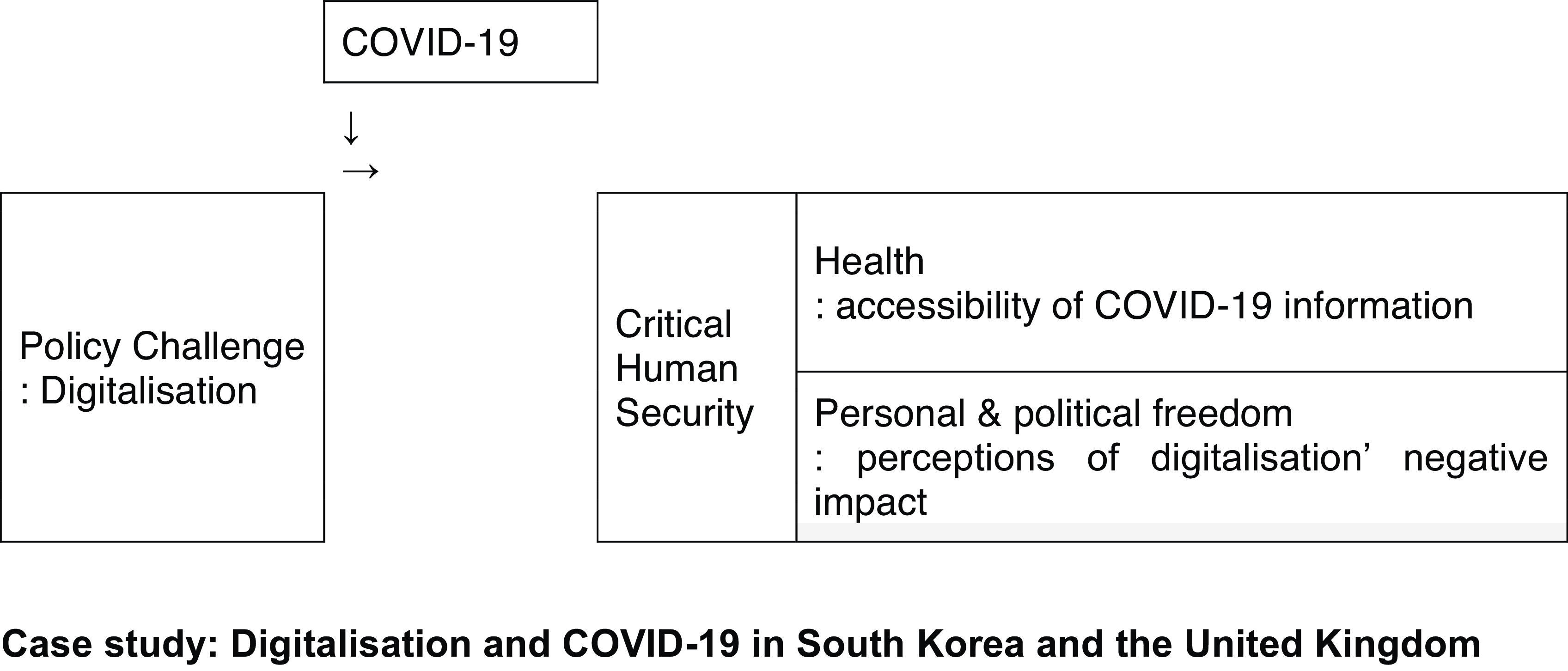
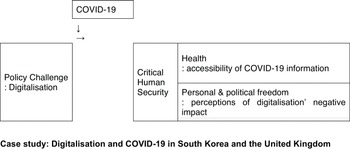
Figure from Figure 1 shows the research framework. In the health sector, the study investigates the accessibility of COVID-19 information for vulnerable groups. The effectiveness of contact tracing is limited by factors like ownership of mobile devices and use of contact tracing app information, influenced by socio-demographic variables (age, education, income, digital literacy) linked to digital exclusion (Jones and Thompson, Reference Jones and Thompson2021; Kim et al., Reference Kim, Choi and Lew2021). The research thus examines the use of COVID-19 information by vulnerable groups. Secondly, the personal and political freedom dimension in human security can be understood as encompassing human rights and political conditions. While this dimension includes various aspects, this study reviews citizens’ perceptions of digitalisation’s negative impacts related to privacy infringement. Although privacy laws provide a legal framework for contact tracing, its privacy integration largely depends on a country’s societal norms and values (Seto et al., Reference Seto, Challa and Ware2021). Notable differences were observed in information disclosure practices between South Korea and the United Kingdom during the pandemic’s initial stages. Contrary to South Korea’s open data-driven strategy, the United Kingdom restricted data sharing to health authorities, not making it publicly available (Fahey and Hino, Reference Fahey and Hino2020). Despite these differences, contact tracing sparked controversy in both nations regarding personal political freedom. In sum, emphasising both dimensions reflects the core pandemic-era debate on digital technology’s dual role in protecting individuals against the virus and potentially infringing on individual privacy.
Research framework.
Case study: Digitalisation and COVID-19 in South Korea and the United Kingdom.
Vulnerability in accessing health information via internet due to technological difficulty Footnote 6
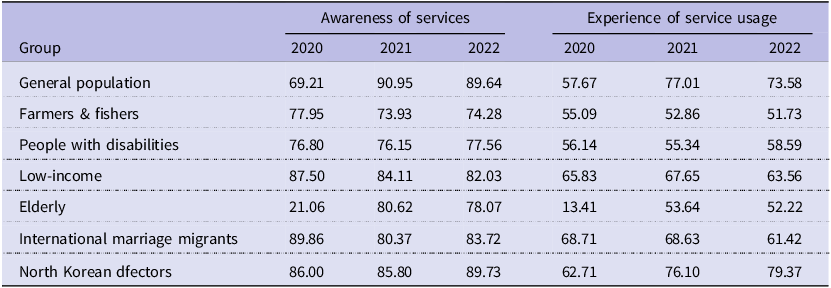
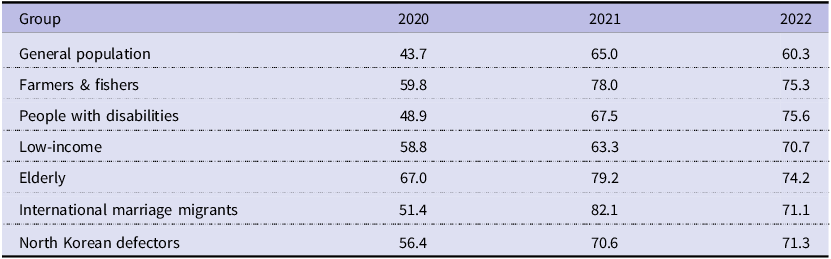
For the case study of South Korea, we employ public survey data from the National Information Society Agency (NIA) of South Korea, using secondary data for its analysis. The NIA collects and releases datasets about the digital divide with the approval of Statistics Korea (National Statistics Approval Number: 120017).Footnote 7 Table 1 delineates the awareness and usage patterns of COVID-19 information services among vulnerable demographics in South Korea. Overall, from 2020 to 2021, awareness and usage among the general populationFootnote 8 increased significantly. Nevertheless, the levels of the most vulnerable groups, except for the elderly, have remained stable without significant increases in usage. In fact, the usage among some vulnerable groups, such as farmers and fishers and international marriage migrants, continued to decrease. In 2022, despite a significant increase in the number of confirmed cases due to the spread of the Omicron variant, the usage among these groups continued to decline. It suggests that the government needs to make various efforts to encourage more active utilisation of vulnerable groups. Regarding the elderly group, only 21.06 per cent were aware of these information services in 2020, a figure substantially lower compared to other groups. Moreover, within this aware segment, the actual usage rate for the elderly stood at merely 13.41 per cent. It shows the elderly population demonstrates a notable vulnerability in both awareness and utilisation of COVID-19 information, distinctively more so than other minority groups. In 2021, there was an increase in awareness among the elderly, aligning them more closely with other vulnerable groups. The improvement can be derived from the government, private, and non-profit sectors’ efforts.
Awareness and usage experience of COVID information service in South Korea
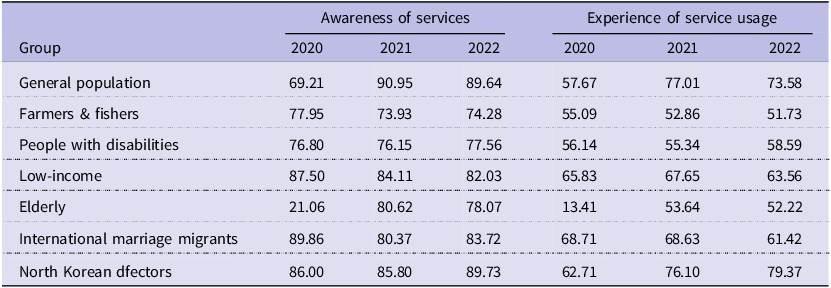
Source: National Information Society Agency.
Unit: percentage.
Note: An information service refers to internet and mobile-based information services that provide information about confirmed cases, the locations and timelines of infection, and COVID-19 screening clinics).
Since 2020, the Korean government has implemented the Digital Competency Centre to address the digital divide issue. The centre offers hands-on training in convenient locations for residents, such as administration and welfare centres or libraries. Furthermore, educational programmes are available at elderly welfare facilities, community childcare centres, farmer and fisher support centres, and multicultural family support centres for vulnerable groups. Between September 2020 and February 2021, around 428,000 people participated, and from April 2021 to December 2021, around 656,000 people participated, with 58 per cent of participants being aged fifty or older (Ministry of Science and ICT, 2022; Observatory of Public Sector Innovation, 2023). Beyond government efforts, private companies also contributed to enhancing the digital literacy of vulnerable groups by leveraging their expertise or in collaboration with social enterprises (Korea IT News, 2021). It implies that a crisis, such as a pandemic, offers significant motivation for the adoption of digital technologies, and recognition of the indispensability of these technologies can contribute to reducing the digital divide among vulnerable groups if the appropriate efforts by the public or private sector are made. Despite improvements, the actual service usage continued to lag behind. This discrepancy underscores the necessity of assessing the efficacy of information service promotion and system implementation, particularly in translating into actual usage. Additionally, it highlights the varied experiences across different demographic groups.
The reasons for not accessing or using internet information can vary, including costly internet fees, lack of mobile phones or internet devices, physical constraints, or negative perceptions about internet information. However, as indicated by the survey results presented in Table 2, the decisive factor appears to be a lack of knowledge or difficulty in using these technologies. Except for low-income individuals, people with disabilities, and North Korean defectors, the overall trend shows an increase in figures in 2021 followed by a slight decrease in 2022. This can be seen as a result of efforts by the public and private sectors to address the lack of knowledge or difficulty, as well as individuals’ efforts to adopt to digital transformation. Next, the elderly faced greater challenges in utilising services compared to other groups in 2020 and 2021. Furthermore, the proportion of low-income, people with disabilities, and North Korean defectors who felt difficulty gradually increased. Considering these findings, it is necessary to have sufficient discussions on whether the difficulty in acquiring information services led to vulnerability in responding to COVID-19. It also suggests the importance of simplifying ways to utilise the service and developing various forms of it.
Reasons for not utilising COVID-19 information service in South Korea: lack of knowledge or difficulty in usage
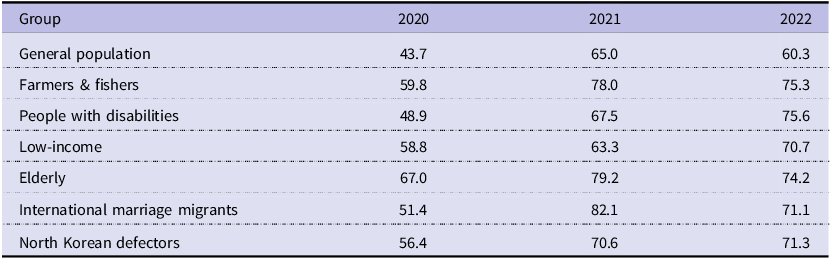
Source: National information society agency.
Unit: percentage.
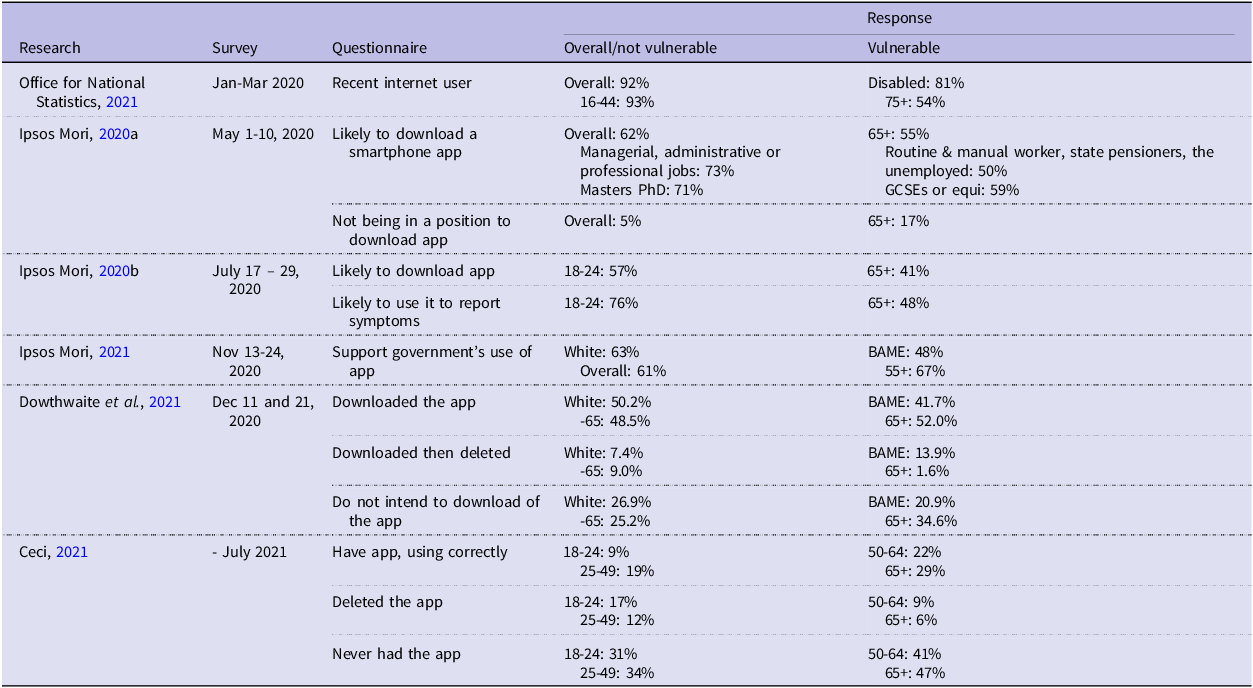
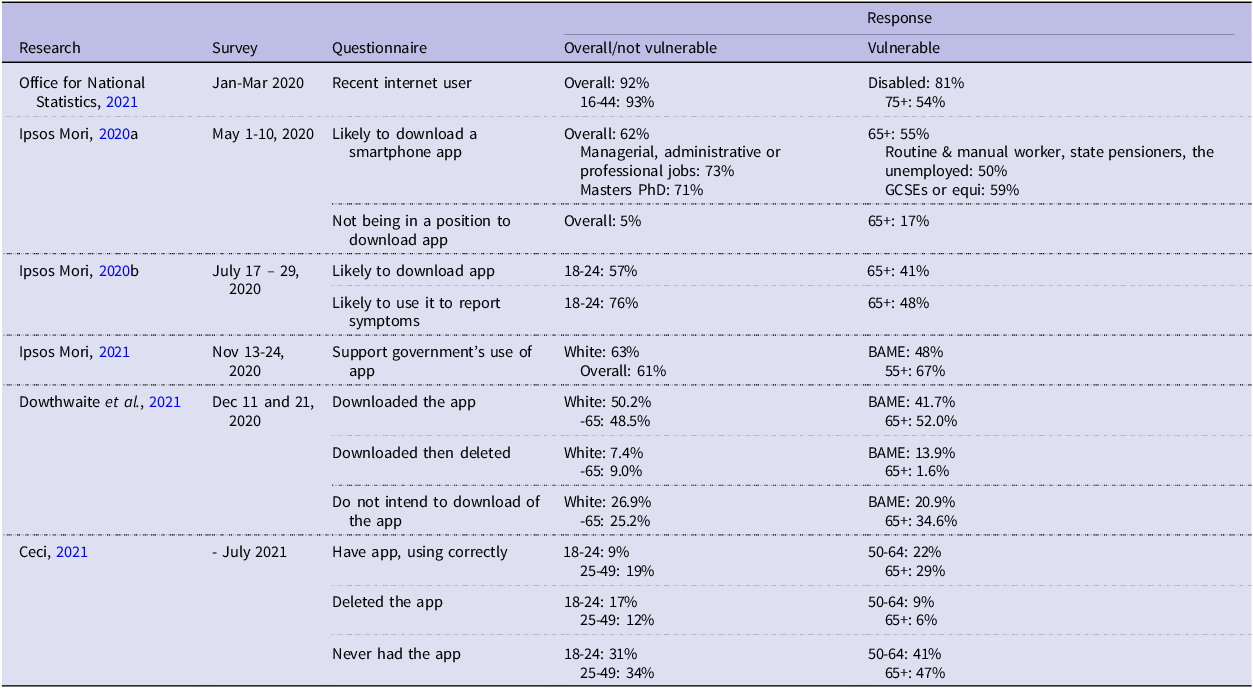
In the United Kingdom, due to the absence of publicly accessible survey data, the reported statistics are derived from multiple sources and summarised in Table 3. Lloyds Bank’s reportFootnote 9 shows that overall digital engagement in the United Kingdom has been steadily improving. It can be seen as the result of efforts in various fields. Over the past few years, initiatives or campaigns to provide devices to individuals experiencing digital exclusion have been implemented, mostly depending on public goodwill despite government support without funding (Baker et al., Reference Baker, Hutton, Christie and Wright2020; Holmes and Burgess, Reference Holmes and Burgess2021). To enhance accessibility to information about COVID-19, mobile network operators have waived data charges for accessing NHS website and app. Furthermore, many organisations have offered online courses to enhance digital skills, including tasks, such as sourcing health information online to help deal with COVID-19 (Baker et al., Reference Baker, Hutton, Christie and Wright2020). However, the Office for National Statistics (2021) indicates that disparities persisted in the proportion of recent internet users despite widespread internet and smartphone usage. In this context, health inequalities exacerbated by the digital divide became a significant issue prior to the introduction of contact tracing applications in the United Kingdom.
Study on the recognition and experience of COVID app among vulnerable populations in the United Kingdom
Source: Ipsos Mori, 2020a, 2020b; Ceci, Reference Ceci2021; Dowthwaite et al., Reference Dowthwaite, Fischer, Perez Vallejos, Portillo, Nichele, Goulden and McAuley2021; Ipsos Mori, 2021; Jones & Thompson, Reference Jones and Thompson2021; Office for National Statistics, 2021.
Note: BAME refers to ‘Black, Asian, and Minority Ethnic’.
After the launch of a smartphone contact tracing app, distinctions in the uptake and utilisation of the app became evident across different demographic categories, particularly regarding willingness to install and use these apps. Dowthwaite et al. (Reference Dowthwaite, Fischer, Perez Vallejos, Portillo, Nichele, Goulden and McAuley2021) found that individuals aged sixty-five and older were less prone to downloading the app in comparison to younger demographics. Ceci (Reference Ceci2021) reported that 29 per cent of the over-sixty-five age group downloaded and used the app correctly, yet 47 per cent in this group had no experience using it. Regarding ethnic differences, Dowthwaite et al. (Reference Dowthwaite, Fischer, Perez Vallejos, Portillo, Nichele, Goulden and McAuley2021) observed that while BAME (Black, Asian, and Minority Ethnic) respondents (53.0 per cent) had a higher likelihood of close encounters with COVID-19 compared to White respondents (42.3 per cent), they were less inclined (41.7 per cent) to install the app than White individuals (50.2 per cent). Jones and Thompson (Reference Jones and Thompson2021)Footnote 10 analysed the perception of citizens in Wales and identified several factors for abstaining from using the app, including lack of ownership, desire, or ability to purchase a smartphone, challenges in smartphone usage, and misunderstanding of app installation and operation. To accommodate those not using digital services, England introduced a phone-based service for tracing (Department of Health and Social Care, 2023).
Personal and political freedom
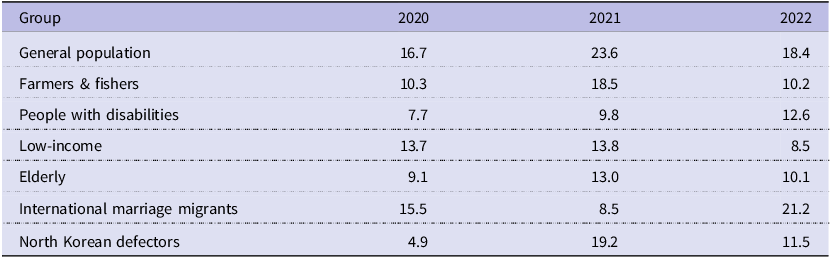
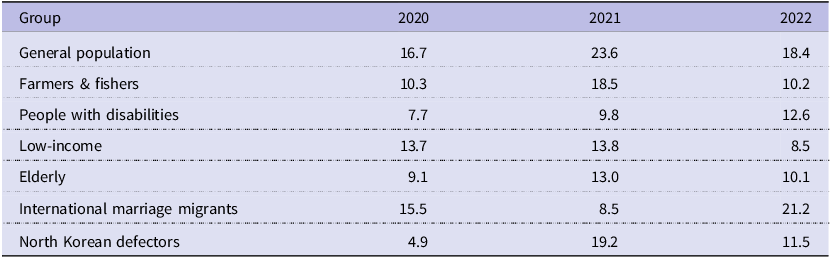
In South Korea, a nationwide survey conducted in 2020 revealed that 84 per cent of respondents favoured transparent information provision by the government regarding the movements of infected patients (Moon, Reference Moon2020). However, Table 4 shows that the proportion of respondents who refrained from utilising internet/mobile information services due to concerns about the adverse effects of digitalisation was found to be relatively high. The overall trend indicates that the proportion rose in 2021, which can be attributed to the prominence of issues such as bullying from online trolls during the initial stage of the pandemic. However, it then declined in 2022, which may be as a result of the government’s efforts to address the public’s concerns and the public’s adaption to new technologies. Especially, the QR code system, safe call number, and personal security number, introduced by early 2021 to address potential privacy infringement issues in contact tracing, were utilised until the government changed its epidemiological investigation methods in 2022. Nevertheless, concerns of people with disabilities and international marriage migrants increased in 2022. It implies that factors influencing concerns about the adverse effects of digitalisation may vary by group, indicating the necessity of differentiated approaches for each group.
Reasons for not utilising COVID-19 information service in South Korea: concerns about adverse effects of digitalisation
Source: National information society agency.
Unit: percentage.
Note: An information service refers to internet and mobile-based information services that provide information about confirmed cases, the locations and timelines of infection, and COVID-19 screening clinic. Adverse effects of informatisation include spam (advertising) emails, private data leaks, and inappropriate information.
In the United Kingdom, adopting the centralised approach for their app led to public concerns and debates concerning infringement, surveillance, and the scope of data access (Samuel et al., Reference Samuel, Lucivero, Johnson and Diedericks2021; Samuel et al., Reference Samuel, Roberts, Fiske, Lucivero, McLennan, Phillips, Hayes and Johnson2022). According to a survey conducted in May, approximately 75 per cent of the public expressed that they could download and utilise an app but 52 per cent of respondents expressed doubt in the government’s capability to ensure the security of their data (Duffy, Reference Duffy2020). In another survey conducted in May, respondents mentioned that distrust in the government and apprehensions about privacy and data security are significant factors affecting their reluctance to use the app (Jones and Thompson, Reference Jones and Thompson2021; Williams et al., Reference Williams, Armitage, Tampe and Dienes2021). Thus, the government decided to shift from the centralised approach to the decentralised approach, and the decentralised app was launched in September 2020 (Lewandowsky et al., Reference Lewandowsky, Dennis, Perfors, Kashima, White, Garrett, Little and Yesilada2021).
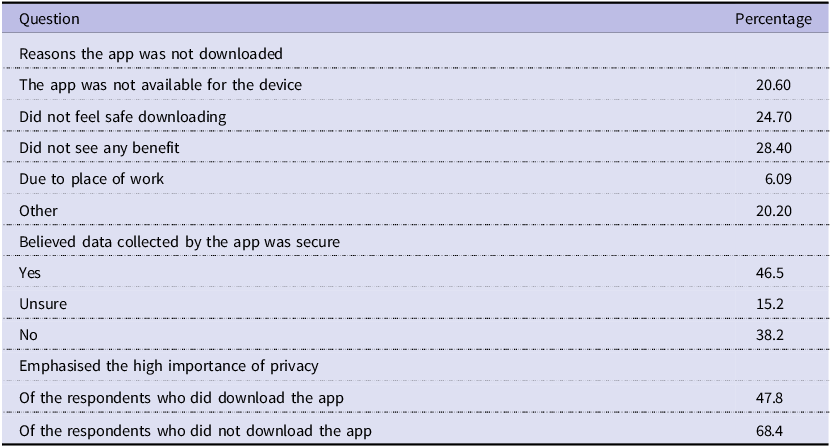
Despite these efforts, it was observed that many people were still hesitant to use it due to concerns regarding private infringement. One of the reasons for users’ hesitancy in downloading the app was misconceptions, fearing that it could pinpoint individuals with COVID-19 and potentially misuse their personal information (Panchal et al., Reference Panchal, Singh and Rodriguez-Villegas2021; Williams et al., Reference Williams, Armitage, Tampe and Dienes2021). In addition to the misconception, many people still did not feel safe downloading the app. According to Panchal et al. (Reference Panchal, Singh and Rodriguez-Villegas2021) (Table 5), there was a substantial proportion of respondents who mentioned safety as the reason for not downloading the app (24.7 per cent), and there was also a notable proportion who did not ensure the security of the data collected by the app (43.4 per cent). Interestingly, 68.4 per cent of non-downloaders emphasised the importance of privacy, whereas 47.8 per cent of app downloaders considered privacy to be of utmost importance.Footnote 11 These findings could be attributed to the previous development setbacks, which had an impact on public trust regarding the security and privacy of the app (Panchal et al., Reference Panchal, Singh and Rodriguez-Villegas2021).
Reasons for not utilising COVID-19 app and perception of privacy in England

Source: Panchal et al., Reference Panchal, Singh and Rodriguez-Villegas2021.
Note: The survey was conducted from December 2020 to January 2021.
Discussion
The deployment of digital technologies amid the COVID-19 pandemic was characterised by the fusion of new technologies with an amalgamation of physical and digital infrastructures. The proficient application of these technologies was posited to improve the efficacy of COVID-19 countermeasures. Nonetheless, disparities in technology adoption between South Korea and the United Kingdom were observed. This article delineates the ramifications and hurdles of digitalisation amidst the COVID-19 pandemic, alongside its future repercussions, through the lens of a critical human security framework and a comparative case study methodology.
Primarily, individuals grapple with challenges in assimilating novel digital technologies, attributable to deficiencies in knowledge or experience. The pandemic served as a catalyst for the utilisation of digital technologies. Combined with the efforts of the government and society, this propelled their adoption even among groups vulnerable to these technologies. Despite acknowledging their indispensability, a fraction of the populace still remained non-users. This indicates that swift governmental adoption of digital technologies does not guarantee a potent pandemic response, as the technology usage was swayed by sociodemographic determinants, digital literacy, and overarching concerns pertaining to information security. Thus, it is inferred that despite the acknowledgment of human security issues and endeavours to surmount these challenges, various kinds of policy reinforcement for vulnerable groups are imperative.
Secondly, the discourse on personal and political freedom within the area of digitalisation illustrated that public resistance to pervasive adoption of digital technologies as a multifaceted issue, and not readily surmountable. It accentuates the constraints of a top-down digital technology adoption strategy, evident in the impediments faced in the absence of widespread public endorsement of these policies. Moreover, within the same human security framework, it is pivotal to acknowledge the dualistic role of digital technologies in both bolstering human security and engendering novel forms of insecurity. Although digital technologies were instrumental in mitigating the infection trajectory, it is essential to recognise that their benefits were not uniformly distributed across all sociodemographic cohorts. Without a centralised government response to address digital exclusion, there have been emerging attempts from charities and the voluntary sector to meet these needs within the UK, such as the launch of the Age UK Digital Champion Programme (2022–2026), which seeks to help older Britons to develop their digital literacies through training and loans of digital technology like tablets (Age UK, 2023).
Conclusion
The promotion of digital technology’s necessity and utilisation is instrumental in fortifying human security. Yet, with the continued concerns, such as exclusion of certain individuals amidst heightened awareness and privacy infringement, augmented attention and policies are indispensable to enhance human security. Specifically, we cannot merely address the issues of human insecurity faced by groups marginalised by new digital technologies through the utilisation of outdated technologies. Instead of encouraging individuals who cannot use various mobile apps to revert to using traditional telephones, it would be more efficacious to provide them with apps that are user-friendly, thereby familiarising them with the use of smartphones. Additionally, for those who reject new technologies due to concerns over privacy violations, it is essential to require only the most necessary information to allow them to benefit from these new technologies. In essence, the reluctance to use digital technologies should not stem from concerns of human insecurity; rather, there should be a heightened impetus towards the development of user-friendly technologies that can enhance human security. This is a lesson that can be learned from the case studies of South Korea and the United Kingdom, underscoring the need for advancing technologies that not only respect human security concerns but also contribute positively to their alleviation.
Supplementary material
The supplementary material for this article can be found at https://doi.org/10.1017/S1474746424000678
Acknowledgement
This work was supported by the Economic and Social Research Council [Grant number ES/W010739/1 Critical Human Security and Public Policy Challenges in a Post-Covid World: UK and South Korea]


 Open access

