

Introduction
Over the last half-century, there have been massive improvements in women’s educational attainment and labour market participation, underpinned by changes in law, organisational practice, and community attitudes. Women now comprise almost half of Australia’s paid workforce, and the gender balance has shifted in many formerly male-dominated industries and occupations, including in large professions like law and accounting, and in some management and leadership roles (ABS 2024; Borland Reference Borland2022). Yet these major achievements have failed to close the gender pay gap; on all key measures, women’s earnings continue to sit below men’s (ABS 2024).Footnote 1
Gendered pay disparities, and the reasons they persist, have been examined in a substantial international literature suggesting a range of drivers (Bishu and Alkadry Reference Bishu and Alkadry2017). However, in Australian research and policy, occupational segregation has emerged as a focal point, with the pay gap linked to women’s continued over-representation in a narrow range of highly feminised occupations at the lower end of the labour market, where pay and career mobility are low and many roles are part-time (Women’s Economic Equality Taskforce 2023; Borland Reference Borland2022, CEDA 2023; KPMG 2022; Ling and Colquhoun Reference Ling and Colquhoun2021). Indeed, despite women’s inroads into several male-dominated occupations, the gender composition of traditionally feminised jobs, where large numbers of women are employed, has barely altered. Surprisingly, some jobs have become even more feminised since the 1980s, including large occupations such as child care, reception work, and primary school teaching (CEDA 2023). Further, across the economy, the proportion of total hours worked by women who are in feminised jobs has been found to increase, from 37% of all women’s working hours in 1986–87 to 44% in 2021–22 (Borland Reference Borland2022).
The persistence of segregation may relate to ongoing patterns of socialisation and human capital formation, which deter both women and men from gender-atypical employment, along with gendered family structures and lifestyle preferences, differences in working time and other structural features of male and female-dominated occupations, and employer discrimination (Moskos Reference Moskos2020; Hakim Reference Hakim2002; Cha Reference Cha2013). Some studies also point to the limitations of gender equality policies and strategies, which have tended to focus on achieving the cultural and structural changes required to enable women to enter and succeed in male-dominated jobs rather than addressing the features and dynamics that maintain feminisation and the low status of traditional areas of women’s employment (Holbrow Reference Holbrow2022). Promoting women’s access to roles traditionally held by men has been observed to reify typically masculine fields, and neglect the need to alter the composition and dynamics of feminised jobs, reinforcing their inferior status and reward (Holbrow Reference Holbrow2022). Women’s continued clustering in a narrow range of occupations considered low status, including in care-related jobs in health and social assistance industries and in education, maintains the gender pay gap as skills in these jobs tend to lack visibility and to have low valuation (Grimshaw and Rubery Reference Grimshaw and Rubery2007; Cortis et al Reference Cortis, Naidoo, Wong and Bradbury2023). The ‘five C’s’ of caring, cashiering, catering, clerical work, and cleaning continue to characterise large, highly feminised jobs (Ledwith Reference Ledwith2012, 187), which have been described as ‘ghetto’ occupations given their low status, poor pay, narrow content, and poor mobility (Truss et al Reference Truss, Alfes, Shantz and Rosewarne2013).
In this article, we are concerned with one set of these feminised occupations. While other research has highlighted the undervaluation of direct caring roles including in aged care and disability (Junor Reference Junor2021; Himmelweit Reference Himmelweit1999; Macdonald et al Reference Macdonald, Bentham and Malone2018; Cortis et al Reference Cortis, Macdonald, Davidson and Bentham2018), we aim to illuminate the wider range of job roles which draw on traditional feminine responsibilities of supporting others, and which are susceptible to undervaluation. Specifically, we focus on a set of feminised service roles, which have been considered ‘ancillary’ on the basis that they supplement and are secondary or subordinate to the contributions of managers and the professions (Armstrong et al Reference Armstrong, Armstrong and Scott-Dixon2008; Crane Reference Crane2022). Derived from the Latin ancilla (maidservant), the term ‘ancillary’ carries its strongly gendered, servile roots into contemporary health and education to refer to receptionists, clerical staff and administrators, along with aides, porters, cleaners, and others considered unskilled relative to professional and managerial colleagues, and relegated to separate grading structures and part-time work (Crane Reference Crane2022; Munro Reference Munro and Munro1999). This set of occupations appears vulnerable to undervaluation for some similar reasons to frontline carers, including assumptions that tasks are suited to women’s ‘natural’ attributes, and because they involve complex interpersonal and communication skills, which may lack formal recognition. Indeed, as ancillary work occurs behind the scenes to keep health and other systems functioning and may involve tasks which are difficult to describe and may not be formally delegated, it is often invisible, including to those who benefit (Suchman, Reference Suchman1995). Here we explore features of ancillary occupations, focusing on reception work. In doing so, we highlight the need to broaden Australian strategies to make women’s skills visible and to address undervaluation and promote gender pay equity.
First, we outline recent legislative changes which renew opportunities to progress gender pay equity by casting regulators’ attention on Australia’s highly feminised occupations and industries. Second, we draw on the occupational analysis used by the Fair Work Commission to prioritise action on equal pay (Cortis et al Reference Cortis, Naidoo, Wong and Bradbury2023) and show that among very highly feminised occupations are many low-paid ancillary service and administrative roles. In health care and education, for example, there are several occupations in which women comprise 90% of workers or more, reflecting Australia’s negligible progress in attracting men into typically female jobs, including in the occupations of reception and office management, education aides, dental assistant work, and veterinary nursing.
Finally, the paper narrows to provide more detailed exploration of one quintessentially female and large ancillary occupation: health care receptionists, which includes medical receptionists in general practice, hospitals, community health, allied health, and specialist medical practice. Cortis et al (Reference Cortis, Naidoo, Wong and Bradbury2023) acknowledged that their methodology fragmented reception work, by focusing on occupations in industry classes. Other than receptionists in hospitals and general practice, receptionists in other industry classes did not meet volume thresholds to be considered priority occupations in their analysis. The dispersal of receptionists across multiple industry classes reduced volume-based prominence in any one category in the analysis,Footnote 2 and so receptionists were not identified as a priority occupation for the Fair Work Commission to more closely examine.
Although empirical studies of receptionist work and receptionists’ experiences at work are warranted, our aims here are more modest. By reviewing the small scholarly literature on receptionists and the skills involved, we provide an example of the ways women’s ancillary occupations can be susceptible to undervaluation, which in turn reveals the need for regulatory strategies to address undervaluation in a wider range of contexts. Studies of receptionists have repeatedly, and in multiple settings, identified skills associated with relational and coordination work which are typically associated with women’s natural attributes, and which lack formalisation and visibility as learned skills. We illuminate these ‘invisible’ skills using the conceptual framework developed and elaborated by Junor et al (Reference Junor, Hampson, Piercy, Ewer, Barnes, Smith and Ogle2009) and Junor (Reference Junor2021). In doing so, we recognise that while reception work is not a current focal point of industrial strategies to promote equal pay, recognising skill and work value in ancillary occupations, in addition to highly feminised direct care work, offers to benefit large numbers of women workers and enable progress toward achieving gender pay equity.
Fair Work Legislation Amendment (Secure Jobs, Better Pay) Act 2022
The introduction of the Fair Work Act 2009 expanded Australia’s equal pay principles and underpinned real material advances including in social and community services (Charlesworth and Macdonald Reference Charlesworth and Macdonald2015; Cortis and Meagher Reference Cortis and Meagher2012). Recent amendments have sharpened the Fair Work Commission’s gender equality powers and recast attention to Australia’s highly gender-segregated labour market. By making gender equality an objective of the Act, the Fair Work Legislation Amendment (Secure Jobs, Better Pay) Act 2022 introduced an explicit requirement for Commission decisions about minimum wages and modern awards to consider gender equality, effectively elevating gender equality to a high-level objective, on par with other legislative goals of national ‘productivity’ and ‘economic growth’ (DEWR 2022a). The Amendment requires that decisions in relation to modern awards and pay must be free from gender-based assumptions, including past assumptions about work value, and so provides an avenue through which to address potential undervaluation in feminised occupations (DEWR 2022b). Furthermore, the amendment empowers the Commission to increase wages to promote equal pay of its own volition, outside of resource-intensive applications for equal pay orders, and without a requirement to adopt methodologies to compare female and equivalent male-dominated occupations.Footnote 3
Data provide an important foundation for the Commission’s prudent use of these powers and can help ensure regulatory efforts target areas of employment where there is a high likelihood that modern award minima have not been fairly set and are biased by gender. To this end, the Commission’s Decision in the Annual Wage Review 2022–23 (Fair Work Commission 2023) outlined the need for an evidence-based approach and instigated research to identify priority occupations and industries where gender-based occupational segregation is highly prevalent. The research first involved compiling and assessing fine-grained national evidence to pinpoint which occupations and which industries are highly segregated, and to identify their characteristics, as an indicator of risk that they have been undervalued in work-value assessments and affected by gender pay equity issues. Using ABS data drawn from the Census of Population and Housing (ABS 2021) and from the Employment, Earnings and Hours survey (ABS 2023), Cortis et al (Reference Cortis, Naidoo, Wong and Bradbury2023) developed lists of feminised occupations in feminised industries, and showed the extent to which low pay, part-time work, and award-reliance was disproportionately high in highly feminised jobs. A Stage 2 report (conducted by Fair Work Commission researchers) then examined the historical development of the Awards covering the occupations identified in Stage 1, including their histories of wage fixation, to further understand whether wages had been set in ways that were free from gender bias (Fair Work Commission 2024a).
This programme of research identified priority areas to inform the Commission’s next steps in reviewing modern awards and minimum wages on work value grounds. The research drew attention to a range of feminised occupations, including several frontline jobs involving care and nurturing such as nursing and midwifery, childcare, and aged and disabled care, which have previously been recognised as susceptible to undervaluation and have received some industrial attention, albeit without full resolution of segregation and pay equity issues.Footnote 4 However, the analysis also extends the gaze of advocates, scholars, and the Commission beyond the feminised frontline care occupations subject to previous work value and pay equity proceedings to include several jobs exhibiting extreme levels of feminisation but which are located outside or on the periphery of the care economy. The range of occupations is shown in the following section before we narrow to focus on a set of jobs fragmented by the methodology applied in Cortis et al Reference Cortis, Naidoo, Wong and Bradbury2023, but which exhibit very high levels of feminisation and appear vulnerable to undervaluation: health care receptionists.
Segregated occupations
The analysis of Cortis et al (Reference Cortis, Naidoo, Wong and Bradbury2023) identified 29 priority occupations, doing so with unprecedented granularity by identifying highly feminised occupational units (4 digit ANZSCO) (ABS 2022) within segregated industry classes (4 digit ANZSIC) (ABS 2013). Criteria were that occupations were large (containing over 10,000 people); very highly feminised (over 80% female); and located within feminised industry classes (over 60% female). The 29 priority occupations include registered nurses and midwives in hospitals; teachers and education assistants in schools; child carers; beauty therapists; veterinary nurses; dental assistants; receptionists and clerks in hospitals; sales assistants in pharmacies and clothing stores; clothing retail managers; and many more occupations. Together these very highly feminised occupations employ over 1.1 million workers and constitute over 9% of the workforce.
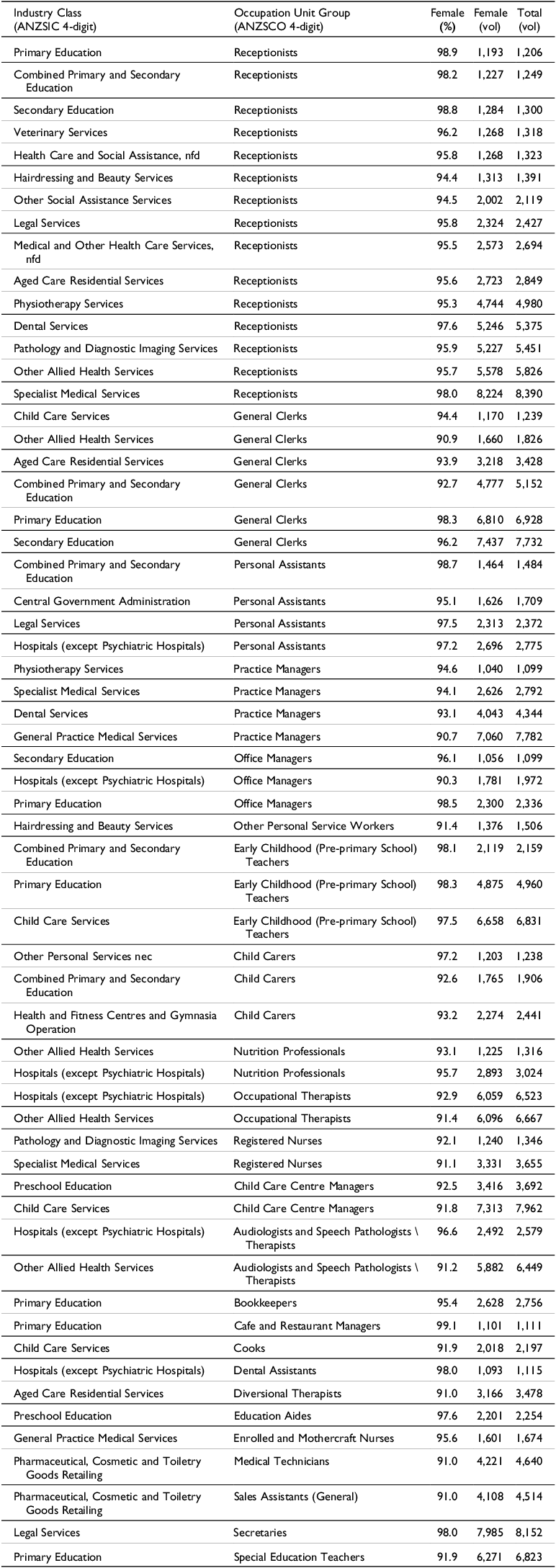
An artefact of the criteria applied, however, is that large occupational groups located across multiple industry classes were not the focus. Rather, the focus was on occupational groups within industry classes, and groups were excluded where volumes of workers in an industry class fell below the 10,000 thresholds used to define large occupations. While the focus of Cortis et al (Reference Cortis, Naidoo, Wong and Bradbury2023) was on large occupations, Census data also reveal that there are several occupation groups, which are at least 90% female and located in smaller feminised industry classes. Table 1 shows that among those containing less than 10,000 workers, many could be described as ancillary, based on their supportive function. Indeed, there were 15 groups of receptionists (in addition to the two larger categories of medical receptionists in hospitals and in general practice identified by Cortis et al Reference Cortis, Naidoo, Wong and Bradbury2023); 6 smaller groups of general clerks (in addition to clerks in hospitals which feature in the priority list of 29 occupations),Footnote 5 4 groups of personal assistants, and 3 groups of office managers. Each was very highly feminised but when treated singularly, fell below the volume threshold of 10,000 workers used to identify priority occupations (see Cortis et al Reference Cortis, Naidoo, Wong and Bradbury2023, 91). When considered together, however, these surpass the volume threshold and constitute large groups of workers within education and health industries. Furthermore, these occupations are also likely to be present and exhibit high levels of feminisation in balanced and masculinised industries; however, this was beyond the scope of Cortis et al (Reference Cortis, Naidoo, Wong and Bradbury2023), which focused on feminised occupations in feminised industries only.
Occupation groups by industry class which are 90% and over female, and below 10,000 people
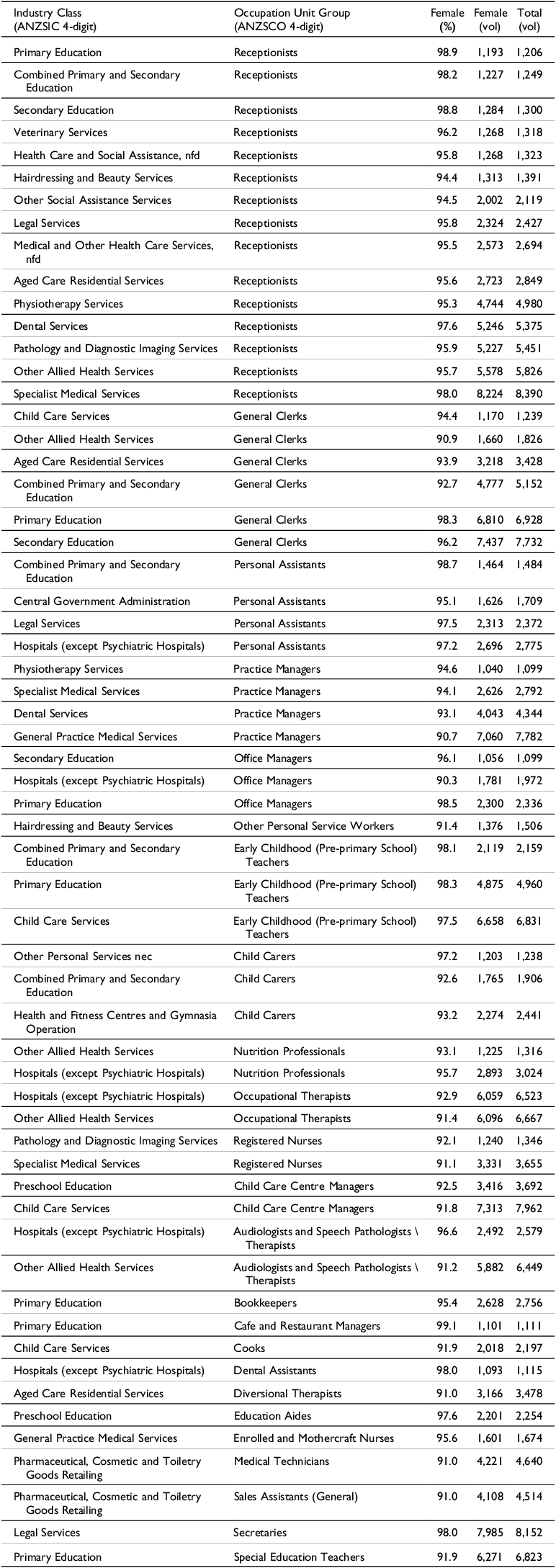
Note. Data is extracted from Table B.1 in Cortis, Naidoo et al Reference Cortis, Naidoo, Wong and Bradbury2023, 91.
Source: ABS 2021 Census - counting persons, 15 years and over; person records, accessed via Table Builder.
A closer look at reception work, a quintessential ‘ancillary’ occupation
As shown above, Census data show receptionists are a highly feminised occupational group present across multiple feminised industry classes, including in health care and education. Frequently, receptionists exhibit levels of gender segregation which are on par with or higher than the occupations identified as priorities for closer examination by the Fair Work Commission, as part of its gender undervaluation – priority awards review, which so far covers five modern awards.Footnote 6 Here we draw on the wider data and literature to take a closer look at the characteristics, skills, and activities involved in health care reception, given the recurrence of this occupational category in the analysis above, its high level of feminisation, and the opportunity for its undervaluation to be addressed including through consideration of the Health Professionals and Support Services Award.
Receptionists feature in a relatively small body of literature spanning over half a century, in which they have been described as an ‘ancillary’ workforce, whose administrative and technical work is embedded in gendered and sexualised hierarchies that support and enable managers and the professions (Pringle Reference Pringle1989). In the context of the UK’s National Health Service for example, receptionists are among a large and diverse category of ancillary staff who perform essential on-clinical tasks, which includes porters, cleaners, and caterers. Together these occupations, which maintain system functioning and may involve patient/client contact, have been observed to be overlooked in policy discussions and in popular representations of health care systems (Crane Reference Crane2022).
Armstrong et al (Reference Armstrong, Armstrong and Scott-Dixon2008) point out that contemporary use of the term ‘ancillary’ reflects constructed boundaries around central and peripheral health care activities negotiated via relations of power in which doctors have been designated as central authorities given their focus on diagnosis and intervention, while those outside these professional boundaries are considered peripheral, which obscures their critical contributions to patient care (Armstrong et al Reference Armstrong, Armstrong and Scott-Dixon2008, 62). Indeed, the occupational power of the health professions has been understood to rely on a constructed division of labour that has rested on circumscribing the work of non-medical occupations, framing supportive work as ‘routine’, with low levels of skill and responsibility (Armstrong et al Reference Armstrong, Armstrong and Scott-Dixon2008; Halpern Reference Halpern1992). Like Crane (Reference Crane2022), Armstrong et al (Reference Armstrong, Armstrong and Scott-Dixon2008) identified several categories of ancillary workers in Canadian health care, including those providing personal care, food services, cleaning, recordkeeping, clerical work, and reception, all of which are defined and organised as women’s work, with low value attached to the jobs. As well as feminisation, workers’ low socioeconomic status, the lack of systematised theory, and presence of job tasks which are fluid, undocumented, unacknowledged and invisible mean that these ancillary workers are susceptible to domination, skill misrecognition, and undervaluation (Halpern Reference Halpern1992; Pringle Reference Pringle1989; Morrison Reference Morrison2021; Crane Reference Crane2022).
As indicated above, receptionists in two industry classes (hospitals and general practice) were identified in the list of highly feminised Australian occupations developed by Cortis et al (Reference Cortis, Naidoo, Wong and Bradbury2023, see Table 5.1), along with other ancillary occupations such as dental assistants, education aides, and veterinary nurses. However, receptionists are of particular interest because of the large number of industry classes in which they feature albeit in lower volumes, and due to additional features evident in Census data.
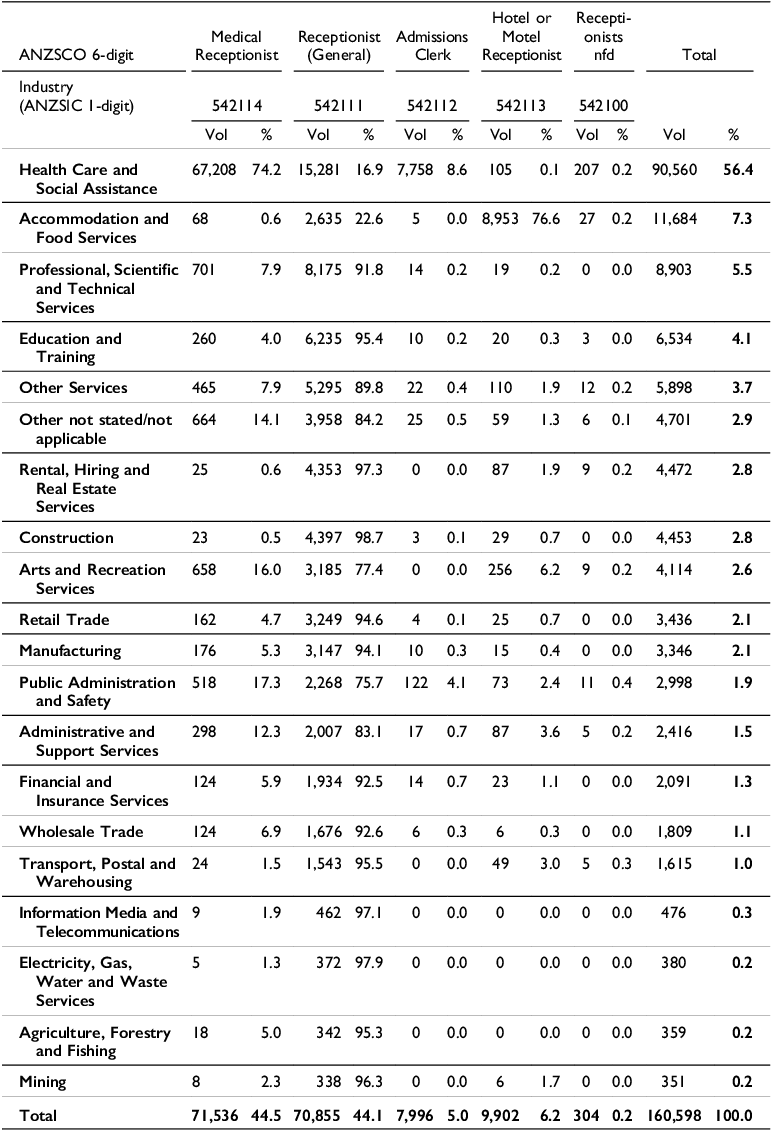
Census data attest to high levels of feminisation among receptionists in the five health care industry classes where they are employed (Table 2). Together, there are over 160,000 receptionists (ANZSCO 5421) which are approximately 93.5% female (Cortis et al Reference Cortis, Naidoo, Wong and Bradbury2023, see Table A.3). Of these, more than half (56%) of receptionists are located within the health care and social assistance industry. ‘Medical receptionists’ constitute the majority of receptionists in health care and social assistance (74.2%) followed by general receptionists (16.9%) and admissions clerks (8.6%).
Reception occupation groups, by industry

Note. Cells in this table have been randomly adjusted to avoid the release of confidential data.
Source: 2021 Census - counting persons, 15 years and over; person records, accessed via Table Builder.
As such, we now narrow focus to receptionists in Australia’s health care and social assistance industry. This includes a range of healthcare services provided through the industry subdivisions of hospitals (ANZSIC code 84), general and specialist medical services, and services offered by dentists, optometrists, physiotherapists and other allied services (85), aged care and other residential care services (86), and social assistance services (87), which incorporates child care services and other social assistance. In doing so, we draw attention to women’s over-representation and some key characteristics of receptionists (using Census data). We then draw on the wider scholarly literature to explore the range of skills that receptionists utilise, including those ‘invisible’ interpersonal and organisational skills deployed to support patients and clients, smooth and co-ordinate work processes, and bolster the productivity of (traditionally male) managers and professionals (Kanter Reference Kanter1993; Holbrow Reference Holbrow2022).
Receptionists in Australia
In Australia, receptionists may hold a range of job titles. They may be called ‘executive assistants’ or ‘secretaries’, be combined with other office-based roles (e.g. ‘receptionist/administrator’), or have specialised titles, like ‘medical receptionists’ in health care, or ‘guest services managers’ in hospitality. In health care, receptionists are described under ANZSCO 5421 as receiving and welcoming visitors or patients, responding to inquiries and requests, managing schedules, and coordinating facilities and supplies. Usually, their work is to help facilitate the work of higher-status workers, including health professionals and managers.
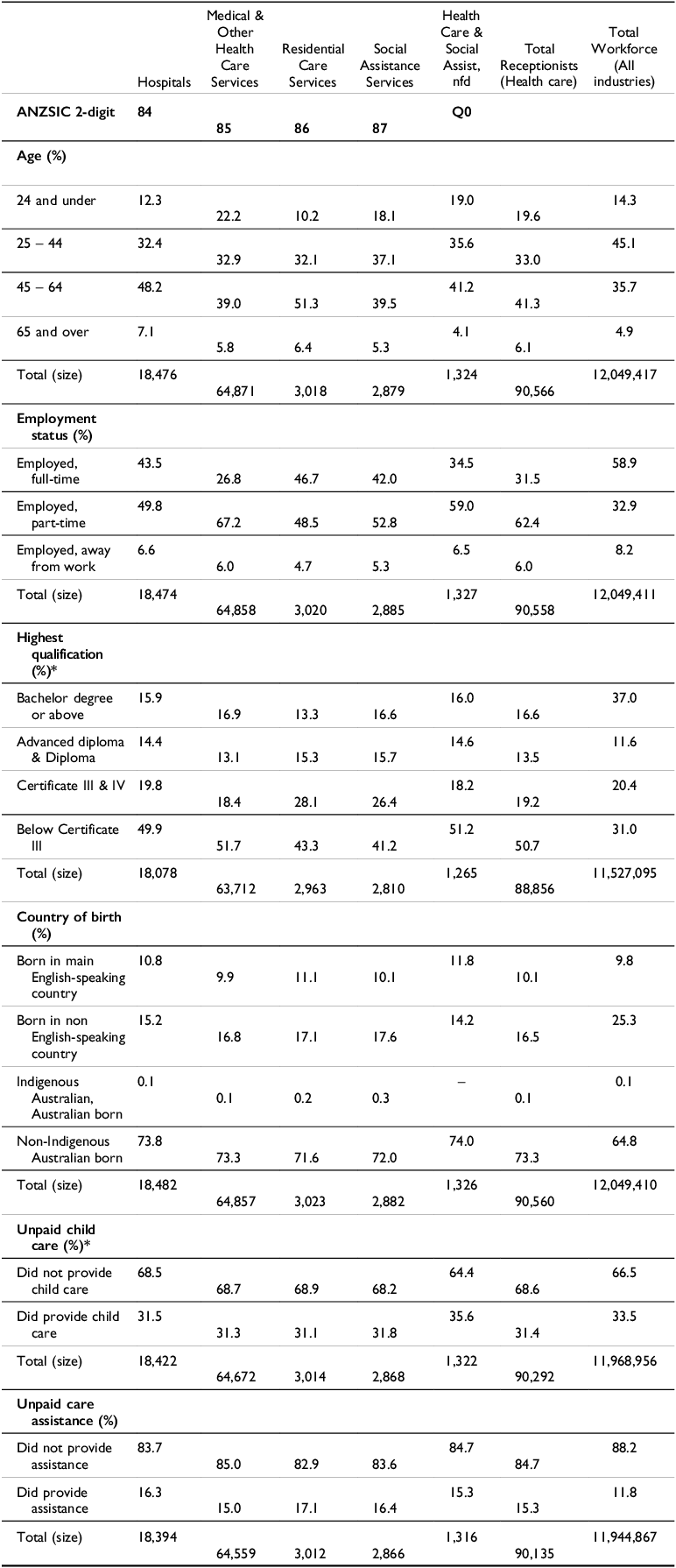
The Census data in Table 3 reveal important insights into the demographic profile of receptionists in health care. Compared with all industries, health care receptionists have slightly higher proportions in age cohorts which are younger (24 and under) or older (65 and over). They are more likely to be born in Australia and less likely to be born outside the main English-speaking countries. Well over half of health care receptionists (62%) work on a part-time basis but this ranges from 49% in the residential care industry subdivision to 67% among receptionists working in medical and other health care services. Part-time work is much more common among receptionists (62%) than in the wider workforce (33%).
Demographic characteristics of receptionists in health care
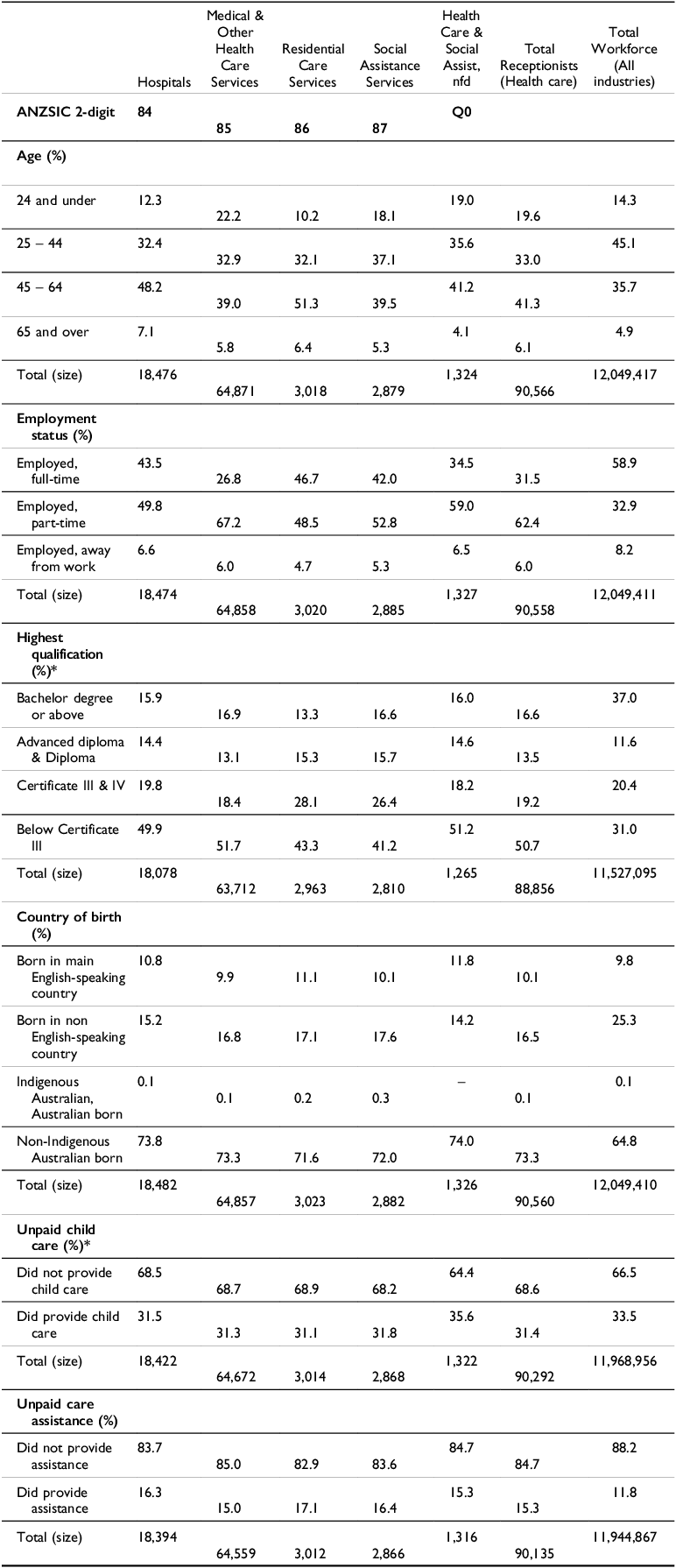
Note. Cells in this table have been randomly adjusted to avoid the release of confidential data. Hence, totals are based on component sums and are not the population sizes of receptionists in each health care industry class.
Total receptionists are employed full-time, part-time or away from work in the health care and social assistance industry. Total workforce is for all occupations across all industry sectors. Main English-speaking country includes people born in the United Kingdom, Ireland, New Zealand, Canada, and the United States of America. Main non-English speaking country includes those born in all other countries and people born in Australia.
Categories marked with an * do not include those not stated.
Source: ABS 2021 Census of Population and Housing - counting persons, 15 years and over; person records, accessed via Table Builder.
Approximately one in three receptionists in health care spend time caring for a child under 15 years (in most cases, their own) and at least 15% provide unpaid care to others because of a disability, long-term illness or problems related to old age. The Census estimates also show that the majority of receptionists have low educational qualifications compared to the total workforce, with more than 40% qualified below a Certificate III level in each industry subdivision, increasing to 50% amongst those in hospitals and medical and other health care services. In contrast to the total workforce, where 37% have a bachelor degree or above, this is the case for only 17% of receptionists.
These general descriptive profiles of receptionists in health care flow onto their employment and earning profiles. Earnings may be expected to be low based on the Health Professionals and Support Services Award 2020 which sets minimum rates of pay and conditions. Under this Award, reception work is listed as an indicative role for Level 3 of the support service stream, and is described as undertaking ‘a range of basic clerical functions within established routines, methods and procedures’. Level 3 receptionists would earn, as of late 2024, a minimum rate of $26.85 per hour (ordinary hours), a little above the minimum wage ($24.10).
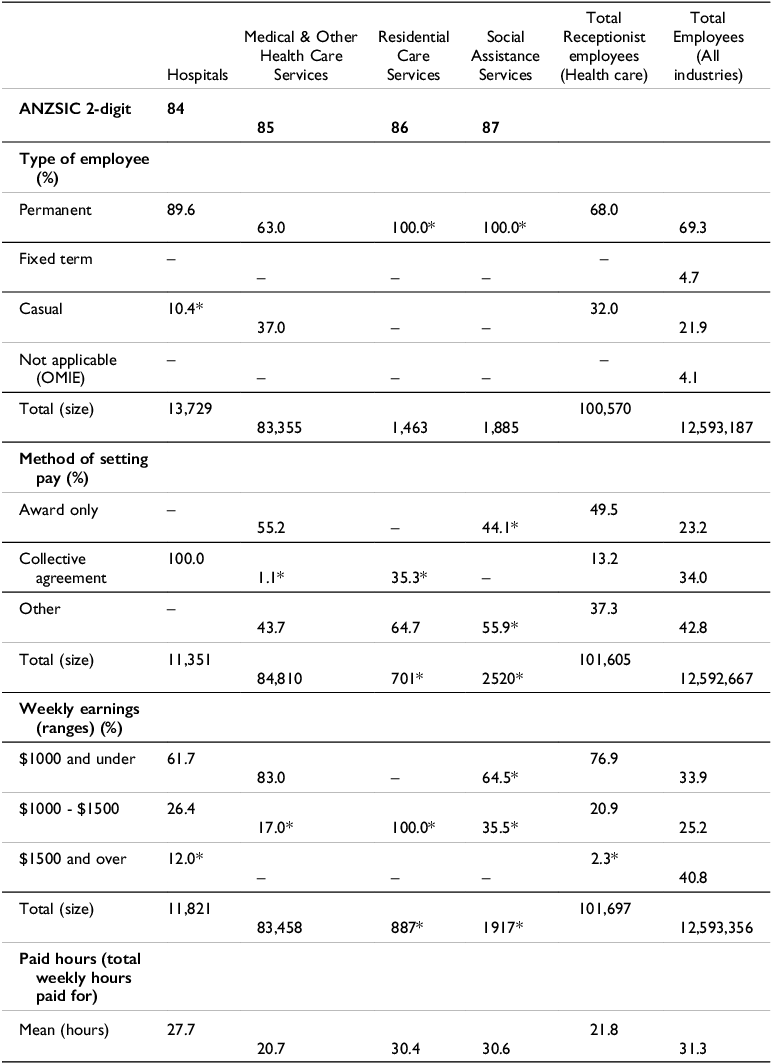
Data from the 2023 Survey of Employee Earnings and Hours (Table 4) show that health care receptionists’ pay setting methods and earnings vary across industries. Receptionists in hospitals are paid via collective agreement, while those employed in medical and other health care services or in general social assistance services are paid through a combination of award or other agreement (though some of these estimates are not reliable due to the low sample sizes). In contrast, more than 60% of receptionists employed in residential care services are paid through an ‘other’ agreement, with the pay rate determined through an individual arrangementFootnote 7 with their employer and not necessarily through any formal organised ruling.
Earning characteristics of receptionists in health care
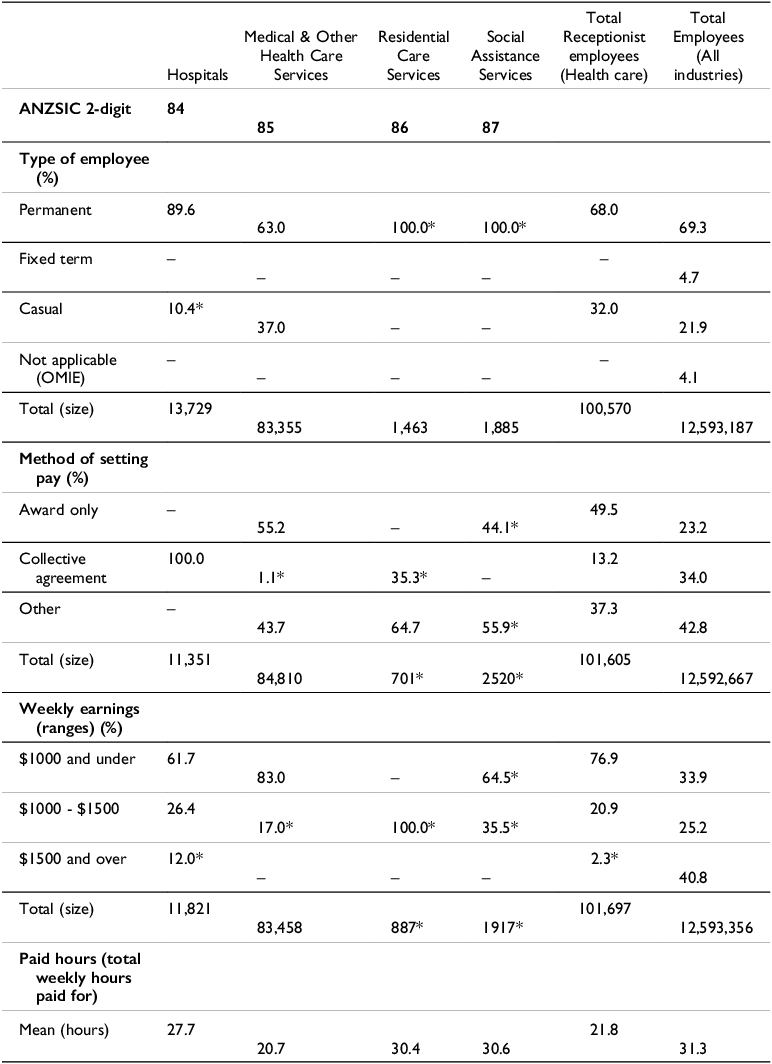
Note. Cells in this table have been randomly adjusted to avoid the release of confidential data. Hence, totals are based on component sums and are not the population sizes of receptionists in each health care industry class.
Note. * Estimate has a relative standard error (RSE) of more than 25% so use with caution.
Total receptionists have worked for a private or public sector health care or social assistance employer and received some form of payment for the reference period. Total employees are for all occupations across all industry sectors. OMIE refers to Owner manager of incorporated enterprise.
Source: 2023 Employee Earnings and Hours; employee and employer records, accessed via Table Builder.
Across hospitals and medical and other health care service industry subdivisions, most receptionists earn below $1000 per week. While the estimates for the remaining categories are not reliable, they nevertheless paint a similar picture of low earnings. Only in hospitals, do 12% of receptionists earn above a $1500 per week threshold, compared to the 40% of the total workforce.
Literature on reception work
The ABS data above attest to high levels of feminisation among health care receptionists, along with high prevalence of part-time work, and low pay, with few outside of hospitals having coverage by collective agreements, and the majority earning below $1000 per week. Data attest to low pay and to qualification levels, which appear low relative to the wider workforce. However, not evident from ABS data is the nature of the skills required by receptionists, and the risks they may use skills subject to gender-based undervaluation. To better understand health care reception and the ways skills have been framed, we now turn to scan international social science research focused on this quintessentially female occupation. While popular understandings of reception work are imbued with stereotypes of compliant female workers subservient to the male positions they support, scholarly studies utilising observational and interview techniques offer to generate more accurate depictions of job content and skill.
Reflecting their assumed ancillary status, receptionists have not been a prominent group in sociological and industrial relations scholarship; only a few empirical studies of health care labour and organisations have explored the work. Together, this body of scholarship shows the ways the work of health care receptionists can go beyond routine administration, involving a wider scope of work and range of tasks, including tasks which involve or impact on clinical decision-making and care (Patterson et al. Reference Patterson, Del Mar and Nahman2001; Weatherall and Grattan Reference Weatherall and Grattan2023). In doing so, scholarship acknowledges the potential for aspects of the work to be hidden, and challenges dominant framings of the work as purely administrative, and ancillary to care.
Studies of receptionists are scattered across national and industry settings, and across decades, and have involved a range of methods including observations (Ward and McMurray Reference Ward and McMurray2011), interviews (Armstrong et al Reference Armstrong, Armstrong and Scott-Dixon2008), focus groups (Neuwelt et al Reference Neuwelt, Kearns and Browne2015), questionnaires (Truss et al Reference Truss, Alfes, Shantz and Rosewarne2013), and conversation analysis (Weatherall and Grattan Reference Weatherall and Grattan2023). A frequent focus has been on challenging delineations between health care and ancillary work, with administrative and clerical roles interpreted to involve flexible job content relevant to patient or client care, but which may not be formally recognised (Patterson et al. Reference Patterson, Del Mar and Nahman2001). Indeed, receptionists feature along with other ancillary workers in the seminal study of hospital workers by Armstrong et al (Reference Armstrong, Armstrong and Scott-Dixon2008), which show that while formally defined as administrative rather than health care work, roles involve content specific to medication, tests, preparation for surgery, and other aspects of care. Further, as the first point of contact, reception work has been observed to be emotionally charged, requiring sophisticated interpersonal skills to deal with stressed patients and their families, and to manage internal relationships with administrators and practitioners (Armstrong et al Reference Armstrong, Armstrong and Scott-Dixon2008).
Burrows et al (Reference Burrows, Gale, Greenfield and Litchfield2020) show that receptionists perform highly varied tasks and face high cognitive demands due to the variety of information they are required to process, and the problems they must solve. In general practice, in particular, the scope of medical reception work has been widening in the context of high clinical workloads, whereby everyday practices of work have been subject to blurred boundaries to accommodate complexity and high volumes, with receptionists informally provided space to exercise discretion and make decisions that go beyond routine work (Grant and Guthrie Reference Grant and Guthrie2018). Furthermore, while aspects of reception work have been recently altered as a result of the introduction of technologies such as online bookings, receptionists remain required to perform a breadth of tasks at the interface between organisations, practitioners, and patients or customers, including developing relationships, conducting administration, and shaping overall experiences of the service (Tuzovic Reference Tuzovic, Sheth, Jain, Mogaji and Ambika2024).
To help identify and understand the nature of these interpersonal aspects of the work, the following analysis is organised using concepts drawn from the ‘spotlight’ framework developed by Junor et al (2009) to help identify under-defined, under-codified, and undervalued ‘soft’ skills. These skills have been identified across studies of reception labour but are more comprehensively captured via narrative review shaped by the conceptual framework and vocabulary of Junor’s tripartite classification. Specifically, the framework offers a structure for exploring key sets of skills used in feminised caregiving and administrative settings to (1) co-ordinate processes, (2) interact and relate, and (3) shape awareness (Junor et al 2009). These categories provide concepts with which to identify other-focused, tacit skills that lack a descriptive vocabulary and would otherwise lack formal recognition or be confused with gendered attributes or natural, ‘life skills’. Designed to assist with job analysis and developing accurate position descriptions, the framework has been applied to understand jobs via observational and interview methods (Junor et al Reference Junor, Hampson, Piercy, Ewer, Barnes, Smith and Ogle2009; Junor Reference Junor2021); however, we apply it here in a different way, using the three categories as high-level organising concepts for exploring the skills arising in scholarly studies of reception work. Structured, analytical framing helps understand labour performed in ways that diverge from formally acknowledged roles or job descriptions, and from stereotypes which can render important intellectual and emotional aspects of the work invisible (Wichroski, Reference Wichroski1994). The following sections outline health care reception skills using Junor’s three categories: coordinating workflow, managing relationships, and maintaining awareness, showing the value of the tool as a high-level conceptual structure for consolidating descriptions of under-recognised skills.
Coordinating workflow
Literature attests to the ways receptionists manage health care workflow and patient pathways, with multiple studies depicting receptionists’ important role in sequencing health care processes. As the first point of contact, receptionists are ‘gatekeepers’ whose decisions determine access to clinical staff. Receptionists must manage a flow of patients at the same time they maintain records and documentation, attend to individual problems and emergencies, and keep offices and practices running smoothly, including through ad hoc problem solving, all while in a disruptive and confined waiting space (Wichroski, Reference Wichroski1994; Neuwelt et al Reference Neuwelt, Kearns and Browne2015). Although they are formally framed as administrative workers, health care receptionists are thus important intermediaries between the practice and patients; they must weigh up competing demands and determine a workflow that balances organisational and patient interests. Their decisions about access have consequences for care delivery, including which type of clinician can provide care, and whether a patient needs to be prioritised, influencing who sees which practitioner and when (Litchfield et al Reference Litchfield, Gale, Burrows and Greenfield2023; Arber and Sawyer Reference Arber and Sawyer1985; Weatherall and Grattan Reference Weatherall and Grattan2023). In fielding multiple requests from patients, they make judgments about which clinician to enable access to, and which patients need to be prioritised or directed to other services (Arber and Sawyer Reference Arber and Sawyer1985; Weatherall and Grattan Reference Weatherall and Grattan2023; Litchfield et al Reference Litchfield, Gale, Burrows and Greenfield2023; Duncombe Reference Duncombe2011). Effectively, this has been described as an informal triage role (Ward and McMurray Reference Ward and McMurray2011).
Others have also observed receptionists’ role in triaging patients. Hughes (Reference Hughes1989) highlights that despite their low formal status, clerical workers in health care exercise a high degree of influence over patient care by determining whether someone can be seen, and the order of patients, effectively prioritising their needs and the work processes of practitioners. Reception staff are observed to exercise discretion about individuals and do so in ways that are often extraneous to rules or procedures, yet which assess priority and influence patient pathways (Hughes Reference Hughes1989). Arber and Sawyer (Reference Arber and Sawyer1985) observed that receptionists were routinely asking patients about urgency and severity of symptoms to control boundaries around what is routine and urgent, to filter patients and ration for the practitioner. They saw that receptionists must remain ready for unpredictable and emergency situations and apply discretion to judge whether to facilitate access to the medical practitioner. Often, decisions about urgency and prioritisation occur based on informal learning picked up from colleagues and doctors; receptionists must have skills to make adept judgments based on brief verbal exchanges or interactions across the reception desk (Arber and Sawyer Reference Arber and Sawyer1985; Hughes Reference Hughes1989). As patient demands frequently exceed clinician capacity, receptionists’ decisions about workflow and patient access and pathways are considered particularly difficult, made under time pressure and with limited information (Litchfield et al Reference Litchfield, Gale, Burrows and Greenfield2023).
Interacting and relating
A second, overlapping set of skills relates to the interactional and relational work often prominent in feminised occupations, such as negotiating boundaries, communicating and connecting across cultures (Junor Reference Junor2021). Indeed, interacting, relating, and connecting are central to reception work and to other feminised roles, being core aspects of receptionists’ activities in managing work sequences and facilitating patient journeys and care. While job descriptions may include things like ‘good communication skills’ or ‘high level interpersonal skills’, formal depictions of reception work rarely indicate the degree of emotional work or skill involved, nor the breadth and complexity of receptionists’ relational, boundary spanning and communication work (Duncombe Reference Duncombe2011). As Morrison (Reference Morrison2021, 46) points out, patients can spend more time in the presence of receptionists in the waiting room than with their physician. In practice, interactions at the reception desk may relate to health system processes and pathways along with individual physical and mental health problems, language barriers, emergencies, and death (Ward and McMurray Reference Ward and McMurray2011). Often, receptionists use personal and professional expertise such as humanness, empathy, and support, which is not noted as part of their formal work role but usually assumed; they must apply skills of negotiation, diplomacy, and tact to carefully handle the sensitivities implicit when interacting with multiple people (Wichroski Reference Wichroski1994).
While receptionists’ relational work may also support clinicians and managers to enhance overall productivity (Wichroski Reference Wichroski1994) their interactions and relationships with patients are central to their work. As the first point of contact with patients, they need to appear calm and emotionally neutral and switch between the different emotional situations of each patient, going beyond the tasks of ‘greeting’ clients (Ward and McMurray Reference Ward and McMurray2011). They establish and maintain patient relationships through reassurance and empathy, and must take the brunt of and defuse any patient hostility, prior to provision of care (Arber and Sawyer Reference Arber and Sawyer1985).
The ways that medical receptionists interact with patients matter for patients’ experiences and identities, and for the ways that care proceeds (Weatherall and Grattan Reference Weatherall and Grattan2023; Shaw Reference Shaw1992). First contact influences service engagement, and receptionists must tune into each client and express care and concern to make people feel welcome and respected (Duncombe Reference Duncombe2011). Patients are vulnerable when they are seeking health care. They frequently need help to access services and can appear demanding or difficult, which in turn requires work by service staff to set boundaries and reduce anxiety (Neuwelt et al Reference Neuwelt, Kearns and Browne2015). Receptionists need to gather information in non-intrusive ways, while care is needed to maintain confidentiality by not eliciting too much detail about situations (Shaw Reference Shaw1992). Receptionists also bear the brunt when appointments are unavailable or cancelled, and so need to handle other people’s distress (Duncombe Reference Duncombe2011).
Shaping awareness
A third category of skill relates to shaping awareness, including sensing situations, monitoring and guiding reactions, and judging impacts (Junor Reference Junor, Hampson, Piercy, Ewer, Barnes, Smith and Ogle2009). As receptionists are the first point of contact and are co-present with waiting patients, they play a role in sensing, monitoring and shaping patients’ experiences, awareness and behaviour. Health care receptionists are recognised as influencing patient care experiences, including by ensuring patients feel welcome in the waiting area, managing impressions of patients and visitors, and working to inspire confidence and trust in clinical care (Wichroski Reference Wichroski1994; Neuwelt et al Reference Neuwelt, Kearns and Browne2015).
Tact and confidentiality are needed to interpret urgency and convey the desired atmosphere, managing initial patient encounters in ways that shape the behaviour and orientation to clinical care (Wichroski Reference Wichroski1994; Hughes Reference Hughes1989). Hughes (Reference Hughes1989) identifies that rather than drawing on formalised qualifications, receptionists often bring their social knowledge and awareness to these interactions. For some, interactions may be brief and routinised; however, health care receptionists need to sense situations and the status of others based on rapid observations made while multitasking. They undertake constant surveillance in the practice, sensing situations among health care professionals as well as patients. They determine patient urgency, monitor waiting rooms for signs patients may be deteriorating, and ensure patients flow through to medical staff in ways medical staff will find orderly and appropriate (Hughes Reference Hughes1989). Their sense and awareness inform clinical triage and determine prioritisation while managing patients’ feelings and rationing resources (Neuwelt et al Reference Neuwelt, Kearns and Browne2015). They also monitor risks of aggression (Willer et al Reference Willer, Chua and Ball2023).
Together, the small literature on the work of receptionists in health care shows their essential contributions to determining workflow, developing relationships, and maintaining awareness of potentially volatile situations in health care settings. While usually considered part of an ancillary health care workforce, reception work is neither secondary nor supplementary but rather essential to service productivity and patient care. The ‘spotlight’ tool provides a high-level, structured conceptual framework, which helps compile and interpret the ways receptionists’ skills have been depicted in the literature. As a helpful framework that enables more detailed and comprehensive interpretation of the nature of work, it buffers the risk that important emotional and intellectual components of reception work will remain invisible and helps address the misrecognition and undervaluation of women’s skills.
Conclusion
Overall, this article has highlighted a set of so-called ‘ancillary’ occupations, which support managerial and professional roles and are comprised almost entirely of women. These jobs are also vulnerable to gender-based undervaluation. The article highlights the need to break pervasive stereotypes of work and skill in these occupations, address the invisibility of informal, under-codified, and undervalued skills, and ensure these occupations feature more prominently in strategies to address gender segregation and equal pay.
In Australia, recent legislative changes have opened opportunities for regulatory action to promote equal pay, including through the Fair Work Commission’s process of examining priority awards, which cover highly feminised work. While frontline care roles are highly susceptible to undervaluation, this article highlights high levels of feminisation in ancillary occupations, including reception work, which also involve skills which may not be formally recognised and rewarded. The full scope of the Commission’s programme of work is not yet evident; however, this article underlines the importance of ensuring coverage of the full range of feminised occupations. Indeed, the recent aged care work value case found that personal care work involved undervalued, invisible skills of care, which are also likely present in disability and child care work. Here, our suggestion is that some features may similarly be present beyond frontline care, in feminised occupations that are similarly focused on supporting others and involve complex interpersonal and coordination processes, but which have been framed in terms of their administrative or clerical dimensions and have lacked a full and fair taxonomy of skill.
By exploring the characteristics and skills of receptionists in health care, the article has underlined the need to ensure the contributions made by women in a wide range of occupations receive attention in future strategies to promote equal pay. Census data show that as well as being subject to high levels of feminisation, reception work is characterised by very high rates of part-time work and low pay. Yet social science literature, framed using concepts drawn from Junor (Reference Junor, Hampson, Piercy, Ewer, Barnes, Smith and Ogle2009), shows the way the work is central to the relationships and workflows that facilitate patient pathways and care. Our exploration of receptionists’ skills, drawn from a wide range of studies, reflects the way this work is more than ‘ancillary’ or ‘secondary’ in status. The wide range of skills used in these roles has been sidelined and invisibilised, perpetuating the vulnerability of feminised work to gender-based undervaluation. Along with many other feminised jobs, including in the professions and in frontline care, feminised administrative and office support roles warrant further analysis and a focused programme of scholarly study, in addition to regulatory attention, to help improve skill recognition and progress gender pay equity and women’s equality.
Natasha Cortis is an associate professor works at the Social Policy Research Centre, UNSW Sydney. She has an applied program of research focusing on women’s employment and economic security, and the ways human services are organised, delivered, and evaluated.
Dr Yuvisthi Naidoo is a Senior Research Fellow at the Social Policy Research Centre, with expertise on the measurement and understanding of living standards, focusing on poverty, inequality, deprivation, social exclusion and wellbeing. Her research program has direct policy relevance to improve the lives of socially and economically disadvantaged people.

 Open access

