


1. INTRODUCCIÓN
En los últimos años ha ganado influencia la tesis de que alguno de los problemas centrales de Latinoamérica se derivan del poder desmesurado que la élite ha tenido desde el período colonial. Tras la independencia, éste poder le habría permitido incidir en el diseño institucional, volcando la acción estatal en forma sistemática en su beneficio, aunque ello significara perjudicar el desarrollo de largo plazo (Engerman y Sokoloff Reference Engerman and Sokoloffk.2012; Acemoglu y Robinson Reference Acemoglu and Robinson2008, Reference Acemoglu and Robinson2012). Se ha sostenido, sin embargo, que esta literatura no presta suficiente atención a la dinámica del cambio histórico e institucional, o a los procesos de globalización (Bértola Reference Bértola2011, Williamson Reference Williamson2015). En particular, la literatura neoinstitucionalista ha descuidado los periodos en que el poder de la élite fue amenazado.
Centrado en el deterioro político y económico sufrido por la clase dominante chilena entre 1913 y 1973, el presente artículo tiene dos objetivos fundamentales. Por una parte, contribuir a un mejor conocimiento de la magnitud y carácter de la desigualdad en dicho país, así como de los mecanismos que entonces contribuyeron a reducirla. Por otra, mostrar la fecundidad de un enfoque que, partiendo del carácter dual –político y económico– del poder de la élite, analice la forma en que éste fue afectado por las transformaciones de diverso tipo que, más allá de la inercia institucional, han cambiado la faz de las sociedades latinoamericanas.
Pero una cosa es reconocer la importancia teórica del poder de la élite y otra obtener una medida del mismo, algo necesario para analizar sus vicisitudes a lo largo del tiempo. Una estrategia posible para superar este problema es suponer que está relacionado con la porción del ingreso nacional del que se apropian sus miembros. En este sentido, en el presente trabajo se asume que –en el mediano plazo– las variaciones en el ingreso captado por el 1% responden a procesos de tipo económico-político que expresan, en alguna medida al menos, el poder relativo de la minoría dominante. Llamaremos economía política de la desigualdad a este enfoque según el cual las tendencias apreciables en la distribución del ingreso se conciben como el resultado de la interacción entre procesos políticos y económicos a lo largo del tiempo y que, con ese u otro nombre, se ha vuelto el enfoque habitual en la literatura más reciente sobre la desigualdad (Atkinson Reference Atkinson2015; Milanovic Reference Milanovic2016; Pikkety Reference Piketty2014, Reference Piketty2015; Rodríguez Weber Reference Rodríguez Weber2014).
El auge de los enfoques de economía política ha acrecentado el interés por analizar lo que ocurre en los últimos percentiles de la distribución, en particular el 1% de mayores ingresos. Ello porque quienes allí se ubican no sólo tienen más ingresos que los demás, sino porque constituyen una minoría que goza de gran poder e influencia (Atkinson y Piketty Reference Atkinson and Piketty2007, Reference Atkinson and Piketty2010; Atkinson, Piketty y Sáez Reference Atkinson, Piketty and Saez2011; Piketty Reference Piketty2014). Sin embargo, esto no supone sostener que los conceptos de élite y 1% sean equivalentes. El primero refiere a una dimensión socio-política –difícil de definir con precisión– relativa al poder de sus miembros sobre el conjunto de la comunidad, mientras el segundo alude simplemente a las personas que tienen un ingreso superior al 99% restante. Y sin embargo, aunque la élite y el 1% no sean conceptos estrictamente intercambiables, tiene sentido analizar las circunstancias históricas que afectan a la primera a través de la ventana que nos brinda la porción del ingreso captada por el segundo. Ello por una serie de razones. En primer lugar, porque aunque la pertenencia a un grupo no suponga necesariamente la pertenencia al otro, es razonable suponer que existe un importante solapamiento entre ambos. Son seguramente pocos los miembros de la élite que no se ubican en el 1% de mayores ingresos. En segundo lugar, porque el conflicto distributivo que contribuye a determinar las tendencias asumidas por la desigualdad puede ser visto como parte de otro más amplio entre sectores que pugnan por ganar influencia, no sólo sobre la vida económica, sino también política y social. Así, se ha mostrado que factores institucionales que a priori parecen muy lejanos a lo que ocurra con el 1%, como el nivel del salario mínimo, tienen impacto sobre su ingreso (Malloy Reference Malloy2016). De este modo, resulta razonable sostener que el estudio del ingreso captado por el 1% puede constituir una aproximación válida para realizar un análisis histórico del poder de la élite.
Para realizar dicho análisis utilizamos las estadísticas de reciente elaboración sobre la evolución de los ingresos del 1% y otros grupos de perceptores de ingreso en Chile entre 1913 y 1970. Su publicación, así como la presentación de los procedimientos seguidos para su estimación, constituye un primer aporte del presente artículo. El segundo refiere al análisis de las tendencias observadas, las que se explican por la acción de una serie de mecanismos de tipo económico-político. Estos se desarrollan mediante lo que el historiador alemán Jürgen Kocka (Reference Kocka2002) ha llamado ‘argumentación histórica’ lo que supone integrar la información estadística con una narración teóricamente guiada de los procesos económicos, sociales y políticos que signaron el períodoFootnote 1 .
El artículo continúa de la siguiente manera. En la sección 2 se describen los procedimientos seguidos en la estimación de las series de ingresos utilizadas. A diferencia de la mayor parte de los trabajos sobre el ingreso del 1% de la cúspide, que se basan en fuentes de tipo fiscal, en nuestro caso hemos seguido la metodología de las tablas sociales dinámicas. Estas tienen la ventaja de que permiten estimar el ingreso del conjunto de la población lo que habilita la comparación de los ingresos del 1% con otros sectores, como los asalariados. La sección 3 presenta los principales resultados para el todo el período. Se observa que en los años cuarenta y sesenta se produjo una caída del ingreso captado por el 1%, un resultado que resulta coherente con las características asumidas por el proceso económico y político del período. Los mecanismos que dieron lugar a esta evolución se analizan en las secciones 4 a 7, dónde se elabora una breve historia de la economía política de la desigualdad en la que la información estadística se integra en un relato cuyo eje estructurador es la relación conflictiva de la élite con otros actores sociales y políticos. Finalmente, la sección 8 cierra con las conclusiones.
2. ELABORACIÓN DE LAS SERIES ESTADÍSTICAS
La mayor parte de los estudios que abordan la desigualdad desde la perspectiva de la porción del ingreso total captado por los últimos percentiles de la distribución –el 10%, el 5%, el 1%, o el 0,1% de la cúspide- se basan en fuentes fiscales, lo que ha permitido elaborar una base de datos comparables para un conjunto de países a lo largo del siglo XX (Atkinson y Piketty Reference Atkinson and Piketty2007, Reference Atkinson and Piketty2010; Atkinson, Piketty y Sáez Reference Atkinson, Piketty and Saez2011). A partir de la misma, y en combinación con otros tipos de fuentes e indicadores, Thomas Piketty (Reference Piketty2014) ha escrito un libro de gran impacto sobre la historia de la desigualdad en los países desarrollados.
El recurrir a fuentes homogéneas tiene ventajas evidentes, pero limita el número de países y períodos que pueden estudiarse. Ello afecta en particular a los países latinoamericanos, donde los sistemas fiscales se basaron en impuestos indirectos – especialmente al comercio exterior – hasta bien entrado el siglo XXFootnote 2 . En el caso de Chile, si bien se implementó un impuesto a los ingresos en los años veinte, no existen –para nuestro período– el tipo de registros que en otros casos han permitido estudiar los ingresos del 1%Footnote 3 . Por esta razón, en este estudio se utiliza una metodología de estimación diferente: la elaboración de tablas sociales dinámicasFootnote 4 .
Elaborar una tabla social supone construir una matriz de personas e ingresos agrupadas en distintas categorías sociales u ocupacionales. A diferencia de los estudios basados en fuentes fiscales, la tabla social tiene en cuenta a todas las personas que perciben ingresos. Una vez elaborada la tabla, se ordena la población en función de su ingreso para ‘aislar’ al 1% de la cúspide –o la porción que se desee. Comparando la masa de ingresos de este 1% sobre el ingreso total –estimado a partir del conjunto de la tabla social– se calcula la porción del ingreso captada por el último percentil.
Se construyeron dos tablas sociales que brindan información anual de la desigualdad de ingreso en Chile entre 1860 y 1970. La primera cubre el período 1860-1930 y se divide en 49 categorías de perceptores. La segunda cubre el período 1929-1970, y se compone de 116 categorías. La principal fuente utilizada para ambas tablas son los censos de población, los que proporcionan las cantidades de personas ‘con profesión’ por categoría ocupacional. Otras fuentes utilizadas fueron los anuarios estadísticos, las estadísticas económicas históricas (Haindl Reference Haindl2007; Díaz et al. Reference Díaz, Lüders and Wagner2010; Matus Reference Matus2012), y los censos económicos –en especial a partir de 1930. También, se ha recurrido a un conjunto de información dispersa en bibliografía secundaria.
Las 49 categorías de la primer tabla social (1860-1930) se desagregaron de la siguiente manera: 9 en la agricultura –7 categorías de terratenientes y dos de trabajadores (gañanes e inquilinos); 3 en la minería; 10 en la industria: 2 en el transporte; 20 en el estado; y 2 de otros –profesionales y sirvientes. Para el ingreso anual de terratenientes se estableció un año base en 1861 (Tornero Reference Tornero1872) el que se proyectó por un índice que recoge la evolución de los precios agrícolas, la productividad de la tierra y los costos salariales. En el caso del ingreso de peones y gañanes se utilizó la serie de salario diario estimada por Mario Matus (Reference Matus2012, p. 222) multiplicada por una estimación de los días trabajados por año que se incrementa monotónicamente de 200 a 280 entre 1880 y 1920, recogiendo así la tendencia a su incremento (Bauer Reference Bauer1975, Johnson Reference Johnson1978). Para el ingreso anual de inquilinos, se tuvo en cuenta el doble componente de su ingreso: salario y derecho de uso de tierras y talajes.
La minería está representada por tres categorías: patrones, empleados y obreros. El ingreso de obreros mineros en el período 1900-1930, es igual al salario diario ponderado del sector (Matus Reference Matus2012), multiplicado por 280 días de trabajo al año. Para el ingreso de los patrones, se calcularon las utilidades pertenecientes a capitalistas chilenos a partir del valor agregado sectorial, los impuestos, la masa salarial, y la porción de capitales extranjeros en la minería del salitre y el cobre (Díaz et al. Reference Díaz, Lüders and Wagner2010; Cariola y Sunkel Reference Cariola and Sunkel1982).
En el sector manufacturero, los patrones o industriales se calcularon asumiendo un industrial por establecimiento (Díaz et al. Reference Díaz, Lüders and Wagner2010). El número de artesanos y obreros se construyó a partir de la información censal, y sus ingresos se calcularon a partir de diversas fuentes (Errázuriz y Eyzaguirre Reference Errázuriz and Eyzaguirre1903, Ortíz Reference Ortiz Letelier2005, De Shazo Reference Deshazo2007, Díaz et al. Reference Díaz, Lüders and Wagner2010, Matus Reference Matus2012).
Desde 1930 los censos de población presentan a la ‘población con profesión’ agrupada por sectores de actividad y dividida en patrones, empleados y obreros. A partir de 1952 la primera de estas categorías se divide en dos: patrones y cuentapropistasFootnote 5 . En los mismos años comenzaron a levantarse censos económicos con frecuencia, y los anuarios estadísticos incrementaron la cantidad de información que brindan. La mayor disponibilidad de fuentes permitió mejorar la calidad de las estimaciones.
Para la segunda tabla social (1929-1970) se realizaron estimaciones independientes para los siguientes sectores de actividad: agricultura, minería, industria, construcción, comercio, transporte y comunicaciones, electricidad gas y agua (EGA) y otros servicios -públicos y privados. Para cada uno de estos sectores se construyeron al menos cuatro categorías de perceptores hombres y mujeres: empleadores, cuentapropistas, empleados y obreros. Estimada la cantidad de perceptores, se procedió a imputar un ingreso anual corriente para cada categoría de los mismos. A nivel general, el procedimiento consistió en repartir entre las distintas categorías una estimación del ingreso sectorial, aproximado a partir de la estimación de valor agregado bruto (VAB) por sector a precios corrientes publicada por Eric Haindl (Reference Haindl2007)Footnote 6 .
El procedimiento general siguió los siguientes pasos:
-
1. Se estimaron series de salarios para obreros y empleados de cada sector o subsector si los hubiere. Para ello se recurrió, fundamentalmente, a anuarios estadísticos y censos económicos.
-
2. Dado que se supone que el ingreso de empleadores y cuentapropistas tiene dos componentes –retribución al trabajo y al capital–, se supuso que el primero era igual al salario de empleados en el caso de empleadores, e igual al salario de obreros en el caso de cuentapropistasFootnote 7 .
-
3. Para imputar el segundo componente del ingreso de empleadores y cuentapropistas debió estimarse el excedente de explotación a repartir entre particulares chilenos. Este se calculó como el valor agregado bruto sectorial descontando los impuestos y la remuneración al trabajo.
-
4. Se distinguió, en los casos necesarios –y posibles–, entre el excedente correspondiente a capitalistas chilenos de aquel que retribuye al capital extranjero.
-
5. Se estimó la parte del excedente de explotación que corresponde a cuentapropistas calculado como el excedente de explotación por asalariado.
-
6. Se estimó el excedente a repartir entre empleadores calculado como la diferencia entre el excedente total y aquel asignado a los cuentapropistas.
-
7. En los casos que correspondía, se distribuyó el excedente de empleadores de cada sector entre subsectores o ramas.
-
8. Finalmente, el excedente de la rama se distribuyó entre la cantidad de empleadores de la misma.
Como ya se indicó, la aplicación concreta de este procedimiento general dependió de las características particulares de los sectores así como de la disponibilidad de fuentes sobre los mismos. En el sector agrícola las cantidades totales de ocupación reportada en los censos de población se distribuyeron entre doce categorías de perceptores: nueve de propietarios –desagregados según la estructura de la propiedad en posesión de personas estimada a partir de los censos agrícolas– y tres de trabajadores. En cuanto a los ingresos, se estimaron series de salarios para las distintas categorías de trabajadores a partir de anuarios estadísticos de Chile y de la OIT. El excedente de explotación entre los terratenientes se distribuyó según una estructura de la propiedad que tiene en cuenta tanto la calidad de la tierra –proporción de tierra arable en el total– como la inversión en riego (Rodríguez Weber Reference Rodríguez Weber2013).
Para la minería se organizó la información que brindan los censos de población en dos ramas: metálica y no metálica. Luego se procedió a dividir la minería metálica en dos: gran minería del cobre (GMC) y el resto. Los ingresos de las distintas categorías de perceptores se estimaron por el procedimiento habitual de estimar series de salarios –a partir de los anuarios estadísticos–, descontar los impuestos –muy importantes para el sector– y distribuir el excedente de explotación entre los patrones. Calculado el VAB post impuestos para cada rama se estimó el excedente a distribuir entre empleadores y cuentapropistas chilenos. El mismo es nulo en el caso de la GMC y un 66% en el caso de la minería no metálica, en función de la participación del Estado y de capitales extranjeros en el sectorFootnote 8 .
Los perceptores e ingresos de las 23 ramas industriales se estimaron a partir de distintas fuentes, entre las cuales los censos de población, los censos industriales y los anuarios estadísticos han sido las más importantes. El resultado final es una estimación de la estructura ocupacional y de ingresos en la que los valores de los años 1928, 1937, 1957 y 1967 se obtienen de los censos industriales y los años intermedios se calcularon a partir de índices elaborados con información proveniente de los anuarios.
Los perceptores de ingreso del sector servicios se agruparon en tres subsectores o ramas: servicios gubernamentales y públicos –que incluye la producción de electricidad, gas y agua (EGA)– servicios de esparcimiento y empresariales y servicios personales y domésticos. Para la conformación de los mismos debieron agregarse diversas categorías censales. La estimación de los ingresos en el sector servicios supuso algunas complejidades que vale la pena describir con cierto detalle.
Aunque los censos de población se refieren a las categorías directivas de los funcionarios públicos en términos de patrones y cuentapropistas, estos cobran un sueldo y no reciben utilidades, por lo que se les imputó un salario. En el caso de las utilidades, básicamente se calcularon según el procedimiento general de extraer la masa salarial, impuestos y leyes sociales al VAB sectorial. En el caso de las ramas privadas de los servicios, las utilidades de los patrones se calcularon descontando del VAB sectorial una estimación ficta del excedente correspondiente al sector público, una decisión controvertible que analizaremos más adelante.
Las series, que abarcan el período 1913-1970, se estimaron mediante el procedimiento de proyectar hacia atrás el valor de 1929 obtenido por la segunda tabla (1929-1970) –construida a partir de mejores fuentes–, siguiendo las variaciones que surgen de las estimaciones realizadas a partir de la primera tabla (1860-1930).
3. PRINCIPALES RESULTADOS
No existen fuentes ni métodos carentes de problemas para medir la desigualdad. En nuestro caso, siquiera puede calcularse el margen de error de las estimaciones, puesto que no se trata de una muestra probabilística como las encuestas. Pero sí es posible realizar un análisis crítico de los procedimientos seguidos y evaluar en qué medida éstos pueden sesgar los resultados obtenidos. Dado el foco de este artículo en los ingresos de la élite, nos centraremos en las fortalezas y debilidades del trabajo realizado a este respecto.
Si bien las dos tablas sociales presentan diferencias importantes, hay algunas dificultades que son comunes a ambas. La principal refiere a la imposibilidad de captar las múltiples fuentes de ingresos que poseen los miembros de la élite. Así, a los capitalistas mineros –por ejemplo–, se les imputa ingresos en tanto que capitalistas mineros, cuando es probable que sean también rentistas o propietarios de empresas en otros sectores. Además, como sus ingresos se han estimado como la diferencia entre el VAB sectorial post impuestos y la retribución al trabajo, el conjunto de errores de procedimiento terminan incidiendo en los mismos. Esta imputación por residuo se ha mostrado particularmente problemática en el caso de los servicios estatales y públicos, dónde hemos seguido la metodología aplicada por Arne Bigstein (Reference Bigsten1986) de estimar un excedente público que no se asigna a ninguna categoría. Pero ello no resuelve el problema de cómo estimar dicho excedente, lo que incide directamente en el ingreso de los empleadores de las demás ramas del sector servicios. Por esta razón, se realizaron estimaciones alternativas bajo diferentes supuestos, las que dan por resultado distintos niveles de desigualdad pero una misma tendencia a lo largo del tiempo (Rodríguez Weber Reference Rodríguez Weber2016a: gráfico 8).
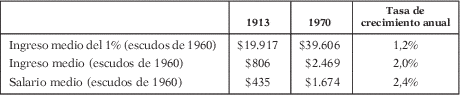
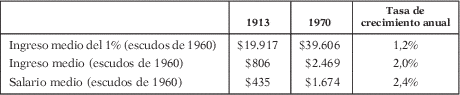
El cuadro 1 permite comparar los niveles y evolución de los ingresos reales del 1%, con el ingreso medio y el salario medio, al inicio y final del período bajo estudio. El gráfico 1, a su vez, presenta la serie anual del ingreso captado por el 1% como porcentaje del ingreso nacional total. Del análisis de ambos surgen dos conclusiones. En primer lugar, y visto el período en su conjunto, se trató de una época en que el ingresos de quienes se ubicaban en la cúspide de la distribución crecieron más lentamente que el ingreso medio, y en particular que el ingreso de los asalariados. Como consecuencia, la participación del 1% superior en el ingreso nacional total se redujo y la desigualdad cayó. En segundo lugar, y como puede apreciarse en el gráfico, la caída en la participación del 1% no fue constante a lo largo de todo el período. Es al análisis de esta dinámica, y al intento de comprenderla, que se dedica el resto del artículo.
PARTICIPACIÓN PORCENTUAL DEL 1% DE LA CÚSPIDE EN EL INGRESO NACIONAL TOTAL. CHILE, 1913-1970 Fuente: Cuadro A1

4. DECADENCIA Y CAÍDA DE LA REPÚBLICA OLIGÁRQUICA (1913-1938)
Existe un debate académico sobre el significado del proyecto nacional que impulsó el presidente José Manuel Balmaceda a fines de la década de 1880 y cuya derrota fuera la principal consecuencia de la guerra civil de 1891. Mientras autores como Maurice Zeitlin (Reference Zeitlin1984) sostienen que se trataba de un intento de revolución burguesa; otros, como Mario Góngora (Reference Góngora2006), señalan que su objetivo se limitaba a reforzar la autoridad del Poder Ejecutivo, lo que ubica a Balmaceda en la estela de la tradición portaliana. Lo que parece estar fuera de discusión, es que el régimen parlamentario que surgió de la guerra civil se caracterizó por el control total por parte de la élite del aparato estatal. En palabras del científico político y diplomático norteamericano Paul Reinsch, quien analizara la sociedad chilena del novecientos, ésta era similar a la Inglaterra del siglo XVIII: en ambos casos existía una aristocracia de terratenientes que tenía un dominio incontestado sobre la vida económica, social y política (Reinsch Reference Reinsch1909). No debería sorprendernos, entonces, que tal como muestra el cuadro 2, se tratara de una sociedad en que el 1% de mayores ingresos captaba una proporción comparativamente muy elevada del ingreso nacional. Sin embargo, al mismo tiempo que la élite ganaba el control total sobre el aparato estatal, se producían una serie de transformaciones económicas y sociales que comenzarían a roer las bases de su poder.
PARTICIPACIÓN DEL 1% SUPERIOR EN EL INGRESO NACIONAL ANTES DE LA PRIMERA GUERRA MUNDIAL

Fuentes: Chile, cuadro A1. Otros países: The World Wealth and Income Database
Sabido es que el norte salitrero constituía el corazón del sistema económico de la República Oligárquica. Hacia 1910, los nitratos suponían el 79% de las exportaciones y el 51% de los ingresos fiscales (Cariola y Sunkel Reference Cariola and Sunkel1982). Más aún, la producción salitrera no era sólo una fuente de divisas e impuestos; se trataba del primer sector plenamente capitalista de la economía chilena, así como la cuna del movimiento obrero.
Acostumbrada a la sumisión popular que Diego Portales denominó el ‘peso de la noche’, la aristocracia gobernante enfrentó con dificultad el desafío que implicaba lidiar con decenas de miles de trabajadores organizados. Así, cuando en 1907 los trabajadores mineros se dirigieron a Iquique a entregar una petición relativa a sus ingresos y condiciones de trabajo, el Estado -que la élite controlaba- respondió con metralla. Éste fue el más sangriento entre los episodios de represión, pero no el único: entre 1903 y 1907, un número aproximado de 3000 trabajadores y sus familiares fueron asesinados (Pizarro Reference Pizarro1988, p. 20). La consecuencia a corto plazo de estos eventos fue la total derrota y debilitamiento del recién nacido movimiento obrero, lo que creó un escenario que reforzó el efecto pernicioso de la inflación sobre el salario real (Matus Reference Matus2012; Rodríguez Weber Reference Rodríguez Weber2016b). Entre las consecuencias de mediano plazo se encontraría una fractura radical entre el movimiento obrero –un actor que sólo podía ganar en importancia con el desarrollo del capitalismo– y la aristocracia que controlaba al EstadoFootnote 9 .
La emergencia de los sectores medios, –una consecuencia de la urbanización, la expansión de la educación y del crecimiento del Estado, tres procesos alimentados por la bonanza salitrera– suponía la aparición de otro actor social de creciente influencia. En la medida en que estos fueron ganando independencia política, se convirtieron en otro factor que contribuyó a la erosión del poder de la élite.
Antes de la Gran Guerra, el comportamiento político de las capas medias, –profesores, oficiales militares, empleados públicos y privados, o estudiantes universitarios– oscilaba entre el deseo de integrarse a la élite y el descontento causado por la corrupción y los vicios que caracterizaban a la República OligárquicaFootnote 10 . Pero cuando la crisis económica causada por el estallido del conflicto afectó seriamente sus ingresos, pasaron de las palabras a la acción.
Chile fue duramente afectado por los trastornos económicos que siguieron a la Primera Guerra Mundial. Entre 1913 y 1938 la tasa de crecimiento económico per cápita apenas superó el 0% anual, el resultado neto de los sucesivos auges y derrumbes a los que dio lugar el agotamiento del ciclo de crecimiento impulsado por las exportaciones de salitre. El nuevo contexto de estancamiento neto con alta volatilidad afectó profundamente el poder de la élite. La crisis fiscal ocasionada por la guerra y profundizada con la crisis de 1929 perjudicó los ingresos de los sectores medios urbanos en la medida que el Estado era uno de sus principales empleadores. Como consecuencia, y como muestra el gráfico 2, no sólo se redujo el salario real de los trabajadores calificados, sino que se estrechó la brecha de ingresos entre éstos y la mayoría de asalariados no calificados. Los ingresos de la clase alta, sin embargo continuaron creciendoFootnote 11 (cuadro 3). En este marco, es razonable suponer que la nueva situación económica de los sectores medios haya contribuido a su radicalización política en los años que siguieron a la guerra.
SALARIO REAL DE TRABAJADORES CALIFICADOS Y BRECHA ENTRE SALARIO DE CALIFICADOS Y NO CALIFICADOS URBANOS, 1913-1938 Fuente: Rodríguez Weber (Reference Rodríguez Weber2016a) y Cuadro A1

INGRESO REAL Y PARTICIPACIÓN EN EL INGRESO TOTAL DEL 1% Y OTROS SECTORES EN 1913 Y 1938

Para 1920 la República Oligárquica estaba en franca decadencia. En ese año, pero también en los siguientes, accedieron al Poder Ejecutivo individuos que no contaban con la aquiescencia de la élite, algo impensable una década antesFootnote 12 . En 1938, y luego de dos décadas de fuertes turbulencias políticas y económicas –que incluyeron dos golpes de Estado y un primer intento de construir una república socialista–, las elecciones fueron ganadas por el Frente Popular, una alianza de centro izquierda conformada por partidos que se identificaban con los sectores medios y obreros. Desde entonces y hasta 1973, la clase dominante debió compartir el poder (Drake Reference Drake1978; Correa Reference Correa Sutil2005).
5. COMPARTIENDO EL PODER: CAMBIO ESTRUCTURAL E INSTITUCIONAL DURANTE EL CICLO POLÍTICO DEL PARTIDO RADICAL (1939-1952)
Con la derrota de la derecha ante la coalición del Frente Popular en 1938 se dio un paso significativo en el proceso de debilitamiento de la minoría dominante. Por una parte, la derrota era en sí misma consecuencia de la pérdida de poder derivada de la crisis del ciclo salitrero y de su alienación respecto a los sectores medios y asalariados. Pero el mismo resultado electoral estuvo en el origen de una serie de transformaciones que contribuyeron a erosionar las bases de su dominio. Con el cambio político se abrió la peor década de la historia para la élite: por primera vez perdía el control del Estado (Correa Reference Correa Sutil2005; Moulian Reference Moulian2006). Sólo los años sesenta serían peores. La caída de la participación del 1% en el ingreso nacional constituyó un aspecto de este proceso.
La alianza política que accedía al gobierno asumió el compromiso de impulsar una serie de reformas estructurales. Durante los años treinta, las decisiones de política económica eran acciones reactivas ante las dificultades creadas por el fin del ciclo salitrero y la crisis de 1929. Abrumado por las circunstancias, el gobierno adoptó medidas heterodoxas a fin de sobrellevar las dificultades cotidianas. Con el paso de los años, sin embargo, estas decisiones –tomadas para superar problemas coyunturales– fueron favoreciendo al sector industrial. Con la victoria del Frente Popular en 1938, la industrialización sustitutiva de importaciones –hasta entonces un fenómeno espontáneo– se transformó en industrialización dirigida por el Estado (Thorp Reference Thorp1998, Bértola y Ocampo Reference Bértola and Ocampo2013).
El nuevo contexto económico tuvo un efecto ambiguo sobre el poder de la élite. Por una parte, la clase dominante tradicional de hacendados y mineros se vio debilitada. La productividad agrícola había dejado de crecer hacia 1910, pero ello había sido contrarrestado por la incorporación de nuevas tierras a la producción, lo que posibilitó el crecimiento del sector durante algunos años más. Una vez que este proceso se agotó, las dificultades se hicieron evidentes. Luego de 1929, y durante medio siglo, el valor agregado agrícola creció menos que la población. Más aún, durante algunos períodos –por ejemplo entre 1938 y 1947–, la producción agraria se redujo en términos absolutos.
Junto a la agricultura, la minería era la gran fuente de ingresos para la élite tradicional, especialmente después de 1900, cuando se inició el proceso por el cual los capitales chilenos se hicieron dominantes en la producción de salitre (Soto Cárdenas Reference Soto Cárdenas1998). Pero al mismo tiempo, el sector enfrentaba dificultades crecientes por la competencia de los nitratos sintéticos. El golpe de gracia lo dio la crisis de los años treinta, que provocó el derrumbe de los precios. La nueva estrella de la minería, la producción de cobre –que también enfrentó serias dificultades durante el período– estaba en manos de capitales extranjeros.
Por otra parte, el proceso de industrialización de los años cuarenta terminó con un cuarto de siglo de volatilidad y estancamiento económico. Más aún, el compromiso del gobierno con el crecimiento –simbolizado en la expresión ‘gobernar es producir’ del presidente radical José Antonio Ríos– implicaba que desde el Estado se adoptaran una serie de medidas que, como los subsidios o una política de precios favorables, tenían por objeto el incremento de la rentabilidad empresarial –al menos de los industriales (Mamalakis Reference Mamalakis1965). Además, y dada la visión corporativista de las autoridades, un número importante dirigentes empresariales fueron nombrados directivos de las cada vez más importantes empresas estatales. Ello era contrarrestado en parte, sin embargo, por el creciente rol del Estado en la economía, que reducía la posibilidad de obtener ganancias en algunos de los sectores de mayor crecimiento durante el período, como la producción de energía, la industria siderúrgica o distintos servicios.
En suma, a pesar de que las bases económicas tradicionales de la élite pasaban serias dificultades y de que se la mantuvo parcialmente excluida de las oportunidades generadas en algunas actividades promovidas por el Estado, sus miembros podían hacer negocios en un contexto de crecimiento económico por primera vez en veinticinco años. Ello explica por qué la mayor parte de ellos, y especialmente aquellos más cercanos a los sectores más beneficiados, optaron por adaptarse al nuevo contexto político en lugar de oponer una fuerte resistencia al gobierno (Correa Reference Correa Sutil2005).
El nuevo balance de poder, tanto al interior de la élite, como entre esta y otros actores sociales, se hace perceptible en una serie de indicios. El gráfico 3 muestra cómo la combinación de industrialización y estancamiento agrícola supuso un cambio en la importancia relativa entre industriales y hacendados al interior del 1%Footnote 13 . Asimismo, las sucesivas derrotas electorales de la derecha a manos del Frente Popular y las alianzas que siguieron, no por casualidad ocurridas en conjunción con el crecimiento de la actividad sindical urbana, son otra muestra de la nueva relación de fuerzas en el escenario político y social (gráfico 4).
PARTICIPACIÓN DE INDUSTRIALES Y HACENDADOS EN EL 1% Y EN EL INGRESO CAPTADO POR EL 1% Fuente: Véase el procedimiento descrito en el texto y detallado en Rodríguez Weber (Reference Rodríguez Weber2016a)

TRABAJADORES SINDICALIZADOS COMO PORCENTAJE DE LA FUERZA DE TRABAJO, 1933-1971 Fuente: Rodríguez Weber (Reference Rodríguez Weber2016a, cuadro AE 19)

A ello se agrega el incremento de la actividad huelguística. En las ciudades, el promedio anual de trabajadores en huelga pasó de 6.898 en 1935-1938 a 16.827 en 1939-1943 y 59.994 en 1944-1948 (Díaz et al. Reference Díaz, Lüders and Wagner2010). Pero incluso en el medio rural, dónde estaban formalmente prohibidas, el número de huelgas pasó de virtualmente cero antes de 1938 a un promedio de 149 por año entre 1938 y 1947 (Santana Ulloa Reference Santana Ulloa2006, p. 138). Además, y por primera vez en la historia, los hacendados debieron aceptar la presencia de inspectores del Departamento de Trabajo dentro de sus haciendas (Loveman 1976; Rodríguez Weber Reference Rodríguez Weber2013).
Al tiempo que la élite tradicional se debilitaba y las organizaciones sindicales ganaban influencia, el Estado asumía un rol cada vez más importante en la fijación de los salarios. Durante los años cuarenta, el principal mecanismo para ello fue el sueldo vital.
En términos generales, el impacto del salario mínimo en el ingreso de los trabajadores depende fundamentalmente de dos factores. Por un lado, como cualquier regulación, debe controlarse su cumplimiento. En segundo lugar, el nivel que se fija debe ser suficientemente elevado como para tener incidencia, ya que si es menor al más bajo pagado por el mercado será completamente irrelevante.
Según la evidencia disponible, el sueldo vital de empleados tuvo incidencia efectiva hasta principios de la década de 1950. Entre 1940 y 1952, bajo los gobiernos encabezados por el Partido Radical y aunque en teoría debía mantener su capacidad de compra, el mismo creció sistemáticamente por encima de la tasa de inflación del año previo. Como consecuencia, entre 1938 y 1952, mientras el ingreso medio real creció a una tasa acumulativa anual del 1,8%, el sueldo vital de empleados lo hizo a una tasa de 3,9%, a la vez que se mantuvo por encima del 50% del sueldo medio de empleados durante todo el período (Cuadro A1).
Junto con el cambio en las instituciones que regulaban el mercado de trabajo, la transformación estructural debida al crecimiento de la industria y los servicios, tanto en términos de valor agregado como de ocupación, también contribuyó al incremento del salario y al empoderamiento de los trabajadores. Por una parte, porque implicaba la caída en el número de trabajadores agrícolas, un sector de baja productividad relativa. Por otro, por el mayor peso de los sectores dinámicos y con mejores salarios en el conjunto de la economía, y dentro de estos, de los trabajadores más calificados. De este modo, durante el período se produjo un doble cambio estructural: la industria y los servicios ganaron importancia entre los sectores y los empleados entre los asalariados. Ambos procesos suponían que trabajos peor pagados fueran sustituidos por empleos mejor remunerados, contribuyendo de ese modo a un incremento del salario medio. Pero además, como los sectores dinámicos que ganaban importancia estaban formalizados, el cambio estructural reforzaba la incidencia de los cambios institucionales que, como la introducción y crecimiento del sueldo vital, beneficiaban a los asalariados.
Como consecuencia, a principios de los años cincuenta muchas cosas habían cambiado -o habían empezado a cambiar. La estructura económica había cambiado en favor de la industria y los servicios, sectores ambos en que el Estado cumplía un rol importante como propietario total o parcial de empresas. Los salarios habían crecido y los trabajadores ganaron peso político y social como consecuencia del crecimiento de las organizaciones sindicales y de las políticas que, como el salario mínimo, les favorecían. El debilitamiento del poder de la élite era la otra cara de este proceso.
Como se muestra en el cuadro 4, durante el ciclo político liderado por el Partido Radical no sólo se redujo la participación del 1% en el ingreso nacional, sino también el ingreso medio de quienes allí se ubicaban. Ello se debió, en gran medida, al cambio en su composición interna. La fuerte caída en el ingreso de los hacendados supuso que pocos de ellos permanecieron dentro del 1%, mientras que los industriales no sólo incrementaron su importancia dentro de este grupo sino que también vieron crecer su ingreso medio en un 27% entre 1938 y 1952; sólo que este era inferior, en promedio, al de los hacendados que venían a sustituir. Para inicios de los años cincuenta, sólo los más importantes entre los hacendados, aquellos que formaban parte de la ‘élite fusionada’ identificada por Zeitlin y Ratcliff (Reference Zeitlin and Ratcliff1988), permanecían en el 1% de mayores ingresos.
CAÍDA DE LA ÉLITE Y ASENSO DE LOS ASALARIADOS. INGRESO REAL Y PARTICIPACIÓN EN EL INGRESO TOTAL EN 1938 Y 1952

6. UNA OPORTUNIDAD DE RETOMAR EL CONTROL (1947-1958)
Decir que la clase dominante debió acostumbrarse a compartir el poder implica que retuvo al menos parte de él. De hecho, retuvo una gran parte. Durante los años cuarenta, la derecha social y política abordó los desafíos que debió enfrentar con una mezcla de oposición y adaptación (Correa Reference Correa Sutil2005, Moulian Reference Moulian2006). Pero a medida que pasó el tiempo, los representantes de la élite elevaron su voz en oposición al proyecto redistributivo impulsado por los gobiernos encabezados por el Partido Radical.
El año 1947, durante la presidencia de Gabriel González Videla, marcó un hito importante en el intento de la derecha por retomar el control del Estado que había perdido en 1938. Antes de su elección como presidente, González Videla era un miembro del ala izquierdista del Partido Radical y fue electo gracias, en parte, a su alianza con el Partido Comunista. Una vez en el gobierno, sin embargo, y ante las movilizaciones impulsadas por los comunistas, quienes querían radicalizar las reformasFootnote 14 , el Ejecutivo promovió la ilegalización del partido que hasta entonces había sido su aliado, abriendo así un nuevo escenario político.
Fue en ese contexto en el que se produjo el intento de revertir la política de ingresos que en los años anteriores había favorecido la reducción de la desigualdad. El mismo estuvo a cargo del nuevo Ministro de Hacienda –y ex presidente de la gremial empresarial Confederación de la Producción y del Comercio– Jorge Alessandri Rodríguez.
Según lo expresaría años más tarde, Alessandri creía que el impulso redistributivo de los años cuarenta no sólo había ido mucho más allá de las posibilidades de la economía, sino que había deteriorado el orden social y desarmado al patrón ‘ante las exigencias de cualquier orden de sus obreros’Footnote 15 . Una vez en el Ministerio, Alessandri impulsó una nueva política de ingresos: ahora los ajustes salariales serían inferiores a la inflación pasada. Ello levantó la férrea oposición de los empleados –principales afectados por la medida–, los que no sólo tenían mayores salarios que una década atrás, también eran más influyentes.
La movilización sindical alcanzó una intensidad hasta entonces desconocida y condujo no sólo al fracaso del plan, sino a la caída del Ministro (Angell Reference Angell1972)Footnote 16 . Preocupado por los efectos electorales del descontento popular, González Videla sustituyó a Jorge Alessandri por Carlos Vial. El nuevo ministro volvió a cambiar la política de ingresos e impulsó la expansión de los salarios reales, lo opuesto a lo intentado por su antecesor.
La derrota del proyecto alessandrista se transformó en una victoria total para los asalariados de cuello blanco: medidos en términos reales, entre 1949 y 1952 el sueldo vital creció un 24% y el salario medio de empleados lo hizo un 58% (Cuadro A1). Pero la nueva política salarial no impidió la derrota del gobierno en las elecciones de 1952. Llegaba así a su fin el ciclo político protagonizado por el Partido Radical, bajo el cual se promovió un proyecto redistributivo que benefició a los sectores medios a costa del 1% y la élite tradicional.
Como era de suponer, el ritmo de incremento salarial del período 1949-1952 se mostró insostenible. A partir de 1953 la tasa de inflación se disparó hasta alcanzar un 84% dos años más tarde. Desde entonces, y por varios años, el crecimiento descontrolado de los precios se transformó en la preocupación central tanto de las autoridades como del conjunto de la población.
El auge inflacionario de 1953-1955 hizo evidentes los límites del proyecto industrializador y redistributivo de la década anterior y abrió una coyuntura crítica. Agotado el rumbo impulsado por el Partido Radical, el país se abocó a la discusión sobre cómo enfrentar el futuro. El debate entre estructuralistas y monetaristas sobre las causas de la inflación fue parte de la misma.
Para los estructuralistas, el problema se encontraba en las características estructurales que, como el complejo latifundio-minifundio, obstaculizaban el incremento de la producción y constituían la causa última de las presiones inflacionarias. Lo que se requería, por tanto, era profundizar las reformas. Para los monetaristas, en cambio, la causa de la inflación era el exceso de demanda provocado por una política de incrementos salariales irresponsable que había ido más allá de lo económicamente sustentable (Sunkel Reference Sunkel1958, Hirschman Reference Hirschman1963, Mamalakis Reference Mamalakis1965). Ambas escuelas acordaban que la inflación debía ser controlada, pero las medidas que proponían tenían consecuencias distributivas opuestas. Según qué política se adoptara, se perjudicaría a la élite tradicional o a los asalariados.
Cómo los precios al consumo crecían más rápido que los salarios, entre 1952 y 1955 el ingreso real de los trabajadores se derrumbó. Y como gran parte de esos bienes de consumo cuyos precios crecían aceleradamente eran producidos por empresas en propiedad de personas que se ubicaban en el 1%, el mismo proceso de aceleración inflacionaria generó un incremento en el ingreso real de sus miembros, algo que puede apreciarse en el gráfico 5.
SALARIO E INGRESO REAL DEL 1% (ÍNDICES 1913=100), Y TASA DE INFLACIÓN EN CHILE, 1945-1960 Fuentes: ingreso real del 1% y salario medio: Cuadro A1. Tasa de inflación: Díaz et al. (Reference Drake2010)

Desde el punto de vista de la élite, la aceleración inflacionaria era a la vez una confirmación de su diagnóstico sobre la insostenibilidad del proyecto redistributivo de los años cuarenta y una oportunidad para recuperar poder e influencia. La exitosa campaña del diario El Mercurio en favor de la contratación de expertos extranjeros que diseñaran un plan antiinflacionario fue parte del intento por recuperar el terreno perdido. Los miembros de la Misión Klein-Sacks hicieron el diagnóstico esperado por quienes impulsaron su contratación: el problema inflacionario se originaba en presiones de demanda provocadas por alzas insostenibles en los salarios y el exceso de gasto fiscal –explicado en parte, a su vez, por los incrementos salariales en el sector público. En consecuencia, recomendaron una política de ingresos similar a las que había intentado Jorge Alessandri algunos años antes: ajustar los salarios por debajo de la inflación pasada (Ffrench-Davis Reference Ffrench-Davis1973).
De haberse aplicado en forma coherente y persistente, los efectos más importantes de las medidas propuestas por la misión Klein-Sacks, habrían sido, además de contener la inflación, consolidar la pérdida de salario real y el incremento del ingreso del 1% ocurrido durante la aceleración inflacionaria del período 1953-1955. Pero al final se mostraría que un ajuste regresivo de este tipo era insostenible bajo las condiciones políticas y sociales de entonces: los asalariados seguían siendo un actor con poder de veto. Efectivamente, y al igual que había ocurrido con el plan impulsado por Jorge Alessandri, la oposición social a las medidas propuestas erosionó la voluntad del gobierno de aplicarlas. Éstas fueron progresivamente abandonadas. Entonces, el salario real volvió a crecer y la participación del 1% en el ingreso nacional se redujo hasta alcanzar un nivel similar al que tenía a finales de los años cuarenta.
7. TIEMPO DE RADICALIZACIÓN: LA ÉLITE EN RIESGO DE PERDERLO TODO (1958-1973)
Los resultados de las elecciones de 1958 simbolizan en forma adecuada el contexto de puja entre actores sociales y modelos de desarrollo que caracterizó a esta era de turbulencias. Una primera aproximación sugiere que se trató no sólo de una victoria para la derecha política, sino de un paso adelante de la élite en su intento por retomar el control del Estado. Efectivamente, la victoria del ex ministro Jorge Alessandri suponía el retorno a La Moneda del primer candidato de la derecha en veinte años. Sin embargo, un análisis más profundo muestra que se trató de una victoria pírrica. Alessandri apenas superó a su principal contrincante, Salvador Allende, por el 2% de los sufragios; en tanto la suma de votos en favor de candidatos que promovían una radicalización del camino iniciado en 1938 superaba el 50% del total. Aunque triunfó la derecha, los chilenos estaban virando a la izquierda.
Más importante aún fue que la elección de 1958 marcó el fin de un conjunto de reglas electorales que facilitaban el cohecho y la coerción, mecanismos informales sobre los que se asentaba parte del poder político de la élite (Baland y Robinson 2008). Se produjo, a partir de entonces, un amplio proceso de democratización, caracterizado por el incremento en la participación electoral que entre 1958 y 1973 pasó del 20% al 44% de la población (Cruz-Coke Reference Cruz-Coke1984, cuadro 3.2).
Contando con una mayoría ajustada en el Congreso, y sabedor por propia experiencia de que propiciar el incremento de la inversión mediante la reducción de los salarios reales era inviable, Alessandri buscó en el exterior la financiación que requería para su proyecto de modernización capitalista. El intento resultó exitoso en un comienzo, pero pasados dos años las dificultades de balanza de pagos le forzaron a devaluar el peso. Entonces, la ayuda externa –en la forma de la Alianza para el Progreso– se tornó en su única opción. Ante la necesidad de ceder a los requerimientos de la administración Kennedy, y los malos resultados obtenidos en las parlamentarias de 1961-que le forzaron a una alianza con el Partido Radical-, Alessandri se vio obligado a impulsar una ley de reforma agraria. Ello explica la evidente paradoja de que fuera bajo el primer gobierno de derecha en veinte años, que en Chile se aprobara una ley que brindaba al Estado las herramientas jurídicas necesarias para transformar la estructura de propiedad en el medio ruralFootnote 17 .
De este modo, más que suponer un paso adelante en el intento de la élite por recuperar el terreno perdido, el gobierno de Alessandri vino a significar la derrota final del mismo, la que se consumó con la victoria electoral, en 1964, del Partido Demócrata Cristiano.
Los años anteriores a 1973 fueron de radicalización y polarización social y política. Durante el período, se aceleró la crisis de los partidos tradicionales de derecha, que se unieron para enfrentar su creciente pérdida de influencia, llegando a resignar la presentación de un candidato propio a fin de evitar el triunfo socialista en 1964. El gobierno que asumió ese año, proponía impulsar una ‘revolución en libertad’, que restaurara el rol central del Estado en la promoción del desarrollo económico y el arbitraje de las relaciones sociales y que favoreciera la redistribución del ingreso y la riqueza en beneficio de sectores medios y trabajadores. Terminar con el régimen de hacienda, la institución que rigió la vida de centenares de miles de chilenos desde el período colonial, se encontraba en el centro de su propuesta.
Para los demócratas cristianos, la hacienda era una de las claves de la ‘crisis integral’ que afectaba al país (Ahumada Reference Ahumada1958; Reference Ahumada1966). En su opinión, la estructura de propiedad a la que daba lugar –el ‘complejo latifundio-minifundio’ – era la principal causa de la miseria de trabajadores y campesinos. Además, entendían que obstaculizaba el crecimiento de la producción agrícola, haciendo necesaria la importación de alimentos, lo que tenía efectos perjudiciales sobre la balanza de pagos. Finalmente, el régimen de la hacienda era considerado una de las fuentes de poder de la élite tradicional, un actor que veían como retrógrado y al que debían debilitar para concretar su proyecto redistributivo. En consecuencia, el proceso de reforma agraria, apenas iniciado en la administración Alessandri, tomó fuerte impulso bajo el nuevo gobierno. Mientras el Congreso discutía una nueva ley, la administración de Frei utilizó la norma aprobada en el período anterior para acelerar el ritmo de expropiaciones (CORA 1970).
Junto a la política de redistribución de la propiedad, se tomaron medidas para mejorar los ingresos de los trabajadores rurales (Rodríguez Weber Reference Rodríguez Weber2013). Ello fue consecuencia tanto del crecimiento del salario mínimo rural –que se igualó al salario mínimo industrial– como de la creciente movilización de los trabajadores rurales, cuya participación en sindicatos y organizaciones campesinas se disparó hasta superar a la de los trabajadores urbanos (gráfico 4). Una movilización favorecida, a su vez, por la nueva ley de sindicalización campesina, que facilitaba la organización de los trabajadores y les protegía de las represalias que los hacendados pudieran tomar (Loveman 1976).
Si en el campo las cosas iban mal para la élite, la situación en las ciudades no era mejor. Aunque la sindicalización no creció en la forma explosiva que lo hizo entre los trabajadores rurales, también allí los asalariados se fortalecían. Ello, combinado con el crecimiento de la demanda de trabajo que provocaban los planes de desarrollo económico impulsados por el gobierno, empujaron los salarios al alza y redujeron la participación de las utilidades en el ingreso interno bruto.
Sin embargo, el cuadro 5 muestra que, en términos de sus ingresos, el gobierno demócrata cristiano no fue particularmente negativo para el 1%. De hecho, las políticas pro crecimiento también beneficiaron a la élite, aunque lo hicieron en menor medida que en el caso de los asalariados, por lo que la participación del 1% en el ingreso nacional se redujo.
INGRESOS REALES Y PARTICIPACIÓN EN EL INGRESO NACIONAL EN 1958, 1964 y 1970

Pero sus ingresos no era lo único que preocupaba a la élite. Más importante era mantener las bases de su predominio político-social, y era precisamente eso lo que las medidas impulsadas por la administración Frei y la movilización sindical en el campo y la ciudad estaban afectando. El régimen de la hacienda siempre había constituido la clave del poder de sus miembros, porque les brindaba control sobre ingentes recursos económicos y humanos. Pero ahora, mientras la reforma agraria atacaba su propiedad sobre la tierra, la sindicalización y movilización campesina erosionaba su autoridad sobre los trabajadores.
El tiempo mostraría que las cosas podían ir incluso peor, y así fueron cuando, en 1970, la minoría mayor de los chilenos votó por Salvador Allende para la presidencia de la República. Y aunque Allende apenas superó al candidato de la derecha, Jorge Alessandri, la radicalización del Partido Demócrata Cristiano, ejemplificada en la elección de Rodomiro Tomic como candidato presidencial, volvía a mostrar que la sociedad chilena se escoraba cada vez más hacia la izquierda. Si el proceso de debilitamiento que la afectaba, y la reducción de su participación en el ingreso nacional continuaban, el poder político, social y económico del que la élite aún gozaba estaría seriamente comprometido.
Allende impulsó una revolución socialista, lo que suponía una redistribución del ingreso y la riqueza mucho más radical que la que había promovido el gobierno anterior. Para lograrlo, la administración aceleró y profundizó la reforma agraria, promovió un fuerte incremento en los ingresos de los asalariados –lo que era inmediatamente contrarrestado por la inflación– y avanzó en la nacionalización y estatización de empresas. Pero el proceso de radicalización fue tal, que la presión de ciertos actores sociales y políticos logró acelerar el ritmo de las reformas más allá de lo previsto y deseado por el gobierno, contribuyendo a la sensación de incertidumbre y miedo que la situación política causaba entre sectores cada vez más amplios y que desembocaría en el golpe militar del 11 de setiembre de 1973. La dictadura que le siguió, no sólo terminó con el régimen democrático, sino que puso punto final a décadas de erosión del poder político, social y económico de la élite.
8. CONCLUSIONES
El enfoque histórico de los procesos sociales se distingue, entre otras cosas, porque reconoce que en su devenir se combinan el cambio con la continuidad. En el caso de la historia de la desigualdad en Chile, la importancia de lo que persiste es difícil de sobreestimar. El poder de la élite sobre el Estado y la sociedad constituye una tendencia de larga duración que le ha permitido influir en el diseño institucional y político en su favor. En este artículo se estudia un período –el único– en la historia de Chile, en que dicho poder fue seriamente amenazado.
En este trabajo hemos presentado una ‘argumentación histórica’, que integra información estadística de reciente elaboración en una narración analítica de los procesos económicos, políticos y sociales. Nuestro objetivo ha sido contribuir a la comprensión de la dinámica del poder político y económico de la minoría dominante en Chile durante las décadas centrales del siglo XX. Para ello, hemos adoptado la perspectiva de los cambios ocurridos en la participación del 1% en el ingreso nacional, ubicándolos en el contexto histórico más amplio que los explican y del que forman parte.
El progresivo debilitamiento del poder de la élite, apreciable –entre otras cosas– en la reducción de la porción del ingreso nacional captada por el 1%, fue el resultado de un conjunto de causas, algunas de origen económico y otras de origen institucional. Las crisis de 1914 y 1930 debilitaron al Estado aristocrático y afectaron seriamente a los sectores medios. Esto los hizo más proclives a confrontar con la clase gobernante y aliarse con el naciente movimiento obrero; alianza de la que nacería el Frente Popular. Las crisis también abrieron un período de cambio estructural que, junto a la nueva regulación del mercado de trabajo impulsada durante los años cuarenta, empoderó a trabajadores y empleados y favoreció el incremento de la masa salarial en el ingreso nacional. Incluso en el medio rural, y aun cuando la sindicalización permaneció prohibida, los mecanismos que garantizaban la sumisión campesina comenzaron a deteriorarse.
La economía política de la desigualdad es siempre un proceso complejo, y durante los años cincuenta la élite tuvo la oportunidad de retomar el control. Sin embargo, el intento de congelar las pérdidas de salario real y el incremento de la participación del 1% en el ingreso nacional causada por la aceleración inflacionaria, fracasó. Al final de la década, la derecha triunfó en las elecciones presidenciales, pero los años por venir mostrarían que el país se volcaba cada vez más a la izquierda. Más aún, los cambios en la legislación electoral, al dificultar el cohecho y la coerción, implicaban otro paso en el desmantelamiento de algunos de los mecanismos en que la élite basaba su influencia. En el medio rural, la reforma agraria, la movilización campesina y la sindicalización de los jornaleros, terminaron con el sistema de hacienda, clave histórica de su poder.
Sin embargo, aunque débil en comparación con aquella de 1910, la élite todavía gozaba a principios de 1970 de suficiente poder como para, en alianza con otros actores, derribar al gobierno legítimo. Ello vino a demostrar que, más allá de las transformaciones del período, algo sustantivo había permanecido fundamentalmente inalterable. Es por esta razón, por la importancia de lo que permanece, que para alcanzar una mejor comprensión de los factores que hacen de Chile un país tan desigual en el presente, es esencial analizar lo que ocurre con el poder económico y político de su élite.
Apéndice estadístico
En este apéndice se presentan alguna de las series utilizadas en la elaboración de los cuadros y gráficos utilizados en el texto. Se trata de información elaborada según procedimientos descritos en el texto y detallados en Rodríguez Weber (Reference Rodríguez Weber2016a). Se incluye asimismo la estimación del ingreso captado por el 1% entre 1940 y 1954 que se desprende de las estimaciones realizadas por Jadue (Reference Johnson1959).
PARTICIPACIÓN EN EL INGRESO NACIONAL TOTAL DEL 1% SUPERIOR Y ASALARIADOS EN CHILE ENTRE 1913 Y 1970