


It is now well recognised that non-alcoholic fatty liver disease (NAFLD) in adults is rapidly becoming the most common indication for liver transplantation(Reference Cholankeril, Wong and Hu1). The recent Lancet series in liver disease drew attention to the fact that mortality from liver disease (including NAFLD, alcohol and hepatitis C) continues to rise and in the UK is now at 500 % of that in the 1970s, in contrast to a decline in the standardised mortality rate for cancer, CVD and respiratory disease(Reference Williams, Aspinall and Bellis2). The number of admissions to hospital with NAFLD as the primary indication is rising dramatically and accompanies exponential increase in the healthcare burden of disease(Reference Estes, Razavi and Loomba3).
NAFLD is a condition characterised by liver steatosis with or without inflammation and fibrosis, most often in the setting of overweight or obesity(Reference Ludwig, Viggiano and McGill4, Reference Hardy, Oakley and Anstee5). Although typical features are seen on liver biopsy, diagnosis requires the exclusion of all other causes of liver disease including alcohol, other toxins and liver-based metabolic disease(Reference Hegarty, Deheragoda and Fitzpatrick6). There is a real risk, although probably in minority of patients with NAFLD, of progression to end-stage liver disease and/or hepatocellular carcinoma(Reference Angulo, Kleiner and Dam-Larsen7). The prevalence of the condition means that even though only a percentage of those affected will progress to end stage disease, this is still a large number and a considerable burden on an already stretched transplant service. In other words, fat in the liver remains a marker of cardiovascular risk rather than liver disease per se, and there is not necessarily a progression to significant fibrosis(Reference Ekstedt, Franzen and Mathiesen8, Reference Musso, Gambino and Cassader9). Previously it was thought that only those with significant inflammation and ballooning in the liver biopsy (non-alcoholic steatohepatitis (NASH)) were those who were at risk of fibrosis progression. Now it is understood that even those without NASH at time of biopsy are also at risk of progressive disease. The most relevant and important marker of prognosis is fibrosis stage, even in the absence of inflammation(Reference Angulo, Kleiner and Dam-Larsen7).
The rise in prominence of NAFLD, the liver manifestation of the metabolic syndrome, is not surprising given the association with the prevalence of obesity(Reference Younossi, Anstee and Marietti10). BMI does not measure the entire problem however, with reports of patients with lean NAFLD, although there is still often an association with visceral adiposity, insulin resistance and poor metabolic health(Reference Wattacheril and Sanyal11).
The paediatric population have seen a parallel rise in prevalence of NAFLD, again likely related to the rise in obesity(Reference Estes, Razavi and Loomba3). There is an argument that early onset disease is a more severe phenotype in that it presents early in life, often with significant fibrosis at time of diagnosis, following only a relatively short time of exposure to the implicated risk factors and usually without exposure to alcohol and other cofactors(Reference Fitzpatrick, Dhawan, Williams and Taylor-Robinson12). NAFLD in children and young people (CYP) may therefore serve as an excellent pathophysiological model of this heterogeneous condition and allow insights into susceptibilities and triggers. This review will focus on the differences in the adult condition, the challenges and opportunities that are specific to paediatric NAFLD. Thankfully, CYP present with a potentially modifiable condition. Clinical experience confirms that fibrosis up to and including the point of cirrhosis is often reversible once the perpetuating stimulus is removed(Reference Quaglia, Alves and Balabaud13) and thus changing habits during this time of life can lead to a lifetime of diminished risk.
Prevalence and presentation
Variation in reports of prevalence of NAFLD is partly due to the different methods of detection(Reference Musso, Gambino and Cassader9, Reference Anderson, Howe and Jones14, Reference Xanthakos, Jenkins and Kleiner15). Although the gold standard for diagnosis is liver biopsy, this is not practical in population studies. One of the most veritable studies reporting prevalence in the general paediatric population is an autopsy study of CYP who died of accidental injury(Reference Schwimmer, Deutsch and Kahen16). In this study, Schwimmer et al. reported a prevalence of NAFLD in 9·6 % of this cohort, with NASH (steatohepatitis) present in 3 %(Reference Schwimmer, Deutsch and Kahen16). Other population studies in children vary in prevalence from 1·7 to 42·5 %(Reference Anderson, Howe and Jones14). This variation is due to the different methods used to diagnose the condition and the different population studies both in terms of ethnicity and risk factors. In a study of morbidly obese children undergoing bariatric surgery, NAFLD was identified in biopsy in 83 %(Reference Xanthakos, Miles and Bucuvalas17) in contrast to a longitudinal study of healthy children from the UK midlands using ultrasound, in which the prevalence was only 2·5 %(Reference Lawlor, Callaway and Macdonald-Wallis18).
CYP often present with an incidental finding of elevated transaminases and an echogenic liver on ultrasound. CYP with NAFLD are likely to be overweight or obese but this is not universal(Reference Wattacheril and Sanyal11). Neither bloods nor imaging will differentiate those with significant fibrosis from those without(Reference Molleston, Schwimmer and Yates19) and a liver biopsy is still required in some. Biopsy is not practical in most cases however, given its invasiveness, the need for sedation and the inherent risks involved. Both the European and the North American Societies for Paediatric Gastroenterology, Hepatology and Nutrition recommend biopsy in children in cases of clinically suspected advanced liver disease, in those in whom another disease is a possibility, before pharmacological treatment, and as part of a structured intervention protocol or clinical research trial(Reference Vos, Abrams and Barlow20, Reference Vajro, Lenta and Socha21).
All other possible causes of liver disease in children should be ruled out including liver-based metabolic disease(Reference Hegarty, Deheragoda and Fitzpatrick6). A family history of metabolic syndrome should be sought in addition to medication use and other risk factors. A list of differential diagnoses is given in Table 1.
Differential diagnosis of fatty liver in CYP
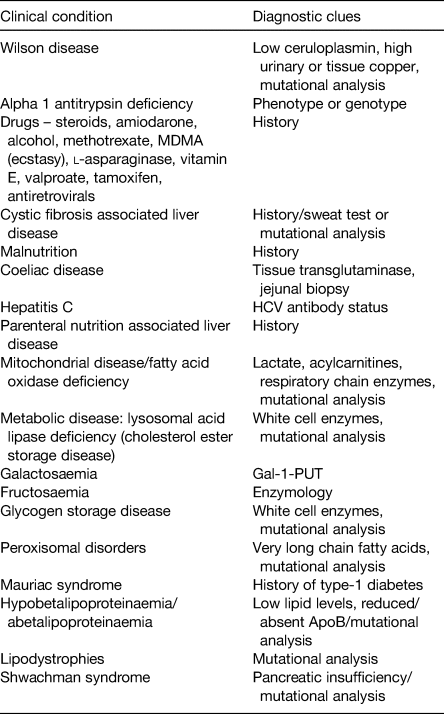
MDMA, 3,4-methyl endoxy metamphetamine; HCV, hepatitis C virus; Gal-1-PUT, galactose-1-phosphate uridyl transferase.
As liver biopsy is not always possible or felt appropriate, non-invasive methods are often used to determine the severity of disease in terms of fibrosis. Likewise, non-invasive methods of longitudinal monitoring are used as repeated biopsy is only rarely undertaken(Reference Fitzpatrick and Dhawan22). Although there is no consensus in terms of appropriate non-invasive measures, transient elastography is an imaging technique which is reliable in determining no fibrosis from significant fibrosis/cirrhosis(Reference Fitzpatrick, Quaglia and Vimalesvaran23, Reference Nobili, Vizzutti and Arena24). MRI protocols can differentiate different degrees of steatosis and magnetic resonance elastography is a promising tool for fibrosis staging, however the cost is often preclusive(Reference Xanthakos, Podberesky and Serai25). There are blood-marker algorithms available which have been derived from adult populations, including the NAFLD fibrosis index and Fib4(Reference Musso, Gambino and Cassader9, Reference Kaswala, Lai and Afdhal26), although none have been adequately validated in children. Algorithms which include age and markers of collagen turnover influenced by growth such as procollagen III peptide may not accurately reflect fibrosis in this population and rederivation of many of the available algorithms is needed. The paediatric NAFLD fibrosis index was developed using a discovery cohort of children and may be a useful tool, however external validation is required(Reference Alkhouri, Mansoor and Giammaria27).
Susceptibility to developing non-alcoholic fatty liver disease in childhood
Genetics
Genetic variation as a risk factor is well established in adult populations with NAFLD. This is borne out from both genome wide association studies and candidate gene studies(Reference Anstee, Seth and Day28). A smaller body of evidence exists in children with the condition, arguably a population which is more likely to demonstrate the effects of genetic variation(Reference Goyal and Schwimmer29).
NAFLD is clearly not a monogenetic disorder but variants in certain genes, namely PNPLA3, TM6SF2 and APOB have been found consistently to convey a susceptibility to NAFLD both in adults and in children(Reference Speliotes, Yerges-Armstrong and Wu30–Reference Goffredo, Caprio and Feldstein35). A single paediatric genome wide association study in a cohort of Hispanic boys has shown novel gene effects on histology distinct from those previously recognised in adult cohorts(Reference Wattacheril, Lavine and Chalasani36). Most importantly, the effect of these variants is seen most clearly in the setting of increased BMI(Reference Stender, Kozlitina and Nordestgaard37). The combination of genetic variants may also be of importance. In a study of 450 children in whom hepatic fat was measured by using MRI hepatic fat fraction, the combination of variants: PNPLA3 rs738409, TM6SF2 rs58542926, GCKR rs1260326 and MBOAT7 rs626283 explained 19 % of intrahepatic fat content variance(Reference Umano, Caprio and Di Sessa38). The effect of multiple loci on the development of steatosis as measured by intrahepatic fat content% is amplified in the presence of overweight and obesity. This variation is in genes involved in different pathways including lipid droplet modelling, lipogenesis, oxidative stress, immune system activation and fibrogenesis(Reference Eslam, Valenti and Romeo39) Understanding the genetic variation contributing to disease in an individual may allow more targeted prevention and reversal of disease.
The importance of the antenatal environment and early infant nutrition
The importance of the antenatal environment on metabolic programming has long been recognised(Reference Brumbaugh and Friedman40). It is known that NAFLD is part of the consequence of programming, although not understood how early in life this may manifest nor how reversible is the effect(Reference Wesolowski, Kasmi and Jonscher41). Animal models reflect that consequences of in utero exposure on liver metabolism(Reference Maranghi, Lorenzetti and Tassinari42). The ‘priming’ of a child's liver, even before birth, to injury, with lipid accumulation, increased oxidative stress, apoptosis and innate immune dysfunction may play a role in the development of NAFLD in these children(Reference Mouralidarane, Soeda and Visconti-Pugmire43).
Rodent models have demonstrated the effect on the liver of high-fat diet (HFD) in dams and the development of fatty liver in the offspring. Methionine choline deficient diet in pups has a similar yet not as dramatic an effect(Reference Wankhade, Zhong and Kang44). Not surprisingly HFD in dams and methionine choline deficient diet in pups leads to a cumulative effect on the liver of the offspring, with both DNA methylation alteration and a decrease in diversity gut microbiome showing the effect of the maternal HFD and possibly mediating the effect on liver histology(Reference Wankhade, Zhong and Kang44). In a study of differences in outcomes of male and female offspring of obese rats, Lomas-Soria et al. found a more significant effect on liver in male offspring raising some important questions about differences between the sexes in terms of NAFLD susceptibility mediated by early life exposure(Reference Lomas-Soria, Reyes-Castro and Rodriguez-Gonzalez45).
Mouralidarane et al. have clearly demonstrated in utero HFD exposure results in lipid accumulation in addition to elevated levels of oxidative stress and impairment of innate immunity in a mouse model(Reference Mouralidarane, Soeda and Visconti-Pugmire43). In this study, offspring mice were followed to 12 months following exposure to maternal obesity and a post-weaning HFD. Both factors were independent risk factors for steatosis and at 12 months for steatohepatitis and fibrosis. There was a significant increase in liver injury in those exposed to both maternal obesity and a high fat post-weaning diet. Increased mRNA expression of inflammatory cytokines and fibrogenic enzymes were also found(Reference Mouralidarane, Soeda and Visconti-Pugmire43).
Taken together, this ‘priming’ of the liver, which may then be exposed to years of excess nutrition and sedentary behaviour can result in a worse phenotype and/or more accelerated disease than would otherwise have been the case. Interestingly, a macaque model of HFD-fed macaques who were fed with a normal chow diet prior to breeding and during pregnancy produced offspring with substantially less steatosis than those who remained on the HFD(Reference McCurdy, Bishop and Williams46).
Human studies also reflect the importance of early life exposure. In a study of still births to mothers with gestational diabetes, pathological findings in post-mortem infants demonstrated 78·8 % steatosis in infants of mothers with gestational diabetes v. 16 % in infants of mothers who were not diabetic(Reference Patel, White and Deutsch47). In live-born infants, Brumbagh et al. investigated intrahepatic lipid content using MRI and found that this was higher in infants born to women who were obese and those with type-2 diabetes than in those born to normal weight women(Reference Brumbaugh, Tearse and Cree-Green48). As deposition of adipose tissue does not occur until the 3rd trimester, there is instead hepatic storage of the excess substrate that the fetus is exposed to during pregnancy in addition to in utero de novo lipogenesis in response to a high transplacental glucose supply(Reference Brumbaugh and Friedman40).
As 25–30 % of mothers are now obese at the time of conception, in utero exposure is an important epidemiological phenomenon(Reference Poston, Calevachetty and Cnattingius49).
Birth weight is also relevant in the later development of NAFLD in that the disease associates with both low and high birth weight in a large cohort(Reference Newton, Feldman and Chambers50). Again, the implication is that early exposure may mediate priming of the liver at a later stage of development suggesting that antenatal conditions may influence later presentation. The role of maternal obesity, method of delivery and breast-feeding all have a recognised effect on the infant gut microbiome which in turn is associated with later risk of obesity(Reference Wesolowski, Kasmi and Jonscher41). Infants with a decreased microbiome diversity at the age of 6 months were found to have a greater risk of obesity aged 7 years(Reference Kalliomaki, Collado and Salminen51). Breast milk promotes the colonisation of the intestinal microbiota transferring a low biomass of microbiota to the infant gut and providing oligosaccharides which act as prebiotics. Immune tolerance is promoted by the early pioneering gut microbiota which are decreased in number in offspring of obese women(Reference Wesolowski, Kasmi and Jonscher41).
As yet there is no evidence for a specific diet in pregnancy that will increase or decrease later risk of NAFLD in offspring. Breast-feeding appears to protect against NAFLD, although studies are not conclusive(Reference Ayonrinde, Oddy and Adams52).
Nutritional intake in childhood, growth and development
Body growth is unique to the paediatric population, necessitating higher body weight to energy requirements, compared to adults. Liver in childhood has lower probability of exposure to toxins such as alcohol and other environmental toxins. The complex interaction between nutritional toxins (saturated fats and sugar) with the liver cells of the maturing liver is less well studied however. Children and teenagers are the highest consumers of fructose(Reference Vos, Kimmons and Gillespie53, Reference Sluik, Engelen and Feskens54), with emerging evidence that this may be implicated in the development and severity of NAFLD possibly through increasing intestinal permeability and translocation of endotoxin(Reference Vos and Lavine55, Reference Jin, Willment and Patel56).
Several studies of fructose consumption and association with NAFLD severity in children have been reported(Reference Vos and Lavine55, Reference Mosca, Nobili and De Vito57). A UK study in children with NAFLD failed to show a distinct difference in qualitative dietary intakes in children with NAFLD v. obese controls without NAFLD(Reference Gibson, Lang and Gilbert58), although undoubtedly it is the underlying susceptibility coupled with the trigger that mediates the injurious effects. Interestingly the effects of fructose on endotoxaemia which, as earlier may be an important trigger in hepatic inflammation, were seen more prominently following fructose bolus in children with NAFLD v. those without NAFLD. Children were given a fructose sweetened beverage with each meal in a 24 h cross over study. In another part to this study, children with NAFLD were subjected to a fructose drink v. a glucose sweetened drink with meals for a 4-week period, with the fructose group demonstrating higher endotoxaemia(Reference Jin, Willment and Patel56). In a study by the same group exposing children with NAFLD (n 9) to fructose or glucose beverage in a cross over study compared to matched controls without NAFLD (n 10), the TAG incremental area under the curve was higher in the fructose exposed groups and to a greater extent in those with NAFLD (P = 0·019)(Reference Jin, Le and Liu59).
The association of NAFLD and insulin resistance is clearly established. Periods of maximum insulin resistance during the lifetime include pregnancy and the preadolescent, particularly in boys. It may be the case that during these periods of maximal insulin resistance, fatty liver develops in susceptible individuals(Reference Eslam, Valenti and Romeo39).
Histology and differences in paediatric non-alcoholic fatty liver disease
The NASH Clinical Research Network in the USA convened a group of expert hepatopathologists to develop a scoring tool in NAFLD for use as an outcome measure in clinical trial(Reference Kleiner, Brunt and Van Natta60). This tool known as the NAFLD Activity Score separately assigns severity of steatosis (0–3), inflammation (0–3) and ballooning (0–2) to give a cumulative score. Fibrosis is scored separately by the NAFLD Activity Score with 0 indicating no fibrosis, F1 some pericentral fibrosis (1b is periportal fibrosis), through F2 and F3 (bridging fibrosis) to F4 nodular change or cirrhotic change. Although children were used in the initial discovery cohort, it has since become clear that the pattern of disease in many children is distinct and that the NAFLD Activity Score does not reflect these features.
CYP frequently though are found to have type-2 disease which is a more periportal tract based pattern(Reference Yeh and Brunt61). Fifty to seventy percent have a type-2 pattern or a crossover between type 1 and type 2(Reference Fitzpatrick, Mitry and Quaglia62–Reference Schwimmer, Behling and Newbury64). Type-2 disease has been studies in the context of severity, and both adults and children with histology more likely to have higher stage of fibrosis(Reference Brunt, Kleiner and Wilson65, Reference Africa, Behling and Brunt66). It is not clear if this pattern is due to a separate pathophysiological mechanism, although it certainly seems to be a marker of more advanced NASH.
The pathophysiology of why the location of inflammation and fibrosis varies is not understood. One possibility which may in part explain the preferential distribution is the concept of zonation. Along the liver lobe, the hepatocytes have different functions depending on their location in the lobule. For example, periportal hepatocytes are functionally specialised in Kreb's cycle amongst other tasks and those in the area of the central vein are rich in cytochrome P450 enzymes. The exposure of the liver to dietary components is more marked in zone 1 than in zone 3 (pericentral)(Reference Nobili, Mosca and De Vito67).
It is likely that there is an evolutionary or a developmental reason for this localisation. It is possible that the repair mechanism in the liver, or rather the propensity and vigour with which the liver regenerates is different according to maturity and developmental stage. Fibroblast-specific protein 100, a fibroblast marker, has increased expression in interlobular ductal cells in paediatric control (healthy) liver than adult control liver, demonstrating that ductal epithelial cells in children have a greater tendency to exhibit features of mesenchymal cells and implying epithelial mesenchymal transition is more active within portal tracts in children(Reference Omenetti, Bass and Anders68, Reference Omenetti, Choi and Michelotti69).
An elegant body of work by Anna Mae Diehl and colleagues describe the localisation of hedgehog (Hh) signalling in the periportal region(Reference Omenetti, Choi and Michelotti69, Reference Swiderska-Syn, Suzuki and Guy70). Hh signalling is expected to be more active in children. The Hh pathway is a pivotal morphogenic signalling pathway central in organogenesis. The pathway becomes quiescent in the liver during adolescence and reactivates in the presence of injury. Thus Hh signalling is involved in the activation of the regenerative pathway of liver. Healthy paediatric livers demonstrate more Hh signalling than healthy adult livers. Increased exposure to Hh ligands stimulated cells involved in wound healing. Normally these cells are tightly regulated however when deregulated, chronic inflammation, fibrosis and liver cancer may result. If children possess a proportionally greater number of Hh ligand producing cells and Hh responsive cells, then children may be at particular risk from insults that promote activation of the Hh pathway(Reference Swiderska-Syn, Suzuki and Guy70). Guy et al. examined the association of portal fibrosis with the activation of the regenerative Hh signalling(Reference Guy, Suzuki and Abdelmalek71). The number of Hh responsive cells correlated closely with both portal injury and the severity of fibrosis in liver biopsies of adult's patients with NAFLD (P < 0·0001) supporting a relationship between Hh activation and liver damage. For this study, immunohistochemistry for Hh-ligand and Gli1 (Hh responsive cells) was undertaken on ninety biopsies within the NASH Clinical Research Network repository. A follow-on study in children again demonstrated more Hh activation with good correlation of Hh ligand expression and Hh responsive cells to liver injury and severity of disease(Reference Swiderska-Syn, Suzuki and Guy70).
In contrast, adult livers have more active pericentral Wnt signalling which is involved in glutamine synthesis, drug metabolism, bile acid and haem synthesis, regeneration and the response to oxidative stress(Reference Gebhardt and Matz-Soja72).
Natural history and targeting intervention
The natural history of paediatric NAFLD has not yet been well described. Case series including one of 20 years describe occasional need for transplantation in young adulthood(Reference Gebhardt and Matz-Soja72, Reference Molleston, White and Teckman73), but the rate of progression over years is not known(Reference Feldstein, Charatcharoenwitthaya and Treeprasertsuk74). Paired liver biopsies were analysed from 122 children who had enrolled in the placebo arm of two randomised clinical trials in NAFLD. Placebo groups were given lifestyle counselling for a period of 52 or 96 weeks. Over this time, fibrosis progressed in 23 % and improved in 34 %(Reference Xanthakos, Lavine and Yates75). In children who present in the pre-teenage years, already established with stage 2–3 fibrosis, the rate of progression may be accelerated(Reference Goh and McCullough76). The heterogeneity within the population is not yet well understood but variability in phenotype may be due to underlying genetic susceptibility rather than environmental exposure.
The relative histological severity at presentation in children with this disease and the fact that alcohol is an unlikely confounding factor, means that paediatric NAFLD serves as an excellent disease model in evaluating pathophysiological mechanisms of development and thus targeting intervention in predisposed individuals.
Lifestyle change resulting in weight loss is an effective way of reversing or stabilising disease. In a meta-analysis of adults with NAFLD, weight loss of 5 % or more resulting in improvement in steatosis whereas ≥7 % weight loss resulted in improvement in steatohepatitis and in those with ≥10 % weight loss, all features of NAFLD were reversed or stabilised(Reference Musso, Cassader and Rosina77). In a prospective study again in adults these outcomes were confirmed(Reference Vilar-Gomez, Martinez-Perez and Calzadilla-Bertot78). Only 50 % of the cohort were able to achieve 7 % of weight loss or more though of note in 94 % of those who achieved ≥5 % weight loss, fibrosis stabilised or reversed.
A small number of trials in children have demonstrated similar results. In an Italian study of eighty-four children, weight loss (average 4 kg) over a 12 months period achieved an improvement in alanine aminotransferase and steatosis on ultrasound(Reference Nobili, Marcellini and Devito63). Of the eighty-four children, fifty-seven (70 %) children completed the 12 month intervention with a mean 8 (sd 4·7) % decrease in weight in the fifty two who were overweight or obese. In the remaining five children who completed the study and had a BMI <85th centile, weight remained unchanged but alanine aminotransferase levels improved in two and normalised in three patients. Another paediatric study of intensive lifestyle intervention in North America achieved improvement in BMI z-score with a decrease of 0·1 U (P < 0·05) baseline to 1 year and decrease in alanine aminotransferase in 69 % of the follow-up cohort. There was a 53 % drop-out rate however(Reference DeVore, Kohli and Lake79).
Insulin resistance is well recognised as an accompanying feature in 70 % of those with NAFLD, although not clearly associated with more or less severe disease in terms of inflammation and fibrosis. Insulin sensitisers have been studied frequently in clinical trial but without a consensus as to their effectiveness. In adults, the PIVENS trial was a randomised controlled trial of pioglitazone, vitamin E and placebo in treatment of adults with NASH but without type-2 diabetes over 96 weeks(Reference Chalasani, Sanyal and Kowdley80). The specified outcome measure of improvement in the NAFLD Activity Score by ≥2 points was not reached with significance using pioglitazone. In children the TONIC trial compared metformin, vitamin E and placebo in 173 children with biopsy proven NAFLD(Reference Lavine, Schwimmer and Van Natta81). Again, there was no statistically significant difference in the outcome measure (improvement in alanine aminotransferase) in those treated with metformin compared to those with placebo. Interestingly a change in homoeostatic model assessment-insulin resistance was not seen in those treated with metformin suggesting perhaps that treatment dose may have been insufficient or that selecting out those with insulin resistance may be more appropriate. The likelihood is that as the disease is relatively heterogeneous, treatments may need to be individually tailored.
Oxidative stress, most likely mediated by accumulation of fat droplets and the low grade inflammatory response accompanying visceral adiposity in the setting of genetic predisposition, is known to occur and perpetuate injury in NAFLD. Antioxidants, most commonly vitamin E have been trialled. Vitamin E has been shown in PIVENS to reduce steatohepatitis(Reference Sanyal, Chalasani and Kowdley82) and in TONIC to reduce ballooning. A significant difference in the main outcome measure (alanine aminotransferase) in the paediatric study TONIC was not found however(Reference Lavine, Schwimmer and Van Natta81).
Current recommendation in adult practice is to use vitamin E in non-diabetic patients with biopsy proven NASH(Reference Chalasani, Younossi and Lavine83). The PIVENS study has not yet been validated adequately however and thus caution is advised generally. There is no consensus on vitamin E use in children with NAFLD.
Ursodeoxycholic acid is another antioxidant which has been used in trial though without consistent effects. Cysteamine bitartrate works by increasing glutathione synthesis. This was used in the CyNCh trial in children with NAFLD in comparison to placebo over 52 weeks. Although there was an improvement in alanine aminotransferase, the primary outcome of histological improvement was not achieved with statistical significance(Reference Schwimmer, Lavine and Wilson84).
The gut microbiome and its influence on bile acid metabolism is a new and emerging area in NAFLD and one which has led to the development of a cluster of new potential therapeutic agents. It is now recognised that the consumption of obesogenic foods leads to a change in the microbiota of the gut and to an increased permeability of the intestinal epithelium(Reference Kalliomaki, Collado and Salminen51). The microbiota influence the development of NAFLD through several different mechanisms among which is the production of SCFA which stimulate de novo triglyceride synthesis in the liver, modulation of choline metabolism (involved in VLDL synthesis), lipopolysaccharide production and of course modulation of bile acid metabolism(Reference Chen, Thomsen and Vitetta85).
The association between obesity and gut microbial change is well established in the form of a lower diversity of microbiota, although it is not yet clear whether this is a causal or a secondary effect. The change in microbial species leads to a higher concentration of secondary bile acids in the enterohepatic recirculation. In healthy individuals, bile acids play an important role in glucose and lipid metabolism regulating the negative feedback loops. Bile acids act via cellular receptors including farnesoid X receptor and G protein-coupled bile acid receptor to affect metabolism(Reference Chen, Thomsen and Vitetta85, Reference Kuipers, Bloks and Groen86).
Probiotics and prebiotics are an alternative way to attempt to re-establish a healthy diversity of flora however there is no clear guidance on specific formulation or dose(Reference Chen, Thomsen and Vitetta85). Weight loss, whether dietary induced or following bariatric surgery has been found to have a similar effect. Other important ways to disrupt the enterohepatic recirculation of bile thus decreasing the total bile pool is by using farnesoid X receptor agonists(Reference Neuschwander-Tetri, Loomba and Sanyal87).
The process of fibrosis is in itself the common end point of several processes; steatosis with oxidative stress, inflammation and apoptosis. Prevention of fibrosis is optimal although antifibrotics are entering the clinical trial arena.
Although there is major interest in the search for the magic bullet for NAFLD, in reality the heterogeneity of the condition means that individualised treatment is needed, for example a patient with markers of increased oxidative stress may respond better to an antioxidant whereas those who have a poorly diverse microbiome may respond better to its modulation.
Everything considered, the most effective treatment (reversal) of NASH/steato-fibrosis is weight loss.
As discussed, there is evidence to show that interventions resulting in 5–10 % weight loss results in improvement in NASH(Reference Musso, Cassader and Rosina77). In >50% however, this, weight loss is not achieved. The barriers to this weight loss need to be addressed. In children, weight loss per se may not be necessary as they grow into their centile. Thus, it is difficult to be prescriptive regarding the quantity of weight that needs to be lost and often CYP may require a BMI z-score to suit their specific genetic predisposition. Interestingly in a recent study of lifestyle intervention, there was a greater improvement in steatosis with weight loss in those with a higher genetic risk profile(Reference Ma, Hennein and Liu88).
The importance of recognising mental health
Why does lifestyle intervention not work for all? Adherence may be the principal challenge and given that CYP are almost entirely dependent on family being involved in their goal, this increases complexity of the problem.
Social deprivation, a lack of education about the importance of a healthy lifestyle and cost of fresh, unprocessed foods are all important considerations and not all which can be successfully managed in the context of a clinical lifestyle intervention programme.
An underexplored area in ability to undertake and maintain lifestyle change in this population is the importance of mental health. The prevalence of depression and anxiety in CYP and adults with obesity is significant(Reference Leon, de Klerk and Ho89, Reference Mannan, Mamun and Doi90). Depression is over-represented in adults with NAFLD as demonstrated in survey of 567 patients as part of the NASH Clinical Research Network with 53 % exhibiting subclinical depression and 14 % clinical depression, 45 % with subclinical anxiety with 25 % clinical anxiety. There were some histological correlates with presence of depression(Reference Youssef, Abdelmalek and Binks91). A small number of studies have shown that quality of life in both adults and children with NAFLD are significantly inferior to normal controls. In a survey of 239 children apart of the NASH Clinical Research Network, children with NAFLD had worse total physical and psychological quality of life scores as determined by the PedsQL questionnaire. Fatigue, trouble sleeping and sadness accounted for almost half the variance in quality of life scores(Reference Kistler, Molleston and Unalp92). In adults, degree of tiredness reported by patients with NAFLD was similar to that in women with primary biliary cirrhosis, a condition in which fatigue is often profound(Reference Newton, Jones and Henderson93). Although obstructive sleep apnoea may contribute to daytime somnolence in obesity, non-obstructive sleep apnoea sleep problems and the pathogenesis of this fatigue has not yet been systematically studied in NAFLD.
Response to lifestyle intervention in NAFLD is significantly less effective in the presence of depression particularly in the presence of acute major depressive disorder(Reference Tomeno, Kawashima and Yoneda94). Although some studies in adults have used a psychological approach to lifestyle change in obesity related disorders, no trials in children are reported(Reference Gelli, Tarocchi and Abenavoli95–Reference Bellentani, Dalle Grave and Suppini97). This approach included counselling sessions and cognitive behavioural therapy.
Both adult and paediatric studies have drawn a link between depression, inflammation and the coexistence of complications of obesity, most frequently visceral adiposity associated conditions(Reference Kiecolt-Glaser, Derry and Fagundes98–Reference Byrne, O'Brien-Simpson and Mitchell100). When combined with predisposing factors, immune challenges can lead to exaggerated or prolonged inflammatory responses(Reference Kiecolt-Glaser, Derry and Fagundes98). The resulting sickness behaviours, depressive symptoms and poor lifestyle choices may lead to further inflammation. This pattern suggests that effective treatment options which target this vicious cycle may halt both the amplified inflammation and depressive symptoms.
Conclusions
The recognition of NAFLD in children is important in order to prevent progressive disease through young adulthood. Although closely associated with overweight and obesity, genetic and epigenetic clearly lead to susceptibility to the disease in the setting of an unhealthy lifestyle. At presentation 15 % of children will have bridging fibrosis and thus a relatively severe degree of liver injury. Liver injury is reversible however, and lifestyle change which addresses a mismatch in energy balance, is fundamental but achievable in less than 50 % of those undergoing an intensive programme with dietary advice and support. The reasons for this are as yet unclear but in part may be mediated by the high prevalence of depression and anxiety in those with this disease. There is a growing industry in treatments which target one of more pathophysiological process involved. Stratifying patients with NAFLD according to their susceptibilities and recognising comorbid mental health problems will facilitate individualised therapy and hopefully more successful outcomes.
Acknowledgements
The author acknowledges J. B. Moore and the Nutrition Society for the opportunity to speak at the Annual Conference.
Financial Support
None.
Conflict of Interest
None.
Authorship
The author had sole responsibility for all aspects of preparation of this paper.



