




Introduction
Analyses of the postcolonial state in Africa have followed two paths. One viewpoint adheres to the territorial borders of the postcolonial state, emphasising state-centred rights and upholding of the views of former colonies-turned-states. The opposing viewpoint highlights people-centred histories and rights and questions the inviolability of colonial borders.Footnote 1 Postcolonial states were forced to strike a balance between upholding their territorial integrity and allowing nationalist movements to exercise their right to self-determination, as secessionist movements spread throughout Africa in tandem with newly liberated countries’ acquisition of UN membership. Notable instances of nationalist agitations included the state of Katanga’s bid for independence from Congo-Leopoldville, the Republic of Biafra, which sought independence from Nigeria, and the Rwenzururu Kingdom’s declaration of independence from Uganda. While the former two were highly publicised in international forums, the Rwenzururu movement and its struggle for self-determination in Uganda are comparatively less known. This article accordingly focuses on the movement’s repeated attempts to achieve autonomy between 1962 and 1976, mainly via UN channels, and asks why it was not effective in internationalising its cause.
The Rwenzururu movement was the result of the Bakonzo and Baamba people banding together in their goal to emancipate themselves from Batooro control, all of whom represent different ethnic groups in Uganda.Footnote 2 Rwenzururu people initially sought to establish a separate autonomous kingdom within Uganda because of their discontent with the state’s treatment but later tried to break away completely. While the landlocked East African country was home to a number of national groups, cases of sub-nationalism rooted in secessionist aspirations were suppressed by the government.Footnote 3 The Rwenzururu movement was no exception to this, but its leaders persisted in their separatist activities and assumed different strategies of opposition to further their cause. This article will outline the multiscalar nature of Rwenzururu mobilisation as their activism transcended the local and extended into the regional and international spheres.
On the local scale, the movement established the Bakonzo Life History Research Society (BLHRS) in 1954 under the helm of Rwenzururu leader Isaya Mukirane. The BLHRS was a cultural revitalisation effort intended to show the historical distinctiveness of the Bakonzo people: a distinctiveness that was subsequently employed to rally support among the Baamba and Bakonzo (hereafter collectively referred to as ‘Rwenzururians’) and to establish the notion that distinct people deserved a distinct homeland. On the regional scale, Rwenzururians made attempts to enlist the support of neighbouring countries in the post-independence period. They worked to garner continental backing for the attainment of independence by drawing on Pan-African principles of unity and African sovereignty. However, the only support offered to the rebels came from across the Rwenzori Mountains in the Congo. Lastly, on the international scale, the Rwenzururu movement petitioned the United Nations for over a decade to ask for protection from the Ugandan state’s violence as well as to be granted self-determination. Whether these petitions were ever received or considered by UN officials is unclear – no mention of Rwenzururu appears in General Assembly debates, and their petitions are absent from the UN’s vast catalogue. The act of petitioning nevertheless demonstrated the movement’s awareness of global political currents and conviction of their coalition’s legitimacy under international law. The article will thus examine how Rwenzururu activists appropriated anti-colonial discourse to appeal to transnational powerbrokers and establish a right to sovereignty.
Research on the Rwenzururu movement often focuses on its origins, its struggles for self-determination, and the use of protest songs.Footnote 4 Renewed scholarly interest in the movement, however, has shifted the parameters beyond the question of self-determination through the waging of guerrilla war. For instance, the historian Evarist Ngabirano investigates how ethnicity functions in Ugandan local government politics and how colonial tactics that homogenised ToroFootnote 5 contributed to the perpetuation of ethnicity in politics.Footnote 6 Most of the work on Rwenzururians glosses over the movement’s attempted relationship with the United Nations, which is the primary focus of this article. The article contributes to the growing literature on non-state decolonisation at the UN, including Lydia Walker’s work on the nationalist claims-making of the Naga people and Emma Kluge’s study of the West Papuan struggle for independence (see this special issue).Footnote 7 Both historians reveal the myriad forms decolonisation takes for minority people whose claim-making at the UN has been usurped by the larger nation-states of India and Indonesia, respectively.
The article first introduces the movement, followed by an overview of its historical grievances. It then discusses the Bakonzo Life History Research Society and its shaping of local politics and proceeds to explore the role of the Congo as an ally to the movement. Finally, it presents Rwenzururu’s claims-making at the United Nations and its opportunities and limitations.
Although the Rwenzururu movement sent petitions to the UN between 1962 and 1976 to request protection and recognition, it must be noted that it remains unknown whether any of these petitions reached their intended recipient in New York City. I discovered two letters located in the United Nations Archive and Records Management Section that referred to the movement (but were not written by Rwenzururians). One document detailed Ugandan diplomat Apollo Kironde’s message to Secretary-General U Thant on 15 February 1962 to inform him of the presence of state troopers along the Uganda-Congo border to stop secessionist activities. The letter curated the Bakonzo and Baamba as a domestic matter irrelevant to the UN.Footnote 8 Under-Secretary Ralph J. Bunche responded on behalf of Thant, stating that the message was relayed to the United Nations Operation in the Congo to avoid any misunderstandings if the Ugandan military were to commence its operations in the porous border region. The Rwenzururu petitioners cast doubt on whether letters sent out ever crossed Uganda’s borders. They speculated that the Ugandan government was intercepting their correspondence to limit the internationalisation of their campaign for self-determination.Footnote 9 Despite this ambiguity, this article explores plausible reasons for the UN’s silence, with the presumption that some of the petitions may have, indeed, reached the organisation. The sheer vastness of the UN archives—many of which are undigitised or even catalogued—means that the petitions may still be there even though UN archivists have not been able to confirm the presence of these materials.
Dissent and Discontent: A People’s Relentless Subjugation
The emergence of the Rwenzururu movement in postcolonial Uganda is often characterised as sudden, but its roots and grievances can be traced to the colonial period.Footnote 10 Baamba and Bakonzo ethnic groups saw an opportunity to unite over their shared past struggles and future visions of autonomy as Uganda’s independence neared in 1962 and the potential to redraw territorial boundaries appeared.Footnote 11
The earliest evidence of Rwenzururian oppression dates to the 1800s, when the Batooro forcibly sold Rwenzururians to Arab slave traders. Baamba and Bakonzo resistance was futile as the Batooro enjoyed the support of the Arabs, who supplied them with arms to facilitate the capture of Rwenzururians.Footnote 12 Marginalisation continued in colonial times, when the British, under the auspices of the Anglo-Belgian Agreement that separated Bakonzo and Baamba in the Belgian Congo from their counterparts in British Uganda, created the Kingdom of Toro within the borders of Uganda.Footnote 13 The British enforced a dualistic system of indirect rule that created a political hierarchy involving a native administration and a central administration as they began to consolidate their rule in Uganda. Native administrations were often demarcated along ethnic lines, which produced uneven governance structures that would endure long after Uganda’s independence. British officials sanctioned the kingdom’s ethnic Batooro to hold a majority in leadership by decreeing that the Bakonzo and Baamba groups be absorbed into the Toro Kingdom in 1900, concomitantly acknowledging the Batooro group as the primary natives to the kingdom.Footnote 14
Bakonzo and Baamba, who made up roughly 40% of the Toro Kingdom’s population, were unable to claim land and rights available to other native ethnic groups. This not only accelerated the unification of Bakonzo and Baamba struggles, but it also legitimised asymmetrical power relations as the norm in colonial Uganda. Bakonzo and Baamba were not granted a say in the administration of the Batooro-led district, and, as a Rwenzururian proclaimed, ‘’for 70 years, the Bakonzo had been ruled by the Batooro ‘like slaves.’’’Footnote 15 The two factions were second-class citizens who were systemically excluded from politics, schooling, and social life while also facing grievous neglect in other realms, causing them to articulate dissenting positions soon after losing autonomy. British officials were unsympathetic to this suffering, despite incessant name-calling, economic ostracisation, and humiliation in public spaces such as the market, where the Baamba and Bakonzo were not allowed to trade or shop freely.Footnote 16 In fact, the colonial administrators cultivated a very potent native authority that exercised control over the so-called inferior natives in a totalitarian way, effectively creating what Syahuka-Muhindo refers to as the ‘internal colonialism’ of the Batooro over the Baamba and Bakonzo.Footnote 17 The Batooro simultaneously assumed the roles of oppressed and oppressor, as they subjected the Baamba and Bakonzo to unfair treatment while also being dominated by the British. As such, the Rwenzururu people suffered from ‘double colonialism’—first, from the British Empire and second, from the British-approved subjugation of the Batooro majority over the Baamba and Bakonzo minority in colonial Uganda.
These grievances eventually led to protests which became the Rwenzururu movement. It originated in the Rwenzori Mountains, commonly referred to as the Mountains of the Moon.Footnote 18 Bakonzo schoolteacher Isaya Mukirane and Yeremiah Kawamara and Petero Mupalya from the Baamba were cofounders of the movement. They collectively demanded equal status within the Toro Kingdom. The three leaders, together with seventeen other Baamba and Bakonzo delegates, walked out of a session at the Toro Rukurato (parliament) in March 1962, when their demands to be recognised as one of the three ethnic tribes in Toro were dismissed. This further signalled that they would no longer disillusion themselves with hopes of equal rights,Footnote 19 and precipitated the open pursuit of a separate district. The movement’s leaders were imprisoned not long after the assembly for challenging Batooro authority. Longings for autonomy continued, and in the late evening of 15 June 1962, an anonymous broadcast on Radio Uganda announced that on the last day of the month, Bwamba, Busongora, Burahya, and Bunyangabu counties, where the majority of the population was Baamba and Bakonzo, would proclaim their independence.
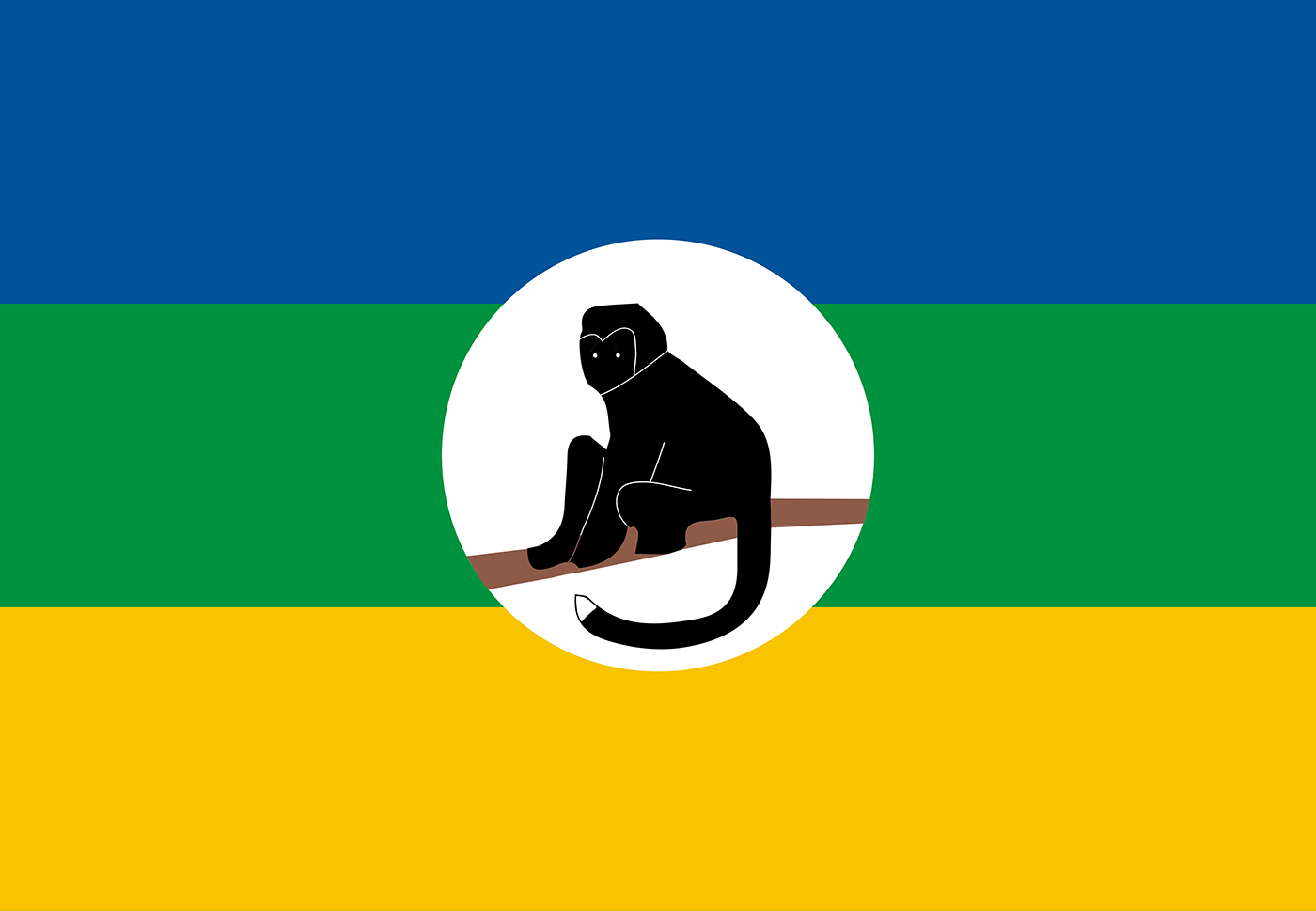
Radio is a potent medium in Uganda that both broadcasters and listeners have used to debate and subvert the political agendas of the government.Footnote 20 Mukirane employed radio to circulate anti-colonial sentiments across the country before his imprisonment, when he declared the Rwenzururu Kingdom free from the colonial shackles of the Ugandan state. He declared Rwenzururian independence on 30 June 1962, three months before Uganda officially gained its freedom on 9 October 1962. This was a deliberate ploy to dissociate the Rwenzururu Kingdom from Uganda and to delineate two separate entities that each gained independence from their respective colonial rulers. Mukirane instructed Yohana Muhindo, the Baamba and Bakonzo spokesperson, from prison to proceed with independence celebrations and to alert the press of their upcoming self-rule. The celebration took place at Bukuku, Burahya, a place that held particular meaning for Mukirane, and the Rwenzururu flag was raised.Footnote 21 Mukirane hoped that the Rwenzururu Kingdom’s sovereignty would be lauded widely across the continent as yet another African nation that had gained its freedom from colonising forces. While Rwenzururians exercised agency in declaring themselves sovereign to (inter)national actors, the movement would soon discover that decolonisation was not achieved purely through a self-declaration of statehood, nor did the radio broadcast transcend Uganda’s borders. Following the rise of a remarkably complex situation, the movement expanded in scale and visibility quickly after the independence celebration, and it would significantly influence Ugandan politics for decades to come (figure 1).
‘’Bakonjo People (Uganda-Dem. Rep. Congo). Rwenzururu Movement, 1962’’ Flags of the World, https://www.fotw.info/flags/ug-bakon.html (accessed 10 January 2024).

Figure 1 Long description
The flag features three horizontal stripes of equal width. The top stripe is blue, the middle stripe is green and the bottom stripe is yellow. In the center of the flag is a white circle containing an illustration of a black monkey sitting on a brown branch. The monkey is positioned facing left, with its tail hanging down. The design is simple and stylized, focusing on the central emblem within the circle.
The Rwenzururu Movement: A Case for Othering
Rwenzururians sought to establish their national identity and history to further their legitimacy. They believed themselves to be distinct from the Toro people, which drove the creation of the Bakonzo Life History Research Society in 1954 under the helm of Mukirane.Footnote 22 The Society served as the precursor to the Rwenzururu movement by laying the groundwork for independence claims that quickly swept throughout the Rwenzori Mountains. A group of indigenous intellectuals who were members of the BLHRS spent most of their time gathering data to support their demands to the Toro government for political representation inside the Toro Kingdom and acknowledgement of the Baamba and Bakonzo tribes as equal members of the community.Footnote 23 The BLHRS traced the roots of Bakonzo heritage, habits, customs, folklore, and language to intentionally differentiate themselves and claim distinctness from the Toro people. In doing so, Bakonzo nationalists distinguished their practices from Toro customs by reclaiming the notion of ‘othering’ as a means of subverting repression.
The researchers were diligent in investigating multifaceted aspects of Bakonzo life and simultaneously instrumentalised their findings as a source for both the instilling and dissemination of ethnic patriotism. Members of the BLHRS were encouraged to see themselves as historians whose work legitimised them as the rightful advocates to speak on their lives by conducting this research on the past and present of the marginalised Bakonzo people.Footnote 24 For instance, Rwenzururu nationalists placed emphasis on the uniqueness of the Ihukonzo language and its power in validating, structuralising, and humanising Bakonzo identity away from the dominant Toro culture through the study of their locally spoken languages.Footnote 25 The BLHRS mirrored nationalist movements across the decolonising world by propagating language as a meaningful connecting factor in the construction of a shared identity that surpassed boundaries for Ihukonzo-speaking groups based not only in western Uganda but also in eastern Congo and the Diaspora.Footnote 26
Research carried out by members of the Society did not happen in isolation, and Mukirane received letters from ‘outsiders’ requesting he share their findings. Such figures included the British colonial administrator, David Pasteur, who was keen to obtain manuscripts written in Lukonjo so that he could improve his knowledge of the language. He wrote to Mukirane requesting access to a Lukonjo translation of the Bible that he hoped to borrow.Footnote 27 According to Pasteur, this was the only text written in Lukonjo, a striking contrast to Rutooro, the lingua franca of the region.Footnote 28 This affirmed the Society’s need to promote the visibility of the Lukonjo language, but it also made them wary of how Rwenzururian history might be narrated by others. The Bakonzo believed that they, and they alone, should exercise agency over their lives and their accompanying stories. Mukirane therefore discouraged foreign researchers from writing about them. To illustrate, when Norwegian anthropologist Axel Sommerfelt expressed interest in undertaking a reconnaissance trip to Sabwali Hangali in 1958 to undertake an intensive ethnography on the Bakonzo, Mukirane quickly made it known that Sommerfelt was not welcome, as the BLHRS had already begun collating their own history without external influence. Rather, he instructed Sommerfelt to “choose another tribe that has not yet started a similar business,”Footnote 29 showcasing the assertiveness of the BLHRS in positioning themselves as the sole proprietors of their history.
Rwenzururian intellectuals diligently gathered historical evidence to advance their claims to past uniqueness and boost the political claims for the future put forth by the people of the Mountains of the Moon.Footnote 30 One way members of the Society reaffirmed their commitment to the preservation of their cultural heritage was through the passing down of knowledge via oral history, especially as they internalised the notion that “We Bamba/Bakonjo are created different from Batooro in our build, appearance, traditions, languages, customs, marriage, native dances, circumcision, and mourning for our deceased relatives.”Footnote 31 Supporters were encouraged to pass down knowledge on cultural customs and traditions and thereby act as teachers about the past, maintainers of ethnic heritage, and custodians of invaluable culture.Footnote 32 Collective memories were called upon alongside this to capture Bakanzo vernacular to further carve out an ethnic enclave designed to safeguard the Bakonzo’s future.
The process by which Rwenzururu researchers collated their past did not provide space for conflicting factions, and dissenters were reprimanded.Footnote 33 Mukirane constructed a tribalised historical narrative that required the unyielding devotion of fellow Bakonzo people to justify secessionist aspirations. Any protests against the authoritarian traces he exhibited were resolutely met with the statement that only “a kingdom fights a kingdom.”Footnote 34 Mukirane’s history-writing venture was not only meant to foreground the distinct nature of Bakonzo ethnic heritage but also to position him as the principal leader of the BHLRS and, later, the Rwenzururu movement. This raised the question of who regulated the progress of ethnic and cultural heritage preservation. Supporters eventually agreed that the initiative was about something far greater than Mukirane and his leadership style. The Bakonzo consequently mobilised around this notion of cultural uniqueness, demanding the Toro administration, in turn, make provisions in terms of political representation, access to healthcare, improved roads, and, inevitably, the inclusion of Lukonjo as one of the languages of instruction in schools.Footnote 35
The BLHRS’s nationalist historians sought to highlight the Rwenzururu’s rich history by disseminating the politics of ethnicity. It was meant to foreground the competence of its leaders in ruling their own societies and accord the skills needed in creating an entity that relegated the Ugandan central government to its periphery.Footnote 36 History writing is intrinsically tied to the concept of the ‘nation-state’, and it is the most widely used political tool to ascribe people to boundaries and states.Footnote 37 Mukirane was aware of the potential of the BHLRS project in rallying support locally among the Baamba and Bakonzo during the colonial rule, and he encouraged the two groups to envision their own nation-state that they should protect by any means necessary.Footnote 38 The Baamba were not affiliated with the BHLRS, but they had a series of fleeting organisations of their own, some of which had loose connections with the BHLRS. This included the Musana Society, which consisted of mostly Baamba petty bourgeoisie who used their platform to demand equality within the Toro Kingdom.Footnote 39 Moreover, the architects of the BLHRS did not abandon the writing of ethnic histories after Uganda’s independence on 9 October 1962 and instead used them to critique the state as a colonial antagonist. The process of history writing continued to be used to mobilise a local audience against the national leadership, with surprisingly little state interference.Footnote 40 Ultimately, the audience of the BLHRS became convinced that their local identities no longer fit within Ugandan nationalism.
The Birth of a Movement: Unification and Disunification
The Baamba and Bakonzo aligned forces in 1962 and collectively began to call themselves Rwenzururians. They realised that joining forces was the only way to “throw off the yoke of Batooro rule,”Footnote 41 and therefore deliberated ways to be included in regional and national decision-making processes and have their customs upheld in the public domain. The movement made peaceful demands at first, but as conflicts grew more frequent, so did the image of the sub-national group as a hindrance to national unity. Mukirane, Kawamara, and Mupalya offered assurances that they would work with the government to address their suffering in a way that would benefit all parties that would prove futile.Footnote 42 Baamba’s and Bakonzo’s attempts at negotiating equal status within the Toro Kingdom also failed drastically, which eventually led to renewed demands claiming the right to an entirely separate district. This request was similarly met with resistance from the central government together with arrogant dismissals from the Batooro district government. Trust in the Ugandan government therefore waned, and protests took on a more volatile nature.
Rwenzururu frontman Mukirane made concerted efforts to internationalise the Rwenzururian plight from an early stage. He tasked a two-man delegation to travel to London to present their demand for a separate district to the Colonial Secretary in the months leading up to Uganda’s liberation.Footnote 43 However, hopes of reaching an international audience were stymied. British colonial administrator Sir Walter Coutts announced that the Ugandan Constitutional Conference, previously held in 1961, dictated that no new districts would be created before the country’s independence after receiving an appeal to redress Rwenzururian grievances. The British government did not want to redraw internal borders along ethnic lines because it feared another ‘Congo situation.’Footnote 44 Furthermore, Mukirane, Kawamara, and Mupalya were sentenced to eight months in prison only hours before the final constitutional conference took place in London in June 1962.Footnote 45 Batooro judges passed this harsh judgement to interfere with their travel plans when they discovered that the Rwenzururian ‘troublemakers’ intended to attend the constitutional talks.Footnote 46 Rwenzururians were therefore once again excluded from decision-making processes, and Batooro representatives entered negotiations on behalf of the entire Toro district.
The Rwenzururu movement split soon thereafter. Mukirane led the more radical faction, and he broke ties with Kawamara and Mupalya, who were in favour of continuing peaceful negotiations with the government.Footnote 47 He went into hiding in the Rwenzori Mountains, where the radical figure was surrounded by loyalists who supported his violent efforts to expel intruders from Rwenzururian territory. It would not be long before Mukirane declared himself king of the newly formed Rwenzururu Kingdom and created a governmental structure that mirrored the Toro Kingdom’s administration, with a prime minister and various ministries. He encouraged the Baamba and Bakonzo to practise self-determination in their recently established kingdom, so his followers stopped paying taxes to the Batooro administration and the central government. Leader Mukirane began collecting taxes in his kingdom, which he used to set up Rwenzururu schools. Inhabitants of the Rwenzururu Kingdom also created their own symbols, regalia, and a special stamp that they used to send petitions to foreign bodies.Footnote 48
The creation of parallel systems is a common example of disengagement from the state on the African continent seen in separatist movements.Footnote 49 Mukirane’s formation of the Rwenzururu Kingdom can thus be viewed through the prism of disentanglement as his people became insulated from the Ugandan state, which also offered protection. A self-defined, distinct society that overwhelmingly favours separatism must also exist within a state for it to be eligible for the right to secede.Footnote 50 Rwenzururians reclaimed the land as their own and operated it as a sovereign polity that challenged Ugandan authority by taking refuge in the Mountains of the Moon, withdrawing financial support for the Ugandan state, and disengaging from national politics. Meanwhile, the moderate faction of the movement did not follow Mukirane’s lead and continued to lobby the Ugandan government for a separate district. Kawamara and Mupalya opted for diplomatic negotiations over a complete rupture from the larger nation-state and claimed that they had “lost interest in Mukirane.”Footnote 51
Of Kith and Kin: Congolese Allies Across the Rwenzori Mountains
The Rwenzururu movement had limited triumph in promoting their cause abroad. Allies were few and far between, and the only solidarity shown to the secessionist rebels came from across the Rwenzori Mountains in the Congo. Colonial boundaries between the Belgian Congo and the British Protectorate of Uganda separated the Bakonzo and the Banande, who lived in harmony in pre-colonial times and whose shared lineage can be traced to the Baiyra.Footnote 52 Rwenzururians thus had ethnic links to counterparts in the Congo who provided them with strategic advice in stable times, arms in violent times, and refuge and in turbulent times. Mukirane promoted a unification of the Bakonzo and Banande under the banner of a Yira State as the logical expansion of the Rwenzururu Kingdom.Footnote 53 Scattered attempts to achieve this dragged on between 1962 and 1982, but Yira State was never realised. Cross-border activities, however, facilitated the movement’s continued survival and its armed efforts during the low-intensity guerrilla war waged against the Ugandan government in the early 1960s. Mukirane strategically relocated his headquarters into the forested areas of western Congo in the Rwenzori Mountains when his campaign faced increasing repression. His followers coordinated there with political dissidents who supported the rebel, Pierre Mulele.Footnote 54 Mulele was a separatist who actively led a rebellion against the Congolese government and whose denunciation of the state’s authority intertwined with Mukirane’s cause and vision (figure 2).
Map of the Rwenzori Mountains, also referred to as the Mountains of the Moon, that lie along the Uganda-Congo border. Source: Jun Uetake, Sota Tanaka, Kosuke Hara, Yukiko Tanabe, Dennis Samy, Hideaki Motoyama, Satoshu Imura and Shiro Kohshima, ‘‘Novel Biogenic Aggregation of Moss Gemmae on a Disappearing African Glacier,’’ PLoS ONE 9, no. 11 (2014): e112510. https://doi.org/10.1371/journal.pone.0112510.

Figure 2 Long description
The map illustrates the Republic of Uganda, highlighting the Rwenzori Mountains. It shows neighboring countries including the Democratic Republic of the Congo, Republic of South Sudan, Republic of Kenya, United Republic of Tanzania and Republic of Rwanda. Key locations such as Kasese and Kampala are marked. The equator is indicated and a smaller inset map shows Uganda's position within Africa.
Mulelists fled across the border to Ugandan territory during periods of instability, and Bakonzo separatists living on the mountainside crossed over to the Congo after the Ugandan-led Security Force commenced its operations in the borderlands.Footnote 55 Further, Mulelists allied with the Rwenzururu movement and provided firearms and manpower to push out Milton Obote’s men from their terrain when state troops advanced on Mukirane’s forces from 1962 to 1966.Footnote 56 In turn, Mulelists were increasingly welcomed into the Rwenzururu Kingdom. Such circular movements and transactions strengthened relations between the two separatist militias and further enforced the ideological commitment to ridding themselves of the Ugandan and Congolese administrations.
African separatist movements often pursued self-determination in a muddled but dynamic manner, taking on new forms when conditions changed, and political objectives proved unachievable.Footnote 57 This can be seen in the transformation of Mukirane’s peaceful appeals for autonomy into a demand for complete self-determination. The secessionist leader strengthened transborder ethnic solidarities that challenged both the Ugandan and Congolese states by using pre-existing regional networks, even when this did not work long-term.Footnote 58
What is more, the Rwenzururu movement did not garner support from neighbouring states despite repeated attempts to involve regional stakeholders in the Rwenzururian dilemma, including the East African Community (EAC) and the Organisation of African Unity (OAU). Rwenzururu activists repeatedly sent letters to the chairman of the EAC to plead for protection from and for the Rwenzururu Kingdom to be granted membership in the EAC.Footnote 59 Key Rwenzururu figures used anti-colonial language to convey the intricacies of their hardship and reminded East African leaders to ‘’please imagine and remember the difficulties you met when you were fighting for freedom,’’Footnote 60 and therefore assist the Rwenzururu Kingdom in also realising decolonisation.
The Rwenzururu movement drew on Pan-African principles of unity to bring attention to its struggle.Footnote 61 Many African leaders in the 1960s, however, prioritised maintaining harmony between existing states over supporting secessionist parties that could cause the further balkanisation of the continent.Footnote 62 The Ugandan state was a key member of the EAC and OAU. It was heavily involved in anti-colonial advocacy at the OAU and UN forums to rid all African countries of colonialism,Footnote 63 even as it was violating the rights of its people at home through the prolonged use of force against Rwenzururians. In addition, East African leaders did not want to get involved in what they perceived as an internal issue, nor did they want to open their own countries up to foreign intervention. Pan-African integration was not compatible with secessionist movements, and the backing offered to liberation movements in Africa in the 1960s and 1970s did not extend to cases of internal colonialism. Tensions over intra-African rule, where the (perceived) colonial authority was an African nation, thus questioned ideas of Pan-African unity in relation to anti-colonialism.Footnote 64 Forging diplomatic ties with other states based on local mutuality, shared Africanness, or racial solidarities to increase support for recognition was fruitless, especially as the movement’s only tangible allyship came from other resistance movements in the Congo and not from state actors.
The United Nations and Hope
Rwenzururians became more focused on internationalising their plight after clashes with the Ugandan government intensified in the early to mid-1960s and requested the UN’s involvement as a mediator. They sought for the organisation’s bureaucratic logic to reference international law to prevent violations of their rights, while also engaging with it as a normative authority capable of providing them with statehood. The UN provided a platform for a wide array of people living in both occupied and liberated territories since its inception to raise awareness of their issues, advocate for oppressed groups, and challenge empire.Footnote 65 Forging anti-colonial solidarity across transnational boundaries also offered liberation movements the chance to establish platforms for their issues in a broader context and mobilise collectively to meet their ideals.Footnote 66 Networks of anti-colonial solidarities carried significance across domestic, regional, and transnational junctures throughout the twentieth century as they increased opportunities for meaningful exchange across borders. These networks simultaneously allowed activists to strategically frame issues in a targeted way that fit their audiences and maximised attention for their objectives.Footnote 67
Elite diplomats from the Global South represented the most powerful liberation movements at the various UN fora, from the General Assembly to the Security Council, but grassroots activists also viewed the UN as a liberatory space where they could present their issues to the heart of the international community. Hence, the more the Rwenzururu movement faced backlash from state forces, the more it attempted to internationalise its campaign. Secessionist rioting in Toro persisted throughout 1962 and into 1963 as Mukirane organised attacks on Batooro institutions. The Obote regime consequently declared a state of emergency in Toro’s Bwamba and Busongora counties in February 1963.Footnote 68 A “substantial force” of the Uganda Rifles was sent to Toro, and the Ugandan government notified the Congolese government as well as the United Nations of the unrest in the area.Footnote 69 Kawamara and Mupalya also continued to lobby the Ugandan government to reach peace through “constitutional channels” and not violence.Footnote 70
By this point, public opinion in the Bakonzo and Baamba regions had been so stirred up by the violent clashes that both the radical and moderate factions of the movements were not easily sustained. An international dimension was needed to take the movement’s advocacy to the next level. The Mukirane and Kawamara-Mapulya camps initiated a wave of petitions, memoranda, letters, and booklets authored with the hopes of reaching national and international audiences. Kawamara and Mapulya mostly directed their efforts towards reaching Ugandan government officials, such as cabinet ministers and the prime minister, whereas Mukirane contacted an array of international persons and organisations, including UN representatives, OAU representatives, the World Council of Churches, and what he simply labelled “Foreign Countries,” ranging from Kenya to Great Britain.Footnote 71
The radical Rwenzururu leader petitioned the UN to declare the Rwenzururu Kingdom a young African nation liberated from the colonial shackles of the Ugandan government by capitalising on the momentum of the adoption of the Declaration on the Granting of Independence to Colonial Countries and Peoples in 1960. Mukirane and his successors repeatedly wrote to the Security Council to remove Ugandan sovereignty over the Rwenzururu Kingdom, which, despite hoisting the Rwenzururu Kingdom National Flag on 30 June 1962, remained under siege by Batooro and Ugandan figures. In one petition, Mukirane wrote:
The world religious sympathetic people are kindly asked to pray and support the Rwenzururians in giving evidence to the grievances before the ‘U.N.O. Commission of Inquiry,’ which will stop and sweep away the direct foreign powers of the Batooro Uganda Governments from the peaceful Rwenzururu Kingdom Government—Middle Africa.Footnote 72
Great importance was placed on an UN-mandated fact-finding mission, which could be used to promote accountability and address major violations of international human rights law in the Rwenzururu Kingdom. These bodies are usually the first point of contact in the case of conflict, and fact-finding missions are frequently followed by attempts at dispute resolution.Footnote 73 Rwenzururu activists who were conscious of this emphasised the neglected nature of their oppression and urged the Secretary-General of the United Nations, U Thant, and thereafter, Kurt Waldheim, to intervene in the torment taking place in the Rwenzururu area.Footnote 74 The activists demanded that the Secretary-General deploy military troops to assist the movement in countering the Ugandan state’s violence and safeguard Rwenzururian civilians. This occurred against the backdrop of the United Nations’ troubled history of military intervention in Africa, which is well-known for the pervasiveness of racism among its peacekeeping operations.Footnote 75 Petitioners still had faith in the UN’s capacity to address their grievances through military action and persistently advocated for their involvement.Footnote 76
The publications of the BLHRS provided the foundations for claiming self-determination, and many of the petitions to the UN offered information about the Rwenzururu people’s ethnic and cultural distinctiveness. Letters sent to the international community embraced an explicitly Rwenzururian identity. Rwenzururians also exclusively signed all correspondence with “Rwenzururu Kingdom Government—Africa”Footnote 77 as a strategic tool to legitimise the rights of Rwenzururians. Petitioners underscored the importance of “autonomy from external interference” and “political will,” which concurrently challenged the normative beliefs of colonial rule and reimagined the grounds on which to justify demands for freedom.Footnote 78 It was this language of “autonomy from external interference” that shone through in Rwenzururu petitions to the UN, as activists assured the world community of its right to exist.
Campaigners have employed petitions to identify human rights violations, denounce racialised systems, and demand the right to self-determination in the UN’s long history of transnational anti-colonialism.Footnote 79 Mukirane understood the UN to be an arena where petitioners could raise issues, so he wrote to the organisation that Uganda was, indeed, the Rwenzururu Kingdom’s coloniser and that if the UN system were truly invested in peacebuilding processes on the African continent, it should stop the regime from blocking Rwenzururian sovereignty. This hopeful perspective of the UN was partially shaped by Ugandan media that promoted the UN’s essential role in interfering in situations of human rights abuses.Footnote 80
The United Nations and Silence
Mukirane’s camp was optimistic that the UN could be the answer to the Rwenzururu’s woes. He described the international body as an arbiter of justice in his writings, referring to UN brokers as “sympathetic attractive leaders.”Footnote 81 However, it was only British journalist Tom Stacey who acted as a mediator between Prime Minister Milton Obote and Isaya Mukirane. Obote personally requested Stacey to talk sense into his long-time friend Mukirane, but when Stacey travelled into the treacherous mountains to hand-deliver Obote’s letter, Mukirane refused to accept it. He stated that Obote “has no right to discuss it with me privately. The matter is put into the hands of the U.N. Organisation.”Footnote 82 Mukirane was clearly driven by an unyielding faith in the UN’s possibilities, bolstered by the dynamics of decolonisation resonating throughout the Global South during the 1960s. His internationalism foregrounded aspirations of cooperation with the likes of the UN and the OAU while, on the ground, pushing the Ugandan government’s rule to the margins of the Rwenzururu Kingdom (figure 3).
Isaya Mukirane with his son and British journalist Tom Stacey. Source: Tom Stacey, Summons to Rwenzori (London: Secker and Warburg, 1965).

Figure 3 Long description
Three people are standing on a rocky terrain. Isaya Mukirane is holding a staff and standing to the left. His son, a young boy, is in the center holding the Rwenzururu flag, which features a circular emblem. Tom Stacey, a British journalist, is standing to the right with his hand on his hip. The background shows a dense forested area, indicating a natural setting. The caption below the image reads: 'President Mukirane with his seven-year-old son poses beside the Rwenzururu flag with the author, on the Congo side of the border.'.
Mukirane never received a response from the United Nations, nor did the world’s great powers intervene in Rwenzururian affairs. This was in line with the UN’s approach to self-determination claims by minority groups, which was, and continues to be, highly complex. Minority rights under the UN framework have been systematically neglected because of conflicting geopolitical interests and the prioritisation of territorial integrity over secession.Footnote 83 Given that, numerous reasons account for the silence on the UN’s part, including that Uganda, especially under Obote’s rule, was a prominent member state of the organisation. Ugandan diplomats led discussions at the UN on a range of issues that arose in the 1960s, including the Rhodesian crisis, as they advocated for all Africans to be freed from colonialism.Footnote 84 At the same time, Ugandan diplomats neglected to table the Rwenzururian crisis at the UN and continued to speak on their behalf in global settings. This led to the double marginalisation of Rwenzururu people and illuminates the unfinished nature of decolonisation in Uganda. Rwenzururian activism at the UN also highlights the limits of the international body.Footnote 85 Allowing smaller states self-determination threatened to undermine the UN. Member states also feared a chain reaction in which successive groups would seek not just recognition but also statehood, fundamentally reconfiguring the global political landscape.Footnote 86
Furthermore, who gets access to the organisation’s bureaucracy and who does not get heard are determined by the UN system’s structure and secretarial constraints.Footnote 87 Secessionist groups pursuing recognition frequently encounter difficulty filing petitions with the UN, as there is no set procedure in place. Those seeking self-determination through UN channels face obstacles along the way, involving resource scarcity and a lack of diplomatic recognition. The Rwenzururu movement navigated complex socio-political and diplomatic considerations in accessing UN bodies, which caused their petitions to be both organised and scattered. Some petitions were addressed specifically to the UN Secretary-General, the U.N.O. Commission of Inquiry, and the Security Council,Footnote 88 though other appeals were addressed to vague UN reference points, such as the “United Nations Military”, “United Nations Representatives,” “Chairman United Nations Organisation,” and the non-existent “World Liberation Special Committee.”Footnote 89 Rwenzururu petitioners might have been heard at the main committee dealing directly with issues related to decolonisation, namely the Fourth Committee, had bureaucratic hurdles within the UN system been fewer in number and the bureaucracy more transparent. Instead, silence on the UN’s part continued, as did Rwenzururian confusion about which audience to target.
The United Nations and Anger
Rwenzururu letters took on a more incendiary tone after a decade of unanswered petitions. The movement began to question the UN’s ability to provide stability in times of conflict. One petitioner wrote to the organisation in 1972 to probe the reasons for its silence. He stated:
I finally beg you to reason those problems and others which have ever been appointed to you during the past ten years. It is very dangerous to put our petitions in your pockets mindlessly, which might cause the Rwenzururu not to trust you.Footnote 90
The lack of recognition led to disillusionment with the UN and its processes; trust in the organisation diminished, as did the number of petitions sent to them. This demonstrates just one way the UN upheld an unequal sovereignty framework within the global order.Footnote 91 Hence, some Rwenzururu activists became worried that the UN system was dedicated to preserving the institutions that supported empire and its mutations in postcolonial Africa, especially as Ugandan state interests took priority over the commitment to promote peace in western Uganda.
The global campaign for the Rwenzururu’s freedom continued even after Milton Obote made minor concessions in 1966 by decreeing to abolish traditional kingdoms within the Republic of Uganda, which directly addressed a major grievance for moderate Rwenzururians, namely the existence of and domination by the Toro Kingdom. Mukirane’s faction nonetheless argued “A cat will not change into a rat, and a fact will never change at all,”Footnote 92 meaning that the concession did not alter the pathway to a complete rupture from Uganda as the only possible solution.
Rwenzururians were also confronted with practical challenges, as their political objectives were foreclosed by the overarching regime. Delegation members leaving for the United Nations Headquarters in New York City to present their grievances in person were physically stopped and detained. To illustrate, the Rwenzururu Kingdom sent three of its top representatives to travel to New York City in May 1968, but they only made it as far as neighbouring Rwanda before they were detained and returned to Kampala. All three men were tortured and unlawfully remanded once back on Ugandan soil.Footnote 93 The reluctance of the government to allow the Rwenzururu movement to present its case to the UN signified two things: on the one hand, it wanted to maintain control over its domestic affairs and avoid unwanted intervention, and on the other, it feared that Uganda’s international standing with other countries would suffer as the movement could gain support regarding its human rights abuses.
Another strategy Ugandan authorities employed to contain Rwenzururian suffering was through the interception of letters addressed to global powerbrokers. Charles Wesley Mumbere, son of Mukirane and the current king of the Rwenzururu Kingdom, wrote to the UN:
A lot of letters from Rwenzururu Government are often addressed to you, but most of them are opened and caught by the East African Posts & Telecommunication staff, then thrown away. Thus, one of the important reasons why you do not get Rwenzururians ideas and sufferings, which can let you think our Government is not progressing as you also receive untrue Reports from Uganda & Zaire [Congo from 1971] Republics, deceiving you that they already abolished our Government. Nothing will prevent us. We are marching forward with all Authorities.Footnote 94
Mumbere also wrote a letter to Ugandan President Idi Amin in 1973, questioning why the government would interfere with their petition-writing:
Prohibiting Rwenzururu Kingdom Government from writing and dispatching letters to O.A.U. and U.N.O., can you disclose any written law in institutions of O.A.U. and U.N.O. charters – that indicates – that another country can stop any independent country as Rwenzururu – from introducing written documents into O.A.U. and U.N.O.?Footnote 95
That these letters were found in an archive in Uganda, not at the UN, begs the question of how many, if any, Rwenzururu petitions even reached the UN. Isaya Mukirane and his successors still placed their faith in the UN’s possibilities to effect change in the Rwenzururu Kingdom despite moving through phases of hope, silence, and anger, which explains the relative continuance of petitions in the 1970s despite the UN’s inaction on the subject in the 1960s.
Conclusion
The Rwenzururu movement and its struggles for autonomy challenged the meaning of decolonisation. It emphasised the postcolonial state’s insistence on colonial-era borders and demonstrated the limitations of the United Nations. Rwenzururians wanted political independence together with cultural, economic, and social liberty from the autocratic forces of the Ugandan state. Their opposition to the government and the state’s violent attempts to crush the movement throughout the 1960s did not garner much attention beyond Uganda, even though the movement’s nationalist claims-making followed the path of other mainstream anti-colonial movements in Africa in both its nonviolent tactics and armed resistance. Also, the movement adopted numerous methods to achieve its ends and shifted its modes of mobilisation depending on the audience and the opportunities available to them. This led it to fluctuate from peaceful negotiations to petitioning international organisations to waging guerrilla warfare in its attempts to attain self-rule. African secessionist movements like the Rwenzururu collective were therefore forced to operate in the interstices of the new global order as nation-states were actively transforming it.
Rwenzururu intellectuals used history writing in the colonial era to locally rally their people around a shared past and a unified goal of autonomy, with the Bakonzo Life History Research Society laying the groundwork for nationalist claims in postcolonial Uganda. Rwenzururians also drew on regional networks of solidarity to gain support from ethnic counterparts across the Congolese borders. Yet the union of Bakonzo and Banande under the flag of Yira State, which was Rwenzururu movement co-founder Isaya Mukirane’s ultimate ambition, did not materialise. Appeals to the Organisation of African Unity and the East African Community were similarly met with indifference, given that Uganda was a significant participant in these organisations. Furthermore, African heads of state with close ties to Ugandan leaders Milton Obote and Idi Amin were unwilling to meddle in the country’s internal affairs. Internationally, the Rwenzururu movement spent more than a decade petitioning the world’s powerbrokers, especially the United Nations. Anti-colonial language permeated petitions as the movement demanded the UN grant the Rwenzururu Kingdom self-determination in addition to protection against the Ugandan state’s sporadic violence against Rwenzururu followers.
The movement hoped that internationalising their campaign for rights and recognition would translate into tangible allyship that would lead to autonomy for marginalised Baamba and Bakonzo people. However, the UN and other key institutions were not receptive to Rwenzururian activism, and multilateral engagement with the movement was virtually non-existent. This was in part due to the restrictions the Ugandan government imposed on representatives, as it actively blocked them from travelling to New York City to advocate for their interests before UN bodies as well as intercept correspondence before they left Uganda’s traditional borders. At the same time, the UN’s silence can be explained by its fraught relationship with minority groups that have secessionist aspirations. The organisation neglected to pick up on the Rwenzururian case and prioritised the sanctity of borders. Moving beyond the problematic binary paradigm of success versus failure, however, it must be noted that although the Rwenzururu movement did not receive international recognition for the Rwenzururu Kingdom, they still effectively practised self-determination for years within its confines, as they marginalised the central state and left a lasting imprint on Ugandan history.
Acknowledgements
Many thanks to Elisabeth Leake and Erez Manela for convening the ‘Decolonisation’s Discontents: Dissent and Opposition in the Aftermath of Independence’ conference, where I received valuable comments on a draft of this article from the participants. Both organisers have also provided extensive feedback on improving the article, for which I am very grateful. I thank the two reviewers for their thoughtful engagement and helpful suggestions. I am equally thankful to Lydia Walker for providing helpful insights that sharpened my thinking on minority rights at the United Nations.
Funding statement
Research for this article was supported by the European Research Council under the Horizon 2020 Programme (Grant Agreement No. 852176, INVISIHIST). Open access funding provided by Leiden University.


 Open access

