


The 2010 Dietary Guidelines for Americans call for an increase in consumption of vegetables due to their high nutrient profile, protective association with certain chronic diseases and relatively low energy content( 1 ). Although they do not advocate for one specific eating pattern, these dietary guidelines do emphasize the importance of nutrient-dense foods in the diet and recommend increased intake of nutrient-dense foods, particularly vegetables, with little added solid fats or sugars( 1 ). In addition, the guidelines continue to recognize that some forms of vegetables are more healthful than others, such as dark-green or orange vegetables, and give specific recommendations for intake( 1 ); however, the guidelines do not give specific recommendations for how much vegetable consumption should be in whole forms, or forms where a vegetable is eaten primarily by itself, whether raw or cooked, without other added ingredients or foods, or as part of other dishes where vegetables may not be the main ingredient. In dietary research, vegetables are often treated as a broad classification that may or may not include vegetables from mixed dishes, such as pizza, or those that include a relatively high proportion of white or fried potatoes that US children and adolescents are known to consume but generally are of lower nutritional value( 1 ). Distinguishing between vegetables eaten in their whole forms and those contained within mixed dishes is important due to the potential differences in added fats and sugars, as well as nutrient profile, associated with these categorizations. These distinctions remain under-explored in the literature, particularly among children.
Vegetables may often be eaten as part of mixed food dishes (e.g. tomato sauce on pizza), particularly by children who may resist eating vegetables in their whole forms due to issues regarding preference and undeveloped taste( Reference Brug, Tak and te Velde 2 ). Although mixed dishes may be a way to incorporate more vegetables into children's diets, they also may provide more unfavourable aspects of dietary intake, such as greater intake of energy, fat or added sugar, especially when compared with vegetables in their whole forms. Some national nutritional data sets and databases in the USA commonly used to estimate food intake, such as the US Department of Agriculture's (USDA) My Pyramid Equivalent Database (MPED), capture servings of vegetables eaten as part of mixed dishes; while others, such as the National Health and Nutrition Examination Survey (NHANES) individual food files, do not. Therefore, measurement and quantification of overall vegetable intake may differ according to the database used. This could lead to variable estimates of population vegetable intake depending on the amount vegetables eaten as part of mixed dishes contribute to overall vegetable intake. However, there has been little recent description of vegetables eaten as mixed dishes v. whole forms in the diets of children and adolescents and how this may impact overall intake, an issue recently highlighted in a review by Roark and Niederhauser( Reference Roark and Niederhauser 3 ).
The objectives of the present analysis are twofold. First, we aim to describe vegetable intake among children and adolescents in more specific detail according to type of vegetable and source of vegetable (i.e. whole form or mixed dish) and second to examine how the use of different dietary databases and coding schemes affects population estimates of vegetable intake among children and adolescents. We also examine potential differences in forms of vegetable consumption by demographic characteristics.
Methods
We analysed data from the 2003–2008 NHANES. Out of the initial 11 050 children and adolescents aged 2–18 years who were sampled in NHANES from 2003–2004 through to 2007–2008, 10 309 (93 %) were examined in the mobile examination centre (MEC) component of NHANES( 4 ). The 9169 (89 % of MEC-examined children/adolescents) who had complete data for the two 24 h dietary recalls administered as part of the MEC exam were included in the analysis. For the 2003–2004, 2005–2006 and 2007–2008 cycles, NHANES had an average response rate of 79 % for the household interview and 76 % for the MEC exam. The present analysis of secondary data was not subject to review by the National Center for Health Statistics Institutional Review Board.
The Individual Food Files (IFF) generated from the 24 h dietary recalls administered as part of NHANES, also known as What We Eat in America, a joint venture between the USDA and the US Department of Health and Human Services, were the primary source of the dietary intake data for the current analysis( 5 , 6 ). Vegetable intake was based on participant report from two 24 h dietary recalls which are administered in person during the NHANES MEC exam (first dietary recall) and via telephone (second dietary recall) 3 to 10 d after the MEC exam. For children younger than 6 years, recalls were answered by a proxy report, usually a caregiver, and for children aged 6–11 years recalls were answered by a combination of the child and proxy report. Children 12 years and older reported their dietary intake unassisted. The NHANES IFF data were then merged with the MPED to identify all vegetable servings (i.e. eaten primarily alone as ‘whole’ and as secondary ingredients in other food dishes, or ‘mixed dishes’).
Vegetable intake was calculated using a two-step method. First, we used the eight-digit codes assigned by the USDA to each food reported in the IFF( 7 ). The first digit of the code corresponds to nine broad food categories: 1 = Milk and Milk Products; 2 = Meat, Poultry and Fish Mixtures; 3 = Eggs; 4 = Legumes, Nuts and Seeds; 5 = Grain Products; 6 = Fruits; 7 = Vegetables; 8 = Fats, Oils and Salad Dressings; and 9 = Sugar, Sweeteners and Beverages( 7 ). The remaining seven digits differentiate foods further (e.g. fried potatoes from mashed potatoes) and allow a user to identify and group foods to their own specifications. For vegetables, this code primarily identifies those consumed in their natural or minimally processed forms (i.e. ‘whole’ forms) and does not allow for the identification of vegetable components of mixed dishes, as described in the next paragraph. We then merged the IFF data with the MPED, which expresses foods in cup equivalent servings according to the type of food and amount reported eaten and is used to calculate the cup equivalents of certain food groups (e.g. total vegetables) that a participant reported eating( 6 ). Cup equivalents represent a comparable amount of food considered equivalent to one cup of a cut-up fruit or vegetable( 7 ). For many vegetables, these measurements are the same (e.g. 1 cup of carrots equals 1 cup equivalent of carrots), but the cup equivalent designation also allows for comparability between liquid and solid measures (e.g. a glass of tomato juice and a cup of cut-up tomato). The MPED captures a wider variety of vegetable intake compared with using the IFF alone as it disaggregates mixed food items into their component parts and provides cup or serving equivalent amounts for each component. For example, tomato sauce eaten on pizza would not be coded as a vegetable in the IFF data; instead it would be coded as part of a grain mixture (e.g. pizza with tomato sauce, a food code which starts with the number 5). However, the MPED database would assign a vegetable serving for the tomato sauce and any other vegetables that may be included on the pizza. Using only the IFF would therefore not capture these vegetable servings.
We initially created two categories of vegetables: whole form and mixed dish. As stated previously, vegetables were considered whole form if they were identified with the USDA food code starting with a 7. In most cases this includes vegetables eaten raw or cooked in their natural form, such as a baked potato, but in a few instances this could include vegetables eaten together, such as tomato and cucumber salad; however, we still considered this whole form if the food code began with a 7 and the predominant ingredients were vegetables. However, there were some exceptions to this as described next. We considered mixed dishes as those whose primary food code did not begin with a 7 but still contained some vegetable serving amount according to the disaggregated MPED data, such as the examples of lasagne or pizza described earlier. Mixed dishes that served as the main sources of vegetables were identified in a preliminary analysis and then regrouped in order to make reliable estimates for any one category (e.g. pizza and pasta). We also classified soups as mixed dishes even if their food code began with a 7 as some soups contain relatively large amounts of other ingredients, such as meat. We created other more specific food categories for whole forms, according to dietary guidelines. The current Dietary Guidelines for Americans state that beans and legumes can be considered either as a vegetable or protein food( 1 ); however, previous research has shown that bean and legume intake is very low among most US children and adolescents and accounts for little vegetable intake( Reference Guenther, Dodd and Reedy 8 ). Therefore, we opted to exclude beans and legumes from vegetable intake measurement.
The main outcomes were the proportions of total vegetable intake eaten in whole forms and as part of mixed dishes and estimates of overall population vegetable intake with and without the contribution of vegetables from mixed dishes. We examined the proportion of vegetable intake by form (i.e. whole form or mixed dish) for children and adolescents overall, by demographic characteristics and according to whether the food was eaten at home or away from home and by the place the food was originally purchased (store, restaurant, school, other), which is asked as part of the dietary recalls. Demographic characteristics included sex, age group (2–5 years, 6–11 years, 12–15 years, 16–18 years), race/ethnicity (Mexican-American, Other Hispanic, non-Hispanic white, non-Hispanic black, Other) and poverty-income ratio (PIR) designation (poor, near poor, not poor). The PIR categories are based on a ratio of household income to the poverty threshold as defined by the US Census Bureau based on year, household size and age composition( 9 ). Poor is defined as <100 % of the poverty threshold, near poor is defined as 100–200 % of the poverty threshold and not poor is defined as >200 %.
Statistical analysis
We used PROC SURVEYFREQ to estimate the proportion of vegetables eaten according to whole or mixed form. To examine the contribution of more specific vegetable groups, we quantified the proportion of vegetables eaten by form by adapting methodology used to determine important food sources of nutrients( 10 ). We defined a population-weighted intake by multiplying the MPED cup/serving equivalent reported for total vegetable consumption by the first-day dietary recall weight, as described in NHANES analytic guidelines( 10 ) and previous research( Reference Bachman, Reedy and Subar 11 ). Next, to determine the weighted contribution of total vegetable intake to each form, we tabulated the form category weighted by total vegetables depending on the form. This procedure produces the population-weighted proportions of total vegetable intake attributable to specific categories of vegetables( 10 , Reference Bachman, Reedy and Subar 11 ).
We used usual intake methods provided by the National Cancer Institute to estimate mean vegetable intake and distribution. These methods include both food consumers and non-consumers (i.e. persons not reporting a certain food on the day of dietary recall) when estimating mean intake and use information from children who had data from two dietary recalls to account for the intra-individual variation in intake( 12 ). We used the MIXTRAN and DISTRIB macros provided by the National Cancer Institute to estimate mean vegetable intake and intake distribution from all sources of vegetables, whole forms only, mixed dishes and whole forms without fried potatoes( 13 ). We ran two-part correlated models appropriate for foods consumed episodically( 14 ). We used survey procedures in the statistical software package SAS version 9·3, which accounted for the complex survey design and incorporated the first-day dietary recall weights as well as the masked primary sampling units and strata variables; however, for the usual intake analysis, we used forty-eight balanced replicated repeated weights instead of the standard dietary weights, per NHANES guidance( 15 ).
Results
Table 1 describes the sociodemographic characteristics of the sample. Approximately 61 % of youth were non-Hispanic white, 15 % non-Hispanic black and 13 % Mexican-American, with 11 % identifying as Other race/ethnicity. Approximately 25 % of children qualified as poor (<100 % of the federal poverty threshold).
Sociodemographic characteristics of children and adolescents aged 2–18 years with two days of 24 h dietary recall data (n 9169), National Health and Nutrition Examination Survey (NHANES), 2003–2008
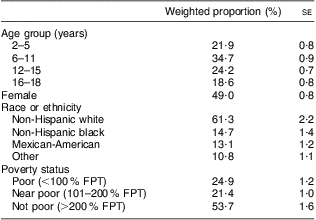
FPT, federal poverty threshold.
Overall, 57 % of vegetable intake came from whole forms of vegetables and 43 % from mixed dishes (Table 2). There were few differences in this distribution by demographic and other characteristics, although the proportion of vegetables from whole forms was greater among girls than boys and the proportion of vegetables from mixed dishes was greater among Mexican-American children than non-Hispanic white children. In addition, vegetables eaten from a restaurant were more likely to come from mixed dishes compared with vegetable servings that came from a store, but vegetable servings from a place other than a store, school or restaurant were more likely to be eaten as whole forms. There were no differences in vegetable intake by form according to child age or PIR category.
Proportion (%) of total vegetable intake by form (whole, mixed dish) and selected characteristics: children and adolescents aged 2–18 years with two days of 24 h dietary recall data (n 9169), National Health and Nutrition Examination Survey (NHANES), 2003–2008
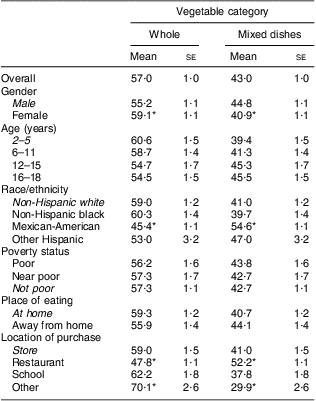
*Proportion was significantly different from that in the reference group, denoted in italics (P < 0·05).
The proportion of total vegetable intake and categories of vegetables attributable to specific food categories are illustrated in Table 3. For total vegetables, the majority came from pizza/pasta, white potatoes, fried potatoes, starchy vegetables and other foods. Approximately 5 % were attributable to condiments and 9 % to dark-green/red/orange vegetables. Approximately half of vegetables eaten as whole form were in the form of fried and non-fried white potatoes and one-quarter were from other vegetables (non-starchy and non dark-green/red/orange). Vegetables eaten as mixed dishes primarily came from pizza/pasta and other foods. The majority of tomatoes were consumed as pizza/pasta while approximately 10 % were consumed as whole form (dark-green/red/orange vegetables).
Proportion (%) of vegetable categories by various grouping classifications: children and adolescents aged 2–18 years with two days of 24 h dietary recall data (n 9169), National Health and Nutrition Examination Survey (NHANES), 2003–2008

– denotes proportions too low to make estimates or not applicable.
*Includes pickled vegetables.
†Includes potato chips.
‡Includes any non-vegetable component of mixed dishes not otherwise classified.
Differences in mean vegetable intake and the percentage of the population consuming certain cup equivalent serving amounts daily according to different categories of sources of vegetables are illustrated in Table 4. When all sources of vegetables are considered, children and adolescents consumed a usual mean intake of 1·03 (se 0·04) cup equivalent servings/d. However, children had a usual mean vegetable intake of 0·56 (se 0·03) cup equivalents/d when whole forms only were considered and 0·53 (se 0·01) cup equivalents/d from mixed dishes. When fried potatoes were removed from whole vegetables, usual mean vegetable intake from whole forms was reduced to a mean 0·34 (se 0·02) cup equivalents/d. When all forms of vegetables were considered, nearly all children consumed 0·25 cup equivalents or less and 53 % consumed at least 1 cup equivalent daily; however, when only whole forms were considered, 90 % consumed 0·25 cup equivalents or less, approximately half consumed at least 0·5 cup equivalents and only 7 % consumed up to 1 cup equivalent daily. When fried potatoes were excluded from whole vegetables, 55 % of children/adolescents consumed 0·25 cup equivalents or less but only 1 % consumed up to 1 cup equivalent serving daily.
Mean vegetable intake (cup equivalent servings/d) overall and by vegetable category: children and adolescents aged 2–18 years with two days of 24 h dietary recall data (n 9169), National Health and Nutrition Examination Survey (NHANES), 2003–2008

*Includes all whole vegetables except fried potatoes and potato chips.
†Does not include fried potatoes or potato chips.
Discussion
The present analysis demonstrates that the majority of vegetables consumed by children and adolescents in the USA are in mixed dishes, such as pizza and pasta, or are less healthful vegetables, such as fried potatoes or potato chips. Only a small percentage of vegetables are from sources considered to be rich in nutrients, such as dark-green and orange vegetables. In addition, we show that mixed dishes, such as pizza and condiments, contribute nearly half of children's and adolescents’ overall vegetable intake. White potatoes and fried potatoes contribute approximately 30 % of overall vegetable intake and the majority of potatoes are consumed in fried form. Although intake of dark-green and orange vegetables was relatively low overall, their consumption is mostly in the whole forms of vegetables, whereas most tomato intake comes from mixed dishes like pizza and pasta. The inclusion of vegetables from mixed dishes and fried potatoes in the calculation of mean vegetable intake increases cup equivalent servings from whole forms by up to nearly three-quarters of a cup equivalent serving per day. In addition, the inclusion of mixed dishes decreases the percentage of children and adolescents who consume less than 1 cup equivalent serving per day by nearly half.
These findings shed light on and update a few issues regarding measurement of vegetable intake raised in a recent review. As Roark and Niederhauser posit, the exclusion of vegetables consumed as part of mixed dishes could result in underestimation of total vegetable consumption( Reference Roark and Niederhauser 3 ). We found this to be true among children and adolescents where the exclusion of vegetables from mixed dishes reduced estimated mean intake by approximately 50 % and decreased the percentage consuming various cup equivalent amounts. This could be even more notable if a specific food were of interest, such as tomatoes. We showed that children consumed the majority of tomatoes in the form of pizza and pasta. If tomato consumption was only measured in the NHANES data as whole form, its intake could be greatly underestimated. In addition, we found that foods such as condiments (i.e. foods such as ketchup and mustard used to enhance or accompany other foods), which are thought to be consumed in quantities too small to be significant to include in estimates of total vegetable intake, contributed to overall vegetable intake, as much as 5 % overall. Roark and Niederhauser also present examples in the literature of exclusion of potatoes, fried and non-fried, from vegetable intake. Like previous research, we showed that all forms of potatoes contributed approximately 30 % of all vegetable intake in children and adolescents and fried potatoes accounted for about 18 % and approximately one-third of whole vegetable intake( Reference Krebs-Smith, Cook and Subar 16 , Reference Lorson, Melgar-Quinonez and Taylor 17 ).
There are multiple studies and reports showing less-than-adequate vegetable intake among children and adolescents in the USA as well as several other countries( Reference Guenther, Dodd and Reedy 8 , Reference Krebs-Smith, Cook and Subar 16 – Reference Evans, Christian and Cleghorn 18 ). Our goal was not to simply describe low vegetable intake among children and adolescents, but to specify more common sources of vegetables including mixed dishes and quantify how these sources contribute to overall vegetable intake. Krebs-Smith et al. were the first to describe fruit and vegetable intake among US children using the 1989–1991 Continuing Survey of Food Intakes by Individuals (CSFII), including vegetable intake from mixed dishes, a study which remains one of the few to do so( Reference Krebs-Smith, Cook and Subar 16 ). They reported that mixed dishes, both vegetable-based and other mixtures, accounted for about 32 % of all vegetable intake among children and adolescents aged 2–18 years( Reference Krebs-Smith, Cook and Subar 16 ). However, they excluded vegetables from condiments, which specifically did not count towards the dietary guidelines during the time their study was done. We report here a higher proportion of vegetable intake from mixed dishes which could be due to our inclusion of condiments as part of mixed dishes and the increased ability of the MPED to disaggregate foods compared with the CSFII data. Although Krebs-Smith et al. excluded potato chips from vegetable servings, they reported that fried potatoes accounted for 23 % of vegetable intake, similar to our finding of 19 %( Reference Krebs-Smith, Cook and Subar 16 ). In a more recent study using 24 h dietary recalls from 1999–2000 NHANES participants and different statistical methodology, Guenther et al. estimated mean intakes of total vegetables, including beans and legumes, of 1·9 to 3·3 servings/d among children and adolescents depending on age and gender( Reference Guenther, Dodd and Reedy 8 ). They did not make estimates specifically without fried potatoes but estimated a daily intake of starchy vegetables, which included potatoes as well as corn and peas, of 1·1 to 1·6 servings/d depending on age and gender. Estimates of dark-green vegetables were about 0·1 servings/d and mean intake of other vegetables ranged from 0·7 to 1·3 servings/d. Although not explicitly mentioned, it is assumed that this estimation included vegetables from mixed dishes as the disaggregated MPED data were used. Our findings are not directly comparable to either of these studies due to the differences in methodology and classification of foods (i.e. inclusion of legumes); however, our results, in addition to those previous ones, demonstrate how estimates of vegetable intake can range widely depending on how they are classified even when using the same databases.
As previous studies on different food classification schemes have concluded, no method is necessarily right or wrong. However our results provide some examples of a range of differences in estimation of mean intake and intake distribution of vegetables depending on the classification scheme. This could have bearing on future studies of vegetable intake in children and adolescents that use NHANES and/or the MPED data depending on how the intake data are classified. In a comparison of coding vegetables according to the ‘behavioural’ scheme, or more whole form, v. the ‘epidemiological’ scheme, which included mixed dishes, Cullen et al. showed that important sources of vegetables, such as pizza and enchiladas, were missed using the behavioural approach( Reference Cullen, Baranowski and Baranowski 19 ). In addition, the epidemiological approach resulted in higher mean values of vegetable intake( Reference Eldridge, Smith-Warner and Lytle 20 ). Others have shown similar results( Reference Thompson, Willis and Thompson 21 ). Our findings add to this by showing how different classification schemes impact both mean intake and intake distribution using usual intake methods and also quantify how incorporation of fried potatoes inflates estimates of whole vegetable consumption. Finally we show that mixed dishes serve as an important source of vegetables in the diets of children and adolescents and may contribute more to helping children meet certain intake serving guidelines than whole forms of vegetables alone.
Without examination of the sources of overall intake, research may paint a more optimistic picture of vegetable intake among children and adolescents than is warranted. After excluding mixed dishes or fried potatoes, usual mean intake of vegetables was only 0·3 cup equivalent servings/d. Based on the Dietary Guidelines( 1 ), we estimate that the ‘recommended’ distribution of vegetable intake would be predominantly attributable to orange/red/green vegetables (∼38–43 %, depending on energy intake requirements) with lesser proportions of starchy vegetables, including potatoes (28–33 %) and other vegetables (21–24 %), and a very small proportion (less than 10 %) coming from fried potatoes or foods high in added fat/sodium/energy (Fig. 1);Footnote * however, the results of our analysis show the actual distribution is weighted towards fried potatoes and mixed dishes (60 % of vegetable intake, combined), which are much more energy-dense than other types of vegetables. When only whole forms of vegetables are considered, this distribution is shifted even more towards fried potatoes and starchy vegetables (nearly 60 % of intake). Dietary energy density has been found to be associated with paediatric obesity and lower dietary quality overall( Reference Vernarelli, Mitchell and Hartman 22 ). Unfortunately, the predominant sources of vegetables consumed by youth also contribute substantially to intakes of fats and added sugars.
Proportion (%) of vegetable intake attributable to various sources ( , fried potatoes;
  , pizza/chilli/pasta/mixed dishes/condiments;
  , other vegetables;
  , starchy vegetables;
  , orange/red/green vegetables): theoretical (ideal) proportions recommended based on the 2010 Dietary Guidelines for Americans (left) compared with the actual proportions based on total consumption (middle) and actual proportions based on consumption of whole forms (right) among children and adolescents aged 2–18 years with two days of 24 h dietary recall data (n 9169), National Health and Nutrition Examination Survey (NHANES), 2003–2008. Recommended proportions were calculated based on recommended weekly intake of specific vegetable subtypes compared with overall vegetable intake guidelines for a given energy level (4184–8368 kJ/d (1000–2400 kcal/d)). No specific recommendations exist for fried items or mixed dishes; these were assumed to fall under the discretionary energy category due to the added fats and sugars associated with these food items(
1
)
, orange/red/green vegetables): theoretical (ideal) proportions recommended based on the 2010 Dietary Guidelines for Americans (left) compared with the actual proportions based on total consumption (middle) and actual proportions based on consumption of whole forms (right) among children and adolescents aged 2–18 years with two days of 24 h dietary recall data (n 9169), National Health and Nutrition Examination Survey (NHANES), 2003–2008. Recommended proportions were calculated based on recommended weekly intake of specific vegetable subtypes compared with overall vegetable intake guidelines for a given energy level (4184–8368 kJ/d (1000–2400 kcal/d)). No specific recommendations exist for fried items or mixed dishes; these were assumed to fall under the discretionary energy category due to the added fats and sugars associated with these food items(
1
)

The present study has a few limitations. First, we were limited to the categorization delineated in the MPED database. Dietary recall in NHANES is reported by children or an adult caregiver for children younger than 12 years, and is subject to measurement error due to the reliance on memory for food identification and portion size, as well as potential biases related to the over- or under-reporting of certain food items. Our study is based on cross-sectional data; thus, no causal inferences can be drawn with respect to trends across demographic groups. Our estimates are sensitive to the scheme we used for classification of vegetables, which was fairly restrictive for whole vegetables, so these estimates are conservative. As no universal definitions of sources of vegetables exist, we had to use our best judgement in conjunction with the dietary guidelines when categorizing whole and mixed dishes. Finally, the present study was descriptive. More research is needed to explore the determinants and consequences of specific vegetable intake patterns among children and adolescents, with a particular focus on how mixed v. whole forms contribute differentially to nutrient profile.
There are several notable strengths of the present study. First, data are based on a large, nationally representative sample of youth in the USA, allowing us to look at dietary patterns across several different sociodemographic characteristics. Few studies to date have examined potential differences in sources of vegetables across sub-populations such as racial and ethnic subgroups or income strata. Second, although many studies have examined dietary patterns among selected age groups (e.g. toddlers), this is one of the first examinations of composition of vegetable intake across the full range of childhood and adolescence. Third, the present study is the first to examine composition of vegetable intake using more statistically rigorous usual intake methods and recent NHANES data. Finally, it is the first study to look at differences in composition of vegetable intake across eating occasion (i.e. at home v. away from home) and source of food (i.e. store, school, restaurant or other). This provides critical information that can be used to target specific programmatic or policy interventions such as the development of US Dietary Guidelines, the Federal School Lunch Program or the Supplemental Nutrition Assistance Program.
Conclusion
Vegetable intake and intake distribution among children and adolescents in the USA is characterized largely by less nutritious and more energy-dense sources such as pizza, pasta and fried white potatoes, and estimates of intake can vary greatly depending on the scheme used to classify vegetables. Inclusion or exclusion of mixed dishes and fried potatoes as part of overall vegetable intake measurement can result in varied estimates of consumption depending on the food of interest. Mixed dishes are important sources of vegetables in the diets of children and adolescents but intake in this form may result in increased energy density. It is critical for future research to examine various components of vegetable intake carefully in order to inform policy and programmatic efforts aimed at improving dietary intake among children and adolescents.
Acknowledgements
Sources of funding: This work was performed under employment of the US Federal government and the authors did not receive any outside funding. The findings and conclusions in this paper are those of the authors and do not necessarily represent the views of the National Center for Health Statistics, Centers for Disease Control and Prevention. Conflicts of interest: A.M.B. and L.M.R. have no conflicts of interest. Ethics: This analysis of secondary data was not subject to institutional review board approval. Authors’ contributions: A.M.B. designed the research and conducted the data analysis, A.M.B. and L.M.R. wrote the paper, and A.M.B. had primary responsibility for the final content.



