





Introduction
Suicide is the second-leading cause of death among youth aged 10 to 24 years old in the United States (U.S.; CDC, 2023), with rates increasing most rapidly among Black youth compared to any other ethnoracial group in the U.S. (Bridge et al., Reference Bridge, Horowitz, Fontanella, Sheftall, Greenhouse, Kelleher and Campo2018; CDC, 2021, Sheftall et al, Reference Sheftall, Vakil, Ruch, Boyd, Lindsey and Bridge2022). Black children under 13 years old are twice as likely as their White peers to die by suicide (Bridge et al., Reference Bridge, Horowitz, Fontanella, Sheftall, Greenhouse, Kelleher and Campo2018), and Black adolescents report significantly more suicide attempts compared to White peers (CDC, 2021). Despite this alarming increase in Black youth suicide and suicidal behaviors, research is limited on suicide risk factors for suicidal thoughts and behaviors (STBs) unique to Black youth, namely those rooted in sociocultural contexts.
Research that has specifically examined sociocultural risk factors of suicide among youth broadly suggests that adverse childhood experiences, such as interpersonal trauma, abuse, interpersonal violence, criminal legal experiences, and racism, are associated with STBs among youth (Assari et al., Reference Assari, Moghani Lankarani and Caldwell2017; Meza et al., Reference Meza, Patel and Bath2022; Sheftall et al., Reference Sheftall, Vakil, Ruch, Boyd, Lindsey and Bridge2022; Walker et al., Reference Walker, Francis, Brody, Simons, Cutrona and Gibbons2017). Black youth are disproportionately affected by adverse childhood experiences, especially discrimination (Maguire-Jack et al., Reference Maguire-Jack, Lanier and Lombardi2019; Slopen et al., Reference Slopen, Shonkoff, Albert, Yoshikawa, Jacobs, Stoltz and Williams2016). Furthermore, Black youth face higher rates of racism than their non-Black counterparts (Nagata et al., Reference Nagata, Ganson, Sajjad, Benabou and Bibbins-Domingo2021), with research providing extensive evidence that racism negatively impacts both physical and psychological health (Lewis et al., Reference Lewis, Cogburn and Williams2015; Paradies et al., Reference Paradies, Ben, Denson, Elias, Priest, Pieterse, Gupta, Kelaher, Gee and Hills2015; Williams & Mohammed, Reference Williams and Mohammed2013).
Current research has demonstrated that racism is directly associated with STBs among Black youth (Assari et al., Reference Assari, Moghani Lankarani and Caldwell2017 Molock et al., Reference Molock, Watanabe, Smith, Prakash and Hollingsworth2022; Walker et al., Reference Walker, Francis, Brody, Simons, Cutrona and Gibbons2017). However, there remains a lack of comprehensive understanding on how specific forms of racism that are more pervasive to Black youth (i.e, structural racism) are related to suicide risk. Unquestionably, Black individuals hold a unique social position in the U.S. which underscores the importance of understanding the increase in Black youth suicide within the sociopolitical context of race (Alvarez et al., Reference Alvarez, Polanco-Roman, Samuel Breslow and Molock2022; Crenshaw, Reference Crenshaw1991). Theories developed within this context are needed to highlight the specific pathways through which racism impacts the rise in suicide rates among Black youth in the U.S.
Theoretical frameworks of Black youth suicide
Sheftall and Miller (Reference Sheftall and Miller2021) illuminated the need for culturally sensitive theories to identify suicide risk factors specific to Black youth ages 5 to 17 years, as opposed to applying a “White-centric lens” (p. 891) to understand risk among this group. Two emerging culturally sensitive theories offer promising future directions; one is an integrated framework that incorporates the Interpersonal-Psychological Theory of Suicide (IPTS) and Intersectionality Theory, and the other is the Structural Racism and Suicide Prevention Systems Framework (Alvarez et al., Reference Alvarez, Polanco-Roman, Samuel Breslow and Molock2022; Opara et al., Reference Opara, Assan, Pierre, Gunn, Metzger, Hamilton and Arugu2020).
Integrated model of IPTS and intersectionality theory
The Integrated Model of IPTS and Intersectionality Theory combines the IPTS (Joiner, Reference Joiner2005; Van Orden et al., Reference Van Orden, Witte, Cukrowicz, Braithwaite, Selby and Joiner2010) and Intersectionality Theory (Crenshaw, Reference Crenshaw1991). IPTS implies that the co-occurrence of thwarted belongingness and perceived burdensomeness places someone at risk for suicide, and when coupled with the acquired capability of suicide, increases the likelihood that lethal suicidal behavior may occur (Joiner, Reference Joiner2005; Van Orden et al., Reference Van Orden, Witte, Cukrowicz, Braithwaite, Selby and Joiner2010). There is empirical support for the validity of IPTS among Black adolescent boys, in that perceived burdensomeness, thwarted belongingness, and hopelessness are significantly associated with active suicide ideation among Black boys (Douglas et al., Reference Douglas, Alli, Gaylord-Harden, Opara and Gilreath2025). The authors also found that racial discrimination moderated the relationship between thwarted belongingness and suicide ideation, and between hopelessness and suicide ideation (Douglas et al., Reference Douglas, Alli, Gaylord-Harden, Opara and Gilreath2025). Given these preliminary findings, it is critical to further explore how the factors of this theory operate for Black youth at the intersection of their sociocultural and systemic contexts.
Intersectionality Theory is the notion that the intersection of one’s identities (e.g., race and gender) and systems of oppression and discrimination, shape the context in which the individual exists in the larger socioecological system (Crenshaw, Reference Crenshaw1991). While prior work has established that holding intersecting, marginalized identities is associated with increased risk for suicide (Baiden et al., Reference Baiden, LaBrenz, Asiedua-Baiden and Muehlenkamp2020; English et al., Reference English, Boone, Carter, Talan, Busby, Moody, Cunningham, Bowleg and Rendina2022; Forrest et al., Reference Forrest, Beccia, Exten, Gehman and Ansell2023), very few studies have examined intersectional theory in the context of suicide risk for Black youth specifically. Wiglesworth and colleagues (2022) found that Black-Native American adolescents experienced higher rates of STBs in comparison to monoracial (Black only and White only) counterparts, and higher rates of suicide attempts in comparison to biracial (Black and White) peers. Another study highlighting the intersection of race and gender, examined the relationship between race and suicidality among Black boys in the broader sociocultural context (e.g., economic stress and discrimination; Douglas et al., Reference Douglas, Alli, Gaylord-Harden, Opara and Gilreath2025). Authors found that economic stress moderated the association between perceived belongingness and suicide ideation, and racial discrimination, along with witnessing community violence, moderated the relationship between hopelessness and suicide ideation among Black boys (Douglas et al., Reference Douglas, Alli, Gaylord-Harden, Opara and Gilreath2025). While these preliminary findings highlight the intersection of race and suicide risk in the context of structural oppression, more work is needed to better understand Black youth suicide risk within the context of their broader socioecological system.
Accordingly, IPTS and Intersectionality Theory infer that Black youth at risk for suicide likely experience the elements of IPTS but do so within the broader system of their immediate environment and larger culture and society (Opara et al., Reference Opara, Assan, Pierre, Gunn, Metzger, Hamilton and Arugu2020). This framework highlights the need to examine the intersection between systems. That is, examine racial discrimination and suicide risk, utilizing an ecological systems approach in order to improve our understanding of Black youth suicide and subsequently identify targets for prevention and intervention (Opara et al., Reference Opara, Assan, Pierre, Gunn, Metzger, Hamilton and Arugu2020).
Structural racism and suicide prevention systems framework
The Structural Racism and Suicide Prevention Systems Framework highlights structural racism as an underlying mechanism for disparities in suicide risk among ethnoracial marginalized youth (Alvarez et al., Reference Alvarez, Polanco-Roman, Samuel Breslow and Molock2022). Prior work has proposed that disparate rates of suicide among marginalized youth might be better explained by examining structural, versus individual, factors (Mueller et al., Reference Mueller, Abrutyn, Pescosolido and Diefendorf2021; Standley, Reference Standley2022). Alvarez et al. (Reference Alvarez, Polanco-Roman, Samuel Breslow and Molock2022) explains that youth are embedded in multiple ecological systems, where various factors such as structural racial discrimination – interacting with other levels of racism – may impact suicide risk. This is one of the few theoretical frameworks that attempts to address a gap in the suicide literature by adopting developmental theory to better explain suicide risk among youth. Morris-Perez et al. (Reference Morris-Perez, Benzekri and Boccieri2024) emphasize the need to approach suicide research from a lens of developmental phenomena considering the diverse cognitive, emotional, neurobiological changes throughout adolescence, in particular, coupled with the diverse contexts in which youth develop (Morris-Perez et al., Reference Morris-Perez, Benzekri and Boccieri2024). The authors specifically posit that incorporating Bronfenbrenner’s bioecological model may enhance our understanding of the development and pervasiveness of STBs across youth development (Morris-Perez et al., Reference Morris-Perez, Benzekri and Boccieri2024). The Structural Racism and Suicide Prevention Systems Framework utilizes this approach by incorporating levels of racism across ecological systems to understand suicide risk among ethnoracial marginalized youth (Alvarez et al., Reference Alvarez, Polanco-Roman, Samuel Breslow and Molock2022). Thus, this framework requires an understanding of ecological systems and levels of racism, and how the two intersect to influence suicide risk among Black youth.
Ecological systems
The Ecological Systems Theory provides an understanding of how interconnected environmental layers – microsystem, mesosystem, exosystem, macrosystem, and chronosystem – shapes an individual’s development and behavior (Bronfenbrenner, Reference Bronfenbrenner1977; Reference Bronfenbrenner and Vasta1992). The microsystem includes one’s immediate environment, such as their family and peers (Bronfenbrenner, Reference Bronfenbrenner1977; Reference Bronfenbrenner and Vasta1992). The mesosystem is the interaction between different microsystems, like how a child’s family structure may impact their relationships at school (Bronfenbrenner, Reference Bronfenbrenner1977; Reference Bronfenbrenner and Vasta1992). The exosystem encompasses broader social systems that impact an individual, such as neighborhoods and schools, while the macrosystem refers to societal and cultural norms (Bronfenbrenner, Reference Bronfenbrenner1977; Reference Bronfenbrenner and Vasta1992). The chronosystem accounts for changes over time within these various systems, including historical and life events (Bronfenbrenner, Reference Bronfenbrenner1977; Reference Bronfenbrenner and Vasta1992). The Ecological Systems Theory emphasizes the importance of context, and the interplay of different aspects of a person’s life and how they influence behaviors and access to resources (Bronfenbrenner, Reference Bronfenbrenner and Vasta1992).
Levels of racism
Similar to the interconnected systems in the Ecological Systems Theory (Bronfenbrenner, Reference Bronfenbrenner and Vasta1992), there are four main levels of racism necessary to understand the Structural Racism and Suicide Prevention Systems Framework: 1) intrapersonal/internalized, 2) interpersonal, 3) institutional/structural, and 4) cultural. Intrapersonal/internalized racism occurs within an individual and refers to internalized negative beliefs and attitudes shaped by cultural messages and systemic oppression (Bailey et al., Reference Bailey, Krieger, Agénor, Graves, Linos and Bassett2017; Jones, Reference Jones2000; Legha & Miranda, Reference Legha and Miranda2020; Williams et al., Reference Williams, Faber and Duniya2022). Interpersonal racism refers to the ways racial bias and prejudices are expressed, intentionally or unintentionally, through behavior during interpersonal exchanges (Bailey et al., Reference Bailey, Krieger, Agénor, Graves, Linos and Bassett2017; Jones, Reference Jones2000; Legha & Miranda, Reference Legha and Miranda2020; Williams et al., Reference Williams, Faber and Duniya2022). Institutional/structural racism occurs within institutions and systems of power, including the discriminatory policies and practices within institutions that produce and maintain racial inequitable outcomes and uphold White supremacy (Bailey et al., Reference Bailey, Krieger, Agénor, Graves, Linos and Bassett2017; Jones, Reference Jones2000; Legha & Miranda, Reference Legha and Miranda2020; Williams et al., Reference Williams, Faber and Duniya2022). Cultural racism occurs across institutions and society and refers to the compounding effects of discriminatory attitudes and beliefs about racially marginalized populations embedded in society through history, cultural practice, ideology, and systems that privilege White people (Bailey et al., Reference Bailey, Krieger, Agénor, Graves, Linos and Bassett2017; Jones, Reference Jones2000; Krieger, Reference Krieger2014; Legha & Miranda, Reference Legha and Miranda2020; Williams et al., Reference Williams, Faber and Duniya2022).
It’s important to note that racism does not originate at the individual level (i.e., intra- and inter-personal racism) but is rooted in systems and historical legacies that perpetuate bigotry and injustice against people of color and maintain privilege for White individuals. It extends beyond interpersonal interactions, manifesting within broader institutional, structural, and cultural systems (Bailey et al., Reference Bailey, Krieger, Agénor, Graves, Linos and Bassett2017; Jones, Reference Jones2000; Legha & Miranda, Reference Legha and Miranda2020; Williams et al., Reference Williams, Faber and Duniya2022). Furthermore, instances of intrapersonal and interpersonal racism are what perpetuate structural and cultural racism by “reinforcing systemic racial inequality” (Skinner-Dorkenoo et al., Reference Skinner-Dorkenoo, Sarmal, Andre and Rogbeet2021, p. 913). The Structural Racism and Suicide Prevention Systems Framework defines structural racism as the impact of racism occurring at all four levels: cultural, institutional, interpersonal, and intrapersonal (Alvarez et al., Reference Alvarez, Polanco-Roman, Samuel Breslow and Molock2022). Specifically, Alvarez et al. (Reference Alvarez, Polanco-Roman, Samuel Breslow and Molock2022) asserts that each level of racism interacts with the others, and thus structural racism is “the totality of ways in which societies foster racial discrimination” (p. 423).
Structural racism and suicide
The Structural Racism and Suicide Prevention Systems Framework (Alvarez et al., Reference Alvarez, Polanco-Roman, Samuel Breslow and Molock2022) utilizes the ecological systems framework, delineating how suicidal youth of color exist within social, political, and economic systems that influence behavior. The framework specifically posits that the interplay of racism occurring at four levels and the ecological systems in which youth of color exist, ultimately impact suicide risk (Alvarez et al., Reference Alvarez, Polanco-Roman, Samuel Breslow and Molock2022). Authors explain that the macrosystem carry out the effects of racism at the intersection of the mesosystems and microsystems (Alvarez et al., Reference Alvarez, Polanco-Roman, Samuel Breslow and Molock2022). Conceptualizing racial discrimination in the context of Black youth ecological systems may offer a more comprehensive and nuanced understanding of the rapidly increasing disparate rates of suicide in the U.S. for this group.
While the association between racism and STBs has been well-established (Forbes et al., Reference Forbes, Yang and Lim2023; McLeod et al., Reference McLeod, Heller, Manze and Echeverria2020; Rudes & Fantuzzi, Reference Rudes and Fantuzzi2022; Veresova et al., Reference Veresova, Lamblin, Robinson and McKay2024), few studies acknowledge the various levels of racism, nor discuss how their intersection impact suicide risk. Much of the research on racism and suicide risk has focused on interpersonal racism and fail to conceptualize interpersonal racism as a risk factor for suicide within the context of socioecological systems. Few studies have demonstrated that structural racism is positively associated with suicide among Black individuals (Burr et al., Reference Burr, Hartman and Matteson1999; Wadsworth et al., Reference Wadsworth, Kubrin and Herting2014), with economic inequity and residential segregation being linked to higher rates of suicide among Black adult men. However, the full breadth of research on structural racism and suicide risk specifically among Black youth remains unexplored. Conceptualizing individual forms of racism in the context of the structures in which they occur would align with Alvarez et al.’s (Reference Alvarez, Polanco-Roman, Samuel Breslow and Molock2022) and Opara et al.’s (Reference Opara, Assan, Pierre, Gunn, Metzger, Hamilton and Arugu2020) theoretical frameworks to better understand how the intersection of racism and the broader socioecological system increases suicide risk among Black youth in the U.S.
Given the drastic increase in Black youth suicide in the U.S. (Bridge et al., Reference Bridge, Horowitz, Fontanella, Sheftall, Greenhouse, Kelleher and Campo2018; CDC, 2021, Sheftall et al, Reference Sheftall, Vakil, Ruch, Boyd, Lindsey and Bridge2022) and Black youth experiencing the highest incidence of racism compared to peers (Argabright et al., Reference Argabright, Visoki, Moore, Ryan, DiDomenico, Njoroge, Taylor, Guloksuz, Gur, Gur, Benton and Barzilay2022; Nagata et al., Reference Nagata, Ganson, Sajjad, Benabou and Bibbins-Domingo2021), there is an urgent need to utilize culturally sensitive theoretical frameworks like The Structural Racism and Suicide Prevention Systems Framework (Alvarez et al., Reference Alvarez, Polanco-Roman, Samuel Breslow and Molock2022) and The Integrated Model of IPTS and Intersectionality Theory (Opara et al., Reference Opara, Assan, Pierre, Gunn, Metzger, Hamilton and Arugu2020) to better understand how structural racism may impact Black youth suicidality beyond a risk factor, but also a maintaining factor. In order to effectively address and prevent suicide among Black youth, there needs to be a shift from merely identifying robust risk factors of suicide to understanding the structural factors that maintain these risk factors and subsequently intervene at these overarching levels. Understanding the breadth and scope of the research that supports The Structural Racism and Suicide Prevention systems framework (Alvarez et al., Reference Alvarez, Polanco-Roman, Samuel Breslow and Molock2022) could be paramount for suicide risk detection and prevention for Black youth. While Alvarez et al.’s (Reference Alvarez, Polanco-Roman, Samuel Breslow and Molock2022) and Opara et al.’s (Reference Opara, Assan, Pierre, Gunn, Metzger, Hamilton and Arugu2020) culturally sensitive frameworks offer guidance for research on risk factors unique to Black youth, such as structural racism, it is essential to first examine the current literature on racism and suicide risk among youth to identify notable knowledge gaps.
Existing reviews on racism and suicide risk
Considering the increase in suicide rates among Black youth in the U.S. (CDC, 2021), reviews have begun to synthesize research that examines the relationship between racism and suicide risk. One such systematic review, presented support for the positive relationship between racism and STBs among ethnoracial marginalized youth and young adults (Rudes & Fantuzzi, Reference Rudes and Fantuzzi2022). The review included 23 studies with samples ranging in age from 13 to 25 years, who identified as Black, Asian, Latinx/Hispanic, Arab Americans, or Native. Most of the studies reviewed categorized racism as either undefined (n = 6) or perceived (n = 6). Four studies focused on systemic racism, four on individual racism, two on racial microaggressions, and one study examined “broader-town” racism, referring to discrimination experienced by reservations and communities (Rudes & Fantuzzi, Reference Rudes and Fantuzzi2022). However, given the broad age range, and diverse racial representation of participants in the studies reviewed, the scope of research on racism and suicide risk specific to Black youth remains unclear.
Another systematic review examined the relationship between police interactions and negative mental health outcomes, including STBs, among Black individuals (McLeod et al., Reference McLeod, Heller, Manze and Echeverria2020). The authors highlighted that despite the proportion of Black individuals in the U.S., they are disproportionately negatively impacted by police brutality, which is a form of structural racism. This review included 11 studies, 3 of which exclusively included Black individuals, and 3 of which included assessments of STBs. The studies that examined STBs as mental health outcomes, demonstrated that individuals who experienced an interaction with police were more likely to experience STBs (McLeod et al., Reference McLeod, Heller, Manze and Echeverria2020).
Talley and colleagues’ (Reference Talley, Warner, Perry, Brissette, Consiglio, Capri and Coker2021) systematic review offered a critical overview of articles that examined STBs among Black adolescents and young adults through a lens of cultural sensitivity. Authors summarized research on how STBs are expressed among Black individuals. The authors discussed studies that found a relationship between internalizing symptoms (e.g., depression) and STBs among Black individuals who experience discrimination and race-related stress (Talley et al., Reference Talley, Warner, Perry, Brissette, Consiglio, Capri and Coker2021). They go on to propose that the relationship between racial discrimination and stress in relation to suicide risk is not fully understood for Black youth and young adults due to the limited research on sociocultural risk factors for suicide.
A review of the literature on structural marginalization, in the form of punitive school discipline, and health inequities is currently the only systemic review that most closely resembles an attempt to comprehensively understand the link between structural oppression and suicide risk among youth (Duarte et al., Reference Duarte, Moses, Brown, Kajeepeta, Prins, Scott and Mujahid2023). The authors reviewed 19 quantitative articles spanning the public health, education, criminology, and social science disciplines. Of the 6 studies that examined mental health, it was found amongst 5 of them that punitive school discipline increased the risk of mental health challenges (e.g., depressive symptoms, adjustment problems, antisocial behavior), and that this was particularly harmful to Black youth (Duarte et al., Reference Duarte, Moses, Brown, Kajeepeta, Prins, Scott and Mujahid2023). Categorized as a physical health outcome, the singular study in their review that examined a STB outcome found that punitive school discipline was associated with higher odds of a suicide death (Duarte et al., Reference Duarte, Moses, Brown, Kajeepeta, Prins, Scott and Mujahid2023; Gould et al., Reference Gould, Fisher, Parides, Flory and Shaffer1996).
Knowledge gaps
Broadly, there are minimal studies that focus on structural racism as a suicide risk factor for Black youth. The existing body of literature largely focuses on individual or interpersonal factors, with limited emphasis on socioecological systemic factors such as residential segregation, discrimination in the education system, and disparate police brutality. Institutions like schools and the juvenile justice system, contexts where structural racism is historically enacted, are also seldom examined in relation to Black youth suicide risk. Further, there is also a gross underrepresentation of Black youth in suicide research, yet the suicide rate among this group is increasing at a concerning rate. Taken together, prior work has called for a deeper analysis of the intersection of racism and systems to better understand suicide risk and create more effective targeted interventions for Black youth in response to the significant increase in suicide among this group in the U.S. (Alvarez et al., Reference Alvarez, Polanco-Roman, Samuel Breslow and Molock2022; Congressional Black Caucus, 2019; Opara et al., Reference Opara, Assan, Pierre, Gunn, Metzger, Hamilton and Arugu2020; Sheftall & Miller, Reference Sheftall and Miller2021). While the aforementioned reviews provide initial insights into the relationship between sociocultural factors, such as racism and discrimination, and suicide risk among racially marginalized individuals, there remains a significant gap in research specifically addressing the intersection of structural racism and suicide risk among Black youth. To our knowledge, no comprehensive review has yet explored the relationship between structural racism and suicide risk in Black youth as a primary outcome.
The current review
Considering the centrality of race in the sociopolitical context of the U.S., the goal of this review is to understand how racism impacts STBs among Black youth in this country to offer additional insight into the alarming increase in suicide rates among Black youth in the U.S., and highlight targets for suicide prevention and intervention for this at-risk group. Specifically, the current systematic review aims to comprehensively review and synthesize the empirical literature regarding the relationship between structural racism and suicide risk among Black youth in the U.S.
This review hypothesizes that most studies will confirm structural racism as a risk factor for STBs among Black youth, showing a positive association between the two. This review will contribute to the literature by offering key insights into how structural racism contributes to disparate suicide rates among Black youth in the U.S. This information can be used to further develop culturally responsive suicide theories, as well as prevention and intervention efforts for this group.
Method
Search strategy
The search strategy was conducted following the Preferred Reporting Items for Systematic Review and Meta-Analysis (PRISMA) reporting guidelines (Page et al., Reference Page, McKenzie, Bossuyt, Boutron, Hoffmann, Mulrow, Shamseer, Tetzlaff, Akl, Brennan, Chou, Glanville, Grimshaw, Hróbjartsson, Lalu, Li, Loder, Mayo-Wilson, McDonald and Moher2021). The electronic search targeted empirical, peer-reviewed journal articles published before May 2024, in the following databases: PubMed, PsychINFO, and Academic Search Complete. Search terms included: (suicide OR suicidal ideation OR suicide attempt OR suicidality OR suicide risk OR suicid*) AND (structural racism OR systemic racism OR institutional racism OR institutionalized racism OR racism OR racial bias OR discrimination OR oppression OR inequity OR systems OR police brutality OR police violence OR neighborhood inequity OR residential segregation OR housing segregation OR redlin* OR white privilege OR white supremacy OR political disempower* OR environ* injustice OR school to prison pipeline OR punitive school discipline OR segregation OR racial equity OR racial inequity OR health inequity OR health equity) AND (black youth OR black child OR black adolescent OR black adol* OR black teen OR african american youth OR african american child OR african american adolescent OR african american adol* OR african american teen). See Table 1 for descriptive information on search strategy.
Search strategy
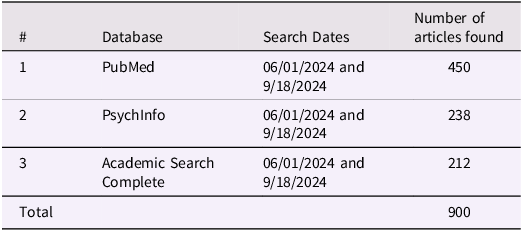
Inclusion and exclusion criteria
To be included in the systematic review, studies must have met the following criteria: 1) published in English, 1) have been conducted in the U.S./include samples residing in the U.S., 3) published in peer-reviewed journals, 4) include Black individuals age 18 years and under (whether exclusively, or comparatively to other age and/or racial/ethnic groups), 5) examine structural racism, defined as the discriminatory policies and practices within institutions that produce and maintain racial inequitable outcomes and upholds White supremacy (Bailey et al., Reference Bailey, Krieger, Agénor, Graves, Linos and Bassett2017; Jones, Reference Jones2000; Legha & Miranda, Reference Legha and Miranda2020; Williams et al., Reference Williams, Faber and Duniya2022) and any level of racism experienced within the broader socioecological system (i.e., systems of education, criminal justice, health care, housing, employment, media, earnings, benefits, credit, etc.) as the Structural Racism and Suicide Prevention Framework posits structural racism as the totality of ways society fosters racism at all four levels (Alvarez et al., Reference Alvarez, Polanco-Roman, Samuel Breslow and Molock2022), and 6) measure a suicidal thought and/or behavior outcome (i.e., suicidal ideation, suicide planning, suicide attempt, or suicide death).
Studies were excluded from the review if they met the following criteria: 1) not empirical (i.e., do not report original data analysis, entirely theoretical, etc.), 2) did not distinctly assess the relationship between structural racism and an aforementioned STB outcome, and 3) participants did not identify as Black, or the study sample had participants of multiple races and ethnicities, but Black participants’ data was not disaggregated.
Risk of bias
Risk of bias and methodological quality of included articles was assessed using the National Institutes of Health (NIH) Study Quality Assessment Tool for Observational Cohort and Cross-Sectional Studies (National Heart, Lung, and Blood Institute, 2014). Each study was evaluated using the 14-item quality assessment tool to evaluate the internal validity based on criteria such as sample selection, control for confounding factors, and methodology. Study quality is classified as “good,” “fair,” or “poor”; with “good” studies indicating least risk of bias, “fair” studies exhibiting some bias but not enough to invalidate study results, and “poor” studies exhibiting significant risk of bias.
Data extraction and synthesis of results
Data on year of publication, study sample size, participants’ other demographic characteristics (i.e., age, gender, etc.), STB outcome assessed, type of structural racism examined, study design (e.g., qualitative, quantitative, mixed method), and key findings on the relationship between structural racism and STBs was extracted from articles that met inclusion criteria.
Results
Study selection
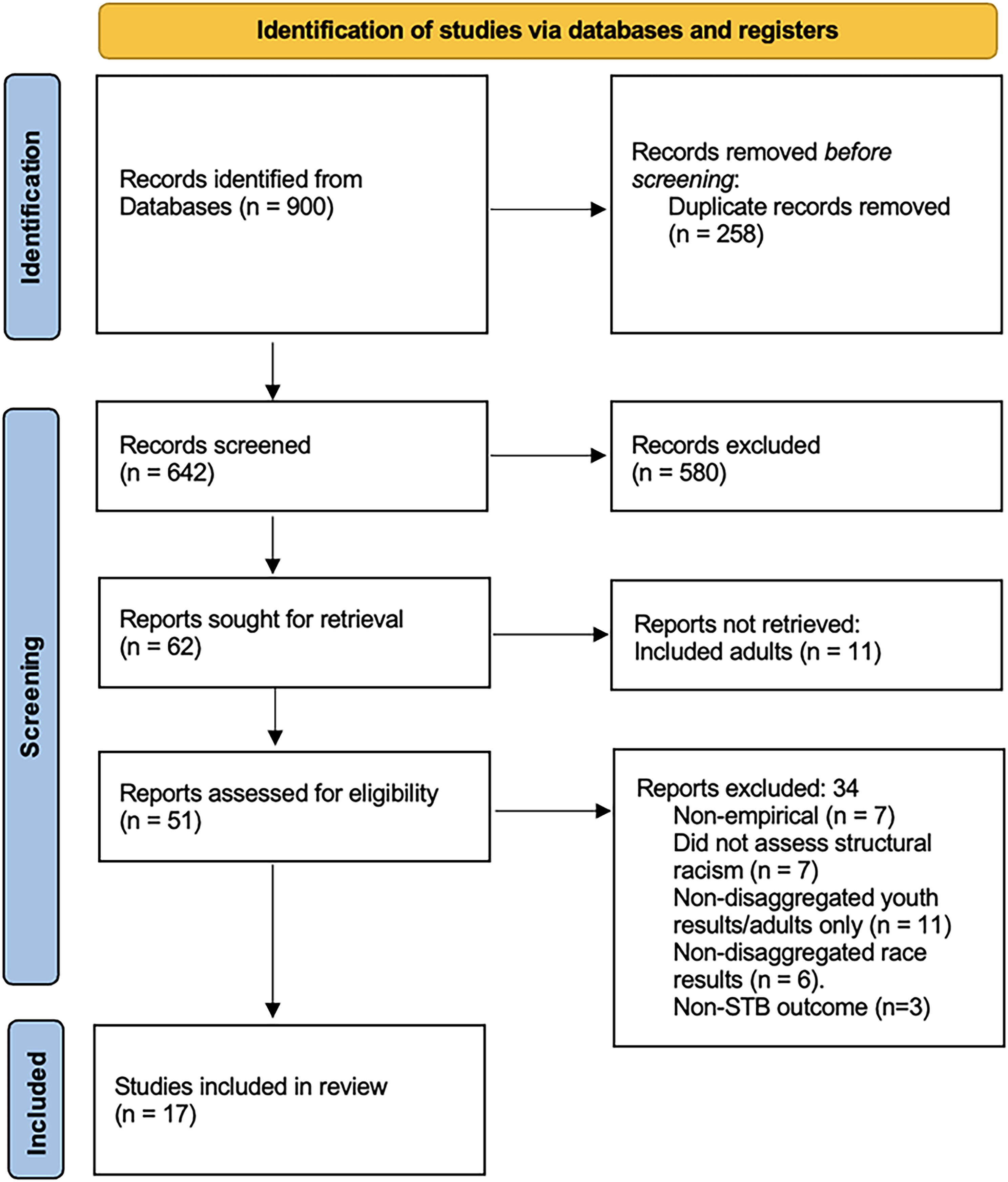
Of 900 articles that were identified from the database searches (Table 1), 642 articles were screened for inclusion after removing 258 duplicate articles. Post initial screening, 62 articles were thoroughly assessed for final inclusion in the review. 34 articles were then excluded for various reasons, such as participant pools that included adults, aggregated results, nonempirical in nature, etc. See Figure 1 for full illustration of the study selection process (PRISMA flowchart). A total of 17 articles were included for qualitative summary of findings. The articles ultimately included in the review were published between 2013 and 2024, with the majority (5 each) of studies being published in 2022 and 2024.
PRISMA flowchart. Note. Adapted from “The PRISMA 2020 statement: An updated guideline for reporting systematic reviews,” by M. J. Page, J. E. McKenzie, P. M. Bossuyt, I. Boutron, T. C. Hoffmann, C. D. Mulrow, … D. Moher (2021). BMJ, 372. https://doi.org/10.1136/bmj.n71. Copyright 2021 by the authors. Adapted under a creative commons attribution license.
Synthesis of results
The overall findings support our hypothesis that structural racism is positively associated with STBs for Black youth. Specifically, all studies clearly demonstrated that structural racism had a positive relationship on suicidal ideation, suicide attempts, or suicide death among Black youth. All studies were classified as “good” or “fair” quality, indicating all studies adopted appropriate methodologies to answer the respective research questions. Studies classified as “fair” were largely, in part, due to lack of sample size justification, power description, or reports of variance and/or effect estimates, or limited inclusion of confounding variables. No studies were excluded from this review on the basis of study quality. See Table 2 for the full synthesis of results. While studies operationalization of STBs was fairly consistent, types of structural racism was categorized into 4 types: neighborhood inequality, police brutality, racism in the education system, and unspecified.
Synthesis of results
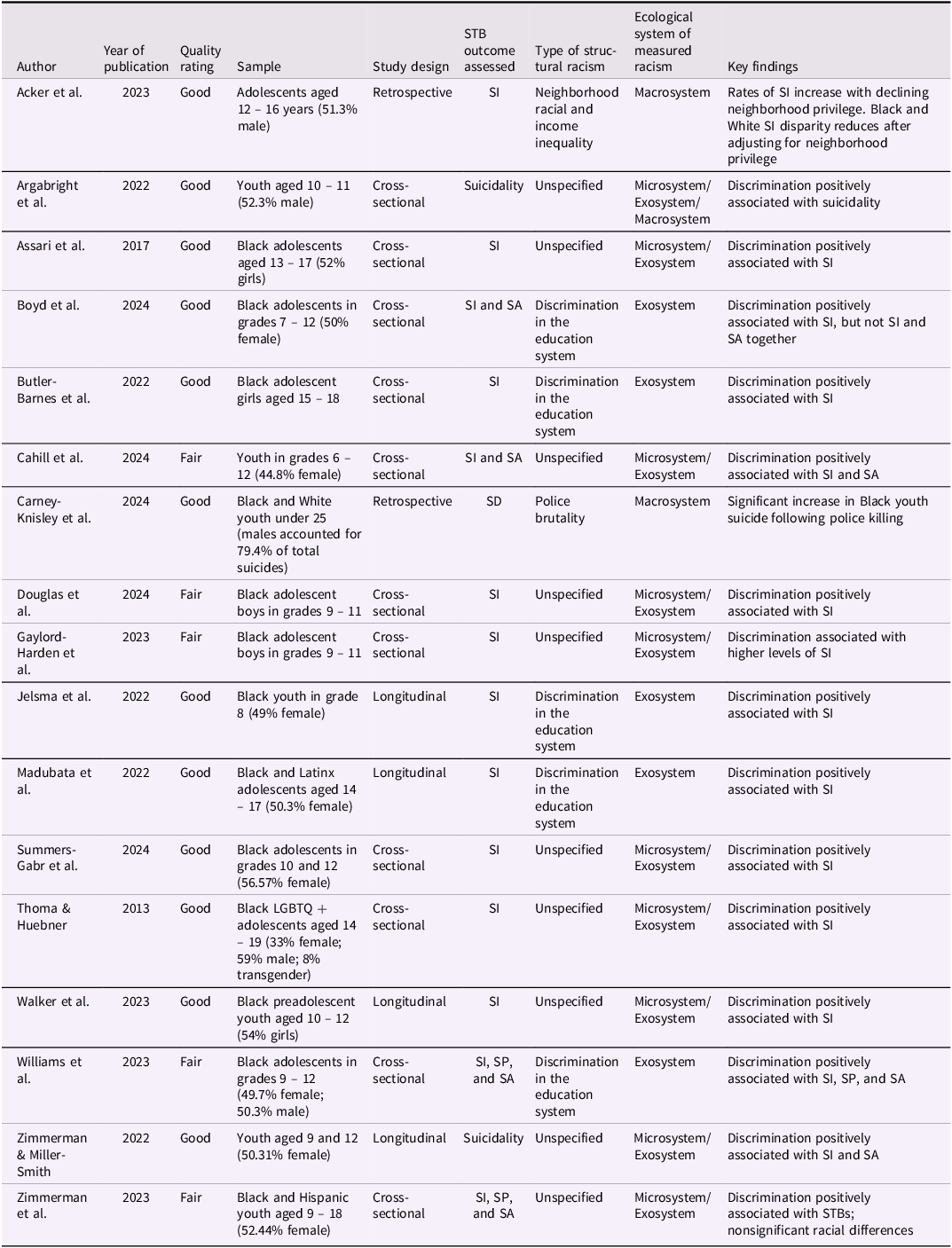
Notes: SI = suicide ideation; SP = suicide plan; SA = suicide attempt; SD = suicide death; Suicidality = SI and SA composite.
Neighborhood inequality
One study measured structural racism from a lens of institutional policy and practice (i.e., racism within the macrosystem) by assessing racial and economic disparities. Acker and colleagues (2023) examined the relationship between neighborhood privilege and depressive symptoms, suicidality, and racial and ethnic disparities among adolescents aged 12 to 16 years. The authors measured neighborhood inequality by calculating Index of Concentration at Extremes (ICE) scores from census tracts to provide estimates of total household income, race and ethnic representation, and income by race and ethnicity. ICE-income extremes consisted of the 20th and 80th percentiles of national household income distributions, and ICE-race and ICE-income by race/ethnicity extremes were non-Hispanic White and non-Hispanic Black, and high-income non-Hispanic White and low-income non-Hispanic Black (Acker et al., Reference Acker, Aghaee, Mujahid, Deardorff and Kubo2023). The overall study included 34,252 adolescents, 2,587 (7.6%) of which identified as Black, and suicidality was highest among the Black adolescents in the sample.
The authors did not observe a significant association between ICE-income and suicide ideation, however a significant association between ICE-income by race/ethnicity emerged when comparing low-income non-Hispanic Black youth to their high-income non-Hispanic White counterparts (Acker et al., Reference Acker, Aghaee, Mujahid, Deardorff and Kubo2023). It was also observed that Black youth had a higher risk for suicide ideation than White youth with an Adjusted Risk Ratio (ARR) of 1.42 (Acker et al., Reference Acker, Aghaee, Mujahid, Deardorff and Kubo2023). When adjusted for ICE-race/ethnicity this disparity increased to an ARR of 1.46, however this disparity in suicide risk reduced after adjusting for ICE-income (ARR = 1.31) and ICE-income by race/ethnicity (ARR = 1.30, Acker et al., Reference Acker, Aghaee, Mujahid, Deardorff and Kubo2023). Specifically, when accounting for ICE-income by race/ethnicity, there is a 16% decreased disparity in suicide ideation between Black and White youth. This study thus provides support that neighborhood racial and economic privilege are significantly associated with suicide ideation generally, but especially for Black youth. Most interesting, the changes observed in the suicide ideation disparity between Black and White youth per the ICE measures demonstrate that structural racism may be a robust factor driving disparities in suicide risk among Black youth.
Police brutality
Carney-Knisely and colleagues (Reference Carney-Knisely, Griffin, Crawford, Spates and Singh2024) utilized a time series analysis to examine the relationship between police killings of unarmed Black individuals (i.e., racism within the macrosystem) and suicide deaths of Black and White youth within 0-3 months of the killings across a period of 7 years. The authors defined youth in this study as individuals under the age of 25 years, as they utilized mortality data from the National Mortality Vital Statistics provided by the CDC. Suicide mortality data by age is categorized for youth in the following groups: younger than 1, 1–4 years, 5–14 years, and 15–24 years. The authors found Black youth suicides were positively associated with police killings of unarmed Black persons; specifically, they observed an approximate 1 count, national increase in Black youth suicide within 3 months of a police killing. (Carney-Knisely et al., Reference Carney-Knisely, Griffin, Crawford, Spates and Singh2024). Moreover, a lag 3 coefficient of .95 was observed for this positive association, indicating a significant and persistent effect of police killings of unarmed Black persons on Black youth suicide. Authors also reported the observed increase in Black youth suicide as a result of police killing of unarmed Black persons was particularly apparent among Black male youth (lag 3 coefficient = .88) in that the increase in suicides were nearly double among Black boys in relation to “highly publicized incidents of anti-Black violence and murders” (Carney-Knisely et al., Reference Carney-Knisely, Griffin, Crawford, Spates and Singh2024, p. 95).
Racism in the education system
Five studies examined the association between structural racism, defined as racial discrimination experienced in the education system (i.e., racism within the exosystem), whether perpetrated by peers or teachers, and STBs among Black youth (Boyd et al., Reference Boyd, Gale, Quinn, Mueller-Williams, Jones, Williams and Lateef2024; Butler-Barnes et al., Reference Butler-Barnes, Leath, Inniss-Thompson, Allen, D’Almeida and Boyd2022; Jelsma et al., Reference Jelsma, Chen and Varner2022; Madubata et al., Reference Madubata, Spivey, Alvarez, Neblett and Prinstein2022; Williams et al., Reference Williams, Shipman-Lacewell, Shih, Wynn, de Jesús Elias and Valrie2023). All but one study (Madubata et al., Reference Madubata, Spivey, Alvarez, Neblett and Prinstein2022) exclusively included Black youth in their sample, and across all studies there was variability in perpetrator of the experienced racism.
Boyd and colleagues (Reference Boyd, Gale, Quinn, Mueller-Williams, Jones, Williams and Lateef2024) tested the relationships between school belonging, teacher-based discrimination, and peer-based discrimination on suicide ideation and attempts among a nationally representative sample of Black adolescents (M age = 16 years). Less than half of the sample reported feeling a sense of belonging at school, while more than half reported experiencing discrimination from both teachers and peers. Results demonstrated a significant, positive association between teacher-based discrimination and suicide ideation (Relative Risk Ratio (RRR) = .85), in that suicide ideation decreases by 15% as teacher discrimination decreases (Boyd et al., Reference Boyd, Gale, Quinn, Mueller-Williams, Jones, Williams and Lateef2024). A significant association was also observed between peer-based discrimination and suicide ideation (RRR = 1.15), with students reporting peer-based discrimination experiencing a 15% increase in suicide ideation (Boyd et al., Reference Boyd, Gale, Quinn, Mueller-Williams, Jones, Williams and Lateef2024). Sense of school belongingness was also significantly associated with suicide ideation and attempts (RRR = .65), with a 35% reduction in risk of suicide ideation and attempts among those with an increased sense of school belongingness (Boyd et al., Reference Boyd, Gale, Quinn, Mueller-Williams, Jones, Williams and Lateef2024). The aforementioned findings indicate that while peer-based and teacher discrimination are significant risk factors for STBs among Black youth, a sense of school belongingness has an even greater influence on STB risk among this group.
Boyd et al.’s (Reference Boyd, Gale, Quinn, Mueller-Williams, Jones, Williams and Lateef2024) findings were also supported by the study carried out by Jelsma et al. (Reference Jelsma, Chen and Varner2022) that included a younger sample (8th grade students) of Black youth and adopted a longitudinal approach. This study examined the impact of teacher-perpetrated racism, high-effort coping and future mental health outcomes, including suicide ideation (Jelsma et al., Reference Jelsma, Chen and Varner2022). Results indicated that teacher-perpetrated racism experienced in 8th grade was significantly, and substantially, positively associated with suicide ideation in 11th grade, with an unstandardized path coefficient of .62 (Jelsma et al., Reference Jelsma, Chen and Varner2022). The authors also observed that boys experienced significantly more teacher-perpetrated racism than girls in the sample; however, there was no difference in the association between teacher-perpetrated racism and suicide ideation between groups (Jelsma et al., Reference Jelsma, Chen and Varner2022). The authors also examined high effort coping as a potential protective factor against the impact of racial discrimination at school on STBs. Authors operationalized high effort coping utilizing the John Henryism Hypothesis (James, Reference James1994) through two items: “Because of your race, no matter how hard you work, you will always have to work harder than others to prove yourself” and “Because of your race, it is important that you do better than other kids at your school in order to get ahead” (Jelsma et al., Reference Jelsma, Chen and Varner2022, p. 698). Responses were rated on a Likert scale ranging from 1 = strongly disagree to 4 = strongly agree. Results demonstrated that among Black youth with lower levels of high effort coping at baseline, as exposure to teacher-perpetrated racism increased, suicide ideation at follow-up increased. Also, there was no observed difference in future suicide ideation based on teacher-perpetrated racism for students with higher levels of high effort coping at baseline (Jelsma et al., Reference Jelsma, Chen and Varner2022).
Butler-Barnes and colleagues (Reference Butler-Barnes, Leath, Inniss-Thompson, Allen, D’Almeida and Boyd2022) examined a similar phenomenon among adolescent (M age = 16.6 years) girls. This study used a cross-sectional analysis of the relationship between perceived racial discrimination from teachers and suicide ideation and other depressive symptoms. It was found that racial discrimination from teachers was significantly, positively associated (r = .17, p < .01) with suicidal ideation (Butler-Barnes et al., Reference Butler-Barnes, Leath, Inniss-Thompson, Allen, D’Almeida and Boyd2022). When teacher discrimination was entered as a predictor into a model with racial centrality and traditional gender role beliefs as moderators, and interaction effects of: 1) teacher racial discrimination by racial centrality, 2) teacher gender discrimination by racial centrality, 3) teacher racial discrimination by traditional gender role beliefs, and 4) teacher gender discrimination by traditional gender role beliefs, a significant model fit (F(6,225) = 7.13, p < .001, R 2 = .15) was observed in predicting suicide ideation (Butler-Barnes et al., Reference Butler-Barnes, Leath, Inniss-Thompson, Allen, D’Almeida and Boyd2022). However, the main effect of teacher racial discrimination on suicide ideation was nonsignificant (Butler-Barnes et al., Reference Butler-Barnes, Leath, Inniss-Thompson, Allen, D’Almeida and Boyd2022).
A similar pattern was observed when peers were the perpetrators of racism in schools. Madubata et al. (Reference Madubata, Spivey, Alvarez, Neblett and Prinstein2022) and Williams et al. (Reference Williams, Shipman-Lacewell, Shih, Wynn, de Jesús Elias and Valrie2023) examined the relationship between racial discrimination experienced by peers at school and STBs among adolescents. Williams and colleagues (Reference Williams, Shipman-Lacewell, Shih, Wynn, de Jesús Elias and Valrie2023) examined this association with suicide ideation, planning, and attempts. The authors found that racism experienced from peers at school was significantly, positively associated with all 3 suicidal outcomes among Black adolescents (M age = 15.6 years; Williams et al., Reference Williams, Shipman-Lacewell, Shih, Wynn, de Jesús Elias and Valrie2023). Specifically, racial discrimination was associated with greater suicide ideation (β = .19, p < .001), suicide planning (β = .28, p < .001), and suicide attempts (β = .16, p < .001; Williams et al., Reference Williams, Shipman-Lacewell, Shih, Wynn, de Jesús Elias and Valrie2023). The authors also found that school safety moderated the relationship between racism and suicide planning and attempts; with racism predicting a higher likelihood of a suicide plan and attempt at lower levels of perceived school safety (Williams et al., Reference Williams, Shipman-Lacewell, Shih, Wynn, de Jesús Elias and Valrie2023). These findings provide support that peer-based racial discrimination experienced in school has a small to moderate effect on STB risk among Black adolescents.
Madubata and colleagues (Reference Madubata, Spivey, Alvarez, Neblett and Prinstein2022) utilized a longitudinal approach in looking at the relationship between both subtle and overt racism from peers at school on suicide ideation at baseline, and 1-year later among Black and Latinx adolescents (M age = 15 years). The authors found that: 1) Black participants reported significantly more instances of subtle racial discrimination from peers than their Latinx peers (t(152) = 1.69, p < .01), 2) subtle racism was significantly positively associated with suicide ideation at baseline (r = .30, p < .01) and follow-up (r = .39, p < .01) for Black participants, but 3) there was no significant association between overt racism and suicide ideation at either timepoint for this group (Madubata et al., Reference Madubata, Spivey, Alvarez, Neblett and Prinstein2022). Also, the covariance between subtle racism and suicide ideation at baseline was significantly stronger for Black adolescents in the sample compared to Latinx youth (β = .09, p < .05), and there was a significantly stronger association between subtle discrimination and prospective suicide ideation for Black participants ((β = .33, p < .01); Madubata et al., Reference Madubata, Spivey, Alvarez, Neblett and Prinstein2022).
Unspecified
Majority (10) of the studies included in this review did not specify the system, or setting, in which the instance of racism occurred. These studies operationalized racism as racial discrimination across various settings (e.g., school, healthcare, police, etc.), and did not disaggregate the system in which the discrimination occurred (Argabright et al., Reference Argabright, Visoki, Moore, Ryan, DiDomenico, Njoroge, Taylor, Guloksuz, Gur, Gur, Benton and Barzilay2022; Assari et al., Reference Assari, Moghani Lankarani and Caldwell2017; Cahill et al., Reference Cahill, Illback and Peiper2024; Douglas et al., Reference Douglas, Alli, Gaylord-Harden, Opara and Gilreath2025; Gaylord-Harden et al., Reference Gaylord-Harden, Gilreath, Burnside, Mintah and Lindsey2023; Summers-Gabr et al., Reference Summers-Gabr, Sato, Chilenski, Villarruel, Smith, Henderson, Newell, Wilson and Craig2024; Thoma & Huebner, Reference Thoma and Huebner2013; Walker et al., Reference Walker, Francis, Brody, Simons, Cutrona and Gibbons2017; Zimmerman & Miller-Smith, Reference Zimmerman and Miller-Smith2022; Zimmerman et al., Reference Zimmerman, Trovato and Miller-Smith2023). It was inferred that structural racism may have been included in the measures of racism used in these studies, but results were not disaggregated by the specific type of racism. Therefore, these studies were still included in the review and type of racism assessed labeled as “unspecified.” There was variability in tools used to assess racism across these studies. Two studies (Douglas et al., Reference Douglas, Alli, Gaylord-Harden, Opara and Gilreath2025; Gaylord-Harden et al., Reference Gaylord-Harden, Gilreath, Burnside, Mintah and Lindsey2023) used the perceived discrimination sub-scale of the Multicultural Events Schedule for Adolescents (MESA; Gonzales et al., Reference Gonzales, Tein, Sandler and Friedman2001), Thoma & Huebner (Reference Thoma and Huebner2013) and Walker and colleagues (Reference Walker, Francis, Brody, Simons, Cutrona and Gibbons2017) used the Schedule of Racist Events (SRE; Landrine & Klonoff, Reference Landrine and Klonoff1996), and Zimmerman & Miller-Smith (Reference Zimmerman and Miller-Smith2022) and Zimmerman and colleagues (Reference Zimmerman, Trovato and Miller-Smith2023) utilized a measure that assessed experienced racism across various settings including in their neighborhood, at school, by police, and by healthcare workers. Both the MESA and Schedule of Racist Events assess experiences of racism across various contexts such as school and community settings. Similarly, the other studies used measures that assessed racial discrimination in various contexts (Argabright et al., Reference Argabright, Visoki, Moore, Ryan, DiDomenico, Njoroge, Taylor, Guloksuz, Gur, Gur, Benton and Barzilay2022; Assari et al., Reference Assari, Moghani Lankarani and Caldwell2017; Cahill et al., Reference Cahill, Illback and Peiper2024; Summers-Gabr et al., Reference Summers-Gabr, Sato, Chilenski, Villarruel, Smith, Henderson, Newell, Wilson and Craig2024), whether through standardized measures (i.e., the Perceived Discrimination Scale, and a modified version of the Everyday Discrimination Scale) or questions specifically developed for the respective studies (Cahill et al., Reference Cahill, Illback and Peiper2024; Summers-Gabr et al., Reference Summers-Gabr, Sato, Chilenski, Villarruel, Smith, Henderson, Newell, Wilson and Craig2024). Of the 6 studies that exclusively included Black youth, all demonstrated a significant positive relationship between racism and suicide ideation (Assari et al., Reference Assari, Moghani Lankarani and Caldwell2017; Douglas et al., Reference Douglas, Alli, Gaylord-Harden, Opara and Gilreath2025; Gaylord-Harden et al., Reference Gaylord-Harden, Gilreath, Burnside, Mintah and Lindsey2023; Summers-Gabr et al., Reference Summers-Gabr, Sato, Chilenski, Villarruel, Smith, Henderson, Newell, Wilson and Craig2024; Thoma et al., Reference Thoma and Huebner2013; Walker et al., Reference Walker, Francis, Brody, Simons, Cutrona and Gibbons2017). The magnitude of the association between racism and STBs ranged from weak (i.e., r = .097, p < .05; Douglas et al., Reference Douglas, Alli, Gaylord-Harden, Opara and Gilreath2025) to moderate (i.e., OR = 1.21, p < .01; Summers-Gabr et al., Reference Summers-Gabr, Sato, Chilenski, Villarruel, Smith, Henderson, Newell, Wilson and Craig2024). Similar results were observed among the other studies in the unspecified category that included other racial groups. Argabright et al. (Reference Argabright, Visoki, Moore, Ryan, DiDomenico, Njoroge, Taylor, Guloksuz, Gur, Gur, Benton and Barzilay2022), Cahill et al. (Reference Cahill, Illback and Peiper2024), Zimmerman & Miller-Smith (Reference Zimmerman and Miller-Smith2022), and Zimmerman et al. (Reference Zimmerman, Trovato and Miller-Smith2023) all found that racial discrimination was significantly positively associated with STBs among Black youth, with effect sizes ranging from small (i.e., b = .21, p < .05; Zimmerman et al., Reference Zimmerman, Trovato and Miller-Smith2023) to moderate (i.e., aOR = 2.71, 95% CI: 2.16–3.39; Cahill et al., Reference Cahill, Illback and Peiper2024). Interestingly, the studies that included other racial groups observed larger effects of the association between racism and STBs among Black youth than the studies that exclusively included Black samples.
Zimmerman & Miller-Smith (Reference Zimmerman and Miller-Smith2022) further explored the relationship between racism and STBs by examining how the racism occurred – whether it was directly experienced, anticipated, or vicarious. In addition to experienced racism, both anticipated and vicarious racism were also significantly positively associated with STBs among Black youth; and when all forms of racism were entered into a single model, experienced, and vicarious racism still emerged as significant associates of STBs for this group (Zimmerman & Miller-Smith, Reference Zimmerman and Miller-Smith2022). Similarly, Douglas and colleagues (2024) expanded their assessment of the relationship between racism and STBs among Black boys by testing the Integrated Model of IPTS and Intersectionality Theory (Opara et al., Reference Opara, Assan, Pierre, Gunn, Metzger, Hamilton and Arugu2020). The authors examined the moderating role of sociocultural factors that disproportionately impact Black individuals (i.e., racism, community violence, and poverty) on the relationship between robust suicide risk factors (i.e., perceived burdensomeness, thwarted belongingness, and hopelessness) and suicide ideation among Black adolescent boys. The authors concluded that: 1) higher levels of thwarted peer belongingness predicted higher levels of suicide ideation at high levels of racism, but higher levels of thwarted peer belongingness predicted lower levels of suicide ideation at lower levels of racism, and 2) hopelessness predicted higher levels of suicide ideation at high levels of racism, but hopelessness predicted lower levels of suicide ideation at lower levels of racism (Douglas et al., Reference Douglas, Alli, Gaylord-Harden, Opara and Gilreath2025). These findings illustrate that racism may contextualize the functions of traditional suicide risk factors of thwarted belongingness and hopelessness among Black youth.
Discussion
This review is the first, to the best of our knowledge, to synthesize the results of prior work that has examined the relationship between structural racism and STBs among Black youth in the U.S. Results from this review provide evidence that structural racism is a robust risk factor for suicide ideation, planning, attempts, and death among Black youth. This review also identified systems of education, policing, neighborhood inequality, and unspecified contexts as the settings where the association between structural racism and STB risk among Black youth were observed. All 17 studies included in the review confirmed our hypothesis that structural racism is a significant risk factor for STBs among Black youth and demonstrate a positive association between structural racism and STBs. These findings provide evidence in partial support of the Structural Racism and Suicide Prevention Systems Framework that posits structural racism, defined as the impact of racism occurring at all levels, is an underlying mechanism for disparities in suicide risk among ethnoracial marginalized youth (Alvarez et al., Reference Alvarez, Polanco-Roman, Samuel Breslow and Molock2022). Further, it highlights the intersection of race and STB risk in the context of intersecting systems, as proposed by the Integrated Model of IPTS and Intersectionality Theory (Opara et al., Reference Opara, Assan, Pierre, Gunn, Metzger, Hamilton and Arugu2020).
The findings are in line with existing literature that supports a positive association between racism and STBs among ethnoracial marginalized youth broadly (Rudes & Fantuzzi, Reference Rudes and Fantuzzi2022; Talley et al., Reference Talley, Warner, Perry, Brissette, Consiglio, Capri and Coker2021). These authors highlighted that racism showed an increased risk for suicide ideation and attempts for Black youth in particular. Our findings were also consistent with a prior review demonstrating a positive relationship between police interactions and STBs among Black adults (McLeod et al., Reference McLeod, Heller, Manze and Echeverria2020). While only one study included in this review assessed the relationship between racism among the police system and suicide death among Black youth, the results were alarming (Carney-Knisely et al., Reference Carney-Knisely, Griffin, Crawford, Spates and Singh2024). Considering the increased access to technology among youth, and the frequency in which police brutality against Black individuals occurs, more work is needed to understand this association to suicide risk among Black youth. Specifically, despite preliminary work examining the impact of direct and indirect exposure of murders of Black individuals at the hands of police on suicide rates and mental health (Bor et al., Reference Bor, Venkataramani, Williams and Tsai2018; Carney-Knisely et al., Reference Carney-Knisely, Griffin, Crawford, Spates and Singh2024), it is still unclear how it is related to suicide ideation, planning, and attempts among Black youth, or other known risk factors for STBs among this group. The Integrated Model of IPTS and Intersectionality Theory (Opara et al., Reference Opara, Assan, Pierre, Gunn, Metzger, Hamilton and Arugu2020) might offer guidance for future work to examine interpersonal risk factors (e.g., hopelessness, thwarted belongingness, and perceived burdensomeness) within the broader ecological system (e.g., perception of police among predominantly Black neighborhoods, and/or attitudes and beliefs about police brutality among the family system of Black youth) to gain a better understanding of the underlying mechanisms of the relationship between police brutality and STBs among Black youth. Though the studies reviewed are few and novel, they provide key insights into the relationship between structural racism and suicide risk among Black youth. In addition to confirming a significant association between these factors, their findings and methodologies offer valuable directions for future research and further theoretical development.
While the included studies offer insight into the specific types of systems (e.g., the education system) that facilitate instances of racism that are associated with STBs among Black youth, there is still much work to be done to understand how policies and practices embedded in systems at the macrolevel impact suicide risk for this group. Most of the current research has instead focused on instances of racism within broader systems, while very few directly address structural factors like racial inequities in neighborhood income and police brutality – factors examined by only two studies in this review (Acker et al., Reference Acker, Aghaee, Mujahid, Deardorff and Kubo2023; Carney-Knisely et al., Reference Carney-Knisely, Griffin, Crawford, Spates and Singh2024). Acker et al.’s (Reference Acker, Aghaee, Mujahid, Deardorff and Kubo2023) use of ICE scores offers an innovative and accessible method of measuring structural racism that does not rely on self-report. It integrates data from various ecological systems (i.e., macrosystem and microsystem) to understand how this intersection impacts suicidality among youth. On the other hand, Carney- Knisely and colleagues (Reference Carney-Knisely, Griffin, Crawford, Spates and Singh2024) utilized publicly available reports of police killings of unarmed Black individuals and Black youth suicide death rates to examine their association. These study methodologies challenge future research to leverage culturally sound theoretical frameworks that incorporate an ecological systems approach, to find objective ways of measuring racially inequitable systems and use this, in addition to self-report measures, to understand how these are associated with STBs. For instance, policies and practices such as residential segregation, inequitable school discipline practices, and discriminatory health care access are some structural policies and practices whose impact on Black youth STBs may be worth exploring.
A comprehensive understanding of the role of structural racism and STBs requires examination of macrolevel protective factors, and a deeper analysis of the mechanisms underlying these relationships. For instance, the implementation of diversity, equity, and inclusion (DEI) institutional practices should be explored as a potential buffer against the harmful impact of structural racism on Black youth. Carney-Knisely and colleagues (2024) also utilized an objective measure of structural racism through their use of publicly available reports of police killings of unarmed Black individuals. Few of the studies in this review offered preliminary exploration of mechanisms that may explain how policies and practices embedded in systems at the macrolevel impact suicide risk, such as vicarious trauma, and interpersonal factors (e.g. belongingness, perceived safety, and high-effort coping).
Vicarious traumatic stress likely elevates the risk of STBs among Black youth. Violent incidents of police brutality often result in such trauma, where youth internalize the stress and fear experienced by their community. Further exploring this connection is critical, given that the killings of unarmed Black individuals by police correlate with increased suicide rates among Black youth (Carney-Knisely et al., Reference Carney-Knisely, Griffin, Crawford, Spates and Singh2024). However, questions regarding the vicarious effect of such experiences on Black youth STBs remain; though Zimmerman & Miller-Smith (Reference Zimmerman and Miller-Smith2022) provided preliminary evidence that these experiences of racism are associated with STBs among Black youth. Still, future work should further expand on this work by exploring how the vicarious experience of witnessing police brutality against Black people may uniquely impact Black youth, and test whether the increased exposure to police brutality helps to explain the increase in suicide rates for this group.
Three studies (Boyd et al., Reference Boyd, Gale, Quinn, Mueller-Williams, Jones, Williams and Lateef2024; Jelsma et al., Reference Jelsma, Chen and Varner2022; Williams et al., Reference Williams, Shipman-Lacewell, Shih, Wynn, de Jesús Elias and Valrie2023) further examined the relationship between racism in the education system and STBs among Black youth by including other interpersonal factors such as school belonging, perceived school safety, and high effort coping. Authors investigated the role of these factors in the broader education system, and their influence on the association between racism in the school environment and STBs. Boyd and colleagues’ (Reference Boyd, Gale, Quinn, Mueller-Williams, Jones, Williams and Lateef2024) finding regarding youth with an increased sense of belonging in school were less likely to experience suicide ideation, may offer insight into a potential mechanism of the association between structural racism and STBs among Black youth. This relationship raises the question of why Black youth don’t feel a sense of belonging at school – could it be due to higher experiences of racial discrimination, or another factor that intersects this system? The findings regarding the moderating role of school safety on the relationship between peer-perpetrated racism at school and suicide planning and attempts (Williams et al., Reference Williams, Faber and Duniya2022), may also offer insight into the mechanism through which racism in the education system relates to STBs among Black youth. Coupled with Boyd et al.’s (2024) findings, not only do Black youth feel a decreased sense of belonging at school, but those who have a low perception of school safety are especially susceptible to suicide planning and attempts (Williams et al., Reference Williams, Faber and Duniya2022). Perceived belongingness is a well-established predictor of suicide (Joiner, Reference Joiner2005), and so it is crucial to understand why Black youth often feel a lack of belonging and safety within the system they spend most of their time. This understanding would allow for the development of programs to increase belonging in schools for Black youth as a form of suicide prevention to implement at a structural level.
While it is demonstrated that high effort coping buffers the impact of racism at school and STBs among Black youth (Jelsma et al., Reference Jelsma, Chen and Varner2022), more work is needed to understand the impact, especially long-term effects, of high effort coping on Black individuals’ overall mental, and physical health. Further, it may be beneficial to examine the other systems (e.g, micro- and meso-systems) that may also influence high-effort coping, and subsequently influence the impact of structural racism on Black youth. So, while high-effort coping may buffer the aforementioned relationship in the short term, the cost of Black youth feeling as though they need to work twice as hard because of their race is a mentality that ought to be explored further. It is also imperative to investigate other factors that could buffer this relationship that depend less on the individual and instead focus on policy and practice of the education system.
Only one study (Douglas et al., Reference Douglas, Alli, Gaylord-Harden, Opara and Gilreath2025) included in our review explicitly sought to test the Integrated Model of IPTS and Intersectionality Theory (Opara et al., Reference Opara, Assan, Pierre, Gunn, Metzger, Hamilton and Arugu2020). Results provide evidence for the theory posed by Opara and colleagues (Reference Opara, Assan, Pierre, Gunn, Metzger, Hamilton and Arugu2020), in that racial discrimination may explain the relationship between well-established interpersonal risk factors for STBs among Black youth. The intersection of racism and thwarted belongingness and hopelessness demonstrated by Douglas et al. (2024), confirms the theory that Black youth likely experience these interpersonal factors within the context of their racial identity (Opara et al., Reference Opara, Assan, Pierre, Gunn, Metzger, Hamilton and Arugu2020). Though these preliminary findings are promising, more work is needed to understand if these effects also generalize to sexual and gender marginalized Black youth. Nevertheless, findings highlight the need to integrate more socioecological models into suicide prevention research among Black youth.
While all the studies included in this review demonstrated a significant positive association between structural racism and suicide risk, it is important to note that the magnitude of effect for these findings ranged from small to moderate. While this practically indicates that structural racism has a small to moderate impact on STBs among Black youth, it is possible that various factors may impact the observed effects. First, sample size and characteristics of the sample may have impacted effect size in that almost half of the studies (Acker et al., Reference Acker, Aghaee, Mujahid, Deardorff and Kubo2023; Argabright et al., Reference Argabright, Visoki, Moore, Ryan, DiDomenico, Njoroge, Taylor, Guloksuz, Gur, Gur, Benton and Barzilay2022; Cahill et al., Reference Cahill, Illback and Peiper2024, Carney-Knisley et al., Reference Carney-Knisely, Griffin, Crawford, Spates and Singh2024; Madubata et al., Reference Madubata, Spivey, Alvarez, Neblett and Prinstein2022; Zimmerman & Miller-Smith, Reference Zimmerman and Miller-Smith2022; Zimmerman et al., Reference Zimmerman, Trovato and Miller-Smith2023) in this review included non-Black participants, leaving a smaller subset of the sample available for the disaggregated results presented in this review. The use of these subsets may have led to underestimations of the effect of structural racism on STBs. Secondly, considering the prevalence of racism experienced among Black individuals, it is also probable that there was less variability among the samples regarding the impact of racism which could have also influenced effect size. Majority of the studies included in this review utilized a cross-sectional study design, leading to analyses of correlation/association as opposed to causality. Causal relationships tend to demonstrate larger effects, and so the results of the cross-sectional studies presented might also be underestimating the effects of structural racism on suicide risk. It will be imperative for future studies to include more sound and sophisticated study designs to allow for a more conclusive understanding of the practical significance and influence of structural racism and STBs among Black youth.
Limitations
Results presented provide evidence for structural racism playing a key role in suicide risk among Black youth. However, the research supporting this is limited and should be considered in light of several limitations. Firstly, only two studies explicitly examined macrolevel racial inequities using objective measures (Acker et al., Reference Acker, Aghaee, Mujahid, Deardorff and Kubo2023; Carney-Knisely et al., Reference Carney-Knisely, Griffin, Crawford, Spates and Singh2024). The use of an ICE measure, as demonstrated by Acker et al., (Reference Acker, Aghaee, Mujahid, Deardorff and Kubo2023), and publicly available reports of police killings of unarmed Black individuals as utilized by Carney-Knisely et al. (Reference Carney-Knisely, Griffin, Crawford, Spates and Singh2024), offer examples of using objective measures of structural racism. Future studies should adopt these approaches by utilizing more objective measures of structural racism that specifically assess policies and practices embedded in macrolevel systems in which Black youth exist.
Secondly, majority of the studies included in this review were classified to the ‘unspecified’ category of systemic racism. That is, the system in which the racism occurred was not specified, nor were results disaggregated by system. In order to identify key targets of suicide prevention and intervention, it is imperative to understand which systems in particular are consistent perpetrators of racism toward Black youth. Thus, while the studies in this review provide evidence for the education system, economic inequity, racial residential concentration, and police brutality as distinct systems that are associated with STB risk among Black youth, this work needs to be extended by examining: 1) policies and practices embedded in these systems that drive racial disparities, and 2) other systems that might facilitate the perpetration of racism (e.g., the juvenile justice system). Considering that youth spend most of their childhood and adolescence in the education system, the most immediate next step might be to examine structural racism in this context. Some ideas include examining funding disparities across school districts in predominantly Black neighborhoods in comparison to predominantly non-Black neighborhoods, racial segregation in schools, racial disparities in rates of suspension and expulsion in schools, curriculum representation of accurate Black history and critical race theory, racial differences in academic track placements, racial representation of teachers and administrators in schools, and disparate use of support services such as counseling and college coaching.
Few studies included in this review explicitly incorporated an intersectional framework, namely that posited by The Integrated Model of IPTS and Intersectionality Theory (Opara et al., Reference Opara, Assan, Pierre, Gunn, Metzger, Hamilton and Arugu2020). The studies in this review where thus unable to capture how intersecting identities of race, gender, sexual orientation, immigration status, etc. may influence the relationship between structural racism and STBs among Black youth. Failure to capture the role of intersectionality limits the ability to understand how multiple forms of oppression operating under multiple forms of structural discrimination influence suicide risk among Black youth. While the findings summarized in this review may offer some insight into increasing suicide rates among Black youth, they may also present an incomplete understanding of the unique vulnerabilities of diverse Black youth in the U.S.
Most of the studies presented in this review included older samples of adolescents. Meanwhile suicide rates are drastically increasing among younger youth (i.e., ages 5–11 years; Bridge et al., Reference Bridge, Horowitz, Fontanella, Sheftall, Greenhouse, Kelleher and Campo2018; CDC, 2021, Sheftall et al, Reference Sheftall, Vakil, Ruch, Boyd, Lindsey and Bridge2022). Thus, results cannot generalize to this younger age group and more work is necessary to understand the potential role of structural racism and suicide risk among young Black children. For example, future studies might examine how parents’/caregiver’s experience with structural racism may impact suicide risk among younger Black children. Furthermore, future work should also adopt developmentally appropriate approaches to delineate the relationship between structural racism and STBs across developmental stages. For example, per Morris-Perez et al.’s (Reference Morris-Perez, Benzekri and Boccieri2024) call to create a new subfield of research – developmentally informed suicidology – a potentially promising avenue is leveraging resilience science. The authors highlight that responses to trauma are multidimensional and can depend on things like exposure level, developmental timing, and contextual factors surrounding the event (Morris-Perez et al., Reference Morris-Perez, Benzekri and Boccieri2024). Further, resilience science emphasizes the importance of examining cumulative risk, adaptive systems, and mechanisms underlying vulnerability and protection vs. examining single risk factors (Evans et al., Reference Evans, Li and Whipple2013). This approach has the potential to greatly advance our understanding of how structural racism may influence suicide risk among Black adolescents.
Most studies (13) included in this review were either cross-sectional or retrospective in nature, leaving the long-term effects of racism on suicide risk largely understudied. Thus, more work is needed to understand the impact of racism on suicide risk over longer periods of time. Another methodological limitation is that all studies included in this review used quantitative analysis. Qualitative analyses can offer rich, and nuanced information not captured in quantitative measures and analyses. Considering the relationship between structural racism and STBs may be more nuanced, future research should incorporate qualitative methods to further investigate this relationship among Black youth. This might offer the rich and nuanced information needed to better use our understanding of the relationship between structural racism and suicide risk to inform effective intervention and prevention strategies.
Future directions
While this review demonstrates that there is a positive association between structural racism and suicide risk among Black youth, more work is necessary to further understand the role of structural racism in suicide risk. Some recommendations for future work have been discussed above, however additional avenues of further exploration include: 1) further examination of the underlying mechanisms of the relationship between structural racism and suicidality, 2) development of culturally responsive risk assessment tools that account for structural racism, 3) establishment of interventions that intersect the various systems in which Black youth interact, and 4) employment of a socioecological approach to investigating specific protective factors against structural racism for Black youth at risk for suicide that don’t negatively impact other aspects of their health.
Some potential factors that may be worth exploring to explain the relationship between structural racism and suicidality among Black youth are traumatic stress experienced as a result of racism, racial socialization and connectedness, and internalized racism. It would be interesting to see how these factors may exacerbate or buffer the effects of structural racism and STBs among Black youth. A culturally responsive risk assessment, the Cultural Assessment of Risk for Suicide (CARS; Chu et al., Reference Chu, Floyd, Diep, Pardo, Goldblum and Bongar2013), has been developed for adults. The tool includes cultural factors such as cultural values surrounding suicide (i.e., cultural sanctions), minority stress, cultural variations in the expression of suicidality (i.e., idioms of distress) and social discord (Chu et al., Reference Chu, Floyd, Diep, Pardo, Goldblum and Bongar2013). However, to the best of our knowledge, no such tool exists for use with youth. Beyond the development of a suicide risk assessment tool that accounts for sociocultural risk factors that uniquely impact racially marginalized youth, such tools should also account for the role of structural racism as an index of risk for Black youth in particular.
Developing interventions that intersect ecological systems may be a particularly promising response to the nuanced nature of suicide risk for Black youth. Indeed, this review provides support for interventions aimed at promoting racial equity beyond the clinical and individual levels, but toward the economic, education, and law enforcement systems that maintain the disenfranchisement of Black youth. Similar to the aforementioned point regarding youth spending most of their time at school, the education system might be the first system to implement policy-level interventions to address Black youth suicide risk. Some ideas for interventions at policy levels within the education system include increased funding for low-income and racially marginalized school districts, culturally inclusive curriculum, a zero-tolerance policy toward racial discrimination at school, implementation of restorative justice vs. punitive school discipline, discontinuation of police presence in schools, racially diverse teachers and administrators, mandatory implicit bias training for students, teachers, and staff, increased access to mental health services offered by racially diverse school psychologists, and continued advocacy for legislative change that addresses systemic racial inequities in the education system.
While the policy-level interventions listed above could aid in dismantling structural racism in the education system, and subsequently contribute to suicide prevention among Black youth, there may be various barriers to enacting the suggested interventions in the U.S. Firstly, there is political resistance in acknowledging systemic racism in the U.S. broadly, as demonstrated by various states implementing bans on instruction of critical race theory in schools (Pendharkar, Reference Pendharkar2022). With such political resistance, it may be incredibly difficult to generate buy-in from policy makers and stakeholders to implement interventions aimed at dismantling systemic racism in the education system. There may also be financial constraints that could also make it difficult to implement the aforementioned interventions. Some public-school districts in the U.S. are already facing budget constraints that may not allow for implementation of practices to reduce systemic racism. Another huge barrier is the potential resistance to change and various levels of the decision-making hierarchy, if the necessary stakeholders and policy makers are not engaged, then interventions will not be implemented. Considering the historical context of systemic racism in the education system, implementing policy to address systemic racism would mean dismantling the entire foundation in which the U.S. education system was built upon – which might mean going beyond few policy changes, and instead creating a whole new system, which could take years. So, while it is important to implement interventions at broader ecological systems to address systemic racism, it is also equally critical to address the barriers that threaten enactment of such interventions.
Finally, future work should adopt a socioecological approach to exploring protective factors against the impact of structural racism on Black youth. For instance, future work can examine the role of racial socialization on family dynamics, and social support among individuals across systems (e.g., teachers and administrators at schools). Another approach could be to examine their immediate community’s attitude toward Black individuals and how that relates to a positive cultural identity and racial community engagement.
Conclusion
This systematic review illuminates the state of the current literature on structural racism and suicide risk among Black youth. Much of suicide risk research includes largely White, homogenous samples and thus cannot be generalizable, or is irrelevant, to groups who are disproportionately at risk for suicide, such as Black youth. Considering the rapid increase in rates of Black youth suicide in the U.S. (CDC, 2021), there is an urgent need to apply a culturally responsive lens to suicide research to facilitate prevention and intervention for this at-risk group. Frameworks such as The Structural Racism and Suicide Prevention (Alvarez et al., Reference Alvarez, Polanco-Roman, Samuel Breslow and Molock2022) and The Integrated Model of IPTS and Intersectionality Theory (Opara et al., Reference Opara, Assan, Pierre, Gunn, Metzger, Hamilton and Arugu2020) offer promising theories that can help elucidate unique, sociocultural suicide risk factors that impact Black youth. The information garnered from this review supports the aforementioned theories by contextualizing the individual experience of racism to broader societal structures, and how this relates to STBs among Black youth. Finally, this review serves as a call to action to incorporate more socioecological models into suicide prevention research focused on Black youth and provides key targets for suicide prevention and intervention strategies by way of dismantling structural racism that disproportionately affect this group.
Acknowledgments
No new data were collected for this review. The review paper is based exclusively on previously published research, which is cited throughout the manuscript.
Funding statement
This research received no specific grant from any funding agency, commercial, or not-for-profit sectors.
Competing interests
The authors declare no competing interests.
Other statements
The authors thank Kristin Valentino, PhD, and Jennifer Hames, PhD, of University of Notre Dame, for providing feedback on the methodology and manuscript preparation.
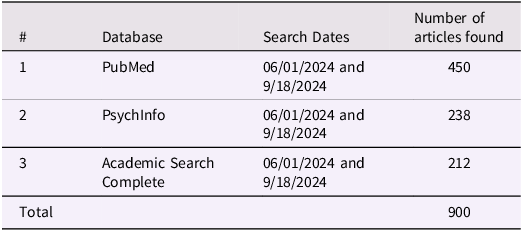

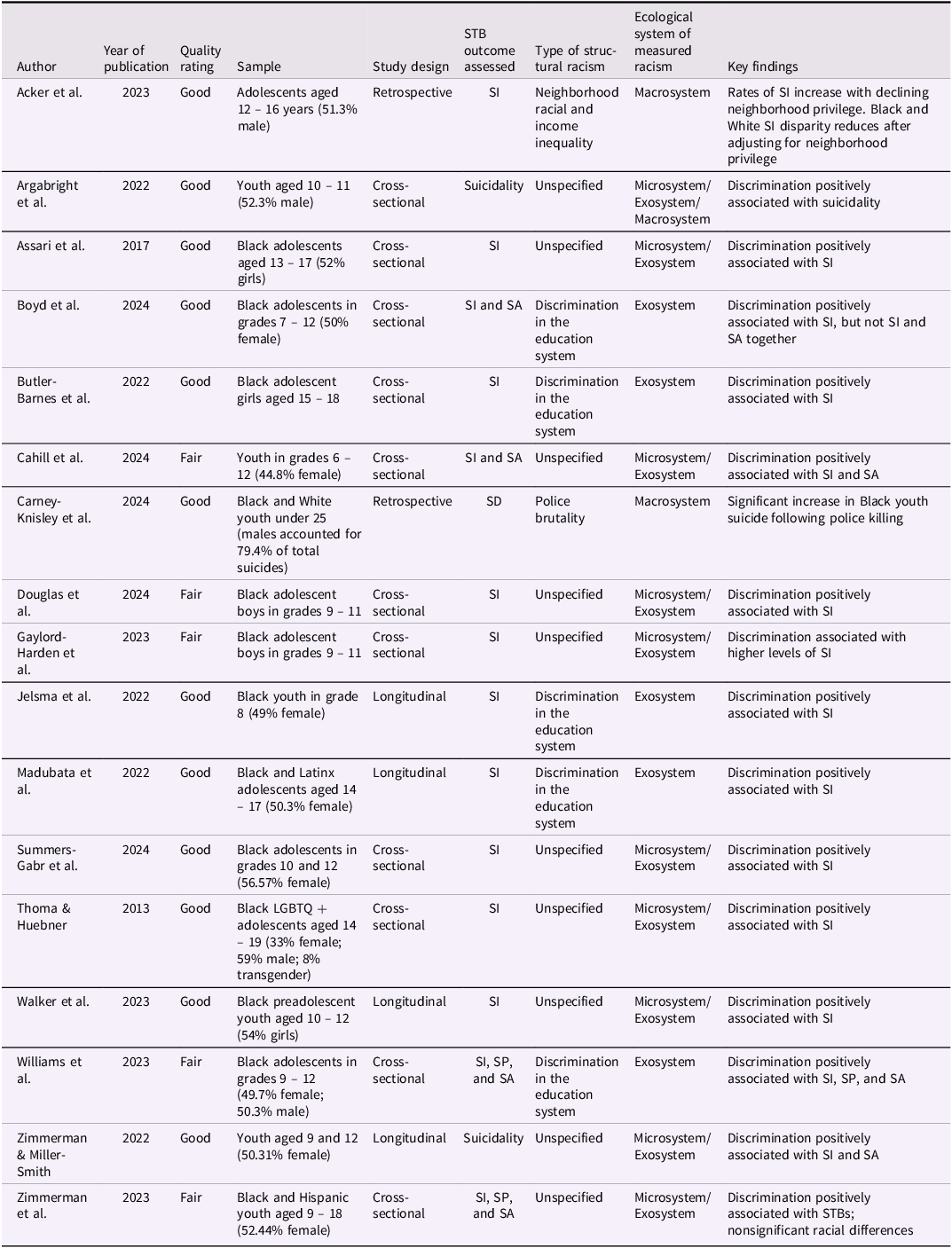

 Open access

