


Introduction
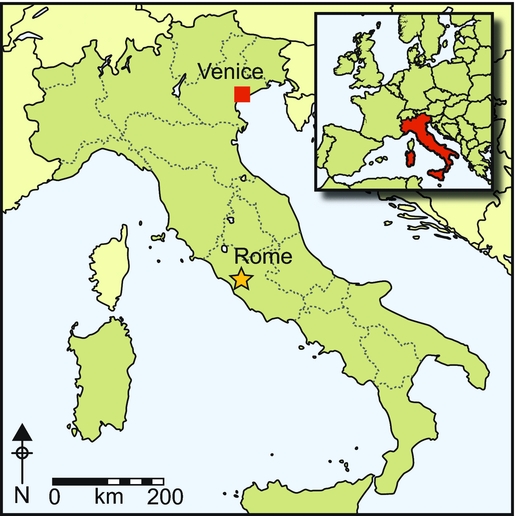
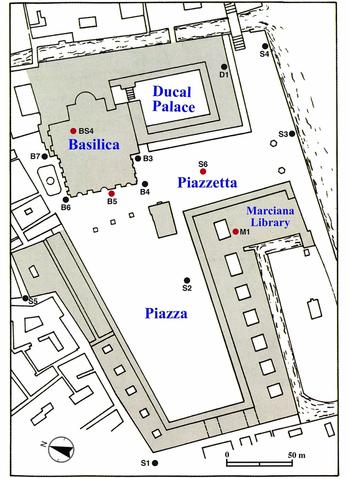
The question of how Venice, the city built on water, began is one of great interest to both the Venetian and the scholar. Over the centuries, writers have spent much time and effort attempting to tell the story of the origins of the city, from those writing in the Venetian chronicle tradition with its share of fanciful legends (Carile & Fedalto Reference Carile and Fedalto1978; Brown Reference Brown, Molho, Raaflaub and Emlen1991) to the modern historians offering a more critical perspective (e.g. Nicol Reference Nicol1988; Cracco-Ruggini et al. Reference Cracco-Ruggini, Pavan, Cracco and Ortalli1992; Crouzet-Pavan Reference Crouzet-Pavan1999). Even the best attempts as yet proposed are, however, limited in their scope and detail. The problem has always been the dearth of relevant first-hand documents from before the ninth century AD (Cessi Reference Cessi1942; Ortalli Reference Ortalli1981; Agazzi Reference Agazzi1991; Ammerman Reference Ammerman2003). The Basilica of San Marco (Demus Reference Demus1990; Polacco Reference Polacco1997; Wolters Reference Wolters2014) is located on the east side of Piazza San Marco (Figure 1). It is, of course, one of the great historical monuments of Europe. Now, archaeological finds from deep beneath the Basilica are opening a new window on what was taking place at Piazza San Marco before the construction of the Basilica.
Map showing the location of the cores at four sites in Piazza San Marco that have produced radiocarbon dates to before the ninth century AD: 1) Marciana Library (M1); 2) the Piazzetta in front of the Ducal Palace (S6); 3) the area of the Piazza in front of the main door of the Basilica (B5); and 4) the interior of the Basilica of San Marco (BS4).
According to Venetian tradition, the bones of Saint Mark the Evangelist were brought from Alexandria to Venice in AD 828, and the first Basilica in honour of him was dedicated four years later. A few years earlier, in AD 810 or 811, another important event in Venetian history had taken place: the seat of the Doge was moved from Malamocco on the Lido to Piazza San Marco. At this time, the new town that was emerging on the archipelago of small marsh islands in the middle of the Venetian Lagoon was called Rivoalto, and not Venice. The discovery and the dating of two peach stones recovered from a deep core beneath the Basilica now provide key evidence for the ‘pre-history’ of Piazza San Marco (for our previous work there, see Ammerman et al. Reference Ammerman, De Min, Housley and McClennen1995: 504–509; Ammerman & McClennen Reference Ammerman and McClennen2001: 24–25).
Compared to other great historical cities of Europe, urban archaeology had a late start in Venice. Here, the challenge for the archaeologist is the high water table. As recently as 1983, no archaeological site within the area of the city had been excavated using modern methods. This was achieved for the first time at two early Venetian sites in the late 1980s: San Pietro di Castello (Tuzzato Reference Tuzzato1991) and San Lorenzo di Castello (De Min Reference De Min2000a). In 1990, Maurizia De Min, the archaeologist in charge of excavations conducted at Venetian monuments, invited the first author to make a series of cores below the ninth-century church of San Lorenzo, which proved highly productive (see Ammerman et al. Reference Ammerman, De Min and Housley1992: 913–16). Over the next 12 years, De Min and Ammerman worked in close collaboration at many other sites across the city and the lagoon, including the Marciana Library, the Ducal Palace, the Frari, San Francesco del Deserto and Torcello. In 1993, three deep cores were taken beneath the Marciana Library on the south side of the Piazza (M1 in Figure 1; Ammerman et al. Reference Ammerman, De Min, Housley and McClennen1995: 504–507; Ammerman Reference Ammerman and Polacco1997: 91–93). In the same year, the opportunity arose to study deep cores taken at six different places in the Piazza (S1–6 in Figure 1). Both the Marciana Library and Piazza cores are discussed below.
This first cycle of work brought three innovations to the investigation of early sites in Venice. First, coring was carried out during the initial phase of the fieldwork at a new site. For this, we designed and produced coring equipment suitable for the local conditions in Venice (Ammerman & McClennen Reference Ammerman and McClennen2001: 32). The intention was to target our excavation based on data from the coring. The parallel here is with modern surgical biopsy. Second, the then new method of accelerator mass spectrometry (AMS) was used to radiocarbon-date samples of reeds and wood recovered from the cores taken at the early sites (e.g. Ammerman & McClennen Reference Ammerman and McClennen2001: 22–23). AMS allowed the dating of smaller, higher-quality samples. It was used for the first time in Venice at the site of San Lorenzo di Castello, in 1992 (Ammerman et al. Reference Ammerman, De Min and Housley1992: 915, tab. 1). Over the following two years, a series of AMS dates was produced at San Francesco del Deserto (five dates in the fifth and sixth centuries AD) and at the Marciana Library (five dates in the seventh and eighth centuries AD) (Ammerman et al. Reference Ammerman, De Min, Housley and McClennen1995: 501–504, tab. 1). The latter were the first 14C dates from before the ninth century at Piazza San Marco. Thirdly, we undertook environmental studies in the lagoon by combining sub-bottom profiling and coring from a boat. When we first went to Venice, there was much uncertainty in the literature concerning the position and the dating of the important boundary at the base of the lagoon. The fieldwork, which was carried out in 1993 and 1994, established the position of the boundary, which was located as being 4.5–6m below modern sea level (Ammerman et al. Reference Ammerman, De Min, Housley and McClennen1995: 506–507; McClennen et al. Reference McClennen, Ammerman and Schock1997: 755–58, fig. 9; Ammerman et al. Reference Ammerman, McClennen, De Min and Housley1999: 305, fig. 2). AMS dating of plant fibre samples from cores taken at the boundary dated it to between 5000 and 6000 years old (Ammerman et al. Reference Ammerman, De Min, Housley and McClennen1995: 507, Reference Ammerman, McClennen, De Min and Housley1999: 306–309, tab. 1; McClennen et al. Reference McClennen, Ammerman and Schock1997: 753). These new results were then confirmed by subsequent investigations in the Venetian Lagoon (Serandrei-Barbero & Donnici Reference Serandrei-Barbero and Donnici2013).
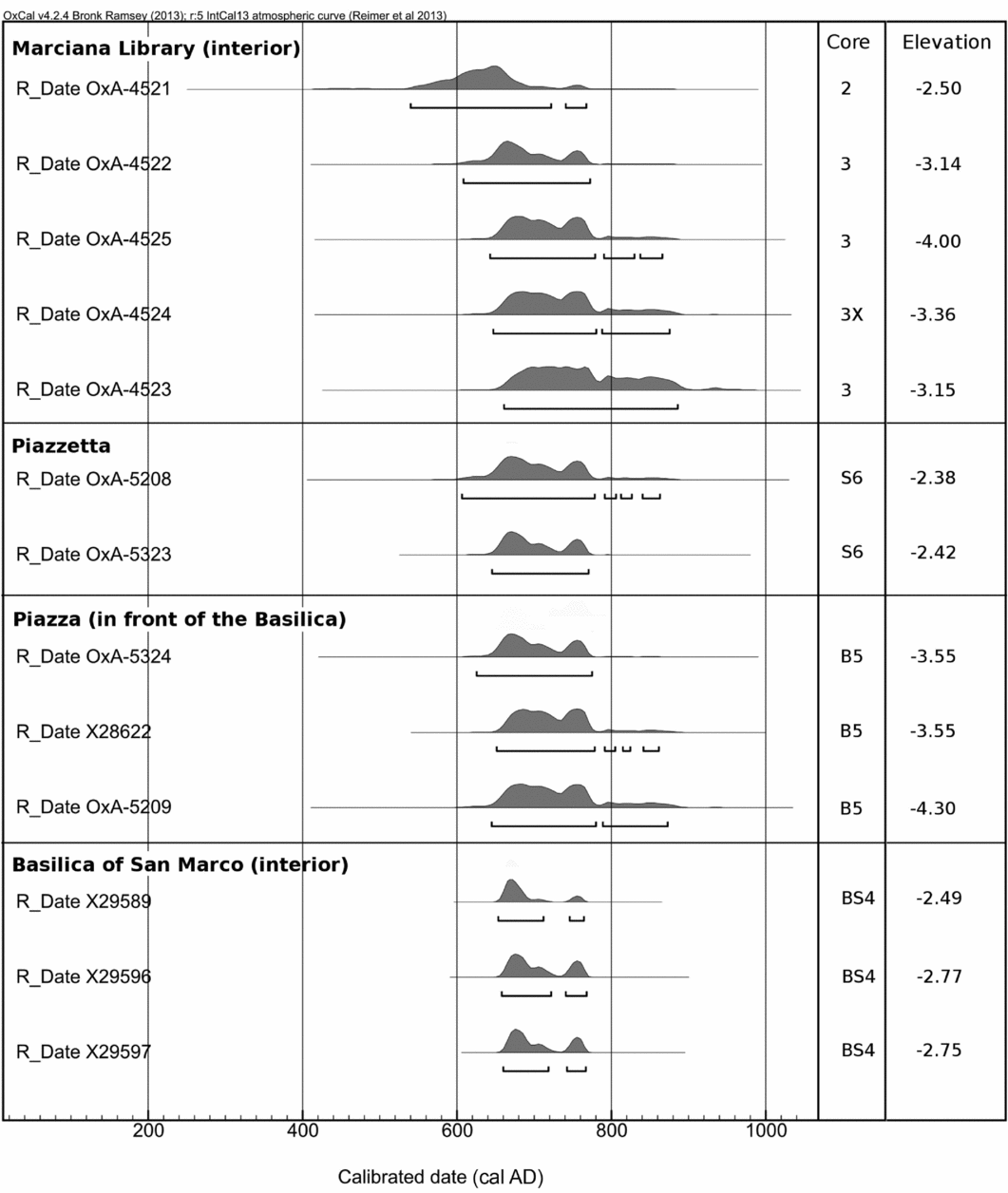
The calibrated ages of radiocarbon dates obtained for the four early sites at Piazza San Marco: 1) Marciana Library (M1); 2) the Piazzetta (S6); 3) the area of the Piazza in front of the main door of the Basilica (B5); and 4) the interior of the Basilica of San Marco (BS4). The rightmost column gives the elevations of the dated samples. Dates calibrated in OxCal v4.2 using the IntCal13 curve (Bronk Ramsey Reference Bronk Ramsey2009; Reimer et al. Reference Reimer, Bard, Bayliss, Beck, Blackwell, Bronk Ramsey, Buck, Cheng, Edwards, Friedrich, Grootes, Guilderson, Haflidason, Hajdas, Hatté, Heaton, Hoffmann, Hogg, Hughen, Kaiser, Kromer, Manning, Niu, Reimer, Richards, Scott, Southon, Staff, Turney and van der Plicht2013).
Research progressed well from one site to the next during the first ten years of our work in Venice, although frustration and disappointment were experienced at the Basilica of San Marco. Work there began in 2000 at the invitation of Roberto Cecchi, Superintendent of Monuments of the Veneto region, who was planning to write a book on the Basilica (Cecchi Reference Cecchi2003). Our task was to study several cores to obtain samples of wood for species identification and dating. The cores started at the mosaic floor of the Basilica and went down through its foundations to the natural soil below. Ettore Vio, Proto of San Marco (the architect in charge of the Basilica), had commissioned a firm in Bergamo to take the cores. While the cores were of good quality, basic pieces of information were missing from their documentation, such as the lack of starting elevations and technical drawings for each core. These presented serious limitations to the study of the cores from the church interior, and effectively halted our research at the most important site in Piazza San Marco.
Returning to Piazza San Marco
In 2014, an unexpected turn of events led to our return to Piazza San Marco. Ettore Vio, still the Proto of San Marco, and our old friend, produced high-quality drawings of 73 cores and a detailed map of the mosaic floor with the missing elevations. We examined all of the core drawings, and the most promising one, core BS4, did not disappoint. In October of 2015, the opportunity arose to examine and sample the cores themselves. At depths of 4.18 and 4.16m in core BS4, two whole peach stones were found adjacent to each other. They were recovered from the context of an anthropic sediment—one linked with the in-filling of a canal (this is discussed below).
The short life (one year) of a peach stone, along with its abundance of 14C, makes it an ideal sample for AMS dating. In addition, the presence of two peach stones meant that the quality of the dates obtained could be assessed. Dating was undertaken at the University of Arizona, where results with low standard deviations were obtained: respectively, 25 years for fruit stone 1 (X29596) and 21 years for fruit stone 2 (X29597; Figure 2; see online supplementary material (OSM) on the dating of the two peach stones and also a third sample—a nearby fragment of elm charcoal, X29589). The three samples were in close agreement, yielding calibrated ages dating to between AD 650 and 770 (at the 95% confidence level). It should be mentioned that each sample pre-dates the AD 828 arrival of the relics of Saint Mark in Venice by at least two generations. These three high-resolution dates have provided the missing piece in the puzzle concerning the area below the Basilica.
There is a clear pattern to the dates in Figure 2: they all cluster in the seventh and eighth centuries (AD 600–800), providing evidence at each of the four sites for human activity pre-dating San Marco. Conversely, they provide little or no support for local human activity in the sixth century AD, with the possible exception of the sample OxA-4521 from the Marciana Library (Figure 2). The widths and shapes of the probability curves in Figure 2 are influenced by the standard deviations of the respective dates. For the first three sites, their values are consistently larger (in the range of 60–40 years; for more information on each dated sample, see Table S1 in the OSM) than the standard deviations of the new dates from below the Basilica (in the range of 25–21 years). The higher resolution of these three AMS dates provides a new level of chronological refinement for early Venice. The elevations of the samples in Figure 2 show that they all came from depths of between −2.38 and −4.3m below modern sea level (in Venice, sea level is commonly measured with reference to the 1897 tide-gauge standard). We have reconstructed the curve for the rise in relative sea level of the Venetian Lagoon over the last 18 centuries (Ammerman et al. Reference Ammerman, McClennen, De Min and Housley1999: fig. 3; Ammerman Reference Ammerman, Fletcher and Spencer2005: fig. 13.2) and estimate that the level was approximately −2m in elevation in the second century AD. By the eighth century, it had risen to an elevation in the range of −1.6 to −1.4m. Hence, all the dated samples in Figure 2 come from positions that were below sea level in the seventh and eighth centuries. The inference is, therefore, that all the dated samples are linked with the in-filling of canals at that time.
Four small pieces of mortar were observed in the sediments of the three cores from the Marciana Library, along with reeds, and six different species of wood, including oak and elm (Ammerman et al. Reference Ammerman, De Min, Housley and McClennen1995: 509, tab. 2). Core S6 in the Piazzetta also yielded archaeological inclusions, including a dated wood chip at −2.38m in elevation (OxA-5208), a dated animal bone at −2.42m (OxA-5323) and several small pieces of early glass at −2.4m. Core B5 was taken in the Piazza as one of the cores around the Basilica commissioned by Vio in the early 1990s. It was then sampled during work on our own series of six deep cores in the Piazza (S1–6). Located in front of the main door of the Basilica, core B5 produced two good-sized pieces of wood, including elm at −3.55m in elevation (OxA-5324 and X28622; both dates were run on the outer rings of the sample) and oak at −4.3m (OxA-5209). The depths of these two samples should be noted, with the implication that they came from a canal of reasonable size. Of relevance to the two peach stones in core BS4 (recovered respectively at −2.77 and −2.75m in elevation) is a review article (Sadori et al. Reference Sadori, Allevato, Bosi, Caneva, Castiglioni, Celant, Di Pasquale, Giardini, Mazzanti, Rinaldi, Rottoli, Susanna and Morel2009) on the introduction of the peach to Italy, and the spatial distribution of peach stones at Italian archaeological sites. According to the authors, peaches were introduced into Italy during Roman times (the first half of the first century AD), and by the seventh century AD, peach trees had become well established in northern Italy. Our SEM/EDS examination of the grainy sediment found in association with the two fruit stones has shown that the sediment is anthropic. As documented in the OSM, the following features were observed in the sediment sample: 1) one definite ceramic fragment (slide number 8, based on the relative peak heights for the elements aluminium, silicon and potassium); 2) four possible ceramic fragments (numbers 3, 5, 10 and 14); 3) one seed (number 9); 4) two angular grains of quartz of fair size (numbers 10 and 13); and 5) one grain of zinc metal (number 15).
Discussion
When considering the wider implications of these new results for the origins of Venice, our high-resolution dating of samples to the second half of the seventh century and the first half of the eighth century is particularly striking. Taken together with the dates from the other three sites (Figure 2), we can conclude that the prehistory of the area of what would be the future Piazza San Marco had a rather shallow time-depth—one that spans only a few human generations. This is in marked contrast with the situation in the northern lagoon, where Roman occupation is well documented at sites such as Torcello (Leciejewicz et al. Reference Leciejewicz, Tabaczynska and Tabaczynski1977; De Min Reference De Min2000b). Excavations there revealed a tile structure dating to the second century AD, the architectural remains of a small room with brick walls dating to the fifth century, and also two small wooden houses, each with a hearth dating to the sixth century (Ammerman & McClennen Reference Ammerman and McClennen2001: 16–17; for information on a nearby small wooden warehouse contemporaneous with the two houses, see Calaon Reference Calaon, Centanni and Sperti2015: fig. 4 and references therein). Torcello is, of course, well known for its early Basilica, which was dedicated to Saint Mary the Mother of God in AD 639. One explanation for the late start of Venice is its location in the middle of the lagoon, and not in the vicinity of the two main lines of communication in Roman times (Bellavista & Romanelli Reference Bellavista and Romanelli1985: 17; Ammerman Reference Ammerman2003: 155). The first began at the inlet of the Adriatic Sea and passed near the island of Torcello on its way to the Roman town of Altinum, and then via the Sile River to the Roman town of Travisium (Treviso). The second line of communication passed to the south of Venice, where it was directed towards the Brenta River and the Roman town of Patavium (Padua).
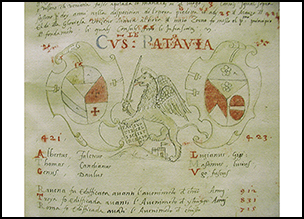
Most of the great historical cities in Italy do have Roman roots, and this was something that the Venetians naturally longed for. Support for this idea is not, however, found in ancient sources, and there are no extant standing Roman ruins within the city. Yet this did not stop the Venetian chroniclers from inventing such roots. According to Venetian myth, the city was founded by three consuls from Padua in AD 421 (Figure 3), a legend that made its first appearance in the Chronicon Altinate (AD 1081–1204). This foundation date was then reified in stone when the Arsenal Portal was built in 1460 (Brown Reference Brown1996: 108–10). For many years, the Venetians remained attached to this as the date of the foundation of their city. Even during the twentieth century, scholars (e.g. Dorigo Reference Dorigo1983) continued to argue for Roman roots, regardless of the lack of reliable archaeological evidence dating to the time before the sixth century. It should be noted here that Tuzzato's (Reference Tuzzato1991: 92–103) claim that occupation at San Pietro di Castello dates back to the fifth century AD is no longer accepted. More recently, Marco Bortoletto returned to the area of the site where Tuzzato dug, took the excavation to a greater depth and demonstrated that the oldest levels date to no earlier than the sixth century AD (Bortoletto pers. comm.).
The legendary foundation of Venice as a city by three consuls from Padua in AD 421, as portrayed in the manuscript Chronicon venetum ab origine ad an MDLIX. This Venetian chronicle is now in the Ranke Collection of the Syracuse University Library.

The Roman town located closest to Venice—12km to the north—was Altinum on the mainland, behind the lagoon (Tirelli Reference Tirelli2011). The plan of the Roman town was, however, poorly understood until the first decade of the present century, when remote sensing finally revealed its layout (Ninfo et al. Reference Ninfo, Fontana, Mozzi and Ferrarese2009). For years, the idea persisted that Roman Altinum had an environmental setting akin to that of Venice. Recent coring has, however, provided evidence to refute this old idea; coring revealed that Roman Altinum was built on an earlier anthropic mound (around 2m high), which rested, in turn, on old terrestrial soils, rather than the soft marine (lagoonal) sediments upon which Venice was built (Ammerman Reference Ammerman2012: 698–99).
For those who live in a great city, it is heartening to think that their city had a great start too. Had its start been a modest or uneventful one, there would be little in the remote past to celebrate and to give its citizens a sense of identity (Brown Reference Brown, Molho, Raaflaub and Emlen1991). The worst case would be for a city to have a late start and a modest one as well. This is just the position that the Venetians found themselves in, and, over the centuries, they tried to address the problem in two ways. The first was to invent legends, such as the founding of the city by three consuls from Padua—thereby conferring Roman roots on their city. The other strategy was to claim that their city began simply from a clean slate; there was nothing to be gained by having a modest eighth-century start at a place called Rivoalto. Accordingly, as events of the eighth century were played down by the Venetians and largely forgotten, the following century was far more memorable (Ammerman Reference Ammerman2003: 147). As part of a concerted effort to keep the slate clean prior to San Marco, the Venetians chose to suppress the significance of the early Basilica on the island of Torcello (Crouzet-Pavan Reference Crouzet-Pavan2017). And while the relocation of the ducal seat from Malamocco to Venice was a major event, there was no room on the walls of the Sala dello Scrutino in the Ducal Palace to hang the portraits of the Doges who ruled at Malamocco in the eighth century (Ammerman Reference Ammerman, Terrenato and Haggis2011: 268).
There was, in short, much ambivalence concerning the origins of Venice. While there was the notion that the city had Roman roots, there was also the idea that the guiding hand of providence had made it possible for the city to arise from a tabula rasa. But neither stance was correct. As we now know, the city's civic centre did not start from a clean slate. Piazza San Marco did have a prehistory in the seventh and eighth centuries, and one that Roman grandeur played no part in. Instead, what was involved was the low-profile work of consolidating the ground and in-filling of the canals that once meandered through the area. By transforming the landscape of what had previously been a marginal place, it was possible to create a large, contiguous space where the new civic centre was established in the ninth century. It is important to recall here that landscape transformation has recently emerged as a new theme in the archaeology of early Rome (e.g. the reclamation of land in the case of the Forum) and of the high Carolingian age (e.g. the construction of terraces as a feature of the architectural rhetoric). It is not, however, possible to detail here the human transformation of the landscape in such parallel cases. In this article our interest is in the age-old question of how the city of Venice began. We have provided a new line of interpretation to reflect upon and to explore further; the task of the modern archaeologist here then is to provide substantive evidence in order to promote relevant discourse on the origins of Venice.
Acknowledgements
The research was supported by grants from the Delmas Foundation, Colgate University, the Kress Foundation and the National Geographic Society. For their assistance in the recent fieldwork, our appreciation goes to Ivana Pezzo and Stefano Marconi of the Laboratory of Dendrochronology at the Museo Civico in Rovereto, Italy. For the high-resolution dating of the two peach stones, we wish to thank Greg Hodgins at the AMS Laboratory of the University of Arizona.
Supplementary material
To view supplementary material for this article, please visit https://doi.org/10.15184/aqy.2017.164



