




Introduction: Technocracy in a Non-technocratic Country?
Even though the term ‘technocracy’ has rightfully been characterised as anachronistic with regard to pre-1945 Europe,Footnote 1 the ideal represented by the principle has intellectual roots that go back to the second half of the nineteenth century, when engineers arose as ‘heroes of the bourgeois society’.Footnote 2 The engineering mindset came with a certain ‘distrust … towards everything that appeared to be unquantifiable, apparently irrational, and open to multiple interpretations’.Footnote 3 As such, the promise of objective and rational ‘planning’ – a key element of technocratic thinking – became a ‘myth of modernity’, which experienced its global heyday between roughly 1918 and the 1970s.Footnote 4 As a ‘background ideology’, technocracy could itself combine various political beliefs.Footnote 5 Despite their often ‘[stark and confrontational] rejection of … the normal machinery of politics’, advocates of technocracy usually showed a ‘high degree of ideological flexibility’, allowing them to ‘compromise with different ideologies and their organized representatives’.Footnote 6 What united all technocrats was the conviction that ‘technological competence … [and] rational administration [preceded] the hazards of public debate’.Footnote 7 However, rejecting established forms of policy-making did not necessarily imply a rejection of democratic principles. Some technocrats believed that political conflict was simply not ‘a healthy component of democracy, but a consequence of ignorance’. In this view, ‘rational analysis and knowledge [were to] produce efficient solutions that should be accepted by all people of good will’.Footnote 8 Others saw technocracy more as a means of replacing mass democracy altogether with an elitist bureaucratic regime that could turn ‘all problems of politics into problems of administration’.Footnote 9
From an international perspective, Belgium has never been considered as a country where politics was strongly marked by technocratic principles.Footnote 10 A bastion of laissez-faire capitalism in the nineteenth century, Belgium continued to give private initiative an important role in the twentieth century, particularly in the banking sector. Moreover, the founding fathers of the Belgian state (1830–1) had created a highly liberal constitution that granted a considerable amount of power to local entities (cities and municipalities), as well as to non-governmental – but ideologically ‘pillarised’ – institutional actors (mainly the political parties and the church; later also subnational movements and trade unions). This way, the legislators of the young state wanted to prevent the reoccurrence of despotism. As has been argued by Marnix Beyen, the ‘anti-etatist’ constitution inevitably resulted in a rather weak central government, whose powers were continuously met with strong counter-powers emanating from the civil society.Footnote 11 None of these elements was conducive to the emergence of a technocratic movement. While neighbouring countries such as the Netherlands and France have a historiographically well-documented tradition of expert influence on governance, technocracy in Belgium is associated almost exclusively with a strong involvement in supranational European integration after the Second World War, as well as with a short-lived political experiment at the national level around 1935–7.Footnote 12
The latter experiment, whose exceptional nature and unsuccessful outcome seem to prove the rule that Belgium is a relatively non-technocratic country, was instigated by the Catholic strongman Paul van Zeeland and his Socialist counterpart Hendrik de Man. In view of the lingering economic crisis, both tried to counter the classic liberal economic tradition of ‘non-planning’: instead of floating on waves of periodical recessions, van Zeeland and de Man sought to actively steer the socio-economic field – and by extension the political field – towards expert-driven predictability.Footnote 13 However, the focus of the two politicians differed. Even though he was closely linked to the right wing of the Catholic party, van Zeeland presented himself as a nonpartisan financial expert who rose above party-political turmoil.Footnote 14 Hailed as the instigator of ‘a New Deal for Belgium’,Footnote 15 this former vice-governor of the National Bank of Belgium indeed possessed valuable technical knowledge, which proved to be instrumental at the start of his term as prime minister in March 1935. At that moment, van Zeeland received ‘special powers’ from parliament to implement a number of reforms via enabling legislation, the most significant being a 28 per cent devaluation of the national currency.Footnote 16 Even though this devaluation had beneficial macro-economic effects, van Zeeland's career as prime minister would come to a premature and inglorious end in October 1937, after he was accused of having received unjustified personal payments from the National Bank.Footnote 17
An even more ambitious figure was de Man, whose views on socio-economic reform caused a Europe-wide furore following the publication of his 1933 Labour Plan (Plan du Travail).Footnote 18 Tommaso Milani has recently noted that the appeal of the plan was the result of a rare combination of a technocratically inspired agenda with an attempt at forging democratic legitimation for that agenda. De Man's plan was indeed conceived as ‘a rallying point for ordinary people [and] a multi-class political platform’.Footnote 19 In practice, the Labour Plan proposed a powerful executive, with the involvement of five (unelected) expert ‘commissioners’, who were to implement top-down reforms over the course of a three-year term.Footnote 20 With its promise to tackle unemployment and bring the ‘parasitic’ banking world under government control, de Man's so-called ‘planism’ was presented as an innovative instrument for counteracting the crisis. To highlight the non-partisan and trans-ideological dimension of his views, moreover, de Man deliberately involved non-Socialist experts during the drafting phase of his Labour Plan.Footnote 21 Yet in the eyes of both contemporary observers and historians, the planist experiment has overwhelmingly been perceived as a fiasco, since de Man's actions as a minister in three consecutive governments (1935–8, including two led by van Zeeland) did not result in the structural overhaul demanded by the Labour Plan. Even though de Man successfully pushed for the creation of a technocratic government institution devoted to ‘economic recovery’ (Office de redressement économique; OREC), this institution largely remained impotent because of opposition from the Liberal Party.Footnote 22 It is generally believed that the negative experience of de Man's government participation contributed to his ideological radicalisation in the latter years of the 1930s, culminating in his infamous June 1940 manifesto, which applauded the German takeover of Europe.Footnote 23
This article argues that the technocratic experiments by de Man and van Zeeland were not isolated events, but rather formed part of a broader technocratic momentum that occurred in Belgium from the mid-1930s until the beginning of the Second World War. To this end, it provides an analysis of the activities and ideological views of the political scientist Louis Camu, who pushed for technocratic governance during the same period as van Zeeland and de Man. From 1936 to 1940, Camu acted as Royal Commissioner for Administrative Reform, a newly created function within the political-administrative system. While Camu's career as government reformer began under the aegis of Prime Minister van Zeeland, it soon transcended the specific context of the latter's cabinet: the Royal Commissariat continued to exist after van Zeeland's resignation, and Camu would continue to serve under three more prime ministers until the start of the war. In a period characterised by both intense political instability and a rapid succession of governments (two phenomena that could be observed in many democratic European countries during the 1930s),Footnote 24 Camu thus became the personification of a remarkable institutional continuity. Most importantly, the Royal Commissioner also managed to secure the implementation of various government reforms; many of his proposals would even endure long after the Second World War. These aspects of continuity indicate that Camu was a more successful technocrat than van Zeeland and de Man. In practice, the Royal Commissioner developed a technocratic blueprint for a radical reorganisation of the Belgian civil service, which was intended to have a societal impact similar in scale to the economic reforms in de Man's Labour Plan. Even though the object of Camu's and de Man's reform ambitions differed, both men shared an unmistakable political elitism, which they combined with a quest for public legitimacy (in Camu's case, this quest resulted in numerous public appearances aimed at promoting the technocratic cause).Footnote 25 Like de Man, moreover, Camu would come to fully embrace illiberal, authoritarian ideas by the time of the German invasion – a moment when both men also showed themselves eager to play a role in the New Order.
Despite his political and public prominence in the 1936–40 period, Louis Camu has remained virtually undiscussed in Belgian political historiography.Footnote 26 This article seeks to correct this absence, while also pointing to the relevance of the Camu case for our understanding of the transnational development of technocratic ideas during the 1930s. A syncretic thinker, Camu was involved in the so-called administrative sciences scene, which provided possibilities for exchange between (aspiring) reformers from various countries. As such, this article should equally be understood as a contribution to the transnational history of expertise. In a recent contribution, Martin Kohlrausch signalled that during the second half of the nineteenth century, experts first rose to prominence as a socio-professional group by ‘[exploiting] their authority to interpret state policy, national prestige, and health’. This position came with an elitist habitus: rather than thinking of themselves as specialists, they considered themselves tacitly as meta-experts or ‘geniuses’ – with the latter term ‘partially [regaining] its original meaning as a guiding spirit which accompanied and guided the individual on his or her life's journey’.Footnote 27 In a seamless act of translation, many ‘guiding spirits’ thus believed they were to direct the nation-state as well.Footnote 28 An important subsequent development in expert discourses on government functioning was the advent of Taylorism (or scientific management) immediately before the First World War. During the interwar period, the Taylorist notion of ‘efficiency’ indeed became increasingly prominent, with experts trying to integrate new managerial principles of surveillance, speed, hierarchy and cost-savings into the sphere of government. Taylorism thus became – in the words of Nikolas Rose – a Foucauldian ‘technology of government’, characterised by ‘an assemblage of forms of practical knowledge … traversed and transected by aspirations to achieve certain outcomes in terms of the conduct of the governed’.Footnote 29 This ‘technology’ could indeed link itself easily with both the ‘democratic’ and ‘authoritarian’ variants of technocracy, as will be illustrated below.
An Expert Generalist
With their self-declared ethos of emotional detachment and rational calculation, technocrats rarely acknowledged that personal ambitions formed part of their aspiration to exert societal influence. Regarding de Man, Stanley Pierson has, for instance, observed that ‘despite his attention to the nonrational forces in life [which he investigated in various theoretical works on social psychology, author], [he] was convinced that the passions, at least among the intellectuals, were subject to the control of conscience and reason’. So de Man's vision of the elite that was holding a position of leadership within a planist society meant completely ignoring the possibility that ‘intellectuals might have special interests or a distinctive will to power’.Footnote 30 In a similar vein, recent research on the notion of the ‘technocelebrity’ has called attention to the fact that some technocrats on the international scene, such as the modernist architects Le Corbusier and Walter Gropius, did not see any contradiction between their self-image as neutral scientists and their unremitting quest for honour and distinction on the public scene.Footnote 31 It indeed bears repeating that technocratic thinking did not unfold solely as the result of a societal demand and/or an inherent scientific logic: it also stemmed from personal motives. As such, it is essential to take the biographical dimension of technocrats duly into account. In the case of Louis Camu (1905–76), an analysis of this dimension reveals an eagerness to transcend geographical, ideological, disciplinary and professional boundaries, already from a young age.
Born to a French-speaking family of industrialists in the Flemish town of Aalst (or Alost in French), Camu was initially destined to become his father's successor as the owner of a malting plant. During his adolescence, he immersed himself in brewing techniques at the Institut de fermentation in Ghent, but it quickly became clear that his interests reached beyond the family trade. He went on to study political science at the State University of Ghent, while also taking courses at the Academy of International Law in The Hague. Aged just twenty-two, Camu was granted a teaching position in the field of political economics at his Belgian alma mater.Footnote 32 During the second half of the 1920s, the young scholar worked hard to establish a network and a reputation. Personal successes followed as a matter of course, as demonstrated by a Flemish newspaper report of a 1929 speech given by Camu for the Danish-Belgian Association. In his capacity as secretary of his hometown's Chamber of Commerce, Camu had travelled to Copenhagen to address a group of dignitaries. The event was described as follows:
Among those present in the packed room were the French ambassador … , the Belgian First Secretary … , several consuls … , [Danish] professors … and literary men. The floor was then given to Louis Camu, a remarkably young scholar of the modern type, blessed with an iron will. His speech covered economic life in Belgium, the wartime destruction and the miraculous recovery since. To conclude, Camu stated: ‘I apologise if you found my talk dry and boring, but a hard-working people has no time for laughter!’ Following lengthy applause, [the rector of the University of Copenhagen] convinced Camu that his speech had been both perfect and important, and that the Belgian economic recovery should serve as an example to Denmark.Footnote 33
Around the same period, Camu entered government service. Probably through his family ties with the Liberal Party, he was appointed as cabinet adviser to Maurice Auguste Lippens, the Minister of Transport from 1927 to 1931. In a subsequent government (1932–4), when Lippens's portfolio changed to Public Education, Camu was promoted to the position of principal private secretary. Through these experiences, Camu gained an intimate knowledge of the Belgian political-administrative system.Footnote 34 His impressions, so it seems, were not overwhelmingly positive. When interviewed in 1937, Camu would recall that he had been astounded by the ingrained habit of nepotism that guided the recruitment of new ministerial employees: ‘The correspondence containing political support for the respective candidates was weighed, and appointments were subsequently made “by the kilo”’. Too rarely, the interviewee continued, were job candidates chosen for their ‘intelligence’ or ‘personality’.Footnote 35 His own position, Camu appeared to suggest, had been one of the rare exceptions.
In his 1982 memoirs, the Catholic jurist André Molitor – who would become Camu's personal secretary at the Royal Commissariat for Administrative Reform from 1937 onward – confirmed that the Belgian civil service in the mid-1930s had ‘virtually no technocratic characteristics’. Even though Molitor acknowledged that the government administration of that period was ‘solid’ and staffed by ‘devoted’ people, he also criticised an absence of managerial innovation and intellectual ‘brilliance’.Footnote 36 For an academically oriented generalist like Camu, this context offered career opportunities. Patrons of various denominations were indeed willing to make use of his scholarly expertise: in 1935, Camu was, for instance, asked by the Catholic Minister of Economy Philip Van Isacker to negotiate a trade agreement between Belgium and the United States.Footnote 37 On this occasion, the young political scientist travelled to America, where he was confronted with the dynamism of F.D. Roosevelt's administration. According to Molitor, the New Deal would remain a permanent source of inspiration for the subsequent work undertaken at the Royal Commissariat.Footnote 38 On behalf of the OREC, the governmental ‘office for economic recovery’ that had been established in 1935 at de Man's request, Camu also contributed to a report on Belgium's ‘economic reorientation’ in the first half of 1936, together with Socialist and Catholic economists. Camu thus became increasingly familiar with the concept of economic and political planning, while the experience of co-writing a report with academics from various ideological backgrounds must have made him well aware of the potential of a technocratic approach for solving political problems.Footnote 39 Even though the 1936 OREC report did not influence government policies in any practical way (much like the OREC itself), the 1936 ad hoc commission of inquiry did function as a temporary meeting place where technocratically oriented individuals could meet and share ideas.Footnote 40 Seen from this point of view, the OREC's activities were certainly not all in vain.
The next step in Camu's governmental career was the indirect result of a major event in Belgian political history: the breakthrough of extreme-right parties during the May 1936 parliamentary elections. The royalist, ultra-Catholic Rex managed to secure ex nihilo twenty-one seats in the Chamber of Representatives (out of a total of 202), while the Flemish-nationalist Flemish National Union almost doubled its parliamentary presence to sixteen seats. In response, mainstream parties again formed a tripartite coalition of ‘national unity’ (Catholics, Socialists and Liberals) under the leadership of Paul van Zeeland, as they had already done in early 1935. To take the wind out of the extremists’ sails, the new government placed the principle of ‘state reform’ (réforme de l’État) at the forefront of its agenda.Footnote 41 This principle referred to a constitutional revision, with the aim of strengthening the executive at the expense of the legislative. André Molitor would later remember that ideas about state reform were ‘in the air in many countries’ during the mid-1930s.Footnote 42 Especially with regard to France, the theme has been described as ‘one of the major [political] narratives’ of the interwar period.Footnote 43 French politicians defending state reform included ministers such as Charles Spinasse (1936–8), who was a member of the technocratically oriented group X-Crise, and Marcel Déat (1936), who advocated for a ‘school of administration’ where civil servants would receive training to develop ‘technical’ competence.Footnote 44 In principle, a state reform could indeed introduce a structural shift towards a technocratic decision making process. In Belgium, the Socialists under the leadership of de Man had – unsurprisingly – kept pleading for reforms along such lines: during the 1936 electoral campaign, they had emphasised that the Labour Plan finally needed to be implemented in its entirety.Footnote 45 Prime Minister van Zeeland, too, believed that his preceding coalition (1935–6) had not sufficiently met popular demands for a ‘strong state’, in which the role of parliament was to be significantly limited.Footnote 46 For van Zeeland, this plea for a more vigorous governmental approach was a strategy for safeguarding democracy in an increasingly anti-democratic Europe. In an October 1936 speech, the prime minister asserted that his interpretation of a strong executive was not ‘dictatorial’, but fully in line with the ‘national character’, since Belgians had frequently shown, ‘more than any other people … , how to use freedom without abusing it’.Footnote 47
Although they could hardly be considered as part of the ‘national character’, technocratic principles continued to feature prominently in the prime minister's strategy for effective governance. Around the time the second van Zeeland coalition took office in June 1936, two specific innovations were announced, both aimed at facilitating the implementation of expert-driven policies. First, van Zeeland backed the creation of a Centre for the Study of State Reform (Centre d’études pour la réforme de l’État; CERE), a private think-tank devoted to intellectual preparations for wide-ranging constitutional reform. Advocating technocratic and corporatist principles, the CERE would exert little practical influence on government policies during its approximately two years in existence, even though – like the OREC – it would function as a meeting ground for reform-minded protagonists of various political groups.Footnote 48 Second, van Zeeland appointed a number of ‘Royal Commissioners’ to investigate various pressing policy issues. The practice of appointing such commissioners was rather uncommon: in Belgian political history, there were about a dozen precedents, only three of which had occurred since the end of the First World War.Footnote 49 Now, no fewer than eight commissioners received a six-month mandate through a Royal Decree. Topics included the armament industry, the insurance business, pensions, unemployment insurance, social policies for the self-employed, the simplification of taxation, the creation of metropolitan districts, and the functioning of the civil service (referred to as administrative reform).Footnote 50 While all Royal Commissioners could be linked to one of the parties in van Zeeland's coalition, their expert status was clearly decisive: save one, all men possessed an academic degree, while five had a background as a university lecturer.
At age thirty-one, Camu was by far the youngest of all the Royal Commissioners. His appointment to the post of administrative reform was an endorsement of the generalist and scholarly reputation the political scientist had acquired over the previous years. In September 1936, Camu addressed a note of thanks to van Zeeland, in which he promised to live up to the latter's expectations: ‘I shall allow myself to make very liberal use of your recommendation to act ambitiously and boldly’.Footnote 51 The prime minister, in turn, requested that all civil servants support the Royal Commissioner as much as possible in fulfilling his ‘very important mission’.Footnote 52 These statements outlined the contours of Camu's task: rather than considering civil service reform as a purely bureaucratic issue with limited societal relevance, Camu and van Zeeland realised that the creation of a ‘strong’ executive depended on the availability of an expert-driven, innovative and effective public administration. As such, a technocratically inspired civil service reform was seen as a prerequisite for technocratically inspired state reform in the foreseeable future. From this point of view, Camu's Royal Commissariat was the most relevant of all, which explains why it was the only one that would continue to exist far beyond the initial six months. While the other Royal Commissariats dealt with relatively narrow technical matters, the field of civil service reform would indeed prove to be a testing ground for new methods of governance.
The Royal Commissariat for Administrative Reform
Similar to state reform, the issue of civil service reform was far from a specifically Belgian phenomenon in the interwar period. Already during the First World War, the French mining engineer Henri Fayol (1841–1925) had responded to calls for a more efficient government, whose functioning would be in line with novel ideas on scientific management. In his best-selling manual Administration industrielle et générale (1916), Fayol prescribed that government administrations should follow the same business-like managerial principles as companies.Footnote 53 To illustrate this idea, he made ample use of biological metaphors: by comparing every enterprise to a ‘living body’ whose ‘organs’ (i.e. functional entities) were interlinked through a ‘nervous system’ (i.e. the hierarchical relations in an organisation chart), Fayol argued that corporations ‘lived’ when they were managed well, and ‘died’ when they were not. Government administrations and state-owned enterprises, in contrast, could not ‘die’ through bankruptcy – and as such, the engineer believed, their leaders (chefs) were often oblivious to managerial efficiency.Footnote 54 Following an unsuccessful attempt by Fayol in the early 1920s to reform the French Post, Telegraph and Telephone administration, managerial specialists from various countries would continue to debate the efficiency of government administrations at periodic conferences of the transnational ‘administrative sciences’ movement. In 1931, the International Institute of Administrative Sciences (IIAS) was established to coordinate the movement's activities. Headquartered in Brussels, the IIAS received financial support from the Belgian government, in an attempt to maintain Belgium's pre-war position as a major hub of transnational scientific and cultural exchange.Footnote 55 While Camu did not participate in the July 1936 IIAS conference in Warsaw (the last one held prior to the Second World War), in September 1937 he did attend a European meeting of the Public Administration Clearing House (PACH), a US organisation whose aims largely overlapped with those of the IIAS.
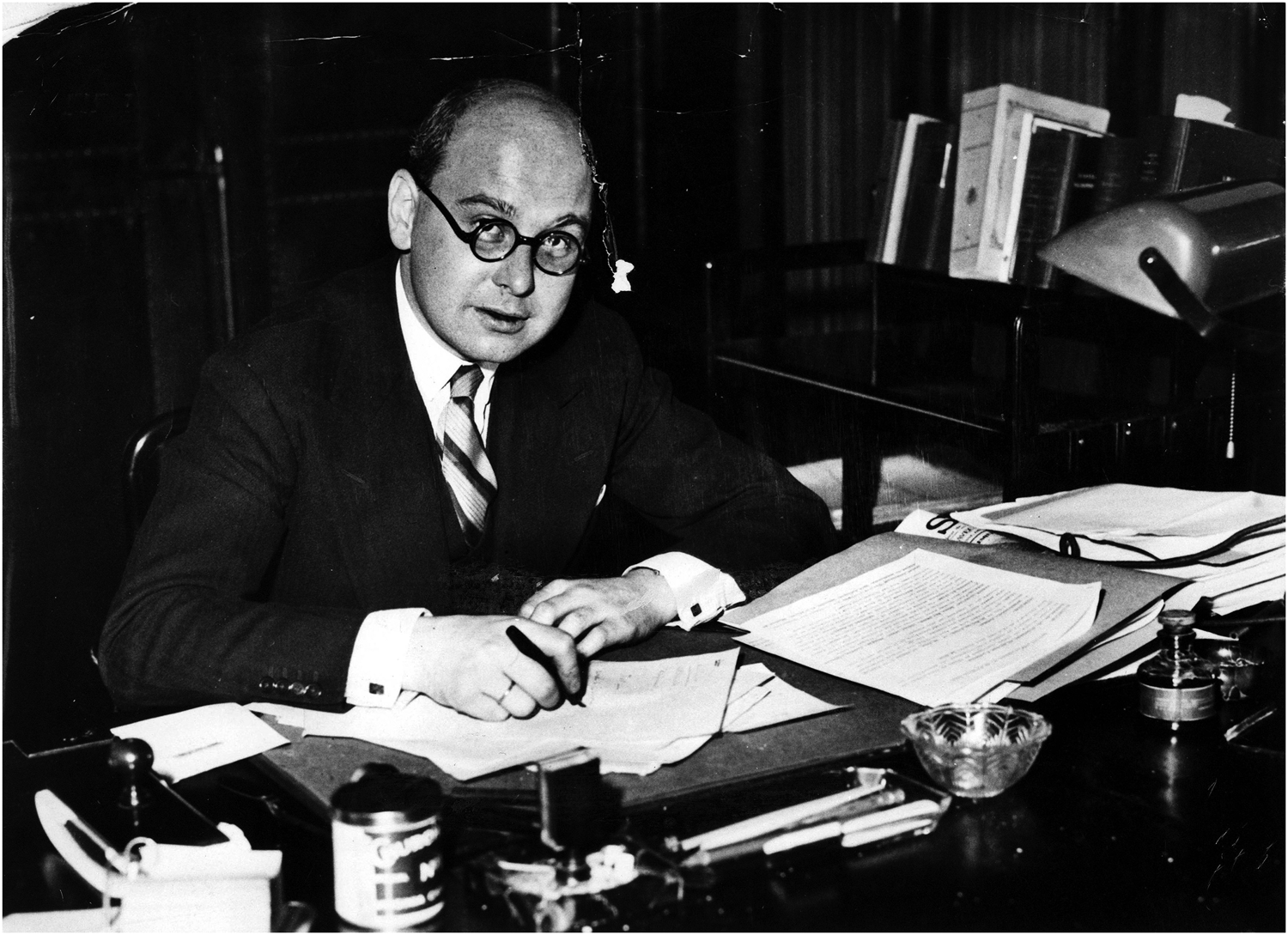
At the 1937 PACH meeting, which took place in the Belgian Château d'Ardenne, the Royal Commissioner met Louis Brownlow, an American political scientist who had recently served as chairman of the President's Committee on Administrative Management.Footnote 56 In March 1936, F.D. Roosevelt had tasked this committee with investigating the efficiency of the US civil service. In doing so, the president sought to silence criticism from financial circles, which projected a doom scenario of ever-increasing expenditure for the rapidly growing government administration.Footnote 57 A New Deal enthusiast (a characteristic he shared with Paul van Zeeland), Camu was familiar with Brownlow's final report on civil service reform (January 1937), the two main objectives of which were in line with Camu's.Footnote 58 Brownlow and Camu wanted to simplify ministerial organisation charts in order to eliminate superfluous agencies and establish shorter lines of command. Both reformers were also seeking a professionalisation of the civil service: instead of relying predominantly on political appointments, new recruitments had to be made via a central personnel agency, which would set objective qualification standards. To a large extent, the managerial rationality behind these recommendations was in line with principles of scientific management – and for this reason, the British administrative specialists Lyndall Urwick and Edward Brech praised the Brownlow Commission in a 1957 essay, stating that ‘for the first time, the philosophy developed from the work of F.W. Taylor and other pioneers [was] applied … to the government of a great nation’.Footnote 59 As it turned out, Belgium would not lag far behind. (Figure 1)
Louis Camu, c. 1936–1940. CegeSoma, Brussels, Photo collection, 30485.

From October 1936 onward, Camu pursued his research mission by investigating the working conditions and procedures in various ministries. The results of those surveys were disclosed in internal reports that shed light on the professional image and social role the Royal Commissioner sought to craft for himself. In this respect, Camu's self-image matched Thomas Etzemüller's characterisation of interwar period experts as ‘cool-headed specialists who [recognised] processes and systemic relationships, analysed these on a strictly empirical basis, and planned rational solutions’.Footnote 60 In a report on the Ministry of Agriculture, the Royal Commissioner for instance suggested that the writing of an ‘objective account’ required a good deal of stamina: ‘We will say what is to be said because it is the truth – not because we like to say it’.Footnote 61 While the Royal Commissioner emphasised that many officials were ‘decent servants whose devotion is not always acknowledged’,Footnote 62 his reports on departments such as those of Economy and Agriculture essentially read as a syllabus of errors by a backward and amateurish civil service. Staff in the industrial accident statistics department were, for instance, reported to be still working on the 1931 statistics: rather than using machines, calculations were all done by hand. Statistics on strikes were the domain of one medium-ranking official who did little more than maintain a haphazard collection of newspaper clippings on the topic. And the director-general of the department for territorial affairs employed one of his controllers to ‘fill out crosswords in a daily newspaper’; periodically, this controller was sent to ‘look for fish at the Ostend market’.Footnote 63
The remedy for such situations was the focus of an officially published ‘Report on Administrative Reform’ (April 1937), which outlined an overarching plan for a managerial overhaul of all ministries. The report's centrepiece was the recommendation to create an apolitical ‘secretariat’ for the recruitment and examination of new ministerial employees – from the lowest to the highest hierarchical levels. Salaries, rights and duties were to be unified into a single ‘statute’ for all departments: civil servants would, for instance, not be allowed to strike, but they would be given the right to join a union.Footnote 64 This set of legal and technical proposals served a distinct moral aim. Camu explained that civil servants had an edifying societal mission to fulfil: instead of having an everyday salaried job, they were permanently and indissolubly connected to the state, irrespective of the coming and going of politicians. Hence, they were to be perceived as both representing and embodying governance: ‘The civil servant is devoted to public affairs and should direct all actions towards the realisation of the common good’.Footnote 65 Using a Fayol-inspired biological metaphor, the Royal Commissioner further prescribed that all officials should see themselves as ‘organs of the state’, while those in senior positions would have to act as ‘pillars’.Footnote 66 In its capacity as gatekeeper, the future recruitment secretariat had to make sure that only ‘intelligent’ and ‘cultivated’ people having ‘zeal and character’ would take up leading roles: ‘[Senior] administrative positions … must be the domain of a number of elite citizens, who, because of the mission that has been entrusted to them, deserve esteem and confidence’.Footnote 67 With such ideas, Camu tapped into the topos of the leader as meta-expert or ‘genius’, which could – once again – be found in the work of Fayol. For the French managerial theorist, too, top-ranking managers were to be men of superior intellectual and ethical standards, who could act as uplifting examples to lower-ranking staff.Footnote 68 A similar elitism also pervaded the political thinking of de Man, whose 1932 essay Massen und Führer (republished in a 1937 French translation as Masses et chefs) likewise contained a strong defence of charismatic leadership. For de Man, the ideal leader of tomorrow was accountable not to a parliament but rather to his personal conscience.Footnote 69
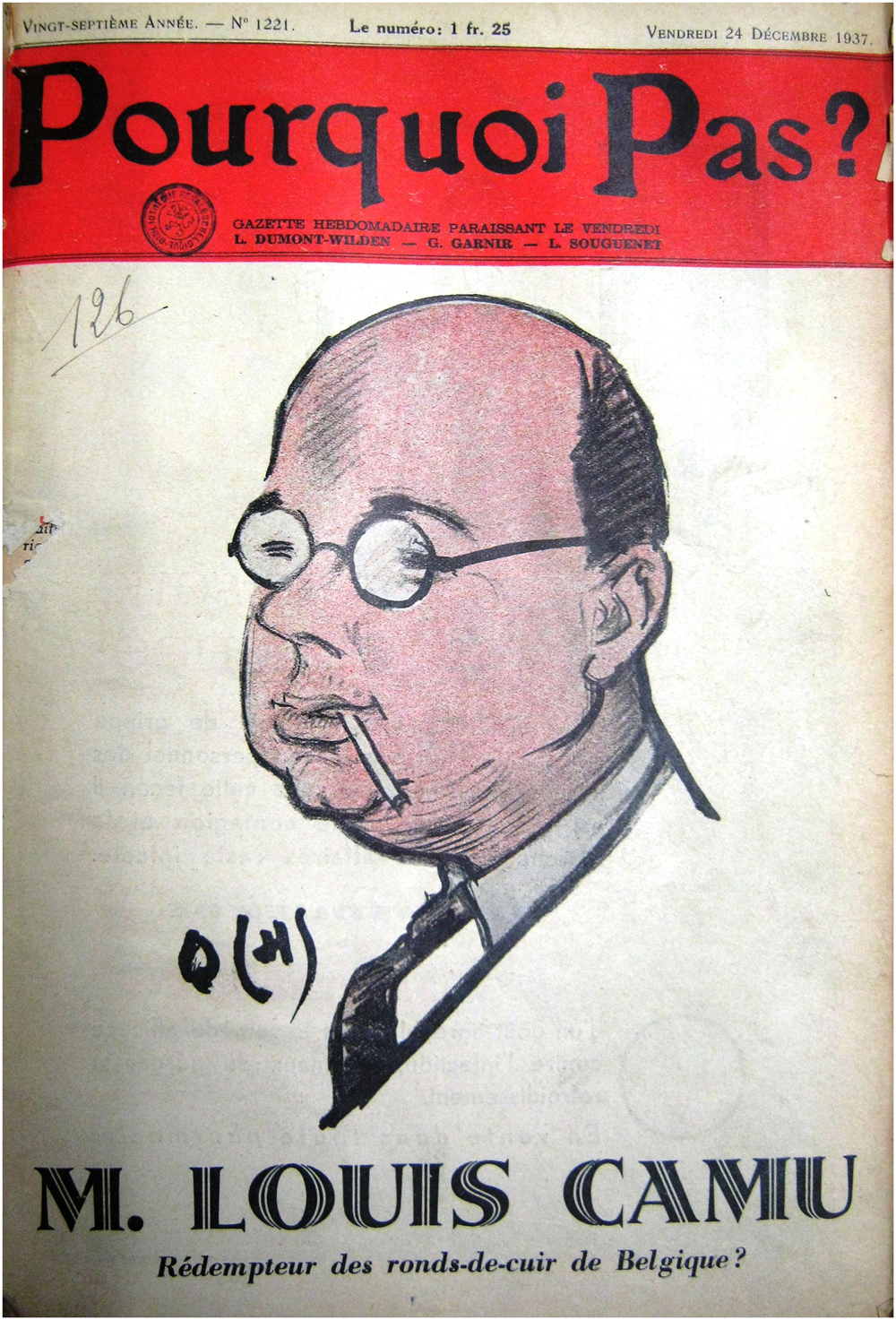
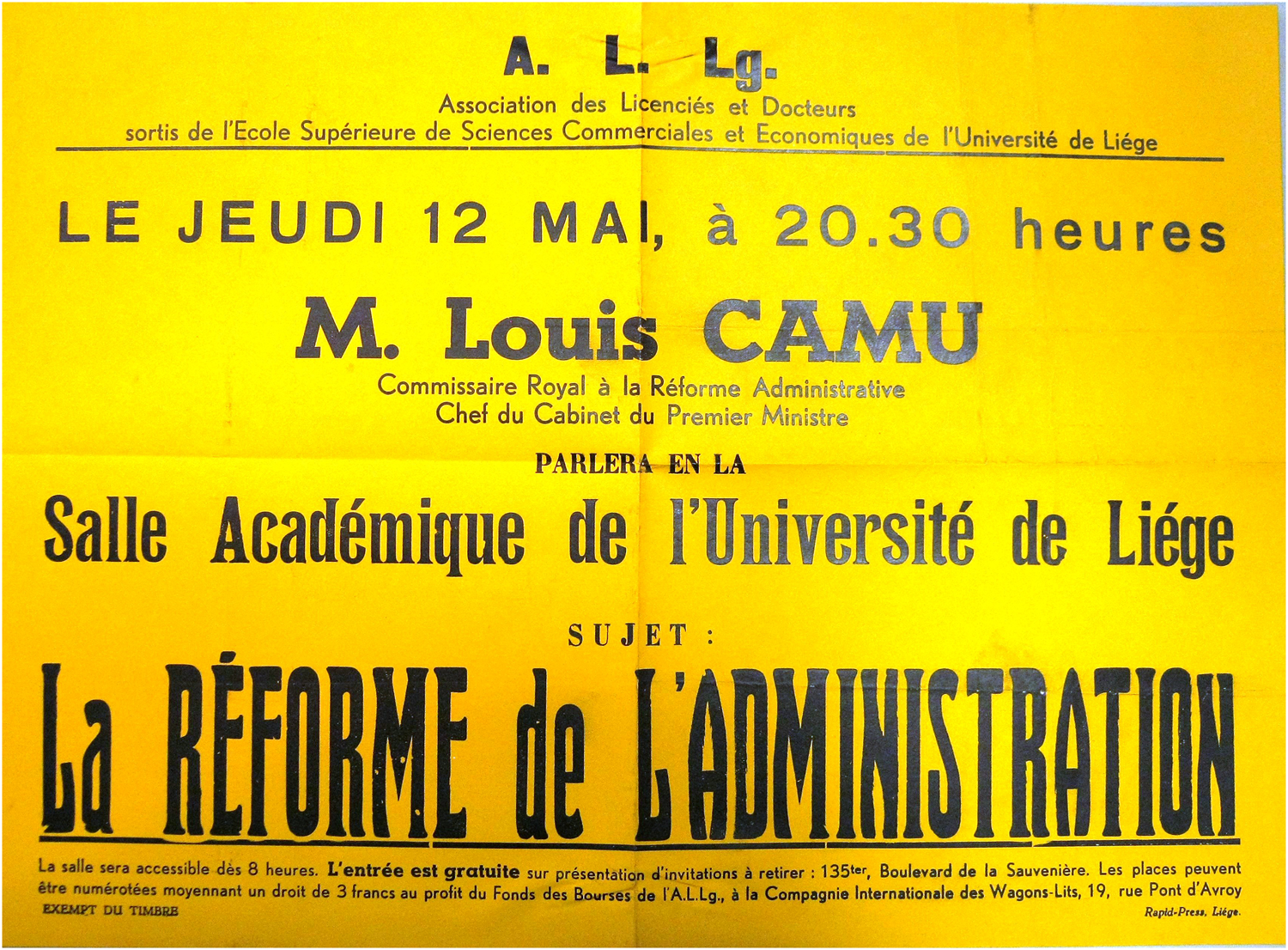
Soon after the publication of the April 1937 report, the van Zeeland government translated its recommendations into a Royal Decree (October 1937), which still forms the legal basis (albeit with many subsequent amendments) for the ‘statute’ and recruitment of Belgian civil servants today.Footnote 70 By the time the decree was published, the duration of Camu's term had been extended, allowing the Royal Commissariat to control the implementation of the new regulations and to continue monitoring ministerial working conditions.Footnote 71 Concurrently, Camu looked into the possibility of building a large office complex, where all civil servants could be accommodated in modern, ‘efficient’ workspaces.Footnote 72 Lastly, the Royal Commissioner sought to create public awareness of his work. Like de Man and van Zeeland, he engaged in multiple outreach initiatives, leading to a stream of articles, interviews and speeches.Footnote 73 On those occasions, Camu systematically emphasised the moral relevance of his reforms. At a talk for the judicial and government elite in Brussels in November 1937, for instance, he explained that governments depended much more on their civil service than was commonly acknowledged: ‘The administration, dare I say it, undertakes legislative action itself … , since most laws are completely written by civil servants’. Consequently, weak government officials resulted in weak policies and weakened the reputation of politics: ‘When people complain about bad laws or excessive and incoherent rules, they often point the finger at Parliament, while the problem almost always lies with a faulty public administration’. Societies that had neglected to foster good practices in their civil service, Camu further declared, were bound for downfall, while those with a good administration but ineffective politicians could sometimes survive long beyond their prime: ‘Many centuries after the fall of the Roman Empire, its postal system and road network continued to function, thus allowing the people to maintain normal economic relations’.Footnote 74 (Figures 2 and 3)
Example of the Royal Commissioner's public relations campaign: cover of a 1937 periodical featuring an interview with Camu, who is portrayed by cartoonist Jacques Ochs as the potential ‘saviour of the office workers’. Pourquoi pas?, 24 December 1937.

Example of the Royal Commissioner's public relations campaign: 1938 poster announcing a speech at the University of Liège. National Archives of Belgium, Commissariat royal à la réforme administrative, file 33.

Camu's November 1937 statements were unambiguously technocratic. They contained a warning to politicians who remained oblivious to the ascent of experts in government: a professional and neutral civil service could (and should) take on many duties that were traditionally believed to be the domain of party politics. Even though Camu was careful to emphasise that the concept of ministerial responsibility had to be preserved, his reforms had – at least in theory – put an end to a time-honoured prerogative: ministers would no longer be able to appoint their own pawns in the government administration. Crucially, in his public communication, the Royal Commissioner considered his reforms not only as a means of strengthening the Belgian state, but also as a strategy for deepening the state's democratic essence. Keen to demonstrate his own ‘cultured spirit’ (a quality he believed to be essential for every top-ranking administrator), the Royal Commissioner outlined his views on the latter theme in his April 1937 report by drawing on classic political philosophy: ‘Montesquieu has stated that democratic “virtue” should be the hallmark of the organs of the State’.Footnote 75 In his 1748 treatise De l'esprit des lois, Montesquieu had conceived the concept of the trias politica, which has ever since been recognised as one of the cornerstones of the liberal democratic constellation. The French philosopher declared that true democracies were additionally characterised by ‘la vertu’: a ‘civic virtue’ leading to ‘a love for the fatherland and its laws’.Footnote 76 As such, Camu associated democratic systems with a well-developed sense of public responsibility. Remarkably, he suggested that a lack of ‘civic virtue’ had affected not only the political-administrative field, but also Belgian society at large, since both were marked by ‘a crisis of moral values that, since the war, has seriously corroded the country's social framework’.Footnote 77
For Camu, displaying signs of moral panic did not contradict his self-stated aim of detached objectivity: in service of the common good, such evaluations could effectively be made by a small group of highly cultivated elite leaders like himself. This selective morality was not only characteristic of the technocrat mindset, with its typical ‘synthesis of science and conscience’ (to use a description by Olivier Zunz).Footnote 78 It also reflected broader sentiments of discomfort about liberal democracy which pervaded the public opinion of non-fascist European states during the 1930s. Camu's personal secretary, the aforementioned jurist André Molitor, had for instance expressed similar fears in a 1936 article for the Catholic periodical La cité chrétienne, calling the Belgians ‘a people with an underdeveloped civic spirit’. This posed a particular problem for the government and its administration, both of which were generally held in low esteem by the public: ‘A civil service reform … cannot be envisaged without a parallel recovery of public mores; only then will the civil service … receive the place it deserves within the social hierarchy’.Footnote 79 Statements like these indicate that the Royal Commissariat's ambitions reached beyond the notion of administration in a narrow sense. Since popular morality was at stake as well, reforming the civil service also implied reforming – or indeed ‘administrating’ – convictions and behaviours occurring in society at large.
The Royal Commissioner's Networks
Firmly establishing Camu's name in the Belgian political field, the approval of the October 1937 Royal Decree ironically coincided with the sudden exit of Prime Minister Paul van Zeeland. Van Zeeland's successor, the Liberal Paul-Émile Janson, continued to support the ongoing civil service reform by appointing Camu as his principal private secretary in November 1937. In his memoirs, André Molitor explained that Camu saw this job change as an opportunity to increase his influence: while formally remaining Royal Commissioner, he would now attempt to have the reform package practically implemented via the more informal networks of political cabinets.Footnote 80 True to his persona as a cool-headed reformer, Camu had indeed remained sceptical of the political-administrative system, as he believed that many ministers and high-ranking civil servants were actively trying to ignore or circumvent the rules laid down in the Royal Decree. In a January 1938 letter to Louis Wodon, the chef de cabinet of King Leopold III, Camu described this situation as ‘extremely embarrassing’, citing the ‘current state of our political mores and a climate of idleness in our public services’ as major obstacles.Footnote 81 Another letter, addressed some months later to a director in the Finance Department (April 1938), saw Camu expressing increasing dissatisfaction with the slow implementation of his reforms: ‘I have investigated all problems and I have suggested reforms in all domains of administrative life; now the solutions only have to be implemented’.Footnote 82 Camu's discontent was possibly also fuelled by the recent parliamentary rejection of F.D. Roosevelt's civil service reform plan, the content of which had been based on the work of the Brownlow Committee. Characterised by historian William Leuchtenburg as ‘the worst [congressional] rebuff … Roosevelt was ever to suffer’,Footnote 83 this rejection might have served as a warning: to make expertise sufficiently operative in society, experts would need to become more closely involved in politics themselves.
One of the routes towards greater political leverage could be via a continuous extension of personal and strategic networks. In May 1938, with another change in government, Camu effectively managed to have his prerogatives increased – and this time, it was a Socialist prime minister, Paul-Henri Spaak, who backed the ongoing civil service reform. A rising figure within the Socialist Party, Spaak was another mainstream politician who had repeatedly pleaded for a ‘strong state’.Footnote 84 His rise to political prominence coincided with the ministerial exit of de Man, who by early 1938 had lost all hopes of realising his Labour Plan as a government minister. Possibly under the influence of chef de cabinet Louis Wodon, who was a strong supporter of Camu's work (and whose ideas were in turn promoted by Leopold III), Belgium's first ever Socialist government leader declared to parliament that he would give ‘Mr Camu all the powers he needs to make sure that his theoretical ideas are put into practice’, for a two-year period until May 1940.Footnote 85 In practice, the Royal Commissioner was given the right to chair the interdepartmental meetings of top-ranking civil servants, and he worked in close collaboration with the Finance Ministry to secure funding for planned projects. Camu was further granted a salary increase, plus the assistance of a personal cabinet with about twenty members (some of whom were transferred from the now-defunct OREC).Footnote 86 As such, Camu became a political actor sui generis: unelected and chosen for his expertise (like a technocrat), vested with executive powers (like a cabinet member), and with a term that gave him a degree of continuity in case the government should fall (like a civil servant). In this capacity, he would continue his mission to have his reform package implemented right up until the beginning of the German invasion in May 1940.
The Royal Commissioner's full integration in the Belgian political-administrative system by the tripartite Spaak cabinet was, once more, not without irony. First, as his formal power expanded, so did his dissatisfaction. This is best illustrated by an extraordinary meeting of the Council of Ministers, convened by King Leopold at the Royal Palace in early February 1939. In a lengthy monologue, Leopold blamed the Spaak government for both its overall weakness and its disrespect for Camu's reform plans. Devoting more than half of his speech to civil service reform, the king passionately defended the Royal Commissariat and urged immediate and complete implementation of the statute: ‘I will not hide from you, Gentlemen, the painful impression made on the country by this governmental failure’.Footnote 87 As Molitor would later clarify, Leopold's plea had been penned by none other than Camu himself.Footnote 88 A second element of irony lies in the fact that, parallel to his rise through the ranks of government, Camu had begun to support centrifugal political forces – albeit in secret. From mid-1937 onward, he maintained a personal relationship with Joris van Severen (1894–1940), the strongman of the fascist Verdinaso movement. Established in the early 1930s, Verdinaso – an acronym for Verbond van Dietsche Nationaal Solidaristen (Union of Netherlandic National Solidarists) – initially pursued the formation of an authoritarian ‘Germanic’ state uniting Flanders and the Netherlands. Aware of the movement's destabilising, anti-Belgian potential, the government prohibited civil servants from becoming Verdinaso members in 1933. Yet in 1934, van Severen – who was called ‘den Leider’ (‘the Leader’) by his followers – drastically changed course by trading his Germanic ambitions for a ‘Burgundian’ vision. In addition to keeping the Belgian state and monarchy intact, the ultimate aim was now the unification of Belgium with the Netherlands and parts of northern France, in order to recreate the late-mediaeval Burgundian federation. Adopting this so-called ‘new line of march’, the formerly anti-Belgicist Verdinaso gained followers among the French-speaking bourgeoisie, who particularly applauded van Severen's repeated odes to the king. The movement additionally acquired a degree of social acceptability through the participation (from 1936 onward) of several Verdinaso members in the pluralist political think tank CERE.Footnote 89
Camu was one of the many covert Verdinaso supporters who saw no fault in the movement's inconsistent ideological evolution, and who were attracted to the ‘new line of march’.Footnote 90 In June 1937, for instance, he invited van Severen to dinner at his château-like mansion in Aalst. Afterwards, ‘den Leider’ noted in his private diary that Camu was to be considered a potential Verdinaso member; in a letter to his girlfriend Rachel Baes, he reported that he had ‘completely won over Camu and his wife’.Footnote 91 In January 1938, the two men again met at Camu's place, where they ‘drank whiskey’ (to quote van Severen's diary).Footnote 92 According to journalist Maurice De Wilde (1982), Camu effectively became a Verdinaso member over the course of 1940.Footnote 93 Even though De Wilde did not provide a primary source to back his claim, correspondence from December 1940 between Verdinaso members Emiel Thiers (who succeeded van Severen after his death in May 1940) and Luc Delafortrie does make mention of ‘Mr Camu’ being ‘an element that may continue to offer many services to the Movement’.Footnote 94 This suggestion aligns with the meetings (1937–8) and correspondence between van Severen and Camu, in which the latter addressed the former on two occasions (in June 1937 and April 1940) as ‘dear friend’, further indicating a sympathy towards the leader of an organisation devoted to anti-parliamentarism and the Führerprinzip.Footnote 95 The fact that Camu had originally been appointed by the van Zeeland cabinet as part of a series of measures aimed at suppressing the rise of fascism does not appear to have posed any obstacles for the development of these sympathies. An identical observation applies to Camu's public pledges of allegiance to the Montesquieuan democracy that had appeared in his 1937 official report on civil service reform, and that were in obvious contradiction to Verdinaso's aims. Yet at the same time, van Severen's movement could also be identified with two crucial principles defended in the Royal Commissioner's reports. First, van Severen himself was not averse to notions of technocratic governance: in a 1927 article, for instance, he declared that ‘the state of tomorrow must and will be led by engineers and technicians’.Footnote 96 Second, Verdinaso had always presented itself as distinctively elitist: at the height of its popularity, the movement had no more than around three thousand members.Footnote 97 Many of those – and especially van Severen himself – prided themselves on their high ethical standards amidst a society in rapid moral downfall. Similar ideas on charismatic leadership had also pervaded the work of men such as Fayol, de Man and Camu.
Additional evidence of Camu's links with the extreme right can be found in the fact that Camu started to frequent Nazi circles in the year prior to the German invasion. Historian Albert De Jonghe has, for instance, signalled that Camu maintained contacts with the German physician and SS-Gruppenführer Karl Gebhardt, who was, in turn, a confidant of SS leader Heinrich Himmler. Gebhardt had various Belgian personalities among his patients, including Leopold III, Jan Hendrik de Man (the son of the Socialist strongman) and Camu's wife Denise. In the Brandenburg lakeside town of Lychen, the SS doctor directed a sanatorium where Denise and Louis Camu stayed for about a week in June 1939 – she as a patient, he as a guest.Footnote 98 Immediately, Gebhardt briefed Himmler about the conversation(s) he had had with the Royal Commissioner, calling him a ‘young and extremely active German-friendly man’. Since Camu was working on the ‘transformation of the Belgian governmental apparatus’, Gebhardt explained, he was to be treated with special consideration.Footnote 99 This conviction was probably inspired by the idea that Camu could serve as a valuable informant and/or as a straw man in a future occupied Belgium. Gebhardt's description moreover accurately describes how the Royal Commissioner himself understood his mission, and how he made sure it was understood by others – with the ultimate object of his reforms being the entire structure of Belgian governance. The following month, in mid-July 1939, Camu would invite Gebhardt – who paid regular visits to Belgium – for dinner at his second residence in Brussels. In a new letter to Himmler, the doctor wrote that Camu had expressed being ‘deeply impressed’ by his recent stay in Germany. Most importantly, the fact that Gebhardt had found himself in the company of, among others, two unnamed ‘Rexist leaders’ and Hendrik de Man, further indicates the breadth of Camu's connections among authoritarian political actors at this point.Footnote 100
The German invasion of Belgium in May 1940 coincided with the end of Camu's term as Royal Commissioner. At that moment, Camu again sought to take up political and administrative responsibilities. Following the death of van Severen (who was illegally extradited by the Belgian government and murdered by French soldiers in mid-May), he remained involved in Verdinaso until at least late 1940.Footnote 101 Simultaneously, Camu became a member of a new think tank established by his former employer, the Liberal politician Maurice August Lippens. Decidedly pro-German, Lippens had been invited as a guest of honour to the 1937 and 1938 Nazi Reichsparteitage.Footnote 102 Now, at the start of the war, he sought to unite various right-wing personalities from the financial, industrial, judicial, academic, diplomatic and religious establishment in a Centre for Political Studies (Centre d’études politiques), whose actions were concealed from the public eye. Historian Dirk Luyten has characterised the Centre's members as an elitist group that considered the 1918 introduction of universal male suffrage to be a tragic mistake. The envisaged solution was ‘an authoritarian corporatism, aimed at an enforcement of the king's power, combined with a political and social silencing of the working classes, who would lose their right to strike and join a union’.Footnote 103 As such, the Centre's members pleaded for a state reform modelled after governmental principles of both fascism and Ancien Régime authoritarianism. In practice, parliament – which was execrated as a ‘dictatorial’ instrument of the lower classes – would de facto be abolished. In an unconcealed reference to the Nazi state, the prime minister was to be replaced by a ‘chancellor’ (chancelier), while the king would receive wide-ranging legislative powers. A prominent technocratic element can be found in the plan to have the king assisted by a ‘Supreme Council’ (Grand Conseil) of advisers, who, just like the ministers, would be chosen by the monarch himself. As such, the Royal Council of Louis XIV (1638–1715) was earnestly investigated as a model for the prospective Belgian Grand Conseil.Footnote 104 In this intellectual constellation, Camu offered suggestions on the modifications that were to be made to his pre-war civil service reform plans. Without objections on the part of their deviser, these plans could be swiftly adapted from a Montesquieuan democratic to an authoritarian monarchist framework. Such a transition, in fact, required no more than a few changes in the vocabulary of Camu's discourse, as becomes clear in this passage from his 1940 report for the Centre:
The civil service must be a real ‘Corps’ where a spirit of abnegation to public affairs reigns; it must be the pillar of the Monarchy and a model of good citizenship. This duty is imperative, because the bureaucracy will play a considerable role in a strong Monarchy … ; for the public, it will be the daily manifestation of … the regime.Footnote 105
The members of Lippens's Centre d’études politiques were political collaborators, in the sense that they swiftly accepted the arrival of a Nazi New Order in Europe, while they simultaneously hoped to find German support for an authoritarian Belgian state led by a domestic elite.Footnote 106 It quickly became clear, however, that such political independence was out of the question for the occupier, causing the Centre to lose its relevance by the end of 1940.Footnote 107 When the sympathisers of an authoritarian monarchy realised that the war would last longer than anticipated, plans for constitutional change were postponed and eventually abandoned after November 1942, when Germany's war fortunes began to decline.Footnote 108
After his participation in Lippens’ Centre, the former Royal Commissioner, for his part, began to shy away from involving himself explicitly in political circles. Instead, he embarked on doctoral studies in economic sciences at the State University of Liège, where he would defend his thesis on civil service salaries in 1943. Professionally, Camu became strongly involved in finance: in 1941, he was appointed as a senior manager at the Banque de Bruxelles, one of Belgium's largest private banks. By the end of the German occupation, he joined the right-wing resistance group Armée secrète, which had been established at the start of the war to avoid separatist or leftist groups from filling in the political vacuum upon a German retreat. In early 1944, Camu accepted the role of Chef d’État-major of this ‘secret army’ in the provinces of East and West Flanders. In this function, he was arrested by the Gestapo (July 1944) and imprisoned in Neuengamme.Footnote 109 According to The New York Times (1976), Camu emerged in May 1945 from the concentration camp ‘a walking skeleton and barely recognizable’.Footnote 110 After a two-year recovery period in Switzerland, he returned to the Banque de Bruxelles, which he would come to direct as president from 1951 until shortly before his death in 1976.
Concluding Remarks
Camu's career as top banker proved to be highly successful, as he managed to turn his bank into an important player on both the national and international scenes.Footnote 111 To the Belgian political-administrative system, Camu would never return. When the opportunity did arise in 1951 to become an extraparliamentary Minister of Economic Coordination in a homogenous Christian-Democrat cabinet, Camu declined, as he considered the function insufficiently authoritative.Footnote 112 Instead, he found greater potential in political lobbying, ideally on a transnational level, as exemplified by his active role in the European League for Economic Cooperation (1946–81), which was founded by Paul van Zeeland and the Polish diplomat Józef Retinger, and which promoted free trade and economic integration.Footnote 113 The theoretical field of (public) administrative management nevertheless continued to exert attraction on the former Royal Commissioner. For the recently founded UNESCO, he and his former collaborator André Molitor conducted an international survey on study trips for civil servants in 1948, which took him to countries such as Czechoslovakia, Poland, Denmark and France.Footnote 114 In 1949, Camu was appointed as head of the IIAS ‘Supervisory Committee for Administrative Exchange Programmes’, aiming to enhance the transmission of knowledge among civil servants across borders.Footnote 115 On various occasions, moreover, Camu continued to comment on the relation between politics and the civil service. Each time he did so, it became apparent that his technocratic convictions remained steadfast over the years. A concluding remark from his 1948 UNESCO report, for instance, echoed sentiments expressed in the reports and articles he had written up until 1940: ‘Senior civil servants play a crucial role in shaping the life of a country by maintaining organisations that significantly impact the well-being and overall prosperity of the population, both materially and morally’.Footnote 116
Yet, in two crucial respects, Camu adjusted his discourse to align with the changed ideological circumstances. The word ‘chef’ disappeared from his texts; instead, top-ranking officials were described in neutral terms such as ‘leading functionaries’.Footnote 117 Furthermore, while his wartime 1940 report for Lippens had advocated for the introduction of a chancelier, political corporatism and an impotent parliament, the post-war texts firmly placed Camu in the camp of the victors of the Second World War. In his UNESCO report, he emphasised that the civil service, as part of the executive branch of government, should operate ‘under the authority of the legislative power’.Footnote 118 Likewise, in a 1954 preface for a book by the French administrative specialist Roger Grégoire, he approvingly cited a 1937 speech by F.D. Roosevelt:
Government without good Administration is a house built on sand. Our fathers fought against tyranny, class spirit, and the privileges of birth and wealth. We must fight against confusion, waste and uselessness.Footnote 119
The Camu case does not only illustrate the ideological manoeuvrability typical for advocates of technocracy. The Royal Commissioner's activities from 1936 to 1940 also offer a concrete example of technocratic thinking being operative in Belgian politics. Part of a prominent technocratic momentum (whose instigators included politicians such as de Man and van Zeeland), its effects would long outlive the specific political and economic context of the 1930s. Without Camu's personal involvement, the first post-war governments would even continue to implement proposals from the Royal Commissariat's pre-war reports, resulting in 1946 in the creation of a Conseil d’État (an administrative court dealing with civil service appointments) and a Service des bâtiments (a centralised body overseeing the construction and maintenance of government buildings). The Royal Commissariat's successful operation stemmed not only from a clear societal need (with calls for a more vigorous governmental approach being widespread at the time), but also from the personal ambition – the ‘iron will’ described in a 1929 newspaper report – of the Royal Commissioner. By ensuring that he had the continuous support of the three mainstream political parties, Camu effectively managed to modernise the Belgian civil service, even though the practical implementation of his proposals left, in his own view, much to be desired. His integralist and uncompromising approach to solving problems during the pre-war years was similar to de Man's, and most likely played an important role in the development of his sympathy for authoritarianism. As Martin Conway has argued with regard to the broader European scale, many technocratically oriented government elites of the 1930s were indeed ‘frustrated by the immobilism and perceived corruption of parliamentary regimes’. For them, the speed, strong leadership and clear hierarchies – in other words the efficiency – promised by ‘fashionable projects of authoritarian reform’ proved to be particularly seductive.Footnote 120
The technocratic moment in 1930s Belgium should not only be understood as the outcome of the transnational development of administrative expertise (driven by actors such as Fayol and Brownlow), or as a reaction to the economic crisis and the emergence of fascism. The moment also resulted from a desire to correct an old system fault in the political-administrative constellation: the weak position of the central government administration. The Royal Commissioner wanted to firmly shift the balance of power from local authorities, ministerial cabinets and pillarised institutional actors to the civil service, which he sought to establish as an actor that deserved (and required) respect from the citizens. The members of Lippens's Centre d’études considered the incorporation of Belgium into a German New Order (May 1940) as a chance to have the technocratic moment of the 1930s definitively consolidated. The Centre's vision was a clear example of ‘reactionary modernism’, with a modern, technologically and managerially up-to-date civil service on the one hand, and a political system partially inspired by premodern examples (Louis XIV) on the other hand. Eventually, the wartime association of state-strengthening principles with fascism would only serve to reinforce the traditional ‘anti-etatist’ basis of the Belgian government system after the Second World War.Footnote 121
Finally, the Camu case also shows that government experts of the 1930s were not solely concerned with the creation of a predictable and ‘objective’ bureaucratic apparatus. In Max Weber's ideal typical description, the modern bureaucrat had appeared as the exponent of a rationalisation process (Weber famously made mention of a ‘disenchantment’), resulting in a dehumanised figure who was no more than a cog in a machine.Footnote 122 While many business and government elites of the interwar period were content to have this Weberian definition applied to what they considered as lower-ranking figures (whether ‘ordinary’ citizens or corporate employees), they happily made an exception for themselves. In this context, Philippe Burrin has called attention to the fact that fascist ideologues were the first to reintroduce an almost mythical leadership figure, with the aim of ‘re-enchanting the cold and anonymous universe of modernity’.Footnote 123 A similar figure of a heroic chef, who was gifted with extraordinary moral capacities (and who could even enhance the ethical standards of the masses), also made a prominent appearance in the texts of Royal Commissioner Camu.

 Open access

