Food-based dietary guidelines (FBDG) have been described as ‘consistent and easily understandable translations of population nutrient goals to encourage healthy habitual food choices and improve public health’(1). They consist of written messages (e.g. UK 8 tips for eating well(2)), which are commonly depicted in the form of visual food guides (e.g. German 3-D food pyramid(3)). The purpose of these messages and food guides appears to be various in terms of the audience, application and aim. FBDG have been used to provide information to the consumer, monitor population dietary patterns, check compliance of food industry as well as to align health policies and nutrition programmes (e.g. food stamps, school meal composition and food labelling)(Reference Smitasiri and Uauy4–Reference Guthrie and Smallwood6).
The development and implementation of national/regional FBDG has the potential to bring substantial health and economic benefits. FBDG were originally developed to combat nutrient-deficiency disease, but they may play an important role in discouraging/encouraging the adoption of certain dietary patterns, which have been associated with preventing chronic non-communicable diseases (CNCD; e.g. CVD, certain cancers). Modifiable risk factors such as diet and physical activity have been suggested to account for up to 30 % of morbidity and mortality in the USA(Reference Smitasiri and Uauy4), and ill health from poor diet has been estimated to cost the UK National Health Service billions of Great British Pounds each year(Reference Rayner and Scarborough7).
The FAO and the WHO have actively promoted FBDG with the International Conference on Nutrition(8), the expert consultation meeting(9) and the Countrywide Integrated Noncommunicable Diseases Intervention programme(10), all pivotal in encouraging the development of FBDG in countries across the world(Reference Smitasiri and Uauy4). Despite the promotion of FBDG, there has been little evaluation of their effectiveness or monitoring of their impact on population health(Reference Gifford11). Attention has arguably been directed away from evaluation and focused on the development of FBDG, such as translating nutrient reference values into FBDG or investigating the mechanisms behind dietary pattern/nutrient compound effects on certain health outcomes(Reference Gifford11). For example, the USA have a long history and commitment to government-led consumer dietary guidance, where the Dietary Guidelines for Americans (DGA) have been released every 5 years since 1980, with a legal obligation for their release written into the congressional mandate since 1990(Reference Gifford11, 12). Yet, there remains no obligation to evaluate the DGA(Reference Guthrie and Smallwood6).
Limited evaluation of FBDG has led to an uncertainty in the efficacy of FBDG and the role that they may play in (1) changing consumer health behaviours, (2) improving population nutrient/dietary intake/status or (3) decreasing negative health outcomes such as CNCD(Reference Smitasiri and Uauy4, Reference Barbosa, Colares and Soares13). The design of public health initiatives such as FBDG may ultimately contribute towards the achievement of (3) decrease in CNCD. However, measuring CNCD incidence (or intermediary health markers of CNCD) before and after FBDG implementation is insufficient to evaluate the impact of FBDG on CNCD. Chronic diseases by their nature involve small changes over time. Therefore, a plethora of multidimensional factors may have influenced a particular CNCD aetiology and pathogenesis. Repeated national dietary surveys provide data a step between FBDG implementation and CNCD incidence, which yields valuable information on FBDG compliance and monitoring of dietary patterns. However, aside from the practical problems inherent in collecting dietary intake data (e.g. energy levels(Reference Livingstone and Black14)), these sets of data can be similarly influenced by many factors. Thus, a certain dietary intake pattern may have changed irrespective of FBDG implementation(Reference van Dillen, Hiddink and Koelen15).
An additional dataset, which can provide evaluative information a step closer to the implementation of FBDG, can come from consumer dietary behaviour studies. These may provide additional information by either directly asking consumers about the influence of FBDG on their dietary behaviours/dietary choices and their subjective understanding and use of FBDG or using tasks to test consumer objective understanding and use of FBDG. The majority of this research is likely to be conducted during FBDG development or following short-term interventions of FBDG implementation. These studies consist of qualitative study designs such as interviews and focus groups or quantitative designs such as questionnaire surveys. Furthermore, they may take the form of mixed designs, e.g. a questionnaire survey with a number of open-ended questions. There are inherent advantages and disadvantages to the choice of different study methods (e.g. qualitative interviews susceptible to interviewer and interpretation bias, but allow depth to answers and idiosyncratic data v. questionnaire forced choices but population-level findings), with each employed depending on the study rationale.
The variety of study rationales and designs of consumer studies to evaluate or revise FBDG limits the possibility of conducting a meta-analysis review. The present study sought to provide a narrative review of this research by categorising studies using the three concepts of awareness (conscious perception), understanding (subjective and objective) and use (single use, extended, indirect and direct) in an adapted theoretical framework developed by Grunert & Wills(Reference Grunert and Wills16). The framework is based upon classic consumer decision-making research on how information provision (e.g. FBDG) determines choice when there are multiple options available, as well as upon attitude and change research on whether consumers process information, conduct cost–benefit analysis and find meaning, which is a prerequisite for information to affect behaviour (for further details, see Grunert & Wills(Reference Grunert and Wills16)). The categorisation and interpretation of consumer behaviour studies may provide valuable information on how, if at all, FBDG influence consumer dietary choices and the employment of FBDG, and thus complement the dietary survey and health outcome data in the process of FBDG revision and the evaluation of FBDG efficacy.
Methods
A total of nine electronic databases were searched (PubMed, Web of Science, EconLit, IPSA (International Political Science Abstracts), PsychInfo, EMBASE (Excerpta Medica Database), Cochrane, IBSS (International Bibliography of the Social Sciences) and CINAHL (Cumulative Index to Nursing and Allied Health Literature)), together with manual searches of reference lists and Internet searches of grey literature.
Search terms
The search strategy consisted of an unlimited date range until August 2009, any language and the following search terms (used in PubMed and modified slightly in other databases): (food based dietary guidelines) or (food-based dietary guidelines).
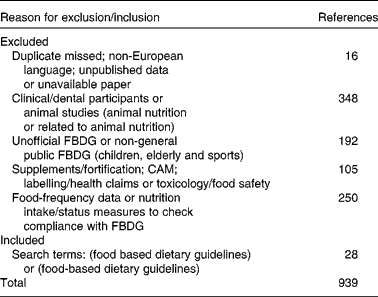
All references were entered into an endnote library. The initial search in PubMed was entered first, and all additional searches were added to the library only after comparison for duplicates with the PubMed search. The final library contained 939 articles before exclusion (Table 1).
Literature review excluded and included papers

FBDG, food-based dietary guidelines; CAM, complementary and alternative medicine.
Exclusion–inclusion criteria
References were excluded using predefined exclusion criteria devised by the research team (Table 1). The majority of studies were excluded, because they were conducted in a clinical setting and involved dietary guidelines for the maintenance of participants who had underlying health problems or diseases (e.g. CVD, alcoholism and HIV). These participants were excluded from the review, because they may have different motivations and health needs to the general public(Reference Guthrie and Smallwood6, Reference Barbosa, Colares and Soares13). In addition, a large number of quantitative studies were excluded, which analysed food-frequency data and retrospective compliance with FBDG or used FBDG as a benchmark to measure ‘healthiness’ of diet.
Initially, papers were excluded or included on the basis of their abstracts. Where clarification was needed, full-text papers were obtained and excluded using a data coding form (Table 2 is a condensed version of this form). Strenuous efforts were made to find the original sources of studies by searching online, emailing authors and translating papers into English. When it was not possible to find the original sources of data, primarily due to unpublished, inaccessible or untranslatable data, citations were included in the review. This has limited the available details, thus judgement of quality for certain studies.
Papers and studies reviewed

FBDG, food-based dietary guidelines; FGP, food guide pyramid; DGA, Dietary Guidelines for Americans; SES, socio-economic status; FIT, food identification task; IFIC, International Food Information Council; ADA, American Dietetic Association; INTA, International Institute on Food Technology and Nutrition; BOGH, Balance of Good Health; SUB, substitution; COM, comparison; SOR, sorting; DISH, composite dish; DG, dietary guideline; KZN, KwaZulu-Natal; WC, Western Cape; FMI, Food Marketing Institute.
Framework
The three concepts of awareness (conscious perception), understanding (subjective and objective) and use (one time, extended, direct and indirect) taken from the theoretical framework developed by Grunert & Wills(Reference Grunert and Wills16) were used to categorise study findings. Categorisation was decided using the study-reported terminology (i.e. what was described as awareness, understanding or use) as well as interpretation by one research member. The validity of grouping was reviewed and confirmed by the study authors. Only the study details relevant to consumer awareness, understanding or use of FBDG were reviewed and reported in the present review.
Quality and risk of bias
No studies were excluded on the basis of quality or research design, but the quality of the studies (qualitative, quantitative and mixed designs) and risk of bias were judged using the guidelines for assessing methodological quality of published papers by Greenhalgh(Reference Greenhalgh17). This involved judging the details available on the study aim, purpose, method, design, theoretical framework, analysis, findings, discussion, presentation and references.
Results and discussion
A total of twenty-eight studies were reviewed, which employed both qualitative methods such as interview and focus groups and quantitative methods such as questionnaire surveys. Of the twenty-eight studies, sixteen referred exclusively to the US DGA, Food Guide Pyramid (FGP(18)) or MyPyramid(19). The quality of the twenty-eight studies varied with definition of terms (awareness, knowledge, preference, understanding and use), often unclear and used interchangeably, as well as with study design or method details at times incompletely reported (especially as expected in the cited findings). Analysing and comparing the results from the twenty-eight studies was difficult due to the different rationales and study designs employed. However, we sought to provide an overview of the findings from the studies reviewed. Findings have been reported in relation to the three concepts of awareness, understanding and use, and organised by study design (qualitative, quantitative and mixed).
Awareness
The FGP has been used throughout the US education system, and focus groups with American elementary schoolchildren reported that the majority had seen the FGP and they were aware of the key elements of the DGA (1990)(Reference Lytle, Eldridge and Kotz20). Similarly, in Chile, more recent focus group data indicated that Chilean schoolchildren were aware of the Chilean food guide (Chile FGP; S Olivares, unpublished results, cited in Albert(Reference Albert21)). In contrast, focus groups with US adults in the 1990s reported that some had awareness of a few DGA, but that the majority were unfamiliar with the DGA (1995)(Reference Geiger22). Likewise, in New Zealand, focus groups and key informant interviews in 1998 indicated that older people, parents and children–adolescents had limited awareness of the FBDG, and few participants appeared to have seen the official FBDG-related education booklets(Reference Geiger22–Reference Trustin and McCracken24). More recent focus groups with US adults indicated that many consumers were aware of the DGA (2000)(25). This was also observed with focus groups of women in Baja California who showed some awareness of two food guides, the Pyramid of Health and the Apple of Health, with the Pyramid believed to be more familiar than the Apple(Reference Barcadi-Gascon, Jiménez-Cruz and Jones26–Reference Jiménez, Bacardí and Jones28).
Reported quantitative data indicated that awareness in the USA may have increased over time. American surveys in 1994 (n 1945) and 1995 (n 1001) reported that one-third of those sampled were aware of the DGA (1990). With respect to the FGP, awareness was also one-third (33 %) in 1994 but significantly increased to 43 % in 1995(Reference Levy and Derby29). In a different survey, two-thirds of the Americans appeared to recognise or be aware of the FGP by 1997(30, Reference Kennedy31). More recent surveys with grocery shoppers in 2000 showed that 75 % were ‘somewhat/very familiar’ with the FGP(32). All of the aforementioned studies refer to evaluating the outcome of FBDG implementation. During the review of FBDG in Chile, they evaluated the output of FBDG implementation. A survey by the International Institute on Food Technology and Nutrition reported that >36 000 people had participated in FBDG nutrition education programmes and >50 000 leaflets, posters and flyers had been distributed. This provides information on the dissemination of FBDG-related material reported in terms of FBDG evaluation, but it does not provide a measure of outcome in terms of awareness(Reference Olivares, Zacarias and Benavides33).
The definition of awareness differs slightly throughout the studies reviewed but predominantly relates to familiarity or knowledge of a FBDG or food guide. A mixed methods study in The Netherlands defined awareness slightly differently. A high amount of ‘knowledge’ was reported in response to the question ‘what dietary guidelines do you know?’. However, the researchers suggested that participants may have lacked nutrition awareness in terms of ‘realisation of one's own personal risk behaviour regarding nutrition’, because the focus group participants may have mistakenly believed that they ate healthily or followed the FBDG/food guide(Reference van Dillen, Hiddink and Koelen15).
An American telephone interview study supported the 1990s US focus group data indicating that there was some but not widespread awareness of the DGA. Participants reported an average recall of less than 2·5 DGA (1995) out of a possible 13, and only one out of 400 responders correctly identified the DGA as the US nutrition policy document(Reference Keenan, AbuSabha and Robinson34).
It is difficult to assess the effect of awareness from the studies reviewed. Awareness has been suggested as a prerequisite to behaviour change(Reference Contento, Balch and Bronner35), and this was indicated by the reporting of a Chilean Internet study intervention, which implied that the provision of information improved awareness both of the 1997 Chile FBDG/food guide and willingness to change diet (S Olivares, unpublished results, cited in Albert(Reference Albert21)). However, the reality of the relationship between awareness and behaviour change is complicated by many other factors such as liking and preference, which can be differentially affected by awareness. For example, the previously mentioned Baja Californian focus group study reported that participants consciously stated that they were more familiar with the Pyramid food guide, yet they preferred the Apple food guide, stating that it was more attractive, colourful and clearer to identify foods and food group servings(Reference Jiménez, Bacardí and Jones28). In contrast, a UK study compared ten food guide versions during the development of the UK Balance of Good Health plate (1994)(36) and found that those who had previously seen a guide (higher awareness, unconscious/conscious) were more likely to display a preference for the shape they were exposed to compared with the control group who had not seen any guides. It was hypothesised that preference, or familiarity, for a guide may affect an individual's ability to extract the guide's key information either by being more likely to notice and recall information or by familiarity, leading to loss of attention to the information(Reference Hunt, Gatenby and Rayner37). The aforementioned studies indicated that there was a degree of awareness of FBDG and food guides, an apparent greater awareness of food guides compared with FBDG and a possible trend of increased awareness over time. However, the measurement and definition of the concept awareness was not always clear, and the terms of familiarity, awareness and knowledge were used both interchangeably and differentially across studies. Clarifying what is meant by awareness and how this is measured would be crucial when comparing data across studies to evaluate FBDG and when trying to study the complicated relationship between awareness, understanding and use of FBDG.
Understanding
Awareness of FBDG or food guides does not appear to automatically translate into understanding of FBDG. Focus groups and interviews with US schoolchildren suggested that they were comfortable using the terms ‘low fat’ and ‘low sugar’, but they had difficulties when asked to display objective understanding of these terms by naming three foods in either of these categories, particularly with the younger children(Reference Lytle, Eldridge and Kotz20). Similarly in Chile, schoolchildren, although aware of the FGP, did not understand the portion information portrayed within the pyramid (S Olivares, unpublished results, cited in Albert(Reference Albert21)).
Studies that have looked at subjective understanding in terms of asking participants what they understood indicated that misunderstandings were common with abstract ideas. This was observed particularly in relation to weight, physical activity, health, variety or balance, where focus group participants stated confusion with guidelines that included ‘desirable weight’, ‘healthy weight’, ‘maintain or improve your weight’, ‘balance the food you eat with physical activity’ and ‘healthy snacks’(Reference Lytle, Eldridge and Kotz20, Reference Geiger22, Reference Achterberg, Gregoire and Getty38–Reference Auld, Achterberg and Durrwachter41).
Consumer understanding of food quantities such as portion and serving sizes was often confused. In Denmark, participants were surprised that a Danish nutrient recommendation-compliant diet that they had followed could consist of such large volumes of food, especially vegetables, bread and potatoes(Reference Holm42). Researchers in Thailand and America found that specific examples rather than volumes and weights were useful to explain quantities to consumers. The ‘rice serving spoon’ was developed as a household measure after consumer testing of the Thai Nutrition Flag (G Duenas, unpublished results, cited in Albert(Reference Albert21)). American focus groups reported a preference for quantity size guidance to be depicted in cups for food and minutes for physical activity, rather than ounces or terms such as sedentary. However, confusion remained with fruits and vegetables, where quantities or portion sizes were still considered confusing and difficult to measure even with household units such as cups(Reference Britten, Haven and Davis43).
A number of studies selected in the present review reported consumer understanding of guidelines but omitted raw data or referred to unpublished results(Reference Albert, Samuda and Molina44). This has been observed in previous FBDG reviews(Reference Keller and Lang45). For example, an interesting paper depicted FBDG development in four Eastern Caribbean countries, which involved focus groups, interviews and field tests, where participants were asked to employ one FBDG for a week. However, within the space constraints of the article, no specific understanding measurement methods or results were reported.
The quantitative results suggested an inconsistent relationship between increased awareness and increased understanding. In an American survey, 58 % of those sampled said they had heard of the FGP, but only 13 % said they understood it(Reference Campbell46). In contrast, a review paper reported a study with a sample of more than 5000 participants, where understanding of the Chinese 1997 FBDG grew on average from 12 to 93 % within a year following repeated promotions of the guidelines and Food Guide Pagoda. The largest effect was observed with schoolchildren and the elderly(Reference Zhao, Zhai and Li47). The UK Balance of Good Health study demonstrated that food guides may improve objective understanding of a healthy diet and food groups, yet also highlighted the complicated nature of the relationship between awareness (or exposure) and understanding. Those who had been shown one of the ten Balance of Good Health food guide versions performed significantly better than the control group on comparison and sorting tasks. However, understanding was dependent on sex, age, socio-economic status and nutrition awareness(Reference Hunt, Gatenby and Rayner37).
A mixed design study with US focus groups suggested that equal awareness of FBDG may not lead to equal understanding, and results demonstrated consumer misinterpretation of guidelines. The ‘eat a diet low in sugar’ guideline was considered to be ambiguous and difficult to quantify, whereas the dietary fat guideline produced the most confusion with a particular lack of understanding relating to the saturated fat recommendation and those that involved percentages. For example, when participants were told about the DGA of < 30 % total fat and then asked to quantify the amount of saturated fat that was recommended, answers ranged from 0 to 50 %. This study suggested that the new DGA (2000) that incorporated behavioural messages would be better understood than the DGA (1995)(Reference Keenan, AbuSabha and Robinson34).
The studies reviewed in this section appeared to show mixed results for consumer understanding. Some studies showed a general understanding of the key concrete concepts of FBDG and food guides, but some difficulties were observed with understanding abstract concepts and specific ideas such as portion sizes and quantities. There is a need for further prospective studies to investigate the long-term effect of FBDG information provision on different aspects of FBDG understanding (subjective and objective) and how this might affect dietary behaviour change or the use of FBDG.
Use
Few studies explicitly measured consumer-intended or actual use of FBDG/food guides or indicated that use of FBDG could be a measure of FBDG effectiveness. Focus group discussions referred to the barriers of FBDG use, considering time constraints, disinterest in shopping and preparation of food as potential barriers to one's daily food choices(Reference Britten, Haven and Davis43). A number of studies, which predominantly measured consumer understanding of FBDG and food guides, commented on the need for concrete behavioural examples and messages to enable consumers to use the guidelines. Suggestions included the consumer behaviours such as remove chicken skin rather than eat less fat(Reference Kennedy, Meters and Layden48) and visual examples (solid fat v. oils) rather than technical terminology (saturated v. unsaturated fat)(Reference Britten, Haven and Davis43). It was stressed that these should be from the consumer's point of view rather than the scientific standpoint and must not require consumers to become nutritional scientists(Reference Lytle, Eldridge and Kotz20, Reference Achterberg, Gregoire and Getty38–Reference Auld, Achterberg and Durrwachter41, Reference Britten, Haven and Davis43, Reference Kennedy, Meters and Layden48, Reference Love49).
A quantitative Food Marketing Institute trends data survey reported that 27 % of US shoppers said they used FGP information to make changes in their food purchases(50), and another survey reported that only 13 % of those sampled said they used the DGA(Reference Campbell46). One quantitative study in China did include behavioural measures following the promotion of the 1997 ‘Guidelines for Chinese residents’ and Food Guide Pagoda. They indicated that the percentage of schoolchildren who had a healthy breakfast increased from 26 to 52 % following the intervention(Reference Zhao, Zhai and Li47). It is not clear whether the children (or parents) consciously employed the promoted guideline, if these effects were sustained or if these changes may be explained by other factors, but it is a rare example of a concrete behavioural outcome measured as an indicator of FBDG success. From the limited information available in the papers reviewed in this section, it appears that FBDG and food guides are minimally used by consumers.
Conclusion
The present review has presented a wide variety of study approaches and applied methods and the possible limitations of these needs to be addressed. External validity may have been limited by unrepresentative samples due to the small sample sizes and the qualitative nature of the focus groups/interviews, as well as the convenient samples used in a number of the quantitative surveys. In addition, there was a possibility of bias during qualitative data analysis interpretation and a lack of controlled confounding variables or over-interpretation during quantitative data analysis. Furthermore, the present review may not have sourced all of the studies relating to FBDG evaluation. For example, studies that used alternative terminology for FBDG, investigated unofficial FBDG, focused on one guideline rather than FBDG in their entirety, or measured concepts other than consumer awareness, understanding or use of FBDG. Nevertheless, we believe that the present review is replicable and exhaustive in terms of the research question, and it has highlighted several issues to consider in future public health initiatives and research surrounding FBDG.
First, a degree of consumer awareness and understanding of FBDG was identified by the literature reviewed. Evidence of FBDG use was limited, but the researchers acknowledged the possibility that consumers may not believe that it is necessary to follow FBDG to eat healthily or they might use FBDG without consciously realising that they are doing so, and that this would not have been apparent from the literature reviewed.
Second, the review indicated that the promotion of FBDG may not have always been accompanied by evaluation of effectiveness, or that research conducted on FBDG successes and failures has not always been widely published or made available(Reference Smitasiri and Uauy4). This evaluation is necessary to ensure that the efficacy of FBDG can be judged and that FBDG achieve the purpose for which they are designed. For example, there is a growing trend to move away from nutrient-based targets primarily designed to prevent nutrient-deficiency diseases and to derive FBDG from healthy food-based dietary targets, which may be more appropriate to change lifestyle behaviours associated with lowering chronic disease risk(Reference Mozaffarian and Ludwig51, 52). Evaluation is required to identify whether these alternatively devised FBDG and the use of dietary pattern goals are more efficacious at changing consumer behaviour or lowering CNCD risk.
Third, to be of most use, future studies that aim to evaluate FBDG would benefit from stating the objectives of the FBDG that are being evaluated, with explicit clarification as to how FBDG effectiveness will be measured and the definition of any concepts such as awareness or understanding. In particular, we would like to highlight the dependence of study findings on the questions asked in relation to both qualitative and quantitative research designs and the need for clarity to allow the replication of studies and the reliable interpretation of results. In addition, the study aim, design, methods and results should be fully reported to allow study comparisons and judgement on the external/interval validity and reliability of the study findings.
Lastly, FBDG have been in existence for a number of years, yet they do not appear to have been as effective as hoped at changing consumer behaviour or helping to reduce the incidence of CNCD. Proposed reasons for this have related to a lack of political support, non-participation of stakeholders and conflict with market forces during FBDG development and implementation. There is also arguably an acknowledged uncertainty in both the nutritional science and social sciences in terms of the complicated relationship between diet and disease, the difficulties of applying theoretical models to dietary pattern behaviour change as well as the recognition that food is only one of the several preventable chronic disease risk factors(Reference Smitasiri and Uauy4, Reference Gifford11, Reference Darnton53).
Evaluation of FBDG effectiveness is necessary to measure the contribution of FBDG in safeguarding population health and disentangling the contribution of FBDG from those of the many coexisting public and private health initiatives, as well as to aid FBDG revision and monitor any unanticipated consequences of FBDG implementation(Reference Guthrie and Smallwood6, Reference Gifford11, Reference Marantz, Bird and Alderman54). The framework of consumer awareness, understanding and use of FBDG may be a useful way to evaluate FBDG in addition to monitoring health outcome and nutritional intake/status.
Acknowledgements
The present study was conducted as part of the European micronutrient recommendations aligned network of Excellence (EURRECA) (http://www.eurreca.org). EURRECA is funded by the European Commission Sixth Framework Programme (contract no. 036196). The study does not necessarily reflect the Commission's views or its future policy in this area. The contributions of authors were as follows: K. A. B., L. T., J. B. and M. M. R. were responsible for the study concept and development of the search strategy. K. A. B. carried out the search strategy, conducted the analysis and wrote the draft of the final manuscript. All authors took part in the revision of the manuscript. The authors have no conflicts of interest to declare. Ethical approval was not required for the present study.