




1. Introduction
(t) is one of the most studied variables in variationist studies of the British Isles, especially with respect to its realisation as a glottal stop which is perceived as a stereotype of urban British English. (t)-glottaling and (t)-glottalisation have been largely investigated in many parts of Britain, such as in Sunderland (Burbano–Elizondo Reference Burbano–Elizondo and Hickey2015), the Fenlands (Britain Reference Britain and Hickey2015), Manchester (Baranowski and Turton Reference Baranowski, Turton and Hickey2015), London (e.g. Hudson and Holloway Reference Hudson and Holloway1977; Schleef Reference Schleef2013; Sivertsen Reference Sivertsen1960; Tollfree Reference Tollfree, Foulkes and Docherty1999), Ipswich (Straw and Patrick Reference Straw and Patrick2007), Mersea Island (Amos Reference Amos2007), Middlesborough (Llamas Reference Llamas2001, Reference Llamas, Omoniyi and White2006), Norwich (Trudgill Reference Trudgill1974, Reference Trudgill1988, Reference Trudgill, Foulkes and Docherty1999, Reference Trudgill2003), Essex (Altendorf Reference Altendorf2003), Reading (Williams and Kerswill Reference Williams, Kerswill, Foulkes and Docherty1999), Milton Keynes (Williams and Kerswill Reference Williams, Kerswill, Foulkes and Docherty1999), Cardiff (Mees and Collins Reference Mees, Collins, Foulkes and Docherty1999), West Midlands (Mathisen Reference Mathisen, Foulkes and Docherty1999), Derby (Docherty and Foulkes Reference Docherty, Foulkes, Foulkes and Docherty1999), Hull (Williams and Kerswill Reference Williams, Kerswill, Foulkes and Docherty1999), Newcastle (Milroy et al. Reference Milroy, Milroy, Hartley and Walshaw1994; Watt and Milroy Reference Watt, Milroy, Foulkes and Docherty1999). The distribution of this variable has been also examined in American English (e.g. Eddington and Taylor Reference Eddington and Taylor2009; Roberts Reference Roberts2006; Seyfarth and Garellek Reference Seyfarth and Garellek2020) and in the Southern Hemisphere Englishes (e.g. Britain and Sudbury Reference Britain, Sudbury, Schreier, Trudgill, Schneider and Williams2010; Holmes Reference Holmes1995; Penney et al. Reference Penney, Cox, Miles and Palethorpe2018; Penney et al. Reference Penney, Cox and Szakay2020).
Over the years, the use of the glottal stop has rapidly increased across UK dialects (Smith and Holmes–Elliott Reference Smith and Holmes–Elliott2017) and is advancing across geographical, social and linguistic constraints. In some parts of the UK, (t)-glottaling is an ongoing change, as revealed by generational differences, whereas in other locations as in Manchester, word-final (t) is an advanced change nearing completion (Baranowski and Turton Reference Baranowski, Turton and Hickey2015: 307).
In 1994, Milroy et al. argued that linguists do not seem to have an accurate idea of the main constraints that govern this variable. In 2013, Schleef claimed that what was previously described by Milroy et al. (Reference Milroy, Milroy, Hartley and Walshaw1994) has barely changed. Word-final (t), indeed, has been mainly explored in relation to the following phonological environment (e.g. Straw and Patrick Reference Straw and Patrick2007; Williams and Kerswill Reference Williams, Kerswill, Foulkes and Docherty1999), which is commonly divided into three phonological contexts:
• pre-consonantal (PreC), as in that man
• pre-vocalic (PreV), as in that apple
• pre-pausal (PreP), as in what?
Comparatively, the preceding phonological environment has received little attention and was only recently explored in Received Pronunciation (RP) (Barrera Reference Barrera2015), in studies carried out in London, Edinburgh (Schleef Reference Schleef2013), and in American English (Roberts Reference Roberts2006; Eddington and Taylor Reference Eddington and Taylor2009).
Syllable stress was also found to condition (t). Indeed, Seyfarth and Garellek (Reference Seyfarth and Garellek2020) found that the chances of glottalisation in the syllable coda increase if the following syllable is stressed. Similarly, Eddington and Channer (Reference Eddington and Channer2010) show that glottalisation is more likely to occur in prevocalic word-final position when the following syllable is stressed.
This paper aims at expanding the usual limited set of constraints employed for (t) by examining a wide range of internal and external factors in three main East Anglian communities: Colchester (Essex), Ipswich (Suffolk), and Norwich (Norfolk). Thus, (t)-glottaling is explored cross-regionally in what Trudgill (Reference Trudgill, Fisiak and Trudgill2001) defines as the ‘Linguistic East Anglia’ area.Footnote 1 Despite the extensive research carried out in Norwich (Trudgill Reference Trudgill1974, Reference Trudgill1988, Reference Trudgill, Foulkes and Docherty1999, Reference Trudgill2003), little research on (t)-glottaling has been carried out in Colchester (e.g. Altendorf Reference Altendorf2003) and Ipswich (e.g. Straw and Patrick Reference Straw and Patrick2007) which, in most respects, remain lesser studied research sites.Footnote 2
2. Terminological remarks
The glottal stop is a voiceless sound articulated through the airstream obstruction which is formed by (a) the total closure of the vocal folds and (b) their sudden separation which releases the air pressure below the glottis (Cruttenden Reference Cruttenden2014). The replacement of [Ɂ] for /p, t, k/ in syllable-final or morpheme-final positions is commonly referred to as glottaling, whereas the reinforcement of the voiceless segments /p, t, k/ by a glottal takes the name of glottal reinforcement (e.g. pre-glottalisation, post-glottalisation) (Hughes et al. Reference Hughes, Trudgill and Watt2012; Wells Reference Wells1982).Footnote 3 The Survey of English Dialects (SED) in 1962, identified two types of glottal realisations in East Anglia: glottalled variants, used in Norfolk, Essex, and Suffolk, and glottally reinforced variants mostly adopted in Norfolk and partly in Essex. This study, however, restricts its focus on word-final (t)-glottaling.Footnote 4
A variant of glottal reinforcement is the so-called ejective stop, which is articulated with an egressive stream of air. In other words, when the oral closure is realised, a total glottal closure is held. Ejectives resemble glottalised variants due to the glottal constriction involved during the articulation, yet the relative release timing is different (Laver Reference Laver1994). Whereas, the creak phenomenon occurs when there is a non-complete closure of the glottis (Laver Reference Laver1994). Cruttenden (Reference Cruttenden2014) describes creak as a creaky voice which involves energy to the vocal tract as well as a slow vibration of the vocal folds.
To situate the analysis in East Anglia, I briefly review how (t)-glottaling has spread across the UK.
3. Geographical diffusion of (t)-glottaling across the UK
This section briefly shows how the glottal stop has rapidly spread across the UK. In Reference Orton, Sanderson and Widdowson1978, Orton et al., in the Linguistic Atlas of England (LAE), show evidence of (t)-glottaling only in East Anglia and a small area around London. Indeed, intervocalic (t)-glottaling was only present in northern East Anglia in the 1950s (Trudgill Reference Trudgill1974).
London is usually cited as the principal geographical source for the spread of (t)-glottaling – a feature generally associated with Cockney English. Przedlacka (Reference Przedlacka2001, 48) claims that London is a potential and powerful source for linguistic innovations due to its political, economic and cultural influence ‘from which innovations normally radiate outwards.’ Thus, glottal stop variants (as well as other features) present in London English have been influential in the spread to other dialects. Recent studies propose that (t)-glottaling is more developed in Scotland (particularly in Edinburgh) than in London (Schleef Reference Schleef2013), and that the pattern found among Ipswich Anglo urban speakers does not suggest diffusion from London (Straw and Patrick Reference Straw and Patrick2007).
Andrésen (Reference Andrésen1968) claims that (t)-glottaling gradually diffused in the West of Scotland (attested in 1860), in the East part of Scotland (attested in 1889), in the North of England after twenty years, and finally it reached the Midlands and London (1909). Stuart–Smith's (Reference Stuart–Smith1999) review on Glasgow studies, shows that the glottal feature has been used, since the 19th century, in both word-medial and word-final contexts. The increase of [Ɂ] for /t/ in Sunderland is less advanced than in Middlesbrough, yet more than in Newcastle, contrary to any expectations which suggested that [Ɂ] would spread to larger cities first and subsequently to smaller localities.
4. Linguistic environments
In the literature of (t)-glottaling, the most extensively examined phonetic context is the following phonological segment, which commonly distinguishes between: PreC (i.e. pre-consonantal) such as that man, PreV (i.e. pre-vocalic) such as that apple, and PreP (i.e. pre-pausal) such as what?. PreC is deemed the most influential linguistic factor which triggers glottal variants cross-dialectally and occurs at the top of the ranking in the diffusion pattern Footnote 5 (after Straw and Patrick Reference Straw and Patrick2007):
PreC > PreP > PreV
that man what? that apple
most favouring least favouring.
This pattern has been commonly found in the southeast of the country: in London (Schleef Reference Schleef2013; Tollfree Reference Tollfree, Foulkes and Docherty1999), in Reading (Wiilliams and Kerswill Reference Williams, Kerswill, Foulkes and Docherty1999), in Milton Keynes (Williams and Kerswill Reference Williams, Kerswill, Foulkes and Docherty1999)Footnote 6; in the Southwest: in Cardiff (Mees and Collins Reference Mees, Collins, Foulkes and Docherty1999); in the Midlands: in Derby (Docherty and Foulkes Reference Docherty, Foulkes, Foulkes and Docherty1999), Sandwell (Mathisen Reference Mathisen, Foulkes and Docherty1999); in the North: in Hull (Williams and Kerswill Reference Williams, Kerswill, Foulkes and Docherty1999)Footnote 7, Edinburgh (Schleef Reference Schleef2013), as well as in RP (Barrera Reference Barrera2015). However, acoustic data from Ipswich – in East Anglia – reveal that Ipswich Anglos follow a different pattern:
PreV > PreC > PreP
that apple that man what?
suggesting that glottally reinforced variants are more likely to occur in the pre-vocalic environment than in pre-consonantal or pre-pausal contexts (Straw and Patrick Reference Straw and Patrick2007).Footnote 8
The ordering of diffusion of the glottal stop, in northern English varieties, diverges from the diffusion pattern. The PreP environment, for instance, behaves arbitrarily varying from locality to locality: in Glasgow, [ʔ] occurs in the PreP linguistic environment (Stuart–Smith Reference Stuart–Smith1999); in Buckie the PreP context disfavours glottal variants (Smith and Holmes–Elliott Reference Smith and Holmes–Elliott2017); in Newcastle (Docherty and Foulkes Reference Docherty, Foulkes, Foulkes and Docherty1999) PreP is a nearly prohibited environment for glottally reinforced variants to occur. This variability, in Tyneside English, might be governed by pragmatic factors (see Docherty et al. Reference Docherty, Foulkes, Milroy, Milroy and Walshaw1997).
The preceding phonological environment, however, is commonly left unexplored – only a few studies comment on the conditioning of this linguistic constraint (e.g Barrera Reference Barrera2015; Eddington and Taylor Reference Eddington and Taylor2009; Hejná and Scanlon Reference Hejná and Scanlon2015; Roberts Reference Roberts2006; Schleef Reference Schleef2013). In Edinburgh and in London, the teenagers’ use of glottal forms is also favoured by preceding vowels. Similarly, Barrera (Reference Barrera2015) found that the preceding phonological segment is a conditioning predictor in RP, with preceding back vowels favouring glottal variants. Eddington and Taylor‘s (Reference Eddington and Taylor2009) study, in Western US states, reports that following high vowels trigger glottal variants. In Vermont (Roberts Reference Roberts2006), preceding vowels were found to favour (t)-glottaling, whereas preceding consonants inhibit it. In Manchester English, glottalisation was found to occur word-finally in plosive contexts (e.g. bat) as well as in fricative contexts (e.g. mass), where glottalization was found to co-occur with pre-aspiration (Hejná and Scanlon Reference Hejná and Scanlon2015).
Little is known about the preceding linguistic environments which condition word-final (t) in East Anglia. Trudgill's (Reference Trudgill1974) study in Norwich shows that glottal variants occur in syllable final context (e.g. bet) and intervocalically (e.g. better), but they are blocked in stressed syllable initial position (i.e. tea). Exploring the preceding phonological environments which trigger (t) in East Anglian English, adds a valuable contribution to the literature by enhancing our understanding of the linguistic factors which condition this variable.
As for the following phonological environment, considering that the most commonly found pattern in the southeast is PreC > PreP > PreV, one would expect East Anglian English to mirror this pattern due to influence from supra-regional sources. The ‘gravity model’ of diffusion (Trudgill Reference Trudgill1974), indeed, shows London influences on East Anglian dialects.
5. External factors
This section shows how non-linguistic factors play a salient role when investigating the behaviour of glottal variants of (t), which are increasing in frequency across the British Isles. The dramatic change in more formal styles shows how ‘a change having gone almost to completion in casual speech, continues to spread from style to style’ (Trudgill Reference Trudgill1988, 44). In both London and Edinburgh, (t)-glottaling has reached an endpoint as suggested by the lack of gender differences (Schleef Reference Schleef2013), which typically feature during the course of a change (Labov Reference Labov2001). In Cardiff, (t)-glottaling appears to be a recent phenomenon which is acquired as a prestigious feature, and it is mostly used by young middle-class females (Mees and Collins Reference Mees, Collins, Foulkes and Docherty1999). Similarly, in Newcastle, the diffusion of (t)-glottaling is a supralocal change with young middle-class females leading the use of glottalled variants, whilst working class speakers as well as old speakers fall behind (Milroy et al. Reference Milroy, Milroy, Hartley and Walshaw1994). In both Sunderland (Burbano–Elizondo Reference Burbano–Elizondo and Hickey2015) and Middlesbrough (Llamas Reference Llamas2001) (t) -glottaling is also led by middle-class females. In Manchester, word-final /t/ glottaling is an advanced change nearing completion due to the absence of social class and gender significance (Baranowski and Turton Reference Baranowski, Turton and Hickey2015).
No gender difference was also found in Glasgow, where glottals are mostly used by working-class speakers then by middle-class ones in spontaneous speech. In the more formal styles, instead, there is a clear difference between the two classes: high use of glottals amongst working-class members, and low use amongst middle-class speakers (Stuart–Smith Reference Stuart–Smith1999). In Buckie (Smith and Holmes–Elliot Reference Smith and Holmes–Elliott2017) a noticeable divergence in the use of glottal variants was found in the old generation, with old males adopting the non-standard form more often than women.
6. Methods
6.1 Data collection and social stratification of the participants
Data for this study was collected in three main East Anglian localities: Colchester (Essex), Ipswich (Suffolk) and Norwich (Norfolk) through the snowball-method and ‘through persons who are centrally located in social institutions’ with an overview on the community (Labov Reference Labov, Baugh and Sherzer1984, 31).
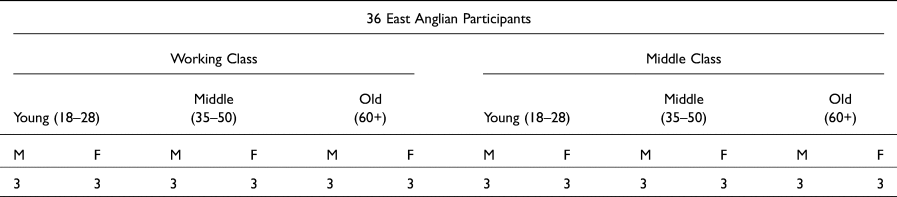
36 participants, evenly distributed across the three cities, were recorded by means of sociolinguistic interviews, reading passages and word lists, and were stratified as follows (Table 1):
Social stratification of the participants
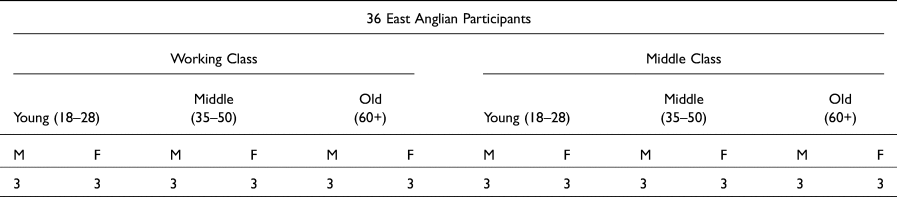
Despite changes in the social stratification of contemporary Western societies, social position continues to be reflected in the speech patterns of individuals. The classification of speakers according to socioeconomic status can be somehow problematic, as ‘there is no natural way of defining social class’ (Kerswill Reference Kerswill, Culpeper, Kerswill, Ruth, McEnery and Katamba2009, 361). To describe the socioeconomic status of the participants in this study, I employed the European Socio-Economic Classification (ESeC) (Rose and Harrison Reference Rose and Harrison2010), which is based on economic and division of labour criteria and adopts household and family as unit. This study is built on an apparent-time methodology, that is the speech of individuals is stratified by three age cohorts: young (18–28), middle (35–50), old (60+). This stratification is mainly etic (by chronological age), but it includes some emic qualities (by cultural life stages) which mirror the British society, such as the entrance of teenagers into adulthood at 18 years old. The informants were also stratified by the binary category of biological sex (males vs. females) following the traditional variationist approach.Footnote 9
6.2 Coding and statistical tools
The interviews were transcribed orthographically in ELAN. Data was coded auditorily (n = 2,653 tokens) with support from visual cues in the spectrogram, and mixed-effects logistic regression analysis was carried out in Rbrul (Johnson Reference Johnson2009), with speaker, and word as random effectsFootnote 10. Sum contrasts are the type of contrasts used for factors. They are centred around zero for any predictor, and operate similarly to centred factor weights.Footnote 11
The data collected includes cases of glottal reinforcement of /t/ with [tʔ] (n = 8) or [ʔt] (n = 24), but only full cases of glottal replacement were analysed. For the following phonological environment, this study provides a more detailed account of the phonetic contexts which condition (t) by providing a fine-grained coding of the following categories: PreC (e.g. that man), PreV (e.g. that apple), and PreP (What?), as indicated in the following section.
6.3 Independent variables
The independent variables employed in this analysis are as follows: the preceding phonological environment, which includes nasals (e.g. prevalent), laterals (e.g. Walt), vowels (e.g. quit)Footnote 12; the following phonological environment, encompassing nasals (e.g. eat meat), fricatives (e.g. favourite food), stops (e.g. rent because), liquids (e.g. quite little), vowels (e.g. went on), pauses (e.g. what?)Footnote 13; syllable stress, which is coded as a binary factor: primary stress – /t/ occurs in primary stressed syllables – (e.g. sit), non-primary stress (e.g. operate); style (intended as attention paid to speech, with attention being the cognitive mechanism which links social factors to linguistic ones) is elicited through spontaneous speech, reading styles, word lists; social class (working-class vs. middle-class); age (young, middle-aged, old), and sex (females, males). Lexical frequency effects of word-final (t) in East Anglian English are discussed elsewhere (see Ciancia et al. Reference Ciancia, Patrick and Esposito2024; Ciancia et al. Reference Ciancia and Peter L. Patrickforthcoming)Footnote 14.
7. Results
7.1 Descriptive statistics
Firstly, this section presents the distribution of word-final (t)-glottaling in the whole East Anglian dataset; secondly, it presents crosstabulations between the preceding phonological environment and social factors in each locality.
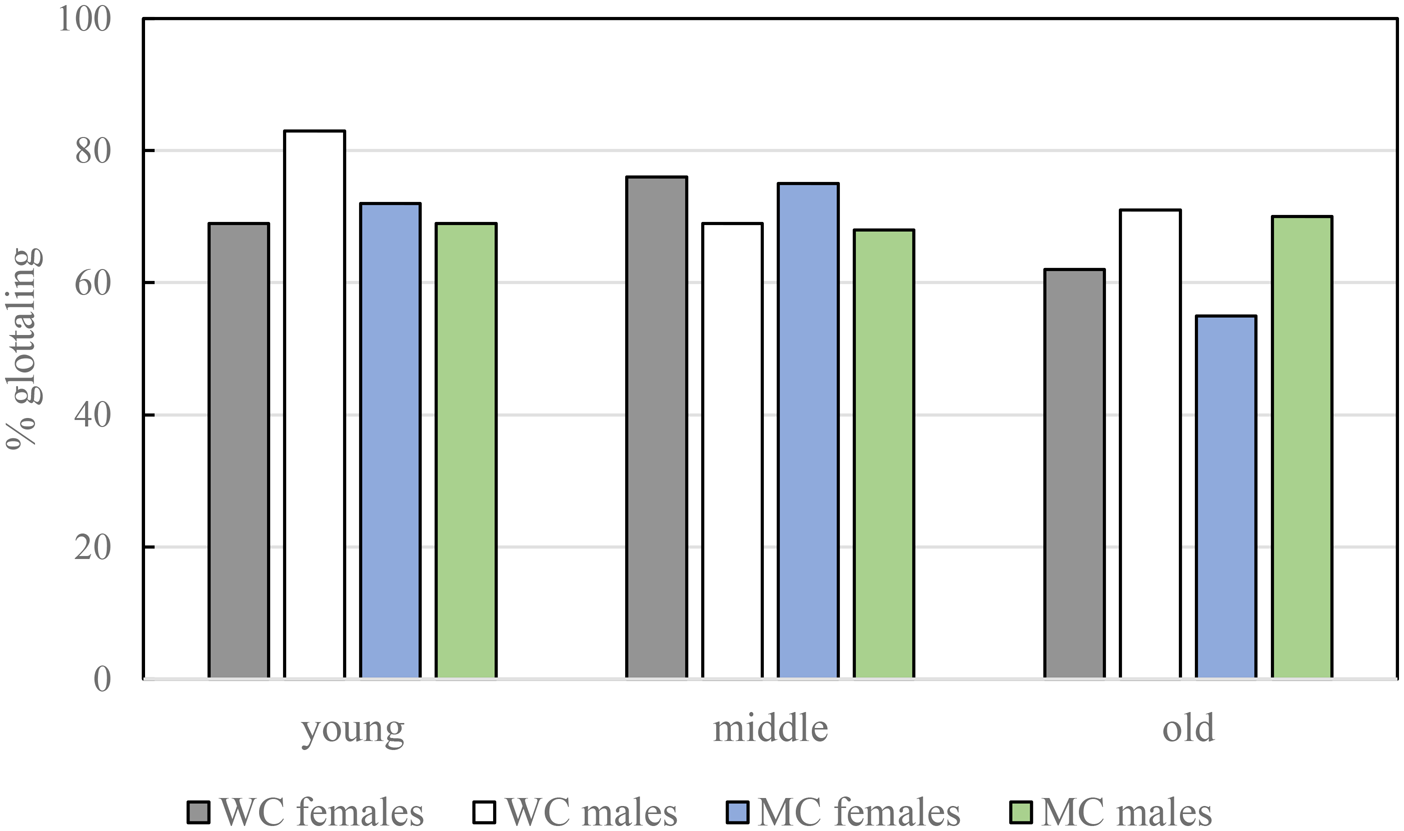
Figure 1 shows that participants in the whole sample tend to replace word final /t/ with the glottal stop. Thus, (t)-glottaling is well distributed across class, sex, and age. Working class males lead the young group with 83% of glottal realisations; women of both classes are slightly ahead among middle-aged speakers; whereas the least glottal realisations were found among middle class females in the old group.
Distribution of word-final (t)-glottaling in East Anglia.
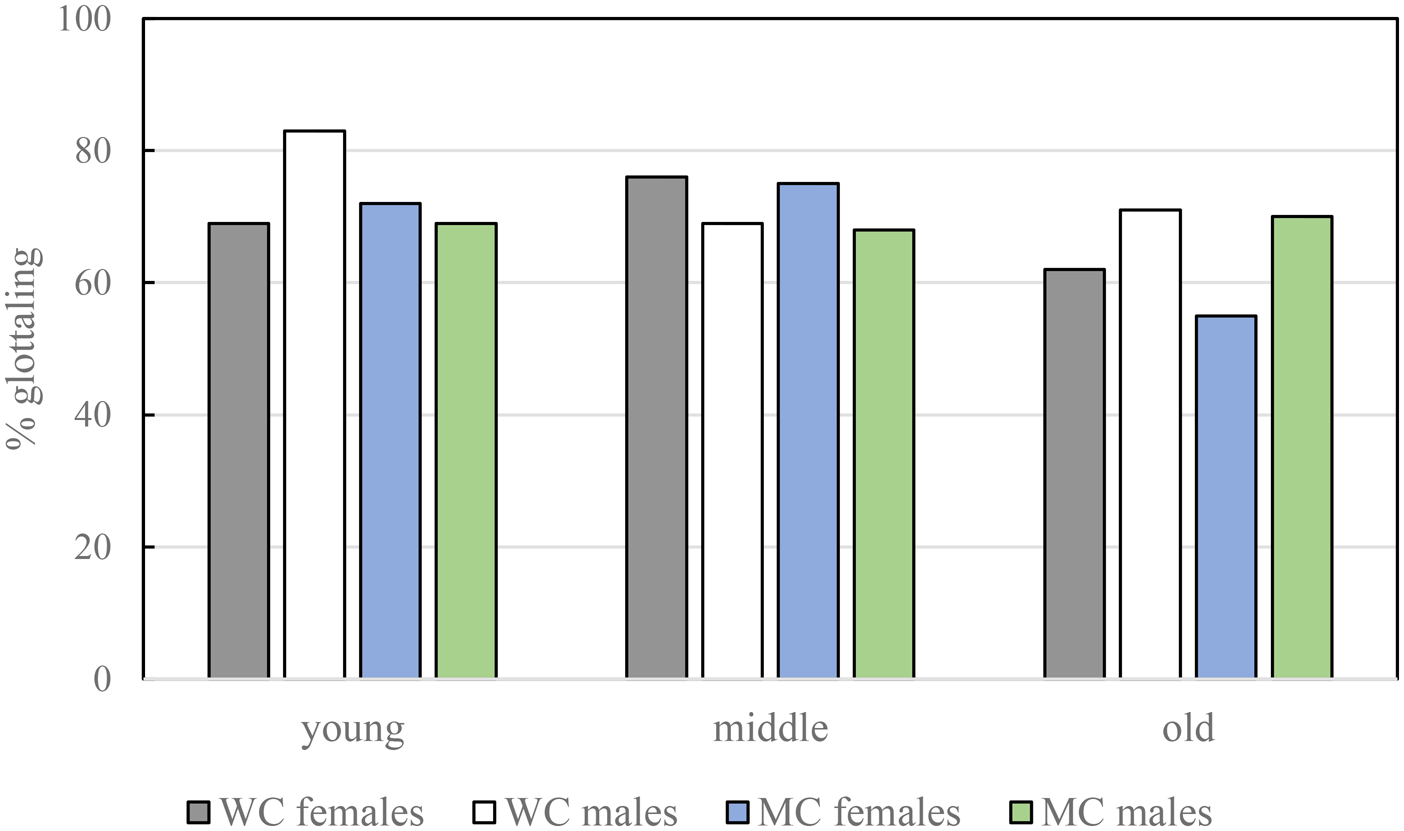
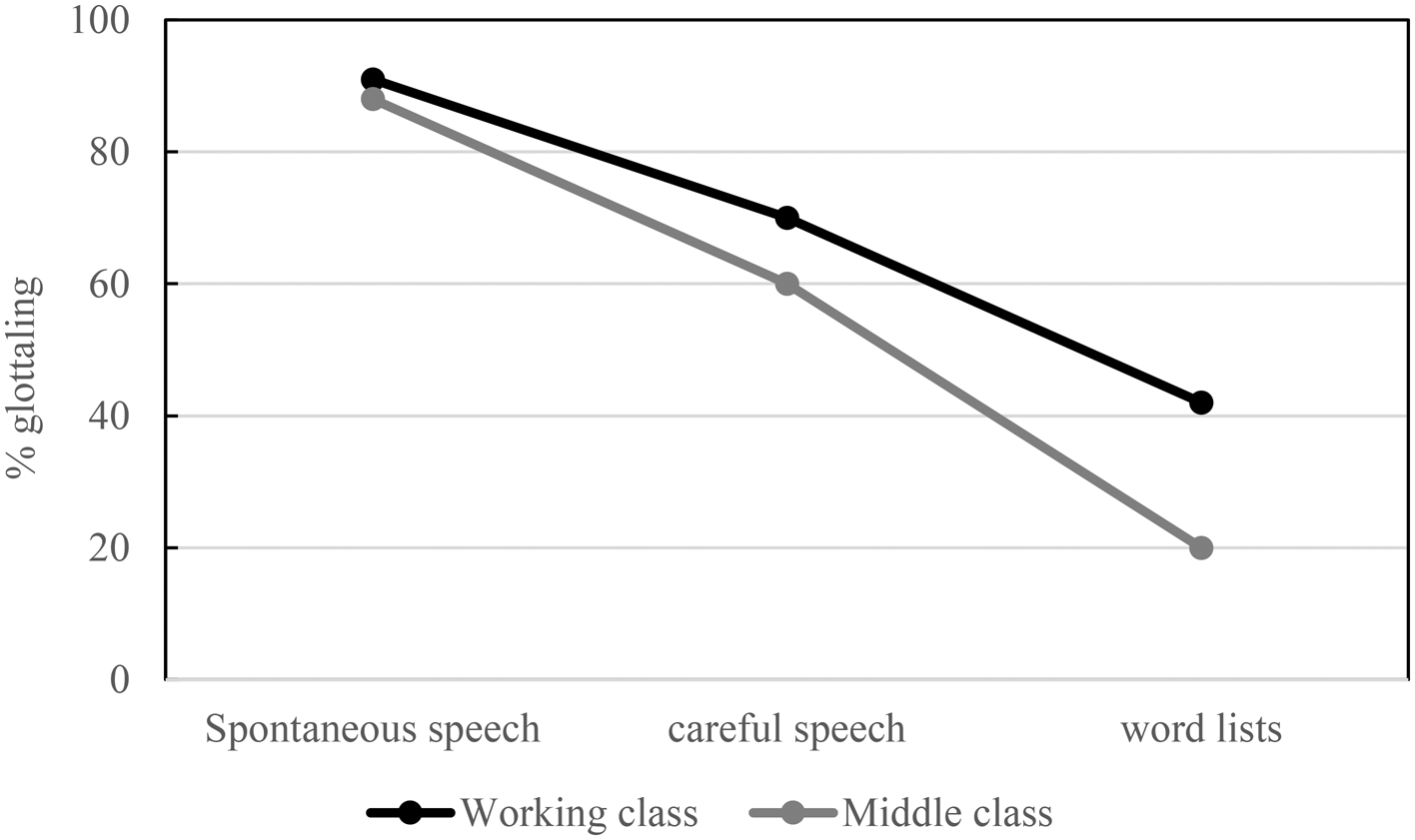
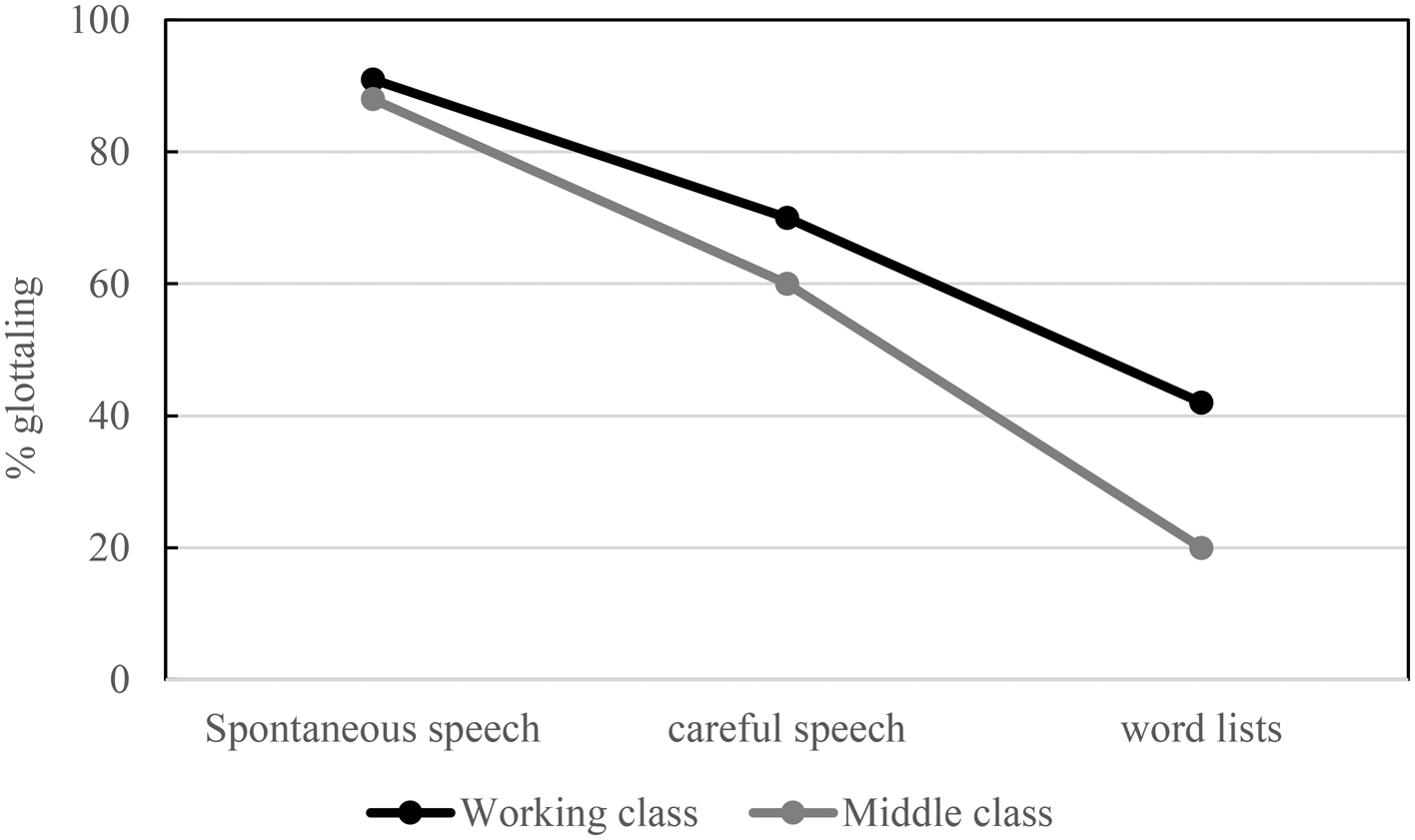
Figure 2 shows that both classes were found to use less glottaling as formality increases. Crosstabulations between sex and class show that: (1) young working-class speakers glottal(ise) the most; (2) the degree of glottaling between middle and working-class middle-aged speakers is levelled, while (3) old speakers use the glottal stop [Ɂ] to a smaller extent.
Style-shifting by social class in East Anglia.
Let us now turn the attention to each locality. In Colchester, none of the social factors significantly interacts with the preceding phonological environment: males use the glottal stop more than females when /t/ is preceded by vowels, nasals and laterals, but not significantly. All age groups (young, middle-aged, old) similarly use glottal variants in the above linguistic contexts, whereas working-class speakers and middle-class speakers use high rates of glottals when /t/ occurs after vowels and after nasals, but after laterals middle-class speakers appear to use it more.
In Ipswich, all generations use high rates of glottals after vowels, but not significantly. Glottaling decreases after nasals as the age of participants increases, whereas after laterals it is age-graded.Footnote 15 Males and females adopt glottal variants nearly at the same rate when /t/ follows vowels and nasals, but when /t/ occurs after laterals females use fewer glottals than males. High rates of glottaling were also found amongst working-class and middle-class speakers when /t/ is preceded by vowels and nasals, but middle-class speakers appear to use fewer glottal variants after laterals.
In Norwich, males appear to use more glottaling after vowels and less glottaling after nasals and laterals, but not significantly. Females, instead, use high rates of glottal variants across the three preceding phonological contexts. High percentages of glottaling after vowels, nasals, and laterals was found among young and middle-aged speakers, whereas old speakers use it less after laterals. As regards social class, the high percentage of glottaling was found to be consistent across both working-class and middle-class speakers.
The following section presents the statistical analysis of the whole dataset (the three localities combined) given the similar patterns found between Colchester, Ipswich, and Norwich.
7.2 Statistical analysis
For the statistical analysis, the comparison of different nested models was carried out through a log-likelihood ratio test, which performs significant tests with mixed models (i.e. fixed effects and random effects) by comparing the likelihood of one model to the likelihood of another model (Winter Reference Winter2020). The best model achieved in the multivariate analysis shows that preceding phonological environment, following phonological environment and style are marked as significant predictors. Class, sex, age as well as the interactions between sex and age, and sex and class do not exhibit significant conditioning. The lack of social significance in the whole dataset is consistent with recent research carried out in both London and Edinburgh (Schleef Reference Schleef2013), yet the latter do not match those studies in which (t)-glottaling has a social effect (e.g. Smith and Holmes–Elliott Reference Smith and Holmes–Elliott2017).Footnote 16
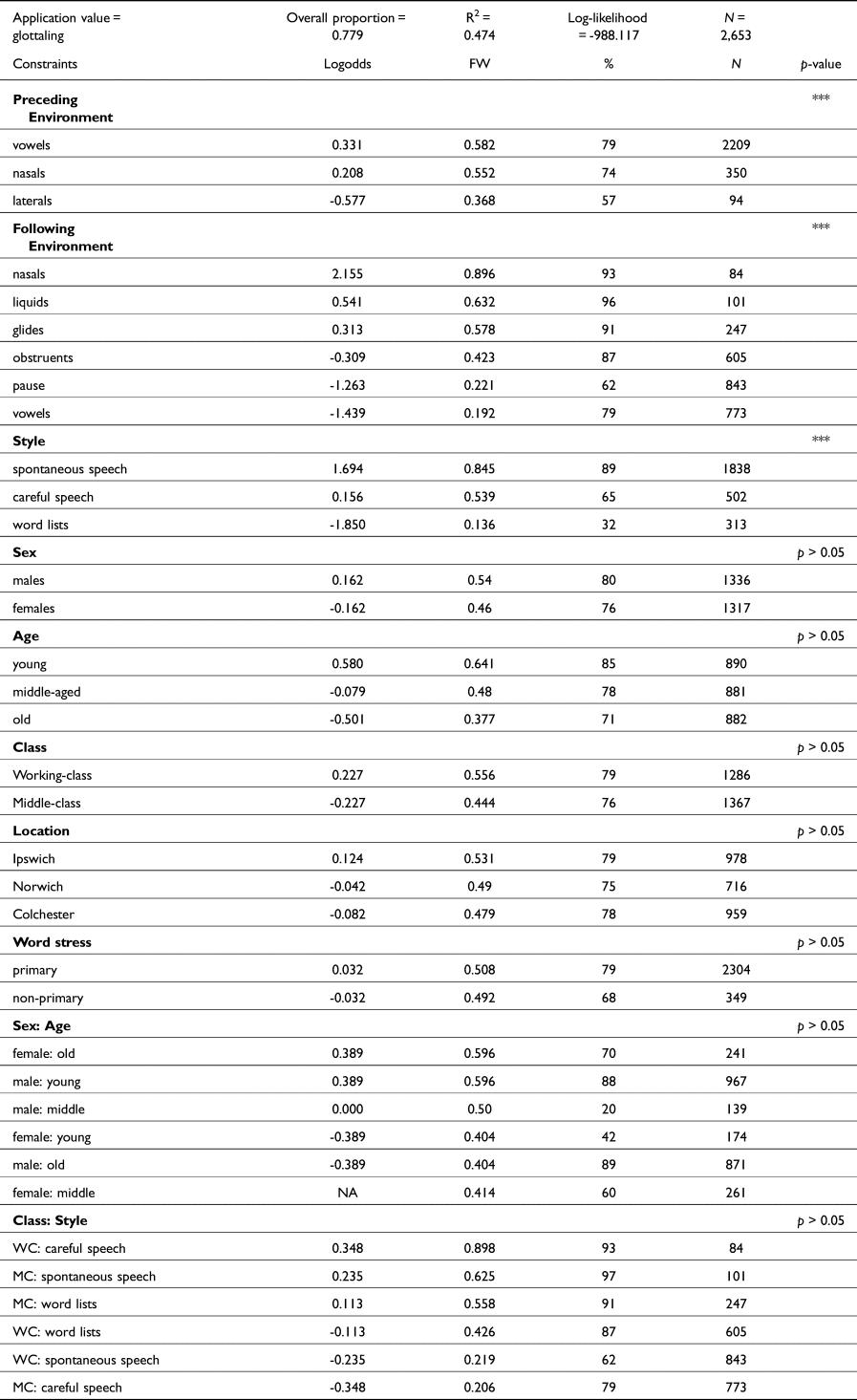
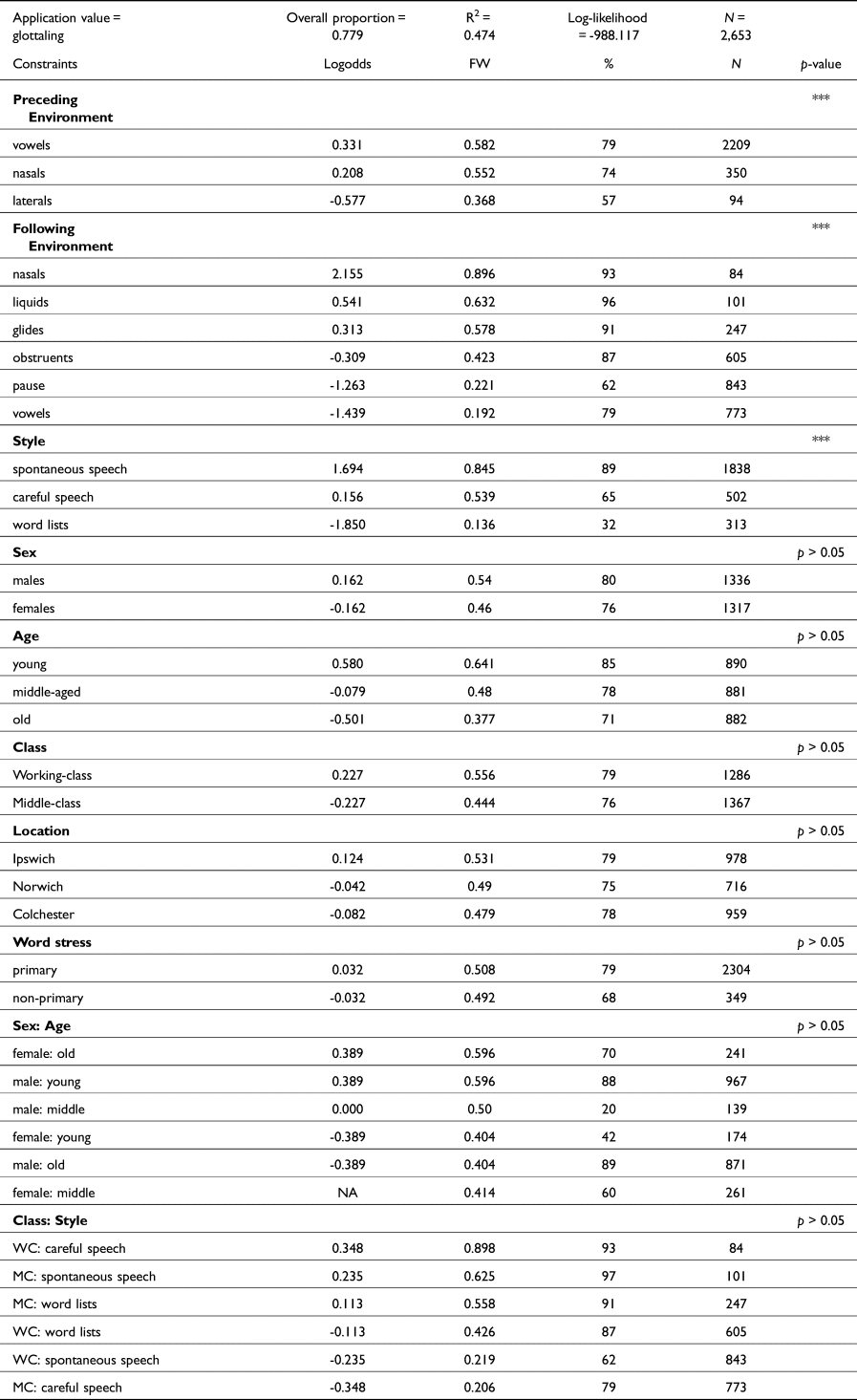
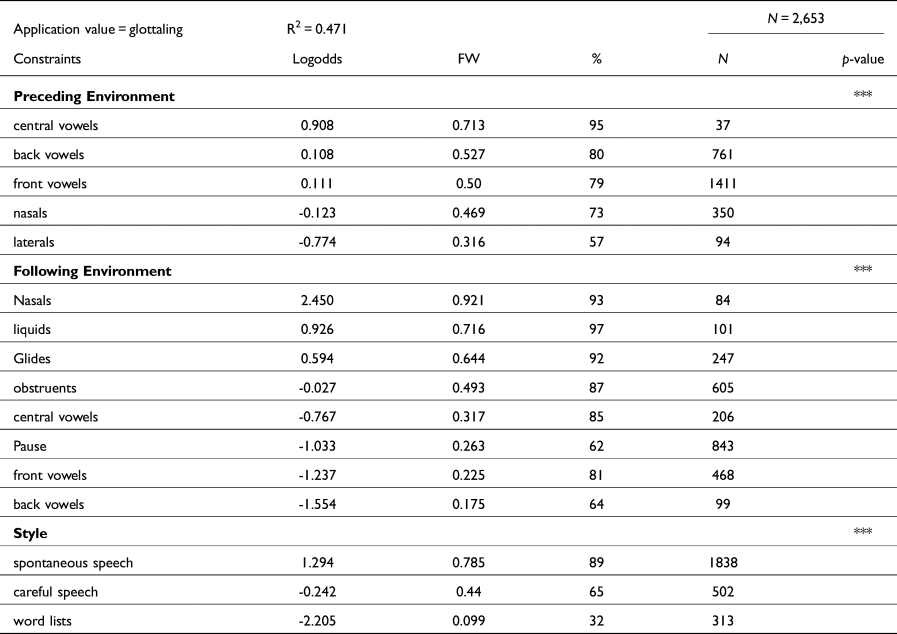
Table 2 presents the results from the multivariate analysis in terms of R2, log-odds, factor weights (FW), observed percentages of glottals, number of tokens (N), and p-value.Footnote 17 Predictors which reached statistical significance are the preceding phonological environment, style, and the following phonological environment. Results show that (t)-glottaling is significantly used when /t/ follows vowels (e.g. it) and nasals (e.g prevalent), whereas it is less likely to occur with following laterals (e.g Walt). Glottaling is also conditioned by nasals (e.g eat meet), liquids (e.g. got little), and glides (e.g brought you) when they follow /t/, whilst following obstruents, pause, and vowel, inhibit the use of the glottal variant. Both spontaneous and careful speech favour (t)-glottaling, whereas when words are realised in isolation (e.g. word lists) the glottal variant is less likely to occur. The following section discusses the significant findings shown in Table 2 in more detail.
Multivariate analysis of (t)-glottaling in the whole dataset. Note: *p < 0.05; **p < 0.01; ***p < 0.001
8. Discussion
8.1 Preceding phonological environment
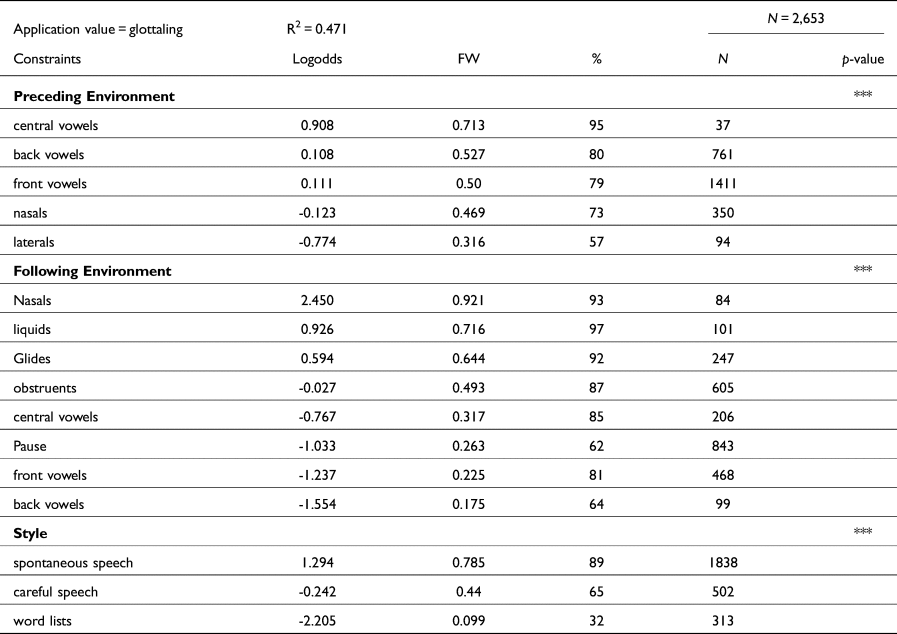
While the bulk of research on (t) has largely focused on the following phonological segment rather than on the preceding one, in East Anglia, the preceding phonological environment turned out to be one of the most powerful predictors, with vowels and nasals favouring (t)-glottaling, whilst laterals disfavour it. When the vowel category was broken down, in a different Rbrul run (see Appendix A), (t)-glottaling was mostly promoted by preceding central vowels (.713), followed by back vowels (.527) and front vowels (.50).Footnote 18 In phonological theory, front vowels and coronal consonants are deemed to be members of the natural class of coronal sounds (Clements and Hume Reference Clements, Hume and Goldsmith1995). Hence, /t/ is more likely to be realised with coronal articulation rather than with a glottal stop which differs in the place of articulation. The fourth most favouring factor group concerns nasals, whilst laterals are the last favouring preceding predictor to trigger the glottal variant. From a theoretical standpoint, the sonority hierarchy seems to be a partial explanatory factor as more preceding sonorous segments favour glottal(ised) variants, while less sonorous segments disfavour it. The sonority scale, which refers to the ranking of speech phones by amplitude, is proposed by Goldsmith (Reference Goldsmith and John1990) and Laver (Reference Laver1994) as follows:
vowel > glide > liquid > nasal > fricative > affricate > stopsFootnote 19
(most sonorous) (least sonorous)
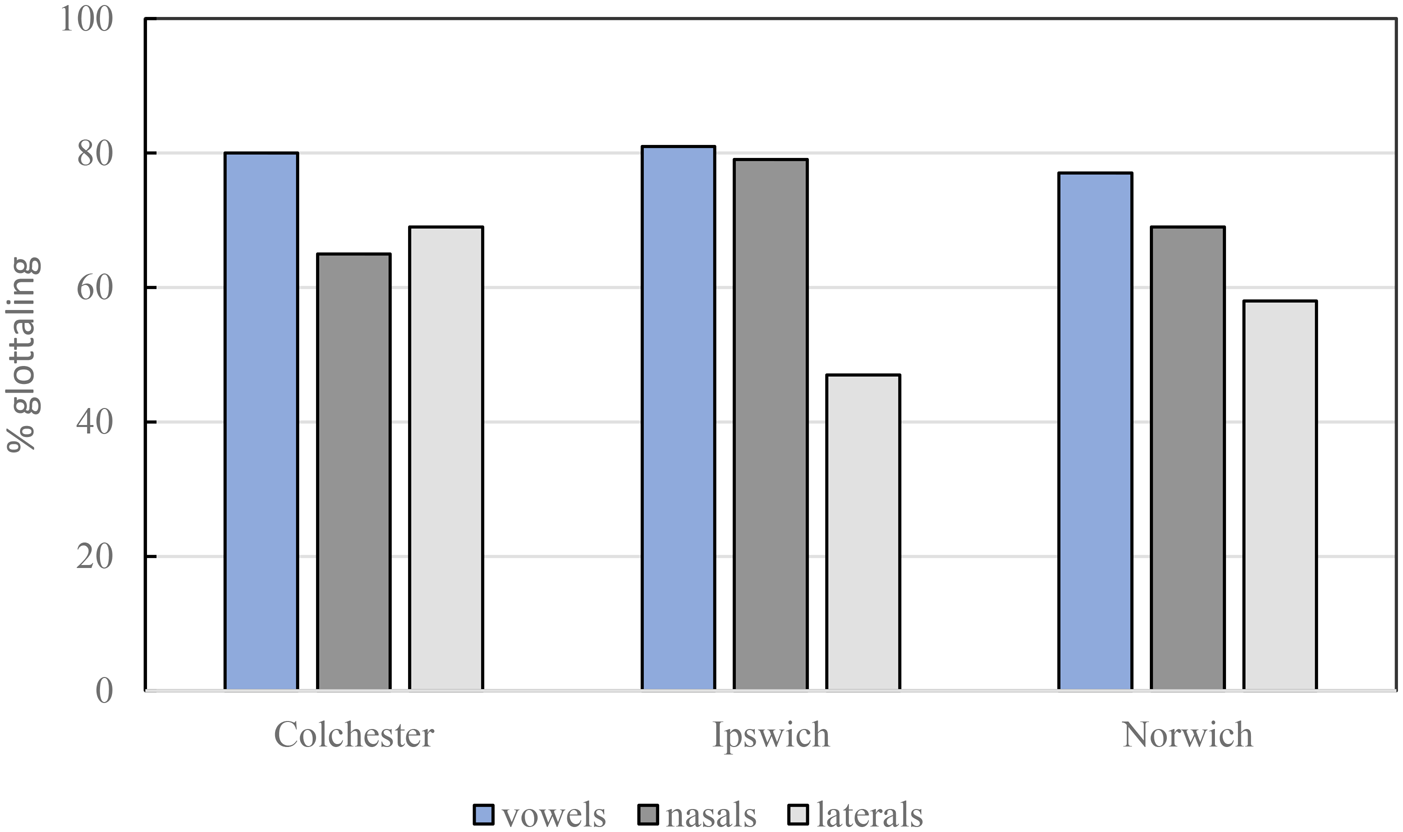
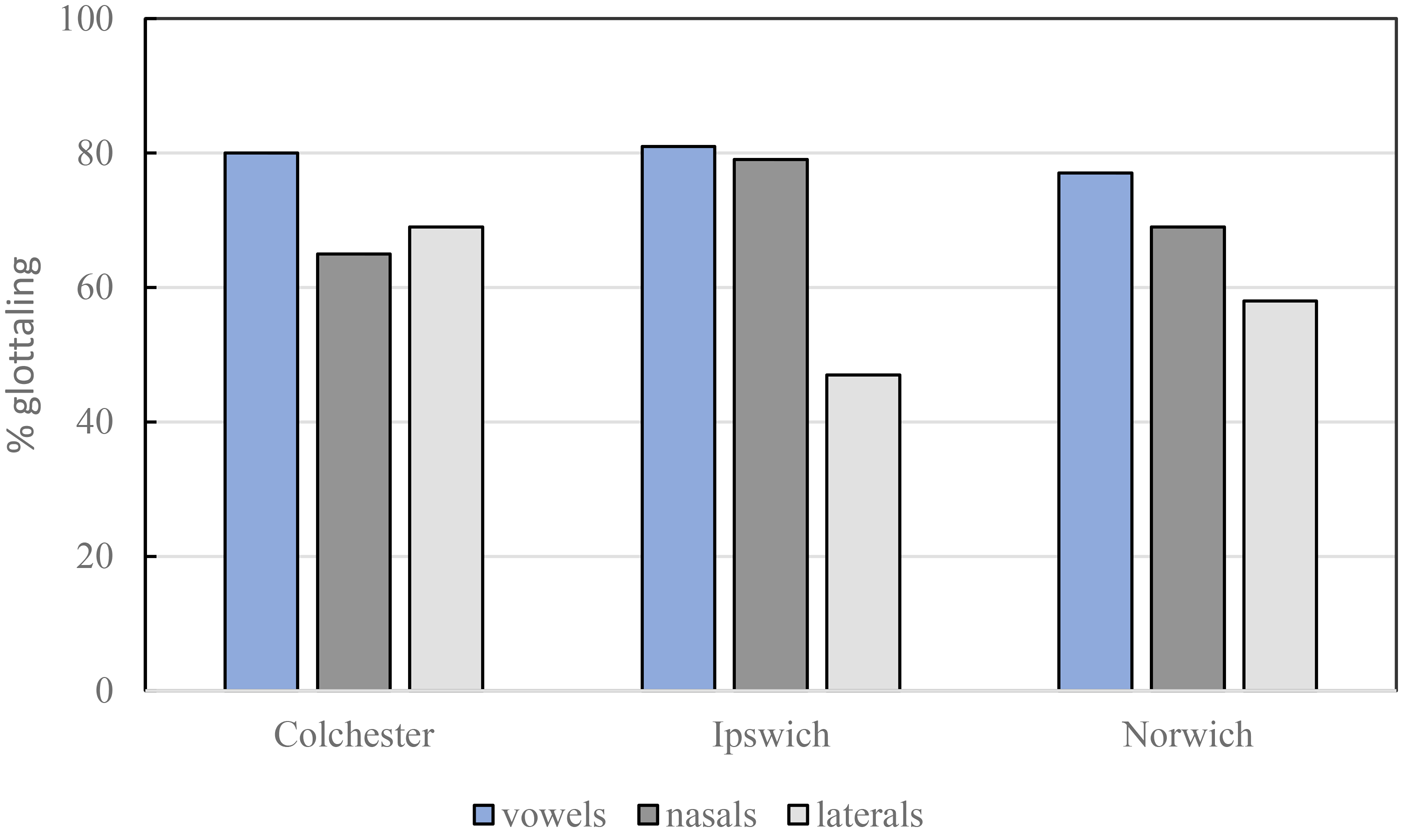
This ranking is nearly parallel to the East Anglian findings reported in Table 2, with preceding vowels favouring (t)-glottaling, whereas a reverse order occurs with respect to nasals and /l/. The exchange of place between nasals and liquids, in terms of sonority, should not be problematic given the small probability difference between them. This pattern is consistent across Ipswich and Norwich (see Figure 3), where vowels and nasals favour glottal variants, while laterals disfavour them. In Colchester, however, vowels are marked as the only conditioning factor. Glottaling in post-sonorant position (e.g. bolt, ant) did not occur categorically in the three localities – a finding which is in contrast with the high rates of glottaling found in Manchester in the same contexts (see Baranowski and Turton Reference Baranowski and Danielle Turton2020). Whereas, in both London and Edinburgh nasals and liquids were found to inhibit (t)-glottaling (Schleef Reference Schleef2013), confirming Roberts’ (Reference Roberts2006) findings in Vermont where preceding consonants disfavoured [Ɂ] at .34.
Preceding phonological environment across Colchester, Ipswich, and Norwich.
8.2 Style-shifting
The style-shifting analysis seeks to investigate the distribution of the (t) variable in conversational and controlled speech. It is argued that when speech is unselfconscious, the style is closer to the vernacular, while when speech is more self-conscious it is closer to the standard variety (Labov Reference Labov1966). Trudgill (Reference Trudgill1974) demonstrates that the glottal(ised) variants, in Norwich English, are inversely proportional to social class and social context. Upper classes exhibit low levels of glottalisation in formal style, whilst lower classes glottal(ise) more frequently in spontaneous speech. Trudgill's (Reference Trudgill1988) real time study revealed that the (t) variable slightly increased in casual style intervocalically and in word-final /t/. Conversely, in more formal styles there was a dramatic spread suggesting how ‘a change having gone almost to completion in spontaneous speech, continues to spread from style to style’ (Trudgill Reference Trudgill1974, 44). Holmes–Elliott's (Reference Holmes–Elliott2020) real time study in Hastings, which explores the development of (t)-glottaling (among other linguistic variables)Footnote 20 from childhood to adolescence, found higher rates of glottaling with individuals showing convergence over time and moving in the same direction.
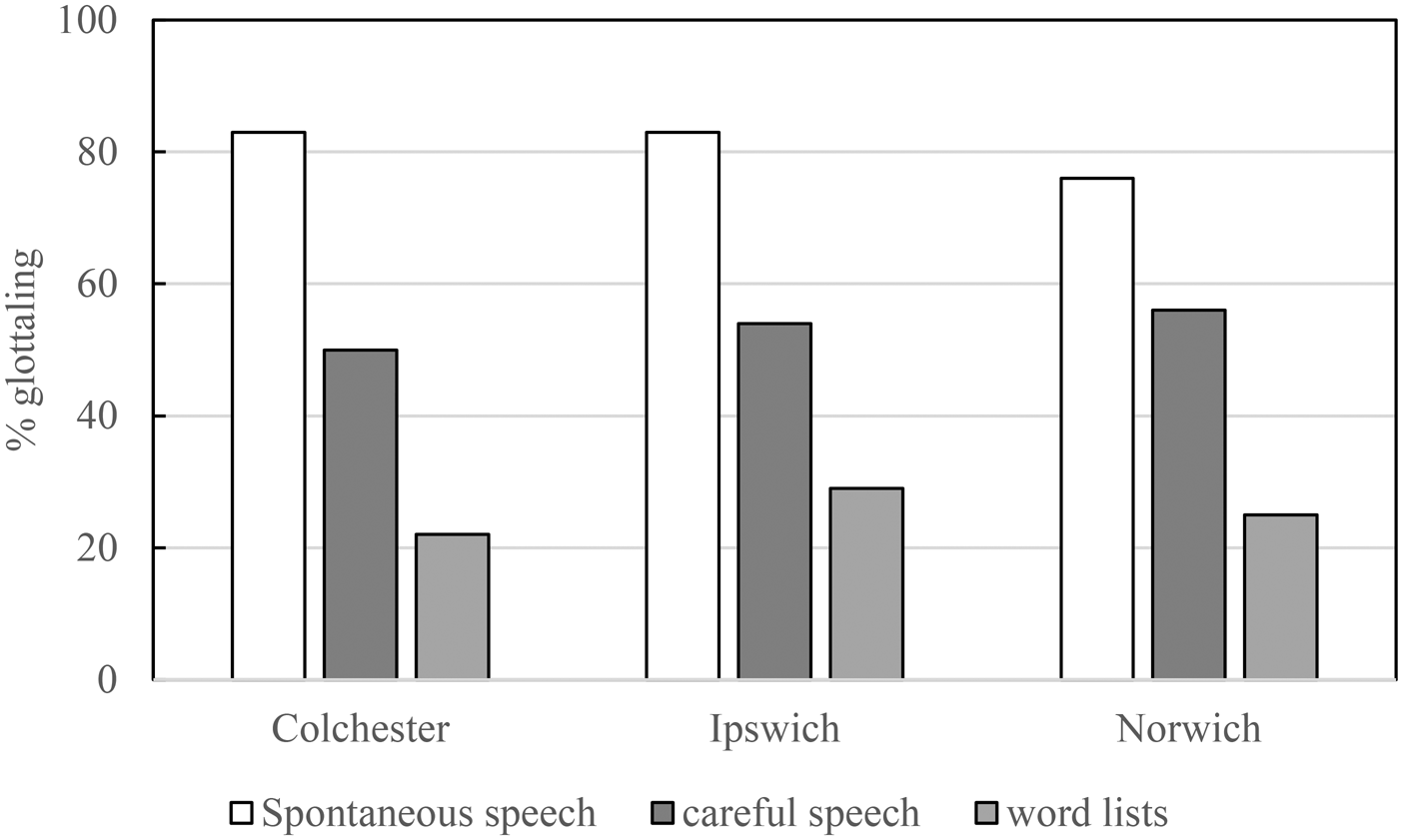
Figure 4 displays the distribution of (t) across style in Colchester, Ipswich, and Norwich. The three localities exhibit a similar trend with glottaling decreasing as formality increases.
Rates of (t)-glottaling by style across Colchester, Ipswich, and Norwich.
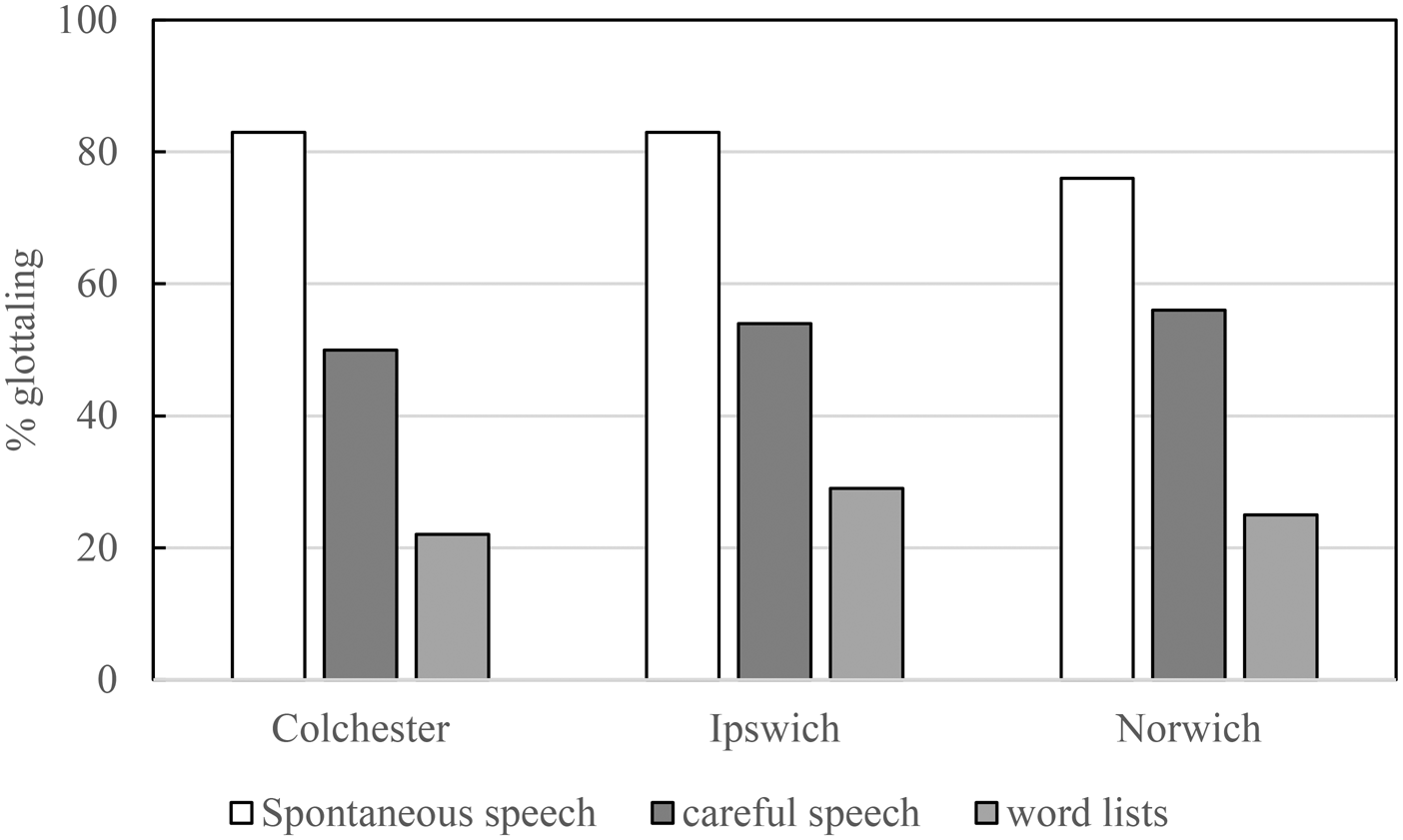
This outcome, which shows that (t) is highly sensitive to style-shifting, corroborates Trudgill's (Reference Trudgill1988) findings and is in line with previous studies (Mees and Collins Reference Mees, Collins, Foulkes and Docherty1999; Milroy et al. Reference Milroy, Milroy, Hartley and Walshaw1994; Stuart–Smith et al. Reference Stuart–Smith, Timmins and Tweedie2007; Tollfree Reference Tollfree, Foulkes and Docherty1999; Williams and Kerswill Reference Williams, Kerswill, Foulkes and Docherty1999). The question whether (t)-glottaling is losing its stigma remains open, since it is increasingly tolerated in more careful registers (Kerswill and Williams Reference Kerswill and Ann Williams2000) and it is diffusing to more formal styles in younger speakers (Stuart–Smith Reference Stuart–Smith1999).
8.3 Following phonological environment
The following phonological environment is considered the most fruitful constraint for (t). This ruling predictor, called the diffusion pattern after Straw and Patrick (Reference Straw and Patrick2007), refers to the ordering of diffusion in different linguistic contexts: PreC > PreP > PreV. This pattern is repeated in many southern communities, such as London (Hudson and Holloway Reference Hudson and Holloway1977; Schleef Reference Schleef2013; Tollfree Reference Tollfree, Foulkes and Docherty1999), Milton Keynes (Williams and Kerswill Reference Williams, Kerswill, Foulkes and Docherty1999) and in many northern places such as Derby (Docherty and Foulkes Reference Docherty, Foulkes, Foulkes and Docherty1999), Hull (Williams and Kerswill Reference Williams, Kerswill, Foulkes and Docherty1999), and Edinburgh (Schleef Reference Schleef2013). In Manchester, PreC leads the ranking, yet no significant difference was found between PreP and PreV (Baranowski and Turton Reference Baranowski, Turton and Hickey2015). Previous research shows that the use of glottal stops and glottal(ised) variants is very common in Essex, Suffolk and Norfolk (Trudgill Reference Trudgill1974); however, as Straw and Patrick (Reference Straw and Patrick2007, 392) note, ‘the [linguistic] environments have not previously been applied to glottal variation in East Anglia’. These environments were adopted to constraint word-final (t) in Ipswich, where the PreV context was found to favour glottal variants the most, as the following ranking shows:
PreV > PreC > PreP (Ipswich pattern)
Results from the present study confirm the diffusion pattern, with more glottaling in PreC than PreP and PreV contexts. Table 2 shows that nasals (.896), liquids (.632), and glides (.578) favour the glottal(ised) variants, while obstruents (.423), pause (.221), and vowels (.192) disfavour it. This ranking is largely consistent across Colchester, Ipswich, and Norwich, but Norwich exhibits slightly more glottaling when /t/ precedes liquids. The distribution of (t)-glottaling before following pauses appears to be localised as glottal variants do not occur in this context in Tyneside (Docherty et al. Reference Docherty, Foulkes, Milroy, Milroy and Walshaw1997), in London (Schleef Reference Schleef2013), in Edinburgh (Schleef Reference Schleef2013), yet this predictor holds true for Milton Keynes (Kerswill and Williams Reference Kerswill, Williams, Philippaki–Warburton and Ingham1992). Similarly, working-class adults in Glasgow retain their categorical use of glottals when /t/ occurs before a following pause (Stuart–Smith Reference Stuart–Smith1999).
9. Non-significant predictors
When reporting statistical results, it is suggested that all independent variables tested should be reported, whether significant or not. Non-significance of a potential predictor is an important finding (Guy and Torres Cacoullos Reference Guy and Cacoullos2018). Along this line, this section explores additional independent variables included in the model with the hypothesis that they might have had an effect on the response, but were not marked as significant predictors. The lack of statistical significance of social factors has recently been reported in Manchester (Baranowski and Turton Reference Baranowski, Turton and Hickey2015)Footnote 21, in London, Edinburgh (Schleef Reference Schleef2013) and Hastings (Holmes–Elliott Reference Holmes–Elliott2020). It is argued that the absence of social class and gender significance of a variable suggests that the advanced change is nearing the completion (Baranowski and Turton Reference Baranowski, Turton and Hickey2015). Social class, sex, and age, despite being non-statistically significant, are in the right direction that we would expect (see Table 2). The youngsters are slightly ahead of middle-aged, while old speakers fall behind. Results from East Anglia, if compared to contemporary studies, add to the general ‘loss of stigma’ argument, according to which word-final /t/ glottaling is no longer negatively evaluated. The loss stigma has also been tracked in real time (see Holmes–Elliott Reference Holmes–Elliott2020) and in RP (see Fabricius Reference Fabricius2002), where glottaling in word-final position is becoming a less salient and gradually accepted variant. Word stress as well as locality also failed to reach statistical significance.
9. Conclusion
This paper investigated word-final /t/ glottaling in East Anglian English, with main focus on the role of the preceding phonological environment which has received little attention in the (t) literature so far. Since this variable has been greatly explored in relation to the following phonological environment, the present survey has also contributed to a fine-grained coding of this constraint. Results showed that the largely ignored preceding phonological environment turned out to be the most powerful constraint, with vowels and nasals favouring glottal variants. Whereas, for the following phonological environment, East Anglian English was found to mirror the diffusion pattern, with nasals, liquids, and glides triggering (t)-glottaling. Working-class speakers were found to use (t)-glottaling more than middle-class speakers in all styles, whereas a notable amount of glottaling was found in careful speech amongst middle-class speakers. This suggests that (a) word-final (t)-glottaling has nearly completed its social change in spontaneous speech and is now spreading to more formal styles, and that (b) (t)-glottaling has been present in this area for more than three generations.
Acknowledgments
I'm very grateful to Peter L. Patrick, who supervised this research project; to Ella Jeffries, Maciej Baranowski, the two anonymous reviewers as well as the NWAV 49 audience for their comments. I alone am responsible for any mistake in this paper.
Appendix A
Table 3 shows a multivariate analysis of (t)-glottaling which provides a fine-grained coding of the vowel category. Note that the table below shows significant predictors only.
Multivariate analysis of (t)-glottaling in the whole dataset
 CARMEN CIANCIA is Research Fellow at the University of Salerno. She holds a PhD in Sociolinguistics, an M.A. in English Language and Linguistics, both received at the University of Essex (UK), and a BA in Languages and Foreign Cultures received at the University of Salerno. She has presented her research at the worldwide leading conferences in Sociolinguistics (in the USA, in the UK, and in Europe). She is the author of the book Beyond Standard English. Variation and Change in Eastern England (Rome: Carocci, 2023). Email: cciancia@unisa.it

 Open access

