

Introduction
Dementia is a syndrome caused by a variety of brain disorders, which leads to cognitive decline and decreased function in the activities of daily living. The syndrome is usually chronic and progressive in nature. As dementia increases in severity, the need for institutionalization increases, and more than 80% of Norwegian nursing home (NH) patients have dementia (Selbaek et al., Reference Selbaek, Kirkevold and Engedal2007).
Furthermore, dementia is a condition compounded of the personality of the person with dementia, and his or her physical health, life story, neurologic impairment, and social psychology, all preserving the person's personhood (Kitwood, Reference Kitwood1997). According to Kitwood (Reference Kitwood1977), the person with dementia and their psychological needs is the focus of the care and treatment; person-centered care (PCC) (Kitwood, Reference Kitwood1997) rather than the person's disease (Edvardsson and Innes, Reference Edvardsson and Innes2010). PCC is widely accepted as good-quality care for persons with dementia in NH and is a guiding principle in care services (Brooker, Reference Brooker2004; Li and Porock, Reference Li and Porock2014; Manthorpe and Samsi, Reference Manthorpe and Samsi2016). There is an increase in the literature evaluating psychosocial interventions and PCC (Li and Porock, Reference Li and Porock2014; Testad et al., Reference Testad2014) showing significant benefits on decreasing behavioral symptoms (Chenoweth et al., Reference Chenoweth2009), psychotropic medication use (Fossey et al., Reference Fossey2006), increase in mood (Brooker et al., Reference Brooker, Argyle, Scally and Clancy2011), and health-related quality of life (Ballard et al., Reference Ballard2015) in persons with dementia in long-term care. Theories for implementing PCC have been developed over the years, such as the VIPS framework by Brooker (Reference Brooker2004). This framework constitutes four major elements; V stands for valuing people with dementia and those who care for them; I for treating people as individuals; P for looking at the world from the perspective of the person with dementia; and S for a positive social environment in which the person living with dementia can experience relative well-being (Brooker, Reference Brooker2004).
In PCC, the relationship between NH staff and the person with dementia is essential (Wilberforce et al., Reference Wilberforce, Challis, Davies, Kelly, Roberts and Loynes2016), and consequently, the staff's attitude and work methods are important (Anderson et al., Reference Anderson, Bird, Macpherson and Blair2016). Several factors have in previous studies been associated with PCC, such as job satisfaction and capacity to provide individualized care (van den Pol-Grevelink et al., Reference Van den pol-grevelink, Jukema and Smits2012; Brownie and Nancarrow, Reference Brownie and Nancarrow2013), gender, beliefs about personhood in dementia, burnout, collaboration in care, the physical environment, the social environment of care (Hunter et al., Reference Hunter, Hadjistavropoulos, Thorpe, Lix and Malloy2015), and the psychosocial factors at work (Testad et al., Reference Testad, Mikkelsen, ballard and Aarsland2010). A recent review article concluded that the physical environment in care settings is important for improving the patients’ quality of life and quality of care practices (Chaudhury et al., Reference Chaudhury, Cooke, Cowie and Razaghi2017). Essential aspects of quality of life and care include the influence of unit size, the spatial layout, its homelike character, sensory stimulation, and specific areas for dining, bathing, and outdoor activities, all of which emphasize the relationship between the therapeutic physical environment, organizational factors, and care practices (Chaudhury et al., Reference Chaudhury, Cooke, Cowie and Razaghi2017). Although the published work on PCC is quite substantial, the number of included respondents is low and the need for larger studies is warranted. Furthermore, insight on how organizational structures can stimulate or hinder person centeredness in staff and whether levels of person centeredness correlate with individual staff variables, such as education, clinical experience, job satisfaction, and experience of organizational variables, such as type of ward (regular unit (RU) or special care unit (SCU)), unit size, leadership, staff-to-patient ratios, and physical environment, is needed.
Thus, we designed this study to explore and understand the association between PCC, assessed with the Person-centered Care Assessment Tool (P-CAT), and organizational, NH staff and unit characteristics.
Methods
Study design and sample
This is a cross-sectional study, with a convenience sample of 175 NH units from 45 NHs in 29 municipalities in four Norwegian counties. An NH unit participating in the study was defined as a group of patients living together with a common living area and having their own care staff during the daytime. NH staff, which the head nurse defined as those familiar to the care provided and the structural and organizational conditions in the unit, were considered eligible for the study.
Data collection
The data were collected during the period from October 2013 to December 2014. Three case report files (CRF), including both a standardized questionnaire and questions developed for this study by the research group, were constructed; one to the NH manager, one to the head nurse of the unit, and one to the NH staff. The members of the research group all have wide experience in both clinical work and research projects in NHs. The questions developed by the research group for the study were based on factors identified in the literature referring to organizational and structural factors, such as culture, leadership, management, staff education, staffing levels, and physical environment.
Measures
Person-centered care
Several tools have been developed to assess PCC (de Silva, Reference De Silva2014; Wilberforce et al., Reference Wilberforce, Challis, Davies, Kelly, Roberts and Loynes2016), but the P-CAT (Edvardsson et al., Reference Edvardsson, Fetherstonhaugh, Nay and Gibson2010) is the only tool designed for self-assessing PCC by staff in long-term care facilities, which has been tested beyond the initial development stages (Wilberforce et al., Reference Wilberforce, Challis, Davies, Kelly, Roberts and Loynes2016). The Norwegian version of the P-CAT has satisfactory psychometric properties for the use in a nursing home-care setting (Rokstad et al., Reference Rokstad, Engedal, Edvardsson and Selbaek2012) and was chosen in this study. The P-CAT consists of 13 items expressed as statements about the content of care, the environment, and the organization, formulated to measure staff perceptions of the practice in the unit where they work. The participants indicate on a five-point Likert scale ranging from 1 (disagree completely) to 5 (agree completely) how they perceive the care in the unit. The total score ranges from 13 to 65, where higher scores indicate a higher level of PCC.
NH staff factors
NH staff data were obtained through questionnaires. The questionnaire contained demographic information about the participants, such as age, gender, Norwegian as a first language, number of years of health-related and relevant continuing education, experience in the current job, and percentage of full-time position.
Work-related psychosocial factors were assessed with the General Nordic Questionnaire for Psychosocial and Social Factors at Work (QPS-Nordic), covering essential social and psychological factors at work (Dallner et al., Reference Dallner, Elo, Gamberale, Hottinen, Knardahl and Lindström2000). Of the 129 items in QPS-Nordic, 11 are background items, 38 are single items, and 80 are distributed in 13 scales. In this study, 32 items distributed in the following 10 scales were included: quantitative demands, decision demands, learning demands, perception of mastery, empowering mastership, fair leadership, role clarity, role conflict, innovative climate, and perception of group work. Respondents indicated how relevant each statement was for their situation on a five-point Likert scale from 1 (very seldom or never) to 5 (very often or always). Each scale consists of 3 or 4 items, giving a subscale score of 3–15 or 4–20 (see textbox 1).
Organizational and psychosocial factors*

*Thirty-two QPS-Nordic items, distributed in 10 scales were used in the study. Each scale consists of 3 or 4 items, giving a subscale score of 3–15 or 4–20.
A single question about general job satisfaction was added: “How will you describe your general experience of your job satisfaction?” The alternatives were “very bad – bad – unsure – quite good – good – excellent.”
To ensure staff anonymity, the head nurse did not have access to the staffs’ answers in the questionnaires, with NH staff returning the questionnaire in a stamped envelope directly to the researchers.
NH unit characteristics
The following data about organizational and structural factors in the NH unit were obtained through a questionnaire distributed to the head nurse of the 175 units: type of unit (SCU or RU); the unit size (number of patients); the daytime staff/patient ratio (the number of NH staff working per patient during the daytime); the number of units per head nurse; and the number of hours the nursing home physician was working per patient per week in the nursing home/unit. To categorize NH units as either RU or SCU, we used the definition of SCU from the Therapeutic Environment Screening Survey for Nursing Home (TESS-NH) (Sloane et al., Reference Sloane2002): an SCU must be physically separated from the rest of the facility by closed doors or it is free-standing, and the unit must self-designate the unit as a specialized dementia care unit. In addition, the unit must meet two of the following three criteria: (1) the unit serves a population in which 75% or more of the residents have a diagnosis of Alzheimer's disease or related dementias; (2) unit programming and activities are dementia specific; or (3) the staff is trained in dementia care. NH units not fulfilling this SCU definition were defined as RUs, including regular somatic units, short-time units, and rehabilitation units.
Physical environment
To assess the physical environment of the unit, we used the Special Care Unit Environmental Quality Scale (SCUEQS), which is a summary scale embedded in the Therapeutic Environment Screening Survey for Nursing Homes (TESS-NH) (Sloane et al., Reference Sloane2002). TESS-NH was translated into Norwegian and back-translated according to the procedures described by Acquadro et al.(Reference Acquadro, Jambon, Ellis, Marquis and Spilker1996). Three translators, two medical doctors, and one registered nurse translated the American version of TESS-NH into Norwegian. These translations were aggregated into one Norwegian version, and a faculty research group agreed on a preliminary version. This version was translated back into English by Allegro Language Services. The English back-translated version was sent to Sloane, who developed the original TESS-NH, to get her comments. The final Norwegian version of TESS-NH was agreed upon after a revision based on Sloane's responses and a discussion in the research group. The Norwegian version is not tested for psychometric properties. The TESS-NH contains 84 discrete items and one global rating and was developed to describe the ability of physical environments in NHs to address therapeutic goals for persons with dementia. The SCUEQS consists of 18 of the TESS-NH items and measures maintenance, cleanliness, safety, lighting, physical appearance/home likeness, orientation/cueing, and noise (Sloane et al., Reference Sloane2002). Scores range from 0 to 41, where higher scores indicate a better physical environment.
Statistical analyses
IBM SPSS Statistics for Windows, version 23.0 (Armonk, NY: IBM Corp.) was used to perform descriptive statistics of P-CAT scores, QPS-Nordic and quality indicators, and staff and unit characteristics.
Of the 1,161 respondents, 77 had missing data on at least one P-CAT item and imputation was performed on cases with fewer than 50% missing values (6 at most). Four respondents had missing data on more than six P-CAT items, and data were not imputed. The empirical distribution for each item in the scale was generated. A random number was drawn from that distribution and used to replace the missing value. The process was repeated until all missing values were imputed. This algorithm mimics the bootstrap described by Efron and Tibshirani (Reference Efron and Tibshirani1994).
As data were on two levels (unit and staff level), MLwiN version 2.36 (Centre for Multilevel Modeling, University of Bristol) was used to check for a clustering effect (Intra-Class Correlation (ICC)) of the units. After a clear cluster effect was found, three multilevel linear regression models were built using P-CAT sum scores as the dependent variable. Independent variables were added to the model in blocks: NH-staff characteristics (model 1), QPS-Nordic (model 2), and variables collected at unit level (level 2, model 3). The multilevel analysis generates two different values for variance σ2en for between groups and σ2un for within groups, and with this the proportion of the ICC explained by the models (R22) and of the portion of variance within groups(R21) were calculated at each step.
Results
Staff characteristics and work-related psychosocial factors
Characteristics of nursing staff are presented in Table 1. The total staff response rate was 67.5%. The mean staff response rate within the units was 70.7% (SD 20.3%), indicating that the response rates were lower in the large units. Nearly all the NH staffs were female (96.6%), 56.4% were between 40 and 59 years old, and 91.9% had Norwegian as their first language. Most of the staff (60.8%) had a position of 75% of full time or more, 29.9% had 3 years or more of health-related education, and 27.4% had received relevant continuing education. Regarding work experience, the largest group was those who had worked 5–15 years at the NH unit (49.7 %). Finally, 69.2% rated their job satisfaction as good or excellent.
Characteristics of nursing staff n = 1,161
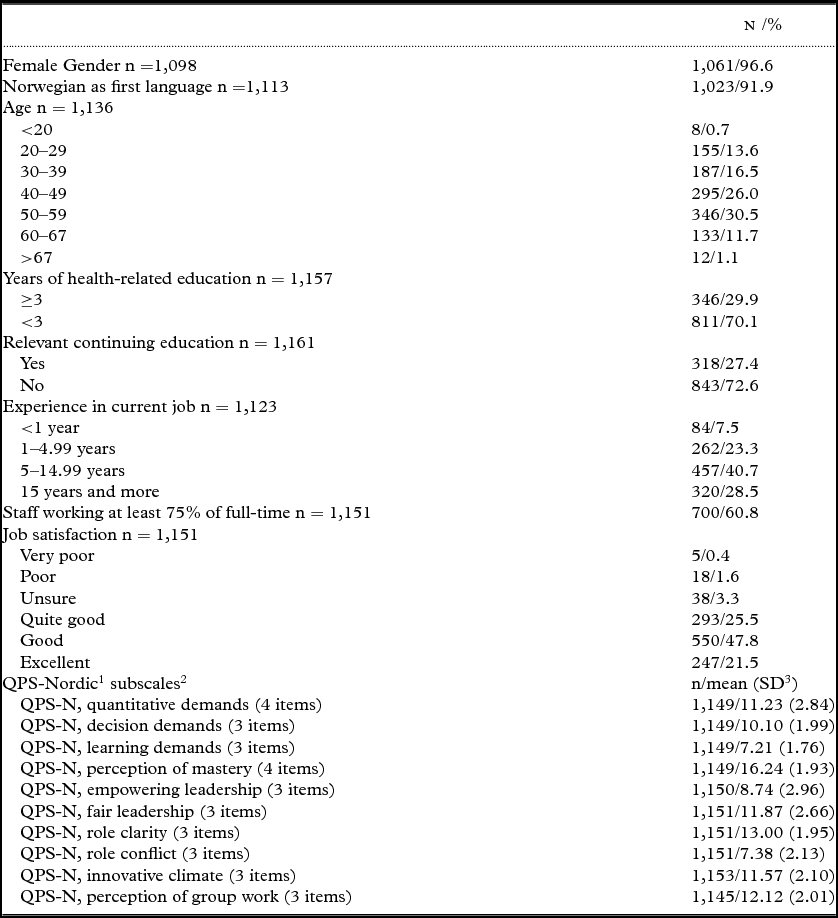
1 QPS-Nordic = the General Nordic Questionnaire for Psychosocial and Social Factors at Work.
2 QPS-Nordic subscales each consist of 3 or 4 items, giving a subscale score of 3–15 or 4–20.
3 SD = standard deviation.
Unit characteristics and person-centered care assessment
All leaders of the units except one returned the questionnaire, giving a response rate of 99.5%. Of the 175 units, 62 (35.4%) were SCUs. Table 2 presents differences between the RUs and the SCUs in the number of beds, the physical environment, staffing ratio, and the number of units the head nurse was leader of. All P-CAT scores except for one item – the environment feels chaotic – were higher in SCUs than in RUs. Four SCUEQS items – cleanliness of social spaces and halls, visual stimulation opportunities, and resident appearance – had higher scores in RU than in SCU, for all other SCUEQS items SCU had higher scores. Three items – floor surface in halls, light intensity in resident's rooms, and public areas homelike – in addition to the total sum score were significantly higher in SCU, indicating that SCU have a more dementia-friendly environment.
Unit1 characteristics and P-CAT score in regular and special care units
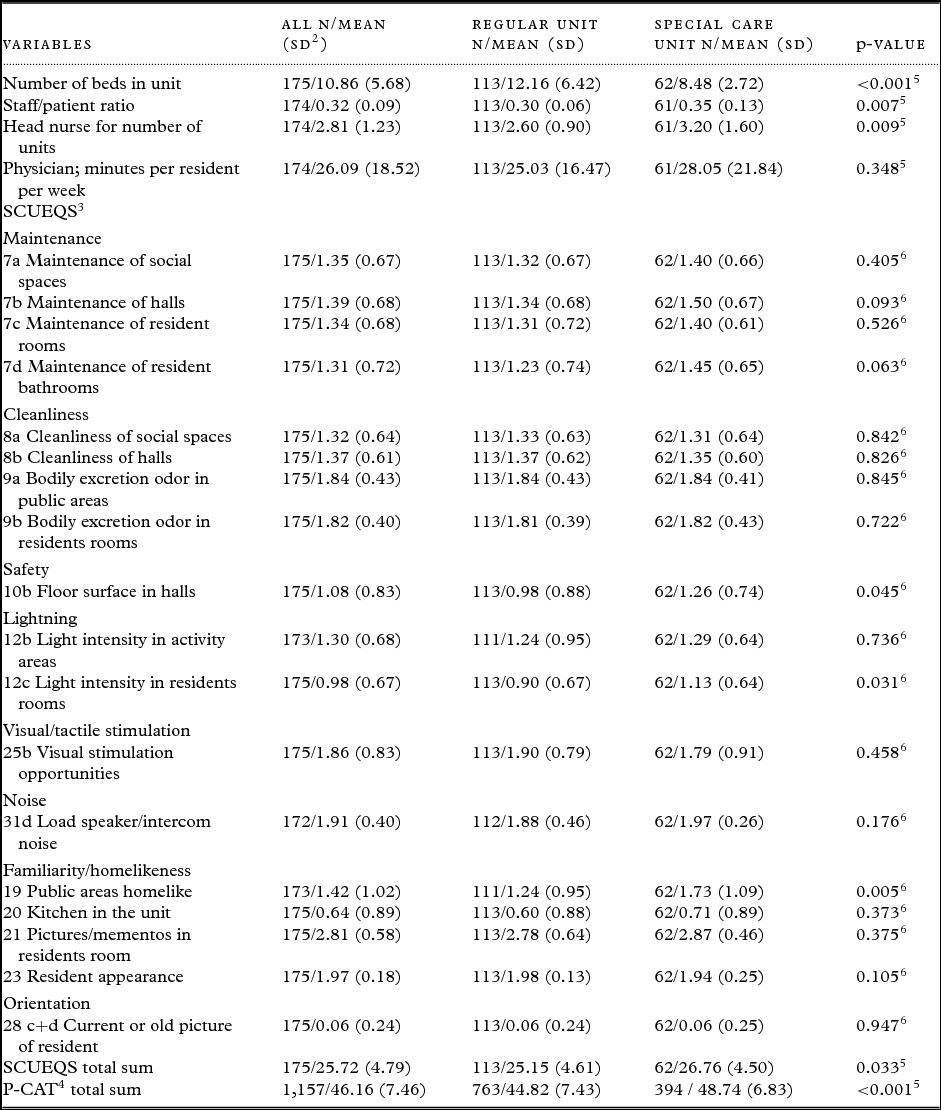
1 A unit is defined as a group of residents living together with a common living area and having their own care staff during daytime.
2 SD = Standard deviation.
3 SCUEQS = Special Care Unit Environmental Quality Scale.
4 P-CAT = Person-Centered Care Assessment Tool.
5 t-test.
6 Mann–Whitney U test.
Variables associated with P-CAT score
Multilevel linear regression analyses were conducted to analyze the associations between staff variables; QPS-N variables, unit variables, and the P-CAT score (Table 3).
Multilevel linear regression with person-centered care assessment tool (P-CAT) sum as dependent variable

1 Experience in profession (current job) in groups in years; 0 = ≤1, 1 = >1–4.99, 2 = 5–14.99, 3 = ≥15.
2 QPS-Nordic = The General Nordic Questionnaire for Psychosocial and Social Factors at Work.
3 Type of unit; 0 = Regular Unit (RU), 1 = Special Care Unit (SCU).
4 SCUEQS = Special Care Unit Environmental Quality Scale.
5 ICC = Intra-Class Correlation Coefficient.
High job satisfaction was associated with a higher P-CAT score in the univariate analysis, as well as all the three models in the multivariate analysis. Having three years or more health-related education was not associated with a higher P-CAT score in the univariate analysis or in model 1 of the multivariate analysis, but was associated with a higher P-CAT score in models 2 and 3 of the multivariate analysis, compared to having lower education.
In the univariate analysis, all the QPS-N subscales, except decision demands, were associated with the P-CAT score. Adjusted for staff variables and the other QPS-N subscale scores (model 2), decision demands, perception of mastery, empowering leadership, innovative climate, and perception of group work were positively associated with the P-CAT score, while quantitative demands and role conflict were negatively associated with the P-CAT score. This pattern was sustained in model 3 where unit variables were added to the model, except that decision demands were no longer significant.
In the univariate analysis, type of unit, number of beds, SCUEQS sum, and staff at daytime/patient were all associated with the P-CAT score. Adjusted for all the other variables (model 3), SCUs were associated with a higher P-CAT score compared to RUs, and a higher SCUEQS sum was associated with a higher P-CAT score.
Discussion
The main finding of this study was that high job satisfaction in care staff and care organized in small, specialized units were both strongly associated with a high level of PCC. More specifically, we found that staff with three years or more of health-related education, a lower level of quantitative demands and role conflict, a higher level of perception of mastery, empowering leadership, innovative climate, and perception of group work, in addition to a physical environment in the NH unit designed for people with dementia, were all associated with higher levels of PCC. To our knowledge, this is the first study exploring the complex association between PCC, organizational, NH staff and unit characteristics in Norwegian NH.
The strongest association with high levels of PCC was a high score on job satisfaction, even when adjusted for all the QPS-Nordic subscales. This finding is supported by a previous review article from 2013 (Brownie and Nancarrow, Reference Brownie and Nancarrow2013), which reported that facility-specific PCC interventions were found to impact the nurses’ sense of job satisfaction, a Dutch study which analyzed the association between PCC and job satisfaction, and concluded that PCC may contribute to higher job satisfaction (van den Pol-Grevelink et al., Reference Van den pol-grevelink, Jukema and Smits2012), and, finally, a Swedish study, which also found that higher levels of staff job satisfaction were associated with higher levels of PCC (Sjogren et al., Reference Sjogren, Lindkvist, Sandman, Zingmark and Edvardsson2015). Together, these findings should be taken into account when planning care for residents in NH, even though we were not able to show if the staff's job satisfaction leads to higher degree of PCC or if it is the other way around.
In the univariate analysis, both the size of the units (number of beds) and the daytime staff/patient ratio were associated with higher levels of PCC, but these associations vanished when adjusted for other factors. However, SCUs were associated with higher levels of PCC, and as the average sizes of the SCUs were smaller and SCUs had on average a higher daytime staff/patient ratio (Table 2), both the size of the unit and the staff/patient ratio were important elements explaining the association between the type of ward and PCC.
Previous studies comparing SCUs and RUs have looked at patient outcomes, such as behavior, functioning in activities of daily living, cognitive function, and quality of life, to our knowledge, no other studies have specifically investigated the effect of SCU on PCC. A review from 2013 shows that patient characteristics only to a minor extent are different in SCU compared to RU (Kok et al., Reference Kok, Berg and Scherder2013). Other studies have looked at quality indicators such as the use of restraints and the prescription of antipsychotics (Kirkevold and Engedal, Reference Kirkevold and Engedal2008), and provision of case conferences (Palm et al., Reference Palm, Trutschel, Simon, Bartholomeyczik and Holle2016). These studies show that the literature is not consistent according to quality indicators. A review from 2009 evaluating the effect of SCUs concluded that it is probably more important to implement best practices than to provide a specialized care environment (Lai et al., Reference Lai, Yeung, Mok and Chi2009). The definitions of an SCU vary across countries and across studies, and nursing homes implement different features in the units (Palm et al., Reference Palm, Bartholomeyczik, Roes and Holle2014), thus there are challenges in comparing studies of SCUs. In the present study, the average size of an SCU was 8.5 beds, while in a Canadian study the average size of the SCUs was 18.9 beds (Morgan et al., Reference Morgan, Stewart, D'arcy and Werezak2004).
A Norwegian study concluded that SCUs had fewer quality deficiencies, probably due to the smaller units and a higher staff ratio (Kirkevold and Engedal, Reference Kirkevold and Engedal2008). Together with the strong association between SCU and a high level of PCC, we argue that smaller, more homelike units, with a higher staff ratio, which are dedicated to persons with dementia, are a better option for persons with dementia than RUs.
Additionally, this study shows that not only the size of the unit, but also education and job satisfaction in care staff, leadership, and environment, impact the quality of care for this vulnerable group of persons. Care staff with three years or more of health-related education had a stronger association with a higher level of PCC in this study, similar to what was reported by Sjøgren et al. (Reference Sjogren, Lindkvist, Sandman, Zingmark and Edvardsson2015), who found that a higher proportion of staff with continuing education in dementia care at the ward were associated with higher levels of PCC. With an aging population and the warranted decrease of care staff, this finding shows that not only do we need more staff, we need more staff with high education to care for our elderly.
Quantitative demands and role conflicts were both negatively associated with PCC in the present study. Similarly, Sjøgren et al., who explored the relationship between PCC and the staffs work environment and job-related well-being, reported that NH units where staff felt supported by their leaders had higher levels of PCC (Sjogren et al., Reference Sjogren, Lindkvist, Sandman, Zingmark and Edvardsson2015). Willemse et al. also found that leader support is associated with the nursing staff's person centeredness (Willemse et al., Reference Willemse, De Jonge, Smit, Visser, Depla and Pot2015). To create a work environment where the leaders support the NH staff, it is important to provide PCC in NH.
The QPS-Nordic subscale perception of mastery was positively associated with PCC. This association is again supported by Sjøgren's study, which found that a lower level of stress of conscience among staff was associated with higher levels of PCC (Sjogren et al., Reference Sjogren, Lindkvist, Sandman, Zingmark and Edvardsson2015). Even though perception of mastery focuses on the degree to which a carer is content with the job (Table 1), and the scale used by Sjøgren et al. focuses on factors that gives a “troubled conscience,” (Glasberg et al., Reference Glasberg2006) these two scales have overlapping themes, and it seems reasonable to argue that to work in a unit where a carer often has a troubled conscience is the opposite to being content with their work.
One can also assume that the perception of mastery is closely linked to job satisfaction, but as job satisfaction remained strongly associated to PCC even when adjusted for all QPS-Nordic subscales, job satisfaction probably includes more than just perception of mastery.
Several studies enhance the role of leaders in promoting PCC. Brownie and Nancarrow found in a review that leadership is important in culture-change processes towards PCC, as introduction of democratized approaches to decision-making that involve residents and staff (Brownie and Nancarrow, Reference Brownie and Nancarrow2013). Rokstad et al. found that leaders have a central role in drawing up a clear and consistent professional vision, being continuously supportive to the care staff and taking an active part in the care practice as role models when implementing PCC using Dementia Care Mapping (DCM) in nursing homes (Rokstad et al., Reference Rokstad, Vatne, Engedal and Selbaek2015). The finding in the present study shows that especially “empowering leadership” is associated with PCC. Empowering leadership is a managerial style supporting and encouraging the caregivers to take the initiative and to participate in decisions. Thus, the caregivers closest to the patients have greater influence on making decisions regarding daily care. These findings are in line with the findings from a literature review conducted by Brownie and Nancarrow, who concluded that the introduction of democratized approaches to decision-making involving both staff and patients and models focusing on staff empowerment are important elements to support PCC (Brownie and Nancarrow, Reference Brownie and Nancarrow2013). Kitwood also underlined the importance of staff being free to take their own decisions when taking care of persons with dementia and described this as an important part of conducting PCC (Kitwood, Reference Kitwood1997).
In the present study, an innovative climate was associated with PCC. To our knowledge, this finding has not been reported earlier. However, the components in an innovative climate, such as taking the initiative and encouraging staff to find alternative ways to do things, corresponds with the theory of PCC (Kitwood, Reference Kitwood1997; Brooker, Reference Brooker2004).
Furthermore, the present study showed that the perception of group work was positively associated with PCC. This finding is supported by Hunter et al., who found that collaboration in care is important for PCC (Hunter et al., Reference Hunter, Hadjistavropoulos, Thorpe, Lix and Malloy2015). Rokstad et al. found that leaders who participated in the daily care saw themselves as role models and encouraged the staff more than leaders not taking part in the daily care of the patients (Rokstad et al., Reference Rokstad, Vatne, Engedal and Selbaek2015). The results of these studies (Hunter et al., Reference Hunter, Hadjistavropoulos, Thorpe, Lix and Malloy2015; Rokstad et al., Reference Rokstad, Vatne, Engedal and Selbaek2015) support the finding of a positive association between PCC and empowered staff in the present study.
The positive association between perception of group work and PCC in the present study is supported by Hunter et al. (Reference Hunter, Hadjistavropoulos, Thorpe, Lix and Malloy2015). Hunter measured PCC with self-rated measurements, creating five subscales (autonomy, personhood, knowing the person, comfort care, and support for relationships) and found that in four of the five subscales collaboration was the only environmental variable that was associated with PCC. Further, they suggested that focusing on changing organizational processes to create PCC may be more fruitful than a focus on individual behavior, concluding that collaboration in care is important to promote PCC (Hunter et al., Reference Hunter, Hadjistavropoulos, Thorpe, Lix and Malloy2015).
In a recent literature review, Chaudhury et al. (Reference Chaudhury, Cooke, Cowie and Razaghi2017) stated that the physical environment of the unit plays an important role in the care of persons with dementia, both in enhancing the patient's quality of life and in the quality of care. In addition, they highlighted the influence of the unit size, the spatial layout, the homelike character, sensory stimulation, and specific spaces on the patients’ behavior and well-being, but they emphasized that the potential of a therapeutic physical milieu is meaningfully utilized only when taking into account the unit's organizational policies and relational care practices (Chaudhury et al., Reference Chaudhury, Cooke, Cowie and Razaghi2017). These findings are supported by Brownie and Nancarrow, who in a review investigated the evidence for the impact of person-centered interventions on aged-care residents and nursing-staff support, concluding that person-centered interventions are multifactorial, where elements of environmental enhancement are included (Brownie and Nancarrow, Reference Brownie and Nancarrow2013). The findings in the present study support this conclusion. As the assessment of the physical environment (measured with the SCUEQS) remains significantly associated with PCC after adjusting for size and type of ward, other variables describing the physical environment are as important as size of ward when the staff assess PCC with P-CAT. It is also worth highlighting that “Public areas homelike” was the variable that differs most between SCUs and RUs (Table 2).
It is important to underline that the staff variables and the QPS-N variables contributed more to the model than the environmental variables (Table 3, R21and R22) and indicated that it is important to focus on these factors independent of type of ward.
Strengths and weaknesses
To our knowledge, this is the first study exploring the complex associations between PCC, organizational, NH staff and unit characteristics in Norwegian NH. The strengths of this study are the large number of NH units and care staff that participated and the use of standardized and reliable assessment tools which made it possible to compare findings with other studies, both in Norway and internationally. The high number of care staff included in the study is also a strength, enabling inclusion of several potential important variables in the regression analyses. The distribution of the care-staff questionnaire was done in cooperation with the head nurse of the unit, and the procedure for returning the answers enhanced the care staff's anonymity. The physical environmental assessments (TESS-NH) were conducted by five researchers, which have had the same training doing the TESS-HN. The NH staff had no information about the score of the physical environment when scoring the P-CAT. The high response rate from both the leaders of the unit and the care staff, 99.5% and 67.5%, respectively, is a strength of the study.
There are number of limitations to this study, and we consider the complex causal pathways as the most important. The NH staff rated both PCC, their work-related psychosocial factors and job satisfaction, giving only the staffs’ perception and possibly leading to biased data. A limitation of the study is that the participating units were not selected randomly, but they were a convenient sample of NHs geographically distributed throughout Norway and representing small and large units, SCUs and RUs. We used the SCUEQS to assess the physical environment in the NH, which is an American scale developed in 2002. Although there may be differences due to cultural issues between Norway and the U.S., using a standardized instrument gives better data quality than just select arbitrary environmental variables. Thus, the SCUEQS scale is the most proper environmental scale for this study.
Conclusion
The association between PCC and several organizational, NH staff and unit characteristics identified in this study indicates that providing PCC in NH care is closely linked to how the staff experiences their job situation in addition to both organizational and structural factors and the physical environment. This knowledge is important for creating better care for persons with dementia, and attention needs to be given to this when planning NH care.
Conflict of interest
None.
Description of authors’ roles
I. Røen designed the study, collected the data, and wrote the paper. Ø. Kirkevold was involved in designing the study, performed the statistical analysis, and assisted with the writing. I. Testad assisted with the writing and revised the article critically. G. Selbæk was involved in designing the study and revised the article critically for important intellectual content. K. Engedal revised the article critically for important intellectual content. S. Bergh was involved in designing the study, supervised the data collection, and assisted with the writing. All authors approved the final version.
Acknowledgments
The Research Council of Norway funded the first author's PhD study. NHs in Hedmark, Oppland, Hordaland, and Nord-Trøndelag counties participated in the study.
We would like to thank the staff, the head nurses, and the managers in the nursing homes for participating in the study. We also thank the research nurses at Innlandet Hospital Trust for contributing in the data collection effort in the NHs.


 Open access

