



In recent decades, more evidence has become available in favour of the developmental origin of health and disease paradigm(Reference Barker1–Reference Hanson3). Indeed, good maternal nutrition, defined by meeting the additional requirements of pregnancy without excessive intakes of unfavourable nutrients, is critical to both the mother’s health and well-being and also to that of her child in utero and later in childhood and even adult life(Reference Muhlhausler and Ong4,Reference Pasternak, Aviram and Poraz5) . In developed countries, inadequate intakes of both macro- and micronutrients have been observed during pregnancy(Reference Blumfield, Hure and Macdonald-Wicks6,Reference Blumfield, Hure and Macdonald-Wicks7) , with high intakes of fat, saturated fats(Reference Blumfield, Hure and Macdonald-Wicks6) and sugars(Reference Goletzke, Buyken and Louie8), low intakes of fibre and polyunsaturated fats(Reference Blumfield, Hure and Macdonald-Wicks6), the n-6:n-3 ratio of which is inadequate(Reference Hauner, Much and Vollhardt9,Reference Bernard, Agostini and Forhan10) . Intakes of vitamin and minerals identified as critical during pregnancy are also of concern, with inadequate intakes reported for vitamin D, folate, Fe(Reference Blumfield, Hure and Macdonald-Wicks7) and iodine(Reference Caldwell, Pan and Mortensen11,Reference Rayman and Bath12) . In France, the few studies that have assessed the nutrient intakes of pregnant women have revealed the same trends, with inadequate intakes of fat, saturated fats(Reference Drouillet, Forhan and De Lauzon-Guillain13), dietary fibre, vitamin D(Reference Pouchieu, Lévy and Faure14), folate(Reference Pouchieu, Lévy and Faure14,Reference Kadawathagedara, Kersuzan and Wagner15) , Fe(Reference Kadawathagedara, Kersuzan and Wagner15) and iodine(Reference Kadawathagedara, Kersuzan and Wagner15,Reference Caron16) and an inadequate polyunsaturated fat profile(Reference Bernard, Agostini and Forhan10,Reference Drouillet, Forhan and De Lauzon-Guillain13) .
As demonstrated by many qualitative studies, pregnancy is accompanied by a rise in nutrition awareness(Reference Szwajcer, Hiddink and Koelen17) associated with more nutrition-related information-seeking practices(Reference Szwajcer, Hiddink and Koelen18) and the adoption of healthier diets(Reference Whitaker, Wilcox and Liu19–Reference Wennberg, Lundqvist and Högberg21). However, despite their motivation to change their diets, pregnant women are not always successful and find themselves lost in the mass of confusing information provided on nutrition-related issues and are looking to receive credible and trustworthy dietary advice(Reference Wennberg, Lundqvist and Högberg21–Reference Ferrari, Siega-Riz and Evenson23). This places pregnancy as a window of opportunity to implement dietary interventions by means of counselling. An increasing number of lifestyle interventions using dietary counselling and targeting pregnant women have thus been designed and have reported benefits regarding the consumption of fruits and vegetables(Reference Dodd, Cramp and Sui24,Reference Jackson, Stotland and Caughey25) , intakes of saturated fats, Ca, K, vitamins A and C, riboflavin and folate(Reference Dodd, Cramp and Sui24) or the correct contribution of macronutrients to energy intake(Reference Wolff, Legarth and Vangsgaard26). Furthermore, lifestyle interventions providing dietary counselling have also been shown to be beneficial to maternal and pregnancy outcomes such as weight gain(Reference Muktabhant, Lawrie and Lumbiganon27,Reference O’Brien, Grivell and Dodd28) , systolic and diastolic blood pressure(Reference Gresham, Bisquera and Byles29) and the incidence of caesarian deliveries(Reference Muktabhant, Lawrie and Lumbiganon27), although no clear effects of dietary counselling have been observed with respect to neonatal outcomes(Reference Gresham, Byles and Bisquera30). Lifestyle interventions and the methods employed to deliver dietary counselling may vary. During the studies, most of these interventions were not tailored but individualised, meaning that a dietitian interacted with the woman in order to provide generic dietary recommendations and/or meal plans. However, nutrition interventions using a computer-based algorithm to provide tailored dietary counselling proved more efficient in improving the diet of individuals, while also reducing costs(Reference Brug, Oenema and Campbell31–Reference Broekhuizen, Kroeze and van Poppel33). Tailoring implied selecting the most appropriate characteristics of individuals to target the advice, using behaviour change techniques adapted to the target population and selecting the best computer-based device for data collection and advice provision(Reference Celis-Morales, Lara and Mathers32). Our group recently developed a computer-based tailored dietary counselling approach for pregnant women, based on improving the nutrient adequacy of their individual diets, as assessed by the PANDiet score(Reference Bianchi, Mariotti and Verger34,Reference Bianchi, Huneau and Barbillon35) . The acceptability of this approach was evaluated in French pregnant women, and the results were used to refine it(Reference Bianchi, Huneau and Barbillon35–Reference Bianchi, Mariotti and Reulet37). However, no computer-based tailored dietary intervention which takes account of the global nutrient adequacy of the diet has been reported to date in pregnant women with a normal pre-pregnancy BMI. The objective of the present study was therefore to determine whether a guided, stepwise and tailored dietary counselling programme, based on an optimisation algorithm, could better improve the nutrient adequacy of the diet of pregnant women than an approach based solely on generic guidelines.
Methods
Study design and ethics
The present study was a 12-week, two-arm, single-blind, randomised, controlled clinical trial (Fig. 1). The present study was registered with the French National Agency for Medicines and Health Products Safety (Agence Nationale de Sécurité du Médicament et des Produits de Santé) with the identification number: ID RCB 2016-A00853648, under the administrative supervision of the French Ministry of Health. The present study was also approved by two French Ethics Committees (Comité de Protection des Personnes (CPP) Ⓘle-de-France II (identification number: 2016-07-02 MS1 SC) and Comité Consultatif sur le Traitement de l’Information en matière de Recherche dans le domaine de la Santé (CCTIRS) (identification number: 16–259)). The trial was registered at clinicaltrials.gov as NCT03084627. A written informed consent was obtained from all subjects before any data collection.
Timeline of 12-week dietetic follow-up for one participant. The pictogram showing a woman corresponds to a face-to-face dietetic appointment, whereas the pictogram showing a telephone corresponds to a dietetic appointment over the telephone. The pictogram showing a book indicates the time point when the booklet was given to all participants. Specificities for the intervention arm are presented in bold, italic and underlined characters. W, week.
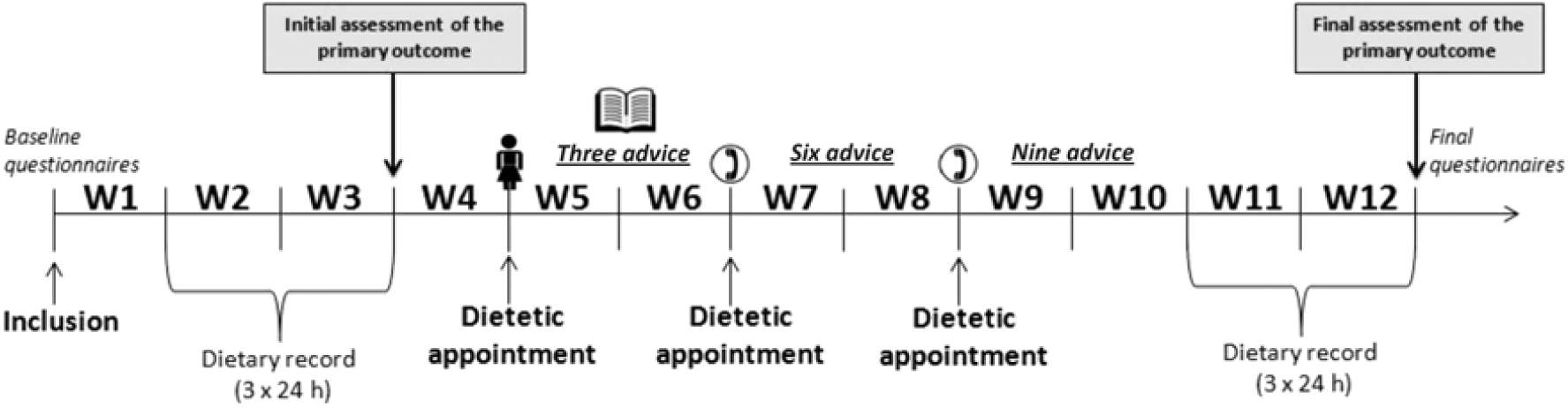
For inclusions, 186 women were approached when attending their first appointment with the midwife in the maternity clinic or by means of flyers and posters displayed in the clinic’s waiting rooms. On the day of their inclusion, all participants filled in three questionnaires. The first focused on social and demographic features, the second assessed some pregnancy characteristics (gestational diabetes, number of fetus and complications during current and previous pregnancies) and the third evaluated basic characteristics of their lifestyle (including diet). The baseline characteristics of participants are presented in Table 1. The participants were randomised within 2 weeks of their inclusion; during weeks 2 and 3 (initial assessment), their diet was evaluated from a 3-d online dietary record (see the ‘Dietary assessments’ section). At the beginning of week 5, the participants attended their first dietetic appointment with the dietitian, which lasted between 30 and 45 min. Details about the content of dietetic appointments for the control and intervention arms are available in the ‘Content of dietetic appointments’ section. At the beginning of weeks 7 and 9, all participants were contacted by telephone by the dietitian regarding their second and third dietetic appointments. During weeks 11 and 12 (final assessment), their diet was evaluated as during weeks 2 and 3. After completing their last diet record, the participants filled two online questionnaires about changes to their dietary habits during pregnancy and the dietary counselling they received during the study. The final questionnaire differed between the control and intervention arms.
Characteristics of the women included in the analysis of the randomised controlled trial by arm* (control arm: n 38; intervention arm: n 40) and for the total study population (n 78)
(Mean values and standard deviations; percentages and numbers)
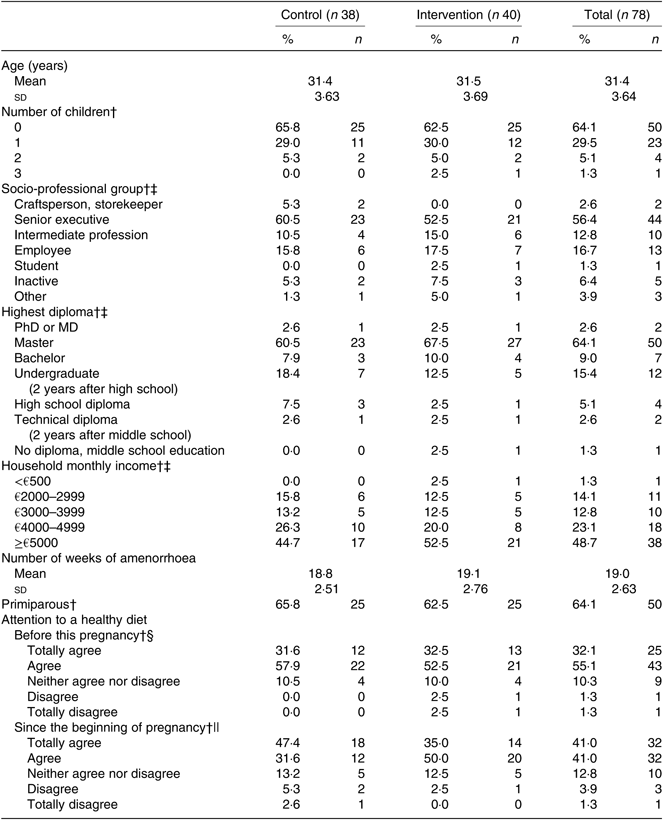
* There was no difference between the arms regarding all the variables presented, as assessed using either Student’s t tests for continuous variables or Fisher’s exact tests for categorical variables. P > 0·05.
† Values correspond to the percentage of participants presenting the characteristic followed by the associated number of participants.
‡ Only answers including at least one participant are presented in the table.
§ The statement was as follows: ‘Before this pregnancy, I paid a specific attention to consuming a healthy and balanced diet’.
|| The statement was as follows: ‘Since the beginning of this pregnancy, I have paid more attention to consuming a healthy and balanced diet’.
The primary outcome measure of the study was differences in the PANDiet score between the initial and final dietary assessments. The secondary outcome measures of the study were changes in the values of the items composing the PANDiet score (adequacy and moderation subscores and probabilities of adequacy for nutrient intakes – see the ‘Assessment of nutrient adequacy’ section), the frequency with which participants read the booklet in both arms and implementation of the advice they had received (number and frequency) in the intervention arm only.
Participants
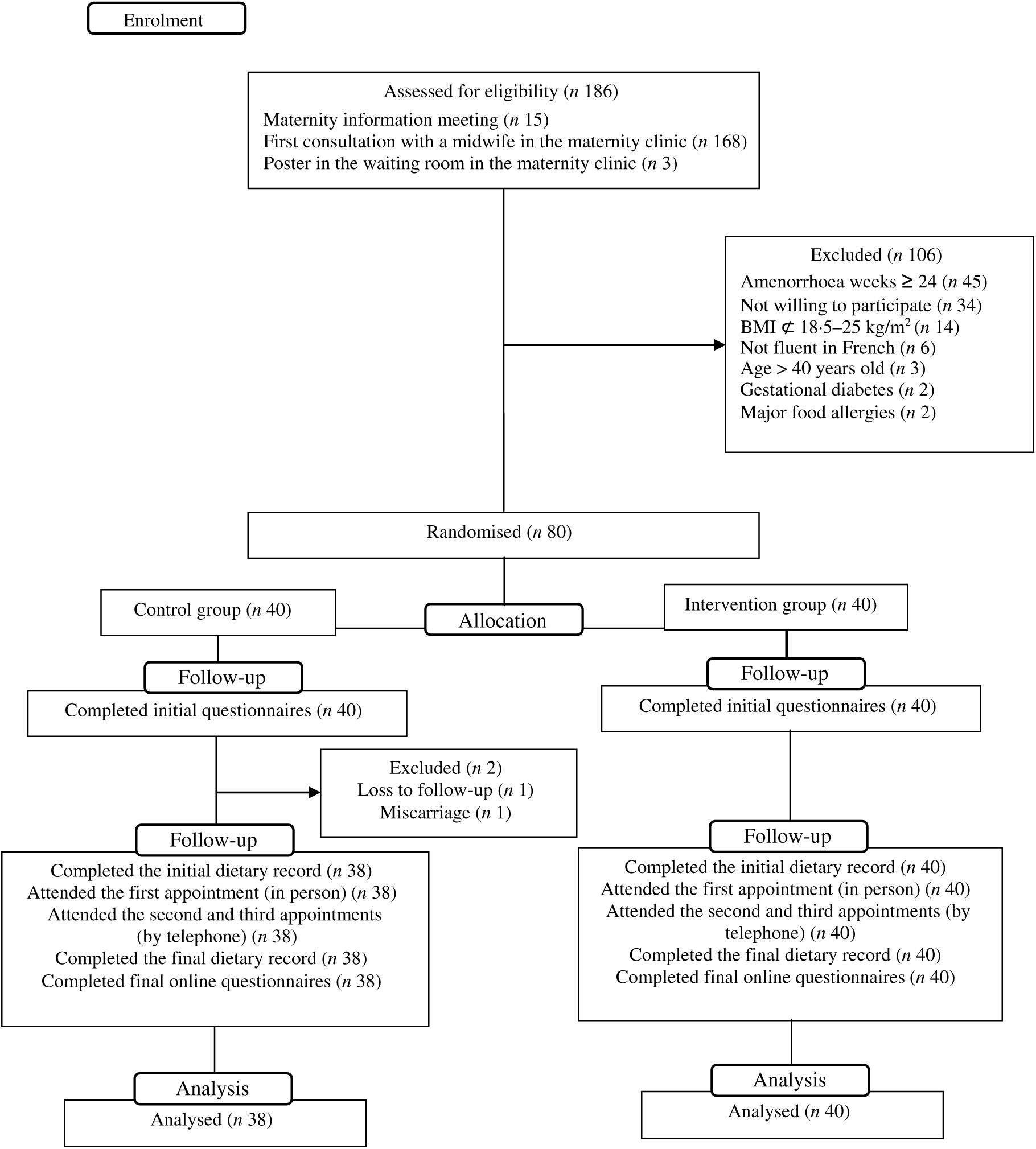
All participants were attending Notre-Dame de Bon Secours Maternity Clinic (Hôpital Paris Saint-Joseph, Paris, France) for their antenatal care. The inclusion criteria were as follows: female, pregnant, 10–24 weeks of amenorrhoea, 18–40 years old, BMI of 18·5–25 kg/m2, fluent in speaking, reading and writing French, an opportunity for daily Internet access, a valid email and telephone number and benefiting from French national health insurance. Non-inclusion criteria were as follows: multiple pregnancy, at-risk pregnancy (according to the clinic’s classification), history of gestational diabetes mellitus (for multiparous women), health conditions requiring a specific diet, vegan diets or allergies to one or more of the major allergens listed in Regulation no. 1169/2011 of the European Parliament and of the Council. Exclusion criteria included a diagnosis of gestational diabetes during the study period (12 weeks), a diagnosis of pregnancy complications requiring modifications to the diet or spontaneous abortion. The participants were randomly allocated to two groups in blocks of twelve that were balanced as a function of age, BMI, parity (percentage of primiparous women in each arm) and household income level, using a mathematical method to minimise differences between the arms. The participants were blinded to the existence of two different dietary counselling approaches. All participants were compensated for their trips to the clinic, and the time they spent completing the study with a maximum of 400€ for complete participation. A diagram of subject flow according to Consolidated Standards of Reporting Trials (CONSORT) guidelines is presented in Fig. 2.
Flow diagram of a participant’s progress through the study.
Dietary assessments
Dietary data were recorded online using Dietlib’ (MyGoodLife), which is a professional tool used by French dietitians for patient care that complies with the requirements of the French National Health Authority and the French Association of Dietitians and Nutritionists. The software included a 3-d dietary record using a closed food list (6287 food items). Portion sizes were estimated using coloured images from a national food portion guidebook(Reference Hercberg, Deheeger and Prezio38), household measures (e.g. one teaspoon) or commercial servings (e.g. a standard yogurt).
Three non-consecutive days, including 2 weekdays and 1 weekend day, were randomly selected for the initial (weeks 2 and 3) and final (weeks 11 and 12) dietary assessments. The participants were informed of the dates for their diet recording periods at least 7 d beforehand. Before each day of recording, an electronic reminder was sent to the participant. Each day of the record was checked by the dietitian within 48 h of its completion; if any inconsistencies were seen, the participant was contacted by email. Based on these 3-d records, the energy intake excluding alcohol (EIEA):BMR ratio (determined according to Black(Reference Black39)) of the participants was calculated. A ratio below 1 was considered to be a potential indicator of underreporting, and the participant was contacted and asked to check her dietary records. This contact did not aim at increasing the ratio. If required, the dietary record could slightly be updated.
The nutrient values used to calculate nutrient intake came from the French food composition database (CIQUAL 2013(40)). In exceptional cases, participants might have declared a food item for which no correspondence with the CIQUAL database could be made, so the nutrient values were those provided by the retailer and already included in the software database. For each participant, the mean intakes calculated included weighting for the day of the week (weekday or weekend day) with respect to the following nutrients: alcohol, protein, total carbohydrate, starch, sugars, added sugars, free sugars, total fat, PUFA, α-linolenic acid (ALA), linoleic acid, EPA, DHA, MUFA, SFA, cholesterol, dietary fibre, vitamin A, thiamin, riboflavin, niacin, pantothenic acid, vitamin B6, folate, vitamins B12, C, D and E, Ca, iodine, Fe, Mg, P, K, Se and Zn.
Assessment of nutrient adequacy
The nutrient adequacy of each participant’s diet was assessed from the initial and final dietary records using the PANDiet diet quality index, previously adapted to the specific requirements for the third trimester of pregnancy(Reference Bianchi, Mariotti and Verger34). Briefly, the PANDiet aims to measure the overall diet quality of an individual by combining the probabilities of having an adequate intake of nutrients. The PANDiet is a 100-point score that results from averaging two sub-scores, the Adequacy sub-score (Adeq-S) and the Moderation sub-score (Mod-S); the higher the PANDiet score, the better the nutrient adequacy. Each sub-score is composed of probabilities of adequacy for nutrients (27 for Adeq-S: protein, total carbohydrate, dietary fibre, total fat, linoleic acid, ALA, DHA, EPA+DHA, vitamin A, thiamin, riboflavin, niacin, pantothenic acid, vitamin B6, folate, vitamins B12, C, D, E, Ca, iodine, Fe, Mg, P, K, Se and Zn and 7 for Mod-S: protein, total carbohydrate, free sugars, total fat, SFA, cholesterol and Na), with a further fourteen potential penalties for exceeding the tolerable upper intake limits (retinol, niacin, vitamin B6, folate, vitamins C, D, E, Ca, iodine, Fe, Mg, P, Se and Zn) which are added to Mod-S. Because DHA intakes are considered in the probabilities of adequacy for both DHA and EPA+DHA intakes, each one was weighted by 0·5 in the final score, resulting in an Adeq-S with twenty-six probabilities of adequacy for nutrient intakes. The dietary reference values used to calculate PANDiet were mostly those issued by the French Agency for Food, Environmental and Occupational Health (Agence Nationale de Sécurité Sanitaire de l’alimentation, de l’environnement et du travail, ANSES)(Reference Bianchi, Mariotti and Verger34,41) .
Content of dietetic appointments
Control arm
During the first dietetic appointment, participants in the control arm received generic dietary advice based on a booklet edited by the French Institute for Health Promotion and Health Education (Institut National de Prévention et d’Education pour la Santé, INPES)(42). Sections from the booklet were read and briefly commented on by the dietitian with each participant during the 30 min appointment. The booklet was then given to the participant, who was also informed of their initial PANDiet score. During the second and third dietetic appointments, participants in the control arm were asked if they had any questions about the booklet contents. If any medical questions came, women were referred to their antenatal care provider.
Intervention arm (method used to generate tailored dietary advice)
During the first dietetic appointment, participants in the intervention arm also received the INPES booklet, which was read and commented on by the dietitian as for the control arm. But, they also received three pieces of tailored dietary advice generated by the optimisation software in order to improve the nutrient adequacy of their diets, as evaluated by the PANDiet score adapted for pregnancy(Reference Bianchi, Mariotti and Verger34,Reference Bianchi, Huneau and Barbillon35) . The participants were informed of their initial PANDiet score at the start of the appointment, and it was explained that each piece of dietary advice proposed by the software could optimally improve their initial score. The software included an algorithm that calculated the initial PANDiet score of each participant (using her dietary data), then implemented a stepwise dietary optimisation model designed to improve the initial PANDiet score. For each piece of dietary advice, a participant could choose between three options proposed by the algorithm, two that best increased the PANDiet score by replacing a food item consumed in the initial diet with a food item from the same subgroup, and one that best increased the PANDiet score by modifying the amount consumed of a food item from the initial diet. These two types of dietary advice have already been described in depth and were chosen by considering a trade-off between their theoretical nutritional efficiency and their acceptability as evaluated during previous studies(Reference Bianchi, Huneau and Barbillon35,Reference Bianchi, Mariotti and Reulet37) .
The theoretical increase in the PANDiet score resulting from each option was communicated to the subject who then selected her preference. This choice was then implemented in the dietary record as a theoretical change that had been made, and the corresponding PANDiet score was calculated. This PANDiet score served as a reference to generate a new set of three options. At each step, tailored dietary advice should not decrease the initial EIEA and not increase it by more than 795 kJ (i.e. the difference between the increase in energy requirements between the first and second trimester of pregnancy according to EFSA guidelines).
During the second and third dietetic appointments, participants in the intervention arm were asked if they had any questions about the booklet. They also received three more pieces of tailored dietary advice according to the process detailed above. In total, after the third dietetic appointment, participants in the intervention arm had received nine pieces of tailored dietary advice.
After each appointment, an email was sent to each participant that included the following information: her initial PANDiet score, the list of dietary advice that she had chosen during all previous appointments (i.e. three after the first dietetic appointment, six after the second one and nine after the third one), the theoretical increase in the PANDiet score procured by each change and an encouragement to read the booklet. A reminder was sent out 1 week after each appointment.
To maintain the same intensity of interaction between the dietitian and participants in the intervention and control arms, participant in the control arm also received an email after each appointment and 1 week after that included the following information: her initial PANDiet score and an encouragement to read the booklet.
Statistical analyses
Sample size calculation
We computed the sample size required to obtain a statistically significant difference in the PANDiet score (primary outcome) between the two arms. A 5-point difference was defined as being nutritionally significant, based on our previous simulation studies(Reference Bianchi, Mariotti and Verger34,Reference Bianchi, Huneau and Barbillon35) . This difference was the interquartile range in the population whose standard deviation was 7 points(Reference Bianchi, Mariotti and Verger34). Furthermore, in our simulations, the least theoretically efficient type of advice resulted in an approximately 1 point improvement per piece of advice, with a probability of intention to use it of approximately 0·6, so we reasoned that the nine dietary changes provided in the present study could be expected to lead to an approximately 5-point improvement in the PANDiet score(Reference Bianchi, Huneau and Barbillon35). Considering a sd of 7 points for the PANDiet score, a two-side power calculation required thirty-two participants per group, with an 80 % (β = 0·80) chance of demonstrating an effect of intervention on the PANDiet score at a 95 % confidence level (α = 0·05). Allowing for a 20 % dropout rate, we therefore sought to include forty participants per arm.
Descriptive and inferential statistics
Descriptive statistics (means, sd, sem and quartiles) were used to present continuous variables, and percentages were used for categorical variables. Differences between the arms were determined using Student’s t tests for continuous variables and Fisher’s exact tests for categorical variables. The change in the PANDiet score and its associated subscores and the probabilities of adequacy for nutrient intakes were calculated as the final value minus the initial value. The primary outcome measure of the study was the change in the PANDiet score. In a first model, which addressed the pre-specified analysis, we tested the effect of the intervention using a t test, while further models of analysis were secondary post hoc analyses. In a second model, we added the initial PANDiet score as a covariate using ANCOVA. Control variables were included as well as the intervention and initial PANDiet scores in two additional models to test for possible prediction of the change in the score. The third model included the following control variables assessed at baseline: age, BMI, parity, household income per person, level of education and attention paid to the diet score (sum of attention paid to the diet before pregnancy and since the start of pregnancy assessed using five-point Likert scales). The fourth model also included the control variables assessed in the final questionnaires: attention paid to reading the booklet (four levels: Reading each section of the booklet very carefully – Reading the booklet with variations in attention depending on the section – Not reading the entire booklet but only the summary sheet presented on the two last pages – Not reading the booklet at all) and the attention paid to the diet since the start of the study (assessed using a five-point Likert scale).
A secondary analysis was performed in the intervention arm to determine whether changes in the PANDiet score differed depending on the number of pieces of advice actually implemented in the diet (as declared by the participant in the final questionnaire) or the sum of the frequency of implementing advice (as evaluated by the participant in the final questionnaire using a five-level scale for each point: the score was calculated by attributing 0·25 points per level from always (1 point) to never (0 points)).
All analyses were performed using SAS 9.1.3 (SAS Institute Inc.). P < 0·05 was considered to be statistically significant.
Results
Characteristics of participants
Of the eighty women included between September and November 2016, equal numbers (n 40) were randomly assigned to each arm and seventy-eight women (thirty-eight in the control arm and forty in the intervention arm) completed the study (Fig. 2). The mean age of participants was 31 (sd 3·6) years (Table 1), about one-third of whom (35 %) already had at least one child. More than half of the women (56 %) belonged to the ‘senior executive’ socio-professional group and almost half (49 %) had a household income higher than €5000 per month. Almost all the women (91 %) had pursued their education for at least 2 years after high school. At inclusion, the mean number of weeks of amenorrhoea was 19 (sd 2·6). A great majority of the women in our study (87 %) had paid specific attention to consuming a healthy and balanced diet before this pregnancy, and 82 % declared they had paid more attention such consumption since the start of this pregnancy. No differences between the arms were observed regarding all these variables.
Effect of tailored dietary advice on changes to the PANDiet score
The mean initial PANDiet scores were approximately 60 points and similar in both arms (Table 2). The PANDiet increased significantly in the intervention arm (+3·6 (sd 9·3) points) but remained unchanged in the control arm (−0·3 (sd 7·3) points), and the change in the intervention arm differed from that in the control arm. No effect of the intervention was observed in the change of the sub-scores or probabilities of adequacy except for ALA (whose improvement was significantly higher in the intervention arm). The probabilities of adequacy for ALA, thiamin, folate and cholesterol intakes increased in the intervention arm. The initial and final probabilities of adequacy composing the PANDiet score, as well as their changes, are presented by arm in online Supplementary Table S1. The mean initial EIEA values were 7858 (sd 1782) kJ/d in the total population, with no difference between the arms, while the mean final EIEA values were 7740 (sd 1674) kJ/d, with no difference between the arms. No differences in the change of the EIEA were observed between the arms.
Initial and final PANDiet scores and associated sub-scores and their changes by arm (control arm: n 38; intervention arm: n 40)
(Mean values and standard deviations)

Adeq-S, Adequacy sub-score; Mod-S, Moderation sub-score.
* Student’s t tests were performed to determine whether the changes differed between arms.
† Difference between the values obtained from the final dietary record and the initial dietary record in each arm.
‡ Student’s t tests were performed to determine whether the mean changes within each group were different from 0.
Effect of the initial PANDiet score on the change in the PANDiet score
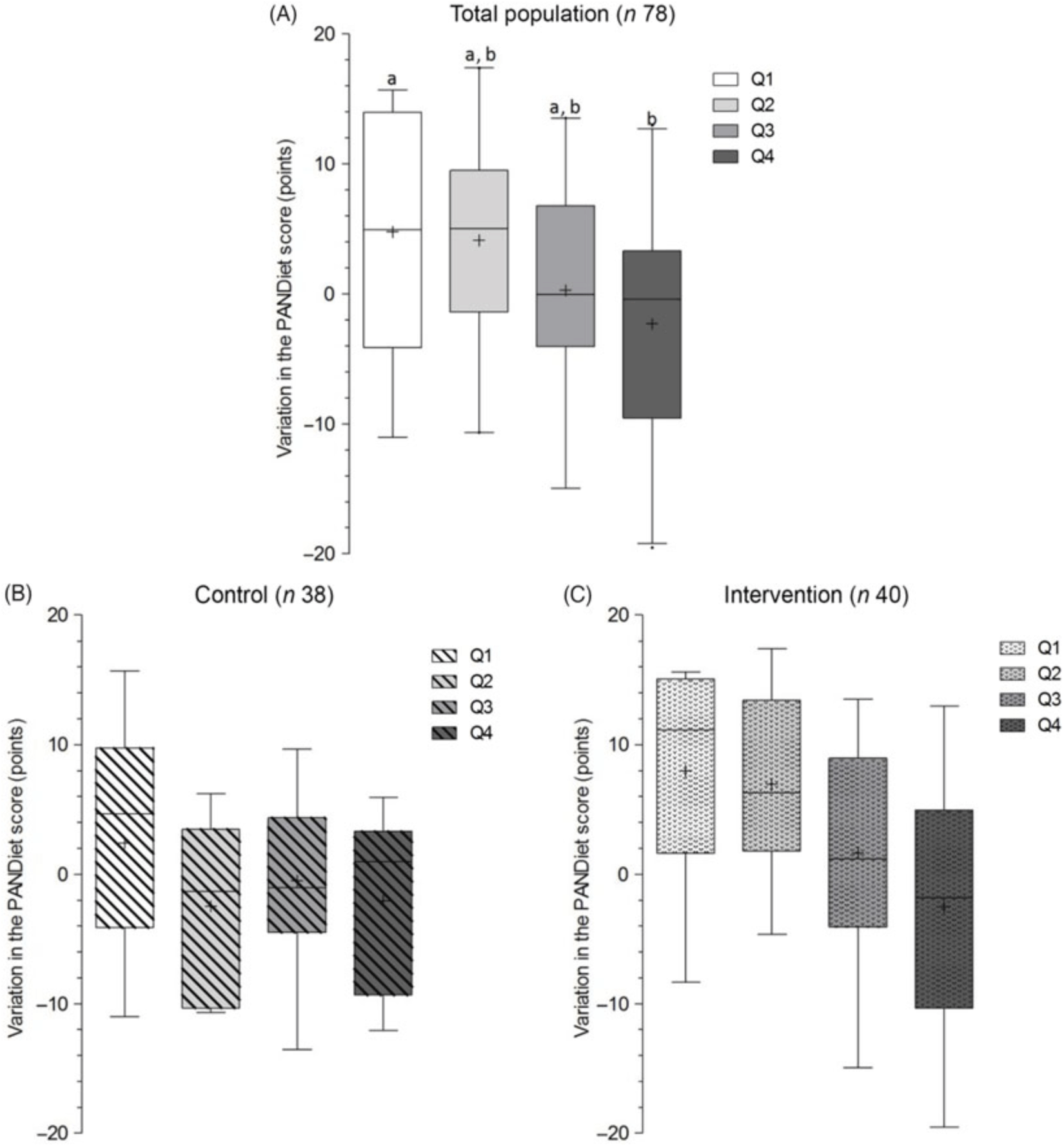
The higher the initial PANDiet score, the less marked was the change in the PANDiet score (β = −0·49; P < 0·0001) and we found an interaction between the initial PANDiet score and the effect of the intervention. When stratifying according to quartiles of the initial PANDiet score, the improvement in the PANDiet score was greater in the first than in the last initial PANDiet quartile. After a median split, we found that in the population with a lower initial PANDiet score, the change in the PANDiet score was 0·70 (sd 8·02) in the control arm and 7·32 (sd 7·41) in the intervention arm, which was approximately twice the degree of effect found for the whole population (Fig. 3).
Box plots of the change in PANDiet score by quartiles of the initial PANDiet score for the total population ((A) n 78), for the control arm ((B) n 38) and for the intervention arm ((C) n 40). The white bars represent the first quartile of the PANDiet score, and the light grey bars represent the second quartile of the PANDiet score. The middle grey bars represent the third quartile of the PANDiet score, and the dark grey bars represent the fourth quartile of the PANDiet score. The middle line in the box plots shows the median, the cross in the box plots shows the mean, the bottom and top of the box are the 25th and 75th percentiles, respectively, and the ends of the whiskers represent the 5th and 95th percentiles. This analysis was a secondary, post hoc analysis. a,b Values with unlike letters are significantly different within the same panel. Q1, first quartile; Q2, second quartile; Q3, third quartile; Q4, fourth quartile.
Analysis with control variables
Using model 3, we found that as well as the intervention, the initial PANDiet score and the attention paid to the diet score had an effect on the change of the PANDiet score. When other control variables were added (determined at the end of the study), same results were found as well as some trends regarding the effects of the attention paid to reading the booklet and to the diet since the start of the study (P = 0·08 for both variables).
Evaluation of tailored dietary counselling
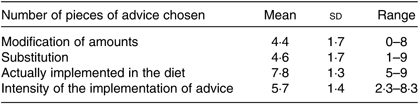
Fewer than 5 % of women in each arm did not read the booklet at all after the first dietetic appointment. Participants in the control arm read the booklet more often than those in the intervention arm. Indeed, 29·0 % of the women in the control arm declared that they read the booklet five times or more, whereas all women in the intervention arm read it four times or less. Table 3 summarises the characteristics of the dietary advice chosen by women in the intervention arm (number by type, number of pieces of advice implemented in the diet and intensity of implementation of this advice). There was no difference between the number of pieces of dietary advice involving modifications to the amounts consumed (4·4 (sd 1·7)) and the number of dietary advice involving a substitution (4·6 (sd 1·7)) chosen by the participants. Women in the intervention arm largely reported having implemented the dietary advice (intensity of implementation: 5·7 (sd 1·4) points out of 9). In the intervention arm, we found no effect of the number of pieces of advice effectively implemented in the diet or of the intensity of their implementation on the change in the PANDiet score.
Numbers of pieces of advice chosen according to the type of advice and intensity of the implementation of dietary advice in the diet, among women in the intervention arm* (n 40)
(Mean values, standard deviations and ranges)
Discussion
Tailored dietary counselling using a computer-based algorithm was more efficient than (pregnancy-focused) generic dietary counselling alone in improving the nutrient adequacy of the diet of French women in mid-pregnancy. An improvement in the nutrient adequacy of the diet was observed among participants who received generic plus tailored dietary counseling, whereas no such change was detected among those who only received generic dietary counselling based on a booklet. Furthermore, we found that the intervention improved the probabilities of adequacy for key nutrient intakes during pregnancy such as ALA and folate.
Among interventions that offer dietary counselling to pregnant women, some have proved effective in improving diet quality during pregnancy(Reference O’Brien, Grivell and Dodd28–Reference Gresham, Byles and Bisquera30). However, these interventions differ considerably in terms of the characteristics of the women concerned, the nature of dietary counselling and its objective (to improve pregnancy, maternal or infant outcomes). A majority of recent studies have focused on obese or overweight women or women with/or at-risk of gestational diabetes mellitus. Few studies have only included women with a normal pre-pregnancy BMI(Reference O’Brien, Grivell and Dodd28). Given this scarcity of data, the present study makes an important contribution to dietary counselling in healthy pregnant women.
In other groups of population, tailored nutrition interventions have proved to be effective, mainly because personalisation made the advice more acceptable to the targeted population(Reference Brug, Oenema and Campbell31,Reference Broekhuizen, Kroeze and van Poppel33,Reference Brug, Campbell and van Assema43) . Thus, the tailored dimension of our approach might have increased its acceptability and hence the effective implementation of dietary advice. The women were informed that the advice generated using the application was specific to their diet and would not have been proposed to another woman with a different diet. This may have enhanced their feelings of identification with the approach when compared with the generic advice. Furthermore, some existing behaviour change techniques were used to improve the adherence of women to the intervention(Reference Michie, Ashford and Sniehotta44). Indeed, they were aware that each piece of advice was generated to optimise their own nutrient adequacy score evaluated using their declared diets and they were told about the theoretical benefits of each type of advice (in points) to improving their PANDiet score. This is referred to as ‘provide information on consequences of behavior to the individual’ according to the CALO-RE taxonomy(Reference Michie, Ashford and Sniehotta44). Furthermore, the nine pieces of dietary advice were not chosen during the same session. The provision of three, 2-week spaced sessions offered them an opportunity to gradually implement the advice in their diets. This is referred to as ‘set graded tasks’ in the CALO-RE taxonomy. At the end of each session, the list of advice was reviewed with the dietitian and confirmed automatically by email to each participant. A reminder was also sent 1 week later (referred to as ‘goal setting (behavior)’). The second and third sessions also provided an opportunity to review these previously set goals with the participant (referred to as ‘prompt review of behavioral goals’). At the end of dietary follow-up, the final nutrient adequacy score was sent to all participants by email (referred to as ‘provide feedback on performance’). To ensure that the reception of tailored advice was the only difference between the two arms, the booklet content was discussed during each session with women of both groups. Furthermore, women in the control arm were also aware of their scores and knew they could use them as a measure of improvements made to their diet by the generic guidelines at the end of the follow-up. However, the tailored approach naturally enabled a more intensive use of behaviour change techniques.
Furthermore, few previous interventions had employed a computer-based tailored approach to improve the diet of women during pregnancy. During a randomised controlled trial, Jackson et al. used a computer-based video counselling programme to provide advice on physical activity and diet to pregnant women of various BMI(Reference Jackson, Stotland and Caughey25). Diet-related advice was tailored to each woman’s dietary habits and their motivation to change the behaviour targeted by each piece of advice. Both dietary habits and motivation were assessed using questionnaires generated by the computer-based programme, giving complete autonomy to the women. Within 4 weeks, the authors observed greater increases in the consumption of fruits and vegetables, fish, avocado and nuts and whole-grain products, and more marked reductions in that of solid fats and fried foods in the intervention arm v. the control arm(Reference Jackson, Stotland and Caughey25). Their study and ours concur regarding the view that tailoring associated with behaviour change techniques could be a key determinant in improving diet quality during pregnancy. However, unlike ours, the present study only focused on the consumption of certain food groups (and not on individual nutrient intakes) and dietary counselling only concerned four components of the diet (fruits and vegetables, ‘healthy’ fats, whole grains and sugary foods). Until now, nutrient-based approaches to dietary counselling have only focused on one(Reference Clark, Craig and McNeill45) or several nutrients(Reference Dodd, Cramp and Sui24,Reference Khoury, Henriksen and Christophersen46–Reference Korpi-Hyövälti, Schwab and Laaksonen48) , but mostly macronutrients. To our knowledge, even if some nutrients have been identified to be key during pregnancy, such as folate, DHA or Fe, there is no literature to define specific weights to those nutrients when setting PANDiet score parameters. Finally, the specific feature of our study and its findings was that it covered a large set of nutrients and generated tailored dietary advice using an algorithm to improve the overall nutrient adequacy during pregnancy. For this work, we chose a measure of dietary quality applied at the nutrient level, which is holistic and not specific to pregnancy, yet parameterised for pregnant women.
Overall, our tailored approach improved the nutrient adequacy of the diet of pregnant women during the study period, with particularly marked improvements among those with the lowest initial PANDiet scores. This result is of particular interest because it means that the benefits of intervention are greater in the women who need this most, which is a key characteristic of efficiency in public health nutrition. By contrast, it should be pointed out that in the intervention arm, only a few significant improvements were achieved when each probability of adequacy for nutrient intakes was considered separately. Accordingly, in the event of major deficiencies in specific nutrients deemed important for pregnancy, this approach should be associated with supplementation(Reference Haider and Bhutta49). However, when no major deficiencies are observed as in the case of our participants, our results indicate that this tailored approach could be valuable in improving the overall nutrient adequacy of the diet of pregnant women without resorting to multiple nutrient supplementation(Reference Parisi, Laoreti and Cetin50) which is often the case during pregnancy(Reference Pouchieu, Lévy and Faure14). The tailored approach would also be better than taking multiple supplements because, with a few dietary changes, it can improve overall nutritional status, avoid excessive intakes, address the problem of nutrients whose intake needs to be reduced and promotes healthier dietary practices that could be maintained after pregnancy.
Limitations
Two main limitations could be identified as affecting the present study. The first concerned the dietary assessments. Dietary data were recorded online, as is already done in France(Reference Touvier, Kesse-Guyot and Méjean51), which enabled participants to benefit from complete autonomy and to automate the data collection process, but it restricted the number of days that could be recorded. Using 3 days of dietary record at the end of dietary follow-up limited the possibility to detect any effects of the number of pieces of dietary advice that were actually implemented in the diet. Furthermore, pregnancy is accompanied by many specific physiological changes that affect food intakes and choices, such as nausea, acid reflux or tiredness(Reference Bianchi, Huneau and Le Goff36), which can result in important inter-individual and intra-individual (between days within a dietary record and between both final and initial dietary records) variations in food intake. Taken together, these two limitations were expected to cause an underestimation of the true effect of the intervention and reduce the statistical power of the study.
The second limitation concerned the socio-demographic characteristics of our population which was predominantly composed of women with high levels of education, household income and socio-occupational categories and living in an urban area. The implementation of dietary advice was therefore not limited by affordability or availability concerns. Furthermore, most of the women were already aware of the importance of good nutrition and had paid specific attention to consuming a healthy and balanced diet before their pregnancy, as shown by the relatively high initial PANDiet scores when compared with previous reports in French women(Reference Bianchi, Mariotti and Verger34,Reference Bianchi, Huneau and Barbillon35) . Because we found that the intervention was more efficient in women with a lower nutrient adequacy, this limitation may also have led to an underestimation of the degree of effect that might be expected in a more general population. The effect size of the intervention nevertheless remained quantitatively important (approximately 0·5 × sd in the overall population and approximately 1 sd in those with a lower initial score), particularly if it was attributed to just the three sets of three pieces of advice regarding nine dietary items. Giving the findings obtained with this specific population, another study was performed in a more deprived area also in Paris with vulnerable pregnant women. Results obtained for populations whose socio-demographic characteristic differed could be compared.
Perspectives
Given the extent of demand related to dietary counselling during pregnancy(Reference Bianchi, Huneau and Le Goff36,Reference Bianchi, Mariotti and Reulet37) confirmed by the very low attrition rate in the present study, the findings of the present study may encourage the proposal of dietary counselling as a regular process during antenatal care. Nevertheless, to deploy a tailored dietary approach during pregnancy at a larger scale, time and cost should be assessed. Furthermore, pregnant women have been known to express their interest in benefiting from tailored dietary advice(Reference Bianchi, Mariotti and Reulet37), and the resulting higher compliance may be form of the success of this intervention in improving the overall nutrient adequacy of the diet. This lends credence to the idea that pregnancy is confirmed to be a teachable moment(Reference Phelan52) in favour of adopting healthier behaviours. Therefore, it would be interesting to conduct a dietary intervention during pregnancy and to follow women after delivery to assess whether the healthier dietary behaviours that they adopted during the intervention are then maintained.
Conclusion
When accompanying generic dietary information, tailored dietary counselling using a computer-based algorithm was more efficient than the generic information alone in improving the nutrient adequacy of the diet of French women in mid-pregnancy, particularly among women with a lower initial diet quality.
Acknowledgements
The authors would like to thank the Notre-Dame de Bon Secours Maternity Clinic for hosting the present study.
The present study received support in the form of a grant from Danone Nutricia Research and Blédina. Blédina was not involved in the design, conduct, analysis and interpretation of the study. Danone Nutricia Research did not have a decision-making role in the design, conduct, analysis and interpretation of the study; however, an employee of this company, co-author of this manuscript, who have some expertise in dietary advice participated in the discussions about some points of the design of the study (not on the content of the algorithm that provided dietary advice, including for the nutrients, the food groups/items, and the types of dietary advice that were considered). This employee was also involved in the conduct of the study by receiving regular information on the follow-up of the study and giving feedbacks, but was not in contact with the participants. This employee was not involved in the analysis and the interpretation of the results. There was no commercial interest in the frame of the present study. The dietary advice tool that was tested in the present study has never been the subject of any commercial valorisation by Blédina or Danone Nutricia Research.
C. M. B., F. M., A. L., E. O. V., E. A. and J. F. H. designed the research and C. M. B., F. M., A. L., C. J., Y. S., H. B., J. F., R. E., E. O. V., F. M. and J. F. H. conducted the research. S. D. and D. C. T. provided essential material. C. M. B. performed the statistical analysis, analysed the data and wrote the first draft of the manuscript. All authors contributed to writing the manuscript and offered critical comments. C. M. B. had primary responsibility for the final content. All authors read and approved the final manuscript.
C. M. B., F. M., C. J., Y. S., H. B., J. F., S. D., D. C.-T., E. R., E. O. V., E. A. and J. F. H. declare no conflicts of interest. A. L. is employed by Danone Nutricia Research.
Supplementary material
For supplementary material referred to in this article, please visit https://doi.org/10.1017/S0007114519002617



