


Introduction – what is gestational diabetes?
Moderate to severe maternal hyperglycaemia in pregnancy has unique diabetes-related risks in that there are potential long-term consequences for two individuals rather than just one: the mother and her unborn baby. Gestational diabetes (GDM) has been defined as any degree of glucose intolerance with onset or first recognition during pregnancy(1), to differentiate it from pre-diagnosed type 1 or type 2 diabetes or maturity-onset diabetes of the young (MODY) in women that get pregnant. This broad definition of GDM therefore includes women whose glucose intolerance develops during pregnancy and those that had pre-existing diabetes which had not been diagnosed before pregnancy. The distinction here is important as, unlike most unborn babies of women who develop glucose intolerance in pregnancy, those of women with pre-existing diabetes can be exposed to hyperglycaemia in the first two trimesters of pregnancy resulting in an increased risk of a range of both isolated and multiple cardiovascular and other abnormalities (including central nervous system and musculoskeletal defects)(Reference Corrigan, Brazil and McAuliffe2, Reference Correa, Gilboa and Besser3). To try and clarify the situation, the Consensus Panel of the International Association of Diabetes and Pregnancy Study Groups (IADPSG) recently recommended that high-risk women found to have diabetes at their initial prenatal visit should be diagnosed as having overt diabetes rather than GDM(4). To diagnose GDM at a later visit it was recommended that one or more of the following plasma glucose thresholds should be equalled or exceeded during a 75 g oral glucose tolerance test: 5·1 mmol/l (fasting), 10·0 mmol/l (1 h post-load) and 8·5 (2 h post-load) mmol/l(4). One of the long-term risks for the mother with GDM is the development of type 2 diabetes later in life(Reference Bellamy, Casas and Hingorani5), but in a minority of women with GDM the glucose intolerance does not disappear post-partum(Reference Buchanan, Xiang and Kjos6). Whether this type of diabetes should be considered gestational or type 2 from its onset is unclear as: (i) if the new IADPSG recommendations are not implemented undiagnosed type 2 diabetes may have been present in these women before pregnancy; (ii) type 2 diabetes and diabetes that develops during pregnancy have a number of shared risk factors and are hypothesised by some to be the same condition(Reference Lauenborg, Grarup and Damm7, Reference Robitaille and Grant8); and (iii) the continuing glucose intolerance may be autoimmune related and more like type 1 diabetes than type 2(Reference Lapolla, Dalfrá and Fedele9). Such uncertainties over its diagnosis and lack of agreement over which screening protocols or diagnostic thresholds should be used make GDM prevalence estimates difficult, but it is generally considered to be somewhere between 1 and 14 % of all pregnancies(1) depending on the population in question. What is clearer, however, is that in line with increased prevalences of particularly type 2 diabetes, the incidence of GDM is rising wherever obesity is becoming more prevalent(Reference Hunt and Schuller10).
GDM has long been known to raise the risk of macrosomia in the offspring, with the high glucose levels thought to cross the placenta and stimulate fetal insulin secretion which then acts as a growth factor(Reference Pedersen11). Macrosomia brings its own difficulties such as increased risks of shoulder dystocia, brachial plexus injuries and clavicular fractures in natural deliveries leading to a higher requirement for birth by Caesarean section(Reference Gilmartin, Ural and Repke12). Other short-term risks associated with GDM in the mother are pregnancy-induced hypertension and pre-eclampsia, urinary tract infections, pyelonephritis and polyhydramosis (which itself leads to increased risk of abruption placentae). There is also increased risk of stillbirth and congenital abnormalities(Reference Kapoor, Sankaran and Hyer13). Short-term risks for the baby include neonatal hypoglycaemia (caused by the excess insulin produced initially in response to the maternal hyperglycaemia, once the baby has been born and that drive has been removed), hyperbilirubinaemia, hypocalcaemia, respiratory distress syndrome, and polycythaemia(Reference Gilmartin, Ural and Repke12). Having been diagnosed with GDM, as already stated, the mother is subsequently at increased risk of developing type 2 diabetes(Reference Bellamy, Casas and Hingorani5, Reference Buchanan, Xiang and Kjos6), with the prospectively studied Coronary Artery Risk Development in Young Adults (CARDIA) cohort showing that this risk is independent from preconception glucose tolerance and obesity or a family history of diabetes(Reference Gunderson, Lewis and Tsai14). As well as long-term risks for herself, in her offspring there is increased risk of childhood obesity(Reference Hillier, Pedula and Schmidt15, Reference Dabelea, Mayer-Davis and Lamichhane16), and type 2 diabetes and hyperlipidaemia in adolescence and beyond(Reference Malcolm, Lawson and Gaboury17–Reference Pettitt, Lawrence and Beyer21). Where the baby is female, exposure to maternal hyperglycaemia in utero increases their own risk of subsequently developing GDM in their own pregnancies(Reference Claesson, Aberg and Marsál22). This metabolic programming by in utero exposure to hyperglycaemia therefore is a transgenerational effect that may contribute to the expected huge increase in prevalence of type 2 diabetes worldwide(Reference Wild, Roglic and Green23), especially given the increasing prevalence of obesity.
Risk factors for gestational diabetes
Like all other major forms of diabetes, GDM results from inadequate insulin secretion for the degree of insulin resistance. As has already been stated, the risk factors for GDM (Table 1) share similarities with those for type 2 diabetes. In fact, the relatively high risk that women who develop diabetes in pregnancy have for subsequently developing type 2 diabetes suggests that certain forms of these conditions have common precedents, the physiological insulin resistance of pregnancy manifesting the disease state somewhat earlier than would otherwise occur. This insulin resistance is likely to be caused by placental hormones and/or proteins, such as placental growth hormone, cortisol, human placental lactogen(Reference Gilmartin, Ural and Repke12) or TNF-α(Reference Barbour, McCurdy and Hernandez24), given that for the majority of women with GDM the glucose intolerance resolves post-partum(Reference Buchanan, Xiang and Kjos6). Risk factors for GDM must therefore either contribute directly to this insulin resistance and/or relative insulin deficiency, or they must be associated or correlated with other factors that do. The traditional, and most cited, risk factors for GDM are high maternal age, weight and parity (which are often correlated), a family history of type 2 diabetes and the previous birth of a macrosomic baby(Reference Ben-Haroush, Yogev and Hod25). Of the more recently described risk factors, high or low maternal birth weights(Reference Innes, Byers and Marshall26) are important, given the previously described transgenerational effects. Other potential risk factors that have been variably associated with higher maternal glucose concentrations in the third trimester of pregnancy and which therefore may alter GDM risk include multiple pregnancy (for a review, see Norwitz et al. (Reference Norwitz, Edusa and Park27)) and short stature(Reference Moses and Mackay28).
Risk factors for gestational diabetes (GDM)
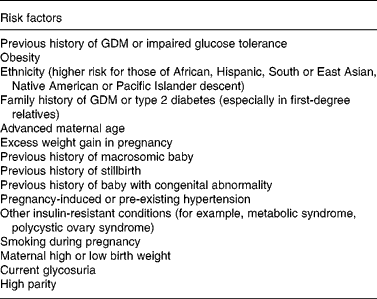
Having briefly highlighted what GDM is, and what its risk factors are, I now want to focus the remainder of the present review on recent advances in two areas that have developed rapidly, the genetics of GDM and its treatment. Of the current options available to manage GDM, all women will require dietary intervention (and probably exercise) whilst some will require additional pharmacological therapy. Pinpointing genetic risk factors for GDM will help identify mechanisms underlying its pathophysiology and potentially may reveal new preventative strategies and even therapeutic targets. Ultimately, increased knowledge about the genetics and treatment of GDM will help prevent complications in both the mother and child. Readers wanting a review of other established aspects of the condition are referred to other excellent up-to-date reviews of the subject(Reference Buchanan, Xiang and Kjos6, Reference Gilmartin, Ural and Repke12, Reference Ben-Haroush, Yogev and Hod25, Reference Cheng and Caughey29–Reference Hod, Jovanovic and Di Renzo31).
Genetics of gestational diabetes
The cause of familial aggregation of GDM with a first-degree relative who has or has previously had GDM or another type of diabetes is likely to have both genetic and (non-genetic) environmental components, especially given that in females both low and high birth weights(Reference Innes, Byers and Marshall26) are associated with the future development of GDM in their own pregnancies. This suggests that a pregnant woman with poorly controlled, pre-existing type 1 diabetes is at increased risk of giving birth to a macrosomic baby who, if female, is subsequently at increased risk of developing GDM and/or type 2 diabetes(Reference Sobngwi, Boudou and Mauvais-Jarvis32) in her own pregnancies and beyond. As well as such metabolic programming effects, genetic variation also plays its part in regulating size at birth(Reference Dunger, Petry and Ong33) and therefore risk of GDM in women with low or high birth weights.
The collection of large DNA cohorts, combined with improvements in DNA technologies, has driven rapid increases in knowledge about the genetics of all major forms of diabetes in recent years. For type 2 diabetes, the most common form, studies of large DNA cohorts that have been assessed by whole-genome association have allowed the elucidation of genetic markers of risk in or near genes that would have been extremely unlikely to have been considered using a candidate approach with an a priori hypothesis. So whereas 5 years ago there were only two markers that were robustly associated with type 2 diabetes, gained through linkage and/or candidate genetic association studies (the PPARγ and K channel, inwardly rectifying, subfamily J, member 11 variants)(Reference Frayling34), the list now stands at more than twenty-two loci(Reference Weedon, McCarthy and Hitman35–Reference Yasuda, Miyake and Horikawa40) (Table 2). Subsequent to these studies at least ten of these loci (KCNJ11, TCF7L2, CDKAL1, KCNQ1, CDKN2A/CDKN2B, HHEX/IDE, IGF2BP2, SLC30A8, TCF2, FTO) have now been associated with GDM risk(Reference Lauenborg, Grarup and Damm7, Reference Shaat, Ekelund and Lernmark41–Reference Shin, Lae Park and Shin46), which again is not surprising given the common precedents of certain forms of these two types of diabetes and the potential that some of the cases in these studies actually had undiagnosed type 2 diabetes before conceiving. A number of other markers, most of which have also been less robustly associated with type 2 diabetes in certain populations, have also been associated with GDM risk. However, findings for GDM are often based on relatively small sample sizes (relative to sizes used to discover new markers of type 2 diabetes risk(Reference Weedon, McCarthy and Hitman35–Reference Zeggini, Scott and Saxena38)). These findings are often not confirmed in other populations and cannot be considered robust. Nevertheless, polymorphic markers at or near the following genes may contribute to the polygenic risk for GDM: insulin variable number of tandem repeats(Reference Litou, Anastasiou and Thalassinou47); insulin receptor substrate 1(Reference Fallucca, Dalfra and Sciullo48); β3-adrenergic receptor(Reference Festa, Krugluger and Shnawa49); mannose-binding lectin(Reference Megia, Gallart and Fernandez-Real50); calpain 10(Reference Leipold, Knofler and Gruber51); plasminogen activator inhibitor 1(Reference Leipold, Knoefler and Gruber52); insulin receptor(Reference Ober, Xiang and Thisted53); sulfonylurea receptor 1(Reference Rissanen, Markkanen and Karkkainen54); tRNA Leu mitochondrial(Reference Chen, Liao and Roy55); glucokinase(Reference Shaat, Karlsson and Lernmark56); hepatocyte nuclear factor 1α(Reference Shaat, Karlsson and Lernmark56). Like for types 1 and 2 diabetes(Reference Weedon, McCarthy and Hitman35, Reference Lango and Palmer57, Reference van Hoek, Dehghan and Witteman58), the overall genetic risk for GDM is highly likely to be made up from the sum of relatively small contributions from a number of different genes(Reference Lauenborg, Grarup and Damm7) – perhaps different genes in different populations depending on population prevalences of the various risk alleles.
Genes that either contain or are near polymorphic markers that are associated with type 2 diabetes(Reference Weedon, McCarthy and Hitman35–Reference Yasuda, Miyake and Horikawa40)

dbSNP, Single Nucleotide Polymorphism Database.
Given that GDM in pregnant women tends to reveal a genetic predisposition to other types of diabetes, it is not surprising that most commonly the form in question is type 2 diabetes, especially if other risk factors such as obesity are also present. However, studies of familial clustering of diabetes show an increased prevalence of type 1 diabetes in offspring of mothers with GDM(Reference Dörner, Plagemann and Reinagel59). This suggests that GDM may also be caused by genetic variation that predisposes a woman to autoimmune type 1 diabetes or late autoimmune diabetes of adulthood(Reference Lapolla, Dalfrá and Fedele9). Indeed, about 10 % of women with GDM may have an autoimmune form of this condition(Reference Lapolla, Dalfrá and Fedele9). In general, studies of human leucocyte antigen (HLA) markers in relation to autoimmune GDM have proved inconsistent due to small sample sizes and ethnically mixed study groups(Reference Lapolla, Dalfrá and Fedele9), with some studies showing no linkage or association(Reference Bell, Barger and Go60–Reference Shaat, Ekelund and Lernmark63). However, others have shown positive relationships with markers such as HLA-DR3 or HLA-DR4 in islet cell antibody-positive women with GDM(Reference Rubinstein, Walker and Krassner64), or indeed any women with GDM(Reference Freinkel, Metzger and Phelps65, Reference Ferber, Keller and Albert66), HLA-Cw7(Reference Lapolla, Betterle and Sanzari67) and HLA-DR3-DQ2, DR4-DQ8 and MHC class I chain-related gene A (MICA) 5·0/5·1 in autoantibody-positive women with GDM(Reference Törn, Gupta and Sanjeevi68) and HLA-DR7 dQ2, DR9-DQ9, DR14-DQ5, MICA5·0(Reference Törn, Gupta and Sanjeevi68) and DQB1*0602(Reference Papadopoulou, Lynch and Shaat69) in women with GDM who were not autoantibody positive.
Not surprisingly, given the link between reduced size at birth and increased subsequent risk of developing type 2 diabetes(Reference Hales, Barker and Clark70), some of the type 2 diabetes genetic risk loci have also recently been shown to be associated with low birth weight(Reference Freathy, Bennett and Ring71). In one study, participants with risk alleles for the CDKAL1 and HHEX-IDE loci were born on average 80 g lighter than those participants without the risk alleles(Reference Freathy, Bennett and Ring71). Given that these two loci are also associated with the development of GDM(Reference Lauenborg, Grarup and Damm7), there is a clear link between the genetic risk of GDM and alterations in fetal growth. Following on from an earlier report by Haig(Reference Haig72), we recently proposed that as well as the mother's genes contributing to her risk of developing GDM in pregnancy, polymorphic variation in fetal growth genes could also contribute to risk of GDM in the mother(Reference Petry, Ong and Dunger73). The basis for this relies on the kinship theory of pregnancy(Reference Haig and Westoby74) (sometimes called the conflict theory) which suggests that genes inherited from the father will tend to try and boost fetal growth, whilst those inherited from the mother will try and limit or restrict it. Mitochondrial genes, which are exclusively inherited from the mother, at least when not affected by paternal leakage, heteroplasmy or recombination(Reference White, Wolff and Pierson75), and imprinted genes(Reference Reik, Constância and Fowden76), where the copy inherited from one of the parents is inactivated depending on both the gene in question and the developmental stage of the offspring, are ideally suited to mediate these alterations in growth through altering the availability and transfer of nutrients to the fetus. There are a number of novel studies in human subjects indirectly linking genetic variation in the fetus with changes in maternal glucose concentrations in pregnancy. First, a large observational study stratifying pregnancies according to the sex of the offspring found an increased incidence of GDM in women carrying boys rather than girls(Reference Sheiner, Levy and Katz77), possibly resulting from a higher dietary energy intake in pregnant women carrying boys(Reference Tamimi, Lagiou and Mucci78). Second, another large observational study found higher maternal glucose concentrations in women carrying twins than in those carrying only one baby(Reference Schwartz, Daoud and Zazula79). In a retrospective study of women carrying offspring with Beckwith–Wiedemann syndrome there was a trend for an increased risk of the women developing GDM compared with when the same women carried non-affected siblings(Reference Wangler, Chang and Moley80). In our own studies of a common variant in the imprinted, maternally expressed H19 gene, when transmitted to the baby the variant was associated with maternal glucose levels in pregnancy(Reference Petry, Ong and Barratt81).
To develop the concept that variation in fetal growth genes is able to alter maternal risk of GDM we recently assessed the maternal glucose tolerance of phenotypically wild-type mice carrying offspring with their H19 genes disrupted(Reference Petry, Evans and Wingate82), common variation in this gene being associated with variation in size at birth in humans(Reference Petry, Ong and Barratt81). These mouse offspring have a 13 kb region knocked out which included the entire H19 gene and 10 kb of its 5′-flanking region including its Igf2 control element(Reference Leighton, Ingram and Eggenschwiler83). This causes them to have a 30 % increase in birth weight(Reference Leighton, Ingram and Eggenschwiler83, Reference Chiao, Fisher and Crisponi84). On the first day of pregnancy there was no difference in the glucose tolerances of those pregnant mice carrying H19 knockout offspring from those carrying only wild-type offspring. However, by day 16 of the 21 d pregnancy, in the third trimester about the time when GDM becomes more prevalent in humans(Reference Seshiah, Balaji and Balaji85), the areas under the curves of intra-peritoneal glucose tolerance tests performed in phenotypically wild-type mice carrying H19 knockout offspring was 28 % higher than those from wild-type mice carrying only wild-type offspring. Whilst the reason for this could be the removal of a functional H19 gene which normally acts to repress Igf2 expression(Reference Haig86), it could also be that the removal of the Igf2 control element effectively doubles Igf2 expression in the growing fetuses and placentas(Reference Leighton, Ingram and Eggenschwiler83) (how this might influence maternal glucose concentrations is shown in Fig. 1). Whilst further mechanistic studies are ongoing, these results are proof of principle that altering the fetal gene is able to alter maternal glucose tolerance in pregnancy. The relevance of this to humans is difficult to test directly due the confounding effects of the mothers' own genes on their glucose tolerance in pregnancy(Reference Shaat and Groop87, Reference Watanabe, Black and Xiang88) and the fact that the fetus inherits half of its genes from its mother so that it is therefore difficult to separate out which genes are having which effect(Reference Petry, Ong and Dunger73). Nevertheless, this can be partially overcome when testing associations of common polymorphic variation in paternally expressed imprinted genes, studies of which have already begun.
Schematic representation of how the fetal genotype, in this case fetal mice that have the H19 gene and 10 kb 5′-flanking region disrupted, may cause an increase in maternal blood glucose concentrations so as to increase their potential glucose supply and help enhance their growth(Reference Petry, Ong and Dunger73, Reference Petry, Evans and Wingate82). It is hypothesised that the increased Igf2 expression in these mice causes increased expression of various placental hormones (and other proteins) that are secreted into the maternal circulation and have metabolic effects that lead to the raising of maternal blood glucose concentrations.

In summary, progress in the study of the genetics of GDM is hampered by such factors as the heterogeneous causes and criteria for diagnosing the condition and its relative scarcity(Reference Lapolla, Dalfrá and Fedele9). What is clear is that there is a polygenic rather than single gene risk for its development(Reference Lauenborg, Grarup and Damm7). Not surprisingly, given that GDM can be split into non-autoimmune and autoimmune forms, genes associated or linked with GDM tend to be associated with type 2 diabetes for the non-autoimmune form or type 1 diabetes for the rarer autoimmune form. If larger GDM cohorts could be recruited, possibly by pooling existing data and sample sets, genome wide association followed by candidate gene studies would have greater statistical power to detect additional associations of genes with GDM. Such genes are likely to include some of those already associated with either type 1 or 2 diabetes (and possibly offspring birth weight). For a more complete set of genes associated with the risk of developing GDM it is possible that assessments of polymorphic variation in fetal growth-related genes may also be needed(Reference Petry, Ong and Dunger73).
Prevention and treatment of gestational diabetes
The Hyperglycemia and Adverse Pregnancy Outcome (HAPO) study, which investigated the glucose tolerances of over 23 000 women with diabetes-free pregnancies, recently showed a strong linear relationship between circulating maternal glucose concentrations in the third trimester of pregnancy and risk of offspring birth weight being over the ninetieth centile(Reference Metzger and Lowe89), partially explained by changes in fetal adiposity(90). Whilst before the publication of these results it was apparent that macrosomic babies were often born to mothers with the most severely impaired glucose tolerance in pregnancy, suggesting a link between increased fetal growth and high maternal glucose concentrations, it is now clear that there is a strong continuous association between maternal glucose tolerance and a number of different adverse pregnancy outcome events even in the sub-diabetes range. This suggests that even in the presence of unalterable GDM risk factors such as multiple genetic risk alleles, optimising treatments and therefore improving maternal glucose tolerance is beneficial. Indeed the importance of treatment was shown by a randomised controlled trial of 1000 women with GDM where lower rates of adverse pregnancy outcome events such as macrosomia, pre-eclampsia, admissions to neonatal intensive care units and perinatal complications were found in women who performed blood glucose monitoring, were given dietary advice and treatment if necessary, in comparison with women who received just routine care(Reference Crowther, Hiller and Moss91). To reduce the risk of these complications there are three strategies used for the treatment of GDM: dietary modification, regulated exercise and pharmacological. Women with the severest form of the condition, which may become evident in the first trimester of pregnancy rather than the more common third trimester(Reference Seshiah, Balaji and Balaji85) and/or might be autoimmune mediated(Reference Lapolla, Dalfrá and Fedele9), are likely to require all three forms of treatment. Most women though (up to 90 % in the UK(92)) may be adequately treated using just the first two strategies. However it is managed, the Fifth International Workshop on Gestational Diabetes Mellitus recommended that current maternal capillary blood glucose targets should be: fasting below 5·3 mmol/l, 1 h after starting a meal below 7·8 mmol/l and 2 h after starting a meal below 6·7 mmol/l(Reference Metzger, Buchanan and Coustan93).
Dietary modification
All women with GDM have to consume a diet that is sufficiently nourishing for both her and her unborn offspring, without encouraging the hyperglycaemia and excessive weight gain that can over-stimulate fetal growth and adiposity. Whilst ketoacidosis resulting from the hyperglycaemia of GDM is rare(Reference Carroll and Yeomans94), it can occur as a result of starvation in a woman who is trying to drastically lose weight to improve her glucose tolerance(Reference Kamalakannan, Baskar and Barton95). Such action is dangerous for both the mother and her unborn baby(Reference Bedalov and Balasubramanyam96). Similarly, maternal hypoglycaemia should be avoided as much as possible in GDM pregnancies treated with insulin(Reference Abell97) to avoid a restraining effect on fetal growth. To satisfy these various demands, the following dietary principles have been suggested as suitable for someone with GDM(Reference Abell97–Reference Dornhorst and Frost99): (i) eating regular small meals of slowly absorbed carbohydrate to maintain blood glucose concentrations; (ii) taking similar portions of carbohydrate at meals daily (especially if the GDM is not treated by insulin); (iii) allowing the consumption of a moderate amount of sugar-containing foods as long as it neither promotes hyperglycaemia nor excessive weight gain; (iv) eating at least five portions of fruit and vegetables per d; (v) eating low-fat dairy foods and attempting to drink a pint of milk or its equivalent every day and meat/fish/poultry or alternatives; (vi) attempting to eat two portions of oily fish per week. In addition the recently revised guidelines of the UK National Institute for Health and Clinical Excellence for pregnant women with GDM suggest that those whose pre-pregnancy BMI is greater than 27 kg/m2 should restrict their energy intakes to 105 kJ/kg per d or less and to combine this with moderate exercise of at least 30 min duration per d(92). Overall, these principles are largely based on consensus opinion rather than evidence from pregnant women, however, due to the lack of available data on total energy and nutrient-partitioning requirements in women with GDM(Reference Metzger, Buchanan and Coustan93, Reference Amann-Gassner and Hauner100, Reference Gunderson101).
Of the principles listed above, the diets which may have the best potential to fulfil all the criteria are those with a low glycaemic index (GI). These diets based on the consumption of slowly absorbed carbohydrates can reduce postprandial glycaemia in people with no impairment of glucose tolerance(Reference Chew, Brand and Thorburn102). For GDM this slow absorption of the carbohydrate may theoretically lessen episodes of both hyper- and hypoglycaemia. Hypothetically these diets could also be used in high-risk pregnant women to prevent the development of GDM altogether, especially since women with newly diagnosed GDM were found to consume less low-GI carbohydrate than pregnant women who remained glucose tolerant in one study(Reference Gillen, Tapsell and Martin103). Unlike observations from pregnant women in most developed countries, cross-sectional studies in populations from Kenya, Nigeria and Tanzania of pregnant and non-pregnant women without diabetes who all ate low-GI diets found that the pregnant women had slightly improved glucose tolerance as pregnancy progressed, and near term better glucose tolerance than non-pregnant women(Reference Fraser104–Reference Swai, Kitange and McLarty106). These studies therefore suggest the superiority of these diets for pregnant women over those generally consumed in more developed countries, at least in terms of maternal glucose tolerance.
The efficacy of diets used to prevent GDM was recently addressed by meta-analysis(Reference Tieu, Crowther and Middleton107) of three previous trials, one comparing effects of differential fibre diets(Reference Fraser, Ford and Milner108), high-fibre diets frequently having a low GI(Reference Clapp109), and two (published as multiple papers) comparing effects of diets with differing GI(Reference Clapp109–Reference Moses, Luebke and Petocz114). Fraser et al. (Reference Fraser, Ford and Milner108) compared effects of a high-fibre diet against those of a ‘standard’ pregnancy diet on circulating glucose and insulin concentrations in a total of twenty-five non-obese primigravid pregnant women, starting the randomly allocated diet after 27 weeks of gestation and remaining on them for the following 8 weeks. The consumption of the high-fibre diet was not associated with a change in glucose tolerance, as assessed by 75 g oral glucose tolerance tests, or with a change in offspring birth weight. The two other trials included in the meta-analysis(Reference Tieu, Crowther and Middleton107) compared the effects of the consumption of low- against high-GI diets. Clapp(Reference Clapp109) recruited twenty women pre-pregnancy and placed all women on a low-GI diet with a standardised exercise regimen until 8 weeks of gestation when half of the women were swapped to consume a high-GI diet, whereas in the study of Moses et al. (Reference Moses, Luebcke and Davis113) study diets were commenced in sixty-two pregnant women after recruitment at 12–16 weeks of gestation. Dietary interventions continued in both studies until 36 weeks of gestation. The meta-analysis of these studies found that the consumption of the low-GI diet led to a reduction in risk of the women having large-for-gestational-age infants(Reference Tieu, Crowther and Middleton107). Both studies found that offspring of mothers who consumed a low-GI diet had lower birth weights(Reference Clapp109, Reference Moses, Luebcke and Davis113), which was confirmed in the meta-analysis when a fixed-effects model was used, although significance was lost when a random-effects model was used(Reference Tieu, Crowther and Middleton107). Offspring ponderal indexes at birth and maternal fasting glucose concentrations were significantly lower in women consuming a low-GI diet, however, in the meta-analysis when both fixed- and random-effects models were used. The two studies exhibited conflicting data regarding maternal weight gain(Reference Clapp109, Reference Moses, Luebcke and Davis113), along with particularly evident heterogeneity for all the study findings with the exception of maternal fasting glucose concentrations(Reference Tieu, Crowther and Middleton107). The summary of the meta-analysis was that for clinical practice implications the trials were inconclusive due to the small number of studies published so far, the small number of participants in each study and the high degree of heterogeneity amongst the variables measured. However, it was noted that low-GI diets appear promising and that several larger trials of low-GI diets are under way(Reference Tieu, Crowther and Middleton107). More recently a trial of sixty-three women with GDM found that, without altering obstetric outcomes, a lower proportion (nine out of thirty-one) of women consuming a low-GI diet for up to 9 weeks (28 to 37 weeks of gestation) met the criteria for insulin requirement than those consuming a higher-GI diet (nineteen out of thirty-two)(Reference Moses, Barker and Winter115). Of the nineteen women consuming a high-GI diet that met the criteria for requirement for insulin treatment, nine women subsequently managed to avoid this by switching to a low-GI diet. Indeed, in the prospective Nurses' Health Study II cohort, the consumption of high-glycaemic load (i.e. the product of the GI and the carbohydrate content) diets with low fibre contents before pregnancy doubled the risk of developing GDM when pregnant during 8 years of follow-up(Reference Zhang, Liu and Solomon116). Despite the limitations in the available data concerning the consumption of low-GI diets in pregnancy, the revised UK National Institute for Health and Clinical Excellence guidelines for women with GDM suggest that they should consume diets containing, where possible, carbohydrates from low-GI sources(92). It is important that this is achieved without introducing other dangers, however, as potentially could be found with a diet that focused solely on having a low GI without consideration of other dietary requirements. As an extreme example, a pregnancy diet that included excessive cured meat consumption and had a deficit in phytochemical-rich plant-based foods could have a low GI but be associated with an increased risk of certain tumours developing in the offspring(Reference Huncharek and Kupelnick117, Reference Yu, Mahadevan and Löhr118).
Of dietary studies not primarily related to the GI, a recently published 10-year prospective follow-up of the Nurses' Health Study II cohort of over 11 000 women found that higher (more than four servings per week) consumption of sugar-sweetened cola before pregnancy was associated with a 22 % increased risk of developing GDM(Reference Chen, Hu and Yeung119). However, this increased risk was not found with the consumption of other sugar-sweetened or diet beverages, making the factor in cola that causes this association difficult to ascertain (presumably being some sort of interaction between effects of the sugar sweetener and the cola flavouring or colouring). In the same cohort, consumption of a diet before pregnancy that contains large amounts of red or processed meat was also associated with an increased risk of women developing GDM(Reference Zhang, Schulze and Solomon120). In contrast to studies of dietary habits before pregnancy, a prospective cohort study of over 1700 women found that no particular dietary factor consumed early in pregnancy strongly predicted the development of GDM, other than a minor increased risk associated with the consumption of n-3 fatty acids(Reference Radesky, Oken and Rifas-Shiman121).
In summary, the diet of a woman with GDM needs to provide sufficient nourishment for both her and her fetus without encouraging either excess weight gain or hyperglycaemia, both of which can cause complications for both mother and baby. Whilst dietary recommendations have been made, these are largely based on consensus opinion rather than evidence-based facts due to a lack of available data. The diets that probably have the best potential to best fulfil these recommendations are those with a low GI. Meta-analysis of studies assessing such diets showed a lower risk for the offspring being born large for gestational age and a lower offspring ponderal index at birth, although the overall beneficial effect of consuming a low-GI diet was inconclusive in pregnancy due to the small number of participants studied so far and the heterogeneity of results(Reference Tieu, Crowther and Middleton107).
Exercise
In addition to the dietary effects outlined, the development of insulin resistance in mid to late pregnancy can be lessened by exercise to reduce the risk of developing GDM (for a review, see Clapp(Reference Clapp122)). However, a meta-analysis (published in 2006) of the prospectively studied effects of 6 weeks of 20–45 min of high-level exercise three times per week in a total of 114 pregnant women in their third trimester with GDM concluded that there was insufficient evidence to recommend that women with GDM should (or should not) enrol in exercise programmes(Reference Ceysens, Rouiller and Boulvain123). Despite this, it was stated that whilst it may not have implications for the pregnancy, enrolment in an exercise programme may elicit lifestyle changes that could alter the woman's risk of developing type 2 diabetes in the future(Reference Ceysens, Rouiller and Boulvain123). Rather like the meta-analysis for the treatment of GDM with low-GI diets(Reference Tieu, Crowther and Middleton107), however, it was suggested that further randomised trials with larger sample sizes are needed before a definite recommendation for starting an exercise programme could be made. One similar randomised trial concerned with the potential prevention of GDM by exercise is already under way(Reference Chasan-Taber, Marcus and Stanek124), the study investigators previously having found a small beneficial effect of exercise on the risk of developing GDM in a prospective cohort study of 1006 mainly Hispanic women(Reference Chasan-Taber, Schmidt and Pekow125).
Despite the lack of available evidence from convincing randomised trials, less robust but nevertheless supportive evidence for a beneficial effect of exercise on GDM pregnancies comes from studies such as the National Maternal Infant Health Survey where over 75 000 GDM pregnancies were categorised according to whether the mothers ‘exercised’ or not, where the exercise group gave birth to a lower proportion of large-for-gestational-age babies(Reference Snapp and Donaldson126). Data from this survey also showed that exercising in pregnancy in previously inactive women reduced their risk of developing GDM(Reference Liu, Laditka and Mayer-Davis127). The reduction in large-for-gestational-age births was also observed in a non-randomised prospective study of ninety-six women with GDM (although in this case the exercise was combined with dietary restriction)(Reference Artal, Catanzaro and Gavard128). Other non-interventional studies showing a beneficial effect of exercise on the rate of development of GDM include an observational study of the effects of pre-gravid vigorous exercise in 851 pregnant women(Reference Retnakaran, Qi and Sermer129) and a prospective cohort study of 611 women of South Asian origin(Reference Iqbal, Rafique and Badruddin130). Preliminary data would suggest that the amount of exercise needed to have an effect is actually quite small, however, as a study of ten women with GDM treated with diet and insulin found that a structured walking programme led to a reduction in post-exercise, fasting and postprandial capillary glucose concentrations, as well as a reduction in insulin requirements(Reference Davenport, Mottola and McManus131).
In summary, currently available evidence appears to suggest that there might be a stronger role for exercise in the prevention of GDM than in its treatment. There is a need for larger prospective studies assessing both its potential beneficial and detrimental effects for women with GDM. However, unless it proves to be unsafe, even if there were few apparent benefits, undertaking regulated exercise in pregnancy may help elicit lifestyle changes in women with GDM which could reduce their risk of developing type 2 diabetes in later life(Reference Ceysens, Rouiller and Boulvain123).
Pharmacological treatment
For some women, especially those with a relatively severe form of the condition that develops earlier than in the third trimester(Reference Seshiah, Balaji and Balaji85), GDM cannot be adequately controlled by diet and exercise alone. In these cases pharmacological treatment is required to reduce circulating maternal glucose concentrations and therefore its associated risks(Reference Metzger132). Treatment options are similar to those for other forms of diabetes but with the need for extremely tight glucose control to reduce the risk of enhanced fetal growth and to have no adverse (for example, teratogenic) effects on the fetus if the drug used for treatment crosses the placenta. Subcutaneous injections of insulin are often therefore the treatment of choice due to its minimal transfer across the placenta and its dosage flexibility so that glucose control can be optimised. Whilst regular human insulin is clinically safe, much attention has recently been focused on rapidly acting insulin analogues due to their ability to reduce postprandial hyperglycaemia whilst also reducing the risk of pre-prandial hypoglycaemia. In one randomised controlled study of 322 pregnant women with type 1 diabetes, treatment with insulin aspart (28B-aspartic acid-insulin), as well as reducing postprandial hyperglycaemia, was associated with a tendency toward fewer fetal losses and preterm deliveries than treatment with regular human insulin(Reference Mathiesen, Kinsley and Amiel133). In addition, the insulin analogue could not be detected in the fetal circulation and no increase in circulating concentrations of insulin antibodies or evidence of teratogenesis was found, suggesting that it is safe to use in pregnancy. Comparable results were found in a similar but smaller randomised, open-label trial of insulin aspart in women with GDM(Reference Pettitt, Ospina and Howard134). Insulin lispro (B28-lysine, B29-proline-insulin) has also been found not to appreciably cross the placenta(Reference Boskovic, Feig and Derewlany135), and to have similar effects to insulin aspart in randomised controlled clinical trials of women with pre-existing type 1 or 2 diabetes(Reference Persson, Swahn and Hjertberg136–Reference Durnwald and Landon138), so can also be considered safe to use in pregnancy(Reference Aydin, Berker and Direktör139). There is a dearth of randomised controlled trials of the effects of treating GDM with longer-acting insulin analogues, hence neither insulin glargine (B21-glycine, B31, 32-arginine-insulin) nor insulin detemir (B29-lysine-myristic acid insulin) are licensed yet for use in pregnancy. Relatively small observational studies of pregnant women with diabetes suggest that glargine is well tolerated in pregnancy with acceptable perinatal outcomes(Reference Smith, Manuck and White140–Reference Fang, MacKeen and Egan143), although one study of fifteen women with type 1 diabetes treated with glargine found that the frequency of fetal femoral lengths less than the 50th centile in the second and third trimester was higher in treated women than in the women without diabetes(Reference Imbergamo, Amato and Sciortino144). Concern over the use of long-acting insulin analogues in pregnancy also stems from the suggestion that the long-term use of glargine, and possible other insulins(Reference Smith and Gale145), to treat people with type 1 diabetes may be associated with an increase in the incidence of certain tumours(Reference Smith and Gale145–Reference Colhoun148). This may result from glargine's six-fold increased affinity for the insulin-like growth factor-I receptor in comparison with that of native insulin(Reference Kurtzhals, Schäffer and Sørensen149). Overall then, although these studies testing the safety and efficacy of insulin treatment in pregnancy were mainly performed in pregnant women with pre-existing type 1 diabetes rather than GDM their efficacy and safety are likely to be similar in women with GDM, where insulin treatment may be required for a shorter period of time in the pregnancy.
The aversion of some women to subcutaneous insulin injections and the requirement for education concerning its safe use and administration have led to the investigation of other oral hypoglycaemic agents to test their safety and efficacy for the treatment of GDM. Whilst there had been a number of previous reports of small studies (outlined in Cheung(Reference Cheung150)), the use of metformin as a treatment (either as a sole agent or in conjunction with insulin injections) in recent years has been dominated by the Metformin in Gestational Studies study (MiG)(Reference Rowan, Hague and Gao151). Here 751 women with GDM in weeks 20 to 33 of pregnancy were randomly assigned to treatment arms with either metformin (with or without insulin) or insulin. Neither the composite rates of primary (a composite of neonatal hypoglycaemia, respiratory distress, need for phototherapy, birth trauma, 5 min Apgar score less than 7, or prematurity) nor secondary outcomes (neonatal anthropometric measurements, maternal glycaemic control, maternal hypertensive complications, post-partum glucose tolerance, and acceptability of treatment) differed between the two groups, with the exception that more women in the metformin group than in the insulin group stated that they would choose to receive their assigned treatment again and there was a slight increase in the proportion of babies born preterm ( < 37 weeks). This increase was deemed to be of spontaneous rather than iatrogenic origin though and was not associated with an increased incidence of complications. There were therefore no serious adverse events that could be attributed to the use of metformin, although some of the offspring from this study are being monitored for any longer-term metabolic programming effects since metformin is able to cross the placenta(Reference Kovo, Haroutiunian and Feldman152). A meta-analysis of studies where metformin has been used to treat GDM highlights the lower rates of neonatal hypoglycaemia in comparison with offspring of those mothers treated with insulin(Reference Nicholson, Bolen and Witkop153). The other oral hypoglycaemic agent that has received most attention is glyburide, which, unlike metformin, does not appear to cross the placenta(Reference Elliott, Langer and Schenker154). Here a randomised trial of 404 women with GDM found that treatment with glyburide was as effective as treatment with insulin without altering either primary or secondary endpoints(Reference Langer, Conway and Berkus155). A meta-analysis of this and other smaller studies (outlined in Cheung(Reference Cheung150)) showed no difference in infant birth weight, rates of congenital malformations, maternal glucose control or rates of Caesarean section(Reference Nicholson, Bolen and Witkop153). These oral hypoglycaemic agents therefore seem to be as safe and efficacious as insulin for the treatment of GDM, at least in the short term.
In summary, insulin and currently available rapid-acting insulin analogues appear to be safe to use in pregnancy as they do not cross the placenta and are not associated with increased incidences of adverse pregnancy outcomes. For many women, insulin or its rapid-acting analogues are the first-line pharmacological treatment of GDM. In the short term at least, oral hypoglycaemic agents such as metformin and glyburide appear safe alternatives with similar pregnancy outcomes to those of women treated with insulin in those women averse to subcutaneous insulin injections (for a systematic review of the subject, see Nicholson et al. (Reference Nicholson, Bolen and Witkop153)). However, metformin does cross the placenta and it is not known yet whether it causes long-term metabolic programming effects in the offspring.
Conclusions and future prospects
Due to potential fetal programming and the ensuing transgenerational effects, the increases in the incidence of GDM may enhance the massive public health burden worldwide as ‘diabetes begets diabetes’(Reference Claesson, Aberg and Marsál22, Reference Ma and Chan156). There is an urgent need, therefore, to reduce the effects of GDM in pregnancy and to do it in light of the Hyperglycemia and Adverse Pregnancy Outcome (HAPO) study finding that maternal glucose concentrations in the third trimester of pregnancy, even in the sub-diabetes range, are linearly related to risk of adverse pregnancy outcomes rather than there being a particular maternal glucose threshold below which it is ‘safe’(Reference Metzger and Lowe89). Clearly, only some of the risk factors for GDM can be modified: the easiest of which may be limiting pre-pregnancy weight which in theory can be achieved by dietary, exercise or even pharmacological means.
Even allowing for difficulties caused by differences in screening protocols and diagnostic thresholds, there are several key questions that still need answering to optimise the treatment of GDM (Table 3). First, for the dietary treatment and even prevention of GDM it is important to gain more convincing proof that low-GI diets and exercise offer real benefits to the pregnant woman. The treatment of GDM by oral hypoglycaemic agents appears to be safe in the short term, but potential long-term effects on the offspring are unknown and will require long-term follow-up. For treatment of GDM by insulin, the safety and efficacy of the use of long-acting insulin analogues need to be established as they may help improve maternal glycaemia more effectively than is currently possible with conventional insulins. The efficacy and safety of the use of closed-loop technologies(Reference Chitayat, Jovanovic and Hod157) (‘the artificial pancreas’ consisting of a continuous glucose monitor, an insulin pump containing human insulin or a rapid-acting insulin analogue and a control algorithm linking the two) in pregnancy also needs to be ascertained. Whilst such systems have not been tested in pregnancy so far, early results from children and adolescents suggest that at present they appear to work well under basal conditions but they may be currently less able to adequately cope with high carbohydrate loads at meal times(Reference Weinzimer, Steil and Swan158). They may therefore be most effective in GDM when guidelines over the consumption of frequent small meals and snacks(Reference Abell97–Reference Dornhorst and Frost99), rather than large meals, are followed. In conclusion, there remain a number of key questions that need answering before regimens for treating GDM can be considered optimal. Recent efforts to clarify the diagnosis of GDM(4) should help with the recruitment of more uniform populations to studies seeking to address such issues, which in turn should reduce the heterogeneity of the results they produce and aid the drawing of more definitive conclusions.
Key remaining questions to optimise the treatment of gestational diabetes (GDM)

GI, glycaemic index.
Acknowledgements
Funding for studies described in this paper that I have been involved in come from the Medical Research Council, The Wellcome Trust, The Evelyn Trust and National Institute for Health Research.
C. J. P. has no conflicts of interest to declare.



