





Introduction
Since its inception, the field of maltreatment and early adversity research has made significant contributions to our understanding of developmental psychopathology. Traditionally, research has predominantly focused on the negative outcomes associated with exposures to early life adversities, leading to a deficit-based approach (e.g., Danese et al., Reference Danese, Moffitt, Harrington, Milne, Polanczyk, Pariante, Poulton and Caspi2009; Felitti et al., Reference Felitti, Anda, Nordenberg, Williamson, Spitz, Edwards, Koss and Marks1998; Gruhn & Compas, Reference Gruhn and Compas2020; Kim-Spoon et al., Reference Kim-Spoon, Cicchetti and Rogosch2013; Lavi et al., Reference Lavi, Katz, Ozer and Gross2019). Even though these studies have provided valuable insights into the challenges faced by those with adverse experiences, this approach may have inadvertently perpetuated a stigma for these individuals (Feiring et al., Reference Feiring, Simon and Cleland2009). When focusing solely on deficits, it can lead to a perception that those affected by early adversity are damaged, deficient, or incapable of thriving which overshadows their resilience and capabilities. Consequently, this stigmatizing effect can lead to a perpetuating cycle of marginalization by making it more difficult for them to access resources and support that focuses on their strengths and potential (Goemans et al., Reference Goemans, Viding and McCrory2023). In addition, it can also reinforce a self-fulfilling prophecy, causing individuals to internalize the belief that they are inherently incapable.
Early adversity is a broad and complex construct, with ongoing debate about how to best define and conceptualize it. The traditional Adverse Childhood Experiences (ACEs) framework (Felitti et al., Reference Felitti, Anda, Nordenberg, Williamson, Spitz, Edwards, Koss and Marks1998) initially emphasized household dysfunction, abuse, and neglect. However, more recent expansions recognize structural and environmental adversities including community violence, discrimination, and poverty (Cronholm et al., Reference Cronholm, Forke, Wade, Bair-Merritt, Davis, Harkins-Schwarz, Pachter and Fein2015). Variability in maltreatment conceptualizations complicates the operationalization of early adversity with approaches focusing on individual subtypes (e.g., physical, emotional), while others emphasize latent patterns of maltreatment experiences such as severity, chronicity, or timing (e.g., Handley et al., Reference Handley, Duprey, Russotti, Levin and Warmingham2024; Warmingham et al., Reference Warmingham, Handley, Rogosch, Manly and Cicchetti2019). Moreover, the lumping vs. splitting framework (Smith & Pollak, Reference Smith and Pollak2021) distinguishes between broad cumulative risk models (“lumping”) and approaches that examine distinct effects of specific adversities (“splitting;” Smith & Pollak, Reference Smith and Pollak2021). The ACEs framework is a classic example of a lumping model, as it aggregates different forms of adversity into a single cumulative risk score. The threat and deprivation framework (McLaughlin et al., Reference McLaughlin, Sheridan and Lambert2014; McLaughlin & Sheridan, Reference McLaughlin and Sheridan2016; Sheridan & McLaughlin, Reference Sheridan and McLaughlin2014) utilizes a dimensional approach, differentiating between threat exposures (direct exposure to harm, e.g., abuse, violence) and deprivation exposures (absence of expected cognitive and social input, e.g., neglect, poverty). For the purpose of this review, early adversity is defined as exposure to adverse or traumatic experiences during childhood or adolescence that expose an individual to significant stress. This includes direct adversities such as maltreatment and family dysfunction, as well as broader environmental stressors such as neighborhood safety concerns and economic disadvantage—all of which collectively shape developmental trajectories (Duncan et al., Reference Duncan, Magnuson and Votruba-Drzal2017; Evans, Reference Evans2004; Evans & Cassells, Reference Evans and Cassells2014).
While the field has recognized the importance of adopting a more strengths-based approach (Luthar et al., Reference Luthar, Cicchetti and Becker2000; Masten et al., Reference Masten, Best and Garmezy1990; Masten, Reference Masten2001), the specific concept of the hidden talents framework has recently emerged as a growing area of research (Frankenhuis et al., Reference Frankenhuis, De Vries, Bianchi and Ellis2020). This framework diverges from the traditional resilience literature, which emphasizes the ability to withstand and recover from adversity (e.g., Cicchetti, Reference Cicchetti2013; Luthar et al., Reference Luthar, Cicchetti and Becker2000). Resilience as it is traditionally defined, focuses on positive adaptation in the face of challenges, underscoring traits or external supports that help individuals avoid maladaptive outcomes (Luthar et al., Reference Luthar, Cicchetti and Becker2000). For instance, studies on resilience often highlight protective factors, such as strong caregiver relationships or community support that mitigate the negative effects of adversity (Masten, Reference Masten2001). The hidden talents framework extends the traditional resilience framework by acknowledging that many people develop specialized abilities as a direct result of their adversity exposure (Ellis et al., Reference Ellis, Abrams, Masten, Sternberg, Tottenham and Frankenhuis2022). Rather than framing adversity as something to simply recover from, the hidden talents framework suggests that adverse experiences can actively shape and cultivate specialized skills. As a theoretical framework, it is guided by four key assumptions: (1) adaptation enhances the fit between individuals and their environments, whether supportive or harsh; (2) different types of adversity shape abilities in distinct ways; (3) individuals perform best when assessed in contexts that align with their experiences; and (4) skills developed in harsh environments can be leveraged for success in mainstream contexts (Frankenhuis et al, Reference Frankenhuis, De Vries, Bianchi and Ellis2020).
What further sets the hidden talents framework apart is its emphasis on the functional and contextual nature of these specialized skills. Unlike the resilience framework which typically focuses on returning to a pre-adversity baseline, the hidden talents framework acknowledges that individuals may not simply “bounce back” to an earlier state but instead adapt in ways that fundamentally reshape their abilities and behaviors to better align with their environment (Ellis et al., Reference Ellis, Abrams, Masten, Sternberg, Tottenham and Frankenhuis2022). In other words, this framework highlights the adaptive developmental processes that improve the fit between individuals and their environments, revealing strengths and capabilities that tend to be overlooked when only deficits are considered (Ellis et al., Reference Ellis, Abrams, Masten, Sternberg, Tottenham and Frankenhuis2022).
Further distinguishing between resilience and the hidden talents framework, both frameworks take a distinct approach in how they define and measure adaptations. Resilience models traditionally conceptualize adaptation as the ability to function positively within mainstream contexts (Masten, Reference Masten2001). This conceptualization often defines resilience based on standardized benchmarks of success (i.e., academic achievement, stable employment, behavioral conformity) which are typically shaped by dominant culture. As a result, individuals who do not meet these normative standards may not be classified as resilient, even if they have developed effective adaptations that allow them to succeed in their unique environments (Ungar, Reference Ungar2004). In contrast, the hidden talents framework takes a broader view of adaptation. It recognizes that some adaptations may not align with socially desirable behaviors or may not be valued by the dominant culture, but are still highly functional and sometimes advantageous within their specific contexts (Ellis et al., Reference Ellis, Abrams, Masten, Sternberg, Tottenham and Frankenhuis2022). That said, the hidden talents framework suggests reframing our understanding of adaptation to account for context-specific functionality. Rather than trying to “fix” the stress-adapted skills themselves to align with mainstream norms, the hidden talents framework advocates for modifying the context to help individuals leverage their existing strengths and thrive within their environments.
Because the hidden talents framework is relatively new, few studies have focused solely on empirically testing hidden talents. However, one component within the hidden talents framework that has been studied slightly more is that of stress-adapted skills. Within the hidden talents framework, stress-adapted skills refer to the abilities and competencies individuals develop as a direct response to stress and adversity (Ellis et al., Reference Ellis, Bianchi, Griskevicius and Frankenhuis2017, Reference Ellis, Abrams, Masten, Sternberg, Tottenham and Frankenhuis2022). In essence, the hidden talents framework provides the broader theoretical perspective, while the stress-adapted skills describe the specific mechanisms through which individuals functionally adapt to adversity. Importantly, although the hidden talents framework broadly considers many forms of adaptation, stress-adapted skills represent a distinct subset that can be evaluated against objective performance benchmarks such as speed, accuracy, or competitive success (Ellis et al., Reference Ellis, Abrams, Masten, Sternberg, Tottenham and Frankenhuis2022). Unlike resilience models that define success based on dominant cultural norms, stress-adapted skills are unique in that they are measured by direct performance criteria that are not necessarily tied to mainstream definitions of achievement. Recent studies on stress-adapted skills have examined the following outcomes: heightened situational awareness, problem-solving abilities, enhanced social navigation skills, and attentional control. Notably, these stress-adapted skills are not solely compensating for hardship. Rather, they are reflecting a process of adaptation that enables individuals to not only survive their adversities but also navigate their environments with greater competence and resilience. By aligning with the demands of their surroundings, these skills illustrate the potential for growth and adaptive development amidst adversity.
Importantly, hidden talents and stress-adapted skills may develop differently across various developmental periods. The ways in which children, adolescents, and adults respond to adversity are closely tied to the unique developmental contexts of each stage (Cicchetti, Reference Cicchetti2013, Reference Cicchetti2016). Broadly speaking, each developmental stage presents distinct challenges and opportunities that significantly influence how individuals navigate and adapt to stress. In the preschool years (0–4 years), children rely heavily on their caregivers for security and attachment, making early relational experiences particularly influential (Ainsworth & Bell, Reference Ainsworth and Bell1970; Bowlby, Reference Bowlby1958, Reference Bowlby1969). As children transition into middle childhood (5–10 years), also sometimes referred to as the school-age period, their worlds expand beyond their home environments with an increasing emphasis placed on peer interactions, academic achievement, and adapting to structured environments (Eccles, Reference Eccles1999). Adolescence (10–18 years) is a period of heightened social and emotional complexity, where identity development, autonomy, and peer relationships take center stage (Steinberg, Reference Steinberg1999). By adulthood (18+ years), individuals are expected to take on greater responsibility in work, relationships, and broader societal roles. This requires long-term planning, independence, and adaptability (Arnett, Reference Arnett2000; Levinson, Reference Levinson1986). Understanding how adversity may differentially impact the development of hidden talents and stress-adapted skills across various developmental stages is crucial to understanding how these adaptations can be leveraged as strengths.
Current study
To our knowledge, no systematic reviews have focused specifically on empirical studies of hidden talents and stress-adapted skills in individuals who have experienced early adversity. The closest effort is a 2020 narrative review by Frankenhuis et al., which provided a general overview of the hidden talents framework, emphasizing its potential while addressing key methodological and theoretical challenges (Frankenhuis, Young, et al., Reference Frankenhuis, Young and Ellis2020). Therefore, the aim of the current study is to systematically review the extant empirical studies that investigated hidden talents or stress-adapted skills in individuals who experienced early adversity. Additionally, this study will employ a developmental lens to examine how these talents or skills manifest at different stages of development. Through this examination, the current review may shed light on the often-overlooked adaptive skills that are shaped by adversity. A second goal of this review is to identify gaps in the existing literature to suggest future research directions, including how these findings can inform interventions and programs that support individuals who have faced early adversity.
Methods
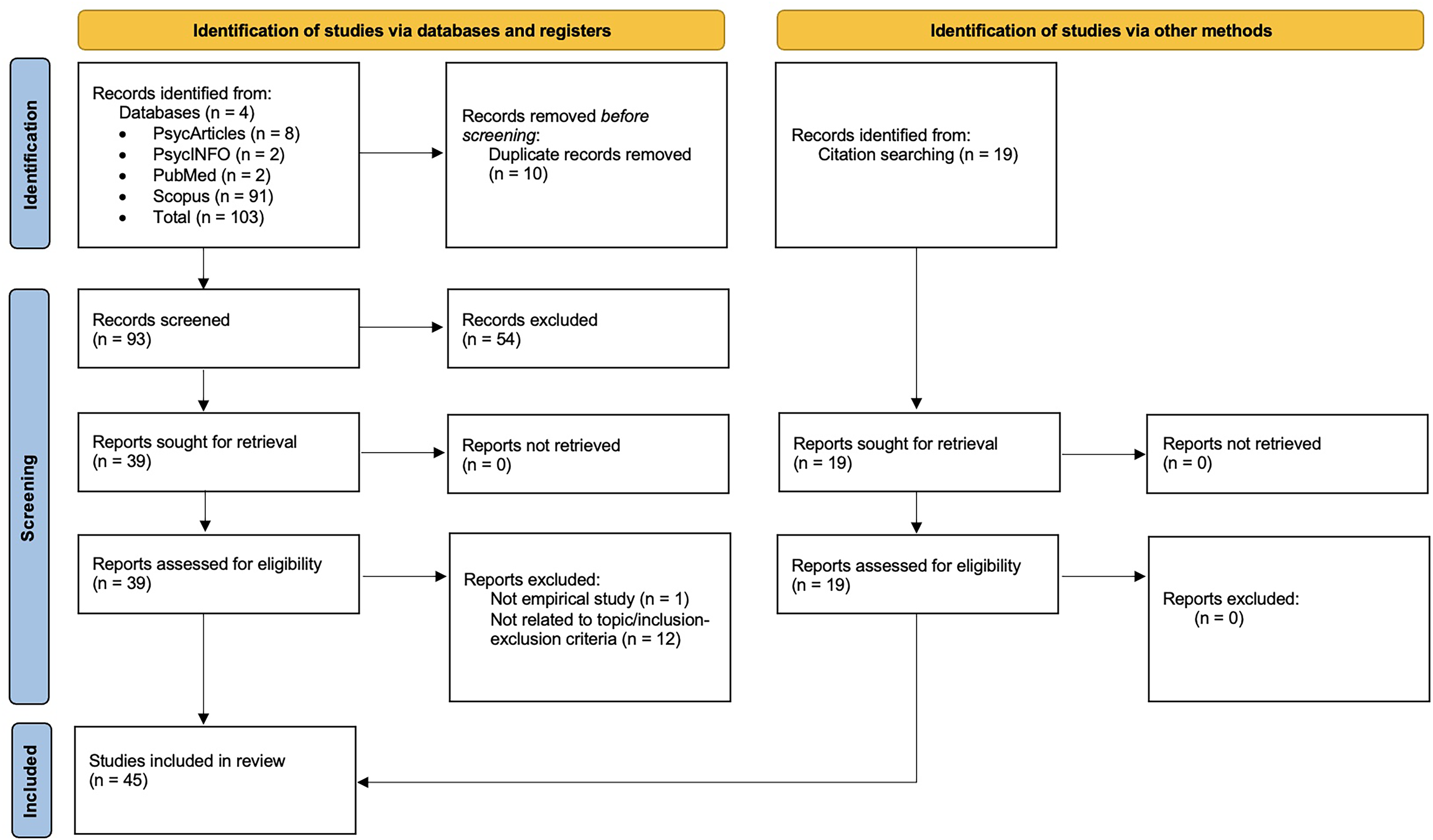
To ensure transparency and reproducibility, the current systematic review follows the methodological guidelines set forth by the Preferred Reporting Items for Systematic Reviews and Meta-Analyses (PRISMA; Page et al., Reference Page, McKenzie, Bossuyt, Boutron, Hoffmann, Mulrow, Shamseer, Tetzlaff, Akl, Brennan, Chou, Glanville, Grimshaw, Hróbjartsson, Lalu, Li, Loder, Mayo-Wilson and McDonald2021; see Figure 1)
PRISMA 2020 flow diagram for new systematic reviews which included searches of databases, registers, and other sources.
Search strategy
A comprehensive search strategy was developed to identify all studies relevant to the aforementioned aims. The original search was conducted in September 2024 and included studies from the following electronic databases: APA PsycARTICLES via ProQuest, APA PsycINFO via ProQuest, PubMed, and Scopus. Search string terms included a combination of hidden talent related terms (“hidden talents” OR “stress-adapted skills” OR “stress-adapted advantages”) and early adversity related terms (“child maltreatment” OR “early adversity” OR “childhood trauma” OR “childhood adversity” OR “ACEs” OR “adverse early experiences” OR “child abuse” or “child neglect” OR “deprivation” OR “threat” OR “early life adversities”). No date restrictions were placed on the searches. To examine additional studies that may have been missed, both backward and forward citation searching were conducted from the reference lists of the initially identified papers.
Inclusion/exclusion criteria
Articles were eligible for inclusion if they met the following criteria: (1) were original empirical studies, (2) were peer-reviewed, (3) were related to the field of psychology, and (4) the study population were individuals who experienced some form of early adversity in their lives. As defined in the introduction, early adversity herein refers to exposure to challenging or traumatic experiences during childhood or adolescence that expose an individual to significant stress. When identifying relevant studies, we included those where participants had experienced some form of Adverse Childhood Experiences (ACEs) per the expanded ACEs framework (Cronholm et al., Reference Cronholm, Forke, Wade, Bair-Merritt, Davis, Harkins-Schwarz, Pachter and Fein2015). This framework includes a broad range of stressors such as exposure to community violence, neighborhood safety, household dysfunction, living in foster care, etc. Additionally, studies were included if early adversity encompassed low socioeconomic status (SES), given SES’s association with limited access to resources, stability, chaotic home environments, family turmoil, and exposure to stressors that can affect developmental outcomes (Duncan et al., Reference Duncan, Magnuson and Votruba-Drzal2017; Evans, Reference Evans2004; Evans & Cassells, Reference Evans and Cassells2014).
Articles were excluded if they were not original research (i.e., reviews, meta-analyses), were theoretical papers, or could not be found in the English language.
Data extraction
Data was systematically extracted and organized in an Excel spreadsheet to ensure consistency and accuracy across studies. The extracted information included the following key characteristics: study’s country of origin, sample size, predictor theme, outcome theme, and participant characteristics. The predictor theme encompassed the type of adversity experienced by participants and included specific categories such as maltreatment, exposure to violence, poverty, family instability, etc. The outcome theme focused on the primary outcomes assessed in each study and were organized into relevant domains such as cognitive adaptations, social adaptations, and physiological adaptations. Participant characteristics encompassed age range, mean age, and racial and ethnic breakdown, which helped create a demographic profile for each study. This categorization process was completed on all studies to facilitate analysis and synthesis of findings in alignment with the review’s aims.
Data synthesis
The synthesis of this review is grounded in the hidden talents framework, with the aim of identifying patterns in study findings by focusing on the key outcome domains. This framework aligns with strength-based and developmental approaches that recognize the intricate interplay between cognitive, social, and environmental factors in shaping adaptive pathways. Given that cognitive and social adaptations are central to the hidden talents conceptualization, these two domains were used as primary outcome categories. During the synthesis process, some studies examined adaptations that did not clearly align with cognitive or social domains but were more appropriately categorized as physiological. To account for these findings, a third category of physiological adaptations was included.
To clarify how studies were interpreted as providing evidence for hidden talents or stress-adapted skills, we identified two distinct types of evidence: (1) between-group studies that compared individuals exposed to high adversity with those exposed to low or no adversity, where the high adversity group outperformed or showed enhanced abilities; and (2) studies examining within-group variability amongst populations exposed to adversity, where individuals demonstrated adaptive skills or functioning that aligned with the demands of their environment. In the latter case, an ability was considered a hidden talent if it appeared to offer a functional advantage within the context of adversity. While these two types of evidence are conceptually distinct, both were considered relevant for understanding how individuals may adapt in response to early adversity.
Findings for each outcome domain are synthesized to reveal recurring themes, patterns, and unique insights. To provide a developmental perspective, studies are categorized by age range to assess how adaptations may vary by developmental stage. Results are presented under the following headings: cognitive adaptations, social adaptations, and physiological adaptations. Within each domain, findings are further organized by developmental stage (pre-school, middle childhood, adolescence, and adulthood) to highlight age-specific adaptations and trends. Developmental periods reflect when the data was collected from participants rather than the timing of the adversity itself, meaning that the measured adaptations may not always correspond directly to the period when adversity was experienced. It should be noted that when an article’s age range spans more than one developmental stage, the mean age is used for classification.
Results
Study selection
The initial search identified 103 studies. De-duplication via Rayyan’s automation tool resulted in 10 studies being deleted (Ouzzani et al., Reference Ouzzani, Hammady, Fedorowicz and Elmagarmid2016). A review of the remaining 93 titles and abstracts led to the exclusion of 54 studies that did not meet the inclusion criteria. At this stage, the primary reasons for exclusion included the absence of empirical data, research questions that were not directly aligned with the review’s focus or were framed within a deficit-based lens, and the examination of an ineligible study population. The remaining 39 studies were sought for retrieval and full text was assessed for eligibility. Additionally, backward and forward citation searches of studies identified in the initial search yielded 19 additional studies. After full text screening of the 39 studies retrieved from database searches, 1 study was excluded for not being an empirical study and 12 were excluded for not being related to the topic or inclusion-exclusion criteria. Subsequently, the 19 studies identified through backward and forward citation searches were assessed separately and all met the inclusion criteria. This process resulted in a final number of 45 studies to be included in the review. The article categorization process was conducted by the first author.
Study characteristics
95.56% of the studies employed a cross-sectional design and all utilized quantitative methods. Two studies were longitudinal in nature, following participants over two measurement occasions approximately one-year apart. 35 of the studies were conducted in the United States and the remaining 10 studies were from international settings. These international settings included: the Netherlands, Nigeria, China, Germany, Singapore, and Uruguay. The studies captured a diverse array of adversities including childhood maltreatment, environmental harshness and unpredictability, economic disadvantage, caregiver instability, family relational instability, etc. To allow for systematic comparison across studies, studies were grouped based on the type of specific adversity they examined (e.g., studies on childhood maltreatment were grouped together, as were those on economic disadvantage, etc.). Studies varied in how they measured adversity using either continuous variables (e.g., cumulative ACE scores, neighborhood disadvantage ratings, etc.) or categorical comparisons (e.g., case–control designs based on adversity exposure). Additionally, while studies generally assessed adversity retrospectively through self-reports, some utilized prospective designs, particularly those involving younger participants. For these prospective study designs, adversity was measured with caregiver reports, environmental assessments, or biological markers collected during or shortly after adversity exposure. Participants’ ages ranged widely across studies with developmental stages from infancy through adulthood (1.5–74 years). Aggregated across the studies using a weighted N calculation, participant demographic details averaged approximately: 48% White, 33% Black/African American, 13% Hispanic/Latino, 4% Asian, and 4% Other or Multi-racial. Representation of minority groups varied significantly depending on the study’s focus and geographic location. Studies that assessed adversity related to child maltreatment specifically physical abuse, or economic disadvantage, often included higher proportions of Black and Hispanic participants. For a detailed breakdown of study characteristics, see Supplemental Table1.
Cognitive adaptations
The most prominent theme that emerged throughout the studies lay in the cognitive domain with 33 of the 45 studies investigating cognitive outcomes.
Preschool age:
Eight studies on preschool-aged children revealed that even at a young age, early adversity was associated with enhanced abilities in emotion recognition, problem-solving, executive functioning, and implicit learning—suggesting the presence of hidden talents or stress-adapted skills.
To illustrate this point, Davies et al. (Reference Davies, Colton, Schmitz and Gibb2024) found that preschoolers exposed to hostile interparental conflict showed enhanced emotion recognition, particularly for moderate- and high-intensity emotional displays. Similarly, it was observed that preschoolers who experienced physical abuse were more likely to interpret neutral faces as angry, while children who experienced neglect perceived neutral expressions as sad. Children who experienced neglect also had more difficulty identifying emotions correctly compared to both children who experienced physical abuse and children who did not experience maltreatment (Pollak et al., Reference Pollak, Cicchetti, Hornung and Reed2000).
Preschoolers facing adversity also exhibited distinct problem-solving strategies that may reflect hidden talents or stress-adapted skills. One study found that despite struggling with abstract problem-solving, children from harsh environments (e.g., conditions that threaten survival and well-being) who exhibited “hawk traits” (e.g., heightened aggressiveness, boldness) performed better on reward-based tasks (Suor et al., Reference Suor, Sturge-Apple, Davies and Cicchetti2017). Likewise, Z. Li et al. (Reference Li, Sturge-Apple and Davies2023) found that although preschoolers in high-crime neighborhoods had limited abstract reasoning, they displayed high levels of task engagement and used resourceful strategies to solve problems. Specifically, in a reward-oriented (RO) problem-solving task where a toy had to be retrieved from a transparent puzzle box, those from harsher environments showed enhanced performance by demonstrating focused attention and persistence.
Studies on broader neighborhood and familial dynamics also revealed cognitive adaptations during this developmental stage. For instance, low-income preschoolers who attended school in certain under resourced neighborhood profiles showed particularly positive developmental outcomes in their executive functioning skills, potentially illustrating the impact of external community factors (McCoy et al., Reference McCoy, Sabol, Wei, Busby and Hanno2022). Additionally, Sturge-Apple and colleagues found that preschoolers’ physiological responses varied by resource availability. In resource-poor settings, higher vagal tone (a biological marker associated with self-regulation) was linked to a tendency to seek immediate rewards (Sturge-Apple et al., Reference Sturge-Apple, Suor, Davies, Cicchetti, Skibo and Rogosch2016). In terms of family instability, children exposed to higher levels of parental relationship instability performed better on implicit learning tasks (e.g., reward detection) than on explicit cognitive tasks (e.g., IQ, working memory; Davies et al., Reference Davies, Thompson, Li and Sturge-Apple2022). Additionally, parental relationship instability was linked to more antagonistic representations of family relationships, which was associated with both poorer explicit cognitive functioning and enhanced implicit learning abilities.
Middle childhood:
Ten studies on middle childhood found that early adversity was associated with cognitive adaptations in ways that appeared aligned with children’s immediate needs and environmental contexts. Serving as an adaptive response to environmental demands, these adaptations included increased cognitive flexibility, heightened emotional sensitivity, and reward-oriented (RO) strategies.
Similar to preschoolers, during middle childhood, children in unstable caregiving environments often demonstrated adaptations in cognitive flexibility and RO behavior. Fields et al. (Reference Fields, Bloom, VanTieghem, Harmon, Choy, Camacho, Gibson, Umbach, Heleniak and Tottenham2021) reported that even though children exposed to caregiver instability exhibited lower response inhibition and attentional control, they displayed enhanced cognitive flexibility. Delgado et al. (Reference Delgado, Aldecosea, Menéndez, Rodríguez, Nin, Lipina and Carboni2022) found that children from low-SES backgrounds displayed a preference for immediate rewards, which may potentially reflect an adaptive strategy in resource-limited environments. While this finding did not directly link this behavior to improved outcomes, it is consistent with the hidden talents framework. In contrast, Duran and Grissmer (Reference Duran and Grissmer2020) provided more direct evidence for the existence of hidden talents: in a sample of children of color from low-SES backgrounds, it was observed that those who prioritized immediate gratification had stronger executive function and received higher behavioral ratings from teachers.
During this developmental phase, adverse early environments were also linked to heightened sensitivity to emotional cues (i.e., anger). For example, research showed that children who experienced physical abuse could detect anger in facial expressions with minimal cues (Pollak et al., Reference Pollak, Messner, Kistler and Cohn2009) and maintain focused attention on anger cues despite limited information being available (Pollak & Kistler, Reference Pollak and Kistler2002; Pollak & Tolley-Schell, Reference Pollak and Tolley-Schell2003). Those who experienced high parental hostility recognized anger more quickly but required more visual information to identify sadness (Pollak & Sinha, Reference Pollak and Sinha2002). Similarly, children who received insensitive caregiving displayed a memory bias toward angry stimuli over happy ones, potentially reflecting an enhanced vigilance toward negative cues (Rifkin-Graboi et al., Reference Rifkin-Graboi, Tsotsi, Syazwana, Stephenson, Sim and Lee2023).
Exposure to early adversity was linked to specific cognitive adaptations in middle childhood, potentially enhancing an individual’s ability to cope or survive in unpredictable environments. However, findings on whether these adaptations aligned with an adaptation or deficit framework remained mixed. For instance, Vermeent et al. (Reference Vermeent, Young, DeJoseph, Schubert and Frankenhuis2024) found that children exposed to household threats exhibited a more cautious response style that was characterized by slower processing speed but preserved task-specific abilities. While higher levels of household threat were associated with reduced overall speed of information processing, there were no observed enhancements in cognitive abilities such as inhibition, attention shifting, or mental rotation. Notably, these effects were specific to household threat and were not observed for material deprivation. Contrastingly, supporting an adaptation model, another study linked early adversity with fast life-history strategies—an approach where one prioritizes immediate rewards or needs over long-term planning (Yang et al., Reference Yang, Jing Lu and Chang2024). In this study, children who experienced early adversity were more likely to focus on immediate needs over future goals, a survival-oriented adaptation well-suited for high-stress environments (Yang et al., Reference Yang, Jing Lu and Chang2024).
Adolescence:
Fewer studies have examined hidden talents and stress-adapted cognitive skills in adolescents compared to preschool age and middle childhood, with only four studies specifically investigating this developmental stage. These studies revealed how adolescents exposed to adversity demonstrated cognitive advantages related to working memory, context-specific processing, social processing, and problem-solving strategies. In a study conducted with Nigerian adolescents, it was found that individuals who experienced parental deprivation, such as those living in institutions or foster homes, outperformed their peers who had not experienced deprivation on working memory tasks across all analyses (Nweze et al., Reference Nweze, Nwoke, Nwufo, Aniekwu and Lange2021).
Cognitive adaptations in adolescents with histories of institutionalization have also manifested via problem-solving strategies. Researchers found that previously institutionalized adolescents displayed a preference for exploitative (i.e., selecting a limited but reward-promising outcome) over exploratory (e.g., probing options with unknown and potentially rewarding or punishing outcomes) behavior, in contrast to their non-institutionalized peers (Humphreys et al., Reference Humphreys, Lee, Telzer, Gabard-Durnam, Goff, Flannery and Tottenham2015).
Adolescent research also found associations between neighborhood disadvantage and neural sensitivity to social cues with responses varying across racial and ethnic groups. Jorgensen et al. (Reference Jorgensen, Muscatell, McCormick, Prinstein, Lindquist and Telzer2023) revealed that depending on the racial or ethnic background of the youth, neighborhood disadvantage was linked to differing patterns of brain activation when responding to social cues. Specifically, Black adolescents exhibited heightened activation in regions related to salience detection when processing threats. Meanwhile, Latino youth showed increased activation in regions related to mentalizing or understanding another person’s intentions and emotions. In terms of reward processing, only Black youth showed greater activation in regions involved in reward, salience, and mentalizing.
Further emphasizing context-sensitive adaptations, it was observed that adolescents who grew up in environments characterized by violence and poverty demonstrated cognitive adaptations that prioritized real-world relevance over abstraction (Young et al., Reference Young, Frankenhuis, DelPriore and Ellis2022). Specifically, these adolescents performed worse than their peers on working memory tasks when using abstract stimuli but showed comparable performance when the stimuli were ecologically relevant. Additionally, no significant differences were found for attention-shifting tasks.
Adulthood:
To date, eleven studies have examined cognitive related hidden talents and stress-adapted skills in adults. These adaptations included a greater reliance on holistic processing, intuitive decision-making, cognitive flexibility, and enhanced sensitivity to social and emotional cues. One study found that individuals who experienced violence and unpredictability in childhood performed worse on a cognitive test that measured attention and the ability to ignore distractions. However, this outcome resulted from reduced perceptual input rather than difficulty filtering out distractions. Thus, these participants adopted a more holistic approach to processing information (Vermeent, Young, Van Gelder et al., Reference Vermeent, Young, Van Gelder and Frankenhuis2024). Similarly, another study observed that individuals with histories of unpredictable childhoods were more likely to use intuitive strategies rather than deliberate visual searches in uncertain conditions, which may indicate a preference for quick decision-making over more meticulous analysis (Wang et al., Reference Wang, Lu, Li and Chang2024). Additionally, it was found that while unpredictable childhoods (e.g., chaotic) were linked to poorer working memory performance in stable conditions, these impairments disappeared under conditions of uncertainty with participants showing enhanced working memory when tested in unpredictable contexts Young et al. (Reference Young, Griskevicius, Simpson, Waters and Mittal2018).
Experiencing early adversity was also associated with cognitive flexibility and faster life-history strategies in adulthood. Mittal et al. (Reference Mittal, Griskevicius, Simpson, Sung and Young2015) found that although individuals with unpredictable childhoods demonstrated weaker inhibitory control, they also displayed enhanced cognitive shifting abilities when under uncertain conditions. Another study found that adults with high childhood unpredictability were more likely to adopt faster life-history strategies, prioritizing short-term gains over cautious decision-making (Wang et al., Reference Wang, Zhu and Chang2022). Adversity was also associated with differences in error processing. Specifically, Compton et al. (Reference Compton, Shudrenko, Ng, Mann and Turdukulov2024) found that childhood adversity was linked to enhanced initial error detection but blunted sustained error processing, particularly in emotional contexts. In a similar vein, research suggested that cognitive flexibility developed through early adversity is related to enhanced self-reported creativity and self-efficacy (W. Li et al., Reference Li, Zhang, Lin, Zhang, Zhang, Chen, Xu and Liu2023). Among Chinese college students, childhood maltreatment was associated with lower overall creativity but was also linked to enhanced cognitive flexibility and self-efficacy, which in turn supported creative problem-solving. Although the overall correlation was negative, these adaptive qualities appeared to provide an indirect pathway to creativity—though the effects varied.
Lastly, research on this developmental stage suggested that adults exposed to early adversity often exhibited heightened sensitivity to social and emotional cues, which may have helped in navigating interpersonal dynamics and responding to social threats. For example, it was found that exposure to trauma was linked to improved cognitive control when faced with conflicting information (Steudte-Schmiedgen et al., Reference Steudte-Schmiedgen, Stalder, Kirschbaum, Weber, Hoyer and Plessow2014). Relatedly, Gibb et al. (Reference Gibb, Schofield and Coles2009) found that adults with histories of childhood abuse showed an attention bias toward angry faces, detecting subtle expressions of anger more quickly than individuals without such histories. However, this adaptive sensitivity also appeared to come with a trade-off: these same individuals also tended to avoid happy faces. Frankenhuis et al. (Reference Frankenhuis, De Vries, Bianchi and Ellis2020) found that while exposure to violence was generally linked to poorer memory, the type of violence experienced influenced which aspects of memory were affected. Specifically, individuals exposed to recent neighborhood violence had worse memory for remembering people’s ages but not for recalling social dominance relations. Meanwhile, those personally involved in violence had better memory for social dominance but not for people’s ages.
It is important to note that not all studies found evidence of enhanced adaptions in relation to social and emotional cues following adversity. For instance, Frankenhuis et al. (Reference Frankenhuis, Weijman, De Vries, Van Zanten and Borghuis2022) found no link between violence exposure and enhanced accuracy in predicting conflict outcomes. In fact, individuals who had experienced more violence in childhood were not more likely to predict that conflicts would escalate into fights.
Social adaptations
With the vast majority of the literature having looked at cognitive outcomes, fewer studies have examined outcomes beyond this domain. As such, a second emerging theme in the literature highlighted how early adversity shaped stress-adapted skills within the social domain, with 10 out of the 45 studies having examined these aspects.
Preschool age:
To date, no studies have specifically investigated socially adapted hidden talents or stress-adapted skills in preschoolers who have experienced early adversity.
Middle childhood:
Only one study has specifically examined socially adapted hidden talents during this developmental stage (Handley et al., Reference Handley, Rogosch, Duprey, Russotti and Cicchetti2023). This study found that among females, more pervasive maltreatment exposure was associated with a physiological stress regulation pattern marked by an imbalance of high cortisol and low DHEA. Importantly, those females with this pattern were perceived as more popular and well-liked by camp counselors and peers.
Adolescence:
To date, no studies have specifically investigated socially adapted hidden talents or stress-adapted skills in adolescents who have experienced early adversity.
Adulthood:
Nine studies have examined the social domain outcomes of hidden talents and stress-adapted skills in adults with histories of early adversity, highlighting the development of adaptive social competencies that aid in navigating complex social environments. These studies revealed key abilities such as social–emotional adaptability, heightened social perception, enhanced empathy, and adaptive communication skills (e.g., collaboration, perspective taking, solution focused efforts).
For example, Rinne et al. (Reference Rinne, Mahrer, Guardino, Shalowitz, Ramey and Dunkel Schetter2023) found that childhood stress moderated the relationship between stressful life events and depressive symptoms in adulthood. Specifically, women who reported higher levels of childhood family stress exhibited greater social–emotional adaptability, showing a reduced vulnerability to the depressive effects of later-life stressors. Similarly, another study observed that economically disadvantaged Black males who excelled across all domains (e.g., academic achievement, employment, friendships, avoidance of substance misuse, externalizing problems, and internalizing symptoms) exhibited high psychosocial competence, which enabled them to handle stress effectively; however, it is important to note that this came at a physiological cost (Russotti et al., Reference Russotti, Warmingham, Handley, Rogosch and Cicchetti2020).
Regarding social perceptiveness, individuals who experienced harsher parenting during childhood showed slightly greater accuracy in detecting deception as adults, while neighborhood violence had no effect (Frankenhuis et al., Reference Frankenhuis, Roelofs and De Vries2018). Engstrom & Laurin (Reference Engstrom and Laurin2024) found that individuals from lower socioeconomic backgrounds demonstrated greater empathic accuracy than those from higher SES backgrounds, with childhood SES associated empathic accuracy more strongly than adulthood SES. Relatedly, Bleil et al. (Reference Bleil, Appelhans, Thomas, Gregorich, Marquez, Roisman, Booth-LaForce and Crowder2021) examined the role of early life adversities within family and neighborhood contexts in relation to positive changes during the COVID-19 pandemic. The authors found that childhood neighborhood disadvantage was associated with a higher number of positive change events during the pandemic, specifically related to perspective-taking, charitable giving, and improved social relationships. Likewise, another study found that adults who experienced childhood trauma reported higher empathy levels compared to those without such experiences, with trauma severity having been positively correlated with empathy (Greenberg et al., Reference Greenberg, Baron-Cohen, Rosenberg, Fonagy and Rentfrow2018). This pattern is echoed in findings by Lim & DeSteno (Reference Lim and DeSteno2016) who found that increased adversity was associated with heightened perspective-taking and empathic concern, which in turn contributed to greater dispositional compassion.
Early adversity was also linked to social competencies and relational skills. For instance, it was found that individuals who experienced moderate-to-severe childhood adversity, especially high emotional abuse and moderate physical abuse, exhibited more adaptive communication skills than those with lower levels of adversity (Brown et al., Reference Brown, Faw, Lucas-Thompson, Pettigrew and Quirk2023). For these participants, those with stronger communication skills were also less likely to be involved in toxic social networks. In another study that examined college students with histories of childhood maltreatment, it was found that maltreatment was associated with lower odds of adaptive functioning in relational, educational, and psychological domains; however, it was linked to higher odds of adaptive functioning in terms of managing drinking consequences (Merians & Frazier, Reference Merians and Frazier2024).
Physiological adaptations
Of the 45 studies included in this review, only two specifically examined physiological adaptations associated with hidden talents or stress-adapted skills in individuals who experienced early adversity. Both studies focused on the developmental stage of adulthood and contributed to a limited body of literature on early adversity’s links with physiological responses to stress later in life.
One study examined the impact of childhood maltreatment on sleep and stress responses in adulthood (Kaubrys et al., Reference Kaubrys, Baker, Frazier and Nguyen-Feng2021). The authors found that for participants who reported lower levels of childhood maltreatment increased stress led to worse sleep outcomes, including reduced sleep duration, lower quality of sleep, and difficulty falling asleep. In contrast, for those who reported higher levels of maltreatment, stress did not seem to affect sleep to the same extent. The second study in this domain examined how childhood exposure to familial verbal aggression affected stress reactivity in adulthood (Aloia & Solomon, Reference Aloia and Solomon2015). The results showed that individuals exposed to higher levels of verbal aggression exhibited a smaller physiological stress response to conflict as adults. Conversely, individuals who experienced less verbal aggression in childhood had stronger stress reactions to conflict.
Discussion
The primary aim of this systematic review was to evaluate extant empirical studies that investigated hidden talents or stress-adapted skills in individuals who experienced early adversity. Synthesizing data through a developmental lens, this review examined how these talents or skills manifested at different stages of development. We identified 45 studies in total, with 33 studies falling under the cognitive domain, 10 studies in the social domain, and 2 in the physiological domain. 43 studies were cross-sectional in design, 2 were longitudinal, and all utilized quantitative methods. The most common developmental stage analyzed was adulthood with 22 studies, and the least common was adolescence with 4 studies.
A broad overview of the findings suggests that certain types of adversity may be associated with specific forms of hidden talents or stress-adapted skills. For instance, physical abuse, exposure to hostility, and insensitive caregiving were frequently linked to heightened emotion recognition and increased sensitivity to anger cues (Davies et al., Reference Davies, Colton, Schmitz and Gibb2024; Pollak et al., Reference Pollak, Cicchetti, Hornung and Reed2000; Pollak & Kistler, Reference Pollak and Kistler2002; Pollak & Sinha, Reference Pollak and Sinha2002; Pollak & Tolley-Schell, Reference Pollak and Tolley-Schell2003; Pollak et al., Reference Pollak, Messner, Kistler and Cohn2009; Rifkin-Graboi et al., Reference Rifkin-Graboi, Tsotsi, Syazwana, Stephenson, Sim and Lee2023). In threatening environments, these skills may be adaptive in that the ability to quickly detect hostility could help children anticipate danger and adjust their behavior to avoid conflict. Similarly, economic disadvantage and resource scarcity were often associated with RO decision-making (Delgado et al., Reference Delgado, Aldecosea, Menéndez, Rodríguez, Nin, Lipina and Carboni2022; Duran & Grissmer, Reference Duran and Grissmer2020; Sturge-Apple et al., Reference Sturge-Apple, Suor, Davies, Cicchetti, Skibo and Rogosch2016) which may support navigation in environments where immediate rewards are critical for survival. Environmental unpredictability and caregiver instability tended to be linked to enhanced implicit learning, adaptability, and context-sensitive processing (Davies et al., Reference Davies, Thompson, Li and Sturge-Apple2022; Fields et al., Reference Fields, Bloom, VanTieghem, Harmon, Choy, Camacho, Gibson, Umbach, Heleniak and Tottenham2021; Humphreys et al., Reference Humphreys, Lee, Telzer, Gabard-Durnam, Goff, Flannery and Tottenham2015; Wang et al., Reference Wang, Lu, Li and Chang2024; Young et al., Reference Young, Griskevicius, Simpson, Waters and Mittal2018), skills that may enable individuals to adjust flexibly to shifting demands and instability. While some trends suggest a link between specific adversities and certain stress-adapted skills, inconsistencies across studies highlight the need for further research to clarify these associations. In addition to these mixed results, some studies reported null findings where individuals exposed to adversity did not significantly differ from their non-exposed counterparts in the expected skills or outcomes. These null effects are important to consider as they underscore the complexity of these potential adaptations and caution against overgeneralization. Furthermore, many findings indicated that the effects of adversity are context-dependent, with potential trade-offs that vary depending on the environment (Gibb et al., Reference Gibb, Schofield and Coles2009; Merians & Frazier, Reference Merians and Frazier2024; Russotti et al., Reference Russotti, Warmingham, Handley, Rogosch and Cicchetti2020). In some cases, the same adversity-linked skill that appeared adaptive in one setting posed limitations in another (Fields et al., Reference Fields, Bloom, VanTieghem, Harmon, Choy, Camacho, Gibson, Umbach, Heleniak and Tottenham2021; Vermeent et al., Reference Vermeent, Young, DeJoseph, Schubert and Frankenhuis2024). However, it is essential to note that these patterns remain tentative as the literature on hidden talents is still emerging. While these findings provide a general overview of how adversity shapes stress-adapted skills, examining specific outcome domains reveals further nuances into how these adaptations manifest.
Overall, the findings in the cognitive domain suggest that executive functioning may develop differently across developmental stages in the context of early adversity, potentially reflecting age-related constraints and needs (e.g., Fields et al., Reference Fields, Bloom, VanTieghem, Harmon, Choy, Camacho, Gibson, Umbach, Heleniak and Tottenham2021; McCoy et al., Reference McCoy, Sabol, Wei, Busby and Hanno2022). The range of studies reveals that children, adolescents, and adults who have faced caregiver instability, deprivation, or environmental unpredictability display patterns of cognitive flexibility, problem-solving, and sensitivity to social cues that may likely function as adaptive responses within their specific contexts (See Supplemental Table 1, cognitive domain studies). Some studies investigated cognitive processes closely tied to social cognition (e.g., emotion recognition, interpretation of emotional and social cues). While these studies could also be categorized within the social domain, they are included in this section because they primarily examine cognitive mechanisms such as selective attention, perception, memory, and decision-making in response to social information. Social cognition is often considered a subfield of cognitive psychology due to it involving internal cognitive processes rather than direct social behaviors (Lieberman, Reference Lieberman2007; Ratner, Reference Ratner and Ratner2020). This distinction highlights how cognitive adaptations to adversity can often involve processing social stimuli in ways that may enhance survival and navigation in challenging environments.
Taken together, the findings in this review underscore the importance of context in defining adaptive skills. Although some identified skills (e.g., heightened emotion recognition, RO decision-making, deception detection) may align with resilience, they may be better understood as hidden talents due to their context-specific functionality. Resilience is often framed as a return to normative functioning despite adversity, whereas hidden talents reflect adaptations that enhance functioning within specific environments, even if they do not align with traditional success markers. By examining these skills across cognitive, social, and physiological domains, this review highlights their presence in the context of early adversity and underscores the importance of recognizing adaptive strengths that may not be valued by the dominant culture.
Developmental considerations
Preschool period
The preschool period (ages 0–4) is a critical window for development as children begin to lay the foundation for future social and cognitive development. During this developmental phase, advancements occur in executive functioning, emotion recognition, and social cognition—all of which are highly sensitive to environmental influences. Given that early adversity can significantly shape these developmental trajectories, examining hidden talents and stress-adapted skills during this period is valuable for understanding how children navigate and adapt to their environments.
Findings on preschool-aged children showcase an array of themes highlighting how adaptations to early adversity may serve as context-specific survival strategies in response to instability or unpredictability, potentially enabling them to navigate these environments effectively. Specifically, one key adaptation is a heightened sensitivity to emotional cues (Davies et al., Reference Davies, Colton, Schmitz and Gibb2024; Pollak et al., Reference Pollak, Cicchetti, Hornung and Reed2000). For preschoolers exposed to adversity, this sensitivity may potentially serve as a protective mechanism, helping them navigate challenging social interactions and respond adaptively to unpredictable or volatile family situations. At the same time, this heightened sensitivity may reinforce expectations of threat or deprivation, which can enhance vigilance in dangerous contexts but also lead to potential misinterpretations of social cues in safer environments (Pollak et al., Reference Pollak, Cicchetti, Hornung and Reed2000). In traditional developmental models, this sensitivity is often framed as maladaptive. However, considering broader contextual cues, it can be argued that this sensitivity aligns with the environmental demands these children face. In environments characterized by unpredictability or high-risk, heightened sensitivity to emotional cues allows children to detect subtle shifts in tone, anticipate caregivers’ behaviors, and respond in ways that enhance their overall safety and social navigation. Rather than reflecting a maladaptation, it can be argued that this adaptation may be more accurately seen as a stress-adapted skill that is functional in certain environments, even if it carries trade-offs in others.
A second recurring theme in this developmental stage is the emergence of problem-solving strategies that prioritize immediate and tangible outcomes (Sturge-Apple et al., Reference Sturge-Apple, Suor, Davies, Cicchetti, Skibo and Rogosch2016; Suor et al., Reference Suor, Sturge-Apple, Davies and Cicchetti2017). Unlike resilience, which is often associated with long-term planning, this adaptation reflects a rational response to resource-scarce environments where immediate gains are more beneficial than delayed rewards. It should be recognized that in these contexts, there is no guarantee of another opportunity for reward if this one is missed. That said, it could be argued that these children are demonstrating resourcefulness and their ability to capitalize on available opportunities may be enhancing their survival, even if it does not fully align with conventional markers of success in structured settings. Lastly, broader neighborhood and familial dynamics are associated with how preschoolers in disadvantaged settings adapt cognitively and behaviorally to their surroundings (Davies et al., Reference Davies, Thompson, Li and Sturge-Apple2022; McCoy et al., Reference McCoy, Sabol, Wei, Busby and Hanno2022; Z. Li et al., Reference Li, Zhang, Lin, Zhang, Zhang, Chen, Xu and Liu2023). While early adversity may hinder explicit cognitive abilities (e.g., IQ, working memory), it may also simultaneously enhance implicit learning skills (e.g., faster reward detection, flexible thinking) in uncertain environments (Davies et al., Reference Davies, Thompson, Li and Sturge-Apple2022). These findings are indicative of stress-adapted skills, as they reflect functional but context-dependent cognitive shifts that may not be necessarily advantageous across all settings.
Childhood and adolescence
As individuals transition into middle childhood and adolescence, cognitive skills continue to expand to further support the navigation of more complex social dynamics, academic demands, and life challenges. During middle childhood, children are expected to engage more in a structured learning environment, regulate their emotions within various social contexts, develop greater independence in daily life, and so on. As a result, executive functioning skills such as cognitive flexibility, inhibitory control, and working memory become increasingly important for success in school and peer interactions (Best et al., Reference Best, Miller and Jones2009). By adolescence, these adaptations advance further as youth navigate increased autonomy, identity formation, peer influences, and more complex social and academic challenges. This stage is especially important for the development of higher-order executive functions, including abstract thinking, long-term planning, and self-regulation. In light of this, middle childhood and adolescence are pivotal periods for understanding how early adversity shapes adaptive thinking.
Similar to preschoolers, children in middle childhood and adolescence exhibit cognitive adaptations to early adversity that align with immediate environmental demands. Key adaptations in middle childhood include heightened emotional sensitivity, cognitive flexibility, and a cautious approach to problem-solving, which may help attune them to relevant environmental cues for survival (Fields et al., Reference Fields, Bloom, VanTieghem, Harmon, Choy, Camacho, Gibson, Umbach, Heleniak and Tottenham2021;Masten et al., Reference Masten, Guyer, Hodgdon, McClure, Charney, Ernst, Kaufman, Pine and Monk2008; Pollak & Kistler, Reference Pollak and Kistler2002; Pollak & Sinha, Reference Pollak and Sinha2002; Pollak & Tolley-Schell, Reference Pollak and Tolley-Schell2003; Pollak et al., Reference Pollak, Messner, Kistler and Cohn2009; Rifkin-Graboi et al., Reference Rifkin-Graboi, Tsotsi, Syazwana, Stephenson, Sim and Lee2023; Yang et al., Reference Yang, Jing Lu and Chang2024; Young et al., Reference Young, Frankenhuis, DelPriore and Ellis2022). However, evidence for the adaptation framework during this period remains mixed. While heightened sensitivity and a cautious problem-solving style may serve as protective mechanisms by reducing impulsivity in high-risk environments where quick reactions could be dangerous, these adaptations do not always translate into cognitive enhancements. Children exposed to household threats who adopt a more cautious response style also tend to show slower general processing speed rather than improvements in inhibition or attention shifting (Vermeent et al., Reference Vermeent, Young, DeJoseph, Schubert and Frankenhuis2024). This finding aligns more with a deficit framework, suggesting that household threats may hinder overall cognitive efficiency rather than fostering adaptive skills. Further contributing to the mixed evidence on cognitive adaptations during this developmental period, youth exposed to violence and poverty performed worse on working memory tasks with abstract stimuli but showed nearly equivalent performance to peers when using ecologically relevant stimuli (Young et al., Reference Young, Frankenhuis, DelPriore and Ellis2022). This suggests that the association between adversity and cognition may be task-dependent, with performance varying based on the real-world relevance of the stimuli. Similarly, early caregiving instability may enhance cognitive flexibility while also leading to challenges with response inhibition and attentional control (Fields et al., Reference Fields, Bloom, VanTieghem, Harmon, Choy, Camacho, Gibson, Umbach, Heleniak and Tottenham2021). Taken together, these findings highlight the complexity of cognitive adaptations to adversity, illustrating that while some skills may serve a protective function, they may also come at the cost of executive function challenges (Fields et al., Reference Fields, Bloom, VanTieghem, Harmon, Choy, Camacho, Gibson, Umbach, Heleniak and Tottenham2021; Vermeent et al., Reference Vermeent, Young, DeJoseph, Schubert and Frankenhuis2024; Young et al., Reference Young, Frankenhuis, DelPriore and Ellis2022). These findings underscore that cognitive adaptations are neither strictly beneficial nor detrimental, but instead reflect adjustments tailored to specific environmental demands.
In adolescence, adaptations become more advanced with enhanced working memory and problem-solving abilities at the forefront. This is particularly true among those navigating resource-limited or unstable environments (Humphreys et al., Reference Humphreys, Lee, Telzer, Gabard-Durnam, Goff, Flannery and Tottenham2015). Under conditions of scarcity and unpredictability, adolescents often adopt exploitative strategies that maximize resources from known options. By prioritizing this approach, one could argue that these adolescents may become better equipped to efficiently identify and utilize the resources that are readily available within their environments. However, the effectiveness of this decision-making strategy depends on context, as it might lead to poorer outcomes when more advantageous options are available.
Importantly, research in this developmental phase also highlights how early adversity’s effects can vary based on cultural, racial, and environmental contexts. For instance, Nweze et al.’s study in sub-Saharan Africa suggests that in resource-limited environments, enhanced working memory possibly functions as a survival mechanism, supporting sustained attention and information retention. Similarly, Jorgensen et al., report that neighborhood disadvantage influences neural responses differently across racial and ethnic groups, with Black adolescents developing specialized adaptations for navigating social rewards and threats. Together, these studies emphasize that stress-adapted skills are not solely shaped by adversity but are also influenced by the cultural environments in which adolescents develop.
Adulthood
By adulthood, cognitive-related hidden talents and stress-adapted skills may evolve into advanced capabilities such as holistic processing, intuitive decision-making, creativity, and heightened sensitivity—functions essential for navigating work, relationships, and independent living. A key developmental task in this stage involves balancing long-term planning with adaptability, making this period particularly important for examining how early adversity shapes cognitive strategies. That said, a prominent theme emerging from this research is the adaptability of cognitive processes, with adults shifting from detail-oriented to a more general processing style (Vermeent, Young, Van Gelder et al., Reference Vermeent, Young, DeJoseph, Schubert and Frankenhuis2024; Wang et al., Reference Wang, Lu, Li and Chang2024). One study found that individuals exposed to childhood violence and unpredictability processed less environmental information overall, not because they struggled to filter distractions but because they used it as an adaptive strategy to focus on what was most relevant (Vermeent, Young, Van Gelder et al., Reference Vermeent, Young, DeJoseph, Schubert and Frankenhuis2024). Rather than reflecting a deficit in attentional control, this pattern suggests a selective focus on information deemed reliable or relevant. Likely, this shift reflects an adaptation to environments where quick assessments and holistic judgments are crucial for survival, allowing individuals to adapt quickly to changing situations without becoming too consumed with trivial details. These findings offer mixed evidence for the hidden talents framework. While cognitive flexibility and intuitive decision-making may optimize thinking in unpredictable environments, they may also lead to slower processing in structured settings where deeper information processing is advantageous. Beyond immediate decision making, cognitive flexibility may support broader problem-solving and personal growth. For example, W. Li et al. (Reference Li, Zhang, Lin, Zhang, Zhang, Chen, Xu and Liu2023) found that childhood maltreatment was indirectly associated with increased creativity through its effects on cognitive flexibility and self-efficacy, underscoring the complex ways adversity shapes adaptive capacities across different domains.
A second theme to emerge in this developmental stage is the tendency for individuals exposed to adversity to favor short-term adaptive strategies over long-term ones. Adults with histories of adversity often prioritize immediate needs, reflecting faster life-history strategies that can be adaptive in environments where long-term planning is not conducive (Mittal et al., Reference Mittal, Griskevicius, Simpson, Sung and Young2015; Wang et al., Reference Wang, Zhu and Chang2022). Supporting this, Mittal et al. (Reference Mittal, Griskevicius, Simpson, Sung and Young2015) found that individuals who grew up in unpredictable environments excelled in cognitive shifting tasks but struggled with inhibition, suggesting adversity enhanced flexibility rather than causing uniform impairments. This ability to quickly shift focus may be particularly advantageous in high-stress situations where intuitive decision-making saves time. Notably, these effects only emerged in uncertain conditions, emphasizing the importance of contexts in determining whether adaptations are beneficial (Compton et al., Reference Compton, Shudrenko, Ng, Mann and Turdukulov2024).
Lastly, adulthood brings greater autonomy in decision-making, making sensitivity to social and emotional cues especially relevant. Research suggests that individuals with early adversity have a heightened sensitivity to social and emotional cues, particularly negative cues (Gibb et al., Reference Gibb, Schofield and Coles2009; Steudte-Schmiedgen et al., Reference Steudte-Schmiedgen, Stalder, Kirschbaum, Weber, Hoyer and Plessow2014). Given that forming and maintaining relationships is a key developmental task during this stage, heightened sensitivity can serve as both an asset and a limitation. For those with a history of childhood abuse, heightened vigilance can be protective in that it helps them to identify and mitigate safety threats in high-stress or unpredictable environments, as well as avoid confrontation. However, it may also come at a cost, potentially limiting positive social engagement. This suggests that in environments shaped by past trauma, the priority on threat detection may take precedence over the ability to engage and respond to positive social cues (Gibb et al., Reference Gibb, Schofield and Coles2009).
Further related to decision-making, Steudte-Schmiedgen et al. (Reference Steudte-Schmiedgen, Stalder, Kirschbaum, Weber, Hoyer and Plessow2014) found that individuals with a history of trauma exposure, demonstrated enhanced ability to manage competing stimuli. This skill may have been particularly advantageous in high-stress situations, as it enabled individuals to focus on resolving ambiguous challenges. The authors suggested that trauma also improved the ability to process and integrate conflicting cues, enhancing decision-making in rapidly changing environments. Contrastingly, Frankenhuis et al. (Reference Frankenhuis, Weijman, De Vries, Van Zanten and Borghuis2022) highlight the mixed evidence in this domain as they found no support for the idea that individuals with a history of violence exposure demonstrate greater accuracy in predicting conflict outcomes or enhanced ability to anticipate conflict. This demonstrates the complexity of stress-adapted skills, indicating that while some cognitive adaptations may emerge in response to adversity, others may not.
Although the social domain of hidden talents and stress-adapted skills has been studied significantly less than the cognitive domain, existing research offers valuable insights into how adversity may relate to social outcomes. Middle childhood is a key period marked by growing relational and emotional awareness, which may provide opportunities for stress-adapted skills to emerge. For instance, Handley et al. (Reference Handley, Rogosch, Duprey, Russotti and Cicchetti2023) found that children with histories of maltreatment who exhibited a certain neuroendocrine pattern (high cortisol/low DHEA) were often perceived as more prosocial and well-liked by peers. These patterns align with the hidden talents framework, suggesting adversity can foster adaptive social competencies.
During adulthood, social adaptations become more complex and include skills such as empathy, effective communication, perspective-taking, social–emotional adaptability, and social perceptiveness (Bleil et al., Reference Bleil, Appelhans, Thomas, Gregorich, Marquez, Roisman, Booth-LaForce and Crowder2021; Brown et al., Reference Brown, Faw, Lucas-Thompson, Pettigrew and Quirk2023; Engstrom & Laurin, Reference Engstrom and Laurin2024; Frankenhuis et al., Reference Frankenhuis, Roelofs and De Vries2018; Greenberg et al., Reference Greenberg, Baron-Cohen, Rosenberg, Fonagy and Rentfrow2018; Lim & DeSteno, Reference Lim and DeSteno2016; Rinne et al., Reference Rinne, Mahrer, Guardino, Shalowitz, Ramey and Dunkel Schetter2023). These skills may enhance the ability to navigate complex social settings by mitigating stress, reducing involvement in harmful social networks, and fostering healthier relationships. For example, exposure to harsh parenting during childhood may sharpen social perceptiveness, improving one’s ability to better discern others’ intentions and be more attuned to social cues (Frankenhuis et al., Reference Frankenhuis, Roelofs and De Vries2018). Similarly, trauma may enhance empathy and perspective-taking, fostering emotional understanding and compassion, which in turn helps individuals form meaningful social connections with greater sensitivity and insight (Greenberg et al., Reference Greenberg, Baron-Cohen, Rosenberg, Fonagy and Rentfrow2018; Lim & DeSteno, Reference Lim and DeSteno2016). However, studies also highlight the multifaceted nature of stress-adapted skills with adversity leading to adaptations in some areas while simultaneously posing challenges or trade-offs in others (Merians & Frazier, Reference Merians and Frazier2024; Russotti et al., Reference Russotti, Warmingham, Handley, Rogosch and Cicchetti2020). Thus, understanding how these skills evolve in adulthood remains critical for identifying interventions that help individuals leverage their hidden talents while minimizing potential costs.
Theoretical implications: moving towards a strength-based approach
Collectively, the findings from this review lend support to the hidden talents framework by revealing that early adversity is associated with the development of adaptive skills rather than solely leading to dysfunction or deficits. Across the cognitive, social, and physiological domains, the research highlights how individuals exposed to early adversity are able to develop context-sensitive skills that align with the demands of their environments. Collectively these findings, challenge deficit-focused narratives that have historically dominated adversity research. However, while many studies provide strong support for hidden talents, others present promising but mixed evidence, and some report null effects where individuals who experienced adversity did not differ significantly from those who did not. In some cases, the benefits of these adaptations are context-dependent, meaning they may be advantageous in certain environments but not in others. In other cases, adaptations come with trade-offs, where an adaptation is accompanied by a maladaptation. Despite these complexities, the overarching message is clear—experiencing early adversity does not inevitably lead to a negative life trajectory. There can be positive adaptation in the face of adversity. By focusing on hidden talents and stress-adapted skills, this review highlights the strengths that individuals may develop in response to challenging circumstances. Recognizing adaptations as strengths rather than deficits encourages a more holistic understanding and greater appreciation of the capabilities individuals develop in response to adversity. This type of reframing will not only help to reduce stigma but also will help to inform the development of interventions that build on individuals’ existing skill sets.
Implications for clinical practice and education
The shift to a strength-based perspective has important implications for clinical practice and education. Ellis et al., (Reference Ellis, Bianchi, Griskevicius and Frankenhuis2017, Reference Ellis, Abrams, Masten, Sternberg, Tottenham and Frankenhuis2022) already points to the importance of recognizing and leveraging stress-adapted skills in both educational and social work settings. Specifically, his approach advocates for moving beyond the traditional “one-size-fits-all” model, instead offering personalized learning experiences that align with students’ strengths (Ellis et al., Reference Ellis, Bianchi, Griskevicius and Frankenhuis2017). Additionally, Ellis emphasizes how harnessing stress-adapted skills can shift the focus from “fixing” youth with behavioral problems to identifying and utilizing their existing strengths (Ellis et al., Reference Ellis, Abrams, Masten, Sternberg, Tottenham and Frankenhuis2022).
Harnessing children’s hidden talents can be valuable for their overall development, well-being, and self-confidence. Prior studies suggest that interventions emphasizing strengths-based approaches can improve engagement and resilience in youth who have experienced adversity (Brownlee et al., Reference Brownlee, Rawana, Franks, Harper, Bajwa, O’Brien and Clarkson2013; Powell, Reference Powell2015). One example of a therapeutic strategy that could build on the child’s existing strengths is the use of role-play exercises. Doing so would encourage the child to practice problem-solving in different scenarios, including those that resemble the environments where their stress-adapted skills originally developed. Additionally, when working with youth who have experienced early adversity, getting them to engage in creative projects such as creating their own superhero with powers that reflect their own hidden talents can be an empowering way for them to express and reinforce their strengths. Doing so, would align with prior research demonstrating that storytelling and self-narrative exercises can enhance self-efficacy and identity development (Pennebaker & Seagal, Reference Pennebaker and Seagal1999). This kind of approach not only acknowledges their abilities, but it also helps to build up their self-esteem by reframing their skills as powerful assets. Creative activities such as this can be tailored to the child’s developmental stage, allowing them to engage in mastery of their skills in an age-appropriate and fun way.
Furthermore, while it is important for clinicians to recognize and harness these strengths, it is equally important to involve parents and teachers in this process. Parents and teachers are often some of the most influential figures in a child’s life as they tend to spend the most time with them. Research indicates that parental and teacher perceptions of children’s strengths can significantly impact developmental outcomes (Chen et al., Reference Chen, Lindo, Blalock, Yousef, Smith and Hurt-Avila2021 ; Hosokawa & Katsura, Reference Hosokawa and Katsura2024). As such, educating these adults on how to recognize and build on the stress-adapted skills of children who have experienced early adversity can help make a difference in how these children navigate the world. For teachers, they can adapt classroom strategies that accommodate the child’s strengths by incorporating concepts that are ecologically relevant to their environments (Ellis et al., Reference Ellis, Bianchi, Griskevicius and Frankenhuis2017). One idea to implement this could be to incorporate interactive learning tools or computer programs in the classroom that are specifically designed to nurture skills aligned with the environments the child faces in their daily life. These tools could also include simulations or games that mimic real-world scenarios the child might encounter, such as navigating social dilemmas, managing their resources, or responding to unpredictable events. Implementing these strategies will not only encourage the child to engage in more meaningful and practical learning, but it will also help them to see how their existing skills can be applied and of value in other contexts. By helping parents and teachers understand and recognize these hidden talents, they can create environments that support the child’s strengths, making it so they are more likely to reach their full potential.
Limitations and future directions
It is important to note that this systematic review has limitations that should be acknowledged. For one, the inclusion criteria may have inadvertently excluded relevant studies that indirectly explored hidden talents or stress-adapted skills without explicitly using these terms. This is particularly relevant given that the hidden talents framework emerged in the late 2010s and early 2020s. Notably, all but one of the studies identified through citation searching were published prior to 2020, suggesting that earlier research may have explored similar constructs under different terminology. This highlights the ongoing challenge of synthesizing literature on emerging frameworks and underscores the importance of broadening search strategies in future reviews to capture conceptually relevant work, even when terminology evolves over time.
Second, 77.78% of the studies focused on Western Societies and only 22.22% focused on non-Western contexts. This geographic disproportion underscores the need for more research exploring hidden talents and stress-adapted skills in individuals who have experienced early adversity within non-Western societies. Cultural variations can play a crucial role in shaping how individuals respond to adversity, in turn, influencing the development and expression of stress-adapted skills (Markus & Kitayama, Reference Markus and Kitayama1991; Weisner, Reference Weisner, Rubin and Chung2010). In collectivist cultures, there is often an emphasis placed on community and interdependence. As a result, stress-adapted skills may be more collaborative in nature. Conversely, in individualist cultures where independence and personal achievement are often encouraged, adaptations may align more closely with self-reliance and individual problem-solving. These examples highlight how different cultural contexts can shape the expression of hidden talents, emphasizing the importance of considering the broader cultural environments in which these adaptations develop. Without broadening the cultural lens of research, current findings may inadvertently reflect Western cultural norms and overlook how hidden talents develop in other contexts.
Third, another observation from the reviewed studies is the overrepresentation of Black and Brown participants in research examining the effects of physical abuse, economic disadvantage, and resource-poor environments. This pattern reflects systemic inequities that disproportionately expose Black children to socio-environmental risks while also increasing their prominence in the child welfare system (Drake et al., Reference Drake, Jones, Kim, Gyourko, Garcia, Barth, Font, Putnam-Hornstein, Berrick, Greeson, Cook, Kohl and Jonson-Reid2023). These systemic issues are closely intertwined with structural racism, economic disparities, and limited access to resources, which collectively create environments where Black children are disproportionately exposed to the adversities that make them more likely to be included in studies examining these challenges.
Fourth, all included studies were quantitative in nature which limits the ability to capture more subjective experiences of hidden talents or stress-adapted skills which qualitative or mixed-method approaches might have helped with. Additionally, within the studies the developmental periods reflect when data was collected rather than the timing of the adversity itself. As a result, measured adaptations may not always correspond directly to the period when adversity was experienced, making it hard to draw clear conclusions about how these skills emerge across development. It is also important to acknowledge the limits of causal inference in the reviewed studies. With the majority of studies having relied on cross-sectional designs and retrospective self-reports of adversity exposure, conclusions regarding the direction of effects and causality are constrained and based on theory. Reverse causality and unmeasured third variables are reasonable alternative explanations to some of the findings reviewed herein. Although the hidden talents framework is grounded in an evolutionary-developmental model that posits causal relationships between adversity and the development of adaptive skills, the current body of empirical evidence primarily offers correlational support.
Relatedly, only two studies in this review employed a longitudinal design. Even then, these studies measured outcomes at only two time points that were spaced just one year apart. This limited timeframe constrains the ability to assess longer-term developmental trajectories and how stress-adapted skills shift across different life stages. While some adaptations (e.g., RO decision-making, heightened emotion recognition) appeared at multiple developmental periods, others did not (i.e., blunted stress reactivity, greater empathy). These emerging patterns tentatively suggest potential continuity in certain skills across age groups, as well as the possibility that some adaptations emerge only at specific developmental stages. However, given the predominance of cross-sectional studies, the existing literature is not yet mature enough to make strong conclusions about how these skills evolve over time. More research is needed to clarify the developmental continuity of hidden talents, the mechanisms underlying their progression across life stages, and whether some stress-adapted skills emerge earlier than current research has captured. The lack of sensitive assessments and a developmental focus in many studies limits our understanding of how and when these abilities first appear. Finally, many studies relied on retrospective self-reports of adversity. This potentially introduced recall biases as participants may have struggled to accurately remember or report past experiences which could affect the reliability of findings.
Despite these limitations, the current review makes an important contribution to the field of adversity research by systematically synthesizing empirical studies that examine the hidden talents and stress-adapted skills that emerge from early adversity. By shifting the narrative from a deficit-based perspective to one that emphasizes strengths, this review offers a nuanced understanding of how individuals adapt and thrive amidst adversity. Furthermore, the developmental framework utilized in this review offers insights into how these adaptations emerge at various life stages and identifies developmental gaps that warrant future exploration.
Looking ahead, much remains to be done to further our understanding of hidden talents and stress-adapted skills among individuals who have experienced early adversity. One important direction is to more clearly distinguish the types of evidence used to identify hidden talents. As observed in this review, some studies provided between-group evidence where individuals with high adversity outperformed those with low or no adversity. Other studies provided within-group evidence showing adaptive skills among populations exposed to adversity without formal comparison groups. Although both forms of evidence are relevant, they are conceptually distinct and merit careful interpretation. Future research should be more explicit in identifying the type of evidence used and in justifying how observed functioning qualifies as a hidden talent. Furthermore, more research is needed in the social and physiological domains, as the existing literature heavily focuses on cognitive adaptations. Given that social competencies are essential for everyday life, exploring how individuals with histories of early adversity navigate social environments or approach conflict resolution could offer valuable insights.
To date, no studies have directly investigated socially adapted hidden talents or stress-adapted skills in preschoolers who have experienced early adversity. The preschool period is a crucial stage for early social development as children learn to regulate their emotions in social contexts, start to understand social cues, and develop basic communication skills. Yet, this area remains completely unexplored. Similarly, no studies have directly investigated these skills in adolescents either. Nevertheless, adolescence is a critical period for developing social competencies as it is characterized by increased peer interactions, identity formation, and a need for more complex social and emotional skills. Examining hidden talents during this stage could offer valuable insights into how adolescents develop the stress-adapted skills needed to navigate their social environments. Future research should explore how early adversity shapes adaptive social skills during this time, as this period likely represents a bridge between early social competencies and the more advanced social adaptations observed in adulthood. Despite the importance of both developmental stages, research on hidden talents and stress-adapted skills remains limited with only eight studies focusing on preschoolers and four studies focusing on adolescence. This gap highlights the need for further exploration to better understand how early adversity shapes adaptive abilities during these critical times.
Likewise, research on physiological adaptations in response to early adversity is still in its infancy and remains underexplored. Initial findings demonstrate that individuals exposed to childhood adversity exhibit reduced sensitivity to stressors such as sleep disturbances (Kaubrys et al., Reference Kaubrys, Baker, Frazier and Nguyen-Feng2021) and smaller physiological responses to conflict (Aloia & Solomon, Reference Aloia and Solomon2015). These findings suggest that stress exposure may lead to a form of desensitization, offering short-term advantages by increasing tolerance to stress. However, the long-term effects of such adaptations still remain unclear. As such, further research is needed to understand both the potential advantages and trade-offs of these physiological responses. Future research should aim to explore the physiological mechanisms behind hidden talents. Doing so may clarify the interplay between biology and environments, allowing for a greater understanding of adaptive functioning for individuals with histories of early adversity.
As described above, the vast majority of studies included in this review relied on cross-sectional designs. Future research should incorporate multi-wave longitudinal designs that track adversity exposure and specific stress-adapted skills from childhood through adolescence and into adulthood. This would help to provide clearer conclusions of the direction of effect, as well as insights into how these skills stabilize or change in response to life experiences. Understanding whether stress-adapted skills persist, evolve, or diminish across different life stages could provide a more comprehensive view of how these skills function in response to varying environmental demands. Additionally, future research should incorporate more objective measures of adversity, such as official records, observational data, or physiological markers to enhance the reliability of findings. By reducing reliance on self-report measures, researchers can better assess the relationship between early adversity and the emergence of adaptive skills.
To further advance the field, future research should consider adopting an interdisciplinary approach. By integrating perspectives from psychology, neuroscience, sociology, and other related fields, this approach will enrich our understanding of how hidden talents work across multiple domains, leading to a more holistic view. Likewise, integrating theoretical frameworks such as Cynthia García Coll’s integrative model for studying developmental competencies in minority children could help to enhance this area of research, as this model highlights the importance of social stratification and cultural contexts in shaping child development. Most importantly, her model provides a lens to challenge the deficit-based perspectives that have historically dominated studies of ethnic and racially minoritized populations (Coll et al., Reference Coll, Lamberty, Jenkins, McAdoo, Crnic, Wasik and Garcia1996, Reference Coll, Akerman and Cicchetti2000). Applying this perspective to hidden talents research could further inform our understanding of how cultural and social factors influence individual adaptations post adversity.
As the field considers these future directions, it is equally important to acknowledge the broader systemic context in which this research takes place. Many of the studies in this review have over-sampled Black and Brown children when examining adversities such as physical abuse, economic disadvantage, and resource-poor environments. Consequently, this may unintentionally reinforce stereotypes about race and adversity while failing to adequately address the systemic factors driving this overrepresentation. This observation underscores the importance of considering the larger systemic picture when conducting research. Future studies should explore how structural inequities shape the development of stress-adapted skills while carefully distinguishing between individual adaptations and the impacts of systemic oppression. Additionally, researchers should also aim to prioritize equity in their study designs, ensuring that their findings do not perpetuate racialized narratives about adversity and hidden talents. This requires recognizing how systemic barriers like disparities in access to resources and biases in measurement tools influence not only who is studied but also how their adaptations are interpreted. By recognizing these patterns, we call for interventions that address systemic barriers alongside individual needs. While it is important to highlight the hidden talents and strengths of children who face adversity, these discussions must also advocate for systemic changes to alleviate the disproportionate burdens placed on Black and Brown families. Moving forward, research must be more inclusive by incorporating diverse samples and employing culturally responsive methodologies that acknowledge the sociocultural contexts in which hidden talents emerge. By including more diverse cultural perspectives, we can gain a more comprehensive understanding of hidden talents, stress-adapted skills, and their implications. In addition, inclusions such as this could help to inform the development of culturally adapted interventions, offering tailored strategies to leverage stress-adapted skills across different populations.
Despite growing interest in the hidden talents framework and stress-adapted skills, many questions remain. First, how does the timing of adversity exposure influence the development of hidden talents? While research highlights that adversity can lead to certain adaptations, it is unclear whether the age or developmental stage at which adversity occurs affects the types of skills that emerge. Determining if there are sensitive periods when these adaptations are strongest is an important next step for the field. Another important unresolved question is whether stress-adapted skills emerge as a direct result of adversity or whether some individuals already possess these abilities before experiencing adversity. Most studies in this review assume a causal relationship between early adversity and adaptation development, yet few consider the possibility that these skills may predate adversity exposure. Without having baseline measures of cognitive, social, and physiological abilities prior to adversity, it is difficult to determine whether these adaptations are truly a response to stress or whether individuals with pre-existing strengths may be more likely to navigate adversity successfully. To the extent possible, future research should employ methodological designs that assess skill development before, during, and after adversity exposure to clarify directionality.
Conclusion
This systematic review highlights the hidden talents and stress-adapted skills in individuals who have experienced early adversity. Across cognitive, social, and physiological domains, the findings provide evidence that early adversity does not exclusively lead to deficits but can also foster skills that enhance an individual’s ability to navigate their environment. Given the emerging nature of this framework, the evidence is promising yet mixed. This is particularly true within the cognitive domain where some studies support the development of hidden talents and stress-adapted skills, while others do not. To further underscore the complexity of these processes, some findings suggest that these adaptations may come with trade-offs. Despite these nuances, the overall body of evidence challenges traditional deficit-based narratives, showing that adversity can allow individuals to succeed despite their circumstances. The adaptive skills, such as those included in this review, show that adversity, albeit challenging, can also pave the way for positive growth.
Supplementary material
The supplementary material for this article can be found at https://doi.org/10.1017/S0954579425100795.
Data availability statements
The data necessary to reproduce the results presented in this manuscript are available in the supplemental files.
Funding statement
This research was supported by the National Institute on Child Health and Human Development (P50HD096698).
Competing interests
The author(s) declare none.
Pre-registration statement
Analyses were not pre-registered.


 Open access

