


A well-balanced diet has an important role in the maintenance of good health during different periods of life( Reference Potter 1 ). During childhood and adolescence, in particular, the diet should meet specific needs, such as provision of an adequate energy and nutrient supply for optimal development and growth and high levels of physical activity( Reference Fraser and Shavlik 2 ). Adolescence is also a period when individuals have increasing control over their food choices( Reference Videon and Manning 3 ) and develop dietary habits that continue into adulthood( Reference Birch 4 – Reference Scaglioni, Salvioni and Galimberti 6 ). Dietary habits are habitual decisions that a person makes when choosing what foods to eat. Dietary habits could be assessed using a large variety of methodologies such as FFQ, food choice questionnaires, and quantitative and qualitative dietary records. Data obtained using the last methodology (i.e. dietary records) could be computed/translated into a predefined diet quality score( Reference Waijers, Feskens and Ocke 7 ), such as the Diet Quality Index (DQI) used in the Healthy Lifestyle in Europe by Nutrition in Adolescence (HELENA) study( Reference Vyncke, Cruz and Fajo-Pascual 8 ).
Dietary habits are influenced by personal factors (individual food choice decision, food choice motivations, religious adherence, craving, etc.) and social/environmental context( Reference Furst, Connors and Bisogni 9 ). It has been clearly established that dietary habits are strongly influenced by socio-economic status( Reference Johansson, Thelle and Solvoll 10 – Reference Lallukka, Laaksonen and Rahkonen 13 ). Several studies have particularly focused on certain foods and nutrients such as fruit and vegetables, fibre and SFA( Reference Irala-Estevez, Groth and Johansson 14 – Reference Hart, Tinker and Bowen 18 ). Dietary habits are also influenced by cultural traditions, which differ from one country (or indeed region) to another( Reference Trichopoulou 19 ). Although contemporary lifestyles tend to dissipate traditional habits, there are still major differences in dietary habits between European countries( Reference Trichopoulou 19 , Reference Slimani, Fahey and Welch 20 ).
Previous studies have shown that diet quality in adulthood is differentially influenced by both socio-economic( Reference Darmon and Drewnowski 21 ) and geographical factors; for example, Roos et al. ( Reference Roos, Johansson and Kasmel 22 ) have demonstrated clear disparities in fruit and vegetable consumption between northern Europe and southern Europe. When studying the combined influence of socio-economic and geographical factors, Wyndels et al. ( Reference Wyndels, Dallongeville and Simon 23 ) found that socio-economic factors influenced diet quality in adulthood in France and that this influence varied from one region to another. An adolescent's dietary habits and diet quality are strongly influenced by his/her parents' behaviours( Reference Deshmukh-Taskar, Nicklas and Yang 24 ) and socio-economic status. In contrast, little is known about the relationships between parents' socio-economic status and their adolescent child's dietary habits in different geographical areas. The aim of the present study was to assess the influence of parental socio-economic factors on adolescents' diet quality and whether the relationship between these factors differed between northern Europe and southern Europe.
Subjects and methods
Sample
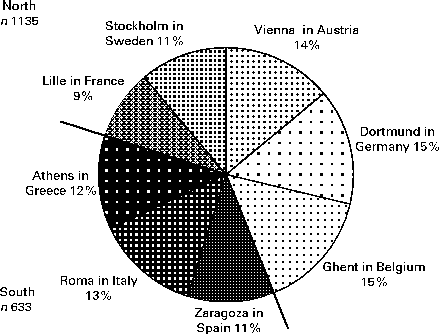
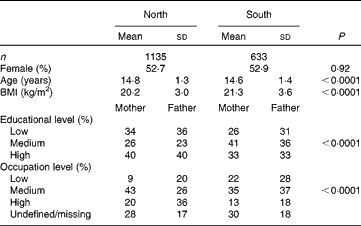
Data analysed in the present study were collected as part of the HELENA study, which was carried out between 2006 and 2007 in a number of cities in northern Europe (Vienna in Austria, Ghent in Belgium, Lille in France, Dortmund in Germany and Stockholm in Sweden) and southern Europe (Athens in Greece, Roma in Italy and Zaragoza in Spain (Fig. 1)), as described previously( Reference Moreno, De and Gonzalez-Gross 25 ). Briefly, the HELENA study was designed to obtain reliable, comparable data on dietary habits, dietary patterns, body composition and physical activity levels and fitness of European adolescents aged 12·5–17·5 years. Details of the sampling procedures, field team preparation, pilot study and data reliability are reported elsewhere( Reference Iliescu, Beghin and Maes 26 ). The study was carried out in accordance with the (1) ethical guidelines of the Declaration of Helsinki, (2) good clinical practice and (3) the legislation concerning clinical research in each of the participating countries. The protocol was approved by the appropriate independent ethics committee for each study centre, and written informed consent was obtained from both parents and adolescents( Reference Beghin, Castera and Manios 27 ). In total, 3865 adolescents were enrolled through their schools, which were randomly selected according to a proportional cluster sampling methodology that took age and socio-economic status into account( Reference Beghin, Huybrechts and Vicente-Rodriguez 28 ). Fig. 1 shows the distribution of study population among the countries assessed in the HELENA study, with 1135 and 633 participants from northern and southern Europe, respectively. Table 1 summarises the mean age and mean BMI of the participants and the distribution of educational and occupation levels of the study population. The study population consisted of 1768 participants (proportion of females: 52·8 %); the mean age of the study population was 14·7 (sd 1·3) years (separately for the boys and girls). The mean BMI of the participants from southern Europe was slightly but significantly higher than that of the participants from northern Europe (P< 0·0001). A high educational and occupational level was more frequent in mothers and fathers from northern countries than in those from southern countries (all P< 0·0001).
Repartition of adolescents from European countries analysed in the present study between North and South regions.
Comparison of the clinical and socio-economic characteristics of the study population in the North and South regions (Mean values and standard deviations; number of subjects and percentages)
Assessment of diet quality
Dietary intake was assessed by two non-consecutive 24 h recalls( Reference Biro, Hulshof and Ovesen 29 ) carried out during any two convenient days in the week. As 24 h recalls could not be carried out at schools on Saturdays and Sundays, dietary intake data were not collected on Fridays and Saturdays. The 24 h recalls were recorded using a self-administered, computer-based HELENA Dietary Intake Assessment Tool (HELENA-DIAT) that has been validated in European adolescents( Reference Vereecken, Covents and Sichert-Hellert 30 ). The HELENA-DIAT is based on the assessment of dietary intakes during six meal occasions (breakfast, morning snacks, lunch, afternoon snacks, evening meal and evening snacks) on the previous day. Trained dietitians assisted the adolescents to complete the 24 h recalls when needed. The adolescents selected all the foods and beverages consumed at each meal occasion from a standardised food list. Items not present in the initial list could be added by the participants any time. To calculate energy and nutrient intakes, data from the HELENA-DIAT were linked to the German Food Code and Nutrient Database (Bundeslebensmittelschlüssel, version II.3.1)( Reference Dehne, Klemm and Henseler 31 ). Given that nutrient contents in different national or regional food composition tables are determined using different laboratory techniques, intakes of only a few nutrient classes could be calculated on the basis of the local food composition tables. Therefore, we decided to include the German food composition table (which included a large number of nutrients and food items) for further nutrient intake assessments. The Multiple Source Method was used to estimate the usual energy, nutrient and food intakes. This statistical modelling technique takes into account the within-person and between-person variability and calculates usual intakes corrected for age, sex and study centre( Reference Haubrock, Hartigg and Souverein 32 ).
To assess adolescents' diet quality, data from the HELENA-DIAT were converted into the Diet Quality Index for Adolescents, including a specific Meal index (DQI-AM). A previously validated DQI (originally developed for preschool children)( Reference Huybrechts, Vereecken and De Bacquer 33 ) was adapted for use in adolescents and measurement of their compliance with the Flemish food-based dietary guidelines (FBDG)( 34 ). The latter are based on three basic principles for a healthy diet: quality; diversity; balance. Furthermore, the daily diet was divided into nine recommended food groups, namely (1) water, (2) bread and cereals, (3) grains and potatoes, (4) vegetables, (5) fruit, (6) milk products (7), cheese, (8) meat, fish, eggs and substitutes, and (9) fats and oils. Milk products and cheese were allocated to different food groups because of the large range of fat contents. Despite differences in nutrient content, meat and fish were placed in the same food group, because the FBDG recommend an intake of 75–100 g of meat, fish, poultry or meat replacement products per d. The FBDG also recommend eating fish twice a week; however, with only two 24 h recall registrations, this frequency was difficult to assess and therefore was not taken into account in the DQI-AM calculation. For each of the food groups, a range of recommended daily intake levels, specifically for adolescents, were determined using the Belgian food-based dietary guidelines (based on the nutrient recommendations of the Belgian Health Council( 35 ) and the WHO and data on typical dietary intake levels in the Belgian population). These recommendations were very similar to (1) the FBDG in other countries and (2) the Countrywide Integrated Non-communicable Disease Intervention Program pyramid developed by the WHO( 36 ). Therefore, we considered the index to be applicable to populations across Europe. Given that consuming at least three main meals per d (breakfast, lunch and dinner) is also recommended, we also included a ‘meal component’ item in our DQI-AM to evaluate the frequency of consumption of these meals on a weekly basis.
The technical aspects of the calculation of the DQI-AM have been described by Vyncke et al. ( Reference Vyncke, Cruz-Fernandez and Fajo-Pascual 37 ). In summary, the DQI-AM consisted of the arithmetic mean of four components, also included in the FBDG: diet quality; dietary diversity; dietary balance; meal frequency. Diet quality corresponds to whether adolescents made the optimal food choices within a food group with respect to quality and whether the food chosen was represented by a ‘preference group’ (e.g. fish, fresh fruit, cereal/brown bread), a ‘moderation group’ (e.g. white bread, minced meat) or a ‘low-nutrient, energy-dense group’ (e.g. chicken nuggets, soft drinks, sweet snacks). Dietary diversity corresponds to the degree of variation in the diet. This component was determined by awarding points (ranging from 0 to 9) when at least one serving of food from a recommended food group was consumed. Dietary balance was calculated as the difference between the adequacy component (the percentage of the minimum recommended intake for each of the main food groups) and the excess component (the percentage of intake exceeding the recommendation's upper level). A meal occasion was scored 0 when no food was consumed and 1 when some food was consumed. The scores for the three occasions were summed and are expressed as a percentage; the possible scores were thus 0 % (no consumption during any of the main meal occasions), 33 % (consumption during only one main meal occasion), 66 % (consumption during two main meal occasions) and 100 % (consumption during all the three main meal occasions).
The four DQI-AM components are presented below as percentages. The quality component ranged from − 100 to 100 %, whereas the diversity, balance and meal components ranged from 0 to 100 %. The DQI-AM was computed as the mean of these four components; hence, the DQI-AM ranged from − 25 to 100 %, with higher scores reflecting a higher-quality diet. The score was calculated for each day, and the mean daily score was taken as the individual's overall index.
Assessment of parental educational level
Parental educational level (Par-Educ-Lev) data were collected using a specific questionnaire already described by Iliescu et al. ( Reference Iliescu, Beghin and Maes 26 ). In each country, Par-Educ-Lev were adapted from the International Standard Classification of Education (ISCED) (http://www.uis.unesco.org/Library/Documents/isced97-en.pdf, viewed on 27th August 2012). Par-Educ-lev as reported by the adolescents was categorised into four groups: primary education (ISCED level 0 or 1; score = 1); lower secondary education (ISCED level 2; score = 2); higher secondary education (ISCED level 3 or 4; score = 3); tertiary education (ISCED level 5 or 6; score = 4). For the purposes of the present study, we merged the two lower levels into one group (i.e. ‘primary education and lower secondary education’) and obtained three groups: low; medium; high (‘low’ was the lowest parental occupation level (Par-Occ-Lev) and ‘high’ was the highest Par-Occ-Lev). The original coding was retained when calculating the P trend values.
Assessment of parental occupation level
Par-Occ-Lev data were collected as a surrogate marker of socio-economic status via completion of a specific questionnaire( Reference Iliescu, Beghin and Maes 26 ). Par-Occ-Lev data were collected according to the International Standard Classification of Occupation (http://unstats.un.org/unsd/class/family/family2.asp?Cl = 224, viewed on 27th August 2012). The categories were scored from 1 (the highest level) to 9 (the lowest level). For the purposes of the present study, we merged the two highest levels (score 1 or 2); the medium levels (scores 3 to 5) and the lowest levels (scores 6 to 9) and obtained three groups: high; medium; low (where ‘low’ was the lowest Par-Occ-Lev and ‘high’ was the highest Par-Occ-Lev). The original coding was retained when calculating the P trend values.
Statistical analysis
Descriptive characteristics are presented as mean values and standard deviations for continuous variables and as percentage for categorical variables. Statistical analysis was carried out using the SAS software (version 9.1, SAS Institute, Inc.). Pearson's χ2 tests and t tests were used to test between-sex differences for categorical and continuous variables, respectively.
North–south trends were calculated to estimate the statistical significance of putative associations between Par-Occ-Lev and Par-Educ-Lev, on the one hand, and those between the DQI-AM and its components, on the other hand. We calculated P interaction between Par-Occ-Lev or Par-Educ-Lev and region (north–south) to determine whether the associations were significantly stronger in one of the regions.
Linear, multilevel mixed models (the MIXED procedure in SAS) were used to account for multistratum sampling. The dependent variable (outcome) included in the MIXED model was the DQI-AM or its components. The independent variables were maternal or paternal Par-Occ-Lev or Par-Educ-Lev, region (north, south) and the interaction between the two variables. Centre, school and class were included as random-effect variables. P trend and P interaction were calculated using Par-Occ-Lev and Par-Educ-Lev as continuous variables (from 1 to 4 for Par-Occ-Lev and from 1 to 3 for Par-Educ-Lev).
Results
In Table 2, the dietary intakes of adolescents in northern and southern Europe are compared. The mean intakes of fruit and vegetable juice, starch roots, potatoes, bread and rolls, cereals, butter and animal fat, and yogurt were higher in northern Europe than in southern Europe, whereas those of fruit and vegetables, pulses, meat, eggs, milk and buttermilk, and fish were higher in southern Europe than in northern Europe (all P< 0·05). The mean overall DQI-AM score and the scores of all its components were higher in southern Europe than in northern Europe (P< 0·001), with the exception of that of the DQI meal component (Table 2).
Comparison of the food intake characteristics of the study population in the North and South regions (Mean values and standard deviations)
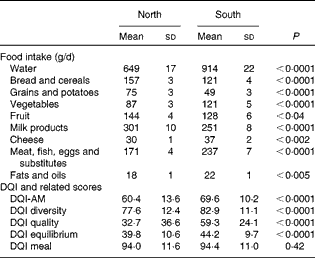
DQI, Diet Quality Index; DQI-AM, Diet Quality Index for Adolescents with a specific Meal index.
The mean DQI-AM scores by Par-Educ-Lev and Par-Occ-Lev groups are shown for each region in Fig. 2. In a model adjusted for sex, age and energy intake, the interaction between region and maternal educational level was statistically significant (P< 0·004). The average DQI-AM score was higher in southern Europe than in northern Europe (60·4 (sd 2·8) v. 69·1 (sd 0·1), respectively; P< 0·001; Δ = 12·6 %) and was associated with maternal educational level (P trend < 0·001) in northern Europe but not in southern Europe (P trend = 0·1). Similarly, the interaction between region and paternal educational level was borderline significant (P< 0·06). In a similar model adjusted for sex, age and energy intake, the interactions between region and maternal and paternal occupation levels were not statistically significant (P= 0·50). Both maternal and paternal Par-Occ-Lev were associated with the DQI-AM in southern and northern Europe.
Mean scores of the Diet Quality Index for Adolescents with a specific Meal index (DQI-AM) by region according to parents' educational level ((a) mother, (b) father) and parents' occupation level ((c) mother, (d) father). □, Low;  , medium;
  , high.

The relationships between DQI scores and Par-Educ-Lev or Par-Occ-Lev in northern and southern Europe are summarised in Table 3. Par-Educ-Lev was more strongly correlated with all the DQI-AM components (namely diversity, quality, balance and meal index) in northern Europe than in southern Europe (all the interactions with maternal educational level were significant, except for the meal component). The increase in the DQI component Z-score for an increment of one category in maternal educational level ranged from 0·10 to 0·21 in northern Europe and from 0·02 to 0·06 in southern Europe. All but one of the P trends (paternal educational level/meal component) were significant in northern Europe, whereas only the association with dietary balance achieved significance in southern Europe. Graphical representations of each of the DQI-AM components and their interactions with maternal and paternal Par-Educ-Lev or Par-Occ-Lev are shown by region in Supplementary Figs. 1 and 2 (available online).
Relationship between the Diet Quality Index (DQI) scores and parental educational or occupation levels in the North and South regions (β-Coefficients with their standard errors)

DQI-AM, Diet Quality Index for Adolescents with a specific Meal index.
* Parameter estimate from the stepwise multilevel linear regression coefficient.
Discussion
Diet quality is strongly influenced by socio-economic factors; however, little is known about the relationship between them in adolescence( Reference Neumark-Sztainer, Wall and Perry 38 – Reference Kremers, Brug and de Vries 40 ). The aim of the present study was to assess the influence of parental socio-economic status on adolescents' diet quality and establish whether the relationship between these factors differs between northern Europe and southern Europe.
The results of the HELENA study indicate that the relationship between adolescents' diet quality (as assessed by the DQI-AM) and Par-Educ-Lev differs between northern and southern regions, namely the quality of adolescents' diet was positively correlated with Par-Educ-Lev in northern Europe but not in southern Europe. This suggests that cultural and geographical factors (which affect diet quality) could attenuate the relationship between Par-Educ-Lev and adolescents' diet quality – in countries where the diet is generally healthy (such as in southern Europe). In contrast, Par-Occ-Lev (which is related to family's wealth) was found to be positively associated with adolescents' diet quality in both northern and southern Europe, suggesting that parents' economic constraints may have an impact on adolescents' diet quality independently of the geographical area.
The positive correlation between Par-Educ-Lev and the DQI-AM score observed in northern Europe could be related to the fact that well-educated people (1) make more reasoned healthy food choices for their adolescent children because they better understand nutritional messages( Reference Turrell, Hewitt and Patterson 41 ), (2) adopt healthy dietary habits more easily and more quickly than less-educated people( Reference Darmon and Drewnowski 21 , Reference Roos, Johansson and Kasmel 22 , Reference Drewnowski and Darmon 42 – Reference Roos, Talala and Laaksonen 44 ), (3) have better nutritional knowledge, which may be translated into healthier food choices/messages for the entire family (including adolescents)( Reference Dallongeville, Marecaux and Cottel 45 – Reference Sichert-Hellert, Beghin and De Henauw 47 ), and (4) live in a healthy environment providing more opportunities for better-quality foodstuff purchase and consumption than neighbourhood low-cost supermarkets used by less-educated people( Reference Jetter and Cassady 48 ). In southern Europe (in the Mediterranean), the more favourable nutritional environment tends to homogenise adolescents' dietary habits in a favourable manner and thus attenuates the influence of Par-Educ-Lev on diet quality( Reference Keys, Menotti and Karvonen 49 , Reference Trichopoulou and Lagiou 50 ).
In contrast, the association between Par-Occ-Lev (a proxy of family's wealth) and adolescents' diet quality did not depend on the geographical area – suggesting that financial constraints are an important determinant of food choice, independently of cultural factors( Reference Turrell and Kavanagh 51 ). This is supported by the observation that food cost represents a barrier to the adoption of dietary advice by low-income people all over the world( Reference Darmon and Drewnowski 21 , Reference Drewnowski and Specter 52 ). In multivariate models that included both Par-Educ-Lev and Par-Occ-Lev( Reference Braveman, Cubbin and Egerter 53 ), the latter indicators were still independently associated with diet quality; this suggests that the contribution of Par-Educ-Lev to diet quality is independent of Par-Occ-Lev (and vice versa).
In the present study, diet quality was assessed by the DQI-AM( Reference Vyncke, Cruz and Fajo-Pascual 8 ), which is a composite of diversity, quality, balance and meal index subscores. Consistent associations of similar strength were observed between Par-Educ-Lev and the scores of all the DQI-AM components in northern Europe, and no or weak association was observed in southern Europe. This suggests that cultural and geographical factors have a broad impact on the components of diet quality related to Par-Educ-Lev.
In northern Europe, adolescents' diet quality was significantly better when maternal educational level was high. A similar (but less pronounced) association was observed for paternal educational level. This finding suggests that maternal educational level is a strong determinant of diet quality. In agreement with this hypothesis, communication between parents and their adolescent children is an important issue in children's nutritional behaviour( Reference Sichert-Hellert, Beghin and De Henauw 47 ). It is known that within a family, mother–child communication is more effective than father–child communication( Reference Kim, Hanjoon and Marc 54 ). In the HELENA study, this conclusion is supported by results from the Healthy Eating Questionnaire showing that mother is the family member most likely to promote healthy dietary habits( Reference Iliescu, Beghin and Maes 26 ). In contrast, the relationships between parental socio-economic status and adolescents' diet quality were similar for boys and girls (Table S2, available online). Other determinants related to diet and environment could explain the difference observed between northern Europe and southern Europe, such as school rhythms between the two regions. During school period, the majority of adolescents from southern Europe have no lessons in the afternoon (data not published) and may probably go to their homes for lunch (60·0 v. 49·6 % of the adolescents lunch at home in southern v. northern Europe; P< 0·0001; Table S3, available online). In contrast, adolescents from northern Europe preferably lunch at school restaurant/canteen compared with southern adolescents (27·6 v. 6·4 %, respectively; P< 0·0001; Table S4, available online). It is well recognised that school meals promote healthy dietary habits( Reference Raulio, Roos and Prattala 55 – Reference Lopez-Frias, Nestares and Ianez 57 ); however, this may not be sufficient to counteract the relationship with parents' educational level. Furthermore, although adolescents from northern Europe declared more often to have access to healthy food at school compared with adolescents from southern Europe (57·8 v. 28·2 %, respectively; P< 0·0001; Table S3, available online), the same trend was observed for non-healthy food (biscuits, chips or sugar beverages). Adolescents from northern Europe declared to have less access to non-healthy food compared with adolescents from southern Europe (67·0 v. 78·1 %, respectively; P< 0·0001; Table S3, available online). These observations suggest that other determinants, especially school environment or dietary habits of adolescents, may affect the relationship between Par-Educ-Lev and adolescents' diet quality.
The present study has a number of strengths, including the large sample size and the use of a common methodology and standardised procedures across all the study centres. The tools used to collect data on diet quality, Par-Educ-Lev and Par-Occ-Lev have been tested and validated in European populations( Reference Iliescu, Beghin and Maes 26 , Reference Vereecken, Covents and Sichert-Hellert 30 ). In contrast, the locations of the study centres (i.e. large cities) are not ideal representatives of north v. south lifestyle differences and thus the present results will have to be confirmed in different datasets. Furthermore, public health programmes and government initiatives aiming at promoting healthy dietary habits (Table S1, available online) are essentially focused at the country level. Therefore, it is difficult to take into account these issues in our analyses. Lastly, the cross-sectional design of the HELENA study prevents inferring causal relationships.
In conclusion, we found that Par-Educ-Lev had an impact on the diet quality of European adolescents. However, the relationship between these factors differed when comparing northern Europe with southern Europe. This finding has implications for educational and public health policies. The presence of education-related differences suggests that there is a need for appropriate, locally delivered nutritional education programmes( Reference Kim, Hanjoon and Marc 54 ), whereas welfare policies could be applied across the country as a whole( Reference Turrell, Hewitt and Patterson 41 ). Furthermore, programmes for adolescents should be adapted as a function of Par-Educ-Lev and adolescents' geographical location( Reference Coleman, Shordon and Caparosa 58 ). Further research should assess the impact of public health programmes and state initiatives promoting healthy dietary habits in adolescents and in other populations.
Supplementary material
To view supplementary material for this article, please visit http://dx.doi.org/10.1017/S0007114513003796
Acknowledgements
The authors thank Muriel Beuvry and Anne Gautreau (CIC-9301-CH&U-Inserm de Lille, France) for help in typing the manuscript.
The HELENA Study was carried out with the financial support of the European Community Sixth RTD Framework Programme (Contract FOOD-CT-20056007034). The present study was also supported by grants from the Spanish Ministry of Science and Innovation (AP 2008-03806). The content of this article reflects only the authors' views and the European Community is not liable for any use that may be made of the information contained herein. The European Community had no role in the design and analysis of the study or in the writing of this article.
The authors' contributions are as follows: L. A. M. coordinated the HELENA project at the international level; L. A. M., Y. M., M. K., K. W. and J. D. were involved in the design of the HELENA project and locally coordinated the HELENA project; L. B., T. D. V., M. C.-G., E. T. and M. P. organised the fieldwork and collected the data locally; I. H. was responsible for the database management and T. D. V. was responsible for DQI computations; L. B. was responsible for regulatory issues; L. D. carried out the statistical analysis; L. B. and L. D. drafted the article. All authors read and approved the final manuscript.
None of the authors has any conflicts of interest to declare.
Appendix: HELENA Study Group
Coordinator: Luis A. Moreno
Core Group members: Luis A. Moreno, Frédéric Gottrand, Stefaan De Henauw, Marcela González-Gross, Chantal Gilbert
Steering Committee: Anthony Kafatos (President), Luis A. Moreno, Christian Libersa, Stefaan De Henauw, Jackie Sánchez, Fréderic Gottrand, Mathilde Kersting, Michael Sjöstrom, Dénes Molnár, Marcela González-Gross, Jean Dallongeville, Chantal Gilbert, Gunnar Hall, Lea Maes, Luca Scalfi
Project Manager: Pilar Meléndez
Universidad de Zaragoza (Spain)
Luis A. Moreno, Jesús Fleta, José A. Casajús, Gerardo Rodríguez, Concepción Tomás, María I. Mesana, Germán Vicente-Rodríguez, Adoración Villarroya, Carlos M. Gil, Ignacio Ara, Juan Revenga, Carmen Lachen, Juan Fernández Alvira, Gloria Bueno, Aurora Lázaro, Olga Bueno, Juan F. León, Jesús Mª Garagorri, Manuel Bueno, Juan Pablo Rey López, Iris Iglesia, Paula Velasco, Silvia Bel
Consejo Superior de Investigaciones Científicas (Spain)
Ascensión Marcos, Julia Wärnberg, Esther Nova, Sonia Gómez, Esperanza Ligia Díaz, Javier Romeo, Ana Veses, Mari Angeles Puertollano, Belén Zapatera, Tamara Pozo
Université de Lille 2 (France)
Laurent Beghin, Christian Libersa, Frédéric Gottrand, Catalina Iliescu, Juliana Von Berlepsch
Research Institute of Child Nutrition Dortmund, Rheinische Friedrich-Wilhelms-Universität Bonn (Germany)
Mathilde Kersting, Wolfgang Sichert-Hellert, Ellen Koeppen
Pécsi Tudományegyetem (University of Pécs) (Hungary)
Dénes Molnar, Eva Erhardt, Katalin Csernus, Katalin Török, Szilvia Bokor, Mrs. Angster, Enikö Nagy, Orsolya Kovács, Judit Répasi
University of Crete School of Medicine (Greece)
Anthony Kafatos, Caroline Codrington, María Plada, Angeliki Papadaki, Katerina Sarri, Anna Viskadourou, Christos Hatzis, Michael Kiriakakis, George Tsibinos, Constantine Vardavas Manolis Sbokos, Eva Protoyeraki, Maria Fasoulaki
Institut für Ernährungs- und Lebensmittelwissenschaften – Ernährungphysiologie. Rheinische Friedrich Wilhelms Universität (Germany)
Peter Stehle, Klaus Pietrzik, Marcela González-Gross, Christina Breidenassel, Andre Spinneker, Jasmin Al-Tahan, Miriam Segoviano, Anke Berchtold, Christine Bierschbach, Erika Blatzheim, Adelheid Schuch, Petra Pickert
University of Granada (Spain)
Manuel J. Castillo Garzón, Ángel Gutiérrez Sáinz, Francisco B. Ortega Porcel, Jonatan Ruiz Ruiz, Enrique García Artero, Vanesa España Romero, David Jiménez Pavón, Cristóbal Sánchez Muñoz, Victor Soto, Palma Chillón, Jose M. Heredia, Virginia Aparicio, Pedro Baena, Claudia M. Cardia, Ana Carbonell, Magdalena Cuenca-García
Istituto Nazionalen di Ricerca per gli Alimenti e la Nutrizione (Italy)
Davide Arcella, Giovina Catasta, Laura Censi, Donatella Ciarapica, Marika Ferrari, Cinzia Le Donne, Catherine Leclerq, Luciana Magrì, Giuseppe Maiani, Rafaela Piccinelli, Angela Polito, Raffaela Spada, Elisabetta Toti
University of Napoli ’Federico II’ Dept of Food Science (Italy)
Luca Scalfi, Paola Vitaglione, Concetta Montagnese
Ghent University (Belgium)
Ilse De Bourdeaudhuij, Stefaan De Henauw, Tineke De Vriendt, Lea Maes, Christophe Matthys, Carine Vereecken, Mieke de Maeyer, Charlene Ottevaere, Inge Huybrechts
Medical University of Vienna (Austria)
Kurt Widhalm, Katharina Phillipp, Sabine Dietrich
Harokopio University (Greece)
Yannis Manios, Eva Grammatikaki, Zoi Bouloubasi, Tina Louisa Cook, Sofia Eleutheriou, Orsalia Consta, George Moschonis, Ioanna Katsaroli, George Kraniou, Stalo Papoutsou, Despoina Keke, Ioanna Petraki, Elena Bellou, Sofia Tanagra, Kostalenia Kallianoti, Dionysia Argyropoulou, Katerina Kondaki, Stamatoula Tsikrika, Christos Karaiskos
Institut Pasteur de Lille (France)
Jean Dallongeville, Aline Meirhaeghe
Karolinska Institutet (Sweden)
Michael Sjöstrom, Patrick Bergman, María Hagströmer, Lena Hallström, Mårten Hallberg, Eric Poortvliet, Julia Wärnberg, Nico Rizzo, Linda Beckman, Anita Hurtig Wennlöf, Emma Patterson, Lydia Kwak, Lars Cernerud, Per Tillgren, Stefaan Sörensen
Asociación de Investigación de la Industria Agroalimentaria (Spain)
Jackie Sánchez-Molero, Elena Picó, Maite Navarro, Blanca Viadel, José Enrique Carreres, Gema Merino, Rosa Sanjuán, María Lorente, María José Sánchez, Sara Castelló
Campden BRI (United Kingdom)
Chantal Gilbert, Sarah Thomas, Elaine Allchurch, Peter Burguess
SIK – Institutet foer Livsmedel och Bioteknik (Sweden)
Gunnar Hall, Annika Astrom, Anna Sverkén, Agneta Broberg
Meurice Recherche & Development asbl (Belgium)
Annick Masson, Claire Lehoux, Pascal Brabant, Philippe Pate, Laurence Fontaine
Campden & Chorleywood Food Development Institute (Hungary)
Andras Sebok, Tunde Kuti, Adrienn Hegyi
Productos Aditivos SA (Spain)
Cristina Maldonado, Ana Llorente
Cárnicas Serrano SL (Spain)
Emilio García
Cederroth International AB (Sweden)
Holger von Fircks, Marianne Lilja Hallberg, Maria Messerer
Lantmännen Food R&D (Sweden)
Mats Larsson, Helena Fredriksson, Viola Adamsson, Ingmar Börjesson
European Food Information Council (Belgium)
Laura Fernández, Laura Smillie, Josephine Wills
Universidad Politécnica de Madrid (Spain)
Marcela González-Gross, Agustín Meléndez, Pedro J. Benito, Javier Calderón, David Jiménez-Pavón, Jara Valtueña, Paloma Navarro, Alejandro Urzanqui, Ulrike Albers, Raquel Pedrero, Juan José Gómez Lorente



