


Overweight and obesity have increased markedly over the past two decades in developed countries(Reference Haslam and James1, Reference Flegal, Carroll and Kuczmarski2) and this increase is predicted to continue(Reference Kelly, Yang and Chen3). A large body of literature shows that socio-economically disadvantaged groups experience a greater prevalence of overweight or obesity compared with their more-advantaged counterparts, and in developed countries this association has been observed more consistently among women(Reference McLaren4, Reference Sobal and Stunkard5). Inequalities in overweight or obesity are considered a major contributing factor to the higher morbidity and mortality accruing from chronic conditions such as CVD, type 2 diabetes and some cancers seen among lower socio-economic groups(Reference Turrell, Stanley and de Looper6). Although there is extensive literature documenting socio-economic inequalities in overweight or obesity, relatively less is known about the factors contributing to this relationship(Reference Ball, Mishra and Crawford7).
Weight-control behaviours (WCB) are behaviours adopted by individuals to intentionally reduce their weight or prevent weight gain(Reference Williams, Germov and Young8). Some studies show that higher socio-economic groups weigh themselves more frequently(Reference Jeffery and French9, Reference Wardle and Griffith10), have a greater prevalence of weight-loss intentions(Reference Paxton, Sculthorpe and Gibbons11) and report current(Reference Kruger, Galuska and Serdula12) and past weight-control(Reference Weiss, Galuska and Khan13) measures more frequently. On the other hand, studies have shown inconsistent associations between WCB and socio-economic position (SEP)(Reference Timperio, Cameron-Smith and Burns14, Reference Serdula, Williamson and Anda15). Although few studies have examined socio-economic differences in WCB, there are even fewer studies(Reference Jeffery and French9, Reference Paxton, Sculthorpe and Gibbons11, Reference Tsai, Wadden and Pillitteri16) that have examined the types of weight-control strategies used by different socio-economic groups. These studies are limited in a number of ways. Some were published over a decade ago(Reference Jeffery and French9, Reference Paxton, Sculthorpe and Gibbons11), or were conducted among a population subgroup (e.g. women aged 20–45 years)(Reference Jeffery and French9) or have been limited in examining some WCB in detail (e.g. have combined exercise strategies such as moderate physical activity, vigorous physical activity and walking, rather than examining them separately)(Reference Jeffery and French9, Reference Paxton, Sculthorpe and Gibbons11, Reference Tsai, Wadden and Pillitteri16). Despite the limitations, these studies suggest that higher socio-economic groups are more likely to reduce their food or energy intakes(Reference Jeffery and French9, Reference Paxton, Sculthorpe and Gibbons11), increase their level of exercise(Reference Jeffery and French9, Reference Tsai, Wadden and Pillitteri16) and use commercial weight-loss programmes(Reference Tsai, Wadden and Pillitteri16) or meal replacements(Reference Tsai, Wadden and Pillitteri16), compared with their lower socio-economic counterparts.
Socio-economic differences in WCB may also be due to differences in the perceived barriers that these groups have towards weight control. To our knowledge, there are no known population-based studies that have examined socio-economic differences in barriers to weight control. However, a number of studies have examined barriers to weight-control programmes among population subgroups and have found that programme cost, availability of childcare, lack of time, family commitments and conflict with work schedules were barriers perceived by low-income women for attending weight-control programmes(Reference French, Jeffery and Story17). Furthermore, some studies have examined barriers to healthy dietary intakes and physical activity. The cost and availability of healthy foods(Reference Giskes, van Lenthe and Brug18, Reference Inglis, Ball and Crawford19), lack of time because of work commitments(Reference Inglis, Ball and Crawford19) and inconvenience of access to facilities(Reference Burton, Turrell and Oldenburg20) have been suggested as possible barriers to healthy dietary behaviours and physical activity that vary between socio-economic groups.
Understanding and addressing the WCB of socio-economically disadvantaged groups may be important for clinical and public health interventions in order to decrease overweight or obesity and their health consequences among these groups. The present study addresses this by examining socio-economic differences in WCB among a population representative sample of middle-aged adults. Middle-aged adults experience the greatest prevalence of overweight and obesity(Reference Dunstan, Zimmet and Welborn21). Furthermore, among this age group, weight status is less influenced by growth, development or ageing(Reference Ball, Crawford and Ireland22) and SEP is generally more established compared with younger age groups(Reference Hadden23).
Methods
Participants
A sample of 1500 middle-aged Australian citizens residing in Brisbane city (Australia) were selected by simple random sampling from the electoral roll in 2009. The electoral roll is Australia's most comprehensive population registrar (voting is compulsory for all adults aged ≥18 years) and has almost complete coverage (95 %) of the age group selected in the present study(24). The present study was approved by the Queensland University of Technology Human Research Ethics Committee in Brisbane, Australia.
Data collection
A self-administered postal questionnaire collected information on the participants’ demographic characteristics, SEP, weight status, WCB and barriers to weight control. The mail survey method recommended by Dillman(Reference Dillman25), involving three to five items of correspondence sent to selected individuals, was used to maximise the study response rate. This included, among other things, a pre-notification letter, a reply-paid envelope and a small gratuity (i.e. one-dollar scratch-it ticket) with the questionnaire, reminder mails to encourage non-responders to return the questionnaire, a cover letter and logo on the questionnaire informing the participants that the study was sponsored by a university and a personalised salutation on all correspondence(Reference Brennan26–Reference Erwin and Wheelright28). The final response rate was 69·8 % (1013 of 1452) after excluding refusals, non-respondents, those who could not be reached (e.g. questionnaires returned to sender) and those who were unable to fill out the questionnaire (e.g. because of illness or cognitive impairment).
Test–retest reliability study
To test the reliability of several new measures in the survey, a separate sample of 100 participants was asked to complete the questionnaire twice, 2 weeks apart (47·0 % response rate for return of both surveys). The same sampling method and mail-out procedure used in the main study were used. The κ coefficient and crude agreement were calculated for weight control in the past 12 months, as well as for weight-control strategies and barriers to weight control. The benchmarks used to assess the strength of reliability were based on values proposed by Landis and Koch(Reference Landis and Koch29), where κ ≤ 0·00 is considered poor, 0·00–0·20 is slight, 0·21–0·40 is fair, 0·41–0·60 is moderate, 0·61–0·80 is substantial and 0·81–1·00 is almost perfect reliability.
Measures
Weight status and BMI
BMI was calculated using the Quetelet index (weight in kilograms divided by the square of height in metres (kg/m2)). Self-reported height and weight were ascertained by the following questions: ‘How tall are you without shoes on? (Please tell us in either centimetres, or feet and inches)’ and ‘How much do you weigh without your clothes and shoes? (Please tell us in either kilograms, or stone and pounds)’. BMI was then categorised into the National Health and Medical Research Council weight status categories of underweight (<18·5 kg/m2), normal weight (18·5–24·9 kg/m2), overweight (25·0–29·9 kg/m2) and obese (≥30·0 kg/m2)(30).
Weight-control behaviours
Weight control in the past 12 months. Weight control in the past 12 months was ascertained by means of a modified question used in the Australian Diabetes, Obesity and Lifestyle Study(31). Participants were asked: ‘Which of the following best describes your situation within the past 12 months?’. Response options were: I have been doing things to ‘Try to gain weight’, ‘Avoid weight gain’, ‘Try to lose weight’; and ‘I have not done anything about my weight’. These response options were re-categorised into two groups for analyses: ‘Tried to lose weight or avoid weight gain’ and ‘Did not engage in weight control or tried to gain weight’. The κ coefficient was 0·95 and crude agreement was 0·98, indicating an almost perfect agreement.
Weight-control strategies. Participants who engaged in weight control were subsequently asked about their engagement in a range of weight-control strategies. The question asked was: ‘In the past 12 months, have you done any of the following to lose weight or avoid gaining weight?’. A list of twenty-seven specific weight-control strategies, adopted from items from the Australian Longitudinal Study of Women's Health(Reference Williams, Germov and Young8) and National Health and Nutrition Examination Survey(32), was provided (as presented in Table 2) and participants were asked in a yes/no format whether they were engaged in any of the strategies. The κ coefficient for weight-control strategies ranged from −0·04 to 1·00. It has been suggested that κ coefficients should be interpreted with caution when the prevalence of an outcome is low(Reference Feinstein and Cicchetti33, Reference Mak, Yau and Chan34). Weight-control strategies with κ coefficients (see Table 2) <0·41 had high crude agreements, except for moderate physical activity, indicating that the reliability of this strategy was fair.
Barriers to weight control
This item was adopted from previous studies (including qualitative and quantitative studies) exploring socio-economic differences in barriers to healthy dietary intakes and physical activity(Reference Giskes, van Lenthe and Brug18–Reference Burton, Turrell and Oldenburg20). All participants were asked to rate their agreement on statements about fourteen barriers to weight control on a 4-point Likert scale, from ‘Strongly agree’ to ‘Strongly disagree’ or ‘Don't know’ (as presented in Table 4). Participants were asked: ‘How much do you agree or disagree with each statement?’ The majority of perceived barriers to weight control had a moderate-to-perfect reliability (see Table 4), except for ‘Requires support from other people around’ (κ = 0·39) and ‘Not difficult at all’ (κ = 0·29); however, these two perceived barriers had a high crude agreement of 0·69 and 0·76, respectively. This suggests that these barriers are substantially reliable.
Socio-economic position
The highest educational qualification and equivalised household income were considered to be the most appropriate socio-economic indicators for the present study. Education reflects the potential knowledge that participants may have about recommended dietary intakes, physical activity and healthy weight ranges(Reference Galobardes, Shaw and Lawlor35). Income reflects the access to resources, such as money to purchase food or special dietary or weight-loss products, and/or pays for access to some organised physical activity or physical activity infrastructure(Reference Sobal36, Reference Galobardes, Morabia and Bernstein37).
Education. Education was ascertained by the following question: ‘What is the highest educational qualification you have completed?’ Response options were: (1) year 9 or less, (2) year 10 (junior/4th form), (3) year 11 (senior/5th form), (4) year 12 (senior/6th form), (5) certificate (trade or business), (6) diploma or associated degree, (7) Bachelor's degree (pass or honours), (8) graduate diploma or graduate certificate and (9) postgraduate degree (Master's degree or doctorate). These response categories were re-grouped into four educational levels for analyses: (i) secondary-school qualification or lower (response options 1–4), (ii) certificate (option 5), (iii) diploma (option 6) and (iv) Bachelor's degree or higher (options 7–9).
Equivalised household income. Household income was ascertained by the question: ‘Please add up the amount of before-tax income received by all members of your household and tick the box that comes closest to this number’. Participants had the option to select from the eleven income categories (their income per year, per fortnight or per week), or the option ‘Don't know’ or ‘Don't want to answer this’. Household income was used to calculate equivalised household income, an adjusted income measure that takes into account the different size and composition of households(38). Equivalised household income was calculated by dividing household income (the mid-point of the income range per year) by equivalised income units. Equivalised income units were determined by summing the number of people in the household, whereby the first person in the household was assigned a weight of 1·0, and subsequent adults (≥18 years of age) and children (≤17 years of age) were assigned weights of 0·5 and 0·3, respectively. This method has been adopted from the Australian Bureau of Statistics(38). Equivalised household income was then divided into quartiles: ‘<$AUD27 130·1/year’, ‘$AUD27 130·1–$AUD43 333·0/year’, ‘$AUD43 333·1–$AUD61 904·8/year’ and ‘>$AUD61 904·8/year’.
Analyses
The χ 2 test was used to compare the sociodemographic characteristics of men and women in the sample. Statistical comparison was not made between the sociodemographic distribution of the sample and the Brisbane census data, as the census data were not independent of the sample and the large cell sizes in the census data would have made minor differences statistically significant. Instead, comparisons between the distribution of the study sample and census data were made and meaningful deviations in their distributions were noted. All multivariate analyses were adjusted for gender, country of birth and BMI. Exploratory analyses of the data confirmed that the magnitude of associations examined was different for men and women; however, the direction of associations was the same. Hence, rather than stratify by gender, analyses were adjusted for gender differences to offer greater statistical power. Country of birth was adjusted for in the analyses as it was associated with SEP and weight control in the past 12 months. It was ascertained by the following open question: ‘In which country were you born?’ Responses were categorised as ‘Australia or New Zealand’, ‘UK’ and ‘Other country’.
Participants with missing data on their country of birth, BMI, education, income and WCB in the past 12 months were excluded from the analyses (n 87, 8·6 %); the remaining analytical sample comprised 926 participants. Analyses examining differences in weight-control strategies and barriers to weight control consisted of different analytical sample sizes because of varying numbers of participants with missing data.
Binary logistic regression was used to examine socio-economic differences in WCB, and multinomial logistic regression was used to examine socio-economic differences in barriers to weight control. Only socio-economic differences in more prevalent weight-control strategies (i.e. strategies engaged by >20 % of the sample) were examined. Analyses were conducted using the Statistical Package for the Social Sciences statistical software package version 17·0 (SPSS Inc., Chicago, IL, USA). Differences were considered statistically significant if P ≤ 0·05 (two-tailed) or if the confidence interval of the OR was exclusive of 1.
Results
Participants
Table 1 shows that older participants and those with a Bachelor's degree or higher were over-represented in the current sample, in comparison with the 2006 Census data for the study region(39). A higher proportion of women were within the healthy weight range. Women had a marginally lower BMI than men. However, men were less likely to have tried to lose or maintain their weight in the past 12 months compared with women. The majority of men (60·6 %) and women (69·4 %) reported engaging in weight control in the past 12 months.
Sociodemographic characteristics of the study sample compared with the Brisbane population
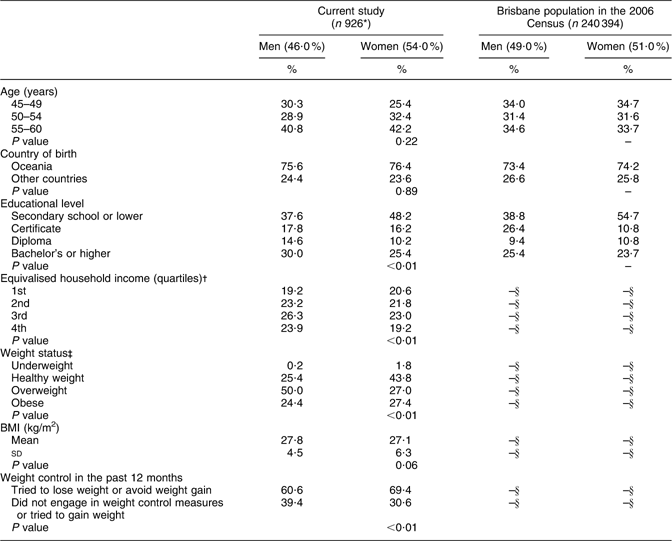
*The analytical sample excludes those with missing data for country of birth, BMI, education, income and weight-control behaviours in the past 12 months.
†Participants who responded ‘Don't know’ or ‘Don't want to answer’ were included in the analyses; however, results are not shown in the current table.
‡Weight status was categorised into the National Health and Medical Research Council categories of underweight (<18·5 kg/m2), normal weight (18·5–24·9 kg/m2), overweight (25·0–29·9 kg/m2) and obese (≥30·0 kg/m2)(Reference Timperio, Cameron-Smith and Burns40).
§Categories were not comparable to those used in the 2006 Census.
Weight-control strategies
In Table 2, weight-control strategies adopted by the sample are listed in the order from the most to the least prevalent. Participants who did not engage in weight control or were trying to gain weight were excluded in this table. The more common weight-control strategies were dietary modification and exercise strategies (up to 80 %), whereas visiting health professionals (4–11 %) for weight-control advice and the use of appetite suppressants or diet pills (2·5 %), laxatives (2·2 %), diuretics (1·2 %), fasting (2·5 %), vomiting (0·7 %) and smoking (2·0 %) were less prevalent strategies.
The prevalence of weight-control strategies adopted in the past 12 months and test–retest reliabilityFootnote *
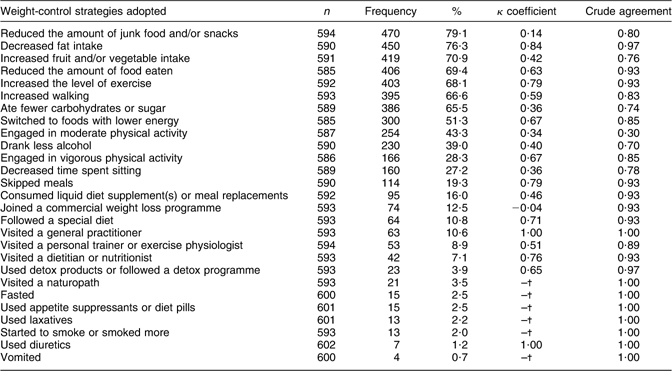
* Only participants who reported weight control in the past 12 months are included in this table. The analytical sample excludes those with missing data for country of birth, BMI, education, income and weight-control strategies.
† Unable to calculate κ coefficient because of perfect agreement between the two questionnaires.
Socio-economic differences in weight status and weight-control strategies
Table 3 shows that participants with lower educational levels and lower household incomes were more likely to be obese and less likely to engage in weight-control activities to lose weight or avoid weight gain compared with their more-advantaged counterparts.
The OR and 95 % CI for socio-economic differences in weight status and weight-control strategiesFootnote *
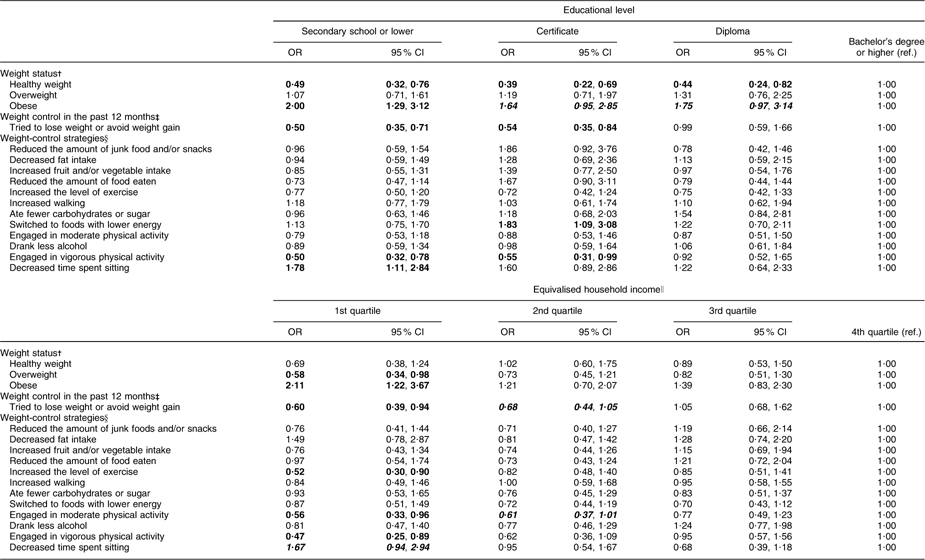
Ref., reference category.
* All logistic regression analyses were adjusted for gender, country of birth and BMI except for analyses on socio-economic differences in weight status, which were adjusted for gender and country of birth only. The analytical sample excludes those with missing data for country of birth, BMI, education, income and weight-control behaviours in the past 12 months. Bold values hold statistically significant association and italicised bold values are borderline significant.
† Participants who were underweight or had missing weight status information have been included in the analyses; however, results are not shown in the table. Because of small cell count, OR for the ‘underweight’ group could not be generated.
‡ The analytical sample consisted of n 961 participants. The reference group consisted of participants who ‘Did not engage in weight-control or tried to gain weight’.
§ Weight-control strategies engaged in by >20 % of participants who adopted weight-control strategies are included in this table. The analytical sample size varied for each strategy; refer to Table 2 for sample size.
∥ Participants who responded ‘Don't know’ or ‘Don't want to answer’ were included in the analyses; however, results are not shown in the current table.
Socio-economically disadvantaged groups were less likely to increase their level of exercise (income only) or engage in vigorous or moderate (income only) physical activity compared with their socio-economically advantaged counterparts. The disadvantaged group was also more likely to report decreasing time spent sitting as a strategy for weight control. No socio-economic differences were observed in other weight-control strategies.
Barriers to weight control
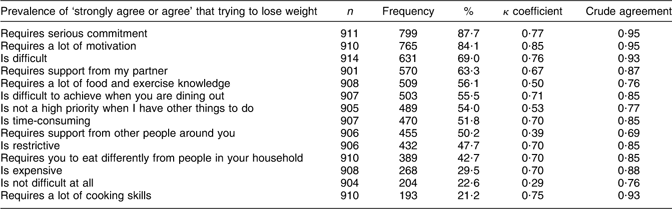
Table 4 shows that over half of the participants agreed that trying to lose weight required serious commitment (87·7 %), required considerable motivation (84·1 %), was difficult (69·0 %), required support from their partner (63·3 %), required a lot of food and exercise knowledge (56·1 %), was difficult to achieve when they were dining out (55·5 %), was not of high priority (54·0 %), was time-consuming (51·8 %) and required support from other people around oneself (50·2 %). Less-prevalent beliefs about weight control were that it was restrictive (47·7 %), required eating differently from other people in the household (42·7 %), was expensive (29·5 %), was not difficult at all (22·6 %) and required a lot of cooking skills (21·2 %).
The prevalence of perceived barriers to weight control and test–retest reliability
Socio-economic differences in barriers to weight control
Barriers to weight control by education and income are summarised in Table 5. There were some socio-economic differences in barriers to weight control. Participants with secondary-school or lower education were more likely to perceive that weight control was expensive and required a lot of cooking skills, whereas those within the lowest income quartile were more likely to perceive that trying to lose weight was not of high priority, required them to eat differently from other people in the household and was expensive, compared with their more-advantaged counterparts. There were no socio-economic differences in other barriers to weight control.
OR and 95 % CI for socio-economic differences in barriers to weight controlFootnote *
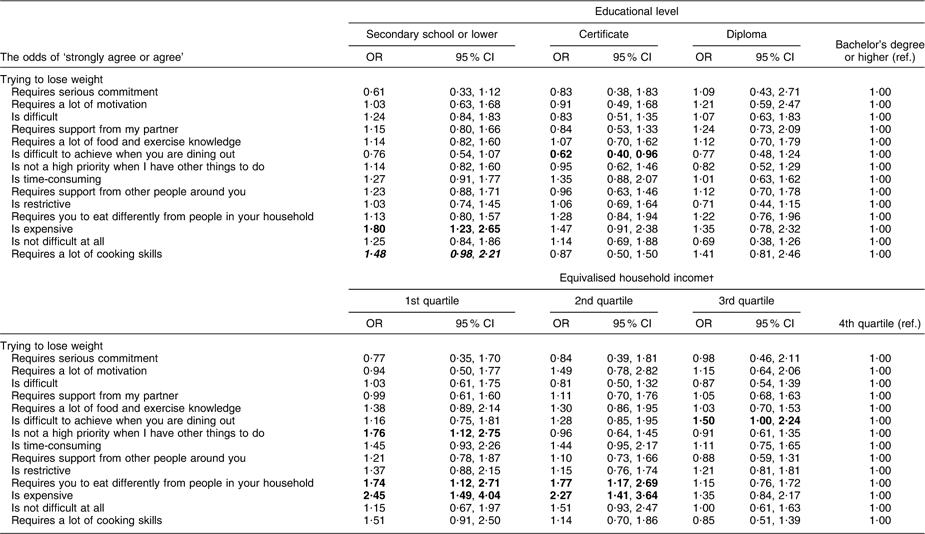
Ref., reference category.
* Multinomial logistic regression analyses were adjusted for gender, country of birth and BMI. The reference group for barriers to weight control was ‘strongly disagree or disagree’. Those who responded ‘Don't know’ were included in the analyses as a separate group not reported in the current table. The analytical sample excludes those with missing data for country of birth, BMI, education, income and weight-control behaviours in the past 12 months. Bold values hold statistically significant association and italicised bold values are borderline significant.
† Participants who responded ‘Don't know’ or ‘Don't want to answer’ were included in the analyses; however, results are not shown in the current table.
Discussion
The present study showed that there were marked socio-economic differences in WCB and in some perceived barriers to weight control. Lower socio-economic groups were less likely to engage in WCB; however, when they did, they were less likely to engage in exercise strategies, including moderate and vigorous physical activities, compared with their higher socio-economic counterparts. Lower socio-economic groups were more likely to perceive a number of barriers to engaging in WCB; compared with their more-advantaged counterparts they were more likely to believe that trying to lose weight was expensive, not of high priority, required a lot of cooking skills and involved eating differently from other people in the household. Socio-economic differences in weight control and barriers to WCB may contribute to the higher prevalence of overweight or obesity and morbidity or mortality from weight-related causes seen among lower socio-economic groups.
Weight-control strategies
Similar to previous studies, we also found that dietary modification (e.g. decreasing fat and reducing the quantity of food or energy intakes) and exercise strategies were the most popular practices adopted(Reference Kruger, Galuska and Serdula12). However, the use of appetite suppressants or diet pills, laxatives, diuretics, fasting, vomiting and smoking were less prevalent(Reference Kruger, Galuska and Serdula12, Reference Weiss, Galuska and Khan13, Reference Timperio, Cameron-Smith and Burns40). This may be because of a number of factors. Similar to international guidelines(41), Australian guidelines for losing or maintaining weight promote dietary modification, physical activity and a combination of these(42). Promotion of these strategies may have resulted in the high proportion of participants in the present study engaging in these behaviours. The less-frequently adopted behaviours (such as diet pills, laxatives, diuretics) may be less sustainable strategies on a long-term basis, and may involve adopting entirely new behaviours rather than modifying existing behaviours. Furthermore, these strategies may be less effective and more harmful for health and may have greater cost implications compared with the more popular strategies(Reference Williams, Germov and Young8, Reference Tsai, Wadden and Pillitteri16). Interestingly, consulting health professionals for weight control was reported by only a small proportion of participants (4–10 %). This may be due to a number of factors, including cost of consulting these professionals, participants’ perceived ability to self-manage weight control and preference for strategies that may be perceived as resulting in faster or easier weight loss (e.g. fad diets, some liquid diet supplements, commercial weight-loss programmes).
Socio-economic differences in weight-control strategies
Consistent with international(Reference Jeffery and French9, Reference Story, French and Resnick43) and Australian studies(Reference Paxton, Sculthorpe and Gibbons11), our study showed that there were socio-economic differences in WCB, despite greater prevalence of overweight and obesity among the disadvantaged group(Reference McLaren4, Reference Sobal and Stunkard5). A possible rationale for this paradox is that socio-economic groups may differ in their attitudes and beliefs towards lifestyle, health and diseases. Previous studies suggest that socio-economic differences in healthy lifestyle are associated with differences in attitudes towards health; lower socio-economic groups are more likely to possess stronger beliefs in the influence of chance on health, have lower levels of health consciousness and think less about their future(Reference Wardle and Steptoe44). Others have found that disadvantaged groups do not perceive poor dietary intake to play an important role in the development of overweight or obesity(Reference Dammann and Smith45). Hence, lower socio-economic groups may be less likely to adopt a healthy lifestyle or engage in behaviours to control their weight when there are minimal perceived benefits or associations with improved health outcomes.
Furthermore, among those who engaged in weight control, lower socio-economic groups were less likely to report engaging in exercise for weight control compared with their more-advantaged counterparts. Although existing studies have also found socio-economic differences in adopting exercise strategies(Reference Jeffery and French9, Reference Tsai, Wadden and Pillitteri16), these studies did not examine specific types of exercise strategies. The present study showed that disadvantaged groups were less likely to engage in vigorous or moderate physical activities for weight control compared with their socio-economically advantaged counterparts. In general, the literature also suggests that lower socio-economic groups are less likely to engage in moderate or vigorous physical activity(Reference Gidlow, Johnston and Crone46). However, lower socio-economic groups are more likely to engage in occupational physical activity, which may result in them being less likely to engage in leisure-time physical activity to reduce or maintain their weight(Reference Popham and Mitchell47). Socio-economic differences in physical activity level or exercise strategies for weight control may be partly due to the inequalities in morbidity associated with overweight or obesity among lower socio-economic groups(Reference Turrell, Stanley and de Looper6, Reference Brown and Siahpush48). Furthermore, these groups may have more limited exposure, fewer activity-promoting cognitions, may perceive fewer anticipated benefits of physical activity, experience less social support or may have inconvenient access to facilities. The costs of these activities may also be a barrier(Reference Burton, Turrell and Oldenburg20). Consequently, lower socio-economic groups may be more inclined to target their sedentary behaviours, such as time spent sitting, compared with advantaged groups.
No socio-economic differences were seen for dietary strategies for weight control. This may be because of a number of factors. In contrast to physical activity, which may be a planned behaviour, consumption of food is integrated into everyone's lifestyle and may therefore be easier to modify, including for those in lower socio-economic groups. Furthermore, as diet comprises a range of food and nutrient intakes, which differ in their capacity to contribute to weight loss or maintenance(30), there may be more scope to manipulate dietary factors compared with physical activity in order to achieve these goals.
Socio-economic differences in barriers to weight control
Findings suggest that lower socio-economic groups are more likely to perceive a number of barriers to weight control compared with their more-advantaged counterparts. Previous studies examining perceived barriers to general healthy dietary intakes and physical activity among disadvantaged groups have reported similar barriers, including cost and availability of healthy foods(Reference Giskes, van Lenthe and Brug18, Reference Inglis, Ball and Crawford19), lack of time because of work commitments(Reference Inglis, Ball and Crawford19), inconvenience of access to facilities(Reference Burton, Turrell and Oldenburg20) and poorer nutritional knowledge(Reference Parmenter, Waller and Wardle49). Hence, these reported perceived barriers for undertaking health-promoting diet and physical activity among lower socio-economic groups may play a role in the differences observed for perceptions of barriers to weight loss.
Different measures of SEP may represent different pathways by which socio-economically disadvantaged groups perceive barriers to weight control. Education represents an individual's acquired knowledge and ability to analyse health-related information(Reference Galobardes, Shaw and Lawlor35). We found that less-educated groups were more likely to perceive that weight control was expensive and required cooking skills. This may be because these groups have lower nutritional knowledge and less healthy cooking skills. However, income represents the material resources of an individual more accurately – the amount of money they have available to spend on health and on prevention of ill health(Reference Galobardes, Shaw and Lawlor35). Hence, lower-income groups may perceive weight control as a less important priority because of competing constraints on material resources.
Strengths and limitations
The present study achieved a high response (69·8 %) and the measures of WCB and barriers to losing weight were shown to be reliable according to the test–retest reliability of these items. The sociodemographic and health characteristics of Brisbane residents in the study region did not differ markedly from those of the remaining Australian population(50). A limitation of the present study is that there may be response bias and/or social desirability bias among individuals who are sensitive to questions regarding their WCB. The sample under-represented less-educated groups; therefore, the magnitude of the socio-economic differences reported in the study may underestimate that of the population. Furthermore, participants may under-report socially undesirable behaviours, such as the use of diet pills, vomiting and fasting, and over-report more ‘acceptable’ behaviours that are consistent with the recommendations to maintain a healthy weight(42). Perceived barriers to weight control may have been over-reported as most barrier items were phrased negatively in the present study (e.g. ‘Trying to lose weight is difficult’). Given that socio-economically disadvantaged groups are more likely to be overweight or obese, the negative phrasing of these items may have resulted in reporting bias, potentially increasing the magnitude of the socio-economic inequalities in the perceived barriers reported in the present study. Another limitation of the study is the use of self-reported height and weight. Lower socio-economic groups are more likely to underestimate their BMI when using self-reported height and weight(Reference McLennan51). Thus, the present study may underestimate the true prevalence of overweight and obesity and the magnitude of these inequalities. However, studies have shown that self-reported height and weight are relatively valid measures at a population level(Reference Tehard, Van Lielre and Com Nougue52, Reference Waters53). Furthermore, a common limitation of postal questionnaires and self-completed surveys is the under-representation of socio-economically disadvantaged groups(Reference Drivsholm, Eplov and Davidsen54, Reference van Loon, Tijhuis and Picavet55). Those excluded from the analytical sample because of missing data had lower educational and income levels, which may have further attenuated the magnitude of the socio-economic differences found. The sampling frame of the present study was obtained from the Australian electoral roll, which excludes non-Australian citizens. The Australian migration policy selects migrants on the basis of their occupation and health characteristics(Reference Turrell, Stanley and de Looper6); therefore, migrants tend to have health behaviours and health outcomes that are the same as or better than Australian citizens. Their exclusion in the present study is unlikely to underestimate the socio-economic inequalities in weight status and the potential determinants of these inequalities. Finally, the present study had a cross-sectional study design; hence, we were unable to ascertain the duration of weight-control strategies that individuals engaged themselves in.
In conclusion, the present study showed that there were marked socio-economic differences in WCB and in several perceived barriers to weight control. Therefore, targeting the types of weight-control strategies used and perceived barriers to weight control may be important in health promotion strategies that address socio-economic inequalities in weight status and inequalities in weight-related health outcomes.
Conclusions and implications of the study
Despite overweight or obesity being more prevalent among socio-economically disadvantaged adults in this age group, lower socio-economic groups are less likely to undertake measures to control their weight and are more likely to perceive a number of barriers to weight control, compared with their more-advantaged counterparts. These differences in barriers to weight control may contribute to socio-economically disadvantaged groups being less likely to engage in weight control and, consequently, to have greater likelihood of being overweight or obese. The present study suggests that interventions and public health initiatives targeting overweight or obesity among socio-economically disadvantaged groups should encourage weight control and more specifically the engagement of exercise strategies, including moderate and vigorous physical activity. Furthermore, addressing socio-economic differences in actual or perceived barriers to weight control in clinical interventions and at the upstream level (e.g. providing living environments that are conducive to physical activity, making healthy foods affordable to lower socio-economic groups) may promote WCB among this group. In conclusion, engaging in WCB, the types of weight-control strategies used and real or perceived barriers to weight control may need to be addressed in health promotion strategies that target socio-economic inequalities in weight status and inequalities in weight-related health outcomes. To further understand socio-economic differences in weight control, future research should examine determinants or reasons for weight control and whether these differ by SEP.
Acknowledgements
The present study was funded by the Queensland University of Technology. The authors have no conflict of interest to declare. J.S. and K.G. drafted the initial manuscript and conducted the analyses. All authors contributed to the design of the project and to interpretation of the data, provided feedback on drafts and read and approved the final manuscript.



