


Background
The extending working lives (EWL) agenda has been around for over 15 years in the United Kingdom (UK). In that time, major policy reforms have changed radically the employment context for older workers. In particular, age discrimination legislation has been enacted, the mandatory retirement age has been outlawed (except in employer-justified cases), the right to request flexible working arrangements has been extended to all employees meeting minimum job tenure thresholds, and the age at which people can draw their state pension has been rising (Blackham Reference Blackham2017; Phillipson, Vickerstaff and Lain Reference Phillipson, Vickerstaff and Lain2016). This article assesses the extent to which the changing policy landscape is feeding through into different employment practices for older workers. It begins with a review of national policy changes and the extent to which they have led to an extension of working life; then we consider the changing role of employers in managing older workers and determining the transition to retirement; third, we introduce the case studies which provide the empirical basis for the article; fourth, we look at organisational practice through the lens of the key policy changes; and we conclude with a discussion of the challenges facing employers and policy makers in managing the transition to EWL.
The policy context
In 1974, 13.8 per cent of the UK population was aged 65 or above. By 2014, the figure had risen to 17.7 per cent, and is estimated to rise to 24.3 per cent by 2039 (Office for National Statistics 2016). These increases are partly due to fluctuations in the birth rate, i.e. the post-war baby-boomers reaching retirement age, but also to increased longevity. The number of retired people has also increased as a result of early retirement. Cridland's (Reference Cridland2017) review of the state pension age predicts that annual state pension spending will rise by 1 per cent of Gross Domestic Product from 5.2 per cent in 2016/17 to 6.2 per cent in 2036/37. While more people will receive income from private pension plans, the amount received is likely to diminish due to defined benefit schemes being replaced by the less lucrative defined contribution schemes. Cridland concludes that in order to be affordable, the age at which people can draw their state pension must rise to 68 by 2039. Cridland's recommendation is the latest in a series of measures designed to extend the duration of working life.
Policy responses to the so-called ‘pensions time-bomb’ have often emphasised the extension of rights for older workers in order to encourage people to choose to work longer, but this has been combined with increases in the age at which the state pension can be drawn which may reduce choice over when to retire for many workers. As far back as 2000, one of the first topics the new Performance and Innovation Unit was tasked with, by the then Labour Government, was to look into ageing and the declining rates of employment among the over fifties; in a foreword to the report, Tony Blair commented: ‘Unless we encourage older people to remain actively engaged in socially valued activity, whether paid or unpaid, everybody in Britain will miss out on the benefits of their experience and social commitment’ (Performance and Innovation Unit 2000: 3).
This has turned into a constant refrain from governments since then, although the original focus on paid and unpaid activities for older people has been lost in the more urgent claim that if people live longer they should do paid work for longer (Organisation for Economic Co-operation and Development 2006). Policies have been introduced to encourage people to delay their retirement, with the emphasis placed on increasing individual choice. These new opportunities are coupled with obligations to take greater personal or individual responsibility for saving for retirement. In a recent policy document, the expected benefits of embracing these imperatives were made clear: ‘Working longer and taking control of when they retire can give individuals more money in later life and allow them to maintain their existing lifestyle’ (Department for Work and Pensions 2017: 26).
These policies have significantly improved the employment rights of older workers (though for a critique, see Blackham Reference Blackham2017). Protection against age discrimination and ending the mandatory retirement age for most employees mean that people cannot be forced out of work simply because of their age, or face discrimination in employment practices, such as recruitment and selection, training and career progression, without recourse to the law. Extending the right to request flexible working arrangements to all employees is also expected to enhance older workers’ access to part-time work and/or gradual retirement, which research suggests is attractive to people in the run-up to retirement (Department for Work and Pensions 2016; Smeaton, Vegeris and Sahin-Dikmen Reference Smeaton, Vegeris and Sahin-Dikmen2009). Raising the state pension age is a less benign policy, especially for poorly paid workers, often in more physically demanding work, for whom the state pension is a lynchpin of retirement income, but the policy is expected to encourage people into working for longer.
Objectively, the above policy changes might be expected to encourage older workers to remain in paid employment for longer, but relatively little is known about how older workers in the UK will subjectively make sense of these changes and how this will impact on their retirement plans and actual retirement behaviour. Analysis of a panel study on retirement in the Netherlands found that older workers with a higher perceived life expectancy are likely to have a preference for later retirement, but that this does not translate into actual behaviour (van Solinge and Henkens Reference van Solinge and Henkens2009). Thus, increasing life expectancy might create the will to work longer, but this intention is unlikely to be realised unless it is accompanied by policy changes.
The complexity of the problem is highlighted in a quantitative study comparing the effects of the ‘active ageing’ policies adopted in Denmark (considered to be a best practice model for increasing employment among older workers), with findings from Germany and the Netherlands (Schilling Reference Schilling2016). The study revealed marked differences in retirement outcomes between the three exemplar countries, reflecting the different constellation of policies and practices found in each. In Denmark, for instance, workers in their early sixties have a more positive attitude towards their jobs, and despite having greater freedom of choice over when to retire, tended to opt ‘voluntarily’ for relatively late retirement, whereas in Germany the government has relied upon legal or financial constraints to extend working lives. Interestingly, Schilling found that differences in retirement behaviour were not simply a product of different national policies, but were also shaped by other social and contextual factors, which drive a range of inequalities, particularly relating to class and gender. Even in Denmark, where women have a relatively high degree of decision latitude over their retirement age, they tend to exit the labour force early, with many enduring financial hardship as a consequence. Similarly, low-skilled Danish people were often unable to take up opportunities for working later partly because of their market position but also because of health problems which were found to be a key factor for individual retirement decisions.
The complex relationship between increasing life expectancy, policy reform, organisational practices, and people's actual retirement preferences and behaviour, suggests the need to explore people's subjective experiences, attitudes and beliefs, as well as objective changes in policy and practice. Hence our findings begin with an account of what our participants consider to be the optimal age for retirement and how these perceptions vary and are shaped by factors such as class and gender.
Recent policy pronouncements put the onus on employers to manage and retain older workers, even though the narrative is about ‘choice’ and giving people the ‘freedom’ to carry on working. In the introduction to the Department for Work and Pensions’ (2017: 3) Fuller Working Lives: A Partnership Approach, the Minister for Employment emphasises the role of employers: ‘Ultimately this is a business challenge … The opportunity for industry is to harness more talent, retain valuable experience and reduce staff turnover.’
The same document notes that employers have done little to seize this opportunity or to promote financial awareness among employees (Department for Work and Pensions 2017: 13–19). The proportion of people aged 65 or older in paid employment has risen from 5 per cent in 2000 to over 10 per cent in 2016 and now numbers over 1.2 million people (Office for National Statistics 2016), but this represents the early stages of a much broader transformation that is predicted to occur in the years leading up to 2039 as the economy comes to rely increasingly upon older workers. Thus, what is currently a marginal issue for employers is likely to soon become a mainstream concern (Lain and Loretto Reference Lain and Loretto2016). It is therefore timely to consider the extent to which we can identify changes in employer practice with regard to older workers, but what should those changes in practice comprise and why might employers be reluctant to pursue them?
The employer role in extending working lives
Following the introduction of state pensions, the transition from employment to retirement was primarily determined by the welfare state, but this began to change in the 1970s when employers, facing harsher economic conditions, targeted older workers as a way of reducing headcount. In those industries with good occupational pension coverage, early retirement was seen as an attractive proposition for employees and a comparatively painless way of paying off older workers, although the shedding of manual labour from traditional industries also swelled the ranks of those on Incapacity Benefit (Beatty and Fothergill Reference Beatty, Fothergill, Loretto, Vickerstaff and P2007).
Prior to the early 2000s, studies of retirement transitions rather neglected the employer role (Vickerstaff, Cox and Keen Reference Vickerstaff, Cox and Keen2003), with an emphasis instead on either the role of public policy in facilitating early exit or the impact of individual variables such as health and wealth in motivating early or late exit. As the greying of the workforce progressed, research focused on how employers were managing their older and ageing employees, finding that although many had included age discrimination in their equalities policies in advance of legislation, the stereotyping of older workers continued to have negative effects on access to jobs, training and promotion (Loretto and White Reference Loretto and White2006). It was employers that largely determined retirement timing and had discretion to enforce or waive mandatory retirement ages (Loretto and White Reference Loretto and White2006; Vickerstaff Reference Vickerstaff2006; Vickerstaff et al. Reference Vickerstaff, Baldock, Cox and Keen2004), but better paid employees, with decent pensions, had more personal discretion because if they wanted to they could afford to retire early.
Following the 2009 economic crisis, the high rates of unemployment that characterised the recession of the 1980s did not recur and the UK now has record levels of employment, thus, the incentive for employers to use early retirement as a means of shedding jobs has been replaced by concern about skills shortages. Similarly, many occupational pension schemes are transitioning from defined benefit to the less lucrative defined contribution model, which will eventually make early retirement less affordable (Weyman et al. Reference Weyman, Wainwright, O'Hara, Jones and Buckingham2012).
Research has highlighted phased retirement and flexibility as likely to encourage people to work for longer (Lissenburgh and Smeaton Reference Lissenburgh and Smeaton2003; Loretto, Vickerstaff and White Reference Loretto, Vickerstaff and White2005), although the quality of flexible work was also highlighted as an issue (Earl and Taylor Reference Earl and Taylor2015). There is little evidence that employers identify the ageing workforce as of strategic significance and few have formal policies concerning older workers (IFF Research 2017; McNair and Flynn Reference McNair and Flynn2005). Intuitively, flexible working and phased retirement might offer solutions to the current uncertainty surrounding retirement and the extension of working life, but we know little of how these changes are managed and experienced in the workplace.
The rhetoric of policy change is that with the abolition of the default retirement age and the protection of age discrimination legislation, individuals now have the choice to stay in work longer, but how does this choice manifest itself within organisations, and how are employers responding? Policy changes have opened up the possibility of extending working life and we might expect to see this feeding through into new organisational practices and employee responses. Our aim is to explore these changes by presenting findings from five in-depth organisational case studies, drawn from different employment sectors, in order to assess the extent to which the modern workplace is ready for the ageing worker. By ‘ready for the ageing worker’ we mean the extent to which organisations have adopted policies and practices that support the varying needs and preferences of older workers in relation to retirement and the extension of working life.
Methods
The case study approach was used to examine how transitions from work to retirement and the policy of EWL are managed within contrasting organisations. Following Marshall (Reference Marshall1999: 380), a case study is defined as: ‘a study of one industrial or corporate setting, using a number of different research techniques, with the intent of assembling a comprehensive description of the setting in terms of a discrete number of research objectives’. Data were gathered on managers’ and older employees’ (aged 50+ years) attitudes and perspectives on issues relating to an ageing workforce, the management of age-related transitions, views about longer working lives, technological change, health issues, and the relationship between working and family lives. A variety of methods was adopted within each case study to collect data on these topics, including face-to-face interviews, focus groups and documentary evidence.
Our aim was to identify the emergence of new organisational policies and management strategies relating to EWL. These changes are in their infancy and our expectation was that if innovative practice was to be found anywhere, it would be in large organisations with a well-established Human Resource Management infrastructure. We were also concerned that the number of older workers might be low in small to medium-sized organisations. For these reasons, we focused on large public and private-sector organisations located in the UK and drawn from different sectors of the economy. Although our study comprises multiple case studies from different sectors of the economy, and the sample size is large for a qualitative study, there are constraints on the transferability of our findings. We have not included small or medium-sized organisations, nor have we used random sampling.
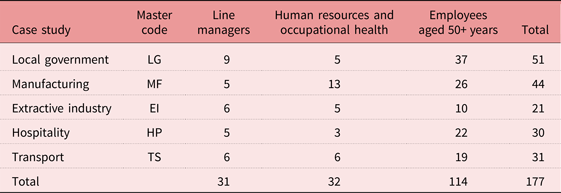
Five case study organisations were recruited. In order to protect the anonymity of participants, we have not used the actual names of the organisations and where anonymity might be compromised by describing the particular product or activity of an organisation we have instead referred to it by the broader sector in which it resides. Table 1 lists the case study organisations and reports the number of participants from different occupational/demographic groups in each.
Number of participants by case study organisation
Given the nature of the case study design, we relied on gate-keepers at each organisation to recruit participants, following guidelines from us on selection criteria. We strongly emphasised that it must be made clear to potential participants that their involvement was entirely voluntary and this was reinforced in the Participant Information Sheet and by the researchers at the point of consent and interview. The process varied slightly between organisations, but essentially entailed a member of the research team briefing a Human Resource (HR) manager and or administrator, who selected participants using HR records, and then contacted the participant and their line manager to make the necessary arrangements. The key selection criteria for employees was that they should be aged 50 years or above. Within this age group, employees were selected using a maximum variation sampling strategy (Patton Reference Patton2002) to capture the experiences of informants from different class, gender and minority ethnic groups. For line managers, the key criteria was that they were involved in managing older workers and were likely to have recent experience of managing retirement; this was explained to gate-keepers who purposively selected participants on this criteria.
Interviews and focus groups were conducted in the workplace during working hours, in a setting that allowed for confidentiality to be ensured. Interviews and focus groups were digitally recorded and transcribed verbatim.
Data collection mainly comprised semi-structured interviews or small focus groups, with participants from the groups listed in Table 1. Different interview schedules were developed for the different groups of participants. Those for managers, HR and occupational health staff focused on the development of policies and practices relating to the management of older workers, including: problems and opportunities arising from government policy changes; description of what happens when an employee reaches early sixties; issues relating to capacity to work among older employees; description of any new practices, especially flexible working; and perceptions about the desirability or otherwise of an ageing workforce. The interview schedules for use with employees focused more on their retirement plans and awareness of the options available to them, including: attitudes towards government policies; what their retirement plans were; what factors had influenced their retirement plans; their experiences of how their employer managed retirement and what they would like to see change; what they considered to be an optimal retirement age; their pension arrangements; and what they thought government should do. The interview schedules were semi-structured with open-ended questions to enable participants to raise relevant novel issues that were salient to them. These data were supplemented with analysis of documents and HR records.
The qualitative data were analysed thematically (using the method described by Green and Thorogood Reference Green and Thorogood2004), to explore policies and practices relating to older workers within the different workplace settings, and the processes by which those practices were negotiated and constructed. The aims of the case study analysis were to generate rich descriptions of late-career transitions and related policies and practices in particular organisations, but also to obtain a theoretical understanding of the phenomenon that is informed by comparison between the different case studies. All transcripts were analysed using an iterative process that began during data collection. The questions included in the interview schedules were derived from our main research questions and thus framed the interviews, but we did not use them to derive a pre-conceived coding scheme, preferring instead to use open coding in order to avoid imposing our own meanings and definitions, and to identify lines of enquiry which could be explored in subsequent interviews. A second aspect of the analysis was axial coding which entailed exploring relationships between codes and asking a series of questions about the emergent themes and categories. Each case study site was initially treated as an individual unit of analysis, however, throughout the data collection and analysis preliminary findings and key themes were shared between the lead researchers for each case study and brought together to allow for a broader analysis to be conducted across the case studies. The different groups of participants (HR and occupational health staff; line managers; and employees aged 50+), were coded and analysed together, although we were aware of which group each quotation was drawn from and have reported this in our results.
Description of case study organisations
Local Government (LG)
The organisation is a large local authority in the north of England. Thousands of jobs have been lost to create a more efficient and flexible workforce. The number of employees has reduced by about 75–80 per cent from its peak. Compulsory redundancies have been avoided, and the reduction in the workforce has been effected via voluntary severance or voluntary early retirement (in progress at the time the interviews were undertaken). People over 55 now comprise about 15 per cent of the workforce. External recruitment stopped in 2012 (with the exception of apprenticeship schemes and areas of high turnover), and the movement of people and skills is now managed through an internal redeployment scheme. The organisational context is characterised by budget cuts, change and uncertainty for many employees.
Manufacturing (MF)
The organisation is the UK arm of a high-technology engineering company. We collected data from three sites: North Wales, South West England and South East England. The workforce is high-skilled, comprising designers, technicians, managers and support services in the English sites and blue-collar engineers in North Wales. The company has a ‘full order book’. Reductions in head count are on-going to improve efficiency, but major redundancies are not envisaged. The pension scheme is generous and wages are good. There is a stable core of employees, and periphery of contract workers, giving flexibility, as the number of contractors can be varied according to demand. No skills shortages were reported. There is some graduate entry and an apprenticeship scheme, but a policy of prioritising internal appointments has increased the average age of employees, which is thought to be 46 years.
Extractive Industry (EI)
The organisation is a private company in the North East of England, owned by a multi-national company based overseas. The workforce is mainly blue-collar (about 70–75%), comprising underground workers, processing plant workers, technicians/scientists, dock workers, line managers, senior managers, and administrative and support services. The gender split favours men (about 90%). EI has a mixture of directly employed (about 1,100) and contract workers (about 130), with varying terms and conditions. In an area of social deprivation and limited employment opportunities, EI is considered a ‘good’ employer, offering secure, often well-paid jobs with good terms and conditions, and a history of good labour relations. This case study was selected as an example of traditional manual work and because it has an ageing workforce.
Hospitality (HP)
The organisation is an in-house provider for a large educational establishment in Southern England, employing around 350 staff on substantive contracts and a further 600 or so casuals on timesheet contracts. The workforce is growing as the establishment expands student numbers and new buildings and facilities come on line. Its main areas of work are housekeeping and catering. With the possible exception of housekeeping, recruiting new staff is not a problem. Staff turnover is low for the sector. There are many long-serving staff and an ageing workforce, especially in housekeeping; the catering staff has a younger profile and turnover is a bit higher. Auto-enrolment has raised membership of the pension scheme to approximately 95 per cent, but those who have only recently enrolled can only expect to receive a small pension.
Transport (TS)
The organisation is a a private company with about 4,000 employees, including 1,000 drivers, 250 engineers, 500 managers/administrative staff and 1,200 station staff plus conductors. An estimated 65–75 per cent of TS staff are male, and most employees are full-time. Traditionally, TS has had long-serving employees, but this pattern is changing with many new employees recruited later in life as a second career. It has no problem attracting new drivers and conductors, though lower-paid station roles are less attractive. TS has an older workforce: the average age is 44 overall and 46 for drivers. More than a third (38%) of staff are over 50. However, there are only 64 staff (under 2%) over the age of 65.
Results
Our analytical aim was to look for common themes across the case study organisations, while preserving variations and nuances from these different contexts. We, therefore, present our findings under thematic headings that emerged from the analysis, but focus on variations between case studies where appropriate. We begin by exploring whether policy changes have impacted on the expectations of employees and managers regarding the age of retirement.
The perceived optimal retirement age
Rational choice theory might suggest that removing the default retirement age and raising the age at which state pensions can be drawn would lead to an upwards shift in the age at which retirement is perceived to be optimal. While we found examples of employees who expected to work beyond the old retirement age (often those with little or no occupational pension provision), we were surprised by how deeply entrenched the traditional retirement age was, with notions of ‘going early’ or ‘staying on’ calibrated around the traditional age of retirement, as if the ages of 65 for men and 60 for women were a naturally determined point at which to withdraw from paid employment. Several factors were invoked to substantiate this belief: the physical and mental capacity of the ageing body; the desire to preserve a lengthy period of healthy life between retirement and death; the obligation to ‘make room’ for younger workers; and a general sense that workers who had reached these ages had served their time and were entitled to pursue other activities outside the constraints of employment:
I don't think that you can carry on at the same level you may have been doing ten years earlier. I don't think that's at all possible. Even now, if I think about the things I was doing ten years ago, I'd be struggling to do all that now, and if you add another ten years on to that then yes, it's not possible to do the same level of job. You can't. It's not physically possible. (Older worker at MF)
This orientation towards the optimal age for retirement is not necessarily the key determinant of when an individual actually retires, but rather a normative assumption which appears largely unchanged by recent policies. Personal circumstances, particularly affordability, determine when an individual retires, but whether a worker feels lucky to have been able to ‘go early’ or unlucky to have been obliged to ‘stay on’ is shaped by an abiding sense that the traditional ages of retirement were optimal:
I think with me, I've been conditioned with 65 (all laugh). So it's a case of 65's not that far away, so yeah, just got that in your brain and that's roughly when you're going to go, just depending on health at the time. I could well see a change in career somewhere, or position along the line. I certainly wouldn't look at doing what I'm doing now through to 67, 68. No. I think I'd go up the wall (laughs). (Technical worker at EI)
One consequence of this culturally entrenched expectation regarding optimal retirement age is that even when affordability problems provide a strong personal imperative towards extending working life, this rarely exceeds two or three years, with very few participants expressing the belief that they would work beyond 70. Partly, this is because the state pension currently becomes available for workers in this age cohort at 66 or 67, but also because of reluctance to exceed the ‘normal’ age of retirement by more than a few years.
Many managers shared the same estimate of optimal retirement age, not just for themselves, but also their employees. Partly this was underpinned by an altruistic belief that employees had done their fair share by the traditional retirement age, but also because it was assumed that the capability and motivation would diminish after that age:
We have, within our enlarged team, a number of people who are probably just doing enough to get to the end. They're not doing so little that you can do something about it, but they're not as motivated or as proactive in seeking promotion or furthering themselves because they're happy to just do what they're doing. (Manager at MF)
Managers in other case study organisations expressed concerns about the possibility of having to exit older workers using performance management procedures, which they saw as potentially difficult and distressing; although few actual cases of this kind were reported.
While there were variations in the degree of enthusiasm expressed by workers and managers about extending working life, typically there was reluctance to depart from the traditional retirement ages by more than a few years. As the state pension age rises and the shift from defined benefit to the less-lucrative defined contribution occupational pension schemes increases, more workers will be pushed towards working later in their lives, but we should not underestimate the pull of deeply entrenched cultural norms about the optimal age of retirement. One consequence of this pull is that there is very little demand from either workers or managers (in the case study organisations) for the adoption of innovative working arrangements to support the extension of working life. National policy changes have provoked changes in how retirement is managed but, as we shall see in the following section, these changes are largely reactive and ad hoc.
End of managed retirement
Prior to abolition of the default retirement age and the addition of ageism to the list of categories included in anti-discrimination at work legislation, many large organisations actively managed the process of retirement, providing advice and pre-retirement courses for workers approaching retirement age, sometimes offering reduced duties or working hours in the months before retirement, and engaging in succession planning. Our findings suggest that these practices are disappearing from the case study organisations, often because of fears that age-specific policies are by definition ageist. The adoption of an ‘age-blind’ approach can bring benefits for older workers:
I was over 50 actually. I was a bit concerned about that, but they said ‘Don't worry about it’ … they're absolutely not under any circumstances prejudiced against anyone in any way. (Worker at TS)
One partial exception to the abandonment of age-specific policies was the use of voluntary severance and early retirement at LG. The scheme was officially open to all employees regardless of age (and thus circumvents anti-discrimination law), but in practice managers and employees believed that the scheme was targeted at older workers, thus providing a means by which the organisation could exit some older workers even though the mandatory retirement age is no more.
Despite the advantages in terms of recruitment, promotion and training opportunities for older workers, the adoption of an ‘age-blind’ approach often meant the loss of policies and practices that had been popular and beneficial. At TS there was formerly the option of phased retirement for drivers, referred to variously as ‘green cards’ or the ‘old boys’ link’, whereby older drivers would get ‘cushier’ shifts and less-demanding work in the lead up to retirement. This practice was abolished as it was felt to contravene equal opportunities legislation. Fear of being accused of ageism meant that many managers were reluctant to engage in any form of dialogue about retirement with older workers (see also International Longevity Centre–UK 2017). The change in approach was described:
When the default retirement was in, we used to sort of institute discussions between the line manager and the individual sort of 6–12 months before they turned 65, to say ‘what are your intentions?’ As soon as that default retirement age was taken away we just let it run its course. (HR manager at LG)
In fact, the HR department at LG had produced guidance for managers about integrating retirement discussions into regular ‘one-to-ones’ or appraisal, but in practice it was recognised that managers were reluctant to initiate the conversation:
Well, if I don't have [the] default retirement age to prompt it, how do I raise the issue? You know, what if I'm clumsy about it and then the person gets upset?
Rather than risk being construed as ageist, many managers preferred to avoid discussion until workers themselves raised it. This well-intentioned conspiracy of silence not only left many older workers ill-informed about, and unprepared for, retirement, it also caused significant problems for the organisation relating to succession and workforce planning. This exchange is from a focus group with workers at EI:
Interviewer: Do they kind of call you in for a chat when you're getting near to retirement age?
Participant 2: They haven't done so far.
Interviewer: So you just know you're going in January but they've never talked to you about the process or the options or anything?
Participant 2: My job's somewhat different, because there's only two of us doing the job and without it the plant's not going to run. But nobody from [company name] has come along and said, ‘Well what are your plans? What do you plan to do? Are you going to retire? Are you going to stay on?’
Participant 1: That's a big problem here.
Abolition of the default retirement age also raises the possibility that organisations might face the difficulty of how to curtail the employment of older workers whose performance is unsatisfactory. Our case study organisations had mechanisms in place for early retirement on medical grounds and for performance management procedures that can lead to dismissal if performance does not improve (these apply to younger workers as well), but these mechanisms are rarely used, partly because there are still relatively few employees old enough to suffer serious age-related diminution of performance; those that do have serious health problems often choose to leave of their own accord; and those with less severe problems may be given lighter duties or be re-deployed. At EI, exit through performance management appeared to be reserved for serious cases, rather than for older workers who were just slowing down due to reduced engagement or physical performance. There were regular health checks for older workers in physically challenging roles, but again there was reluctance to use these as a means of curtailing employment:
I wouldn't like to think that you've got someone who's going in to do some kind of fitness or medical test thinking that if I fail this I'm out of the door. I think that's quite a harsh way of dealing with people. But I guess from the company's point of view there's two concerns, there's the health and safety concerns, you've got to look after people, you have a duty of care to your workers, to allowing them to continue in a position where they're not – they aren't physically fit enough to undertake it is wrong. And also from a business point of view there's a certain level of productivity that you probably need in this day and age from each person if your business is going to continue to be successful. It's – I'm just pleased I'm not HR manager, it's a difficult one to tackle to be fair, a very difficult one to tackle. But as an operational manager I wouldn't want to sit across the table from someone and say, ‘Sorry mate, you've failed your medical, you're out the door.’ I think there's got to be better solutions than that. (Line manager at EI)
Similarly, at MF problems with the capacity to work, both physical, cognitive and motivational, were not seen as inevitable correlates of ageing, nor were they seen as exclusive to older workers, but there was a sense particularly among line managers and HR staff that problems of capacity to work were likely to become more prevalent as the workforce aged. While there were formal performance management policies in place for addressing these issues, they tended to be invoked where performance had fallen off greatly:
Participant: …so we have a capabilities policy, and an effectivity policy, so if this person is only 60 per cent effective then they're on the radar and they get asked questions.
Interviewer: Is that where the tipping point is, the 60 per cent?
Participant: It could be lower, yeah, but if you're over 80 per cent effective then people aren't questioned.
Thus, the concerns relating to older workers’ capacity for work lay not so much in catastrophic falls in performance that could be dealt with through formal performance management strategies, nor minor problems with physical performance that could often be addressed through informal mechanisms, but rather the belief that for multiple reasons, some physiological and some social, older workers were likely to become marginally less productive than their younger counterparts and that an older workforce would therefore be less dynamic than a younger one.
Two processes are taking place. First, organisations appear to be formally abandoning policies for the management of retirement; secondly, even where policies for managing older workers are retained, those responsible for implementing or putting such policies into practice may be reluctant to do so, leading to a gap between policy and practice.
Policy–practice gap
We found evidence of this gap across different case study organisations. HR managers would suggest that policies existed on, for example, flexible working, phased retirement or redeployment, but when we asked employees and line managers we found lack of awareness of such policies, or the belief that they were applied with great variability. An example of lack of awareness of existing policy on phased retirement was described by one HR manager at HP:
Participant: I don't know whether that's lack of understanding that they could retire gradually and reduce hours, or whether it's financial, or enjoy being here. But generally no, I'd say they work their hours and then decide, [I have] done [done] 35 hours, I'm going to resign, I'm going to retire, I'm going to leave.
Interviewer: And is it promoted in any way as a possibility, gradual retirement?
Participant: Not really, no, no. And I know it's been spoken about and I know when I meet – because I do join the HR team for their monthly meeting, it is something that's being spoken about.
This lack of awareness of policies that might facilitate the extension of working life might be a function of the entrenched belief among workers and managers that the traditional retirement ages are optimal, or (as suggested in the above quotation) that financial or other constraints make such policies unattractive. Either way, such policies appear to lack salience for both workers and managers alike, and the demand that would drive the transition from formal policy to everyday practice is not widespread. The low profile and uptake of such policies does not mean that they are never deployed, but rather that they are taken up in a highly variable and ad hoc fashion. Across the case study organisations we were able to identify examples of redeployment (for older workers who were unable to meet the demands of their job), flexible working and phased retirement, but they were rare and typically unevenly distributed across the workforce.
Variations in access to EWL-related policies
Many participants reported that their organisation had no policies aimed at older workers, or that their employer was ‘age-blind’, however, all of the case study organisations did have policies and/or practices that related to the extension of working life: redeployment to less demanding jobs; flexible working and phased retirement; retirement to be re-hired as a consultant or agency worker; voluntary early retirement; or retirement on medical grounds. This apparent contradiction stems from two factors: either the policies were informal, with many workers and managers unaware of them, and/or they were offered to particular individuals on an ad hoc or highly individualised basis. This was often the case with opportunities for older workers to reduce their hours:
He was turned down. He asked if he could do a four-day week and they said: ‘no, if you want to work here you've got to do a five-day week’ … They said they weren't going to have that implemented here, people working part-time. Yet they're allowed to do it in the offices up there, they can do job sharing but we can't down here on this floor. (Processing plant worker at EI)
Such variations in practice were often explained by reference to organisational constraints, or the claim that certain jobs have to be full-time. This distinction often coincided with the white-collar/blue-collar split and with traditional ideas that women work part-time and men full-time, thus one HR manager described another case:
He actually mentioned to me and [name], could he stay on for two days a week? Well, unfortunately the job he's in is a five-day-a-week job, it's a full-time job as a [job title]; we cannot manage unless it's fully manned. And I just said ‘It's a five-day job.’ You just cannot accommodate in certain positions. Some positions you maybe could, like office-based, if it was a job share. But a job like that you couldn't job share. (HR manager at EI)
The redeployment of older workers to less-demanding jobs is an example of this variability. We found examples of this practice in all of the case studies, but there was a high degree of variability both in awareness of this as an option and in who had access to it. It was often suggested that there was limited scope to redeploy manual workers into ‘desk jobs’ partly because such workers often lacked the necessary skills, but also because the number of older workers was beginning to outstrip the availability of such posts. There was also a sense that the opportunity for redeployment, and for other age-related policies and practices, depended upon the individual's value to the company. An employee described how access to voluntary early retirement depended upon how ‘important’ a person's job was:
So if you're like social workers, if you're in a job that's really important, there's not enough of you, you have to stay. But like they'd let me go, I'm quite sure, because I'm not essential, I don't feel essential always. (Employee at LG)
These variations in practice are due to several factors, some of which might be objective: skills shortages, organisational constraints or resistance from employees, for example, where affordability limited the scope for reduced hours. But we also found evidence of subjective factors, particularly the persistence of long-established expectations and beliefs about the nature of particular forms of work. Male-dominated manual and skilled manual work has traditionally been full-time, in contrast with white-collar administrative work, which has a different gender balance and where part-time working is well-established. In the former, both managers and employees often share the belief that traditional work patterns are immutable and that innovative working practices are inappropriate:
The default organisational position on flexible working used to be ‘Oh no, we can't do that’ … We have got better at it, but I think there's a lot of sort of resistance to the idea, ‘Oh job share, we can't do that’, you know. (Manager at TS)
Even where traditional assumptions impeded the adoption of innovative working practices, exceptions were made, but they were made on a highly individualised basis. Sometimes, special arrangements were made for highly valued workers whose skills and expertise would otherwise be lost to early retirement. Consultancy work was one way of achieving this:
[Name of worker] wasn't an employee, but he's here on a consultancy basis. He's kind of retirement age, if not past retirement age. So there is mechanisms in place but they're very ad hoc, very kind of informal. (Manager at EI)
We also found evidence of informal or ad hoc measures being deployed to ease less-valued workers into early retirement:
If you have somebody who is … I do have a guy at the moment actually who let's just say he's turning to be a little troublesome, almost Victor Meldrewish [Victor Meldrew is a character from the television comedy One Foot in the Grave] in his way, and is upsetting a few of our customers. So it's not a pure errm performance issue. It's really an attitude and I think he's really in the wrong place; and I've agreed with him that I will release him from the business for a premium, and I've done that and he'll go. But I do get frustrated because that actually affects my bottom line and the profitability of our company. (HR manager at MF)
These rather ad hoc policies to ease out poorly performing employees or retain those who could retire early by offering new and more flexible working arrangements are a response to abolition of the default retirement age. Their informal and ad hoc usage might reflect how deeply entrenched the traditional ages of retirement remain, but it is also possible that they stem from an increasingly individualised approach to labour relations, also exemplified by the decline of collective bargaining. Mechanisms for exiting poorly performing workers through performance management or early retirement on medical grounds have existed for some time, as have financial inducements to retain much-valued workers, but such mechanisms were often viewed as ineffective or difficult to apply. As the previous quotation suggests, diminution in performance can be difficult to demonstrate, similarly, medical severance can be costly, as this account suggests:
…you've got to be virtually dead before they'll agree to let you go on health grounds, give you medical severance as they call it. (Employee at TS)
The constraints of defined benefits occupational pension schemes also limited the scope for incentivising workers to remain in post by offering flexible working or phased retirement. One HR manager explained the difficulties:
Flexible retirement we've looked at and, to be honest, we've not been able to get our minds round that, partly because of this issue. I've made the case that it's a good opportunity to allow people to part-retire and continue working, in that it's retaining those skills in the business but maybe on reduced hours. It's enabling those skills to be handed over to other people within the business, who might be younger people, for example. So allowing people to work, say, three days a week and draw some pension, their, you know, net income is about the same and it keeps them working for longer. But we've not been able to introduce such a policy, partly because our pension offering is still DB [defined benefit] and very expensive, so that would mean if they're continuing working we've still got a fairly high cost. (HR manager at MF)
There are also difficulties for employees as in many defined benefit schemes pension payments are based on final salary, so reducing salary by working fewer hours has a direct effect on pension payments. These difficulties are not insurmountable, and LG had a phased retirement scheme that enabled employees to reduce their hours by up to 40 per cent or reduce their job grade. Requests for this were increasing, but again not all participants were aware of the scheme or felt it was available to them.
A common assumption is that the extension of working life will entail the deferment of retirement and the introduction of more flexible working patterns, but we found evidence of a different approach, where employees formally retired but returned to work on a different footing, either as an agency worker or as a consultant. In the final section we explore this new development.
A new model of working for some older workers?
Adopting a lifecourse perspective reveals that older workers have much in common with their younger colleagues regarding their expectations of working life, e.g. financial rewards, meaningful work and social support, but their priorities can actually be quite different. For many younger workers, with housing costs and young families to support, security of tenure, a fixed number of working hours and career development might be essential attributes of a ‘good job’, with new working practices, such as the zero-hours contract, viewed as a threat. For older workers, this is less likely to be the case. They may still seek to generate income, but if their mortgage has been paid off and their children are less dependent, then the need may not be as great, particularly if they are in receipt of a pension. Sometimes the desire to reduce hours and to work flexibly can outweigh the desire to maximise income and have security of job tenure that younger workers experience. One HR manager explained that some employees had chosen to retire and return as contractors or consultants:
I know a lot of people come back as contractors, so I mean that would be that opportunity, because you can then take your pension so you've got that. And I think a lot of people would be more interested in doing that, you know, actually leaving the company and then they get their pension, they get their lump sum, do whatever they want to do with it, and then just come back, work three days a week, whatever, what they want to do. I know a lot of people do that. Maybe the company could make it a bit easier for them to do it in some way. I know some people come back as contractors. We have some consultants come back. (HR manager at MF)
Contract work, with fewer entitlements and benefits, and no guaranteed hours, is often portrayed in negative terms and may well be less attractive than a substantive company post for younger workers with greater financial commitments who require security of tenure and a reliable regular income, but for some older workers, especially those with a decent occupational pension, a looser and more flexible mode of employment might enable them to manage their own phased transition to retirement in a way that would not be possible in a substantive post.
Enabling older workers to retire and then return as contract workers may also bring benefits for the organisation: valuable expertise and practical experience are not lost to the company; the relationship can be more easily terminated than with employees in a substantive post, for instance if there are concerns regarding diminishing performance; and the organisation is free to purchase as much or as little of the employee's time as they require. The downside from the company's standpoint is that this type of arrangement can be costly:
…what a lot of them do is they take their pension at 65 and leave and they come back as a contractor, so we end up … paying extortionate amounts of money to an employment agency to contract them … The mind boggles at how much we pay them for some of these people. It's crazy. We have said, ‘If we could find a way around this, we wouldn't have to pay these agencies’, but no. (HR manager at MF)
Given the costs of employing contractors it might be worth exploring new ways of retaining older workers that allow for the mutual benefits of flexibility, but do not involve a costly third-party agency. It is also important to recognise that although such a model might be attractive to some, it may not be suitable for all older workers. Even in case study organisations that offered good occupational pension schemes, not all older employees had accrued sufficient savings. Also, depending on other lifecourse factors, some had substantial outstanding costs, for example, for housing or dependants. This was particularly the case for low-skilled manual workers. At HP we found several participants who were struggling to meet the demands of their job because of diminishing physical capacity or health problems, but who were not in a position to afford the loss of income that flexible working or tapered retirement would entail:
Interviewer: Does that idea [phased retirement] have any appeal to you at all?
Participant: No, not really, no, ’cause of finance at the end of the day. You know, you've got to live at the end of the day and to live costs money, so at the end of the day I don't think I'll be able to do anything like that.
Gradual retirement may also have less purchase for many women who are working part-time already. Again, the problem of variability arises. While it might be possible to develop new models of post-retirement employment that deliver flexibility and other benefits for employee and employer, not all workers will be able to afford to participate in them, and employers may be reluctant to offer them to workers whose value to the organisation has diminished.
Conclusion
In answer to the question ‘Is the workplace ready for the ageing worker?’, our findings suggest that although change is happening, in response to the scrapping of the default retirement age and the increase in state pension age, these changing practices are often reactive and ad hoc, and their form and implementation vary between and within organisations. Transformations often occur through small incremental changes at the margins that allow different parties to adjust over time, rather than through top-down planning (Lindblom Reference Lindblom1959), but our findings suggest that ‘muddling through’ is unsatisfactory for many employees and employers.
Employees may have greater choice and more rights regarding when they retire, which may enable them to lead wealthier and more productive lives, but they also risk losing or at least substantially reducing a long-anticipated period of leisure and good health in retirement. Employers have the opportunity to retain highly experienced, knowledgeable employees who still have much to contribute, but also risk retaining workers who are poorly performing, and losing the capacity to manage workforce transitions. These opportunities and threats may balance each other out, but our analysis suggests that many of the opportunities can be enhanced and some of the threats ameliorated by the adoption of more proactive strategies for managing the transition to retirement.
Our analysis has identified four key challenges that need to be addressed before the workplace will be ready for the ageing worker.
Challenge 1: Cultural change in employers and employees beliefs about the optimal age of retirement
Many of the participants in our study saw full-time working up to, or a few years before, the traditional default retirement age, followed by a complete exit from paid employment, as normal and desirable. These deeply entrenched normative expectations and assumptions are institutionalised in occupational pension regulations and organisational constraints on flexible working. Scrapping the default retirement age and deferring state pensions has not been sufficient to dispel the belief that the long-established retirement ages, of 60 for women and 65 for men, represent the optimum time for leaving paid employment. Our case study organisations are all large enterprises with many employees benefiting from defined benefit pension schemes which appear to have defused the changes in state pension age for the many workers who still benefit from such schemes. The transition from defined benefit to defined contribution schemes may provide further impetus towards the extension of working lives over the next decade or so, but may in itself not be sufficient to lever change in behaviour, particularly where expectations have been long held and widely shared. Factors of this kind might make early retirement financially harder, and late retirement more rewarding, but when people have spent their working lives anticipating retirement at 65 many will forgo the rewards and endure the financial hardship, rather than relinquish their expected age of retirement.
Social norms change slowly and incrementally. As the number of workers aged over 65 gradually continues to increase, and ageing workers are seen to be capable and valued, employees and employers are likely to recalibrate their expectations of the optimal age for retirement. Organisations and particularly line managers have an important role to play in encouraging and promoting this cultural change, not least by overcoming a mutual reluctance to discuss retirement, and actively engaging older workers in discussions about their future.
While the perceived optimal age of retirement might adjust upwards over time, our findings suggest that the concept of retirement itself is unlikely to become redundant. Many of our participants expressed a strong sense of entitlement to a period of healthy life between the ending of formal employment and the onset of serious illness and death. For these people, retirement is an important rite de passage marking a major transition in the lifecourse. While many participants were keen to preserve this transition, they were often open to notion of post-retirement employment, albeit in a less-intensive and more flexible form than their pre-retirement work. Thus, retaining retirement while expanding its meaning to include new forms of post-retirement employment appears to be a more feasible project than the abolition of retirement.
Challenge 2: Re-introducing managed retirement
Extending workplace anti-discrimination law to include ageism may have brought benefits for older workers (Phillipson, Vickerstaff and Lain Reference Phillipson, Vickerstaff and Lain2016), but our findings suggest there have been detrimental effects too, as organisations have retreated from the active management of retirement through fear of falling foul of the legislation. This has left managers struggling with succession planning and workers unprepared for retirement and unsure of the options that might be open to them for extending their working life. Both parties stand to gain from an on-going discussion about future plans and opportunities. This might be included in annual staff appraisals with older workers. For this to happen, organisations and managers need permission to discuss retirement without leaving themselves open to the accusation of ageism. Clarification from government of what is allowed under current legislation would aid this process, if it were followed by training and advice to line managers.
Challenge 3: Managing variability in the EWL offer
We have found evidence that practices and policies that can facilitate the extension of working life, such as reduced hours, flexible working, tapered retirement, retiring and returning as a consultant, are currently offered on an ad hoc and variable basis, and typically only to certain categories of employee. This is partly explicable in terms of situational constraints; some jobs may not be suitable for flexible working; not all employees can afford to reduce their hours. There are also cultural factors, again the drag of long-held traditions about particular occupations has slowed innovation. More intractable, though, is the reality that not all employees are equally valued, depending on their knowledge, skills and capacity. Where an older worker is difficult to replace, organisations are often willing to offer more flexible working conditions, but this is less likely to be the case where an employee is easily replaceable or where performance is perceived to be diminishing. At the moment these variations spark moderate dissatisfaction, but as the number of workers seeking or forced to extend their working lives increases, so too will the likelihood of serious discontent. While there is no easy solution, employers and policy makers should at least be considering how such variations can be legitimately managed. One possible way forward is the development of new forms of employment for the older worker.
Challenge 4: Negotiating a new agreement for the employment of older workers
The debate around extending working lives has focused largely on deferring the age of retirement and late career transitions into part-time work, often with fewer responsibilities or demands on the worker (Vickerstaff et al. Reference Vickerstaff, Loretto, Billings, Brown, Mitton, Parkin and White2008). These are traditional and well-established models of employment. Since the financial crisis of 2008 and the emergence of new technologies, radically different forms of economic activity have begun to emerge in which individuals become ‘micro-entrepreneurs’: self-employed sole traders who can respond directly and very flexibly to the demands of their customers. This process of ‘Uberfication’ has often been criticised on the grounds that it circumvents many long-established workers’ rights, removes job security and undercuts those in traditional jobs (see e.g. Hall Reference Hall2016). For many younger workers, with ongoing housing costs, families to support and the desire for career advancement, Uberfication and the rise of the zero-hours contract may well pose a threat – adding to their sense of precarity and undermining their life chances (Adams, Freedland and Prassl Reference Adams, Freedland and Prassl2015). Our findings suggest that the same is true for older workers who have inadequate pension provision and/or on-going high living costs, but for some workers later in the lifecourse, who have fewer financial commitments and sufficient pension income, a degree of precarity might be a reasonable price to pay in return for the flexibility and choice that new forms of employment might offer.
That many older workers appear to want different things from employment than their younger or less well-off colleagues opens up the possibility of retaining the deeply embedded tradition of retirement, but introducing new forms of post-retirement employment. Such transitions are already emerging for workers who retire but return to work as consultants or agency workers. On the negative side, there is a danger that if the pool of older workers who are financially able to embrace these new forms of employment grows large enough, they might undercut younger workers in traditional jobs, but given that younger workers are often perceived to be more capable and dynamic than their older colleagues, then the greater flexibility of older workers might be seen as a reasonable way of rebalancing their employability relative to younger workers.
These new forms of employment will not suit the needs of all older workers, particularly those with ongoing financial commitments that require the reliable and substantial income that traditional forms of employment offer. Our findings suggest that older workers are a heterogeneous group, differentiated by gender and social class, but also by different experiences that accrue across the lifecourse. The interactions between gender, social class and other lifecourse factors that influence the affordability of retirement create a high degree of complexity, e.g. many of the women cleaners and caterers in the HP case study found themselves waiting much longer for their state pension than they had expected, with little occupational pension provision, and facing a very uncertain future as health problems limited their capacity for physically demanding work. By contrast, women administrators at EI, though still low paid, had access to flexible working and reduced hours that the mainly male underground workers did not. This complexity does not imply that every post-retirement employment contract should be negotiated from scratch with each individual, because our findings suggest that this can lead to uncertainty and possibly unfairness. What appears to be required is the development and articulation of a range of post-retirement employment options that address issues of social class and gender, which employees and employers are aware of and which can form the basis of mutually acceptable individual agreements.
Negotiating the difficulties and seizing the opportunities that demographic and technological change offers will require a much more open discussion between managers and workers, in which traditional assumptions and expectations are matched by innovation and new forms of practice. There may also be a role for government in ensuring that new forms of employment for older workers are equitable, sustainable and democratic.
Acknowledgements
The need to protect anonymity means that we cannot name the case study organisations from which we collected data, but we would like to express our gratitude to their staff for enabling, and participating in, our research.
Funding
This research was part of the ‘Uncertain Futures: Managing Late Career Transitions and Extended Working Life’ project funded by the Economic and Social Research Council (reference ES/L002949/1).


 Open access

