




Introduction
The generalised appearance of human representations is one of the main elements of the symbolic changes that took place at the beginning of the Neolithic in the Near East. During the preceding Natufian period, iconography was dominated by animal images and geometric designs (Bar-Yosef & Belfer-Cohen Reference Bar-Yosef and Belfer-Cohen1999). During the first phase of the Early Neolithic, the Pre-Pottery Neolithic A (PPNA, 9700–8600 BC), iconography remained predominantly animalistic with only a few highly schematic human outlines documented in the northern and southern Levant, for example at Tell Mureybet, El Khiam and Gilgal I (Cauvin Reference Cauvin1994; Peters & Schmidt Reference Peters and Schmidt2004; Kuijt & Chesson Reference Kuijt, Chesson, Renfrew and Morley2007; Stordeur Reference Stordeur, Bolger and Maguire2010). From the late ninth millennium BC, during the Pre-Pottery Neolithic B (PPNB) depictions of humans become common and varied. The appearance of human sculptures, modelled skulls, human masks and portable representations (Kenyon Reference Kenyon1957, Reference Kenyon1981; Bar-Yosef & Alon Reference Bar-Yosef and Alon1988; Nissen et al. Reference Nissen, Muheisen and Gebel1992; Rollefson et al. Reference Rollefson, Simmons and Kafafi1992; Hermansen Reference Hermansen, Gehel, Kafafi and Rollefson1997; de Contenson Reference de Contenson2000; Stordeur & Khawam Reference Stordeur and Khawam2007; Çelik Reference Çelik, Özdogan, Basgelen and Kuniholm2011) attest the new focus of Neolithic communities on representing humans. These depictions are not only more numerous, but also more naturalistic and detailed (Ibáñez et al. Reference Ibáñez, González-Urquijo and Braemer2014). Figurines made of baked clay, carved stone or bone are the most frequently encountered type.
The meaning behind this important phenomenon remains a matter of debate. Human figurines have sometimes been considered to represent material support for the existence of beliefs in female deities during the Neolithic (e.g. Gimbutas Reference Gimbutas1989; Mellaart et al. Reference Mellaart, Hirsch and Balpinar1989; Cauvin Reference Cauvin1994). Several scholars, however, have shown that explicitly female figurines are in the minority during the Near Eastern Neolithic (Nakamura & Meskell Reference Nakamura and Meskell2009; Kuijt Reference Kuijt and Insoll2017). Furthermore, the figurines’ lack of formal attributes of authority, and considerations of the context in which they are found—most often in middens or the fills of abandoned buildings—would argue against them representing deities (Lesure Reference Lesure2002). Many alternative interpretations for these figurines have been proposed, including as cultic objects, vehicles of magic, figures used in teaching (e.g. initiation rites) or as toys (see Ucko Reference Ucko1968; Voigt Reference Voigt and Kuijt2000; Bailey Reference Bailey2005).
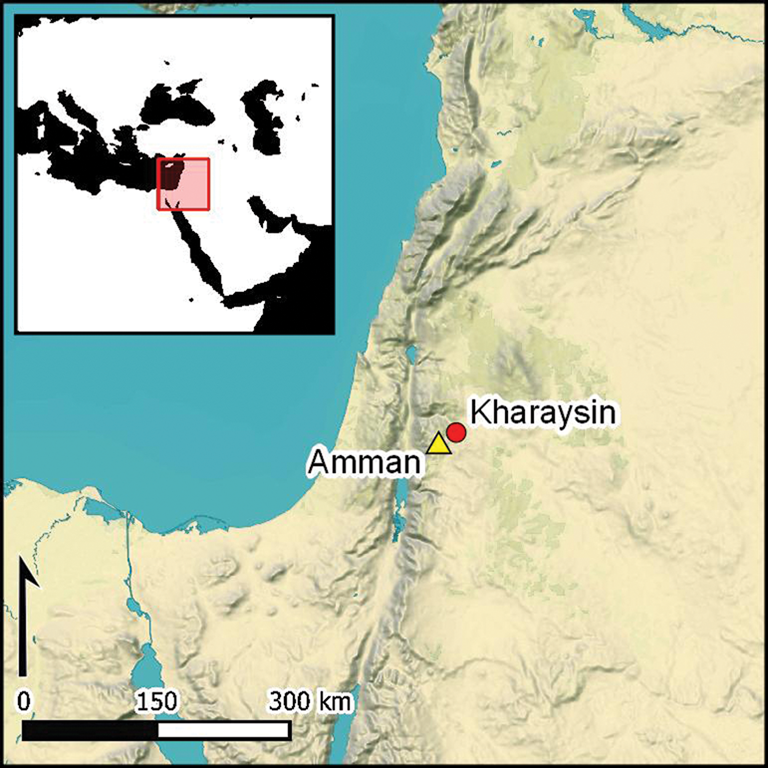
Deciphering the meaning of these Neolithic figurines is an essential step in understanding how psychological and social shifts took place during the transition to farming (Hodder Reference Hodder1990). This article presents the results of an analysis of flint objects exhibiting two pairs of notches from a PPNB level at the site of Kharaysin in the Zarqa River Valley in Jordan (Figure 1). The results lead us to suggest that these flint artefacts are figurines that depict the human body in a form not previously documented. An examination of the context from which the flint objects were recovered provides an opportunity to revisit the meaning of figurines as part of the widespread shift in symbolic thinking manifested in the proliferation of human iconography in the Early Neolithic.
Location of sites mentioned in the text (figure by the Kharaysin archaeological team).

The site and the artefacts
Kharaysin is a large site excavated by the authors of this article covering approximately 25ha, with archaeological levels dating to the PPNA and PPNB (Ibáñez et al. Reference Ibañez2015, Reference Ibáñez2019; Monik et al. Reference Moník, Lendaková, Ibáñez, Muñiz, Borell, Iriarte, Teira and Kuda2018). Four areas, A (177m2), B (321m2), C (229m2) and D (24m2), have been excavated so far (Figure 2).
Site map of Kharaysin showing excavated areas (figure by the Kharaysin archaeological team).
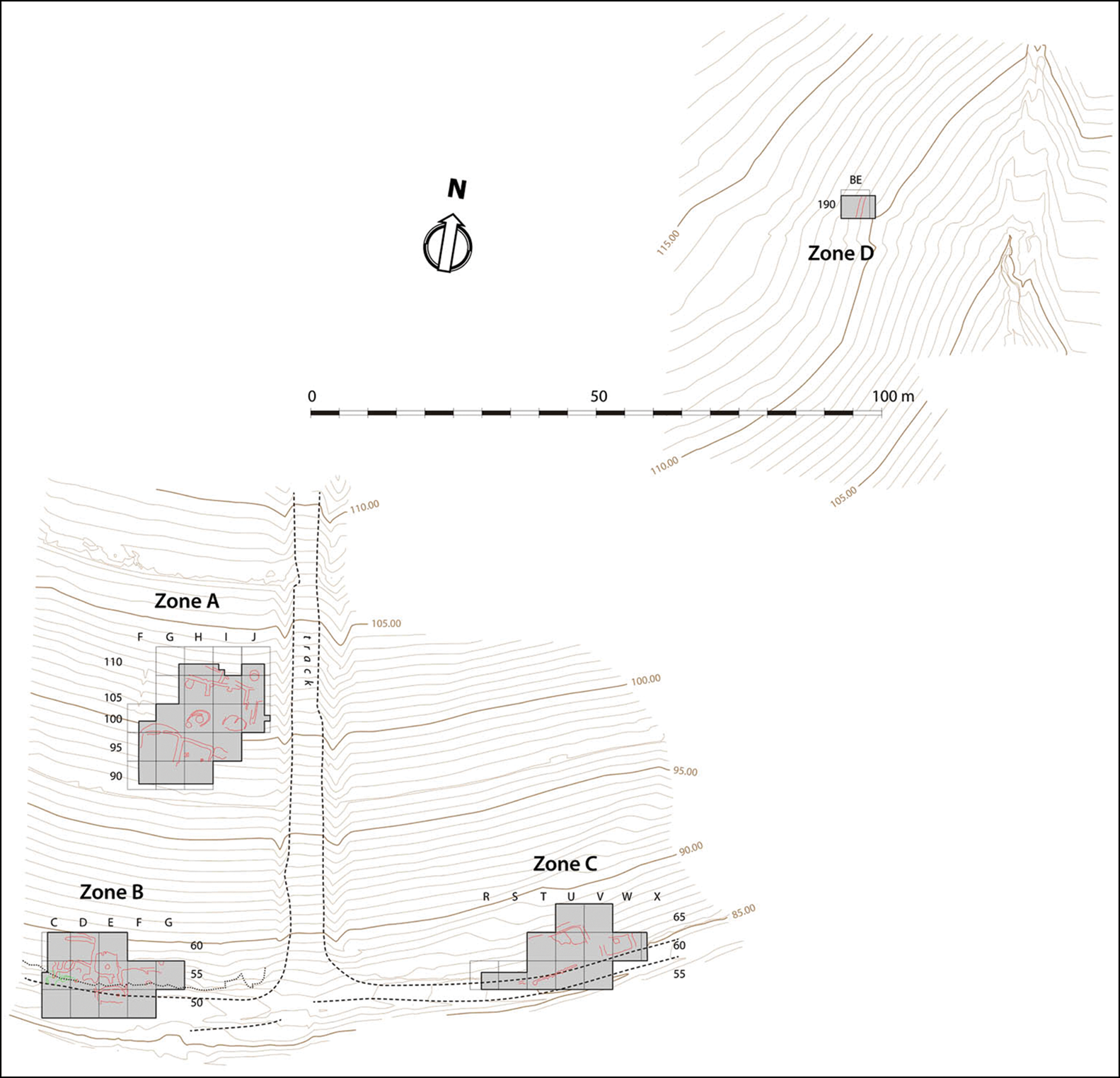
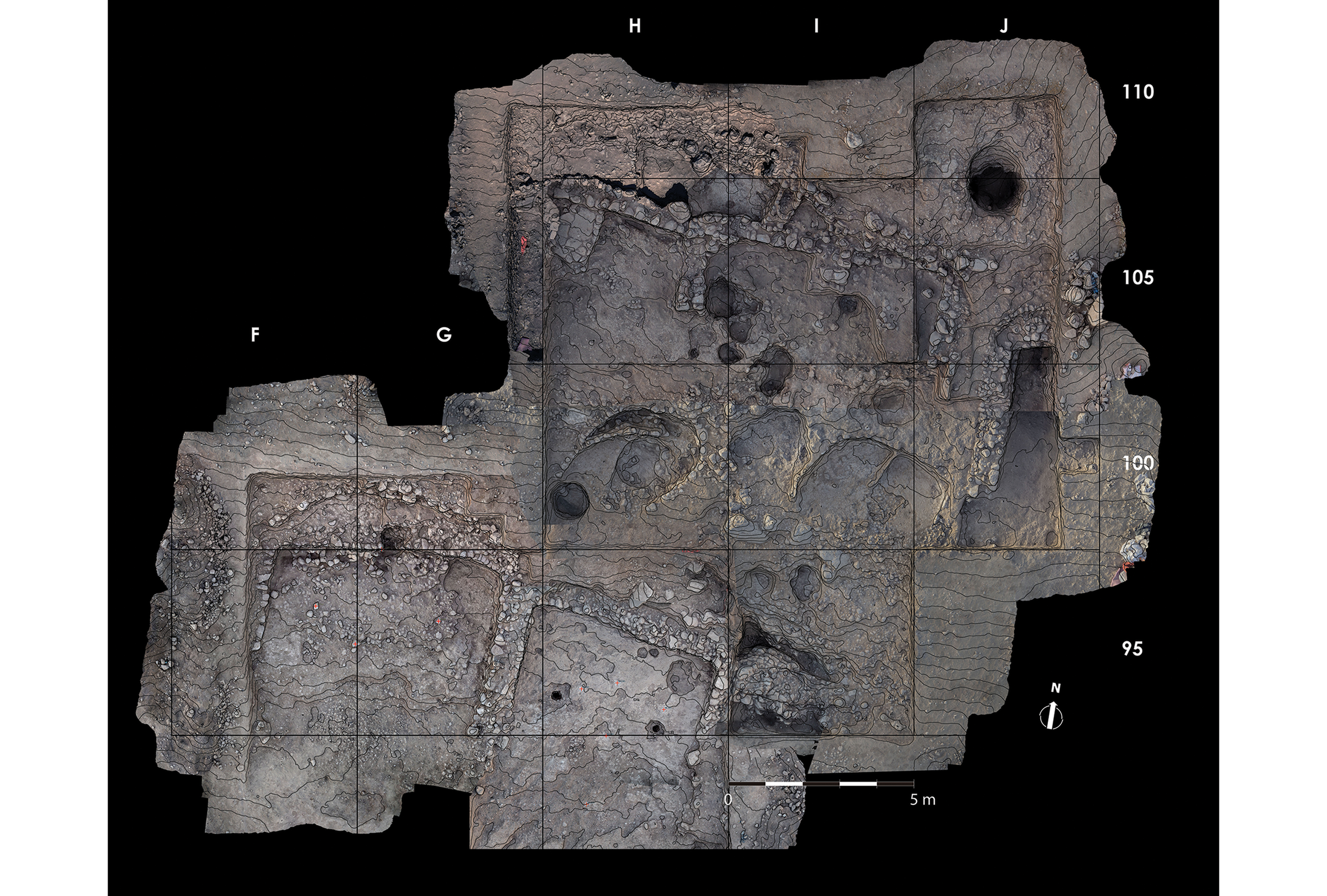
Four occupation levels have currently been identified at Kharaysin. The earliest, dating to the beginning of the ninth millennium BC (Late PPNA), has been found in areas A and B (Figure 3). A second level, dating to the second half of the ninth millennium BC (Early PPNB), is present in area B. The third occupation level, dating to the beginning of the eighth millennium BC (Middle PPNB), is documented in areas A, B and C, at the top of the stratigraphic sequence in these areas, while in area D, a fourth and most recent occupation level dates to the beginning of the seventh millennium BC (Late PPNB). The flint artefacts that are the subject of this article belong to the third occupation level (Middle PPNB). The architecture in these levels is characterised by rectangular houses with lime-plastered floors commonly encountered in much of the Near East during this period (Goring-Morris & Belfer-Cohen Reference Goring-Morris, Belfer-Cohen, Bocquet-Appel and Bar-Yosef2008). The houses at Kharaysin are arranged parallel to one another, forming terraced lines on an east–west axis, perpendicular to the slope of the terrain on which the settlement was established (Monik et al. Reference Moník, Lendaková, Ibáñez, Muñiz, Borell, Iriarte, Teira and Kuda2018).
Orthophotograph of area A (figure by the Kharaysin archaeological team).
Preliminary results indicate that lithic production at PPNB Kharaysin was oriented towards the systematic production of large, standardised blades using bidirectional blade technology (Borrell et al. Reference Borrell, Ibáñez, Muñiz, Teira, Astruc, McCartney, Briois and Kassianidou2019), as is widely attested in the Levant (e.g. Quintero & Wilke Reference Quintero and Wilke1995; Nishiaki Reference Nishiaki2000; Abbès Reference Abbès2003; Barzilai Reference Barzilai2010; Borrell Reference Borrell2017). The PPNB community at Kharaysin had relatively easy access to large quantities of high quality flint, comprising both fine-grained purple flint and a finer, highly lustrous flint of heterogeneous colour (pink, orange, white or light brown). Both raw materials are very similar to the Huweijir-type flint, identified as the main flint source at Middle and Late PPNB ‘Ain Ghazal (Rollefson et al. Reference Rollefson, Quintero, Wilke and Delage2007), located 40km to the south of Kharaysin in the Zarqa River Valley. The Kharaysin flint is thus likely to have come from nearby local surface exposures of the Amman silicified limestone formation.
The excavation at Kharaysin was divided into 5 × 5m areas and subdivided internally into 1 × 1m squares. Undisturbed archaeological deposits were dry sieved through a 0.5mm mesh. During excavation, we recovered a considerable quantity of small blades, bladelets and flakes with two pairs of double notches. More than 100 of these have been discovered so far, of which 49 have been analysed in detail. These artefacts, when found in situ, were located three-dimensionally using a total station, while the rest were recovered by sieving.
Technological and use-wear analyses
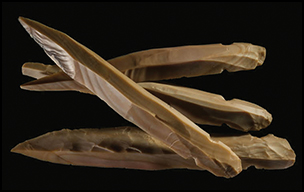
In addition to the morphological analysis of the flint, 71 artefacts were subjected to technological analysis (Borrell Reference Borrell2017), and 49 to use-wear analysis (for methods, see Keeley Reference Keeley1980; González & Ibáñez Reference González-Urquijo and Ibáñez1994) (Figure 4). The objects comprised blade fragments, bladelets or flakes displaying two pairs of opposed notches (Figure 5). The flint chosen for their blanks is similar to that used for other kinds of tools. Most blades were knapped using bidirectional blade technology. The two pairs of opposed notches were made following a regular pattern: the two notches on the same edge were made with the same retouch, whether direct (on the dorsal side) or inverse (on the ventral side), and the two opposed notches followed the opposite procedure. Thus, the double notches on the blanks were made by retouching one side, and then the object was turned over to create the two notches on the opposite edge. If the blanks are oriented with the proximal end (the extremity where the bulb of percussion resulting is present) down, 74 per cent have notches with direct retouches on the right side and inverse retouches on the left side. If the blanks are oriented with the ‘head’ at the top (as illustrated in Figure 4), 76 per cent show notches with direct retouching on the right side and inverse retouching on the left edge, while the opposite occurs in 22 per cent of the cases. This ratio could correspond to the natural proportion of right- and left-handed persons. The blanks with double notches were probably knapped with the ventral side up and the ‘head’ end pointing downwards. Then, a right-handed individual made the two notches on the right edge before turning the blank over and retouching the left edge. Left-handed individuals would have modified the blank in the same way but starting with the left edge.
Bladelets and flakes with two pairs of notches interpreted as figurines (figure by the Kharaysin archaeological team).

Technical characteristics of the flint artefacts with two pairs of notches (figure by the Kharaysin archaeological team).

Most artefacts exhibit no use-wear traces inside the notches, or on the edges adjacent to them. Only one blade displays use-wear from cutting meat or hides on its two sides, and this use occurred before the notches were made. In this case, a used and discarded blade was probably chosen for retouching. Striations caused by the retouching of the notches are evident on some artefacts. These linear features show that the sharp edge of a flint tool—that is, a blade or flake of the same material—was used to make the notches.
These retouched artefacts could represent a new type of previously unknown tool. Double notches can be used to facilitate hafting, as evidenced in Aswad/Helwan points or knives from Nahal Hemar (Bar-Yosef & Alon Reference Bar-Yosef and Alon1988; Gopher Reference Gopher1994). In these tools, the active area of use (the point or the lateral edges) can be clearly distinguished from the hafting zone located at one end of the tool to allow for axial hafting. This does not apply to the double-notched flakes and blades from Kharaysin, some of which have either no potentially usable edges, or edges covered with cortex. In other cases, the double pair of notches occupy a large part of the object, so that any hypothetical hafting area would have taken up most of the length of the tool. Moreover, most artefacts exhibit no evidence of use-wear on the edges or inside the notches. All this suggests that they were not used as tools.
Morphological analysis
Here, we present an alternative explanation for the morphology of the Kharaysin artefacts: their shape evokes the outline of a human body. The upper pair of notches would represent the narrowing of the neck, and the lower pair the waist. This ‘violin-shaped’ outline is also observed in two baked-clay figurines from Middle PPNB Kharaysin (Figure 6).
Two clay human figurines found at the bottom of a 1.6m-deep pit located in J 105/110 at Kharaysin (for the location of the pit, see Figures 3 and 9).

To test this hypothesis, we used Procrustes analysis to compare the outline of the Kharaysin artefacts with statues and busts from ‘Ain Ghazal. This method compares two outlines using statistics (based on the least square distances) to establish the quality of fit. The larger the Procrustes distance, the more dissimilar two groups of shapes are. To calculate Procrustes distances between each pair of shapes, we employed the Procrustes function of the SciPy package of the Python language in a programming routine. We then used multifactorial analysis to group, or cluster, artefacts by their shapes’ fit, before undertaking a cluster analysis (hclust function of R language) and multidimensional scaling (isoMDS function of R) on the result.
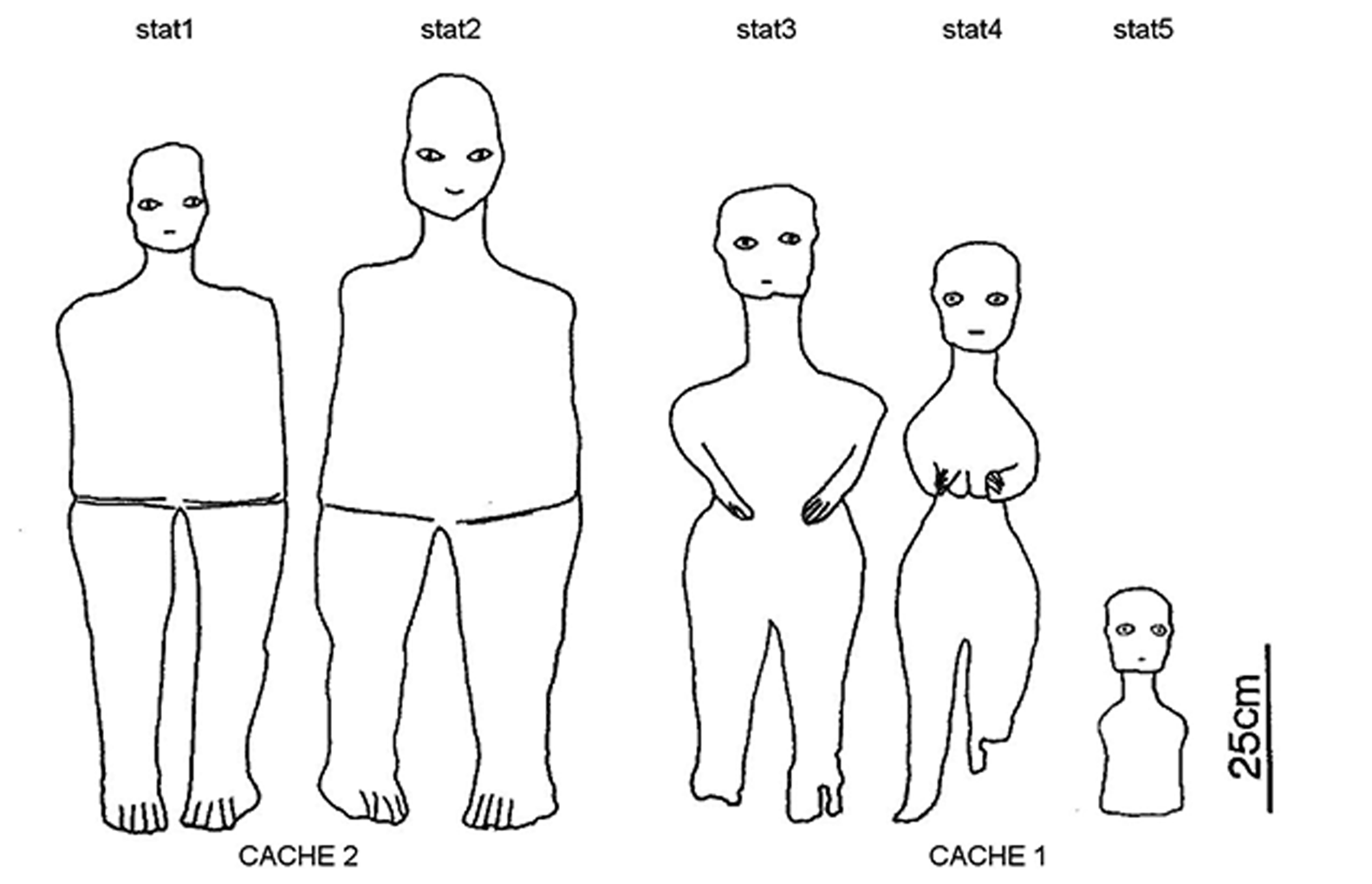
At ‘Ain Ghazal, a cache (cache 1) with 25 sculptures made of lime plaster was found in 1983, and was dated to the Middle PPNB (8750±80 BP) (Rollefson Reference Rollefson1983; Rollefson & Simmons Reference Rollefson and Simmons1985). A second cache (cache 2) with seven further sculptures dating to the beginning of the Late PPNB (8570±110 BP) was discovered in 1985 (Schmandt-Besserat Reference Schmandt-Besserat1998; Rollefson Reference Rollefson and Adams2008). Cache 1 is therefore contemporaneous with the flint objects from Kharaysin. We selected five examples most representative of the ‘Ain Ghazal assemblage of complete statues for comparison with the Kharaysin flint ‘figurines’ (Figure 7). One of the cache 1 sculptures (called stat4 in our analysis) represents a woman with breasts, while another sculpture (stat3) and a bust from cache 1 (stat5) and the two sculptures from cache 2 (stat1 and stat2) have no obvious sexual traits.
Outline of some sculptures found at ‘Ain Ghazal (figure by the Kharaysin archaeological team).
The Procrustes analysis of 49 flint artefacts and five statues from ‘Ain Ghazal shows a division of two clusters (Figure 8A): 1) the flint artefacts and the three statues of cache 1 (stat3, stat4 and stat5); and 2) the two statues from cache 2 (stat1 and stat2) . This separation into clusters indicates that the objects from Kharaysin more closely resemble the cache 1 statues than those from cache 2. In cluster 1 (with the flint artefacts and three statues of cache 1), a division is observed between the ‘Ain Ghazal cache 1 statues (stat3 and stat4) and the objects from Kharaysin plus the bust from cache 1 of ‘Ain Ghazal (stat5). The morphological similarity of the flint artefacts with the cache 1 bust is probably due to the bust's flat base. As the statues have legs, which are impossible to render in flint, the statue and artefact outlines are not directly comparable. Thus, we have attempted to reconcile the shape of the flint ‘figurines’ and the lime-plaster statues by aggregating the legs of the statues and then comparing the outline of the potential ‘figurines’ and statues in flint. The resulting Procrustes analysis shows a distinct morphological similarity between potential ‘figurines’ and statues (Figure 8B).
Procrustes analysis comparing the shape of the sculptures of ‘Ain Ghazal to the flint artefacts with two pairs of notches from Kharaysin: A) results comparing the flint artefacts to the unmodified outline of the sculptures; B) results comparing the flint artefacts and the modified outline of the sculptures after aggregating both legs (figure by the Kharaysin archaeological team).
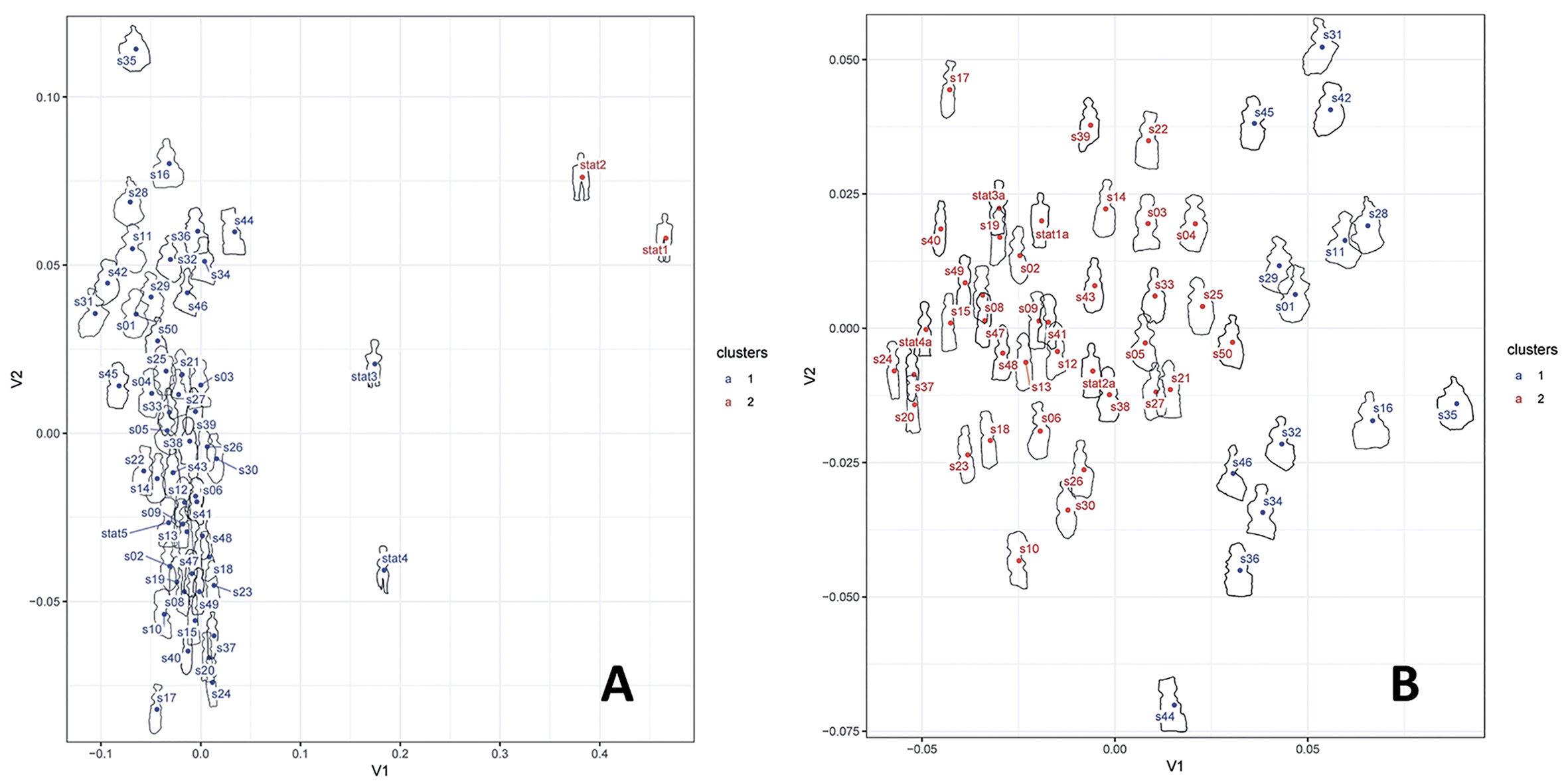
Two clusters of shapes can be distinguished when only the objects from Kharaysin are compared with each other. A first cluster groups the stylised ‘figurines’ with ‘shoulders’ and ‘hips’ of similar width. A second cluster includes ‘figurines’ with ‘hips’ wider than the ‘shoulders’ (Figure 8B, compare the red and blue clusters). A hypothesis that these two clusters can be separated into male and female groups requires further analysis.
The morphological similarity between the artefacts of Kharaysin and the statues of ‘Ain Ghazal strongly suggests that they are figurines. Female figurines made of flint are known from the Magdalenian site of Wilczyce 10 in Poland (Boroń et al. Reference Boroń, Królik, Kowalski and Clottes2012). Anthropomorphic flint figurines have also been documented among Late Neolithic (third and early second millennia BC) hunter-gatherers of the European Russian forest zone (Kashina Reference Kashina2002). This is, however, the first identification of putative human ‘figurines’ made of flint in the Neolithic Near East, which has previously yielded figurines made of baked clay, stone or bone (Rollefson Reference Rollefson and Adams2008; Christidou et al. Reference Christidou, Coqueugniot and Gourichon2009).
Spatial distribution
The spatial distribution of flint ‘figurines’ at Kharaysin shows clear patterning. There were 52 flint artefacts in area A, four in area B and one in area C, i.e. a mean of 0.210 per m2 in area A, 0.034 in area B and 0.009 in area C. The Middle PPNB levels in areas A, B and C are characterised by the presence of domestic dwellings, namely square houses with lime-plaster floors. One aspect exclusive to area A is the presence of a funerary area with a group of ten funerary deposits, including both primary and secondary burials.
In area A, notched objects concentrate in two clusters, one located in the north (in squares H/I-105/110), the other in the south-west (in squares F/G-95) (Figure 9). The first cluster (in H/I-105/110) is located to the north of the burials (marked in blue with prefix SU on Figure 9) and adjacent to them. The stratigraphic position of the artefacts, in a deposit associated with the upper part of a terracing wall that cuts an earlier building, indicates that they were discarded after the building of the first phase was abandoned, probably when the terracing wall was in use. Two ‘figurines’ were found at the base of the terracing wall, on the floor which the burials cut into. The other ‘figurines’ were recovered from the upper part of the terracing wall, in an area overlooking the funerary area.
Area A plan, showing structures, burials (in blue), distribution of the flint ‘figurines’ and locations of the cache of Nahal Hemar knives and the stone bowl (figure by the Kharaysin archaeological team).
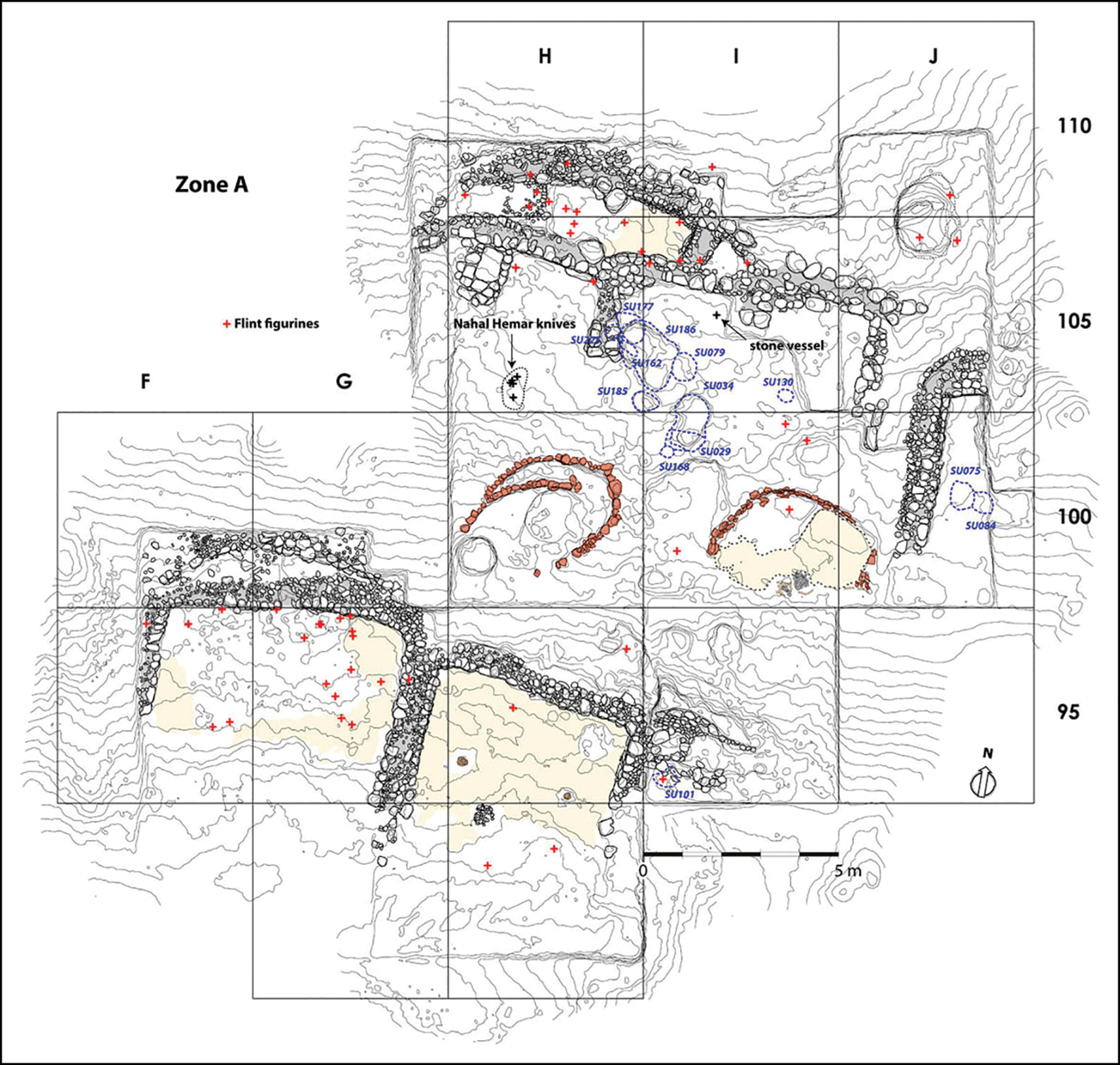
The second cluster of figurines, in squares F/G-95, is located 10m to the south-west of the funerary area, and no burials have been found close by. The excavation of this part of area A is, however, still in a preliminary phase, and further work beyond this cluster of figurines is needed to ascertain a possible association with another funerary zone. The ‘figurines’ of this second cluster were also recovered from the fill of an abandoned building.
The funerary area
As one cluster of flint ‘figurines’ was found near a funerary area, the burials found there are analysed in the context of this study. The funerary area consisted of ten burials (marked in blue with prefix SU on Figure 9): seven primary burials (six single and one double), one secondary burial, a cache containing a skull and one disturbed burial. The double primary burial SU034 contained two adult individuals buried simultaneously. Soon afterwards, the grave was opened to remove the cranium of individual 2 and the cranium and mandible of individual 1. Later, another grave (SU029), containing a young adult, cut grave SU034.
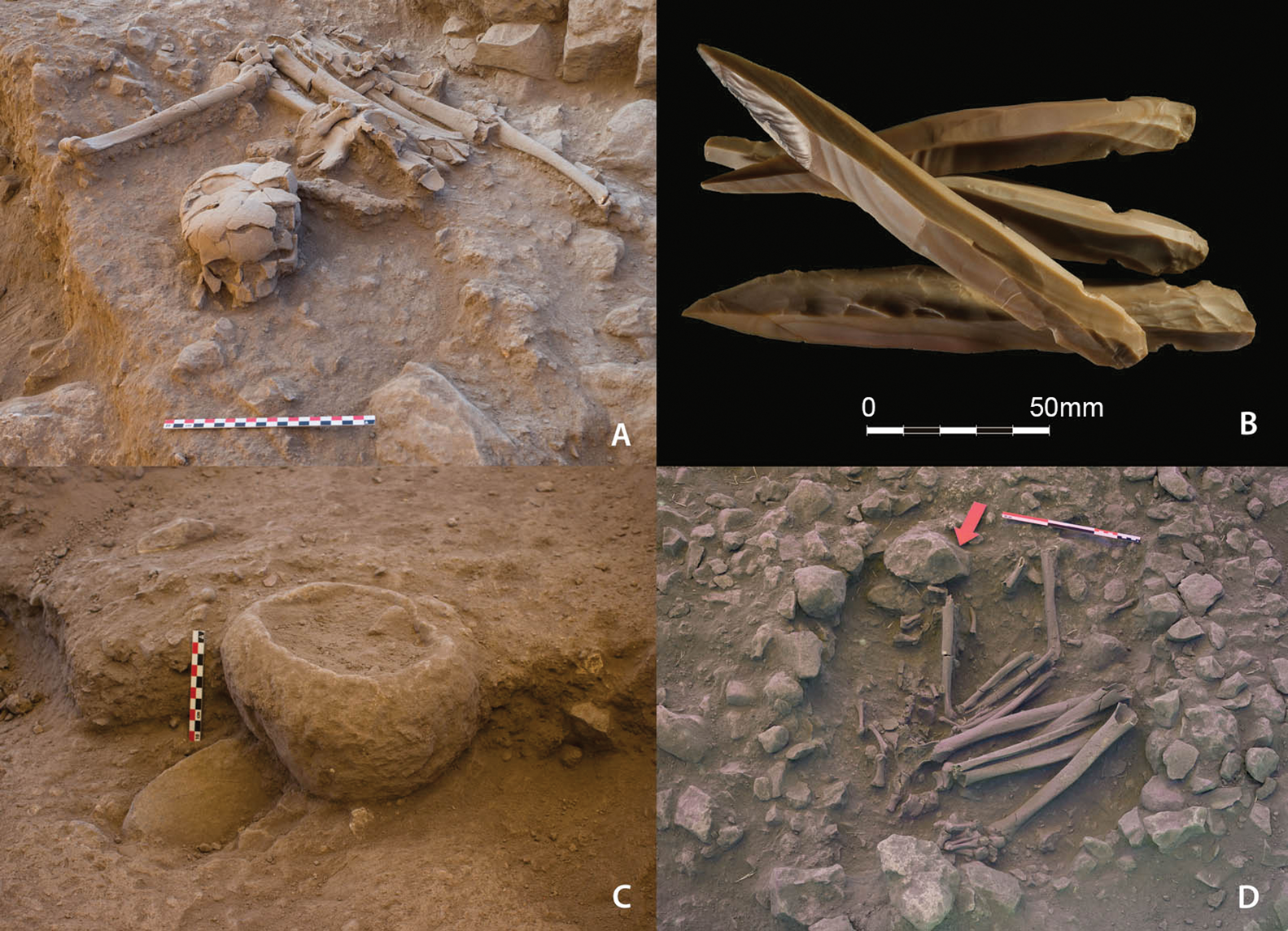
The primary burial of a young male, SU079, placed on his left side in a flexed position (Figure 10D) also had his cranium and mandible removed some time after the original burial. Grave SU185 is the primary burial of a single adult individual placed in a flexed position on his right side. Once again, his cranium and other bones were removed. SU130, SU162 and SU225 are three primary burials of poorly preserved perinatal individuals.
Funerary area: A) secondary burial SU177; B) Nahal Hemar knives; C) stone bowl in situ; D) primary burial SU079 (figure by the Kharaysin archaeological team).
A pit, SU186, is a secondary grave containing the remains of two individuals, consisting of a gracile mandible belonging to a young adult, and a right radius, a rib and a metacarpal from a perinatal individual. The position of these elements within the pit suggests that they belonged to primary or secondary burials that were disturbed and that some bones were left behind when other bones were removed.
Grave SU177 (Figure 10A) is the single secondary burial of an adult female containing both disarticulated and articulated human remains. The right ankle of the individual in grave SU177 was partially articulated, suggesting that at least some body parts had not fully decomposed when the remains were placed inside the grave. A caprine tibia was also found in association with the human remains in grave SU177. Primary burial SU162 was placed on top of burial SU177, suggesting that a period of time elapsed between both deposits. Finally, SU187 is a cache containing the single cranium of an adult male.
The stratigraphic sequence of these burials reveals at least four episodes of activity. First, the primary graves, SU034, SU185 and probably SU186, were dug into the bedrock. Second, these three graves were re-opened to retrieve skeletal elements. A skull was probably deposited in cache SU187 during one of these episodes. Third, burials SU029, SU079, SU130, SU162, SU177 and SU225 were placed over the previous burials. Finally, grave SU029 was re-opened to retrieve the skull. This sequence demonstrates that the burial ground remained a dedicated space for mortuary practices and was remembered over some time. These four episodes took place over several years since post-depositional bone manipulation usually occurred when the bodies were already (or almost) skeletonised.
Two unusual features were discovered in this funerary zone. The first is a stone bowl, the only complete stone container found at Kharaysin. It was found close to the burials, placed on its base on the surface cut by the graves (Figure 10C). The second, also found close to the burial ground, is a cache of flint tools, comprising eight long and regular pointed bipolar blades with double notches (Figure 10B). Known as Nahal Hemar knives, these tools are extremely rare at Pre-Pottery Neolithic sites, other than at the eponymous site of Nahal Hemar. This small cave site in the Judean Desert of Israel was used during the Middle PPNB as a storage place for ritual paraphernalia and as a funerary cave (Bar-Yosef & Alon Reference Bar-Yosef and Alon1988).
Interpretative hypothesis
The distribution of the flint ‘figurines’ at Kharaysin shows a distinct spatial association with the funerary area. This area was a place not only for burials but also for rituals, an area where complex funerary customs were enacted. Primary burials, in one case comprising two individuals, were placed into pits and, after the bodies had decomposed, the graves were opened and the crania extracted. In some cases, almost the entire body was removed, leaving behind isolated bones. In some instances, the bones of several individuals were found together, one also including a caprine tibia. The presence of articulated bones indicates that partially decomposed body fragments were manipulated. Moreover, funerary rituals seem to have involved more than human remains, as other finds—a unique stone bowl and a cache of Nahal Hemar knives—were also found near the burials. The stratified sequence of mortuary deposits indicates that the funerary area was used for multiple funerary episodes. It would have been remembered by the community as a burial and ritual area for an extended period. Thus, the spatial and (probable) temporal association between the burials and the ‘figurines’ strongly suggests a relationship between the two.
A similar funerary area was found at the Early PPNB (second half of the ninth millennium BC) site of Tell Qarassa North in southern Syria (Santana et al. Reference Santana, Velasco, Balbo, Iriarte, Zapata, Teira, Nicolle, Braemer and Ibáñez2015). There, primary burials and secondary deposits of human bones were found in an abandoned house, probably deposited in the context of funerary rituals. Moreover, complex ritual behaviour is suggested by the discovery of a bone wand (a long and narrow piece of material, without any inferred magic use) featuring two engraved human faces (Ibáñez et al. Reference Ibáñez, González-Urquijo and Braemer2014) and human figurines in clay in the funerary layer; such objects are virtually absent from the earlier occupation levels at Tell Qarassa North. This association suggests that funerary rituals may have included the deposition of objects with human iconography. Several tool caches were also found in the Tell Qarassa North funerary area, including a set of two polished axes, a pair of ground stone tools, two quern handstones and a cache of five bipolar blades (Santana et al. Reference Santana, Velasco, Balbo, Iriarte, Zapata, Teira, Nicolle, Braemer and Ibáñez2015). Tool caches at the sites of Kfar Ha Horesh in Israel (Barzilai & Goring-Morris Reference Barzilai, Goring-Morris, Astruc, Binder and Briois2007), Shillourokambos on Cyprus (Briois Reference Briois, Astruc, Binder and Briois2007) and Çatalhöyük in Anatolia (Carter Reference Carter, Astruc, Binder and Briois2007) have also been associated with funerary areas and rituals.
At Tell Qarassa North, clay figurines and an engraved bone were associated with burials and funerary rituals, but at Kharaysin this does not seem to have been the case. Several baked-clay objects, including small balls, ‘pawns' (enigmatic figurines resembling chess pawns), animal and human figurines have, however, been found there. The only two clearly human figurines were found at the bottom of a 1.6m-deep pit located in J 105/110 at Kharaysin (Figure 6; for location, see Figures 3 & 9). Their location at the pit's base suggests that they were intentionally deposited, but the function of the pit remains unclear. As no human remains were found in the pit, a funerary use is unlikely.
What was the meaning of the flint ‘figurines’? Contextual information offers some clues. The ‘figurines’ were made in a ubiquitous material using a very simple technique. Just two actions allowed the artisan to shape the blade or flake. The ‘figurines’ were deposited in specific areas, but not in caches. They exhibit no evidence of abrasion or prolonged use. These aspects suggest that the ‘figurines’ were fabricated and then quickly discarded. The spatial association of one cluster of ‘figurines’ with the funerary area at Kharaysin suggests that the figurines and burials were related. The funerary area was not only a burial ground, but also a ritual zone where bones were extracted, manipulated and redeposited. Other artefacts, such as the Nahal Hemar knives and stone bowl, probably formed part of these funerary rituals.
These rituals probably included remembrance of the deceased. The presence of ‘figurines’ suggests that individuals could have been symbolically depicted in flint with a simple technical gesture. If this were the case, the ‘figurines’ were discarded where they were used. Our interpretative hypothesis is that the notched flint artefacts were figurines used in funerary rituals that included the opening of tombs, the manipulation of human remains and their secondary deposition. This behaviour would form part of an ancestor veneration cult, well documented during the Pre-Pottery Neolithic (Kenyon Reference Kenyon1981; Croucher Reference Croucher and Bonogofsky2006; Kuijt Reference Kuijt2008; Ibáñez et al. Reference Ibáñez, González-Urquijo and Braemer2014). The retrieval and curation (and occasional plastering) of skulls, and their final burial in caches, are the most significant elements of this behaviour. The proliferation of human iconography in the Middle PPNB and the complex manipulation of such iconography (and of human remains) suggests the need to reinforce links related to family lineages, households and village membership, in the context of agrarian economies with extended settlements, such as at ‘Ain Ghazal and Kharaysin. Each community, however, seems to have developed its individual practices within the shared ideology of ancestor veneration. Stylistic continuity, for example, is evidenced at Jericho, where a strong resemblance between PPNA and PPNB figurines exists on the same site (Twiss Reference Twiss2001). Such continuity in figurine style is also visible at Munhata, ‘Ain Ghazal and Nahal Hemar (Rollefson Reference Rollefson1983; Bar-Yosef & Alon Reference Bar-Yosef and Alon1988; Twiss Reference Twiss2001). These particularities can be understood in the context of commonalities between fully agrarian economies, in village organisation, economic development and territorial consolidation; group identity had to be reinforced while maintaining differentiation with other groups (Barth Reference Barth1998). The use of flint bladelets and flakes in Kharaysin to represent human figures is so far unique in the Neolithic Near East. Although flint was a readily available material, the reasons behind its unique use at Kharaysin for remembering the deceased remain unknown.
Conclusions
This article documents a new type of notched flint artefact from the Middle PPNB (first half of the eighth millennium cal BC) levels of Kharaysin in Jordan. Some one hundred such artefacts have so far been discovered at the site. By-products from bipolar blade knapping were chosen, with blanks retouched to make two notches on one side by pressure-flaking with another flint object. The blanks were then turned over and another two notches made on the opposite edge. While these pairs of notches could have been used for hafting hypothetical tools, many artefacts have no clear functional edges, and most exhibit no evidence of use. We therefore propose that these artefacts are not tools. Statistical analysis of the shape of the artefacts shows clear similarities with the outline of sculptures found in cache 1 at ‘Ain Ghazal. The data suggest that these artefacts are probably figurines depicting human bodies.
The spatial distribution of the figurines shows that most were found in area A, where a funerary area was discovered alongside the remains of houses. Two clusters of figurines were found near this funerary area, which had been regularly used for burial. Moreover, graves had been opened following partial decomposition of the bodies, and parts of these were removed and re-buried. This was therefore a funerary and ritual area, where the manipulation of human remains was carried out over an extended period. A stone bowl and a cache of Nahal Hemar knives may represent ritual paraphernalia, and were probably used during funerary ceremonies. The spatial association of the flint ‘figurines’ with the burial ground suggests that they could have been used and discarded during rituals associated with burial. The morphological distinction of ‘figurines’ with slimmer or wider ‘hips’ could indicate that a variety of individuals with different physical characteristics were represented.
The flint ‘figurines’ may have been used to remember deceased individuals. Such rituals must be understood in the context of Pre-Pottery Neolithic beliefs and practices associated with ancestor veneration, but at Kharaysin a previously unknown way of representing humans in flint was employed. Such creativity in the use of a material in the context of a shared iconography and ritual practices may find resonance with other contexts elsewhere around the world.
Acknowledgements
This research is funded by the Ministerio de Ciencia, Innovación y Universidades, the Agencia Estatal de Investigación, the Fondo Europeo de Desarrollo Regional and Consejo Superior de Investigaciones Científicas. Project numbers: HAR2016-74999-P, PGC2018-096634-B-I00, RYC-2016-21108. The fieldwork is funded by the Palarq Foundation. J.S. was funded by a Marie Skłodowska-Curie Action (European Commission GA 750460; H2020-MSCA-IF-2016). We also acknowledge support of the publication fee by the CSIC Open Access Publication Support Initiative through its Unit of Information Resources for Research (URICI).


 Open access

