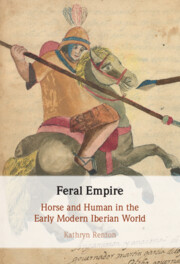


Initially, the extreme scarcity of horses in the Americas generated alarm among Spanish colonizers: Would there be sufficient horses to secure new territory, which would in turn advance their status? The distribution of land and office to Spanish conquistadors and governors brought with it access to horses, but the animals were in limited supply. In fact, placing or removing limitations on the export of horses from Spain and on the ability to move horses between settlements became a useful lever for political appointees, and some profited handsomely from controlling the passage of horses for new conquest expeditions. Horse breeding was also needed to guarantee a steady supply of horses, and new breeding efforts closely paralleled the spread of Spanish settlements from early Caribbean outposts to the mainland Tierra Firme of Central and North America. Within a brief fifty years, word of the new abundance of horses in the Americas flowed back to Spain, signaling that their original scarcity had been overcome.
Horses were one of many differences in material and cultural resources between these long-isolated regions of the world. On a global scale, the contact initiated by these encounters resulted in an unprecedented transfer of people, goods, and information, whether by violent or voluntary means, with major long-term impacts on cultural and economic developments on both sides of the Atlantic Ocean – a phenomenon famously named the “Columbian Exchange” by historian Alfred Crosby.Footnote 1 Combing through references in early colonial chronicles, Crosby highlighted the rapid spread of horses within the first hundred years, as far north as the Great Plains and as far south as Patagonia. Following the rubric of the Columbian Exchange, several studies have traced the rapid invasions of new species, from clouds of mosquitos to “plagues of sheep,” and the disruptions they wrought on local ecologies.Footnote 2 Rapidly multiplying biota had environmental impacts that extended beyond the animal itself: European animals were accompanied by European methods of husbandry and land use that reinforced the colonists’ political dominance, a relentless parallel form of “ecological imperialism.”Footnote 3
The rapid multiplication of invasive species has come to signify the inexorable ravages of empire. But the conclusion that horses served as agents of ecological conquest in colonial lands requires more nuance. The goal of introducing horses was indeed to foster abundance and to establish breeding populations of horses throughout new lands. Yet, interpreting equids as a naturally prolific invasive species or viewing their impact as one of uniform colonial dominance overlooks embodied aspects of the horse’s imprint. Such interpretations frame abundance as a naturally occurring phenomenon, and do not account for the wide variations in local ecologies that presented serious challenges to the horse’s ability to adapt, or for the complex motivations and reactions of both Spanish and Indigenous actors as they shaped colonial landscapes. By following the contours of these dynamic historical relationships between people, land, and animals, the dramatic growth of horse populations can be more aptly reframed in terms of a political ecology.Footnote 4
Horses flourished due to a combination of existing environmental conditions and circumstances that had to be purposefully engineered to sustain them. Even if abundance seemed effortless, this growth both depended on and strained existing management of livestock and responded to local environmental stimuli. First routes of entry demonstrate that conquistadors paid attention to what was needed for their horses. The colonizers subsequently applied methods of husbandry that increased horse populations, but these fluctuated dramatically in response to the depopulation of areas formerly inhabited by Indigenous people and the depopulation of colonial settlements in favor of new conquest ventures. Burgeoning equine populations also escaped existing controls, generating antagonistic reactions from Indigenous residents, as well as infighting among settlers over ownership and land use. In other words, equine abundance, stemming from both local ecological resources and politically motivated efforts, was simultaneously a desired outcome and a major problem. Perceiving that ordinances applied by colonial municipalities were unsuccessful in taking care of the situation, the Spanish Crown stepped in to reassert its vision of control in the so-called New Laws in 1542 and other contemporary legislative reforms. Paradoxically, however, this same colonial watershed confirmed that Iberian methods were better suited to increasing, rather than controlling, the horse population.
In implementing their husbandry practices for raising domesticated livestock and more broadly altering existing relations to the land, the Spanish no doubt aimed to dominate Indigenous communities. But a growing abundance of horses also had unintended consequences, as unruly herds challenged facets of colonial order and exposed the illusion of control attributed to this same form of husbandry. Significantly, the growing abundance of horses elevated a fundamental tension between two colonial goals: to populate land with horses bred in new settlements, and to control land in new settlements by regulating the movement, reproduction, and possession of horses in them. This central tension presented numerous occasions to negotiate outcomes in a new equine political ecology.
3.1 The Paradox of Abundance
In 1519, the geographer Martín-Fernández de Enciso remarked on the rapid multiplication of livestock on Caribbean islands in his Suma geográfica, attributing it to the absence of native domesticated animals.Footnote 5 In his 1535 Historia general y natural de las Indias, royal historian Oviedo also emphasized the fertility of flora and fauna in the colonies, which had multiplied to the point that there seemed to be no need to bring any more livestock from Spain.Footnote 6 Generally, chroniclers who reported on the explosive nature of livestock growth in the Americas emphasized the lands’ incredible capacity to benefit colonizers. Most authors favored a Christian providentialism that this fertility was ultimately for their benefit in a divine plan, despite expressing misgivings that American environments might have degenerate influences on European men and animals.Footnote 7 Their reports emphasized generally high yields of new livestock or crops, regardless of specific, local realities across a wide swath of diverse territories and ecosystems.Footnote 8
Comprehensive numbers are difficult to collect from colonial records, but changes in market prices have been used to approximate how population growth affected supply and demand. A horse purchased in Spain for ten to fifteen pesos de oro would have cost one and half times as much to ship to the Caribbean before being resold to the next buyer. Yet, Oviedo marveled that, as early as 1510, a young horse bred on Hispaniola might cost no more than five pesos de oro.Footnote 9 Based on decreasing prices for livestock, Río de Moreno has estimated that the initial livestock populations in the Caribbean islands grew a hundredfold within the first fifteen years of colonization. In a complementary study of Mexican hacienda archives, Chevalier calculated that livestock populations likely doubled in less than a year, every year, from the 1530s to the 1550s in New Spain.Footnote 10 These are astounding numbers. What drove this growth?
One factor is environmental affinity. In an unusual twist of fate, the domesticated horse that arrived on the shore of the Americas was, in fact, an evolutionary descendent of ancestral equid populations in North America. The genus Equus appeared during the Pliocene (2,600,000 to 11,700 years ago) on newly emerging grasslands, and the caballine varieties that crossed over the land bridge to Asia in at least two distinct phases are thought to be the source of all modern horses in the world.Footnote 11 Although these varieties declined in North America around the end of the last Ice Age, according to historical and archaeological records, horses in Eurasia continued to migrate alongside the changing contours of steppe and grasslands. Equine populations in central Asian valleys are the most likely core genetic pool for the horses that became a staple of domesticated livestock in Europe.Footnote 12 Thus, while the range of new ecologies differed markedly from typical Iberian climates, the horses had an evolutionary affinity with grasslands. Most notably, the Caribbean savannas and the high plains stretching across the American continents offered forage with few other grazing species, domesticated or wild.
In addition to an evolutionary affinity, the physical migration of horses contributed to fertility rates. Animals newly introduced to the Americas reproduced at higher-than-typical rates. The sexual cycle of estrous is triggered by circadian rhythms of daylight and its seasonal variations. Relocating horses closer to the equator would have disrupted these circadian rhythms, offering one explanation for how colonial records of livestock could note that horses gave birth every year and a half.Footnote 13 Mares typically have a reproductive season, when they go through estrous cycles (being “in heat” or both fertile and receptive to mating), and a sterile season when there are no estrous cycles, but different exposure to light can prolong their fertile season.Footnote 14 In this sense, invasive species also responded to biological stimuli in their new environment.
But not all environments fostered conditions of growth. Horses formerly at home in the temperate plains and salt marshes of southern Spain now found themselves amid Caribbean beaches, mountainous volcanic landscapes, and thick tropical foliage. They remained vulnerable to injuries and ill-health in a variety of humid and harsh environments. Horses are ungulates, like sheep and cattle: hooved, grazing mammals. However, unlike ruminants, whose digestion is characterized by several stomach compartments for fermenting and processing a wider range of forage, horses adapted to more fibrous and less nutritious grasses. This also means they have more sensitive stomachs that require large amounts of fodder and are prone to life-threatening complications.Footnote 15 Horses had to be fed whatever forage was available, including corn, beans, and other local vegetation. But abrupt changes to diet could wreak havoc on their health, and on traveling expeditions with only limited time available for foraging, these stresses would also result in muscle loss unless feed could be supplemented with denser grains and nutrients.
In addition to biological requirements for the individual animal, scholars have also documented ecological limits to elevated population growth. Within a few generations, rates of reproduction slowed, peaking notably by the 1570s. Archival research in Mexico and Central America converge in noting this deceleration of livestock expansion, suggesting clear parallels in both regions. A generational adaptation to the climate and a normalizing of reproductive cycles based on adjusted circadian rhythms would be inevitable. Additionally, the degree of inbreeding necessary to sustain such rapid growth with relatively small seed populations would have also dampened fertility rates. There were also natural limits to the carrying capacity of the available forage. As herds increased, their intensive grazing impacted local growth. Melville’s study of the “ungulate” invasion of the central valleys of Mexico tracked the desiccation that resulted from the early growth of livestock – sheep, specifically – and how it in turn limited future crop yields and offspring.Footnote 16
Models of regional ecosystems include a complex network of input factors, and they are broadly defined by states of equilibrium that differentiate one region from another. But these landscapes are also historical, experiencing change over time.Footnote 17 A view of the diversity within regional environments throughout the Americas highlights the dynamic interactions of ecological resources and colonial practices. Ecological resources amplified population growth in some situations and detracted from it in others, and similar contingencies and contradictory influences on equine abundance are also found in Spanish conquest and husbandry practices.
3.1.1 Environmental Concerns for Supplying Horses in the Americas
In surveying Spanish routes of exploration, conquest, and colonization, four ecological regions of interest stand out for further scrutiny: islands, coastal estuaries, high plains, and mountain valleys. First, while Columbus made landfall on a Caribbean island by historical coincidence, subsequent development of horse populations continued to strategically center on Caribbean islands well into the 1540s. Caribbean islands were used to stock Spanish expeditions in predictable patterns, a resupply strategy used in both the Atlantic and Mediterranean. Perhaps unsurprisingly, islands formed natural barriers that both contained livestock herds and sheltered them from predators. Islands equipped with larger interior meadows or savannahs were also advantageous to a grazing horse population.
Second, in their initial approaches by sea, conquistadors typically sought out protected bays that led to river outlets. In addition to offering the easiest access inland, these riverine approaches would also often serve as catch basins within larger valleys, where salty estuaries would give way to wetlands or grasslands. As numerous studies have documented, transhumant animal husbandry techniques of long-distance, seasonal migration of livestock used in Andalusia since Roman times were transferred to both Caribbean and Mexican areas. In this marismeña (marshland) strategy, stockmen sent their herds into low-lying coastal estuaries or wetlands for seasonal forage and then annually relied on the practice of rounding up new offspring.Footnote 18 On the coast of Veracruz, for example, Villalobos employed these methods, on the orders of Cortés, to establish the first ranches in the region.Footnote 19 The development of livestock herding followed this same schema around Lake Nicaragua, between León and Granada, as well on the coast of Panama, near Natá. Further south, the similarly configured site of Piura San Miguel was not only the entry for Pizarro’s initial blow against the Inca Atahualpa, but also became a supply point for routes inland.Footnote 20 After taking Cusco, the Spanish relied on two additional coastal valleys, the Pachácamac valley outside of Lima and the region between Arequipa and the Pacific coast, to develop their livestock trade. This coastal estuary configuration was used as far south as Santiago de Chile, whose first bishop established its first equine breeding populations in the 1540s.
Third, transportation on horseback favored flat land. As a result, Spanish expeditions would often seek inland routes anchored by natural plains, if they were not already using those established by existing trade contacts.Footnote 21 In New Spain, this general pattern is evident in the route Cortés took from coastal Veracruz inland, and in the subsequent expansion under his leadership along the central high plains northwest and further south into Central America. Similarly, in South America, expeditions forged coastal entries and then pursued high plains. On the Pacific coast, this was the case from Guayaquil to Quito, and on the Caribbean coast from coastal Venezuela up to the highlands of Tunja and Popayan. The meseta (high plains) of Tunja permitted the transport and maintenance of livestock and horses brought from the Caribbean islands, for example, and the growth of this introduced herd brought down the price of a horse that would have cost five hundred pesos in 1544 to just thirty pesos fifteen years later.Footnote 22 The island of Margarita supplied horses to the llanos (grasslands or plains) of Venezuela and Colombia; this route formed the first overland connection between the Caribbean and Peru and thereafter, linking a series of high plains from Columbia to Quito and into the Andes region.Footnote 23
Finally, mountain valleys, not unlike islands, served as natural corrals for horse herds. Because of the difficulty that mountain passes posed for horse transport, much of Central America’s volcanic formations and Peruvian Andes seemed impassable and inhospitable to horses. However, select mountain valleys, even at relatively high elevations, became important suppliers of horses. Transhumant livestock husbandry in Europe also used montes, uncultivated and forested foothills, for seasonal pasture. This strategy transferred readily to mountain valleys in both New Spain and Peru. As the conquistadors moved south from Mexico City, for example, they encountered the region of Chiapas and the Grijalva River, which were encircled by mountains, and turned them into a breeding center – in particular, Chiapas de los Indios, as noted by Bernal Díaz and later travelers. With similar geographical features, Popayan, Colombia, and Quito, Ecuador also became breeding centers early after their founding. In Quito, the collection of diezmos, or tithes on new livestock offspring, began in 1536 with foals, before extending to other agricultural products. In the Andes foothills, the valley of Cuenca, set at the convergence of four rivers (Tomebamba, Yanuncay, Tarqui, and Machangara), served as an outpost for expeditions heading into the Amazon region and housed a population of horses after its founding in 1557. Additional valleys in Peru situated along former Inca highways became centers for breeding horses and livestock, such as Chachapoyas in north-central Peru. Further south, the lower-altitude puna (grasslands) ringed by mountain ridges but above the treeline, such as Andahuaylas, Cangallo, and Chumbivilcas, all generated similar concentrations of Spanish-domesticated livestock.
Environmental considerations played a notable role in where horses were introduced and how settlement proceeded, and thus influenced which settlements would become important centers for horses in Spanish political networks and economic enterprises. When used strategically, regional environments provided comparative local advantages and horses adapted well to some environments in the Americas. But such advantages alone did not account for the growing abundance of horses. Horses also grew more abundant because the Spanish colonizers strategically focused on promoting horse husbandry when settling new territory.
3.1.2 “Domesticating” Colonial Landscapes
This extended period of conflict and conquest introduced dramatic changes to colonial landscapes, of which domesticated European livestock were just one part.Footnote 24 The spread of virulent microbes precipitated major disruptions to Indigenous communities’ existing relations with natural resources and decimated innumerable communities.Footnote 25 The forced migrations of enslaved people and others who chose to seek refuge in new areas also inhibited the typical cultivation and use of community land and resources. In response to ongoing population losses, colonial officials also followed policies to relocate entire communities to form new, primarily Indigenous, congregations and towns.Footnote 26 These cultural and ecological disruptions of depopulation, on the one hand, and displacement, on the other, also stimulated the growth of horses in changing colonial landscapes. Domesticated horses became fixtures of many landscapes as Spanish colonizers imposed new forms of control over peoples and environments. But it is also true that these growing horse populations revealed major limitations to Spanish forms of husbandry and land use.
In the Caribbean islands, the earliest primary centers for raising livestock were located in areas where Indigenous people were displaced in the greatest numbers. On Hispaniola, extermination of the local Taino populations left vacant land around the gold mines of Buenaventura, Santo Domingo, and Concepción de la Vega. Uncultivated or abandoned land became livestock pasture. Following the brutal conquest of Higüey at the western end of the island, the haciendas gained by Ponce de León, Juan Esquivel, and Francisco de Garay bred the livestock that then seeded populations on the islands of Puerto Rico, Jamaica, and Cuba. In addition, conquistadors tried to establish competing claims to territory against each other by introducing livestock into recently depopulated areas, but when they subsequently encountered difficulty in actually securing the island territory, this imported livestock was allowed to multiply unsupervised. In Jamaica, for example, Diego Colón (Governor of the Indies, 1508–1523) faced at least two competitors who attempted to claim land through the transfer of livestock, and he sent Juan de Esquivel to take control of his stake in this land in 1509, which he did with brutal effect. Colón eventually employed up to 5,000 indios to herd thousands of pigs in Jamaica.Footnote 27 The depopulation of Indigenous people was a key factor in increasing equine populations in the Caribbean, and island ecologies supported these growing populations, whether these animals were purposely bred for export or bred without active supervision.
On several Caribbean islands, areas that had been depopulated of Indigenous people fostered thriving livestock numbers that met rising demands for animals to use in conquest expeditions on the mainland. At first, this supply brought down prices for new expeditions, but it also spurred new protections. Island governors, fearing that this hot market would deplete their own resources, limited the export of livestock to mainland settlements in the 1520s. A new ban on exporting horses from Spain followed in the 1530s, and caused prices on the islands to rise exponentially (the price of a horse had dropped to ten pesos at the turn of the century, but was now five hundred to six hundred pesos).Footnote 28 As Spanish colonizers moved on from Caribbean settlements to look for the next, better opportunity, however, this second wave of depopulation resulted in major increases in herd size. For example, Puerto Rico had become the primary supplier of horses for expeditions to Panama and Florida by the 1530s. Dwindling supplies of local gold in Puerto Rico caused many settlers to move on to new ventures, leaving behind unsupervised livestock that continue to proliferate. Complaints from residents in 1537 about livestock oversupply suggested the need for new enclosures to protect available pastures from overuse and separate out good-quality animals.Footnote 29 Subsequent development of horse breeding in mainland settlements would further reduce demand for Caribbean livestock, resulting in a second dramatic drop in prices by the 1540s that confirmed the surplus.
Such dramatic fluctuations in price and increases in number demonstrate that livestock populations were not as effectively or carefully controlled by the colonizers as the term “domesticated” might suggest. Attention to these local cycles provides a finer-grained picture of the general perception of abundance. A closer look at Spanish colonial policies governing land use and methods of equine husbandry outlines a third set of contributing factors, in addition to depopulation and environmental resources. Notably, land-use categories were malleable, and animal husbandry regulations promoted access to pasture over control of the movement and reproduction of livestock.
In standard charters drawn up for new colonial settlements, land was allocated for specific uses. Starting from the Iberian premise that kings held eminent domain over conquered land, royal grants distributed rights to use land. Subsequently, any unimproved lands where those rights had not been exercised would be returned to the king’s jurisdiction. The most well known of these grants is the encomienda, which gave Spanish settlers rights to cultivate land and use the labor of Indigenous residents in exchange for the continual maintenance of a horse and arms in the king’s service. The conditional term of this grant generated a great deal of conflict between the king and the recipients of these encomiendas, the encomendero. Municipalities also received royal charters that spelled out land use in their jurisdiction, which typically extended fifteen leagues in all directions from the town center.Footnote 30 The charters assigned each registered town vecino (resident) a plot of land for a solar (house), a huerta (garden), and access to pasture within six leagues of the town center, as long as they were occupied within a certain time period, usually six years. They also reserved land to be held in common.Footnote 31
The commons were referred to by the general category of tierras baldías, literally “wastelands,” and municipalities observed ordinances permitting communal use of these commons depending on the plot’s designation. Montes, for example, referred to publicly accessible, forested lands that could be used for pasture, although collecting wood required special approval. Ejidos referred to public land within the city limits, often for pasturing beasts of burden used for transportation and for harvest.Footnote 32 De facto use of the land also influenced its designation, so that some plots could transition into and out of the commons. Cultivated land that had already been harvested or that was laying fallow could also be designated for use by foraging livestock. Land grants that remained uncultivated past a certain timeline reverted to the jurisdiction of the Crown or the municipality under the status of tierras baldías. These are all also use-based categories for the commons. The prime example of such a land-use category is the estancia, which was used to recognize an area of the commons habitually used by an individual for grazing his herd, and formally permitted its ongoing use by that individual for a specific density of animals.
The emphasis on the commons in colonial landscapes was accompanied by Iberian traditions of transhumance and loose animal husbandry. As far back as the thirteenth century, a powerful interest group of stockmen gained rights for passage of their vast flocks of Merino sheep through towns and farmland in the Iberian Peninsula on specific routes (cañadas) protected against unwanted enclosures. A special court, the Consejo de la Mesta, managed disputes between stockmen and farmers.Footnote 33 In the Americas, long-distance transhumance did not become common practice for raising livestock, but the corollary practice of free-roaming livestock generally did. On a small scale, towns sent their livestock to graze in mountain foothills in the summer months and reserved baldíos and pasture closer to town for the winter months. For both transhumance and loose husbandry practices, enclosures on royal land, municipal townships, or individual land grants were limited to permit the regular seasonal movement of herds.
As a needed complement to loose animal husbandry, regulations protecting common pasture rights and identifying ownership of stray animals also emerged in the Americas and dealt with livestock in general, beyond the famous sheep of the Iberian Mesta. Municipal mestas appeared in piecemeal fashion to adjudicate disputes and preserve the use of common lands.Footnote 34 Typically, two alcaldes de la mesta, or judges, installed on the municipal council decided claims over animal ownership and imposed penalties related to land use. The mesta’s activities included registering livestock brands, establishing an auction process for stray animals, and assigning penalties for animals that encroached on improved agricultural lands. In addition, the judges also designated pastures for broodmares and established roundups to collect and brand new offspring. In 1520, a royal decree from the king to the governor of Hispaniola noted that livestock had increased to the point that it was necessary to “hacerse la mesta” (form a council of the mesta), the earliest colonial example of enacting this institution in the colonies.Footnote 35 Others followed in response to developing conditions. The Actas de Cabildo (council records) of Mexico City first mentioned the problem of loose livestock getting into crop fields in 1524.Footnote 36 By June of 1529, the city had assigned two mesta judges to record the brand markings of livestock owners for horses, sheep, and cattle.Footnote 37 But it wasn’t until 1537 that the city established a biannual meeting for the alcaldes (judges) to sort through stray animals. One meeting was held in Tepeapulco (Hidalgo) in February, and one in Matalcingo/Toluca in August, and attendance was required for anyone owning at least twenty head of livestock.Footnote 38
Colonial mesta regulations facilitated free-ranging animal husbandry and protected access to the commons, but also faced the imposing challenge of rapidly increasing numbers of livestock. In Guatemala, the early records of Santiago de los Caballeros indicate that the mesta was established in 1529 to deal with loose animals in the city. The city council (cabildo) had established a holding pen for mares, known as a yeguarizo, and charged two pesos de oro for each mare or colt over one year old, together with the fodder (one fanega de maiz, or Spanish bushel, per month) to maintain them.Footnote 39 But complaints quickly emerged that the city did not maintain order, as the mares and their potros cerriles (untamed foals) wandered about in the streets, the markets, and even in the church. Upon abandoning their fields to chase the mares out of the city, locals complained that they would return to find the animals grazing on their crops. In response to this situation, the city ordered that anyone who brought their horse to the city must also pay a guard one peso de oro per animal to keep watch during the day. They also instituted a corral to arraign troublesome livestock, and the owners would have to pay a fine to retrieve them.Footnote 40 In these examples, local mesta ordinances implemented in the 1520s and 1530s responded to conflicts caused by ill-defined land claims, lack of enclosures, and lack of guards for the animals.
In theory, the uncultivated land of the commons available for pasture differed in nature from the land granted to municipal residents with the mandate to cultivate and improve it. But in practice, these distinctions were not so clear-cut. Frequently, charters only loosely identified grants for individual plots of land by their distance within a circular radius from the village center, rather than posing specific boundaries (although occasionally these were marked by stones known as mojones). Encomienda grants typically parceled out very large areas, and the use of enclosures to designate these was rare. By tradition, the jurisdiction of each municipality also stipulated that livestock could travel freely over its terrain and to this end, minimizing other enclosures.Footnote 41 Moreover, many of these individual land grants were held temporarily, in absentia, or were never developed for actual settlement. In other words, lands distributed after conquest carried with them legal distinctions that were not visually evident in the landscape itself.
As a result, laying claim to unimproved lands in depopulated areas was a widespread colonial practice. Grazing livestock was one means to establish a claim and receive formal recognition as an estancia. Thus, in addition to the depopulation and displacement of Indigenous communities, the active reinterpretation of their former lands as baldíos or estancias expanded the available commons for livestock. An early example can be found in a 1537 lawsuit in Oaxaca, within territory given to Hernán Cortés as the Marques del Valle.Footnote 42 The leaders of the village of Etla presented a petition protesting their mistreatment by a Spaniard, Alonso Morcillo. Morcillo had sent an armed, mounted guard to protect his herd of mares while they grazed on a contested piece of land. Testimony from the indios principales (leaders of an Indigenous town) argued that they had previously tended these fields, which were needed for producing tribute to their encomenderos, but that they had been forced to abandon them because a growing number of livestock were eating the tender shoots of maize.Footnote 43 Morcillo countered that he had been granted his estancia shortly after his town of Antequera’s founding, and over a span of at least five years had cultivated an extensive herd of mares from his original three or four horses – and even went so far as to claim that he was “ennobling” the land by breeding horses on it. Morcillo argued that the indios had come to sow their crop in this spot precisely so that his mares would damage it and they could then register a complaint – not because it was an important crop field, but to claim the land for grazing their own animals.Footnote 44 The judge asked many witnesses about the land in question to determine whether it had been included in the baldíos incorporated in the town of Antequera, and how long it had been either abandoned or cultivated. According to the practice of recognizing estancias, the case was settled in favor of Morcillo. It shows how land use could be transformed over the span of a few years.
While Iberian precedents shaped colonial landscapes across a range of climate and terrain, the charters and grants establishing categories of land use were changeable. In response to growing livestock numbers, mesta policies emerged in a piecemeal fashion in colonial municipalities to adjudicate land use. These policies aimed to protect common land for loose animal husbandry, rather than to tightly control these herds. Perhaps counterintuitively, then, these same practices also stimulated the growing presence of livestock – a reality emphasized by the continual need to revise and re-implement mesta policies – and even escalated some underlying conflicts.
3.1.3 Protecting the Commons
Claims to common pasture and to land grants were highly political. Together with the increasing abundance of livestock, these claims were a source of contention not only between colonizers and colonized populations but also between colonizers and government officials. As is evident in these early examples, the municipal mesta ordinances that were in place by the 1530s responded to conflicts over the management of free-ranging livestock in the commons. Protection of the commons ultimately emanated from the Crown as the grantor and guarantor of this land. Many conquistadors and Spanish officials, however, leveraged their privileged positions to claim land by encroaching on Indigenous land or commons with grazing herds of livestock. Upon receiving large grants, encomenderos frequently took full advantage of their social weight to accrue special privileges and other demands that, to the Crown, served as a challenge to the king’s royal delegates.
Conflicts over the use of common land came to a head in the 1540s. Royal mandates to maintain pasture and water in common had been repeatedly extended to the Indies in 1510, 1533, and 1536. In August 1541, Charles V issued a reconfirmation of the Ordenanzas de pastos y aguas that protected common pasture and water access.Footnote 45 This provoked protests from wealthy stockmen in the Americas. Challenging their now customary access to land and pasture for grazing, this order revoked privileges and claims to land that livestock breeders (ganaderos, criaderos) might have received from their municipal council for land within the town’s terminus. Conversely, other residents had complained about the breeders’ overreach and now sought redress from the Crown. To illuminate this controversy, a preguntorio (investigation) in Puerto Rico recorded testimony on the matter from forty-six witnesses, with a series of questions focused on the use of municipal pasture and baldíos and the use of enclosures.Footnote 46 Numerous large stockholders deemed that, as a result of the order, their land was being taken away and redesignated as commons. Others reported that the landholders’ entrenched privilege had enabled the latter to encroach on their rights to access to the commons. One resident, Francisco Aguilar, complained that pasture and water had been appropriated as the special prerogative of alcaldes, who staked claims to water by putting enclosures wherever they liked, instead of fulfilling the order that the “pastures, woodlands and water be held in common.”Footnote 47 In this case, disputes over the commons echoed larger tensions over the conflicting interests of the encomenderos and the Crown in colonial governance.
Marking a major turning point, the Spanish Crown chose to reassert its dominance in colonial governance with the so-called New Laws of 1542, which affirmed the monarch’s control and direct patronage over Indigenous subjects against the worst of the encomienda abuses publicized by Bartolomé de las Casas.Footnote 48 In keeping with the tenor of this check on encomenderos’ power, the king instituted universal mesta regulations alongside the New Laws in 1542. Like the New Laws, these livestock policies aimed to prevent encomenderos from acting like feudal lords with jurisdiction over their lands, and to provide a venue to address complaints about stockmen who overstepped their privilege, such as by encroaching on lands through claims to estancias or enclosure of the commons.
In 1542, Charles V proclaimed that the mesta would apply in all the provinces of the Indies, and included fourteen ordinances outlining the requirements for establishing a mesta.Footnote 49 Membership in the mesta was based on the number of livestock an individual owned, starting with twenty head of large livestock, like horses and cattle (ganado mayor), or three hundred head of small livestock, like sheep and goats (ganado menor). It stipulated that livestock owners register unique brands and provide livestock guards to prevent fraud and theft. Members of the mesta gained rights to sell their livestock for meat in the carnicería (butcher shop).Footnote 50 It also defined the density of livestock per parcel of land – for example, an estancia could hold two hundred large livestock like horses, and a caballería could hold twenty horses. Alcaldes de la mesta were to be elected from this set of stockholding members for the purpose of dealing with livestock and land use within the community’s jurisdiction. Some cities had already instituted mesta requirements, and others initiated them shortly after. The mesta was implemented in Puebla in 1541, and in Oaxaca in 1543, and so on.Footnote 51
Mesta ordinances provided a means to adjudicate common pasture rights and designate ownership over animals that spent most of the year out at pasture, and these royal instructions followed traditional policies and continued to encourage the use of traditional loose herd management. While the New Laws aimed to reassert royal control over its colonial officials and subjects in general, the mesta in the Americas did not increase control over breeding and raising livestock or reduce the growth of livestock populations in any significant ways. In fact, the New Laws limited approvals for new expeditions (along with the potential rewards in the division of loot and Indigenous labor), which in turn decreased the overall demand for horses and increased surplus stock, including unsupervised herds. In 1543, Jerónimo Lopez, a stockman in Mexico, complained to the king that his investments in breeding horses and mules for these expeditions were being decimated by the lower demand and lower prices.Footnote 52 In 1545, complaints from Santo Domingo echoed this bleak situation: “los caballos y yeguas y otras cosas que salían desta isla para el proveimiento destas comarcas no tiene salida ninguna por que no ay navios y como cesso la contratación de los indios también ha cesado esto” (stallions and mares and other things that leave from this island for the broader region have not left, for there are no ships and trade with the indios has ceased).Footnote 53 By 1559, another petition from Santo Domingo asked to collect the ganado mostrenco (unclaimed livestock) roaming in the mountains.Footnote 54 Mesta practices had instituted roundups to collect herds from common pasture and rodear (sort) the new offspring. In the years following, new colonial terminology came into use, such as ranchear or montear (to collect livestock from the montes), indicating that there was a surplus of unsupervised livestock that were no longer valuable exports and were instead being slaughtered for their hides.Footnote 55
The presence of horses was undoubtedly a feature of the colonial system: As a domesticated and introduced species, their presence tracked alongside Spanish invasions and the spread of colonization. Some regional environments supported and facilitated this growth, although it varied across colonial landscapes. When combined with Spanish policies supporting traditional livestock management, cultural challenges within these landscapes, such as depopulation and land use, had large impacts on equine growth. The paradox of equine abundance lies in the fact that while it was a desired outcome, it also raised significant problems. Despite political control of land and policies regulating land use for animal husbandry, Spanish colonizers only had limited control over their growing horse populations, and this factored into conflicts between Indigenous communities, colonizers, municipalities, and the Crown.
3.2 The Illusion of Control
This survey of where and how horse populations increased highlights several dynamic relationships between environments, people, and other animals, in which growth was driven not only by natural resources but also by politically and culturally informed actions. The framework of political ecology also makes room to investigate responses to the ecohistorical changes that accompanied the growing imprint of the horse. Without access to first-person accounts, a history of Indigenous reactions to horses is incomplete; however, documents from colonial archives do permit some reconstruction of Indigenous community interests. Indigenous communities’ existing relationships with natural resources had already had an impact on environments, including several forms of domesticated animal husbandry.Footnote 56 In Central and North America, animals raised for food or labor included turkeys and dogs, while in South America, the pre-Hispanic cultures of Peru domesticated llamas, alpaca, and cuy (guinea pigs). Additionally, animals were kept for sacrifices, collected as companions or in zoo-like enclosures, traded in captivity, and managed for hunting. General management of landscapes for fishing and hunting was also found throughout the Americas, in addition to more traditional agriculture for staple crops. Indigenous communities actively responded to Spanish interests as the Spanish imposed new husbandry practices and agricultural expectations. Viewed comparatively across colonial landscapes, the growing abundance of horses brought on challenges to colonial governance that also generated opportunities to negotiate outcomes.
While the New Laws of 1542 applied generally across the Indies, implementing reforms to land use and livestock husbandry was left up to individual cities and towns. Comparing cases in New Spain and Peru – specifically, from the high plains and borderlands of New Spain to the coastal and mountain valleys in Peru – illustrates the reactive nature of mesta regulations and the limitations on the kind of control they established. In parallel, Indigenous use of horses increased with the implementation of the mesta, including the means to claim horses and permissions to ride them. In effect, Spanish livestock regulations supported free-ranging populations and facilitated the adoption of horses by Indigenous subjects more than they prevented them. Despite their success in bringing horses to new areas, the Spanish faced many challenges as they attempted to regulate their movement, reproduction, and possession. Indeed, traditional practices, such as the use of the commons, loose animal husbandry, and the mesta, did not necessarily result in control. At the very least, this control should be understood in the highly negotiated sense of an equine political ecology.
3.2.1 New Spain, from High Plains to Borderlands
As described earlier, conquistadors entered New Spain from a coastal entry in Veracruz and across high plains in central Mexico. These arteries for travel made use of the flattest routes possible for transporting materials via horses or mules, and they formed the basis for the system of Camino Reales.Footnote 57 Starting with the plains between Veracruz and Mexico, the main road developed across New Spain, and later extended to Acapulco on the west coast. North from Mexico City, similar grassland plains provided access to the mines in Zacatecas and the Bahío region (the central Mexican plateau), and later developed into the Camino Real de Tierra Adentro. A similar path south along the plains through the Valle de Oaxaca and the Sonocusco coast opened trade with Guatemala and points south in the mid-sixteenth century.
To provide beasts of burden for carrying goods, Spanish colonizers developed concentrations of livestock along these routes. Midway between Veracruz and Mexico City, Puebla de los Ángeles was founded in 1532 as a supplier of cargo animals and a new model colonial city.Footnote 58 The Actas de Cabildo note that the site was chosen specifically for its location on the road, and “the residents ensured that it was possible to run horses without impediment, and better than in any other part of New Spain.”Footnote 59 Issues managing growing horse populations cropped up as soon as the city was founded. In 1533, the regidores (elected city councilmen) of Veracruz ordered that single male horses not be let loose: “los machos no estuviesen sueltos pues fatigaban a las yeguas hasta en las propias caballerizas” (the males should not be loose, since they harass the mares even in their own stables).Footnote 60 Travelers complained of the inconvenience of running into herds of animals in the road to Puebla, so the city cabildo declared that all herds of mares and mules be kept at least one league away from the city.Footnote 61 In an attempt to shift the herds away from the main artery, the council ordered individuals to establish corrals to enclose their mares in the neighboring area of Atlistco, and that they be escorted by guards if entering the city.Footnote 62 In 1538, the city named two guards for mares in the city and established a caballeriza de la venta (a stable for the sale of horses) in the neighboring town of San Martín Texmelucan.Footnote 63
Despite these continual, incremental measures, problems with controlling the herds of horses persisted and even grew worse. Tension between the municipality and livestock owners over travelers’ complaints that herds of mares were blocking these trade highways continued into the 1540s, and a local mesta was finally established in 1541. Alcaldes de la mesta were named to enforce proper use of common lands, so that livestock owners did not misuse city lands.Footnote 64 One ordinance ordered that no livestock could be in the land granted to the city (términos), outside of certain designated pastures (ejidos or dehesas), because of the innumerable problems that these mares had caused for travelers en route to Veracruz from Mexico City.Footnote 65 The city asked the viceroy for the privilege of having a dehesa dedicated just for mares in 1542; the boundaries were set in 1545 and a guard for city pastures named in 1546.Footnote 66 The alcaldes de la mesta also established two annual roundups in 1544, the first organized in Nopalucan/Ozumba and the other in Atlisco. Later, these expanded to cover a larger area, so that the first included the communities of Huejotzingo, Cholula, and Atlixco, while the second included Tlaxcala and Tepeaca/Tecamachalco. The city government voted to institute additional ordinances specifically “relativas a las yeguas porque causan mucho daño y perjuicio a los ejidos de la ciudad y en el camino a Veracruz” (related to the mares because they cause much damage to the commons of the city and to the Camino Real to Veracruz).Footnote 67 The rapid rise of the penalties for grazing mares within a half league of the Camino Real reflects these increasing damages. In 1544, it was two to three pesos per head, but by 1546, it had risen dramatically to twenty pesos per head.Footnote 68 In 1547, the city determined that mares that caused damage would be kept in a corral concejil (city council corral) attached to the town jail, until claimed with fines paid to the city.Footnote 69 In 1548, the city expelled any livestock from houses within the city; moreover, anyone who had license to raise livestock needed to register with the city council and provide a brand at their own cost, so that they actually could determine who to charge for these growing damages.Footnote 70
Although these regulations aimed to control the situation in Puebla, the issue came to a point of crisis again in the 1560s. The everyday presence of horses in Puebla is evident in an ordinance in 1561 that horse races not be held in the street next to the cathedral.Footnote 71 In 1562, the cabildo issued a warning to remove all mares and other livestock from the términos of the city, and in 1567, the cabildo had to coordinate a joint effort with Tlaxcala and Tehuacan to remove all mares from the ejidos and move them at least half a league from the Camino Real. The case in Puebla demonstrates the spread of livestock over a relatively short period of time and the difficulties in controlling these populations, even if they were desirable, given the typical practices of land use and common pasture.
The situation in Puebla mirrored that of the central valley of Mexico, which was approaching its peak levels of abundance in the 1550s. Pressure on the land continued to increase, and the Viceroy of New Spain, Luis Velasco I, responded with several reforms to mesta regulations. In response to growing demand for pasturage, the mesta granted rights to graze horses on stubble after harvests for a limited period of time, but also required the use of guards for these livestock. For larger herds, four guards (two on horseback and two on foot) were required for every 2,000 head of cattle.Footnote 72 In 1550, the viceroy reasserted limits on the specified density of livestock permitted to graze on an estancia – a maximum of 200 head of mares, 3,000 head of sheep, or 500 goats – and additionally stipulated that mares and their offspring should be enclosed for two nights each week.Footnote 73 In 1551, Velasco banned grazing cattle and horses in the Valley of Mexico altogether because of continual problems with the transhumant movement of herds and encroachment on both Indigenous fields and communal land.Footnote 74 Some individuals received orders to remove their cattle and mares from nearby Indigenous towns, like that given to Francisco de Santa Cruz of Mexico City to vacate the town of Chichilacachoca.Footnote 75 But entire towns were also guilty of the same lack of oversight. In 1552, the vecinos of Maravatio were ordered to collect and establish a guard for all livestock within fifteen days because “a causa de no tener cuidado de recoger el dicho ganado siendo como es gran cantidad ademas de andar cimarrones hacen gran daño a los indios” (because no care is taken to retrieve them, being such a large number in addition to running wild, do great harm to the indios).Footnote 76 Damages included loose-running bulls that had killed some of the local Indigenous residents.Footnote 77 Despite the blanket ban from the viceroy, changes to customary grazing practices were difficult to enforce. Finally, in 1567, a royal decree established that livestock be kept a mandatory distance of 1,000 varas, or one league, from all Indigenous settlements.Footnote 78
In addition to these protections, Viceroy Velasco also extended avenues for Indigenous petitioners to manage livestock in the same vein as the mesta. These included permissions to corral the animals found in their fields and to collect fees for damages per head from their respective owners. In the Puebla region, for example, permission was given to the pueblo of Zacatlán in 1550 to build a corral and retain animals that invaded their fields until their owners retrieved them. By 1555, the nuisance had reached a point that indios were legally permitted to kill ganados cimarrones (unclaimed livestock) on their lands. Measures to deal with free-ranging herds were also accompanied by permissions for some indios to keep and breed their own livestock – most often sheep or oxen, but at times also groups of mares of less than twelve. Many non-Spanish guards, of both Indigenous and/or African descent, were employed to meet requirements to use livestock guards when accessing common pastures in the 1560s and 1570s.
The practice of claiming estancias ran rampant in the area of the northernmost Spanish presence in New Spain. The “Chichimeca” region, named after a derogatory central Mexican term for less sedentary communities to the north, was subject to a long-standing effort of violent pacification, and the discovery of mines in Zacatecas (1546) and Guanajuato (1548) had brought new Spanish colonizers and Indigenous settlers to this frontier. Because it was an ill-defined territory that was not fully under Spanish control, many Spaniards were granted approximate estancias as a means of settling territory, and their deposits of livestock contributed to large horse populations. More than one hundred and twenty estancias of ganados mayores and menores were granted in the Chichimeca region, and using the figure of two hundred mares permitted per estancia, this initial population easily reached several thousand. North of Tlazazalca, across the Río Lerma/Río Grande and up to Guanajuato/San Francisco Pénjamo, estancias were granted in the 1550s to some of the richest men in New Spain.Footnote 79 By the second half of the sixteenth century, pastures in Querétaro boasted herds of mares estimated at 10,000.Footnote 80
3.2.2 Peru, from Coastal to Mountain Valleys
The Spanish arrived in Peru from the northern coastal entry point of San Miguel Piura, and, after taking Atahualpa captive and then the city of Cusco, they established a capital in the central mountain valley of Mantaro. From this first year in the city of Jauja, a major center for the Indigenous Huanca population, the Actas de Cabildo of Lima in 1534 records the poor conditions of the Jauja road for equine cargo: “el camino muy despoblado e de malos pasos e muy aspero e de muchas nieves donde los caballos no pueden caminar con carga” (the road is very deserted with bad footing and very rough and lots of snow where the horses cannot walk with their cargo).Footnote 81 The area surrounding the road also lacked sustenance and a temperate climate for the mares to raise their young, such that the young foals died of the cold and sterility of the mountains. Due to these unfavorable conditions for livestock and transport, as well as the threats of rebellious caciques, this capital was moved to the new coastal center of Lima in 1534.
Within Peru and the former Inca territory, a complex network of royal and public roads already existed and was often used by the Spanish. These were developed with stairs and suspension bridges for foot traffic and llama cargo, rather than with attention to the interests of horse or mule cargo and wheeled carts. As a result, the general pattern in Peru was to rely on coastal shipping to ports like Tumbes, Piura, Callao, and Quilca, and then use cargo routes that had been established in the highlands from the coast, rather than travel through the central plains.Footnote 82 Additionally, traditional agriculture and use of common water and pasture employed a vertical division of land to cultivate crops in microclimates with irrigation, marking cultural and agricultural connections along these coastal to inland routes.Footnote 83 Lastly, in Peru, indios were used right away to keep livestock, in contrast to New Spain, presumably because of their familiarity with domestic llama and alpaca ranching.Footnote 84 In descriptions of Incan ganadería (practices of livestock raising), herds were divided between “sacred” and “regular” llama flocks, with dedicated herders for each. Aside from public use regulated by the Incan state, individuals privately kept one to four llamas of their own for clothes and meat. Jacobsen argues that, in the Andes, “the extension of the mancha india was practically identical with what may be called the mancha cameloida … in other words, the survival of an Indian community was most marked precisely where the continuity of Indian livestock raising had been strongest.”Footnote 85 In south Peru, there is strong evidence of the ease with which local indios became pastores (guards or shepherds for livestock).Footnote 86 In some regions, like Arequipa, indio towns were allowed to have some livestock of their own, with limits on the number of offspring they were allowed to keep. In northern Peru, the encomenderos employed indios as guards for their herds, as well.
Lima’s port of Callao gradually overtook Piura to the north, and, despite the initial prominence of Cusco as the former Incan stronghold, Spain established the coastal city as the seat of the viceregal government in the 1540s. The valleys surrounding Lima, in particular Lurín and Pachacámac, became the key locations for livestock and particularly horses. Records of public sales and promissory notes in the earliest notarial records of Lima indicate activity around horse-trading along coastal areas. While outrageously high prices of fifteen hundred pesos were common in the first decade of conquest as a result of both scarce supply and high demand, by 1542 these prices had leveled out to two hundred pesos, which likely represents both an easing of supply and regulations implemented by the viceroy as price controls. Then, in 1564, after the civil wars had ended, it became common to find exchanges of multiple horses for prices per head ranging from just ten to a hundred pesos, depending on quantity and quality.Footnote 87 When the bishop and viceroy instituted the collection of a tithe on agricultural production, it was concentrated on the coastal valleys from Piura down to Ica, with evidence of major herds by the 1570s in Pachacámac, Chancay, Pisco, and Guamey. Horses were also shipped from Lima inland to Arequipa and Cusco, and further afield to Charcas and Chile.
On arrival on the northern coast of Peru, the local population had already been reduced by the plague and internal civil strife that had preceded the conquistadores – a 1540 visita (judicial investigation by the Council of the Indies) noted many abandoned houses in the pueblos.Footnote 88 Although early encomiendas were granted around Cajamarca, Chimú (Trujillo) and Chachapoyas, most Spaniards were attracted to potential gains further south around Cusco. In Cusco, local mesta regulations appeared early, in part because of existing uses of pasture and commons for grazing llamas and alpacas. Penalties for damages from grazing herds were applied in 1549 and identified the region of Jaquijahuana as the general commons for the city.Footnote 89 For sheep, such damages entailed a fine of one tomín (1/8th of a peso) per head; for a horse or mare, the penalty was two pesos if left unguarded during the day, and four pesos if left at night. Around the same time, the new viceroy reissued estancias permissions, in addition to those that had been distributed by the Pizarros.Footnote 90 These same commons (pastos comunes) were protected by the city council and marked with stones known as mojones. However, encroachments by local residents in the valley of Jaquijahuana created cause for complaints in 1559, as the Indigenous community turned pasture for the Spaniards’ domesticated animals into land for planting crops.Footnote 91
Development in northern Peru began with a second wave of Spaniards who had not received the plumb encomiendas further south, but earned a new living from the redistribution of agricultural lands under el Marqués de Cañete (Mendoza) in the 1550s. In the 1560s, a serious effort to populate these northern valleys and the Spanish town of Saña was undertaken when Viceroy Conde de Nieva ordered forty vecinos to settle there in 1563.Footnote 92 Although settlement generally took place later than in the south, the reducciones of local populations started earlier in northern Peru than those later instituted in the south by Viceroy Toledo in the 1570s.
Local cabildo records provide evidence that livestock in the valleys surrounding the Trujillo region was thriving. In 1550, complaints about livestock roaming the plaza and streets of the city were registered.Footnote 93 Despite its early founding in 1534, the registry of brands in Trujillo did not appear until 1551.Footnote 94 It required all livestock owners to appear before the cabildo to ensure that each owner had a distinctive brand. A corral for keeping unbranded or wandering livestock, retrieved on payment of fines, was also instituted shortly thereafter.Footnote 95 Indigenous guards for livestock were frequently employed. In the Licapa Valley, for example, sixty indios watched the mares of Francisco de Fuentes.Footnote 96 Los Hermanos Ortiz of Trujillo employed indios in Chicama (about seventy kilometers away) to raise their animals. Even Pedro de Morales, who was not an encomendero, used the indios of Cherrepe to raise livestock.Footnote 97
In Peru, complaints of daños y perjuicios (damages) from indios appear primarily after the New Laws were instituted in 1542, and even slightly later in Trujillo/Chiclayo and Chachapoyas when they were settled intensively. During the 1568 visit of Gregorio González de Cuenca, oidor (judge) of the Real Audiencia in Lima, indios complained about livestock in their fields. Cuenca ordered that the corrals should not be located in indio land and should be at least half a league from fields.Footnote 98 In 1580, Don Mateo, cacique of Cherrepe, established a suit against Don Cristóbal Chiquero of Guadalupe for damages that his flocks of goats and sheep had done to the lands and irrigation canals in the estancia of Nocotón.Footnote 99 In 1585, Alonso Tanta Condor, cacique of the Pachaca in the town of Usquil, entered a suit against Alonso Ortiz and Alonso Zoffe for damages resulting from putting one hundred mares in the fields (known as chacras in Spanish documents, from the Quechua word chakra) of the town in Chuquisengo, without license.Footnote 100 Further inland, to Chachapoyas, in 1598, the Spaniards Miguel Rubio de Molina and Juan Baptista de Molina complained that some of their horses had died in the pastures of the caciques, while these caciques in turn complained that horses had overtaken their land.Footnote 101
Mestas attempted to stem the tide of problems in abundant herds, but controlling their range and regulating breeding emerged as major concerns. The introduction of these practices for regulating livestock husbandry created frictions between presumptive landholders, livestock breeders, local communities, and government officials. Interestingly, these practices also extended to Indigenous communities, who likewise faced the impact of these new livestock populations. When mesta ordinances were formally restated in colonial legal proclamations between 1542 and 1574, changes in the proclamations indicate ever more abundant herds: requirements for membership in the mesta had grown tenfold, from a minimum of twenty head of large animal or ganado mayor (three hundred head of small animal or ganado menor) to a minimum of one thousand head of large animal (three thousand head of small animal), and the roundup of loose animals had shifted from a biannual to a weekly affair from late June through the middle of November.Footnote 102 Complicated scenarios within this emerging equine political ecology affirm both the paradox of abundance, as horse populations increased and generated new issues, and the illusory nature of control, as regulations and husbandry methods contributed to rather than moderated this growth.
3.3 An Equine Political Ecology
Many contributing factors moved horse populations in the Americas from a state of scarcity to abundance; contextualizing this growing abundance in specific landscapes and relationships outlines a colonial equine political ecology. Beyond the natural serendipity of a successful invasive species, equine abundance also owed itself to political and cultural strategies of colonization, namely land use and animal husbandry, that had cascading effects on peoples and landscapes. New environments provided advantages and challenges to horses. Governed by typical Spanish animal husbandry practices, animals were kept under loose management, which required little manpower within the large expanses of land that were made available in the dual processes of colonization and depopulation. The expanding economic activities of conquest, including long-distance trade and mining, brought horses to new areas when they suited the aims of colonization, even if they required more intensive efforts to breed and sustain.
To what extent did introducing horses contribute to controlling land or asserting power over new environments, people, and animals? As a part of new colonial structures, horses were used to fight, distribute land, claim social status, and underwrite political control. Horses required land for breeding and grazing. However, their presence was not singularly a form of dominance and control. Livestock encroached on Indigenous settlements and agricultural plots, entered cities, and took over pastures, demonstrating that abundance also created strains on colonial regulations and governance. Conflicts between encomenderos and the Crown centered on royal protection of common pasture lands. The regulatory schema favored loose animal husbandry, and the mesta, formulated on an as-needed basis in individual colonial cities, shows persistent issues. Indigenous responses ranged from killing horses to capturing and adopting them, as well as lodging formal complaints about land use and grazing. Instead of adopting the triumphalist narrative of the conquistador, who credited victory to his horse, or the critical narrative of the horse as an agent of ecological imperialism, these examples show how, in distinct phases, the horse’s role was contingent and debated, subject to the reactions and responses of other actors in an equine political ecology. Abundance created challenges for colonial governance, highlighting the paradox that horse populations could unsettle just as much as they could enforce colonial expectations for land use and social status, a point that is explored further from an Indigenous point of view in Chapter 4.

 Open access