

In March 1968, William S. Gaud, director of the United States Agency for International Development (USAID) proclaimed that a new revolution had taken place. In Pakistan, India, Turkey, and the Philippines, farmers brought in “record yields, harvests of unprecedented size” of wheat and rice.Footnote 1 Gaud attributed these harvests to a series of international agricultural interventions – new seeds, fertilizers, new attitudes among farmers, and new policies – that he described with the term “Green Revolution.” Gaud juxtaposed the Green Revolution with the “violent Red Revolutions like that of the Soviets,” which US leaders wished to forestall, and in his reflections likened it to the industrial revolution of the nineteenth century. To him, the Green Revolution could be just “as significant and as beneficial to mankind” as its industrial counterpart. He concluded his speech with a call to “to accelerate it, to spread it, and to make it permanent.” However, when agricultural experts and representatives from the countries and institutions that had sponsored the research and extension of the Green Revolution met the next year for the first in a series of seven conferences, they were neither unequivocal in their assessment of the Green Revolution and its aftermath nor united about the next steps to be taken.
These seven conferences were convened by the Rockefeller Foundation at its estate, the Villa Serbelloni, in Bellagio on the shores of Lake Como (Figure 5.1). The discussions among donors and experts cast a different light on the aftermath of the Green Revolution. Historians have emphasized the specter of social disruption that haunted the officials, experts, and institutions behind the Green Revolution already by December 1968, when reports about civil unrest in Pakistan and India reached the United States.Footnote 2 This narrative intends to highlight a profound irony of the Green Revolution. Although agricultural interventions had the goal of containing social unrest in the developing countries by filling peasants’ hungry stomachs and thereby closing their ears to the siren song of communism in the global Cold War, their actual fallout was further unrest. In contrast to this reading, I show in this chapter that the experts of the Green Revolution were at least as excited about new opportunities for interventions arising in the social fallout of their supposed triumph as they were haunted by these same patterns. Now that the stomachs had been filled and expectations had been raised, “second-generation development problems” beckoned to be tackled.
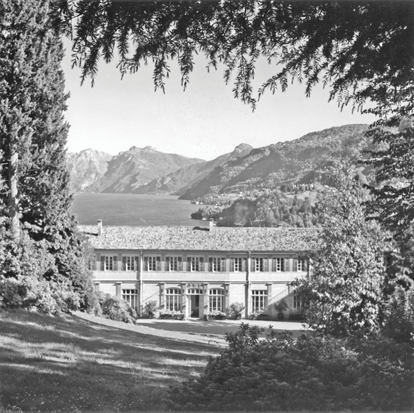
Figure 5.1 View of Villa Serbelloni, part of the Rockefeller Foundation property in Bellagio, Italy, where administrators gathered for successive meetings that gave rise to CGIAR, undated. Rockefeller Archive Center, Rockefeller Foundation photographs, series CMNS-2.
At the conferences, which were called Bellagio I to VII, experts discussed these “second-generation” (or sometimes also “later-generation”) problems and possible solutions. One of the results was the foundation of a new research institute, the International Crop Research Institute for the Semi-Arid Tropics (ICRISAT) in 1972. Modeled on the international agricultural research institutes CIMMYT (the International Maize and Wheat Improvement Center) in Mexico and IRRI (the International Rice Research Institute) in the Philippines, at which scientists had developed the key interventions of the preceding decades, ICRISAT was one of the first institutes founded under the umbrella of the Consultative Group on International Agricultural Research (CGIAR). By analyzing the Bellagio conferences, the foundation of ICRISAT, and experts’ discussions about expanding ICRISAT’s mandate to breeding groundnuts, I show how experts reimagined agricultural development through the concept of second-generation development problems in the late 1960s and early 1970s. This reimagination was part and parcel of a more fundamental shift in international development towards a neoliberal international order. The idea of development as a great project of postcolonial states and international organizations slowly faltered, replaced by an imagination of an international order that was a space of free trade and competition between nations.Footnote 3 I argue that this reimagination entailed not a fundamental remaking of interventions but rather an expansion of existing strategies that experts imbued with new meanings to suit the changing order.
This chapter thus links the literature on the history of the Green Revolution and the emerging literature that seeks to understand the historical process of the “economization” of policy since the late 1960s. Historian Nick Cullather has argued that the concept of the Green Revolution gave “an artificial coherence to two decades of fragmented and often conflicting efforts to improve agriculture in the non-Western world” and became “a template for future action, in other words, a model.”Footnote 4 However, it was not an unambiguous model. In this period, the coordinates of policymaking began to shift. Domestically, in the United States, think tanks and industrial organizations began to adopt and promote an “economic style of reasoning.” Elizabeth Popp Berman has charted the rise of this style of reasoning in US policymaking since the late 1960s. While purporting neutrality, it carried implicit values, such as competition, choice, and efficiency, that eventually replaced others, such as equality, in US public policy.Footnote 5 For the domain of population politics, which had played a central role in agricultural policy, Michelle Murphy has shown how the introduction of “practices that differentially value and govern life in terms of their ability to foster the macroeconomy of the nation-state” shifted “racist accounts of differential human evolution into an economic rather than hereditary biological register.”Footnote 6 This shift was not limited to the United States. Discussing the United Nations, Sandrine Kott has argued that the view of the world as a space of free trade and competition between nations replaced postwar internationalists’ hopes of creating institutions that could successfully regulate the world with all its contradictions and instabilities.Footnote 7 However, the interventions and policies crafted for this new world order were not necessarily as new. Amy Offner has shown for the Americas that policymakers often repurposed mid-century strategies of the developmentalist states.Footnote 8 The successive Bellagio meetings provide an insight into the repurposing of agricultural development strategies along the lines of these broader patterns.
This chapter describes a process of reimagining development in international agricultural policy in the late 1960s and 1970s. The first part of the chapter examines the discussions of second-generation development problems and their relation to the Green Revolution among the group of international agricultural experts gathered at the Bellagio meetings. While the experts agreed in the aftermath of the Green Revolution that the job was incomplete, they were divided about what remained to be done. Was there still a problem of population growth outpacing food production? Or were there new problems that the success of the Green Revolution precipitated? While these interpretations initially implied different strategies, either scientific and technical research or socioeconomic reforms, the experts eventually converged on the former strategy – without necessarily converging on the objectives it targeted. The second part of the chapter explores that agreed-upon strategy by focusing on ICRISAT and its research program on groundnuts (also known as peanuts). Drawing on the example of ICRISAT’s groundnut research, I show how agricultural experts deployed the same scientific-technical strategy of the Green Revolution, namely, that of developing new crop varieties and agricultural technologies, to address two distinct agendas. Some considered groundnut research at ICRISAT as a means of expanding the Green Revolution to previously underserved regions and populations in the semi-arid tropics. Others considered it as expanding the Green Revolution into the next stage of development, specifically towards empowering farmers to contribute to development by selling groundnuts for export. This chapter thus traces the changes to the political meaning of the Green Revolution – and the groundnut – within the CGIAR system, which provided a powerful bridge between different modes of development.
The World’s Sorrows in Bellagio
In 1969, the Rockefeller Foundation convened all major players in agricultural development for a retreat in Italy. The directors of the Ford Foundation, the United Nations Food and Agriculture Organization (FAO), United Nations Development Programme (UNDP), World Bank, Organisation for Economic Co-operation and Development (OECD), Asian Development Bank, Inter-American Development Bank, Economic Commission for Africa, and the directors of the development agencies of France, Sweden, Japan, Canada, the United States, and the United Kingdom, as well as the Rockefeller Foundation’s expert consultants, gathered in the Villa Serbelloni at Lake Como for a meeting that would become known as Bellagio I. The meeting was opened on April 23 by Will Myers, vice president of the Rockefeller Foundation. He invited the participants to deliberate on the “needs, potentialities, and priorities of programs designed to sustain and to expand the agricultural revolution.”Footnote 9 This quotation – taken from published proceedings that were created after the end of the informal, off-the-record meeting at the request of the agency heads – reflected the participants’ confidence in the agricultural interventions of the preceding decades. Over the next three days, they discussed the programs that had generated high-yielding varieties of wheat and rice, the technologies of intensified agriculture, and the capital flows and income transfers that surrounded the celebrated agricultural revolution. However, the participants were also confronted with a new set of problems that had emerged in the wake of this revolution.
Lowell S. Hardin, one of the expert consultants who attended the meeting, introduced these “later-generation development problems.” Hardin was an agricultural economist on the faculty at Purdue University and a program officer of the Ford Foundation. He had participated in a science advisory committee to the US president, Lyndon B. Johnson, on the world food supply where, among other contributions, he had chaired a panel on “projected trends of trade in agricultural products.”Footnote 10 More specific to CGIAR, Hardin co-authored the 1966 report on food production in the global tropics that led to the establishment of the International Center for Tropical Agriculture (CIAT), one of the four founding research centers that pre-dated CGIAR.Footnote 11 Hardin was thus a key architect of CGIAR behind the scenes, and his work reflects a steady and significant place for economic assessment within CGIAR institutional planning and development. At Bellagio I, Hardin explained that second-generation development problems centered on “those public and private decisions and actions necessary to promote continued economic growth – to achieve or maintain rates of output increase that appear to be within reach once major food deficits are reduced.”Footnote 12 In other words, once food deficits were reduced – that is, the primary goal of the initial interventions of the Green Revolution had been achieved – a different set of policies would be necessary to continue agricultural and economic momentum. Hardin considered that achieving the first goal of reducing food shortages depended on developing science and technology to redefine “physical production limitations.” However, the solutions for second-generation problems were not to be found in science and technology but instead in “resource allocation, marketing, international trade, diversification, distribution, and institutional matters.”Footnote 13 In short, these were solutions that would require extensive and profound socioeconomic reforms – interventions that were the area of expertise of the (agricultural) economist.
The concept of second-generation development problems was discussed not just by Hardin and not just within the closed doors of Bellagio. One of the most prominent exponents of the Green Revolution, the plant pathologist and wheat breeder Norman Borlaug, who would be awarded the Nobel Peace Prize in 1970 “for having given a well-founded hope – the green revolution” and who was not at Bellagio I, adopted the term in a 1969 article to chide political leaders and economic planners for being ill-prepared to deal with these second-generation problems.Footnote 14 For Borlaug and his co-authors, the Green Revolution had closed the gap in food production and consumption, but it had also “injected a new rhythm of business activity into the formerly stagnant economies of these countries.”Footnote 15 In addition to spending their income on agricultural inputs necessary to grow the new crops, farmers purchased consumer items, becoming active participants in an emergent consumer economy. Borlaug warned that a potential source of unrest would emerge if people were denied participation in this economy, that is, if the Green Revolution was not maintained and expanded. (In contrast, they attributed the existing unrest of the late 1960s to students and labor leaders who were far removed from farmers.) Such a consumer economy, modeled on the contemporary United States, was seen to represent the highest stage of development in modernization theory, which guided much of postwar US development policy.Footnote 16 Hardin also shared this consumerist vision of the last stage of development, which consisted of “effectively widening the range of choice available to larger and larger numbers of people.”Footnote 17
At Bellagio I, Hardin and other participants did discuss the wider socioeconomic implications of the Green Revolution. Hardin emphasized that “technical production advances … do have differential impacts,” and that the unrest of people “left behind” could threaten political stability.Footnote 18 This prompted Hardin to ask whether “development assistance be limited essentially to the scientific-technological problems” and to propose a social-science think tank that could serve as a resource for individual sovereign nations to draw on in designing and implementing their own policies.Footnote 19 In Foreign Affairs in 1969, economist Clifton Wharton also considered the question of later-generation problems. He described how, in the wake of the Green Revolution, people migrated from rural areas to cities only to find employment opportunities in industry lacking, and observed that there were neither markets nor the infrastructure, such as storage units, to sell off excess harvests. However, Wharton saw also an opportunity in these developments, arguing “that the list of second-generation problems is a measure of what great opportunities exist for breaking the centuries-old chains of peasant poverty.”Footnote 20
Economists in Latin America, pan-African historians, and representatives from the “Third World” discussed proposals for radical reform to address persistent poverty and global inequality in the 1960s and 1970s. Economists in Chile developed different, partly conflicting versions of what would become known as dependency theory to understand the drivers of global inequality and divergent development.Footnote 21 Historian Walter Rodney built on such insights to understand “how Europe underdeveloped Africa” in his eponymous book.Footnote 22 Meanwhile, the countries of the “Third World” dominated the meetings of the United Nations Conference on Trade and Development (UNCTAD) and ultimately demanded a “New International Economic Order” that would include profound reforms of price stability and market access in international trade.Footnote 23 These were some of the issues that the participants in Bellagio I considered. However, as I will describe, their solutions were far from the radical reforms that the “Third World” proposed.
While the participants at Bellagio I discussed new, later-generation development problems, some cautioned against overemphasizing the excess production in specific local areas and thereby overlooking the vast and persistent deficiencies in available food supplies elsewhere. In fact, the specter of overpopulation had not disappeared. Myers warned that the increased harvests brought only temporary relief. By the end of the twentieth century, the world could be again “engulfed in a sea of famine,” unless massive strides in the productivity and efficiency of their agricultural sector were made.Footnote 24 This echoed Borlaug, who also warned in 1969 that “the unrelenting increase in human numbers, with no relief in sight, continues to be the greatest unsolved multifaceted problem confronting mankind in its quest for a better standard of living for the world’s masses.”Footnote 25 In his concluding summary to Bellagio I, Myers emphasized the “vastly superior technologies of production” that were a “pervasive force in disrupting traditional agriculture and paving the way to its modernization and to great increases in agricultural production.”Footnote 26
At Bellagio I and beyond, the participants wavered between embarking on grand projects of economic development through agricultural exports and keeping the focus on extending the Green Revolution to “feed the world.” Adekke Boerma, head of FAO, articulated the former spirit by stating that “in the development drama, agriculture is suddenly promoted from the neglected stepchild to the deus ex machina.”Footnote 27 Agriculture – and agricultural research in particular – was not only the solution to overcoming a hungry world: it was now also envisioned as a potential driver of economic development and growth. Elsewhere, Borlaug considered the two possibilities, the export potential of excess wheat production in Pakistan and the potential of growing additional crops during the winter season, such as oilseeds, pulses, and legumes, which could fill other nutritional needs. However, Borlaug cautioned that “little pertinent technology is available either within or outside Pakistan to increase yields of these winter pulses.”Footnote 28 These kinds of crops would inspire the imagination of both the experts who were seeking to transform the Green Revolution into a driver of economic development and the experts who wanted to expand the Green Revolution to new frontiers of the hungry world.
The Crops and Centers of Later-Generation Development Problems
In early February 1970, the foundations convened a second meeting, Bellagio II, again on the shores of Lake Como, to discuss the next steps for agricultural development more concretely. Unlike Bellagio I, the attendees of this meeting were lower-level staff of development agencies. The participants were as excited as their predecessors about the vitality of the agricultural sector in many developing countries that would now reach traditional, even subsistence farms. They tabulated agricultural research needs, producing “a rough ranking of the adequacy of the technical knowledge available upon which to found the acceleration of agricultural modernization.”Footnote 29 This exercise yielded the observation that “production technologies suited to harsher agricultural environments so that many more cultivators may participate in the harvest of development” were needed.Footnote 30 In short, the crops and areas that they considered in need of more “research-generated, superior technology” corresponded to the places where the fruits of the Green Revolution had not spread and discontent might threaten social stability. The openings that Bellagio I afforded – the discussions about agricultural development in a broader frame of global trade, prices, and markets – had already closed in Bellagio II, when participants centered on technical strategies to expand the Green Revolution to new regions and groups.
When the heads of assistance agencies met a few months later, in early April 1970, for Bellagio III, they discussed which new institutions could be founded to advance research and development along these lines. One of the proposed institutions would be a “dry-land farming institute with concentration on sorghum and millets, and certain pulses (chickpeas, pigeon peas?).”Footnote 31 This proposal combined different needs that the participants of the previous meeting ranked highly, even as it registered some uncertainty about the specifics. The institute would expand the Green Revolution to new populations in the “drylands” by researching understudied legumes that would improve protein nutrition.
Drylands, uplands, or (semi-)arid regions and the populations that inhabited these climatic zones had long been a focus of colonial and postcolonial interventions (see also Courtney Fullilove, Chapter 1, this volume).Footnote 32 The Bellagio attendees considered that a new institute for unirrigated farming in drier regions should be situated in Asia, where the population pressure had seemed most urgent over the previous decades. Aid agency heads emphasized that the foundations would have to take the lead in ensuring that any new institute was well managed, reflecting the idea that agricultural research should take place in international institutions accountable to donors and not subject to national needs and desires. However, this did not necessarily reflect the realities on the ground, as Prakash Kumar (Chapter 2, this volume) shows: a new institute ultimately described as serving “semi-arid” regions was very much shaped by India’s domestic and foreign policy priorities.
In addition to a proposal for “upland” crops, which were grown without access to wet or irrigated land, the participants of Bellagio III commissioned a report for research on food legumes. The agronomist and long-time Rockefeller Foundation employee Lewis M. Roberts wrote this report. He made the case for legumes based on the distinction between having not enough to eat, which the first period of the Green Revolution had addressed, and a lack of “vital nutritive elements,” particularly protein to “produce sound growth and reasonable good health.”Footnote 33 He wrote that “there is a growing awareness that the protein deficit problem is one of the most critical, complex aspects of the total food problem.”Footnote 34 He thus recommended the “expansion and acceleration of research to increase production of certain of these high-protein crops.” The focus on protein reflected a changing perception of malnutrition since the 1940s, when researchers in Africa found that malnourished children did not necessarily suffer only from a lack of calorie-rich food but also from a lack of protein.Footnote 35 Nutritional scientists in the United Kingdom, India, and elsewhere in academic, international, and industrial research institutes began to search for new sources of protein in plants and animals and for chemical processes that would synthesize protein. By the late 1960s, researchers and policymakers feared a full-blown global protein crisis. In 1968, the United Nations issued a report for “International Action to Avert the Impending Protein Crisis,” and in 1971, the General Assembly adopted a resolution to address the problem.Footnote 36 International organizations such as the United Nations Children’s Fund (UNICEF), FAO, and the World Health Organization (WHO) had worked hard to involve major food companies, including Unilever, Nestlé, and the Tata Group, in the research and marketing of protein rich foods.Footnote 37 This endeavor carried the promise of filling the protein gap and also creating new business opportunities in the developing world. This configuration of business and international programs around the promotion of infant formula over breastfeeding, which was part of this endeavor, would soon come under fire, ultimately giving rise to a consumer-based activism to challenge the global activities of Nestlé and other multinational companies.Footnote 38 At an international level, the protein question became a crucial arena of struggle over the moral and economic limitations of a market-based international order.
For the Bellagio meetings, Lewis Roberts considered different approaches for how international agricultural research could contribute to increasing availability of affordable protein, because animal or synthetic proteins were too pricy for poor subsistence farmers and city slum dwellers in the developing countries. Groundnuts, which were produced in West and East African countries, were one of the possible “cheap” sources of protein. Roberts proposed to assign groundnuts to the existing International Institute of Tropical Agriculture (IITA) in Nigeria, where groundnuts were the most important export crop. Roberts emphasized the importance of breeding groundnuts and other legumes for improved quality, including quantitatively and qualitatively improved protein content, different amino acids, and the absence or reduced content of anti-metabolites and toxic factors. Such a research program would require widening the “narrow genetic base” of the food legumes through the collection of germplasm from cultivated and wild variants around the globe. The idea was to find inheritable traits that could be introduced to cultivated varieties, thereby producing food crops with the desired qualities. Roberts considered the timeframe of the project to be at least fifteen years. He thus emphasized that his recommendations should be accepted “only if the potential international supporting agencies are firmly committed to provide the financial backing that will be needed for a minimum period of 15 years.”Footnote 39
Roberts’ proposal was discussed at the next meeting, Bellagio IV, this time held in New York, in December 1970.Footnote 40 At the same time, the International Bank for Reconstruction and Development (IBRD), UNDP, and FAO had initiated steps to bring together several existing and proposed agricultural research institutes under the umbrella of a new organization, CGIAR. Its constitutive meeting would take place just a month later, in mid January 1971, increasing the pressure to define the scope of CGIAR, its new institutes, and their research programs. The attendees of Bellagio IV thought that the proposed institute for upland crops would address sorghum and millet, which were considered staples for rural people in drier regions. While the institute would be established in Asia, it was to coordinate with the ongoing research on these crops in Africa.
The proposed upland crop institute would also accomplish some of the research on food legumes that Roberts had advocated. In spring 1971, a technical review panel of CGIAR, which included high-level members from the World Bank and foundations as well as lower-level participants from donor countries, met to discuss proposals on legume research, stating that “great benefits in nutrition would result from increased consumption of these crops. They are highly diverse and complex.”Footnote 41 The participants pondered which institutions should study which legumes and proposed the following scheme: dry beans at the established CIAT, cowpeas at IITA, pigeon peas at the proposed “Upland” or IITA, chickpeas at “Upland” or CIMMYT, soybeans at CIAT or IITA, and groundnuts at IITA or African research organizations. At this meeting, the panel members were in consensus that research on soybeans and groundnuts was a low priority, because so much research was already being conducted on these species worldwide and because these were used and sold as cash crops, which were primarily exported. The study of legumes for nutrition had priority.
In October 1971, the Technical Advisory Committee (TAC) of CGIAR met for the first time to advise the newly formed CGIAR on the research program for its institutes. John Crawford, an economist and public servant from Australia, was the chairman. In an opening statement, Boerma of FAO echoed the discussions of the Bellagio conferences, highlighting the need to expand the promise of the Green Revolution to other regions of the world. R. D. Demuth, an observer from IBRD, added to this the need to apply the Green Revolution model to other crops and to livestock. IBRD considered research on food legumes as high-protein food sources, as well as research on rainfed crops, high-priority areas. The UNDP representative similarly emphasized the importance of edible proteins. Demuth also foregrounded the role of the TAC in advising CGIAR on priority areas for research and appropriate methodologies. He urged TAC members to make recommendations as soon as possible for financing in 1972.Footnote 42
International research, according to the chairman, Crawford, was defined as: “research which, while located in a specific country, was of wider concern regionally and globally, independent of national interest or control, and free from political dictates of any one Government whilst retaining appropriate links with national research systems to ensure necessary testing of results and feed-back both of results and needs.”Footnote 43 However, what was of wider concern was defined by international donors and foundations. The technical review committee members also considered French, British, and US research programs, finding that the regionalization within specific nation-states had been problematic. With this meeting, discussions about the research program of the institutes shifted to the TAC.
The TAC pursued the proposal for an upland crops institute that was put forth at Bellagio II and endorsed at Bellagio IV. Ralph W. Cummings of the Ford Foundation conducted a feasibility study. Hugh Doggett from the British Overseas Development Administration, John Comeau from the Canadian International Development Research Centre (IDRC), and L. Gauger of the Centre de Recherche Agronomique du Bambey, Senegal joined Cummings on field trips to determine the scope of the new institute. Their proposal was submitted on October 19, 1971 and called for a world center, ideally located in India, for the improvement of sorghum, millet, pigeon peas, chickpeas, and possibly additional crops such as groundnuts, and for the development of cropping patterns and farming in “the low rain fall, unirrigated, semi-arid tropics.” The proposal followed the patterns and principles that had been developed with IRRI since 1960 and applied them to new areas. This included multidisciplinary research teams with links to regional programs, and an international board of “agricultural and scientific leaders” of the host country and other countries whose climatic and agricultural features fell into the domain of the institute.Footnote 44
The institute was framed as an international institute whose “senior scientific staff should be drawn from among the best scientific talent available on an international basis,” as the report stated.Footnote 45 The new institute was thus conceived as a domain with many diplomatic privileges. This included guarantees by the Indian government that people, scientific staff, and plants, especially seeds, were allowed to circulate in and out of the country as CGIAR needed. “Reasonable quarantine control” to avoid the introduction or export of pests and diseases was permitted but ideally through a quarantine unit directly associated with the institute. This legal framework would facilitate establishing an extensive germplasm collection with genetic material from around the globe in order to alleviate the problem of a narrow genetic base and breed crops with higher yields in greater quality.Footnote 46 Such collections would be pursued for groundnuts, as they were for many crops in the CGIAR system (see Marianna Fenzi, Chapter 11, this volume).
ICRISAT was established in 1972, and its funding structure was based on the new multilateral model. Rich nation-states, such as Australia, Belgium, Canada, the Federal Republic of Germany, the Netherlands, Norway, Saudi Arabia, Sweden, Switzerland, the United Kingdom, and the United States of America, contributed to ICRISAT’s budget, as did the US foundations and also such international organizations as the European Economic Community (EEC), UNDP, the Asian Development Bank, and the World Bank.Footnote 47 ICRISAT thus was initially conceived as an expansion of the Green Revolution to new regions: the semi-arid, rainfed tropics and its populations.
Peanut Politics, or “Later-Generation Development Problems” in a Nutshell
Initially, ICRISAT focused on food crops of the semi-arid tropics. In 1973, the TAC charged a taskforce to develop a proposal for research on groundnuts. Adding groundnuts to CGIAR’s research portfolio represented a departure from previous research endeavors. The peanut researchers A. H. Bunting, W. C. Gregory, J. C. Mauboussin, and J. G. Ryan were appointed to run the taskforce. Bunting, who held a faculty position in agricultural development at the University of Reading, UK, had worked on groundnuts in Tanganyika, Sudan, Nigeria, and other African colonies and countries. Mauboussin was from the Office for Overseas Scientific and Technological Research (ORSTOM), the French foreign-research organization, and had worked in Senegal, and James Ryan from Australia was an economist at ICRISAT. Walton Gregory from North Carolina State University was a peanut breeder and had collected wild forms in South America. The four men met in Hyderabad on March 20, 1974 and published their report later that year with the following conclusion:
[G]roundnut research at national stations in most countries (even in the United States) is not sufficiently extensive, penetrating, continuous or coordinated to allow progress at the rate which development programmes require. It would benefit very considerably from international cooperation, exchange of information, and training, and from the research in depth, and in new directions, which an international programme would provide. This is particularly the case in respect of genetic resources. As we explain later in this report, many thousands of cultivated varieties, and a remarkable wealth of wild species, offer prospects for genetic improvement (including the control of some of the most important diseases) which can only be realised through the resources, scale of work, concentration in depth, continuity, and world-wide linkages of an international programme.Footnote 48
Thus, they strongly recommended that groundnut research should be done at the international level. This scientific reasoning – especially the need for a collection of genetic material – justified international groundnut research, even though others considered that groundnuts were an export crop and thus outside the domain of international agricultural research. However, the authors countered this concern with the observation that “only by selling crops can farmers help to feed the nations as a whole.” As they argued,
The possible counterargument that it [groundnut] is also an industrial and export crop, so that research for it should, therefore, in the first place be conducted by industry in cooperation with national governments seems to us to fail because there is, in fact, no such research (except in those parts of West Africa associated with France) and we know of no prospect of any. Moreover, by earning foreign exchange, groundnuts can help food production indirectly.Footnote 49
Even though food production was the primary objective of CGIAR, groundnut research was still doable under this mandate, because it would indirectly lead to development through the acquisition of foreign exchange.
In their report the peanut experts also described the utility of groundnuts for nourishing developing nations. A kernel contained about 50 percent oil and 25 percent protein. The oil was used for food and cooking, as well as in the industrial production of margarine and soap. The protein could be used directly in human diets or for livestock projects that were also considered by CGIAR (see Rebekah Thompson and James Smith, Chapter 7, this volume). The protein-rich constituent of press-cake was an important component of feed for animals in Europe. Given this array of uses, including abroad and in industrial production, groundnuts were potentially “important contributions to the foreign exchange earnings of the semi-arid countries, which are so necessary to pay for the equipment and purchased inputs needed to expand food and other farm production.”Footnote 50 For example, Senegal earned 50 percent of its foreign exchange in groundnuts, Nigeria 12 percent, and Sudan 8 percent. In short, the justification for the importance of groundnuts was primarily economic exchange, rather than food to feed the nations.
For the taskforce, the small yields in Asia and Africa in contrast to the United States were the central problem of groundnut agriculture. US farmers yielded 2,200 kilograms of groundnuts per hectare, while farmers in Asia harvested 830–840 kilograms per hectare and those in Africa 725. The United States remained the global standard for agricultural production, and its yields seemed to suggest that gains were possible elsewhere. The taskforce proposed several areas of research to close this gap, including the study of germplasm, protection against pests, viruses, fungal infections, improved production methods, and post-harvest technologies, as well as the creation of economic and social information about groundnuts. They primarily proposed to establish a world collection and register of wild and cultivated varieties and forms of Arachis – groundnuts – drawn from existing collections in India, the United States (especially the one at North Carolina State University), and elsewhere. Wild forms were considered particularly valuable for breeding varieties that were resistant to fungal diseases such as aflatoxin, and others that could only be controlled by costly and cumbersome procedures out of the reach of most small farmers. Ultimately, the proposal maintained that ICRISAT’s focus should be on genetic studies with a duplication of existing collections starting in 1974 and sowing of known varieties in 1975 or 1976. These instructions were followed, and groundnut breeding started in 1976 with a focus on high yield, stability of yield, and resistance to disease and droughtFootnote 51 (Figure 5.2).
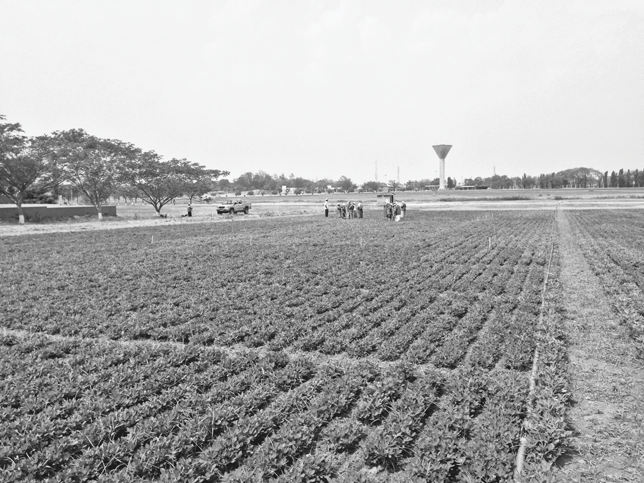
Figure 5.2 Day laborers work in an experimental peanut field at ICRISAT’s Hyderabad campus, 2016.
ICRISAT was, however, not the only international institution concerned with groundnuts, which had gained a double importance – filling the protein gap and providing foreign exchange earnings.Footnote 52 In 1977, UNCTAD, which had been at the center of the efforts for the New International Economic Order, adopted resolution 93 (IV), an integrated program for commodities, including vegetable oils and oilseeds.Footnote 53 UNCTAD emphasized the political and economic international arrangements on vegetable oils and oilseeds, including:
improving the stability of the trade and income of individual developing countries; improving access to markets and the reliability of supplies; the diversification of production and expansion of processing in developing countries; improving the competitiveness of natural products; and improving market structures and the marketing, distribution and transport systems for exports of raw materials and commodities from developing countries.Footnote 54
This emphasis differed from ICRISAT’s focus on producing groundnut varieties with specific characteristics. The UNCTAD report described the political economy of groundnuts much more extensively: “a substantial part of the total production of oilseeds enters world trade either as seed or in the form of oil and meal, exported by a large number of developing countries and some developed countries (especially the United States) partly to other developing countries but chiefly to western Europe and Japan.”Footnote 55 The complexity of the trade, the differences between oilseeds, and the competition with synthetics and other agricultural products made it a tricky issue. Ultimately, however, the conference would only propose more research programs instead of addressing the political economic problems that were at the core of groundnut agriculture and international agricultural trade.
In subsequent years, groundnut research at ICRISAT continued to focus primarily on the technical dimensions of varieties. ICRISAT’s groundnut germplasm collection grew to include 11,641 accessions of cultivars and 115 in quarantine clearance, and new groundnut programs in Africa were established in the early 1980s. A decade after the beginning of its groundnut efforts, in May 1987, the legumes program at ICRISAT began to publish the International Arachis Newsletter in collaboration with the “Peanut Collaborative Research Support Program” headquartered in Georgia in the United States. The legumes program had been formed in 1986 by merging the ICRISAT pulses program (chickpea and pigeon pea) and the groundnut program. Its links with the Peanut Collaborative Research Support Program were many, showing the continued importance of the United States in this domain of international agricultural research.Footnote 56 The editors of International Arachis Newsletter introduced the key problems of groundnut research and the factors constraining yields, including diseases and pests, unreliable rainfall in the semi-arid tropics, recurring droughts, the lack of high-yielding adapted cultivars, poor agronomic practices, and the very limited use of fertilizers.Footnote 57 The biannual newsletters, whose title page signaled the global reach of ICRISAT’s groundnut research (Figure 5.3), featured content with “current-awareness value to peer scientists” and were selected for news interest as well as scientific relevance. ICRISAT thus continued its focus on technical aspects of groundnut agriculture to scientifically address the problem of expanding the Green Revolution to new regions – and of making agriculture a driver of economic development more generally.
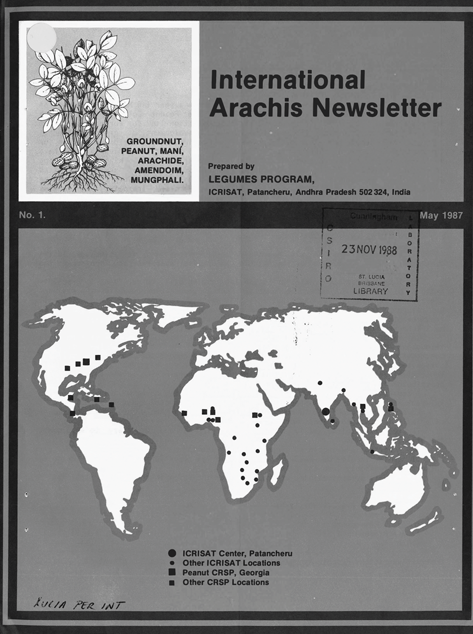
Figure 5.3 The first issue of the International Arachis Newsletter, published in May 1987. The map on the cover identifies the main ICRISAT campus in Hyderabad and other ICRISAT locations as well as the hub of the USAID-funded Peanut Collaborative Research Program in Georgia and its international collaborators.
Conclusion
ICRISAT’s history, and by extension the early history of CGIAR, provides insight not only into the expert discussions held in the aftermath of the self-proclaimed Green Revolution but also into broader changes of international development politics in the late 1960s and early 1970s. My account of the founding of ICRISAT and its unique groundnut research program suggests that there was no clear rupture between the tools and strategies of international research for agricultural development between those of the 1960s and those of the 1980s but instead a reworking of existing approaches and meanings towards ones that not only considered nutritional needs but also economized crop production with a view towards global trade and markets. However, even as experts acknowledged the importance of markets, by continually emphasizing the need for research they precluded reforms of international agricultural markets and changes to the global economic order. They instead attempted to solve “second-generation development problems” through interventions grounded in scientific research and technical development that had become subsumed under the label of the Green Revolution.
In 2004 the World Food Prize was awarded to the rice breeders Yuan Longping from China and Monty Jones from Sierra Leone.Footnote 1 Yuan was lauded for applying the heterosis effect to rice, creating hybrid rice varieties that were widely grown in China from the mid 1970s. Jones, working for the West Africa Rice Development Association (WARDA), received the prize for breeding rice varieties from crossing African rice (O. glaberrima) and Asian rice (O. sativa). The interspecific varieties were considered a breakthrough for rice cultivation in Africa and therefore named New Rices for Africa, shortened to NERICA (Figure 6.1). From the moment NERICA varieties were released, they were heavily promoted as the best option for African rice farmers to increase their yields and were hailed as a marked success of WARDA. In the early 2000s the distribution of NERICA lines had just begun. The uptake by farmers and the effects on rice production in the various rice-growing regions of Africa were largely unclear. By the end of the decade, when more reports on NERICA’s performance had appeared, it turned out that results were mixed at best.Footnote 2
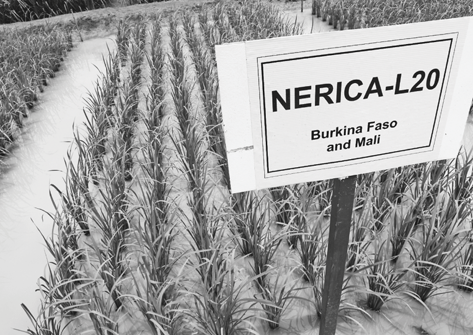
Figure 6.1 A New Rices for Africa (NERICA) variety intended for use in lowland ecologies, one of several such varieties developed at AfricaRice in the 2010s.
The excitement over NERICA and the combined award for Yuan Longping and Monty Jones seem emblematic of the history of WARDA since its inception in 1970. Granting the World Food Prize to Yuan recognized his creation of hybrid rice and its contribution to the growth of rice production in China. The application of hybrid vigor or heterosis effect in rice requires a labor-intensive breeding and multiplication method. The technique results in F1 hybrid seeds that need replacement each year. The main advantage is that hybrids perform well with limited additional fertilizer. These features anticipated the limited production capacity for chemical fertilizer in China in the early 1970s, as well as the wide-ranging agricultural research and extension system embedded in rural communes.Footnote 3 The NERICA varieties were also a technical achievement in that they were based on crossbreeding two species, glaberrima, a rice species native to West Africa, and the sativa or Asian rice species. The main complicating factor for this breeding strategy is overcoming high sterility levels in the offspring, which was achieved by back-crossing interspecific lines with sativa lines. Linkages with the many rice farmers in West Africa, however, were poorly developed. The new varieties were tested at the WARDA farm, a set of experimental plots near the research station, rather than on actual farms in the region.
The work by Jones and his team thus was a technical achievement without the kind of effects on rice production in Africa that had been seen with hybrid rice in China. The criticism WARDA received for the triumphant claims over NERICA was acknowledged in later years and taken as an incentive for further testing of NERICA varieties in different African countries.Footnote 4 The fact that such further testing happened after the launch of the NERICA lines, and not before, suggests that the technical challenge of achieving an interspecific hybrid was prioritized over questions about what kinds of rice varieties were needed and how these were best distributed to African rice farmers. Moreover, the sativa varieties selected for backcrossing made the NERICA varieties fertilizer-responsive, like Asian improved varieties. As various studies have pointed out, agricultural improvements in Africa are typically framed as an African version of the Green Revolution in Asia, a framing in which technical similarities are considered capable of overcoming ecological, social, and economic differences.Footnote 5 Such framings turned the NERICA lines into evidence that WARDA was a rice-breeding institute comparable to the International Rice Research Institute (IRRI), famed for its contribution of the “miracle rice” IR8 to the Green Revolution in Asia (Figure 6.2), and that similar effects on rice production would follow from WARDA’s breeding program.
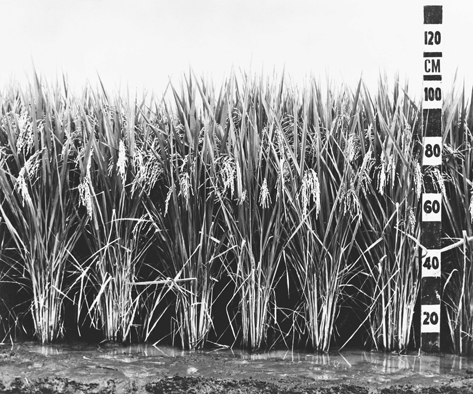
Figure 6.2 IRRI’s semidwarf IR-8 rice variety, the standard against which later rice-breeding efforts would be measured. Rockefeller Archive Center, Rockefeller Foundation photographs, series 242D.
The question of whether and how WARDA’s trajectory compared with that of IRRI is indeed central in most historical accounts of the organization, which was renamed the Africa Rice Center in 2009 after widening its scope and membership to other African countries.Footnote 6 A key feature of IRRI is that it operated as a centralized research institute, concentrating scientific and technical expertise at a single research location. A major assumption of the centralized model was the isolation of research and plant-breeding techniques from diverse and locally specific environments. The aim was to develop “breakthrough” rice varieties that would have “wide adaptability,” suggesting the variety would be transferable across regions with largely similar conditions. The association of centers with research eminence created expectations that IRRI delivered on in 1966 with the launch of IR8.Footnote 7 Awards and prizes subsequently conferred stardom to plant breeders and confirmed the status of research institutes as “centers of excellence.”Footnote 8
Existing historical accounts of WARDA take this model as the leading principle for understanding how the institute emerged and, in the 1990s, was ultimately turned into a centralized rice research institute ready to produce transformative rice varieties in the African context. Delays in WARDA’s development are typically explained as resulting from an unclear research mandate at its inception in combination with limited budgets and shortages of trained staff. As WARDA’s main historian, John Walsh, put it: “in the fundamental matter of research strategy WARDA had gotten off on the wrong foot.”Footnote 9 However, a broader historical examination of research strategy, one that considers the breeding environment, including the ecology, economy, and social-political features of rice farming, puts WARDA’s history in a different light. As I demonstrate in this chapter, WARDA initially focused on rice-farming environments defined in the colonial period. The colonial focus on rice was closely linked to exports to Europe and related commercial interests. Moreover, the colonial policies excluded a major environment where West African farmers grew rice, namely the forested humid uplands zone.
WARDA shifted its focus to the humid uplands in the early 1990s, with decisive consequences. As argued by experts within and outside CGIAR (Consultative Group on International Agricultural Research), the humid uplands required a different research strategy, one in which variation in farm types was the starting point. The CGIAR Technical Advisory Committee (TAC) urged WARDA to engage with such an approach, known as farming systems research. Experts also argued that a research agenda for the humid uplands required a decentralized breeding strategy. Although these consequences of its changed research target were acknowledged in the official documents, WARDA chose a different route by further centralizing research and concentrating on the technical ambition of breeding interspecific hybrids. Here I present the history of rice research in West Africa between the 1930s and 1990s from a perspective that considers rice farming and rice breeding as coproduced by ecological and social environments. In the conclusion, I reflect on how this historical perspective sheds a different light on the controversial launch of NERICA varieties as a breakthrough in rice improvement.
Colonial Rice Environments in West Africa, 1930–60
From the early decades of the twentieth century colonial policies were framed as “civilizing missions” that aimed to improve the living standards of people in colonized territories by investing in the local economy.Footnote 10 Colonial investments in agriculture chiefly focused on crops that supplied European industries and consumers. For the French and British territories in West Africa, the main products were cotton, coffee, cocoa, palm oil, and timber. A key problem for the colonial enterprise, including the production of these agricultural exports, was labor. West Africa had been a major area of enslavement, and colonizing powers sought new mechanisms to secure human labor after the abolition of slavery. Colonial administrations and private companies used the disguise of taxation and dodgy contracts to force African people’s labor on plantations or enforce their delivery of specified quantities of agricultural produce. From about the 1930s colonial powers introduced settlement schemes to boost agricultural production in Africa.Footnote 11 Large areas of land in low-population areas were prepared as new production sites where relocated families were given plots to produce certain crops, usually a combination of food crops for local consumption and crops for export. The settlement schemes provided all the facilities needed to farm the land, and scheme managers promised prosperity to settler farmers if they produced the prescribed crops in sufficient quantities.
One of these schemes, the Office du Niger, was built along the Niger River in French Sudan (present-day Mali). The history of the irrigated land settlement program of the Office du Niger, vividly documented by Monika van Beusekom, shows a gradual shift in the main crop from cotton to rice.Footnote 12 French colonial officials had pointed out the potential of rice cultivation along the Niger River when planning the scheme, which had initially focused on providing cotton for the French textile industry. The major grain crops in the region were millet and sorghum, but farmers were growing rice on the riverbanks, using the seasonal flooding of the river. Colonial authorities anticipated further demand for rice in other colonized areas, for example Senegal, where the French had invested primarily in groundnuts.Footnote 13 The Senegalese groundnut schemes supplied the French oil-seed industry and increased the local demand for food. The growing rice imports from Asia to Senegal were another incentive to stimulate rice in the West African region, which the Office du Niger did by building irrigation infrastructure to facilitate a more permanent water supply to a larger area.
The Office du Niger irrigation and settlement scheme exemplifies the overall transformation of agriculture in West Africa set in motion by colonial agricultural policies. Colonial powers shared an optimism about science and technology, expecting lush harvests and quick returns on investments in roads, irrigation infrastructure, machinery, and mineral fertilizers. Researchers and technicians played a leading role in the African settlement schemes.Footnote 14 Although illustrating colonial policies in general, the schemes were also in many ways specific to the semi-arid Sahel region. In particular, the scale of the schemes and their dependency on irrigation infrastructure made them costly and necessitated a substantial layer of managerial and technical staff. After 1945 the French colonial authorities continued the investments in irrigated rice, although new schemes were substantially smaller in size.
The irrigated river schemes provided a major impetus for rice research. Two research stations were established to serve these schemes. The first was created in 1927 in Diafarabé (Jafarabe) in the Mopti region and attached to the Office du Niger in 1930.Footnote 15 Because the Office du Niger scheme opened up large stretches of land for which rice was a new crop, a principal task of the Diafarabé station was testing rice varieties that would perform well under irrigated conditions. Researchers also tried to find out more about these farming environments, for example studying the different soil types and soil fertility levels. The second research station was established in the 1940s at Richard Toll, attached to one of the smaller irrigated rice schemes along the Senegal River. These stations were later included in WARDA, together with two further stations located in Ivory Coast and Sierra Leone.
These additional two stations had different origins. The French colonial policy of stimulating export crops and food crop production in Ivory Coast focused on two regions. A forest region, covering roughly half the country northward from the coast, featured export crops that were perennials, mainly cocoa and coffee. Timber was also an export product. Producing these exports formed a major share of the economy, resulting in an increasing inflow of migrants. Although people grew food crops, including rice, in the forest zone, these types of farming were considered detrimental for the forest.Footnote 16 Growing food crops was instead stimulated in the drier savanna area further north, in combination with cotton production. The rural migration triggered by economic policies mixed ethnic groups as well as cropping patterns across the region. Whereas rice cultivation in Ivory Coast had been limited to the southwest forest region, halfway through the twentieth century rice was grown by smallholder farms across the colony, resulting in a wide variety of rice-farming methods and preferences for particular rice varieties.Footnote 17 From 1955, the French colonial administration also introduced small irrigation schemes in the savanna zone, together with further intensification of cotton cultivation.Footnote 18 To support these schemes, a rice research station in Ivory Coast was located in the southern savanna area at Bouaké, which was a major center for the cotton industry thanks to its location on the railway line running north from Abidjan. Rice research at the Bouaké station focused on selection of varieties for the dry upland rice farms.
One other rice research station eventually included in WARDA was created by the British colonial administration in Sierra Leone. Policies in the British West African territories were broadly similar to those in the countries controlled by France. The colonial economy of Sierra Leone had a somewhat different history, in that after the 1930s mining became increasingly important and by the 1960s, when it was an independent nation, completely dominated the country’s exports.Footnote 19 Investments in food crop production therefore were less directly connected to areas developed for export crops than in the settlement and irrigation schemes elsewhere. However, rice was considered a potential export crop, and indeed Sierra Leone exported rice in the 1930s and 1950s when farmers responded to favorable global price fluctuations.Footnote 20 As colonial experts quickly found out, rice yields in lowland areas along the rivers and inland swamps were higher than in the humid uplands. Concerns over the negative effects of slash-and-burn farming in the forest zone further motivated a focus on lowland areas. Colonial experts considered the rice farms in the Great Scarcies River area, located in the southwest bordering Guinea, to have the most potential. There, the nearness of the ocean caused tidal flows and extended mangrove forests, coastal conditions that farmers used to their advantage, resulting in one of the most productive rice areas of the country. Colonial officials thought that yields could be further increased with water control and other introduced techniques, making the Scarcies region a model for the rest of the country.Footnote 21 A rice research station was operational from 1934 in Rokupr, one of the nodes in the trade network for rice from the Scarcies region.
In sum, the rice research stations in the French and British colonial contexts of West Africa focused on farming environments that contributed, or were complementary, to an export-oriented economy. In the upper Sahel region, the river-based flooded farms were turned into much larger irrigation schemes where rice became the dominant food crop. The stations at Diafarabé and Richard Toll addressed the demands of farming rice in these conditions. Meanwhile, in Ivory Coast and Sierra Leone, two countries with substantial forest zones in which rice was an important crop, colonial officers largely ignored rice cultivation in the forested humid uplands. Intensification of rice cultivation in Ivory Coast concentrated on the northern dry savanna area, where rice complemented cotton growing. In Sierra Leone the emphasis was on tidal flooding in the coastal area and other lowlands that allowed for inundated rice cultivation.
Despite the restricted focus of rice research on dry uplands and inundated lowlands, research activities had effects beyond these target environments. The search for rice varieties that performed best in the Sahelian schemes, coastal areas, or dry savanna regions triggered a lively exchange of rice varieties on a global scale. Colonial experts were well networked and often travelled between different colonial territories, bringing rice varieties themselves or making requests to have varieties sent over. Varietal improvement during the first half of the twentieth century consisted primarily of sorting, recording, and testing the many different rice types. Named varieties were often so-called landraces, groups of morphologically similar types, which breeders further split up into “pure” lines. The starting point for breeders’ selection work was the varieties that farmers held in their fields. An example is the variety Demerara Creole, originating from British Guiana in South America. In the early twentieth century, sugar cultivation in British Guiana relied on indentured laborers from India, many of whom continued as smallholder rice farmers in the coastal zone. Colonial agronomists identified Demerara Creole as a landrace introduced to British Guiana by these Indian plantation workers.Footnote 22 The first descriptions of the variety in British Guiana date from the 1900s, and soon thereafter it was introduced to Sierra Leone.Footnote 23 From there it spread along the coast and further inland, also passing the border with French Guinea, where it was observed by the French botanist Roland Portères.Footnote 24 Many other varieties from within and outside the West African region were collected for further selection, followed by intentional and unintentional distribution.Footnote 25 Whereas colonial rice breeders primarily looked for varieties for targeted rice zones, the varieties also circulated more widely via informal distribution channels, reaching all rice areas, including the forested rice zones.
Colonial experts were aware of the wider effects of their work. The emergence of research stations and the often long-term involvement of experts in colonial programs implied that local agricultural practices were observed, if not closely studied.Footnote 26 Various colonial experts in West Africa persistently reported on the importance of local farming practices and the value of farmers’ knowledge and skills. For example, farmers in the Office du Niger cultivated a variety of crops, including rice, on their own fields, within and outside the scheme, mostly producing better-quality and higher yields. The scheme’s main agronomist, Pierre Viguier, concluded in the late 1940s that the colonial policy had failed. What West Africa needed, he argued, was not more foreign technology but “the application of African formulas, inspired no doubt by more evolved techniques, but thought out by Africans, adapted to the needs, the means, the aspirations of African peoples.”Footnote 27 Colonial administrations, however, seemed fully convinced about the superiority of foreign farming technology. In the 1950s the introduction of tractor plowing and mechanization of other tasks in 4,500 hectares of the Office du Niger scheme was to overcome “indiscipline, labour bottlenecks, or incompetence on the part of the farmers.”Footnote 28 By the late 1950s the results showed an overall higher yield in the nonmechanized parts of the scheme. Similar observations were made in colonial Sierra Leone. Experts like the soil scientist H. W. Dougall had noticed that farmers used higher fields at the margins of the mangrove swamps “to establish their rice nurseries, cassava and sweet potato beds and occasional banana groves. It is doubtful if the system could be profitably improved upon.”Footnote 29 The colonial administration in Sierra Leone nevertheless continued with the introduction of mechanization and improved irrigation infrastructure in the lowland areas. These technologies appeared very costly, and once authorities gave up support for maintenance and other operational costs, farmers quickly reverted to their “African formulas.”
Dependent and Independent West African Rice Environments in the 1960s
Between the end of colonial domination around 1960 and the establishment of WARDA in 1971, two major developments affected the course of rice research in West Africa. The independent West African nations started to transform colonial policies into national plans to stimulate the economy and agriculture. Few countries managed to do so without foreign support, and therefore former colonial powers and new international donors entered the scene. A second development was the strategy of the Rockefeller and Ford Foundations, backed by the US government, to boost food production in Asia and produce what has since been known as the Green Revolution. The strategy focused on plant breeding, resulting in varieties of wheat and rice that allowed for double cropping and overall high yields in areas with proper irrigation facilities and availability of mineral fertilizer. The philanthropies and US aid agencies pushed other international actors and Western allies to help apply the same strategy in other areas, including Africa.
Although the economic challenges for the independent West African states were broadly similar, there were major differences among country-level policies. For example, Ghana, independent in 1957, profited from the high price of cocoa in the 1950s, providing the government with revenues for investment in the economy. Rice was a relatively recent food crop in Ghana, and by the mid 1960s the government aimed for an expansion of rice production, with the help of Chinese experts and funds.Footnote 30 In Sierra Leone, where rice was the predominant food crop, the government had few financial reserves and fully relied on foreign support for rice improvement, which was provided by Taiwan. In 1968, when elections in Sierra Leone created a regime change, the new government opted for support from China.Footnote 31 The presence of China and Taiwan in West Africa makes clear that assistance programs for food production in Africa, as in Asia, were affected by the Cold War.Footnote 32
The new geopolitical constellation of the Cold War was also entangled with ongoing colonial dependencies. France and Britain held a firm overall grip on the economic interests in their former West African territories, mainly by securing commercial exploitation of lucrative export crops. France also coordinated agricultural research activities for tropical agronomy and food crops through a new umbrella organization created in 1960, the Institut de Recherches Agronomiques Tropicales et des Cultures Vivrières (IRAT).Footnote 33 Although new independent governments were formally in charge of agricultural research, IRAT’s headquarters were in France, and the budgets, staffing, and research agendas of the stations in West Africa were controlled from Paris.Footnote 34 Circumstances differed in former British colonies. Although independent governments had taken over all responsibilities for agricultural research, many British colonial experts continued to advise and support these countries, switching jobs from colonial service to national and international aid agencies.Footnote 35 The British centralized research structure established in 1953, in which the Rokupr research station had coordinated rice research across all British West African countries, was dismantled. Rokupr became the national research center for Sierra Leone in 1962, integrated with the agricultural research station and college at Njala.Footnote 36 In countries like Nigeria, Liberia, and Ghana, rice research was similarly taken up in national agricultural research agendas. As I describe below, the continuation of a centralized research organization by France would play a major role in the establishment of WARDA.
Towards the end of the colonial period, French and British researchers had started crossbreeding experiments to further fit rice varieties to West African environments. The breeding programs had resulted in various new releases for the target regions but were also distributed to other areas through local trading networks. Continued plant-breeding experiments at the research stations after independence included crossings between sativa and glaberrima rice varieties. Halfway through the 1960s such interspecific crosses were made in Sierra Leone and Nigeria. IRAT researchers did the same somewhat later.Footnote 37 None of these experiments resulted in stable lines that were released for distribution. Among other challenges, the decolonization of research in former British colonies quickly reduced the research capacity. By the end of the 1960s there were four full-time rice breeders, one each in Sierra Leone and Liberia and two in Nigeria.Footnote 38 Local resources compensated for new limitations. At Rokupr, for example, the experimental fields were tended by women who grew their own crops at the edges of the rice fields and helped in sorting seeds of the different varieties.Footnote 39 The linkages with Njala University, in the eastern part of the country, created the option for training new rice experts. However, most government and donor money was spent on improvement projects. In sum, by the time US donors planned to expand international agricultural research to West Africa in the late 1960s, there was a rather strong French-run research infrastructure in former French territories, and a relatively weak research infrastructure in former British colonies.
The proposal for a new international rice research institute in West Africa emerged alongside the preparations for the International Institute of Tropical Agriculture (IITA), which had been initiated by the Rockefeller Foundation officials George Harrar and Will Myers in 1962. Harrar and Myers proposed that the Nigerian government set up IITA on the campus of the University of Ibadan. The new research center would focus on various tropical crops – except rice, as it was initially assumed that IRRI would provide the research input for rice breeding.Footnote 40 However, the importance of rice as a food crop in West Africa and the distinctive rice ecologies of Africa invited calls for further institutional development. Two years after the opening of IITA in 1967, the American donors, joined by the United Nations Food and Agriculture Organization (FAO) and the United Nations Development Programme (UNDP), made arrangements for a central rice research center in West Africa, a move resisted by France as it continued to coordinate several rice research stations in the region.Footnote 41 The negotiations among these actors for the future of rice research in West Africa were chaired by UNDP officer Paul Marc Henry, who had previously worked in the region for the French government.
There were three organizational models on the table. In the first, the new rice center would primarily disseminate research results from IITA, IRRI, and the French rice stations across the region. A second model was to make it a coordinating institute for the existing rice research stations. A third option was to create a central research institute with the four existing stations as satellites. This last model was preferred by the representative of the Rockefeller Foundation, Will Myers, and IRRI’s director, Robert Chandler. The UNDP delegation proposed a variant that reinstated the coordinating role for the Rokupr station in Sierra Leone.Footnote 42 Final agreement was reached at a 1970 meeting in Rome hosted by FAO. The outcome followed the second model of establishing a coordinating institute for the existing research stations. The model suggested a centralized research institute, yet without its having a firm lead in research activities. In contrast to the somewhat obfuscated research mandate of the overarching institute, the task of the four research stations was spelled out in clear terms.
Research activities at the newly designated WARDA stations focused on irrigated and deep-flooded (or floating) rice in Senegal and Mali, mangrove rice in Rokupr, and upland rice in Bouaké. This division implied a rather straightforward continuation of the colonial-era research agendas, and in many ways it was a continuation. However, colonial dependencies had become entangled with the newly emerging aid relationships, Cold War politics, and diverging national policies across the independent states. Countries like Ghana and Nigeria, for example, started to invest in rice production under irrigated conditions that were very different from the irrigated rice zones in the Sahel region. The Rokupr station in Sierra Leone never exclusively focused on mangrove rice. It had had a much broader mandate in the 1950s and then turned into a national research station in the 1960s, at which point it focused on all rice environments in the country. The agendas of the four research stations were further challenged after WARDA became operational.
Redefining Rice Farming Environments, 1970–2000
From 1970 a growing number of international donors became involved in rice improvement projects in West Africa. This was further intensified by the integration of WARDA into CGIAR in subsequent years. One of the challenges for WARDA was to broaden the scope of the four research institutes it coordinated. As explained in the previous section, the stations had built up expertise for specific rice-farming environments within institutional contexts defined by the British and French colonial empires. In the new setting of WARDA, the colonial distinctions were formally gone, and country borders were to be exceeded. For example, Rokupr had little experience with research on mangrove rice other than in Sierra Leone. However, mangrove rice environments stretched out along the coast of West Africa, crossing various national and linguistic borders. Likewise, irrigated rice schemes existed in West African countries other than Senegal and Mali. Throughout the first three decades of WARDA’s existence, the focus of the four stations on distinct rice-farming environments gradually changed. As I show here, there were two major reasons for the shifts in focus: first, changes within the farming environments themselves and, second, increasing criticism about the exclusion of the upland humid forest zone from research agendas.
Connections between WARDA and IRRI implied that the improved rice varieties introduced in Asia would become available for African farmers. Direct transfers, however, were hardly an option. By the early 1970s most varieties released by IRRI focused on Asian rice environments, where irrigation and fertilizer were available and two or even three rice crops per year were possible.Footnote 43 The irrigation schemes in Senegal and Mali would in principle match these conditions. However, the Sahelian climate includes a relatively cold winter period, requiring further selection of cold-resistant varieties in order to achieve double cropping.Footnote 44 The farming environments of the Sahelian irrigation schemes not only differed from Asian irrigated rice schemes but also from other irrigated rice areas in West Africa. Compounding these concerns, the operational conditions of irrigated rice schemes in the Sahel changed substantially during the last decades of the twentieth century.
In Mali, the legacy of the Office du Niger had created disparities among farmers in terms of entitlement to land and irrigation water. Subsequent governments tried to solve inequities through state-imposed farmer cooperatives and village advisory councils. These social structures were often caught in a crossfire from ongoing government involvement and complaints from farmers.Footnote 45 The introduction of farmer-operated motor pumps aimed to reduce the dependency on national managerial bodies. Pump-based village schemes, applied in Mali and Senegal from the end of the 1970s, were largely successful in decentralizing rice production but did bring up new problems. Researchers noted, for example, that support mainly went to male farmers, marginalizing women who often had a major share in agricultural work. In one of the Senegalese schemes a Dutch-funded program developed new pump-irrigated farmland in collaboration with women’s groups. The women opted for vegetable crops rather than rice, as these better served their household food security concerns and relied on their knowledge about local food markets.Footnote 46 The women’s decision to prioritize their own food security concerns rather than government demands for rice was an example followed by many rice farmers when, in the 1990s, the winds of neoliberal policy reforms stopped the supply of cheap fuel, maintenance for the motor pumps, credit for fertilizers, and subsidies on rice. Farmers’ interest in growing rice dropped significantly, as did acreage of rice cultivation, and many village schemes were abandoned.Footnote 47 These changes dampened the high expectations about the potential of irrigated rice schemes in West Africa. Although irrigated rice continued as one of WARDA’s targets, its prominence was overtaken by attention to a different environment: rice farming in the forested humid uplands.
Soon after the establishment of WARDA, agricultural experts working in the region pointed out that rice farming in the humid upland zone deserved more attention. Despite the overall consensus that yield increases had to come from irrigated rice, the size of the humid uplands, in terms of acreage and number of farm households, could no longer be ignored. In its first quinquennial review of WARDA in 1979, CGIAR’s TAC noted that some WARDA officers considered the focus on dry upland rice by the station in Bouaké inadequate for the humid uplands.Footnote 48 The committee’s advice was to investigate and discuss the issue. In the next quinquennial review, conducted in 1984, the committee repeated the advice in stronger terms, noting that humid uplands are “a badly neglected area of rice research and development which deserves increased attention from WARDA, national rice research programs, and IRRI and IITA.”Footnote 49 The importance was repeated in subsequent years. By the early 1990s the continuum of rice ecologies in the humid uplands was the main focus for WARDA’s research. Of the four farming environments that had been set as WARDA’s research targets in 1970, only irrigated rice remained as a priority.Footnote 50 The focus on humid uplands was a major shift in WARDA’s strategy that had further consequences for its research agenda (Figures 6.3 and 6.4).
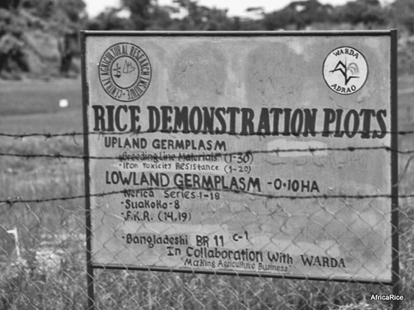
Figure 6.3 Rice demonstration plots featuring “Upland Germplasm” and “Lowland Germplasm” (the latter including NERICA lines) that were associated with a WARDA collaboration in Liberia funded by Japan, 2009.
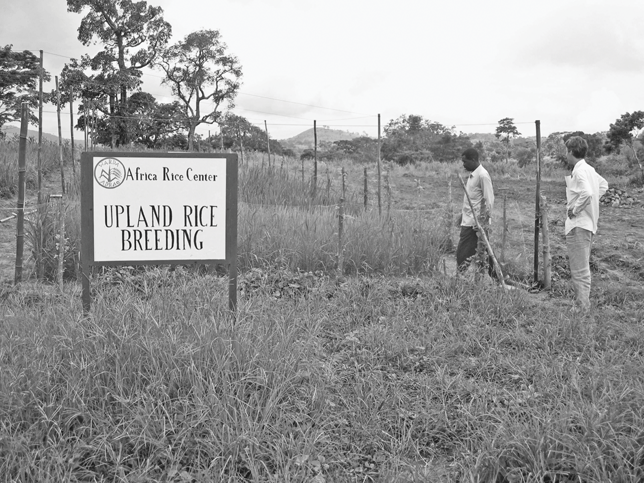
Figure 6.4 Two rice researchers at an Africa Rice Center upland rice-breeding site on the Danyi Plateau, Togo, in 2007.
A key feature of the humid upland zone is that it contains a variety of soils with different water levels. The topographical sequence implies a continuum from higher parts with low water levels, to a middle zone with saturated soil conditions, to a lower swamp area with standing water for most of the rainy season. The variation in ecological conditions and water levels makes it difficult to breed or select a single rice variety suitable on all types of farmland. The anthropologist Paul Richards, who had studied rice farms in the humid zone of Sierra Leone since 1977, concluded that selecting and experimenting with a broad set of different rice varieties was common practice among farmers.Footnote 51 Richards reported in detail about farmers’ preferences and their selection of rice varieties that addressed different soil and water conditions, resistance to weeds or pest damage, growth duration in anticipation of labor peaks during harvest time, and integration with other crops. Richards’ studies found some resonance in reports produced within CGIAR. For example, the focus on ecological variation and integration with crops other than rice was a research area with overlapping interests at WARDA and IITA. In the 1980s IITA had initiated an “agro-ecological characterization of rice-growing environments” in West Africa.Footnote 52 In a report of this effort published in the early 1990s, the researchers argued for a further integration of the work of WARDA and IITA in analyzing farming systems and called for improved varieties based on regional variation.
The message was taken on board by the next external program review committee, which wrote in its 1993 assessment that “WARDA needs a farming systems approach to research with a strong ecological focus so as to be of short- and long-term environmental, social and economic benefit.”Footnote 53 What the studies and reports hardly mentioned was that a farming systems approach had implications for WARDA’s approach to rice breeding. A “strong ecological focus” in West Africa would require a variety of projects embedded in nation- and region-specific research and extension facilities. Rice breeding then would follow from region-specific characteristics and farmers’ needs. As Richards explained, farmers’ selection strategies were likely to be seen as irrational in the eyes of breeders and extension agents, who would “replace a profusion of uncertain and unstable variants of local land races with a much smaller range of fixed and reliable seed types.”Footnote 54 The breeder’s perspective would be valuable, Richards and colleagues argued, but only if based on a continuous dialogue between farmers and breeders to find the common ground in what “wide varietal adaptability” means from both perspectives.Footnote 55 One such breeding approach, participatory varietal selection (PVS), gained some leverage in national rice-breeding projects in West Africa. An evaluation study of PVS projects over the late 1990s showed that national researchers were positive about the approach and most concerned by the limited capacity of their national research organizations to expand the work. The study also pointed out that financial support from WARDA was very modest.Footnote 56 In the 1990s, the actual rice-breeding agenda of WARDA had fully focused on the interspecific crossing experiments.
Conclusion
The evidence presented in this chapter provides a very different history of WARDA from what can be found in the limited historiography of the institute. Existing accounts perceive rice research primarily as on-station research and breeding capacity. Such capacity was, by the time WARDA was created, scattered over different regional and national stations. WARDA’s initial mandate gave the institute a coordinating rather than a leading role in rice research and breeding. In the received view, the alleged lack of control of WARDA’s headquarters staff over the research agenda was resolved with the centralization of research at the Bouaké station in the 1990s, with a clear research focus on interspecific crossing. In contrast, WARDA’s history as presented here explored rice research from an environmental perspective, examining linkages between farming environments and rice research. This shows a trend in which WARDA continued to focus on the rice-farming areas defined in the colonial period, addressing European commercial interests rather than the concerns of West African rice farmers. The 1990s, was the decade in which the inclusion of the humid uplands implied that WARDA finally covered the variety of rice-growing environments in West Africa, acknowledging the importance of studying the diversity of farming systems and addressing them with such methods as PVS. This version of WARDA’s history provides a puzzling contradiction with existing historical accounts.
One possible explanation for the contradicting trends in WARDA’s history is the limited overall research budget that, together with increasing regional political instability in the 1990s, enforced a decision to concentrate resources on a restricted rice-breeding program. CGIAR faced shrinking budgets in the 1990s, and a civil war in Liberia prompted WARDA to move its headquarters to Ivory Coast. However, the challenging circumstances of the 1990s do not explain why centralization of research was not implemented in earlier decades, when pretty much all the options were there and known to CGIAR officials. Moreover, improved rice varieties were produced by various national and regional breeding stations. From the 1960s to the 1990s, this added up to almost 200 releases of improved varieties.Footnote 57 As noted above, the early breeding activities also included interspecific crossing experiments with glaberrima and sativa rice. In other words, centralization of research and breeding was not a necessary condition for developing the scientific or technical knowledge to produce interspecific crossing lines or improved varieties more generally. And as shown in the account of the negotiations leading to WARDA’s establishment in the late 1960s, the US donors preferred a central breeding institute but did not block other options. Moreover, by the 1990s, as centralization took hold, there was much more evidence that diverse and decentralized research would be a better fit for West African conditions.
An alternative explanation considers the contradictions in the history of WARDA as the effect of a delayed decolonization of rice research in West Africa. The research stations set up in countries formerly under French rule formed the backbone of WARDA’s research. During the colonial period, Britain and France largely applied the same policies. France, however, continued its control over research facilities in its former colonial territories until the 1990s, mainly to secure uninterrupted access to export crops.Footnote 58 The historiography from the colonial period further makes clear that experts were aware that, in the selected environments, rice cultivation methods aiming for high yields required high investments. Moreover, they acknowledged that the farming practices of West African rice farmers were highly effective, given prevailing conditions, covering a wider variety of farming environments. Nevertheless, the research organization established for WARDA in 1970 largely continued the research agenda set in the colonial period.
This may justify a conclusion that colonial interests controlled rice research at WARDA, in particular through the continued influence of French officials. However, official documents of WARDA only provide indirect evidence for this. And even in the unlikely scenario that French influences largely determined the course of WARDA’s research, CGIAR donors had various options to invest in a complementary rice research agenda. Rokupr, for example, had earlier dealt with a regional mandate, and in the 1960s countries such as Ghana and Nigeria had also initiated rice research. Another route to diversify rice research was through IITA, which indeed did conduct complementary rice research, including rice breeding. Moreover, CGIAR donors other than France were also active in countries like Senegal, suggesting that the focus on irrigated rice environments was considered an attractive option for multiple actors at least until the 1990s. This would compromise a conclusion that attributes WARDA’s research agenda and the limited and late attention to humid uplands to French intentions alone.
CGIAR donors likely considered irrigated rice the best option until the moment protectionist policies were dismantled. There is a striking synchrony between the economic reforms that ended the economic viability of large, irrigated rice environments and the promotion of a new model focusing on the humid uplands. This explanation still does not account for the decision to ignore the expert advice to focus on farming systems research and diversification of the breeding strategy – leaving as a final explanation the allure of a centralized research model, mentioned in the introduction.
The summary version of WARDA’s history would then be that there was sympathy, but never strong conviction, for a diversification of WARDA’s research agenda. The need to strengthen decentralized, national research capacities in West Africa was acknowledged but never seen as a CGIAR task, other than by showing that top-notch scientific research leads to superior crops under favorable conditions. The example of IRRI was to be followed, and, when the opportunity came in the 1990s, it was pushed through with fervor. Such an explanation would have to discard the contradicting developments and statements presented in this chapter. Moreover, it would have to discard evidence from the history of IRRI, showing that by the early 1970s the centralized research and breeding model, including the notion of wide adaptability, was put up for debate, leading to a gradual change of IRRI’s research agenda.Footnote 59 IRRI breeders themselves advised against a centralized research agenda in Africa, stating at a conference in Nigeria in 1977 that “rice varieties should be tailor-made for specific locations, conditions and systems. So-called widely adapted varieties are probably nothing more than a reflection of a past void in local research capability.”Footnote 60 Statements like this are difficult to make chime with the course of rice research at WARDA after the 1990s. Perhaps donors and CGIAR decision-makers have had a stronger conviction regarding the powers of research excellence and science-based technologies than CGIAR researchers and other experts.
The dichotomy between the actual research work and representations of science by policymakers also played a prominent role in the life and work of Yuan Longping. As Sigrid Schmalzer has shown, Yuan’s work was embedded in wider networks of breeders, agronomists, and rice farmers across China. His role in hybrid rice breeding was largely unknown by the public until after 1976, when post-Maoist reforms started to kick in and the history of agricultural development was rewritten along the lines of research excellence and individual prestige rather than team effort.Footnote 61 Having opened this chapter with the two winners of the 2004 World Food Prize, I should end with the caution that although the prize winners no doubt have laudable merits as individual researchers, the prizes as such are poor emblems of the research traditions and history of the science of which they were a part.
What we now know as ILRI – the International Livestock Research Institute – had a bifurcated beginning, born out of two institutions that were launched to tackle the problem of unproductive African livestock in quite different ways. The International Laboratory for Research on Animal Diseases (ILRAD) focused on medical solutions: “[to] serve as a world center for the improvement of animal production by developing means of conquering major animal diseases, particularly those associated with pathogenic protozoa which seriously limit animal industries in many parts of the world.”Footnote 1 Meanwhile, the International Livestock Centre for Africa (ILCA) was to develop applied solutions for livestock systems: “research programs designed to solve the basic production and socioeconomic problems that are serving as constraints to livestock development.”Footnote 2 The history of these two institutions, one focused on the micro and the other on the macro, and their subsequent merger, raises a number of questions about the notion of “excellence” as it relates to science policy, particularly in an African context. It raises questions about what types of knowledge are valued, what knowledge is valued for, and ultimately who values that knowledge. It speaks to the history of the institutionalization of veterinary science in and for Africa, as well as to broader challenges within the Consultative Group on International Agricultural Research (CGIAR) as it continually seeks to reinvent itself in the face of political, economic, scientific, and organizational challenges.
In this chapter, we show how the establishment of ILRAD and ILCA, as two research centers with two fundamentally different research agendas, influenced the ways in which human–livestock relationships, diseases in livestock, and research excellence were conceptualized by CGIAR in sub-Saharan Africa. After a brief discussion of the notion of scientific research excellence, followed by historical introductions to the institutions at the heart of our analysis, we draw in the second half of this chapter on two contemporary case studies – one examining the development of transgenic, trypanosome-resistant cattle, and the other exploring the establishment of CGIAR Research Programs (CRPs) and the outcomes of an agricultural research for development (AR4D) program – to show how the legacy of ILRI’s predecessors has continued to shape, influence, and define the trajectory of its projects. We conclude that it is important to recognize how institutions and funding bodies conceptualize excellence, as this shapes the way in which knowledge is produced and how research impact is ultimately perceived.
Natural Science, Social Science, and Centers of Research Excellence
In her account of international medicine, the historian Deborah Neill traces the emergence of the new field of “tropical medicine” in the late nineteenth and early twentieth centuries.Footnote 3 As Neill highlights, this field was driven by transnational collaboration borne out of European colonialism and new scientific networks. Tropical medicine was one key backdrop for the establishment of livestock research in Africa. A second was the pursuit of agricultural research as international aid. As other contributions to this volume describe, the perceived successes of crop development and dissemination at the International Maize and Wheat Improvement Center (CIMMYT) and the International Rice Research Institute (IRRI) had led by the late 1960s and early 1970s to what John McKelvey, an entomologist and associate director for agricultural programs at the Rockefeller Foundation, called “institute fever”: a growing investment in international institutes as tools to drive modernization and development, using science.Footnote 4 Thus ILRAD and ILCA, as with other earlier CGIAR institutions, were established in order to produce scientific solutions to address agricultural issues, and ILRI inherited that legacy.
Since its founding, ILRI, like many other CGIAR centers, has presented itself as a center of research excellence. Yet, as researchers have shown, what excellence is and how it is defined remains contested. Excellence carries significant weight in terms of recognition, policy, funding, prioritization, and practice. Its framing can be influenced more by politics and policy – donor priorities, for example – than any impartial assessment of quality, and indeed assessment of quality is itself often subjective.Footnote 5 Furthermore, assessment based on supposedly objective measures introduces other biases, for example, privileging outcomes that can be counted.Footnote 6 As Lucas M. Mueller likewise chronicles in Chapter 5, this volume, there are strong associations between investment in scientific excellence and economic development in its broadest sense, in terms of both wealth producing the best science and scientific investment producing economic growth.Footnote 7 This introduces a spatial element into understandings of excellence that maps onto political economic geographies and draws from existing narratives of institutional excellence. The latter often revolve around perceptions of the primacy of certain disciplines, for example the natural sciences over the social sciences, or basic over applied sciences.Footnote 8
Scientific excellence is incredibly complicated: it is contested in multiple ways; it is subjective; it is hierarchized and creates its own hierarchies; and no matter how good the science may be, its outcomes are uncertain. The notion of scientific excellence has nonetheless led to decades-long intense interest in finding institutional mechanisms to concentrate and harness international scientific activity, build research capacity, and drive innovation both globally and specifically in Africa.Footnote 9 In many respects, CGIAR and its institutes exemplify this interest.
The pursuit of scientific excellence has had implications for CGIAR research. Within CGIAR centers, scientific solutions have historically been presented as the ultimate answer to agricultural problems. This aligned with a dominant conceptualization of science as global in reach and therefore, to varying degrees, unconcerned with local realities. Agricultural problems were subsequently framed as technical issues that could be dealt with in isolation, for instance in a laboratory or field trial, and solutions were perceived to be easily disseminated, often through a relatively apolitical process of diffusion. This understanding of science as globally applicable has had significant repercussions, particularly for social scientists, whose findings and solutions are almost always tailored to specific, bounded contexts. Records show that social scientists were late to join agricultural research programs, and that, when they did, their work was often perceived to be of less importance than contributions from other scientific disciplines.Footnote 10 As the Dutch sociologist D. B. W. M. van Dusseldorp noted in 1977, for every thousand natural scientists working in agricultural research, there was fewer than one social scientist.Footnote 11
These tensions, framed and mediated by dominant perspectives of scientific excellence, are encapsulated in the history of ILRI and its precursors. We now turn to the institutional history of ILRI with a view to illustrating how, at least in part, ILRI has had to manufacture and negotiate the complex contours of “scientific excellence” and the demand for scientific solutions as it sought to fulfill its important and ambitious mandate.
The International Laboratory for Research on Animal Diseases
Historians of veterinary medicine have shown the close links between the establishment of veterinary systems and colonial expansion in sub-Saharan Africa.Footnote 12 This is evident when examining diseases of cattle, such as trypanosomiasis, which was perceived as threatening to the stability of colonial rule.Footnote 13 As historians have described, trypanosomiasis, which is caused by a parasite and spread by the tsetse fly, was troubling for colonial authorities as it caused serious illness and death in both humans and cattle. The pervasiveness of trypanosomiasis across much of sub-Saharan Africa prompted imperial governments to invest substantial sums of money in parasitology and tropical medicine in attempts to control the prevalence and spread of the disease.Footnote 14 Thus, parasitology was to a large extent spurred on by colonialism, as parasitic diseases risked the spread and profitability of colonial investment. It nevertheless remained relatively isolated as a field of study and efforts to control trypanosomiasis in the colonial period were ultimately unsuccessful. This left an enduring problem for researchers to solve.
By the early 1970s – as philanthropies, international organizations, and aid agencies formalized the system that would become CGIAR, and experts gathered at sites like Bellagio to determine its portfolio of institutions and research programs (see Lucas M. Mueller, Chapter 5, this volume) – parasitology appeared on the brink of profound change. Within and beyond the field, there was a belief that the benefits of recent biological research, especially molecular biology, could make an important contribution to parasitology and the control of parasite-borne diseases. To the experts organizing CGIAR, it appeared that a research center focused on animal diseases would be a potential opportunity to bring the benefits of modern parasitology to those living in developing countries.
At the successive Bellagio meetings, participants debated what the exact function and focus of a livestock disease research center – soon to be known as ILRAD – would be. Ultimately the decision was taken that the center’s initial emphasis would be on haemoprotozoan diseases – commonly known as blood parasites – and immunological aspects of African animal diseases. As the entomologist and early proponent of an international center on animal diseases, John McKelvey, described:
to focus sharply on one, possibly two, diseases [East Coast fever, or ECF, and African animal trypanosomiasis, or AAT], and on one problem, immunization techniques, to combat the diseases would afford greater chance of success than to range widely over many problems of cattle production in Africa. The Rockefeller Foundation successes in the medical sciences, combating yellow fever, for example, and in the agricultural sciences, maize and wheat improvement, reinforced this belief.Footnote 15
The focus of ILRAD was therefore on parasitic diseases that have well-known causes, a tight focus intended to guarantee success. McKelvey’s nod to the Rockefeller Foundation’s prior public health successes points to other anticipated payoffs of this focus. Protozoa also affect many people in the developing world, and thus the suggestion was that with the right sort of investment a considerable improvement could be made for human lives as well as livestock. The challenge would prove formidable.
Immunology as a key to combating cattle diseases was the livestock equivalent of the “isolable problem” of raising cereal yields that had been identified in the first international agricultural research centers as a means to combat rural poverty and underdevelopment. A vaccine would be a quick, transformative solution. As a later ILRAD annual report stated, “Vaccines are a more sustainable way of controlling disease than vector control using insecticides or parasite control using drug treatments, which have contaminative, drug residue or drug resistance side effects.”Footnote 16 There was sustained confidence both within ILRAD and CGIAR more generally about what the institution could achieve. In 1971, planners imagined that a vaccine for ECF, a disease caused by a protozoan parasite (Theileria pava spp.) and typically spread by a tick bite, could be commercially available relatively quickly: “one half or perhaps three fourths of the research towards vaccine production has been accomplished but to complete the final stages of this research will probably require five to ten years.”Footnote 17 After the ECF vaccine was complete, ILRAD researchers would focus on AAT. ECF vaccine development was seen as a “short-term program” and trypanosomiasis research as a “long-term problem.”Footnote 18
To meet its research goals, ILRAD brought together an elite group of international scientists to focus on the development of molecular tools and novel vaccines. As other researchers have noted, administrators within CGIAR believed that the best method for producing scientific solutions to problems was to give research centers and the scientists working within them independence and flexibility.Footnote 19 Thus, ILRAD functioned as an independent research center, with scientists in theory shaping its research independently from CGIAR influence. This allowed ILRAD to remain an “island of excellence,” with its ambitions to produce excellent applied sciences for the benefit of developing country livestock systems.Footnote 20
Both ECF and AAT were – perhaps ambitiously in retrospect – perceived by CGIAR administrators and ILRAD staff as diseases that could be controlled through new molecular techniques and would be synergistic in terms of the skills required, even if ECF was the “short-term program” and trypanosomiasis the “long-term problem.” Earlier research on the causative protozoan agents of the two diseases (trypanosomes and theileria) had shown that while it was possible to immunize livestock against reinfection with the specific strain used in the vaccine, this did not confer immunity to other strains of the parasites.Footnote 21 This meant that ILRAD would have a more ambitious mandate from the other early CGIAR centers, which were primarily established to conduct translational research – for example by adopting established breeding techniques to create new rice or wheat varieties. ILRAD, too, had a translational mandate, but it also had substantive fundamental research to undertake, namely establishing the nature of immunity against the parasites in question and the mechanisms causing the failure of earlier immunization efforts.
Scientists who worked at ILRAD have suggested that in terms of African development goals, AAT and ECF may not have been the most appropriate diseases for the institution to have focused its attention on.Footnote 22 The reasons for this were twofold: one, there was little evidence that these were the top two diseases of concern for the majority of East African livestock farmers; and two, AAT and ECF proved to be much more difficult to develop vaccines for than other diseases – particularly those caused by bacteria or viruses.Footnote 23 Moreover, while ILRAD’s scientists were focused on research programs that were both original in concept and highly experimental in method, something was missing. As a 1972 taskforce organized by CGIAR and led by the Australian agricultural scientist Derek Tribe reported:
The primary cause of the disappointing growth in animal productivity in tropical Africa has been the failure to integrate the biological, economic and sociological components of research and development programmes … Technical answers are available to many of the specific problems facing livestock development in Africa. The major constraint lies rather in the difficulty of introducing change into existing socio-economic systems, combined with inexperience in adapting technologies to suit local conditions.Footnote 24
In other words, even where potentially valuable tools and knowledge were available, they were not in use. This observation, and others like it, led to the establishment of ILCA in 1974.
The International Livestock Centre for Africa
Situated in Addis Ababa, Ethiopia, the International Livestock Centre for Africa (ILCA) was founded in the belief that existing solutions to Africa’s livestock problems were not being applied because of a significant lack of research on, and knowledge about, local livestock systems.Footnote 25 CGIAR administrators saw an opportunity to bridge that knowledge gap. As initially imagined, the function of the new center would be “to assemble a multi-disciplinary team of scientists to develop research programs designed to solve the basic production and socio-economic problems that are serving as constraints to livestock development.”Footnote 26
In its early years, ILCA staff conducted systems surveys that described the major agro-ecological zones of sub-Saharan Africa and their production systems. This approach involved scientists working in interdisciplinary teams to study livestock production systems holistically, identifying and testing possible innovations, and defining high-priority areas for more intensive research.
The organization and operation of ILCA was significantly influenced by “systems thinking,” which developed throughout the 1970s in response to the perceived failure of conventional scientific methods in addressing agricultural issues, particularly in developing countries.Footnote 27 Systems thinking moved researchers outside of the confines of the laboratory to consider the ways in which components of complex systems interact and influence one another. The formation of ILCA was, therefore, an acknowledgment that in order to develop sustainable and long-term solutions for unproductive livestock systems, a more comprehensive approach was needed. As the 1972 taskforce led by Tribe stated:
The first task of the interdisciplinary team would be to gain a basic appreciation of the major livestock production systems of Africa, by the study of all available literature, a review of ongoing research programmes, and widespread travel and survey. From the base the team will then be expected to devise its own programme of studies.Footnote 28
Following this vision, the newly created ILCA established a network of sites in tropical Africa to monitor livestock production systems. This network approach to “systems thinking” similarly impacted the establishment of the Africa Rice Center, as Harro Maat describes in Chapter 6, this volume. ILCA’s zonal research teams measured the productivity of cattle, sheep, and goats. The first baseline surveys “diagnosed” general factors constraining animal production in the various zones.Footnote 29 These included low dry-season feed quality, inadequate water supplies, and competition between people and calves for limited milk supplies in arid pastoral systems. The surveys also focused on animal diseases and animal mortality, poor feed quality, the availability of animal draught power, and inefficient water conservation and utilization. The initial activities carried out by ILCA researchers, such as literature analysis and field surveys, were not bounded by common delineations, such as language and region. This early work pursued a “problem analysis” as a basis for developing interventions at the farm level, undertake more intensive studies, and assess systems-level production alternatives.
Nevertheless, ILCA’s first quinquennial institutional review, completed in 1981, strongly suggested the institute should move away from systems description and place more emphasis on component research.Footnote 30 These analyses would build on the identification of constraints to livestock productivity up until that point by exploring options for overcoming these constraints. This was especially important, as early research had shown that, somewhat contrary to prior proclamations, introduced technologies generally did not offer any great advantages over traditional methods, given the economic and ecological constraints facing many African producers.Footnote 31 ILCA teams thus focused their attention on designing and researching possible improvements. These included the use of crossbred cows for dairying and cattle for traction, incorporating legumes into the cropping system, making better use of Indigenous feeds, alley cropping, establishment of “fodder banks” of leguminous pasture for dry-season grazing, selective harvesting and handling of crop residues to improve livestock nutrition and soil management, and improving the drainage of soils prone to waterlogging.
In some respects, ILCA was the antithesis of ILRAD. ILCA grew out of systems thinking recognizing Indigenous knowledge systems and the importance of local context. ILRAD had been founded on faith in cutting-edge science and universalizable technologies. Yet ILCA, like ILRAD, struggled to produce solutions. As William Pritchard, a renowned leader in tropical veterinary medicine, later observed, many of the challenges that ILCA faced stemmed from its adoption of systems thinking.Footnote 32 The systems approach was conceptual rather than organizational; it suggested an approach to research as opposed to a method for developing interventions. It did not necessarily lead to solutions to problems.
Moreover, while the research conducted within ILCA was intended to reflect and build upon real farming systems, the performance of the center was still measured against conventional scientific criteria. Accounts of ILCA staff expressing frustration that the reality of smallholder farming systems affected the operation and outcomes of their trials suggest that research ambitions and development objectives did not always align.Footnote 33 Consequently, with an underlying expectation of precision knowledge and scientific productivity, as opposed to systems understanding and on-farm benefits, the contribution of social scientists in ILCA’s multidisciplinary teams was eventually limited to economists only.Footnote 34
Thus, while one might simplistically characterize the research targets of ILRAD as “upstream” and ILCA as “downstream,” one could equally argue that both were high-concept approaches. In either case, both institutions and approaches struggled to gain currency and momentum within the core business of CGIAR.
“Isolable Problems” versus “Systems Thinking”
In 1987, an external review of ILCA commissioned by the CGIAR’s Technical Advisory Committee (TAC) recommended that the institute further narrow its focus to avoid spreading its resources too thinly over a broad spectrum of activities.Footnote 35 ILCA’s original mandate stood, but it was asked to work more closely with and to strengthen the capacity of national agricultural research systems. In addition, ILCA was advised to focus its work on six narrowly defined “thrusts.” These were three “commodity thrusts” (cattle, milk, and meat; small ruminant meat and milk; and animal traction, with an aim to increase production and outputs), and three “strategic thrusts” (animal feed resources; trypanotolerance; and livestock policy and resource use).Footnote 36 With one exception, the thrusts were focused on animal production, health, nutrition, and genetics, all of which could be measured scientifically.
Meanwhile, at ILRAD change was also on the horizon. Although there had been some progress in ILRAD’s research and training programs in its first decade, there was a sense that its short- and medium-term priorities needed revision. As was true at ILCA, much of ILRAD’s early success was about basic rather than applied research, as evidenced by the centrality of the yearly tally of academic publications to successive annual reviews. Mapping this research productivity onto disease control priorities was very much secondary, a reflection of the institute’s initial upstream focus. Furthermore, although research on ECF moved at a faster pace than trypanosomiasis research in the 1980s, as expected, ECF vaccine development nevertheless lagged behind the earlier, rather ambitious, timescales. It was only in 1989 that a review group recommended the establishment of a project area on vaccine formulation.Footnote 37 By comparison, trypanosomiasis research remained at a much earlier stage.
There was, therefore, a noted lack of progress in ILRAD’s vaccine program, alongside a lack of strategic direction within ILCA’s applied research that the instantiation of research “thrusts” attempted to correct. At the same time, Africa’s food needs were rapidly growing and financial possibilities were shifting – with donor priorities focusing increasingly on the environment and funding in general constrained by global recession.Footnote 38 External assessments of animal agriculture in sub-Saharan Africa (conducted by the Winrock International Institute for Agricultural Development and supported by many of CGIAR’s major donors) argued for a sharper focus of activities.Footnote 39 This layering of concerns, both within and beyond CGIAR livestock centers, began to point towards their closer collaboration. Similar suggestions were made at the 1992 CGIAR annual meeting in Washington, DC, where it was recommended that ILCA and ILRAD work towards “closer cooperation through joint program committees and cross board membership” and that “joint funding opportunities should be explored.”Footnote 40 A further external review published in January 1993 suggested that ILCA focus primarily on applied research on crop-livestock farming systems and build collaborative research networks and livestock research capacity in Africa’s national agricultural research systems.Footnote 41 The days of ILCA as a center focused on broadly surveying African livestock production systems and setting research agendas appeared to be numbered.
Meanwhile, ILRAD was being asked to respond to similar externalities. Its 1993 medium-term plan signaled the coming change when it noted “Depending upon the levels of funding obtained, ILRAD and ILCA foresee increased collaboration, utilizing the complementary expertise and approaches of both institutes, in areas of mutual concern.”Footnote 42
When CGIAR had established ILRAD and ILCA in the early 1970s, those involved considered it likely that the two centers ultimately would come together as a unified research institute. Indeed, the gestation of the centers had included discussions about whether there should be two centers in the first place. It was not until two decades later, however, in the early 1990s, that the merger was set in motion. In May 1993 CGIAR took the decision to unify the centers, setting up a committee “to identify priority activities for international livestock research, which would be managed through a single institution and be constrained by the current proportion of CGIAR resources allocated to livestock.”Footnote 43
ILRI was established in September 1994. It had a huge task, as its remit would no longer be limited to Africa but encompass global needs. The institute came into existence during a period of flux and resource constraints within CGIAR and the broader donor community, and it had to deal with the realities of merging two fundamentally different entities. The merger was fraught with difficulty. With differing mandates, research cultures, and disciplinary representation, staff later commented that inviting ILRAD employees to support ILRI was “like asking turkeys to vote for Christmas.”Footnote 44 A 2000 external report commissioned by the CGIAR TAC stated that it recognized the continued difficulties in unifying ILCA and ILRAD, with the “two centers [maintaining] widely different cultures.”Footnote 45 In 2001, the ILRI annual review attempted to reframe these challenges as a reason for institutional pride:
It is no mean achievement to have successfully made the transition despite the dramatic external and internal changes that ILRI had to withstand. From 1995 to 2001, when drastic falls in funding for international agricultural research and the change from dependency on unrestricted grants to reliance on project funding severely taxed the morale and programmatic integrity of all CGIAR centres, ILRI handled in addition the evolution out of two centres that could hardly have been more different in goals, culture and modes of operation.Footnote 46
The merger, although partially demanded by cutbacks in CGIAR’s budget, was perhaps premature. It was not ideal to merge primarily through financial exigency rather than strategic choice. ILRI was largely unable to exploit its new comparative advantages as it might have hoped, hampered by the sheer complexity of its vaccine-based research agenda and by the organizational challenge of effectively drawing together the existing scientific and systems-thinking approaches.
In addition to working within the organizational legacies of ILRI’s two constituent institutions, ILRI administrators and staff, like others in the CGIAR system, had to work through the much longer legacies of conducting scientific research for development. As the historian Deborah Fitzgerald observes, “While some have argued that the technologies exported to developing countries are inappropriate, one might extend the argument by locating the inappropriateness in the institutional structures and ideologies from which these technologies have emerged.”Footnote 47
Building on this observation, we offer two case studies below to demonstrate how the legacies of ILCA and ILRAD, as two separate research institutions, continue to have repercussions for more recent ILRI projects. In the first case study, we discuss the development of transgenic, trypanosome-resistant cattle. We suggest that the roots of this work reflect the science-led values and notions of excellence as defined within ILRAD. In the second case study, based on ethnographic research conducted in 2015, we present research on the pig value chain in Uganda. Here we highlight the similarities between the project and the systems-led research undertaken by ILCA. These case studies, in turn, demonstrate the ways in which the historical lineages of ILCA and ILRAD, and the prior concepts of research excellence and science for development on which those institutions were premised, have continued to influence and affect ILRI research after the merger in 1994.
Transgenic, Trypanosome-Resistant Cattle
Despite a long history of scientific attempts to control the different species and subspecies of Trypanosoma parasites, trypanosomiasis remains a major challenge for many countries in sub-Saharan Africa. As we described above, scientists at ILRAD attempted to develop a vaccine to control trypanosomiasis; however, no product ultimately came to fruition during the institute’s independent existence – nor have they since. Thus, the current techniques used to prevent the spread of the disease predominantly focus on the tsetse-fly vector, with control programs involving methods such as the release of sterile male tsetse flies and the continued and increasingly innovative use of insecticides to limit tsetse populations.Footnote 48 For example, in multiple African countries, tsetse control programs have deployed “Tiny Targets,” small, blue pieces of insecticide-impregnated cloth that attract and kill tsetse.Footnote 49
In 2013, responding to the continued failures to eliminate trypanosomiasis, two scientists, Jayne Raper of City University of New York and Steve Kemp of ILRI in Nairobi, proposed genetic modification to produce cattle with 100 percent resistance to all species of trypanosomes.Footnote 50 The project, known as the Mzima project, received initial funding from the US National Science Foundation and was presented as a means through which to reshape livestock systems in Africa.Footnote 51 The subsequent research involved a number of international partners based in the United Kingdom (the Roslin Institute at the University of Edinburgh), United States (City University of New York and Michigan State University), and Kenya (ILRI).
ILRI was tasked with developing the technologies, skills, and infrastructure required to undertake the majority of the work in Kenya. ILRI’s production of Tumaini (“Hope” in Swahili), the first cloned bull in Africa, was subsequently described by ILRI scientists as the first step towards producing trypanosome-resistant cattle, as the cloned bull opened up “the possibility of making genetically modified Kenyan Boran (see below) with foreign genes or desired traits.”Footnote 52 The next step was subsequently to produce Boran cloned cattle with modified genes that would naturally confer resistance to trypanosomiasis. Scientists planned to achieve this by inserting baboon genes into cow genomes. Baboon genes were selected because, as Jayne Raper had established, they contain trypanosome lytic factors (TLFs) – a serum that has the ability to kill both animal and human infective trypanosomes.Footnote 53 In relation to previous ILRAD and ILRI research, the attempted development of the trypanosome-resistant cow represented a significant shift. Earlier scientific work on trypanosomiasis focused on the pathogen or the vector, whereas the Mzima project focused on the cow itself.
Some cattle breeds – notably the West African N’Dama – possess some natural resistance to trypanosomiasis. However, N’Dama were considered too small and unproductive to provide a solution for controlling the disease. Instead, the scientists working on the project selected the much larger Boran cattle, an Indigenous breed of East African zebu (Bos indicus) reared almost exclusively in Kenya. In its 2015 corporate report, ILRI stated that the final step of this long-term project was to introduce trypanosome-resistant cattle to breeding schemes across Africa.Footnote 54 The report set out that this research subsequently offered “a reliable, self-sustaining and cost-effective way of protecting tens of millions of African cattle against disease.”Footnote 55 Yet the Mzima project is underpinned by an understanding that its transformed cow can be developed and integrated into a range of different contexts.Footnote 56 This assumption does not take into consideration that Boran cattle, although deemed more suitable by ILRI scientists, require different levels of care from other types and that this may be at odds with the ways in which people currently live with their cattle. As trypanosomiasis is not confined to one area but instead affects farmers across a number of countries in sub-Saharan Africa, the cow selected for development into a disease-resisting technology matters. For instance, despite both being zebu cattle breeds, the predominant breed of cattle reared in Sudan, Kenana cattle are reared for dairy, while Boran cattle are reared for beef.Footnote 57 A milking cow and a beef-producing cow have different roles in farmers’ lives and may be valued differently. This, however, was not taken into account by scientists working on the Mzima project. As a 2017 report from a workshop on the Mzima Cow Strategy highlighted, “the exact effect of the transgene on milk and meat production is currently not known and must be carefully assessed in impact and safety studies.”Footnote 58 Thus, while ILRI may well produce a trypanosome-resistant cow, scientists’ seemingly singular pursuit of a biotechnological achievement at the expense of other considerations means that if it comes to fruition the final cow may not be suitable for every farming context. In short, the production of Tumaini raises questions about how scientific outputs translate into society, and whose benefit they serve. By proposing the development of trypanosome-resistant cattle, ILRI scientists conceptualized the cow as a technology that could be developed in the laboratory and integrated into farmers’ lives. Yet a cow is not just ground-breaking science: it is also an animal that is understood in diverse ways across different contexts.
There are important continuities between the Mzima project and the ILRAD research projects of the 1970s and 1980s. Specifically, a group of international scientists were brought together to develop a magic-bullet technology that could be scaled up and integrated into existing livestock systems. As in the case of ILRAD vaccine development, the objective was to produce research excellence in the form of a cutting-edge scientific solution, without sufficiently exploring the applicability and acceptability of the output beyond the laboratory. The insurmountability of technical hurdles may be another continuity. Although ILRI staff were able to clone Tumaini, they were unable to develop a transgenic cow as planned. Thus, despite initial optimism about the benefits that novel scientific techniques could bring to disease control efforts, the problem of trypanosomiasis endures.
Smallholder Pig Value Chains in Uganda
In 2010, CGIAR’s Funder Forum indicated that its research was not sufficiently translating into development outcomes.Footnote 59 In response, and in recognition that research alone was not generating impact, CGIAR introduced cross-institutional CRPs in 2011.Footnote 60 The CRPs were intended to act as a mechanism for funding AR4D programs, bringing together experts from across the (then) fifteen CGIAR centers to design and implement large-scale interventions. Prior to the introduction of the CRPs, ILRI had already begun to recognize that nontechnical innovations were needed in its livestock development programs, particularly to translate research into development impact.Footnote 61 As a result, ILRI administrators had already reincorporated a multidisciplinary systems approach, earlier adopted by ILCA, and social scientists had started to be reintroduced into ILRI’s research teams.
CGIAR designated each center to lead a CRP, with ILRI leading on the CRP Livestock and Fish. ILRI subsequently created nine country-based hubs, with research in each hub focused on a single species or commodity. These research sites were to “serve as laboratories for characterizing and assessing smallholder value chains.”Footnote 62 When ILRI staff were asked about the CRP Livestock and Fish, many spoke positively about its introduction and how it would affect the impact of their research.Footnote 63 As a veterinary epidemiologist in Nairobi asserted, “Old ILRI was all about writing papers, conducting research, developing careers that way. Science is now being used in a new way, to create development impact.”Footnote 64
In line with the expectations of the CRP Livestock and Fish, ILRI established several new offices and multidisciplinary teams, one of which was located in Kampala, Uganda. In Uganda, the first project funded under the CRP focused on pigs and aimed to catalyze the smallholder pig value chain – that is, the steps followed by small-scale farmers, traders, slaughterhouse workers, and butchers to raise, sell, and profit from pigs and pork products. This project, which was funded by the European Commission/International Fund for Agricultural Development and Irish Aid, focused its research activities on the pig value chain in three districts of Uganda (Mukono, Kamuli, and Masaka). In Uganda, pig farming has rapidly increased since the 1960s in concert with a rising demand for pork, particularly in urban areas (Figure 7.1). It is now recorded as having the highest per capita consumption of pork in East Africa.Footnote 65 With this social and economic backdrop, the main objectives for the project were to identify constraints and opportunities along the smallholder pig value chain, from farm to fork, and to design and test “best bet interventions.”Footnote 66 Despite the importance of pigs for people’s livelihoods in Uganda, until the introduction of the CRPs, pigs had not been central to research conducted by ILRI, ILCA, or ILRAD, with ILCA going as far as excluding pigs from all research projects during its years of operation (1974–94).Footnote 67 Thus, although pigs had been a major source of income and nutrition for people in Uganda, it was not until ILRI as a research institute began to perceive the pig value chain as a potential means of generating “impact” that the significance of pigs as objects of research in Uganda was recognized. This focus on pigs as potentially generating the right kind of research outputs simultaneously transformed pigs from a livestock animal into a research object and a development target.

Figure 7.1. A Camborough pig on a farm in Mukono, about thirty-two kilometers east of Kampala, Uganda, 2015. The introduced breed is prized for being fast-growing and producing large litters, among other qualities.
When one of the authors visited the ILRI office in Kampala in 2015, it immediately became clear that all the work conducted through the office was on pigs. The walls were lined with posters of pigs and corresponding statistics from ILRI’s research activities. As one of the staff members enthusiastically commented, “We speak pigs, we eat pigs, everything is pigs.”Footnote 68 The research being carried out by ILRI staff at the site ranged from work on pig husbandry practices to pork consumption habits to trading patterns to slaughterhouse processes.
The multidisciplinary team in Uganda was composed largely of international staff. These staff members were expected to build relationships with a range of local partners, who in turn would translate the research conducted by ILRI into observable development outcomes. Straightforward on paper, establishing partnerships was difficult in practice. As an ILRI-employed capacity development consultant emphasized, “People are capturing certain knowledge but there is no situation in which to apply the knowledge. Then the knowledge goes to waste. Basically, the knowledge is not being applied.”Footnote 69 Echoing this claim, ILRI staff often described local partnerships as unequal or “on and off,” with this profoundly affecting the outcomes that they could expect, especially within the limited time periods dictated by funding bodies.
Funding was another major issue, and often discussed as a key reason why research was conducted with certain partners. Funding also explained why ILRI outputs regularly followed a similar format. Funding partners in Europe dictated the form of outputs, typically publications and project reports. These outputs did not always meet expectations, even when they took the “right” form. While the Uganda team did successfully publish numerous papers and reports from different scientific studies conducted along the pig value chain, external evaluators maintained that the outputs from the CRP Livestock and Fish were lacking overall in terms of “high-quality” peer-reviewed publications and that it should be producing more “excellent rather than good or acceptable grey literature.”Footnote 70
In order to translate the content of their publications and reports into observable development impact on the ground, ILRI staff often held training sessions. In these sessions, relevant stakeholders were educated on topics such as biosecurity or food hygiene measures. Participants were also often provided with products that ILRI staff deemed they should find useful, including information sheets, bleach, fly nets, or “tippy taps” (a low-cost, hands-free device for handwashing). These interventions, in line with the broader objectives of the CRP Livestock and Fish, were also easily transferable into other contexts outside of Uganda.Footnote 71 However, when we visited pig farms and pork butchers in Uganda, it became evident that ILRI interventions were not consistently generating sustainable impact for people working along the pig value chain (Figures 7.2 and 7.3). Pork butchers, for example, described fly nets as obscuring customers’ vision of the meat, and many butchers further explained that, as they were unable to read, they could not understand the text on food safety information sheets. The form that ILRI interventions were forced to take reduced the complexity of the pig supply chain and the relationships within it to a single workshop session or a training manual. As a result, people were often trained on “best practices” as defined by international organizations such as the United Nations Food and Agriculture Organization (FAO) or World Health Organization (WHO). These interventions, in turn, were used as evidence that ILRI research was generating development impact along the pig value chain.

Figure 7.2 Pork products for sale in Mukono, Uganda, 2015.

Figure 7.3 Transporting pigs by bike in Uganda, 2017.
To summarize: in Uganda, a research team comprised almost entirely of international staff adopted a transdisciplinary, systems approach in an attempt to transform the smallholder pig value chain. Yet the outputs generated did not consistently translate back into meaningful impact for stakeholders working with pigs. This sketch of their work shows how certain forms of outputs – most commonly the publications and reports that transcended local contexts – were still perceived within CGIAR and by external funding bodies as markers of excellence. As a result, actual development outcomes were reduced to little more than a series of quick fixes that could be used as evidence of impact when reporting back to funding bodies.
The example of the smallholder pig value chain project in Uganda indicates how some earlier criticisms of ILCA continue to apply to contemporary ILRI projects. More specifically, “high-quality” peer-reviewed publications and globally transferable solutions still ultimately govern what is perceived to be excellence in terms of project outcomes. In practice, this means that ILRI’s AR4D continues to be geared towards generating excellence in terms of solutions that can be inserted into any livestock system, rather than sustainable development that is tailored to local contexts.
Conclusion
In this chapter, we illustrated how the formation of ILRAD and ILCA carved two distinct trajectories – one focused on generating scientific solutions for veterinary medicine, the other on livestock systems research. Although distinct in their mandates, these two institutions merged in 1994, creating ILRI. We have shown that despite this amalgamation, there are continuities stretching from the distinct historical lineages of ILRAD and ILCA to recent projects carried out by ILRI. More specifically, we have demonstrated how research excellence within ILRAD and ILCA was shaped by the continued privileging of certain notions of science and the production of scientific solutions for agricultural problems within international institutions. ILRAD was set an almost impossible technical task, but the promise of advances in immunology gave it significant momentum in pursuit of its vaccines. By contrast, ILCA’s systems approach was scientifically more feasible, yet its researchers struggled to gain recognition for the quality of their work. Ultimately the limits of both approaches were exposed, and this in turn rationalized the merger. ILRI continues to undertake important work, but the specter of “excellence” – what it is and who defines it – has continued to loom large.
Reflecting on this history, we contend that despite a renewed focus on generating impact from AR4D programs, as an institution ILRI has continued to strive for recognition as a global center of scientific excellence, shaped by notions of excellence ascribed by global institutions and ideas about cutting-edge science that can be abstracted from specific farming contexts and therefore adopted by researchers and policymakers around the world. Yet, we argue that by framing excellence in terms of scientific solutions, ILRI staff have had little option but to overlook the complexities of livestock supply chains and the nuances of human–animal relationships in specific contexts. This limitation is entrenched further as ILRI is forced to look globally for its funding. As Derek Byerlee and Greg Edmeades (Chapter 9, this volume) similarly conclude with relation to CIMMYT, it is in some ways easier to attract funding by igniting donor interest in the biotechnological possibility of Tumaini than in worthy farmer-facing breeding programs for poultry and livestock that ILRI also leads, such as the African Dairy Genetic Gains program.
As we move into the next fifty years of CGIAR research, there is a pressing need to examine how excellence is conceptualized by CGIAR institutions, funding bodies, and researchers, and to recognize the implications that this conceptualization has for the ways research is conducted and the outputs it generates.
Beans are the most popular legume for human consumption and historically have been valued by the poorest populations around the world as a source of vegetable protein. Accounting for more than 30 million hectares, the legume is one of the most cultivated crops in Africa, Asia, and Latin America. Despite its significance for human nutrition, studies on the history of bean improvement are less known among scholars, compared with studies of such grains as wheat, maize, and rice.Footnote 1 Regarding plant breeding in legumes, several studies focus on the research developed from within the Consultative Group on International Agricultural Research (CGIAR).Footnote 2 Yet few studies examine the research developed by the International Center for Tropical Agriculture (CIAT) based in Colombia, and fewer still focus on CIAT’s specific impact in Central America.
This chapter analyzes the bean-breeding programs developed by CIAT in Central America between 1970 and 1990. The region is an ideal laboratory for studying plant breeding in beans during the Green Revolution. On the one hand, Central America became a Cold War hot spot from 1960 to 1990, as the United States waged counterinsurgent campaigns to stymie the spread of communism in this region. At the same time, Central America experienced rising rates of malnutrition, particularly in rural areas. Amidst this so-called “protein gap,” world organizations and scientific institutions conducted numerous surveys and field research to identify the nutritional deficiencies in the region’s rural population, as well as its causes and potential solutions. What role did the bean varietal improvement process play at this juncture of Cold War and nutritional crises? What were the results?
The first part of this chapter addresses CIAT’s origins, its organizational framework, and the research and training programs it established. The second part examines the center’s endeavors in approaching the “protein crisis” in the so-called Third World through the creation of a bean research program. The third part delves into the development of a bean-breeding program aimed at enhancing nutritional conditions among rural populations in Central America. The last part argues that the obstacles in advancing a bean monoculture and the consequences of civil war on peasant agriculture hindered the development of a Green Revolution in beans in the region.
CIAT’s Research Programs
CIAT’s precursor was the Colombian Agricultural Program (CAP), which was established by a 1949 agreement signed between the Rockefeller Foundation and Colombia’s government. During World War II, the foundation funded research at the agriculture and veterinary programs of the Universidad Nacional (in Medellín and Bogotá, respectively), as well as by the Tropical Agriculture School in Cali (which would soon relocate to Palmira and join the Universidad Nacional system with Rockefeller Foundation support). At each campus, the foundation invested in building facilities and equipment. At the same time, the Rockefeller Foundation offered training scholarships for Colombian students and faculty at universities in the United States and through the Mexican Agricultural Program (MAP).Footnote 3
The Colombian program was built from the blueprint of MAP. It came under the initial direction of Lewis M. Roberts and Joseph A. Ruppert, prominent US scientists who specialized respectively in maize and wheat in Mexico. In Colombia, Roberts led the program at the Tulio Ospina experiment station in Medellín, while Ruppert operated out of the new Tibaitatá experiment station outside Bogotá, which possessed favorable ecological conditions for wheat production.Footnote 4 The founding of Tibaitatá, which replaced the older Picota station in 1951, was due in part to Edwin J. Wellhausen, a veteran of the Mexican program, who modeled the new station on Mexican experimental stations.Footnote 5 Both stations, in Medellín and Bogotá, experimented with new varieties, using genetic material brought from Mexico. In 1955, once the research projects were fully consolidated, the Rockefeller Foundation advised in the creation of a new Colombian government agency, the Ministry of Agriculture’s Department of Agricultural Research, or Departamento de Investigación Agrícola, which emulated the coordinated approach of the Office of Special Studies in Mexico.
Following the precedent for centralizing coordination of agricultural research in Colombia, represented by the Department of Agricultural Research, the Rockefeller Foundation then supported the establishment of the Colombian Agricultural Institute (ICA) in 1962. This was part of a broader land reform project funded in part by the Alliance for Progress, a program initiated by US President John F. Kennedy to foster economic ties between the United States and Latin America. After the establishment of ICA, the Rockefeller Foundation gradually withdrew from direct involvement in Colombian domestic agricultural research and partnered with the Ford and Kellogg Foundations to redirect their Colombian assets into a new international center. CIAT was created in 1967, the same year the International Institute of Tropical Agriculture (IITA) opened in Nigeria. Both institutions were funded by the United States Agency for International Development (USAID), the Rockefeller and Ford Foundations, and their respective state governments. Both centers’ first goal was the development of agricultural research in tropical environments. Thus, research prioritized crops grown by peasants for local consumption, such as cassava and legumes, over global cereal crops, such as wheat and maize (Figure 8.1).

Figure 8.1 Beans featured among the objects of research and breeding at the Rockefeller Foundation’s agricultural program in Colombia. Here a small group considers beans growing in the greenhouse, ca. 1954. CIMMYT repository.
CIAT’s particular framework stemmed from the organizational models of other CGIAR institutes. Following the experience of the International Rice Research Institute (IRRI) in the Philippines, CIAT built a brand-new campus in Palmira, Colombia, adjacent to the older ICA facilities that once formed part of the CAP.Footnote 6 It organized its research projects and scientific teams following the framework developed by the International Maize and Wheat Improvement Center (CIMMYT) in Mexico.Footnote 7 Furthermore, CIAT pursued livestock management research and prioritized support for smallholders over larger farmers. CIAT also worked in close contact with national research programs in Latin America in order to develop training programs and scientific networks.
Between its creation and the 1980s, CIAT developed six broad programs encompassing plant-breeding research and training. The rice program, launched in 1967, took advantage of an alliance with IRRI in the Philippines and ICA in Colombia.Footnote 8 On the one hand, cooperation with IRRI turned CIAT into a “genetic bridge,” allowing the transcontinental exchange of rice varieties and the introduction of the high-yielding variety IR8 germplasm to Latin America. Following IRRI’s experience, the program developed high-yield varieties suited for irrigated rice, and created an intensive agrochemical package for pest control and plant disease.Footnote 9 On the other hand, the association with ICA enabled experimentation and field testing of Asian rice varieties in Colombia and facilitated the development of lines adapted to Latin America’s tropical agricultures.
Initially established in Colombia, the pasture program pursued livestock management systems that focused on herd improvement and animal health. After 1975, the program spread across other Latin American countries, focusing on grass improvement. Scientists at CIAT deemed depleted soils, droughts, and seasonal water availability changes as causes for low productivity of local grass varieties. Grass improvement required the creation of a germplasm collection (samples of varieties and populations thought to be useful in breeding) and the development of science-based knowledge on local pastures and grasslands. Thus, CIAT built the International Tropical Pastures Network, enabling germplasm exchange and research between the center and programs in other Latin American countries. Emphasis on increasing meat and dairy production on the acidic and infertile soils of the Latin American tropics reserved, in turn, more fertile lands for export-led agriculture, as Timothy W. Lorek chronicles in Chapter 3 of this volume.
The cassava program had no direct ties to other programs previously developed by the Rockefeller Foundation.Footnote 10 Therefore, CIAT designed the program’s framework and built an international scientific network. The program started by assessing the disadvantages stemming from the crop’s particular traits. For example, cassava improvement did not favor the development of varieties with general adaptability, as was the case with wheat or rice. Second, the crop was primarily grown by peasants in a slope farming system characterized by the low use of chemical inputs and the lack of irrigation. To overcome both limitations, the cassava program took over the creation of a germplasm collection, as well as the development of a technological package and agricultural practices that would “adapt the crop to the environment, instead of adapting the environment to the crop.” Furthermore, the program established a global scientific network, allowing the exchange of knowledge with programs and institutes in Asia and Africa, particularly Thailand and Nigeria.Footnote 11
Varietal improvement of beans to increase yields per hectare became one of CIAT’s most complex tasks. For instance, Latin American peasants grew a wide diversity of bean varieties in plots with other crops using local slope farming systems that enabled cultivation on sloping land while conserving water and soil. Thus, the bean program developed varietal selection processes through close coordination with national programs to take advantage of local experts’ knowledge, producing varieties suited to each country’s different agro-ecological and social environments. Accordingly, CIAT established a training program that offered internships and short courses in Colombia and other participant countries. In the 1980s, the successful results that CIAT achieved in Latin America spurred the launching of similar programs in Africa.
CIAT’s genetic resources program managed the germplasm collections created by these breeding efforts. The bean program benefitted from the seed samples collected by the US Department of Agriculture in Mexico during the 1960s and from the collection gathered by the Rockefeller Foundation’s CAP in Colombia.Footnote 12 Possessing more than 9,000 samples, or accessions, in 1980, the pasture program obtained its genetic material from the Commonwealth Scientific and Industrial Research Organization (CSIRO) in Australia and the University of Florida in the United States.Footnote 13 It also acquired fodder legume accessions identified by CIAT’s scientists in Brazil, Venezuela, and Southeast Asia. Furthermore, CIAT co-managed the cassava collection with IITA in Nigeria. By and large, the center became the most important global distributor of bean, cassava, and grass-breeding materials.
The training program supported the specialization of government officials in specific agricultural research fields, as well as the distribution and adoption of breeding materials and new varieties.Footnote 14 In the pursuit of both goals, CIAT published booklets and pamphlets, facilitating knowledge exchange with scientists from many Latin American countries. The program also organized field trips to Mexico, Colombia, and Central America, as well as visits to North American universities and Asian institutes, to become acquainted with various training programs. Throughout the 1970s, CIAT increasingly moved training activities from its facilities in Colombia to partner countries and provided education for scientists from the cassava, beans, rice, and grass programs. CIAT supported these programs directly and received funding from such entities as the Kellogg Foundation, USAID, the Inter-American Development Bank, and others.Footnote 15 The exchange of knowledge that resulted from this program set the foundation for CIAT’s global network.
CIAT and the Third World’s “Protein Crisis”
During the 1950s and 1960s, the World Health Organization (WHO), the United Nations Children’s Fund (UNICEF), and the United Nations Food and Agriculture Organization (FAO) acknowledged protein consumption deficiencies as one of the most significant problems affecting the Third World’s population, marking what became known as the “protein crisis.”Footnote 16 Multiple studies carried out during the 1930s in North America and Africa showed the impact of low protein intake on children’s physical development and early child mortality. These findings led world organizations to establish food programs and scientific commissions, such as the United Nations Protein Advisory Group in 1955, and to hold symposiums and conferences in Mexico (1960), Italy (1963), and the United States (1960, 1964, and 1965) to address protein consumption in Third World countries. In 1964, FAO’s survey “Protein: At the Heart of the World Food Problem” pushed the topic to the fore of its agenda. A few years later, the United Nations issued its 1968 “International Action to Avert the Impending Protein Crisis,” declaring the “protein gap” a global-level emergency.Footnote 17 That same year, Life magazine published an image of malnourished children in the Biafra War in West Africa on its cover, bringing protein deficiency to wide public attention.Footnote 18
These discussions regarding a protein crisis overlapped with the founding of CIAT and the development of the research programs described above. In 1966, prior to the creation of CIAT, the maize breeder Lewis M. Roberts and agricultural economist Lowell Hardin outlined a vision for an institute for agricultural research and training in the Latin American tropics.Footnote 19 According to their perspective, the institute should focus on improving a few tropical crops with high nutritional value and clear pathways to increased production. Thus, research should target such crops as soy and other beans, as well as livestock, to raise protein availability among impoverished rural populations.
In a 1970 study, Roberts declared the protein consumption deficit as one of the most crucial global nutritional problems of the time.Footnote 20 He warned that although world food production had generally stabilized in recent years, per capita consumption of protein in the poorest countries continued to decline. According to Roberts, unlike meat with its high production costs, legumes – particularly beans – offered the possibility of tackling this imbalance. Legumes contributed to high protein intake in the diet, were available at low prices, displayed high adaptability to different agro-ecological environments, and were consumed more among peasants. However, governments had prioritized research on agricultural cash crops over research on local consumption staples such as beans. Roberts concluded that this led to declining yields per hectare and limited information on varietal improvement, plant diseases, and pest control.Footnote 21
Early in the 1970s, CIAT surveyed the production and consumption of beans in Latin America and the contribution of the legume to protein intake, aiming to create a bean research program.Footnote 22 The results, released in the program’s previous drafts and written reports, identified Latin America as the place of genetic origin for Phaseolus vulgaris and as the world’s largest producer. Furthermore, the studies identified bean consumption as the primary protein source in Latin American rural diets, surpassing animal protein consumption. Notwithstanding these advantages, the region as a whole showed oscillating production with decreasing yields per hectare.
The Bean Program, officially launched in 1974, aimed at the genetic improvement of beans to increase production. It set four goals. To begin with, it created a bean germplasm collection. CIAT’s designation as the global gene bank for bean germplasm led to a rapid increase in accessions: from 21,000 in 1978 to 35,000 in 1984.Footnote 23 Second, the program established a cooperative network with national research institutes. CIAT’s bean program stemmed from a set of projects developed by seventy-four researchers specializing in varietal improvement across Latin America by 1979.Footnote 24 Although these national projects lacked scientific impact and proper funding, CIAT assembled national researchers through training activities such as courses and internships. Varietal improvement became a predominant topic in CIAT’s training program: nearly 44 percent of the bean program trainees had become specialized in the subject by 1983.Footnote 25
Third, the program created regional projects for varietal improvement in Latin America and Africa. One of these projects was the Cooperative Regional Project on Beans for Central America, Mexico, and the Caribbean (PROFRIJOL), discussed later in this chapter, which was launched in 1978 and aimed at improving beans to increase production in Mexico, Central America, and the Caribbean. Likewise, CIAT signed a cooperation agreement with the Brazilian government and developed another bean project in the Andean countries. During the 1980s, CIAT established three additional regional improvement projects in Africa.Footnote 26
Finally, CIAT’s bean program developed new varieties through international testing and experimental nurseries.Footnote 27 CIAT assembled a varietal research team in Colombia comprised of three breeders, each assigned to a geographical region: the first managed Central America and regions of Brazil with significant cultivation of black and red beans; the second oversaw the rest of Brazil, Mexico, Chile, Argentina, and the Middle East; the last supervised the Andean countries and Africa. In addition to their having a geographical specialization, the three breeders developed their varieties paying attention to specific ecological traits, such as diseases, pests, or types of soil. Every year, the breeders supplied CIAT with a selection of promising lines, which were then assessed in three trial cycles. The first cycle, “Bean Team Nursery,” consisted of the evaluation of these promising lines in CIAT’s experimental stations in Colombia. The second cycle, “Preliminary Performance Testing,” assessed the lines’ productive performance, as well as additional traits concerning consumers’ preferences. The last, known as “Bean Performance and Adaptation International Nursery,” evaluated lines selected for their performance in the previous trials. CIAT carried out this cycle in its stations, or abroad at other governments’ request. The distribution of testing sites abroad aimed at the international exchange of potentially productive varieties and the evaluation of this material under local ecological conditions. This methodology allowed the implementation of roughly 1,400 experiments for bean improvement across 82 countries.Footnote 28
The bean program widened its scope between 1970 and 1990, expanding its funding from $350,000 at the outset to $14 million by the final year. Moreover, the program’s staff increased from two top scientists at the beginning to twenty-six by the end of the period, including seven varietal improvement experts.Footnote 29 Furthermore, the impact of varietal improvement, measured by the share of land cultivated with improved varieties, grew over three decades: by 1988 nearly half of the bean fields in Latin America used improved varieties from CIAT’s genetic material. But distribution of CIAT material was uneven between regions. In Latin America, such countries as Costa Rica, Argentina, and Bolivia accounted for up to 70 percent of the land hosting CIAT’s improved bean varieties, while in Colombia, Peru, and Ecuador their share ranged from 10 to 20 percent. In contrast, Africa accounted for only 15 percent of the land cultivated with varieties released and made available to farmers under the program.Footnote 30 During the 1990s, the total number of released varieties in both continents was almost 350.
CIAT’s bean programs add additional dimensions to interpretations of the Green Revolution. The foundational accounts of a Green Revolution in Asia presented an economic narrative of agricultural development that regarded technology as a tool for increasing agricultural productivity.Footnote 31 According to this narrative, modern technology aimed at the improvement of yields per hectare for peasants, reducing productivity differences between developed and underdeveloped countries. Thus, high-yielding varieties became the suitable solution to end global hunger while enhancing economic growth in the Third World.
Researchers who sought to apply the vision of agricultural development in Central America in the 1970s and 1980s added two new tenets to this narrative. To begin with, observers established an association between plant breeding and malnutrition. CIAT and its bean research program unfolded amid the “protein crisis” in the Third World, described in greater detail below. Thus, Central America became a laboratory for boosting protein consumption among the region’s impoverished rural populations through bean genetic improvement. In this vein, CIAT’s research was innovative: the Green Revolution in beans sought the increase in yields per hectare, as had been the case with crops like wheat and rice, but also the enhancement of the crop’s nutritional value. Accordingly, the research interests of agronomists at CIAT and nutrition experts converged under an interdisciplinary association that was unusual at the time.
Finally, the narrative connected malnutrition to physical performance among rural workers. According to some experts, the nutritional deficit among Central America’s rural population was not only a matter of public health but also a hindrance to the agricultural workforce. During the 1970s and 1980s, nutrition and agricultural development became the focus of international conferences in which experts analyzed the impact of poor diets on workers’ physical performance. A 1974 symposium held in Guatemala produced a study compiling contributions from American universities’ scholars and members of world organizations such as FAO, the Nutrition Institute of Central America and Panama (INCAP), CIMMYT, and CIAT.Footnote 32 The event was attended by Green Revolution experts and bean-breeding researchers such as Lester R. Brown, Robert F. Chandler, Antonio M. Pinchinat, and Lewis M. Roberts. Moreover, nutrition specialists such as Marina Flores, Leonardo Mata and Fernando E. Viteri participated alongside economists and agronomists. Further, a group of scientists at INCAP and American researchers carried out a field study to gauge the effects of the nutritional condition and caloric intake on rural workers’ daily productivity.Footnote 33 As this body of research suggests, a narrative based on the tenets of agricultural modernization and public health influenced bean breeding in Central America, a process that sought the improvement of plants and the enhancement of human bodies as well.
CIAT’s Bean Research and Nutritional Crisis in Central America
After CIAT’s inception, Central America quickly emerged as a strategic site for its research programs. Between 1969 and 1982, 16 percent of trainees in any CIAT program came from Central America, a number surpassed only by Colombia, which supplied 21.3 percent.Footnote 34 Central America’s presence was dominant even compared with countries that had much more extensive agricultural lands, such as Brazil, Mexico, Peru, and Ecuador. Likewise, scientists from the region participated prominently in almost all research programs: they represented 23 percent of participants in the bean program, above Colombia and Brazil. They also accounted for 15 percent of recruits to the pasture program, a number exceeded only by Colombia. Meanwhile, 19 percent of participants in the rice program came from Central America, which was a lower share than came from Brazil, but higher than Colombia. Finally, the region supplied 6 percent of participants in the cassava program.Footnote 35
Central American participants trained to become specialized in the different research programs offered by CIAT. Almost half of the bean trainees came from Honduras and Guatemala, while Costa Rica and Panama led the cassava training program, providing 60 percent of recruits. In rice training, Costa Rica, Panama, Honduras, and Guatemala each supplied between 20 and 25 percent of trainees. Among these, the bean training program was arguably the most influential in circulating knowledge and agricultural research training across Central America. It accounted for more than 30 percent of the total number of Central American professionals trained through CIAT, far above any other program. Beyond Central America, the bean training program encompassed roughly one-fifth of the total professionals trained by CIAT between 1969 and 1983, exceeding the cassava and pasture programs’ share of trainees and assembling researchers from thirty-five countries across three continents.Footnote 36
Central America’s prominence in CIAT training programs was due to specific conditions on the ground. During the 1960s and 1970s, the nutritional condition of the rural population in Central America was critical. A set of surveys conducted in the region showed a deficit in the population’s intake of protein and calories measured according to recommendations by world health organizations. One study reported a decline in the overall consumption of protein and calories between 1965 and 1982.Footnote 37 These declines were most severe in El Salvador and Guatemala, which, not coincidentally, experienced significant political turmoil and conflict during this period.
These studies revealed the demographics of unequal nutritional access. In Central America, malnutrition affected mostly the impoverished rural populations, particularly children. A study performed by INCAP found an increase in the prevalence of children with some level of malnutrition between 1965 and 1975, excluding Costa Rica.Footnote 38 During the 1970s, rates of malnutrition in children surpassed 40 percent in Guatemala, El Salvador, and Honduras, while this figure came close to 20 percent in Nicaragua and Panama. Further, between 37 and 50 percent of total deaths occurred among children under the age of six in Guatemala, Honduras, El Salvador, and Nicaragua during the same period.
Much of the Central American population’s daily diet included high consumption of maize and rice, with limited meat consumption.Footnote 39 In Guatemala and El Salvador, maize supplied 60 percent of calories to the diet, while in Costa Rica and Panama, rice provided between 39 and 47 percent of calories. Urban and rural areas within the region differed, as wheat and rice predominated most among urban populations but was considerably less dominant among rural populations.
Beans were crucial to Central American diets. Excluding Panama, nutritional data showed a common trend across the region: beans added more calories to the rural population’s diet than beef. In Guatemala, El Salvador, Nicaragua, and Costa Rica, beans provided three times more caloric sustenance than beef. In Honduras, beans doubled beef’s consumption rate. Panama was the only country where beef supplied more calories than beans. Beans also surpassed beef as a protein source in the region, excluding Panama. The comparative predominance of beans for both calories and protein was most dramatic among impoverished rural populations.Footnote 40
Despite the dietary importance of beans for the Central American population, regional bean production fluctuated, leading scholars to describe an acute supply crisis.Footnote 41 What production growth did occur came as a result of the expansion of cultivated land rather than an increase in productivity. Low bean production yields prevailed, even though Central America boasted incredibly rich genetic diversity in bean varieties. In fact, the region’s diversity had contributed substantially to the bean gene banks in North America and Europe. Early in the 1980s, CIAT built a collection with roughly 30,000 bean accessions donated by 47 countries. Although North American and European countries were the main donors – providing 33 and 22 percent of accessions, respectively – nearly 30 percent of all accessions of Phaseolus vulgaris traced their lineage to Central AmericaFootnote 42 (Figure 8.2).

Figure 8.2 The bean collections established earlier in CIAT’s history continue. Today, maintaining CIAT’s collections of bean germplasm involves the multiplications of seeds in screenhouses in Colombia’s Central Cordillera, 2017.
This imbalance – a region with high crop diversity but poor production amidst an escalating protein crisis – prompted CIAT to carry out bean research in Central America. Such programs were not new. In 1954, the Rockefeller Foundation developed the Central American Cooperative Project: Maize Improvement, which was renamed the Central American Cooperative Program for the Cultivation and Improvement of Food Cultivars (PCCMCA) in 1964.Footnote 43 The program stemmed from an agreement between Central American governments and the foundation, aiming to improve agricultural practices in maize farming through the exchange of knowledge and technology on farming systems, pests, and diseases, as well as on fertilization and crop varieties. Although the program focused on maize, it added beans (1962) and rice (1965) as strategic crops to the research agenda, as well as other products during the following years.
Institutions such as El Zamorano Pan-American Agricultural School in Honduras and the Inter-American Institute for Cooperation on Agriculture (IICA) in Costa Rica developed bean research programs during this time. IICA – coordinator of PCCMCA since 1965 – administered an alimentary crops unit from its facilities in Turrialba, Costa Rica. The unit coordinated the dissemination of crop varieties among farmers and conducted technical surveys on bean farming. Furthermore, the Bean/Cowpea Collaborative Research Support Program under the auspices of USAID facilitated the creation of a network of bean research projects that included Costa Rica, Honduras, and Guatemala, in collaboration with Michigan State University, the University of Puerto Rico, and Cornell University.Footnote 44
In 1978, CIAT appointed a permanent resident scientist to Central America to improve coordination with national bean programs.Footnote 45 This step set the foundation of PROFRIJOL. During its first two years, the project received funding from the United Nations Development Programme (UNDP); afterwards, in the 1980s, the Swiss Agency for Development and Cooperation (SDC) provided funds.Footnote 46
PROFRIJOL became an international plant-breeding network integrating programs in Mexico, Central America, and the Caribbean (Figure 8.3). The project established a regional nursery and testing system for reviewing new genetic material across different countries, replicating CIAT’s decentralized varietal improvement strategy. One of its tasks was avoiding the duplication of projects between countries to save financial and scientific resources for varietal research in the region. In this way, CIAT promoted research and disseminated scientific publications among officials in each country. PROFRIJOL balanced broad participation in the decision-making process through a general coordinator, a directing board, and an assembly consisting of representatives from the associated countries.Footnote 47

Figure 8.3 The PROFRIJOL program, launched in 1978, sought to coordinate bean research, breeding, and testing across Mexico, Central America, and the Caribbean. Logros de PROFRIJOL, Periodo 1987–1989 (San Jose, Costa Rica).
PROFRIJOL produced mixed results across the region. Despite the political crises and economic hardships of the 1980s, the project succeeded in linking national bean programs in a network, mobilizing twenty-three plant-breeding experts. However, during the 1990s, economic liberalization affected national institutions, weakening local programs through staff reductions. By 1999, the network employed only four expert researchers.Footnote 48 Regarding varietal improvement, the program developed eighty-one distinct genetic varieties between 1978 and 1997, fifty-six of which were certified and made available to farmers. More than 80 percent of these new varieties originated in genetic material from CIAT or research programs coordinated by the center.Footnote 49 However, new varieties’ acceptance among farmers was limited: in 1996 roughly 44 percent of bean-cultivated land in Central America grew varieties improved by the program. While countries like Costa Rica accounted for 85 percent of land cultivated with new varieties, noncertified varieties, or criollas, remained predominant among peasants in countries such as El Salvador and Nicaragua.Footnote 50 Despite the limitations in determining the actual scope of the project in the region, the mild and fluctuating increase in yields per hectare between 1970 and 1990 suggests a limited success of varietal innovation.Footnote 51 These limits were owing considerably to political violence. PROFRIJOL created a significant network of people, seeds, and agronomic knowledge. Its campus specialized in the improvement of Phaseolus vulgaris, sustained by dozens of scientists from different countries, hundreds of varieties of beans, and thousands of dollars of accumulated investment since the late 1970s. All of these resources were applied to improving the lives of thousands of poor farmers in Central America. This was surely no easy task for CIAT scientists, or for the partner national governments. More complicated still, during its development PROFRIJOL collided with the social realities of Central America, in which the territorial and political scale transcended the bean fields. Specifically, PROFRIJOL contended with the dynamics of the international protein market, new agricultural technology, and, above all, civil war.
Interpreting Bean Research, the “Protein Crisis,” and Civil War in Central America
In a 1974 article in the Lancet, Donald McLaren of the Nutrition Research Laboratory at the American University of Beirut disputed the claim made by international organizations (such as FAO, WHO, and UNICEF) a decade prior about the existence of a “protein crisis,” instead dubbing the episode the “protein fiasco.”Footnote 52 According to McLaren, the root causes of childhood malnutrition among Third World impoverished populations were more complex than the protein insufficiency explanation. On the one hand, McLaren argued that a lack of available data hindered the establishment of linkages between protein insufficiency and other health problems associated with “proteic-caloric malnutrition.” On the other hand, he labeled concerns about protein as reductionist: poverty and lack of access to food caused malnutrition, rather than food quality itself. McLaren’s article showed the cracks in the “protein crisis” narrative. Nor were data limitations and reductionism the only concerns. The food crisis of 1972 and the oil shock of 1973 had demoted the protein crisis within many organizations’ agendas, including the dismissal of the once-influential United Nations Protein Advisory Group in 1977.
From the perspective of Central America, concerns regarding protein deficiencies encountered two paradoxes. The first related to decreasing meat consumption amid increasing production. Cattle raising in the region had been growing since the 1950s. Central America became a net beef exporter to US markets, increasing exports from 362,000 kilograms in 1957 to nearly 80 million in 1980.Footnote 53 Likewise, the industry expanded from roughly $8 million in exports to the United States in 1960 to $200 million in 1980.Footnote 54 These increases were due to the convergence of political, ecological, and market factors. The North American fast-food boom of the 1950s and 1960s substantially increased the demand for beef, while the foot-and-mouth disease quarantine imposed on South America’s cattle industry allowed a broadening in export quotas from Central America to the United States.Footnote 55 Moreover, national governments, under the auspices of the Alliance for Progress in the 1960s, pursued public infrastructure projects, such as roads and bridges, thereby improving transport to port facilities. These developments led to the growth of nearly thirty meat-packing facilities in the region with refrigerating systems that met the quality standards required by US markets. Thus, in two decades, the region’s beef agro-industry experienced significant industrial expansion.
This thriving industry grew despite decreasing meat consumption in Central America. According to one study, beef consumption per capita declined in Central America from 11.9 to 10.2 kilograms during the 1970s and 1980s.Footnote 56 In Guatemala, consumption dropped from 5.3 to 3.8 kilograms, while in Nicaragua it drastically decreased from 15.6 to 8.6 kilograms. Demonstrating the effect of civil war and political instability in these countries, comparatively peaceful and stable Costa Rica actually increased beef consumption slightly from 20.4 to 22.9 kilograms per capita. Other factors contributed to decreasing beef consumption in parts of Central America, including regional demographic growth, the impact of the 1980s economic debt crisis on consumer purchasing power, and the rise in the consumption of poultry and other types of meat. Still, for some observers, a contradiction came to define the region: the allocation of ecological and capital resources towards export-led cattle raising contrasted with the nutritional crisis among the region’s impoverished rural populations who lacked animal-based protein and depended on beans to fulfill this dietary need.
The second paradox posed by protein deficiency in the region was related to land tenancy. Protein programs focused on the most impoverished rural families, whose agricultural production often took place on sloping lands with highly depleted soils. Since the 1960s, the territorial expansion of monoculture crops, such as sugarcane, cotton, and coffee, and cattle raising contributed to the growing marginalization of sectors of the rural population. Many social scientists understood these populations’ economic and social hardships as a root cause for civil war and insurgency in Central America in the 1970s and 1980s. Scholars interpreted the political crisis as resulting from a high concentration of lands in large estates owned by a few landowners.Footnote 57 Meanwhile, peasant families survived by cultivating less fertile lands for self-consumption, and squatting on state-owned lands or abandoned estates. In 1985, the anthropologist Billie DeWalt argued that the beef-exporting boom fostered the expansion of grasslands, pushing peasants towards marginal lands.Footnote 58 The economist Robert Williams asserted that initially lands with the most fertile soils were monopolized by cattle ranchers and cotton farmers, displacing maize farmers towards sloping and frontier lands; cattle raising later colonized sloping lands as well, forcing peasants to move beyond the margins.Footnote 59
Other scholars of the 1980s and early 1990s concurred that the agricultural export boom expelled peasant communities from the best-suited lands, advancing marginalization and poverty in Central America.Footnote 60 Agricultural modernization deepened social inequalities in the region.Footnote 61 Meanwhile, nutrition researchers studied the relationship between land tenure structures, poverty, and malnutrition. Some studies found the prevalence of moderate child malnutrition was higher among small landowners (between 1 and 2 hectares) than among middle-to-high landowners.Footnote 62 As a result, many organizations strove to increase protein intake among Central America’s impoverished rural populations. Ironically, those groups had been displaced from their lands by an industry involved in exporting animal-based protein to North American markets.
How did an emphasis on bean breeding affect these conditions? The fundamental aim of CIAT’s bean research program was increasing yields per hectare in Central America. However, the particularities of bean crops hindered the possibility of developing a high-yielding variety. Consider rice as a comparison. Rice breeding brought two remarkable achievements. First, it created an “ideal type” of plant embodied in IR8, the Green Revolution’s “miracle rice.”Footnote 63 This semi-dwarf variety combined the best traits of japonica and indica varieties, including high yields per hectare, pest and disease resistance, increased response to chemical fertilization, and high consumer acceptance. Arguably, the capacity to adapt to different ecological and social environments was the most outstanding characteristic of varieties genetically associated with IR8.Footnote 64 Second, the adoption of high-yielding rice varieties succeeded owing to the development of a farming system based on six conditions, typically affordable only to wealthy farmers: the exploitation of flat fertile lands, the use of farming and harvesting machinery, the application of chemical fertilizers, soil exploitation based on a single crop (a monoculture system), a dependency on pest and disease control, and the availability of irrigation systems.
In contrast to rice, bean improvement posed difficulties. Most obviously, given the variety of shapes, colors, sizes, and flavors of beans, scientists struggled to develop the “ideal type” of plant. CIAT bean researchers Aart van Schoonhoven and Oswaldo Voysest found that populations in Latin America routinely ingested almost fifty different types of bean, which they identified by their colors, sizes, and local names.Footnote 65 Variable approaches to cultivation further complicated this encounter with diversity. Depending on local economies and ecologies, peasants often cultivated beans alongside maize, coffee, or other crops. According to van Schoonhoven and Voysest, Latin American peasants produced between 60 and 80 percent of beans in companion plantings with maize. In addition, farmers in different locations practiced culturally specific planting methods. For example, Nicaraguan and Costa Rican peasants relied on nonconventional farming techniques, such as the “frijol tapado,” which consisted in spreading the beans over organic waste, such as leaves and branches, left after clearing the forest.Footnote 66
The common conditions of bean cultivation in Central America also hampered the development of a bean monoculture in the region. Peasants generally cultivated legumes in sloping lands, hindering farming mechanization and irrigation. They usually grew beans in acidic and depleted soils with nitrogen deficiencies.Footnote 67 Finally, the mixed planting of beans and other crops in small plots inhibited the development of a monoculture system. Meanwhile, chemical fertilization and pest control were limited among peasants. Beans frequently fell prey to numerous diseases and pests. According to experts in the 1990s, between 200 and 450 insect plagues and more than 200 types of malady damaged harvests in the region.Footnote 68 Finally, bean production in Central America was most often located in the Dry Pacific Slopes, a subregion frequently affected by droughts. Given the above factors, the development of a Green Revolution in bean production equivalent to that seen in rice seemed an unlikely enterprise.
Political conditions added to these complications. The bean improvement program in Central America overlapped with a period of civil war between 1978 and 1990 that affected most of the region. Although the insurgent movement in Nicaragua started during the 1960s, opposition to Anastacio Somoza’s dictatorial regime crystalized in 1974, finally leading to the victory of the Sandinista Revolution in 1979. In El Salvador, guerilla groups and others resisting government repression became one united front, the Farabundo Martí National Liberation Front, in 1980, initiating a decade of civil conflict. In Guatemala, leftist rebel groups seeking land redistribution and an end to repressive government regimes emerged during the 1960s and successfully entrenched in rural areas in the late 1970s. Confrontations between insurgents and the Guatemalan army developed during the 1980s, peaking between 1982 and 1985. Finally, although Honduras and Costa Rica remained free from internal clashes, both countries became the focus of migration for thousands of displaced people. Also, the two countries defended the United States’ geopolitical interests in the region indirectly by supporting counter-insurgent strategiesFootnote 69 (Figures 8.4 and 8.5).

Figure 8.4 The scorched-earth ferocity of Central America’s civil wars affected rural peoples and food production. In this image from 1983, a young woman with the insurgency poses with child and assault rifle in front of maize in Guazapa, El Salvador, a region targeted by the Salvadoran army. Gio Palazzo Collection, Museo de la palabra y la imagen (San Salvador, El Salvador).

Figure 8.5 Civilians and army soldiers in front of a building in Perquín, El Salvador, 1983.
The civil wars affected agriculture in Central America via different avenues. By and large, export farmers avoided the war crisis better than local market producers. The land tenure structure for cash crops (e.g., coffee, sugarcane, bananas) and cattle raising in the region remained unchanged, despite land reform attempts during the 1970s and 1980s.Footnote 70 Where it occurred, land redistribution took place in marginal and less fertile lands already occupied by most of the peasant population. Land reform efforts did not necessarily upset the activities of wealthier export farmers. By comparison, peasant agriculture endured far more significant damage on the fields because of conflict than export agriculturists. Peasants grew staple crops, such as maize and beans, in sloping lands and agricultural frontiers, where guerrilla members found shelter from the repressive army forces. Farm fields became battlegrounds, displacing hundreds of thousands of peasants. According to the United Nations Refugee Agency, conflict expelled roughly 20 percent of El Salvador’s population, while other estimates indicate that 14 percent of the population in Guatemala and Nicaragua fled from their countries.Footnote 71 Some studies estimate that a total of around 2 million people in Central America left their countries during the 1980s, fleeing violence and persecution.Footnote 72
Across the region, state and military efforts to fight insurgents led to the reallocation of public budgets to military spending. Guatemala’s military expenditure grew from $67 million in 1975 to $180 million in 1983, while El Salvador’s increased at a similar rate, from $37 to $99 million, during the same period. Military expenses in both countries reached nearly 15 percent of the public budget in 1983.Footnote 73 The economic crisis triggered by the 1979 oil shock further aggravated the effects of such resource allocation. Mirroring the broader Latin American economic environment, Central American states underwent financial setbacks due to rising external debt, fiscal deficit, inflation, and capital outflows.Footnote 74 Cuts in public spending such as farmer subsidies and loans affected peasant agriculture. For instance, in 1983, coffee and cotton farmers held 60 percent of farming loans, while rice producers obtained 10 percent. On the other hand, bean producers had access to only 1 percent, despite the dietary importance of the legume.Footnote 75
The socioeconomic impact of the civil war on the most vulnerable populations fostered an increase in the United States’ food assistance. Between 1979 and 1987, the United States spent more than $700 million on food relief through such programs as PL-480.Footnote 76 Most of the aid, almost 70 percent, consisted of wheat, vegetable oils, maize, rice, milk, and beans. This food relief had significant effects beyond the simple provision of calories. For example, the scope of these programs disrupted regional food systems, changing Central Americans’ consumption patterns and diets. As the region imported cheap food, such as maize, via donations or low-cost purchases, relief programs discouraged local production and further marginalized peasant farming.
Conclusion
Some US politicians and scholars thought it plausible that Central America would become a “Vietnam of the Americas” during the 1980s. This analogy suggests that the military conflict in Central America, particularly in El Salvador, almost resembled Vietnam before 1975.Footnote 77 Indeed, after the 1960s, Central America became one of the many Third World hot spots where the United States led an anti-communist campaign. Most of its population faced poverty and marginalization within agrarian-based economies while enduring political instability from both dictatorial regimes and insurgent guerrilla movements. The success of the Cuban Revolution in 1959 and the island’s close relations with the Soviet Union anticipated the radicalization of rebel movements in the region, prompting the United States’ military and political intervention in defending its geopolitical interests.
Varietal improvements for increasing food production in Central America during the 1970s and 1980s differed from the Green Revolution in Asia. In contrast to the development of high-yielding varieties of wheat and rice, CIAT’s bean research program in Central America went against all the odds. The bean-breeding program unfolded amid civil wars and poverty crises, which were linked to nutritional crises among peasant populations. Yet unlike wheat and rice, the bean was less suited to monoculture and industrial cultivation, maintaining its association with small peasants who farmed mixed plots on sloping lands. These conditions hindered the development of high-yielding varieties and the design of modern technical-package-based farming systems.
Central America was a laboratory for Cold War geopolitics between the 1960s and the 1980s. During this period, this region was the scene of wars between dictators, armies, and guerrillas, all of which were affected by the interests of the United States and the Soviet Union. As a result, Central America became a zone of exchange in military technology, espionage, arms deals, and food assistance from both the capitalist and communist worlds. At the same time, the region was also a laboratory for CIAT efforts to increase the consumption of protein by the poorest classes via the genetic improvement of beans. Although this was a just war against the malnutrition that caused the suffering of thousands of children, it was also paradoxical, in that the program for the improvement of beans occurred in Central America even as thousands of tons of animal protein were exported to the United States or consumed by the wealthiest populations of the region. As the United States and Central American governments combined to invest billions of dollars in the region’s civil wars, this episode of the Green Revolution in Central America was characterized not only by the politics of the Cold War but also by the persistent and underlying social inequalities of the region.


 Open access