

At the end of the twentieth century, maize became the world’s most important crop in terms of tons produced and calories supplied. Originating in the tropics and subtropics of Mexico, maize was spread by Indigenous populations throughout much of the Americas, and then to the Old World from the sixteenth century as part of the Columbian exchange.Footnote 1 However, its rise to world dominance began only after World War II as global production leaped to over ten times its pre-1938 level. Much of this growth was due to the use of grain for animal feed and, more recently, for biofuel. However, maize remains the staple food crop in its Latin American center of origin, and in the first half of the twentieth century it became a staple in much of Africa.Footnote 2
In the United States, the almost universal adoption of hybrid maize and associated growth in yields from the 1930s reinforced its position as the world’s largest producer of maize. Maize became the focal crop in early US foreign assistance programs, private-sector investment, and international exchange of breeding materials (germplasm).Footnote 3 Maize research was also internationalized, with consequences for agricultural research more broadly. In 1950, Ricardo Acosta, a Mexican government official, proposed an international institute for maize research. His proposal was the catalyst for the development of the international center model for agricultural research, which resulted in the creation of the International Rice Research Institute (IRRI) in 1960 in the Philippines, the International Maize and Wheat Improvement Center (CIMMYT) in 1966 in Mexico, and the Consultative Group on International Agricultural Research (CGIAR) in 1971.Footnote 4
Although maize appeared to be at the forefront, we argue in this chapter that the development of an international maize program at CIMMYT took place in the shadow of experiences with rice and wheat that were already attracting global attention as part of the Green Revolution. The key design element of international research on rice and wheat was a centralized breeding program linked to a network of public-sector research systems at the national level where new varieties were adapted and tested.Footnote 5 A fundamental characteristic of the model was its “open-source” approach, in which countries were free to directly release varieties from the testing program or use these as inputs into their own breeding programs. Nonetheless, the first international centers aspired to realize quick payoffs by developing widely adapted varieties that could be immediately used in multiple countries to help meet the food needs of rapidly growing populations.Footnote 6
In applying this model to maize, researchers confronted three characteristics that distinguished this crop from rice and wheat. First, given Malthusian famine scares, attention in the 1960s was firmly focused on Asia, where maize was not a staple food except for marginalized populations in hill areas. It was therefore not a “political crop.”Footnote 7 Maize was a staple in eastern and southern Africa, but that region only became a major CGIAR priority much later. With the exception of Latin American countries and a handful of white settler economies in Africa, maize research remained a low priority in low- and middle-income country contexts.
Second, nearly all maize in low- and middle-income countries outside of China, Argentina, and South Africa was grown in tropical and subtropical ecologies.Footnote 8 CIMMYT naturally focused on these ecologies, but, unlike rice and wheat, which were often grown in relatively uniform irrigated areas, nearly all tropical and subtropical maize was grown under rainfed conditions that were highly diverse with respect to altitude, soils, and rainfall.Footnote 9 Further, and in contrast to wheat, farmers’ preferences for maize grain type and color also varied widely, partly reflecting its varied uses in foods – from tortillas and porridges to fresh corn on the cob and snack foods – and for animal feed. This diversity challenged the established centralized breeding model employed for rice and wheat. It required considerable innovation and learning to develop an appropriate model for international maize research.
Finally, CIMMYT had to deal with significant private-sector involvement in maize research and seed production, a circumstance that did not apply to rice and wheat. In maize, the male (tassels) and female flowers (ears) are separated, making it relatively easy and cheap to produce hybrids by inbreeding parental lines for several generations and then crossing the inbreds to express heterosis (also known as hybrid vigor). These hybrids provide a significant yield advantage under a range of growing conditions; however, farmers need to buy seed annually to maintain this advantage. These characteristics of maize incentivized private firms to invest in the production and promotion of hybrid maize seed and for larger seed companies to invest in their own breeding programs.Footnote 10 By 1970, maize farmers in high-income countries had almost completely switched to hybrid seed developed and sold by private firms, and some of these firms had evolved into large multinational corporations.Footnote 11
Some earlier maize-breeding programs had explored the option of improved open-pollinated varieties that allowed farmers to save seed.Footnote 12 CIMMYT could pursue this option, too, and focus on open-pollinated varieties at the cost of potentially lower yields, or it could develop hybrids and partner with the public and private sector to deliver its seed. Working with the private sector naturally introduced tensions for an international center set up to produce “international public goods” – that is, products that could be freely exchanged and used across countries (see the discussion of these issues in David J. Jefferson, Chapter 12, this volume).
With these facets of maize history and biology in mind, this chapter aims to describe and analyze the design and evolution of international maize research at CIMMYT during its first fifty years. We identify three distinct periods in this research between 1966 and 2020, recognizing that the transition between periods is often blurred. Our focus is on breeding research, although CIMMYT invested significant resources in maize agronomic and social science research that mostly complemented its breeding efforts. We do not consider West Africa, where a strong maize research program of the International Institute of Tropical Agriculture (IITA), another CGIAR center, focused its work with varying degrees of collaboration and sometimes competition with CIMMYT.Footnote 13
Building a Global Program with Scientists in the Lead, 1966–85
CIMMYT was formally established in 1966 in the context of widespread concern over global population growth and impending food and resource shortages. Its founders enthusiastically embraced the food-population challenge and defined its mission as increasing the “quantity of food produced.” However, CIMMYT, along with other development actors at the time, poorly articulated the pathway from increasing the “pile of food” to reducing hunger.Footnote 14 This narrow focus on production would dominate CIMMYT’s narrative for the next fifteen years.
Given the high priority assigned to increasing food supply by international organizations, CIMMYT in this period enjoyed strong initial financial support from the Rockefeller and Ford Foundations, joined by the United States Agency for International Development (USAID) and several other multinational and bilateral donors after CGIAR was created in 1971. Stable and largely unrestricted financial support provided CIMMYT scientists substantial freedom to set priorities, as well as to pursue research objectives with potentially high but uncertain long-term payoffs. The eminent scientists on CGIAR’s Technical Advisory Committee (TAC) exercised considerable influence over donors in allocating funds and consistently endorsed a high priority for maize research.Footnote 15
International maize research was not new in the 1960s. Indeed, CIMMYT’s maize program was built from the legacy of eight country and regional programs of the Rockefeller and Ford Foundations that operated relatively independently of each other across Latin America, Asia, and Africa.Footnote 16 Transforming these legacy research programs and networks into an integrated, coordinated international program was challenging. As noted in the introduction, the centralized breeding model employed for rice and wheat had to be adapted to the diversity of maize types and growing conditions, as well as to accommodate the sensitivity of maize varieties to changes in day length as they moved across latitudinal zones. The centralized model was further challenged by the narrow adaptation of maize to local conditions, which stood in contrast to the relatively wide adaptation of CIMMYT’s wheat varieties.Footnote 17 Many maize landraces had been developed through millennia of farmer selection in geographically isolated areas where they performed well, but were susceptible to diseases, pests, and other problems when sown in other locations. In the widely publicized Plan Puebla project, established by CIMMYT and the Mexican Colegio de Postgraduados in 1967 to improve farmers’ maize yields in the Mexican highlands, scientists were unable to identify a single improved open-pollinated variety or hybrid that was superior to the varieties developed by farmers in their specific locations, despite more than two decades of prior investment in maize research in Mexico.Footnote 18
When Ernest W. Sprague, the leader of the Inter-Asian Corn Program (one of the legacy programs of the Rockefeller Foundation) was transferred to become director of CIMMYT’s Maize Program in 1970, he began to design a well-coordinated global maize program (Figure 9.1). Under his leadership, CIMMYT hosted two international maize conferences, one to assess national demands for its products and a second to review the work of all maize staff from across its legacy programs.Footnote 19 These efforts led to the first systematic approach to international maize breeding and testing. The geographic location of CIMMYT headquarters in the highlands of central Mexico meant that its staff could conduct maize breeding across varied tropical and subtropical growing environments within a 250-kilometer range of the institute. Another core asset inherited by CIMMYT was the extensive collections of Latin American maize landraces assembled under the auspices of the US National Academy of Sciences during the 1950s and 1960s.Footnote 20 Twenty-eight “populations” were developed from these landraces to represent diversity in grain color, texture, ecological adaptation, and maturity. Each population was then evaluated at dozens of sites across the world to identify its suitability for that location. A small subset (six) of these sites’ 250 “families” of each population were evaluated to identify the best families for further improvement of that population.Footnote 21

Figure 9.1 Ernest Sprague lecturing to visitors in Poza Rica, Veracruz, 1979. CIMMYT Repository.
Through the testing network, national scientists gained access to an array of new, tropically adapted breeding materials. International testing also helped to broaden the adaptation of these populations. However, overall progress was slowed by some mismatches between populations and testing environments, the two-year cycle needed to receive results from both hemispheres, and the reality that many national programs had limited capacity to conduct precise field trials. Although CIMMYT’s international testing program provided a well-structured way to expose CIMMYT’s germplasm to national scientists and vice versa, it was an inefficient route to genetic improvement.Footnote 22
The relative freedom given to CIMMYT in this early period allowed its maize scientists to go against the grain with respect to the prevailing orthodoxy in maize breeding that emphasized hybrids. Instead CIMMYT focused all its breeding and testing work in the early years on open-pollinated varieties. The decades prior to CIMMYT’s founding had seen many attempts to extend hybrid technology to the tropics and frequent failures.Footnote 23 Many researchers believed hybrids to be unsuitable for small-scale farmers producing maize in risky rainfed areas, given the need for farmers to buy relatively expensive seed annually and the national resources and skills required to develop an effective hybrid seed industry.Footnote 24
CIMMYT’s focus on open-pollinated varieties was led by Sprague. In 1958 Sprague had been posted by the Rockefeller Foundation to India, where he initially worked exclusively on hybrids. However, by 1964 he was actively promoting open-pollinated varieties. It seems that his frustration with the slow pace and inconsistent quality of hybrid seed production in India, mostly in the public sector, together with his visits to Thailand to establish the Inter-Asian Corn Program, were important in this transition. Thailand had become a leading maize producer and exporter in the 1950s, based on the widespread adoption of an open-pollinated variety imported from Guatemala.Footnote 25 When Sprague moved to Mexico in 1970 to head CIMMYT’s maize program, he vigorously championed the role of open-pollinated varieties over hybrids, asserting that “none of the developing countries with small farm holdings should be working with hybrid development … fortunately, a number of countries with more advanced programs abandoned their work on hybrids.”Footnote 26 Although his views prevailed in CIMMYT, they were questioned by others. The distinguished maize geneticist George F. Sprague (no relation to E. Sprague) of the US Department of Agriculture and Iowa State University disagreed, citing Kenya as an example of smallholder adoption of hybrid seed.Footnote 27
During its first two decades, CIMMYT focused almost exclusively on working with the public sector to develop and promote varieties. This strategy was in line with the prevailing view among foreign assistance agencies and governments of the leading role of the “development state.”Footnote 28 Given CIMMYT’s close relations with national programs, especially through its extensive training of their scientists, most countries that did not already have a well-developed hybrid program followed CIMMYT’s policy of developing open-pollinated varieties. The share of these varieties among all public-sector releases in the tropics and subtropics increased steadily, peaking at two-thirds of the total in the 1980s.Footnote 29
Stable and flexible funding also allowed CIMMYT scientists to pursue several risky, long-term research ventures that would have lasting influence on breeding strategies for tropical maize. The first was an effort to reduce plant height. Especially when fertilized, many landraces grew very tall, to over 3 meters, and their grain yield was modest because of their low harvest index (the ratio of grain to total dry matter) and susceptibility to lodging (the tendency to fall over before harvest). Breeders’ initial efforts to duplicate the Green Revolution approach by introducing a dwarfing gene to tropical maize populations were not successful because the process resulted in variable height reduction and introduced other undesirable traits. As an alternative, CIMMYT breeders started selection for shorter plants with a higher harvest index. After fifteen seasons, they had spectacularly reduced plant height by 1 meter and increased yield potential by 60 percent at the higher planting densities made possible by shorter plants.Footnote 30 This process that concentrated many genes with small negative effects on height within a breeding population provided basic directions for tropical maize breeding over the following decades.
CIMMYT’s maize physiologists were also among the first in CGIAR to challenge the prevailing belief that varieties bred for high-yield potential in favorable environments using high levels of inputs would also perform well in less favorable growing environments where use of external inputs was risky.Footnote 31 In the 1970s, CIMMYT began a pilot program of selecting under controlled drought conditions within the most important maize type of the lowland tropics, Tuxpeño, seeking at the same time to generate varieties that could yield well in favorable seasons. Initial promising results encouraged an increased focus on breeding for drought tolerance in CIMMYT’s maize programs.Footnote 32 Using similar methods, CIMMYT researchers began screening for tolerance to low soil fertility (nitrogen) in 1987, seeking to produce better-performing varieties for areas where synthetic fertilizers were not available or their use was unprofitable.Footnote 33 These exploratory efforts laid the basis for a later mainstreaming of these methods after 2000 when CIMMYT shifted focus to Africa.
Another risky, long-term program initiated in this period was breeding maize with high levels of the amino acid lysine to enhance protein quality. As Wilson Picado-Umaña and Lucas M. Mueller discuss in Chapters 8 and 5 respectively, this volume, an emerging consensus within the United Nations Food and Agriculture Organization (FAO) and World Health Organization (WHO) in the 1950s identified protein malnutrition as the leading nutritional problem in much of the developing world. The 1960s became the “protein decade” as FAO declared that “the greatest [nutritional] problem … results from inadequate protein in the diets of a large proportion of the population.”Footnote 34 It was in this context that in 1963 scientists at Purdue University discovered the opaque-2 gene in maize, which increased lysine content by 69 percent over normal maize.Footnote 35 This discovery gave rise to visions of a single gene being incorporated into all new maize varieties to boost protein intake worldwide. The opening speaker at a 1966 conference enthused that “within the next five years millions of undernourished people … would find their diets improved markedly due to the availability of high lysine corn.”Footnote 36 Norman Borlaug, a wheat breeder for the Rockefeller Foundation and then CIMMYT, also quickly endorsed the potential of high-lysine maize and became an enthusiastic advocate in the following decades.Footnote 37
The new high-lysine varieties manifested undesirable traits associated with the opaque-2 gene, such as dull grain type, soft endosperm, low yields, and higher pest losses in production and storage. The recessive nature of the gene meant that open-pollinated varieties quickly lost their quality advantage. However, after a meeting with Borlaug in 1971, the United Nations Development Programme (UNDP) invested heavily in research on high-lysine maize at CIMMYT over the next two decades to produce acceptable varieties. (The investment totaled $64 million in 2020 US dollars for 1971–84 alone.)Footnote 38 Buoyed by the additional resources from UNDP, CIMMYT enthusiastically promoted the potential of what it called “quality protein maize,” projecting that “mankind will have available a super grain which contains everything for complete human nutrition.”Footnote 39 CIMMYT explicitly aimed to produce quality protein varieties with grain visually indistinguishable from that of normal maize.Footnote 40 Meanwhile, the majority view in the nutritional community by 1975 had revised its minimum protein requirements downward and moved decisively towards energy intake as the major problem of hunger. The influential nutritionist John C. Waterlow firmly stated in 1975 that “the concept of a worldwide protein gap is no longer tenable” and that the “protein gap is a myth.”Footnote 41 UNDP and CIMMYT were aware of these changes in nutritional priorities, but, as described by the CIMMYT social scientist Robert Tripp, “the train was already rolling down the track,” and CIMMYT’s breeding for protein quality continued at full speedFootnote 42 (Figure 9.2).

Figure 9.2 Postweaning children and their families, such as this Ghanaian father and his children, were the stated target consumers for Quality Protein Maize, 1995.
In the 1980s, UNDP claimed that the development of quality protein maize with normal grain type was a “spectacular achievement,” and that the main problem was “how farmers can be persuaded to use the new varieties.”Footnote 43 In fact, after a decade of intensive breeding, adoption of the new varieties remained low because of reduced yields and susceptibility to insects, kernel rot, and loss of quality in open-pollinated varieties. By this time, experts also recognized several practical problems that further impeded uptake. A high-lysine grain that was visually indistinguishable from normal maize would not have a price premium in the market and therefore carry no incentive for farmers to adopt it. Farmers also lacked interest in growing the varieties for their own subsistence, since little effort was made to complement varietal introduction with nutrition education programs or even to conduct field trials with farmers to evaluate the nutritional benefits.Footnote 44 In short, there was no demand for the product and, even if one were created, there was no way to distinguish high-lysine maize from normal maize in the market.
Faced with growing funding stress, CIMMYT closed the quality protein maize program in the 1990s. However, this research was kept alive by Borlaug after he retired from CIMMYT and became the chief technical advisor to the nongovernmental organization (NGO) Sasakawa Global 2000. With leadership from Borlaug and former US President Jimmy Carter, and philanthropic support from Ryōichi Sasakawa of the Nippon Foundation in Japan, Sasakawa Global 2000’s mission was to bring the Green Revolution to Africa. In 2000, the award of the World Food Prize to CIMMYT’s S. K. Vasal and Evangelina Villegas for their development of quality protein varieties with “normal” grain type helped to revive donor support for CIMMYT’s quality protein maize program in Africa, this time mostly to develop hybrids. Although this later phase of research included much-needed investment in nutritional field trials, the problem of creating demand persisted. Without concrete results on the ground, support for quality protein maize was again reduced to a trickle.Footnote 45
In summary, the initial period of CIMMYT’s international maize research was characterized by efforts to develop a systematic approach to breeding and testing open-pollinated varieties adapted to highly diverse maize-growing environments around the world. Research products were provided freely to all, and one of the major accomplishments was the increased scale and reach in international maize germplasm exchange. It was also a period of stable and flexible funding that encouraged long-term research with uncertain payoffs, which in turn led to breakthroughs in breeding for stress tolerance that would have lasting value. In contrast, despite generous funding and sound scientific breeding, the large investment in quality protein maize did not pay off because the responses of farmers, consumers, and the market were not adequately considered.
A Sharpened Focus and Pivot to the Private Sector, 1985–2000
From the mid 1980s, factors external to CIMMYT began to play a larger role in shaping its maize research agenda. With the end of the Cold War, foreign assistance to agriculture sharply declined, and funding for international crop research tightened.Footnote 46 In CIMMYT, funding and staffing peaked around 1990, and maize-specific budgets and staff were cut by almost half by the end of the decade. In this new funding environment CIMMYT had to focus its limited resources more carefully. Responding to pressure from the development assistance community and reflecting a more nuanced understanding of the causes of hunger, CIMMYT also changed its mission from increasing food production to reducing poverty, prioritized research in Africa, and introduced the role of gender and sustainable management of natural resources. These are still major elements of CIMMYT’s research today.
Experience and feedback from national systems indicated that CIMMYT’s international testing sites were not well targeted, especially in the very diverse African environments.Footnote 47 Testing and breeding priorities were sharpened in the 1980s through the concept of mega-environments – areas of more than 1 million maize hectares often distributed over several countries and perhaps continents, where crop performance, climate, disease and pest incidence, and grain preferences were similar. This was a significant advance over previous extensive efforts by FAO and others to define world agro-ecological zones, because CIMMYT included crop-specific criteria to define environments. Although agro-ecological zones had been used to organize research, crop-specific mega-environments specifically aimed to make international breeding programs and germplasm exchange more effective. By the late 1990s, CIMMYT’s maize mega-environments were further refined through the emerging science of geographical information systems, which facilitated the overlay of several types of spatial data.Footnote 48
These changes were accompanied by increasing decentralization of the CIMMYT breeding program to regions that better represented diverse growing conditions. This shift also placed breeders closer to their “clients” where they could better assess demand for new varieties. Breeders had learned that although stable performance over a range of conditions remained key goals, one centralized program could not serve all regions.Footnote 49 The Inter-Asian Corn Program, started in 1963, had maintained its own breeding program in Thailand, closely linked with the Thai national program led by Sujin Sriwatanapongse. It focused on downy mildew resistance – largely an Asian problem – and produced the Suwan varieties that became one of the most widely grown varieties in the tropics. An even older Central American maize program, started by the Rockefeller Foundation and initially headquartered in Mexico, was shifted to Guatemala in the mid 1980s. In 1985, CIMMYT also built its own breeding station for eastern and southern Africa near Harare, Zimbabwe. As in Asia, region-specific diseases were decisive in developing regional breeding programs for Central America and Africa, although a regional program in the Andes focused on products that would have the floury-grain type typical of that region.
These moves to greater decentralization were still not sufficient to address the considerable microvariation in many rainfed maize environments and differences in farmers’ grain preferences. To accommodate local variations, breeders began to engage farmers in testing varieties under their own field conditions and in selecting varieties to fit their specific farm management and consumer preferences. From the late 1970s, CIMMYT social scientists had employed research methods involving farmer participation in the design and testing of maize practices and systems, and the results often provided important feedback to maize breeders. For example, participatory research in southern Africa emphasized the need for early maturing varieties to accommodate farmers’ seasonal food needs and delayed planting due to labor or draft power constraints.Footnote 50 In Malawi, a participatory study identified strong local preferences for grain texture and ease of shelling that affected adoption by women farmers and processors.Footnote 51 Farmer participatory methods were further mainstreamed in maize breeding through “mother-baby trials,” where small subsets of varieties were tested by men and women farmers under their management, post-harvest processing, and use. The farmers’ ratings were then used in decisions on varietal release.Footnote 52
During this period there was also a sharp shift away from the “development state” towards market-oriented approaches to development in what became known as the Washington consensus. In this new environment, multinational seed companies began to invest in middle-income countries led by Pioneer Hi-Bred, then the world’s largest seed company. By 1985 these companies worked at twenty-nine stations in seven tropical and subtropical countries.Footnote 53 Regional and local seed companies also held significant market share, although some were taken over by the expanding multinationals. Private seed companies naturally emphasized hybrid seed, and most of them, especially regional and local companies, used some CIMMYT germplasm in their breeding programs.
Internal forces were also driving CIMMYT towards greater emphasis on hybrids over open-pollinated varieties. By 1986, two decades after CIMMYT’s founding, only 11 percent of the tropical and subtropical maize area (excluding large commercial farms in Brazil) was sown to improved open-pollinated varieties, compared with 16 percent sown to hybrids, most of which were developed independently of CIMMYT.Footnote 54 Ironically, given that one of the original motivations for CIMMYT’s focus on open-pollinated varieties was to allow farmers to save seed, their slow spread was largely due to the difficulty of developing sustainable seed systems. A few seed companies did sell open-pollinated varieties as a sideline to their main business of hybrid seed, as in Zimbabwe, or as an entry point for hybrid sales, as in Thailand. A handful of countries, notably Thailand, successfully produced and disseminated seed of open-pollinated varieties largely through the public sector, but most was supplied through ad hoc arrangements such as development projects and was of variable quality. As early as 1978, Edwin Wellhausen, the original leader of maize research for the Rockefeller Foundation in Mexico and the first director general of CIMMYT, concluded:
During my 32 years of promotion of maize production in the tropics, I have been unable to interest either the public sector or the private sector in the production of large volumes of seed of OPVs. Where it [open-pollinated variety seed] is produced, it is produced by individual farmers or as a stopgap by commercial seed producers, until some kind of hybrid can be developed.Footnote 55
At the same time, there was mounting evidence of the willingness of smallholders to adopt hybrids even under marginal growing conditions.Footnote 56 This was especially true in eastern and southern Africa, where much of the extensive hybrid maize area was sown by smallholders with limited or no fertilizer and was subject to frequent drought. Their choice reflected the development of superior hybrids by strong national programs in Zimbabwe and Kenya, the emergence of an efficient private seed industry producing affordable hybrid seed, and effective public extension programs to promote the initial adoption of hybrids. Elsewhere, national programs were also converting to hybrids and ending their reliance on public-sector seed production.Footnote 57 Thailand, the star in the adoption of open-pollinated varieties, had by the 1990s become a leader in hybrid maize. In 2003, the CIMMYT economist Roberta Gerpacio concluded that “the primary locus of maize breeding research in Asia has shifted from the public to the private sector.”Footnote 58 She also noted the “strong likelihood that the private sector will be reluctant” to “address the needs of farmers in marginal areas.”Footnote 59
The 1984 departure of Sprague, the champion of open-pollinated varieties in CIMMYT, opened the way for the center’s breeders to turn back to hybrids after a hiatus of twenty years. Resources were shifted from open-pollinated varieties to hybrids, and the international testing program gradually converted to testing inbred lines and hybrids. These materials were made available to both public and private seed companies; however, CIMMYT clearly saw small- and medium-sized local and regional seed companies as its main partners for delivering hybrid seed to smallholders, especially in more marginal environments.Footnote 60 In contrast with the multinational companies, these companies were generally nationally owned, served local markets, and had, at best, minimal research capacity to produce their own inbreds and hybrids.Footnote 61 By 1988, the first 100 inbreds were made available, with free access to both the public and private sectors. Ten years later, 58 percent of hybrids released by the private sector in the tropics and subtropics contained some CIMMYT germplasm.Footnote 62 This transition was overseen by Ripsudan Paliwal, the long-serving deputy director and later program director of the Maize Program, who was experienced in hybrid seed production in India.
The partnership of an international research program established to produce public goods with private-sector actors was not without controversy in a period when the growing power of large seed companies in research and the ownership of intellectual property was attracting attention.Footnote 63 CIMMYT countered critiques by focusing on the development of local seed companies with limited research capacity. Evidence indicated that these companies, with support from CIMMYT and national, public-sector research, could provide hybrid seed at lower prices than the large companies and serve markets that were not attractive to large companies, especially in more marginal areas.Footnote 64 Some evidence also suggested that farmers received more than half of the “surplus” generated by use of hybrid seed, with the remainder going to the seed company.Footnote 65 This pattern at the international level followed the example in the United States where public development of inbreds for private-sector use continued long after large private companies had developed strong in-house research and development programs.Footnote 66
In recent years, CIMMYT has experimented with other models to incentivize delivery of its products through small- and medium-sized seed companies. In Africa it employs royalty-free licenses to supply hybrids to seed companies that then enjoy exclusive rights for a specific region and duration. This approach recognizes that testing and developing markets for new hybrids entails significant fixed costs, especially for smaller companies.Footnote 67 CIMMYT also has established International Maize Improvement Consortia, groups of companies with some research capacity that have first right of access to selected inbreds from CIMMYT and receive services to support hybrid development and seed production in exchange for a modest membership fee.Footnote 68
In this new environment, the seed market has further diversified. For example, the number of seed companies in eastern and southern Africa increased fourfold between 1997 and 2007.Footnote 69 Similarly, locally owned seed companies in Mexico increased from 20 companies in 1995 to 114 in 2015, and the share of these companies in maize seed sales rose from 5 percent in 2009 to 31 percent in 2016.Footnote 70 In addition, most of these companies serve farmers in rainfed regions where hybrid seed adoption has now reached 40 percent of the area planted to maize, effectively reversing decades of failure to reach these farmers.Footnote 71 Even so, it is not clear that seed companies are reaching a significant share of Mexico’s poorest farmers in the south of the country.Footnote 72
In retrospect, the early CIMMYT dogma with respect to an exclusive focus on open-pollinated varieties was well meaning but patronizing in terms of small farmers’ willingness to adopt hybrid seed and countries’ abilities to develop private seed industries. CIMMYT also overestimated the capacity and willingness of the public sector to deliver high-quality seed of open-pollinated varieties. Our assessment is that CIMMYT’s single-minded dedication to these varieties in the 1970s delayed the development of hybrids by the public sector and the emergence of small- and medium-sized seed enterprises by about a decade. At the same time, with the development of hybrids and associated private-sector partnerships, CIMMYT has compromised on its original policy of unrestricted access to all its products in the interest of engaging the private sector to quickly increase the number of farmers it reaches.
Scaling up in Africa and Accessing Proprietary Science, 2000–20
From the 1980s, CGIAR increasingly focused on sub-Saharan Africa. Africa was the only region where the prevalence of undernutrition and poverty continued to grow and yields of food staples were low and stagnant. It was widely recognized that Africa had been bypassed by the Green Revolution, and donors, national governments, and CGIAR set out to ignite an “African Green Revolution.” Their ambitions echoed the rhetoric of 1970 when the new headquarters of IITA was opened with much fanfare in Nigeria, aiming to bring the Green Revolution to Africa.Footnote 73
The 2008–12 world food crisis also stimulated a doubling of funding for international agricultural research, ending a funding plateau that had lasted nearly two decades. Unlike the first period of strong financial support, funding was now largely restricted to specific projects, and for maize these mostly focused on Africa. The Bill & Melinda Gates Foundation became a major donor to large projects on stress-tolerant maize starting in 2007, and its support has continued until today with the addition of research on disease- and insect-resistance and efficiency in breeding. The Gates Foundation was well aware of the scientific advances in breeding for stress tolerance at CIMMYT; indeed, three of the Foundation’s senior scientific staff in this period had prior experience in CIMMYT’s maize program.
Against this background, CIMMYT relocated its first female maize director, Marianne Bänziger, to Nairobi in 2004. By 2010, its maize research effort was firmly centered in sub-Saharan Africa, with over half of its staff located there. The prevalence of drought stress, infertile and often degraded soils, and low use of external inputs in much of Africa demanded that priority be given to breeding for stress tolerance (Figure 9.3). CIMMYT’s stress-breeding methods, developed earlier in Mexico, had been judged sufficiently mature to make screening for drought tolerance routine in maize breeding in Africa by 1995. Experiment stations were established at Chiredze, Zimbabwe and Kiboko, Kenya, where research under limited irrigation to simulate drought stress could be conducted on a large scale. This research was accompanied by testing at up to sixty largely rainfed locations across eastern and southern Africa, and a smaller number of sites across West Africa. Between 2016 and 2019 alone, over 230 open-pollinated varieties and hybrids with stress tolerance were released across Africa.Footnote 74

Figure 9.3 CIMMYT maize breeder Dr. Cosmos Magorokosho with several drought-tolerant maize hybrids developed under managed drought stress and confirmed in on-farm trials, Harare, Zimbabwe, 2011.
Two further factors influenced the focus and reach of CIMMYT in Africa in the early twenty-first century. First, the development pendulum that had swung to market-based approaches in the 1990s now reversed and explicitly recognized the “visible hand of the state” and the “entrepreneurial state” in facilitating change.Footnote 75 In Africa, donors supported the development of local, private seed companies, and most countries reintroduced policies to promote technology adoption through subsidies to farmers to purchase seed and fertilizers.Footnote 76 Second, donors operating within the context of the new UN Millennium Development Targets began to promote an “impact culture,” requiring CIMMYT to establish explicit, time-bound metrics for the adoption and impact of its work. This moved CIMMYT to invest more effort on delivery of its products by working closely with seed companies through training and technical assistance. By 2023 CIMMYT claimed that 165,000 tons of seed of its stress tolerant varieties and hybrids were being produced annually in East and Southern Africa, enough to reach 7.4 million households. Studies of the adoption of stress-tolerant varieties also suggested accelerated uptake of CIMMYT’s products, stimulated by input subsidies in some countries.Footnote 77 However, in contrast to the first years of CIMMYT’s maize program, the focus on short-term impacts and the restricted nature of most funding left little time, resources, and incentives for CIMMYT scientists to pursue longer-term research with more uncertain payoffs. Although too early to assess in 2022, these shifts in maize research funding, which mirror circumstances elsewhere in CGIAR, may undermine the chances of future research breakthroughs.
A second important influence on CIMMYT’s maize agenda in the 2000s was biotechnology and its concentration in the private sector. Most of the capacity to apply advances in molecular biological research rested in companies that, protected by stronger intellectual property rights, invested an estimated $1.6 billion in maize research in 2010, compared with CIMMYT’s investment of about $28 million in the same year.Footnote 78 The quest to gain access to patented technologies stimulated a surge of mergers and acquisitions among seed, chemical, and biotechnology companies. By the 2010s, the top four companies were multibillion-dollar operations accounting for an estimated 82 percent of maize seed sales in the USA (up from 52 percent in 1988). Monsanto alone owned an estimated 85 percent of patents on traits for genetically modified (GM) maize, weighted by area planted in 2010.Footnote 79 The growing concentration of intellectual property ownership in the “gene giants” caused an uproar from NGOs, academics, and international organizations.Footnote 80 Many argued that genetic resources were the result of millennia of selection and conservation by small-scale farmers who were their real owners.
At CIMMYT, and within CGIAR more generally (see David J. Jefferson, Chapter 12, this volume), scientists and administrators were concerned about their freedom to operate in a world increasingly dominated by patented technologies, some of which they considered relevant to solving intractable problems of poor farmers. CIMMYT did not have the time, funds, or laboratories to “invent around” patents, so it elected to negotiate with private companies to access the most relevant technologies. As CIMMYT concluded in 2002, “the continuing relevance of the international agricultural research centers will depend critically on their ability to forge effective partnerships with the private firms that now control many critical technologies.”Footnote 81 This view was echoed by CIMMYT’s consultations with national scientists. Maize was the crop most affected by developments in biotechnology and private-sector control, and in 2002 CIMMYT arranged a small meeting with private companies and international agencies to agree on some common principles for public–private partnerships.Footnote 82 The CIMMYT policy of 2012 on GM maize summed up the approach:
In line with its continued role to develop, use, and share global public goods, CIMMYT sees its role to focus on serving its primary customer base of small and marginal farmers who may not otherwise have access to such innovations/technologies. To this end, CIMMYT strategically uses intellectual property protection systems, including ascertaining and gaining freedom to operate to ensure and further its capacity to serve farmers and R&D organizations in the developing world.Footnote 83
In addition to grappling with intellectual property rights, CIMMYT had to wrestle with the merits of becoming involved in the development of GM maize, considering the acrimonious debate about the value and possible risks of GM crops. Engaging with this technology would also necessitate appropriate biosafety regulatory environments in order to make GM maize available on a country-by-country basis.
Given widespread attention to the role of the private sector and intellectual property protections in limiting farmer seed-saving, one of CIMMYT’s first public–private partnerships was an attempt to develop apomictic tropical maize. Allowing asexual reproduction (apomixis) would enable hybrids to retain their yield advantage from one generation to the next even when farmers saved their seed. The partnership included the (then French) Office for Overseas Scientific and Technological Research (ORSTOM) and three private multinational seed companies. It ran for over a decade without achieving its objective. However, it was an important learning experience for CIMMYT in balancing public interest in free access to technologies versus private interest in proprietary technologies for profit.Footnote 84
From the 2000s, partnerships with the private sector to access technology were often funded by the Bill & Melinda Gates Foundation with a special focus on Africa.Footnote 85 The largest and longest-running project, Water Efficient Maize for Africa, supported breeding and testing facilities for drought tolerance. It operated under an agreement between Monsanto, CIMMYT, and the African Agricultural Technology Foundation (an NGO in Nairobi supported initially by the Rockefeller Foundation to broker access by African farmers to proprietary technologies) as the executing agent. The project, regarded as controversial given the partnership with Monsanto, the icon of the “gene giants,” invested over $100 million from the Gates Foundation between 2008 and 2018. Monsanto provided royalty-free access for five countries in sub-Saharan Africa to its commercial drought transgene, which researchers subsequently combined with a Monsanto insect-resistance transgene. The insect resistance work built on an earlier CIMMYT partnership with the Novartis Foundation from the late 1990s that was halted when CIMMYT was unable to gain access to intellectual property rights for its commercial use.Footnote 86
As of 2022 none of these transgenic options had been released outside of South Africa because of delays in implementing national biosafety regulations and, in the case of the drought transgene, lack of evidence of its value added over CIMMYT’s conventionally bred drought-tolerant varieties. A twenty-year effort in East Africa to incorporate Bt (Bacillus thuringiensis) genes for stem-borer resistance in maize, although very costly and time-consuming, may eventually pay off, given serious losses caused by the invasion of fall armyworm from the Americas in the late 2010s.Footnote 87
After more than two decades of experience, CIMMYT’s partnerships with multinational companies to access new technologies remained marginal to its impacts.Footnote 88 More important has been an agreement with the University of Hohenheim, Germany for CIMMYT to “tropicalize” the university’s proprietary double-haploid technology, a process that makes the development of its tropical hybrids more efficient and faster.Footnote 89 The technology, which does not involve transgenes and therefore does not invoke concerns about GM crops, is patented, and seed companies pay a license fee for its use to the university. CIMMYT now routinely uses the technology in its breeding program, making its products more rapidly available to public research systems and seed companies.
Conclusion
CIMMYT’s maize research has undergone profound shifts over fifty years, probably more than any other CGIAR crop program. The type of product, geographical scope, and partnerships of the 2020s are quite different from those seen in the first two decades in which the international maize research program was designed and established. The main product has shifted from open-pollinated varieties for public-sector programs towards mostly inbreds and hybrids for national programs and private-sector use. This was driven by the rapid rise of the private seed sector and the development of public–private partnerships between small- to medium-sized seed enterprises and CIMMYT and/or publicly funded national programs. It reflected mounting evidence of the willingness of smallholders to pay for yield advantages of hybrids even in risky environments. While much of CIMMYT’s engagement with the private sector was with local and regional seed companies possessing limited research capacity, the growing dominance of large multinationals in biotechnology pressured CIMMYT to seek further high-level partnerships to access these companies’ patented tools and technologies. These partnerships have had a cost, moving CIMMYT away from the “open source” system of its early decades to one more constrained by intellectual property and some limits on access to its products.
Departing from the centralized breeding model that predominated within the early CGIAR, CIMMYT’s maize-breeding research steadily became more decentralized as it attempted to serve the wide diversity of growing conditions and grain types found in tropical maize farming. Even with the more decentralized programs, rigorous testing was still required. In recent years, this testing was often performed collaboratively by private seed companies, as well as by CIMMYT’s traditional public-sector partners. As it decentralized, the locus of CIMMYT maize research also shifted, moving from Latin America and Asia to eastern and southern Africa. This move reflected high levels of food insecurity in Africa, the preeminent role of maize as a food staple in the region, and the focus of donor funding on Africa.
There were also important continuities throughout this history. As one example, CIMMYT scientists initiated breeding for stress-tolerant maize early, and against prevailing conventions. This work was maintained and expanded, eventually becoming the mainstream of CIMMYT breeding efforts, especially in Africa, where drought and low soil fertility are pervasive. The stress-tolerant hybrids and open-pollinated varieties produced through these efforts were widely accepted by smallholders operating in risky rainfed environments. By comparison, a long-term effort on quality protein maize, despite strong scientific underpinnings, met with only modest results on the ground. This was largely because the “demand side” of the program was missing, in which farmers’ interest in growing quality protein maize and consumer interest in eating it would be assessed and encouraged.
The evolution of CIMMYT’s maize program at first sight suggests that the freedom of scientists to set their agenda has been steadily narrowed as “donor sovereignty,” restricted funding, and a short-term impact culture have taken center stage in the twenty-first century (as Rebekah Thompson and James Smith highlight in their analysis of the International Livestock Research Institute [ILRI], Chapter 7, this volume). Yet the growing emphasis on achieving “outcome milestones” also underlies breakthroughs in the adoption of maize hybrids and open-pollinated varieties and yield takeoff in several African countries, achievements that have made maize the leading crop in generating CGIAR impacts in Africa in the 2010s.Footnote 90 Our history suggests that a better question is whether CIMMYT’s funding environment supports sufficient longer-term research needed to tackle emerging and recalcitrant problems of the twenty-first century, such as new pests and diseases or building resilience to climate change.
The circulation of data – “full exchange of information among national, regional and international agricultural research centers” – ranked high among the objectives adopted by representatives to the Consultative Group on International Agricultural Research (CGIAR) at its first meeting in 1971.Footnote 1 It was considered essential to CGIAR’s most important goals, from identifying the needs of individual countries or regions, to ensuring the coordination of research among different institutions, to allocating funds. In this chapter, we look at how agricultural experts attempted to realize this “full exchange of information” among scientists working at geographically distant sites, in different languages and cultural contexts, and with different organisms and research interests, in the four decades after the founding of CGIAR. Our focus is the historical development of crop descriptors, which CGIAR today defines as providing an “international format and a universally understood language for plant genetic resources data.”Footnote 2 We examine crop descriptors as a critical component of CGIAR’s earliest efforts to create “system-wide” research tools and agendas, emphasizing the scientific and political agendas that shaped centralizing, systematizing work orchestrated as a top-down enterprise.
Developers of descriptors aspire to agree on specific characteristics of crops, such as plant height or fruit shape, and exact terms for describing these – for example, “height of plant at maturity, measured in centimeters from ground to top of spike, excluding awns” or “plum-shaped” (Figures 10.1 and 10.2). Historically this work has been motivated by the idea that widely agreed descriptors will allow diverse and globally dispersed users to share plant materials and information. It has sought especially to make it easy to manage and communicate the data associated with samples of plant genetic material tested in field trials or stored in research institutions and gene banks. Finding common labels and formats for such data has long been a challenge for agronomists, plant scientists, and curators, not least because the characteristics of interest to these researchers extend beyond those deemed to be relevant in traditional taxonomy. Today they may include everything from genomic data to breeders’ assessments to ethnobotanical context to market uses.

Figure 10.1 This list of possible fruit shapes was intended to guide researchers working with papaya in systematic description of this trait in their collections and field trials. From IBPGR, Descriptors for Papaya (Rome: IBPGR, 1988), p. 17.

Figure 10.2 Fruit shape, skin color, flesh color, and productivity were just a few of the several dozen traits and other identifying data that papaya researchers were encouraged to track in standardized form. From IBPGR, Descriptors for Papaya (Rome: IBPGR, 1988), pp. 16–18.
Our historical reconstruction of the technically and culturally complex project of descriptor creation shows how, in addition to bridging expert domains, including botany, agronomy, genetics, breeding, and farming, it provided an opportunity for CGIAR to instantiate and consolidate its central position in a larger web of international agricultural research initiatives. Providing descriptors served to advance CGIAR’s identity as an essential resource for globalized development. As we show, descriptors acquired increasing strategic importance within CGIAR over time, serving as evidence of the organization’s role in enabling global agricultural research and as instruments for shaping related policies and strategic objectives. Descriptors fulfilled a politically significant social function, establishing CGIAR as a necessary passage point in coordinating the exchange of data and expertise about plant genetic resources and constraining alternative approaches.
We argue that the project of producing descriptors both defined and embodied CGIAR institutional identity and objectives as these evolved from the 1970s to the 2000s. On the one hand, descriptors were intended as generalizable tools for agricultural development. Well-defined and widely used descriptors would not only enable CGIAR institutions to work together by pooling data and related materials and methods, but also allow CGIAR to respond to – and to some extent shape – the key institutions and regulations, both national and international, of global agricultural development. On the other hand, for universalized descriptors to be adopted and effective in research, they needed to be locally meaningful. This meant identifying descriptors able to encompass different crops, users, research agendas, and even diverging agricultural strategies. This was (and continues to be) a complex challenge, especially given the enduring tensions between a regulatory and scientific sphere dominated by Euro-American interests and expertise and the heterogeneous demands for and understandings of agricultural development emerging from the Global South. In reconstructing this history, our analysis complements studies that approach the history of CGIAR via local experiences of top-down research agendas (see the contributions to Parts I and II of this volume). We show how “the center” – and not “the Centers” – responded to changing circumstances, including frictions felt at the local level.
The agricultural technologies that precipitated the creation of CGIAR, and which remain central to the work of many of its centers, are the seeds of novel crop varieties and the systems of production that sustain their cultivation. As Marianna Fenzi (Chapter 11, this volume) describes, CGIAR’s position as the steward of some of the world’s most extensive collections of “plant genetic resources” – that is, seeds and other crop genetic materials held in gene banks and related facilities – has placed it at the heart of international controversies regarding ownership of and control over these resources.Footnote 3 As a result, seeds and the power associated with the possession and dissemination of these have been central to historical investigations of CGIAR and the research institutions associated with it.Footnote 4 By comparison, the history of data management, sharing, and reuse within CGIAR has mostly escaped close observation, although it will come as no surprise to historians of science and agriculture that information about seeds has been as important as the seeds themselves. The infrastructures needed to shuttle seeds from site to site without losing the identifiers and data attached to these have been crucial to CGIAR gaining and retaining power in international agriculture. They are becoming ever more influential within digitalized, data-intensive, and increasingly automated approaches to biology and breeding, in contexts where ownership of seeds and data remains hotly contested (see David J. Jefferson, Chapter 12, this volume).Footnote 5 A historical understanding of the role played by CGIAR in this domain is therefore essential to understanding the present and possible futures of global agricultural development.
Building a Network
Since its inception, the work of crafting descriptors has been tied up with the management and use of crop genetic resources, especially by breeders. Descriptors initially aimed to identify useful seeds in collections and facilitate their exchange among an ever-growing number of researchers. From the late 1960s, several different crop research communities attempted to coordinate the methods and language they used to document information about breeding materials held in collections or used by researchers. Rice scientists saw standardization in documentation as a way to deal with their own diversity as much as crop diversity.Footnote 6 Other researchers were motivated to study standardization by the possibility of using new automated data storage and retrieval systems to coordinate international breeding activities.Footnote 7 By the early 1970s, dealing with a surfeit of seeds provided additional impetus. With millions of seeds already in seed banks and more anticipated, only clear and consistent modes of description would enable researchers to navigate these collections.Footnote 8
CGIAR’s entry into data standardization initiatives came via its early focus on disseminating new crop varieties, a task that both generated collections of crop diversity and made conservation of these imperative. At their first-ever meeting, in the summer of 1971, members of the CGIAR’s Technical Advisory Committee (TAC) debated what research activities would best ensure that the “promise already shown by the ‘Green Revolution’” could be extended geographically. Towards the end of their deliberations, which mainly focused on what new international research centers would complement the four existing institutes, several participants relayed their concern that the accelerated spread of “modern” crop varieties was causing “the progressive erosion of natural genetic resources.” In other words, they believed that genetically heterogeneous farmers’ varieties were giving way to more uniform breeders’ varieties. As Marianna Fenzi (Chapter 11, this volume) recounts, this concern eventually precipitated a new CGIAR institute, the International Board for Plant Genetic Resources (IBPGR), with the mandate to “promote an international network of genetic resources activities to further the collection, conservation, documentation, evaluation and utilization of plant germplasm.”Footnote 9
IBPGR was unusual for a CGIAR center in that it was not a physical facility, but instead a group of geographically dispersed experts who convened at regular intervals and were supported by a secretariat at the United Nations Food and Agriculture Organization (FAO) headquarters in Rome. It was also unusual in that, initially, it didn’t conduct any research itself, but served chiefly to manage funds and – more aspirationally – to coordinate the actions of many widely dispersed and independently motivated researchers and institutions. These two features of IBPGR explain the largest line-item in its budget during its earliest years: investment in the creation of a “Communication, Information and Documentation System.”Footnote 10 This “integrated system” would, it was hoped, “support all phases of management of genetic resources data,” from collection in a farmer’s field, to filing in seed bank storage, to evaluation by a crop scientist in an experimental plot. In addition to being flexible enough to accommodate these different scientists, it would be adaptable to the different computing capacities found at different institutions managing genetic resources.Footnote 11
Since IBPGR didn’t have its own in-house research and development capacity (beyond desk studies conducted by the small staff of the secretariat at FAO), it contracted out the work of creating its information infrastructure to a research group, the Taximetrics Laboratory, at the University of Colorado, Boulder. A few years earlier, FAO-led efforts to orchestrate collaboration in crop exploration and conservation had prompted an assessment of the Taximetrics Laboratory’s Taxonomic Information Retrieval system (TAXIR), for this purpose.Footnote 12 With the influx of money from IBPGR, the Taximetrics Laboratory turned its attention to developing an information system to be used in managing genetic materials held at CGIAR centers and national collaborators of IBPGR. TAXIR, which was a product of US National Science Foundation funding, was adapted into a new system for managing genetic resources data, called EXIR.Footnote 13
Having an agreed-upon set of identifying information to describe samples in collections – and consistent terms for communicating it – was considered crucial to the operation of this system. Echoing a view already circulating among crop scientists, IBPGR maintained that collections of plant genetic materials were “only as good as the use that can be made of them, and without information they can hardly be used at all.”Footnote 14 Its planned system aimed to ensure that essential information accompany all samples in its affiliated ex situ collections. This was not simply a matter of creating means for data storage and access. It was also one of dictating the nature of the data stored. As an IBPGR report explained, “Different collections of the same species have been made by different people and for different purposes and so they have been described in dissimilar ways.” Facilitating management of, communication about, and access to collections therefore required an “internationally accepted system” for describing their contents.Footnote 15
The stakes for setting descriptors and the challenges to agreeing on these were evident in IBPGR’s attempt to enlist researchers in setting “a minimum list of taxonomic, morphological, physiological, resistance, and quality characteristics” for wheat and its relatives, and an “inventory of descriptors” to capture these, in the mid-1970s.Footnote 16 In Boulder, where researchers were central in forging the very concept of descriptor, a group of maize and wheat experts gathered in 1975 to develop initial lists of types of descriptors.Footnote 17 These proposals informed discussions at an international symposium on wheat later that year in Leningrad (St Petersburg), where attendees agreed on the minimum information that should be attached to every item accessioned into a collection.Footnote 18 This list went through further refinement in 1977 when Japanese, West German, Soviet, and US wheat scientists, in consultation with the team of Boulder-based data scientists, drew on the Leningrad recommendations, data collated from world wheat collections, a glossary of wheat characteristics, and other data to propose “a list of minimum descriptors.” The purpose of this list was to facilitate an international evaluation of wheat varieties.Footnote 19 If every collector, curator, and breeder tracked the same thirty-three essential items of information (“descriptors”), using the same scales and standardized responses (“descriptor states”), then it would be irrelevant where and by whom evaluations were done, at least with respect to interpreting the data. Plant height would always appear in centimeters and be calculated without including the awns. Kernel plumpness would be rated from 1 to 9, with 1 indicated “shrivelled” and 9 “plump.” The number of spikelets per spike would be decided by averaging five spikes. And so on.Footnote 20
Expert-developed and community-agreed descriptors like those created for wheat were meant to make collections “useful to workers other than those who have assembled them,” overcoming institutional divisions of labor, as well as cultural divides.Footnote 21 Heretofore uncoordinated approaches to assessing phenotypic traits, which made it difficult to share and compare plant materials, would be aligned to a single standard – or, rather, a list of them. The first attempt to implement the new wheat descriptors in an international evaluation program revealed just how ambitious this goal was. Sets of 400 wheat samples from collections were sent to several sites, with instructions to grow and characterize them according to the agreed descriptors. Of the four institutions that returned results by 1980, none returned data for every descriptor. Very few descriptors were recorded across all institutions and one, drought resistance, was not recorded by any.Footnote 22 Researchers on the ground evidently lacked the time to assemble complete datasets. They may also have disagreed with top-level coordinators about which data were useful and which were not.
The aims of IBPGR’s nascent descriptor program, and the obstacles to its realization, reflected the ambitions of the still-young CGIAR and the realities of international agricultural research in the 1970s. These were the heady years when a rapid extension of the Green Revolution through institution-building and technological innovation – especially innovation in crop varieties promising higher yields – seemed possible to funders like the Rockefeller Foundation and the World Bank. A system for shuttling the genetic resources considered essential to crop development from one site to another and one researcher to another would be a critical component of CGIAR’s growing institutional network. If heterogeneous descriptions were an obstacle to the efficient transfer of material and information, then a group of experts could convene to decide standard ones, and all other researchers, whether at CGIAR centers or in national research institutions, would conform to this universal norm. The problem was that local circumstances – institutional, environmental, cultural, political – often resisted this centralizing, universalizing ambition to identify high-yield crops.
Descriptors’ Ascendancy
CGIAR, through the new IBPGR, could and did build on the knowledge and expert communities that FAO had fostered since the 1940s as it began to coordinate the transit of breeding materials and information in the 1970s. Moreover, because it had no research capacity of its own, IBPGR depended on other institutions to achieve its objectives. These included CGIAR centers, national research institutes, and universities. This institutional positioning created circumstances in which the development of descriptor lists became the defining work of IBPGR through the 1980s with respect to its mission of facilitating cross-institutional exchange of genetic resources.
The intensified focus on descriptor lists as one of the defining contributions, if not the defining contribution, of IBPGR to international agricultural research in the 1980s followed a major disruption to the organization’s communication and information program. The research group in Boulder that IBPGR had funded to develop its information management system, TAXIR/EXIR, was recruited in 1978 to lead the development of an information system for the US National Plant Germplasm System. On review, it looked as though IBPGR’s significant financial investment – about $1.5 million between 1975 and 1978 – had mainly gone towards developing technical systems that did not serve most CGIAR centers’ needs and expert knowledge that was now contracted to a different institution. Indeed, a panel assembled to evaluate these efforts deemed EXIR to be cost-ineffective, and IBPGR quickly abandoned its development of a centralized, universal computer system for genetic resources management across CGIAR. “Practical ad hoc adaptation” of any computerized data management system to existing local equipment was thought to promise faster, more sustainable results.Footnote 23
Although IBPGR abandoned its aspirations for a unified approach to hardware and software, it intensified its goal of developing a universal language for recording and communicating information about breeding materials and crop varieties. The 1982 IBPGR Annual Report reiterated that “the biggest and most difficult problem to solve” with respect to genetic resources remained accurate documentation. This was essential to nearly every task, from planning collecting expeditions to curating to sharing materials.Footnote 24 This in turn justified the accelerated production of lists of standardized descriptors and descriptor states for crops.
Over the next five years, IBPGR published dozens of descriptor lists in rapid succession. Its schedule ostensibly prioritized economically and socially important crops. In practice, priorities depended on the availability of existing information and relevant expertise, which in turn derived from previous research investments. Crops such as wheat or rice that had long histories in CGIAR centers, linked to their crucial role in industrial economies, provided obvious starting points for systematic information-gathering and discussion. The development of each descriptor list was supported by an advisory body that included biologists and agronomists with expertise in the crop at hand.Footnote 25 The twenty-one lists newly published or revised in 1985 alone included several staple grains (e.g., wheat, rye, oats, millets), fiber crops (cotton), oil plants (sunflower), pulses (lentil, chickpea, mung bean), beans (faba, tepary), fruits (apricot, cherry, peach, plum), multiple forages, and still others.Footnote 26 By 1991, IBPGR had published descriptors for seventy crops.Footnote 27
The development of standard descriptor lists was accompanied by efforts to standardize across crops as well as within them. IBPGR introduced a new list format in 1982, identifying minimum information to be gathered by collectors and to be kept by curators on the status of samples maintained in a gene bank, as well as “standard numbering” and “standard descriptor states.” This revised format also aimed to guide the production of more and better information at various points in the trajectory of a seed from farmer’s field to gene bank to experimental site and back to the bank, not least by clearly demarcating collectors’ responsibilities from those of curators. Collectors were further aided by the creation of standard collectors’ forms, an intervention that was seen as resolving concerns about missing data, as well as inconsistencies in language and content.Footnote 28
In attending to the publication of descriptors as its key contribution to research, IBPGR strove to streamline and standardize the characterization of seeds and other materials in the interest of efficient exchange and use. Its “minimum” lists sought to achieve maximum compliance by limiting the quantity of information required of hurried collectors, harried curators, and financially stressed research institutions. Yet these materials were scattered across institutions that deployed esoteric cataloguing systems and different computer software and hardware, and where researchers and curators spoke different languages. Institutions bore responsibilities for diverse crop species and responded to divergent cultural expectations for those crops, not all of which could be adequately captured in the standard descriptor list. The diversity of research made adherence to the minimalist ideal difficult.
This tension was apparent even in 1980, when external reviewers first formally advised IBPGR to drop the development of hardware and software and focus instead on descriptors themselves. The advisory panel urged against “over-elaborate descriptor lists,” calling these “self-defeating” and recommending instead that lists be kept “as short as possible” by focusing on the institutional identifiers and “basic botanical characters.”Footnote 29 IBPGR’s ostensible emphasis on minimal descriptor lists would suggest that it acceded to the panel’s admonitions as it reoriented its activities in the early 1980s – except that this emphasis was short-lived. By 1992, IBPGR descriptor lists were viewed not as minimal but as maximal and celebrated as providing “the widest number of descriptors that will assist with the characterization of the crop.”Footnote 30 Consider the 1991 descriptor list for sweet potato, an early product of the new comprehensive approach. It included four categories of descriptors: passport (collectors’ data), characterization (highly heritable, highly visible traits), preliminary evaluation (a limited number of traits “thought desirable” by many users consulted during list development), and further evaluation (basically, anything else considered useful in breeding). Users could record, in standardized form, collection data (e.g., site, collector, institution, environmental qualities), basic characteristics of the plant (vine color, leaf shape), more fine-grained details (root surface defects, flesh flavor), and a breathtaking array of evaluation data (data and location, soil taxonomy, root cracking, crude fiber content, keeping quality, drought tolerance, pest resistance).Footnote 31
The curator at the CGIAR’s International Potato Center (CIP) in Peru who oversaw this publication insisted that the newly expanded list was essential for improving management and use of sweet potato collections. The minimal list of sweet potato descriptors that had been agreed in 1981 by a small group of experts convened in South Carolina, USA and published by IBPGR had been revised and expanded almost immediately, after researchers attempted to apply it to collections in Fiji and Papua New Guinea. In 1986, when CIP launched an assessment of its 1,500 sweet potato accessions, the curator had expanded this already expanded minimal list still further. Yet, as he later reported, “even this expanded list was not adequate enough to describe all the morphologic variation shown in CIP’s collection.”Footnote 32
The “single-language” vision of descriptors was abandoned, much as the single computer system had been. What had happened? It is tempting to suggest that the diversity of crops and crop researchers was just too great to be accommodated in universal standardized minimal lists. This is what the example of the sweet potato seems to indicate. However, looking outwards to the political debates and institutional wrangles in which IBPGR was involved in the 1980s suggests that these tussles were at least as important as the technical, biological, and cultural constraints encountered at the coalface of descriptor production. Throughout the decade, IBPGR was embroiled in a fight over the ownership of plant genetic resources that played out with particular fury within FAO (see Marianna Fenzi, Chapter 11, this volume). In response to accusations of its pirating seeds from farmers of the Global South to gene banks of the Global North and grossly mismanaging collections, IBPGR scrambled to show its commitment to maintaining open access to seeds and to rectifying perceived management issues.Footnote 33 Efforts at centralization and control were pushed aside in favor of inclusivity and inviting broader expertise, and IBPGR renewed its emphasis on data production and circulation.
The scrutiny of IBPGR in FAO forums and beyond prompted significant institutional change. The existing international system for collecting and conserving crop genetic materials, ostensibly overseen by IBPGR and therefore reporting to CGIAR, was heavily reliant on CGIAR centers and well-funded agricultural research institutions in a handful of industrialized countries.Footnote 34 Critics wanted to see FAO placed in charge of such a system. FAO offered equal representation and voice to all member nations, whereas CGIAR in the 1980s was still chiefly an organization of donor countries and their scientist advisors. As part of their bid to undermine IBPGR, advocates of change pointed out that it had no clear legal standing: unlike other CGIAR centers, it had not been founded as an independent international institution via an agreement with a host country.Footnote 35 An initial attempt to resolve these concerns ultimately resulted in an institutional break between IBPGR and FAO and the establishment of IBPGR as an independent entity.
IBPGR’s emphasis on decentralization and inclusivity in the creation of crop descriptor lists came during this period of institutional crisis. It took shape as part of a response to complaints about CGIAR’s largely self-assumed – and to some critics unauthorized – management of global crop genetic resources. This suggests that maximal description was a political solution as much as a technical one. It attempted to improve the quality and usability of descriptors while also shoring up the perceived legitimacy of IBPGR.
Going Global
As the form of crop descriptors expanded, so too did their functions. The elaboration of new international frameworks for managing crop genetic resources, beginning with the International Undertaking on Plant Genetic Resources for Food and Agriculture agreed at FAO in 1983, made data generation and data norms and standards more important than ever before.Footnote 36 First conceived as a tool for the exchange of information about accessions to collections, and therefore the exchange of accessioned materials, descriptors were integrated into new international regimes for tracking and governing plant genetic resources. In the run-up to the 1992 Convention on Biological Diversity (CBD), for example, descriptor lists produced by IBPGR were portrayed as a tool for promoting information exchange as part of the technical and scientific cooperation mandated by the convention.Footnote 37
Positioning descriptor lists as key tools to support international cooperation, thereby highlighting the technical contributions of CGIAR to global agricultural development, was of special strategic significance at the start of the 1990s. CGIAR had grown to encompass eighteen centers and was taxed by the complexity of managing this institutionally diverse and geographically dispersed network while also negotiating an expanded research remit.Footnote 38 CGIAR administrators grappled with pressing financial concerns, including both the extent of resources required to orchestrate work across various locations and the need to comply with the demands of funders while respecting the autonomy of each center. In addition, the United States Agency for International Development (USAID), which had provided most of the financial support for CGIAR since 1971, was increasingly reluctant to do so.Footnote 39 Retrospective accounts have characterized the 1990s as a period of “crisis” for CGIAR, during which it faced criticism for its inconsistent and uncoordinated portfolio, its inability to address emerging challenges as a result of cumbersome managerial and financial structures, and its exclusion of representatives from the Global South.Footnote 40
During this period of institutional crisis, CGIAR took steps to shore up its central role in the international flow and management of genetic resources. IBPGR transitioned into a new, independent, and legally authorized CGIAR center, the International Plant Genetic Resources Institute (IPGRI) in 1994. IPGRI was tasked with serving the genetic resources needs of the other CGIAR centers, making its operation the first cross-institute initiative specifically focused on standards for general use. Among the functions that IPGRI assumed – in this case from both IBPGR and FAO – was that of maintaining an authoritative, comprehensive list of internationally accessible gene banks.Footnote 41
The standards developed by IBPGR/IPGRI were seen as means to connect and coordinate the sprawling network of CGIAR centers, and to clarify their relations to other international initiatives, as well as to address concerns about a lack of inclusivity within CGIAR. At the technical level, one way to show support for a more diverse user base was to emphasize the broad relevance of the standards produced and their inclusivity compared with other systems. In 1992, IBPGR had confirmed its crop descriptor lists as allowing the “widest number of descriptors.” However, when it became apparent that comprehensive descriptors were cumbersome for breeders with fewer resources to deploy – implemented primarily by those at well-resourced institutions with the effect of excluding others, especially those working in the Global South – the pendulum swung back.Footnote 42 Around 1993, IBPGR/IPGRI began to resimplify descriptors. Comprehensive descriptors were not abandoned, but instead accompanied by a reduced, general list of “minimal,” “highly discriminating” descriptors that could be applied across species and locations. This new format, first trialed with barley in 1994, was thought to “reduce redundancy” and again make descriptors more user-friendly.Footnote 43 IPGRI acknowledged that some descriptor lists were long but encouraged researchers “to utilize those that are important in their own situations.”Footnote 44
This solution was envisaged as cost saving, in that it would reduce the resources dedicated to implementing crop descriptors within each center. It also chimed with, and was subsumed into, a larger quest to develop common computational tools and infrastructure to support system-wide coordination within CGIAR. The early 1990s saw efforts to “solidify a network of computer systems” across the centers, under the guidance of the data communications firm CGNET International, as well as the installation of equipment and software for managing large databases at IBPGR/IPGRI.Footnote 45 In 1994, CGIAR launched the System-Wide Information Network for Genetic Resources, which aimed to facilitate data sharing by linking the independent genetic resources databases of twelve CGIAR centers. The quest for internal, system-wide compatibility of the data used to document and manage crop genetic resources sought to make these available both within and – crucially, given the controversies about accessibility of breeding materials to all users – outside the CGIAR system.Footnote 46
The changing circumstances in funding to and governance of CGIAR in the 1990s included other efforts to redress the perceived imbalance of power in determining the direction of international agricultural research and development. Responding to concerns that national research institutions, though crucial to the success of most agricultural development objectives, had little voice in setting priorities, CGIAR and other international institutions such as the UN International Fund for Agricultural Development tried to create mechanisms that would amplify the voice and role of national agricultural research systems.Footnote 47 Consultative processes that engaged state-level organizations bore witness to their demands for better venues for transnational dialogue and cooperation. These processes led to the convening in 1996 of a Global Forum for Agricultural Research (GFAR) that was to encompass all stakeholders, from farmer organizations to national research systems to the World Bank, FAO, and other international actors. GFAR was charged with, among many things, reassessing the mandate of CGIAR.Footnote 48 By dint of the breadth of institutions included, GFAR convenings highlighted the disparity between CGIAR’s central political and strategic influence on global agriculture and its relatively minor economic role. Aggregating across the many and varied institutions engaged in agricultural development, CGIAR represented “only 3% of the annual investment in research geared to agriculture in developing countries,” and yet it played a crucial role in providing the means and standards for effective cooperation among agricultural organizations.Footnote 49
This role included coordinating information about genetic resources, an area that GFAR had not actively targeted but was nonetheless of pressing concern for many participants. The 1992 CBD had made obvious the need for a binding international agreement on plant genetic resources, which eventually emerged as the 2001 International Treaty on Plant Genetic Resources for Food and Agriculture, or Seed Treaty. The Seed Treaty’s power to shape global seed exchange depended on international strategy and consensus, but also on local organizations’ willingness to adopt standards and monitor the movement of plant materials. In consultations over the Seed Treaty, which included the formulation of a Global Plan of Action for the Conservation and Sustainable Utilization of Plant Genetic Resources, CGIAR confirmed its position as a key provider of scientific and technical solutions for genetic resources management. It achieved this, in part, through its promotion of descriptor lists. The lists were already tethered to CGIAR centers’ crop germplasm collections, held “in trust for humanity” by CGIAR on behalf of the FAO Plant Genetic Resources Commission. In 1996, IPGRI extended its crop-specific descriptor work to “multi-crop passport descriptors.”Footnote 50 Working in collaboration with FAO, IPGRI sought to produce “consistent coding schemes for a number of key passport descriptors that can be used for all crops,” which it imagined – rightly, as it turned out – would facilitate data exchange across national borders.Footnote 51
These continued efforts to make descriptors as useful as possible, and as widely used as possible, paid off. A 1997 CGIAR survey of seed and gene bank curators revealed that 80 percent relied on standardized descriptors – and more than two-thirds used IPGRI-produced descriptors.Footnote 52 The survey underscored the usefulness of such work on the ground, across dispersed sites and diverse crops.Footnote 53 It also illustrated the willingness of national bodies and regional breeder organizations to adopt IPGRI-produced descriptors as guidelines for crop research management and related trade. IPGRI trumpeted this contribution to international collaboration on plant genetic resources, describing in 1999 that “IPGRI is making it easier for genetic resources workers to document and explore collections as well as to identify promising accessions, through development of crop descriptors.” Descriptors also helped CGIAR carry out its mandated responsibilities for stewarding genetic resources, as they were used in the System-Wide Information Network for Genetic Resources to standardize databases across eleven CGIAR gene banks.Footnote 54
The prominence that descriptors acquired during the 1990s resulted from internal and external policies developed at CGIAR as it sought to maintain relevance in a changing institutional and political landscape, as well as the novel technical demands that emerged from new cross-institution programs and international agreements. Initially set up as tools to enable the circulation of crop materials, descriptor lists became a concrete mechanism through which to foster cooperation and exchange among locations and an instrument for the international governance of plant genetic resources. As a largely autonomous entity, IPGRI could act as a reference point for institutions seeking technical standards to ground new forms of cooperation, regulation, and monitoring. By its nature, the scope of descriptor development extended well beyond the CGIAR network, connecting users such as breeders and crop scientists worldwide. It therefore enhanced the visibility and impact of CGIAR, and to some extent made outside researchers dependent on its continued activities. At the turn of the twenty-first century, descriptor lists were central to the global system of germplasm exchange, and CGIAR accrued prominence and legitimacy as their principal creator.
Expanding Scope
In the years leading up to the 2001 Seed Treaty, descriptor lists were established as key tools for the legal and institutional governance of plant genetic resources. At FAO and IPGRI, staff focused on ensuring that descriptor lists would retain their international credibility and be ready to facilitate compliance with the Seed Treaty. Among other things, this meant expanding existing descriptor lists and prioritizing crops included in Annex 1 – that is, the sixty-four crops for which genetic resources would be made available through the less restricted multilateral system.Footnote 55 The five years leading up to the Seed Treaty saw the second-highest number of lists ever produced, with a marked drop after 2001 (Table 10.1).
Table 10.1 The annual production of descriptor lists between 1977 and 2006, including multiple publications for the same crop when published in different languages. Adapted from Gotor et al., “Scientific Information Activity.”
| Year Interval | Number of Descriptor Lists Published | Percentage of Total |
|---|---|---|
| 1977–81 | 12 | 8 |
| 1982–86 | 38 | 25 |
| 1987–91 | 20 | 13 |
| 1992–96 | 31 | 21 |
| 1997–2001 | 36 | 24 |
| 2002–06 | 15 | 9 |
| Total (1977–2006) | 150 | 100 |
This work intersected with preparations for the formal launch of the multicrop passport descriptors list, also in 2001, which was coordinated by FAO with CGIAR.Footnote 56 The technical labor of developing these standards involved their alignment not only with existing and forthcoming descriptor lists but also, in some cases, with regional data management systems. For example, the European Plant Genetic Resources Search Catalogue (EURISCO), which stored passport information on ex situ collections maintained in forty European countries, was developed on the basis of the multicrop passport descriptor standard.
The passport standards came to play a central role in agricultural research, in part thanks to the prominence acquired by genetic technologies and genome sequencing by the turn of the millennium. The promise of precision agriculture, which included a focus on innovation driven by genomic manipulation, directed new attention to transnational information systems. Genomic information could be readily digitized and shared, especially in comparison with the highly diverse and often intractable data linked to plant morphology. Meanwhile, efforts to expedite computerized data exchange were frustrated by the limits of information and communication technologies. The technological focus was therefore less on the general opportunities offered by comprehensive data collection and more on how to exploit new genetic technologies. This arguably led to a shift in the very concept of what constituted a descriptor, with novel descriptor types accepted as significant and complementary to the global circulation of crop germplasm – and, increasingly, the availability of genomic information about such germplasm. In 2004 the Genetic Marker Technologies list was launched, establishing genetic descriptors as important tools alongside those focused on plant morphology.Footnote 57
At the same time, the entrenchment of descriptor lists, marker technologies, and related passport standards into global agricultural research and international trade made it ever more evident that decisions about whether and how to include crops in such systems would shape the recognition (or not) of those plants as socially, scientifically, or economically significant. This facet of international standard-setting was heightened by continued lack of agreement over intellectual property rights in plants. Many questions centered on so-called traditional or Indigenous knowledge about plants: whether such knowledge should be captured in databases, and to what extent this was possible given a system centered on traits of relevance to “modern” agriculture and reliant on English as a lingua franca. The 1990s saw ethnobotany rise to new prominence, and ethnobotanical knowledge increasingly featured among potential sources of data for crop scientists.Footnote 58 IPGRI in turn developed standards to facilitate communication of contextual information about plants’ lifecycles and uses.Footnote 59
This aligned with a larger CGIAR agenda. In 1996, the CGIAR Chairman Ismail Serageldin’s vision for future research emphasized local knowledge: “the CGIAR’s research programs need to be guided … by the need for greater stakeholder participation in the research process. … Indigenous knowledge must be integrated with new science.”Footnote 60 Within the realm of descriptor development, this meant new recognition for previously overlooked information. It ultimately led to the 2009 Descriptors for Farmers’ Knowledge of Plants list, which set standards for integrating traditional knowledge into descriptor lists. Here characteristics such as “seed supply system,” “plant uses,” and “market traits” appeared alongside morphological, functional, and environmental ones.Footnote 61
Meanwhile, IPGRI devoted increased attention to developing descriptor lists in languages other than English. Scarce funding, and the resulting need to focus on the widest possible audiences, meant that additional languages were nonetheless limited to Spanish, French, and Portuguese, thus producing descriptor lists that mapped onto each crop’s colonial heritage (Table 10.2).
Table 10.2 The languages of the official descriptor lists, 1977 to 2006. Adapted from Gotor et al., “Scientific Information Activity.”
| 1977–81 | 1982–86 | 1987–91 | 1992–96 | 1997–2001 | 2002–06 | Total | Percentage of Total | |
|---|---|---|---|---|---|---|---|---|
| English | 11 | 36 | 14 | 19 | 14 | 9 | 101 | 67 |
| Spanish | 1 | 1 | 4 | 6 | 10 | 2 | 24 | 16 |
| French | 0 | 0 | 2 | 6 | 9 | 1 | 18 | 12 |
| Portuguese | 0 | 0 | 0 | 0 | 3 | 0 | 3 | 2 |
| Arabic | 0 | 0 | 0 | 0 | 0 | 1 | 1 | >1 |
| Chinese | 0 | 1 | 0 | 0 | 0 | 0 | 1 | >1 |
| Russian | 0 | 0 | 0 | 0 | 0 | 1 | 1 | >1 |
| Italian | 0 | 0 | 0 | 0 | 0 | 1 | 1 | >1 |
| Total | 12 | 38 | 20 | 31 | 36 | 15 | 150 |
Environmental concerns provided an additional impetus to expand the remit of descriptors. The potential impact of climate change on agriculture fostered interest in environmental information, such as data on soil and climate. In addition, a major review of CGIAR in 1998 had recommended refocusing on the environmentally sustainable management of natural resources.Footnote 62 This led to a restructuring of CGIAR operations around heritage crops and the role of biodiversity in developing resilient sources of food, and created space for interest in medicinal plants.Footnote 63 A drive to include the health of forests and wildlife within CGIAR’s remit further expanded the focus beyond the usual staple crops.Footnote 64 The growing focus on measuring and fostering biodiversity within CGIAR included the rebranding of IPGRI as Bioversity International in 2006 and culminated in the launch of the Biodiversity for Food and Nutrition Project at the Convention on Biological Diversity in 2012. The project, which aimed to identify and promote biodiverse, nutrient-rich plant species, was coordinated by Bioversity and funded by the Global Environment Facility, a trust fund administered by the World Bank and financed by forty donor countries.Footnote 65
The expertise and resources devoted by CGIAR to developing descriptors and other data standards sat at the technical epicenter of a global shift towards precision agriculture and environmental stewardship driven by diverse but standardized data about crops, cultures, and climates. At the same time, what should count as a descriptor, and how descriptor lists could and should complement genetic data collection, became more contested as technological opportunities grew. The very expertise employed to provide feedback and input into descriptor lists shifted from the 1990s to early 2000s, with the gradual disappearance of the Crop Advisory Groups once selected by IPGRI to develop the lists, and the emergence of ad hoc, crop-specific collectives whose composition shifted depending on the type of crop and related funders and stakeholders.Footnote 66
Bioversity signaled its continuing attention to descriptor lists as a core mechanism for facilitating transnational collaboration on plant genetic resources, including via the Seed Treaty, by launching a survey of the lists’ users in 2006. A part of the “External Review” of Bioversity’s Understanding and Managing Biodiversity program, the survey measured the usefulness of descriptors “in facilitating the establishment and development of databases; improving collaboration and information exchange among organizations; and finalizing the ambitious objective of building a Clearing-House Mechanism to assure a full implementation of the Convention on Biological Diversity.”Footnote 67 The results of the survey supported a view of Bioversity descriptor lists as the best-known standard for descriptors in the world, relied on well beyond CGIAR and acclaimed by users as an effective tool for crop data collection and sharing. This spurred further work on multiple descriptor lists, which became the backbone of influential regional and global crop databases, including the Global Information System backed by the International Treaty on Plant Genetic Resources and the FAO/Bioversity List of Multicrop Passport Descriptors.Footnote 68
Conclusion
From the founding of CGIAR until the early 2000s, descriptor lists occupied a central place within the network of institutions connected via CGIAR and beyond. Descriptors were a technical solution to facilitate the international exchange of breeding materials and information about them. Over time, descriptor lists became standards essential to the implementation of increasingly stringent mechanisms for the international governance of plant genetic resources. As global agriculture extended its focus from the appropriation of seeds and other plant germplasm materials towards the capture of molecular, environmental, and traditional knowledge about germplasm, descriptors proved essential to aggregating and linking disparate sources of data and relevant biological materials. Descriptor lists were therefore a key means for CGIAR, working especially through IBPGR and its successor institutions, IPGRI and Bioversity, to position itself as a central repository of scientific and technical know-how to sustain both agricultural development and global policy. Even as other closely related elements of CGIAR activities came under political fire, such as its management of seed banks and its environmental and social sustainability, descriptors served as a tool for demonstrating responsiveness to those critiques and willingness to reform.
Early ambitions for universalizing the standards and protocols for describing crops, and recording these descriptions so that all researchers could use and benefit from them, were repeatedly derailed. Although the gap between ambition and achievement could sometimes be traced to the limitations of technology or financial resources, the implementation of universal descriptors was more often stymied by the diversity – of crops, humans, institutions, and goals – encompassed in the international agricultural research community that descriptors sought to discipline.
Over the last decade, developments in digital “Big Data” technologies and curatorial standards have promised to finally encompass such diversity and therefore enable the implementation of descriptors in their original, idealized form without incurring losses, discrimination, or exclusions. One of the most significant recent expressions of this expectation is the GARDIAN database, set up in 2017 to power the CGIAR Big Data Platform that would facilitate – and monitor – the sharing of data across CGIAR centers.Footnote 69 In 2021, the Big Data Platform became a key element of CGIAR’s restructuring as “One CGIAR,” further highlighting the scale and ambition of the data integration effort envisaged and its perceived role in coordinating across CGIAR institutes. The digital platform of One CGIAR is meant to include all data produced by CGIAR centers and their collaborators, encompassing crops, pathogens, soil composition, climate, socioeconomic information about farming communities, and more.Footnote 70 Crop descriptors are essential to this data linkage system.Footnote 71 Their continued use defies concerns about the potential implications of such an extensive standardization and testifies to the power of naming standards – and by extension the institutions that control these – within an ever more digitalized system of global agricultural governance.Footnote 72
In 1967, at the Technical Conference on the Exploration, Utilization, and Conservation of Plant Genetic Resources organized at the headquarters of the United Nations Food and Agriculture Organization (FAO) in Rome, the term “genetic erosion” was used for the first time to raise the alarm about an urgent problem: the loss of genetic diversity in agricultural crop plants. As the record of that meeting declared:
The genetic resources of the plants by which we live are dwindling rapidly and disastrously … the reserves of genetic variation, stored in the primitive crop varieties which had been cultivated over hundreds or thousands of years … have been or are being displaced by high-producing and uniform cultivars, and by forest plantations … This “erosion” of our biological resources may gravely affect future generations which will, rightly, blame ours for lack of responsibility and foresight.Footnote 1
This chapter is devoted to the genesis of plant genetic resources conservation as a scientific object and agricultural concern and its institutionalization inside FAO and the Consultative Group on International Agricultural Research (CGIAR). I present the efforts to conserve crop plant genetic resources prior to the establishment of a network of international agricultural centers, as well as the forces shaping the management of plant genetic resources inside CGIAR. I am especially interested in the imaginaries – the worldviews and expectations that produced and shaped conservation efforts – and epistemologies – the modes of knowledge creation – involved in this process.
Many people, both within and beyond CGIAR, have described the creation and operation of its centers’ gene banks. These institutions collect, store, and distribute seeds or other plant genetic materials, often described today as “plant genetic resources.” In the case of the largest CGIAR gene banks, curators aim to represent most, if not all, of the extant diversity in a crop species and its wild relatives and to make this available to breeders and other researchers on request. In 2022, there were eleven CGIAR gene banks, which together held more than 730,000 samples and had a “legal obligation to conserve and make available accessions of crops and trees on behalf of the global community.”Footnote 2 Institutional histories illustrate the activities that precipitated the creation of these gene banks and the function of their collections within CGIAR.Footnote 3 Other accounts have discussed the scientific and political tensions that shaped plant genetic resources management both in CGIAR institutions and elsewhere.Footnote 4 For example, multiple studies highlight the geopolitics of distribution and access to plant genetic resources arising from their use in agro-industrial and biotechnological development.Footnote 5
Another way to study the history of the CGIAR gene banks is to explore the ideas about genes, crop varieties, and agricultural change that underpin a common understanding of gene banks as possessors of valuable plant genetic resources. In the first half of the twentieth century, state-led agricultural modernization projects, tasked with developing more productive crop varieties, paved the way for the concept of genetic resources as “building blocks” for breeders.Footnote 6 Historians have shown how agricultural institutions in industrialized countries competed and collaborated in conducting systematic collections of these “raw materials” containing useful traits for breeding.Footnote 7 Conservation practices were therefore entangled with national programs of crop development and seed production, which typically followed a logic of “purity” and sought the standardization of varieties.Footnote 8 In short, the ever-increasing value accorded to diverse plant genetic resources was tied up with agricultural research and production systems that sought, ever more successfully, to impose uniformity across crops and farms.
Grounded in a similar approach, this chapter looks at the factors that influenced how crop diversity conservation was and is conceived and managed, especially within CGIAR, and at the “epistemic cultures” mobilized in the process. Following Karin Knorr Cetina, I understand epistemic cultures as the historically specific arrangements of individuals, institutions, and ideas that form “cultures that create and warrant knowledge.”Footnote 9 In this chapter, I ask: How was the conservation of crop diversity in CGIAR shaped by the epistemic culture of plant breeders, especially those from the Global North who dominated the early development of conservation strategies? How did their representation of crop diversity as a stock of raw material awaiting discovery in the Global South lead to the concept of genetic erosion and to the prioritization of conservation in gene banks? Rather than interpret the Green Revolution as a homogenizing force wiping out crop diversity, I embrace the need to “provincialize” or decenter the categories taken to define the Green Revolution and its impacts.Footnote 10 I explore how the concept of genetic erosion, far from being just a description of how agricultural transformations would affect local diversity, was shaped by the perspective of scientists involved in the Green Revolution programs who defined the problem and framed its operational aspects. I analyze the subsequent trajectory of plant genetic resources conservation to show how approaches to conservation were modified as a result of changes in scientific, institutional, and political contexts, including the entry of new epistemic cultures whose tools and assumptions differed from those of an earlier period. Examining these elements of crop diversity conservation as it developed within CGIAR is essential to understanding today’s debates on the management and preservation of crop diversity.
FAO’s Global Seed Coordination Campaigns
During the 1930s and 1940s, various countries established collections and catalogs of diverse cultivated varieties of rice, wheat, maize, forages, and other crops. Leading agricultural research institutes led “imperial” plant-hunting expeditions around the world to stock these national collections with seeds or other genetic materials (Figure 11.1).Footnote 11 However, with the exception of the Institute of Plant Industry in Leningrad, established by the Russian geneticist Nikolai Vavilov, there were few general collections that ranged widely across crop species.Footnote 12 Instead, collections generally targeted specific national agricultural ambitions or breeding programs.Footnote 13
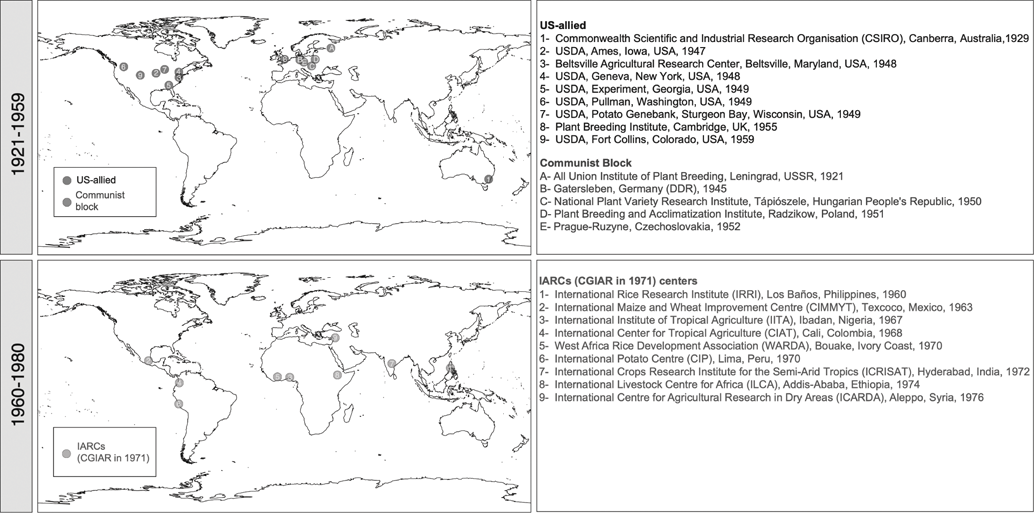
Figure 11.1 Key gene banks established between 1920 and 1980. The upper panel represents the main gene banks in US-allied countries and in the communist bloc established between 1921 and 1959. The lower panel represents the gene banks of the international agricultural research centers (associated with CGIAR from 1971) founded between 1960 and 1980.
After World War II, the FAO Plant Production and Protection Division began to play an important role in plant genetic resources management in collaboration with the Commonwealth Scientific and Industrial Research Organization (CSIRO) of Australia.Footnote 14 Together they established an international network for the exchange of breeding materials, especially through the FAO Plant Introduction Newsletter launched in 1957.Footnote 15 Yet FAO’s efforts to make information about collections available took shape in a context where breeders were not very receptive to the idea of sharing materials and coordinating collection missions across borders.Footnote 16 In the late 1950s, most breeders in industrialized countries continued to rely on national collections; the FAO catalogs were either not well known or not considered a useful tool by many breeders.
Towards the end of the 1950s and into the 1960s, the establishment of new international agricultural research centers such as the International Rice Research Institute (IRRI) and the International Maize and Wheat Improvement Center (CIMMYT) was associated with what the historian Jonathan Harwood characterizes as a transition from a “local strategy” to a “cosmopolitan strategy” in plant breeding – a quest for varieties that would perform well across many locations.Footnote 17 Other contributors to this volume characterize this strategy as the search for “widely adapted varieties” (see, e.g., Derek Byerlee and Greg Edmeades, Chapter 9, and Harro Maat, Chapter 6, this volume). This cosmopolitan approach was seen both to depend on and threaten the existence of farmers’ varieties of rice, maize, wheat, and other crops that centers would seek to improve. The Rockefeller Foundation’s collection and conservation of maize varieties, initially fostered in the 1940s through its agricultural program in Mexico and associated with efforts to extend “improved” maize varieties across Latin America, provided a model for how the international agricultural research centers could manage this dilemma – namely, by building up their own collections of farmers’ varieties to ensure their future availability for breeding.Footnote 18
Experts mobilized by FAO played an important role in parallel to that of the international agricultural research centers, constituting a specific framework for crop diversity management. For example, FAO oversaw actions concerning the exchange of breeding materials, working with breeding associations such as the European Association for Research on Plant Breeding (EUCARPIA) and the International Association of Plant Breeders for the Protection of Plant Varieties (ASSINSEL), and organizing initiatives like the World Seed Campaign in 1957.Footnote 19 As part of this initiative to encourage and coordinate exchange, the first FAO Technical Meeting on Plant Exploration and Introduction was held in July 1961. In 1967 a second conference was organized jointly by the FAO Plant Production and Protection Division and the International Biological Program; this was the Technical Conference on the Exploration, Utilization, and Conservation of Plant Genetic Resources.Footnote 20 In the aftermath of the 1967 meeting a new FAO team on genetic resources was created, the FAO Crop Ecology Unit. Together with representatives of the International Biological Program, this team constituted a heterogeneous expert group that started to frame “genetic erosion” as an international concern.Footnote 21
Rising Awareness about Genetic Erosion
It was during the first Technical Meeting on Plant Exploration and Introduction in 1961 that FAO initially recorded concerns among breeders about the replacement of landraces – that is, farmers’ locally adapted varieties – through the widespread adoption of “modern” varieties generated by professional breeders.Footnote 22 Even though the collection of genetic materials from regions considered remote and “less civilized” was already underway in many countries, the sense of urgency created by the assumption that local varieties were bound to vanish globally was not yet fully established. By the 1960s, this concern was increasingly felt. At FAO, experts deployed on its programs of seed dissemination and plant exploration began reporting changes in the distribution of landraces versus “modern” varieties. The 1961 and 1967 technical conferences were the first international events to specifically address declining genetic diversity as a “side effect” of efforts to deliver “improved” or “modern” varieties to farmers. Breeders gathered at FAO expressed concern about the consequences of expected success in disseminating these varieties, especially in regions that were hotspots of diversity. “Without the primitive crop races which are the raw materials of plant breeding, the continued production of high-yielding varieties is not possible,” explained a 1969 editorial penned by staff of the FAO Crop Ecology unit.Footnote 23
The alarm sounded at FAO on this issue presupposed a particular vision of crop diversity and agricultural change wherein “primitive” varieties – that is, landraces or farmers’ varieties – would inevitably be replaced by “modern” ones. As the Australian wheat breeder and FAO consultant Otto Frankel summarized, “The crops of modern agriculture consist of varieties bred for high production and for uniformity. Over large areas of the world the same, or closely related, varieties are grown, uniformity is displacing the enormous variety of types.”Footnote 24 The reports of the first FAO conferences on this subject show that participants took it as a fact that farmers would abandon local varieties once they had noticed the superiority of “modern” varieties, and that they would benefit from this transition. From this perspective, the first victims of varietal homogenization would be breeders, who would lose access to breeding materials, not farmers, who were imagined to be fully satisfied with the new varieties.
Under this dichotomy of “primitive” versus “modern,” the complex and dynamic interplay between the circulation of new varieties and the disappearance of landraces was reduced to a clear-cut phenomenon of new replacing old. Just a decade earlier, by contrast, most breeders had been convinced that the poor economies and “backward” agricultural systems of countries that were the centers of origin of crops, and therefore hotspots of crop genetic diversity, would ensure the continuation of farmers’ varieties. Frankel later suggested that no one could have imagined that local varieties in these places would be at risk of erosion.Footnote 25 He and many of his contemporaries saw cultivated biodiversity as a “primitive” product preserved in a natural state in the cradles of agriculture. For example, in neither the 1961 nor 1967 FAO technical conferences did participants explicitly observe that farmers’ practices contribute to the conservation and evolution of crop genetic diversity. According to Frankel, “Plant breeders, searching the world for even more productive strains, must have genetic pools to provide ‘building stones.’ The plants of primitive agriculture and related wild plants are this treasury, now depleted by development.”Footnote 26 For those who shared this view, crop genetic diversity was a “raw material” or “building stone,” and not a product of human labor with nature. This perspective further suggested that it was up to professional plant scientists alone, and not farmers, to resolve the problem of conservation, given that farmers did not feature within this view as producers or managers of genetic diversity.
However, this was not the only perspective available. Within FAO, the issue of genetic erosion and proposals to cope with it sparked debates and divisions between two different epistemic cultures. Two figures can be taken as representative of these epistemic cultures: the breeder Otto Frankel, and the population geneticist Erna Bennett (Figure 11.2). Frankel and Bennett played fundamental but antagonistic roles in getting the conservation of crop genetic resources onto the international agenda.Footnote 27 Frankel, along with others who shared his epistemic culture, conceived conservation as the sheltering of entities – in this case, genes. He focused on the managerial and technical aspects of conservation. He was interested in the development of ex situ or off-site conservation approaches, chiefly through storage in gene banks, and the standardized exchange of breeding materials (often referred to as germplasm) to enable breeders’ activities. By contrast, within the second epistemic culture Erna Bennett and others aimed to maintain plants’ interactions with their environment and all of the processes that generate diversity in situ – that is, in agro-ecosystems – “to preserve the evolutionary potential of local population-environment complexes.”Footnote 28 Her vision was supported by scientists who were part of an evolutionary epistemic culture, including population geneticists, ecologists, and botanists.Footnote 29 Despite the support of some geneticists and ecologists for the latter approach, and thus the lack of a broad consensus across all actors interested in the conservation of crop diversity at FAO, the epistemic culture of the breeders won out. Only a system of ex situ conservation outside the plants’ environment of origin was pursued and, as I discuss below, implemented. The gene bank approach, focused on providing breeders with the materials they needed, was considered tried and tested, and seen as easier to set up than in situ conservation programs, which lacked an operational plan.
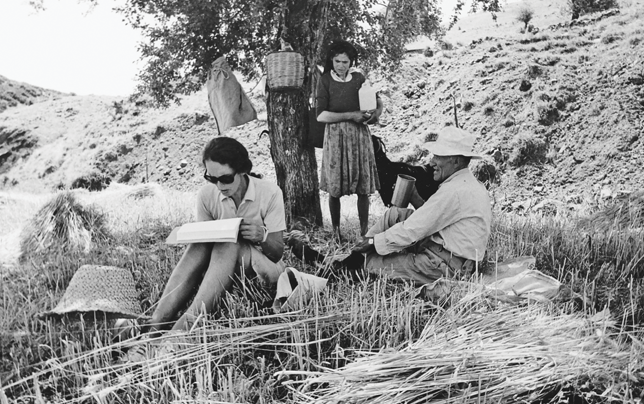
Figure 11.2 The plant geneticist Erna Bennett of the UN FAO Crop Ecology Unit in Greece, undated.
The Constitution of a Global Conservation Network
The erosion of genetic resources was included on the global environmental agenda at the United Nations Conference on the Human Environment held in Stockholm in June 1972 – a crucial turning point in advocacy on this issue. The Stockholm conference represented the high point of a period of vigorous action on environmental protection and conservation, including the invention and definition of the “global environment.”Footnote 30 The endangered future of agricultural development was illustrated at the conference by two problems: the first was genetic erosion, with purported evidence taken from FAO reports and conferences.Footnote 31 The second problem was the Helminthosporium maydis or southern corn leaf blight epidemic that caused serious losses to US hybrid maize between 1970 and 1971. An expert group assembled to investigate the disease outbreak stated that “[t]he key lesson of 1970 is that genetic uniformity is the basis of vulnerability to epidemics,” and warned that American crop varieties were “impressively uniform genetically and impressively vulnerable.”Footnote 32 The stark illustration of the dependence of industrialized agriculture of the Global North on “exotic” or foreign germplasm to shore up vulnerable crops fueled the growing sense of urgency about global coordination on genetic resources. Although strong evidence of genetic erosion was still lacking in 1972, surveys conducted by FAO and the Helminthosporium maydis epidemic’s impact helped place genetic erosion among the global environmental problems of greatest concern recognized by the United Nations. The conservation of genetic resources was the subject of 7 out of 109 recommendations established in Stockholm.Footnote 33
In the 1960s, FAO had tried to organize international management of crop genetic resources but failed, owing to a lack of interest and, crucially, resources. The Stockholm Conference created new possibilities for establishing a network of regional centers for collecting and conserving landraces and other crop varieties considered endangered, along with infrastructure “to grant all countries access to basic breeding materials.”Footnote 34 As I describe below, in the 1970s, governments were invited to participate in collection campaigns and, in cooperation with FAO, to ensure the conservation of plant genetic resources in a global network of gene banks. Inventories of threatened genetic resources were compiled and registers of existing collections updated in an effort to monitor the progress of conservation on a global scale. A new phase in the conservation of crop genetic resources was thus inaugurated. However, despite the centrality of FAO expertise in preceding decades, its role in the conservation of plant genetic resources after 1972 gradually diminished. CGIAR, which was created in 1971 to extend the Green Revolution by perpetuating scientific research for agricultural development, was instead the institution in charge of the new network. CGIAR centers became the operational hubs for conservation activities like collection, evaluation, and storage in gene banks, and CGIAR, through its Technical Advisory Committee (TAC), took charge of political, managerial, and economic matters.
In 1973, FAO hosted another technical conference on genetic resources. This conference saw FAO involved for the last time as the legitimate leading institution on international genetic resources conservation. At the end of the conference, the task of establishing an international network of genetic resources centers was assumed by CGIAR.Footnote 35 FAO staff and consulting experts had developed an action plan for this network and published two manuals on technical aspects of conserving crop diversity since 1966.Footnote 36 However, in the midst of international attention to the Green Revolution and anticipation of further agricultural transformation, CGIAR and its international research centers were able to present themselves as the institutions best positioned to guide the conservation and use of genetic resources.Footnote 37 CGIAR promoted the commitment to plant genetic resources of such emblematic figures of the Green Revolution as Norman Borlaug and Monkombu Swaminathan. Borlaug famously received the Nobel Peace Prize in 1970 for his work on wheat at CIMMYT. Swaminathan, meanwhile, was celebrated as the master of making India self-sufficient in grain and became the director of IRRI in 1982.
In 1974, CGIAR created the International Board for Plant Genetic Resources (IBPGR) as an institution independent of the United Nations but headquartered at FAO in order to benefit from FAO’s diplomatic role in the Global South. Although located within FAO, at the policy and operational levels IBPGR was centered more within the CGIAR network and operated as a CGIAR institution alongside the other international agricultural research centers. Ultimately, the conservation of genetic resources in gene banks became a branch of the centers’ research on the improvement of wheat, rice, maize, and other crops, and was guided by the imperatives of crop productivity and agricultural “modernization” associated with the Green Revolution.Footnote 38
FAO scientists and their collaborators thus succeeded in raising the issue of genetic erosion to the level of an international problem – and in generating action – within a decade. However, with the entry of CGIAR, their scientific and decision-making power disappeared. Some considered this situation a defeat, including Bennett, who resigned in 1982. Others kept a certain influence, including Frankel, who maintained a consultative role, and the young botanist Trevor Williams, who had participated in FAO collecting missions in the 1970s and became IBPGR’s executive secretary in 1978.
Just as the institutions of the Green Revolution won out over FAO, so too did the epistemic culture of the Green Revolution – namely, that of plant breeders – win out over approaches from disciplines such as population genetics and ecology. As a result, the complex dynamic between “primitive” varieties and “modern” varieties, or farmers’ varieties and professional breeders’ varieties, was reduced to the problem of genetic erosion, disregarding evolutionary processes unfolding through farmers’ practices in local environments. The mission of conserving genetic materials for breeding came to be both the dominant approach to the study of crop diversity and the organizing principle of actions to conserve it. Among other outcomes, a geographical distribution of conservation activities came to be formalized in which the “poorly equipped” South supplied crop diversity, and the North, with its techno-scientific power, managed it.Footnote 39 The scientific debate in FAO, which included the viewpoints of botanists and population geneticists, was displaced by a massive technical routine consisting of lists of collecting priorities, databases of plant materials, and jars of seeds in gene banks (Figure 11.3). In short, under IBPGR, conservation entered a “chronic alert” phase, where the problem of erosion was managed by creating new collections.

Figure 11.3 Accessions stored in the gene bank of the International Maize and Wheat Improvement Center (CIMMYT), Mexico, 2018.
Ex situ Conservation between Routine and Crisis
Unlike the other CGIAR centers, IBPGR was not a research institute. As a 1979 policy document described, “it is a service organization, whose primary purpose is to assist plant breeders.”Footnote 40 It began its activity in 1974 with a modest budget of about $250,000, an amount that gradually increased over the following years, reaching nearly $3.8 million in 1982. Funding remained at around this level over the following two decades.Footnote 41 IBPGR continued FAO’s work of collecting and making materials available for plant improvement programs. However, it abandoned the scientific discussion about how to conserve – specifically whether in situ or ex situ approaches were more appropriate – and for what purpose, topics on which FAO experts had led. As set out by its technical mission, IBPGR developed new lists of accessions, an international system of descriptors for genetic resources (as described by Helen Anne Curry and Sabina Leonelli, Chapter 10, this volume), “minimum standard” protocols for plant exploration, and information-sharing activities.Footnote 42 These actions were directed by five ad hoc committees for the crops with the greatest economic importance: wheat, maize, rice, sorghum, and a single combined committee for millets and beans.Footnote 43 As Erna Bennett later reflected, these patterns confirmed that IBPGR followed the orientation dictated by the plant breeders’ epistemic culture:
Landraces with no commercial value but that are important in local diets would not be present in these collections. Many centers, despite their strategic position in regions of great genetic diversity, deal exclusively with collecting material from a single species. Moreover, these single-species collections are also not representative of genetic variability [within each species], and there were serious lacunae in the collections. This system reflected the CGIAR’s favoured approach based on major crops.Footnote 44
In 1976, IBPGR established a first action plan to bring in species deemed insufficiently represented in its activities. This program involved various regions (the Mediterranean, southern Asia, West Africa, Ethiopia, Central America, and Brazil) and identified fifty-eight crop species assigned to three different priority levels.Footnote 45 Despite this attempt to prioritize other species, conservation policies remained linked to the agendas of the international agricultural research center system. The primary focus therefore continued to be on maize, wheat, and rice, and on the productivity goals firmly anchored in the traditional pathway to improvement, which Bennett described as “the search for major genes and homogeneity.”Footnote 46 From the mid 1980s, failures of the system of ex situ gene banks (which I describe below) reduced the money allocated for plant exploration and collection activities, especially those targeting minor crop species.
In the late 1970s, the “global network” of genetic resources conservation included eight international centers and fifty-four regional centers, of which twenty-four had long-term storage systems that conformed to IBPGR’s technical standards.Footnote 47 With the opening of more regional gene banks, the global network continued to grow. By 1983, there were forty-eight gene banks compliant with international standards for long-term storage at sites around the world. Thirty of these were officially enrolled in the IBPGR network, operating in twenty-four countries and covering the main crop species.Footnote 48 IBPGR also had regional offices, for example in Aleppo, Bangkok, Nairobi, and Cali.Footnote 49 In the 1980s, IBPGR had as many as 600 scientists, working in 100 countries. They were supplied by hundreds of collection missions in which a veritable army of collectors sought new samples of landraces and other plant genetic materials across sixty-two countries.Footnote 50 IBPGR was also able to “capture” collections produced by outside organizations and governments, which were invited to join its global conservation effort.
Thanks to these collection campaigns, the number of samples held in CGIAR gene banks and other key international institutions rapidly grew.Footnote 51 The annual number of samples accessioned into collections remained roughly stable from the 1920s through the 1960s (Figure 11.4), with a peak in 1948 linked to collections created through the Rockefeller Foundation’s agricultural program in Mexico (labeled MAP in the figure). It then started to rise in parallel with the creation of the first international agricultural research centers (IARCs) in the late 1960s. After the Helminthosporium maydis epidemic and the Stockholm conference (UNCHE) in the early 1970s, and the formation of IBPGR in 1974, the annual number of accessions leaped higher. Then, starting in the mid 1980s, new accessions progressively decreased, but with two exceptions: the late 1990s, in correspondence with the activities of the International Plant Genetic Resources Institute (IPGRI), and in 2004, with the establishment of the Global Crop Diversity Trust (GCDT).Footnote 52
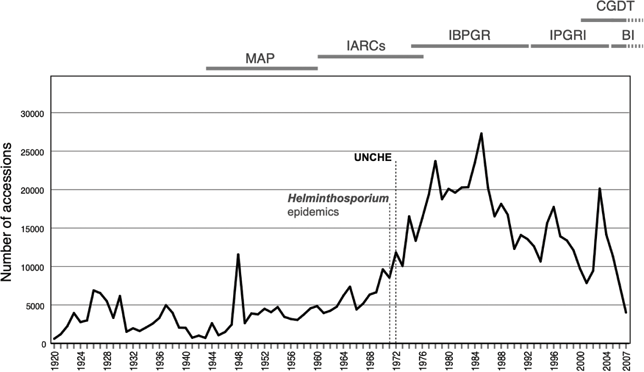
Figure 11.4 Annual number of accessions to selected gene banks, 1920–2007, including those of CGIAR centers. Adapted from United Nations Food and Agriculture Organization (FAO), Second Report on the World’s Plant Genetic Resources for Food and Agriculture (Rome: FAO, 2010), 57.
As CGIAR’s accessions rose for more than ten years during the 1970s, new concerns emerged regarding the efficiency of ex situ conservation. In 1978 the US National Academy of Sciences published Conservation of Germplasm Resources: An Imperative, which reported the challenges faced by ex situ conservation of microorganismal, marine, plant, and animal germplasm. These challenges ranged from technical issues, such as the maintenance of the original genetic base, to organizational ones including inventories, evaluation, and quality control.Footnote 53 This report spurred CGIAR to commission the agronomist Donald Plucknett to conduct a detailed survey of the state of its collections.Footnote 54 However, it was only the beginning of a period of questioning and concern. In September 1981, an article in the New York Times described the precarious situation of the main long-term gene bank in the United States, located in Fort Collins, Colorado: “In the chilly seed storage rooms here, sacks of seeds are piled on the floors, overflowing the laboratory’s facilities.”Footnote 55 Conservation failures in one of the most important gene banks in the world prompted the IBPGR Secretariat to take a greater interest in problems affecting ex situ conservation – and therefore its entire network of gene banks.Footnote 56 A new report published in 1983 highlighted losses in gene banks resulting from lack of personnel, negligence, malfunctioning equipment, fires, and still other factors. IBPGR attributed most of the responsibility for these problems to the curators: “[gene bank] curators may well contribute more to loss of valuable material than might have occurred in the field.”Footnote 57 Despite recognition of the failure of many gene banks with respect to their core mission, no general reevaluation of ex situ approaches came to pass. IBPGR instead sought to manage the crisis by imposing more rigorous technical and procedural approaches in seed storage centers.
At the same time, the orientation of breeding programs towards the rapid release of commercial products discouraged breeders from using local varieties or their wild relatives. In the 1980s, assessments internal and external to CGIAR showed that most of the diversity in gene banks remained unused, if not totally abandoned.Footnote 58 The measures taken in response to this perceived concern indirectly affected field research and collection activities, in particular limiting the development of the collection of so-called “orphan” crops and crop wild relatives. It would be another ten years before the problems of increasing wild species and “neglected and underutilized species” accessions in gene banks would be treated as an important subject in the major conservation institutions.Footnote 59 CGIAR took the position that what was needed, more than new accessions, was to maintain what it had in good condition – and what it had in good condition were collections of the world’s key agricultural commodity crops. As a 1984 assessment confirmed, the collections that were most representative of extant diversity and kept in the best conditions were those of the most economically important species: potato at the International Potato Center (CIP); wheat in European banks, the Vavilov Institute, CIMMYT, and the International Center for Agricultural Research in the Dry Areas (ICARDA); maize at CIMMYT; rice at IRRI; barley at ICARDA; and sorghum at the International Crops Research Institute for the Semi-Arid Tropics (ICRISAT).Footnote 60
In sum, once an international system for crop genetic conservation had been established in the early 1970s, associated with the epistemic culture of plant breeders and premised on the idea of collecting endangered breeding materials before their inevitable replacement, the focus of conservation moved to technical improvements in storage. The dominant conceptual and scientific approach simplified the problem of conservation in order to make it immediately operational, and it persisted even as evidence of its shortcomings accumulated.
Genetic Resources through the Prism of Geopolitical Tensions
The geneticists who organized the system of exchanges and collections within FAO in the 1960s and 1970s contributed to the emergence of the idea that plant genetic resources are a common heritage of humanity. For example, Erna Bennett used the phrase “human heritage” and Otto Frankel spoke of a “genetic estate” comprising the “biological heritage, the genetic endowment of organisms now living.”Footnote 61 IBPGR, appropriating the notion of common heritage, strove to construct its own image as a “catalyst of genetic resources flows” between countries, applying principles of free exchange and fair distribution.Footnote 62 However, observers from the 1970s onward increasingly condemned this activity as a raiding of the genetic resources of the Global South by greedy Northern interests. Pat Mooney, a Canadian activist and author of the influential 1979 book Seeds of the Earth, observed of the global network of gene banks, “the Third World is being invited to put all its eggs in someone else’s basket.”Footnote 63 Scientists’ work on genetic resources, which was dominated by CGIAR through IBPGR, was gradually confronted with a critical discourse emerging at the international level, articulated by nongovernmental organizations (NGOs) such as the Rural Advancement Foundation International (RAFI) and the International Coalition for Development Action.Footnote 64
In the same years that FAO and CGIAR worked to establish international genebanks with a long-term conservation mission, problems had emerged that could not be contained by technical solutions. The blossoming of Third World alliances in the 1970s transformed genetic resources into a new field of tensions between Global North and South. Some tensions arose from the expansion of intellectual property rights in plant varieties, which implied limitations on the free circulation of varieties among breeders and institutions and new restrictions on farmer seed-saving. (For a detailed discussion of intellectual property concerns see David J. Jefferson, Chapter 12, this volume.) In the 1970s and 1980s, the International Union for the Protection of New Varieties of Plants (UPOV), established in 1961 to enable breeders’ intellectual property claims in plant varieties, was updated to adapt it to the patent system for commercial innovations in genetic engineering and biotechnology.Footnote 65 Facing restrictive new seed regulations, attitudes towards the sharing of genetic resources shifted in many countries in the Global South.Footnote 66 Other tensions emerged from political restrictions on access to supposedly global collections held in trust in national gene banks. For example, embargoes prevented researchers in Afghanistan, Albania, Cuba, Iran, Libya, the Soviet Union, and Nicaragua from accessing materials held in US collections.Footnote 67 Some countries of the Global South began in turn to impose restrictions on trade in species with a strategic national economic role: Ethiopia over coffee, Ecuador over cocoa, and so on.Footnote 68
The “seed wars,” in which countries struggled to assert control over plant genetic materials, reached a peak at the Twenty-First FAO Conference in November 1981. Backed by the G77, the developing-country coalition within the United Nations, the Mexican delegation proposed a “new international genetic order,” independent of CGIAR, in what was later designated Resolution 6/81.Footnote 69 The aim of Mexico’s proposed resolution was to bring global collections of crop genetic resources back under the aegis of FAO, granting it full control over a new international gene bank. Under the proposal, FAO was to ensure the conservation and circulation not only of landraces and crop wild relatives, but also the breeders’ lines produced in public and private research centers “without restrictive practices that limit their availability” to countries in the Global South.Footnote 70 This resolution struck FAO – whose staff were not prepared, and probably did not want, to take on this responsibility – like a meteorite. Resolution 6/81 was one of the most highly debated in FAO history.Footnote 71
Several industrialized countries, particularly the United States, Australia, and the United Kingdom, opposed the proposal, initially arguing that building a new gene bank would be too expensive. Other concerns proved more potent. Following the conference, ASSINSEL alerted the UPOV Council about the risks that the proposal’s provisions on the circulation of breeders’ lines posed to their activities. Maintaining established intellectual property protections became the primary focus of industrialized countries’ objections. In the wake of Resolution 6/81, IBPGR continued to defend its image as a good manager and “catalyst” of initiatives promoting the conservation of genetic resources. However, the main donors to IBPGR were countries and institutions in the Global North that strongly opposed the resolution.Footnote 72 Under pressure from IBPGR, FAO succeeded in orienting the supporters of Resolution 6/81 towards the establishment of a network of collections instead of a single gene bank under FAO management.Footnote 73 The resolution was transformed into a proposed International Undertaking on Plant Genetic Resources, which stipulated that member countries must make their genetic resources available without restriction, including lines developed by breeders, as part of a “common heritage.”
The eleven-article undertaking mandated that samples of plant genetic material “be made available free of charge, on the basis of mutual exchange or on mutually agreed terms.”Footnote 74 All existing conservation institutions were asked to adhere to new standards, implemented and overseen by FAO, as part of this global agreement.Footnote 75 Among other provisions, the undertaking called for “the equitable and unrestricted distribution of the benefits of plant breeding.” including the circulation of “special genetic stocks (including elite and current breeders’ lines and mutants).”Footnote 76 In other words, the “common heritage” framework was intended to allow the Global South to obtain access to protected lines. The undertaking thus potentially implied a substantial revision of plant breeders’ rights. Although it did not gain the support of key industrialized nations or international agricultural institutions, 103 countries signed a revised version of the agreement in November 1983.Footnote 77 The victory was more symbolic than material. In 1989, after long negotiations, FAO and IBPGR signed a “Memorandum of Understanding” that formalized a new relationship set in motion by the undertaking but also abandoned the original political project.Footnote 78 As part of these negotiations, FAO stipulated that “‘plant breeders’ rights as provided for under UPOV are not incompatible with the International Undertaking.”Footnote 79
Towards New Approaches to the Conservation of Genetic Resources
With the rising demands of Indigenous communities and peasant associations, the opening of new spaces of socioenvironmental struggle, and growing criticism of globalization, the landscape of biodiversity conservation grew more complex in the 1980s and 1990s.Footnote 80 Within the arena of crop conservation, broader confrontation with nongovernmental actors pushed established institutions towards new approaches and ultimately the incorporation of new epistemic cultures. To use a formulation from the sociology of social problems, breeders were no longer the sole “owners” of the problem of agricultural biodiversity.Footnote 81
The most important result of the negotiations first set in motion by FAO Resolution 6/81 was the 1983 creation of the Commission on Plant Genetic Resources within FAO.Footnote 82 This commission aimed, among other things, to better represent the countries of the Global South in agreements and to represent “farmers’ rights” to use and share seeds for the first time. In 1991, 127 countries participated in the Fourth Conference of the Commission on Plant Genetic Resources, which defined the distribution of responsibilities between FAO and IBPGR. FAO would focus on in situ conservation, favoring an ecological approach for species outside the sphere of CGIAR. Meanwhile IBPGR would be the main institution for ex situ conservation. However, in the 1990s both institutions increasingly confronted the emergence of alternative and more ecological approaches to conservation. A new global governance for biodiversity, inaugurated by the 1992 Convention on Biological Diversity (CBD), directly affected crop conservation.Footnote 83 Recommendations of Agenda 21, the nonbinding UN action plan on sustainable development, on the CBD implied the creation of a World Information and Early Warning System on Plant Genetic Resources for Food and Agriculture, the implementation of a Global Plan of Action for ex situ and in situ conservation, and the recognition of the farmers’ rights agenda.
Throughout the 1990s, the Commission on Plant Genetic Resources and FAO tried to implement CBD recommendations. The Commission’s fourth technical conference, held in Leipzig in 1996, represented an important moment in the advancement of those proposals. At the conference, a Global System for the Conservation and Utilization of Plant Genetic Resources was approved to combine ex situ and in situ conservation strategies for the sustainable use of plant genetic resources.Footnote 84 The conference also encouraged the production of 155 national reports, which formed the basis for the first FAO report on genetic resources published in 1998. These activities culminated in November 2001 with the International Treaty on Plant Genetic Resources for Food and Agriculture, also known as the Seed Treaty. Under the Seed Treaty, which entered into force on June 29, 2004, ex situ collections, including CGIAR gene banks, were made available through a multilateral system, and benefits generated from using genetic resources (e.g., in commercial crop varieties) were supposed to be shared through a collective funding system.Footnote 85 Based on voluntary decisions, the collective funding system struggled to materialize. However, responding to a more mutualist logic, where genetic resources were considered public goods, the Seed Treaty became the privileged space for discussing farmers’ rights, farmers’ seed systems, and alternative approaches to conservation.Footnote 86
This opening of new institutional spaces and dialogues in the 1990s allowed for the assertion of new epistemologies and practices within the plant genetic conservation regimes of CGIAR. Thanks to the institutional critiques and upheavals of the 1980s, IBPGR transitioned into a new arrangement as IPGRI from 1993 to 2006, an operation later renamed Bioversity International. The changes of the 1980s and 1990s also prompted an expanded network of experts, range of knowledge, and list of collaborating agencies at IPGRI. The challenge increasingly faced by IPGRI and its successor organizations was no longer just to conserve genetic resources for breeders, but to include other actors, such as farmer organizations and NGOs, and to involve local communities through participatory approaches like participatory plant breeding and community seed banks.Footnote 87 Inside these institutions as well as in national research programs, crop diversity was increasingly reconceived in the context of agro-ecosystems and the cultures from which it had originated (Figures 11.5 and 11.6). The dynamics of crop diversity now had to be explored from multiple angles: social, ecological, and agronomic.
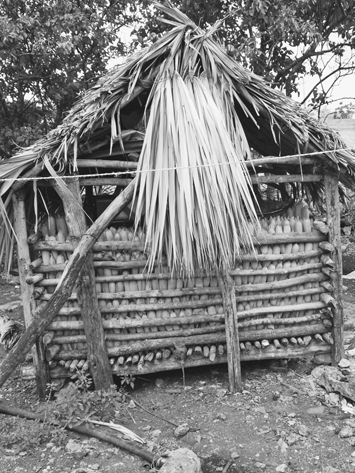
Figure 11.5 A maize granary in Yucatan, Yaxcaba, Mexico represents on-farm (or in situ) conservation of crop diversity, 2013.
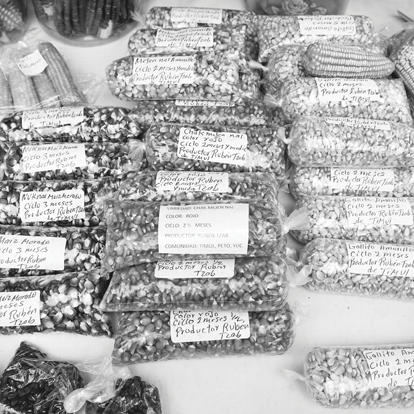
Figure 11.6 Maize seeds from a farmers’ seed fair in Mérida, Mexico, 2014.
In the 1980s, certain branches of biology and botany, coupled with studies in anthropology, had already developed analytical tools that could be practically applied to in situ genetic resources conservation. The work of ethnobotanists, ethnobiologists, and anthropologists studying agricultural biodiversity in its centers of origin played a determining role in reframing the concept of genetic resources to integrate evolutionary processes and farmers’ practices.Footnote 88 These disciplines, together with participatory plant breeding, contributed to the development, within IPGRI/Bioversity and elsewhere, of in situ/on-farm conservation approaches that in the 1990s sought to sustain the farming practices and social contexts that create and maintain agricultural diversity.Footnote 89
Once integrated into the mainstream conservation landscape, in situ conservation was reconceived as providing services that would enable the adaptation of agriculture amid global change. It newly positioned farmers as “guardians” of globally important diversity. At the same time, in situ approaches contributed to the development of new practices and values in which crop diversity and farmers were more than service providers for industrial agriculture. In this understanding, crop diversity was also seen as fundamental for the flourishing of farmers in the Global South. This in turn suggested that the major challenge for conservation was not storing and providing genetic materials to breeding companies but providing opportunities and solutions to farmers and their farming systems. In this scenario, gene banks and breeding programs finally had a role in directly supporting farmers.Footnote 90
Conclusion
In 2018, the United Nations Declaration on the Rights of Peasants and Other People Working in Rural Areas declared that these individuals “have the right to seeds, including … the right to save, use, exchange and sell their farm-saved seed or propagating material.” It called on states to “recognize the rights of peasants to rely either on their own seeds or on other locally available seeds of their choice” and to “take appropriate measures to support peasant seed systems and promote the use of peasant seeds and agrobiodiversity.”Footnote 91 Even though these principles are hardly fully translated into national agricultural policies, their declaration signals the important institutional changes driven in part by a shifting balance of power between different epistemic cultures in crop conservation and use alongside hard-fought political struggles. Many contemporary understandings of crop diversity contradict the long-dominant view of landraces as a stock of raw materials stored in “wild” landscapes. Because scholars have recognized farmers’ practices as important to the evolution, improvement, and conservation of cultivated biodiversity, institutions now confront the need to change seed regulations, as well as conservation methods.
Despite important shifts, the concept of genetic erosion and the accompanying notion of crop diversity as a resource to be mined by breeders for value still shape scientific practices, conservation actions, and policies. As my history of the conservation of plant genetic materials in and beyond CGIAR makes clear, this early and influential perspective largely ignored the role of farmers and took for granted the spread of breeders’ innovations. In 2022 the adoption of “improved” varieties is considered as inexorable as ever, and the reversion to ex situ conservation nearly always prevails over options that integrate farmers’ practices and knowledge into plans for enhancing and improving cultivated biodiversity. Within the CGIAR system, and despite its encompassing very different scientific souls, the epistemic culture that sustained the Green Revolution’s approaches and vision is as vigorous as it ever was.Footnote 92
Meanwhile, other ways of knowing and understanding crop diversity continue to issue challenges to this predominating culture. Without denying an overall pattern in which crop diversity is diminishing over time, it is nonetheless also possible to observe that commercial varieties are often unable to fulfill the needs of heterogeneous smallholder agriculture. For this reason, many of the world’s farmers cannot completely rely on commercial varieties and still sow seeds that they produce themselves.Footnote 93 They actively work on crop diversity and, especially in the Global South, they still grow landraces, introduce “modern” varieties, make crosses, select for valued traits, and exchange seeds and knowledge. The classic framework of genetic erosion did not take into account farmers as a powerful evolutionary force that is still active and capable of participating in the search for solutions to ever-changing agricultural needs.Footnote 94 The work of many scholars over many decades has made clear that genetic resources can no longer be considered a “raw” product constantly under threat. The goal should not be to permanently conserve the same genetic configuration, as CGIAR gene banks sought to do for much of their existence, but to reconnect diversity, conservation practices, and farming systems.
For most of the twentieth century, intellectual property was of little relevance for public agricultural research. When the Consultative Group on International Agricultural Research (CGIAR) was established in 1971, its centers considered the privatization of research products to be antithetical to the network’s mission, which endeavored to promote food security in developing countries through sustainable agriculture. To realize this mission, CGIAR scientists distributed the products of their research, such as new crop varieties, directly to farmers, free of charge, through extension services provided in collaboration with public national agricultural research systems. In contrast, private agricultural firms generally focused on commercializing products in high-income countries where industrialized agriculture was common and intellectual property operated to secure market exclusivity for new products.
Beginning in the 1980s, several changes unsettled the public–private balance in agricultural science and provoked a reimagination of the role of intellectual property in the research and development process. Various factors help to explain these shifts, including developments in science (e.g., advent of new genetic transformation techniques), the law (e.g., expansion of intellectual property systems), and politics (e.g., decrease in governmental support for research). The ability to claim a broader range of agrarian inventions as property, coupled with the rethinking of how public institutions should leverage exclusive rights, have raised the stakes of agricultural science and ignited tensions that affect the work of many institutions worldwide, including CGIAR.
In the 1990s, agricultural experts – including agronomists, plant scientists, economists, lawyers, and development policy specialists, but notably not farmers – working within or as consultants for CGIAR developed at least three approaches to how the network and its centers should respond to the global expansion of intellectual property in agriculture. I describe the first approach as maximalist, based on an understanding that formalized intellectual property ownership could provide an important means for centers to augment the impact of their technologies for target beneficiaries. In contrast, I characterize the second approach as adaptationist. Adherents expressed skepticism about the appropriateness of claiming intellectual property rights, but they also recognized that sooner or later CGIAR would need to modify its existing practices to accommodate a reality in which many products of science were regarded as proprietary objects. Finally, I portray the third approach as rejectionist. Proponents claimed that intellectual property was antithetical to CGIAR’s mission and its historical focus on small-scale, sustainable agriculture. In this chapter, I argue that over the thirty years from 1990 to 2020, the adaptationist approach crystallized as the overarching approach to intellectual property within CGIAR, as internal debates stabilized and internal governance structures developed and matured.
When intellectual property first emerged as a matter of concern for CGIAR, activists and researchers aligned with organizations that rejected privatization under any circumstance – including Via Campesina, Third World Network, and Genetic Resources Action International (GRAIN) – clashed with industry representatives who thought the centers should maximize the benefits of a capitalist approach to technology dissemination – such as those from the International Association of Plant Breeders for the Protection of Plant Varieties (ASSINSEL) and the International Seed Trade Federation. Over time, CGIAR found ways to accommodate both perspectives to some extent, with each center still able to exercise autonomy over technology management and private-sector partnerships. As of 2020, the centers operated along a continuum, such that some regularly engaged with intellectual property systems while others rarely sought patents, plant variety protection, or other forms of exclusive ownership for their inventions. However, and although CGIAR formally retained its focus on the production of “global public goods,”Footnote 1 by the end of the second decade of the new millennium it was clear that across the global research partnership that CGIAR representsFootnote 2 ignoring the influence of intellectual property was no longer tenable. The ascendancy of the adaptationist approach was evident in the fact that responses to the growth of proprietary science had been thoroughly woven into the research and technology development practices of all the centers and CGIAR itself.
Although the need to respond to the expansion of intellectual property led to the alteration of certain CGIAR activities, doing so did not produce the effects that many experts initially expected. Throughout the 1990s and early 2000s, while opponents of privatization feared that the pursuit of intellectual property rights in the form of patents and plant variety protection would undermine CGIAR’s mission, proponents foresaw the potential to incentivize partnerships with commercial entities and to provide an alternative source of revenue in an era of diminished public funding. By 2020, neither of these visions had been actualized. The possibility that centers might obtain intellectual property for their creations did not substantially alter their research agendas, lead to a dramatic increase in proprietary claims for CGIAR technologies, or directly generate significant revenue through the commercialization of protected technologies.
Instead, intellectual property had subtle and diffuse effects on the activities of individual centers, and on how they relate to one another as members of the CGIAR global partnership. The expansion of proprietary science also transformed how some centers interact with private-sector partners, especially agribusiness firms. During the early 2000s, all centers adopted institutional policies to deal with the potential effects of intellectual property, and all hired personnel to resolve questions related to the ownership of research results and the commercialization of CGIAR technologies. Furthermore, intellectual property played a role in the structure and internal governance standards of the CGIAR network as a whole, providing both a justification for centralization (e.g., through juridical harmonization and the consolidation of legal services across the network) and a platform for individuation (e.g., by allowing each center to define its own operational approach to intellectual property).
This chapter focuses on the period of 1990 to 2020, when numerous discussions and concrete changes occurred in reaction to the increasing influence of intellectual property on agricultural research worldwide. Over the course of these three decades, CGIAR leaders and consultants engaged in debates, produced reports, and drafted, adopted, and harmonized policies, leading to a systematized approach to intellectual property governance that is now shared across the global partnership. The chapter draws on internal documents and consultants’ reports to recount the history of the consolidation of a coordinated CGIAR approach to intellectual property. It shows that the debates sustained between different experts mirrored discussions about agricultural science and the commercialization of research products that were ongoing in other institutions, including universities and national government agencies, during the same period. Notwithstanding the ambitions and concerns of proponents and opponents of privatization and commercialization, a radical shift away from the global public goods model did not occur. Instead, the formal endorsement of the adaptationist approach to intellectual property precipitated subtler transformations to CGIAR research administration.
Historical and Institutional Context
A series of scientific, economic, and legal developments that occurred in the latter part of the twentieth century led to the expansion of formal intellectual property norms into many domains of agricultural research and plant breeding. As national and international laws were created or expanded, researchers in fields such as molecular biology, genetics, and plant sciences could more easily claim proprietary rights in their creations. In parallel, the locus of plant varietal improvement shifted from the public to the private sector in many countries, while firms trading in seeds, fertilizers, and other farming inputs consolidated through a multitude of mergers and acquisitions.Footnote 3 As agricultural science and technology development became increasingly intertwined with intellectual property laws and with globalized capitalism, debates surged about the privatization of seeds and other plant materials, which international legal systems historically had treated as the common heritage of humankind.Footnote 4
Many of these discussions were characterized by certain assumptions. These included the idea that the availability of the exclusive rights provided by intellectual property regimes should incentivize innovation in agricultural science and plant breeding, which in turn was expected to benefit farmers, for example by making the seeds of improved crop varieties more broadly available.Footnote 5 However, a competing assumption held that some farmers – including smallholders and Indigenous cultivators, especially in the Global South – would be harmed by the expansion of intellectual property in agriculture. The assumption was that the increased privatization of public research products and the corresponding prioritization of maximizing economic returns would lead to a neglect of crop species and varieties for which large markets do not exist, while proscribing customary cultivation practices such as the saving, exchange, and local sale of farm-saved seeds.Footnote 6
It was inevitable that as the largest public agricultural research system in the world, CGIAR would need to contend with intellectual property issues. While debates over the use of proprietary legal vehicles to claim agricultural technologies became common in research institutions worldwide in the 1980s and 1990s, such discussions had unique features within CGIAR. This may be partially explained by the complex character of the network. At the time when intellectual property became a matter of concern for agricultural science, CGIAR operated simultaneously as a loose affiliation of individual research centers – each with their own missions, governance models, and scientific orientations – and as a centralized institution in its own right. The variegated nature of CGIAR meant that it had to both accommodate centers’ diverse responses to intellectual property, and harmonize local approaches to create a coherent, system-wide strategy. In this way, CGIAR needed to transcend the dichotomous thinking that characterized many late twentieth-century debates about the global expansion of intellectual property in agriculture.
The formation of CGIAR in 1971 forged a formal link between institutions that had emerged independently from post–World War II, country-specific agricultural programs. In part because certain centers predated CGIAR, tension between centralization and autonomy imbued the network from the time of its establishment. Competing interests that alternately advocated for unification or independence contributed to divergent views about the appropriate role of intellectual property throughout the 1990s and early 2000s. For example, there was tension between efforts to establish universal policies, performance standards, and decision-making protocols for resource allocation, and the need to safeguard individual centers’ capacities to innovate and set appropriate internal governance standards.Footnote 7
Economic factors also underpinned the intellectual property debates that emerged in the 1990s. In CGIAR’s early years, the centers were mainly funded through donations from national and international governmental agencies. More recently, however, financial support from governments became increasingly scarce. While private philanthropy stepped in to fill some gaps, the number of “public–private partnerships” with for-profit firms also grew.Footnote 8 Reliance on associations with profit-driven entities required that CGIAR reconcile its nonproprietary global public goods model with the commercialization strategies of multinational agribusinesses, which typically were grounded in the protection of research products as intellectual property for the purpose of securing market exclusivity. This dynamic was further compounded by scientific developments, such as the emergence of new agricultural biotechnologies (e.g., transgenic plants), and the global expansion of patent and plant variety protection laws. Thus, at the dawn of the 1990s, a series of international scientific, economic, and legal developments brought intellectual property to the fore within CGIAR.
Intellectual Property Becomes a Matter of Concern, 1990 to 1996
The first formal review of the implications that intellectual property could have for CGIAR was initiated in 1982, but by then certain centers, most notably the International Rice Research Institute (IRRI), had already obtained patents for their inventions.Footnote 9 As the 1990s commenced, all CGIAR center directors “accepted that the legal protection of inventions and intellectual property” had become standard practice in modern agricultural science, particularly for research involving the use of novel biotechnologies.Footnote 10 Although the directors expressed confidence that the growth of intellectual property could be accommodated without abandoning the global public goods model, they also acknowledged the “clear need” for expert guidance on patent and plant variety protection issues. They argued that CGIAR centers should be shielded from any detrimental effects associated with the increased utilization of intellectual property in agricultural research but should also be able to “take advantage of potential benefits,” including “the promotion of collaborative arrangements” and “the facilitation of access to technologies.”Footnote 11
The directors presented a draft paper on intellectual property at a 1990 meeting of the CGIAR leadership, where their proposals generated “considerable discussion.”Footnote 12 Shortly afterward, the CGIAR chairman convened a consultation that brought together twenty-eight experts from national governmental agencies, universities, and nongovernmental development organizations (NGOs) to “think creatively about a CGIAR strategy for the 1990s.”Footnote 13 Consultation participants represented the United Nations Food and Agriculture Organization (FAO), United Nations Development Programme (UNDP), World Bank, Rockefeller Foundation, and several European and North American government agencies and universities. Industry representatives were not invited. Nevertheless, and notwithstanding their public-sector affiliations, some consultants favored greater engagement with businesses, highlighting that the private sector encompassed “a wider universe … than just the multinational companies” and that the centers could play an important role in supporting small industries in rural areas in the countries where they were located.Footnote 14 However, others were skeptical of partnering with industry, querying, “Could the CGIAR hurt itself in some ways in some countries if its relationship with private companies is too close?”Footnote 15
In summarizing the discussion, economist and Stanford University professor Walter Falcon, who served as moderator, noted that “[s]trong anti-private sector sentiments exist in several circles related to CGIAR.”Footnote 16 Correspondingly, many stakeholders would likely oppose the future utilization of intellectual property laws to protect CGIAR technologies, because “for some persons and donors, intellectual property rights are a political issue, at least in part, while they are moral or ethical issues for others.”Footnote 17 Despite this, Falcon concluded that intellectual property issues, particularly in relation to patents, plant variety protection, and material transfer agreements would almost certainly figure more prominently in the centers’ work in the future. CGIAR “must learn how to handle these questions effectively.”Footnote 18
The conversation continued to gather momentum at a 1992 meeting, where CGIAR leadership debated the recently released “Suggested Principles for a Future CGIAR Policy on Intellectual Property Rights” and a discussion document on “Intellectual Property, Biosafety and Plant Genetic Resources.” The latter identified several situations that might justify centers’ use of intellectual property, including “to prevent preemptive protection by others, which might restrict the availability of those inventions, especially to … developing countries.”Footnote 19 Intellectual property ownership could also give centers leverage in negotiations for the use of third parties’ technologies, where a cross-licensing or similar arrangement could be brokered. However, the leadership concluded that centers should not pursue intellectual property for economic reasons, and any financial returns generated from licensing or commercializing technologies that centers owned would need to be used for the direct benefit of developing countries.Footnote 20
Although the discussion document was unanimously adopted at the 1992 meeting, divergent views on intellectual property persisted. One year later, during another leadership conference, some experts rejected the idea that CGIAR should adopt a formal intellectual property policy, while others wanted to unambiguously encourage collaboration with private-sector partners.Footnote 21 Further complicating matters, two major shifts in the international legal landscape occurred in the early 1990s that created uncertainty about intellectual property governance within CGIAR. The changes were the entry into force of the Convention on Biological Diversity (CBD) in December 1993, and the signing of the Agreement on Trade-Related Aspects of Intellectual Property Rights (TRIPS) of the World Trade Organization (WTO) in April 1994. These international agreements, which in some ways were in tension with one another, led the new CGIAR chairman, the Egyptian scientist and economist Ismail Serageldin, to convene a panel on intellectual property rights in 1994.Footnote 22 Given the reforms anticipated in the wake of the CBD and the TRIPS Agreement, the panel urged CGIAR to analyze how changes to national intellectual property laws might affect the dissemination of agricultural technologies in the Global South.Footnote 23
The Indian geneticist and Green Revolution plant breeder M. S. Swaminathan chaired the panel, which comprised center directors and experts from academic, governmental, and philanthropic institutions. For the first time an industry representative joined the conversation: the CEO of the pharmaceutical and agrochemicals company Zeneca (now AstraZeneca). Panel experts agreed on several points, including the circumstances that would justify the use of patents to protect CGIAR inventions and the principle that if a center obtained a patent for one of its inventions, it should provide royalty-free licenses to developing countries.Footnote 24 Panelists also agreed that questions such as where to apply for patent protection and how to share intellectual property ownership rights under collaborative research agreements should be determined case by case.Footnote 25
The panel further recommended the establishment of pooled technical and legal services to enable centers to understand intellectual property issues and develop “common operational approaches” to technology management.Footnote 26 Finally, and revealing of the longstanding tension between centralization and autonomy, some panelists endorsed the idea that CGIAR should have independent legal personality. This would formalize the ad hoc funder–center partnership structure and enable CGIAR to act on behalf of individual centers, for instance when filing for patent protection.Footnote 27
The panel also considered how CGIAR should approach plant variety protection as a form of intellectual property alternative to patents. This was especially relevant considering the 1991 reform of the Convention of the Union for the Protection of New Varieties of Plants (UPOV Convention) and the TRIPS Agreement.Footnote 28 The latter treaty required all members of WTO, including developing countries, to enact plant variety protection laws.Footnote 29 At the time, activists critical of the TRIPS Agreement interpreted this requirement as an implicit endorsement of the UPOV Convention.Footnote 30 In this context, panelists “strongly support[ed]” the recognition of exceptions to plant variety protection, which would allow farmers to save and exchange seeds, and permit protected varieties to be used for research.Footnote 31 Panel experts additionally suggested that CGIAR should co-sponsor the formation of a standardized approach to plant variety protection, in collaboration with the governments of developing countries, which could operate as an alternative to the UPOV Convention.Footnote 32
The CGIAR leadership reviewed the panel’s report during a meeting in December 1994 and “broadly accepted” its recommendations, endorsing another round of consultation that aimed to develop a system-wide intellectual property policy.Footnote 33 After two years of research and discussions, the “Guiding Principles for the CGIAR Centers on Intellectual Property and Genetic Resources” were released at a 1996 leadership meeting. Like earlier policy statements, these principles emphasized that centers should continue to prioritize the full disclosure of research results and release products into the public domain, except where seeking intellectual property protection “is needed to facilitate technology transfer or otherwise protect the interests of developing nations.”Footnote 34 Furthermore, CGIAR institutions should not view exclusive rights as a means to secure monetary returns. However, the principles also indicated that if a center did benefit financially from intellectual property commercialization, the center would need to ensure that the funds were used to further its public goods mandate and the overall objectives of CGIAR.Footnote 35 These examples demonstrate that by the time the guiding principles were released in 1996, CGIAR had largely consolidated a standardized approach to intellectual property.
A System-Wide Policy Is Consolidated, 1996 to 2012
Although by 1996 it appeared that CGIAR was ready to enact a system-wide intellectual property policy, its leadership decided that the guiding principles should continue to operate as nonbinding working guidelines until ongoing legal questions were resolved.Footnote 36 In the meantime, chairman Serageldin formed a panel on proprietary science and technology, which conducted interviews with administrators and scientists from seven centers, in addition to intellectual property managers at five major US land-grant universities and five multinational agricultural companies.Footnote 37 Timothy Roberts, a British chemist and former intellectual property manager of ICI Seeds (now AstraZeneca) chaired the panel, reflecting Serageldin’s growing belief that the private sector would be an essential part of future CGIAR strategy.
The panel presented its final report at a leadership meeting in 1998. The document was notable for its consideration of issues that had received little attention in prior deliberations. For instance, the report identified risks that could arise if intellectual property were sought for CGIAR inventions, including the substantial expenditures associated with the preparation, filing, and maintenance of patent and plant variety protection applications.Footnote 38 Obtaining proprietary rights could also skew the centers’ research agendas. For instance, centers might begin to focus more attention on investigations that could lead to the development of marketable products while neglecting research on questions with limited commercial applications. On the other hand, benefits that could result from intellectual property utilization included the possibility of facilitating technology transfer to target beneficiaries, the ability of centers that partnered with external entities to reserve rights to jointly owned intellectual property for humanitarian use, and the potential to attract local investments and enable “capital formation” in countries where centers operated.Footnote 39
Panel members acknowledged that any revenues derived from licensing a protected technology would constitute a potential benefit for the center that owned it, but they disagreed about the extent to which CGIAR should engage in commercial activities in the first place. While the majority thought that generating income should never be the main reason to seek intellectual property, the minority “strongly” believed that not protecting certain technologies would be tantamount to “wast[ing] useful resources.”Footnote 40 Although panel members generally concurred that CGIAR should establish a set of mission-driven criteria to guide decision-making, discord permeated the report because participants “disagree[d] markedly as to what an ideal situation should be.”Footnote 41 The panel was particularly divided over the question of “whether CGIAR should campaign against all intellectual property on life-forms, or whether it should promote extension of [intellectual property] to promote innovation, transfer and adoption of useful technologies.”Footnote 42
Deliberations over how CGIAR should practice science in relation to intellectual property were manifested in three approaches or viewpoints. The first approach, which I describe as maximalist, was endorsed by some panel members, who “believe[d] strongly that advanced biotechnology and the development of transgenic crop varieties are central to the goal of increasing food production in developed and developing countries, and that only in the context of strengthened intellectual property regimes will these proceed efficiently.”Footnote 43 The panel’s report overtly referenced a “Statement on Biotechnology and the Agri-Food Industry” by the International Agri-Food Network as representative of this approach.Footnote 44 Although the report did not specifically mention which panelists endorsed the viewpoint that I term maximalist, it is likely that they included at least Robert Horsch of Monsanto and Bernard Le Buanec of the International Seed Trade Federation and ASSINSEL, whose institutions had also endorsed the International Agri-Food Network’s Statement.Footnote 45
Proponents of maximalism championed the widespread utilization of intellectual property by at least some centers. Maximalists also thought that CGIAR should endorse the ratcheting-up of international intellectual property regimes, including by broadening the scope and reach of the TRIPS Agreement. Adherents to maximalism were “gravely concerned” about the notion that CGIAR should act as a “voice for the poor,” believing that enabling aid recipients to express their views would “inevitably polarize the CGIAR’s supporters; put at risk its scientific credibility; and undermine its ability to continue its enormously valuable technical contribution to the welfare of the poor.”Footnote 46 In other words, they maintained that centers should continue to deliver new technologies to poor farmers but that they should not empower farmers politically, because doing so might offend CGIAR donors and partners or make the centers appear unscientific.
Other panel members supported an approach that I characterize as adaptationist, according to which most of CGIAR’s core work could proceed without major changes to centers’ customary lack of engagement with intellectual property laws. The adaptationist viewpoint recognized that “the increasing use of proprietary property in agricultural research and development is a fact of life, whether regrettable or beneficial,” so centers should acclimate while continuing to focus on furthering their missions. In adjusting to this new reality, “the very substantial costs of increasing CGIAR capacity to manage intellectual property must be weighed carefully against potentially competing needs of an arguably underfunded CGIAR system.”Footnote 47 Likewise, centers should judiciously consider the opportunity costs of using limited resources to enforce their intellectual property rights in the event of infringement. Adaptationists also expressed concern that patents owned by third parties were unreasonably constraining research. Therefore, they recommended that CGIAR advocate for a clearer definition of the “research exemption” to patents, which effectively limits the scope of exclusive rights to commercial uses rather than investigative or experimental activities.Footnote 48
Finally, some panel members embraced an approach that I term rejectionist, resisting the idea that the most “advanced” agricultural science was the kind associated with industrial biotechnology and the development of transgenic plant varieties. Instead, a truly advanced approach would pursue “the better understanding, improvement, and adaptation to various developing country conditions of sustainable, diversity-based agricultural systems, and the related management of genetic, crop, soil, and other agricultural resources.”Footnote 49 According to the report, examples of this viewpoint could be found in the Thammasat Resolution, a 1997 declaration by representatives of Indigenous, peasant, nongovernmental, academic, and governmental organizations including Via Campesina, the Third World Network, and GRAIN, as well as in a statement issued by the prominent agro-ecologist Miguel Altieri (Figure 12.1).Footnote 50

Figure 12.1 Protesters in the Philippines, 2010s, take a stand against Golden Rice, genetically modified organisms (GMOs), transnational corporations (TNCS), and the International Rice Research Institute (IRRI). IRRI is represented by the bespectacled, white-coated puppet at back right.
Rejectionists believed that intellectual property should have little relevance for the centers’ work. Instead of becoming involved with commercialization, CGIAR “should only make research investments in technologies that the private sector is not investing in, and for which the only ‘market’ is the poor.”Footnote 51 The rejectionist viewpoint argued that CGIAR should actively oppose a proposed expansion of the TRIPS Agreement, which would have required all WTO member countries to recognize patents for inventions based on animals and plants. Simultaneously, rejectionists advocated for “alternative” intellectual property regimes that would support CGIAR’s mission of making plant varieties freely available to poor farmers in developing countries.Footnote 52
Unlike the maximalists and adaptationists who participated in the 1998 panel on proprietary science and technology, rejectionists believed that CGIAR was in a position to actively shape rather than merely passively respond to changes driven by techno-legal developments and the spread of global capitalism. As Altieri argued in an appendix to the panel’s report, “[i]t is time for the CGIAR to play a more active role in defining the future [intellectual property rights] scenarios so as to prevent that the free exchange of knowledge and resources does not give way to a monopoly vested in those who control capital and hence the resources for research.”Footnote 53
Notwithstanding the discrepancies between the maximalist, adaptationist, and rejectionist approaches, few significant changes were made to the official CGIAR stance on intellectual property after the report was presented. The guiding principles that were first introduced in 1996 continued to provide a system-wide framework until an updated policy, “CGIAR Principles on the Management of Intellectual Assets” (hereafter Intellectual Assets Principles) was finally adopted in 2012. Over this fifteen-year period, the adaptationist approach to intellectual property came to dominate. Meanwhile, certain centers, most notably IRRI and the International Maize and Wheat Improvement Center (CIMMYT), became increasingly maximalist by deepening engagements with private-sector partners and seeking intellectual property for inventions that could prove commercially viable. Other centers continued to avoid making proprietary claims for their technologies, maintaining a rejectionist approach. However, by 2012 it was clear that at the system level, the rejectionist viewpoint, with its advocacy for strengthening local, customary farming systems as an alternative to advanced biotechnologies, had been formally marginalized.
The dismissal of the rejectionist approach and its adherents’ advocacy for CGIAR to take a more active role in shaping global agricultural research practices might be partially explained by the fascination with the “gene revolution” that pervaded agriscience discourse in the 1990s. When the 1998 CGIAR system review report highlighted that genetic “breakthroughs” were typically only achieved by the private sector, it also indicated that “CGIAR’s challenge is to create a new form of public–private partnership that will protect intellectual property while bringing the benefits of this research to the poorest nations.”Footnote 54 In his opening remarks at a 2000 leadership meeting, Chairman Serageldin used even starker language to describe the situation:
CGIAR now faces a future characterized by make-or-break challenges, and make-or-break opportunities … The implicit bargain among the developing countries – the possessors of germplasm – the advanced research organizations, the main producers of new science, and international institutions working with national agricultural research systems … is becoming more and more difficult to maintain, as scientific developments become increasingly subject to private control. The private sector is now at the head of most developments in the field of science and, to recoup the billions of dollars it invests on research, is expanding the application of patents and intellectual property rights. We cannot remain indifferent to what goes on beyond the parameters of that bargain.Footnote 55
In 2000, a CGIAR working group on intellectual property rights and the private sector echoed Serageldin, noting that “CGIAR must negotiate from a position of strength. Its leverage is strengthened when its own [intellectual property] is of interest to partners. It must be a trusted and respected player.”Footnote 56 In other words, the working group insisted that to remain both scientifically relevant and economically viable, at minimum centers would need to speak the language of agribusiness, conceptualizing their own technologies as CGIAR intellectual property.
As the first years of the new millennium unfolded, the CGIAR approach to intellectual property stabilized. Proprietary science issues were debated with far less frequency in internal documents published between 2000 and 2010 in comparison with the previous decade.Footnote 57 Simultaneously, the organization’s leadership shifted its focus to bolstering CGIAR as a centralized entity, while harmonizing the various centers’ internal policy frameworks. For instance, following a series of meetings in 2005, the CGIAR genetic resources policy committee generated a template intellectual property policy statement, which was intended to promote consistency in centers’ practices.Footnote 58 Despite these efforts, a 2008 independent review found that although some centers had already adopted internal policies and hired professional staff to resolve intellectual property questions, the majority had not, and they “tend[ed] to deal with these issues on an ad hoc basis, often reacting to crisis.”Footnote 59 A frank warning accompanied this assessment: “CGIAR cannot ignore or causally handle issues of intellectual property protection.”Footnote 60
Although all fifteen CGIAR centersFootnote 61 had already adopted intellectual property policy statements at the time the independent review was conducted, only six had established in-house units or offices dedicated to intellectual property management. Furthermore, while the review found that scientists working at the centers were increasingly aware of the relevance of intellectual property to their research, they lacked an understanding of pertinent international and national legal regimes.Footnote 62 Another issue was the fact that most centers did not allocate resources to intellectual property management in their annual budgets.Footnote 63
The recommendations issued by the independent review – and indeed, the initial rationale for its formation – reflected the consolidation of the adaptationist and maximalist approaches. The institutional response to the deficiencies that the review identified was the 2012 adoption of the Intellectual Assets Principles. These principles espoused a commitment to the “sound management” of intellectual property as a means to advance the “CGIAR Vision” of a “world free of poverty, hunger and environmental degradation.”Footnote 64 The policy formally articulated CGIAR’s conceptualization of research results as global public goods and embraced a commitment to the “widespread diffusion and use of these goods to achieve the maximum possible access, scale, scope of impact and sharing of benefits to advantage the poor, especially farmers in developing countries.” Simultaneously, the principles outlined CGIAR’s commitment to the “prudent and strategic use” of intellectual property, including requirements that centers manage their technologies with “integrity, fairness, equity, responsibility, and accountability,” and that they engage in due diligence to ensure that they do not infringe third-party proprietary rights.Footnote 65
One year after the Intellectual Assets Principles were adopted, CGIAR issued a set of implementation guidelines that provided additional information and examples to facilitate understanding and ensure coherent intellectual property management across the centers.Footnote 66 The implementation guidelines clarified that when centers consider whether to seek formal intellectual property protection, they should follow an internal evaluation procedure to ensure that doing so is necessary. The culmination of this procedure should typically entail the preparation of a written report that describes the strategy for technology development, dissemination, and commercialization, the reasons for filing the application, the benefits expected to result from protection, and the risks that may result from declining to seek protection, among other issues.Footnote 67 The standardization of these internal evaluation procedures is but one exampleFootnote 68 of how a culture of intellectual property had permeated CGIAR’s operations by the second decade of the 2000s, even as the actual number of applications for patents and plant variety protections that centers filed remained low.
Lessons from the Intellectual Assets Reports
Every year since the adoption of the Intellectual Assets Principles in 2012, CGIAR has published an “intellectual assets report” on centers’ technology management activities, including claims made under intellectual property laws. The first report indicated that although CGIAR institutions did not file a single application for patents or plant variety protection in 2012, intellectual property was already shaping their cultures and practices. For instance, by the end of that year, all centers had developed legal and intellectual property expertise in the form of in-house or external personnel, in contrast to what the 2008 independent review had found. Centers had responded to CGIAR’s prioritization of intellectual property capacity development by enrolling staff in technical seminars, recruiting additional legal experts, organizing workshops and training activities for researchers and administrators, and mobilizing resources to support local intellectual property management units.Footnote 69 Furthermore, ten of the fifteen centers had already reviewed and modified their policies to ensure compliance with the Intellectual Assets Principles.Footnote 70
Notwithstanding these activities, even today the privatization of CGIAR technologies remains rare. The intellectual assets reports from 2012 to 2021 indicated that in any given year, few centers sought formal intellectual property protection. Over this ten-year period, a total of fifty-two patent filings were made, while only seven applications for plant variety protection were submitted.Footnote 71 Furthermore, the actual number of technologies that these filings represented was lower than the figures suggest. Many of the patent applications were reported multiple times across different years, for example when an application claiming a particular invention converted from a provisional to an international filing made under the Patent Cooperation Treaty, and subsequently progressed to national phase applications in specific countries.Footnote 72
Between 2012 and 2021, nine centers lodged at least one intellectual property application.Footnote 73 However, one center accounted for the majority of the filings: IRRI made thirty-eight of the fifty-nine applications (64 percent) lodged during this period. The center with the second-highest number was the International Crops Research Institute for the Semi-Arid Tropics (ICRISAT), with six submissions. All other centers submitted a smaller number of applications throughout these ten years, indicating the relative infrequency with which formal intellectual property protection was sought across the CGIAR network. It is also notable that of the fifty-two patent applications that CGIAR institutions submitted between 2012 and 2021, by 2022 only three had been approved. One patent, granted in the United States to IRRI, covers methods for increasing seed production in hybrid rice lines, as well as rice plants obtained by employing the claimed methods (Figures 12.2 and 12.3).Footnote 74 The other two patents were granted in the United States and Europe for the same ICRISAT invention, a DNA construct comprising a pigeon-pea gene, as well as plants whose genome contains the claimed DNA construct.Footnote 75

Figure 12.2 In 2021, the US government granted a patent to IRRI for a method of increasing the production of hybrid rice seed. US Patent no. 10,999,986 B2, granted May 11, 2021 to the International Rice Research Institute, Los Baños, Philippines.

Figure 12.3 A worker cares for a sample of Oryza longistaminata at IRRI in 2009. This type of rice was used in the hybrid seed production method outlined in US Patent no. 10,999,986 B2, granted to IRRI in 2021.
Notwithstanding the relatively small number of formal intellectual property claims that centers have made in the past decade, in recent years CGIAR institutions have worked to deepen engagement with the commercial sector. One manifestation of this effort is the proliferation of limited exclusivity agreements,Footnote 76 the vast majority of which have been executed between centers and private firms.Footnote 77 Between 2012 and 2021, a total of 302 of these kinds of contract were signed, amounting to more than five times the number of intellectual property filings made by centers during the same period.Footnote 78
When the Intellectual Assets Principles were enacted, agreements granting limited exclusivity in the use of CGIAR technologies were, like intellectual property claims, seldom pursued. This began to change in 2017. Between 2017 and 2021 alone, 273 limited exclusivity agreements were signed (90 percent of the total). Although most of these contracts were between CIMMYT and seed company partners, the rise of agreements allowing third parties to exclusively use CGIAR technologies indicates the extent to which certain centers have begun to collaborate with commercial entities. In this way, adaptationist policies have accommodated an approach that intellectual property maximalists advocated in the mid 1990s.
By the end of the second decade of the new millennium, all CGIAR centers had enacted their own institutional policies to implement the Intellectual Assets Principles, and all had allocated part of their budgets to salaries for in-house or external intellectual property personnel, while also regularly training staff in intellectual property management. Nevertheless, despite decades of efforts to centralize and harmonize, each center continued to operate with substantial independence. In the future, it is possible that center autonomy in intellectual property management will be curtailed under the One CGIAR strategy, which was launched in 2019 and aims to achieve unified governance and institutional integration across all centers.Footnote 79
Consistent with the One CGIAR approach, a 2022 special report recommended centralization in intellectual property management, stating that CGIAR should become a “one-stop-shop” for engagement with private-sector enterprises.Footnote 80 Recognizing that the absence of transversal mechanisms to deal with intellectual property rights has posed a barrier to engagement with businesses, especially multinational firms, the report recommended that CGIAR should develop system-wide approaches to intellectual property ownership that would enhance partnership with the private sector.Footnote 81
Notwithstanding the ongoing drive towards centralization, there are good reasons for CGIAR centers to retain some flexibility in defining their approaches to intellectual property management. The centers vary significantly in size and scope, and in the extent to which their work is compatible with technoscientific and capitalistic agricultural practices. For instance, it is logical that centers such as IRRI and CIMMYT would be the most prolific users of patents, plant variety protection, and limited exclusivity agreements, given that their research priorities focus on rice, and wheat and corn, respectively. These crops are the three most widely grown in the world, and they also form the core of intellectual property portfolios owned by the largest multinational agricultural corporations. Conversely, pursuing intellectual property claims may be less relevant for centers such as World Agroforestry or WorldFish, given these institutions’ emphases on ecological approaches to agriculture and aquaculture. Such methods may be less compatible with privatization and industrialization, making them unlikely targets for corporate investment.
Reflecting the impact of broader scientific, economic, and legal shifts that have occurred over the past three decades, CGIAR policies and practices now formally regard all inventions made by the centers as potentially protectable “intellectual assets.” While many CGIAR technologies may still be distributed directly to farmers in the Global South, it is increasingly possible that at least some centers will seek to develop and commercialize their inventions in partnership with agribusinesses.
Given the diversity of the centers’ research agendas, geographical locations, budgetary circumstances, and local administrative cultures, the adaptationist approach of the Intellectual Assets Principles appears to operate as a fair compromise. The principles established that CGIAR institutions should generally avoid intellectual property claims, allowing rejectionist centers to continue to focus on nonproprietary forms of technology dissemination. Simultaneously, the policy held that, where appropriate, intellectual property ownership may “lead to the broadest possible impact on target beneficiaries in furtherance of [the] CGIAR Vision,”Footnote 82 providing a justification for maximalist centers to embrace entrepreneurial practices. Nevertheless, examining the history of intellectual property debates within CGIAR from 1990 to 2020 reveals that the rejectionist viewpoint was formally marginalized during this period. While some CGIAR administrators and scientists may continue to eschew intellectual property, they must do so in the context of an institutional culture that since 1990 has increasingly internalized a global capitalist approach to agricultural science.


 Open access