

3.1 Introduction
Over six decades ago, an academic report concluded that the future of Saudi Arabia “lies in the wise utilization of its most precious but limited resource, and in the methods of safely capitalizing on it” (Crary, Reference Crary1951, p. 383). This observation about the central role that freshwater and its management play in the arid kingdom proved to be timeless. Food in the Gulf states used to come from farming nearby lands, and from fishing for coastal populations. They also imported small amounts of specialized food like rice that eventually became a national staple.
Sustainable water development and planning needs to consider biophysical limits, and socioeconomic realties. It also needs to pursue multipurpose development goals simultaneously in a coordinated manner that advances human welfare within the constraints of the ecosystem. Dwindling groundwater supplies at the home front, the global surge in food prices in 2007–2008, and the imposition of export restrictions on grain by major producers such as India, Vietnam, and Cambodia have raised the concerns of many Gulf states and led them to pursue creative approaches to food security, which included outsourcing some of their agricultural activities.Footnote 1 Economically advantaged countries who are also food deficient have been acquiring farmland, often in countries that are poor cum weak, and run by corrupt and autocratic leaders, an approach that has led to charges of “land grabbing.” The essence of this challenge is captured by John Maynard Keynes’ comment almost a century ago; he wrote that “the political problem of mankind is to combine three things: economic efficiency, social justice and individual liberty” (Kuttner, Reference Kuttner1987, p. 1). As the Gulf states pursue food security under ecologically efficient conditions, they are being confronted by charges of dispossessing native populations and squandering their land rights.
Food supply is affected by extreme weather systems, regional or international political considerations, or by upheavals that disrupt trade routes. These events may be short- or long-lived, and could affect one or multiple crops. The United States is normally the largest grain exporter followed by Australia; the latter produces around 25 million tons per year. Australia's two record-breaking droughts in the first decade of the twenty-first century had crippling effects on its water supply and food production. This reduced its 2006 grain harvest from around 25 million tons to merely 9.8 million tons, and boosted prices on the international market (Bryant, Reference Bryant2008; see also Barry, Reference Barry2008). Furthermore, a poor wheat harvest and soaring rice prices in 2007 led the Indian government to impose a ban on grain export, and to argue that its duty was to its own poor. Subsequently, it decided in April 2008 to make a concession for Bangladesh, its neighbor and largest export market. By selling them 500,000 tons of rice “at prices less than half of those prevailing in international markets at the time … probably averted a humanitarian disaster in Bangladesh” (Headey and Fan, Reference Headey and Fan2010). A report by Oxfam (Welton, Reference Welton2011) states that “there is a strong inclination for exporters to impose export bans in reaction to potential food price increases in their own country.”Footnote 2 This is the political and economic context that worried the Gulf states who promptly decided to improve food security for their respective countries.
Export restrictions disrupted grain supply and sensitized people and decision makers to the virtual water embedded in food products, and ushered a tighter conceptual nexus between water and food security. Similarly, while river systems visibly and physically connect riparians who share a transboundary watercourse, international food trade masks a real, but invisible, hydrological link that binds most countries of the world. Food-deficient countries are connected to a global supply chain that provides them with virtual water that they consume as food products. Trade and technology facilitate the movement of huge amounts of embedded water to the Gulf states. These security-sensitive actors who are also “virtual downstream states” in the foodshed were motivated to expand the hydrological reach of their “food domain” by diversifying their food security portfolio. While the watershed is a natural system, the foodshed is a social–natural hybrid (Feagan, Reference Feagan2007) system that conjures images of “streams” of food flowing towards a focal point. We will examine Arab food and water security through the lens of foodsheds in this chapter.
3.2 Globalizing the local foodshed
Edward Thompson (Reference 156Thompson1971, pp. 76–77) described the food protests in eighteenth-century England not as mob or riot activities but as “rebellions of the belly” or reactions to economic adversity. He argues that food uprisings were expressions of deep anger due to the violation of an implicit social contract (pp. 78–79). These observations have relevance for the contemporary Arab world where, in the 1970s and 1980s, Egyptians and Jordanians rose up against the lifting bread subsidies (Cowell, Reference Cowell1989). More recently, the general spike in food prices where some staples doubled in price (Economist, 2012) triggered protests in numerous developing countries, especially in Africa. In Egypt, for example, domestic food prices rose 37 percent between 2008 and 2010 (Economist, 2012). Some of the protests became violent, and scores of people were killed. In addition to the important role food prices played, other economic and political issues contributed to the charged atmosphere in which protests were started (Berazneva and Lee, Reference Berazneva and Lee2013). The relatively sudden and sharp rise in food prices in 2008 triggered what started out as “bread riots” in Bahrain, Yemen, Jordan, Egypt, and Morocco and turned into the Arab Spring that toppled some regimes (Economist, 2012; Perez and ClimateWire, Reference Perez2013).
Significant growth in population size and in per capita food consumption, along with geopolitical instability in the Middle East, have led many governments and investors to expand their resource capture and take on greater responsibilities to ensure food security for the people. Furthermore, a report by the National Commercial Bank of Saudi Arabia stated that food forms between 15 percent and 30 percent of the consumer price index in the Gulf states. The exchange-rate peg had limited the abilities of central banks in terms of doing much to mitigate inflationary pressures. The report concluded that food inflation “presents a potentially considerable socioeconomic risk which the authorities are poorly equipped to deal with” (Kotilaine, Reference Kotilaine2010).
While buying food on the international market is always an option, the politicization of food trade by some countries has tipped Arab leaders to want to have greater control over the food supply chain. For example, between 2006 and the middle of 2010, Israel imposed a strict blockade against Palestinians living in the Gaza Strip. Gisha, an Israeli advocacy group, described the blockade as tantamount to “economic warfare” and collective punishment against the 1.5 million residents of Gaza. Israeli documents reveal that during that period its military “made precise calculations of Gaza's daily calorie needs to avoid malnutrition”, and sought to “keep Gaza's economy on the brink of collapse”. For the Israeli army, the purpose of the blockade was to weaken Hamas, its archenemy (Associated Press, 2012). Israel calibrated its economic siege of Palestinian territory by withholding a lot of the food supply, which caused real suffering yet allowed enough food through so as not to cause a dire economic crisis that might generate images of “hungry children”. Dov Weissglas, an advisor to the Israeli prime minister Ariel Sharon, joked “it's like a meeting with a dietician. We have to make them [Palestinians] much thinner, but not enough to die” (Benn, Reference Benn2006; see also Levy, Reference Levy2006).
In 1798, Robert Malthus voiced a belief, later echoed by more contemporary individuals and organizations such as the Club of Rome, that, given rapid population growth, humans are likely to reach the carrying capacity of natural resources; when they do, starvation and death will prevail. Esther Boserup reversed the long-established logic by arguing that population or resource pressure would spur innovation and greater reliance on technology and better management approaches that would help in boosting production in line with the rising demand (Boserup, Reference Boserup1961; Netting, Reference Netting1993). Improvements in the transportation and communication technologies and the end of the Cold War have allowed Boserup's historical physical–social continuum to be extended
Homer-Dixon (Reference Homer-Dixon1999) argues that rapid population growth and waning renewable natural resources lead to resource capture by powerful actors who use their influence to skew resource distribution in their favor; they do this by leasing, purchasing, or seizing lands that are beyond their control or national boundaries. Using a political economy perspective to scarcity, Ruckstuhl (Reference Ruckstuhl2009, p. 5) argues that “renewable natural resources define systems of power and access” through the ownership of a resource, how it should distributed, used, and finally how it is governed. However, the asymmetry in political and economic power between actors make the weaker one vulnerable as it needs to appease or consider the interests of, say, a major foreign investor before making certain decisions that may affect its interests. This is one of the critiques of foreign investments in agricultural lands abroad. Resource pressures, concentration of wealth, ever larger scales of production, and advances in technologies are recasting established relationships between people and natural systems (Homer-Dixon, Reference Homer-Dixon1999), and changing the functions and meaning of “place.”
Food which consumes immense volumes of water to grow is increasingly transported long distances around the world until it reaches its focal points of distribution and consumption. Similar to the precipitation that passes through drainage systems to carve the Earth's surface into watersheds, modern production and long-distance movement of crops are enlarging our understanding of “foodsheds.” However, unlike the metaphorical meaning of a “natural” watershed, people in the globalized foodsheds are reduced to consumers, and ecologically diverse ecosystems to mechanized monocropped landscapes. The net effect is greater physical and ethical detachments of consumers from the natural and human environments that produce their food.
Over the centuries, food acquisition has been transformed from hunting and gathering to farming small plots that are adjacent to one's residence and attended to by family members, to one whose locus is further away, where domesticated animals serve farming, transportation, and dietary needs. The advent of the industrial revolution led to the mechanization of agriculture, which increased the size of the farm while reducing the number of people needed to work the land, and led to the eventual introduction of large-scale commercial farms. There was an evolution in the relationship between a person and his/her community which changed “the place” of farming, socially and physically. Similarly, settled agriculture, mechanization, and a higher quality of life has made peoples’ needs and food supply systems more complex, affecting the conceptualization of where the locus of responsibility for food security lies. It has moved from the personal to the family level, then to the rural community level, and eventually central governments have started to play a larger role. The form of government practiced in the Gulf states, where leadership is inherited and the head of state presents himself as a “father figure,” implying a greater responsibility to the people, and providing for their food security.Footnote 3 They, along with some large corporations, have purchased or leased lands abroad that they intend to grow food on, and bring most of the produce home. This global expansion of their foodsheds is a natural evolution of demographic and economic developments at the local level, which has intensified the demand for water (Figure 3.1). As the pressure on the foodshed in the Gulf states has made them increasingly incapable of supporting the needs of residents, the capacity of national governments to fill in the shortfall has grown at a faster rate. Furthermore, the emerging globalized foodshed, especially international investments in farmlands, is likely to have geopolitical effects that could influence international relations in ways that are new and challenging.
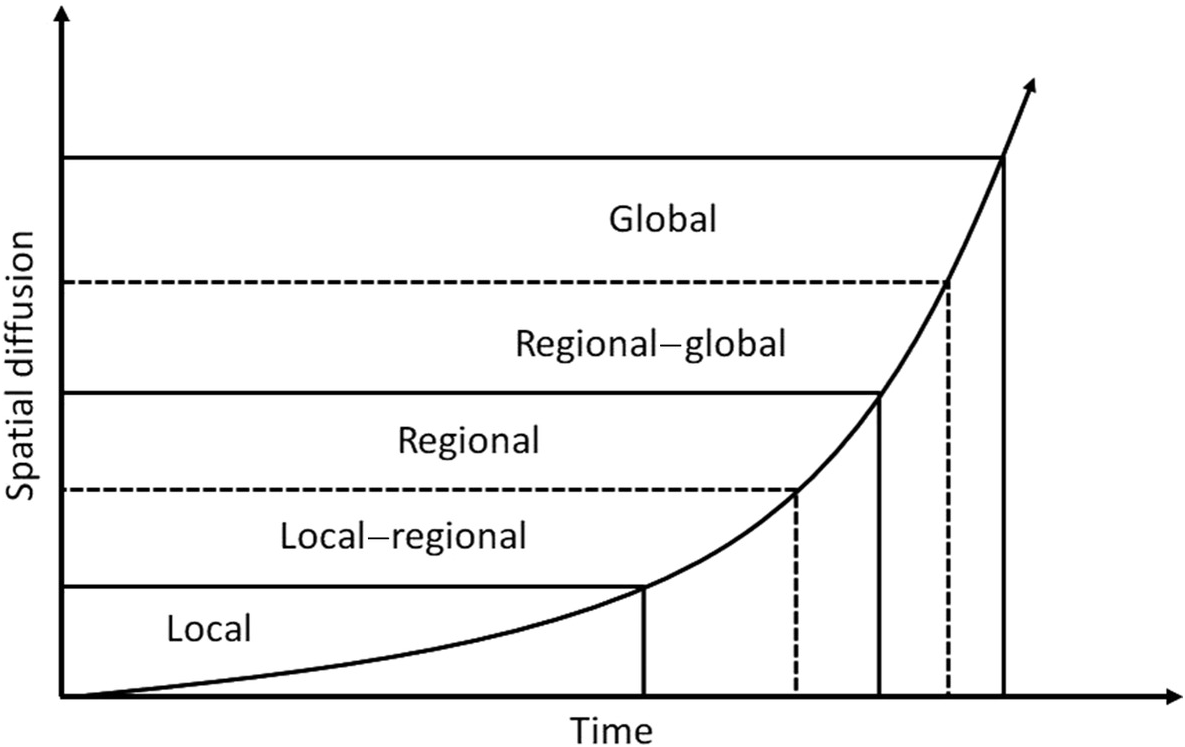
Figure 3.1 Diffusion of food production and acquisition
People who work the land develop a deep attachment to their source of sustenance and existence. This attachment is particularly strong in Arab culture, where land is associated with one's personal honor. An Arabic proverb states that “your land; (is) your honor” (Ardak A'rthak). Globalization is, however, relaxing the intensity of these feelings and Arabs’ attachment to lands that have been passed over from generation to generation. Placelessness is about “the weakening of distinctive diverse experiences and identities of places” (Relph, Reference Relph1976, p. 6). In countries like Egypt, Lebanon, and Yemen, emigration is a routine social experience; the “new normal” for communities that are politically troubled, and/or economically poor. Just as the industrial revolution removed small artisans and manufacturers from households and neighborhoods, the current pressures on land and water, compounded by wealth accumulation and urbanization, are pushing food production farther and farther away from the market place and the dining table. This growing estrangement between consumer and producer, where methods used in the production, processing, and packaging, raise questions about the nutritional security of imported food (Langelaan, Reference Langelaan, Pereira da Silva and Thoden van Velzen2013).
Political boundaries and national laws are human constructs that have tangible implications for residents, yet they are fleeting notions to global investors or those with access to the levers of power. The forces of globalization and technological change are contributing to the transformation of distinctive places and the dilution of national identity by homogenizing local experiences that affect the meaning of space and individual sentiments that are traditionally associated with the homeland. At the individual level, the political ramifications of these processes may include the weakening of indigenous nationalism and the emergence of a new transnational identity. At the level of international trade, corporations are guided by meta-values such as economic efficiencies and the security of their supply chains. Meanwhile, most people are reduced to passive spectators regarding the ecological conditions where their food is grown, and the political and economic circumstances of how it is produced, handled, stored, and transported. These global dynamics are also changing the meaning of home whereby the political, “sentimental home” will be static and legally circumscribed while the boundaries of the “economic home” are being expanded and redefined.
“Foodshed” was first used as a tool to help map out the flow of food from the farm to the supermarket, and many used it to refer to the flow of food from local producers to consumers. Hence, it has been used to describe alternative food production systems, and their social and environmental impacts (Feagan, Reference Feagan2007; Peters et al., Reference Peters, Bills, Wilkins and Fick2009). Foodshed analysis is about actual or potential sources of food for a population (Peters et al., Reference Peters, Bills, Wilkins and Fick2009; Hedden, Reference Hedden1929; Kloppenburg et al.,Reference Kloppenburg, Hendrickson, Stevenson, Vitek and Jackson1996) and the risks associated with transporting this resource to the marketplace. In this chapter, foodshed is understood as a unifying metaphor that refers to the geographic areas from which foodstuffs are transported to markets and consumers.
3.3 Globalizing food security
In an effort to bolster food security, national governments have focused on production within their national boundaries. In the Gulf states, land reserves with farming potential have been converted to arable land since the 1970s (Table 3.1). Most lands in the Gulf states are characterized by soil profiles that are almost exclusively (80 to 90 percent) sandy in texture with good drainage, very low water retention capacity, almost absent organic content, and therefore deficient in nutritional materials needed for plant growth. Many of the sandy soils have a moderate to strong alkaline pH level. The exceptions to this broad picture are the mountains of Oman that occupy 15 percent of the total area of the country. Oman's Dhofar Mountains in the extreme south rise up to 2,500 meters in elevation and are rather humid. The southeastern corner of Saudi Arabia and the northeastern part of the United Arab Emirates (UAE) and of Oman receive above average levels of precipitation (FAO, 2008). Irrigation is integral to the process of making land arable and more productive. Since the 1960s, global crop production has increased by three times due to higher yields per unit of land, farming intensification that was driven by multiple cropping and shorter fallow periods, and, to a lesser extent, by the expansion of arable land area. During this period, the area of arable land decreased in developed countries and increased in developing ones. In recent decades, most of the the Gulf states accelerated the development of their agricultural lands in the early 1980s. For example, the size of arable land in the UAE went from 0.2 percent of the country's land area in 1980 to 0.6 percent in 2012, and in Saudi Arabia it went from 0.9 to 1.5 percent. However, Oman maintained the same level of arable land and agricultural activities.
Table 3.1 Overview of the agricultural sector in the GCC countries
| Labor force in agriculture (percentage of total labor force) | Arable land (as percentage of land area)* | Land under irrigation (area, in thousands of hectares) | Water use in agriculture (percent of total) | |||||
|---|---|---|---|---|---|---|---|---|
| 1996 | 2011 | 1980 | 2012 | 1985** | 1995** | 2009 | 2007 | |
| Bahrain | 1.53 | 0.61 | 2.9 | 2.1 | 1 | 4 | 4 | 45 |
| Oman | 40 | 28 | 0.1 | 0.1 | 41 | 62 | 59 | 88.4 |
| Kuwait | 1.13 | 0.99 | 0.1 | 0.6 | 2 | 5 | 11 | 54 |
| Qatar | 1.82 | 0.66 | 0.3 | 1.1 | 5 | 13 | 13 | 59 |
| Saudi Arabia | 13 | 5 | 0.9 | 1.5 | 1,150 | 1,620 | 1,731 | 88 |
| UAE | 6 | 2.98 | 0.2 | 0.6 | 58 | 68 | 230 | 83 |
* World Bank Data (n.d.).
** Bazza (Reference Bazza2005).
As the hydro-climatic limitations of growing certain crops were starting to affect policy decisions, Qatar was embarking on an ambitious intensive program of food self-sufficiency, one that is based on innovative science and technology-based farming methods. Its perspective is one of concern about geopolitical and socioeconomic risks such as regional military confrontations that would affect trade routes, and interruption of supply from major food-exporting countries. Qatar, therefore, decided to follow a mostly homegrown solution to its pursuit of food security.
The uphill battle that Qatar chose to pursue would, if won, enhance its national security and inform impoverished communities located in arid areas of the world on how to increase food production.Footnote 4 The challenges that face this effort are immense. For example, depleting aquifers and declining yields, and the higher farming costs are “forcing several farmers to quit farming” (Kanady, Reference Kanady2013). The national plan for food security as envisaged by the Qatar National Food Security Program (QNFSP) wants to boost the country's capacity for food production, preserve the nutritional quality of the produce, cushion consumers from food price volatility, and to make sure that farming is economically viable. It plans to have substantial private-sector participation, desalination plants intended for the farming sector, and programs that would train traditional farmers on modern farming methods. Its original goal was 70 percent food self-sufficiency by the year 2023, a goal that was recently downscaled to 40–60 percent with the timeline being more open-ended (Kanady, Reference Kanady2013; Peninsula, 2011a). This change of plans in terms of deliverables acknowledges the scale of challenges facing the QNFSP, which include capacity building among the current generation of Qataris who view the farm as place to escape to on the weekend, and whose career paths rarely include farming (Woertz, Reference Woertz2013).
The biggest expansion, however, was the development of extensive irrigation programs. From 1985 to 1995, the area under irrigation in Qatar went from 5,000 to 13,000 hectares, and in Kuwait from 2,000 to 5,000 hectares. In 1965, each of the Gulf states had 3,000 hectares or less under irrigation, with the exception of Saudi Arabia, where 353,000 hectares were already being irrigated (Bazza, Reference Bazza2005). In the span of three decades (1965–1995), the area under irrigation in Saudi Arabia increased by more than three-fold to reach 1,620,000 hectares, and went up at an even faster pace in the other Gulf states (FAOstat, n.d.). In the same time period, the area quadrupled in Bahrain to reach 4,000 hectares in 1995, tripled in Oman reaching 62,000 hectares, and doubled in the UAE to a total of 68,000 hectares . While all GCC countries experienced a massive expansion of lands under irrigation, the scale in Saudi Arabia was considerably larger because of the sheer size of the kingdom.
As this enlargement was occurring, the agricultural sector went from being an important source of employment to a marginal one, all in the span of about four decades. In 1978, the economy of Oman was very traditional and labor intensive. Farming employed about 70 percent of the active labor force but contributed only 2.5 percent to the GNP (Halliday, Reference Halliday1978). In 1996, it employed 40 percent of the labor force and yet accounted for less than 2 percent of the GDP. Currently, despite significant public investments, agriculture contributes less than 1 percent of the GDP of the Gulf countries, with the exception for Oman and Saudi Arabia. Of these two countries, the agricultural sector is strongest in Saudi Arabia yet it contributes a meager 2.7 percent to its GDP, and employs 4.7 percent of its work force (Table 3.2). Since the discovery of oil, the relative economic size of this sector has been shrinking rapidly. For example, in the span of one decade in the UAE, employment in agriculture dropped from 7.9 percent in 2000 to 4.9 percent in 2005 (data.UN.org) to 4.2 percent in 2010. Furthermore, the majority of those who do the actual farming throughout the Gulf tend to be foreigners (FAO, 2008), except in Saudi Arabia and Oman, where these workers play a somewhat smaller role. These realities raise questions about the social and economic value of farming for the Gulf states.
Table 3.2 Agricultural realities in the Gulf states
| Arable land as a percentage of land area | Country total area** (thousands of ha) | Agriculture's contribution to GDP (2010; percent) | Employment in agriculture (as percent of total employment)*** | ||||
|---|---|---|---|---|---|---|---|
| 1982 | 1992 | 2002 | 2011 | ||||
| Bahrain | 2.9 | 2.8 | 2.8* | 1.8 | 76 | 0.5 | n.d. |
| Kuwait | 0.1 | 0.2 | 0.7 | 0.6 | 1,782 | 0.3 | 2.5 |
| Oman | 0.1 | 0.1 | 0.1 | 0.1 | 30,950 | 1.4 | n.d. |
| Qatar | 0.5 | 1 | 1.0 | 1.2 | 1,159 | 0.1 | 2.7 |
| Saudi Arabia | 0.9 | 1.7 | 1.7 | 1.4 | 214,969 | 2.7 | 4.7 |
| UAE | 0.2 | 0.5 | 0.9 | 0.6 | 8,360 | 0.9 | 4.2 |
* From 2003 and onwards, Bahrain's arable land drops to 1.4 percent of the land area.
** FAO, AQUASTAT.
*** For various years in mid 2000s (World Bank Data).
To summarize, until the early years of the twentieth century, the agricultural sector provided a certain level of food self-sufficiency for the sparse and impoverished populations of the Arab Gulf. Despite its expansion and modernization, this sector has been providing a diminishing percentage of the countries’ food needs, mostly because of changing demographics, dietary habits, and disappearing groundwater. This has necessitated the expansion of the agricultural sector beyond the region; the broader foodshed framework helps to focus the discussion on food system security (Peters et al., Reference Peters, Bills, Wilkins and Fick2009). It is worth noting that there is resistance among some Gulf natives to the idea of globalizing the food supply system of their countries because it forces them into a position of vulnerable dependency.
Food security has been on the minds of decision makers in different Gulf states who have been contemplating the idea of extending their agricultural activities to fellow Arab countries for decades. More recently, in early 2008, Jacques Diouf, the Director of the United Nations Food and Agriculture Organization (FAO) said to Arab ministers in Cairo that because food prices have risen and are likely to stay high, the world may face a food-availability problem even if countries have the resources to purchase it. He then concluded that these countries ought to “consider the possibility of investing in some of their sister countries … to ensure the security of their supply … and in the same vein to help the agricultural development of these countries, which would be a win–win situation” (Saleh, Reference Saleh2008). The countries that Diouf had in mind were African countries, especially Sudan. Furthermore, Shamshad Akhtar (Reference Akhtar2011), the World Bank's vice president for the Middle East and North Africa, said that the “limited water resources in the Arab world limits potential for domestic food production” and called for a policy approach that is based on managing water demand. This recommendation was based on the fact that the majority of the region's water originates outside its borders, and that climate change is forecast to change precipitation patterns and cut per capita water availability in half by 2050.
Natural environmental conditions set the limits of what is agriculturally feasible. Human ingenuity and technological innovations have been able to expand these limits, but at substantial economic, and sometimes ecological, costs. Western Asia, the name of choice used by the United Nations for the “Middle East,” experiences severe agricultural constraints where poor soil and aridity limit crop production (Fischer et al., Reference Fischer, van Velthuizen, Shah and Nachtergaele2002). These extensive constraints necessitate substantial irrigation; the agricultural sector consumes 80 percent or more of all the freshwater used in the Gulf states. The anomaly, however, is that water's contribution to the GDP and to employment is truly minimal. As the Gulf governments started investing in and expanding their modern agricultural sector, signs of an ecosystem degradation began to appear. As intensive commercial agriculture was starting to take root in Oman in the late 1970s, there were signs that the country's scarce water resources were being depleted rapidly and its aquifers may have been damaged “irrevocably” (Halliday, Reference Halliday1978). Kuwait and Saudi Arabia had similar experiences. Furthermore, the UN (FAO, 2008) reports that increasing soil salinization, a growing phenomenon in the Gulf states, is removing land from farming and thus shrinking the area under cultivation (Table 3.2). This salinization process, sometimes a byproduct of irrigation in hot and dry climates, is having a strong but variable effect on the soils of the Gulf states. At the worst end of the spectrum, 85 percent of Kuwait's farmland is salinized (FAO, 1997). In Bahrain, the area of agricultural land dropped from 6,460 to 4,100 hectares between 1956 and 1977, a decline that was attributed to urbanization, water logging, and salinization (FAO, 1997).
Such soil degradation is due to poor management of desert irrigation, which includes the excessive use of water and the relative shortage or absence of drainage. Recently, extensive land reclamation programs in most Gulf states have succeeded in increasing the net area of farmland. This, however, is putting pressure on aquifers, which are being overdrawn to the point that soil salinization in recently developed lands is being attributed to the poor quality of irrigation water that is caused by seawater intrusion into subterranean waters. A new United Nations report (WWAP, 2012), which ranked countries with the highest rate of groundwater abstraction, found Saudi Arabia to be eighth in the world. Furthermore, the climatic conditions in which food is being produced require the crop to be dependent on irrigation. The cultivation of alfalfa (berseem in Arabic) as fodder was popular because farmers were charged very little for irrigation and because its yield is high (74.5 tons/ha) when compared with that of vegetables like tomato (11.7 tons/ha) and fruit trees like dates (7.5 tons/ha). Also, alfalfa generates multiple crops because it can be grown throughout the year and tolerates water with higher salinity levels (FAO, 1997). Therefore, from the point of view of farm owners, alfalfa is a lucrative crop to grow. By the mid 1990s, fodder crops like alfalfa were grown in each of the GCC countries where they occupied anywhere from 12 percent of the cropped lands in Saudi Arabia to 32 percent in Qatar (FAO, 1997). Alfalfa, however, is a far thirstier crop than wheat as it consumes five times more water, and even greater quantities during the summer (Woertz, Reference Woertz2013). Given this hydrological and climatic context, the remaining sections of this chapter will analyze the local and global ramifications of farming abroad for the Gulf states.
3.4 Food security through farming abroad
The primary goal of the expansion and modernization of the farming sector is to provide the conditions necessary for increasing food output to meet the food needs of the local population. Food security is a multi-dimensional concept that includes environmental, economic, political, policy, and cultural variables (Sen, Reference Sen1981; IMF, 2012b). People who are unable to meet their daily nutritional food needs are more likely to experience failing health, to require medical attention, and to be unable to work to their full potential, which would result in a drag on the national economy. The 2007–2008 global surge of food prices around the world triggered riots in over 60 countries that stretched from Bangladesh to Burkina Faso (CSIS, 2010; Donald et al., Reference Donald, Gertler, Gray and Lobao2010), which is consistent with historical experiences from the French Revolution to the Arab Spring (Sternberg, Reference Sternberg, Werrell and Femia2013).
Food security, according to the FAO (2002), is “when all people, at all times, have physical, social, and economic access to sufficient, safe and nutritious food that meets their dietary needs and food preferences for an active and healthy life.” Therefore, it is about the availability, access, and stability of food supplies, with the latter criteria having been adopted during the 2009 World Summit on Food Security. In the late 1970s and 1980s, the Gulf states experienced a significant improvement in their economic conditions. This unleashed an even bigger inflow of foreigners, diminishing the ability of the agricultural sector to meet the people's food needs with domestic sources. Governments took steps to adapt to the unfolding environmental and demographic pressures in order to reduce their vulnerability to disruptions in water and food supplies.
Many Gulf states’ governments decided to enhance their security by growing food on “their own” farms abroad (Table 3.3). The UAE's investments in agriculture abroad increased 45 percent between 2006 and 2008 (Lowe, Reference Lowe2011). Gulf countries like Saudi Arabia, Kuwait, and the UAE have decided to use their financial wealth to enhance their food security. Their aim was to invest in countries that they have good diplomatic and economic relations with, are geographically close in order to reduce transportation costs, and are endowed with agro-climatic conditions suitable for efficient, large-scale farming activities.
Table 3.3 GCC countries’ overseas land investments
| GCC Investors | Host countries | Stated purposes for projects | Scale of deals |
|---|---|---|---|
| Saudi Arabia | Ethiopia, Sudan, Senegal, South Sudan, Russia, Philippines, Argentina, Egypt, Mali, Mauritania, Nigeria, Niger (suspended by host in 2009), Pakistan, Zambia | Direct export of maize, soybean, fodder, rice, palm oil, prawns, bananas, pineapple, vegetables, wheat, poultry | Of these deals, 16 cover 1,713,357 ha. Five of these are in Ethiopia |
| UAE | Sudan, Algeria, Morocco, Egypt, Ghana, Indonesia, Namibia, Pakistan, Romania, Spain, Sudan, Tanzania | Direct export of potatoes, olives, dairy, olive oil, citrus, fodder, maize, palm oil, rice, sugar cane, dates, alfalfa, cereals, cotton, sunflowers, peanuts, sorghum | Of these deals, five cover 1,882,739 ha |
| Qatar | Cambodia, Sudan, Turkey, Brazil, Vietnam, Pakistan, India, Ghana, Indonesia, The Philippines, Australia | Direct export of sheep, wheat, cereal, rice, barley | Of these deals, four cover 642,630 ha |
| Kuwait | Cambodia, Laos, The Philippines | Direct export of rice and maize | |
| Bahrain | The Philippines | Direct export of bananas and rice | |
| Oman | The Philippines | Direct export of rice |
The diversity of investment locations acts as insurance against the risk of cascading effects of supply disruptions. For a country to buy or lease farmland outside its national borders is nothing new. However, as global food prices began to rise in 2006, the once anemic investment in farmland became hyperactive as its pace and magnitude accelerated significantly. Land Matrix Partnership, a European research group, reported that in developing countries “as many as 227 million hectares of land – an area the size of Western Europe – has been sold or leased since 2001, mostly to international investors.” It also notes that most of these acquisitions took place from late 2009 to 2011 (Oxfam, 2011, p.2). Based on data for 2006–2009, the International Food Policy Research Institute (IFPRI) ranked countries by the area of land leased or owned abroad. The top three were China, South Korea, and the UAE (Lowe, Reference Lowe2011).
The global land rush became so pervasive that countries, Arab and non-Arab, large and small, and even individuals like Phil Heilberg, a former Wall Street trader, have been acquiring lands in faraway countries (Table 3.4). In 2009, Heilberg leased one million acres of farmland in the war-ravaged savanna of southern Sudan, a tract nearly the size of the American state of Delaware; this made him “one of the largest private landholders in Africa” (Funk, Reference Funk2010). He was hoping to acquire another million acres of very fertile land located in the southeastern part of the country, and irrigated by a tributary of the Nile River making it drought-proof (Funk, Reference Funk2010). In cases like this, foreign governments that own large tracts of land or hold long-term leases to them could become “virtual riparians” on a transboundary river like the Nile, and this would significantly complicate riparian relations along transnational river systems. Between 2005 and 2010, Heilongjiang Beidahuang Nongken Group, China's largest agricultural company, had invested more than 250 million yuan ($38 million) in overseas projects and was planning to expand its investment further (Yan and Chang Reference 159Yan and Chang2011). In 2011, it was working on acquiring 200,000 hectares of farmland in Russia, the Philippines, Brazil, Argentina, Australia, Zimbabwe, and Venezuela. The group follows different business models depending on the country that they are in. In Venezuela and Zimbabwe, it provides machinery and laborers, and in return it takes about 20 percent of the harvest. While it acquired farmlands in Australia, it leased them in Brazil and Argentina (Yan and Chang, Reference 159Yan and Chang2011).
Table 3.4 Land deals abroad as a percentage of agricultural area
| DR Congo | 48.8 |
| Mozambique | 21.1 |
| Uganda | 14.6 |
| Zambia | 8.8 |
| Ethiopia | 8.2 |
| Madagascar | 6.7 |
| Malawi | 6.2 |
| Mali | 6.1 |
| Senegal | 5.9 |
| Tanzania | 5 |
| Sudan | 2.3 |
| Nigeria | 1 |
| Ghana | 0.6 |
Countries that are poor or have governance problems could benefit from a close relationship with wealthier and more powerful countries, especially if they share common cultural traits. Foreign direct investment, even in countries with high levels of corruption, could stimulate the national economy by creating jobs, often higher-paying ones. The Pakistani Prime Minister Yousuf Raza Gilani offered hundreds of thousands of acres of agricultural land to the Saudis in return for oil (Agence France-Presse, 2008b), and the Senegalese government offered them 400,000 hectares (Pearce, Reference Pearce2012). The Sudanese government decided to set aside one-fifth of the country's cultivated land for the purpose of them being used by Arab countries (Economist, 2009).
Using satellite imagery data from 1995–1996, a comprehensive survey (Fischer et al., Reference Fischer, van Velthuizen, Shah and Nachtergaele2002) of global agriculture found that 80 percent of the world's reserve agricultural land is located in Africa and South America, and estimated the total cultivable land in Africa to be 807 million hectares, of which a mere 197 million hectares are under cultivation. This leaves the impression that much of these (sub) continents are virtually empty. However, for rural residents where land concessions have been made to foreign investors, unused lands and national conservation areas are appropriate fields for livelihood pursuits (Li, Reference Li2011). Sometimes, “unused” lands are farmlands that have been left fallow to give them time to regenerate their nutrients. Also, land use by nomads is occasional or seasonal where their herds use the pastureland for grazing a few weeks a year.
International investments in foreign lands were accelerated after the 2008 global surge in food prices, which in turn led some 25 countries, including major grain exporters like Vietnam, Argentina, and India, to ban or impose restrictions on cereal exports (Mousseau, Reference Mousseau2010). The decision to look outside the Gulf region to bolster food security is primarily related to existing hydro-climatic conditions, and the rapid depletion of fossil aquifers. For instance, the Saudi government's grain-buying agency, the Grain Silos and Flour Mills Organization (GSFMO) has decided to reduce domestic wheat purchases by 12.5 percent annually until the wheat production program comes to an end by 2016. This, for Saudi Arabia, is a dramatic water-saving move that extends the life of its aquifers, which they now view as strategic reserves. This boosts the country's resilience as the aquifers could be vital in times of hydrological emergencies. By 2015, Saudi Arabia is expected to import around two and half million tons of wheat for human consumption. The livestock industry, which currently depends on barley for most of its animal grain feed, is considering replacing some of that with wheat, a move that would boost wheat imports (OBG, 2013). As the GSFMO continues to purchase wheat directly from farmers and from the international market, officials like the minister of agriculture, Fahd Balghunaim, have been encouraging “private businesses to buy or lease land overseas with the aim of producing crops for domestic consumption.” For its part, the Saudi government has pledged to work with other governments to ensure investment security in other markets. The minister described private sectors’ international investment in the agricultural industry as being essential for ensuring the country's food security (OBG, 2013).
The secondary, yet important, driver is the historical experience of the Gulf states. For example, in 1973, the Arab oil-exporting countries, mostly concentrated in the Gulf region, organized an oil embargo aimed at getting Western governments to force Israel to return Arab lands that it had militarily occupied during the 1967 (i.e. Six-Day) War. The national security advisor to the American president, Henry Kissinger, pressed the Arab states to lift the embargo, and signaled that the United States would retaliate. A few months later, he suggested that the United States was willing to implement a “counter embargo” and in effect use “food as a political weapon” by halting food sales to the Arab Gulf states (Rothschild, Reference Rothschild1976, p. 300; Woertz, Reference Woertz2013). Around that period of time, the US Secretary of Agriculture, Earl Butz, stated that “hungry men listen only to those who have a piece of bread. Food is a weapon in the US negotiating kit” (Patel, Reference Patel2007, p. 91; see also Paarlberg, Reference Paarlberg1985). In December 1980, John Block, Ronald Reagan's Secretary of Agriculture, said “I believe food is the greatest weapon we have for keeping peace in the world” (Shepherd, Reference Shepherd1985). Consistent with this policy and as a reaction to the Soviet Union's invasion of Afghanistan, the United States imposed a grain embargo (February 1980–April 1981) on its Cold War adversary. Another concern of Saudi planners is that Western countries could block food imports into the country in order to influence its oil policy (Jones, Reference Jones2010). These historical experiences focused Gulf countries’ attention onto the issue of food security, which influenced Saudi Arabia’s decision to launch a program of wheat self-reliance, and nudged the Gulf states to consider farming abroad.
The Oxford Business Group (OBG, 2013) reports that the Saudi private sector and the government have made land investments in countries that include Brazil, Canada, Ukraine,Footnote 6 Ethiopia, and Sudan. Combined, their investment is worth more than $11 billion in agricultural ventures (OBG, 2013). The United Farmers Holding Company (UFHC), a Saudi consortium made up of Saudi Agricultural and Livestock Investment Company, Saudi Grains and Fodder Holding, and the kingdom's dairy giant, the Almarai Company, have taken preliminary steps to purchase the Irish-based agribusiness Continental Farmers Group (CFG). The transaction would give UFHC control of 2,700 hectares in Poland and 33,000 hectares in Ukraine, land that would be used to grow wheat. As Saudi Arabia increases its reliance on food grown outside of its borders, the agribusinesses will play a larger role in enhancing its food security.
The Economist magazine (2008b) argued that Saudis are buying farmland abroad in order to have greater confidence in the “security of their food supplies”. They are injecting capital, and can “offer cheap fertiliser, which it can produce by using subsidised gas.” The concluding sentence states that Saudi investors “may be resented for buying up primary commodities from poor countries, while monopolising and limiting the output of their own special one: oil.” While Saudi Arabia is the largest producer of the Organization of Petroleum Exporting Countries (OPEC), the organization produces 40 percent of the world's oil output yet exports 60 percent of total petroleum products traded globally. Hence, neither the country nor the organization's actions were judged as being able to, and “do, influence international oil prices” (EIA, n.d. a). Furthermore, while OPEC regulates its output it is not in the business of banning exports or antagonizing consumers. For example, when in 2008 the Iranian president Mahmoud Ahmadinejad urged the OPEC to stop pricing oil trades in US dollars, its members dismissed it as a stunt. A year earlier, as the geopolitical rhetoric about Iran's nuclear program was heating up, the same leader of this major oil- and gas-producing country and member of OPEC said that if his country's nuclear infrastructure were attacked by the United States, it “would never like to use oil as a weapon … there are other means at our disposal to respond” (Reuters, 2007). As the economies of the Gulf states have become deeply integrated into the global economic order, their leaders realize that economic growth is fueled by political stability and cooperation, not by belligerence and confrontation.
3.5 Colonialists or investors?
Critics label foreign investments in agriculture as neocolonialist and reminiscent of the “banana republics,” those weak and authoritarian governments “whose economies are dominated by foreign-owned fruit plantations” (Economist, 2009). Currently, the alleged “closet” neocolonialists, the Gulf states, were themselves colonies some four decades earlier. Except for Saudi Arabia, the Gulf states have very small population sizes and tiny armies (Figure 3.2). Hence, their security is ensured by a close alliance with the United States. Their political stability seems to be continuously challenged by various geopolitical tremors that rock the region, and their economies are dependent on the fluctuating international price of a single export commodity (Table 3.5). Such countries are neither interested in, nor want to be seen as neocolonialists. Foreign land investments provide host countries with much-needed agricultural capital, create jobs, and boost food supply because some of the produce gets sold locally. For example, eggs produced by China-owned enterprises are sold in Zambia, and Sudan forbids agricultural investors from exporting 30 percent of their produce and requires them to build infrastructure projects. Some 30 percent of the rice produced by Saudi Arabian firms on Senegalese land is sold in local markets (Pearce, Reference Pearce2012). Qatar is building a seaport in Kenya in exchange for access to farmland, and some of its farming projects are in collaboration with local governments such as the Qatar–Sudan investment joint venture. An agricultural official in Sudan said that Arab governments’ investments in his country would go from $700 million in 2007 to $7.5 billion in 2010, or from 3 percent to around 50 percent of all the investments in the country (Economist, 2009).

Figure 3.2 Population sizes of Gulf states, 1960–2013
Table 3.5 Impacts of price volatility
In the mid 1970s, the Arab countries wanted to convert Sudan's massive yet idle or under-utilized farmlands into a “bread basket of the Arab World.” The war and instability in Sudan, especially in the south, undermined what seemed like a rational Arab solution to an Arab concern. Sudan today does not use its share of the Nile water under the 1959 water allocation agreement, hence the government “plans to pay more attention to agriculture as a focal point of its national economic strategy. This in turn will mean the need for more waters than Sudan is currently using. Sudan has large irrigable lands that have hitherto not been developed, and it has recently revived the four-decade-old slogan of Sudan being the breadbasket of the Arab world.” (Salman, Reference Salman2011).
Therefore, the idea that some arid Arab countries would outsource their food-producing capacity is well known and dates back to a much earlier era. Despite some narrow feelings of nationalism, internal differences, and some transnational disagreements, Arabs nevertheless share certain feelings of brotherhood, if not as Muslims, then certainly as fellow Arabs. Agricultural interdependence is in effect a venue through which Arabs can more conveniently display their brotherhood without getting marred by the heavy mud of politically charged ideas of Arab nationalism and Arab unity (Jones, Reference Jones2010). In addition to the intangibles of brotherhood, the GCC countries decided that farms abroad needed to be closer to the home turf. This explains not only the focus on Arab and Muslim Sudan, and Muslim Pakistan and Indonesia, but also on the non-Muslim Philippines, Vietnam, and Cambodia (Table 3.3). In other words, the spatial distribution of these lands shows that countries’ locations and hydro-climatic attributes have played a deciding role in where to acquire land. This shows that decision makers in the Gulf states are pragmatists, not cultural ideologs; and globally engaged capitalist investors, not neocolonialists.
Historically, colonial powers were accused of using territories that were under their control to grow cash crops that were exported to the homeland without much benefit to local populations. The concern is that current investors’ schemes may have similar exploitative effects on host countries who are also quite poor. The distinguishing criteria of current land acquisitions are their larger sizes, the strong influence that host and investing governments play, the general lack of transparency, and the business-friendly environment in which they are located (Niasse and Taylor, Reference Niasse and Taylor2010). However, investors’ purchases or leases of farmlands are estimated to be worth $20 to $30 billion, ten times greater than the World Bank's emergency package for agriculture (The International Food Policy Institute (IFPRI) as quoted by the Economist (2009)).
Saudi Arabia's initiative to farm abroad was launched by King Abdullah himself; its main aim is to grow different cereals such as rice and wheat for the Saudi market. The media was critical of these investments. The Economist, a British cum global magazine, wrote that the Saudi government and the World Food Organization are each spending about the same amount, $100 million, the former on producing food in Ethiopia, the latter on food aid to the same country (Economist, 2009). It added that “the Saudi Program is an example of a powerful but contentious trend sweeping the poor world: countries that export capital but import food are outsourcing farm production to countries that need capital but have land to spare.”
Foreign agricultural investments of the Gulf Arab states, especially those of Saudi Arabia, appear to receive significant attention and scrutiny from the world's media, much more so than similar investments by American investment banks, and Chinese or Israeli firms These Arab countries are investing their wealth in agricultural projects, much in the same way as other non-Arab countries are doing. Furthermore, extractive industries such as oil, uranium, and gold have always attracted foreign direct investments, often in troubled lands run by corrupt regimes. However, unlike these depleting activities, farming is a renewable activity if production processes are environmentally, socially, and economically sustainable. Critics of farming abroad argue that foreigners who may have leased the land for a period of time do not have an incentive to sustainably manage it, and their use of the land could degrade it, therefore making it akin to an extractive industry. Some argue that investors in foreign lands need to respect customary rights, share benefits among locals by creating jobs for them, increasing transparency in how contracts are negotiated, and respecting national trade policies, which forbid exporting food if the host country is experiencing a famine. The impacts of these investments on the agricultural sector of host countries are an important indicator of whether these investments are beneficial to local areas or not.
Neocolonialism is related to the power differential between an investing country and the one hosting it, and the effects of that on the local population. Were an authoritarian government to submit to pressure and consult its native population, fear, intimidation, and corruption would slant the results in favor of the central government. Furthermore, peasants in deeply impoverished countries like Ethiopia, Sudan, and Madagascar have low levels of human development, and are therefore very disadvantaged with respect to investors or national governments. Consequently, they could be manipulated, their rights squandered, and some might be even displaced. Similarly, corrupt officials undermine the national interest and the legitimacy of the government. Widespread corruption, as is the case in many countries (Transparency International, 2013), is an indicator of failed governance, and speaks to the need to bolster political and legal institutions, and to add transparency in decision-making processes, which would help protect the rights of citizens.
To characterize the globalization of farming as “neocolonialist” and as land “grabbing” is to sensationalize the debate and polarize the stakeholders, which does not help in clarifying the costs and benefits in the short, medium, and long terms.Footnote 7 (Table 3.6) Such emotive labels exaggerate the misdeeds of sudden land rush by corporations and state-sponsored investors. Significant power differentials between the parties involved and the varying political cultures make for many unique circumstances, which makes it harder to judge many of these international transactions. In the interest of charting a common pathway foreward, European advocacy groups (Saracini, Reference Saracini2011, p. 5) posit that when one or more of the following factors are present, a land acquisition would be considered a land grab if:
(1) there is violation of human rights, and particularly the equal rights of women;
(2) there is no involvement of free, prior, and informed consent of the affected land-users;
(3) it is not based on a thorough assessment of the consequences, or are in disregard of social, economic, and environmental impacts, including the way they are gendered;
(4) it is not based on transparent contracts that specify clear and binding commitments about activities, employment, and benefits sharing; and
(5) it is not based on effective democratic planning, independent oversight, and meaningful participation.
Table 3.6 Advantages and disadvantages of land transactions
| Pros | Cons |
|---|---|
| Modernization of long-neglected agriculture through investments | Secret deals (Kuwait–Cambodia rice deal) |
| Agricultural research and development in target countries (e.g. Chinese research stations in Africa) | Blackmailing target governments (e.g. China threatened to pull out of Zambia if opposition leader became president. He was against biofuel arrangement for the Chinese). |
| Genetically modified seeds suitable for local conditions | Dispossessing local peasants |
| New or improved infrastructure (e.g. roads, ports, water wells, irrigation systems, and so on) | Degrading water and soil |
| New markets | Displacing local population |
| Better jobs | |
| Services (clinics, schools) |
These are reasonable expectations to have of host countries and of foreign investors. Hardly anyone can argue against the need for transparent and participatory process in how land transactions are carried out. However, it is difficult to imagine how a foreign investor can ensure equal rights of women under different cultural and political conditions. The criteria offer admirable normative goals and values that should be taken seriously, and be used to shame investors publicly into abiding by an ethical framework that is based on transparency and protection of people's rights. While it is difficult to stop the forces of the global marketplace, non-governmental organizations ought to do what they can to channel agricultural investments towards a more inclusive and transparent process in the host country. Realistically, however, because some of these criteria may be difficult to implement at the present time, investors should therefore treat them as higher goalposts to strive towards. The investors’ primary goal is to meet their business objectives; these tend to be financial gain for shareholders or food security for the investing country, or both; however, the goals change over time. The views of some Western commentators on land acquisitions are rather idealistic (De Schutter, Reference De Schutter2011). Their starting point is justice and equity for the people of the host country. For example, some research institutes have recommended that investors should be banned from exporting food products if the host country is experiencing an acute food-deficiency. Principles like these stand on ethical and humane bases. However, implementing them is sometimes challenging because many host governments have high levels of corruption and repression where the people are denied fundamental freedoms.Footnote 8
Transparency International's Corruption Perceptions Index measures the perceived levels of public sector corruption in 177 countries worldwide, and uses a ranking scale from 0 (highly corrupt) to 100 (very clean). Its 2013 index reveals that more than two-thirds of the countries surveyed score less than 50, and that corruption in those that have been the target of land grabbing varies widely. While most countries that have been targeted for land investments have very low transparency (scores below 40) some, like Turkey and Poland, are transparent and harbor lively, free media (Table 3.7). In the same way, the UAE's and Qatar's business operations tend to be transparent, while those in some other Gulf states are less so. It should be noted here that media outlets in the Gulf states are mouthpieces of the ruling families and are not likely to investigate and publicize corrupt transactions.
Table 3.7 Corruption Perceptions Index in select countries
| Country | Index | Country | Index |
|---|---|---|---|
| Sudan | 11 | Poland | 60 |
| Ethiopia | 33 | Canada | 81 |
| Egypt | 32 | Turkey | 53 |
| Ukraine | 25 | Argentina | 34 |
| Vietnam | 31 | Brazil | 42 |
| Pakistan | 28 | Saudi Arabia | 46 |
| Zambia | 38 | UAE | 69 |
Recent leaks of US Embassy documents from early 2011 reveal that the government of Ethiopia sold large parcels of land to the former president of Nigeria, Olusegun Obasansjo, the sitting president of Djibouti, Ismael Omar Guelleh, and to the prime minister of Egypt, Ahmed Nazif. Unlike the first two parcels, which were purchased for personal use, the latter was purchased on behalf of the Egyptian government. It leased 49,400 acres of land in the Afar region to grow cereals for export to Egypt. The Egyptian, Djibouti, and Saudi tenants were quietly exempted from the official ban on the export of cereals which the Ethiopian government had put in place in the aftermath of the spike in food prices. The official cable confirmed that other investors “have not been allowed to export cereal grains”(Afrol News, 2012).
The discourse on land acquisitions is dominated by a narrative that is somewhat charged. For example, De Schutter's Reference De Schutter2011 commentary reveals his stance in the first few lines of his essay, where he states that “the real concern behind the development of large-scale investments in farmland is that giving land away to investors, having better access to capital to ‘develop’, implies huge opportunity costs as it will result in a type of farming that will have much less poverty-reducing impacts …” (De Schutter, Reference De Schutter2011, p. 249). Then the author defines “land grabbing” as the “acquisition or long-term lease of land by investors” and hints that its continued use is wrong and unethical. Authors with such a perspective routinely use this phrase throughout their work as a given, and not as a finding or conclusion of their research. In other words, it would be consistent with accepted methodologies in social science if researchers “concluded” that, given some realistic criteria, certain types of foreign agricultural investments amount to land grabbing. Sweeping, sensational descriptors like “land grabbing” can be distracting and polarizing, at a time when an inclusive debate on the issue would inform the various stakeholders and better serve their interests..
The problem is, however, that some investors have paid paltry sums for acquiring farmland, and that the majority of transactions are signed quietly, and away from public scrutiny. This fuels suspicion and hearsay. In a few host countries, when locals protested land deals that were arrived at with foreign investors, government forces dealt with them violently. Furthermore, some of the lands that were sold or leased are occasionally used by nomads, herders, and gatherers who don't have a formal, legal title to the land. Early in 2008, when food prices were rising, Bahrain announced plans to purchase 300 million square meters of agricultural land in eastern parts of Saudi Arabia. The land was to be rented out to Bahraini farmers who would produce food for the people of Bahrain (Gulf Daily News, 2008). Bahrain's Municipalities and Agriculture Ministry was expected to provide water, electricity, and seeds. This was expected to create one thousand jobs for Bahrainis and, most importantly, it was conceived of as a step towards achieving food security for their country. The two monarchies have warm diplomatic relations, and are geographically adjacent; the island kingdom became physically joined with Saudi Arabia in 1986 by a 25-kilometer-long bridge. It turned out that 2008 was a pivotal year for agriculture in Saudi Arabia. As mentioned above in this chapter, the kingdom announced a restructuring program, which included a gradual phasing out of wheat farming by 2016.
Although Bahrain's plan fizzled, the very idea demonstrates the perception among the people of the Gulf about Saudi Arabia being the region's “garden,” and illustrates countries’ natural preference to farmlands in nearby and friendly countries. It also demonstrates an outlook that is pragmatic, functional, and non-exploitative. Similarly, Qatar and Bahrain, the smallest in area and population among the Gulf states, have been exploring opportunities to lease or purchase agricultural lands in various countries around the world including Australia, India, Pakistan, the Philippines, Egypt, and Sudan. (GRAIN, 2008). The efforts of the Gulf states could not have neocolonial motives, especially Bahrain, the oil-free, poorer, and politically troubled Gulf country. Furthermore, the population of Qatar is 300,000 natives, and over a million guest workers. Ascribing neocolonial motives to the Gulf states is a stretch; even if they are using their financial wealth to extend their foodshed beyond the homeland, and consequently ensure their food and water security.
Some major international agricultural investors like China have adopted an approach that creates jobs for their own nationals in the host country. China has a “going out policy” which encourages greater levels of investments in other countries, the result being that a larger number of Chinese workers are deployed overseas. China's Ministry of Commerce figures show that there were 812,000 workers abroad at the end of 2011, Footnote 9 which is twice the level of 2002, and foreign investments excluding the financial sector were at $60 billion (Forsythe, Reference 147Forsythe2012). The concern is that investing states are not likely to create many employment opportunities for native people, a point that was echoed in a research paper on the effects of land grabs on local labor. It argues that, in light of the vast unemployment levels in the global south, and “unless vast numbers of jobs are created, or a global basic income grant is devised to redistribute the wealth generated in highly productive but labor-displacing ventures, any program that robs rural people of their foothold on the land must be firmly rejected” (Li, Reference Li2011, p. 281).
According to Lorenzo Cotula of the International Institute for Environment and Development (IIED), European and North American corporations are involved in many more land deals abroad than China or the Middle East. At the local level, Cotula said that villagers have different views on the impacts of land deals; some would benefit from the land deals while others would be harmed. Therefore, there is no framework or template for foreign agricultural investments that could be implemented in every situation. His assessment is that their overall impact is likely to be negative (Berger, Reference 143Berger2013). In 2012, the FAO of the United Nations proposed voluntary guidelines for responsible governance of natural resources. The document repeatedly stresses the need for governance process to be participatory and gender-sensitive, and that governments should “recognize the reality of the situation” of informal land tenure and prevent corruption and forced evictions from the land (FAO, 2012, p. 16). Local governments need to protect (in)formal land tenure, and to ensure that owners are compensated a fair market value for their property whether they elect to lease or sell. Such a framework would also mean that the landowner and would-be seller is fully aware of (un)employment and other ramifications of these transactions. Due to the prevalence of corruption and the significant power differential, including financial and educational deficits in the host countries, exploitation is likely to continue.
International investors sometimes have to deal with corrupt and/or autocratic foreign governments or transnational corporations. These experiences have typically been in poor and politically fragile countries, and have become part and parcel of humanity's modern economic history. Western oil companies have long invested in oil fields in troubled lands where they brought in capital, technology, and mercenaries and exported oil and profit. Well before agribusinesses started scanning the world for lucrative opportunities, oil and gas companies had identified hydrocarbon deposits in different parts of the world, including some in turbulent areas. The once-united Sudan was a poor yet oil-rich country that was unable to extract the riches of its lands without the investments of Western companies like Chevron (United States), Lundin (Sweden), Talisman (Canada), and others. After the discovery of extensive oil reserves in 1980 around Bentiu, these multinationals had “a non-negligible role” in re-igniting the conflict between south Sudan and the central government, and altered the balance of power in the country in favor of the repressive government (Schollaert and Van de Gaer, Reference Schollaert and van de Gaer2009). Compared to that, Arab agricultural investments abroad are rather benign.
The production and movement of oil sometimes have significant environmental and social impacts on local populations and ecosystems. The processes contaminate the soil and water, especially in areas where environmental regulations are lacking or unenforced. Other impacts arise from burn-off of excess natural gas, which releases methane, sulfur dioxide, and toxic compounds that pollute the air and water. The social consequences are equally substantial. The rapid flow of workers into an oil-producing region sometimes includes those from competing ethnic groups, or people who carry new diseases, bring social ills like prostitution, or, in some cases, are hardened prisoners. It was reported that of the 7,000 Chinese workers who were brought in to build the Port Sudan pipeline, about two thousands of them were “prisoners who were promised reduced sentences for their work” (Switzer, Reference Switzer2002; see also Wesselink and Weller, Reference 158Wesselink and Weller2006).
In the oil-rich regions of Sudan, the central government cleared the land of civilians through a scorched earth policy, and the violent displacement of the people. The Sudanese army is said to have armed, funded, and deployed the Murahaleen bands of nomadic Arab tribes to protect the oil concessions. The United Nations Special Rapporteur to the Human Rights Commission reported, “the Murahaleen do not only target rebel camps or armed individuals, but also civilians, in a very intensive manner. Usually, food crops are destroyed, men are killed, and women and children are abducted.” (UN, 2001). It was estimated that the government of Sudan had spent $300 million it had earned from the oil sector on weapons. Some argued that despite proclamations in support of ethical business practices, “human rights and development, the ugly truth is that Talisman is helping the government extract oil, and oil is paying for the war” (Economist, 2000).
In southern Sudan, armed insurgents killed three oil workers on the Chevron base near the town of Bentiu (Fisher, Reference Fisher1999). Regardless of the political and power dynamics, and said benefits associated with oil or land investments, if the locals are disaffected they are likely to rebel against investors; this would increase their cost of doing business or, in few cases, disrupt their operations completely. Similarly to corporate practices in Sudan, Nigeria was also affected by extractive industry's disregard for social and environmental protection that had adverse impacts on local communities. The Shell Petroleum Development Company of NigeriaFootnote 10 headed these operations in cohesion with the Nigerian National Petroleum Corporation (NNPC). Oil drilling operations by Shell have taken place in Nigeria since the 1950s. Boele et al. state that in the decades that followed, Shell essentially became the development agency within the Nigerian state, asserting itself as the dominant technological and economic resource entity. Although Shell did provide infrastructure developments such as roads, wells, and electricity lines to Nigerian citizens, the company failed to provide citizens with the most basic civil and social rights as well as a clean environment (Boele et al., Reference Boele, Fabig and Wheeler2001, p. 130).
There has been significant evidence surrounding the source of devastation in Nigerian towns. Amunwa reports that Shell drove human rights abuse in Nigeria through employment contracts with armed rival militant gangs. According to an investigation by the oil industry watchdog Platform and other non-governmental organizations, Shell has been fueling this violence for more than a decade, causing fatalities as well as devastation of entire towns (Smith, Reference Smith2011). This violence was promoted in order to ensure the protection of the Shell infrastructure. Essentially Shell distributed money to whichever gang controlled access to its infrastructure (Smith, Reference Smith2011). This was specifically the case in the town of Rumuekpe, as it is the main channel for Shell's eastern operations, producing around 10 percent of Shell's daily production in the country (Smith, Reference Smith2011). A gang member, Chukwu Azikwe, revealed that his group was given money, which it used to purchase food and ammunition, hence sustaining the war (Smith, Reference Smith2011). Shell admits to these accusations by stating that they frequently invested money into the town of Rumuekpe, knowing that it was going towards the conflict (Amunwa, Reference Amunwa2011). A Shell official confirmed these claims by ex-gang members who said that in 2006, “Shell awarded six types of contract in Rumuekpe. Thousands of dollars flowed from Shell to the armed gangs each month” (Smith, Reference Smith2011). Shell contributed to human rights abuses in the country, and its oil spills and gas flaring in the Niger Delta had strong adverse effects on the natural environment (Amunwa, Reference Amunwa2011).
The environmental impacts of Shell's extractive industry in Nigeria are massive. A United Nations Environmental Program report on oil spills in Ogoni found that the company operated below international standards, creating massive hydrocarbon pollution, which led to serious groundwater contamination. Oil pollution had specifically affected the vegetation, wetlands, and fish stock over an extensive area. The extent of the pollution made revegetation extremely difficult. The report concludes that the restoration of the area is possible, but will take up to three decades (UNEP, n.d. b, pp. 12–14).
Although the practice has been outlawed in Nigeria since 1984, mass levels of flaringFootnote 11 continue to occur along the Niger Delta (Macdonald, Reference Macdonald2009). This releases toxic chemicals that have local impacts and exacerbate climate change. Nigeria's greenhouse-gas emissions are higher than all other sources in sub-Saharan Africa combined (Roderick, Reference Roderick2005). The effects of oil activities are detrimental to all aspects of life within Nigeria and the rest of the world.
The experiences of Sudan and Nigeria with foreign corporations drilling for and exporting oil are similar to what sometimes occurs in other extractive industries. Here, corporations employ national military forces or mercenaries from a private military firm to protect lands that are crucial for mining operations, a practice that has been called “militarized commerce” (Kyriakakis, Reference Kyriakakis2007; see also Forcese, Reference Forcese2001). However, there have not been any reports of such practices by foreign agribusiness operations. There have been situations where the governmental forces shot and killed demonstrators against land acquisition, and displacement of local residents to make room for farming for investors (Reuters, 2013a). Reports of displacements rarely mention the number of relocated people, leaving the impressionFootnote 12 that their numbers are not large. The Gulf states have plenty of complex domestic and/or regional issues (e.g. treatment of foreign labor in the Gulf, status of women in Saudi Arabia, Sunni–Shia tensions) and are likely to steer clear of adding to their complex set of challenges. They conduct their affairs as most capitalists would, guided by their national interests. While the Gulf states are not necessarily compassionate capitalists, they certainly do not want to be viewed as exploitative neocolonialists. This delicate balancing act is work in progress.
Most of the land transactions to date were concluded in opaque circumstances in countries that have a high score on the Corruption Perception Index, yet a few were signed in developed countries where governments are more transparent, accountable to the people, and corruption is generally lower (Transparency International, 2013). Examples of the latter include countries like Brazil, Canada, Poland, and Turkey. The reality is that local impacts of land deals vary greatly depending on the business and political environment in the host country, and on the integrity and business model of investing agencies.
Some aspects of land transactions are controversial, and how these farms will function in times of political or economic turmoil has yet to be tested. Foreign agricultural investors who seek opportunities in developing countries often accept significant risks, which vary from the geopolitical and social to the climatic. When a host government is corrupt, disliked, or distrusted because it lacks popular legitimacy, land transactions may be cancelled by the next government. Transactions that are perceived as being shady and lack popular support may experience local resistance, which could range from peaceful protests to acts of sabotage of farming operations, the most vulnerable of which is likely to be their transportation and irrigation infrastructure. In an apparent acknowledgment of this, the Pakistani government's land offer to Gulf investors came with its willingness to “hire a security force of 100,000 to protect the assets” (Economist, 2009). When food prices spike again, would the host countries’ security forces use harsh tactics to quell popular efforts to block food shipments out of the country? If they did, would the investing country or agency tolerate such a public-relations debacle?
Risks to agricultural foreign investors could be from the country of origin or the target one. The following focus on Saudi investments in Ethiopia helps illustrate the fragility of the investment-trade environment and the challenges that face Gulf states in operationalizing policy directives with respect to farming abroad.
Ethiopia was one of the first countries that Saudi Arabia targeted for land acquisitions. The number of Saudi agricultural investors in Ethiopia is more than 400, and their activities are focused mostly on the production of wheat, rice, and barely. The quality and extent of the infrastructure varies greatly from one part of the country to another. In certain less-developed areas, some Saudi investors have erected bridges where rivers are numerous, and built roads. Saudi investments have created jobs for Ethiopians where the number of employees in small farms exceeds 1,500, and have trained many on using agricultural equipment and other modern farming methods (Alasmary, Reference Alasmary2013). One of the most prominent investors is billionaire Sheikh Mohammed Hussein Ali Al Amoudi, an Ethiopian-born Saudi citizen whose father is Yemeni and whose mother is Ethiopian. He used one of his firms, Saudi Star Agricultural Development, to lease about 10,000 hectares in the northeast of Ethiopia, and another 290,000 hectares of farmland in western Ethiopia were in the process of being leased in 2012. In 2011, he was believed to be the largest absentee landowner of Ethiopian farmland. Saudi Star Agricultural Development now owns 10,000 hectares in Gambella Regional State, plans to add 500,000 hectares, and is already exporting rice from it (Horne, Reference Horne2011).
Gulf investments like those by Al Amoudi have faced local resistance. For example, employees of Al Amoudi's firm Saudi Star were ambushed in 2012, and as a result, five of them were killed. Although Al Amoudi was lured to Ethiopia, and is considered by some as being too big to fail, the fast changing events may force the company to readjust the focus of its investments. Since 2007, Jenaan, an Abu Dhabi investment firm, has acquired some 67,200 hectares of arable land in Egypt. The company faced labor strikes, diesel shortages for the agricultural machinery, and was faced with $43 a ton in export tax. Jenaan had intended to grow fodder to feed livestock in the UAE, but its losses and new tariffs forced it to change its plans; it now grows wheat for consumption within Egypt (Reuters, 2013a).
Saudi Arabia's Agricultural Development Fund, responsible for facilitating investments abroad, has come under criticism from Saudi agricultural investors in Ethiopia for its rigidity and lack of cooperation. For example, it demands that investors applying for a loan must provide assurances of political stability in the target country, a condition that investors find almost impossible to meet. Investors also complain that, five years after King Abdullah's initiative was announced, there is still no procedure in place to facilitate the exports of produce from farms abroad to Saudi Arabia (Alasmary, Reference Alasmary2013). They are concerned about the “regularization” of the status of Ethiopian workers in Saudi Arabia that led to the eviction of tens of thousands in 2013, and how that might affect the public's acceptance of Saudi investments in their country.
The governments of the GCC, save for Qatar, had very warm relations with the regime of Hosni Mubarak, and Egypt was a favored destination for their tourists. This made Egypt attractive to Gulf corporations that had ties with the government, a partner in many of their investments. These companies were courted by the Mubarak regime and invested heavily in the country, especially in real estate. Shortly after the regime was overthrown by millions of street protesters, the new authorities in Cairo started civil and criminal investigations of land transactions of many Gulf investors.
Prince Alwaleed bin Talal, a Saudi businessman and chairman of the Kingdom Holding Company, has invested more than $2 billion in Egypt, much of it in lands that he had purchased during the reign of Mubarak. In 1998, a Kingdom Holding unit called Kingdom Agricultural Development Company (Kadco) purchased for $127 million some 42,470 hectares (420 million square meters) of land in the South Valley Development Project (SVDP) in Toshka to develop vast agricultural activities. The SVDP is commonly referred to as the Toshka project. The mammoth $2 billion project was to create approximately 2.8 million jobs, develop industries and tourist attractions like safari and agrotourism, and new towns and villages where up to six million people would live. The government cost of the all the development projects would reach $90 billion (Warner, Reference Warner2013). Water supply for the new project was to come from efficiency increases, (brackish) groundwater, and from the Aswan High Dam. When the government of Gamal Abdel Nasser was building the Aswan High Dam, it incorporated a 14-km Toshka Overflow Canal that was designed to protect the integrity of the dam and prevent flooding by channeling excess water from Lake Nasser's western shore to the Toshka Depression. The SVDP was an extension of this preliminary work.
This mega project was an attempt by Mubarak to secure a lasting legacy on par with former Egyptian leaders such as Muhammad Ali and Gamal Abdel Nasser. Given its location deep in the Sahara desert close to the border with Sudan, far away from population centers and public services, and given that the Nile waters are barely sufficient to meet the needs of the people in the basin, Tony Allan of the University of London's School of Oriental and African Studies called the Toshka plan “preposterous” and a “national fantasy” (Gladman, Reference Gladman1997). Mubarak's government was unable to entice many Egyptians to relocate there, nor to secure World Bank funding, so it once again turned to the Gulf states and got them involved in the project. Sheikh Zayed bin Sultan El Nahayan, the late president of the UAE,Footnote 13 contributed $100 million for a 72-kilometer-long canal which was named after him.
In 2011, a new transitional government accused the Mubarak regime of “crony capitalism” and jailed many of its ousted leaders. It then froze the assets of the former agriculture minister, Youssef Wali. Shortly after the success of the revolution, the new public prosecutor stated that investigations had revealed that the land transaction undertaken by Kadco had “provisions that violated the law and gave the company unjustified benefits” (Hope, Reference Hope2011). The company had been illegitimately exempted from fees and taxes for 20 years, and the size of the acquired land was twice the lawful maximum for a government property to be sold. Kingdom Holding reported that it had not forfeited its ownership of the Toshka land nor was the land seized. The land was acquired in accordance with all legal requirements.
Ultimately, the company which had initially considered international arbitration against the Egyptian authorities reached an initial agreement that involved returning 30,000 out of 41,000 acres of agricultural lands (Saigol, Reference Saigol2011), without Kingdom Holding acknowledging any wrongdoing. Kadco's decision to opt for a low-profile, out-of-court resolution keeps the door open for future investments, does not damage investor confidence in the country and company, and saves face for a globally-prominent Arab investment firm. Of all the numerous high-profile assets that Kingdom Holdings owns, the Toshka lands were the most politically sensitive and controversial, which does not bode well for its global image and reputation.
As a result of their frustrations in Africa, some Arab land investors have liquidated their holdings in Ethiopia, and many others are in the process of doing the same (Alasmary, Reference Alasmary2013). Furthermore, it was recently reported that corporations based in the Gulf states are rebalancing their investment portfolios in agriculture by focusing on established agro-producers and farmland acquisitions, this time in developed countries (Reuters, 2013a). In 2013, Al Dahra, an agricultural company that is based in the UAE, bought eight agricultural firms for $400 million in Serbia (Reuters, 2013a). People in developed countries are believed to be more receptive to foreigners buying some of their farmland or investing in their agricultural businesses. While the cost of doing business in developed countries is usually higher than in developing countries, there is no indication that the oil-rich Gulf states were necessarily after “bargains.” Also, agricultural investments in developed countries carry low political or social risks, and the business environment is usually predictable.
Foreign governments acquiring extensive land holdings in riparian states where international water rights have not been settled may create tensions between riparians, ones that could escalate to conflicts. One of the first people to link these transactions with water is Peter Brabeck-Letmathe, the chairman of Nestlé, who said the land purchases in poorer countries were about water, a resource that is offered for token sums or for nothing, and described them as “the great water grab” (Economist, 2009). Water is typically implicitly bundled with farmland transactions where it may be in the form of precipitation, soil moisture, ground, or surface water. In some cases, the acquired land falls along a river bank (Pearce, Reference Pearce2012); the choice of the location is not accidental. Here, water is a paramount criterion for investors, and it needs to be either on or in close proximity to the target land. In many cases, investors would need to develop this land by, for example, making certain areas flat, removing large boulders, and setting up an irrigation system where water may have to be piped in. Access to water needs to be factored into the fees or price paid for the land; if it is not, then the water-grabbing label would apply. This, however, assumes that our globalized, interconnected world “is flat” where the locals have more or less equal knowledge and business skills as the international investors; a very ambitious assumption.
Farming abroad for countries that are deficient of renewable water and arable land is a form of water demand management. Demand management is a term used to describe the efficient use of available resources, thereby reducing the need for additional supplies. The Gulf states have been gradually outsourcing parts of their farming sector. Their initial move focuses on limiting areas sown with thirsty, yet low-value crops like wheat, barley, and fodder. This major water-saving policy slows water depletion yet it does not rein in the exorbitant water consumption by residents. The Gulf states need to consider all their water-conservation options in order to achieve sustainable management of their limited natural resources, and they need to respond to the growing criticism of their foreign land acquisition.
In order for the Gulf states to win the hearts and minds of locals in host countries, they should consider a dual-track approach to the management of foreign land holdings where one track would cover the management of large-scale operations that are capital-intensive and mechanized, making for efficient production. Another approach could be based on small-scale tracts where Gulf investors would use labor-intensive technologies that would employ many local workers, and produce perishable products like fruits and vegetables, most of which would be sold locally at competitive prices. Gulf investors should also work with host governments to build the physical infrastructure such as roads and ports, and to bolster human capital that specializes in domestic and international law. These would enhance the trading environment, help enforce contracts, and uphold property rights in the host country. National governments should provide services that lubricate trading such as market data (e.g. trends in crop prices, weather forecasting, etc.), financial credit, communication systems, and facilities for storing harvests so they don't spoil before reaching the market. Finally, they should develop grades and standards for produce, and connect peasant farmers with the markets at home, the wider region, or globally. In doing this, the investors would be involved in grassroots developments that work with the local government to empower the farmer by providing the necessary conditions, as well as the institutional and physical infrastructures that will enable their continued development (loosely based on Christy et al., Reference Christy, Mabaya, Wilson, Mutambatsere, Mhlanga, da Silva, Baker, Shepherd, Jenane and Miranda-da-Cruz2009).
3.6 Conclusions
Since the 1980s, the Gulf states have experienced substantial increases in incomes per capita and quality of life. These have affected dietary habits, which now include many more water-intensive proteins, and have necessitated a large foreign workforce. As a result, the modern-day Gulf states cannot come close to feeding the people from the land. The growing global demand for productive farmland has led economically advantaged states (China, South Korea, Saudi Arabia, and many others) and institutions to acquire farmlands and invest in agribusinesses mostly in developing countries, and especially in Africa. Most of the Gulf states, led by Saudi Arabia and the UAE, have unleashed ambitious programs to boost food production on farmlands located in foreign countries yet controlled by national corporations or by arms of the national governments. Ethiopia and Sudan have been the prime investment targets. They, like other African countries that have attracted foreign agricultural investments, tend to have authoritarian governments, as well as high levels of corruption and poverty. Land transactions in this setting have invited charges of “land grabbing” to which the Gulf states appeared oblivious. To alleviate concerns over unwelcome consequences of this asymmetric relationship between patron and client, the Gulf states should proactively consider all the likely social, environmental, and reputational impacts of land acquisitions.
Just like the notion of “land grabbing” has been the focus of intense debate, so has the question of whether water scarcity will induce cooperation or trigger “water war” between national or sub-national actors (Swain, Reference Swain2001; Gleick et al., Reference Gleick, Yolles and Hatami1994; Amery, Reference Amery2002). An online news magazine asked well-known water specialists for their understanding and take on this question. Zeitoun (Reference Zeitoun2009) rebuffs the idea of water war stating that “the absence of war does not mean the absence of (water) conflict”, which causes much “suffering throughout the world”. On the other hand, Gleick (Reference Gleick2009) argues that the “water war” question is irrelevant because it depends on how you define “war,” and recasts the issue to conclude that there is a definite “connection between freshwater and conflict, including violent conflict”. Similarly, Pearce (Reference Pearce2009) asserts that water does “contribute(s) to the reason people sometimes go to war”. Sandra Postel (Reference Postel2009) cuts through the debate by rightly saying that the phrase “water wars” “has come to encompass a spectrum of conflicts over water. …the preoccupation with whether an outright war (i.e., military conflict) between nations will erupt over water has overshadowed the larger threats to social stability and human well-being posed by mounting water stress worldwide”. To describe agricultural investments as “land grabbing” is counterproductive because it sensationalizes a serious issue that touches the lives of so many people, and polarizes the debate into a “with us” or “against us” dichotomy. Injustices need to be heard and addressed, and host-country locals should have their own voice in the debate.
Large tracts of acquired farmlands in Africa and Asia remained idle years after having been acquired by Gulf states. It appears that these foreign agricultural investors approached the issue of food production through the narrow lens of a commercial transaction (“buy the land”), but did not sufficiently consider the human, ecological, logistical, and political (national and community scales) parameters that they needed to align for operations to start: the land needs to be prepared, and the human and physical infrastructure needs to be in place; qualified people need to sow seeds in suitable ecosystems, and crops need to be harvested, processed, and sold abroad or in the host country. This is an elaborate process that requires intimate knowledge of the host socioeconomic and ecological environment; hence, imported farmers are not likely to succeed because agricultural lands, like all places, are “directly experienced phenomena of the lived-world”; they are neither abstracts, nor concepts (Relph, Reference Relph1976, p. 141).
Unlike other Gulf countries, Qatar has the most experience operating farms and agribusinesses in developed countries such as Australia. It, for example, learned the value of hiring lobbyists who would occasionally explain to politicians and to the general public the objectives of their farming operations and how they are mutually beneficial. Preparing society to accept your investment is an important part of doing business abroad. Very recently (2013), the Gulf states have embarked upon a qualitatively different investment approach: to acquire farmland or agribusinesses in developed countries. This approach increases business costs but decreases investors’ exposure to social or political risks.
The large-scale outsourcing of agricultural activities may shake feelings of national identity and pride. The people of the Gulf have become very urbanized in recent decades, hence they have been removed from traditional farming activities such as pearl diving and land-based agricultural activities. People who farm the land develop an attachment to it, which explains the expression “rural nationalism.” The Gulf Arabs, with the possible exception of Omanis, are moving from rural nationalism into what may be called “urban internationalism.” The Gulf governments should expand the range of activities that develop and enhance feelings of rootedness, sense of place, pride in the homeland, cultural and other activities, and policies that would help in national identity formation. They should also devise and implement policies that are more embracing of expatriates, and set citizenship criteria that make cultural and demographic sense. Rapid urbanization and the demographic imbalance, where a massive number of foreigners toil the farms and occupy most jobs, all have social, political, and security implications that deserve greater consideration by researchers. In January 2013, the government of the UAE adopted a new law that introduces mandatory military service for men and is voluntary for women, a law that is understood as deepening loyalty and solidarity of the local population (Bayoumy, Reference Bayoumy2014).


