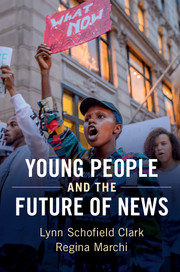


It was the dawn of a chilly November morning, and a small group of adults had gathered on the sidewalk across the street from a diverse urban high school in Denver. They carried signs reading, “Fags doom nation” and “God hates fags” – visible reminders that these adults were members of the infamous anti-gay Westboro Baptist Church, recognized for its well-publicized and hateful attempts to garner attention. The word had been leaked that the group might stage something at the high school so that, in the colorful words of one of the protesters, they might “warn this wicked generation that their sins will take them straight to hell.”1 The possibility of a protest hadn’t been covered in the mainstream media, but teachers, students, and parents had heard the rumors, and on Facebook and other social network sites in the days before the event, many had been involved in conversations about how to respond.
On the morning of the protest, the first students on the scene began texting photos to friends, who in turn texted the news to others and then rushed to the school with handmade signs. Within ten minutes after the protest had begun, three hundred people had reportedly shown up for a silent counterprotest, holding signs that read, “We were born this way,” “Spread love, not hate,” and “Why is love wrong?”
The camaraderie was palpable. Students who did not usually discuss their own sexual orientation stood alongside those who openly identified as gay or lesbian, straight allies, bisexual, transgender, or questioning. In the crowd were students from a variety of friendship circles and from differing racial/ethnic and economic backgrounds. They stood together in proud opposition, their phones held high to document their participation in the event for themselves and for one another.
We first learned of this event almost two years after it had occurred, when we happened to be interviewing a group of students from that school about news and social media. We’d asked the students to talk about a moment when their interactions on a social network site had helped them to become informed about events that were of importance to them. We didn’t know at the time that this event would come to be one of many, as US society was then in the early days of a marked upsurge in high school and college student protest movements. A perceived increase in the suppression of youth voice and experience was building, leading to numerous protests, rallies, and acts of civil disobedience. We might date the dramatic increase in protests to the 2014–15 academic year. That was when tens of thousands of high school students and their parents participated in various forms of civil disobedience. Among other things, students opted out of mandated standardized school testing, demonstrated against related cuts to educational and community programs, protested rising university tuitions and soaring student debt, and advocated for the Development, Relief, and Education for Alien Minors (DREAM) Act and other immigrant rights. And perhaps most prominently, students and their family members involved themselves in a variety of activities loosely related to the #BlackLivesMatter movement emerging in the aftermath of teenager Michael Brown’s death at the hands of Ferguson Missouri police officers, protesting the overly harsh disciplining of youth by members of law enforcement and calling for more respect for young Black men and women.2 Student protest movements continued in the 2015–16 and 2016–17 academic years in high schools from Oregon to Texas and on college campuses from the University of Missouri to the University of Washington, Clemson University and Rutgers, first in relation to disparate resources, relations between students of color and police, and poor on-campus racial climates, and later in response to hate crimes and anti-immigrant rhetoric that took place in response to the election of Donald Trump as US president, stimulating student activism across the country for “sanctuary campuses.”3 Students from around the country marked their identification and solidarity with student activism through the circulation of messages with hashtags such as #StandUpFG, #ReclaimOSU, #jeffco4kids, #DismantleDukePlantation, and Rutgers’ #LikeAMinority. The years 2014–2016 also saw the growth of a national movement to end sexual violence on university campuses, with hundreds of victims speaking out, pressing charges against their universities, and organizing protest events.4 The eruption of outrage on social media over the light sentence given to convicted rapist and former Stanford University swimmer Brock Turner in 2016 was an event that some saw as a turning point in the discussions of campus sexual assault, as the victim’s grisly and stirring statement was widely disseminated via social media.5 Millions of young people gathered around the world in solidarity after learning through social media about vigils following the June 2016 mass shooting in Orlando that left more than a hundred lesbian, gay, bisexual, and transgender (LGBT) young people of color dead or wounded.6 And thousands traveled to Standing Rock, North Dakota, to join Native Americans there in solidarity against the building of the Dakota Access Pipeline that would transport crude oil across sacred tribal lands and pose a threat to safe drinking water.7
Not surprisingly, when high school and college students today are asked about how social media play a role in informing them about the events that matter to them, they talk about Facebook event pages, twitter hashtags, snaps, and text messages that keep them up-to-date on where varied events like these are occurring and how they or their peers might be participating in them. One study found that 88 percent of young people in the United States got news from Facebook or another social media site, whereas another found that worldwide, 28 percent of those aged 18–24 said that social media was their main source for news.8 Young people may or may not be familiar with the particulars of related news stories unfolding in neighboring cities, as many do not follow news sources regularly at all.9 But mention a local protest, demonstration, or counterprotest involving students, and young people will immediately regale one another and any interested adults with breathless stories of where they were and from whom they learned about it, who was involved, how it unfolded, and how they or others they knew had participated in the event in person or through social media.
As students discussed the protest that opened this chapter, we wondered: had we found an example of a vibrant civic impulse among young people, evidence of a spark that could be fanned into a flame of outrage and political action? Or, more cynically, was this evidence for the argument that youth are so disconnected from broader communities and their news that only events at the hyperlocal level can come to matter to them?
Within the traditions of political communication and journalism, the Westboro event’s impact would be considered miniscule. The protest/counterprotest was over within forty-five minutes, as students needed to depart for the beginning of the school day. A blogger for an alternative weekly was the only reporter who documented the event for a wider audience. And even he published the photos and words of a student’s mother while including none of the students’ own voices.10 There was no indication that the event made an immediate difference in the activities of the school, the organization that had staged the protest, or in any of the state-level policy or legislative debates taking place at the time. Because most of the students were not of voting age and others did not have US citizenship due to their undocumented immigration status, the question of whether or not such an event would translate into political action at the ballot box seems beside the point.
And yet in this event are clues about changes that have long been taking place at the intersection of politics, journalism, and youth spaces. Here are some things we know:
1. Young people have different concerns than do the adults around them. It’s unrealistic to think that a sixteen-year-old is going to care about the same things that a forty-year-old does. So we should not be surprised that young people define “news” differently than do those who are older than they are.11
2. Many young people are happy to generate and share among their friends what they think of as “news.”12 The information that they draw from legacy media sources might come into play, but even then, the question of news for young people in the era of social media is no longer about where you get the news from, but who told you about it and whether or not you’re going to share it.
3. “News” isn’t what it used to be. Today’s legacy media outlets are much leaner and operate under more tightly controlled corporate ownership than the media of the past. In order to survive, news organizations have had to appeal to the largest audience that is of interest to advertisers – namely, well-off adults – and as a result, many young people don’t see their concerns addressed in legacy news.
The consolidated news media giants of today have crushed competition and eliminated smaller, localized, and diverse news voices, leaving a sanitized news perspective that may include pretty images of young people, but is not reflective of young peoples’ perspectives and experiences. Twitter, Facebook, YouTube, and other platforms, on the other hand, are being utilized by young people to share interests and concerns in places that are outside of the legacy media’s control. The owners of these social media platforms may not wish to recognize their role as news outlets, but social media networks are playing increasingly important roles in how “news” is defined.13 News is no longer primarily understood as a product that’s delivered, or even a profession that’s practiced or an industry that disseminates a product. Today, news is something that informal communities think of themselves as engaging in produsing – as in producing + using, to use Axel Bruns’s term – as they define for one another the information they deem worth discussing.14 From a user perspective, news is defined, produced, and disseminated in relation to specific networks of people, with traditional distinctions between active production and passive consumption increasingly blurred. At the same time, social media platforms are being engaged by those in our society who wish to shape what “news” looks like, and this shaping takes place in ways that are often invisible from the news prod-user’s perspective. Foregrounding the processes of youthful news production and consumption, then, creates a way for us to think about who we are as a community and as a public, and how we might want to go forward together. And that, as we will argue, is why it is worth further exploring the ways that young people are engaging in and learning about information-sharing of various kinds, across a range of digital platforms, and for a variety of purposes.
Instead of looking to the New York Times or CNN, many young people first encounter news of an unfolding event on Facebook or Twitter, when it is communicated to them from people or organizations they recognize, which in turn gives the telling legitimacy. We found this pattern again and again in our interviews, and it’s something that others have found, as well.15 When young people are asked about whether or not they seek out news from legacy media sources, they say something like, “I don’t need to do that. If something is happening, it will show up on my Twitter feed, and then I can go to a CNN or something if I feel a need to follow up and get more information,” as one student told us. Such statements raise new questions for us as we think about news. For instance, how does a person come to recognize an event, occurrence, or story as worthy of sharing with her friends? How do youth evaluate such information as credible? What is the tipping point at which young people will decide that sharing information is worth the possible social media backlash? And why might some people decide to limit what they share whereas others see themselves as opinion leaders who want to keep those in their networks informed about certain topics? Questions like these foreground the relationship between news and identity construction, or the ways that young people – and perhaps all of us – inevitably see things through a lens shaped by our own unique experiences of – and needs in relationship to – the larger world.
In this book, we report on ten years of ethnographic investigation into youthful practices with journalism, exploring how high school aged young people in the United States interact with, share, insert themselves into, and make news. We take what Ike Picone and his colleagues term a “radical user perspective” that is focused on the uses and users of news because we believe, with these authors, that “as control of media institutions over the news processes is in decline, we should take the news audience more seriously and try to improve our understanding of changing news use patterns.”16 We believe that a user perspective on journalism practices supports the development of a public-oriented journalism, in that it takes a practice-oriented approach that helps us to understand the roles of social media, informal social networks, and professional journalism in how publics are formed and sustained in a digital age.
News is widely recognized as “networked” and “ambient,” and professional news is increasingly viewed as part of a much broader “news ecosystem.”17 And yet, while a growing body of research has been exploring the evolving relationships between professional journalists, audience members, and increased citizen opportunities within professional journalism, far fewer studies have considered evolving patterns in how journalism fits into peoples’ everyday lives.18 A few promising empirical studies have affirmed that despite dire predictions, news remains important as a central way in which people orient themselves in society. Irene Costera Meijer and Schrøder and Larsen have found, for instance, that as long as journalism industries deliver news that is considered “valuable” or “worthwhile,” such news easily finds a place in people’s lives, and Heikkila and Ahva’s study of news consumers in Finland found that social networks are the central structure through which journalism is rendered meaningful for people.19 But clearly, there is more to know about news in everyday life, particularly as it relates to concerns of youth and the public. The circulation of “false news” through social media is one such concern. During the final three months of the 2016 US presidential election, the twenty most widely circulated false election stories from discredited sites and hyperpartisan blogs generated more than 8.7 million shares, reactions, and comments. These stories were shared with much greater frequency than were the top circulating stories from major news sites.20 Another concern relates to a dearth of what the Stanford History Education Group referred to as “civic online reasoning” among youth. In their study of 7,804 students from middle school through college, these researchers found that more than 80 percent of middle school students could not distinguish between an advertisement labeled “sponsored content” and a real news story on a website, while 40 percent of high school students judged a news story as credible based solely on pictorial evidence without questioning where the accompanying photo came from or if it was even related to the story’s claim. Only a few college students in this study were able to recognize that data cited from a professional polling firm might strengthen the validity of claims made in a tweeted news story, and fewer than a third were able to articulate how the political agenda of the organization sharing the tweet might influence the content of the tweet. Their work, which comprises the largest body of data to date on how young people evaluate online sources of information in social media, demonstrates the great challenges of digital media literacy that young people, and by extension all of us, face in a social media era.21
Feelings of disenfranchisement among all ages also remain depressingly strong. In their study of media consumption and public engagement, for instance, Couldry, Livingstone, and Markham found that disconnection seems to be an overwhelming issue across the generations: there are few connection points between, on the one hand, the many who see themselves as disenchanted with public participation, and on the other, the communities or practices that might enable people to feel that they are capable of acting together to address what they perceive as their concerns.22 The perceived and real sense of disconnection between youth and adult institutions enables various institutions and industries within society therefore to “suture” young people into civic and national identities, to use Murray Foreman’s term, as part of the larger process of selling to, shaping, supporting, or containing youth.23 Young people are aware of these processes, sometimes resisting them and at other times working within or reworking them to suit their own desires. Their lives, structured as they are by the school day, family expectations, juvenile justice systems, the military, social welfare policies, and even the media and entertainment industries, are also heavily regulated and under adult control. We argue that it is worth attending to their responses to these “suturing” efforts, then, as we consider questions of citizenship and participation, as well as the roles of information-sharing that inform them. As Picone and his colleagues have argued, we think that focusing on news users not only helps us to understand what journalism is, but what it could (or should) be in relation to the lived experiences of all of our young people.24
Some researchers have begun to focus on how people discuss politics within the realm of social media, with or without reference to journalism or the news media. Hightower, for instance, offers many examples of how social media become sites for mundane and personalized expressions of political commentary.25 And any of the millions of young people who have seen Casey Neistat are aware of how news and politics can emerge in daily vlogs. YouTubers Schmoyoho and Weird Al Yankovich’s “songify” version of the third presidential debate garnered over six million views by the election, and the activist organization The Other 98%’s screaming meme expressing frustration at the limited choice between Hillary Clinton and Donald Trump received more than 19.8 million views.26
Although they did not foreground news specifically, Henry Jenkins and his colleagues considered youth activism as it develops in relation to topics relevant to youth, exploring youth interest in and engagement with immigration reform, the DREAM act, racialized police violence, income inequality, and the legalization of marijuana, among other topics. They found an active “civic imagination” among young people, and an interest in working toward what a better world might look like and in creating media to move others toward that world.27 Jenkins and his colleagues have been part of a larger initiative known as the Youth and Participatory Politics Working Group, which has looked at the ways in which people of various ages use social media to mobilize, help shape agendas, and exert greater agency by participating in the circulation of political information.28 To determine the extent to which young people engage in participatory politics, Cohen and her colleagues conducted a nationally representative survey (in English and Spanish) of 15- to 25-year-olds.29 They asked how often the study participants had done things such as forwarded or circulated funny videos or cartoons related to a political candidate, campaign, or political issues (20 percent had done this), forwarded or posted someone else’s political commentary (17 percent had done this), or commented on a news story or blog post about a political candidate, campaign, or political issue (16 percent had done this).30 Utilizing this definition of the actions associated with participatory politics, Cohen and her colleagues have reported that some 41 percent of young people have engaged in at least one act of participatory politics, and that 90 percent of these youth either vote or engage with institutional politics in some other way.31 They note that in any form of political activity that includes participatory politics, institutional politics, and voting, engagement is most common among Black young people, possibly due to what’s been termed the “Obama effect.”32 Their study also found that 45 percent of young people received news at least once a week from a family member or friend via social media such as Facebook or Twitter. When asked if they thought that they or their friends could benefit from learning more about how to gauge the trustworthiness of the news they encountered online, 84 percent of them said that they believed that they would.33
We believe that all young people have the right to have access to information that is relevant to their lives and that meets their needs and expectations, as articulated in the United Nations’ Convention on the Rights of the Child.34 This right is consistent with Vygotsky’s argument that engagement in social activities is centrally important to the development of one’s self-understanding as a civic actor who can comprehend and act upon the problems of society.35 In this book, we therefore seek to develop a theory of the relationship between youth, journalism, and political development that is rooted in qualitative empirical evidence and that can inform current debates about how young people come to be members of publics and participants in political life in the social media age.
Our research began in 2006 and continued through 2016. While the bulk of our fieldwork took place on the East Coast (Boston, Philadelphia, and New Brunswick, NJ) and in the center of the country (Denver), we regularly drew upon the work of other researchers who were exploring related questions in Los Angeles, San Francisco, Chicago, and in the Washington, DC, area as well as in places outside the United States, including northern and southern Europe, Asia, Latin America, the Middle East, eastern Africa, and Australia. While we recognize that our own viewpoints and analyses are limited, our work takes place in conversation with the burgeoning research fields of youth and new media practices, youth activism, positive youth development, civic learning and engagement, and youth and participatory politics. Our particular contribution to this discussion rests in our closeup focus on the social interactions among young people themselves, as we look at why youth become involved in sharing information, and what it means to receive that information, within peer networks. We also focus on politics at the local level, considering how young people share, insert themselves into local news stories, and participate in making newsworthy stories meant to affect local policies and politics.
It will seem to some as if this “user-centered” way of approaching news completely loses sight of the political nature of current events-based and investigative news that have long been at the center of our models for why journalism matters in a democracy.36 And yet, if you were to ask the students involved in the counter-protest mentioned at the beginning of this chapter, many would probably describe LGBTIQ rights as one of the most significant political issues of their time, along with climate change and globalization. Young people are not completely uninterested in what adults would define as “politics,” but they engage in different ways today.
These new ways of engaging are best understood in relation to changing definitions of citizenship. Whereas in the past, citizenship was thought of as a duty that included voting, abiding by laws, regularly consuming the news, and participating in the armed services if needed, some argue that we now have to pay attention to other activities that are on the rise, such as participating in protests, environmental activities, boycotts, and civil court cases.37 As political science and communication expert Lance Bennett has argued, participation in citizenship activities today comes about as a result of a desire for self-actualization, self-fulfillment, and personal expression rather than merely from a sense of duty.38 The “dutiful citizen” and the “informed citizen” models have failed not because young people are no longer motivated or don’t care. This has occurred as recent decades have seen the fragmentation of public institutions along with a rise in the number of highly educated yet underemployed young adults directly experiencing globalization’s fluctuation of economic markets, both of which have contributed to a resultant crisis in the legitimization of democracy, as sociologist Zygmunt Bauman has pointed out.39 As societal institutions continue to experience a decline in authoritativeness, young people increasingly find that governments are not addressing their needs. And students who live in families of lower socioeconomic status are even more likely to live in distressed neighborhoods and attend schools that have subpar technological equipment, few instructional opportunities linking digital media use to the fostering of political voice, and little encouragement to use these tools for civic or political engagement.40 Young people who experience discrimination based on race, ethnicity, or religion express frustration and disillusionment with traditional political and media systems.41 And youth who experience discrimination are more likely than others to voice concerns about surveillance and participate in self-censorship.42
Increased hopelessness contributes to the contemporary situation of contentious politics, and thus significant groups of young people have become increasingly critical of both public institutions and the global financial system, directly getting involved in demands for more representative democracy. The most notable examples include the indignados in Spain, a movement that had its beginnings when young adults boycotted elections to protest the high unemployment rate and the conservative government’s economic austerity measures, and the aganaktismenoi, who followed suit in Greece. These movements brought to the forefront the ways that politics had become subsumed to economics, and this in turn raised questions about the gap between the political elite and the general population whose interests the elite did not represent.43 While feelings that elected leaders don’t represent their interests and anger over a lack of economic opportunity are expressed by US youth of all races and social classes, low-income and minority youth are especially disenfranchised. This has particular resonance in the United States as we become a majority minority country and as the #BlackLivesMatter and DREAM movements foster a heightened awareness of links between white privilege, elite power, racist systems of police enforcement, and exclusive college admissions. As such gaps between the elite and everyone else become unmistakable and coalesce into outrage and awareness about government failures, experts argue, what we’ve come to witness is a form of political life that isn’t in decline so much as it is undergoing dramatic change.44
Some scholars, such as Philip Howard and Muzammil Hussain, have posited that digital media environments may provide sufficient and necessary conditions for both the toppling of nondemocratic regimes and the development of successful social movements, perhaps inaugurating what they have termed “democracy’s fourth wave.”45 Others, less sanguine, have predicted that digital media and the “disruptive power” it affords to individuals and groups will continue to challenge the stability of the nation-state as a model for governance around the world, with the development of ever more invasive surveillance strategies to maintain order even in democratic societies.46 And not all are enthusiastic about the effects of a 24/7 news environment and its concomitant increase in civic engagement, as the increased demand for news has correlated with increased polarization of opinion.47
The journalism of legacy and alternative media are not completely absent from these stories of political change, of course, as Adrienne Russell points out in her work on the ways in which activists and professional journalists influence one another’s storytelling practices.48 While it may be tempting for us to think that something entirely new is emerging in the youthful uses of social media, it’s important to note that legacy journalism continues to play a role, even for youth. In the story that opened this chapter, for example, it’s worth noting that for more than two decades before the protest and counter-protest event at East High School, the news media had covered the controversial actions of Westboro Baptist Church, producing stories on the group’s protests targeting the LGBTIQ community and on the church’s anti-gay protests at military funerals, at the funerals of hate crime victims, at the courthouses where same sex laws have been passed, and various free speech/hate speech cases in which Westboro Church has been involved.49 Both conservative television commentator Bill O’Reilly and progressive documentary filmmaker Michael Moore had denounced the group.50 The British Broadcasting Corporation (BBC) and several other organizations had produced documentaries on the group.51 And in a well-publicized action, in 2012 the Anonymous community executed a distributed denial of service (DDOS) attack that shut down the church’s website after Westboro announced their intention to picket the funerals of those who died in the Sandy Hook Elementary school shooting.52 In short, if it hadn’t been for the role of these traditional journalistic media in creating a space for public discussion about the controversial hate activities of Westboro Baptist, the students of East High School and the adults in their lives would not have been capable of recognizing what the church’s protest at their school was meant to symbolize and what their own counter-protest might therefore mean, as well.
Some journalism advocacy organizations, such as the Newspaper Association of America, recognize the need for news organizations to pay more attention to the ways in which young people may develop interest in current events and politics. They recommend that news professions embrace a “life stage” approach that addresses news to particular generational segments rather than attempting to produce news for a “general” population that is usually of interest primarily to those over the age of thirty-five.53 Those concerned about the future of news recognize that we need to know more about the ways in which young people come to find certain issues worthy of their attention, and we need to know more about why and under what conditions those issues are deemed worthy of sharing within their networks. At the same time, journalists are being encouraged to utilize social media to develop their contacts and to leverage their credibility within the communities that they cover.54 Increasingly, journalists are recognizing the public’s role not only as sources of news, but also as verifiers of the news that now comes from a variety of sources via social media.55 And this means that journalists are rethinking their roles even as the various ways of thinking about journalism – the profession, its practices, and the cultural industries that have funded it – are undergoing dramatic changes in the digital age.56
All of these concerns translate into implications for the ways we think about politics, journalism, and young people. Clearly, political activities are no longer limited to voting, if they ever were. Journalism is no longer produced by professional reporters alone. And, as we argue along with many in the field of youth studies, youth can no longer be understood merely as a pleasurable biological life-stage that precedes the more “important” time of adulthood.
In spite of the fact that we all recognize these statements to be obvious, it seems as if our theories in political communication, journalism, and youth studies have not always kept up with one another. Theories in political communication have evolved to consider new concepts of citizenship, but these don’t often find their way into the discussions of scholastic or youth journalism. Those interested in youth and politics aren’t always attuned to or interested in changes in the formal and informal journalism industries, despite the fact that the field of journalism studies has been redefining itself in ways that those in politics are likely to find quite interesting. And little work in journalism and political communication is rooted in the lives of those outside of or younger than the four-year college experience, presumably because young people aren’t interested in what has been the primary foci of those fields: legacy news and national elections.
This book seeks to address these gaps. Tracing young people’s lived experiences with politics and journalism broadly defined, we specifically analyze the intersections of cultural practices, political aspirations, and sources of knowledge among youth. We foreground the experiences of disenfranchised, minoritized, and migrant youth who are under the age of twenty-one and who make up the fastest-growing populations in the United States, as we believe that understanding their experiences is vitally important to the development of new models for the study of youth, politics, and journalism.57
In this book, we argue that the young people who Tweeted, Instagrammed, texted, Facebooked, and later told the stories of their school’s protests and counter-protests are participants in what we term connective journalism. By communicating with one another about what was going on in their school and by viewing these events as reflective of an urgent need to respond to current events as they impacted and sometimes threatened a collective view of themselves, the youth defined these various acts of civil disobedience as newsworthy. They engaged in journalistic practices, using social media to communicate their concerns to one another and to mobilize community members in response, and in doing so they created a story that later became important in the narrative about who they saw themselves to be as a community.58
We’re not using the term “connective journalism” to suggest that these highly personalized practices are replacing the traditional news industries of CNN, The New York Times, Fox News, and the like, as we’ll discuss. Yet it’s clear that the most distinctive feature of this emergent form of journalistic practice is that from the user’s perspective, the professions and the industries of legacy journalism are not at its center. For the young person engaged in connective journalism practices, traditional journalism is associated with the practices of building an accurate story, whereas connective journalism is associated with the practices of building a collective and individual identity. Thus, connective journalism is practiced as people engage in communicative acts that give voice both to their own distinctive way of viewing the world and to their views of how we ought to feel about what is happening in that world. Because the emphasis is on practices of sharing, there is a significant emotional dimension to the practices of connective journalism: young people share what feels important to them, and that is often determined through the emotions of outrage, anger, disgust, glee, anticipation, amusement, joy, or appreciation. These feelings are fleshed out as they are shared through communication with others.
Emotion has long played a role within traditional journalistic storytelling, of course, because professional practices, too, are rooted in the dynamics of how narratives come to be constructed. We tend to think about journalistic storytelling as somehow very different from other storytelling, and it is true that there are very real distinctions in access to power between media institutions and smaller groups of individuals. But constructing and controlling a narrative is part of the human need for creating meaningful frameworks for interaction. What connective journalism practices point to, then, are the ways in which structurally differentiated groups experience themselves as creating varying methods for navigating the social world.
It’s true that an emotion-based approach to news has serious drawbacks, as we will discuss later in this book. But it’s also important to note that sometimes, connective journalism can be actionable, in that the communication that is shared provides not only an emotion-tinged explanation about one’s felt concerns but also a suggestion about what one can do in response. Moreover, what we have observed is that the practices of connective journalism can be understood developmentally, as the three practices of (1) sharing, (2) inserting oneself into the story, and (3) participating in the making of a story, all of which involve a willingness to embrace an ever-increasing level of interpersonal risk within the spaces of social media.
This book will therefore explore the differing connective journalism practices that are carried out among young people today, considering the potential that these practices hold for fostering political and civic engagement among youth. People want to share not just stories, but their feelings about those stories, and it is through this sharing that “affective publics” are formed, as Zizi Papacharissi argues. This is how young people “feel their way into politics.”59 As youth participate in connective journalism practices, then, they are laying claim to a political subject position: one in which their voice and views have value.
We hope to widen this discussion of affective publics to consider both the emotions that young people feel as they encounter news and the emotions they feel as they receive news that is shared in their friendship and family circles. Sometimes, as we will discuss, youth are discouraged from sharing news because they fear repercussions from others. Inserting oneself into a story by taking a photo or video of oneself at an event and posting it on social media is risky, and sharing a story about how one participated in addressing a problem by making and sharing original content is riskier still.60 We argue that these three practices – sharing, inserting oneself into a story, and participating in making a story – are helpfully viewed as three steps on a ladder of political engagement that trace the ways in which young people come to move from interest to participation in a social media age.
In the next chapter, we begin with a discussion of contemporary youth and then introduce the various conceptual frameworks that inform our interdisciplinary analysis. These frameworks include research on youth and citizenship, politics and publics, journalism, and the news industries, all of which serve as a foundation for the development of our concept of connective journalism, which we elaborate on in Chapter 2. We then flesh out this concept by discussing the specific theories that contribute to its development.
Following this theoretical grounding, in Chapter 3 we focus our attention on the ways in which youth from disenfranchised, minority, and migrant populations express their disillusionment with the storytelling of legacy news as well as their hopes for how storytelling and journalistic forms could play a role in their communities in more productive ways. In particular, we explore four themes that emerged when we asked young people why they were not very interested in consuming and sharing news from legacy media: (1) problems associated with journalistic authority, (2) problems associated with the imagined audiences for news, (3) problems with the business models of journalism in the US news marketplace, and (4) problems with news storytelling genres.
In Chapter 4 we turn to the news ecology in which young people today find themselves. Here we explore the possibilities and limits of youth-oriented news, considering (1) news produced by adults specifically for youth, (2) news programs produced for adults and young adults but for which high school youth are a substantial audience, and (3) news produced by and for youth with some support from adults. The chapter reviews several noteworthy digital media literacy programs that focus on empowering young people in journalistic storytelling. In Chapter 4 we also explore the ways in which neoliberalism shapes the school, after school, and other learning environments through which these programs are often understood, which, we believe, present some important limitations to their appeal and their ability to be reproduced and spread.
While Chapter 4 offers some insights into the media materials that are available for digital sharing, Chapter 5 widens the discussion to consider what happens when young people move from sharing stories to inserting themselves into the unfolding events and stories that they share with others. Chapter 6 foregrounds stories of young people who are given the opportunity to utilize media to make a difference in their communities – and to define the community, the difference they’d like to make, and the way they utilize media to make that difference. In that chapter we explore what happens as young people move from sharing to inserting themselves into the stories of ongoing events, and finally to participating in making a story that is itself newsworthy. Chapter 6 highlights several efforts to engender connections between the lived experiences of youth and to address the concerns of their communities, sometimes by partnering with grassroots organizing efforts. In Chapter 7, the book concludes with an argument that any model of the future of news must consider the following interlocking issues: (1) the emergent practices of young people in relation to social media connectivity; (2) the existing landscape of news-gathering and storytelling and young people’s relationship to this landscape; (3) the cultural environment of neoliberalism that shapes and limits current understandings of schooling, citizenship, and participation; (4) the ways in which young people have nevertheless overcome a variety of barriers in order to participate in existing grassroots efforts for social change, and (5) the emergent infrastructure of digital media that requires greater transparency to facilitate truly democratic information-sharing in a social media age in which deliberation has been largely replaced by spectacle and performance.
Consistent with the nonlinear, hyperlinked way of consuming information that has become a familiar feature of everyday life, we’ve written this book so that it can be read in a variety of ways. For those who are interested in the relationship between democratic theory development and empirical research, we suggest that Chapters 1 and 2 will be of particular interest, as they set up a theoretical foundation that relates to contemporary debates in political theory. Readers less interested in theory may wish to skip to Chapter 3 to hear from students themselves. Those interested in positive stories of youth participating in social change may find Chapter 6 particularly useful.
Certainly, we’re not suggesting that knowledge about isolated events like the protest/counter-protest that opened this chapter can substitute for the kind of in-depth knowledge generation that has long been recognized as important for democracy. What we are interested in, however, is how changes in news, technologies, and communities relate to one another, and what they tell us about citizenship and about the prospects for what John Dewey termed a “great community” that can participate in democratic decision-making. What can they tell us about the evolving roles of personal, legacy, and other forms of media in the lives of the publics that are present and emerging today? And what can they tell us about the future of news?
Our study of the emergence of connective journalism does not begin with an attempt to solve the crisis of legacy media, urgent as it is. We begin with the understanding that in order to better understand the current situation, we need a more expansive definition of journalistic practices, and a more precise understanding of the relationship between digital media literacy and participation in the storytelling that makes a difference to public life. In this book about youth, politics, citizenship and journalism, we foreground interpersonal peer relationships and relationality for one simple reason: we believe that it is in and through our private lives that we learn what it means to be part of a public. We draw together a framework for thinking about youth, journalism, citizenship, and politics by considering theories and concepts that have been well established across several disciplines. And that is the starting point for the first chapter.
* * * * *
