Book contents
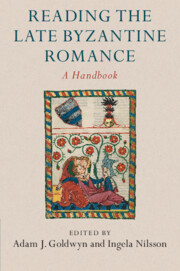
- Reading the Late Byzantine Romance
- Reading the Late Byzantine Romance
- Copyright page
- Contents
- Notes on Contributors
- Acknowledgements
- Note on the Late Byzantine Romances and Their Editions
- Chapter 1 An Introduction to the Palaiologan Romance
- Chapter 2 The Categories of ‘Originals’ and ‘Adaptations’ in Late Byzantine Romance
- Chapter 3 Intercultural Encounters in the Late Byzantine Vernacular Romance
- Chapter 4 Dreams and Female Initiation in Livistros and Rhodamne and Hypnerotomachia Poliphili
- Chapter 5 The Acculturation of the French Romance Pierre de Provence et la belle Maguelonne in the Byzantine Imperios and Margarona
- Chapter 6 Chronotopes between East and West in Apollonios of Tyre
- Chapter 7 Linguistic Contacts in the Late Byzantine Romances
- Chapter 8 From Herakles to Erkoulios, or the Place of the War of Troy in the Late Byzantine Romance Movement
- Chapter 9 Troy in Byzantine Romances
- Chapter 10 Herodotean Material in a Late Version of the Alexander Romance
- Chapter 11 The Palaiologan Hagiographies
- Chapter 12 Homosocial Desire in the War of Troy
- Chapter 13 Literary Landscapes in the Palaiologan Romances
- Chapter 14 The Affective Community of Romance
- Chapter 15 The Bookseller’s Parrot
- Index
- References
Note on the Late Byzantine Romances and Their Editions
Published online by Cambridge University Press: 17 December 2018

Book contents
- Reading the Late Byzantine Romance
- Reading the Late Byzantine Romance
- Copyright page
- Contents
- Notes on Contributors
- Acknowledgements
- Note on the Late Byzantine Romances and Their Editions
- Chapter 1 An Introduction to the Palaiologan Romance
- Chapter 2 The Categories of ‘Originals’ and ‘Adaptations’ in Late Byzantine Romance
- Chapter 3 Intercultural Encounters in the Late Byzantine Vernacular Romance
- Chapter 4 Dreams and Female Initiation in Livistros and Rhodamne and Hypnerotomachia Poliphili
- Chapter 5 The Acculturation of the French Romance Pierre de Provence et la belle Maguelonne in the Byzantine Imperios and Margarona
- Chapter 6 Chronotopes between East and West in Apollonios of Tyre
- Chapter 7 Linguistic Contacts in the Late Byzantine Romances
- Chapter 8 From Herakles to Erkoulios, or the Place of the War of Troy in the Late Byzantine Romance Movement
- Chapter 9 Troy in Byzantine Romances
- Chapter 10 Herodotean Material in a Late Version of the Alexander Romance
- Chapter 11 The Palaiologan Hagiographies
- Chapter 12 Homosocial Desire in the War of Troy
- Chapter 13 Literary Landscapes in the Palaiologan Romances
- Chapter 14 The Affective Community of Romance
- Chapter 15 The Bookseller’s Parrot
- Index
- References
Summary
A summary is not available for this content so a preview has been provided. Please use the Get access link above for information on how to access this content.
Information
- Type
- Chapter
- Information
- Reading the Late Byzantine RomanceA Handbook, pp. xiii - xxPublisher: Cambridge University PressPrint publication year: 2018
References
Livistros and Rhodamne – also Tale of Livistros and Rhodamne (Mid-Thirteenth Century)4
Lambert, J. A. (ed.), Le roman de Libistros et Rhodamné publié d’après les manuscrits de Leyde et de Madrid avec une introduction, des observations grammaticales et un glossaire (Amsterdam 1935) (E).Google Scholar
Agapitos, P. A. (ed.), Ἀφήγησις Λιβίστρου καὶ Pοδάμνης. Kριτική έκδοση τῆς διασκευῆς «ἄλφα» (Athens 2006) (α).Google Scholar
Lendari, T. (ed.), Ἀφήγησις Λιβίστρου καὶ Ροδάμνης (Livistros and Rodamni): The Vatican Version. Critical Edition with Introduction, Commentary, and Index-Glossary (Athens 2007) (V).Google Scholar
Betts, G. (trans.), Three Medieval Greek Romances: Velthandros and Chrysandza, Kallimachos and Chrysorroi, Livistros and Rodamni (New York 1995), 95–192.Google Scholar
Cupane, C., ‘Il romanzo’, in La cultura bizantina, ed. Cavalo, G.. (Rome 2004) 407–53.Google Scholar
Cupane, C., ‘Una passeggiata nei boschi narrativi. Lo statuto della finzione nel “Medioevo romanzo e Orientale”’, JÖB 63 (2013): 61–90.Google Scholar
Cupane, C., ‘In the Realm of Eros: The Late Byzantine Vernacular Romance – Original Texts’, in Fictional Storytelling in the Medieval Eastern Mediterranean and Beyond, ed. Cupane, C. and Krönung, B.. (Leiden and Boston 2016) 95–126.CrossRefGoogle Scholar
War of Troy (Second Half of Thirteenth Century)5
Papathomopoulos, M. and Jeffreys, E. M. (eds.), Ὁ Πόλεμος τῆς Tρωάδος (The War of Troy). Kριτική ἔκδοση με εἰσαγωγὴ καὶ πίνακες (Athens 1996).Google Scholar
Velthandros and Chysantza (Late Thirteenth Century)6
Cupane, C. (ed.), Romanzi cavallereschi bizantini: Callimaco e Crisorroe, Beltandro e Crisanza, Storia di Achille, Florio e Plaziaflore, Storia di Apollonio di Tiro, Favola consolatoria sulla Cattiva e la Buona Sorte (Turin 1995), 227–305 (revised version of Kriaras 1955 with Italian trans.)Google Scholar
Egea, J. M. (ed.), Historia extraordinaria de Beltandro y Crisanza. Estudio preliminar, texto griego, traduccion, notas y comentarios (Granada 1998) (with Spanish trans.).Google Scholar
Betts, G. (trans.), Three Medieval Greek Romances: Velthandros and Chrysandza, Kallimachos and Chrysorroi, Livistros and Rodamni (New York 1995), 5–32.Google Scholar
Kallimachos and Chrysorrhoe (First Half of Fourteenth Century)7
Pichard, M. (ed.), Le roman de Callimaque et de Chrysorrhoé (Paris 1956) (with French trans.)Google Scholar
Cupane, C. (ed.), Romanzi cavallereschi bizantini: Callimaco e Crisorroe, Beltandro e Crisanza, Storia di Achille, Florio e Plaziaflore, Storia di Apollonio di Tiro, Favola consolatoria sulla Cattiva e la Buona Sorte (Turin 1995), 47–213 (revised version of Kriaras 1955 with Italian trans.).Google Scholar
Tale of Achilles – also Achilleid (Mid-Fourteenth Century)8
Hesseling, D. C. (ed.), L’Achilleide byzantine publiée avec une introduction, des observations et un index (Amsterdam 1919) (N and L).Google Scholar
Agapitos, P. A., ‘Ἡ χρονολογικὴ ἀκολουθία τῶν μυθιστορημάτων Kαλλίμαχος, Bέλθανδρος καὶ Λίβιστρος’, in Ἀρχὲς τῆς νεοελληνικῆς λογοτεχνίας. Πρακτικὰ τοῦ δευτέρου διεθνοῦς συνεδρίου Neograeca Medii Aevi (Bενετία 1991), ed. Panagiotakis, N. M., 2 vols. (Venice 1993) vol. ii, 197–234.Google Scholar
Agapitos, P. A., ‘Genre, Structure and Poetics in the Byzantine Vernacular Romances of Loveʼ [SO debate], Symbolae Osloenses 79 (2004): 7–101.CrossRefGoogle Scholar
Agapitos, P. A., ‘In Rhomaian, Frankish and Persian Lands: Fiction and Fictionality in Byzantium’, in Medieval Narrative Between History and Fiction: From the Centre to the Periphery of Europe, c. 1100–1400, ed. Agapitos, P. A. and Mortensen, L. B.. (Copenhagen 2012) 235–367.Google Scholar
Beaton, R., The Medieval Greek Romance, 2nd edn, revised and expanded. (London and New York 1996).Google Scholar
Cupane, C. (ed.), Romanzi cavallereschi bizantini: Callimaco e Crisorroe, Beltandro e Crisanza, Storia di Achille, Florio e Plaziaflore, Storia di Apollonio di Tiro, Favola consolatoria sulla Cattiva e la Buona Sorte (Turin 1995), 324–442 (revised version of Hesseling 1919 with Italian trans.).Google Scholar
Lavagnini, R., ‘Tales of the Trojan War: Achilles and Paris in Medieval Greek Literature’, in Fictional Storytelling in the Medieval Eastern Mediterranean and Beyond, ed. Cupane, C. and Krönung, B.. (Leiden and Boston 2016). 234–59.Google Scholar
Smith, O. L. (ed.), The Byzantine Achilleid: The Naples Version. Introduction, Critical Edition and Commentary by Ole L. Smith; Edited and Prepared for Publication by P. A. Agapitos and K. Hult (Vienna 1999) 13–74 (N).Google Scholar
Apollonios of Tyre – also The Story of Long-Suffering Apollonios of Tyre (Mid-Fourteenth Century)10
Janssen, A. (ed.), Narratio neogreca Apollonii Tyrii. Diss Nijmegen 1954 (with Latin trans.).Google Scholar
Cupane, C. (ed.), Romanzi cavallereschi bizantini: Callimaco e Crisorroe, Beltandro e Crisanza, Storia di Achille, Florio e Plaziaflore, Storia di Apollonio di Tiro, Favola consolatoria sulla Cattiva e la Buona Sorte (Turin 1995), 567–633 (revised version of Janssen 1954 with Italian trans.)Google Scholar
Kechagioglou, G. (ed.), Απολλώνιος της Τύρου. Υστερομεσαιωνικές και νεότερες ελληνικές μορφές. Κριτική έκδοση με εισαγωγές, σχόλια, πίνακες λέξεων–γλωσσάρια και επίμετρα (Thessaloniki 2004).Google Scholar
Rizzo Nervo, F., ‘Le versioni greche medievali dell’ Apollonio di Tiro’, in Seminario l’Apollonio di Tiro nelle letterature euroasiatiche dal Tardo-antico al Medioevo, ed. Beggiato, F. and Marinetti, S.. (Soveria Mannelli 2002) 151–66.Google Scholar
Florios and Platziaflore (Second Half of Fourteenth Century)11
Hesseling, D. C. (ed.), Le roman de Phlorios et de Platzia Phlore (Amsterdam 1917) (L).Google Scholar
di Benedetto Zimbone, A. ‘Ancora su Florios e Platziaflore: un esempio di edizione’, in Ενθύµησις Ν.Μ. Παναγιωτάκη, ed. Kaklamanis, S. and Markopoulos-Mavromatis, A.. (Irakleio, 2000) 269–90.Google Scholar
Cupane, C. (ed.), Romanzi cavallereschi bizantini: Callimaco e Crisorroe, Beltandro e Crisanza, Storia di Achille, Florio e Plaziaflore, Storia di Apollonio di Tiro, Favola consolatoria sulla Cattiva e la Buona Sorte (Turin 1995), 464–565 (revised version of Hesseling 1917 with Italian trans.).Google Scholar
Ortolá Salas, F. J. and Platzia Flora, Florio y (eds.), Una novela bizantina de época paleóloga (Madrid 1998) (‘mixed’ edition with Spanish trans.).12Google Scholar
Tale of Troy – also Byzantine Iliad (Late Fourteenth–Early Fifteenth Centuries)13
Nørgaard, L. and Smith, O. L. (eds.), A Byzantine Iliad: The Text of Par. Suppl. Gr. 926 (Copenhagen 1975).Google Scholar
Alexander and Semiramis (First Half of Fifteenth Century)14
Moennig, U. (ed.), Die Erzählung von Alexander und Semiramis (Berlin and New York 2004) (B and S with German trans. of B).10.1515/9783110204599CrossRefGoogle Scholar
Old Knight (First Half of Fifteenth Century)
Breillat, P. (ed.), ‘La Table Ronde en Orient. Le poème grec du Vieux Chevalier’, Mélanges d’archéologie et histoire 55 (1938): 308–40.Google Scholar
Martin, R. H. (trans.), ‘Palamides, and Other Knights of the Round Table, in The Tristan Legend: Texts from Northern and Eastern Europe in Modern English Translation, ed. Hill, J.. (Leeds 1977), 30–46.Google Scholar
Goldwyn, A., ‘Arthur in the East: Cross-Cultural Translations of Arthurian Romance in Greek and Hebrew, Including a New Translation of Ὁ Πρέσβυς Ἱππότης (The Old Knight)’, LATCH 5 (2012): 75–105.Google Scholar
Imperios and Margarona (Mid-Fifteenth Century)15
Wagner, W. (ed.), Histoire de Imbérios et Margarona: Imitation grecque du roman français Pierre de Provence et la belle Maguelonne. Publiée pour la première fois d’après un manuscrit de la Bibliothèque Impériale de Vienne (Paris 1874) (V).Google Scholar
Lambros, S. P. (ed.), Collection de romans grecs en langue vulgaire et en vers (Paris 1880), 239–88 (O).Google Scholar
Jeffreys, E. and Jeffreys, M., 1971. ‘Imberios and Margarona: The Manuscripts, Sources and Edition of a Byzantine Verse Romance’, Byzantion 41: 122–60.Google Scholar
Kriaras, E. (ed.), Βυζαντινὰ ἱπποτικὰ μυθιστορήματα (Athens 1955), 215–49 (unrhymed version).16Google Scholar
Yiavis, K. (ed.), Imperios and Margarona: The Rhymed Version (Athens, in press).Google Scholar
Teseida – also The Marriage of Theseus and Aemilia (Late Fifteenth Century)17
In addition to this more or less stable core of twelve Palaiologan romances, some other texts that are more loosely connected to the corpus are discussed in the present volume and therefore deserve to be mentioned and listed here. One is the Digenis Akritis (ed. Jeffreys 1998), previously dated to the twelfth century and by Beaton referred to as a ‘proto-romance’, but here treated as narratologically and thematically related to the Palaiologan romances, at least in its version G (dated to the late thirteenth or even fourteenth century). Another is the Alexander Romance, the immensely popular fictional biography that survives in numerous versions and translations from late antiquity onwards.18 Usually treated very differently in scholarship, the different versions among the varied manuscripts may be said to straddle the learned and vernacular traditions, representing an impressively long span of storytelling. Frequently mentioned in several chapters in the present volume and often referenced in the discussion of the Palaiologan romances more generally are also the four Komnenian novels, which therefore deserve to be listed below. Finally, two allegorical poems are often mentioned in relation to the romances: the anonymous Consolatory Fable about Bad and Good Fortune, probably from the first half of the fourteenth century and written in the vernacular register, and the Verses on chastity by Meliteniotes, composed in learned Greek in the middle of the same century. Our first list may then be complemented with the following.
Follieri, E. (ed.), Il Teseida Neogreco. Libro I. Saggio di edizione (Athens and Rome 1959) (partial edition).Google Scholar
Kaklamanis, S., ‘Ἀπὸ τὸ χειρόγραφο στο ἔντυπο Θησέος και γάμοι τῆς Αἰμίλιας’, Thesaurismata 27 (1997): 147–223.Google Scholar
Olsen, B. (ed.), ‘The Greek Translation of Boccaccio’s Theseid Book 6’, Classica et Mediaevalia 41 (1990): 275–301 (partial edition).Google Scholar
Komnenian Novels (Twelfth Century)19
Conca, F. (ed.), Il romanzo bizantino del xii secolo. Teodoro Prodromo, Niceta Eugeniano, Eustazio Macrembolita, Constantino Manasse (Turin 1994).Google Scholar
Jeffreys, E. (trans.), Four Byzantine Novels: Theodore Prodromos, Rhodanthe and Dosikles; Eumathios Makrembolites, Hysmine and Hysminias; Constantine Manasses, Aristandros and Kallithea; Niketas Eugenianos, Drosilla and Charikles (Liverpool 2012).Google Scholar
Jeffreys, E. ‘Byzantine Romances: Eastern or Western?’, in Renaissance Encounters: Greek East and Latin West, ed. Brownlee, M. and Gondicas, D.. (Princeton 2013) 221–37.Google Scholar
Digenis Akritis (Twelfth Century/Version G of Thirteenth–Fourteenth Centuries)20
Jeffreys, E. (ed.), Digenis Akritis. The Grottaferrata and Escorial Versions (Cambridge 1998).Google Scholar
Consolatory Fable about Bad and Good Fortune (First Half of Fourteenth Century)
Lambros, S. P. (ed.), Collection de romans grecs en langue vulgaire et en vers (Paris 1880), 289–311 (O).Google Scholar
Lambros, S. P. (ed.), ‘Λόγος παρηγορητικὸς περὶ Δυστυχίας κατὰ κώδικα τῆς Λειψίας’, Neos Hellenomnemon 3 (1906): 407–432δ [sic] (L).Google Scholar
Cupane, C. (ed.), Romanzi cavallereschi bizantini: Callimaco e Crisorroe, Beltandro e Crisanza, Storia di Achille, Florio e Plaziaflore, Storia di Apollonio di Tiro, Favola consolatoria sulla Cattiva e la Buona Sorte (Turin 1995), 635–91 (revised version of Lambros 1906 with Italian trans.).Google Scholar
Meliteniotes, Verses on Chastity (Mid-Fourteenth Century)21
Many other texts from various stages of the Greek language, along with western and eastern romances, are mentioned in the course of the following chapters,22 but we hope that this brief introduction to the most frequently discussed late Byzantine romances and related texts will help the reader to navigate both this volume and the secondary literature to which the respective chapters refer.
Miller, P. (ed.), ‘Poëme allégorique de Meliténiote, publié d’après un manuscrit de la Bibliothèque Impériale’, Notices et extraits des manuscrits de la Bibliothèque Impériale et autres bibliothèques 19.2 (1858): 1–138.Google Scholar
Dolezal, M. L. and Mavroudi, M. (partial English trans.), ‘Theodore Hyrtakenos’ Description of the Garden of St. Anna and the Ekphrasis of Gardens’, in Byzantine Garden Culture, ed. Littlewood, A., Maguire, H. and Wolschke-Buhlman, J. (Washington, DC 2002), 151–8.Google Scholar
Schönauer, S., Untersuchungen zum Steinkatalog des Sophrosyne-Gedichts des Meliteniotes mit kritischer Edition der Verse 1107–1247. (Wiesbaden 1996).Google Scholar
Accessibility standard: Unknown
Why this information is here
This section outlines the accessibility features of this content - including support for screen readers, full keyboard navigation and high-contrast display options. This may not be relevant for you.Accessibility Information
Accessibility compliance for the HTML of this chapter is currently unknown
and may be updated in the future.